Categories
Contents

Borderless, August 2025

Art by Sohana Manzoor

Editorial

Storms that Rage… Click here to read.

Translations

Nazrul’s Jonomo, Jonomo Gelo (Generations passed) has been translated from Bengali by Professor Fakrul Alam. Click here to read and listen to a rendition by the famed Feroza Begum.

Ajit Cour‘s short story, Nandu, has been translated from Punjabi by C Christine Fair. Click here to read.

The Scarecrow by Anwar Sahib Khan has been translated from Balochi by Fazal Baloch. Click here to read.

Five poems by Aparna Mohanty have been translated from Odia by Snehprava Das. Click here to read.

Angshuman Kar has translated some of his own Bengali poems to English. Click here to read.

Sunflower, a poem by Ihlwha Choi,  has been translated from Korean by the poet himself. Click here to read.

Tagore’s Shaishabshanda (Childhood’s Dusk) has been translated from Bengali by Mitali Chakravarty. Click here to read.

Poetry

Click on the names to read the poems

Ron Pickett, Fakrul Alam, William Miller, Meetu Mishra, Heath Brougher, Laila Brahmbhatt, Luis Cuauhtémoc Berriozábal, Snigdha Agrawal, George Freek, Ashok Suri, Scott Thomas Outlar, Dustin P Brown, Rajorshi Patranabis, Ryan Quinn Flanagan

Poets, Poetry & Rhys Hughes

From the Vale of Glamorgan are two poems on the place where Rhys Hughes grew up. Click here to read.

Musings/Slices from Life

Menaced by a Marine Heatwave

Meredith Stephens writes of how global warming is impacting marine life in South Australia. Click here to read.

The Man from Pulwama

Gowher Bhat introduces us to a common man who is just kind. Click here to read.

More than Words

Jun A. Alindogan writes on his penchant for hardcopy mail. Click here to read.

To Bid or Not to Bid… the Final Goodbye?

Ratnottama Sengupta ponders on Assisted Dying. Click here to read.

Musings of a Copywriter

In Syrupy Woes, Devraj Singh Kalsi looks at syrupy health antidotes with a pinch of humour. Click here to read.

Essays

‘Verify You Are Human’

Farouk Gulsara ponders over the ‘intelligence’ of AI and humans. Click here to read.

Does the First Woman-authored Novel in Bengali Seek Reforms?

Meenakshi Malhotra explores Somdatta Mandal’s translation of Manottama, the first woman-authored Bengali novel published in 1868. Click here to read.

Bhaskar’s Corner

In Bidyut Prabha Devi – The First Feminist Odia Poet, Bhaskar Parichha pays a tribute to the poet. Click here to read.

Stories

The Sixth Man

C. J. Anderson-Wu tells a story around disappearances during Taiwan’s White terror. Click here to read.

I Am Not My Mother

Gigi Baldovino Gosnell gives a story of child abuse set in Philippines where the victim towers with resilience. Click here to read.

The Archiver of Shadows

Hema R explores shadows in her story set in Chennai. Click here to read.

Ali the Dervish

Paul Mirabile weaves the strange adventures of a man who called himself Ali. Click here to read.

The Gift

Naramsetti Umamaheswararao moulds children’s perspectives. Click here to read.

Notes from Japan

In American Wife, Suzanne Kamata gives a short story set set in the Obon festival in Japan. Click here to read.

Conversation

Neeman Sobhan, author of Abiding City: Ruminations from Rome, discusses shuttling between multiple cultures and finding her identity in words. Click here to road.

Book Excerpts

An excerpt from M.A.Aldrich’s From Rasa to Lhasa: The Sacred Center of the Mandala. Click here to read.

An excerpt from Neeman Sobhan’s An Abiding City: Ruminations from Rome. Click here to read.

Book Reviews

Somdatta Mandal reviews Chhimi Tenduf-La’s A Hiding to Nothing. Click here to read it.

Madhuri Kankipati reviews O Jungio’s The Kite of Farewells: Stories from Nagaland. Click here to read.

Bhaskar Parichha reviews Snehaprava Das’s Keep it Secret: Stories. Click here to read.

.

Click here to access the Borderless anthology, Monalisa No Longer Smiles

Click here to access Monalisa No Longer Smiles on Amazon International
Categories
Editorial

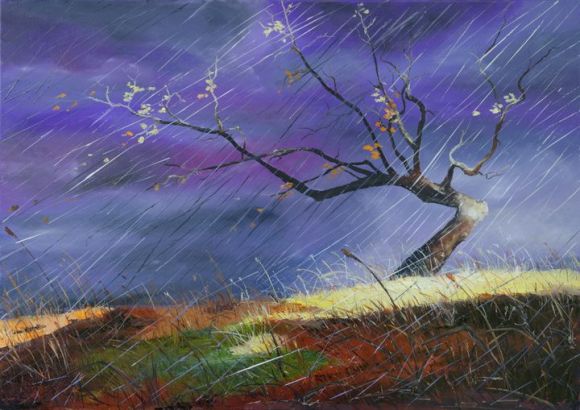
Storms that Rage

Storm in purple by Arina Tcherem. From Public Domain

If we take a look at our civilisation, there are multiple kinds of storms that threaten to annihilate our way of life and our own existence as we know it. The Earth and the human world face twin threats presented by climate change and wars. While on screen, we watch Gaza and Ukraine being sharded out of life by human-made conflicts over constructs made by our own ‘civilisations’, we also see many of the cities and humankind ravaged by floods, fires, rising sea levels and global warming. Along with that come divides created by economics and technology. Many of these themes reverberate in this month’s issue.

From South Australia, Meredith Stephens writes of marine life dying due to algal growth caused by rising water temperatures in the oceans — impact of global warming. She has even seen a dead dolphin and a variety of fishes swept up on the beach, victims of the toxins that make the ocean unfriendly for current marine life. One wonders how much we will be impacted by such changes! And then there is technology and the chatbot taking over normal human interactions as described by Farouk Gulsara. Is that good for us? If we perhaps stop letting technology take over lives as Gulsara and Jun A. Alindogan have contended, it might help us interact to find indigenous solutions, which could impact the larger framework of our planet. Alindogan has also pointed out the technological divide in Philippines, where some areas get intermittent or no electricity. And that is a truth worldwide — lack of basic resources and this technological divide.

On the affluent side of such divides are moving to a new planet, discussions on immortality — Amortals[1] by Harari’s definition, life and death by euthanasia. Ratnottama Sengupta brings to us a discussion on death by choice — a privilege of the wealthy who pay to die painlessly. The discussion on whether people can afford to live or die by choice lies on the side of the divide where basic needs are not an issue, where homes have not been destroyed by bombs and where starvation is a myth, where climate change is not wrecking villages with cloudbursts.  In Kashmir, we can find a world where many issues exist and violences are a way of life. In the midst of such darkness, a bit of kindness and more human interactions as described by Gower Bhat in ‘The Man from Pulwama’ goes some way in alleviating suffering. Perhaps, we can take a page of the life of such a man. In the middle of all the raging storms, Devraj Singh Kalsi brings in a bit of humour or rather irony with his strange piece on his penchant for syrups, a little island removed from conflicts which seem to rage through this edition though it does raise concerns that affect our well-being.

The focus of our essays pause on women writers too. Meenakshi Malhotra ponders on Manottama (1868), the first woman-authored novel in Bengali translated by Somdatta Mandal whereas Bhaskar Parichha writes on the first feminist Odia poet, Bidyut Prabha Devi.

Parichha has also reviewed a book by another contemporary Odia woman author, Snehaprava Das. The collection of short stories is called Keep it Secret. Madhuri Kankipati has discussed O Jungio’s The Kite of Farewells: Stories from Nagaland and Somdatta Mandal has written about Chhimi Tenduf-La’s A Hiding to Nothing, a novel by a global Tibetan living in Sri Lanka with the narrative between various countries. We have an interview with a global nomad too, Neeman Sobhan, who finds words help her override borders. In her musing on Ostia Antica, a historic seaside outside Rome, Sobhan mentions how the town was abandoned because of the onset of anopheles mosquitos. Will our cities also get impacted in similar ways because of the onset of global ravages induced by climate change? This musing can be found as a book excerpt from Abiding City: Ruminations from Rome, her book on her life as a global nomad. The other book excerpt is by a well-known writer who has also lived far from where he was born, MA Aldrich. His book, From Rasa to Lhasa: The Sacred Center of the Mandala is said to be “A sweeping, magnificent biography—which combines historical research, travel-writing and discussion of religion and everyday culture—Old Lhasa is the most comprehensive account of the fabled city ever written in English.”

With that, we come to our fiction section. This time we truly have stories from around the globe with Suzanne Kamata sending a story set in the Bon festival that’s being celebrated in Japan this week for her column. From there, we move to Taiwan with C. J. Anderson-Wu’s narrative reflecting disappearances during the White Terror (1947-1987), a frightening period for people stretched across almost four decades.  Gigi Gosnell writes of the horrific abuse faced by a young Filipino girl as the mother works as a domestic helper in Dubai. Paul Mirabile gives us a cross-cultural narrative about a British who opts to become a dervish. While Hema R touches on women’s issues from within India, Sahitya Akademi Award Winner, Naramsetti Umamaheshwararao, writes a story about children.

We have a powerful Punjabi story by Ajit Cour translated by C.Christine Fair. Our translations host two contemporary poets who have rendered their own poems to English: Angshuman Kar, from Bengali and Ihlwha Choi, from Korean. Snehaprava Das has brought to us poetry from Odia by Aparna Mohanty. Fazal Baloch has translated ‘The Scarecrow’, a powerful Balochi poem by Anwar Sahib Khan. While Tagore’s Shaishabshandha (Childhood’s Dusk) has been rendered to English, Nazrul’s song questing for hope across ages has been brought to us by Professor Fakrul Alam.

Professor Alam has surprised us with his own poem too this time. In August’s poetry selection, Ron Pickett again addresses issues around climate change as does Meetu Mishra about rising temperatures. We have variety and colour brought in by George Freek, Heath Brougher, Laila Brahmbhatt, Luis Cuauhtémoc Berriozábal, Snigdha Agrawal, William Miller, Ashok Suri, Scott Thomas Outlar, Dustin P Brown, and Ryan Quinn Flanagan. Rajorshi Patranabis weaves Wiccan lore of light and dark, death and life into his delicately poised poetry. Rhys Hughes has also dwelt on life and death in this issue. He has shared poems on Wales, where he grew up— beautiful gentle lines.

 In spring warm rain will crack
the seeds of life: tangled
roots will grow free again.

('Tinkinswood Burial Chamber' by Rhys Hughes)

With such hope growing out of a neolithic burial chamber, maybe there is hope for life to survive despite all the bleakness we see around us. Maybe, with a touch of magic and a sprinkle of realism – our sense of hope, faith and our ability to adapt to changes, we will survive for yet another millennia.

We wind up our content for the August issue with the eternal bait for our species — hope. Huge thanks to the fantastic team at Borderless and to all our wonderful writers. Truly grateful to Sohana Manzoor for her artwork and many thanks to all our wonderful readers for their time…

We wish you all a wonderful reading experience!

Gratefully,

Mitali Chakravarty.

borderlessjournal.com

[1] Homo Deus: A Brief History of Tomorrow (2015) by Yuval Noah Harari

.

Click  here to access the contents for the August 2025 Issue

.

READ THE LATEST UPDATES ON THE FIRST BORDERLESS ANTHOLOGY, MONALISA NO LONGER SMILES, BY CLICKING ON THIS LINK.

Categories
Poetry

Rosencranz and Guildenstern

By William Miller

Rosencranz and Guildenstern are characters from Shakespeare’s Hamlet (1599-1601), also revived in 1966 in an absurdist play by Tom Stoppard (Rosencranz and Guildenstern are Dead). From Public Domain.
The world is filled with them.
They file through the streets and into
our courtyards. Well-dressed, respectful,
they ask leading questions, smile politely
and walk away.
Who are they and why do we
suffer them? Hardly princes,
mad or not, we give up our secrets
or lie outright, send them
on their way.
Someone is collecting a file on us,
grist for a data bank, an all-knowing
intelligence in the blue ether.
They can only plot our demise,
total destruction. Their questions
are simple tools in a mad
King’s hands. Something is rotten
in the state of everywhere
and all of us will stand for judgement.
in front of a review board,
our files opened and reviewed
with bureaucratic heartlessness,
a final assessment typed and filed away.
Paranoids, even paranoids,
have real enemies.

William Miller’s ninth collection of poetry, Under Cheaha, is forthcoming from Shanti Arts Press in 2025.  His poems have appeared in many journals, including The Penn Review, Shenandoah, Prairie Schooner and West Branch.  He lives and writes in the French Quarter of New Orleans.

.

PLEASE NOTE: ARTICLES CAN ONLY BE REPRODUCED IN OTHER SITES WITH DUE ACKNOWLEDGEMENT TO BORDERLESS JOURNAL

Click here to access the Borderless anthology, Monalisa No Longer Smiles

Click here to access Monalisa No Longer Smiles on Amazon International

Categories
Contents

Borderless, May 2023

Art by Sohana Manzoor

Editorial

Dancing in May? … Click here to read.

Translations

Aparichita by Tagore has been translated from Bengali as The Stranger by Aruna Chakravarti. Click here to read.

The Kabbadi Player, a short story by the late Nadir Ali, has been translated from Punjabi by Amna Ali. Click here to read.

Carnival Time by Masud Khan has been translated from the Bengali poem by Fakrul Alam. Click here to read.

Desolation, a poem by Munir Momin, has been translated from Balochi by Fazal Baloch. Click here to read.

Loneliness, a poem, has been translated from Korean to English by the poet himself, Ihlwha Choi. Click here to read

Jonmodiner Gaan or Birthday Song by Tagore has been translated by Mitali Chakravarty. Click here to read.

Conversations

A conversation with Mitra Phukan about her latest novel, What Will People Say? A Novel along with a brief introduction to the book. Click here to read.

Shantanu Ray Chaudhuri converses with Prerna Gill on her poetry and her new book of poetry, Meanwhile. Click here to read.

Poetry

Click on the names to read the poems

Michael Burch, Lakshmi Kannan, Ryan Quinn Flanagan, Shahriyer Hossain Shetu, Peter Cashorali, K.V. Raghupathi, Wilda Morris, Ashok Suri, William Miller, Khayma Balakrishnan, Md Mujib Ullah, Urmi Chakravorty, Sreekanth Kopuri, Rhys Hughes

Poets, Poetry & Rhys Hughes

In What I Thought I Knew About India When I was Young, Rhys Hughes travels back to his childhood with a soupçon of humour. Click here to read.

Musings/Slices from Life

A Towering Inferno, A Girl-next-door & the Big City

Ratnottama Sengupta writes of actress Jaya Bachchan recounting her first day on the sets of Satyajit Ray’s Mahanagar. Click here to read.

Kissed on Kangaroo Island

Meredith Stephens travels with her camera and her narrative to capture the flora and fauna of the island. Click here to read.

Musings of a Copywriter

In The Reader, Devraj Singh Kalsi revisits his experiences at school. Click here to read.

Notes from Japan

In Making Chop Suey in South Carolina, Suzanne Kamata recaptures a flavour from her past. Click here to read.

Essays

Rabindranath’s Monsoonal Music

Professor Fakrul Alam brings to us Tagore songs in translation and in discussion on the season that follows the scorching heat of summer months. Click here to read.

A Night Hike in Nepal

Ravi Shankar hikes uphill in Nepal on a wet and rainy night along with leeches and water buffaloes. Click here to read.

Moving Images of Tagore

Ratnottama Sengupta talks of Tagore and cinema. Click here to read.

Stories

Threads

Julian Gallo explores addiction. Click here to read.

The Whirlpool

Abdullah Rayhan takes us back to a village in Bangladesh to give a poignant story about a young boy who dreamt of hunting. Click here to read.

Look but with Love

Sreelekha Chatterjee writes a story set in the world of media. Click here to read.

The Mysterious Murder of Adamov Plut

A globe-trotting murder mystery by Paul Mirabile, a sequel to his last month’s story, ‘The Book Hunter’. Click here to read.

Book Excerpts

An excerpt from Aruna Chakravarti’s Daughter’s of Jorasanko describing the last birthday celebration of Tagore. Click here to read.

An excerpt from Bhubaneswar@75 – Perspectives, edited by Bhaskar Parichha/ Charudutta Panigrahi. Click here to read.

Book Reviews

Meenakshi Malhotra revisits Tagore’s Farewell Song, translated from Bengali by Radha Chakravarty. Click here to read.

Somdatta Mandal reviews KR Meera’s Jezebel translated from Malayalam by Abhirami Girija Sriram and K. S. Bijukumar. Click here to read.

Lakshmi Kannan has reviewed Jaydeep Sarangi’s collection of poems, letters in lower case. Click here to read.

Bhaskar Parichha reviews Journey After Midnight – A Punjabi Life: From India to Canada by Ujjal Dosanjh. Click here to read.

PLEASE NOTE: ARTICLES CAN ONLY BE REPRODUCED IN OTHER SITES WITH DUE ACKNOWLEDGEMENT TO BORDERLESS JOURNAL

Click here to access the Borderless anthology, Monalisa No Longer Smiles

Click here to access Monalisa No Longer Smiles on Kindle Amazon International

Categories
Editorial

Dancing in May?

Courtesy: Creative Commons
“May is pretty, May is mild,
Dances like a happy child…”

Annette Wynne (Early twentieth century)

Each month is expressed in a different form by nature in various parts of the world. In the tropics, May is sweltering and hot — peak summer. In the Southern hemisphere, it is cold. However, with climate change setting in, the patterns are changing, and the temperatures are swinging to extremes. Sometimes, one wonders if this is a reflection of human minds, which seem to swing like pendulums to create dissensions and conflicts in the current world. Nothing seems constant and the winds of change have taken on a menacing appearance. If we go by Nazrul’s outlook, destruction is a part of creating a new way of life as he contends in his poem, ‘Ring Bells of Victory’ — “Why fear destruction? It’s the gateway to creation!” Is this how we will move towards ‘dancing like a happy child’?

Mitra Phukan addresses this need for change in her novel, What Will People Say — not with intensity of Nazrul nor in poetry but with a light feathery wand, more in the tradition of Jane Austen. Her narrative reflects on change at various levels to explore the destruction of old customs giving way to new that are more accepting and kinder to inclusivity, addressing issues like widow remarriage in conservative Hindu frameworks, female fellowship and ageing as Phukan tells us in her interview. Upcoming voice, Prerna Gill, lauded by names like Arundhathi Subramaniam and Chitra Divakaruni, has also been in conversation with Shantanu Ray Choudhuri on her book of verses, Meanwhile. She has refreshing perspectives on life and literature.

Poetry in Borderless means variety and diaspora. Peter Cashorali’s poem addresses changes that quite literally upend the sky and the Earth! Michael Burch reflects on a change that continues to evolve – climate change. Ryan Quinn Flanagan explores societal irritants with irony. Seasons are explored by KV Raghupathi and Ashok Suri. Wilda Morris brings in humour with universal truths. William Miller explores crime and punishment. Lakshmi Kannan and Shahriyer Hossain Shetu weave words around mythical lore. We have passionate poetry from Md Mujib Ullah and Urmi Chakravorty. It is difficult to go into each poem with their diverse colours but Rhys Hughes has brought in wry humour with his long poem on eighteen goblins… or is the count nineteen? In his column, Hughes has dwelt on tall tales he heard about India during his childhood in a light tone, stories that sound truly fantastic…

Devraj Singh Kalsi has written a nostalgic piece that hovers between irony and perhaps, a reformatory urge… I am not quite sure, but it is as enjoyable and compelling as Meredith Stephen’s narrative on her conservation efforts in Kangaroo Island in the Southern hemisphere and fantastic animals she meets, livened further by her photography. Ravi Shankar talks of his night hikes in the Northern hemisphere, more accurately, in the Himalayas. While trekking at night seems a risky task, trying to recreate dishes from the past is no less daunting, as Suzanne Kamata tells us in her Notes from Japan.

May hosts the birthday of a number of greats, including Tagore and Satyajit Ray. Ratnottama Sengupta’s piece on Ray’s birth anniversary celebrations with actress Jaya Bachchan recounting her experience while working for Ray in Mahanagar (Big City), a film that has been restored and was part of celebrations for the filmmaker’s 102nd Birth anniversary captures the nostalgia of a famous actress on the greatest filmmakers of our times. She has also given us an essay on Tagore and cinema in memory of the great soul, who was just sixty years older to Ray and impacted the filmmaker too. Ray had a year-long sojourn in Santiniketan during his youth.

Eulogising Rabindrasangeet and its lyrics is an essay by Professor Fakrul Alam on Tagore. Professor Alam has translated number of his songs for the essay as he has, a powerful poem from Bengali by Masud Khan. A transcreation of Tagore’s first birthday poem , a wonderful translation of Balochi poetry by Fazal Baloch of Munir Momin’s verses, another one from Korean by Ihlwha Choi rounds up the translated poetry in this edition. Stories that reach out with their poignant telling include Nadir Ali’s narrative, translated from Punjabi by his daughter, Amna Ali, and Aruna Chakravarti’s translation of a short story by Tagore. We have more stories from around the world with Julian Gallo exploring addiction, Abdullah Rayhan with a poignant narrative from Bangladesh, Sreelekha Chatterjee with a short funny tale and Paul Mirabile exploring the supernatural and horror, a sequel to ‘The Book Hunter‘, published in the April issue.

All the genres we host seem to be topped with a sprinkling of pieces on Tagore as this is his birth month. A book excerpt from Chakravarti’s Daughters of Jorasanko narrates her well-researched version of Tagore’s last birthday celebration and carries her translation of the last birthday song by the giant of Bengali literature. The other book excerpt is from Bhubaneswar@75 – Perspectives, edited by Bhaskar Parichha/ Charudutta Panigrahi. Parichha has also reviewed Journey After Midnight – A Punjabi Life: From India to Canada by Ujjal Dosanjh, a book that starts in pre-independent India and travels with the writer to Canada via UK. Again to commemorate the maestro’s birth anniversary, Meenakshi Malhotra has revisited Radha Chakravarty’s translation of Tagore’s Farewell Song. Somdatta Mandal has critiqued KR Meera’s Jezebeltranslated from Malayalam by Abhirami Girija Sriram and K. S. Bijukuma. Lakshmi Kannan has introduced to us Jaydeep Sarangi’s collection of poems, letters in lower case.

There are pieces that still reach out to be mentioned. Do visit our content page for May. I would like to thank Sohana Manzoor for her fantastic artwork and continued editorial support for the Tagore translations and the whole team for helping me put together this issue. Thank you. A huge thanks to our loyal readers and contributors who continue to bring in vibrant content, photography and artwork. Without you all, we would not be where we are today.

Wish you a lovely month.

Mitali Chakravarty

borderlessjournal.com

Categories
Poetry

Crime and Punishment in Poetry

By William Miller

PRISON LIBRARY 

A few books are stacked on a rolling cart;
small wheels turn and faintly squeak.
The trustee is young, tattooed and bald.
Time passes without passing—every sky
is a grey square between towers, a stretch
of stucco wall.
Words matter here. Books are passed
from hand to nervous hand. Reading is risky;
ideas in cold print are messages
from the underground, secret code
for the resistance movement in blue shirts
with white numbers.
Escape is compressed into a story
about escape, a man who almost drowned
but washed ashore naked,
free from the wreck of the ship,
a sole survivor. Books are the most dangerous
explosive, more deadly than Semtex
packed inside a pipe bomb hurled
into a line of policemen with body armour,
high-tech shields.
No man refuses to read unless he is willing
to die on the inside, die slowly
behind iron bars.


DEATH OF A GARDEN DISTRICT MANSION 

All afternoon it burned on live tv.
The city watched one of the oldest mansions
turn from a benign tyrant to charred timber,
listened to the crack of ancient beams.
And though there were three murders, five carjackings
and a double shotgun in the Lower 9th burned
with a homeless man inside, no one cared.

Sacred as Mardi Gras, plastic beads and coconuts thrown,
this house belonged to everyone.  While the trucks 
 pumped water, orders were shouted in vain, 
 the rich watched in horror, the poor happy 
 to see the barn collapse.  A woman whose
 grandmother was a maid there, her mother too—
 thought of their days spent wiping down sideboards,

washing crystals one by one in a bucket 
of water and solvent, hanging them on the chandelier.
until the light shone through and cast its magic
on the teakwood floor.  What about the ghosts?
someone asked, and there was nervous laughter.
All old houses had ghosts, hid murders,
incest, even duels in the back yard—shotguns

at twenty paces.  But no ghosts appeared—
no cries were heard of pain or release.
By dusk the flames were down, and two candlesticks,
a single portrait had been saved from the fire: 
an octoroon mistress with curled hair, 
hands folded on her green crinoline lap,
stared at invisible chains.
Titian (1488-90 — 1576) Courtesy: Creative Commons

William Miller’s eighth collection of poetry, Lee Circle, was published by Shanti Arts Press in 2019.  His poems have appeared in many journals, including, The Penn Review, The Southern Review, Shenandoah, Prairie Schooner and West Branch.  He lives and writes in the French Quarter of New Orleans.

.

PLEASE NOTE: ARTICLES CAN ONLY BE REPRODUCED IN OTHER SITES WITH DUE ACKNOWLEDGEMENT TO BORDERLESS JOURNAL

Click here to access the Borderless anthology, Monalisa No Longer Smiles

Click here to access Monalisa No Longer Smiles on Kindle Amazon International

Categories
Contents

Borderless, April 2023

Painting by Sohana Manzoor

Editorial

Can Love Change the World?… Click here to read.

Conversation

Keith Lyons interviews Asian Australian poet Adam Aitken about cross-cultural identity, and the challenges of travel, writing, and belonging. Click here to read.

Translations

Gandhiji, a short story by Nabendu Ghosh, has been translated from Bengali by Ratnottama Sengupta. Click here to read.

Khaira, the Blind, a story by Nadir Ali, has been translated from Punjabi by Amna Ali. Click here to read.

Clothes of Spirits, a folktale, has been translated from Balochi by Fazal Baloch. Click here to read.

Many Splendored Love, four poems by Masud Khan, have been translated from Bengali by Fakrul Alam. Click here to read.

Birds are Alive, has been written and translated from Korean by Ihlwha Choi. Click here to read.

Nobo Borshe or on New Year, Tagore’s poem on the Bengali New Year, has been translated from Bengali by Mitali Chakravarty for the occasion this April. Click here to read.

Poetry

Click on the names to read the poems

Michael R Burch, Vipanjeet Kaur, William Miller, Sutputra Radheye, Jim Landwehr, Namrata Varadharajan, Phil Wood, Akshada Shrotryia, Richard Stevenson, Abdul Jamil Urfi, Scott Thomas Outlar, Anasuya Bhar, George Freek, Malachi Edwin Vethamani, Ryan Quinn Flanagan, Rhys Hughes

Poets, Poetry & Rhys Hughes

In My Love for RK Narayan, Rhys Hughes discusses the novels by ths legendary writer from India. Click here to read.

Musings/Slices from Life

Magic of the Mahatma & Nabendu

Ratnottama Sengupta shows the impact of Gandhi and his call for non-violence on Nabendu Ghosh as she continues to emote over his message of Ahimsa and call for peace amidst rioting. Click here to read.

Kindred Spirits

Anjali V Raj writes of an endearing friendship. Click here to read.

Colorado comes to Eden

Meredith Stephens sails to meet more people in Eden. Click here to read.

Us vs Them

Shivani Agarwal talks of sharing the planet with all creatures great and small. Click here to read.

Musings of a Copywriter

In To Be or Not to Be, Devraj Singh Kalsi muses on food fads. Click here to read.

Notes from Japan

In Olives and Art in the Inland Sea, Suzanne Kamata explores the island of Sodoshima. Click here to read.

Essays

Charlie and I: My Visit to Corsier-sur-Vevey

Nirupama Kotru talks of her trip to Charlie Chaplin’s home and writes about the legendary actor. Click here to read.

The Wonderland of Pokhara

Ravi Shankar explores, Pokhara, a scenic town in Nepal. Click here to read.

Stories

Sparks

Brindley Hallam Dennis captures the passing of an era. Click here to read.

The Moulting

PG Thomas brings us a glimpse of Kerala — the past merging to create a new present. Click here to read.

The Book Hunter

Paul Mirabile gives a tale about a strange obsession. Click here to read.

Book Excerpts

An excerpt from What Will People Say?: A Novel by Mitra Phukan. Click here to read.

An excerpt from The Wistful Wanderings of Perceval Pitthelm by Rhys Hughes. Click here to read.

Book Reviews

Somdatta Mandal reviews Chitra Banerjee Divakaruni’s Independence. Click here to read.

Rakhi Dalal reviews Song of the Golden Sparrow – A Novel History of Free India by Nilanjan P. Choudhary. Click here to read.

Basudhara Roy reviews Ukiyo-e Days… Haiku Moments by Bina Sarkar Ellias. Click here to read.

Bhaskar Parichha reviews Japanese Management, Indian Resistance: The Struggles of the Maruti Suzuki Workers by Anjali Deshpande and Nandita Haksar. Click here to read.

.

.

Click here to access the Borderless anthology, Monalisa No Longer Smiles

Click here to access Monalisa No Longer Smiles on Kindle Amazon International

Click here to learn more about our first anthology, Monalisa No Longer Smiles

Categories
Poetry

Porch Pirates by William Miller

Courtesy: Creative Commons
Once, boats on the river were floating prey
for fast schooner Turks who stole whiskey, playing cards,
even slaves. Now the barges are driven by one man,
a skeleton crew, a computer that sounds depths,
knows the tides better than any old salt.
But we adjust to time. In the Crescent City,
greed never takes a holiday. Today, every porch
is a cargo deck and all packages are contraband
anyone on foot, bicycle or stolen car can claim
for free. Up and down Poydras
or further north on Louisa, no home is safe
in spite of video doorbells, crime cameras
on telephone poles that scan with one black eye
the landscape of theft. The booty is whatever
can be pawned, resold or simply tossed
in the grass if it has no resale value. Watches,
perfume, I-Phones go quickly, even cancer drugs
if the pharmacy is open to a backdoor bargain,
the expiration date checks out. Nothing changes here;
slow-burning summer is the one season
we all suffer, the same sun that shone
on black men in iron collars, the pirates
who pinched a dozen then sold them back for a quick profit.
In the city that forgot to care, ghosts breed ghosts--
every hand is a grappling hook.

William Miller’s eighth collection of poetry, Lee Circle, was published by Shanti Arts Press in 2019.  His poems have appeared in many journals, including, The Penn Review, The Southern Review, Shenandoah, Prairie Schooner and West Branch.  He lives and writes in the French Quarter of New Orleans.

.

PLEASE NOTE: ARTICLES CAN ONLY BE REPRODUCED IN OTHER SITES WITH DUE ACKNOWLEDGEMENT TO BORDERLESS JOURNAL

Click here to access the Borderless anthology, Monalisa No Longer Smiles

Click here to access Monalisa No Longer Smiles on Kindle Amazon International

Categories
Contents

Borderless January, 2022

Painting by Sohana Manzoor

Editorial

Elephants & Laughter… Click here to read.

Interviews

Keith Lyons introduces us to Kenny Peavy, an author, adventurer, educator and wilderness first-aider who has travelled far and wide and wishes everyone could connect with the natural world right outside their door. Click here to read.

In Rhys Hughes Unbounded, Hughes, an author and adventurer, tells us about his inclination for comedies. Click here to read

Translations

Professor Fakrul Alam translates If Life were Eternal by Jibananada Das from Bengali. Click here to read.

Ratnottama Sengupta translates Bengali poet Michael Madhusudan Dutt’s Bijoya Doushami. Click here to read.

Korean poet Ihlwha Choi translates his own poem, Sometimes Losing is Winning, from Korean. Click here to read.

Give Me A Rag, Please:A short story by Nabendu Ghosh, translated by Ratnottama Sengupta, set in the 1943 Bengal Famine, which reflects on man’s basic needs. Click here to read.

On This Auspicious Day is a translation of a Tagore’s song, Aaji Shubhodine Pitaar Bhabone, from Bengali by Mitali Chakravarty. Click here to read.

Poetry

Click on the names to read

Rhys Hughes, Ryan Quinn Flanagan, Anasuya Bhar, Jay Nicholls, Anuradha Vijayakrishnan, Vernon Daim, Mathangi Sunderrajan, William Miller, Syam Sudhakar, Mike Smith, Pramod Rastogi, Ivan Peledov, Subzar Ahmed, Michael R Burch

Nature’s Musings

In Best Friends, Penny Wilkes takes us for a photographic treat. Click here to read.

Poets, Poetry & Rhys Hughes

In Making Something of Nothing…, Rhys Hughes explores sources of inspirations with a dollop of humour. Click here to read.

Musings/Slices from Life

Wooing Children to School

Munaj Gul writes of how volunteers are engaged in wooing children from poverty stricken backgrounds to school in Turbat, Balochistan. Click here to read.

Historical Accuracy

Ravibala Shenoy ponders over various interpretations of the past in media and through social media. Click here to read.

The Ocean & Me

Meredith Stephens writes of her sailing adventures in South Australia. Click here to read.

Crotons

Kavya RK finds her fascination for plants flourish in the pandemic. Click here to read.

The Great Freeze

P Ravi Shankar trots through winters in different parts of the globe. Click here to read.

Two Birds

Ratnottama Sengupta muses as she translates a Tagore’s song. Click here to read.

Musings of a Copywriter

In The New Year’s Boon, Devraj Singh gives a glimpse into the projection of a new normal created by God. Click here to read.

Essays

Dramatising an Evolving Consciousness: Theatre with Nithari’s Children

Sanjay Kumar gives us a glimpse of how theatre has been used to transcend trauma and create bridges. Click here to read.

Potable Water Crisis & the Sunderbans

Camellia Biswas, a visitor to Sunderbans during the cyclone Alia, turns environmentalist and writes about the potable water issue faced by locals. Click here to read.

The Malodorous Mountain: A Contemporary Folklore

Sayantan Sur looks into environmental hazards due to shoddy garbage disposal. Click here to read.

Where Sands Drift Back in Time…

Shernaz Wadia explores Western Australia. Click here to read.

The Observant Immigrant

In The Changing Faces of the Family, Candice Louisa Daquin explores the trends in what is seen as a family now. Click here to read.

Bhaskar’s Corner

In Fakir Mohan: A Tribute, Bhaskar Parichha introduces us to Fakir Mohan Senapati, the writer he considers the greatest in Odia literature. Click here to read.

Stories

Folklore from Balochistan: The Pearl

Balochi folktales woven into a story and reinvented by Fazal Baloch highlighting the wisdom of a woman. Click here to read.

The American Wonder

Steve Ogah takes us to a village in Nigeria. Click here to read.

The Boy

Neilay Khasnabish shares a story on migrant labours with a twist. Click here to read.

Stranger than Fiction

Sushant Thapa writes of real life in Nepal, which at times is stranger than fiction. Click here to read.

The Solace

Candice Louisa Daquin takes us on a poignant story of longing. Click here to read.

The Doll

Sohana Manzoor tells a story around the awakening of a young woman. Click here to read.

Among Our PeopleDevraj Singh Kalsi gives a fictitious account of a common man’s quest for security in a country that is one of the world’s largest democracy. Click here to read.

Book Excerpts

An excerpt from Shazi Zaman’s Akbar: A Novel of History detailing his interactions with Surdas and Braj. Click here to read.

Excerpts from A Glimpse Into My Country, An Anthology of International Short Stories edited by Andrée Roby & Dr Sangita Swechcha. Click here to read.

Book Reviews

Meenakshi Malhotra reviews Somdatta Mandal’s translation of A Bengali Lady in England by Krishnabhabini Das (1885). Click here to read.

Gracy Samjetsabam reviews Anuradha Kumar’s The Hottest Summer in Years. Click here to read.

Rakhi Dalal reviews Selma Carvalho’s Sisterhood of Swans. Click here to read.

Bhaskar Parichha reviews Amit Ranjan’s John Lang; Wanderer of Hindoostan; Slanderer in Hindoostanee; Lawyer for the Ranee. Click here to read.

Categories
Editorial

Elephants & Laughter

Run, Painting by Sybil Pretious

Ideally, I would love to start the New Year with laughter and happiness! Then perhaps, the whole year would be dotted with humour …

Laughter clubs often practice laughing for health benefits. I know the pandemic makes both guffawing outdoors or in a group hard but think of the funniest possible thing and, perhaps, you will start laughing. For me what works other than children’s and monkeys’ antics, are my trips to the dentist, especially the trip where I wondered on the fringe benefits of ‘laughing gas’ (as given in the PG Wodehouse novel of the same name), only to be informed that it was used exclusively for young children. For me, an adult, there was only — you have guessed it — the jab that numbs your lip function to lubber. I discovered if I could make light of a dentist drilling by learning from Harry Potter (the spell to get rid of the terrifying boggart, who took the shape of the thing you feared most, was to imagine the funniest thing, focus on the humour in it, and shout ‘Riddikulus’ with a wand pointed at the creature in the form of your worst nightmare), then I could pretty much get rid of most fears.

The other thing I have been wondering for sometime is can one write an editorial that is humorous when the content is serious? I would have wanted to ask that question to many, including Ruskin Bond, who continues as one of my idols. I would love to touch hearts with the humour and the sensitivity that flavours his writing. It is tough to convey a complex thought with the simplicity and elegance of a writer who can be read and understood easily. I think we have a few of them around and I interviewed one. You all probably know him well— Rhys Hughes. I have given the reasons for the interview in lieu of Mr Bond, who continues a distant star beyond the horizon of online interviews. We discussed humour and its role in literature, leaving out completely in the cold, the fictional Mr Bond who answers to the names of James and 007 and has made entertaining films, which can be seen as serious or non-serious.

Hughes has of course, given some writerly advice not just in the interview but in ‘Making Something of Nothing’ – pretty much the advice that God had probably been given when he asked an unspecified friend on how to create the universe and multiple realities. Hughes has also added to our galaxy of poets where Michael Burch, Ryan Quinn Flanagan, Anasuya Bhar, Vernon Daim, William Miller, Pramod Rastogi, Mike Smith, Jay Nicholls and many more continue to sparkle. Taking up the theme of God’s creations, Devraj Singh Kalsi has added to more humour with a dream of divine intervention to make the ‘New Normal’ in 2022 – a plan for this year. Will it ever be real?

Another major issue in this world currently is climate change. In keeping with the need for acceptance of this reality, Keith Lyons introduced us to a nature lover, author and adventurer Kenny Peavy, who loved the fictional adventurer called Indiana Jones and has been working towards living in harmony with nature. He moved to Indonesia from America and is trying to raise awareness. You can find much, though not elephants, in the interview that encompasses the story of a man who cycled across a continent on a bike made of bamboo. However, you can find some writing on a king who acquired the skill to ride and tame elephants in our book excerpt from Shazi Zaman’s Akbar: A Novel of History. The excerpt does not showcase his elephant taming skills as did the Bollywood blockbuster Jodha Akbar but is focussed on bringing out the syncretism in the Mughal monarch’s outlook which made him seek out exponents of other religions. Sangita Swechcha’s and Andrée Roby’s anthology, A Glimpse Into My Country, with excerpts of short stories from Nepal and Zimbabwe, like Kenny Peavy, cycle across multiple borders as does our fiction. We feature stories from within and without the continent with Fazal Baloch recombining a couple of folklores from Balochistan to a single tale. Fiction from young writers highlight compassion and a varied perspective. Steve Ogah has a story from Nigeria which almost rings with overtones of Alex Haley’s Roots. Sohana Manzoor has given us a poignant narrative with an inspiring twist at the end, an absolute antithesis of the humorous one she rolled out for us last month. Candice Louisa Daquin has also given us an exceptional short fiction along with her column where she discusses the changing face of families in the current context.

While Daquin’s focus is mainly towards the West, we have an essay from Sanjay Kumar on families that live in the greyer zones of big cities, children from an outcropping called Nithari in Delhi, where they or theirs suffered neglect, abuse, carnage and cannibalism in their formative years.  Introducing the impacted children, Kumar explains how they transcended the wounds that lacerated their lives. This piece is a precursor to a column called ‘Children of Nithari’. Starting February, the abuse victims will give us a story a month which will be translated by young volunteers from pandies’, an activist theatre group founded by Kumar, and published in Borderless. Another article from Balochistan reflects on the lack of literacy and efforts to bring children into the folds of schooling. Pakistan ranked 99th out of 132 countries on the literacy survey in 2021. We are privileged to be the voice of the unheard.

Two essays that ring of concerns raised in the Kenny Peavy interview are to do with climate crisis in the Sunderbans and waste disposal in Delhi. Both of these are written by researchers who are working on these issues.

We have travel pieces from Australia – one is a sailing adventure by Meredith Stephens and the other is about a trip to the Sand Dunes of Western Australia by Shernaz Wadia. Ravi Shankar has also taken us through winters from the Everest to New York with his globe-trotting non-fiction. Penny Wilkes takes us on a flight of creativity with beautiful photography.

We have a stellar layout of translations. Professor Fakrul Alam translated another poem by Jibananada Das and Borderless is honoured to publish it to the world for the first time. We have a translation from Korea and another of a Brahmo hymn, Aji Shubho Dine, by Tagore, which is sung often during festivals. The icing in our Tagore section in this issue is Ratnottama Sengupta’s translation of the Kobiguru’s ‘Two Birds’ (Khanchar Pakhi Chhilo) along with a musing which reflects on the perspectives of the two contemporaries, Tagore and Saratchandra. She has also translated a well-known Bengali poet, Michael Madhusudan Dutt. Dutt wrote just before the advent of Tagore and had an interesting past which has been vividly depicted by Sunil Gangopadhyay in Those Days (Sei Somoy in Bengali), a novel that has been translated by Aruna Chakravarti. Bhaskar Parichha has given us a tribute on the occasion of the birth anniversary of Fakir Mohan Senapati, who, he claims, has the same standing in Odia literature as Tagore in Bengali or Premchand in Hindi.

Parichha has also reviewed Amit Ranjan’s John Lang; Wanderer of Hindoostan; Slanderer in Hindoostanee; Lawyer for the Ranee. It looks like an interesting read where an immigrant Australian came supported Rani of Jhansi in India. Rakhi Dalal has reviewed Selma Carvalho’s Sisterhood of Swans, again a story of migrants and their lives. The theme seems to echo among the books that have been reviewed this time, including Gracy Samjetsabam’s take on Anuradha Kumar’s The Hottest Summer in Years, a story about a German immigrant to India in the twentieth century. Meenakshi Malhotra’s review of Somdatta Mandal’s translation of A Bengali Lady in England by Krishnabhabini Das (1885) highlights the views of a traveller rather than an immigrant as the lady did return home after a ten-year sojourn in Britain. As Meenakshi contends, “The process of travel offers opportunities for emancipation where exposure to other cultures offers her a way of viewing and of gaining a perspective on her own experiences and that of her sisters in India. Krishnabhabini constantly refers to her Indian sisters and bemoans their sorry state and ignorance when she sees how active British women were in their families and societies…”

I was supposed to try my hand at a humorous editorial, but I realise that is tough when the ground is small. For humour, we need rolling acres where we can etch out each detail till it cannot be milked further for laughter. But I promise you I will keep trying to please the readers till one evolves to write like Ruskin Bond.

I would like to thank my fabulous team who even if not actively contributing to content are always at hand to advise and help. I would especially want to thank both Sohana Manzoor and Sybil for their fantastic artwork, which is as wonderful as their writings. I would like to give heartfelt thanks to all the contributors who have made this journal possible and each reader who comes back to our journal for more every month. Some of the pieces remain unmentioned adding to the mystery of the content, just like, Christmas gifts which need to be unwrapped and continue a reality even in January in some parts of the world – the Russians celebrate on January 7th and the Spaniards extend their festivities to January 6th.

Do take a look at this month’s edition for not just the stories mentioned here but for more.

I wish you all a wonderful New Year filled with laughter.

Mitali Chakravarty

Borderless Journal