Categories
Slices from Life

A Fishy Story

By Jun A. Alindogan

I grew up surrounded by fish. My mom’s hobby was fishing with her relatives in our coastal hometown. The districts near our town’s fishport had small wet markets filled with a variety of fish common in our area. My mom enjoyed fishing early in the morning or near sundown, bringing home the catch for our meals. Some fish ended up on our breakfast or lunch table. While I never learned how to fish, I love eating all types of fish, except for the bony ones.

I no longer live in my hometown because our family has decided to sell our ancestral home due to perennial flooding. Since I now live in the foothills, I miss the kinds of fish I grew up with, as fish are scarce where I currently reside.

Our mother had to learn how to prepare delectable fish dishes for us, since we were carnivorous as children. She also had to devise unique ways to present the food in a manner that was both attractive and nutritious, without overpowering its traditional flavor.

The types of fish common in my hometown include talimusak (needlefish), biya (gizzard shad), sapsap (silverbelly), bisugo (threadfin bream), bangus (milkfish), and bidbid (ladyfish). I clearly remember them because they were cooked in different dishes using basic ingredients such as vinegar, soy sauce, tomatoes, ginger, coconut milk, chili leaves, Chinese cabbage, regular cabbage, bitter gourd, eggplants, potatoes, guavas, sweet potato leaves, and eggs. Nothing fancy.

I have never learned how to cook any fish dishes, although I tried once when I was on my own many years ago after my siblings resettled in a southern province and abroad. I think the preparation is relatively tedious. However, I can usually tell if the fish used in a dish is fresh, even if it has been frozen.

One of my favourite dishes is ladyfish balls in sweet-and-sour sauce, or simply fried in a wheat-flour batter, served with noodle soup and sprinkled with fried garlic and leeks—a hearty soup, typically enjoyed in rainy weather.

Another dish I enjoy is bisugo (threadfin bream) simply prepared in vinegar, water, ginger, eggplant, and bottle gourd. While a few Filipino traditional fish dishes have recently become fusion, I still prefer the basic dish with which I am familiar.

Talimusak (needlefish) is usually dried in the sun for a few hours, then fried and placed on small barbecue sticks, and served with a vinegar dip of chopped chilies and red onions for a healthy snack.

One common dish is milkfish steak in lemon juice, soy sauce, and onion rings. Boneless milkfish was uncommon in my growing-up years.

The fish are not raised on farms, but they grow naturally upstream in rivers and bays. Perhaps this is one of the reasons for their diminishing size and numbers. I never knew of other types of fish farms besides milkfish when I was younger. Technological advances and community encroachment may be crucial factors in each fish story.

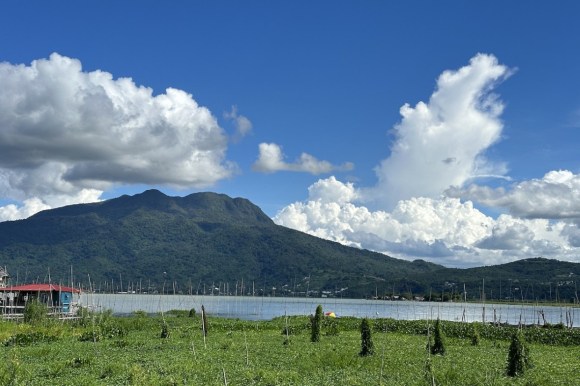
In my province, there is a lake called Laguna de Bay, famous for ayungin (silver perch), which is flavorful in a tamarind-based soup. Two years ago, when my youngest brother and his family returned on holiday, he asked me to buy dried silver perch for him to carry with him to his home in North America. Unfortunately, overfishing is a major concern.

Laguna De Bay. From Public Domain

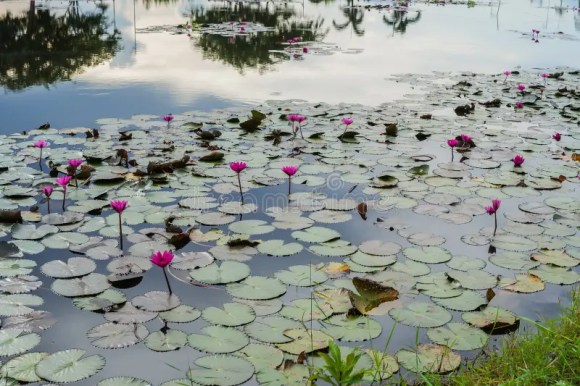
Another issue facing Laguna de Bay is the proliferation of water hyacinth, which adversely affects aquatic life and navigation. Although some community-based NGOs collect the plants and convert them into slippers, this commendable effort is insufficient, given that Laguna de Bay is the Philippines’ largest lake, spanning roughly 911–949 square kilometers (km²).

With the passage of time and the advancement of exploration, we may discover new species of fish that have not been a part of our traditional food sources. The continuous quest to identify new fish that can be consumed is a means of ensuring that there is a sufficient supply to satisfy the nutritional requirements of our population.

Laguna de Bay. From Public Domain

.

Manuel A. Alindogan, Jr. or Jun A. Alindogan is the Academic Director of the Expanded Alternative Learning Program of Empowered East, a Rizal-province based NGO in the Philippines and is also the founder of Speechsmart Online that specializes in English test preparation courses. He is a freelance writer and a member of the Freelance Writers’ Guild of the Philippines (FWGP).

.

PLEASE NOTE: ARTICLES CAN ONLY BE REPRODUCED IN OTHER SITES WITH DUE ACKNOWLEDGEMENT TO BORDERLESS JOURNAL

Click here to access the Borderless anthology, Monalisa No Longer Smiles

Click here to access Monalisa No Longer Smiles on Kindle Amazon International
Categories
Contents

Borderless, October 2025

Painting by Sohana Manzoor

Editorial

Imagine… All the People… Click here to read

Translations

Jani Jani Priyo, Ea Jebone  (I know my dear one, in this life) by Nazrul has been translated from Bengali by Professor Fakrul Alam. Click here to read.

Four of his own poems in Malay have been translated by Isa Kamari. Click here to read.

Five poems by Hrushikesh Mallick have been translated from Odia by Snehprava Das. Click here to read.

The Headstone, a poignant story by Sharaf Shad has been translated by Fazal Baloch. Click here to read.

Shukh (Happiness) by Tagore has been translated from Bengali by Mitali Chakravarty. Click here to read.

Poetry

Click on the names to read the poems

John Valentine, Saranyan BV, John Swain, Ahmad Al-Khatat, Stephen Druce, Jyotish Chalil Gopinath, Jenny Middleton, Maria Alam, Ron Pickett, Tanjila Ontu, Jim Bellamy, Pramod Rastogi, John Grey, Laila Brahmbhatt, John Zedolik, Snehaprava Das, Joseph K.Wells, Rhys Hughes

Poets, Poetry & Rhys Hughes

Rhys Hughes shares his play, Night in Karnataka. Click here to read.

Musings/ Slices from Life

Just Passing Through

Farouk Gulsara muses on humans and their best friends. Click here to read.

Feeding Carrots to Gentle Herbivores

Meredith Stephens looks back to her past adventures with horses and present ones with giraffes. Click here to read.

Linen at Midnight

Pijus Ash relates a real-life spooky encounter in Holland. Click here to read.

Two Lives – A Writer and A Businessman

Chetan Datta Poduri explores two lives from the past and what remains of their heritage. Click here to read.

My Forest or Your City Park?

G Venkatesh muses on the tug of war between sustainabilty, ecology and economies. Click here to read.

Musings of a Copywriter

In Karmic Backlog, Devraj Singh Kalsi explores reincarnations with a twinge of humour. Click here to read.

Notes from Japan

In DIY Dining in Japan, Suzanne Kamata in a light note talks about restaurants with robots. Click here to read.

Essays

Peddling Progress?

Jun A. Alindogan writes about what is perceived as progress from Philippines. Click here to read.

From Madagascar to Japan: An Adventure or a Dream…

Randriamamonjisoa Sylvie Valencia writes of her journey from Africa to Japan with a personal touch. Click here to read.

From Bombay to Kolkata — the Dhaaks of Durga 

Ratnottama Sengupta explores a UNESCO Intangible Cultural Heritage Festival. Click here to read.

Stories

Sleeper on the Bench

Paul Mirabile sets his strange story in London. Click here to read.

Sandy Cannot Write

Devraj Singh Kalsi takes us into the world of adverstising and glamour. Click here to read.

The Wise Words of the Sun

Naramsetti Umamaheswararao relates a fable involving elements of nature. Click here to read.

Discussions

A conversation with Swati Pal, academic and poet, on healing through writing and bereavement. Click here to read.

A conversation with five translators — Aruna Chakravarti, Radha Chakravarty, Somdatta Mandal, Fakrul Alam and Fazal Baloch from across South Asia. Click here to read.

Book Excerpts

An excerpt from That’s A Fire Ant Right There! Tales from Kavali by Mohammed Khadeer Babu, translated from Telugu by D.V. Subhashri. Click here to read.

An excerpt from Swati Pal’s poetry collection, Forever Yours. Click here to read.

Book Reviews

Somdatta Mandal reviews Banu Mushtaq’s Heart Lamp: Selected Stories, translated from Kannada by Deepa Bhasthi. Click here to read.

Meenakshi Malhotra has reviewed Malachi Edwin Vethamani’s anthology, Contours of Him: Poems. Click here to read.

Rupak Shreshta reviews Sangita Swechcha’s Rose’s Odyssey: Tales of Love and Loss, translated from Nepali by Jayant Sharma. Click here to read.

Bhaskar Parichha has reviewed Kalpana Karunakaran’s A Woman of No Consequence: Memory, Letters and Resistance in Madras. Click here to read.

.

Click here to access the Borderless anthology, Monalisa No Longer Smiles

Click here to access Monalisa No Longer Smiles on Amazon International

Categories
Editorial

Imagine… All the People…

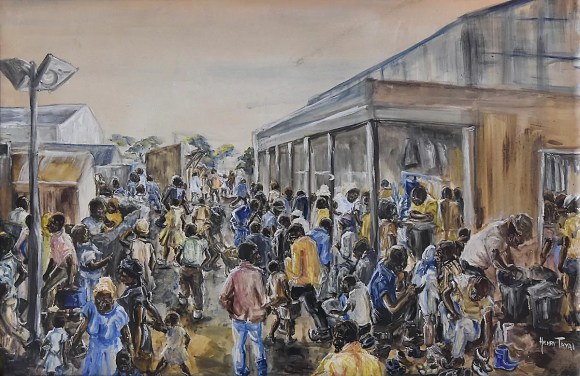
Art by Henry Tayali(1943-1987). From Public Domain

Let us imagine a world where wars have been outlawed and there is only peace. Is that even possible outside of John Lennon’s song? While John Gray, a modern-day thinker, propounds human nature cannot change despite technological advancements, one has to only imagine how a cave dweller would have told his family flying to the moon was an impossibility. And yet, it has been proven a reality and now, we are thinking living in outer space, though currently it is only the forte of a few elitists and astronomers. Maybe, it will become an accessible reality as shown in books by Isaac Asimov, Arthur C Clarke or shows like Star Trek and Star Wars. Perhaps, it’s only dreamers or ideators pursuing unreal hopes and urges who often become the change makers, the people that make humanity move forward. In Borderless, we merely gather your dreams and present them to the world. That is why we love to celebrate writers from across all languages and cultures with translations and writings that turn current norms topsy turvy. We feature a number of such ideators in this issue.

Nazrul in his times, would have been one such ideator, which is why we carry a song by him translated by Professor Fakrul Alam. And yet before him was Tagore — this time we carry a translation of an unusual poem about happiness. From current times, we present to you a poet — perhaps the greatest Malay writer in Singapore — Isa Kamari. He has translated his longing for changes into his poems. His novels and stories express the same longing as he shares in The Lost Mantras, his self-translated poems that explore adapting old to new. We will be bringing these out over a period of time. We also have poems by Hrushikesh Mallick translated from Odia by Snehprava Das and a poignant story by Sharaf Shad translated from Balochi by Fazal Baloch.

We have an evocative short play by Rhys Hughes, where gender roles are inverted in a most humorous way. It almost brings to mind Begum Rokeya’s Sultana’s Dream. Tongue-in-cheek humour in non-fiction is brought in by Devraj Singh Kalsi and Chetan Dutta Poduri. Farouk Gulsara and Meredith Stephens write in a light-hearted vein about their interactions with animal friends. G. Venkatesh brings in serious strains with his musings on sustainability. Jun A. Alindogan slips into profundities while talking of “progress” in Philippines. Young Randriamamonjisoa Sylvie Valencia gives a heartfelt account of her journey from Madagascar to Japan. Ratnottama Sengupta travels across space and time to recount her experiences in a festival recognised by UNESCO as an Intangible Cultural Heritage of Humanity. Suzanne Kamata brings a light touch again when she writes about robots serving in restaurants in Japan, a change that would be only fiction even in Asimov’s times, less than a hundred years ago!

Pijus Ash — are we to believe or not believe his strange, spooky encounter in Holland? And we definitely don’t have to believe what skeletons do in Hughes’ limericks, even if their antics make us laugh! Poetry brings on more spooks from Saranyan BV and frightening environmental focus on the aftermath of flooding by Snehaprava Das. We have colours of poetry from all over the world with John Valentine, John Swain, Ahmad Al-Khatat, Stephen Druce, Jyotish Chalil Gopinath, Jenny Middleton, Maria Alam, Ron Pickett, Tanjila Ontu, Jim Bellamy, Pramod Rastogi, John Grey, Laila Brahmbhatt, John Zedolik and Joseph K.Wells.

Fiction yields a fable from Naramsetti Umamaheswararao. Devraj Singh Kalsi takes us into the world of advertising and glamour and Paul Mirabile writes of a sleeper who likes to sleep on benches in parks out of choice! We also have an excerpt from Mohammed Khadeer Babu’s stories, That’s A Fire Ant Right There! Tales from Kavali , translated from Telugu by D.V. Subhashri. The other excerpt is from Swati Pal’s poetry collection, Forever Yours. Pal has in an online interview discussed bereavement and healing through poetry for her stunning poems pretty much do that.

Book reviews homes an indepth introduction by Somdatta Mandal to Banu Mushtaq’s Heart Lamp: Selected Stories, translated from Kannada by Deepa Bhasthi. We have a discussion by Meenakshi Malhotra on Contours of Him: Poems, edited and introduced by Malaysian academic, Malachi Edwin Vethamani, in which she concludes, “that if femininity is a construct, so is masculinity.” Overriding human constructs are journeys made by migrants. Rupak Shreshta has introduced us to immigrant Sangita Swechcha’s Rose’s Odyssey: Tales of Love and Loss, translated from Nepali by Jayant Sharma. Bhaskar Parichha winds up this section with his exploration of Kalpana Karunakaran’s A Woman of No Consequence: Memory, Letters and Resistance in Madras. He tells us: “A Woman of No Consequence restores dignity to what is often dismissed as ordinary. It chronicles the spiritual and intellectual evolution of a woman who sought transcendence within the rhythms of domestic life, turning the everyday into a site of resistance and renewal.” Again, by the sound of it a book that redefines the idea that housework is mundane and gives dignity to women and the task at hand.

We wind up the October issue hoping for changes that will lead to a happier existence, helping us all connect with the commonality of emotions, overriding borders that hurt humanity, other species and the Earth.

Huge thanks to our fabulous team, especially Sohana Manzoor for her inimitable artwork. We would all love to congratulate Hughes for his plays that ran houseful in Swansea. And heartfelt thanks to all our wonderful contributors, without who this issue would not have been possible, and to our readers, who make it worth our while, to write and publish.

Have a wonderful month!

Mitali Chakravarty

borderlessjournal.com

CLICK HERE TO ACCESS THE CONTENTS FOR THE OCTOBER 2025 ISSUE

.

READ THE LATEST UPDATES ON THE FIRST BORDERLESS ANTHOLOGY, MONALISA NO LONGER SMILES, BY CLICKING ON THIS LINK.

Categories
Essay

From Madagascar to Japan: An Adventure or a Dream?

By Randriamamonjisoa Sylvie Valencia

For as long as I can remember, I have been an introvert — this is who I am and will always be. Yet, few believe it. I come from Madagascar, a distant island where the people are called the Malagasy — a community bound by culture, tradition, and a shared sense of identity. Malagasy people are known for their warmth and generosity, often revealing a talkative side as they delight in conversation, and playful exchanges.  In contrast, I am reserved — a shy person who expresses myself freely only when comfortable and among those I trust.

As a child, I was the most talkative among my siblings, recounting every detail of my school day to my parents. I delighted in describing the funny expressions my primary school teacher made while explaining lessons, or the mischievous boys who always stuck their chewing gum on the pupils’ desks and all the tasks I had accomplished. I wanted my parents to know I was doing well, that the teacher praised me, and that I helped classmates who struggled.

Both my parents are very talkative, especially my father, from whom I inherited the gift of words. Speaking in front of my family comes naturally, yet in front of others, my words often falter — a fear that has always troubled me. I speak freely only with those I know well— my family and a few close friends.

Facing a large audience has always been daunting. My father encouraged me to confront this fear, to be confident, and to meet the audience’s gaze. I tried many times: presenting in group projects, speaking as a class representative, even addressing an audience at a classmate’s parent’s funeral.

As I grew older, my determination to overcome this fear grew. I devoured books and videos on public speaking, eager to communicate with confidence. My first real test came in 2018, when I delivered a speech in a Japanese language contest. I had loved Japanese language since childhood, captivated by its culture, and dreamed of becoming fluent. Entering the contest was a dream — an opportunity to speak publicly and a chance to win a trip to Japan.

I was guided by two close friends who practiced with me daily. They corrected my mistakes, offered feedback, and most importantly, encouraged me. Having known me for years, they understood how terrifying standing on stage could be, yet they supported me out of love, friendship, and belief in my potential.

During rehearsals, I gave my utmost effort, memorising the script when necessary. Still, doubts lingered about meeting expectations, conquering fears, and not disappointing those who believed in me. The days of practice passed quickly, and soon, the big day arrived. Nervous at first, I gradually became more at ease while speaking. I managed to control my anxiety but knew my performance was imperfect. I focused on each word, yet my mind occasionally went blank, struggling with the judges’ questions. Embarrassment washed over me; I feared I had let my friends and family down.

In the end, I did not win the first prize, but my closest friends congratulated me. They reminded me that the true milestone was stepping onto the stage, speaking in front of an audience, and maintaining composure. Their encouragement helped me realise that courage and effort mattered more than the outcome itself.

As an introvert, talking to strangers is challenging, let alone addressing a crowd. Hearing the words “public speaking” makes my stomach tighten, palms sweat, and heart race. Stage fright, fear of facing many people and sharing my thoughts has always been real. Each time my name is called, I shake, my mind blanks, heart pounds, mouth dries, and confidence seems to vanish before I start. Yet, I have never lost hope. Deep down, I knew a strength within me would help rise above fear and grow into a better version of myself.

One year later, I stood again in the same contest. This annual competition was a goal I refused to let go of. As before, my friends encouraged, pushed, and trained with me every day until the D-day. Their support gave me the strength to continue. I prepared even more fiercely — joining language clubs and volunteering in storytelling activities. But it was not easy. I never felt comfortable speaking or working with strangers. I was told teamwork required discussion, sharing, and collaboration — a nightmare for an introvert.

Solitude had been my ally, yet suddenly, I was surrounded by people of all ages and personalities. Cooperation was no longer optional. However, through this challenge, I discovered an important truth: whether introverted or extroverted, whether silent or talkative, we must learn to connect with others. Survival and growth depend on collaboration and support.

The big day of the speech contest arrived in May, a season of transition between summer and winter. I arrived at the hall just in time, accompanied by a close friend. A staff member guided me to my seat, only a few meters from the judges. I felt cheerful, and calm, even giving a fist bump to nearby contestants. For the first time, I felt truly ready to give a speech — optimistic, and at peace. Perhaps it was the preparation or my friends’ wholehearted support, or maybe I had begun to trust myself.

There were four contestants in the advanced level, and I was the last to speak. Each of us hoped to win the grand prize — a trip to Japan. I did not worry about the others. I believed in my success and was determined to win first place. Just days before, I even dreamed of visiting Japan, so nothing could stand in my way.

Finally, it was my turn. I adjusted the microphone, greeted in Japanese, and bowed to the judges and audience. I spoke for about five minutes on how Malagasy parents raise children. Three judges asked each two questions. Thanks to countless practice hours and mock questions and answers sessions with my best friends, I answered every tricky question. For the first time, right after my speech, I felt like a winner.

The event lasted about three hours, and the final verdict came. The Master of Ceremonies announced winners, starting with the beginner level, then the advanced. Among the four in my category, only two remained. The Master of Ceremonies paused dramatically before announcing the first-place winner… and pronounced my name. I whispered a silent thanks to God. This result — the goal I had worked so hard for — had become reality. The trip to Japan was the reward, and even more importantly, I had overcome stage fright. I spoke naturally and confidently in front of the audience — another milestone achieved.

Later that year, in 2019, I visited Japan for the first time. The experience was magical. I met wonderful people, explored my favorite country, and fulfilled a long-cherished dream.

Six years later, I returned to the Land of the Rising Sun—this time as an international student. I now live in Tokushima prefecture, which is in southeastern Japan, far from the bustling cities, in a quiet countryside where few tourists venture. Yet, the city and its neighbourhoods are simply wonderful. It is peaceful, surrounded by greenery, and while the locals may seem reserved, they are incredibly welcoming. Even with some grasp of the local language, adapting to a new country as a foreigner is challenging. Still, thanks to the support of my seniors and friends who have lived here for years, I managed to navigate my first six months successfully.

The city where I live hosts an annual Japanese speech contest open to foreigners who have been residing here for some time. I was encouraged to participate, partly because I could speak some Japanese, and partly because it was a great chance to gain experience. I thought, why not? After all, I gradually grew more comfortable speaking in front of others.

This time, participants could choose their own topics, though it was suggested to focus on their experience in Japan or explore cultural connections between their home country and Japan. I was eager to participate, but selecting a topic was harder than I expected. Inspiration felt scarce, and I had no clear direction. Still, I knew that finding my own perspective was key to making the speech meaningful.

Overwhelmed by my studies, I barely noticed the passage of time. Before I knew it, the deadline had arrived. I had not written a single word, though ideas swirled in my mind. I opened my laptop, took a deep breath, and began writing everything that came to my mind. Reflecting on my experiences in Japan, I realised that people often struggled to pronounce my name correctly. That inspired me to talk about the hidden culture behind Japanese and Malagasy names.

With my theme set, I focused on making my speech coherent and captivating. I tend to draw inspiration at the last minute. I wrote, rewrote, and proofread repeatedly, staying up all night without noticing morning approaching.

Finally, I finished my manuscript and emailed it to one of my Japanese teachers to check for grammatical errors. She responded immediately, and her quick proofreading allowed me to submit my speech on the deadline. I felt relieved, yet strangely nervous, a sensation I could not quite describe.

Six years have passed since I last spoke in front of an audience. Preparing another speech made me feel nostalgic, bringing back memories of long rehearsals, the advice of my best friends, and countless sleepless nights.

A month after submitting my manuscript, I received an email from the event organizer announcing my selection. I was among the fourteen candidates chosen to compete. I whispered a quiet “wow,” but doubts immediately surfaced. I had two months to prepare. To understand what awaited me, I watched recordings of previous competitions, while my seniors and Japanese teacher helped me refine my speech.

Four students were selected from my university. The other three were Asian students with extensive experience in Japanese language and culture. They read Kanji (Japanese characters)effortlessly and conversed naturally. And then, there was me. Though I had been exposed to Japanese language and culture since childhood, memorising every character reading and grasping dialects was never easy. Back in my country, despite growing interest in Japanese language and culture, opportunities to use it in daily life remain limited. Once again, I faced a new challenge—this time in the Land of the Rising Sun.

Time flew, and soon the two months of preparation had passed. Finally, the big day arrived. Early that morning, a kind university staff member greeted us with a bright smile. As I descended from my dormitory, I saw her waiting by her car near the main gate, bowing politely. Her excitement was palpable. Three of us rode in her car; she asked about our preparations and told jokes, perhaps to ease our nerves, which were all visible.

After twenty minutes, we arrived at a large building and walked up to the fifth floor through corridors decorated in traditional style. Japanese architecture and design have always fascinated me, and I was struck by their beauty once again. The event hall was medium-sized, with a small table at the entrance holding our name tags.

One by one, the other candidates arrived. We were then led to a smaller room for a preparatory meeting. While waiting, we chatted briefly to get to know one another. The competition began in the early afternoon. We were instructed to enter the hall one by one, greeted with warm applause. Observing the other candidates, I could tell they were ready. Fourteen contestants competed in total. Thirteen were Asians from countries including China, Vietnam, India, Indonesia, the Philippines, Taiwan, Sri Lanka, and Thailand. I was the only African, from a distant country few people knew. Before each speech, the Master of Ceremonies shared a brief anecdote about the candidate’s country, offering the audience a glimpse into its culture. Each contestant then delivered a five-minute speech.

There were two types of awards: the Golden Prize for first and second place, followed by four Silver Prizes. I had hoped to place among the top five while preparing my speech.

As I listened to the first three candidates, I was deeply impressed. Their speeches were powerful, emotional, and delivered with near-native fluency. I was surprised by how advanced and impressive their speaking skills were. I was the sixth speaker. Perhaps it had been so long since I last addressed an audience, or perhaps it was the absence of my closest friends but standing alone in a foreign country in front of strangers was overwhelming. My hands trembled. When my name was announced, I feared I might not endure those five minutes on stage.

Still, I stood before hundreds of people. I bowed, held the microphone firmly, and began. My heart raced and sweat ran down my face and back. Gradually, the pressure eased. When I shared the example of the longest name in the world—from my country, the audience reacted with surprise and amusement. I realised how attentive they were and regained inner calm. Although I forgot one line, I finished my speech smoothly and expressively.

The remaining eight candidates were equally impressive. Their eloquence was such that, with eyes closed, one might mistake them for native speakers. It was the highest-level contest I had ever participated in. Each theme and presentation were unique, and every contestant spoke with confidence. I doubted whether I would receive a prize, but reassured myself that even without one, the experience was worthwhile. Most participants had lived in Japan for over three years, and the Chinese and Taiwanese contestants were especially strong in oral expression. Yet, standing among such talented competitors was an honor.

After a break that was supposed to last twenty minutes but stretched to fifty, results were announced. They began with six Encouragement Prizes. I thought I might be among them, but my name was not called. Two more awards followed, still not mine. A friend nudged me, whispering, “Congratulations!” I replied, “Stop joking. Congratulations to you instead!”

Finally, the Silver Prizes were announced. They first called my country, then my name. The applause and cheers overwhelmed me, and tears welled in my eyes. I had not expected to win a Silver Prize, given the competition’s level. One friend from my university won the Golden Prize, and the second Golden Prize went to a Vietnamese contestant.

Participating in such a high-level competition was a tremendous challenge. Every step—from manuscript preparation to standing on stage—pushed me beyond my comfort zone. Yet, when it was over, I felt immense pride. I had once again delivered a speech before a large audience, this time in the country whose language I had cherished for years.

Though I had been nervous, the audience remained unaware. Their attentive expressions and warm applause carried me through. Afterwards, my Japanese teachers praised my performance, saying I had done exceptionally well. In that moment, I realised every hour of preparation, every doubt, and every fear had been worthwhile. I had faced a formidable challenge, stood my ground, and expressed myself fully, a reminder that courage, practice, and determination can transform daunting experiences into triumphs. It is a memory I will treasure forever.

.

Randriamamonjisoa Sylvie Valencia is from Madagascar and is currently studying in Japan as a trainee student. She enjoys reading, writing, listening to music, and traveling to explore new cultures.

PLEASE NOTE: ARTICLES CAN ONLY BE REPRODUCED IN OTHER SITES WITH DUE ACKNOWLEDGEMENT TO BORDERLESS JOURNAL

Click here to access the Borderless anthology, Monalisa No Longer Smiles

Click here to access Monalisa No Longer Smiles on Kindle Amazon International
Categories
Essay

Peddling Progress?

By Jun A. Alindogan

I grew up in a town where fish, shellfish, and seafood are abundant, so the specialty dishes are related to its topography. The location is humble, yet it boasts special delicacies such as noodles, porridge, tofu, duck eggs, and rice cakes. Many stores line the town’s main street, serving these types of morning and afternoon snacks that I was quite fond of. I particularly remember a store famous for its huge burgers with generous slices of cucumber, tomatoes, and onions on a tangy mayo-ketchup dressing — also popular for its all-day breakfast meals. Despite its marine resources, my hometown has no particular brand associated with it.

A Philippine-based fast-food chain was recently established in the area, and residents claim that development has now been put in place. Consumption is erroneously classified as development. A former English language student mistakenly believed that the Philippines was a wealthy nation because of the abundance of malls, only to realise later that poverty is widespread behind these malls. Consumption is peddled as a sign of progress.

This also happened during my university years when I had to take the elevated rail system to go to school. At the north end point of the train system stood a central grade school on a sprawling campus, which has now been transferred to a much smaller space but is still referred to as a central school. All central schools in our country are located on large campuses. Its original location is now part of a nationwide mall chain. Is going to the mall productive?

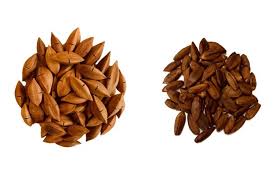
Years ago, my younger brother moved to the southernmost province of Luzon Island, which was our father’s hometown. In the past, I would spend holidays at my brother’s residence with some very close friends. The roads are well-paved, and in the city half an hour away, there are small commercial shops and a local fast-food chain unique to the area. The province is well-known for its “pili” nuts and handicrafts.

According to my brother, the city’s landscape has drastically changed with the addition of a big mall chain and a Roman-inspired colosseum. My nephew recently informed me that the provincial projects mainly consist of community-based gymnasiums. “Progress” seems to be selective and does not necessarily foster a strong culture of creativity and productivity in each household.

In my current municipality, the main issue is the lack of social infrastructure to support entrepreneurship. The prevailing norm is consumption, whether physical or digital. Bureaucratic red tape makes business mechanisms inaccessible, discouraging newcomers from starting any kind of enterprise.

Perhaps another reason for this lack of visitors is the municipality’s location. Being the last town in the province, only residents and haulers typically come to the area. It is isolated from the main arterial road that traverses the entire province.

The town does not have a specific product to boast of, unlike other cities and municipalities known for their specialties like shoemaking, salted and duck eggs, fish sauce, specialty noodle dishes, and slippers made from water lilies.

The town’s main products are concrete and sand, extracted through continuous quarrying activities that are detrimental to both human health and the environment. Agricultural produce — such as bananas, mangoes, tomatoes, okra, and eggplants — is limited due to the town’s rocky terrain. During a visit to an upland village, I met a caretaker of a small property that was supposed to be organic, but I discovered during our conversation that it was merely a facade by a large mobile phone provider for its social enterprise project.  Additionally, the population of native tilapia[1] is low due to murky waters caused by silt and mud. Despite having numerous hiking sites that also cater to consumerist interests, the municipality lacks a distinct specialty dish for people to enjoy and remember as part of its commercial offerings.

According to my sister-in-law’s brother, the main source of income for their island-province is remittances from Overseas Filipino Workers (OFWs) [2] .He also claims that the province is an ideal place to retire and spend money, boasting beaches, volcanic hot springs, coconut plantations, rice farms, nature resorts, and rivers. Despite having a root-crop based delicacy and an abundance of dried fish, the province lacks production or manufacturing facilities, with the exception of mining, which unfortunately led to one of the worst environmental disasters in the country’s history. As a result, consumption is the prevailing norm on the island. Isn’t it ironic that the ex-girlfriend of a close friend pursued a degree in BS Entrepreneurship but currently works as a Customer Engagement Manager at a global fast-food chain?  She should have considered starting her own business, no matter how small. She is actually promoting a perpetual cycle of consumerism, rather than entrepreneurship.

Based on online sources[3], there are only ten small manufacturing firms in my current area, Montalban (Rodriguez), which covers a total land area of   172.65 km 2 (66.66 sq mi) [4]. This implies that a culture of production is not the town’s priority when it should have been the first step to economic and social progress, alongside environmental protection and sustainability.

In hindsight, society generally encourages individuals to consume the latest gadgets, trends, food, technology, shoes, fashion, apps, make-up, and hairstyles. We are therefore told to consume and discard in a never-ending cycle of consumption and waste. Creativity in building enterprise is relegated in favor of a consumerist culture. To move forward, communities must do the reverse, so wealth is neutralized. Not everyone has the business acumen to succeed. However, production must still exceed consumption.

One main reason for the failure of production to establish a strong foothold in our communities could be attributed to the lack of practical and relevant entrepreneurial courses that are accessible to everyone in terms of fees, range, and distance. These courses are not tailored to the specific needs of each locality, as businesses tend to be similar in one area, causing most enterprises to struggle to take off without offering anything unique to attract patrons. Creativity and productivity go hand in hand.

To create a more sustainable society, we need to move away from consumerism and focus on increasing production through manual, mechanical, automated, or digital means. A thriving community relies on its ability to expand and improve production capabilities.

[1] Fish

[2] https://psa.gov.ph/statistics/survey/labor-and-employment/survey-overseas-filipinos/node/1684600

[3] https://www.dnb.com/business-directory/company-information.manufacturing.ph.rizal.rodriguez_%28montalban%29.html

[4] https://www.philatlas.com/luzon/r04a/rizal/rodriguez.html

Manuel A. Alindogan, Jr. or Jun A. Alindogan is the Academic Director of the Expanded Alternative Learning Program of Empowered East, a Rizal-province based NGO in the Philippines and is also the founder of Speechsmart Online that specialises in English test preparation courses. He is a freelance writer and a member of the Freelance Writers’ Guild of the Philippines (FWGP).

.

PLEASE NOTE: ARTICLES CAN ONLY BE REPRODUCED IN OTHER SITES WITH DUE ACKNOWLEDGEMENT TO BORDERLESS JOURNAL

Click here to access the Borderless anthology, Monalisa No Longer Smiles

Click here to access Monalisa No Longer Smiles on Kindle Amazon International
Categories
Editorial

Seasons Out of Time

Today, as I gaze in this autumnal light,
I feel I am viewing life anew.

— Tagore's Aaj Shororter Aloy (Today, in the Autumnal Light)
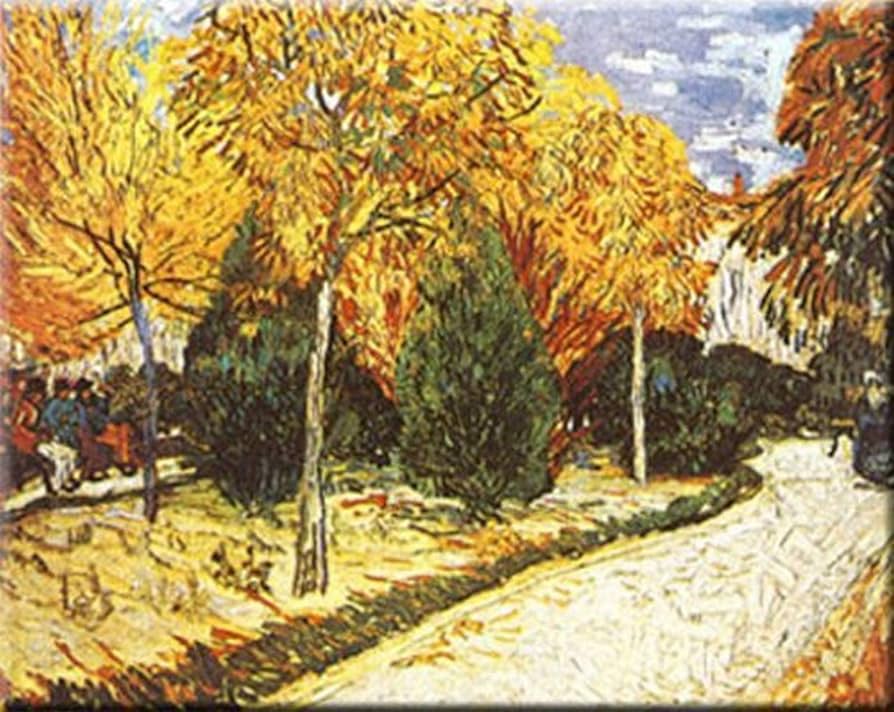
Autumn Garden by Vincent Van Gogh (1853-1890). From Public Domain

September heralds the start of year-end festivities around the world. It’s autumn in one part and spring in another – both seasons that herald change. While our planet celebrates changes, dichotomies, opposites and inclusively gazes with wonder at the endless universe in all its splendour, do we? Festivals are times of good cheer and fun with our loved ones. And yet, a large part of the world seems to be in disarray with manmade disasters wrought by our own species on its own home planet. Despite the sufferings experienced by victims of climate and war-related calamities, the majority will continue to observe rituals out of habit while subscribing to exclusivity and shun change in any form. Occasionally, there are those who break all rules to create a new norm.

One such group of people are the bauls or mendicants from Bengal. Aruna Chakravarti has shared an essay about these people who have created a syncretic lore with music and nature, defying the borders that divide humanity into exclusive groups. As if to complement this syncretic flow, we have Professor Fakrul Alam’s piece on a human construct, literary clubs spanning different cultures spread over centuries – no less an area in which we find norms redefined for, the literary, often, are the harbingers of change.

Weaving in stories from around the world, our non-fiction section offers parenting tips ( or are these really nerdy meanderings?) from Farouk Gulsara who looks inclusively at all life forms — big and small, including humans. Meredith Stephens brings us a sobering narrative with a light touch from the Southern Hemisphere. Prithvijeet Sinha takes us to explore an ancient monument of Lucknow and Jun A. Alindogan tells us “what’s in a name” in Philippines — it’s quite complex really  — it reads almost as complicated as a Japanese addresses explained in her column by Suzanne Kamata. In this issue, she takes us through the complexities of history in South Carolina, while Devraj Singh Kalsi analyses literary awards with a dollop of irony!

Humour is brought into poetry by Rhys Hughes, though his column houses more serious poems. Joseph C.Obgonna has an interesting take on his hat — if you please. We have poetry on climate by Onkar Sharma. Verses as usual mean variety on our pages. In this issue, we have a poem (an ekphrastic, if we were given to labelling) by Ryan Quinn Flanagan on a painting, by Ron Pickett on aging and on a variety of issues by Arshi, Joseph K Wells, Shamim Akhtar, Stephen House, Mian Ali, John Grey, Jim Murdoch, Juliet F Lalzarzoliani, Jim Bellamy, Soumyadwip Chakraborty, Richard Stimac and Sanzida Alam. We have translations of poetry. Ihlwha Choi has self-translated his poem on a dragonfly from Korean. Snehprava Das has brought to us another Odia poet, Ashwini Mishra. Tagore’s Aaj Shororter Aloy (Today, in the Autumnal Light) has been translated from Bengali. Though the poem starts lightly with the poet bathed in autumnal light, it dwells on ‘eternal truths’ while Nazrul’s Karar Oi Louho Kopat (Those Iron Shackles of Prison), transcreated by Professor Alam, reiterates breaking gates that exclude and highlight differences. In the same spirit as that of the bauls, Nazrul’s works ask for inclusivity as do those of Tagore.

We have more poetry in book excerpts with Sinha’s debut collection of poems, A Verdant Heart, and in reviews with veteran poet Kiriti Sengupta’s Selected Poems, reviewed by academic Pradip Mondal. Rakhi Dalal has written on Mohua Chinappa’s Thorns in my Quilt: Letters from a father to a Daughter. while Bhaskar Parichha has discussed Kalyani Ramnath’s Boats in a Storm: Law, Migration, and Decolonization in South and Southeast Asia, 1942–1962, a book that explores beyond the boundaries that politicians draw for humanity. The pièce de résistance in this section is Somdatta Mandal’s exploration of Aruna Chakravarti’s selected and translated, Rising from the Dust: Dalit Stories from Bengal. The book stands out not just for the translation but also with the selection which showcases an attempt to create bridges that transcend linguistic and cultural barriers.

Mandal, herself, has a brilliant translation featured in this issue. We have a review of her book, an interview with her, and an excerpt from the translation of Jaladhar Sen’s The Travels of a Sadhu in the Himalayas. Written and first published in the Tagore family journal, Bharati, the narrative is an outstanding cultural bridge which even translates Bengali humour for an Anglophone readership. That Sen had a strictly secular perspective in the nineteenth century when blind devotion was often a norm is showcased in Mandal’s translation as well as the stupendous descriptions of the Himalayas that haunt with elegant simplicity. 

Our fiction this month seems largely focussed on women’s stories from around the world. While Fiona Sinclair and Erin Jamieson reflect on mother-daughter relationships, Anandita Dey looks into a woman’s dilemma as she tries to adjust to the accepted norm of an ‘arranged’ marriage. Rashida Murphy explores deep rooted social biases that create issues faced by a woman with a light touch. Naramsetti Umamaheswararao brings in variety with a fable – a story that reflects human traits transcending gender disparity.

The September issue would not have been possible without contributions of words and photographs by many of you. Huge thanks to all of you, to the fabulous team and to Sohana Manzoor, whose art has become synonymous with our journal. And our heartfelt thanks to our wonderful readers, without who the effort of putting together this journal would be pointless. Thank you all.

Looking forward to happier times.

Mitali Chakravarty

borderlessjournal.com

.

CLICK HERE TO ACCESS THE CONTENTS FOR THE SEPTEMBER 2025 ISSUE

.

READ THE LATEST UPDATES ON THE FIRST BORDERLESS ANTHOLOGY, MONALISA NO LONGER SMILES, BY CLICKING ON THIS LINK.

Categories
Contents

Borderless, August 2025

Art by Sohana Manzoor

Editorial

Storms that Rage… Click here to read.

Translations

Nazrul’s Jonomo, Jonomo Gelo (Generations passed) has been translated from Bengali by Professor Fakrul Alam. Click here to read and listen to a rendition by the famed Feroza Begum.

Ajit Cour‘s short story, Nandu, has been translated from Punjabi by C Christine Fair. Click here to read.

The Scarecrow by Anwar Sahib Khan has been translated from Balochi by Fazal Baloch. Click here to read.

Five poems by Aparna Mohanty have been translated from Odia by Snehprava Das. Click here to read.

Angshuman Kar has translated some of his own Bengali poems to English. Click here to read.

Sunflower, a poem by Ihlwha Choi,  has been translated from Korean by the poet himself. Click here to read.

Tagore’s Shaishabshanda (Childhood’s Dusk) has been translated from Bengali by Mitali Chakravarty. Click here to read.

Poetry

Click on the names to read the poems

Ron Pickett, Fakrul Alam, William Miller, Meetu Mishra, Heath Brougher, Laila Brahmbhatt, Luis Cuauhtémoc Berriozábal, Snigdha Agrawal, George Freek, Ashok Suri, Scott Thomas Outlar, Dustin P Brown, Rajorshi Patranabis, Ryan Quinn Flanagan

Poets, Poetry & Rhys Hughes

From the Vale of Glamorgan are two poems on the place where Rhys Hughes grew up. Click here to read.

Musings/Slices from Life

Menaced by a Marine Heatwave

Meredith Stephens writes of how global warming is impacting marine life in South Australia. Click here to read.

The Man from Pulwama

Gowher Bhat introduces us to a common man who is just kind. Click here to read.

More than Words

Jun A. Alindogan writes on his penchant for hardcopy mail. Click here to read.

To Bid or Not to Bid… the Final Goodbye?

Ratnottama Sengupta ponders on Assisted Dying. Click here to read.

Musings of a Copywriter

In Syrupy Woes, Devraj Singh Kalsi looks at syrupy health antidotes with a pinch of humour. Click here to read.

Essays

‘Verify You Are Human’

Farouk Gulsara ponders over the ‘intelligence’ of AI and humans. Click here to read.

Does the First Woman-authored Novel in Bengali Seek Reforms?

Meenakshi Malhotra explores Somdatta Mandal’s translation of Manottama, the first woman-authored Bengali novel published in 1868. Click here to read.

Bhaskar’s Corner

In Bidyut Prabha Devi – The First Feminist Odia Poet, Bhaskar Parichha pays a tribute to the poet. Click here to read.

Stories

The Sixth Man

C. J. Anderson-Wu tells a story around disappearances during Taiwan’s White terror. Click here to read.

I Am Not My Mother

Gigi Baldovino Gosnell gives a story of child abuse set in Philippines where the victim towers with resilience. Click here to read.

The Archiver of Shadows

Hema R explores shadows in her story set in Chennai. Click here to read.

Ali the Dervish

Paul Mirabile weaves the strange adventures of a man who called himself Ali. Click here to read.

The Gift

Naramsetti Umamaheswararao moulds children’s perspectives. Click here to read.

Notes from Japan

In American Wife, Suzanne Kamata gives a short story set set in the Obon festival in Japan. Click here to read.

Conversation

Neeman Sobhan, author of Abiding City: Ruminations from Rome, discusses shuttling between multiple cultures and finding her identity in words. Click here to road.

Book Excerpts

An excerpt from M.A.Aldrich’s From Rasa to Lhasa: The Sacred Center of the Mandala. Click here to read.

An excerpt from Neeman Sobhan’s An Abiding City: Ruminations from Rome. Click here to read.

Book Reviews

Somdatta Mandal reviews Chhimi Tenduf-La’s A Hiding to Nothing. Click here to read it.

Madhuri Kankipati reviews O Jungio’s The Kite of Farewells: Stories from Nagaland. Click here to read.

Bhaskar Parichha reviews Snehaprava Das’s Keep it Secret: Stories. Click here to read.

.

Click here to access the Borderless anthology, Monalisa No Longer Smiles

Click here to access Monalisa No Longer Smiles on Amazon International

Categories
Stories

I Am Not My Mother

By Gigi Gosnell

My name is Amina Salvador, 13 years old. I was born in the rural community of Santa Maria, Philippines. I want to share with you the events that prompted me to give testimony to the police. That day was the hardest day in my life. After it was done, two long months went by until my mother received the decision of the Prosecutor’s office, stating:

A person here left unnamed raped me, while I was still a virgin. The charges against the perpetrator were two counts of rape of a minor by sexual assault and three counts of lascivious conduct.”

The course of my life changed abruptly when my mother Selina decided to leave for Dubai in search of work as a domestic worker. Before she left, she spoke to me with tears in her eyes, promising to give me a good future and proper home where I could have access to all the comforts of life, good internet access, and would be able to pursue my studies. She would also buy me new clothes and provide for adequate food so I would not starve.

My mother left me under the care of my father. He was 43 years old, a muscular and strong man. He worked as a painter for newly built church buildings. Initially, he started pampering me with fancy items, like trendy watches and expensive clothes. This might seem like he was an ideal father.

My mother is an attractive woman, rather plump, with a pleasant face. She had a difficult life. Her parents were poor and not able to give her an education. Now, she is 40 years old.

It was by accident that I found out that my mother ran away from my “father”, the man she had married. After daily beatings in the hands of her alcoholic and abusive husband, she had no choice than to go south where her parents lived.

With a small bag of clothes and photographs of the five young children she had left behind with her abusive husband, she returned to her hometown to start afresh. At the time when all this drama was unfolding, I was still not born.

I heard that I was conceived when my mother fell in love again with another man who promised her to love and protect her. I suppose that I came into life as the sweet fruit of that promise. It didn’t take long, however, for her to discover the true character of this man whom she saw as a savior from her former abusive husband. It turned out that her boyfriend was a womaniser and a very jealous person. He too was another wife-beater.

As a result, my mother ran away a second time, with a three-month-old baby growing inside her. Feeling she had nobody to turn to, she returned to the cruel husband she had left some months ago. In this way, my mother continued her old subservient life.

I was born in a dilapidated clinic in our town, and three months later I was baptized as Amina Salvador. I took my mother’s husband family name. Anselmo Salvador was the father I got to know while growing up, until my mother, black and blue from physical abuse and humiliation, fled once more. Sad to say she ran away once more to her previous lover boy, the jealous and cheater one.  Are you confused by now?

I am too young to understand what was going on inside my mother’s head. All this time I just kept quiet and did not ask questions about adult matters. As a young girl, I just wanted to play with my friends, go to school, and be myself. I still considered myself a normal kid.

Dark clouds started to form a few days after my mother flew out to Dubai. As I told you before, my mother entrusted me to her live-in partner. As you remember, previously my mother had left her lover already pregnant with me. It turns out that Solomon, yes him, is my real father. That is what my mother thinks and I have no right to refute her own truth. I was only 7 years old when she and I took a long bus ride back to her old lover boy. She held my left hand tight when we reached Solomon’s house.

The fights between her and Anselmo, and her and Solomon left a lasting impression in my young mind, yet I could not understand the causes of all of this. I suppose I was just caught in the middle of some nasty adult fights, whether I liked it or not.

I remember exactly after I said goodbye to my mom at the airport, my papa started abusing me. I woke up once in the middle of the night feeling his hands sitting on me. I was crying almost every night. I didn’t tell anyone what was going on. I was too ashamed to talk to anyone. I felt dirty. I lost weight and became more reserved.

I tried to reach out to my mother, but my monster papa was controlling my cellphone and my Facebook account he had created himself. He interfered with the messages I tried to send out. I have no idea how on earth he did this.

My harrowing experience went on and on for several months until I finally got a chance to message my mother. I did not know what to say. I simply wrote, “Is it right for may papa to kiss me on my lips?”

Instinctively, my mother felt there was something completely wrong happening to me. She asked her sister, my aunt Lenny, to take me away from my papa’s house. Aunt Lenny took me to her house and stayed with me until my mother’s immediate return from Dubai.

I am in safe hands now, under the protection of my mom and aunty. My dad was arrested and is now in prison, currently applying for bail. Prior to his arrest, he posted sexually explicit materials about me and my mom on social media, exposing me and my mom to shame in front of our extended families and friends. He also tried to kidnap me at school before my mother could return from Dubai.  He orchestrated a smear campaign against me to make me appear as a flirt and a lose girl. It was terrible.

I am relieved that he is in prison right now, although he is begging my mother to withdraw the charges against him in exchange for money, and all kinds of tricks to make us back down and settle out of court.

While I am happy to see the monster in prison, my mother has a different idea. She wants to protect me from the prying incursions of the court. She knows that my case may take a year or more to conclude. She keeps telling me that she just wants to me to move on with my life. She also plans to go back to Dubai to make some money so she can support me and the rest of my siblings from my other father. I tell her, “It’s up to you, mama.”

You see, I am traumatised like my mother, but I am trying to convince myself that what happened to me should not define who I am. I can’t be in a similar situation like my mother is. It is sad to say that while we are still busy with my legal case, she has met another man. At first, he appeared gentle and kind, but lately, I overheard him cursing my mother over money squabbles. So, what can I say. It’s her life.

I choose not to be broken by my story. I will fight the demons in my head. I know it won’t be easy. I will show my mother that there is another way to live, and it is to love myself.

.

Gigi Baldovino Gosnell has degrees in Psychology and Education. She lectures in Psychology, worked in various NGOs, and the public service in the fields of women empowerment, land reform, social development and local government.

.

PLEASE NOTE: ARTICLES CAN ONLY BE REPRODUCED IN OTHER SITES WITH DUE ACKNOWLEDGEMENT TO BORDERLESS JOURNAL

Click here to access the Borderless anthology, Monalisa No Longer Smiles

Click here to access Monalisa No Longer Smiles on Amazon International

Categories
Slices from Life

Social Media Repitition

By Jun A. Alindogan

I remember feeling tense when I opened my very first email account with the help of the friendly staff at a British registered charity office where I was a member of the learning resource centre in Manila. I thought that it would open a floodgate of privacy issues, including surveillance and compromise. The world’s technological landscape was changing, and I had to adapt. I have always held onto the belief that while technology has immense benefits, it also has a lot of unbridled consequences, including insecurities, pride, selfishness, egoism, shame, and individual and religious superiority. A number of digital platforms have continuously increased and evolved in various iterations, from its email function to TikTok, Facebook, Messenger, Viber, vlogs, WhatsApp, YouTube channels, Pinterest, Blogspot, WordPress, LinkedIn, ZoomInfo, and Threads. The list seems endless.

I have a personal and professional Facebook account, as well as Messenger and Viber, because I find these platforms to be the most helpful to me. I have limited comprehension when it comes to understanding why young people feel the need to be on every digital platform. In my opinion, less is more. Being overexposed can be toxic in terms of seeking external validation and interaction. Not every thought needs to be published on social media. Why do you have to drag your friends and family and even strangers into your rollercoaster of emotions and shifting ideas about life’s journey all the time? While it is true that social media is a tool for self-expression, it is also equally true that it is a medium for self-destruction, as transparency can be both good and evil.

Take, for instance, the case of a woman in her mid-20s who is active on various social media platforms such as Facebook, Instagram, LinkedIn, Twitter, Pinterest, Blogspot, WordPress, TikTok and X (Twitter). She lost her parents at a young age and had to work as a household helper in the city. Eventually, she received a government scholarship and was able to continue her college studies. She shared on one of her social media accounts that it has become a sort of diary for her, in addition to her voice notes and physical journal. What is the reason for this repetition? Perhaps it is an issue of validation. When an individual delves into an onslaught of social media accounts, it implies proving one’s identity and self-esteem to the world. This can become a form of spiritual superiority, indicating that the person is self-absorbed. We are not the world.

The same holds true for partners who must keep up with their significant others’ social media accounts. The rat race is not just physical, but also digital. For instance, decisions about getting married early are often swayed by image quotes or social media discussions that push boyfriends to give in to these pressures, even if it’s not the right time for those who have only been working for less than two years and have not established a stable and relevant career. Saving for one’s wedding becomes the priority when it should be the other way around – saving for one’s personal and professional growth and development first. Why is there a need for comparison? As a result, emotional manipulation and threats are common. Career concerns are also plagued by the pressure to amass wealth by a certain age. The repetition of social media posts may be a way for individuals to acknowledge their own shortcomings.

In the context of a close friend, I have often wondered why, in most of his photos with me and our other friends, he rarely smiles. Yet, in his photos with his girlfriend, he has a big smile all the time. Is this a result of social media pressure, causing him to appear serious with friends while showcasing happiness in his relationship? On the contrary, I believe that his consistent seriousness may be a reflection of both his and his partner’s insecurities and jealousy.

For years, I have developed a close bond with a friend who was orphaned at a young age. Our main forms of communication are face-to-face and online. However, a year ago, he unexpectedly unfriended me on Facebook. I suspect that this decision may be related to the social media pressure he faces regarding his relationship. Despite this, we still communicate and share stories on Viber and meet face to face, although not as frequently as before. I understand that his job at a global fast food chain keeps him busy, but the pressure from social media can be overwhelming as it becomes a cycle of repetition.

In a way, social media serves as an escape, so repetition is necessary to cope with both material and non-material stressors. To some extent, this coping mechanism may be healthy, but most of the time, it becomes detrimental to a person’s well-being. Being overly repetitive on social media always comes at a cost.


Manuel A. Alindogan, Jr. or Jun A. Alindogan is the Academic Director of the Expanded Alternative Learning Program of Empowered East, a Rizal-province based NGO in the Philippines and is also the founder of Speechsmart Online that specialises in English test preparation courses. He is a freelance writer and a member of the Freelance Writers’ Guild of the Philippines (FWGP).

PLEASE NOTE: ARTICLES CAN ONLY BE REPRODUCED IN OTHER SITES WITH DUE ACKNOWLEDGEMENT TO BORDERLESS JOURNAL. 

Click here to access the Borderless anthology, Monalisa No Longer Smiles

Click here to access Monalisa No Longer Smiles on Kindle Amazon International
Categories
Contents

Borderless, November 2024

Art by Sohana Manzoor

Editorial

Clinging to Hope…Click here to read.

Translations

Nazrul’s Tumi Shundor Tai Cheye Thaki (Because you are so beautiful, I keep looking at you) has been translated from Bengali by Professor Fakrul Alam. Click here to read.

Hotel Acapulco, has been composed and translated from Italian by Ivan Pozzoni. Click here to read.

On the Reserved Seat of the Subway, a poem by Ihlwha Choi, has been translated from Korean by the poet himself. Click here to read.

Tagore’s Phul Photano (Making Flowers Bloom) has been translated from Bengali by Mitali Chakravarty. Click here to read.

Poetry

Click on the names to read the poems

Michael R Burch, Jahanara Tariq, Luis Cuauhtémoc Berriozábal, Shahalam Tariq, Stuart McFarlane, Saranyan BV, George Freek, G Javaid Rasool, Heath Brougher, Vidya Hariharan, Paul Mirabile, Ananya Sarkar, Ryan Quinn Flanagan, Pulkita Anand, Rhys Hughes

Musings/Slices from Life

Pinecones and Pinky Promises

Luke Rimmo Minkeng Lego writes of mists and cloudy remembrances in Shillong. Click here to read.

Elusive XLs

Shobha Sriram muses on weight management. Click here to read.

The Eternal Sleep of Kumbhakarna

Farouk Gulsara pays a tribute to a doctor and a friend. Click here to read.

Musings of a Copywriter

In Becoming a ‘Plain’ Writer, Devraj Singh Kalsi explores the world of writer’s retreats on hills with a touch of irony. Click here to read.

Notes from Japan

In Educating for Peace in Rwanda, Suzanne Kamata discusses the peace initiatives following the terrors of the 1994 Rwandan Genocide while traveling within the country with her university colleague and students. Click here to read.

Essays

The Year of Living Dangerously

Professor Fakrul Alam takes us back to the birth of Bangladesh. Click here to read.

Deconstructing Happiness

Abdullah Rayhan analyses the concept of happiness. Click here to read.

More Frequent Cyclones to Impact Odisha

Bijoy K Mishra writes of cyclones in Odisha, while discussing Bhaskar Parichha’s Cyclones in Odisha – Landfall, Wreckage and Resilience. Click here to read.

Stories

Hotel du Commerce

Paul Mirabile gives a vignette of life in Paris in the 1970s. Click here to read.

Chintu’s Big Heart

Naramsetti Umamaheswararao gives a value-based story about a child. Click here to read.

Headless Horses

Anna Moon relates a story set in rural Philippines. Click here to read.

A Penguin’s Story

Sreelekha Chatterjee writes a story from a penguin’s perspective. Click here to read.

Phantom Pain

Lakshmi Kannan writes of human nature. Click here to read.

Conversations

A conversation with Dutch author, Mineke Schipper, with focus of her recent book Widows: A Global History. Click here to read.

Ratnottama Sengupta converses with Veena Raman, wife of the late Vijay Raman, an IPS officer who authored, Did I Really Do All This: Memoirs of a Gentleman Cop Who Dared to be Different. Click here to read.

Book Excerpts

An excerpt from Vijay Raman’s Did I Really Do All This: Memoirs of a Gentleman Cop Who Dared to be Different. Click here to read.

An excerpt from Rhys Hughes’ Growl at the Moon, a Weird Western. Click here to read.

Book Reviews

Somdatta Mandal reviews The Collected Short Stories of Kazi Nazrul Islam, translated by multiple translators from Bengali and edited by Syed Manzoorul Islam and Kaustav Chakraborty. Click here to read.

Rakhi Dalal reviews The Long Strider in Jehangir’s Hindustan: In the Footsteps of the Englishman Who Walked From England to India in the Year 1613 by Dom Moraes and Sarayu Srivatsa. Click here to read.

Bhaskar Parichha reviews Mohammad Tarbush’s My Palestine: An Impossible Exile. Click here to read.

.

Click here to access the Borderless anthology, Monalisa No Longer Smiles

Click here to access Monalisa No Longer Smiles on Amazon International