Categories
Editorial

Celebrating Borderless… Five Years and Counting…

Emerging by Sybil Pretious

Drops of water gather to make a wave. The waves make oceans that reshape land masses over time…

Five years ago, on March 14th, in the middle of the pandemic, five or six of us got together to start an online forum called Borderless Journal. The idea was to have a space that revelled with the commonality of felt emotions. Borderless was an attempt to override divisive human constructs and bring together writers and ideators from all over the Earth to have a forum open to all people — a forum which would be inclusive, tolerant, would see every individual as a part of the fauna of this beautiful planet. We would be up in the clouds — afloat in an unbordered stratosphere— to meet and greet with thoughts that are common to all humans, to dream of a world we can have if we choose to explore our home planet with imagination, kindness and love. It has grown to encompass contributors from more than forty countries, and readers from all over the world — people who have the same need to reach out to others with felt emotions and common concerns.

Borderless not only celebrates the human spirit but also hopes to create over time a vibrant section with writings on the environment and climate change. We launch the new section today on our fifth anniversary.

Adding to the wealth of our newly minted climate and environment section are poems by Luis Cuauhtémoc Berriozábal on the LA fires, Green by Mark Wyatt and Ecopoetry by Adriana Rocha in our March issue. We also have poetry on life in multiple hues from Kiriti Sengupta, Ryan Quinn Flanagan, Snehaprava Das, Stuart McFarlane, Arshi Mortuza, George Freek, Ahmad Al-Khatat, Jyotish Chalil Gopinathan, Michael Burch, Bibhuti Narayan Biswal, Owais Farooq and Rakhi Dalal. Tongue-in-cheek humour in poetry is Rhys Hughes forte and he brings us just that in his sign poem.

 Devraj Singh Kalsi with a soupçon of ironic amusement muses on humans’ attitude to the fauna around him and Farouk Gulsara lays on a coating of sarcasm while addressing societal norms. Meredith Stephens brings us concerns for a green Earth when she beachcombs in a remote Australian island. Prithvijeet Sinha continues to familiarise us with his city, Lucknow. Suzanne Kamata, on the other hand travels to Rwanda to teach youngsters how to write a haiku!

Professor Fakrul Alam takes us to libraries in Dhaka with the hope that more will start writing about the waning of such paradises for book lovers. Other than being the month that hosts World Environment Day, March also homes, International Women’s Day. Commemorating the occasion, we have essays from Meenakshi Malhotra on the past poetry of women and from Ratnottama Sengupta on women in Bengali Cinema. Sengupta has also interviewed Poulami Bose Chatterjee, the daughter of the iconic actor Soumitra Chatterjee to share with us less-known vignettes from the actor’s life. Keith Lyons has interviewed Malaysian writer-editor Daphne Lee to bring to us writerly advice and local lores on ghosts and hauntings. 

Our fiction truly take us around the world with Paul Mirabile giving us a story set Scotland and Naramsetti Umamaheswararao giving us a fable set in a Southern Indian forest. Swati Basu Das takes us on an adventure with Peruvian food while sitting by the Arabian Sea. Munaj Gul gives a heart-rending flash fiction from Balochistan. And Zoé Mahfouz shares a humorous vignette of Parisian life, reflecting the commonality of felt emotions.

Celebrating the wonders of the nature, is a book excerpt from Frank S Smyth’s The Great Himalayan Ascents. While the other excerpt is from Hughes’ latest novel, The Devil’s Halo, described as: ‘A light comedy, a picaresque journey – like a warped subterranean Pilgrim’s Progress.’ We have reviews that celebrate the vibrancy of humanity. Bhaskar Parichha writes of Sandeep Khanna’s Tempest on River Silent: A Story of Last 50 Years of India, a novel that spans the diversity that was India. Malashri Lal reviews Rachna Singh’s Raghu Rai: Waiting for the Divine, a non-fiction on the life and works of the famous photographer. Somdatta Mandal discusses two book by Tsering Namgyal Khortsa reflecting the plight of Tibetan refugees, a non-fiction, Little Lhasa: Reflections in Exiled Tibet and a fiction, Tibetan Suitcase.

One of features that we love in Borderless is that language draws no barriers — that is why we have translations by Professor Alam of Jibananada’s short poems on the impact of war on the common masses. We have a small vignette of Korea from Ihlwha Choi’s self-translated poem. And we have a translation of Tagore’s verses invoking the healing power of spring… something that we much need.

We also have a translation by Lourdes M Supriya from Hindustani of a student’s heartrending cry to heal from grief for a teacher who faced an untimely end — a small dirge from Tanvir, a youngster with his roots in Nithari violence who transcended his trauma to teach like his idol and tutor, the late Sanjay Kumar. With this, we hope to continue with the pandies corner, with support from Lourdes and Anuradha Marwah, Kumar’s partner.

Borderless has grown in readership by leaps and bounds. There have been requests for books with writings from our site. On our fifth anniversary, we plan to start bringing out the creative writing housed in Borderless Journal in different volumes. We had brought out an anthology in 2022. It was well received with many reviews. But we have many gems, and each writer is valued here. Therefore, Rhys Hughes, one of our editorial board members, has kindly consented to create a new imprint to bring out books from the Borderless Journal. We are very grateful to him.

We are grateful to the whole team, our contributors and readers for being with us through our journey. We would not have made it this far without each one of you. Special thanks to Sohana Manzoor for her artwork too, something that has almost become synonymous with the cover page of our journal.  Thank you all from the bottom of my heart.

Wish you all happy reading! Do pause by our content’s page and take a look at all the wonderful writers.

Best wishes,

Mitali Chakravarty

borderlessjournal.com

Click here to access the contents page for the March 2025 issue

Happy Birthday Borderless… Click here to read.

Vignettes from a Borderless World… Click here to read a special fifth anniversary issue.
Categories
A Wonderful World

Vignettes from a Borderless World

Enjoy some of the most memorable gems from our treasury … gems that were borne of pens that have written to make our world bloom and grow over time.

The first cover art by Sohana Manzoor published in Borderless Journal

Poetry

An excerpt from Rabindranath Tagore’sThe Child‘, a poem originally written in English by the poet. Click here to read.

Click on the names to read the poems

 Luis Cuauhtémoc Berriozábal,  Masha Hassan, Ryan Quinn Flangan LaVern Spencer McCarthy, Prithvijeet Sinha, Shamik Banerjee, George FreekG Javaid RasoolRakhi Dalal, Afsar Mohammad, Kiriti Sengupta, Adeline Lyons, Nilsa Mariano, Jared Carter,  Mitra SamalLizzie PackerJenny MiddletonAsad Latif, Stuart Mcfarlane, Kumar Bhatt, Saranyan BVRex Tan, Jonathan Chan, Kirpal Singh, Maithreyi Karnoor, Rhys Hughes, Jay Nicholls

Tumi Kon Kanoner Phul by Tagore and Anjali Loho Mor by Nazrul, love songs by the two greats, have been translated from Bengali by Professor Fakrul Alam. Click here to read.

Poetry of Jibananda Das translated by Fakrul Alam and Rakibul Hasan Khan from Bengali. Click here to read.

Mahnu, a poem by Atta Shad, translated from Balochi by Fazal Baloch. Click here to read. 

Manish Ghatak’s Aagun taader Praan (Fire is their Life) has been translated from Bengali by Indrayudh Sinha. Click here to read.

Amalkanti by Nirendranath Chakraborty has been translated from Bengali by Debali Mookerjea-Leonard. Click here to read.

Ye Shao-weng’s poetry ( 1100-1150) has been translated from Mandarin by Rex Tan. Click here to read.

Homecoming, a poem by Ihlwha Choi on his return from Santiniketan, has been translated from Korean by the poet himself. Click here to read.

Essays

 Travels & Holidays: Humour from Rabindranath: Translated from the original Bengali by Somdatta Mandal, these are Tagore’s essays and letters laced with humour. Click here to read.

Temples and Mosques: Kazi Nazrul Islam’s fiery essay translated by Sohana Manzoor. Click here to read.

The Comet’s Trail: Remembering Kazi Nazrul Islam: Radha Chakravarty pays tribute to the rebel poet of Bengal. Click here to read.

The Oral Traditions of Bengal: Story and Song: Aruna Chakravarti describes the syncretic culture of Bengal through its folk music and oral traditions. Click here to read.

Discovering Rabindranath and My Own Self: Professor Fakrul Alam muses on the impact of Tagore in his life. Click here to read.

One Life, One Love, 300 Children : Keith Lyons writes of Tendol Gyalzur, a COVID 19 victim, a refugee and an orphan who found new lives for many other orphans with love and an ability to connect. Click here to read.

When West Meets East & Greatness Blooms: Debraj Mookerjee reflects on how syncretism impacts greats like Tagore,Tolstoy, Emerson, Martin Luther King Jr, Gandhi and many more. Click here to read.

Amrita Sher-Gil: An Avant-Garde Blender of the East & West: Bhaskar Parichha shows how Amrita Sher-Gil’s art absorbed the best of the East and the West. Click here to read.

A Manmade Disaster or Climate Change?: Salma A Shafi writes of floods in Bangladesh from ground level. Click here to read.

Dilip Kumar: Kohinoor-e-Hind: In a tribute to Bollywood legend Dileep Kumar,  Ratnottama Sengupta, one of India’s most iconic arts journalists, recollects the days the great actor sprinted about on the sets of Bombay’s studios …spiced up with fragments from the autobiography of Sengupta’s father, Nabendu Ghosh. Click here to read. 

Dramatising an Evolving Consciousness: Theatre with Nithari’s Children: Sanjay Kumar gives us a glimpse of how theatre has been used to transcend trauma and create bridges. Click here to read.

Are Some of Us More Human than Others ?: Meenakshi Malhotra ponders at the exclusivity that reinforces divisions, margins and borders that continue to plague humankind, against the backdrop of the Women’s Month, March. Click here to read.

To Be or Not to Be or the Benefits of Borders: Wendy Jones Nakanishi argues in favour of walls with wit and facts. Click here to read. 

Reminiscences from a Gallery: MF Husain: Dolly Narang recounts how she started a gallery more than four decades ago and talks of her encounter with world renowned artist, MF Husain. Click here to read.

In The Hidden Kingdom of Bhutan: Mohul Bhowmick explores Bhutan with words and his camera. Click here to read.

From Srinagar to Ladakh: A Cyclist’s Diary: Farouk Gulsara travels from Malaysia for a cycling adventure in Kashmir. Click here to read.

Musings

Baraf Pora (Snowfall) by Rabindranath Tagore, gives a glimpse of his first experience of snowfall in Brighton and published in the Tagore family journal, Balak (Children), has been translated from Bengali by Somdatta Mandal. Click here to read.

Migrating to Myself from Kolkata to Singapore: Asad Latif explores selfhood in context of diverse geographies. Click here to read. 

Cherry Blossom ForecastSuzanne Kamata brings the Japanese ritual of cherry blossom viewing to our pages with her camera and words. Click here to read.

 Hair or There: Party on My HeadDevraj Singh Kalsi explores political leanings and hair art. Click here to read.

 Ghosts, Witches and My New Homeland: Tulip Chowdhury muses on ghosts and spooks in Bangladesh and US. Click here to read.

 Two Pizza Fantasies, Rhys Hughes recounts myths around the pizza in prose, fiction and poetry, Click here to read.

An Alien on the Altar!: Snigdha Agrawal writes of how a dog and lizard add zest to festivities with a dollop of humour. Click here to read.

Where it all Began: Sybil Pretious recounts her first adventure, an ascent on Mt Kilimanjaro at the age of sixty. Click here to read.

Conversations

Rabindranath Tagore: A Universal Bard.: This conversation between Aruna Chakravarti and Sunil Gangopadhyay that took place at a Tagore Conference organised by the Sahitya Akademi in Kochy in 2011. Click here to read.

Sriniketan: Tagore’s “Life Work”: In Conversation with Professor Uma Das Gupta, Tagore scholar, author of A History of Sriniketan, where can be glimpsed what Tagore considered his ‘life’s work’ as an NGO smoothening divides between villagers and the educated. Click here to read. (Review & Interview).

In conversation with the late Akbar Barakzai, a Balochi poet in exile who rejected an award from Pakistan Academy of Letters for his principles. Click here to read.

In A Voice from Kharkiv: A Refugee in her Own CountryLesya Bukan relates her journey out of Ukraine as a refugee and the need for the resistance. Click here to read.

Andrew Quilty, an award winning journalist for his features on Afghanistan, shares beyond his book,August in Kabul: America’s Last Days in Afghanistan and the Return of the Taliban, in a candid conversation. Click here to read. 

Jim Goodman, an American traveler, author, ethnologist and photographer who has spent the last half-century in Asia, converses with Keith Lyons. Click here to read.

In Bridge over Troubled Waters, the late Sanjay Kumar tells us about Pandies, an activist theatre group founded by him that educates, bridging gaps between the divides of university educated and the less fortunate who people slums or terror zones. Click here to read.

In Lessons Old and New from a Stray Japanese CatKeith Lyons talks with the author of The Cat with Three PassportsCJ Fentiman who likes the anonymity loaned by resettling in new places & enjoys creating a space for herself away from her birthplace. Click here to read.

Fiction

 Aparichita by Tagore: This short story has been translated as The Stranger by Aruna Chakravarti. Click here to read.

Hena by Nazrul has been translated from Bengali by Sohana Manzoor. Click here to read. 

Playlets by Rabindranath Tagore : Two skits that reveal the lighter side of the poet. They have been translated from Bengali by Somdatta Mandal. Click here to read.

Pus Ki Raat or A Frigid Winter Night by Munshi Premchand has been translated from Hindi by C Christine Fair. Click here to read. 

Abhagi’s Heavena poignant story by Saratchandra Chattopadhyay translated by Aruna Chakravarti. Click here to read.

An Eternal Void, a Balochi story by Munir Ahmed Badini translated by Fazal Baloch. Click here to read.

The Witch, a short story by renowned Bengali writer Tarasankar Bandopadhyay (1898 to 1971), translated by Aruna Chakravarti. Click here to read.

I Grew into a Flute: Balochi Folktale involving magic retold by Fazal Baloch. Click here to read.

Give Me A Rag, Please:A short story by Nabendu Ghosh, translated by Ratnottama Sengupta, set in the 1943 Bengal Famine, which reflects on man’s basic needs. Click here to read

Rakhamaninov’s Sonata: A short story by Sherzod Artikov, translated from Uzbeki by Nigora Mukhammad. Click here to read.

The Magic Staff , a poignant short story about a Rohingya child by Shaheen Akhtar, translated from Bengali by Arifa Ghani Rahman. Click here to read.

Khaira, the Blind, a story by Nadir Ali, has been translated from Punjabi by Amna Ali. Click here to read. 

The Browless Dolls by S.Ramakrishnan, has been translated from Tamil by B Chandramouli. Click here to read.

Orang Minyak or The Ghost: A Jessie Michael explores blind belief in a Malay village. Click here to read.

Flash Fiction: Peregrine: Brindley Hallam Dennis tells us the story of a cat and a human. Click here to read.

No Man’s Land: Sohana Manzoor gives us surrealistic story reflecting on after-life. Click here to read.

The Protests Outside: Steve Ogah talks of trauma faced by riot victims in Nigeria. Click here to read.

Flash Fiction: Turret: Niles M Reddick relates a haunting tale of ghosts and more. Click here to read.

Henrik’s Journey: Farah Ghuznavi follows a conglomerate of people on board a flight to address issues ranging from Rohingyas to race bias. Click here to read.

Does this Make Me a Psychic?; Erwin Coombs tells a suspenseful, funny, poignant and sad story, based on his real life experiences. Click here to read. 

Phôs and Ombra: Paul Mirabile weaves a dark tale about two people lost in a void. Click here to read.

A Queen is Crowned: Farhanaz Rabbani traces the awakening of self worth. Click here to read.

The Chopsy Moggy: Rhys Hughes gives us a feline adventure. Click here to read.

Happy Birthday Borderless… Click here to read.
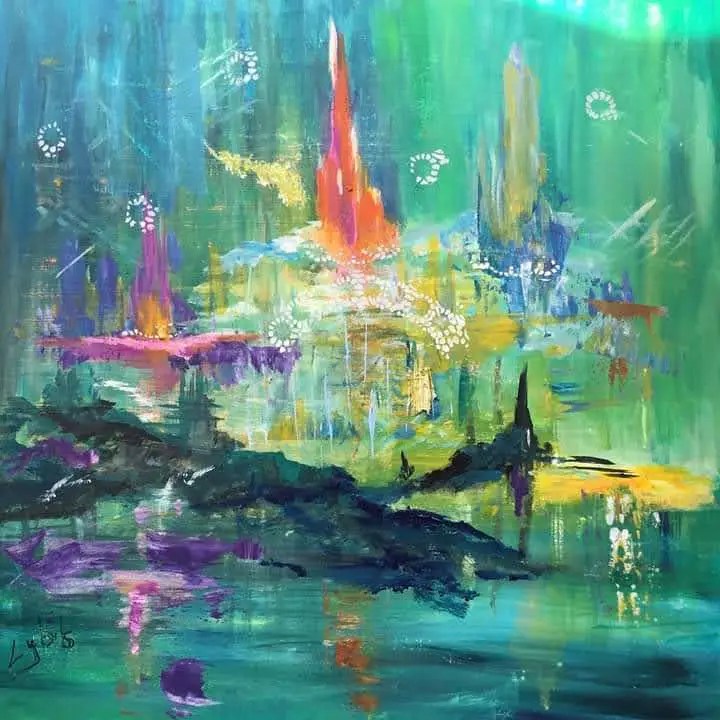
Art by Sybil Pretious
Categories
Celebrating Life

For All Creatures Great & Small

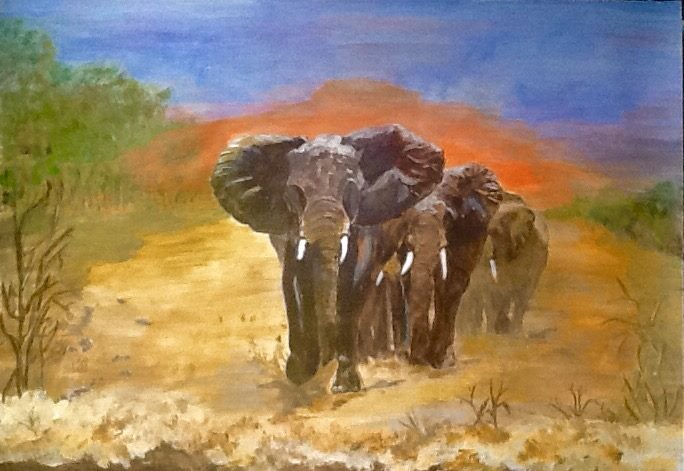
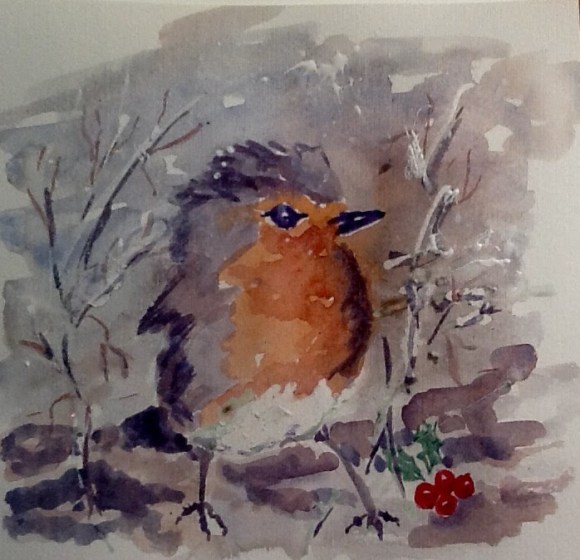
Painting by Sybil Pretious

Sometimes I wonder what makes us exclusive as a species on Earth? Do we really have some kind of superiority over the flora and fauna without which we may not survive? With multiple species of wildlife being threatened by human exploits, perhaps there is a need to remind ourselves of our dependence on our planet and the lives it supports while acknowledging our existence as just one of the many species. In this issue, we celebrate life on this planet… I do not know if a cockroach or a cow would be considered wildlife, but it seems only right to see all of them as our brethren… along with yetis who could be a figment of the human mind… Enjoy some of our selected fare from around the world on World Wildlife Day today.

Poetry

Katsaridaphobia by Aditya Shankar. Click here to read.

Kissing Frogs by Rhys Hughes. Click here to read.

Pirate Blacktarn & the Worm by Jay Nicholls. Click here to read.

Yeti by Jared Carter. Click here to read.

Giraffe’s Dad by Tagore has been translated from Bengali by Professor Fakrul Alam. Click here to read.

Jibananda Das’s Where have all these Birds Gone & On the Pathways for Long have been translated from Bengali by Professor Fakrul Alam. Click here to read.

Non-Fiction

Humbled by a Pig: Farouk Gulsara meets a wild pig while out one early morning and muses on the ‘meeting’. Click here to read. 

Breaking Bread: Snigdha Agrawal has a bovine encounter in a restaurant. Click here to read.

Rabbit IslandSuzanne Kamata visits the island of Okunoshima, where among innocence of rabbits lurk historic horrors. Click here to read. 

The Ocean & Me: Meredith Stephens writes of her encounters with sea creatures in South Australia. Click here to read.

An Encounter With Snakes: Devraj Singh Kalsi, amuses with his hilarious take on snakes and snake charmers in his home. Click here to read.

Bugs of Life: Sohana Manzoor, highlighting her ‘affection’ or the lack of it for bugs. Click here to read.

Fiction

Maya and the Dolphins: Mohin Uddin Mizan weaves a story around dolphins in Cox Bazaar, Bangladesh. Click here to read.

Memory Gongs: Rhys Hughes reflects on the cycle of life. Click here to read.

Navigational Error: Luke PG Draper explores the impact of pollution on wildlife. Click here to read.

The Llama Story: Shourjo shares a short fun piece written from a llama’s perspective. Click here to read. 

Naughty Ravi: Naramsetti Umamaheswararao writes of an awakening of kindness to fellow creatures. Click here to read.

One Small Ancient Tale: Tagore’s story about two wild birds has been translated by Nishat Atiya. Click here to read.

The Parrot’s Tale:  Tagore’s powerful story has been translated by Radha Chakravarty. Click here to read.

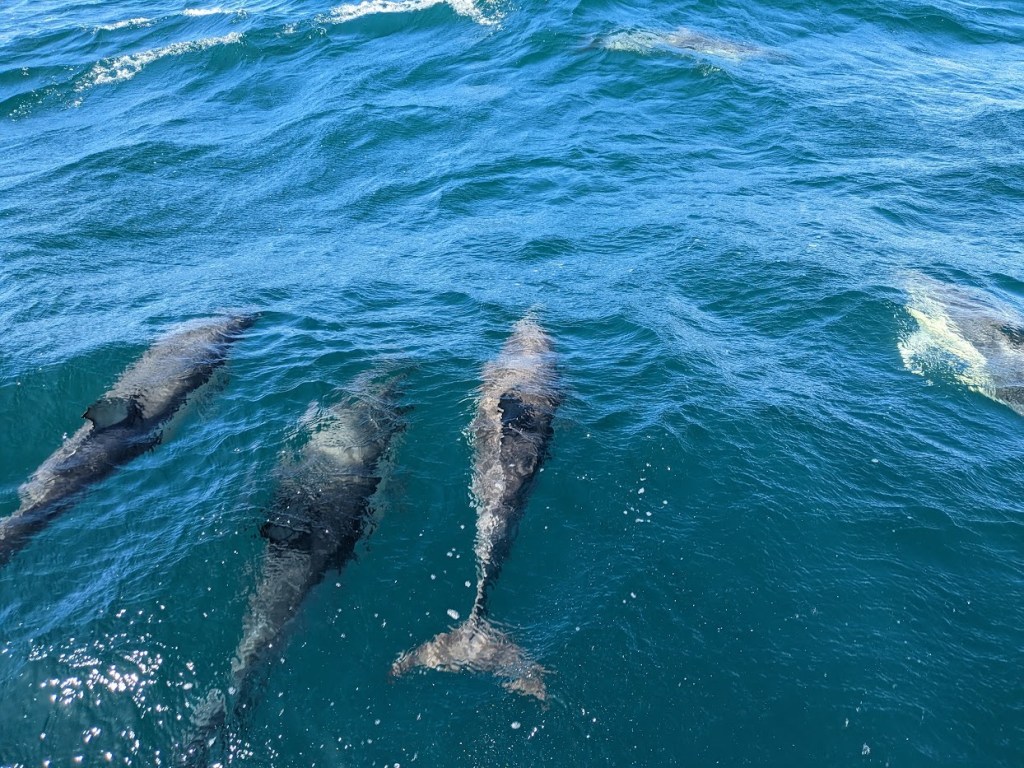
Dolphins. Photo Courtesy: Meredith Stephens
Categories
Celebrating Humanity

Autumnal Melodies

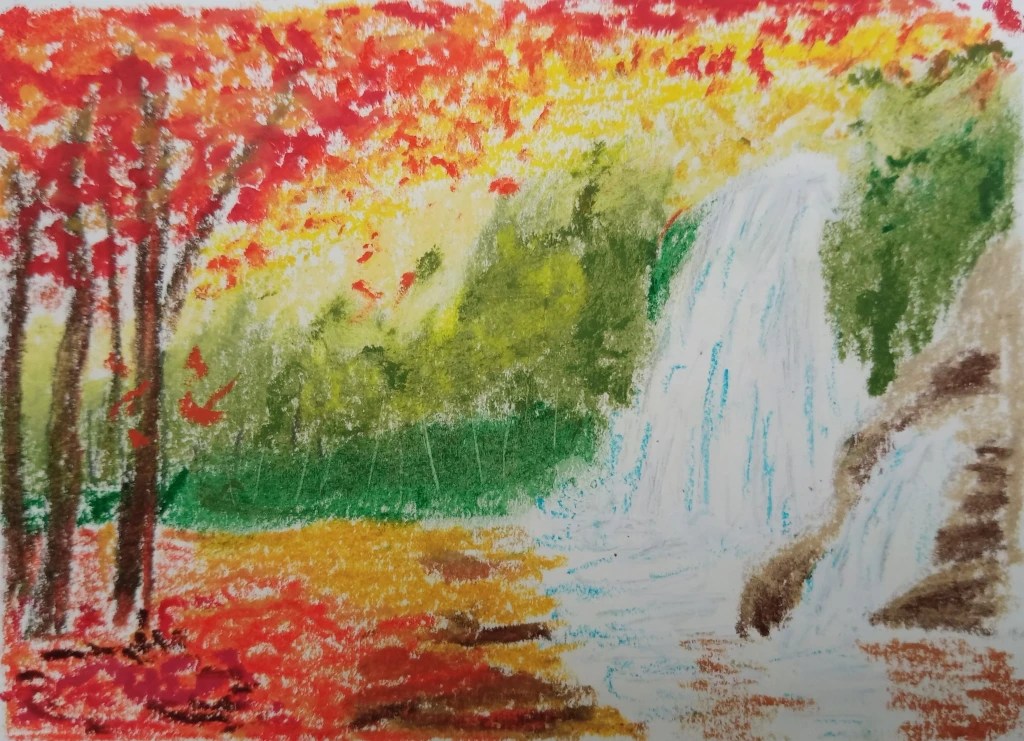
Art by Sybil Pretious


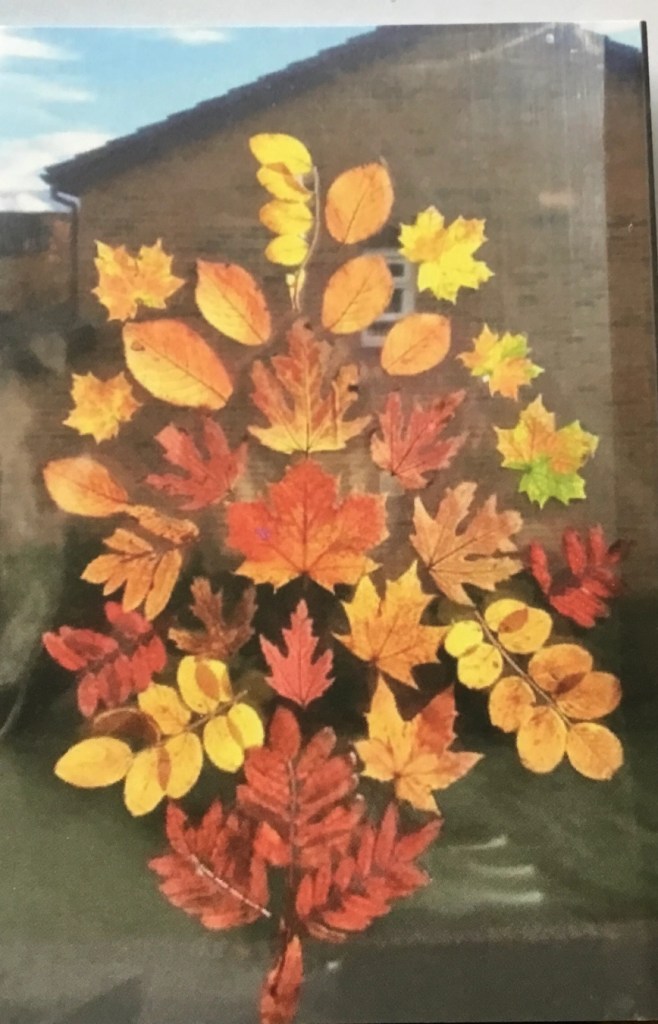
October spins a series of celebrations that carry on to herald a glorious start of a new year and beyond. From the Chinese Festival of the Nine Emperor Gods which happens to coincide with Navratri to Christmas and beyond — festivals bring joy into our lives. Majority of these human constructs ring in happiness and hope while reflecting the victory of what we consider good over evils. Often these celebrations are syncretic, roping in people from all cultures and religious creeds, creating a sense of oneness in a way that only a stream of contentment can.

Here we bring to you writings that reflect this cross cultural joyous streak of humanity with translations of Tagore, Nazrul, poetry from the contemporary voices of Ihlwha Choi and John Grey and more prose from Fakrul Alam, Aruna Chakravarti, Ravi Shankar, Snigdha Agrawal, Rhys Hughes, Keith Lyons and Farouk Gulsara. Let us celebrate our commonalities with joy and revive love in a war-torn world. 

Poetry

A Lovesong in the Battlefield by Afsar Mohammad. Click here to read.  

One Star by Ihlawha Choi. Click here to read.

Groundhog Day by John Grey. Click here to read.

Nazrul’s Prolloyullash ( The Frenzy of Destruction) has been translated from Bengali by Professor Fakrul Alam. Click here to read.

 Tagore’s Andhokaarer Utso Hote(From the Fount of Darkness) has been translated from Bengali. Click here to read.

Prose 

The Oral Traditions of Bengal: Story and Song by Aruna Chakravarti describes the syncretic culture of Bengal through its folk music and oral traditions. Click here to read.

Memories of Durga Puja : Fakrul Alam recalls the festivities of Durga Puja in Dhaka during his childhood. Click here to read.

An Alien on the Altar! Snigdha Agrawal writes of how a dog and lizard add zest to festivities with a dollop of humour. Click here to read

In Dim Memories of the Festival of Lights, Farouk Gulsara takes a nostalgic trip to Deepavali celebrations in the Malaysia of his childhood. Click here to read.

A Doctor’s Diary: Syncretic Festivities: Ravi Shankar writes of his early life in Kerala where festivals were largely a syncretic event. Click here to read.

In I Went to Kerala, Rhys Hughes treads a humorous path bringing to us a mixed narrative of Christmas on bicycles . Click here to read.

Hold the roast turkey please Santa  Celebrating the festive season off-season with Keith Lyons from New Zealand, where summer solstice and Christmas fall around the same time. Click here to read.

Categories
Poetry

The Poem in Your Head

By Jenny Middleton

Art by Sybil Pretious
 THE POEM IN YOUR HEAD 

downy soft, you said, there’s a bird that flies

and flickers at dusk in my garden trees

and now I’ve told you, you’ll imagine its sighs

downy soft. You said, there’s a bird that flies

that you can’t see, but is haunting your nights

singing your own darkness, from your own seas

downy soft, you said, there’s a bird that flies

and flickers at dusk in my garden trees.

Jenny Middleton is a working mum and writes whenever she can amid the fun and chaos of family life. Her poetry is published in several printed anthologies, magazines and online poetry sites.  Jenny lives in London with her husband, two children and two very lovely, crazy cats.  You can read more of her poems at her website  https://www.jmiddletonpoems.com.

.

PLEASE NOTE: ARTICLES CAN ONLY BE REPRODUCED IN OTHER SITES WITH DUE ACKNOWLEDGEMENT TO BORDERLESS JOURNAL

Click here to access the Borderless anthology, Monalisa No Longer Smiles

Click here to access Monalisa No Longer Smiles on Kindle Amazon International

Categories
Greetings from Borderless

We wish You a Happy New Year

The year 2023 seemed to have been hard on all of us. Wars in the post-pandemic world, weapons and armies that destroy innocent civilian lives have taken the centre stage, vying with climate disasters, refugees, senseless shootings and unrest.  Amidst this gloom and doom, we need hope — a gleam of light to help us find solutions towards a peaceful world. Let us give the newborn 2024 a fair chance towards its own wellbeing with cheer and laughter. Let’s laugh away our troubles and find the inner strength to move forward towards a better future where people live in harmony… perhaps to hum and recall Paul Mc Cartney’s wise words in ‘Ebony and Ivory'(1982)…

We all know that people are the same wherever you go 
There is good and bad in ev'ryone
We learn to live, when we learn to give
Each other what we need to survive, together alive

A solution to find that hidden strength within us is given to us by a bard who we cherish, Rabindranath Tagore. He suggests a panacea in his poem, Tomar Kachhe Shanti Chabo Na (I Will Not Pray to You for Peace):

....
Amidst this wave of conflict,
In the haze of the games you script,
I will swing towards my own dream.

Let the breeze blow off the lamplight,
Let storms thunder in the sky —
Every moment in my heart,
I can sense your footfall.
In darkness, I strive to find my stream.

In that spirit, we look inward not just to find our dreams and materialise them, but also into the treasure chests of Borderless Journal to find writings that bring a smile to our lips. Tagore, translated by Fakrul Alam and Somdatta Mandal, leads the way as we start with humour and wonder in poetry and meander into a few prose pieces that evoke laughter, at times upending our current stream of thoughts or values. We move on to our three columnists, Rhys Hughes, Devraj Singh Kalsi and Suzanne Kamata, who bring laughter and uncover the nuances of the world around us on a monthly basis. Included also are the pieces by our travelling granny, Sybil Pretious, whose spirited travels prove that age is just a number. Capturing the spirit of diversity with a tinge of laughter, let us usher in the new year to a more hopeful and sturdy start.  

Poetry

Giraffe’s Dad by Tagore: Giraffer Baba (Giraffe’s Dad), a short humorous poem by Tagore, has been translated from Bengali by Professor Fakrul Alam. Click here to read.

Dangermouse by Ryan Quinn Flanagan. Click here to read. 

A Poem About Mysore by Rhys Hughes. Click here to read.

Voice of the Webb by Ron Pickett.  Click here to read.

The Writer on the Hill by Kisholoy Roy.  Click here to read.

Philosophical Fragments by Don Webb. Click here to read.

A Blob of Goo? by Wilda Morris. Click here to read.

Dino Poems by Richard Stevenson.   Click here to read.

Rani Pink by Carol D’Souza. Click here to read.

Walking Gretchums by Saptarshi Bhattacharya. Click here to read.

The Decliner by Santosh Bakaya. Click here to read.

Prose

Travels & Holidays: Humour from Rabindranath: Translated from the original Bengali by Somdatta Mandal, these are Tagore’s essays and letters laced with humour. Click here to read.

Humbled by a Pig: Farouk Gulsara meets a wild pig while out one early morning and muses on the ‘meeting’. Click here to read. 

Leo Messi’s Magic Realism: Sports fan Saurabh Nagpal explores the magic realism in famous footballer Messi’s play with a soupçon of humour. Click here to read.

I am a Jalebi: Arjan Batth tells us why he identifies with an Indian sweetmeat. Click here to read why.

A Day at Katabon Pet Shop , a short story set amidst the crowded streets of Dhaka, by Sohana Manzoor. Click here to read.

Columns

Poets, Poetry & Rhys Hughes… Click here to read.

Musings of a Copywriter by Devraj Singh Kalsi … Click here to read.

Adventures of a Backpacking Granny by Sybil Pretious… Click here to read.

Notes from Japan by Suzanne Kamata … Click here to read.

Categories
Editorial

As Imagination Bodies Forth…

Painting by Sybil Pretious
And as imagination bodies forth
The forms of things unknown, the poet's pen
Turns them to shapes and gives to airy nothing
A local habitation and a name

 A Midsummer Night's Dream (1595) by William Shakespeare

Famous lines by Shakespeare that reflect on one of the most unique qualities in not only poets — as he states — but also in all humans, imagination, which helps us create our own constructs, build walls, draw boundaries as well as create wonderful paintings, invent planes, fly to the moon and write beautiful poetry. I wonder if animals or plants have the same ability? Then, there are some who, react to the impact of imagined constructs that hurt humanity. They write fabulous poetry or lyrics protesting war as well as dream of a world without war. Could we in times such as these imagine a world at peace, and — even more unusually — filled with consideration, kindness, love and brotherhood as suggested by Lennon’s lyrics in ‘Imagine’ – “Imagine all the people/ Livin’ life in peace…”. These are ideas that have been wafting in the world since times immemorial. And yet, they seem to be drifting in a breeze that caresses but continues to elude our grasp.

Under such circumstances, what can be more alluring than reflective Sufi poetry by an empathetic soul. Featuring an interview and poetry by such a poet, Afsar Mohammad, we bring to you his journey from a “small rural setting” in Telangana to University of Pennsylvania, where he teaches South Asian Studies. He is bilingual and has brought out many books, including one with his translated poetry. Translations this time start with Bankim Chandra Chattopadhyay’s advice to new writers in Bengali, introduced and brought to us by Abdullah-Al-Musayeb. Tagore’s seasonal poem, ‘Megh or Cloud’, has been transcreated to harmonise with the onset of monsoons. However, this year with the El Nino and as the impact of climate change sets in, the monsoons have turned awry and are flooding the world. At a spiritual plane, the maestro’s lines in this poem do reflect on the transience of nature (and life). Professor Fakrul Alam’s translation of Masud Khan’s heartfelt poetry on rain brings to the fore the discontent of the age while conveying the migrant’s dilemma of being divided between two lands. Fazal Baloch has brought us a powerful Balochi poet from the 1960s in translation, Bashir Baidar. His poetry cries out with compassion yet overpowers with its brutality. Sangita Swechcha’s Nepali poem celebrating a girl child has been translated by Hem Bishwakarma while Ihlwha Choi has brought his own Korean poem to readers in English.

An imagined but divided world has been explored by Michael Burch with his powerful poetry. Heath Brougher has shared with us lines that discomfit, convey with vehemence and is deeply reflective of the world we live in. Masha Hassan is a voice that dwells on such an imagined divide that ripped many parts of the world — division that history dubs as the Partition. Don Webb upends Heraclitus’s wisdom: “War is the Father of All, / War is the King of All.” War, as we all know, is entirely a human-made construct and destroys humanity and one cannot but agree with Webb’s conclusion.  We have more from Kirpal Singh, Ryan Quinn Flanagan, Nivedita N, John Grey, Carol D’Souza, Vernon Daim, George Freek, Saranyan BV, Samantha Underhill and among the many others, of course Rhys Hughes, who has given us poetry with a unique alphabetical rhyme scheme invented by him and it’s funny too… much like his perceptions on ‘Productivity’, where laziness accounts for an increase in output!

Keith Lyons has mused on attitudes too, though with a more candid outlook as has Devraj Singh Kalsi with a touch of nostalgia. Ramona Sen has brought in humour to the non-fiction section with her tasteful palate. Meredith Stephens takes us on a picturesque adventure to Sierra Nevada Mountains with her camera and narrative while Ravi Shankar journeys through museums in Kuala Lumpur. We travel to Japan with Suzanne Kamata and, through fiction, to different parts of the Earth as the narratives hail from Bangladesh, France and Singapore.

Ratnottama Sengupta takes us back to how imagined differences can rip humanity by sharing a letter from her brother stationed in Bosnia during the war that broke Yugoslavia (1992-1995). He writes: “It is hard to be surrounded by so much tragedy and not be repulsed by war and the people who lead nations into them.” This tone flows into our book excerpts section with Red Sky Over Kabul: A Memoir of a Father and Son in Afghanistan by Baryalai Popalzai and Kevin McLean. Popalzai was affected by the Russian invasion of Afghanistan in 1980 and had to flee. A different kind of battle can be found in the other excerpt from The Blue Dragonfly – healing through poetry by Veronica Eley – a spiritual battle to heal from experiences that break.

In our reviews section, KPP Nambiar reviews The Stolen Necklace: A Small Crime in a Small Town by Shevlin Sebastian and VK Thajudheen, a book that retells a true story. Sangeetha G’s novel, Drop of the Last Cloud, we are told by Rakhi Dalal, explores the matrilineal heritage of Kerala, that changed to patriarchal over time. Bhaskar Parichha reviews Burning Pyres, Mass Graves and A State That Failed Its People: India’s Covid Tragedy by Harsh Mander. Parichha emphasises the need never to forget the past: “It is a powerful book and sometimes it is even shattering. The narrative is a live remembrance of a national tragedy that too many of us wish to forget when we should, instead, etch it in our minds so that we can prevent another national tragedy like this one from recurring in the future.”  While we need to learn from the past as Parichha suggests, Somdatta Mandal has given a review that makes us want to read Ujjal Dosanjh’s book, The Past is Never Dead: A Novel. She concludes that it “pays tribute to the courage and tenacity of the human spirit and its capacity for hope despite all odds.”

We have more content than mentioned here… all of it enhances the texture of our journal. Do pause by our July issue to savour all the writings. Huge thanks to all our contributors, artists, all our readers and our wonderful team. Without each one of you, this edition would not have been what it is.

Thank you all.

Have a wonderful month!

Mitali Chakravarty

borderlessjournal.com

.

Visit the July edition’s content page by clicking here

READ THE LATEST UPDATES ON THE FIRST BORDERLESS ANTHOLOGY, MONALISA NO LONGER SMILES, BY CLICKING ON THIS LINK.

Categories
A Special Tribute

Sunflowers of Resilience

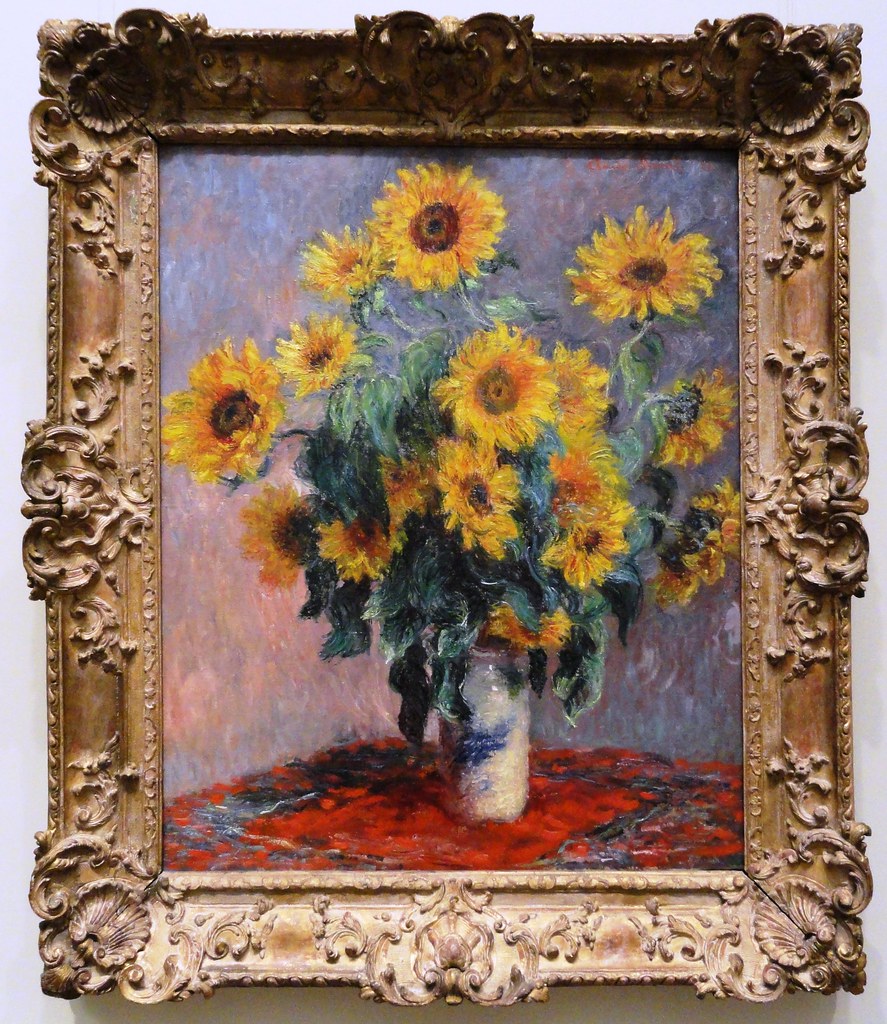
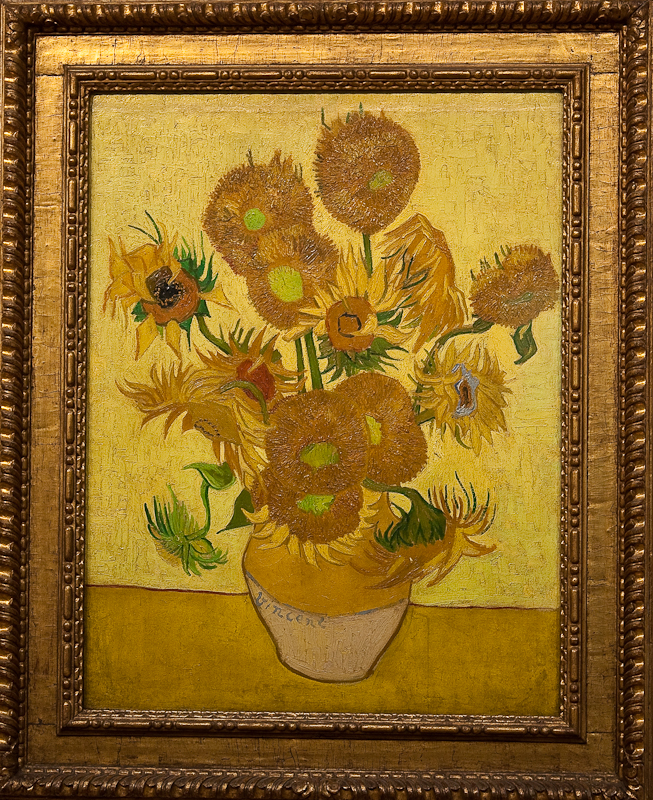
With resilience, they have withstood what could have become an international disaster for all humankind — an outbreak of a Third World War. The spirit that has resisted the ongoing invasion of Ukraine is admirable. They have stayed strong without bowing, crumbling or annihilating themselves in the wake of an onslaught that hurts humanity across all borders in different degrees and creates a huge population of refugees. We gave voice to one such refugee, Lesya Bakun — not just in our site but also in our first anthology — Monalisa No Longer Smiles: An Anthology of Writings from across the World.

This year, we quest for hope towards peace, a better, more accepting world with poetry on Ukraine. One of the poems here is accompanied by art from Ukrainian artist, Maria Kirichenko. We feature some of the poems gathered on Ukraine over the year.

My friend, Maria Kirichenko by Vineetha Mekkoth. Click here to read.

Poetry by Chad Norman on Ukraine. Click here to read.

Poems by Sukrita Paul Kumar on Ukraine. Click here to read.

Poetry by Scott Thomas Outlar on Ukraine. Click here to read.

Cry of the Sunflower by Ihlwha Choi. Click here to read.

“How Many Times Must the Cannonballs Fly…?” Featuring poetry by Lesya Bakun, Rhys Hughes, Ron Pickett, Michael R Burch, Kirpal Singh, Suzanne Kamata, Mini Babu, Malachi Edwin Vethamani, Sybil Pretious and Mitali Chakravarty. Click here to read.

Categories
Editorial

Its Only Hope…

Painting by Sybil Pretious

New year, like a newborn, starts with hope.

The next year will do the same – we will all celebrate with Auld Lang Syne and look forward to a resolution of conflicts that reared a frightening face in 2022 and 2021. Perhaps, this time, if we have learnt from history, there will not be any annihilation but only a movement towards resolution. We have more or less tackled the pandemic and are regaining health despite the setbacks and disputes. There could be more outbreaks but unlike in the past, this time we are geared for it. That a third World War did not break out despite provocation and varied opinions, makes me feel we have really learnt from history.

That sounds almost like the voice of hope. This year was a landmark for Borderless Journal. As an online journal, we found a footing in the hardcopy world with our own anthology, Monalisa No Longer Smiles: Writings from Across the World, which had a wonderful e-launch hosted by our very well-established and supportive publisher, Om Books International. And now, it is in Om Book Shops across all of India. It will soon be on Amazon International. We also look forward to more anthologies that will create a dialogue on our values through different themes and maybe, just maybe, some more will agree with the need for a world that unites in clouds of ideas to take us forward to a future filled with love, hope and tolerance.

One of the themes of our journal has been reaching out for voices that speak for people. The eminent film critic and editor, Shantanu Ray Chaudhuri , has shared a conversation with such a person, the famed Gajra Kottary, a well-known writer of Indian TV series, novels and stories. The other conversation is with Nirmal Kanti Bhattajarchee, the translator of Samaresh Bose’s In Search of a Pitcher of Nectar, a book describing the Kumbh-mela, that in 2017 was declared to be an Intangible Cultural Heritage of Humanity by UNESCO. Bhattacharjee tells us how the festival has grown and improved in organisation from the time the author described a stampede that concluded the festivities. Life only gets better moving forward in time, despite events that terrorise with darkness. Facing fear and overcoming it does give a great sense of achievement.

Perhaps, that is what Freny Manecksha felt when she came up with a non-fiction called Flaming Forest, Wounded Valley: Stories from Bastar and Kashmir, which has been reviewed by Rakhi Dalal. Basudhara Roy has also tuned in with a voice that struggled to be heard as she discusses Manoranjan Byapari’s How I Became a Writer: An Autobiography of a Dalit. Somdatta Mandal has reviewed The Shaping of Modern Calcutta: The Lottery Committee Years, 1817 – 1830 by Ranabir Ray Chaudhury, a book that explores how a lottery was used by the colonials to develop the city. Bhaskar Parichha has poured a healing balm on dissensions with his exploration of Rana Safvi’s In Search of the Divine: Living Histories of Sufism in India as he concludes: “Weaving together facts and popular legends, ancient histories and living traditions, this unique treatise running into more than four hundred pages examines core Sufi beliefs and uncovers why they might offer hope for the future.”

In keeping with the festive season is our book excerpt from Rhys Hughes’ funny stories in his Christmas collection, Yule Do Nicely. Radha Chakravarty who brings many greats from Bengal to Anglophone readers shared an excerpt – a discussion on love — from her translation of Tagore’s novel, Farewell Song.

Love for words becomes the subject of Paul Mirabile’s essay on James Joyce’s Stephen Dedalus, where he touches on both A Portrait of the Artist as a young Man and  Ulysees, a novel that completed a century this year. Love for animals, especially orangutans, colours Christina Yin’s essay on conservation efforts in Borneo while Keith Lyons finds peace and an overwhelming sense of well-being during a hike in New Zealand. Ravi Shankar takes us to the historical town of Taiping in Malaysia as Meredith Stephens shares more sailing adventures in the Southern hemisphere, where it is summer. Saeed Ibrahim instils the seasonal goodwill with native Indian lores from Canada and Suzanne Kamata tells us how the Japanese usher in the New Year with a semi-humorous undertone.

Humour in non-fiction is brought in by Devraj Singh Kalsi’s ‘Of Mice and Men’ and in poetry by Santosh Bakaya. Laughter is stretched further by the inimitable Rhys Hughes in his poetry and column, where he reflects on his experiences in India and Wales. We have exquisite poetry by Jared Carter, Sukrita Paul Kumar, Asad Latif, Luis Cuauhtémoc Berriozábal, Michael R Burch, Sutputra Radheye, George Freek, Jonathan Chan and many more. Short stories by Lakshmi Kannan, Devraj Singh Kalsi, Tulip Chowdhury and Sushma R Doshi lace narratives with love, humour and a wry look at life as it is. The most amazing story comes from Kajal who pours out the story of her own battle in ‘Vikalangta or Disability‘ in Pandies’ Corner, translated from Hindustani by Janees.

Also touching and yet almost embracing the school of Absurd is PF Mathew’s story, ‘Mercy‘, translated from Malayalam by Ram Anantharaman. Fazal Baloch has brought us a Balochi folktale and Ihlwha Choi has translated his own poem from Korean to English. One of Tagore’s last poems, Prothom Diner Shurjo, translated as ‘The Sun on the First Day’ is short but philosophical and gives us a glimpse into his inner world. Professor Fakrul Alam shares with us the lyrics of a Nazrul song which is deeply spiritual by translating it into English from Bengali.

A huge thanks to all our contributors and readers, to the fabulous Borderless team without who the journal would be lost. Sohana Manzoor’s wonderful artwork continues to capture the mood of the season. Thanks to Sybil Pretious for her lovely painting. Please pause by our contents’ page to find what has not been covered in this note.

We wish you all a wonderful festive season.

Season’s Greetings from all of us at Borderless Journal.

Cheers!

Mitali Chakravarty

borderlessjournal.com

.

Click here to access the Borderless anthology, Monalisa No Longer Smiles

Categories
Editorial

When Autumn Leaves Start to Fall…

                     “Where are the songs of Spring? Ay, where are they?
                      Think not of them, thou hast thy music too…”

                                 — John Keats (1795-1851), To Autumn
Art by Sybil Pretious

For long writers have associated autumn with “mellow wistfulness”. That loss of spring, or loss of youth is not bleak or regretful has been captured not just by Keats but also been borne out by historical facts. Anthropocene existence only get better as the human race evolves … If we view our world as moving towards an autumn, we perhaps, as Keats suggests, need to find the new “music” for it. A music that is ripe and matures with the passage of time to the point that it moves more towards perfection. Though sometimes lives fade away after autumn gives way to winter as did those of  Queen Elizabeth II (April 21st 1926 – September 8th 2022) after a reign of seventy historic years and Mikhail Gorbachev (2nd March 1931 – 30thAugust 2022) with his admirable efforts to bridge divides. Both of them have left footprints that could be eternalised if voices echo in harmony. Thoughts which create bonds never die – they live on in your hearts and mine.

Imagine… ten thousand years ago, were we better off? Recorded history shows that the first war had already been fought 13,000 years ago. And they have continued to rage – but, at least, unlike the indomitable Gauls in Asterix[1] comics – not all jumped into the fray. They did during the last World Wars — which also led to attempts towards institutionalising humanitarian concerns and non-alignment. Yes, we have not had a perfect world as yet but as we age, the earth matures and we will, hopefully, move towards better times as we evolve. Climate change had happened earlier too. At a point, Sahara was green. Continental shifts split Pangaea  into seven continents – that was even earlier. That might have driven the dinosaurs to extinction. But I am sure mankind will find a way out of the terror of climate change and wars over a period of time, as long as we believe in deciphering the sounds of autumn as did Keats in his poem.

Tagore had also sung of the joys of autumn which happens to be a time for festivities. Professor Fakrul Alam has translated three such songs, reflecting the  joie de vivre of the season, The translation of a small poem, Eshecche Sarat[2], brings the beauty of the season in Bengal to the fore. We have a celebration of youth and romance in a Balochi folksong, an anti-thesis to autumn and aging, translated for us by Fazal Baloch and also, poetic prose in quest of God and justice by Haneef Sharif, translated from Balochi by Mashreen Hameed. Lost romance recapitulated makes interesting poetry is borne out by Ihlwha Choi’s translation of his own poem from Korean. But the topping in our translation section is a story called ‘Nagmati[3]’ by eminent Bengali writer, Prafulla Roy, translated by no less than a Sahitya Akademi winning translator – Aruna Chakravarti. This story illustrates how terrifying youthful follies can lead to the end of many young lives, a powerful narrative about the snake worshipping community of Bedeynis that highlights destruction due to youthful lusts and an inability to accept diverse cultures.  

When this cultural acceptance becomes a part of our being, it creates bonds which transcend manmade borders as did the films of Satyajit Ray. His mingling was so effective that his work made it to the zenith of an international cinematic scenario so much so that Audrey Hepburn, while receiving the Oscar on his behalf, said: “Dear Satyajit Ray. I am proud and privileged to have been allowed to represent our industry in paying tribute to you as an artist and as a man. For everything you represent I send you my gratitude and love.”

This and more has been revealed to us in a book, Satyajit Ray: The Man Who Knew Too Much, authored by a protagonist from Ray’s film, Barun Chanda. This book brought out by Om Books International reflects not just Ray as a person but also how he knitted the world together with his films and took the Indian film industry to an international level. Barun Chanda has been interviewed with a focus on Satyajit Ray. Keith Lyons has also interviewed a man who has defied all norms and, in the autumn of his life, continues his journey while weaving together cultures across, China, India and Thailand by his ethnographic studies on tribes, Jim Goodman. Goodman says he left America when speaking for a war-free world became a cause for censorship. This makes one wonder if war is a game played for supporting a small minority of people who rule the roost?  Or are these ramblings of a Coleridge writing ‘Kubla Khan’ under the influence of narcotics?

Poetry also brings the season into our pages with an autumnal interpretation of life from Michael Burch. More poetry from Sunil Sharma, Ryan Quinn Flanagan, Gayatri Majumdar, George Freek, Ron Pickett, Sutputra Radheye, Marianne Tefft brings a wide range of concerns to our pages – from climate to the vagaries of human nature. Poetry by an Albanian writer, Irma Kurti, and photographs by her Italian spouse, Biagio Fortini, blend together the colours of humanity. Rhys Hughes as usual, makes it to the realm of absurd – perhaps voicing much in his poetry, especially about the environment and human nature, though he talks of woodpeckers on Noah’s ark (were there any?) and of cows, yetis, monkeys and cakes… He has also given us a hilarious cat narrative for his column. Can that be called magic realism too? Or are the edges too abstract?

A book excerpt from Hughes’ Comfy Rascals Short Fiction and a review of it by Rakhi Dalal makes us wonder with the reviewer if he is a fan of Kafka or Baudelaire and is his creation a tongue-in-cheek comment on conventions? A book review by Hema Ravi of Mrutyunjay Sarangi’s A Train to Kolkata and Other Stories and another by Bhaskar Parichha of Netaji Subhash Chandra Bose’s Life, Struggle and Politics, authored by Netaji’s nephew’s wife, Krishna Bose, translated and edited by her son, Sumantra Bose, unveils the narratives around his life and death.

A leader who quested for freedom and roamed the world after being passed over by the Congress in favour of Nehru, Netaji raised an army of women who were trained in Singapore – not a small feat in the first half of the twentieth century anywhere in the world. His death in an air crash remained an unsolved mystery — another one of those controversies which raged through the century like the Bhawal case. In his review, Parichha spells out: “Aiming to bring an end to the controversies and conspiracy theories surrounding the freedom fighter, the over 300-page book gives a detailed and evidence-based account of his death in one of its chapters.”

Our book excerpts in this edition both feature writers of humour with the other being the inimitable Ruskin Bond. We have an excerpt of Bond’s nostalgia from Between Heaven and Earth: Writings on the Indian Hillsedited by Ruskin Bond and Bulbul Sharma.

Our non-fiction also hosts humour from Devraj Singh Kalsi about his interactions with birds and, on the other hand, a very poignant poetic-prose by Mike Smith reflecting on the vagaries of autumn. From Japan, Suzanne Kamata takes us to the Rabbit Island – and murmurings of war and weapons. We have the strangest story about a set of people who are happy to be ruled by foreign settlers – we would term them colonials – from Meredith Stephens. G Venkatesh delights with a story of love and discovery in Korea, where he had gone in pre-pandemic times. Paul Mirabile travels to Turkey to rediscover a writer, Sait Faik Abasiyanik (1906-1954). And Ravi Shankar gives us an emotional story about his trek in the Himalayas in Nepal with a friend who has passed on. Candice Louisa Daquin has written of the possibilities towards integrating those who are seen as minorities and marginalised into the mainstream.

The edition this time is like Autumn – multi-coloured. Though I am not able to do justice to all our contributors by mentioning them here, my heartfelt thanks to each as every piece only enriches our journal. I urge you to take a look at the September edition.

I would like to give huge thanks to our readers and our team too, especially Sohana Manzoor and Sybil Pretious for their artwork. We could not have come this far without support from all of you.

Thank you.

Happy Reading!

Mitali Chakravarty

borderlessjournal.com


[1] The men in the indomitable Gaulish village (which the Romans failed to conquer) in times of Julius Caesar loved to jump into a fight for no reason…Asterix was the protagonist of the comics along with his fat friend Obelix

[2] Arrival of Autumn

[3] Snake Maiden