Categories
celebrations

Six Years of Borderless Journal…

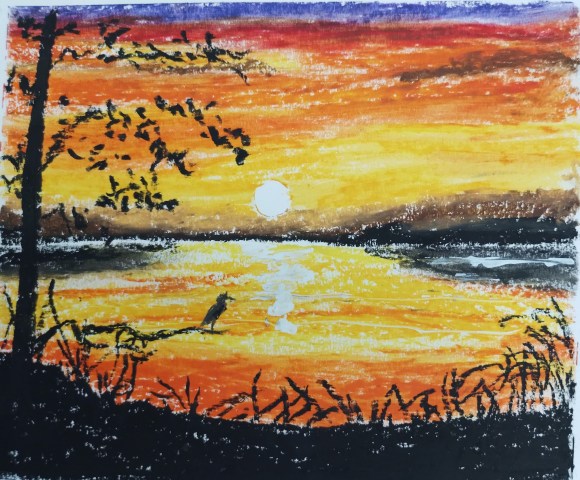
Art by Sohana Manzoor

Six years ago, a few of us got together to bring out the first issue of Borderless Journal. We started as a daily blog and then congealed into a monthly journal offering content that transcends artificial borders to meet with the commonality of felt emotions, celebrating humanity and the Universe. Today as we complete six years of our existence in the clouds, we would like to celebrate with all writers and readers who made our existence a reality. We invite you to savour writings collected over the years that reflect and revel in transcending borders, touching hearts and some even make us laugh while exploring norms. 

In this special issue. we can only offer a small sample of writings but you can access many more like these ones at our site…Without further ado, let us harmonise with words. We invite you to lose yourselves in a borderless world in these trying times.

Poetry

Click on the names to read

Jared CarterSnehaprava Das,  Manahil Tahir, Ryan Quinn Flanagan,  Luis Cuauhtémoc BerriozábalSaptarshi Bhattacharya, John Swain, Ron Pickett, Saba Zahoor, Momina Raza, Annette GagliardiJenny Middleton, Afsar Mohammad, Rhys Hughes, George FreekMitra SamalLizzie PackerShamik BanerjeeMaithreyi Karnoor,  Hela Tekali, Rakhi Dalal, Prithvijeet SinhaAsad Latif, Stuart MacFarlane

Isa Kamari translates his poems from Malay in The Lost Mantras. Click here to read.

Two of her own Persian poems have been written and translated by Akram Yazdani. Click here to read.

A Poet in Exile by Dmitry Blizniuk has been translated from Ukranian by Sergey Gerasimov. Click here to read.

Refugee in my Own Country/ I am Ukraine… Poetry by Lesya Bakun of Ukraine. Click here to read. 

Sukanta Bhattacharya’s poem, Therefore, has been translated from Bengali by Kiriti Sengupta. Click here to read.

Amalkanti by Nirendranath Chakraborty has been translated from Bengali by Debali Mookerjea-Leonard. Click here to read

Ye Shao-weng’s poetry ( 1100-1150) has been translated from Mandarin by Rex Tan. Click here to read.

Rebel or ‘Bidrohi’, Nazrul’s signature poem, ‘Bidrohi‘, translated by Professor Fakrul Alam. Click here to read.

Manish Ghatak’s Aagun taader Praan (Fire is their Life) has been translated from Bengali by Indrayudh Sinha. Click here to read.

Tagore’s poem, Tomar Shonkho Dhulay Porey (your conch lies in the dust), has been translated from Bengali by Mitali Chakravarty as ‘The Conch Calls’. Click here to read.

Waiting for Godot by Akbar Barakzai; Akbar Barakzai’s poem has been translated by Fazal Baloch. Click here to read.

Ihlwha Choi spent some time in Santiniketan and here are poems he wrote in reaction to his observations near the ‘home of R.Tagore’, as he names Santiniketan and the Kobiguru. Click here to read Nandini.

Fiction

Flash Fiction: Peregrine: Brindley Hallam Dennis tells us the story of a cat and a human. Click here to read.

Rituals in the Garden: Marcelo Medone discusses motherhood, aging and loss in this poignant flash fiction from Argentina. Click here to read.

Navigational Error: Luke P.G. Draper explores the impact of pollution with a short compelling narrative. Click here to read.

Henrik’s Journey: Farah Ghuznavi follows a conglomerate of people on board a flight to address issues ranging from Rohingyas to race bias. Click here to read.

The Magic Staff , a poignant short story about a Rohingya child by Shaheen Akhtar, translated from Bengali by Arifa Ghani Rahman. Click here to read.

A Cat Story : Sohana Manzoor leaves one wondering if the story is about felines or… Click here to read. 

Pus Ki Raat or A Frigid Winter Night by Munshi Premchand has been translated from Hindi by C Christine Fair. Click here to read. 

American WifeSuzanne Kamata gives a short story set set in the Obon festival in Japan. Click hereto read.

Hena, a short story by Nazrul, has been translated from Bengali by Sohana Manzoor. Click here to read. 

A Queen is Crowned: Farhanaz Rabbani traces the awakening of self worth. Click here to read.

A Penguin’s Story: Sreelekha Chatterjee writes a story from a penguin’s perspective. Click here to read.

Disappearance by Bitan Chakraborty has been translated from Bengali by Kiriti Sengupta. Click here to read.

The Sixth Man: C. J. Anderson-Wu tells a story around disappearances during Taiwan’s White terror. Click here to read.

Looking for Evans: Rashida Murphy writes a light-hearted story about a faux pas. Click here to read.

Used Steinways: Jonathan B. Ferrini shares a story about pianos and people set in Los Angeles. Click here to read.

The Beaten Rooster, a short story by Hamiruddin Middya, has been translated from Bengali by V Ramaswamy. Click here to read.

The Onion: JK Miller brings to us the story of a child in Khan Yunis. Click here to read.

Santa in the Autorickshaw: Snigdha Agrawal takes us to meet a syncretic spirit with a heartwarming but light touch. Click here to read.

The Untold Story: Neeman Sobhan gives us the story of a refugee from the 1971 Bangladesh Liberation War. Click here to read. 

The Wise Words of the Sun: Naramsetti Umamaheswararao relates a fable involving elements of nature. Click here to read.

The Headstone, a poignant story by Sharaf Shad has been translated by Fazal Baloch. Click here to read.

Sandy Cannot Write: Devraj Singh Kalsi takes us into the world of adverstising and glamour. Click here to read.

Musalmanir Galpa (A Muslim Woman’s Story) Tagore’s short story has been translated by Aruna Chakravarti. Click here to read.

Non-Fiction

 Haiku for Rwandan Girls: Suzanne Kamata writes of her trip to Africa where she teaches and learns from youngsters. Click here to read.

Menaced by a Marine Heatwave: Meredith Stephens writes of how global warming is impacting marine life in South Australia. Click here to read.

 ‘All Creatures Great and Small’: Devraj Singh Kalsi writes of animal interactions. Click here to read.

One Life, One Love, 300 Children: Keith Lyons writes of a woman who looked after 300 children. Click here to read.

When West Meets East & Greatness Blooms: Debraj Mookerjee reflects on how syncretism impacts greats like Tagore,Tolstoy, Emerson, Martin Luther King Jr, Gandhi and many more. Click here to read.

The Day Michael Jackson Died: A tribute  by Julian Matthews to the great talented star who died amidst ignominy and controversy. Click here to read.

Amrita Sher-Gil: An Avant-Garde Blender of the East & West: Bhaskar Parichha shows how Amrita Sher-Gil’s art absorbed the best of the East and the West. Click here to read.

Dramatising an Evolving Consciousness: Theatre with Nithari’s Children: Sanjay Kumar gives us a glimpse of how theatre has been used to transcend trauma and create bridges. Click here to read.

Potable Water Crisis & the Sunderbans: Camellia Biswas, a visitor to Sunderbans during the cyclone Alia, turns environmentalist and writes about the potable water issue faced by locals. Click here to read.

T.S Eliot’s The Waste Land: Finding Hope in Darkness: Dan Maloche muses on the century-old poem and its current relevance. Click here to read. 

 My Love for RK NarayanRhys Hughes discusses the novels by ths legendary writer from India. Click here to read.

Travels of Debendranath Tagore : These are travel narratives by Debendranath Tagore, father of Rabindranath Tagore, translated from Bengali by Somdatta Mandal. Click here to read.

The Comet’s Trail: Remembering Kazi Nazrul Islam: Radha Chakravarty pays tribute to the rebel poet of Bengal. Click here to read.

From Srinagar to Ladakh: A Cyclist’s Diary: Farouk Gulsara travels from Malaysia for a cycling adventure in Kashmir. Click here to read.

 Baraf Pora (Snowfall): This narrative gives a glimpse of Tagore’s first experience of snowfall in Brighton and published in the Tagore family journal, Balak (Children), has been translated by Somdatta Mandal . Click here to read.

In The Hidden Kingdom of Bhutan: Mohul Bhowmick explores Bhutan with words and his camera. Click here to read.

The Day of Annihilation: An essay on climate change by Kazi Nazrul Islam has been translated from Bengali by Radha Chakravarty. Click here to read.

Reminiscences from a Gallery: The Other Ray: Dolly Narang muses on Satyajit Ray’s world beyond films and shares a note by the maestro and an essay on his art by the eminent artist, Paritosh Sen. Click here to read.

The Bauls of Bengal: Aruna Chakravarti writes of wandering minstrels called bauls and the impact they had on Tagore. Click here to read.

The Literary Club of 18th Century London: Professor Fakrul Alam writes on literary club traditions of Dhaka, Kolkata and an old one from London. Click here to read.

From Madagascar to Japan: An Adventure or a Dream: Randriamamonjisoa Sylvie Valencia writes of her journey from Africa to Japan with a personal touch. Click here to read.

250 Years of Jane Austen: A Tribute: Meenakshi Malhotra pays a tribute to the writer. Click here to read.

The Chickpea That Logged More Mileage Than You: Ravi Varmman K Kanniappan gives an interesting account of the chickpeas journey through time and space, woven with a bit of irony. Click here to read.

The Day the Earth Quaked : Amy Sawitta Lefevre gives an eyewitness account of the March 28th earthquake from Bangkok. Click here to read.

Where Should We Go After the Last Frontiers: Ahamad Rayees writes from a village in Kashmir which homed refugees and still faced bombing. Click here to read.

The Last of the Barbers: How the Saloon Became the Salon (and Where the Gossip Went): Charudutta Panigrahi writes an essay steeped in nostalgia and yet weaving in the present. Click here to read.

That Time of Year: Rick Bailey muses about the passage of years. Click here to read.

The Untold Stories of a Wooden Suitcase: Larry S. Su recounts his past in China and weaves a narrative of resilience. Click here to read.

Adventures of a Backpacking Granny: Sybil Pretious recalls her travels across the world post sixty, including Kiliminjaro. Click here to read.
Categories
Contents

Borderless, January 2026

Art by Sohana Manzoor

Editorial

Sense and Nonsense: Atonal, Imperfect, Incomplete… Click here to read.

Translations

Akashe Aaj Choriye Delam Priyo(I sprinkle in the sky) by Nazrul has been translated from Bengali by Professor Fakrul Alam. Click here to read.

Four of his own Malay poems have been translated by Isa Kamari. Click here to read.

Six Fragments by Sayad Hashumi have been translated from Balochi by Fazal Baloch. Click here to read.

Five poems by Pravasini Mahakuda have been translated to English from Odia by Snehaprava Das. Click here to read.

A Poet in Exile by Dmitry Blizniuk has been translated from Ukranian by Sergey Gerasimov. Click here to read.

Kalponik or Imagined by Tagore has been translated from Bengali by Mitali Chakravarty. Click here to read.

Pandies Corner

Songs of Freedom: The Seven Mysteries of Sumona’s Life is an autobiographical narrative by Sumona (pseudonym), translated from Hindustani by Grace M Sukanya. These stories highlight the ongoing struggle against debilitating rigid boundaries drawn by societal norms, with the support from organisations like Shaktishalini and Pandies. Click here to read.

Poetry

Click on the names to read the poems

Ryan Quinn Flanagan, Ron Pickett, Snehaprava Das, Stephen Druce, Phil Wood, Akintoye Akinsola, Michael Lauchlan, Pritika Rao, SR Inciardi, Rich Murphy, Jim Murdoch, Pramod Rastogi, Joy Anne O’Donnell, Andrew Leggett, Ananya Sarkar, Annette Gagliardi, Rhys Hughes

Poets, Poetry & Rhys Hughes

In What is a Prose Poem?, Rhys Hughes tells us what he understands about the genre and shares four of his. Click here to read.

Musings/Slices from Life

Duties For Those Left Behind

Keith Lyons muses on a missing friend in Bali. Click here to read.

That Time of Year

Rick Bailey muses about the passage of years. Click here to read.

All So Messi!

Farouk Gulsara takes a look at events in India and Malaysia and muses. Click here to read.

How Twins Revive Spiritual Heritage Throbbing Syncretism

Prithvijeet Sinha takes us to the Lucknow of 1800s. Click here to read.

Recycling New Jersey

Karen Beatty gives a glimpse of her life. Click here to read.

Musings of a Copywriter

In ‘All Creatures Great and Small’, Devraj Singh Kalsi writes of animal interactions. Click here to read.

Notes from Japan

In The Cat Stationmaster of Kishi, Suzanne Kamata visits a small town where cats are cherished. Click here to read.

Essays

The Untold Stories of a Wooden Suitcase

Larry S. Su recounts his past in China and weaves a narrative of resilience. Click here to read.

A Place to Remember

Randriamamonjisoa Sylvie Valencia dwells on her favourite haunt. Click here to read.

Christmas that Almost Disappeared

Farouk Gulsara writes of Charles Dickens’ hand in reviving the Christmas spirit. Click here to read.

The Last of the Barbers: How the Saloon Became the Salon (and Where the Gossip Went)

Charudutta Panigrahi writes an essay steeped in nostalgia and yet weaving in the present. Click here to read.

Aeons of Art

In Art is Alive, Ratnottama Sengupta introduces the antiquity of Indian art. Click here to read.

Stories

Old Harry’s Game

Ross Salvage tells a poignant story about friendship with an old tramp. Click here to read.

Mrs. Thompson’s Package

Mary Ellen Campagna explores the macabre in a short fiction. Click here to read.

Hold on to What You Let Go

Rajendra Kumar Roul relates a story of compassion and expectations. Click here to read.

Used Steinways

Jonathan B. Ferrini shares a story about pianos and people set in Los Angeles. Click here to read.

The Rose’s Wish

Naramsetti Umamaheswararao relates a fable involving flowers and bees. Click here to read.

Discussion

A brief discusion of Whereabouts of the Anonymous: Exploration of the Invisible by Rajorshi Patranabis with an exclusive interview with the author on his supernatural leanings. Click here to read.

Book Excerpts

An excerpt from Showkat Ali’s The Struggle: A Novel, translated from Bengali by V. Ramaswamy and Mohiuddin Jahangir. Click here to read.

An excerpt from Anuradha Marwah’s The Higher Education of Geetika Mehendiratta. Click here to read.

Book Reviews

Somdatta Mandal reviews Showkat Ali’s The Struggle: A Novel, translated from Bengali by V. Ramaswamy and Mohiuddin Jahangir. Click here to read.

Meenakshi Malhotra reviews Anuradha Marwah’s The Higher Education of Geetika Mehendiratta. Click here to read.

Udita Banerjee reviews The Lost Pendant, translated (from Bengali) Partition poetry edited by Angshuman Kar. Click here to read.

Bhaskar Parichha reviews Rakesh Dwivedi’s Colonization Crusade and Freedom of India: A Saga of Monstrous British Barbarianism around the Globe. Click here to read.

.

Click here to access the Borderless anthology, Monalisa No Longer Smiles

Click here to access Monalisa No Longer Smiles on Amazon International

Categories
Editorial

Sense and Nonsense: Atonal, Imperfect, Incomplete

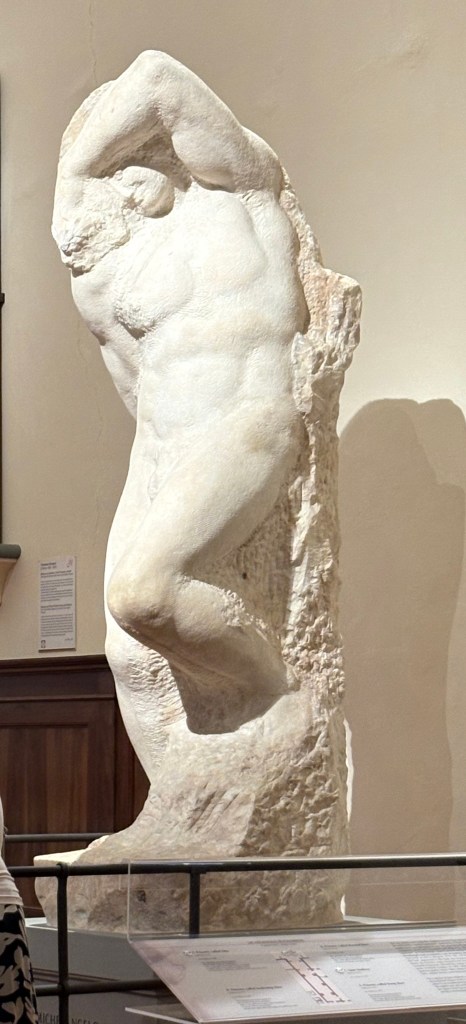
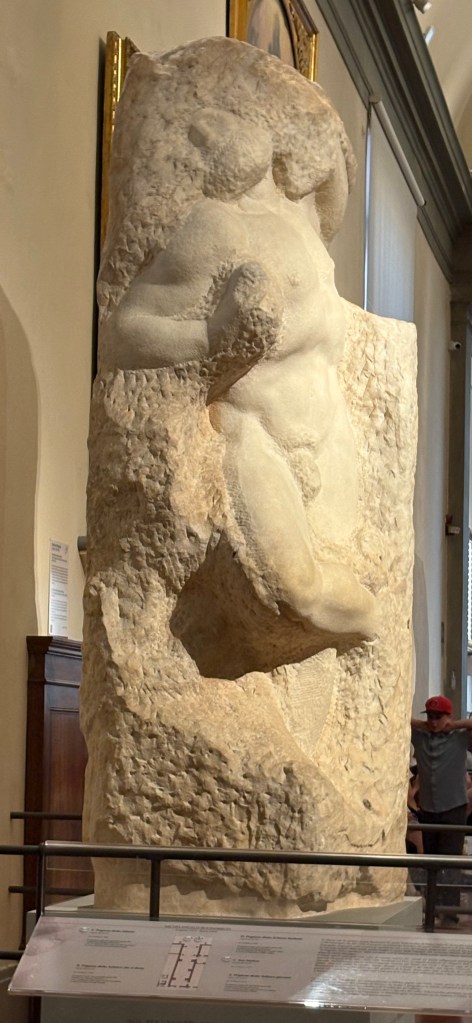
In the Accademia Gallery, Florence, are housed incomplete statues by Michelangelo that were supposed to accompany his sculpture of Moses on the grand tomb of Pope Julius II. The sculptures despite being unfinished, incomplete and therefore imperfect, evoke a sense of power. They seem to be wresting forcefully with the uncarved marble to free their own forms — much like humanity struggling to lead their own lives. Life now is comparable to atonal notes of modern compositions that refuse to fall in line with more formal, conventional melodies. The new year continues with residues of unending wars, violence, hate and chaos. Yet amidst all this darkness, we still live, laugh and enjoy small successes. The smaller things in our imperfect existence bring us hope, the necessary ingredient that helps us survive under all circumstances.

Imperfections, like Michelangelo’s Non-finito statues in Florence, or modern atonal notes, go on to create vibrant, relatable art. There is also a belief that when suffering is greatest, arts flourish. Beauty and hope are born of pain. Will great art or literature rise out of the chaos we are living in now?  One wonders if ancient art too was born of humanity’s struggle to survive in a comparatively younger world where they did not understand natural forces and whose history we try to piece together with objects from posterity. Starting on a journey of bringing ancient art from her part of the world, Ratnottama Sengupta shares a new column with us from this January.

Drenched in struggles of the past is also Showkat Ali’s The Struggle: A Novel, translated from Bengali by V. Ramaswamy and Mohiuddin Jahangir. It has been reviewed by Somdatta Mandal who sees it a socio-economic presentation of the times. We also carry an excerpt from the book as we do for Anuradha Marwah’s The Higher Education of Geetika Mehendiratta. Marwha’s novel has been reviewed by Meenakshi Malhotra who sees it as a bildungsroman and a daring book. Bhaskar Parichha has brought to us a discussion on colonial history about Rakesh Dwivedi’s Colonization Crusade and Freedom of India: A Saga of Monstrous British Barbarianism around the Globe. Udita Banerjee has also delved into history with her exploration of Angshuman Kar’s The Lost Pendant, a collection of poems written by poets who lived through the horrors of Partition and translated from Bengali by multiple poets. One of the translators, Rajorshi Patranabis, has also discussed his own book of supernatural encounters, Whereabouts of the Anonymous: Exploration of the Invisible. A Wiccan by choice, Patranbis claims to have met with residual energies or what we in common parlance call ghosts and spoken to many of them. He not only clicked these ethereal beings — and has kindly shared his photos in this feature — but also has written a whole book about his encounters, including with the malevolent spirits of India’s most haunted monument, the Bhangarh Fort.

Bringing us an essay on a book that had spooky encounters is Farouk Gulsara, showing how Dickens’ A Christmas Carol revived a festival that might have got written off. We have a narrative revoking the past from Larry Su, who writes of his childhood in the China of the 1970s and beyond. He dwells on resilience — one of the themes we love in Borderless Journal. Karen Beatty also invokes ghosts from her past while sharing her memoir. Rick Bailey brings in a feeling of mortality in his musing while Keith Lyons, writes in quest of his friend who mysteriously went missing in Bali. Let’s hope he finds out more about him.

Charudutta Panigrahi writes a lighthearted piece on barbers of yore, some of whom can still be found plying their trade under trees in India. Randriamamonjisoa Sylvie Valencia dwells on her favourite place which continues to rejuvenate and excite while Prithvijeet Sinha writes about haunts he is passionate about, the ancient monuments of Lucknow. Gulsara has woven contemporary lores into his satirical piece, involving Messi, the footballer. Bringing compassionate humour with his animal interactions is Devraj Singh Kalsi, who is visited daily by not just a bovine visitor, but cats, monkeys, birds and more — and he feeds them all. Suzanne Kamata takes us to Kishi, brought to us by both her narrative and pictures, including one of a feline stationmaster!

Rhys Hughes has discussed prose poems and shared a few of his own along with three separate tongue-in-cheek verses on meteorological romances. In poetry, we have a vibrant selection from across the globe with poems by Ryan Quinn Flanagan, Ron Pickett, Snehaprava Das, Stephen Druce, Phil Wood, Akintoye Akinsola, Michael Lauchlan, Pritika Rao, SR Inciardi, Jim Murdoch, Pramod Rastogi, Joy Anne O’Donnell, Andrew Leggett, Ananya Sarkar and Annette Gagliardi. Rich Murphy has poignant poems about refugees while Dmitry Bliznik of Ukraine, has written a first-hand account of how he fared in his war-torn world in his poignant poem, ‘A Poet in Exile’, translated from Ukranian by Sergey Gerasimov —

We've run away from the simmering house
like milk that is boiling over. Now I'm single again.
The sun hangs behind a ruffled up shed,
like a bloody yolk on a cold frying pan
until the nightfall dumps it in the garbage…

('A Poet in Exile', by Dmitry Blizniuk, translated from Ukranian by Sergey Gerasimov)

In translations, we have Professor Fakrul Alam’s rendition of Nazrul’s mellifluous lyrics from Bengali. Isa Kamari has shared four more of his Malay poems in English bringing us flavours of his culture. Snehaparava Das has similarly given us flavours of Odisha with her translation of Pravasini Mahakuda’s Odia poetry. A taste of Balochistan comes to us from Fazal Baloch’s rendition of Sayad Hashumi’s Balochi quatrains in English. Tagore’s poem ‘Kalponik’ (Imagined) has been rendered in English. This was a poem that was set to music by his niece, Sarala Devi.

After a long hiatus, we are delighted to finally revive Pandies Corner with a story by Sumona translated from Hindustani by Grace M Sukanya. Her story highlights the ongoing struggle against debilitating rigid boundaries drawn by societal norms. Sumana has assumed a pen name as her story is true and could be a security risk for her. She is eager to narrate her story — do pause by and take a look.

In fiction, we have a poignant narrative about befriending a tramp by Ross Salvage, and macabre and dark one by Mary Ellen Campagna, written with a light touch. It almost makes one think of Eugene Ionesco. Jonathan B. Ferrini shares a heartfelt story about used Steinway pianos and growing up in Latino Los Angeles. Rajendra Kumar Roul weaves a narrative around compassion and expectations. Naramsetti Umamaheswararao gives a beautiful fable around roses and bees.

With that, we come to the end of a bumper issue with more than fifty peices. Huge thanks to all our fabulous contributors, some of whom have not just written but shared photographs to illustrate the content. Do pause by our contents page and take a look. My heartfelt thanks to our fabulous team for their output and support, especially Sohana Manzoor who does our cover art. And most of all huge thanks to readers whose numbers keep growing, making it worth our while to offer our fare. Thank you all.

Here’s wishing all of you better prospects for the newborn year and may we move towards peace and sanity in a world that seems to have gone amuck!

Happy Reading!

Mitali Chakravarty

borderlessjournal.com

CLICK HERE TO ACCESS THE CONTENTS FOR THE JANUARY 2026 ISSUE.

.

READ THE LATEST UPDATES ON THE FIRST BORDERLESS ANTHOLOGY, MONALISA NO LONGER SMILES, BY CLICKING ON THIS LINK.

Categories
Musings

That Time of Year

By Rick Bailey

We’re looking for one in particular.  We find 130 Michael Smiths.

I’m standing at the kitchen counter chopping an onion at eleven in the morning. We’ve just walked seven miles, on what feels like the first day of spring. Real spring: The sky is blue, the maples are in lush full leaf, the ferns along the east side of our house are burgeoning. The birds are so noisy even with these bad ears of mine I can hear them. Ten minutes into our walk I pull off one of my two layers, the long sleeve shirt. 

“That’s a lot of Michael Smiths,” I say now. Tizi is looking for him on her IPad. 

And I’m thinking, there could be a joke– How many Michael Smiths does it take to…? But it’s 130 obituaries we’ve found. An obituary is not funny.

Earlier today, on our walk to the top of Van Ness, an avenue of maples near our house, we stopped and talked to Carol, a friend from the local senior center, which we abandoned during the plague, then never went back to, post-Covid. 

“Will you look at us,” she says to Tizi, pointing first at her own hair, then at Tizi’s. Both gorgeous silver. Carol is sleek, energetic and funny. This morning she’s dressed in slim jeans, a gray fleece, and running shoes. When we walk up her driveway she’s stabbing a weeding fork into dandelions along her front sidewalk. She says her house is too big. She’s lived here, post-divorce, thirty some years. Too many flower beds, she says. Too much work. When I ask, she says her hip replacements were a great success. Yes, she tells Tizi, she did go back to the senior center, where there are some of the same people. And there are those, like us, who never came back. And, she says, there are some new seniors too. I think: Does that make us old seniors?

“What about Ed?” Tizi asks. 

I know she’s afraid to ask. Ed’s the trumpet player. Ed’s the leader of the senior center big band. Occasionally he took the elevator downstairs to the exercise machines and didn’t exercise. Mostly he sat at the round table upstairs, drank coffee, and dispensed witticisms. A few years ago, we missed his 90th birthday bash. He had a yellow Corvette in the parking lot but didn’t drive much. One Tuesday nights, I took him (or he took me) to a jazz jam session over on Woodward Avenue. We sat through two sets. Every so often, he wiped tears from his eyes. He drank one glass of beer. 

“Gone,” Carol says now. 

Tizi shakes her head. “I knew it.”

Carol says, well, Ed was 92. “But Michael Smith?” 

He was a young senior, with a shock of very premature gray hair and a wicked sense of humour. He had no business being a senior. And now, he has no business being dead. 

*

Like Carol I think about the flower beds. And the basement. And a spare room upstairs. Every house has a junk drawer. We have a junk room. At our age, you begin to reckon with the too-muchness of a house. At least I do. Tizi not so much. 

Part of the problem is accidental shopping.  We try to avoid Home Goods. There’s one right next to Costco. If you’re waiting for Costco to open, you can kill time at Home Goods. But there’s peril. We don’t need another pan, another serving dish. We have enough tongs. When I open kitchen and bathroom and mudroom cupboards, I find soaps we bought at Home Goods and forgot about.

I find soaps with a French accent–savon pour les mains (soothing, it says on the label, soft cotton), three 17-ounce pump bottles of those. I also find Lemon Verbena made by or for aromatherapy rituals; Ginger Mandarin Hand Soap, which, according to the label, is “pure and good”, biodegradable and plant-based; we have Rain Forest Collection of Ecological Products (meaning, judging from the look of them, soaps); we have Thyme Vegetal Soap and Cedar Vegetal Soap; Kirk’s Original Coco Castile pure botanical coconut oil 100% natural hypoallergenic skin care with no synthetic detergents soap. We have The Chef’s Soap (not A chef’s soap) also made in France. All that soap makes me want to get dirty. It also tells me don’t buy any more soap, maybe ever.

Online shopping has exacerbated the problem. It’s too easy to buy stuff. 

A helpful message popped up on my phone one day. I’m paying too much for hearing aids was the message. That day, it just so happened, I came home from Shake Shack, a stressful outing with a grandson involving touch screen menus and digital ordering and a flood of hungry young professionals, and I was missing one of my hearing aids. I tried calling. Did you find a small electrical thingie on the floor… and learned if you press 1 you can place your order and if you press 2 you can leave a message for the manager but really you really can’t. Press 2 and you go nowhere. They don’t ever say wait for the beep. There’s no beep. I pictured Big Beaver lunch traffic passing through Shake Shack, my dinky, obscenely expensive device under foot, smashed.  

This ad on my phone said, “Get new hearing aids for less than $100!” 

They arrived two days later. The operating instructions, a 12-page manual only slightly larger than a postage stamp, said it can take up to two weeks to get used to them. I lasted three days. The problem was feedback, annoying high-pitched squealing coming from the direction of my head. I could hear the feedback just fine. The frequency-adjusted audible world that came to me sounded like sharpened knives.  Tizi said, “What’s that noise?” She meant the feedback. The one-button control panel on the side of these things, which are the size of a peanut inserted into your ears, is no bigger than the head of a pin. Press the head of the pin three times to adjust volume. Squeal. Hold the head of the pin down for three seconds to change the mode. Squeal. 

When my father got old and wore hearing aids, his fingers were always in his ears, adjusting, pressing, fiddling, which I think now, in my case, is only slightly less unsightly than a finger up my nose. No one wants to see that.  I am becoming my father. Deaf, like him. Old.

I sent them back.

*

Poor Michael Smith. We never find the obit. Nor the death notice

Next day I’m thinking about him again, walking out of a local market, and I see Ted. I’d see him at the senior center, too, but he and I go back a number of years. We go way back to the BC (before Covid) years, to the years our kids were in school together. He is heavier. He has unkempt gray hair and an unruly goatee.

He squints as we pass each other in the parking lot. “I know you,” he says.

“Ted,” I say.

“What’s your name?” 

The look of irrecognition is on his face, in his eyes. I tell him my name, feeling a shiver of alarm. He says, “How do I know you? Do you go up North?”

I say yes, we go up North. I tell him we’ve been to his house up there. This doesn’t register. He’s trying to puzzle it out. I can see he’s tired of puzzles. “We sat all those nights by the Herman’s pool?”

“The Hermans,” he says. He gets that. Then: “Whatever happened to them?”

I feel a moment of panic of my own when I can’t remember his wife’s name. I ask, Grandchildren? Yes, he has two. 

“We’ve got three,” I say. “We’re going to California on Tuesday to see the new one.” 

He asks again, “Do you go up north?” If he knows me, I can’t tell. He has other things not on his mind.

When I get home, I tell Tizi. She says she surprised Ellen lets him drive.

Ellen, I think. That’s right.

Before lunch I step outside to walk around the house, to feel the spring air again, to stand in the sun. In Tizi’s patch of trillium we have a lump of rock that’s a foot tall and comes to kind of a point on top.  Every year on a day like today we’re likely to see a chipmunk perched on top of it, looking around in its nervous, jerky chipmunk manner. This is one of those days. It’s the first chipmunk day of the year. I can’t hear it chipping and chattering, but I know it does that.

What I do hear is a sound in the distance. At first, I think, electric bicycle, the distinct whine as it picks up speed, probably just down the street. Then I realise, no, it’s a motorcycle accelerating, running through the gears in the far distance, going who knows where, fast, and enjoying it.

.

Rick Bailey blogs about family and friends, home and travel, food and wine, the odd and ordinary in everyday life. He has published four collections of essays, a memoir, and a novel.

.

PLEASE NOTE: ARTICLES CAN ONLY BE REPRODUCED IN OTHER SITES WITH DUE ACKNOWLEDGEMENT TO BORDERLESS JOURNAL

Click here to access the Borderless anthology, Monalisa No Longer Smiles

Click here to access Monalisa No Longer Smiles on Kindle Amazon International