Going up from East River to all heated up 46 Street,
Crossing quite a few avenues one after another,
Just where 5th Avenue comes into view jarringly,
One comes across America’s biggest bookstore, Barnes and Nobles,
Poised at this point of the city like an ancient philosopher.
And when I say “biggest”, I mean one store of a really big bookshop chain.
There may perhaps be a bigger shop than this one somewhere else,
Or perhaps there may be none comparable in size!

On weekdays I stand there for some time around ten
Perhaps because of its proximity to Diamond District,
The morning sunlight here—an amalgam of diamond and gold—
Streams onto the 5th Avenue pavement.

Perhaps to pick them up,
Causal and loosely clad, white-skinned women flood the street.
Usually, I buy a glass of smoothie from the Mohican youth
Making energy drinks on his machine,
Savouring afterwards a glass of the diamond-gold drink.

I can take many roads to come to F train station,
But I always use this particular crossing point.
On evenings, while returning from the UN building,
Unthinkingly, I enter Barnes and Noble’s cavernous stomach
Two concrete monsters cover the orange-coloured cloud.
What can a man possibly need in a bookshop?
It is quite one thing if it is a bar or a meat shop!
Of course, Americans crowd vegan shops nowadays,
Who knows if one day vegans will alter the American language?

From some aisle of the shop, on any given day, I’ll pick up any one.
The other day it was that old man from the Vermont Hills, Frost.
As soon as I picked him up, he wanted to make me wise in my ways.
“Try and fathom out the music of verse—that is it essence!”
What rubbish! The guy is still stuck in the 1960s!
The world of poetry has marched forward a lot,
And has been crossing all sorts of holes and pits nowadays,
And prose’s highs and lows.
The old man is such an ignoramus!

Holding a milk-honey concoction on her lap sat the Punjabi girl, Rupi Kaur.
Seeing me, she sprang into my lap.
India seemed to tremble as fingers touched soft dark skin.
Though someone who was still in her teens only yesterday,
She couldn’t resist dishing out advice. She said:
“Forge a knife on your own dear poet; hold the weapon in your hand,
The time has come to slice things with one stroke after another!”

The day I banged against Rae Armantrout, was the day I learnt about her verse,
About how in their silences became representative of language movement poetry.

I saw many others in their welcoming aisle as well!

I saw Ezra Pound trying to suppress a smile when I entered,
For sure I did not dare go near him out of fear
But let me whisper this into your ears:
I sure did mangle his poetry in trying to translate it!

I saw Amiri Baraka’s unruly beard fly in the air conditioner’s wind.
Nude Ginsberg was walking up the stairs leading to the second floor,
Shouting as he did so, “They don’t understand people’s sufferings
So obsessed are they with “development”!
John Ashberry was looking at the Hudson with one eye,
His tears stonily registering some hidden pain there
The other eye was all ablaze
All of a sudden, like a scene in some animation film,
The man’s eye’s fire made Manhattan burn.

I fled the fire that was burning so
Thinking as I did then—
How could Barnes and Nobles accommodate such hostile pronouncements,
                                                                                              such wrath!

				Holliswood, New York
				24 June, 2022
Quazi Johirul Islam has been writing for over 3 decades. He has published more than 90 books, 39 of them are collections of poetry. His travelogues are very popular. He has been with United Nations, has traveled all over the world, worked in conflict zones, his bag is full of colourful experiences. In 2023, Quazi was awarded Peace Run Torch Bearer Award by Sri Chinmoy Centre, New York. He has also received many awards and honours in Bangladesh, India and abroad.
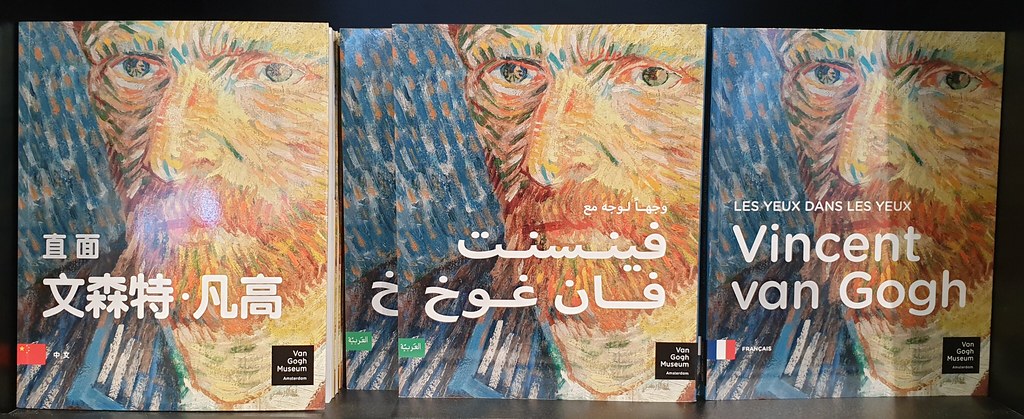
Vincent Van Gogh written is different scripts. Courtesy:Creative Commons
The whole world opens up in the realm of ideas that have existed wafting and bridging across time and space. Sometimes they find conduits to come to the fore, even though they find expression in different languages, under varied cultural milieus. One way of connecting these ideas is to translate them into a single language. And that is what many have started to do. Celebrating writers and translators who have connected us with these ideas across boundaries of time and place, we bring to you translated writings in English from twenty eight languages on the International Translation Day, from some of the most iconic thinkers as well as from contemporary voices.
Prose
Tagore’s short story, Aparichita, has been translated from Bengali as The Stranger by Aruna Chakravarti. Click hereto read.
Nadir Ali’s The Kabbadi Player has been translated from Punjabi by Amna Ali. Click here to read.
Kamaleswar Barua’s Uehara by has been translated from Assamese and introduced by Bikash K. Bhattacharya. Click here to read.
S Ramakrishnan’s Muhammad Ali’s Singnature has been S. Ramakrishnan, translated from Tamil by Dr B. Chandramouli. Click here to read.
PF Mathews’Mercy, has been translated from Malayalam by Ram Anantharaman. Click here to read.
Road to Nowhere, an unusual story about a man who heads for suicide, translated from Odiya by the author, Satya Misra. Click here to read.
An excerpt from A Handful of Sesame by Shrinivas Vaidya, translated from Kannada by Maithreyi Karnoor. Click hereto read.
Writings from Pandies’ Cornerhighlight the ongoing struggle against debilitating rigid boundaries drawn by societal norms. Each piece is written in Hindustani and then translated by a volunteer from Pandies’ in English. Clickhere to read.
Rakhamaninov’s Sonata, a short story by Sherzod Artikov, translated from Uzbeki by Nigora Mukhammad. Click hereto read.
Of Days and Seasons, a parable by the eminent Dutch writer, Louis Couperus (1863-1923), translated by Chaitali Sengupta. Click here to read.
The Faithful Wife, a folktale translated from Balochi by Fazal Baloch. Click hereto read.
An excerpt from Ramy Al-Asheq’sEver Since I Did Not Die, translated from Arabic by Isis Nusair, edited by Levi Thompson. The author was born in a refugee camp. Click here to read.
Poetry
Two songs byTagore written originally in Brajabuli, a literary language developed essentially for poetry in the sixteenth century, has been translated by Radha Chakravarty. Click here to read.
Rebel or ‘Bidrohi’, Nazrul’s signature poem, ‘Bidrohi‘, translated from Bengali by Professor Fakrul Alam. Click here to read.
Banlata Sen, Jibananada Das’s iconic poem, translated from Bengali by Professor Fakrul Alam. Click here to read.
I am never too confident about those who label themselves ace professionals. Such grandiose claims, often based on degrees or years of experience, deliver substandard outcomes. A professional photographer near my residence ranks high in the list of pseudo-professionals I have known all these years. As the sole proprietor of SN Studio1, his roster of clients comprises the dead, the alive and the half-dead types like me. He offers a long list of services – as evident from the signage emblazoned with his debonair picture for better brand recall.
The dead queued for the last click are, perhaps, the coolest customers for him, offering the rare luxury of stillness he seeks from those he photographs. Only the dead can satisfy his need for immobility and dollops of patience. The restlessness of those alive and kicking and seeking to expedite the clicking process annoys him. He often behaves like an artist, as if he is engaged in creating a classic portrait instead of taking a photograph, and the conspiratorial world is just not ready to allow his artistic blooms to create many splendored exhibits. Several customers decline the inventive touch he wants to add, admonishing him for being too tardy to freeze the fleeting moment.
His focus is pretty sharp on capturing the nostrils stuffed with cotton balls from a fresh angle, adding to the frame a member of the family touching the feet. No one notices or appreciates the special touch to bring the picture to life. Urged by those carrying the bier to make haste, he hurriedly clicks. The bier bearers set out for their last journey with the dead before the weather gods turn hostile, leaving our photographer friend with instructions to take only the good prints even though he spends the entire roll to immortalise the departed soul. It is reaffirmed beyond a strain of doubt that he shares an amazing chemistry with the dead. It is true the dead emerge the easiest to click, and he is at his best in the presence of the dead. Although the dead cannot get up to thank him for a great job, their survivors often do so by placing further orders for portraits.
He always clicks close-up pictures of the face and those weeping inconsolably and embracing the corpse while including strong, irreverent relatives wearing bright shades on sad occasions to suggest their undying spirit to live. Clicking their sons and daughters reflecting grief is what to him is a prize-winning candid shot that unfortunately escapes attention and admiration. He includes one such picture in his portfolio to remind himself of his professional acumen that remains untapped.
Some people who started patronising him for passport-size photographs – much before the digital era arrived – often fail to obey his instructions. The make-up he applies makes them look strange. The talcum powder on his dressing unit is of the popular Dreamflower brand, and the brushes and puffs bring him closer to a moody make-up stylist. Under the harsh lights of the camera, beads of sweat appear on the forehead as the inexorable wait makes even the most saintly folks restless. By the time he takes a snap after tilting the head or lifting the chin for the perfect pose, I feel sapped. Like a film photographer with characteristic disdain, he makes bombastic pronouncements but falls short of meeting the expectation pitched high. Most of the passport-size pictures were meant for the dossiers such as identity card, library card, passport, or any other form-filling exercise where affixing a passport-size photo was mandatory.
Many of those who got clicked for matrimonial purposes remained unmarried for a long time. The reason behind the lacklustre response is understood quite late – more than a year. He frames what he considers to be beautiful shots and showcases them on the display board behind his counter. Applying for jobs with such pictures creates a bad impression on recruiters. Once upon a time, getting a chance to be auditioned for a TV serial excited me. I asked him to prepare two classy pictures to be sent for the competition. He made me wear goggles and then applied gel to my hair. I thought it was an audition for a hero’s role but my look impressed the selectors to shortlist me for a villain’s role. When he asked me whether I was chosen for the role a month later, I had nothing much to say. Before I could frame a reply, he sounded confident that the pictures were fabulous for the role of an anti-hero. I said I did not accept the role offered as the terms and conditions were exploitative. I said I was ready to wait for the right opportunity, for a bigger gig though it was not convincing enough as a newcomer is normally desperate to grab whatever comes his way.
I said I would be getting my portfolio made by a leading photographer. But I knew within myself, I would never again venture along this path. Some weeks later, I went to his studio and noticed my pictures pinned on the board. Sensing that I was about to object to this public display, he pacified me by saying some girls took an interest and sought my contact details. Hoping that this news would create a flurry of excitement in my heart, he offered to arrange a meeting with them at the studio. Smelling something fishy, I chose not to show any interest and stayed out of the trap. His offer of help to get me hitched was ditched and he was perhaps pricked beyond imagination that his selfless moves were scuttled in this dry, thankless manner.
During those days he was scouting for a chance to film a Punjabi wedding for his portfolio. I did what he was expecting from me. I invited him to photograph my wedding. He was roped in with a clear clause mentioning that his photography during the Ladies Sangeet and the Mehndi ceremonies would decide whether he would qualify to cover the marriage and reception. During the Ladies Sangeet function, I sneaked in along with him. He was busy enjoying the performance so much that he forgot to click for half-an-hour. He got poor, dark, hazy, long shots, without any close-ups as he did not have the temerity to go nearer and click. He stayed away from the inner circle for fear of being snubbed. When asked why he did so, he explained timidly that the opportunity to create memories took centre stage and his mind was busy soaking in the gyrations forever. It seemed to be more of his desire to be present during an ostentatious Punjabi wedding for his entertainment than anything else.
The resultant effect was I declared that I would never patronise him for any occasion or event. As his client list thinned with the digital wave setting in, he did try to stage a comeback in a new avatar, by converting the studio into a photographer’s institute where he conducted highly affordable short-term courses and taught amateurs all about professional photography in various categories.
Devraj Singh Kalsiworks as a senior copywriter in Kolkata. His short stories and essays have been published in Deccan Herald, Tehelka, Kitaab, Earthen Lamp Journal, Assam Tribune, and The Statesman. Pal Motors is his first novel.
PLEASE NOTE: ARTICLES CAN ONLY BE REPRODUCED IN OTHER SITES WITH DUE ACKNOWLEDGEMENT TO BORDERLESS JOURNAL
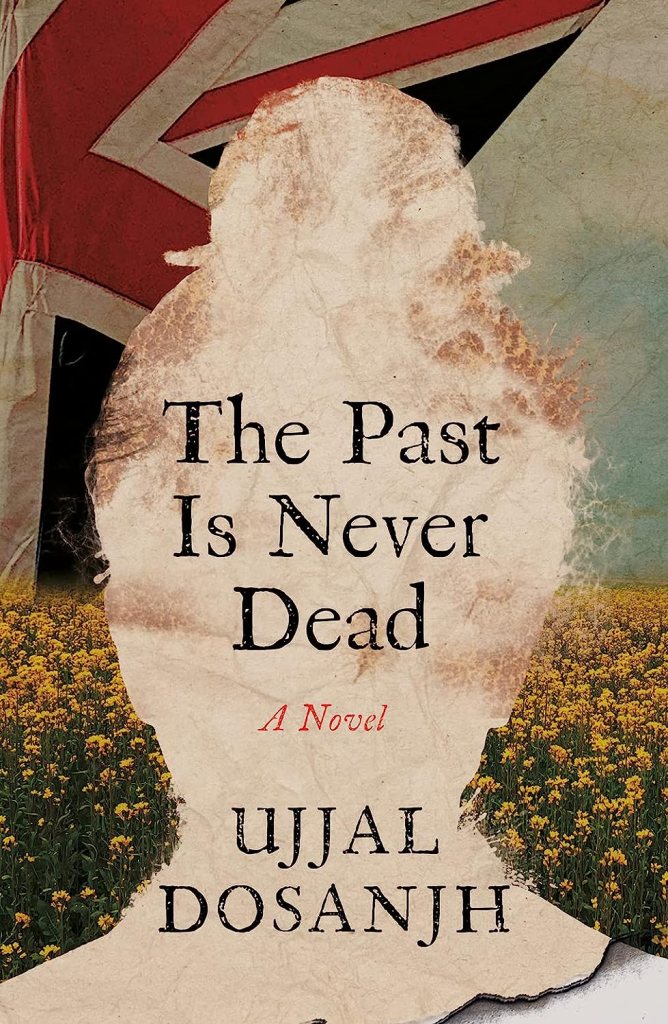
Ujjal Dosanjh’s latest novel, The Past is Never Dead, sheds light on the stranglehold of caste on Punjabi Sikh immigrants in the UK – a unique perspective of caste violence in a faith outside of Hinduism, one that was born out of the noble teaching by Guru Nanak and his followers that every human being is equal in the eyes of God. Borrowing the prologue from William Faulkner’s famous statement, “The past is never dead. It is not even past,” Dosanjh makes it his project to challenge this idea about Sikhism, as he writes about a poor family that migrates to England soon after India’s independence in the hope of escaping the indignities of caste back home – only to be confronted by it again, and in the most horrifying ways possible, in a western foreign land, where caste is supposed to be an insignificant marker of identity.
In the year 1952, Kalu escaped Banjhan Kalan in Punjab’s Hoshiarpur for Bedford in the British Midlands, hoping to find a life of dignity that he had been denied because of his untouchable caste. He was in his late teens and had grown up believing in Sikhism’s tenet of equality preached by Guru Nanak and Ravidas, a principle the villagers never sincerely practised. They had maimed his father, accusing him of stealing a zamindar’s ox; they had thrown father and son out of a Quit India rally; they had mercilessly thrashed young Kalu himself for daring to enter a temple. He had never been allowed to forget—even by his schoolmates—that he was a Chamar, destined to skin dead cattle like his ancestors. His father Udho was determined to get his son out of this life of indignity and had said, “Son, I don’t want you to grow up a Chamar. You will never do what made my hands and feet like this.” Soon Udho borrowed money from a kind merchant, bribed the officials, got a passport and left for Britain.
England promised a new life of respect and opportunity. Udho laboured hard to give his son a college education and his wife a decent life that was denied to them back in India. The way Kalu and his mother ultimately bribed their way onto an earlier flight to escape from the powerful connections his propertied travel agents had, and who could create obstacles in their journey to Britain, speaks a lot about the plight of scores of rural people in the Punjabi villages who dreamt of building a new life in the West. But freedom was illusory. Kalu’s fellow expatriates had brought caste along when they came to that country, and he would be forced to adhere to its degrading rules just as he was in Banjhan.
Apart from the story of a rural Punjabi family’s search for better life, the novel is also a powerful depiction of the stranglehold of caste over Sikh immigrants in Britain. We have read about honour killings of Sikh women during the riots that took place after the Partition of India when family patriarchs forced their wives and daughters to jump into the well or commit suicide to avoid being kidnapped by the Muslims, but the horror behind the story of honour killing within the Sikh community in England based on caste differences is something terrifying. The construction of different gurdwaras in the same locality according to caste affiliations including local politics, enmity, and gruesome killings by the Jats, who considered themselves racially superior to the other Sikhs, expose the horror and obstinacy of caste even in the middle of the twentieth century, and is just unimaginable. Determined not to bend—as he had refused to do back home—Kalu fights back as he could not suffer indignity silently, but his resoluteness in the struggle puts him and his family at serious risk.
With many turns and twists in the storyline, including the abduction and death of his doctor wife, Kalu’s hair was shaved by his caste-hate-obsessed kidnappers as revenge for what they considered his audacity in describing a Jat’s daughter as mini bell unsuited to be married to his Jat friend. Eventually, he discards his hair; the act acknowledges the impotence of religion and religious symbols in the struggle for equality and against caste. In the end, through his indomitable will force, we find how Kalu manages to overcome all odds and contest for a MP seat in the Parliament as a Labour Party candidate under the name of Dr. Kalha Chamar — “He was done fleeing, escaping or dressing up caste in surnames, unshorn hair or turban.” The concluding paragraph of the novel which gives a positive message of hope for the future is worth quoting here:
“Angad made chai. Between the sips of chai, the humpbacked Banti, the limping Udho, the hairless Kalu and the adolescent Angad danced. When Robert, Janice and Gurbat knocked on the door to congratulate him, Udho Chamar and his son, Kalu Chamar MP, were standing with raised glasses, about to down neat double Johnnie Walkers.”
Though the story of Dosanjjh’s own life and the timeframe of the novel bear a lot of similarities with the incidents narrated in the story, he does not mention it to be an autobiography. Instead, he fills the novel with various other racist perspectives that the Sikhs in Britain still cannot steer clear of. So, he safely adds other issues and titles it “A Novel.” But how far some of the incidents narrated in the novel have moved him becomes clear when we read in an interview given to scroll.in where he states:
“It was emotionally quite exacting to write The Past Is Never Dead. The toll of the issues I wrote about has been a lifelong companion. Age has rendered me shameless enough for me to confess that I often cried as I wrote many parts of the novel…. The human incapacity to learn from the past astounds me. It aids us in veiling the past from ourselves and abets our continuing cruelty in the name of dumb tradition and comatose culture.”
The novel is surely worth reading and is strongly recommended as it pays tribute to the courage and tenacity of the human spirit and its capacity for hope despite all odds.
.
Somdatta Mandal, academic, critic and translator is a former Professor of English at Visva-Bharati, Santiniketan, India.
PLEASE NOTE: ARTICLES CAN ONLY BE REPRODUCED IN OTHER SITES WITH DUE ACKNOWLEDGEMENT TO BORDERLESS JOURNAL
“May is pretty, May is mild,
Dances like a happy child…”

Annette Wynne (Early twentieth century)
Each month is expressed in a different form by nature in various parts of the world. In the tropics, May is sweltering and hot — peak summer. In the Southern hemisphere, it is cold. However, with climate change setting in, the patterns are changing, and the temperatures are swinging to extremes. Sometimes, one wonders if this is a reflection of human minds, which seem to swing like pendulums to create dissensions and conflicts in the current world. Nothing seems constant and the winds of change have taken on a menacing appearance. If we go by Nazrul’s outlook, destruction is a part of creating a new way of life as he contends in his poem, ‘Ring Bells of Victory’ — “Why fear destruction? It’s the gateway to creation!” Is this how we will move towards ‘dancing like a happy child’?
Mitra Phukan addresses this need for change in her novel, What Will People Say — not with intensity of Nazrul nor in poetry but with a light feathery wand, more in the tradition of Jane Austen. Her narrative reflects on change at various levels to explore the destruction of old customs giving way to new that are more accepting and kinder to inclusivity, addressing issues like widow remarriage in conservative Hindu frameworks, female fellowship and ageing as Phukan tells us in her interview. Upcoming voice, Prerna Gill, lauded by names like Arundhathi Subramaniam and Chitra Divakaruni, has also been in conversation with Shantanu Ray Choudhuri on her book of verses, Meanwhile. She has refreshing perspectives on life and literature.
Devraj Singh Kalsi has written a nostalgic piece that hovers between irony and perhaps, a reformatory urge… I am not quite sure, but it is as enjoyable and compelling as Meredith Stephen’s narrative on her conservation efforts in Kangaroo Island in the Southern hemisphere and fantastic animals she meets, livened further by her photography. Ravi Shankar talks of his night hikes in the Northern hemisphere, more accurately, in the Himalayas. While trekking at night seems a risky task, trying to recreate dishes from the past is no less daunting, as Suzanne Kamata tells us in her Notes from Japan.
May hosts the birthday of a number of greats, including Tagore and Satyajit Ray. Ratnottama Sengupta’s piece on Ray’s birth anniversary celebrations with actress Jaya Bachchan recounting her experience while working for Ray in Mahanagar(Big City), a film that has been restored and was part of celebrations for the filmmaker’s 102nd Birth anniversary captures the nostalgia of a famous actress on the greatest filmmakers of our times. She has also given us an essay on Tagore and cinema in memory of the great soul, who was just sixty years older to Ray and impacted the filmmaker too. Ray had a year-long sojourn in Santiniketan during his youth.
Eulogising Rabindrasangeet and its lyrics is an essay by Professor Fakrul Alam on Tagore. Professor Alam has translated number of his songs for the essay as he has, a powerful poem from Bengali by Masud Khan. A transcreation of Tagore’s first birthday poem , a wonderful translation of Balochi poetry by Fazal Baloch of Munir Momin’s verses, another one from Korean by Ihlwha Choi rounds up the translated poetry in this edition. Stories that reach out with their poignant telling include Nadir Ali’s narrative, translated from Punjabi by his daughter, Amna Ali, and Aruna Chakravarti’s translation of a short story by Tagore. We have more stories from around the world with Julian Gallo exploring addiction, Abdullah Rayhan with a poignant narrative from Bangladesh, Sreelekha Chatterjee with a short funny tale and Paul Mirabile exploring the supernatural and horror, a sequel to ‘The Book Hunter‘, published in the April issue.
All the genres we host seem to be topped with a sprinkling of pieces on Tagore as this is his birth month. A book excerpt from Chakravarti’s Daughters of Jorasankonarrates her well-researched version of Tagore’s last birthday celebration and carries her translation of the last birthday song by the giant of Bengali literature. The other book excerpt is from Bhubaneswar@75 – Perspectives, edited by Bhaskar Parichha/ Charudutta Panigrahi. Parichha has also reviewed Journey After Midnight – A Punjabi Life: From India to Canadaby Ujjal Dosanjh, a book that starts in pre-independent India and travels with the writer to Canada via UK. Again to commemorate the maestro’s birth anniversary, Meenakshi Malhotra has revisited Radha Chakravarty’s translation of Tagore’s Farewell Song. Somdatta Mandal has critiqued KR Meera’sJezebel, translated from Malayalam by Abhirami Girija Sriram and K. S. Bijukuma. Lakshmi Kannan has introduced to us Jaydeep Sarangi’s collection of poems, letters in lower case.
There are pieces that still reach out to be mentioned. Do visit our content page for May. I would like to thank Sohana Manzoor for her fantastic artwork and continued editorial support for the Tagore translations and the whole team for helping me put together this issue. Thank you. A huge thanks to our loyal readers and contributors who continue to bring in vibrant content, photography and artwork. Without you all, we would not be where we are today.
The night has nearly come to an end.
The old year is almost past.
Under this dust, it will lay down
Its worn-out life at last.
Whether friend or foe,      wherever you go,
Old wrongs cast
Away. On this auspicious day,
Old grievances shed as the old year parts.

— Nobo Borshe or on New Year by Tagore
Art by Sohana Manzoor
Mid-April, Thailand celebrates Songkran and Cambodia, Thingyan — water festivals like Holi. These coincide with the celebration of multiple New Years across Asia. Sikhs celebrate Baisakhi. Kerala celebrates Bishu and Tamil Nadu, Puthandu. Nepal celebrates Nava Varsha and Bengal Nobo Borsho or Poila Boisakh. A translation of Tagore’s poem on the Bengali New Year in spirit asks us to dispense with our past angst and open our hearts to the new day — perhaps an attitude that might bring in changes that are so needed in a world torn with conflicts, hatred and anger. The poet goes on to say, “I want to tie all lives with love” but do we do that in our lives? Can we? Masud Khan’s poems on love translated by Professor Fakrul Alam explore this from a modern context. From Korea, Ihlwha Choi tells us in his translation, “Loving birds is like loving stars”. But the translation that really dwells on love bringing in changes is Nabendu Ghosh’s ‘Gandhiji’, translated by Ratnottama Sengupta, his daughter. The short story by Ghosh highlights the transformation of a murderous villain to a defender of a victim of communal violence, towering above divides drawn by politics of religion.
Another daughter who has been translating her father’s works is Amna Ali, daughter of award-winning Punjabi writer, Nadir Ali. In ‘Khaira, the Blind‘, the father-daughter duo have brought to Anglophone readers a lighter narrative highlighting the erasure of divides and inclusivity. A folktale from Balochistan, translated by Fazal Baloch, echoes in the footsteps of ‘Emperor’s New Clothes’ — a story that can found in the Andersen’s Fairy Tales published in the nineteenth century. I wonder which narrative had come first? And how did it cross cultures retaining the original ideas and yet giving it a local colour? Was it with traders or immigrants?
That such narratives or thoughts are a global phenomenon is brought to the fore by a conversation between Keith Lyons and Asian Australian poet Adam Aitken. Aitken has discussed his cross-cultural identity, the challenges of travel, writing, and belonging. Belonging is perhaps also associated with acceptance. How much do we accept a person, a writer or his works? How much do we empathise with it — is that what makes for popularity?
Cross cultural interactions are always interesting as Rhys Hughes tells us in his essay titled ‘My Love for RK Narayan’. He writes: “Narayan is able to do two contradictory things simultaneously, namely (1) show that we are all the same throughout the world, and (2) show how cultures and people around the world differ from each other.” The underlying emotions that tie us together in a bond of empathy and commonality are compassion and love, something that many great writers have found it necessary to emphasise.
Mitra Phukan’sWhat Will People say?: A Novel is built around such feelings of love, compassion and patience that can gently change narrow norms which draw terrifying borders of hate and unacceptance. We carry an excerpt this time from her ‘Prologue’. Somdatta Mandal has reviewed Chitra Banerjee Divakurni’s latest , Independence. Starting from around the time of the Indian Independence too is Song of the Golden Sparrow – A Novel History of Free India by Nilanjan P. Choudhary, which has been discussed by Rakhi Dalal. The Partition seems to colour narratives often as does the Holocaust. Sometimes, one wonders if humanity will ever get over the negative emotions set into play in the last century.
Closer to our times, when mingling of diverse cultures is becoming more acceptable in arts, Basudhara Roy introduces us to Bina Sarkar Ellias’s Ukiyo-e Days…Haiku Moments, a book that links poetry to a Japanese art-form. While a non-fiction that highlights the suffering of workers by enforcing unacceptable work ethics, Japanese Management, Indian Resistance: The Struggles of the Maruti Suzuki Workersby Anjali Deshpande and Nandita Haksar has been reviewed by Bhaskar Parichha. The narrative, he writes, “tells the story of the biggest car manufacturer in India through the voices of the workers, interviewed over three years. They give us an understanding that the Maruti Suzuki revolution wasn’t the unmitigated success it was touted to be when they tell us about their resistance to being turned into robots by uncompromising management.” That lack of human touch creates distress in people’s hearts, even if we have an efficient system of management and mass production is well elucidated in the review.
These changes are reflected in our musings too. Sengupta has written on how change is wrought on a murderous villain by the charisma of Gandhi in her father’s fiction, as well as this world leader’s impact on Ghosh and her. Devraj Singh Kalsi addresses food fads with a pinch of sarcasm. From Japan, Suzanne Kamata has written of a little island with Greek influences, a result of cultural ties brought in by the emperor Hirohito. Ravi Shankar takes us to Pokhara, Nepal, and Meredith Stephen expresses surprise on meeting a shipload of people from Colorado in the far reaches of the Southern Hemisphere while on her sailing adventures with beautiful photographs. Stories by moderns reflect diverse nuances depicting change. While Brindley Hallam Dennis writes of the passing of an era, PG Thomas integrates the past into the present to reflect how they have a symbiotic structure in the scheme of creating or recreating natural movements through changes wrought over time in his story. Paul Mirabile explores the darker recesses of the human existence in his fiction. As if in continuation, the excerpt from Rhys Hughes’ The Wistful Wanderings of Perceval Pitthelmseems to step out of darker facets of humanity with a soupçon of wit at its best.
To create a world that endures, one looks for values that create inclusivity as reflected in these lines from Charles Chaplin’s My Autobiography, “Mother illuminated to me the kindliest light this world has ever known, which has endowed literature and the theatre with their greatest themes: love, pity and humanity.” This quote starts off a wonderful essay from film-buff Nirupama Kotru. Her narrative carries the tenor of Chaplin’s ‘themes’ to highlight not only her visit to the actor’s last home in Switzerland but also glances at his philosophy and his contributions to cinema across borders.
Our issue rotates around changes and the need for love and compassion to rise in a choral crescendo whirling with the voices of Tagore, Charles Chaplin as well as that of twenty-first century writers. Perhaps this new year, we can move towards a world – at least an imagined world — where love will wipe away weapons and war, where love will take us towards a future filled with the acceptance of myriad colours, where events like the Partition and the Holocaust will be history, just like dinosaurs.
Huge thanks to all our readers and contributors, some of whom may not have been mentioned here but are an integral and necessary part of the issue. Do pause by our April edition. I would also like to give my thanks to our indefatigable team whose efforts breathe life into our journal every month. Sohana Manzoor needs a special mention for her lovely artwork.
Why did I resent Khaira? Rivalry among equals makes sense, but he was just a poor, blind beggar. The first thing that got under my skin was his cry. “Seeing ones! Vision is indeed a blessing! Show sympathy for a blind man’s daughters! In the name of your eyes! In the name of your daughters! O seeing ones!” My wife glances at her purse and then the cash she needs to pay the school fees of our sons, daughters and granddaughters. She always keeps ten rupees for Khaira separately. Ten rupees is a decent amount, even in these days of sky-rocketing costs. And god forbid if one of our children is unwell! Fortune smiles on beggars then.
Our daughter’s daughter was unwell, and we were both worried. “Khair Din, listen carefully!” my wife entreated him. She handed him a five hundred rupee note with an appeal: “You have to pray for my grand-daughter Khaireya,” as if Khaira were a specialist.
“Lady! God will shower you with blessings as vast as your generous heart!” he exclaimed.
I couldn’t stay quiet. “For heaven’s sake, stop bribing god!”
My wife reacted angrily to my words. “None of that now! The poor have a right to a portion of our earnings.”
“Sweetheart, I didn’t mean it that way. How about a kind glance my way too once in a while!” I said to appease her.
Truth be told, a wall of pious rituals grows between a husband and wife as they get older. Often things end in divorce. It matters little whether the man genuinely loves her or only pretends to do so. Once he is old, the woman makes sure he gets the treatment he deserves. But we were discussing Khaira. Since he irritated the hell out of me, I managed to discover his secret.
I followed his every move as if he were my enemy.
“I have a feeling he is not blind,” I said one day.
“Have some fear of God! He’s been frequenting this neighbourhood for five years,” my wife replied.
“Well, I have a suspicion,” I continued.
“Let’s see you trek through two neighbourhoods in the punishing afternoon heat,” she retorted. “His little girl is the one who suffers in the heat. He is built like a wrestler. Two of me could hide inside him!” I said.
As they say, great discoveries are often right around the corner. I spotted Khaira hopping over a drainage ditch during the rainy season. I announced my findings once I was home. “The scoundrel has been exposed! He is not blind!”
“It must be time to get your eyes tested! You are already hard of hearing. If you could tell the difference between a blind and a sighted person, Rahma would not be our son-in-law today.”
Once again, my wife changed the direction of the conversation. But I remained on the lookout for the enemy. The next day I dragged him inside. As soon as I produced a dagger, Khaira begged for mercy. “Forgive this miserable person. It is his livelihood. I don’t know how to drive or cook for a living. I would have become a servant at a young age if I did. No one takes to begging because he wants to.”
He attempted various explanations. I threatened to turn him in to the police at first, but then decided to present him at my wife’s court. “Appear before the Chaudhrani and confess,” I ordered. I felt vindicated.
But my wife left his fate to Allah. “He will answer to Allah for his deeds. And we will answer for ours,” she declared.
The story did not end here. Khaira left our neighbourhood only to take up begging in the streets of Garden Town. I entertained the thought of stopping the car one day and saying hello. Instead, I ended up forgiving him like my wife had.
*
An unplanned, ramshackle neighbourhood lay along the back of ours. It boasted a tiny market. Late one night, I went to buy cigarettes and Khaira emerged from one of the doorways, all smiles. He seemed like another person. His clothes were spic and span and he held a cigarette between his lips.
“Do you know that man?” I asked Hayata, the cigarette vendor, as I gestured towards the figure walking away from us.
“That is Khaira, the gambler, Chaudhry Saheb,” he replied.
“Gambler?” That persona of his was completely new to me.
“Why else would he hang out with Chabba Butt? To say his prayers?” Hayata asked with a laugh.
My wife would consider what happened next beneath us, but the story took a strange new turn. I didn’t know Chabba Butt personally, but he was a known goon of the area. I went up to him early one morning and asked, “Do you know someone named Khair Din?”
He mistook me for a police officer given how well-dressed I was. “Why the investigation, officer?” he asked.
“Butt Saheb, I am no police officer, just an oppressed citizen. He tricked me out of a large sum of money over the years,” I replied.
“Sir, he is not a behrupiya[1],” Butt went on, “but he is a wonderful actor. He can act deaf, blind, just about anything, it is none of our business. When it comes to gambling, he often loses.”
“Butt Saheb, I too play poker,” I shared. “If I happen to pay you a visit, you won’t have me thrown out would you?”
He tried to dissuade me. “Sir, you belong with your kind at the clubs. Only kanjars and dregs visit this place.”
“Tell me, is this Khaira from the kanjar caste?” I asked.
“No sir, he is a Rajput. He does visit the brothels often though.”
“Ah, he belongs to my fraternity then . . . I didn’t ask out of any enmity . . . it’s just that he is an interesting fellow. He is a virtuoso, as if he were a behrupiya. Looking at him now, who would guess that he roams the next neighbourhood dressed as a beggar?”
My introduction to Chabba came about thanks to my quest for Khaira. Chabba seemed to be a goon from the bygone days, not the current brand connected with the land mafia or arms smugglers. He was a gambler and gamblers need their den. I was not one of them, but who doesn’t enjoy some wagering and betting now and then. Add the lure of money and the habit can turn deadly. I avoided the club scene. Old age seemed to usher in a kind of boredom. Upscale neighbourhoods like Gulberg and Cantonment reminded me of a graveyard. What is an old man like me supposed to do if he is forbidden alcohol and a second marriage. The tiny market reminded me of the old city. Poverty bothers those who lack spirit, otherwise, the company of the poor is superior to that of the rich. It offers a refuge for those who have endured a beating, a helping hand when one is in a fix. I visited a couple of times and overcame my self-consciousness. The gamblers also shed their discomfort. “Come, respected elder! What do you make of the situation? Will Nawaz Sharif win the election?” What other news was there to mull over . . .The short rounds of poker, rummy and blackjack, with small bets would continue till evening. I would get up and head home once the gambling really gathered steam.
In that company, Khaira was no blind man. He was a loud and loquacious character. Still, he showed some diffidence around me. In any case, he had the strange habit of avoiding eye-contact. Instead of looking at one directly, he would focus on the ground or high above one’s head. His gaze left me feeling strangely uneasy.
Then came the calamity that can finish off an old man. My wife caught me red-handed with Kulsoom. Luckily, I survived. Nothing happened. My class status shielded me. I remained deeply affected. Khaira somehow sensed it. I opened up to him. “I have been exposed. I am very worried!”
“Choose a different neighbourhood!” he suggested mirthfully. “That is a man’s basic nature. He is a deceitful being. There is no choice but to be a blind behrupiya. Now ask yourself: Is Khaira the blind one or me?”
.
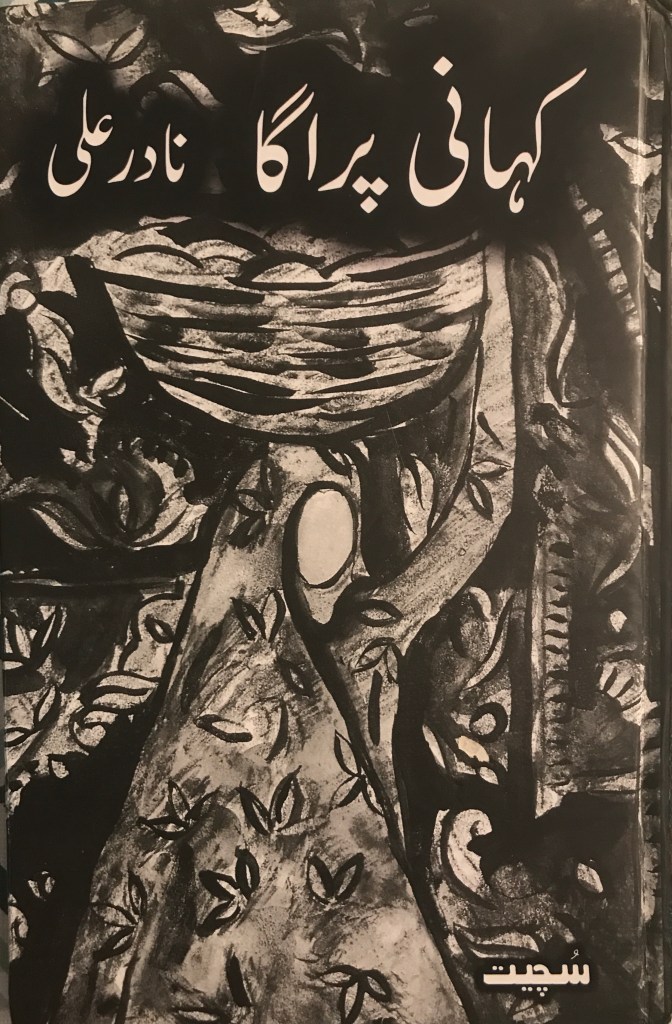
“Khaira, the Blind” is a translation of the Punjabi story Khaira Annha. It is from Nadir Ali’s short story collection titled Kahani Paraga , published by Suchet Kitab Ghar in 2004 in Lahore. Photo provided by Amna Ali.
[1] A professional pretender who earns money by entertaining people, especially at weddings. Once widespread in South Asia, this profession is now in decline.
.
Nadir Ali (1936-2020) was a Punjabi poet and short story writer. In 2006, he was awarded the Waris Shah Award for his collection Kahani Praga. Coming late to writing, particularly fiction, Nadir Ali is credited with spearheading a unique style, blurring the boundaries between significant and petty, artistic and ordinary, primarily due to his preference for and command over the chaste central dialect understood by the majority of Punjabi speakers. He is also noted for writing and speaking about his experiences as an army officer posted in East Pakistan at the height of the 1971 war.
Amna Ali is Nadir Ali’s daughter. She translated a selection of Nadir Ali’s short stories into English in collaboration with Moazzam Sheikh. The translations were published by Weavers Press in USA in a book titled Hero and Other Stories in 2022. She is a librarian and lives in San Francisco with her husband and two sons.
PLEASE NOTE: ARTICLES CAN ONLY BE REPRODUCED IN OTHER SITES WITH DUE ACKNOWLEDGEMENT TO BORDERLESS JOURNAL
When the mountains and grass
had life, stones whispered
how the world came to be…

'Stonehenge', Daily Star
And as the world came to be, there was war — war that seems to rage in some part of the world or other. The British Museum has an exhibit which states the first battle was staged 13,000 years ago… in what is now Sudan, long before the advent of written history. This was even before the advent of people who built the ancient Stonehenge which was constructed around 3000-2000 BCE. And battles still continue to rage. The Jebel Sahaba casualties in Sudan 13000 years ago were less than 100. But the current conflicts claim in terms of tens of thousands which prolonged could stretch to millions. The last world war (1939-1945) which lasted for six years had a total of 75-80 million persons who perished. Ukraine-Russia conflict has within five months had a casualty count of more than 14000. And yet weapons and nuclear arms continue to proliferate decimating humanity, nature and towns, destroying homes, erasing ruthlessly and creating more refugees. The only need for such battles seem to be to satiate the hunger of the warlords secure in their impenetrable fortresses while tens of thousands are annihilated and natural or nurtured landscapes lie emaciated, mutilated and polluted.
What would be a good way of ending such wars?
Tagore sought the development of better instincts in humankind as an antidote. He wrote in the last century: “Any teaching concerning man must have human nature for its chief element. How far it will harmonise with human nature is a matter of time.”
With wars getting deadlier and more horrific, we can only try to awaken, as Tagore suggests, the better nature in man to move towards a peaceful world. What would be a more effective way of doing it than writing with the hope of a kinder and accepting future?
For that let us start with translations of the maestro Tagore himself. We have a song about the season — monsoon, ‘Monomor Megher Songi (My Friends, the Clouds)’, translated by Professor Fakrul Alam, a painting by Sohana Manzoor interpreting the lyrics and a transcreation of ‘Nababarsha or New Rains’ was shrunken into a popular Rabindra Sangeet and reduced to twenty lines in English by Tagore himself. The connect with nature is an important aspect that enables humans to transcend petty concerns leading to dissensions of different kinds as evidenced in the maestro’s humorous feline skit, translated by Somdatta Mandal. A translation of Dalip Kaur Tiwana’s ‘The Bus Conductor’ from Punjabi by C. Christine Fair adds zest to this section. Fazal Baloch has translated a folktale from Balochistan involving the supernatural and Ihlwha Choi has taken on the cry for peace on behalf of Ukraine while translating his own poem in Korean. The Nithari column has a story by Jishan in Hindustani, translated to English by Grace M Sukanya, showcasing the struggle of a youngster during the pandemic – rather a sad narrative, which though fictitious has its roots in reality.
Our short story section has echoes of humour around felines by Manzoor, somewhat in tune with the mind frame seen in Tagore’s skit on this issue. Humour rings tinged with an apparition in Erwin Coombs’s narrative – should one call it dark humour or is it just his style? Paul Mirabile goes for gothic darkness in his meanderings around Italy.
Strangely, we seem to have a focus on short stories this time. Keith Lyons has interviewed Steve Carr, a journalist, a publisher and writer of 500 short stories who is questing to create a ‘perfect short story’. Reading out excerpts from her short story at a literary festival in Simla, Bollywood celebrity, Deepti Naval, was in conversation with eminent film journalist, Ratnottama Sengupta. She spoke of her literary aspirations while unveiling her autobiography in verse, A Country Called Childhood. This conversation has been shared by Sengupta with Borderless. It is interesting to see how Naval’s reactions to social malaise contrasts with that of the film director, cinematographer and actor, Goutam Ghose, who was present during the unveiling of her book. He had responded to communal violence by making a film on Lalan Fakir extolling virtues of love and kindness, called Moner Manush (2010) and then made a book on the film called, The Quest (2013) which has beautiful translations of Lalan Fakir’s lyrics by Sankar Sen.
Our non-fiction sections seem to be hosting multiple travel stories across UK by Mike Smith, along the Australian coastline by Meredith Stephens, on the Himalayas with Ravi Shankar and an unusual visit by Hema Ravi to a farm in US where animals that had been used in Disney films in the past are homed. Our environmental columnist, Kenny Peavy, actually wrote about his cycling trip from Thailand to Indonesia on a bamboo cycle made by a Singaporean! And from Japan, Suzanne Kamata explored a museum in the neighbouring town of Mure. The museum on a hill hosts the art of American Japanese Artists, Isamu Noguchi.
We do have non-fiction that moves away from travel: noir humour by Devraj Singh Kalsi and an essay by Candice Louisa Daquin on a very interesting subject – ‘Is it Okay to be Ordinary?’ Is it? Dan Meloche has written a literary essay on Canadian novelist Andre Alexis’s award-winning novel, Fifteen Dogs: An Apologue(2015). While Meloche spoke of how the novel departed from Orwell’s Animal Farm, his narrative brought to my mind a novel closer to our times set in England by Jasper Fforde called Constant Rabbit (2020) – this a science fiction while Alexis’s was an apologue or an animal fable. Fforde did use the rabbits rather well to highlight the current times.
We have book excerpts of two recent books that I would call really outstanding. One of them is Aruna Chakravarti’s The Mendicant Prince, which is being released this week, and is based on the evergreen contentious case of the prince of Bhawal that has even been explored even in cinema. The other, Dadamoni: The Life and Times of Ashok Kumarby Nabendu Ghosh, has been published posthumously and is not a translation from Bengali but written in English originally by this trilingual writer.
Called ‘Dadamoni’ affectionately, iconic actor Ashok Kumar is regarded as “the one personality who symbolises Indian cinema’s journey from Bombay Talkies to Bollywood”. This book has been reviewed by Indrashish Banerjee, who calls it ‘a reflection on the Hindi film industry’ as well as a biography. Rakhi Dalal has reviewed Booker winner Geetanjali Shree’s Mai, Silently Mother, a Sahitya Akademi winning translation of her Hindi novel by Nita Kumar, reiterating the dialogue that had been kindled on motherhood last month by Rinki Roy Bhattacharya and Maithili Rao’s The Oldest Love Story (2022). Bhaskar Parichha has reviewed Prosanta Chakrabarty’s Explaining Life Through Evolutionplotting how life evolved on earth. Parichha tells us: “Meaningful, wide-ranging and argumentative, this is a must-read book. It will propel us to imagine and reimagine life around us.” Another book that sounds like a must-read has been reviewed by Meenakshi Malhotra, Tagore’s Gleanings of the Road, translated by Mandal. She tells us: “ ‘Gleanings’ represents the quintessential Tagore…Ably introduced and translated by Somdatta Mandal, a renowned Tagore scholar, the translation captures the iridescent and luminous quality of Tagore’s prose and its chiaroscuro effects.”
There is more to tempt. Please stop by on our contents page and take a look.
We would like to hugely thank all our contributors and readers for being with us and helping us grow. I would like to thank my team, who despite hurdles they face, always lend a helping hand and wonderful words from their pens or computers to get Borderless on its feet. I apologise for the delay and thank you all for your patience. Special thanks to Sohana Manzoor for her fabulous artwork.
I wish you all a wonderful July and peace in a war-torn world. We are all affected by the ongoing conflicts. Let us hope for peaceful and just resolutions.
Dr. Dalip Kaur Tiwana (4 May 1935 – 31 January 2020) is recognised as one of the most consequential Punjabi authors who substantially contributed to the development of modern Punjabi literature. Prior to her death, she published twenty-seven novels, seven collections of short stories as well as a literary biography. Tiwana was also a distinguished academic. She was the first woman in the region to obtain a Ph.D. from Punjab University in 1963. She joined the Punjabi University at Patiala from which she retired as a Dean as well as a Professor of Punjabi. Dr. Tiwana garnered innumerable regional as well as national awards within India, including the prestigious Sahitya Akademi Award and the Padma Shri, India’s fourth largest civilian honor. She surrendered her Padma Shri in 2015 expressing “Solidarity with other writers who are protesting against the increasing cultural intolerance in our society and politics and the threat to free speech and creative freedom.”
The Bus Conductor
Art by C Christine Fair
The lady doctor, Polly, had been transferred from Nabhe to Patiala. Her family members were trying to get the transfer rescinded. That is why, instead of taking a house and living in Patiala, she got permission from the senior doctor to come from Nabhe every morning by bus and return in the evening.
She felt ill at ease because of the shivering sound of the idling buses, the heat, the sweat, the crowds, the ludicrous indolence of the conductors, and the rude banter. Thinking to herself, “But this is just a matter of days,” she suffered it all. On the days when Jit was on duty for that bus, she would feel a bit comfortable because that conductor seemed to be good natured.
One day, a man asked Jit, “Where does that girl with the bag work?”
Jit said discretely as he was handing over the ticket, “Aho[1] sir! She is a lady doctor. A very senior lady doctor. People say that her salary is a full three hundred rupees.”
“Sir, these days women are earning more than men. That’s why men are no longer the boss,” said the man as he sat down on a seat nearby.
“Sir, no matter what they earn, girls of a good household still must lower their eyes when they speak…and this lady doctor, I go to Patiala all the time and by god, she doesn’t even speak…,” said the Sardar who was sitting behind while gazing towards Polly.
“By god! I also….” He stopped mid-sentence when Jit, while handing the ticket to this dandy in a pink shirt, glowered at him and said, “So, brother. Do you want to go? Or should I toss you off the bus now?”
“Conductor Sir. I didn’t anything. Why are you getting angry like this?”
While Jit was handing the ticket over to Polly, she began to give him the ten she took out.
“I don’t have any change. Forget about it and pay in full tomorrow.” Having said this, Jit moved on.
Ahead, there was elderly woman who also took out a ten. “Ma’am, I don’t have change. The entire fare is 10.5 annas[2] and you take out such a large note and hand it to me? Fine. Go and get change and then come back,” Jit said in a rather stern voice.
“Young man! In that time, the bus will have left and it’s urgent that I go. You can return the rest of the money to me in Patiala,” the elderly woman begged of him.
“Fine, ma’am. Sit down,” he said as he began to cut her a ticket.
Polly was thinking about the hospital, all of the patients, the medicines, the nurses, and the various duties as the bus left behind Rakhra, then Kalyan and then Rony and neared the Chungu toll booth.
Jit told the driver, “Yaar[3]! Today drive towards this blue building right here.”
The passengers who were travelling to the gurdwara grumbled a bit, but by now the bus had turned and was once more on the direct route. Near the Flower Cinema the conductor rang the bell to stop the bus, opened the door, and began to tell Polly, “You get down here, the hospital will be nearby.”
Polly got down quickly. She even forgot to say thank you. She thought to herself, “That poor fellow is such a nice conductor.”
By the time she reached the bus station that evening to begin her journey home, the bus was already full. With great difficulty she waited 45 minutes for another bus. A bus conductor, with his shirt unbuttoned, passed her three times while mumbling the song from the film Awaara[4]. He gave an anna to a female beggar to get rid of her for some time. She didn’t know why, but people were staring at her wide-eyed.
The next day, it happened by chance, that when she reached the Nabha bus station, the buses were already full, and Jit was turning away additional passengers without a ticket. Jit approached her and said, “You can pick up the bag on the front seat and sit down. I saved a seat for you.”
Polly passed by several gawking passengers and sat down. Jit immediately rang the bell for the bus to move forward.
“This conductor is so good-natured,” Polly thought to herself.
As the delays in getting her posting to Nabha stretched over time, she became depressed. The sound of the idling buses and fears of the bus leaving were constantly on her mind. Whenever she was forced to sit next to a fat passenger, her nice clothes would get wrinkled, and the stench of sweat would make her dizzy.
Then one day when she was about to give money for her ticket, Jit said, “No madam, forget about it,” and moved ahead.
“No sir, please take the money,” Polly emphatically requested.
“What difference will it make whether I take your money or not?” he asked. He walked further ahead and began to give a ticket to someone.
Polly, feeling self-conscious from the argument, sat down quietly but throughout the journey she was wondering why the conductor didn’t take money from her. She did not like it at all. For someone earning Rs. 300 what is the value 10.5 annas?
The next day she intentionally left five minutes late, thinking, “Today I won’t go on the Pipal Bus. Instead, I’ll take the Pepsu Roadways Bus. What nonsense is this that he won’t take the money!”
She was stupefied to see that the driver had started the bus and was standing yelling at the conductor.
“Oye! I am just coming. Why are you yelling? Why do want to leave so early? Is it about to rain?” Jit said, while walking very, very slowly.
“Are we going to the next station or not? You’re taking your sweet time getting here,” the driver said.
“Get over here, Madam and take the front seat, and open the window,” Jit said to Polly.
“How can the bus leave without Madam?” mumbled a clerk in the back who took the bus from Nabhe to Patiala every day.
Jit glared at him. Everyone fell silent. The bus left. Polly took out the money but despite her repeated attempts, Jit refused to take it. Polly became very angry. “Jit is making me a part of this scam…But why is he neither charging me nor giving me a ticket?… Still, this is defrauding the company…” She was thinking this just as the bus stopped and a ticket-checker boarded. When he was checking the tickets of the other passengers, Polly broke out in a nervous sweat.
“How humiliating it is that I don’t have a ticket…. I will tell him that the conductor didn’t give me a ticket even though I asked for one,” she thought. “But what will the poor man say? No. I will tell him that I forgot. But no. How can I lie,” she debated with herself.
Then the checker approached her.
As soon as he said, “Madam…ticket,” Jit, taking a ticket out of his pocket, called out, “She…. she…This woman is my sister. I have her ticket.”
Seeing the ticket, the checker glanced at the conductor whose pants were threadbare at the knees and whose khaki uniform was worn at the elbows. Then, he looked over the woman in the expensive sari. He smiled with his eyes.
Jit became flustered. The checker quickly got down from the bus.
Polly, surprised and worried, was thinking that perhaps this man, who earns a paltry Rs. 60 per month, didn’t eat during the day so that he could pay for my entire fare.
In the hospital, she kept thinking about this. She felt so uneasy about it.
In the evening when she reached the station, Jit was sad as he slowly made his way towards her.
“My older sister also studied medicine in Lahore…and she died there during the riots of partition. The rest of my family perished too. I somehow managed to make it here alive. How could I even think about studying when I could barely feed myself? Then I became a conductor. When I saw your bag and stethoscope, I remembered Amarjit…and…and….” Then he choked up.
Polly was very distraught. She didn’t know how to respond.
Meanwhile, the bus came. He quickly walked towards it and Polly kept on watching him walk away with affection in her moist eyes.
C. Christine Fair is a professor in Georgetown University’s Security Studies Program. She studies political and military events of South Asia and travels extensively throughout Asia and the Middle East. Her books include In Their Own Words: Understanding the Lashkar-e-Tayyaba (OUP 2019); Fighting to the End: The Pakistan Army’s Way of War (OUP, 2014); and Cuisines of the Axis of Evil and Other Irritating States (Globe Pequot, 2008). She has published creative pieces in The Bark, The Dime Show Review, Furious Gazelle, Hypertext, Lunch Ticket, Clementine Unbound, Fifty Word Stories, The Drabble, Sandy River Review, Barzakh Magazine, Bluntly Magazine, Badlands Literary Journal, among others. Her visual work has appeared in Vox Populi, pulpMAG, The Indianapolis Review, Typehouse Literary Magazine, The New Southern Fugitives, Glassworks and Existere Journal of Arts. Her translations have appeared in the Bombay Literary Magazine, Bombay Review, Muse India and The Punch Magazine. She reads, writes and speaks Punjabi, Hindi, and Urdu.
.
PLEASE NOTE: ARTICLES CAN ONLY BE REPRODUCED IN OTHER SITES WITH DUE ACKNOWLEDGEMENT TO BORDERLESS JOURNAL
My friend, you would not tell with such high zest
To children ardent for some desperate glory,
The old Lie: Dulce et decorum est
Pro patria mori*.
-- Dulce et Decorum Est, Wilfred Owen (1893-1918)

*Translated: "It is sweet and fitting to die for the homeland."
South Africa
India
Singapore
World War 1 memorials stretched across countries: Courtesy: Creative Commons
On 11th November, we remember the men who gave up their lives to win wars for those in power. Remembrance Day started as an annual event after the First World War (28th July, 1914- 11the November, 1918) more than a hundred years ago, in memory of soldiers — some of who were lost in the battle grounds, whose remains never got back to their families. Some of these men who fought were from countries that were subservient to colonial powers who started the war and some, like the soldier-poet, Wilfred Owen, were from conquering nations.
This was much before atom bombs were dropped on Hiroshima and Nagasaki. Eventually, a nuclear armistice was declared. Mahatma Gandhi (1869-1948), an internationally acknowledged apostle of peace, had an opinion on this: “‘The very frightfulness of the atom bomb will not force non-violence on the world? If all nations are armed with the atom bomb, they will refrain from using it as it will mean absolute destruction for all concerned?’ I am of the opinion that it will not.” Has this nuclear armistice made the world more peaceful? And if so, what is the quality of peace that has been wrought by drumming fears of annihilation in human hearts? Could the ‘fakir…striding half-naked up the steps of the viceregal palace’ be right after all?
Here we have collected a few stories and poems around ongoing conflicts and wars which stretch to the present day, some old and some new… some even written by men who faced battle…
Poetry
A poem and art by Sybil Pretious in memory of soldiers who died in the World War I.
From the Pages of a Soldier’s Diary… by Mike Smith takes you on a journey through the pages of a colonial diary and muses on choices he has made. Clickhereto read.
Bundu, Consoler of the Rich is a story based on memories of the Partition by Nadir Ali, translated from Punjabi by Amna Ali. Click here to read.









 Borderless