Gower Bhat discusses the advent of coaching schools in Kashmir for competitive exams for University exams, which seem to be replacing real schools. Clickhere to read.
In winters, birds migrate. They face no barriers. The sun also shines across fences without any hindrance. Long ago, the late Nirendranath Chakraborty (1924-2018) wrote about a boy, Amalkanti, who wanted to be sunshine. The real world held him back and he became a worker in a dark printing press. Dreams sometimes can come to nought for humanity has enough walls to keep out those who they feel do not ‘belong’ to their way of life or thought. Some even war, kill and violate to secure an exclusive existence. Despite the perpetuation of these fences, people are now forced to emigrate not only to find shelter from the violences of wars but also to find a refuge from climate disasters. These people — the refuge seekers— are referred to as refugees[1]. And yet, there are a few who find it in themselves to waft to new worlds, create with their ideas and redefine norms… for no reason except that they feel a sense of belonging to a culture to which they were not born. These people are often referred to as migrants.
At the close of this year, Keith Lyons brings us one such persona who has found a firm footing in New Zealand. Setting new trends and inspiring others is a writer called Harry Ricketts[2]. He has even shared a poem from his latest collection, Bonfires on the Ice. Ricketts’ poem moves from the personal to the universal as does the poetry of another migrant, Luis Cuauhtémoc Berriozábal, aspiring to a new, more accepting world. While Tulip Chowdhury — who also moved across oceans — prays for peace in a war torn, weather-worn world:
I plant new seeds of dreams for a peaceful world of tomorrow.
Fiction in this issue reverberates across the world with Marc Rosenberg bringing us a poignant telling centred around childhood, innocence and abuse. Sayan Sarkar gives a witty, captivating, climate-friendly narrative centred around trees. Naramsetti Umamaheswararao weaves a fable set in Southern India.
A story by Nasir Rahim Sohrabi from the dusty landscapes of Balochistan has found its way into our translations too with Fazal Baloch rendering it into English from Balochi. Isa Kamari translates his own Malay poems which echo themes of his powerful novels, A Song of the Wind (2007) and Tweet(2017), both centred around the making of Singapore. Snehaprava Das introduces Odia poems by Satrughna Pandab in English. While Professor Fakrul Alam renders one of Nazrul’s best-loved songs from Bengali to English, Tagore’s translated poem Jatri (Passenger) welcomes prospectives onboard a boat —almost an anti-thesis of his earlier poem ‘Sonar Tori’ (The Golden Boat) where the ferry woman rows off robbing her client.
We have plenty of non-fiction this time starting with a tribute to Jane Austen (1775-1817) by Meenakshi Malhotra. Austen turns 250 this year and continues relevant with remakes in not only films but also reimagined with books around her novels — especially Pride and Prejudice (which has even a zombie version). Bhaskar Parichha pays a tribute to writer Bibhuti Patnaik. Ravi Varmman K Kanniappan explores ancient Sangam Literature from Tamil Nadu and Ratnottama Sengupta revisits an art exhibition that draws bridges across time… an exploration she herself curated.
Farouk Gulsara — with his dry humour — critiques the growing dependence on artificial intelligence (or the lack of it). Devraj Singh Kalsi again shares a spooky adventure in a funny vein.
We have a spray of colours from across almost all the continents in our pages this time. A bumper issue again — for which all of the contributors have our heartfelt thanks. Huge thanks to our fabulous team who pitch in to make a vibrant issue for all of us. A special thanks to Sohana Manzoor for the fabulous artwork. And as our readers continue to grow in numbers by leap and bounds, I would want to thank you all for visiting our content! Introduce your friends too if you like what you find and do remember to pause by this issue’s contents page.
Wish all of you happy reading through the holiday season!
Spring, summer, and autumn, while the birds sang their seasonal tunes humans beat loudly their own drums.
The bees collected their nectar well while swans in the lake nearby found their life-long mates and yapped their love notes,
while sound and sights captured much of the yearly gifts to bless, while in silence, a rose bush gave her cloying fragrance and red flowers.
In life, we give of ourselves: the best of what we have.
HOPES AND DREAMS
The year 2025 found the world at a crazy stage on which life danced.
Amidst the maddening politics, natural calamities and wars took the hardest hits. In the turmoil, I feel like an ant under an elephant
When I wish to make a difference in life for someone in need — what have I to give?
Mother Teresa’s advice echoes “If you cannot feed a hundred people, then feed just one.” I get up and venture out.
Surely, since I am alive and well; there is something I can do for someone?
When hope for a better world crumbles like sand, I send prayers up to heaven--- I know, they can move mountains. And with prayers, I plant new seeds of dreams for a peaceful world of tomorrow.
Tulip Chowdhury, a novelist, poet, and columnist, writes from Georgia, USA. Her books are available on Amazon.
PLEASE NOTE: ARTICLES CAN ONLY BE REPRODUCED IN OTHER SITES WITH DUE ACKNOWLEDGEMENT TO BORDERLESS JOURNAL
Tumi Kon Kanoner Phulby Tagore andAnjali Loho Morby Nazrul, love songs by the two greats, have been translated from Bengali by Professor Fakrul Alam. Click hereto read.
One Life, One Love, 300 Children : Keith Lyons writes of Tendol Gyalzur, a COVID 19 victim, a refugee and an orphan who found new lives for many other orphans with love and an ability to connect. Click here to read.
When West Meets East & Greatness Blooms: Debraj Mookerjee reflects on how syncretism impacts greats like Tagore,Tolstoy, Emerson, Martin Luther King Jr, Gandhi and many more. Click here to read.
Dilip Kumar: Kohinoor-e-Hind: In a tribute to Bollywood legend Dileep Kumar, Ratnottama Sengupta, one of India’s most iconic arts journalists, recollects the days the great actor sprinted about on the sets of Bombay’s studios …spiced up with fragments from the autobiography of Sengupta’s father, Nabendu Ghosh. Click here to read.
Are Some of Us More Human than Others ?: Meenakshi Malhotra ponders at the exclusivity that reinforces divisions, margins and borders that continue to plague humankind, against the backdrop of the Women’s Month, March. Click here to read.
Reminiscences from a Gallery: MF Husain: Dolly Narang recounts how she started a gallery more than four decades ago and talks of her encounter with world renowned artist, MF Husain. Click hereto read.
Baraf Pora (Snowfall) by Rabindranath Tagore,gives a glimpse of his first experience of snowfall in Brighton and published in the Tagore family journal, Balak (Children), has been translated from Bengali by Somdatta Mandal. Clickhere to read.
Cherry Blossom Forecast: Suzanne Kamata brings the Japanese ritual of cherry blossom viewing to our pages with her camera and words. Clickhere to read.
Two Pizza Fantasies, Rhys Hughes recounts myths around the pizza in prose, fiction and poetry, Click here to read.
An Alien on the Altar!: Snigdha Agrawal writes of how a dog and lizard add zest to festivities with a dollop of humour. Click here to read.
Where it all Began: Sybil Pretious recounts her first adventure, an ascent on Mt Kilimanjaro at the age of sixty. Clickhere to read.
Conversations
Rabindranath Tagore: A Universal Bard.: This conversation between Aruna Chakravarti and Sunil Gangopadhyay that took place at a Tagore Conference organised by the Sahitya Akademi in Kochy in 2011. Click here to read.
Sriniketan: Tagore’s “Life Work”: In Conversation with Professor Uma Das Gupta, Tagore scholar, author of A History of Sriniketan, where can be glimpsed what Tagore considered his ‘life’s work’ as an NGO smoothening divides between villagers and the educated. Click here to read. (Review & Interview).
In conversation with the late Akbar Barakzai, a Balochi poet in exile who rejected an award from Pakistan Academy of Letters for his principles. Click here to read.
Jim Goodman, an American traveler, author, ethnologist and photographer who has spent the last half-century in Asia, converses with Keith Lyons. Click here to read.
InBridge over Troubled Waters, the late Sanjay Kumar tells us about Pandies, an activist theatre group founded by him that educates, bridging gaps between the divides of university educated and the less fortunate who people slums or terror zones. Click here to read.
In Lessons Old and New from a Stray Japanese Cat, Keith Lyons talks with the author of The Cat with Three Passports, CJ Fentiman who likes the anonymity loaned by resettling in new places & enjoys creating a space for herself away from her birthplace. Click hereto read.
Fiction
Aparichitaby Tagore: This short story has been translated as The Stranger by Aruna Chakravarti. Click hereto read.
Hena by Nazrul has been translated from Bengali by Sohana Manzoor. Click here to read.
Playlets byRabindranath Tagore: Two skits that reveal the lighter side of the poet. They have been translated from Bengali by Somdatta Mandal. Click here to read.
Abhagi’s Heaven, a poignant story by Saratchandra Chattopadhyay translated by Aruna Chakravarti. Click here to read.
An Eternal Void, a Balochi story by Munir Ahmed Badini translated by Fazal Baloch. Click hereto read.
The Witch, a short story by renowned Bengali writer Tarasankar Bandopadhyay (1898 to 1971), translated by Aruna Chakravarti. Clickhere to read.
I Grew into a Flute: Balochi Folktale involving magic retold by Fazal Baloch. Click here to read.
Give Me A Rag, Please:A short story by Nabendu Ghosh, translated by Ratnottama Sengupta, set in the 1943 Bengal Famine, which reflects on man’s basic needs. Click here to read
Rakhamaninov’s Sonata: A short story by Sherzod Artikov, translated from Uzbeki by Nigora Mukhammad. Click hereto read.
The Magic Staff , a poignant short story about a Rohingya child by Shaheen Akhtar, translated from Bengali by Arifa Ghani Rahman. Click here to read.
Khaira, the Blind, a story by Nadir Ali, has been translated from Punjabi by Amna Ali. Click here to read.
The Browless Dolls by S.Ramakrishnan, has been translated from Tamil by B Chandramouli. Click hereto read.
No Man’s Land: Sohana Manzoor gives us surrealistic story reflecting on after-life. Click hereto read.
The Protests Outside: Steve Ogah talks of trauma faced by riot victims in Nigeria. Click here to read.
Flash Fiction: Turret: Niles M Reddick relates a haunting tale of ghosts and more. Click here to read.
Henrik’s Journey: Farah Ghuznavi follows a conglomerate of people on board a flight to address issues ranging from Rohingyas to race bias. Click hereto read.
Does this Make Me a Psychic?; Erwin Coombs tells a suspenseful, funny, poignant and sad story, based on his real life experiences. Click here to read.
Phôs and Ombra: Paul Mirabile weaves a dark tale about two people lost in a void. Click here to read.
A Queen is Crowned: Farhanaz Rabbani traces the awakening of self worth. Click here to read.
It’s again that time of the year when we have fun spooking each other with stories of ghosts and haunting. While festivals of light1 and darkness vie with each other for a spot on the same date, observances to pay our respects to our forefathers follow at their heels, some before and some after.
In this selection, we bring to you narratives that could be dark, strange or funny or all of these … a selection of poetry, fiction and non-fiction from around the world. Enjoy the reads!
The Ghosts of Hogshead: Paul Mirabile wanders into the realm of the supernatural dating back to the Potato Famine of Ireland in the 1800s. Clickhere to read.
Nagmati: Prafulla Roy’s long story based on strange folk beliefs has been translated from Bengali as Snake Maiden by Aruna Chakravarti. Click here to read.
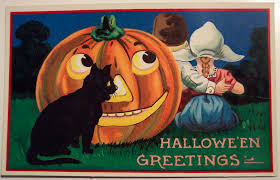
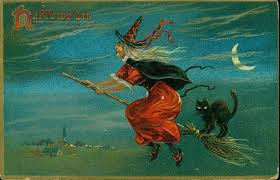
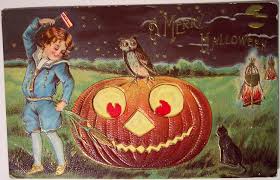
From Public Domain
.
Deepavali or festival of lights is on October 31st this year along with Kali Puja and Halloween. October 30th is Bhooth Chaturdashi, or Indian Festival of Ghosts while All Saints’ Day and all Souls’ Day are observed at the start of November. Early October hosted Pitri Paksha, observances for apeasing forefathers in India. ↩︎
While the horror generated by wars deeply saddens with its ultimate disregard for all kinds of flora and fauna, including humans, the horrific as we savour in festivals can cease to be terrifying. It can even be cathartic in the midst of the terror of destruction and violence. Halloween is a festival that brings to mind a time when kids go trick or treating as houses and gardens assume a ‘haunted look’. This year, in the spirit of fun, we bring to you a collection of the spooky and the gooky — poems and prose — from across multiple countries and cultures. These hope to provide a moment of respite and unalloyed fun for all of you, despite their darker notes. Perhaps, as an afterthought, these will also unite with the commonality of human needs to connect… even if it’s with a plethora of spooks from across all kinds of human borders…
Keith Lyons converses with globe trotter Tomaž Serafi, who lives in Ljubljana. Click here to read.
Translations
Barnes and Nobles by Quazi Johirul Islam has been translated from Bengali by Professor Fakrul Alam. Clickhereto read.
Cast Away the Gun by Mubarak Qazi has been translated from Balochi by Fazal Baloch. Click here to read.
One Jujubehas been written and translated from Korean by Ihlwha Choi. Clickhere to read.
A Hymnto an Autumnal Goddess by Rabindranath Tagore, AmraBeddhechhi Kaasher Guchho ( We have Tied Bunches of Kaash), has been translated by Mitali Chakravarty. Click hereto read.
Dr. KPP Nambiar takes us through his journey of making a Japanese-Malyalam dictionary, which started nearly fifty years ago, while linking ties between the cultures dating back to the sixteenth century. Click hereto read.
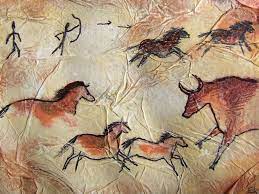
Pre-historic cave painting in France La Tauromaquia. Leap with the Spear by Picasso (1881-1973)Courtesy: Creative Commons
There was a time when there were no boundaries drawn by humans. Our ancestors roamed the Earth like any other fauna — part of nature and the landscape. They tried to explain and appease the changing seasons, the altering landscapes and the elements that affected life and living with rituals that seemed coherent to them. There were probably no major organised structures that laid out rules. From such observances, our festivals evolved to what we celebrate today. These celebrations are not just full of joie de vivre, but also a reminder of our syncretic start that diverged into what currently seems to be irreparable breaches and a lifestyle that is in conflict with the needs of our home planet.
Reflecting on this tradition of syncretism in our folklore and music, while acknowledging the boundaries that wreak havoc, is an essay by Aruna Chakravarti. She expounds on rituals that were developed to appease natural forces spreading diseases and devastation, celebrations that bring joy with harvests and override the narrowness of institutionalised human construct. She concludes with Lalan Fakir’s life as emblematic of the syncretic lore. Lalan, an uneducated man brought to limelight by the Tagore family, swept across religious divides with his immortal lyrics full of wisdom and simplicity. Dyed in similar syncretic lore are the writings of a student and disciple of Tagore from Santiniketan, Syed Mujtaba Ali (1904-1974). His works overriding these artificial constructs have been brought to light, by his translator, former BBC editor, Nazes Afroz. Having translated his earlier book, In a Land Far from Home: A Bengali in Afghanistan, Afroz has now brought to us Syed Mujtaba Ali’s Tales of a Voyager (Jolay Dangay), in which we read of his travels to Egypt almost ninety years ago. In his interview, the translator highlights the current relevance of this remarkable polyglot.
Humming the tunes of Mujtaba Ali’s tutor, Tagore, a translation of Tagore’s song, AmraBeddhechhi Kasher Guchho (We have Tied Bunches of Kash[1]) captures the spirit of autumnal opulence which heralds the advent of Durga Puja. A translation by Fazal Baloch has brought a message of non-violence very aptly in these times from recently deceased eminent Balochi poet, Mubarak Qazi. Professor Fakrul Alam has translated a very contemporary poem by Quazi Johirul Islam on Barnes and Nobles while from Korea, we have a translation of a poem by Ihlwha Choi on the fruit, jujube, which is eaten fresh of the tree in autumn.
A poem which starts with a translation of a Tang dynasty’s poet, Yuan Zhen, inaugurates the first translation we have had from Mandarin — though it’s just two paras by the poet, Rex Tan, who continues writing his response to the Chinese poem in English. Mingling nature and drawing life lessons from it are poems by George Freek,Ryan Quinn Flanagan and Gopal Lahiri. We have poetry which enriches our treasury by its sheer variety from Hawla Riza, Pramod Rastogi, John Zedolik, Avantika Vijay Singh, Tohm Bakelas and more. Michael Burch has brought in a note of festivities with his Halloween poems. And Rhys Hughes has rolled out humour with his observations on the city of Mysore. His column too this time has given us a table and a formula for writing humorous poetry — a tongue-in-cheek piece, just like the book excerpt from The Coffee Rubaiyat. In the original Rubaiyat, Omar Khayyam (1048–1131) had given us wonderful quatrains which Edward Fitzgerald immortalised with his nineteenth century translation from Persian to English and now, Hughes gives us a spoof which would well have you rollicking on the floor, and that too, only because as he tells us he prefers coffee over wine!
Humour tinged with irony is woven into Devraj Singh Kalsi’s narrative on red carpet welcomes in Indian weddings. We have a number of travel stories from Peru to all over the world. Ravi Shankar takes us to Lima and Meredith Stephens to Californian hot springs with photographs and narratives while Sayani De does the same for a Tibetan monastery in Lahaul. Keith Lyons converses with globe trotter Tomaž Serafi, who lives in Ljubljana. And Suzanne Kamata adds colour with a light-veined narrative on robots and baseball in Japan. Syncretic elements are woven by Dr. KPP Nambiar who made the first Japanese-Malyalam Dictionary. He started nearly fifty years ago after finding commonalities between the two cultures dating back to the sixteenth century. Tulip Chowdhury brings in colours of Halloween while discussing ghosts in Bangladesh and America, where she migrated.
The theme of immigration is taken up by Gemini Wahaaj as she reviews South to South: Writing South Asia in the American South edited by Khem K. Aryal. Japan again comes into focus with Aditi Yadav’s Makoto Shinkai’s and Naruki Nagakawa’s She and Her Cat, translated from Japanese by Ginny Tapley Takemori. Somdatta Mandal has also reviewed a translation by no less than Booker winning Daisy Rockwell, who has translated Usha Priyamvada’sWon’t You Stay, Radhika? from Hindi. Our reviews seem full of translations this time as Bhaskar Parichha comments on One Among You: The Autobiography of M.K. Stalin, the current Chief Minister of Tamil Nadu, translated from Tamil by A S Panneerselvan. In fiction, we have stories that add different flavours from Paul Mirabile, Neera Kashyap, Nirmala Pillai and more.
“One of the children gave it [the bunch of bananas] to the child sitting in front. An emaciated girl and a little boy were seated next to me. I told them to pass on the fruit to everyone in the back and keep one each for themselves. The girl looked curiously at the bunch as she turned it around in her hands. Then she looked at the other children.

“‘I’ve never seen an onion like this one,’ she said.

“Her little companion also touched the fruit gingerly and innocently added, ‘Yes, this is not even a potato.’

“I was speechless to say the least. These children had never seen anything apart from onions and potatoes. They had definitely never chanced upon bananas…”
Heart-wrenching but true! Maybe, we can all do our bit by reaching out to some outside our comfort or social zone to close such alarming gaps… Uma Dasgupta’s book tells us that Tagore had hoped many would start institutions like Sriniketan all over the country to bridge gaps between the underprivileged and the privileged. People like Satyarthi are doing amazing work in today’s context, but more like him are needed in our world.
We have more writings than I could mention here, and each is chosen with much care. Please do pause by our contents page and take a look. Much effort has gone into creating a space for you to relish different perspectives that congeal in our journal, a space for all of you. For this, we have the team at Borderlessto thank– without their participation, the journal would not be as it is. Sohana Manzoor with her vibrant artwork gives the finishing touch to each of our monthly issues. And lastly, I cannot but express my gratefulness to our contributors and readers for continuing to be with us through our journey. Heartfelt thanks to all of you.
Around the early ’70s, in my village home in Bangladesh, we kept ourselves far away from anything spelled “ghost or jinn.” I grew up hearing my Grandma saying, “Shh. Don’t even utter the word ‘bhut (ghosts) or jinn’ because words have power, and they might feel the vibe as an invite.” However, every Halloween is a culture shock for me after coming to Massachusetts, USA, when the celebrations of haunted houses, witches, ghosts, and spirits occur. My late Grandma might turn in her final resting place if I could message her, “Ghosts and witches are subjects of colorful celebrations, Grandma.”
Thoughts rewind to life with the villagers in Bongaon, when the fan-palm trees — taal gach — were supposed to be favourite places for ghosts and jinn. Myths held that ghosts and spirits lived as invisible souls among visible humans but liked to live on the trees. The trees they wanted to inhabit were trees standing beautiful and tall. Yet the beautiful sight was pregnant with danger. The long fonds looked like fingers beckoning passersby. The fan palm had delicious fruits called taal. The trees sent alarming vibes to the villagers. But getting the fruits from the tree was challenging and had to be done during broad daylight when ghosts were supposed to be non-active. The fan palm was not the only tree that welcomed them. The tamarind tree was also avoided, especially after sunset. Not just the trees, but their shadows spelled trouble too, and people avoided stepping in the shadows. The advice to weary souls was, “Don’t let the bhut get on your shoulders.” It seemed that the chosen place was the shoulder. It was different for the ghosts; they didn’t get into the victim’s head like other spooks.
Whenever I passed near our tamarind tree, I imagined a possessive spirit jumping down from the tree and landing on my shoulder. I would run for life faster than a deer when I passed one of them. Ghosts were known to haunt their victims for the rest of their lives if they got a chance to get on the shoulder. I ran home; I did not want to be possessed for the rest of my life.
According to the people in Bongaon, nighttime was the favourite time for ghosts and evil spirits. Starting from the late evening to the descent of darkness, no one walked without a flaming torch made from kerosene-drenched cloth on a thick stick. Much as darkness spelled fear and mystery, fire was the force to power the evil over to burn and destroy—similar to fantasy stories of modern times. In life, it seems we are connected like a spider’s web. A person suspected to be possessed by a spirit sought help from special prayers and charms. Some of the healers had harsh methods and had the victims smell burning dried chilli — supposed to clear the mind. And others sprinkled holy water around the person and the house.
Theories on haunting spilled beyond the trees and dipped below the waters surrounding my village. The water lilies in the rainy season bloomed in abundance in the swamps — haor, ponds, and the water-clogged areas around the town. The seeds and stems of the water were gastronomical delicacies for us. The stems cooked as curries and the grains got toasted over the fire. However, evil spirits and jinns were said to roam around swamps at night, and no one tried to pick these up in the dark. Growing up, I wondered if the whole thing around the evil supernatural was to keep people safe because plenty of water snakes coiled around the lily stems, and people were likely to get bitten. Often, people invented ghost stories when logical explanations failed or, perhaps, to safeguard without having to give lengthy answers.
The sweet shops and their connections to supernatural beings baffled me then and to this day. Few charming shops sold traditional deserts, like rosogolla, cholchom and kalojam; the display trays were usually well stocked. It was well known among people that if you entered the shops after the Muslim evening prayer, the Maghrib, the sweets would be gone from the trays. The good jinn were supposed to like the sweets and, on their way back from the mosque, feasted on them. Our village did not have electricity, and there was no refrigerators to preserve these. So, when fresh sweets were replaced on trays the next day, there was no explanation given for the disappearing trayful until the maghrib prayer. No customers came because they wanted to avoid jinn altogether since they could change from good to bad ones. The disappearance of the sweets at a particular time remains a mystery added to many others in my lifetime.
The people in Bongaon believed there were two kinds of jinn: good and evil. Good jinn were with the steady and truthful people who prayed regularly. If the good people, especially women, happened to walk with loose hair in the evening or night, they were exposed to danger of being possessed by the evil jinn. There were dos and don’ts, right and left, for women to keep themselves safe from evil jinn and ghosts. As far as I remember, men were almost excluded from the “wanted list” of the feared beings. How was that possible? The male-dominated society of the early 70s seemed to set boundaries for the ghosts and jinns. In the modern digital world, men and women have found some common ground, and even spirits no longer come only for female humans. Now that we have electricity, in the village scenario, women are smarter with computer skills; in reality, male dominance gets veiled. I am pretty sure the tamarind or the fan palm trees have their versions of the surreal world. However, the deep-rooted world of the spirit world still chains many, especially around the nighttime.
Nighttime and darkness seem to hold endless mysteries, and most are shrouded with danger in many cultures as they did in Bangladesh society. But was the dark so scary? Sleep at night came with dreams and nightmares. To be fair to the darkness, I would often sit on the porch and take in the night sky with its unique, moving life. The sky was never the same, moonlit or with the new moon. Clouds played hide and seek over the moon on rainy days. And the stars, their endless games of winking at me made me as happy as a child every time I looked up at them.Some nights, an owl would greet me with the “Twoo, twoo,” and I would whisper my hello back. I was sure the night bird heard me loud and clear; if it could see at night, why not hear at night, too? Whenever the owl called, thoughts winded to village childhood days, days when village myths held beliefs captive. Whenever we listened to owls’ hoot, we were urged to say, “good”, because if there were something ominous, the power of our words would take that away.
Halloween in Massachusetts digs into memories of my childhood’s haunted and ghost-ridden world in a Bangladeshi village. I was scared then, but now it’s more about exploring life. Life balances fears and hopes, sorrow and joy; between it all, ghosts, jinns, fairies, and angels hold me spellbound in real life. I relish every magical moment of it. I am not scared of witches, black cats, or ghosts that roam around my hometown during Halloween. The ghosts on the tamarind tree and the fan palm were kind to me, and I guess the evil spirits here will also be.
In my present, the black cat on the shop window, the witch on the broom, or the masked stranger are said to spell danger. There are clubs and social groups that share experiences and do not avoid them like we did back home in Bangladesh. I stand in between cultures, wondering at the reality that connects the spooks I grew up with and the ones I grew into in my adopted world.
.
Tulip Chowdhury is a long-time educator and writer. She has authored multiple books, including Visible, Invisible and Beyond, Soul Inside Out, and a collection of poetries titled Red, Blue, and Purple. The books are available on Amazon, Kindle, and Barnes and Noble. Tulip currently resides in Massachusetts, USA.
.
PLEASE NOTE: ARTICLES CAN ONLY BE REPRODUCED IN OTHER SITES WITH DUE ACKNOWLEDGEMENT TO BORDERLESS JOURNAL
The next year will do the same – we will all celebrate with Auld Lang Syneand look forward to a resolution of conflicts that reared a frightening face in 2022 and 2021. Perhaps, this time, if we have learnt from history, there will not be any annihilation but only a movement towards resolution. We have more or less tackled the pandemic and are regaining health despite the setbacks and disputes. There could be more outbreaks but unlike in the past, this time we are geared for it. That a third World War did not break out despite provocation and varied opinions, makes me feel we have really learnt from history.
That sounds almost like the voice of hope. This year was a landmark for Borderless Journal. As an online journal, we found a footing in the hardcopy world with our own anthology, Monalisa No Longer Smiles: Writings from Across the World, which had a wonderful e-launch hosted by our very well-established and supportive publisher, Om Books International. And now, it is in Om Book Shops across all of India. It will soon be on Amazon International. We also look forward to more anthologies that will create a dialogue on our values through different themes and maybe, just maybe, some more will agree with the need for a world that unites in clouds of ideas to take us forward to a future filled with love, hope and tolerance.
One of the themes of our journal has been reaching out for voices that speak for people. The eminent film critic and editor, Shantanu Ray Chaudhuri , has shared a conversation with such a person, the famed Gajra Kottary, a well-known writer of Indian TV series, novels and stories. The other conversation is with Nirmal Kanti Bhattajarchee, the translator of Samaresh Bose’s In Search of a Pitcher of Nectar, a book describing the Kumbh-mela, that in 2017 was declared to be an Intangible Cultural Heritage of Humanity by UNESCO. Bhattacharjee tells us how the festival has grown and improved in organisation from the time the author described a stampede that concluded the festivities. Life only gets better moving forward in time, despite events that terrorise with darkness. Facing fear and overcoming it does give a great sense of achievement.
In keeping with the festive season is our book excerpt from Rhys Hughes’ funny stories in his Christmas collection, Yule Do Nicely. Radha Chakravarty who brings many greats from Bengal to Anglophone readers shared an excerpt – a discussion on love — from her translation of Tagore’s novel,Farewell Song.
Love for words becomes the subject of Paul Mirabile’s essay on James Joyce’s Stephen Dedalus, where he touches on both A Portrait of the Artist as a young Man and Ulysees, a novel that completed a century this year. Love for animals, especially orangutans, colours Christina Yin’s essay on conservation efforts in Borneo while Keith Lyons finds peace and an overwhelming sense of well-being during a hike in New Zealand. Ravi Shankar takes us to the historical town of Taiping in Malaysia as Meredith Stephens shares more sailing adventures in the Southern hemisphere, where it is summer. Saeed Ibrahim instils the seasonal goodwill with native Indian lores from Canada and Suzanne Kamata tells us how the Japanese usher in the New Year with a semi-humorous undertone.
Also touching and yet almost embracing the school of Absurd is PF Mathew’s story, ‘Mercy‘, translated from Malayalam by Ram Anantharaman. Fazal Baloch has brought us a Balochi folktale and Ihlwha Choi has translated his own poem from Korean to English. One of Tagore’s last poems, Prothom Diner Shurjo, translated as ‘The Sun on the First Day’ is short but philosophical and gives us a glimpse into his inner world. Professor Fakrul Alam shares with us the lyrics of a Nazrul song which is deeply spiritual by translating it into English from Bengali.
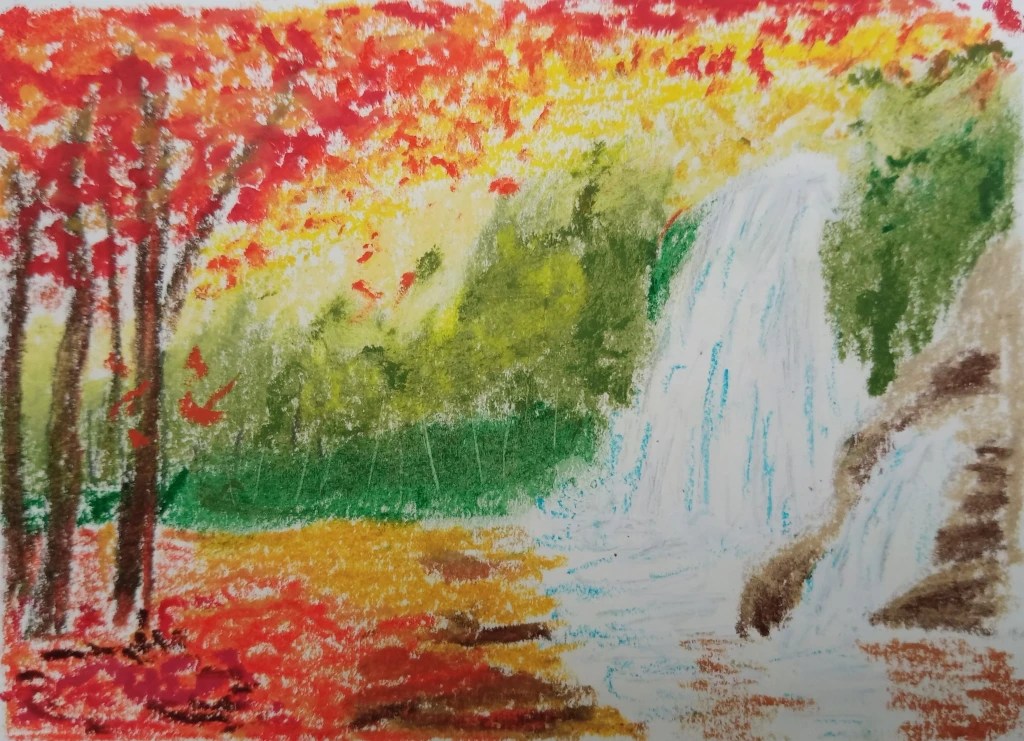
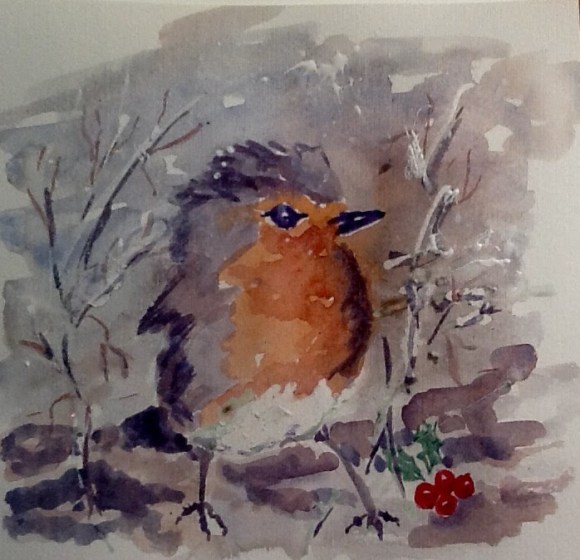
A huge thanks to all our contributors and readers, to the fabulous Borderless team without who the journal would be lost. Sohana Manzoor’s wonderful artwork continues to capture the mood of the season. Thanks to Sybil Pretious for her lovely painting. Please pause by our contents’ page to find what has not been covered in this note.
We wish you all a wonderful festive season.
Season’s Greetings from all of us at Borderless Journal.









 Borderless