Categories
Editorial

Elephants & Laughter

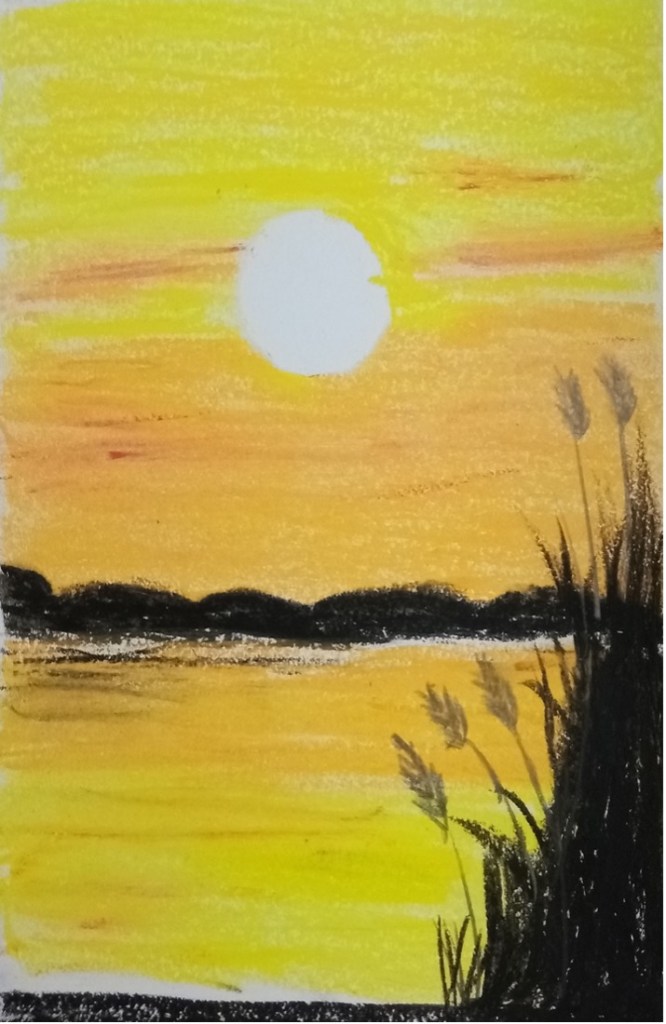
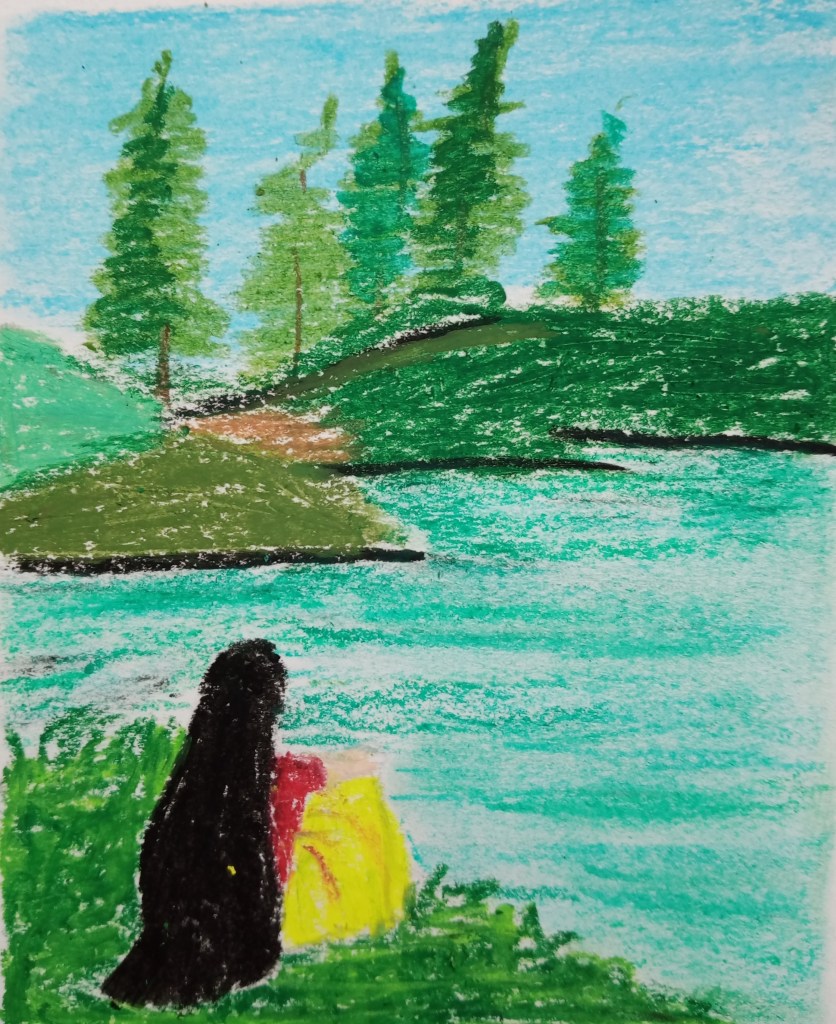
Run, Painting by Sybil Pretious

Ideally, I would love to start the New Year with laughter and happiness! Then perhaps, the whole year would be dotted with humour …

Laughter clubs often practice laughing for health benefits. I know the pandemic makes both guffawing outdoors or in a group hard but think of the funniest possible thing and, perhaps, you will start laughing. For me what works other than children’s and monkeys’ antics, are my trips to the dentist, especially the trip where I wondered on the fringe benefits of ‘laughing gas’ (as given in the PG Wodehouse novel of the same name), only to be informed that it was used exclusively for young children. For me, an adult, there was only — you have guessed it — the jab that numbs your lip function to lubber. I discovered if I could make light of a dentist drilling by learning from Harry Potter (the spell to get rid of the terrifying boggart, who took the shape of the thing you feared most, was to imagine the funniest thing, focus on the humour in it, and shout ‘Riddikulus’ with a wand pointed at the creature in the form of your worst nightmare), then I could pretty much get rid of most fears.

The other thing I have been wondering for sometime is can one write an editorial that is humorous when the content is serious? I would have wanted to ask that question to many, including Ruskin Bond, who continues as one of my idols. I would love to touch hearts with the humour and the sensitivity that flavours his writing. It is tough to convey a complex thought with the simplicity and elegance of a writer who can be read and understood easily. I think we have a few of them around and I interviewed one. You all probably know him well— Rhys Hughes. I have given the reasons for the interview in lieu of Mr Bond, who continues a distant star beyond the horizon of online interviews. We discussed humour and its role in literature, leaving out completely in the cold, the fictional Mr Bond who answers to the names of James and 007 and has made entertaining films, which can be seen as serious or non-serious.

Hughes has of course, given some writerly advice not just in the interview but in ‘Making Something of Nothing’ – pretty much the advice that God had probably been given when he asked an unspecified friend on how to create the universe and multiple realities. Hughes has also added to our galaxy of poets where Michael Burch, Ryan Quinn Flanagan, Anasuya Bhar, Vernon Daim, William Miller, Pramod Rastogi, Mike Smith, Jay Nicholls and many more continue to sparkle. Taking up the theme of God’s creations, Devraj Singh Kalsi has added to more humour with a dream of divine intervention to make the ‘New Normal’ in 2022 – a plan for this year. Will it ever be real?

Another major issue in this world currently is climate change. In keeping with the need for acceptance of this reality, Keith Lyons introduced us to a nature lover, author and adventurer Kenny Peavy, who loved the fictional adventurer called Indiana Jones and has been working towards living in harmony with nature. He moved to Indonesia from America and is trying to raise awareness. You can find much, though not elephants, in the interview that encompasses the story of a man who cycled across a continent on a bike made of bamboo. However, you can find some writing on a king who acquired the skill to ride and tame elephants in our book excerpt from Shazi Zaman’s Akbar: A Novel of History. The excerpt does not showcase his elephant taming skills as did the Bollywood blockbuster Jodha Akbar but is focussed on bringing out the syncretism in the Mughal monarch’s outlook which made him seek out exponents of other religions. Sangita Swechcha’s and Andrée Roby’s anthology, A Glimpse Into My Country, with excerpts of short stories from Nepal and Zimbabwe, like Kenny Peavy, cycle across multiple borders as does our fiction. We feature stories from within and without the continent with Fazal Baloch recombining a couple of folklores from Balochistan to a single tale. Fiction from young writers highlight compassion and a varied perspective. Steve Ogah has a story from Nigeria which almost rings with overtones of Alex Haley’s Roots. Sohana Manzoor has given us a poignant narrative with an inspiring twist at the end, an absolute antithesis of the humorous one she rolled out for us last month. Candice Louisa Daquin has also given us an exceptional short fiction along with her column where she discusses the changing face of families in the current context.

While Daquin’s focus is mainly towards the West, we have an essay from Sanjay Kumar on families that live in the greyer zones of big cities, children from an outcropping called Nithari in Delhi, where they or theirs suffered neglect, abuse, carnage and cannibalism in their formative years.  Introducing the impacted children, Kumar explains how they transcended the wounds that lacerated their lives. This piece is a precursor to a column called ‘Children of Nithari’. Starting February, the abuse victims will give us a story a month which will be translated by young volunteers from pandies’, an activist theatre group founded by Kumar, and published in Borderless. Another article from Balochistan reflects on the lack of literacy and efforts to bring children into the folds of schooling. Pakistan ranked 99th out of 132 countries on the literacy survey in 2021. We are privileged to be the voice of the unheard.

Two essays that ring of concerns raised in the Kenny Peavy interview are to do with climate crisis in the Sunderbans and waste disposal in Delhi. Both of these are written by researchers who are working on these issues.

We have travel pieces from Australia – one is a sailing adventure by Meredith Stephens and the other is about a trip to the Sand Dunes of Western Australia by Shernaz Wadia. Ravi Shankar has also taken us through winters from the Everest to New York with his globe-trotting non-fiction. Penny Wilkes takes us on a flight of creativity with beautiful photography.

We have a stellar layout of translations. Professor Fakrul Alam translated another poem by Jibananada Das and Borderless is honoured to publish it to the world for the first time. We have a translation from Korea and another of a Brahmo hymn, Aji Shubho Dine, by Tagore, which is sung often during festivals. The icing in our Tagore section in this issue is Ratnottama Sengupta’s translation of the Kobiguru’s ‘Two Birds’ (Khanchar Pakhi Chhilo) along with a musing which reflects on the perspectives of the two contemporaries, Tagore and Saratchandra. She has also translated a well-known Bengali poet, Michael Madhusudan Dutt. Dutt wrote just before the advent of Tagore and had an interesting past which has been vividly depicted by Sunil Gangopadhyay in Those Days (Sei Somoy in Bengali), a novel that has been translated by Aruna Chakravarti. Bhaskar Parichha has given us a tribute on the occasion of the birth anniversary of Fakir Mohan Senapati, who, he claims, has the same standing in Odia literature as Tagore in Bengali or Premchand in Hindi.

Parichha has also reviewed Amit Ranjan’s John Lang; Wanderer of Hindoostan; Slanderer in Hindoostanee; Lawyer for the Ranee. It looks like an interesting read where an immigrant Australian came supported Rani of Jhansi in India. Rakhi Dalal has reviewed Selma Carvalho’s Sisterhood of Swans, again a story of migrants and their lives. The theme seems to echo among the books that have been reviewed this time, including Gracy Samjetsabam’s take on Anuradha Kumar’s The Hottest Summer in Years, a story about a German immigrant to India in the twentieth century. Meenakshi Malhotra’s review of Somdatta Mandal’s translation of A Bengali Lady in England by Krishnabhabini Das (1885) highlights the views of a traveller rather than an immigrant as the lady did return home after a ten-year sojourn in Britain. As Meenakshi contends, “The process of travel offers opportunities for emancipation where exposure to other cultures offers her a way of viewing and of gaining a perspective on her own experiences and that of her sisters in India. Krishnabhabini constantly refers to her Indian sisters and bemoans their sorry state and ignorance when she sees how active British women were in their families and societies…”

I was supposed to try my hand at a humorous editorial, but I realise that is tough when the ground is small. For humour, we need rolling acres where we can etch out each detail till it cannot be milked further for laughter. But I promise you I will keep trying to please the readers till one evolves to write like Ruskin Bond.

I would like to thank my fabulous team who even if not actively contributing to content are always at hand to advise and help. I would especially want to thank both Sohana Manzoor and Sybil for their fantastic artwork, which is as wonderful as their writings. I would like to give heartfelt thanks to all the contributors who have made this journal possible and each reader who comes back to our journal for more every month. Some of the pieces remain unmentioned adding to the mystery of the content, just like, Christmas gifts which need to be unwrapped and continue a reality even in January in some parts of the world – the Russians celebrate on January 7th and the Spaniards extend their festivities to January 6th.

Do take a look at this month’s edition for not just the stories mentioned here but for more.

I wish you all a wonderful New Year filled with laughter.

Mitali Chakravarty

Borderless Journal

Categories
Greetings from Borderless

For Auld Lang Syne

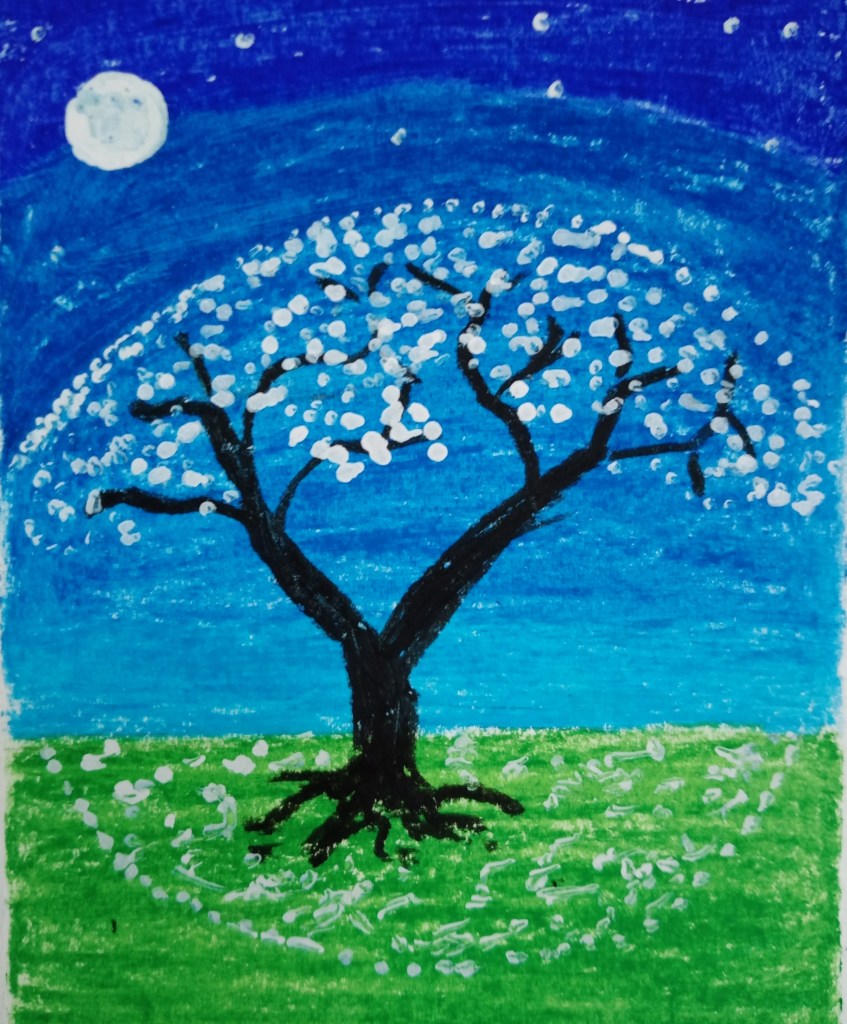
Painting by Sohana Manzoor

What will the New Year bring? Will it connect us all like a tree that has its roots deep in the Earth but reaches out to the sky with its branches rearing high? Its blooms seem like stars on the planet, connecting all life and non-living in its embrace. We hope as global consciousness grows for living in harmony with nature and science, love and kindness, may we all move towards a better more connected world. We, at Borderless Journal, wish you all a happy start to a wonderful New Year!

Our oeuvre this time brings to you a selection from the year 2021 that showcases the change makers we met, and writing that with their values connect us or ring with goodwill and look forward to a better future.

Meet & Greet

These are people you can meet on our pages — people who impact the world in a way that touches lives.

Goutam Ghose, who finds colouring the world with syncretic lore as the best alternative to sectarian violence. Click here to read.

Anvita Abbi, an empathetic linguist who builds bridges to create a seamless world, accepting and co-existing with different ways of life as colours of a rainbow. Click here to read.

Nazes Afroz translated a book on Afghanistan by Tagore’s disciple, Syed Mujtaba Ali, a memoir that shows the roots of the current crises go deep. Also, a senior BBC editor of South Asia, Afroz takes us through the situation with compassion. Click here to read.

Jessica Mudditt travelled to Myanmar and wrote a book, which is an eye-opener about the current situation. She was brought to focus by Keith Lyons who interviewed her for us. Click here to read.

Sanjay Kumar founded Pandies, an activist theatre group that educates, bridging gaps between the divides of University educated and the less fortunate who people slums or terror zones. Click here to read.

 Sybil Pretious, a teacher who has taught in six countries to impact children, starting her career in Africa and living through and beyond Apartheid. Click here to read.

Poetry

Robert Burns & Tagore in Harmony : A transcreation of Tagore’s song, Purano Sei Diner Kotha, based on Robert Burn’s poem associated with new year’s revelries. Click here to read.

Snowball Earth: A long poem by Rhys Hughes in the spirit of a modern man’s Auld Lang Syne, touching on our climate debacle. Click here to read.

Gathering Blossoms: Poetry by Michael R Burch that lingers in the heart. Click here to read.

Humour

Travels & Holidays: Humour from Rabindranath: Translated from the original Bengali by Somdatta Mandal, these are Tagore’s essays and letters laced with humour. Click here to read.

Surviving to Tell a Pony-tale: Devraj Singh Kalsi journeys up a hill on a pony and gives a sedately hilarious account. Click here to read.

 Trouser Hermits: Rhys Hughes muses over men’s attire and the lack of them. Click here to read.

Prose

Temples and Mosques: Kazi Nazrul Islam’s fiery essay on the need for a syncretic lore translated by Sohana Manzoor. Click here to read.

To Infinity & Beyond!: Candice Louisa Daquin explores the magic of space travel. Click here to read.

Near the River Chenab and Under The trees: Sunil Sharma in a poignant telling takes us on a journey to the banks of a river where life, love and death sheathed in terrorism cumulate to a peak. Click here to read.

Richard Hughes: The Reporter Who Inspired Ian Fleming: Bhaskar Parichha showcases a journalist who wrote globally, spicing it up with humour. Click here to read.

The Lords of Lights: With photographs and a story, Penny Wilkes makes an interesting new legend. Click here to read.

Categories
Contents

Borderless December 2021

Editorial

Towards a Brave New World… Click here to read.

Interviews

In Bridge over Troubled Waters, academic Sanjay Kumar tells us about Pandies, an activist theatre group founded by him that educates, bridging gaps between the divides of University educated and the less fortunate who people slums or terror zones. Click here to read.

In Lessons Old and New from a Stray Japanese Cat, Keith Lyons talks with the author of The Cat with Three Passports, CJ Fentiman who likes the anonymity loaned by resettling in new places & enjoys creating a space for herself away from her birthplace. Click here to read.

Translations

Poetry by Jibananda

Translated from Bengali by Fakrul Alam, two poem by the late Jibananda Das. Click here to read.

Shorter Poems of Akbar Barakzai

Translated from Balochi by Fazal Baloch, five shorter poems by Akbar Barakzai. Click here to read.

Long Continuous Battle

Written and translated from Korean by Ihlwha Choi. Click here to read.

Colour the World

Rangiye Diye Jao, a song by Tagore, transcreated by Ratnottama Sengupta. Click here to read.

Rakhamaninov’s Sonata

A short story by Sherzod Artikov, translated from Uzbeki by Nigora Mukhammad. Click here to read.

Robert Burns & Tagore in Harmony

A transcreation of Tagore’s song, Purano Sei Diner Kotha, based on Robert Burn’s poem associated with new year’s revelries by Mitali Chakravarty. Click here to read.

Poetry

Click on the names to read

Michael R Burch, Dibyajyoti Sarma, Anasuya Bhar, Ryan Quinn Flanagan, Sambhu Nath Banerjee, Michael Brockley, Malachi Edwin Vethamani, George Freek, Mitra Samal, William Miller, Harsimran Kaur, Jay Nicholls, Sangeeta Sharma, Rhys Hughes

Nature’s Musings

In Lewie, the Leaf, Penny Wilkes explores the last vestiges of autumn with her camera and a touching story. Click here to read.

Poets, Poetry & Rhys Hughes

In Trouser Hermits, Rhys Hughes muses over men’s attire and the lack of them. Click here to read.

Musings/ Slices from Life

Kungfu Panda & Matrimony

Alpana gives a glimpse into her own marital experiences through the lockdown. Click here to read.

How I Transitioned from a Desk Worker to a Rugged Trail Hiker at Age Sixty

Meredith Stephens shares the impact of the pandemic on her life choices. Click here to read.

A Tale of Two Houses

P Ravi Shankar travels back to the Kerala of his childhood. Click here to read.

The Voice that Sings Hope through Suffering…

Rakibul Hasan Khan pays a tribute with a twist to a recently deceased Bangladeshi writer, Hasan Azizul Huq. Click here to read.

Canada: A Live Canvas

Sunil Sharma reflects on the colours of the fall in Canada. Click here to read.

To Infinity & Beyond!

Candice Louisa Daquin explores the magic of space travel. Click here to read.

Joy Bangla: Memories of 1971

Ratnottama Sengupta recaptures a time when as a teenager she witnessed a war that was fought to retain a language and culture. Click here to read.

Musings of a Copywriter

In Statue Without Stature, Devraj Singh Kalsi muses on erecting a bust with a dollop of humour. Click here to read.

Stories

Flash Fiction: In Search of a New Home

Marzia Rahman shares a short narrative about refugees. Click here to read.

Floating Free

Lakshmi Kannan travels with a humming bird to her past. Click here to read.

Driving with Murad

Sohana Manzoor unfolds her experiences while learning to drive with a dash of humour. Click here to read.

Dinner with Bo Stamford in Hong Kong

Steve Davidson has a ghostly encounter in Hong Kong. Click here to read.

The Literary Fictionist

In Walls, Sunil Sharma peers into fallacies and divides. Click here to read.

Essays

What’s Novel in a Genre?

Indrasish Banerjee explores why we need a genre in this novel-based essay. Click here to read.

Of Palaces and Restorations

Rupali Gupta Mukherjee visits a restored palace in the heartland of Bengal. Click here to read.

The Incongruity of “Perfect” Poems

Rakibul Hasan Khan discusses Bangladeshi poet Sofiul Azam’s poetry from a post colonial perspective. Click here to read.

The Birth of Bangladesh & the University of Dhaka

Professor Fakrul Alam takes us through the three Partitions of Bengal which ultimately led to the creation of Bangladesh, with focus on the role of Dhaka University. Click here to read.

The Observant Migrant

In When is a mental illness not a mental illness?, Candice Lousia Daquin provides us with a re-look into what is often judged as a psychiatric issue. Click here to read.

Book Excerpts

Somdatta Mandal’s translation of A Bengali Lady in England by Krishnabhabini Das (1885). Click here to read.

Suzanne Kamata’s The Baseball Widow. Click here to read.

Book Reviews

Aruna Chakravarti reviews Devika Khanna Narula’s Beyond the Veil. Click here to read.

Rakhi Dalal reviews Anirudh Kala’s Two and a Half Rivers. Click here to read.

Keith Lyons reviews CJ Fentiman’s The Cat with Three Passports: What a Japanese cat taught me about an old culture and new beginnings. Click here to read.

Bhaskar Parichha reviews BP Pande’s In the Service of Free India –Memoirs of a Civil Servant. Click here to read.

Categories
Editorial

Towards a Brave New World

Painting by Sohana Manzoor

With Christmas at our heels and the world waking up slowly from a pandemic that will hopefully become an endemic as the Omicron seems to fizzle towards a common cold, we look forward to a new year and a new world. Perhaps, our society will evolve to become one where differences are accepted as variety just as we are fine with the fact that December can be warm or cold depending on the geography of the place. People will be welcomed even if of different colours and creed. The commonality of belonging to the same species will override all other disparities…

While we have had exciting developments this year and civilians have moved beyond the Earth — we do have a piece on that by Candice Louisa Daquin — within the planet, we have become more aware of the inequalities that exist. We are aware of the politics that seems to surround even a simple thing like a vaccine for the pandemic. However, these two years dominated by the virus has shown us one thing — if we do not rise above petty greed and create a world where healthcare and basic needs are met for all, we will suffer. As my nearly eighty-year-old aunt confided, even if one person has Covid in a remote corner of the world, it will spread to all of us. The virus sees no boundaries. This pandemic was just a start. There might be more outbreaks like this in the future as the rapacious continue to exploit deeper into the wilderness to accommodate our growing greed, not need. With the onset of warmer climates — global warming and climate change are realities — what can we look forward to as our future?

Que sera sera — what will be, will be. Though a bit of that attitude is necessary, we have become more aware and connected. We can at least visualise changes towards a more egalitarian and just world, to prevent what happened in the past. It would be wonderful if we could act based on the truth learnt from history rather than to overlook or rewrite it from the perspective of the victor and use that experience to benefit our homes, planet and all living things, great and small.  In tune with our quest towards a better world, we have an interview with an academic, Sanjay Kumar, founder of a group called Pandies, who use theatre to connect the world of haves with have-nots. What impressed me most was that they have actually put refugees and migrant workers on stage with their stories. They even managed to land in Kashmir and work with children from war-torn zones. They have travelled and travelled into different dimensions in quest of a better world. Travelling is what our other interviewee did too — with a cat who holds three passports. CJ Fentiman, author of The Cat with Three Passports, has been interviewed by Keith Lyons, who has reviewed her book too.

This time we have the eminent Aruna Chakravarti review Devika Khanna Narula’s Beyond the Veils, a retelling of the author’s family history. Perhaps, history has been the common thread in our reviews this time. Rakhi Dalal has reviewed Anirudh Kala’s Two and a Half Rivers, a fiction that focusses on the Sikh issues in 1980s India from a Dalit perspective. It brought to my mind a family saga I had been recently re-reading, Alex Haley’s Roots, which showcased the whole American Revolution from the perspective of slaves brought over from Africa. Did the new laws change the fates of the slaves or Dalits? To an extent, it did but the rest as fact and fiction showcase were in the hands that belonged to the newly freed people. To enable people to step out of the cycle of poverty, the right attitudes towards growth and the ability to accept the subsequent changes is a felt need. That is perhaps where organisations like Pandies step in.  Another non-fiction which highlights history around the same period and place as Kala’s novel is BP Pande’s In the Service of Free India –Memoirs of a Civil Servant. Reviewed by Bhaskar Parichha, the book explores the darker nuances of human history filled with violence and intolerance.

That violence is intricately linked to power politics has been showcased often. But, what would be really amazing to see would be how we could get out of the cycle as a society. With gun violence being an accepted norm in one of the largest democracies of the world, perhaps we need to listen to the voice of wisdom found in the fiction by Steve Davidson who meets perhaps a ghost in Hong Kong. Musing over the ghost’s words, the past catches up in Sunil Sharma’s story, ‘Walls’. Sharma has also given us a slice from his life in Canada with its colours, vibrancy and photographs of the fall. As he emigrated to Canada, we read of immigrants in Marzia Rahman’s touching narrative. She has opted to go with the less privileged just as Lakshmi Kannan has opted to go with the privileged in her story.

Sharma observes, while we find the opulence of nature thrive in places people inhabit in  Canada, it is not so in Asia. I wonder why? Why are Asian cities crowded and polluted? There was a time when Los Angeles and London suffered smogs. Has that shifted now as factories relocated to Asia, generating wealth in currency but taking away from nature’s opulence of fresh, clean air as more flock into crowded cities looking for sustenance?

Humour is introduced into the short story section with Sohana Manzoor’s hilarious rendering of her driving lessons in America, lessons given to foreigners by migrants. Rhys Hughes makes for  more humour with a really hilarious rendition of men in tea cosies missing their…I  think ‘Trouser Hermit’ will tell you the rest. He has perhaps more sober poetry which though imaginative does not make you laugh as much as his prose. Michael Burch has shared some beautiful poetry perpetuating the calmer nuances of a deeply felt love and affection. George Freek, Anasuya Bhar, Ryan Quinn Flanagan, Dibyajyoti Sarma have all given us wonderful poetry along with many others. One could write an essay on each poem – but as we are short shrift for time, we move on to travel sagas from hiking in Australia and hobnobbing with kangaroos to renovated palaces in Bengal.

We have also travelled with our book excerpts this time. Suzanne Kamata’s The Baseball Widow shuttles between US and Japan and Somdatta Mandal’s translation of  A Bengali lady in England by Krishnabhabi Das, actually has the lady relocate to nineteenth century England and assume the dress and mannerisms of the West to write an eye-opener for her compatriots about the customs of the colonials in their own country.

While mostly we hear of sad stories related to marriages, we have a sunny one in which Alpana finds much in a marriage that runs well with wisdom learnt from Kung Fu Panda.  Devraj Singh Kalsi has given us a philosophical piece with his characteristic touch of irony laced with humour on statues. If you are wondering what he could have to say, have a read.

In Nature’s Musings, Penny Wilkes has offered us prose and wonderful photographs of the last vestiges of autumn. As the season hovers between summer and winter, geographical boundaries too can get blurred at times. A nostalgic recap given by Ratnottama Sengupta along the borders of Bengal, which though still crossed by elephants freely in jungles (wild elephants do not need visas, I guess), gained an independence from the harshness of cultural hegemony on December 16th, 1971. Candice Louisa Daquin has also looked at grey zones that lie between sanity and insanity in her column. An essay which links East and West has been given to us by Rakibul Hasan about a poet who mingles the two in his poetry. A Bengali song by Tagore, Purano shei diner kotha,  that is almost a perfect trans creation of Robert Burn’s Scottish Auld Lang Syne in the spirit of welcoming the New Year, has been transcreated to English. The similarity in the content of the two greats’ lyrics showcase the commonalities of love, friendship and warmth that unite all cultures into one humanity.

Our first translation from Uzbekistan – a story by Sherzod Artikov, translated from Uzbeki by Nigora Mukhammad — gives a glimpse of a culture that might be new to many of us. Akbar Barakzai’s shorter poems, translated by Fazal Baloch from Balochi and Ratnottama Sengupta’s transcreation of a Tagore song, Rangiye Die Jao, have added richness to our oeuvre along with  one from Korean by Ihlwha Choi. Professor Fakrul Alam, who is well-known for his translation of poetry by Jibonanda Das, has started sharing his work on the Bengali poet with us. Pause by and take a look.

There is much more than what I can put down here as we have a bumper end of the year issue this December. There is a bit of something for all times, tastes and seasons.

I would like to thank my wonderful team for helping put together this issue. Sohana Manzoor and Sybil Pretious need double thanks for their lovely artwork that is showcased in our magazine. We are privileged to have committed readers, some of who have started contributing to our content too. A huge thanks to all our contributors and readers for being with us through our journey.

I wish you a very Merry Christmas and a wonderful transition into the New Year! May we open up to a fantastic brave, new world!

Mitali Chakravarty

Borderless Journal

Categories
Travel

Planes, Trains & Automobiles

I should like to rise and go
Where the golden apples grow;—
Where below another sky
Parrot islands anchored lie...

-- Travel, RL Stevenson (1850-1894)

December is often a time when we look forward to a vacation and travel. Through the pandemic ravaged years, moving out of the house itself had become a challenge. Now as the world opens up slowly (hopefully the Omicron variant of the virus will be more benign), travel stretches its limbs to awaken to a new day with new trends and rules. Borderless invites you to savour of writing that takes you around the world with backpackers, travellers, hikers, sailors and pirates — fantastical, imaginary or real planned ones in a post-pandemic world. Enjoy!

Poetry

In the Honduran Dusk

Lorraine Caputo takes us on a visit to a small Garífuna village on Honduras’ Caribbean coast. Click here to read.

The Voyages of Caracatus Gibbon

Rhys Hughes time travels back to the first century voyaging vicariously with his imagination and a Welsh king who resisted Roman invasion. Click here to read.

Pirate Blacktarn gets Lost

Have you ever got lost while traveling like Pirate Blacktarn? Who can help the pirate find his way… Narrated by Jay Nicholls, click here to read.

Classics

Travel & Holidays: Humour from Rabindranath

Do you enjoy babysitting nieces, nephews on trips and have you ever traveled with ‘hundreds of pieces of luggage, a few coolies, five women and only one man’? Tagore did. Somdatta Mandal translates hilarious writings from young Tagore on travel. Click here to read.

The Witch

Travel through Bengal with Shorodhoni, a woman dubbed a ‘Daini’ or witch, in her quest to find a home in Aruna Chakravarti’s translation of Tarasankar Bandhopadhyay’s poignant story. Click here to read.

Gliding down the Silk Road

“Stories that tell us about human lives and human emotions highlight one simple thing: Humans are the same everywhere.” That is what Ratnottama Sengupta concludes as she vicariously travels through the famed route from the past. Click here to read.

Around the World

Antarctica

Click here to read Keith Lyon’s travels in Antarctica and savour the photographs he clicked.

Adventures of a Backpacking Granny

Sybil Pretious takes you on her adventures that start at sixty years of age with photographs and narration.

St Petersburg, Russia

Click here to read.

Mount Kiliminjaro

Click here to read.

Lake Baikal in Siberia

Click here to read.

Baoying, Rural China

Click here to read.

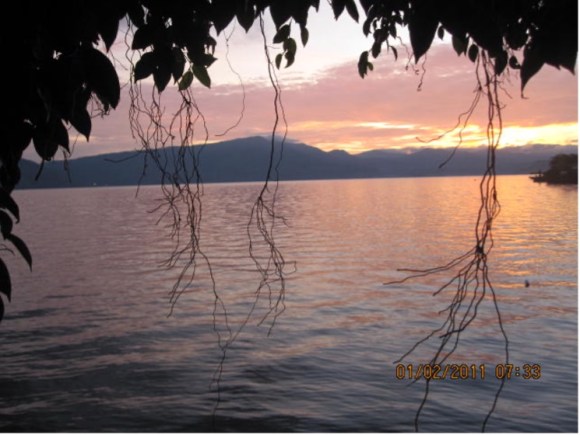
Volcanic Lake Toba. Photo Courtesy: Sybil Pretious

Philippines, Volcanoes & More

Click here to read.

Indonesia

Click here to read

Myanmar

Click here to read John Herlihy’s exhilaration with Myanmar in a pre-pandemic world in four-parts.

Australia

Click here to read Meredith Stephens’ sailing experiences between Adelaide and Kangaroo island.

Pandemic Diaries

Click here to read how Sunil Sharma moved continents, pausing in Maldives to find a new home in Canada.

Categories
Contents

Borderless, November, 2021

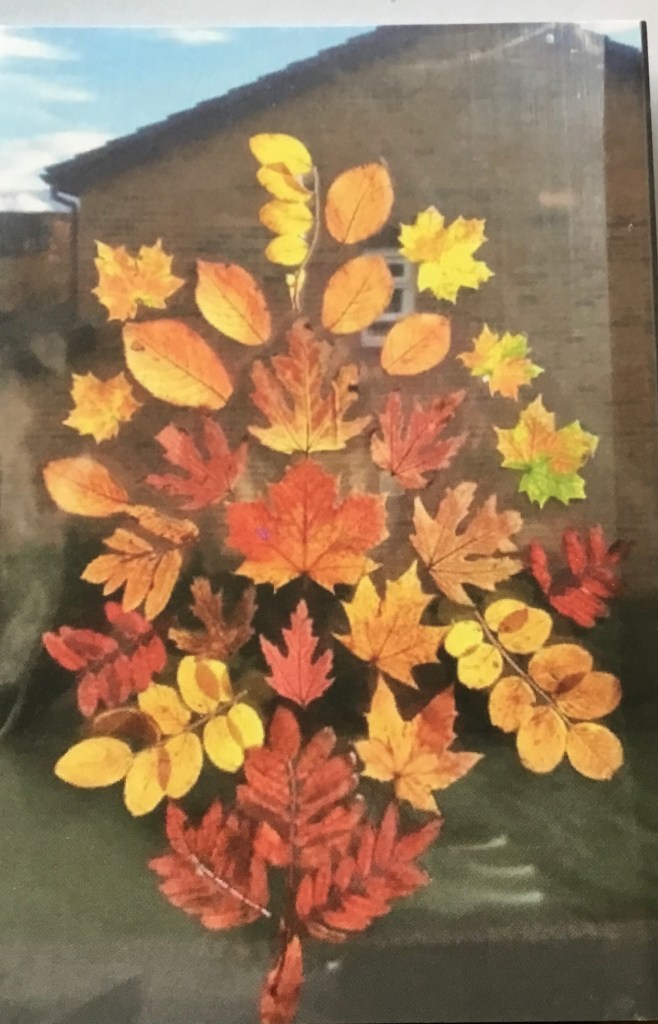
Autumn: Painting in Acrylic by Sybil Pretious

Editorial

Colours of the Sky…Click here to read.

Interviews

In Conversation with Akbar Barakzai, a Balochi poet in exile who rejected an award from Pakistan Academy of Letters for his principles. Click here to read.

In Conversation with Somdatta Mandal, a translator, scholar and writer who has much to say on the state of Santiniketan, Tagore, women’s writing on travel and more. Click here to read.

Translations

Rebel or ‘Bidrohi’

Nazrul’s signature poem,Bidrohi, translated by Professor Fakrul Alam. Click here to read.

Motorcar

Jibonananda Das‘s poetry translated from Bengali by Rakibul Hasan Khan. Click here to read.

The Beloved City

Poetry of Munir Momin, translated from Balochi by Fazal Baloch. Click here to read.

Rebranding

A poem in Korean, written & translated by Ihlwha Choi. Click here to read.

Perhaps the Last Kiss

A short story by Bhupeen giving a vignette of life in Nepal, translated from Nepali by Ishwor Kandel. Click here to read.

Morichika or Mirage by Tagore

Tagore’s poetry translated by Mitali Chakravarty. Click here to read.

Poetry

Click on the names to read

Rhys Hughes, Sutputra Radheye, Luis Cuauhtémoc Berriozábal, Sheshu Babu, Michael Lee Johnson, Prithvijeet Sinha, George Freek, Sujash Purna,  Ashok Manikoth, Jay Nicholls, Pramod Rastogi, Ryan Quinn Flanagan, Vijayalakshmi Harish, Mike Smith, Neetu Ralhan, Michael R Burch

Poets, Poetry & Rhys Hughes

A story poem about The Clock Tower of Sir Ticktock Bongg. Click here to read.

Nature’s Musings

Penny Wilkes takes us for a stroll into the avian lives with photographs and poetry in Of Moonshine & Birds. Click here to read.

Stories

Waking Up

Christina Yin takes us on a strange journey in Sarawak, Malaysia. Click here to read.

Rains

A pensive journey mingling rain and childhood memories by Garima Mishra. Click here to read.

Khatme Yunus

Jackie Kabir brings us a strange story from Bangladesh. Click here to read.

First International Conference on Conflict Continuation

Steve Davidson explores an imaginary conference. Click here to read.

The Literary Fictionist

In Fragments of a Strange Journey, Sunil Sharma sets out with Odysseus on a tour of the modern day world. Click here to read.

Musings/Slices from Life

Yesterday Once More?

Ratnottama Sengupta recalls her experiences of the Egyptian unrest while covering the 35th Cairo International Film Festival in 2012. Click here to read.

Embroidering Hunger

An account of life of dochgirs (embroiderers) in Balochistan by Tilyan Aslam. Click here to read.

To Daddy — with Love

Gita Viswanath takes us into her father’s world of art and wonder. Click here to read.

Simon Says

Ishita Shukla, a young girl, explores patriarchal mindset. Click here to read.

Welcoming in the dark half of the year

Candice Louisa Daquin takes a relook at the evolution of Halloween historically. Click here to read.

Musings of the Copywriter

In Crematoriums for the Rich, Devraj Singh Kalsi regales his readers with a dark twist of the macabre. Click here to read.

Essays

Renewal

Jayat Joshi, a student of development studies, takes a dig at unplanned urban development. Click here to read.

Once Upon A Time in Burma: Leaving on a Jet Plane

John Herlihy’s last episode in his travels through Burma. Click here to read.

A Legacy of Prejudice, Persecution and Plight

Suvrat Arora muses on the impact of a classic that has been coloured with biases. Click here to read.

The Observant Migrant

In Is Sensitivity a Strength or a Weakness?, Candice Louisa Daquin explores our value systems. Click here to read.

Book Excerpts

Arundhathi Subramaniam’s Women Who Wear Only Themselves. Click here to read.

CJ Fentiman’s award winning book, The Cat with Three Passports. Click here to read.

Book Reviews

Himadri Lahiri reviews Somdatta Mandal’s ‘Kobi’ and ‘Rani’: Memoirs and Correspondences of Nirmalkumari Mahalanobis and Rabindranath Tagore. Click here to read.

Suzanne Kamata reviews Iain Maloney’s Life is Elsewhere/ Burn Your Flags. Click here to read.

Bhaskar Parichha reviews Anita Agnihotri’s Mahanadi –The Tale of a River, translated from Bengali by Nivedita Sen. Click here to read.

Meenakshi Malhotra reviews Turmeric Nation: A Passage Through India’s Tastes, authored by Shylashri Shankar. Click here to read.

Categories
Editorial

Colours of the Sky

A riot of colours starts the day
with happiness, vibrancy and hope,
dispelling the winter of discontent
with whispers of new lores…
Courtesy: Sohana Manzoor

Devi (The Goddess) is a 1960 Satyajit Ray film, based on a story by a writer called Prabhat Kumar Mukhopadhyay, that showcases nineteenth century India, where the silence of a young girl who is deified, wreaks havoc in her home, village and life. In an interview, Satyajit Ray contended that the film was to make people rethink ‘messiahdom’. The exact words he used to state this was that the film was against ‘religious dogmatism’ as the film and story literally dealt with the deification of a young bride. Tagore had similarly questioned blind deification in a number of his poems and plays. These (as Ray spelt out in his interview) did not address religion per se but malpractices, among them, the tendency to worship an idol to a point where flaws are justified, accepted and emulated. Satyajit Ray and Tagore were both Brahmos — which can be seen as a reform movement. These two were not criticising religion but talking of rising above gawky hero worship to think logically and arrive at logical conclusions. When we talk of characters from the Ramayana, the Mahabharata, other mythologies or substitute the adulated with stars, writers, politicians and businessmen who run huge concerns, we tend to idolise them. But these were and are all characters with flaws, whether fictitious or real. We can well learn from their mistakes, rather than deify and worship them to justify bad behaviour by quoting instances from lives of past legends or prominent persons in the current world.

Akbar Barakzai, a poet exiled from Balochistan, talks in a similar vein in his interview. You can see it in his poetry too — some of which can be found translated by Fazal Baloch in our pages. Barakzai talks of transcending barriers we draw for ourselves in the real world, of writing with honesty and sincerity. He has shared vignettes of his life as he changed countries to continue his work. Baloch has also brought to us another excellent poet in translation, Munir Momin. A major poem by Nazrul (the ‘bidrohi kobi’), ‘Bidrohi or Rebel’ has wound its way to our pages translated by Professor Fakrul Alam. We are honoured and grateful that Prof Alam chose to share this excellent translation with us. We have more translations: Jibonananda’s ‘Motorcar’(1934) by Rakibul Hasan Khan, a Korean translation by Ihlwha Choi, another short story from Nepal and Tagore’s powerful poem,Morichika or Mirage’, which is a wake-up call for the inert affluent who hold themselves aloof from common masses. We have also interviewed a major prose translator of Tagore, Professor Somdatta Mandal. With much to share on Santiniketan, Nabanita Deb Sen and many interesting anecdotes, Mandal talks of her extensive work with her translations spanning many more writers from the past.

We have a colourful ensemble this time almost as vibrant as the autumnal colours that have invaded nature in some parts of the Northern Hemisphere. Michael R Burch has given us beautiful poems on autumn, including the autumn of life. We have a poem in a similar vein by George Freek whose work continues influenced by Liu Yong (1719-1805), an influential minister and calligrapher in the Qing Dynasty. Ryan Quinn Flanagan touches on Leonardo Da Vinci’s Mona Lisa in his poetry. Rhys Hughes has given us humour in both his poetry and his column. Our other humorist, Devraj Singh Kalsi has given us darker, more caustic black humour in his narrative. We have lovely photographs from Penny Wilkes with her verses in Nature’s Musings. It is amazing the way she photographs birds in flight. Stories from Malaysia, Bangladesh, India and America add to the richness of our oeuvre. Sunil Sharma has given us an avant-garde telling of Odysseus’s voyage in the modern world, transcending the borders of time and ethnicity.

A well-known senior journalist, Ratnottama Sengupta, has also travelled through time to give us a recall of her experience at the 35th Cairo Film Festival one November, nine years ago. Her narrative about the time that the Shariat law was adopted by Egypt reminds me of the way things moved in Afghanistan few months ago and what is even more stunning is the way in which organisations dubbed extremists earlier are allowed to run countries now. Is it really not yet time to get rid of messiahs and look for one world?

We conclude our travels in Burma with John Herlihy and his friend, Peter, this month. And start a column with Candice Louisa Daquin, The Observant Immigrant. Her essays always draw much discussion. An experienced psychotherapist, she has looked into our value systems. We have books excerpts from Arundhathi Subramaniam’s Women Who Wear Only Themselves and CJ Fentiman’s award winning book, The Cat with Three Passports. Himadri Lahiri has done an in-depth review of Somdatta Mandal’s ‘Kobi’ and ‘Rani’: Memoirs and Correspondences of Nirmalkumari Mahalanobis and Rabindranath Tagore. It is amazing how much we can learn about a person from their letters. Suzanne Kamata has shared her review of Iain Maloney’s Life is Elsewhere/ Burn Your Flags. Reviewed by Meenakshi Malhotra, Shylashri Shankar’s Turmeric Nation: A Passage Through India’s Tastes, sounds like an erudite read that spans thousands of years of history. Anita Agnihotri’s Mahanadi –The Tale of a River, translated from Bengali by Nivedita Sen, has been reviewed by Bhaskar Parichha. The narrative sounds like a powerful voice weaving together the lores around the river.

Do pause by and find many more authors who dot our November edition. As usual, naming each one will keep you away from our delectable reads for longer. We thank all our readers for their continued patronage, and I would like to thank my fabulous team who are now even providing visuals to brighten our pages. A huge thanks to Sohana Manzoor and Sybil Pretious, who write as well as they paint. Thanks to all our wonderful contributors for making Borderless a reality.

Wish you all sunshine and laughter!

Best,

Mitali Chakravarty

Borderless Journal

Categories
Poetry

Autumn & Me

Poetry by Michael Burch

An Illusion

The sky was as hushed as the breath of a bee
and the world was bathed in shades of palest gold
when I awoke.

She came to me with the sound of falling leaves
and the scent of new-mown grass;
I held out my arms to her and she passed

into oblivion ...


Leaf Fall

Whatever winds encountered soon resolved
to swirling fragments, till chaotic heaps
of leaves lay pulsing by the backyard wall.
In lieu of rakes, our fingers sorted each
dry leaf into its place and built a high,
soft bastion against earth’s gravitron—
a patchwork quilt, a trampoline, a bright
impediment to fling ourselves upon.

And nothing in our laughter as we fell
into those leaves was like the autumn’s cry
of also falling. Nothing meant to die
could be so bright as we, so colourful—
clad in our plaids, oblivious to pain
we’d feel today, should we leaf-fall again.


Childhood's End

How well I remember
those fiery Septembers:
dry leaves, dying embers of summers aflame
lay trampled before me
and fluttered, imploring
the bright, dancing rain to descend once again.

Now often I’ve thought on
the meaning of autumn,
how pale moons eerie mornings enchanted dark clouds
while robins repeated
gay songs sagely heeded
so wisely when winters before they’d flown south ...

And still, in remembrance,
I’ve conjured a semblance
of childhood and how the world seemed to me then;
but early this morning,
when, rising and yawning,
I found a grey hair ... it was all beyond my ken. 


A Vain Word

Oleanders at dawn preen extravagant whorls
as I read in leaves’ Sanskrit brief moments remaining
till sunset implodes, till the moon strands grey pearls
under moss-stubbled oaks, full of whispers, complaining
to the darkening autumn, how swiftly life goes—
as I fled before love ...
                                     Now, through leaves trodden black,
shivering, I wander as winter’s first throes
of cool listless snow drench my cheeks, back and neck.

I discerned in one season all eternities of grief,
the spectre of death sprawled out under the rose,
the last consequence of faith in the flight of one leaf,
the incontinence of age, as life’s bright torrent slows.

O, where are you now?—I was timid, absurd.
I would find comfort again in a vain word.

Michael R. Burch has over 6,000 publications, including poems that have gone viral. His poems have been translated into fourteen languages and set to music by eleven composers. He also edits The HyperTexts (online at www.thehypertexts.com).

.

PLEASE NOTE: ARTICLES CAN ONLY BE REPRODUCED IN OTHER SITES WITH DUE ACKNOWLEDGEMENT TO BORDERLESS JOURNAL.

Categories
Tribute

In Memory of Peace

My friend, you would not tell with such high zest
To children ardent for some desperate glory,
The old Lie: Dulce et decorum est
Pro patria mori*.
-- Dulce et Decorum Est, Wilfred Owen (1893-1918)

*Translated: "It is sweet and fitting to die for the homeland."

On 11th November, we remember the men who gave up their lives to win wars for those in power. Remembrance Day started as an annual event after the First World War (28th July, 1914- 11the November, 1918) more than a hundred years ago, in memory of soldiers — some of who were lost in the battle grounds, whose remains never got back to their families. Some of these men who fought were from countries that were subservient to colonial powers who started the war and some, like the soldier-poet, Wilfred Owen, were from conquering nations.

This was much before atom bombs were dropped on Hiroshima and Nagasaki. Eventually, a nuclear armistice was declared. Mahatma Gandhi (1869-1948), an internationally acknowledged apostle of peace, had an opinion on this: “‘The very frightfulness of the atom bomb will not force non-violence on the world? If all nations are armed with the atom bomb, they will refrain from using it as it will mean absolute destruction for all concerned?’ I am of the opinion that it will not.” Has this nuclear armistice made the world more peaceful? And if so, what is the quality of peace that has been wrought by drumming fears of annihilation in human hearts? Could the ‘fakir…striding half-naked up the steps of the viceregal palace’ be right after all?

Here we have collected a few stories and poems around ongoing conflicts and wars which stretch to the present day, some old and some new… some even written by men who faced battle…

Poetry

A poem and art by Sybil Pretious in memory of soldiers who died in the World War I.

Soldiers & Missives by Prithvijeet Sinha … Click here to read.

Our Children by Bijan Najdi, translated from Persian by Davood Jalili. Click here to read.

Prose

Line of Control by Paresh Tiwari, a story about the life of soldiers set in the Indo-Pak border… Click here to read.

I am a Coward with Priorities by Tejaswinee Roychowdhury, a story from a soldier’s perspective. Click here to read.

From the Pages of a Soldier’s Diary… by Mike Smith takes you on a journey through the pages of a colonial diary and muses on choices he has made. Click here to read.

Bundu, Consoler of the Rich is a story based on memories of the Partition by Nadir Ali, translated from Punjabi by Amna Ali. Click here to read.

In a Land Far From Home: A Bengali in Afghanistan, an excerpt from an account by Syed Mujataba Ali, translated from Bengali by Nazes Afroz. Click here to read.

Categories
Contents

Borderless, October 2021

An Ode to Autumn: Painting by Sohana Manzoor.

Editorial

Making a Grecian Urn… Click here to read.

Interviews

Unveiling Afghanistan: In Conversation with Nazes Afroz, former editor of BBC and translator of a book on Afghanistan which reflects on the present day crisis. Click here to read.

The Traveller in Time: An interview with Sybil Pretious who has lived through history in six countries and travelled to forty — she has participated in the first democratic elections in an apartheid-worn South Africa and is from a time when Rhodesia was the name for Zimbabwe. Click here to read.

Translations

Travels & Holidays: Humour from Rabindranath

Translated from the original Bengali by Somdatta Mandal, these are Tagore’s essays and letters laced with humour. Click here to read.

The Quest for Home

Nazrul’s Kon Kule Aaj Bhirlo Tori translated from Bengali by Professor Fakrul Alam. Click here to read.

Mysteries of the Universe

Akbar Barakzai’s poetry in Balochi, translated by Fazal Baloch. Click here to read.

Gandhi & Robot

A poem reflecting the state of Gandhi’s ideology written in Manipuri by Thangjam Ibopishak and translated from the Manipuri by Robin S Ngangom. Click here to read.

Sorrows Left Alone

A poem in Korean, written & translated by Ihlwha Choi. Click here to read.

The Song of Advent by Tagore

Written by Tagore in 1908, Amaar Nayano Bhulano Ele describes early autumn when the festival of Durga Puja is celebrated. It has been translated from Bengali by Mitali Chakravarty. Click here to read.

Poetry

Click on the names to read

Michael R Burch, A Jessie Michael, John Grey, Rupali Gupta Mukherjee, Mike Smith, Saranyan BV, Tony Brewer, Baisali Chatterjee Dutt, Jay Nicholls, Beni S Yanthan, Luis Cuauhtémoc Berriozábal, Pramod Rastogi, Jason Ryberg, Michael Lee Johnson, Oormila Vijayakrishnan Prahlad, Rhys Hughes

Animal Limericks by Michael R Burch. Click here to read.

Nature’s Musings

In The Lords of Lights, with photographs and a story, Penny Wilkes makes an interesting new legend. Click here to read.

Poets, Poetry & Rhys Hughes

In Pessoa and Cavafy: What’s in a Name?, Rhys Hughes comically plays with the identity of these two poets. Click here to read.

Musings/ Slices From Life

At the Doctor’s

In this lighthearted narration, Farouk Gulsara uses humour to comment on darker themes. Click here to read.

Taking an unexpected turn

Nitya Pandey talks of a virtual friendship that bloomed across borders of countries during the pandemic. Click here to read.

Travel in the Time of Pandemics: Select Diary Entries of an Urban Nomad

Sunil Sharma gives us a slice from his travels with vibrant photographs, changing continents and homes during the pandemic. Click here to read.

Musings of a Copywriter

In Surviving to Tell a Pony-taleDevraj Singh Kalsi journeys up a hill on a pony and gives a sedately hilarious account. Click here to read.

Essays

A Season of Magical Mellow Wistfulness

Meenakshi Malhotra through folk songs that are associated with Durga Puja explores the theme of homecoming. Click here to read.

What Gandhi Teaches Me

Candice Louisa Daquin applies Gandhiism to her own lived experiences. Click here to read.

How Women’s Education Flourished in Aligarh Muslim University

Sameer Arshad Khatlani dwells on the tradition of education among Muslim women from early twentieth century, naming notables like Ismat Chughtai and Rashid Jahan. Click here to read.

Once Upon a Time in Burma: Of Friendships & Farewells

John Herlihy takes us through more of Myanmar with his companion, Peter, in the third part of his travelogue through this land of mystic pagodas. Click here to read.

When Needles Became Canons…

Ratnottama Sengupta, who has edited an encyclopaedia on culture and is a renowned arts journalist, gives us the role ‘kanthas’ (hand-embroidered mats, made of old rags) played in India’s freedom struggle. Click here to read.

Stories

Lunch with Baba Rinpoche in Kathmandu

Steve Davidson takes us for a fictitious interview with a Tibetan guru in Nepal. Click here to read.

The Tree of Life

An unusual flash fiction by Parnil Yodha about a Tibetan monk. Click here to read.

Odysseus & Me: A Quest for Home

A short fiction from Bangladesh by Marzia Rahman on immigrants. Click here to read.

Dawn in Calicut

Krishna Sruthi Srivalsan writes of a past that created the present. Click here to read.

I am a Coward with Priorities

Tejaswinee Roychowdhury tells a story from a soldier’s perspective. Click here to read.

The Literary Fictionist

In Bapu, Denied, Sunil Sharma explores the fate of Gandhiism in a world where his values have been forgotten. Click here to read.

Book Excerpts

An excerpt of In a Land Far From Home: A Bengali in Afghanistan by Syed Mujtaba Ali, translated by Nazes Afroz. Click here to read.

An excerpt from letters written by Tagore from Kobi & Rani, translated by Somdatta Mandal. Click here to read.

Book Reviews

Aruna Chakravarti reviews Golden Bangladesh at 50: Contemporary Stories & Poems edited by Shazia Omar. Click here to read.

Somdatta Mandal reviews Wooden Cow by T. Janakiraman, translated from Tamil by Lakshmi Kannan. Click here to read.

Gracy Samjetsabam reviews Suzanne Kamata’s The Baseball Widow. Click here to read.

Bhaskar Parichha reviews Mohona Kanjilal’s A Taste of Time: A Food History of Calcutta. Click here to read.