Categories
Editorial

We Did It!

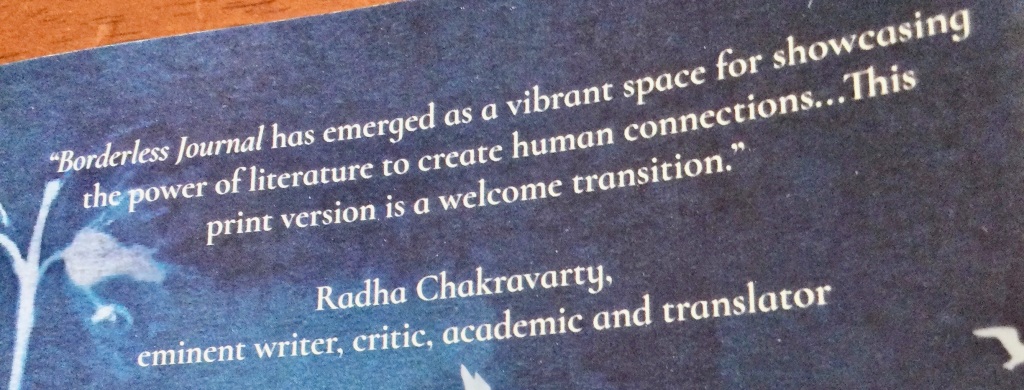
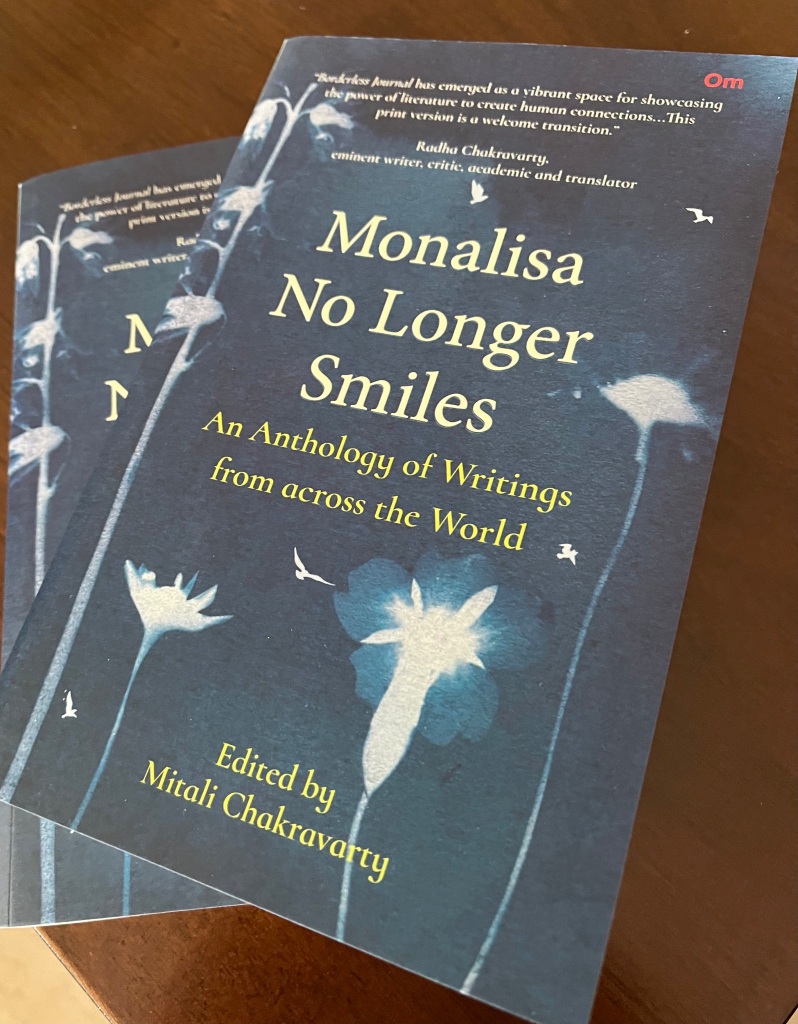
That good things happen despite darkness, despite prognostications of doom, that light glimmers hope if you strive to focus on your strength in hard times is borne true both in fiction and in life. Perhaps, we cannot get back the old ways (but is that what we want?) but new paths emerge. Old gives way to new. And while trying to gather pearls of human excellence — borne not of awards or degrees but of bringing out the best, the kindest, the most loving in human hearts — we managed to create with a team an outstanding anthology. Woven with the writings of old and new — we created a tapestry together that the editor in chief of our publishing house said was “classy, literary, engaging and international”. That one of the oldest and most reputed publishing houses in India with bookshops countrywide took it on was also an unusual event! We are truly grateful to Om Books International, Shantanu Ray Chaudhuri and Jyotsna Mehta along with all our writers and readers who made our anthology a reality, and to Radha Chakravarty and Fakrul Alam for the kind words they bestowed on our effort.
Click here to access the Borderless anthology, Monalisa No Longer Smiles

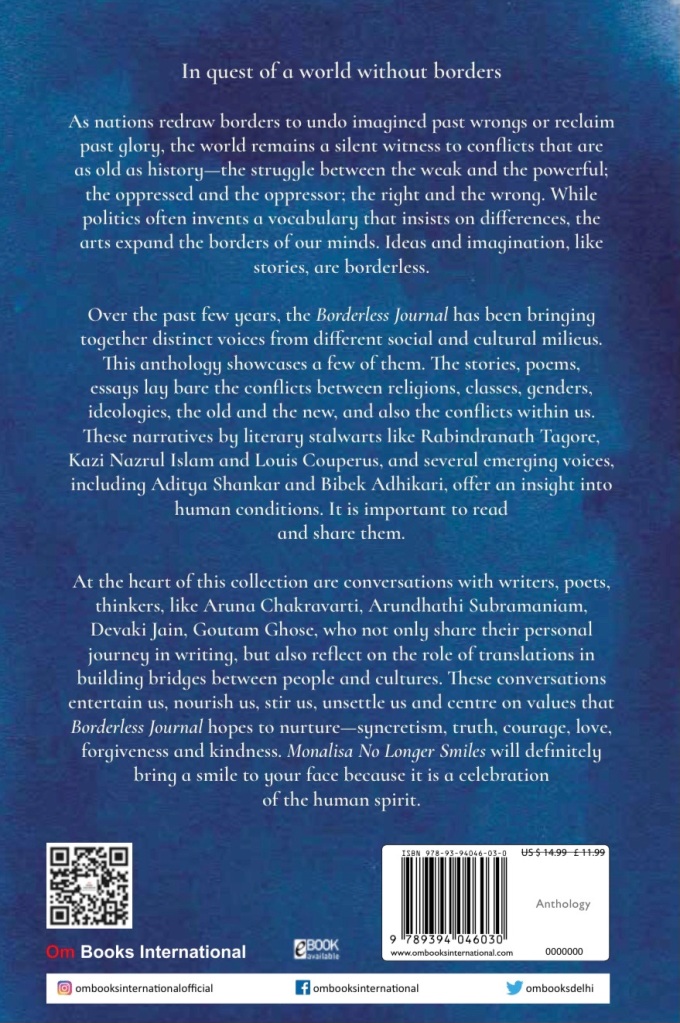
Please greet our first anthology, Monalisa No Longer Smiles, with love and friendship. It could be the perfect Christmas gift in the spirit of the season! And as the blurb says, “it will definitely bring a smile to your face because it is a celebration of the human spirit.”

The anthology is different from our journal in as much as it has a sample of an eclectic collection that has been honed with further editing and has some new features. Most of the writing is from our first year and showcases our ethos, except for Lesya’s poetry and interview. Lesya Bakun from Ukraine is still on the run, looking for a refuge — she cannot return home like you or I can. Her family is scattered across number of countries. Her cousin, who was guarding the factory at Azovstal, was taken prisoner. We included her story in the anthology hoping to create global empathy for refugees as the numbers will increase not only due to war but also due to climate change.

The reason we felt a hardcopy anthology was a good idea was because nothing beats the joy of having a bunch of interesting reads in the warmth of your hands (especially where internet cannot reach or is unavailable). In any case, books with the feel of paper, the rustling whispers which carry voices of leaves can never be replaced as Goutam Ghose had also said in his interview which is now part of our anthology.

And that is why we celebrate more books… this time we feature Singaporean prima donna of literature, Suchen Christine Lim, with her new book Dearest Intimate, a novel that spans more than hundred years including the harrowing Japanese invasion during World War II. She shared sound advice with writers: “Suffering is good for the writer. It will deepen lived experience and expand the heart’s empathy.” And perhaps that is what is echoed through the experiences of the other writer interviewed on our pages by Keith Lyons. This is a writer who not only brought out his own books but was a regular contributor of travel pieces for Frommer’s and National Geographic traveling to unexplored destinations — Christopher Winnan. Another writer Lyon had interviewed recently, Steve Carr, has passed on. We would like to convey our heartfelt condolences to his family and friends.

We have a number of books that have been reviewed. Reba Som reviewed Aruna Chakravarti’s Through the Looking Glass: Stories that span eras spread across time. Somdatta Mandal has reviewed Shehan Karunatilaka’s The Birth Lottery and Other Surprises and Bhaskar Parichha, Rahul Ramagundam’s The Life and Times of George Fernandes. Basudhara Roy has written of Afsar Mohammad’s Evening with a Sufi: Selected Poems, translated from Telugu by the poet and Shamala Gallagher, verses that again transcend borders and divides. We have an excerpt from the same book and another from Manoranjan Byapari’s How I Became a Writer: An Autobiography of a Dalit, translated from Bengali by Anurima Chanda.

More translations from Bengali, Balochi and Korean enrich our November edition. Fazal Baloch has translated a story by Haneef Shareef and Rituparna Mukherjee by Shankhadeep Bhattacharya. We have the translation of an inspirational Tagore poem helping us find courage (Shonkho Dhulaye Pore or ‘the conch lies in the dust’). Another such poem by Nazrul has been rendered in English from Bengali by Professor Fakrul Alam. He has also shared an autobiographical musing on how he started translating Tagore’s Gitabitan, which also happens to be his favourite book. More discussion on the literary persona of TS Eliot and the relevance of his hundred year old poem — ‘The Waste Land’ by Dan Meloche adds variety to our essay section.

Evoking the genius of another outstanding artiste, Kishore Kumar, who happened to pen thought provoking dialogues in some films, is Shantanu Ray Chaudhuri’s essay, review of a recent book on the legendary actor-singer and an interview with the authors. Infringing the boundaries of literary with popular culture and art and integrating all forms into a wholistic bundle has been part of our ethos. In that spirit we have a musing by Prithvijeet Sinha on Edvard Munch’s famous painting called Scream. We have non-fiction from Australia spanning Meredith Stephens’s recent brush with Covid, Mike Smith visits a Scottish beach in the footsteps of a novelist, Ravi Shankar has given us a poignant piece for a late friend and Candice Lousia Daquin talks of the existence of bi-racial biases. In contrast, Suzanne Kamata sent a narrative that bridges divides showcasing a German wife of a Japanese scientist that draws us to conclude that biases erode over time to create an acceptance of bi-racial people. Devraj Singh Kalsi brings in humour with his funny narrative about a guitarist. Rhys Hughes writes in a lighter vein on Indian cuisine in his column and spouts more funny poetry bordering on the absurd.

Jared Carter has shared beautiful poetry on murmuration in birds and we have touching verses from Asad Latif for a little girl he met on a train — reminiscent of Tagore’s poem Hide and Seek (Lukochuri). Michael R Burch has given us poems setting sombre but beautiful notes for the season. We host more poetry by Luis Cuauhtémoc Berriozábal, Quratulain Qureshi, Jim Bellamy, Gayatri Majumdar, Ryan Quinn Flanagan, Alpana, Jonathan Chan, Saranyan BV, George Freek and many more. We have stories from around the world: India, France and Bangladesh.

Gathering all of your thoughts in strings of words from all corners of the world, we present to you the bumper November issue of Borderless Journal . Thank you all for sharing your thoughts with us. Thanks to Sohana Manzoor for her fantastic painting and more thanks to the whole Borderless team for seeing this issue through. We would not have been able to do the anthology or these issues without each one of you — writers and readers.

Thank you all from the bottom of my heart.

There is always hope for a new tomorrow!

Mitali Chakravarty

borderlessjournal.com

Click here to access the Borderless anthology, Monalisa No Longer Smiles
Categories
Essay

My Favourite Book by Fakrul Alam

Professor Fakrul Alam

My favourite book? Over the years, I have had many favourite books, and have been totally captivated by at least one of them at any one period of time. Indeed, once I began to take literature in English seriously, I was completely swept away by one book or the other that I came across at the University of Dhaka B. A. (Hons.) and M. A. English department syllabuses year after year. In my first year as an undergraduate, for instance, I read D. H. Lawrence’s Sons and Lovers (1913)compulsively, finding in its protagonist Paul Morel’s growing up into a young man’s storyline parallels with mine—although he was a miner’s son in Nottingham in the early twentieth century and I a boy growing up in Dhaka in the 1950s and 60s and the son of middle-class parents. A couple of years later, it was Jane Austen’s Pride and Prejudice(1813), for the story of the Bingley girls and their marriage encounters sounded familiar to me, for I too had four sisters whose marriages had become central to my parents’ thinking in all kinds of ways. And in my M. A. I read a book which harpooned me fully for many a decade—this was Melville’s Moby Dick (1851)—a whale of a book, I’m sure many of you in the virtual audience will agree. In all three cases, I read not only the novels I mentioned but almost everything by Lawrence, Austen and Melville I came across. Indeed, Melville’s fiction became the subject of my M. A. dissertation at Simon Fraser University.

But in the 1990s, I began to pay attention to Bangla writing seriously —something I had neglected for long, thanks first to an English medium education exclusively geared to the “O” levels that scanted our own literature and then my specialisation in literature in English afterwards. I began to read Bangla poetry intensively for the first time in this decade, although I had read some fiction in the language over the years. And it was sometime in the middle of the 1990s that I came across Jibanananda Das’s verse in an edition of his selected poems by the Bangladeshi poet-critic Abdul Mannan Syed. I would like to stress that this poet was born in 1899 in Borishal, a very green district crisscrossed by innumerable rivers all heading ultimately for the nearby Bay of Bengal; he died in what seemed to be an accidental death in Kolkata in the mid-1950s. Das’s verse possessed me completely, leaving me, who had till then read only some Bangla poetry but had concentrated mostly in fiction and non-fictional prose in English, with the urge to translate his verse into English. For the next three years, I kept going back to Das’s poems for their beauty, for the way they immortalised in verse the beauty of Bengal, and for the way they made me the poet’s intimate, for it is only when one translates intensely, all caught up in the source text, that one comes closest to the mind speech as well as the deep emotional life of the poet.

Having translated Jibanananda Das—surely the greatest modern Bengali poet—I felt I had to try to translate Rabindranath Tagore’s poetry—the greatest poet and literary personality Bengal has produced. Even though in the 1960s and 1970s, I had only paid sustained attention to poetry, fictional and nonfictional prose and plays in English, how could I have escaped Tagore then? He was everywhere in the Dhaka I experienced and very much part of the mindscape of us Bangladeshis as we moved towards becoming citizens of Bangladesh. His work was championed in the media; his songs were sung in events such as the Bangla new year festivities in mid-April; cultural events everywhere spurred by nationalism highlighted him in one way or the other. Besides, my father was addicted to Rabindranath’s songs and listened to him on the radio whenever he could, making us share his delight in the melodies then. My mother, for her part, quoted him all the time to give her children a sense of what we should be emulating and where we were going wrong.

In other words, Rabindranath was very much part of my consciousness, although I had occluded him till now. As I began to read him in the turn of the decade after translating Jibanananda, I felt I had to read as much of his works as I could. Inevitably, I began to translate many of his poems. By the time his sesquicentenary came up in 2011, I was invited to co-edit an anthology of his works and that led to the extensive reading of the myriad-minded writer’ work and increasing familiarity with this wonderful personality as well as writer.

And this is how I came to my favourite book of the last decade or so—Tagore’s Gitabitan. It is a book that is always on my study cum desktop computer table’s shelf over ten years now. It is something I resort to every time I listen to a Rabindranath song on YouTube in my desktop’s audio system. Sung melodiously and passionately by a favourite singer, a song by Tagore so allures me into rendering its spirit in another language that I feel I have to come as close to it as possible by translating it to the best of my ability. This means not only listening to the song again and again but also reading it on the printed page repeatedly, word by word, line by line, and stanza by stanza, time after time, till I feel I have been able to capture every aspect of it nuanced by Tagore by blending the tune and the song lyric as well as I could in the English language. In the end, of course, I fail to do so after a point, but the fascination of what is so appealing when heard, even if in the last analysis the task is an impossible one, induces me to render it into an alien language system after repeated readings and attempts to come up with a version that is close to the original in every way. I hope thereby to come to the heart of the song and am content to spend an hour or so on a few lines so that I can make its meaning clear to myself and then to others.                

Truly, there is a magical quality in the songs collected in my favorite book of this time—Tagore’s Gitabitan. It is a book that has also kindled the imagination of quite a few people—singers, musicians and translators— over eighty years now, making them represent the song-lyrics either as songs to be sung or as translations meant for foreign and even Bengal language speakers who might otherwise listen to a song swept away by the tune and opening lines without bothering with the later lines or making no attempt to understand its content.  The net result at the end of a few hours spent first reading many of the song closely, then reading my own translation again and again, is the satisfaction that I have been able to capture its essence in English through my translations. After all, and as Tagore himself has said, “the essence of a song is universal, even if its dress is local and national” (77). Why should I as a translator then not attempt to translate his songs for the world at large as well as myself even if their loveliness is uncatchable in the last analysis? He himself had led the way, and had learnt lessons along the process that were worth considering for later translators. I am hoping to bring out my own collection of translations of 350 plus songs by Tagore by the beginning of next year.

Let me point out that the title Tagore gave to the volume indicates that Gitabitan is meant to invite readers and musical devotees of the poet-composers to his “garden of songs.”  In all, the volume contains over 2,300 songs, nearly 1800 of whose tunes can be found in the musician-poet’s Swarabitan with their musical notations. In fact, there are sites now that you can google and access where you can find the Bengali words, some English translations, and notations, and even brief histories of the origins of the most commonly heard songs.

Let me point out too that Gitabitan itself is divided into six sections—songs of devotion, love, the six seasons of Bengal, patriotic songs, songs for festive and miscellaneous occasions, songs written for his plays and other publications. In their final form, the Gitabitan was published in 1941—the year the poet died. By now it has been reprinted, with new inclusions from scattered sources, innumerable times.

To conclude, why is Rabindranath Tagore’s Gitabitan my favourite book? He had himself said to Bengalis in 1939, “You can forget me, but how can you forget my songs?” Tagore’s collection of songs connects me to him endlessly, becoming a way of linking me as well with the universe and the Supreme Being and even my departed parents. They stir my patriotic side and make me one with the seasons of my country and its landscape and whatever is still romantic in me. And as I head towards the Great Unknown, they console me that there are possibilities of communion after we depart from this world as well!   

Fakrul Alam is Supernumerary Professor of English at the University of Dhaka

Click here to access the Borderless anthology, Monalisa No Longer Smiles

PLEASE NOTE: ARTICLES CAN ONLY BE REPRODUCED IN OTHER SITES WITH DUE ACKNOWLEDGEMENT TO BORDERLESS JOURNAL.

Categories
Poetry

Rows of Betelnut Trees by My Window

Written by Kazi Nazrul Islam in 1929 in Chittagong, translated from Bengali by Professor Fakrul Alam

Areca nut or betel nut trees. Courtesy: Creative Commons
Farewell, neighbours of my nightly vigil, 
Standing aloft next to my window,
Companions, the night of parting elapses.
From this day ceases our secret exchanges,
From this day ends our quiet conversations....

Putting its worn forehead on the porch of the setting sky
The moon cries, “Traveler awake, night is all but over”
Night spreads across the forest deep; overcome with sleep,
It glances back, clasping in its hand its dark disheveled hair!

Startled, I wake up, wondering: whose breath brushes my forehead?
Who fans my warm forehead, who wakes up by my bedside?
I rise seeing by my window the sentinel of my dreams,
Companions of my dark nights, the row of betel nut trees!

Hadn’t we once viewed each other through fluttering eyelids?
Friends, I recall what we said to each other all night long!
When tears flowed from weary eyes beginning to burn,
Your leaves appear to me to be like the cooling palms
Of my beloved. The rustling of your leaves reminded me
Of her plaintive voice, calling out mournfully.
I saw in your leaves the kohl-dark shape of her eyes.
Your bodies in silhouette suggested her slim shape.
The gentle breeze wafting by evoked her delicate air.
Your branches seem to be draped with her sari’s borders.
And you fanned me as tenderly as she did with her hands!

These thoughts troubled me as I entered sleep’s domain.
As I slept, I felt the frill of your dark blue dresses lying
Unfurled besides my pillow. I saw in my dream you entering,
Furtively and fervently kissing my warm forehead.

Perhaps in the dream I extended my hands to touch you
Only to touch the window. Then I clasped your hands shyly.
Companions, now that window will have to be shut.
The path beckons, fellow travelers shout, “time to depart!”

This day before I take my leave
I feel like revealing myself to you as well as knowing you.
I feel close to your feelings; yet why does my insatiable mind
Yearn to hear from you the thoughts lodged in your bosom?
I know—we will never get to know each other physically,
Our hearts will only keep playing a tune of pain mournfully! 
 Perhaps I’ve seen a vision of you that is not like you at all.
But how can that harm you, if it does enough to swell my heart?
If my tears transform you into a thing of beauty,
If I can build a monument stirred by love of someone
As the Taj Mahal was built from the pain of losing Mumtaz,
Tell me, what harm will that do to anyone?
I won’t adorn my room with you, won’t create a paradise.... 

Perhaps birds never lighted on your branches,
In your bower, amidst your foliage, cuckoos never sang. 
Looking up to the heavens in exaggerated appeal
You kept vigil in the dark, though none stayed up
To open the window. But I was always the first to arrive,
And look at you in rapt attention in the dark. Departing lovingly,
On your leaves I wrote my first letters of love.
Let that be my consolation, whether I meet her or not....

Companions, I’ll never wake up again to look at you
I won’t interrupt anyone’s trance after a tumultuous day.
Silently, all alone, I’ll burn the incense of my suffering.

I shouldn’t ask, but can’t help doing so before leaving today—
From behind your wooden screen, did you view me lovingly too?
Did you also take a look at me when I opened the window?
Was it the wind or my love that made your leaves sway?
When behind your green borders, the moon will go to sleep,
And I will have to repress all happy feelings—
In your joyous moments, will you recall this passerby’s brief visit?
Will your voice resound in this empty room in loud lamentations?
Will the moonlight become insipid in your vision then?
Will you open shutters and look at the formless world outside?
Or will you keep standing rapt in your thoughts all day long?

Tied to exhausted earth, you’ve become a row of helpless trees,
Your feet are soiled with dust, your heads enveloped in emptiness.
Your days scald in the sun’s heat, your night’s chill in the dew,
You lack the strength to cry, you seem to be in a deathlike stupor.
If your problems fail to arouse you, companions, and stir you,
What can I hope to gain by burdening you with my gift of pain?...

*                  *                  *                 *                 

If I come to your mind by mistake, try to forget me,
If by mistake my windows open again,
Please shut them again.... Don’t look out in the dark at all
Through your wooden screen—for the one no longer on earth

The poem recited by Nazrul’s son, Kazi Sabyasaachi, in Bengali

Born in united Bengal, long before the Partition, Kazi Nazrul Islam (1899-1976) was known as the  Bidrohi Kobi, or “rebel poet”. Nazrul is now regarded as the national poet of Bangladesh though he continues a revered name in the Indian subcontinent. In addition to his prose and poetry, Nazrul wrote about 4000 songs.

.

Fakrul Alam is an academic, translator and writer from Bangladesh. He has translated works of Jibonananda Das and Rabindranath Tagore into English and is the recipient of Bangla Academy Literary Award (2012) for translation and SAARC Literary Award (2012).

.Click here to access the Borderless anthology, Monalisa No Longer Smiles

PLEASE NOTE: ARTICLES CAN ONLY BE REPRODUCED IN OTHER SITES WITH DUE ACKNOWLEDGEMENT TO BORDERLESS JOURNAL

Categories
Greetings from Borderless

Illuminate the World…

“Light festive lamps, make bright the night,
Shine your own lights, illuminate the world.”

— Tagore’s Autumnal Nights, translated by Professor Fakrul Alam
Courtesy: Creative Commons

Celebrating and reinforcing the victory of the human spirit over darker forces is a cathartic experience in a world reeling under the impact of senseless wars, depression and economic crises. While the Earth too upheaves changes to create new lores, we draw comfort from the perpetuation of rituals that have solaced us over centuries. These festivals are celebrated in different ways across the world on different days. But, the festival of lights has become a major one, celebrated by a diaspora across all continents. The rituals were varied but the celebrations include lighting of lamps across the board.

The Combat of Rama and Ravana (late 18th century) Courtesy: Creative Commons

Lamps were lit to celebrate Rama’s return home after destroying darker forces as Diwali among North Indians. Among those from the South and West, it was the victory of Krishna over demon Narakasur that warranted the celebration of Deepavali. And yet those from the East, celebrate Kali’s victory over the rakshasas with lamps, sparklers and prayers. The Jain and Buddhist communities also have their special observances on this day.

To bring to you a flavour of these festivals, we have writings by Farouk Gulsara from Malaysia on the celebration of Deepavali during his childhood; Debraj Mookerjee on Kali Puja celebrations in his ancestral home and a sample of Bibhutibhushan’s stories on the darker tantric practices — intrinsically linked to the worship of Kali along with Basudhara Roy’s review of the translation of his book by Devalina Mookerjee.

We begin our selection to jubilate this festival of lights with a translation of Tagore’s poem on light and another by Mike Smith.

Poetry

Tagore’s Paean to Light. Click here to read.

Last Lights by Mike Smith. Click here to read. 

Prose

In Dim Memories of the Festival of Lights, Farouk Gulsara takes a nostalgic trip to Deepavali celebrations in the Malaysia of his childhood. Click here to read.

In Vignettes of Life: Unhurried at Haripur, Debraj Mookerjee revisits Kali Puja in his ancestral home. Click here to read

Basudhara Roy reviews Taranath Tantrik and Other Tales from the Supernatural by Bibhutibhushan, translated from Bengali by Devalina Mookerjee. Click here to read.

An excerpt from Taranath Tantrik and Other Tales from the Supernatural by Bibhutibhushan, translated from Bengali by Devalina Mookerjee. Click here to read.

Categories
Contents

Borderless, October 2022

Art by Sohana Manzoor

Editorial

The Sky … Click here to read.

Conversations

Anthony Sattin, an award winning journalist and travel writer in conversation about Nomads: The Wanderers Who Shaped our World, his recent book published by Hachette, India. Click here to read.

VR Devika talks of the dynamic Muthulakshmi Reddy, the first woman in the world to preside over a Legislative Assembly who sought justice for Devadsis and prostitutes and discusses her book, Muthulakshmi Reddy: A Trailblazer in Surgery and Women’s Rights published by Niyogi Books. Click here to read.

Translations

Daridro or Poverty by Nazrul has been translated from Bengali by Professor Fakrul Alam. Click here to read.

The Browless Dolls by S.Ramakrishnan, has been translated from Tamil by B Chandramouli. Click here to read.

Two poems from Italy by Rosy Gallace have been translated from Italian by Irma Kurti. Click here to read.

Flowers of Love Bloom Everywhere, a poem for peace, written by and translated from Korean by Ihlwha Choi. Click here to read.

Aalo Amar Aalo (Light, My Light) a song by Tagore, has been translated by Mitali Chakravarty from Bengali. Click here to read.

Pandies Corner

Songs of Freedom: Moh-Reen is an autobiographical story by Amreen, translated from Hindustani by Janees. These stories highlight the ongoing struggle against debilitating rigid boundaries drawn by societal norms, with the support from organisations like Shaktishalini and Pandies. Click here to read.

Poetry

Click on the names to read

Michael R Burch, Kirpal Singh, Ryan Quinn Flanagan, Jonathan Chan, Ron Pickett, Saranyan BV, George Freek, Pramod Rastogi, Mike Smith, Gayatri Majumdar, John Grey, Vandana Kumar, Ahmad Al-Khatat, Rhys Hughes

Poets, Poetry & Rhys Hughes

In Crossing the Date Line, Rhys talks of his fascination with this imagined construct. Click here to read.

Essays

Epaar Bangla, Opaar Bangla:  Bengals of the Mind

Asad Latif explores if homeland is defined by birth. Click here to read.

The Wabi-Sabi of Making a Living

Aditi Yadav calls for taking a break from hectic work schedules. Click here to read.

Just a Face on Currency Notes?

Debraj Mookerjee writes of Gandhi’s relevance and evolution. Click here to read.

A Mother, a Daughter & a Demon Slayer?

Meenakshi Malhotra checks out the festival of Durga Puja, declared the a heritage festival by UNESCO. Click here to read.

The Observant Immigrant

Candice Lousia Daquin explores festivals and the God gene in We had Joy, We Had Fun…. Click here to read.

Musings/Slices from Life

KL Twin Towers near Kolkata?

Devraj Singh Kalsi visits the colours of a marquee hosting the Durga Puja season with its spirit of inclusivity. Click here to read.

A Five Hundred Nautical Mile Voyage to Tasmania

Meredith Stephens writes of sailing to Tasmania when the pandemic had just started loosening its grip. Click here to read.

Keep Walking…

Ravi Shankar recommends walking as a panacea to multiple issues, health and climate change and takes us on a tour of walks around the world. Click here to read.

The Matriarch of Hirronk

Ali Jan Maqsood introduces us to a strong matriarch from a Balochi village. Click here to read.

Musings of a Copywriter

In Drill, Fill, Just Chill, Devraj Singh Kalsi gives us humour while under a dentist’s drill. Click here to read.

Notes from Japan

Suzanne Kamata writes of her A Ramble on Bizan, focussing on a writer, also by the surname of Moraes, who lived on Mount Bizan more than century ago, moving to Japan from Portugal having fallen violently in love. Click here to read.

Short Stories

Half-Sisters

Sohana Manzoor explores the darker regions of human thought with a haunting psychological narrative about familial structures. Click here to read.

Homecoming

Rituparna Mukherjee gives a poignant story about missing home. Click here to read.

The Phosphorescent Sea

Paul Mirabile journeys with his protagonist into the depths of the ocean. Click here to read.

The Literary Fictionist

In Deathless are the Words, Sunil Sharma explores madness and ideators who believe in the power of words. Click here to read.

Book Excerpts

An excerpt from Taranath Tantrik and Other Tales from the Supernatural by Bibhutibhushan, translated from Bengali by Devalina Mookerjee. Click here to read.

An excerpt from A Handful of Sesame by Shrinivas Vaidya, translated from Kannada by Maithreyi Karnoor. Click here to read.

Book Reviews

Somdatta Mandal has reviewed BM Zuhara’s The Dreams of a Mappila Girl: A Memoir, translated from Malayalam by Fehmida Zakir. Click here to read.

Basudhara Roy has reviewed Taranath Tantrik: And Other Tales from the Supernatural by Bibhutibhushan, translated from Bengali by Devalina Mookerjee. Click here to read.

Bhaskar Parichha has reviewed Satyajit Ray Miscellany: On Life, Cinema, People & Much More, a collection of the maestro’s writings and illustrations. Click here to read.

Categories
Nazrul Translations

Daridro or Poverty

Written by Kazi Nazrul Islam in 1926, translated from Bengali by Professor Fakrul Alam

Nazrul’s statue in Bangladesh: Courtesy: Creative Commons
POVERTY

Poverty, you’ve empowered me,
Endowed me with Christ’s dignity
And adorned me with a thorny crown,
Ascetic one, you’ve inspired me
To speak out and eye the world boldly 
Deliver messages as incisively as a knife;
Your curse has made my veena a sword!

Arrogant hermit, your scorching flame
Has shorn my golden visage of its glitter,
Shrinking its sap and drying the soul early, 
When I try grasping with emaciated hands
Beauty’s bounty, O Impoverished One,
You step forward and lap it up. 
A forlorn desert is all you leave
For my imagination to play with.
My eyes blaze at my own beauty!

My desires, tinged with pain-yellow buds,
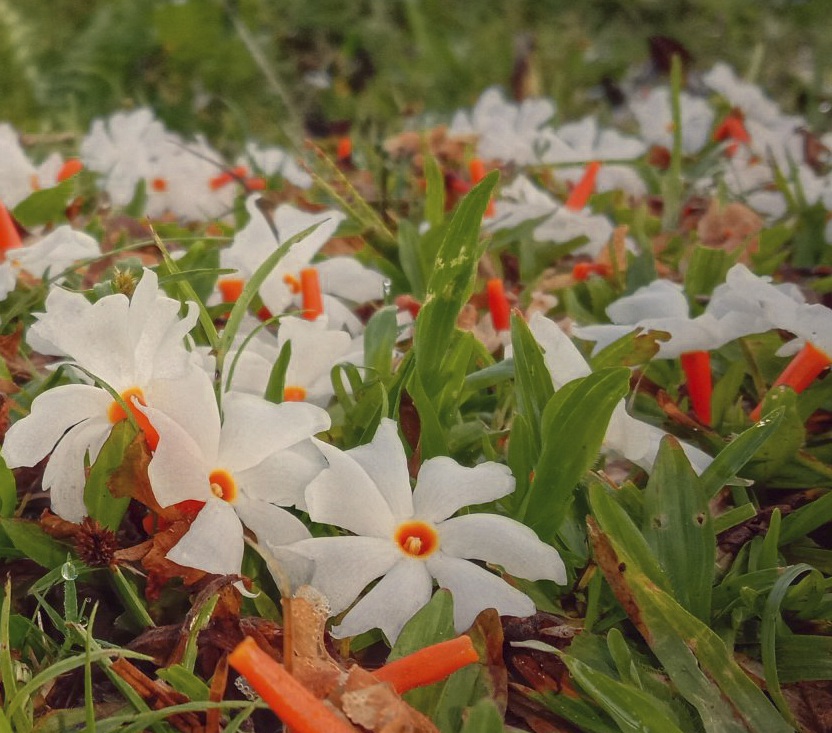
Would rather bloom like the soft, white,
Fragrant shefali flower.  But Cruel One,
Like an unfeeling woodcutter, you break
All branches and destroy all blossoms,
My heart glistens like an autumnal dawn, 
Wet with dew shed by sympathetic earth.
 
You are the sun -- your heat dries up
Every dewdrop of pity. I shrink
Inside the shade that earth affords.
Dreams of Beauty and the Good shatter. 
Pouring liquid poison down the throat
You ask, “What good is nectar now?
There is no parching sensation,
No intoxication, no madness.
Weakling that you are, not for you
To seek manna from heaven
In this sorrow-laden world!
You are a serpent, in birth singed
By pain! In a thorny garden you weave
Garlands. On your forehead
I leave this mark of woe!”


I sing songs, weave garlands, and feel my throat burn,
Snakebites have left their marks all over my body!

Like unforgiving Durbasha*, you wander
From door to door with a beggar’s bowl.
Even as newlywed couples embark
On their night of Happiness, you cry out:
“Dumb ones, Listen: this world
Is no bower of bliss but full of sorrow,
Of want and the pangs of parting,
Of thorns that underlie bridal beds
And are embedded even in the Beloved’s arms,
Take your fill of them now!”
Instantly, cries of anguish overwhelm,
In that bower of bliss light fades,
And dreadful night overwhelms!

Exhausted, worn out by hunger, you peer,
Surveying earth with knotted eyebrows
When, suddenly, something strikes you,
And your eyes dart out fiercely.
Whole kingdoms are devastated then
By Plagues, Famines, and Cyclones,
Pleasure Gardens burn, palaces topple—
The only verdict you know is death!

You never stoop to modest displays,
But revel in revealing yourself naked.
You know no hesitation or shame
But raise the heads of those bent low.
At your wish, people condemned to die
Tie nooses around their neck gladly.
Despite burning in the fire of penury daily
They embrace death with devilish glee.

From goddess Lakshmi’s head you snatch 
Her crown and throw it to the dust.
O Champion, what tune do you strum 
So deftly on your veena? All I hear is lamentation!

Yesterday morning I heard the shehnai wail
A melancholy note, as if a dear one
Hadn’t returned home yet. The shehnai
Seemed to cry out to him to come back.
Some bride’s heart wafted away with the tune
As if searching for her beloved.
Her friends wondered why she should cry,
And let her kohl dissolve with her tears....

Even this morning I woke up to hear
The shehnai call plaintively: “come, come”
Sad-faced, shefalika flowers drop off—
Like a widow whose smile keeps fading—
Their delicate fragrances overwhelm
Butterflies fluttering on restless wings,
Intoxicated with the scent of flowers
They kissed! Bees yellow their wings 
With pollen and wet their bodies with honey.

My soul overflows in all directions!
Unconsciously I sing out welcoming songs
Happily! My eyes fill with tears unaccountably
Someone seems to tie the knot,
Uniting me with earth. With hands full of flowers,
Earth appears to step forward with its bounty.
It is as if she is my youngest daughter!
I wake up suddenly in wonder! Alas, my child
Has been up all night and is crying in my home,
Famished and hands full of soot.  O Cruel One,
You’ve brought perpetual tears to my home!
I haven’t been able to give my dear child,
My loved one, a drop of milk! 

Familial duty is no delight! Poverty is intolerable,
As it cries endlessly as one’s son or wife
Clasping one’s door! Who will play the flute?
Where will one get radiant smiles of bliss?
Where will one taste a rich bouquet of wine? 
Rather swallow a glass of the poisonous dhutura
To make the tears flow....

Till this day I hear the shehnai’s overture wailing
Seemingly saying: nothing, nothing has survived!

*Durbasha: A legendary rishi who was revered but was rather hot tempered

Born in united Bengal, long before the Partition, Kazi Nazrul Islam (1899-1976) was known as the  Bidrohi Kobi, or “rebel poet”. Nazrul is now regarded as the national poet of Bangladesh though he continues a revered name in the Indian subcontinent. In addition to his prose and poetry, Nazrul wrote about 4000 songs.

.

Fakrul Alam is an academic, translator and writer from Bangladesh. He has translated works of Jibonananda Das and Rabindranath Tagore into English and is the recipient of Bangla Academy Literary Award (2012) for translation and SAARC Literary Award (2012).

.

PLEASE NOTE: ARTICLES CAN ONLY BE REPRODUCED IN OTHER SITES WITH DUE ACKNOWLEDGEMENT TO BORDERLESS JOURNAL

Categories
Contents

Borderless, September 2022

Art by Sohana Manzoor

Editorial

When Autumn Leaves Start to Fall Click here to read.

Conversations

Meet Barun Chanda, an actor who started his career as the lead protagonist of a Satyajit Ray film and now is a bi-lingual writer of fiction and more recently, a non-fiction published by Om Books International, Satyajit Ray: The Man Who Knew Too Much in conversation Click here to read.

Jim Goodman, an American traveler, author, ethnologist and photographer who has spent the last half-century in Asia, converses with Keith Lyons. Click here to read.

Translations

Professor Fakrul Alam has translated three Tagore songs around autumn from Bengali. Click here to read.

Nagmati by Prafulla Roy has been translated from Bengali as Snake Maiden by Aruna Chakravarti. Click here to read.

A Balochi Folksong that is rather flirtatious has been translated by Fazal Baloch. Click here to read.

A Letter Adrift in the Breeze by Haneef Sharif has been translated from Balochi by Mashreen Hameed. Click here to read.

Jajangmyeon Love, a poem has been written in Korean and translated by Ihlwha Choi. Click here to read.

Eshechhe Sarat (Autumn) by Tagore has been translated from Bengali by Mitali Chakravarty. Click here to read.

Poetry

Click on the names to read

Michael R Burch, Sunil Sharma, George Freek, Sutputra Radheye, Ryan Quinn Flanagan, Arshi Mortuza, Ron Pickett, Prasant Kumar B K, David Francis, Shivani Srivastav, Marianne Tefft, Saranyan BV, Jim Bellamy, Shareefa BeegamPP, Irma Kurti, Gayatri Majumdar, Rhys Hughes

Poets, Poetry & Rhys Hughes

In The Chopsy Moggy, Rhys Hughes gives us a feline adventure. Click here to read.

Musings/Slices from Life

A Tale of Two Flags in the South Pacific

Meredith Stephens visits an island that opted to adopt the ways of foreign settlers with her camera and narrates her experiences. Click here to read.

A Taste of Bibimbap & More…

G Venkatesh revisits his Korean experience in a pre-pandemic world. Click here to read.

September Nights

Mike Smith in a short poetic monologue evokes what the season means for him. Click here to read.

Musings of a Copywriter

In El Condor Pasa or I’d Rather be a Sparrow…, Devraj Singh Kalsi explores his interactions with birds with a splatter of humour. Click here to read.

Notes from Japan

In Rabbit Island, Suzanne Kamata visits the island of Okunoshima, where among innocence of rabbits lurk historic horrors. Click here to read.

Essays

A Turkish Adventure with Sait Faik

Paul Mirabile takes us on a journey to Burgaz with his late Turkish friend to explore the writings of Sait Faik Abasiyanik. Click here to read.

A Salute to Ashutosh Bodhe

Ravi Shankar pays a tribute to a fellow trekker and gives a recap of their trekking adventures together near Mt Everest base camp. Click here to read.

The Observant Immigrant

In Sometimes Less is More, Candice Louisa Daquin explores whether smaller communities can be assimilated into the mainstream. Click here to read.

Stories

Where Eagles Dare…

Munaj Gul Muhammad takes on the persona of a woman to voice about their rights in Balochistan. Click here to read.

My Eyes Don’t Speak

Chaturvedi Divi explores blindness and its outcome. Click here to read.

The Royal Retreat

Sangeetha G gives a brief view of intrigue at court. Click here to read.

Book Excerpts

Ruskin Bond, excerpted from Between Heaven and Earth: Writings on the Indian Hills, edited by Ruskin Bond and Bulbul Sharma. Click here to read.

Excerpts from Rhys Hughes’ Comfy Rascals: Short Fictions. Click here to read.

Book Reviews

Rakhi Dalal reviews Rhys Hughes’ Comfy Rascals: Short Fictions. Click here to read.

Hema Ravi reviews Mrutyunjay Sarangi’s A Train to Kolkata and Other Stories. Click here to read.

Bhaskar Parichha reviews Krishna Bose’s Netaji Subhash Chandra Bose’s Life, Struggle and Politics, translated and edited by Sumantra Bose. Click here to read.

Categories
Editorial

When Autumn Leaves Start to Fall…

                     “Where are the songs of Spring? Ay, where are they?
                      Think not of them, thou hast thy music too…”

                                 — John Keats (1795-1851), To Autumn
Art by Sybil Pretious

For long writers have associated autumn with “mellow wistfulness”. That loss of spring, or loss of youth is not bleak or regretful has been captured not just by Keats but also been borne out by historical facts. Anthropocene existence only get better as the human race evolves … If we view our world as moving towards an autumn, we perhaps, as Keats suggests, need to find the new “music” for it. A music that is ripe and matures with the passage of time to the point that it moves more towards perfection. Though sometimes lives fade away after autumn gives way to winter as did those of  Queen Elizabeth II (April 21st 1926 – September 8th 2022) after a reign of seventy historic years and Mikhail Gorbachev (2nd March 1931 – 30thAugust 2022) with his admirable efforts to bridge divides. Both of them have left footprints that could be eternalised if voices echo in harmony. Thoughts which create bonds never die – they live on in your hearts and mine.

Imagine… ten thousand years ago, were we better off? Recorded history shows that the first war had already been fought 13,000 years ago. And they have continued to rage – but, at least, unlike the indomitable Gauls in Asterix[1] comics – not all jumped into the fray. They did during the last World Wars — which also led to attempts towards institutionalising humanitarian concerns and non-alignment. Yes, we have not had a perfect world as yet but as we age, the earth matures and we will, hopefully, move towards better times as we evolve. Climate change had happened earlier too. At a point, Sahara was green. Continental shifts split Pangaea  into seven continents – that was even earlier. That might have driven the dinosaurs to extinction. But I am sure mankind will find a way out of the terror of climate change and wars over a period of time, as long as we believe in deciphering the sounds of autumn as did Keats in his poem.

Tagore had also sung of the joys of autumn which happens to be a time for festivities. Professor Fakrul Alam has translated three such songs, reflecting the  joie de vivre of the season, The translation of a small poem, Eshecche Sarat[2], brings the beauty of the season in Bengal to the fore. We have a celebration of youth and romance in a Balochi folksong, an anti-thesis to autumn and aging, translated for us by Fazal Baloch and also, poetic prose in quest of God and justice by Haneef Sharif, translated from Balochi by Mashreen Hameed. Lost romance recapitulated makes interesting poetry is borne out by Ihlwha Choi’s translation of his own poem from Korean. But the topping in our translation section is a story called ‘Nagmati[3]’ by eminent Bengali writer, Prafulla Roy, translated by no less than a Sahitya Akademi winning translator – Aruna Chakravarti. This story illustrates how terrifying youthful follies can lead to the end of many young lives, a powerful narrative about the snake worshipping community of Bedeynis that highlights destruction due to youthful lusts and an inability to accept diverse cultures.  

When this cultural acceptance becomes a part of our being, it creates bonds which transcend manmade borders as did the films of Satyajit Ray. His mingling was so effective that his work made it to the zenith of an international cinematic scenario so much so that Audrey Hepburn, while receiving the Oscar on his behalf, said: “Dear Satyajit Ray. I am proud and privileged to have been allowed to represent our industry in paying tribute to you as an artist and as a man. For everything you represent I send you my gratitude and love.”

This and more has been revealed to us in a book, Satyajit Ray: The Man Who Knew Too Much, authored by a protagonist from Ray’s film, Barun Chanda. This book brought out by Om Books International reflects not just Ray as a person but also how he knitted the world together with his films and took the Indian film industry to an international level. Barun Chanda has been interviewed with a focus on Satyajit Ray. Keith Lyons has also interviewed a man who has defied all norms and, in the autumn of his life, continues his journey while weaving together cultures across, China, India and Thailand by his ethnographic studies on tribes, Jim Goodman. Goodman says he left America when speaking for a war-free world became a cause for censorship. This makes one wonder if war is a game played for supporting a small minority of people who rule the roost?  Or are these ramblings of a Coleridge writing ‘Kubla Khan’ under the influence of narcotics?

Poetry also brings the season into our pages with an autumnal interpretation of life from Michael Burch. More poetry from Sunil Sharma, Ryan Quinn Flanagan, Gayatri Majumdar, George Freek, Ron Pickett, Sutputra Radheye, Marianne Tefft brings a wide range of concerns to our pages – from climate to the vagaries of human nature. Poetry by an Albanian writer, Irma Kurti, and photographs by her Italian spouse, Biagio Fortini, blend together the colours of humanity. Rhys Hughes as usual, makes it to the realm of absurd – perhaps voicing much in his poetry, especially about the environment and human nature, though he talks of woodpeckers on Noah’s ark (were there any?) and of cows, yetis, monkeys and cakes… He has also given us a hilarious cat narrative for his column. Can that be called magic realism too? Or are the edges too abstract?

A book excerpt from Hughes’ Comfy Rascals Short Fiction and a review of it by Rakhi Dalal makes us wonder with the reviewer if he is a fan of Kafka or Baudelaire and is his creation a tongue-in-cheek comment on conventions? A book review by Hema Ravi of Mrutyunjay Sarangi’s A Train to Kolkata and Other Stories and another by Bhaskar Parichha of Netaji Subhash Chandra Bose’s Life, Struggle and Politics, authored by Netaji’s nephew’s wife, Krishna Bose, translated and edited by her son, Sumantra Bose, unveils the narratives around his life and death.

A leader who quested for freedom and roamed the world after being passed over by the Congress in favour of Nehru, Netaji raised an army of women who were trained in Singapore – not a small feat in the first half of the twentieth century anywhere in the world. His death in an air crash remained an unsolved mystery — another one of those controversies which raged through the century like the Bhawal case. In his review, Parichha spells out: “Aiming to bring an end to the controversies and conspiracy theories surrounding the freedom fighter, the over 300-page book gives a detailed and evidence-based account of his death in one of its chapters.”

Our book excerpts in this edition both feature writers of humour with the other being the inimitable Ruskin Bond. We have an excerpt of Bond’s nostalgia from Between Heaven and Earth: Writings on the Indian Hillsedited by Ruskin Bond and Bulbul Sharma.

Our non-fiction also hosts humour from Devraj Singh Kalsi about his interactions with birds and, on the other hand, a very poignant poetic-prose by Mike Smith reflecting on the vagaries of autumn. From Japan, Suzanne Kamata takes us to the Rabbit Island – and murmurings of war and weapons. We have the strangest story about a set of people who are happy to be ruled by foreign settlers – we would term them colonials – from Meredith Stephens. G Venkatesh delights with a story of love and discovery in Korea, where he had gone in pre-pandemic times. Paul Mirabile travels to Turkey to rediscover a writer, Sait Faik Abasiyanik (1906-1954). And Ravi Shankar gives us an emotional story about his trek in the Himalayas in Nepal with a friend who has passed on. Candice Louisa Daquin has written of the possibilities towards integrating those who are seen as minorities and marginalised into the mainstream.

The edition this time is like Autumn – multi-coloured. Though I am not able to do justice to all our contributors by mentioning them here, my heartfelt thanks to each as every piece only enriches our journal. I urge you to take a look at the September edition.

I would like to give huge thanks to our readers and our team too, especially Sohana Manzoor and Sybil Pretious for their artwork. We could not have come this far without support from all of you.

Thank you.

Happy Reading!

Mitali Chakravarty

borderlessjournal.com


[1] The men in the indomitable Gaulish village (which the Romans failed to conquer) in times of Julius Caesar loved to jump into a fight for no reason…Asterix was the protagonist of the comics along with his fat friend Obelix

[2] Arrival of Autumn

[3] Snake Maiden

Categories
Tagore Translations

Autumnal Songs Translated by Fakrul Alam

These are songs of Tagore centred around autumn, a season that is split into two parts in Bengal. Early autumn is called Sarat and late autumn Hemonto. The first two songs are descriptive of Sarat and the last one of Hemonto.

Autumn: Art by Sohana Manzoor
SAY WHAT YOU WILL (Tomra Ja Bolo tai bolo, written in 1921)

Say what you all will, I don’t mind
My time flies, and hours pass, aimlessly
The wild wind stirs me to a song
And spreads its tune across this deep-blue sky.
That song has stuck in my mind.
What nectar do I seek in the humming of bees?
Whose sky-pervading gaze seeks me out
And settles on my sight thus this day?
Shiuli flower that bloom in autumns in Bengal. Courtesy: Creative Commons
THE HEART WAS AWAKE (Hridoye Chheele Jege, written in 1921)

You were wide awake in my heart 
But I see you in autumnal clouds this day!
How was it you stole so quietly away at dawn,
Letting only your dress’s borders caress the dew?
            What song is it that I should sing?
            I simply can’t find words for it now!
They lie scattered with shiuli flowers under forest canopies
They’ve flown away with the gusting winds in sudden showers.
                        ***
Shiuli-Jasmine
Flowering Kash grass. Courtesy: Creative Commons
AUTUMNAL NIGHTS (Himer Raate, 1927)

On such cool autumnal nights
Hemonto hides heaven’s lamps with its cloak.
To every house it gives this call,
“Light festive lamps, make bright the night,
Shine your own lights, illuminate the world.”
Gardens are flowerless now; cuckoos sing no more;
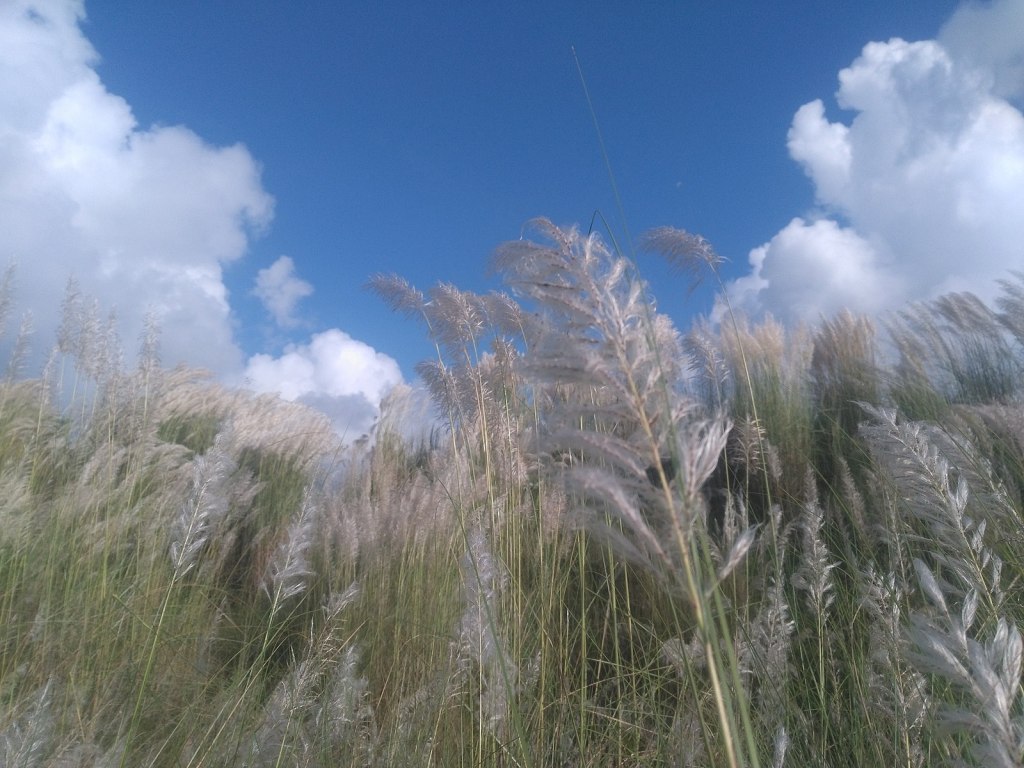
Kash reed flowers keep falling by riverbanks,
But let go of darkness, despair and misery; light festive lamps-- 
Shine your own lights and proclaim the triumph of light
The gods look on — sons and daughters of earth, arise,
Illuminating the night,
Darkness may descend and day end but light festive lamps,
Shine your own light and triumph over this dark night
                         ***
Hemonto-Late autumn
Kash-Long grass

Below is a Youtube upload of Autumnal night or Himer Raate sung by the legendary singer Debabrata Biswas (1911-1980)

Fakrul Alam is an academic, translator and writer from Bangladesh. He has translated works of Jibonananda Das and Rabindranath Tagore into English and is the recipient of Bangla Academy Literary Award (2012) for translation and SAARC Literary Award (2012).

.

PLEASE NOTE: ARTICLES CAN ONLY BE REPRODUCED IN OTHER SITES WITH DUE ACKNOWLEDGEMENT TO BORDERLESS JOURNAL

Categories
Contents

Borderless, August 2022

Art by Sohana Manzoor

Editorial

The Stars were Shining There for You & Me, for Liberty… Click here to read.

Conversation

The Making of Historical Fiction: A Conversation with Aruna Chakravarti unfolds the creation of her latest novel, The Mendicant Prince, based on the prince of Bhawal controversy in the first part of the last century. Click here to read.

Translations

Tagore’s humorous skit, The Treatment of an Ailment, has been translated by Somdatta Mandal. Click here to read.

Arise, Arise O Patriot! and Helmsman Attention! by Kazi Nazrul Islam have been translated from Bengali by Professor Fakrul Alam. Click here to read.

Pus Ki Raat or A Frigid Winter Night by Munshi Premchand has been translated from Hindi by C Christine Fair. Click here to read.

Tagore’s Song of Hope or ‘Hobe Joye‘ has been translated from Bengali by Mitali Chakravarty. Click here to read.

Poetry

Click on the names to read

Rhys Hughes, Ratnottama Sengupta, Mike Smith, Rituparna Mukherjee, Tony Brewer, Ahmed Rayees, Ron Pickett, Ramesh Dohan, Sister Lou Ella Hickman, Sambhu Nath Banerjee, Candice Louisa Daquin, Oindri Sengupta, Gigi Baldovino Gosnell, Ryan Quinn Flanagan, Tanvi Jeph, George Freek, Michael R Burch

Poets, Poetry & Rhys Hughes

In Mini-Sagas: A Dozen Examples, Rhys Hughes talks of a new genre with dollops of humour. Click here to read.

Musings/Slices from Life

Istanbul

G Venkatesh has a stopover in the airport to make a discovery. Click here to read.

The Loyal Dog in Loyalty Island

Meredith Stephens makes friends with a dog in the township of Wé on the Lifou island, an ‘overseas territory’ of France. Click here to read.

The ‘New Kid on the Block’ Celebrates…

Dr Kirpal Singh ruminates over what led to the making of an island state, Singapore. Click here to read.

Remnants of Time Once Spent Together

Sayali Korgaonkar ruminates over loss and grieving. Click here to read.

Moonland

Rupali Gupta Mukherjee journeys through the moonlike landscape housing a monastery with her camera and a narrative. Click here to read.

King Lear & Kathakali?

PG Thomas revisits a performance that mesmerised him in a pre-covid world. Click here to read.

Musings of a Copywriter

In A Bone in My Platter, Devraj Singh Kalsi shares a taste of running a restaurant. Click here to read.

Notes from Japan

Suzanne Kamata writes a light slice from life in The Boy & The Cats: A Love Story. Click here to read.

Stories

Does this Make Me a Psychic?

Erwin Coombs tells a suspenseful, funny, poignant and sad story, based on his real life experiences. Click here to read.

Hard Choices

Santosh Kalwar gives a glimpse of hope for an abandoned girl-child in Nepal. Click here to read.

No Rain on the Parade

Tan Kaiyi goes on a hunt for the National Day Killer. Click here to read.

Until We Meet Again

Shivani Shrivastav transports us to Manali for a misty union. Click here to read.

The Hatchet Man

Paul Mirabile tells a story of murder and horror. Click here to read.

I am Not the End

Aysha Baqir takes on the persona of a computer to unleash a poignant and chilling story. Click here to read.

Essays

How Many Ways To Love a Book

Sindhu Shivprasad describes passion for books. Click here to read.

Hiking in the Himalayas with Nabinji

Ravi Shankar explores more of Himalayas in Nepal. Click here to read.

Freedom is another word for… Zohra Sehgal

Ratnottama Sengupta gives a glimpse of the life of Zohra Sehgal, based on the book Zohra: A Biography in Four Acts by Ritu Menon, and her own personal interactions with the aging Zohra Sehgal. Click here to read.

The Observant Immigrant

In Can We Create a Better World by Just Wishing for it, Candice Louisa Daquin dwells on the question to locate answers. Click here to read.

Book Excerpts

An excerpt from The Dreams of a Mappila Girl: A Memoir by B. M. Zuhara translated by Fehmida Zakeer. Click here to read.

An excerpt from Michael R Burch’s poetry book, O, Terrible Angel. Click here to read.

Book Reviews

Meenakshi Malhotra reviews Tagore’s Four Chapters translated and introduced by Radha Chakravarty. Click here to read.

Gracy Samjatsabam visits Mamang Dai’s Escaping the Land. Click here to read.

Aditi Yadav reviews Pallavi Aiyar’s Orienting : An Indian in Japan. Click here to read.

Rakhi Dalal visits Neelum Saran Gour’s Requiem in Raga Janki. Click here to read.

Bhaskar Parichha reviews Rakesh Batabyal’s Building a Free India. Click here to read.