Our home is our planet with it’s unique combinations which have made life possible. These evolve and mutate with human intervention and the passage of time. The changes affect the flora and the fauna — of which we are a part — of this beautiful green planet. The World Environment Day is a UN initiative to protect the environment and to create an awareness about the changes wrought on it and how it could impact us as a species. Writers from yore have written of the beauty and the inspiration invoked by nature as have the moderns. Today, we share with you vintage writings as well as modern writing in prose on the world around us, showcasing the concerns of a century ago and the reality today.
Vintage Prose
One Small Ancient Tale: Rabindranath Tagore’s Ekti Khudro Puraton Golpo (One Small Ancient Tale) has been translated by Nishat Atiya. Click hereto read.
Bolai: Story of nature and a child translated by Chaitali Sengupta. Click hereto read.
Baraf Pora (Snowfall) : This narrative gives a glimpse of Tagore’s first experience of snowfall in Brighton and published in the Tagore family journal, Balak (Children), has been translated by Somdatta Mandal . Clickhere to read.
The Day of Annihilation, an essay on climate change by Kazi Nazrul Islam, has been translated from Bengali by Radha Chakravarty. Clickhereto read.
Modern Prose
The Gift : Rebecca Klassen shares a sensitive fiction about a child and an oak tree. Click here to read.
A Penguin’s Story: Sreelekha Chatterjee writes a fiction from a penguin’s perspective. Clickhere to read.
Navigational Error: Luke P.G. Draper explores the impact of pollution with a short compelling narrative. Click here to read.
Pigeons & People : In his fiction, Srinivasan R explores human nature and imagines impact on our fauna. Click here to read
The Theft of a River: Koushiki Dasgupta Chaudhuri reveals a poignant truth about how a river is moving towards disappearance due to human intervention. Clickhereto read.
Potable Water Crisis & the Sunderbans: Camellia Biswas, a visitor to Sunderbans during the cyclone Alia, turns environmentalist and writes about the potable water issue faced by locals. Click here to read.
Translations are like bridges. Three years ago, we decided to start a bridge between Tagore’s ideas and the world that was unfamiliar with his language, Bengali. He has of course written a few pieces in Brajbuli too. We started our journey into the territory of Tagore translations with Aruna Chakravarti’s Songs of Tagore. Now we have expanded hugely this section of our translations with many prose pieces and more translations of his lyrics and poetry by writers like Aruna Chakravarti, Fakrul Alam, Radha Chakravarty, Somdatta Mandal, Himadri Lahiri, Ratnottama Sengupta, Chaitali Sengupta and Nishat Atiya other than our team’s efforts. To all these translators our heartfelt thanks. We share with you their work celebrating one of the greatest ideators of the world.
Prose
Stories
.Aparichitaby Tagore :This short story has been translated as The Stranger by Aruna Chakravarti. Click hereto read.
Musalmanir Galpa(A Muslim Woman’s Story): This short story has been translated by Aruna Chakravarti. Clickhere to read.
One Small Ancient Tale: Rabindranath Tagore’s Ekti Khudro Puraton Golpo (One Small Ancient Tale) from his collection Golpo Guchcho ( literally, a bunch of stories) has been translated by Nishat Atiya. Click hereto read.
Bolai: Story of nature and a child translated by Chaitali Sengupta. Click hereto read.
Baraf Pora (Snowfall) : This narrative gives a glimpse of Tagore’s first experience of snowfall in Brighton and published in the Tagore family journal, Balak (Children), has been translated by Somdatta Mandal . Clickhere to read.
Himalaya Jatra( A trip to Himalayas) :This narrative about Tagore’s first trip to Himalayas and beyond with his father, has been translated from his Jibon Smriti (1911, Reminiscenses) by Somdatta Mandal. Click here to read.
Library: A part of Bichitro Probondho(Strange Essays) by Rabindranath Tagore, this essay was written in 1885, translated by Chaitali Sengupta. Click hereto read.
Book Excerpts
The Parrot’s Tale: Excerpted from Rabindranth Tagore. The Land of Cards: Stories, Poems and Plays for Children, translated by Radha Chakravarty, with a foreword from Mahasweta Devi. Clickhere to read
Rabindranath Tagore Four Chapters: An excerpt from a brilliant new translation by Radha Chakravarty of Tagore’s controversial last novel Char Adhyay. Click here to read.
Farewell Song :An excerpt from Radha Chakravarty’s translation of Tagore’s novel. Click hereto read.
Oikotan(Harmonising) has been translated by Professor Fakrul Alam and published specially to commemorate Tagore’s Birth Anniversary. Click hereto read.
Monomor Megher O Shongi (or The Cloud, My friend) has been translated by Professor Fakrul Alam. Click here to read.
Professor Fakrul Alam has translated Tomra Ja Bolo Tai Bolo, Hridoy Chheele Jege and Himer Raate — three songs around autumn from Clickhere to read.
Tagore’sAchhe Dukhu, Achhe Mrityu, (Sorrow Exists, Death Exists) has been translated from Bengali by Fakrul Alam. Click hereto read.
Tagore’s long poem, Dushomoy (translated as Journey of Hope though literally the poem means bad times). Click here to read the poem in English and listen to Tagore’s voice recite his poem in Bengali. We also have a sample of the page of his diary where he first wrote the poem as ‘Swarga Pathhe'(On the Path to Heaven).
Deliverance by Tagore: ‘Tran’by Tagore, a prayer for awakening of the subjugated. Click here to read the translation.
Abhisar byTagore: A story poem about a Buddhist monk by Rabindranath Tagore in Bengali. Click here to read the translation.
Amaar Nayano Bhulano Eledescribes early autumn when the festival of Durga Puja is celebrated. Click here to read the translation from Bengali.
Morichika or Mirage by Tagoreis an early poem of the maestro that asks the elites to infringe class divides and mingle. Click here to read the translation from Bengali.
Pochishe Boisakh(25th of Baisakh) is a birthday poem Tagore wrote in 1922 and from he derived the lyrics of his last birthday song written in 1941. Click here to read.
Chhora or Rhymes, a poem describing the creative process, it was written in 1941. Click here to read.
Okale or Out of Syncgives a glimpse of how out of sync situations are also part of our flow. Click here to read.
Mrityu or Death dwells on Tagore’s ability to accept death as a reality. Clickhere to read.
Songs of Tagore: Seven songs translated by Aruna Chakravarti from a collection that started her on her litrary journey and also our Tagore translation section. Click here to read.
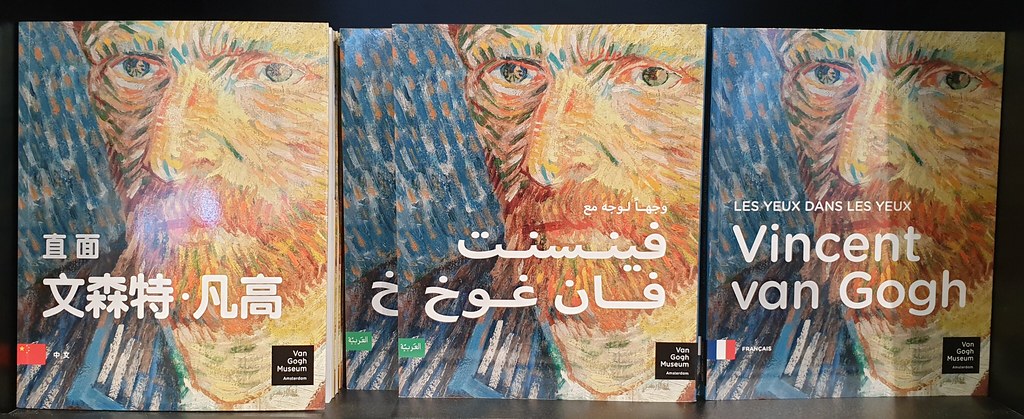
Vincent Van Gogh written is different scripts. Courtesy:Creative Commons
The whole world opens up in the realm of ideas that have existed wafting and bridging across time and space. Sometimes they find conduits to come to the fore, even though they find expression in different languages, under varied cultural milieus. One way of connecting these ideas is to translate them into a single language. And that is what many have started to do. Celebrating writers and translators who have connected us with these ideas across boundaries of time and place, we bring to you translated writings in English from twenty eight languages on the International Translation Day, from some of the most iconic thinkers as well as from contemporary voices.
Prose
Tagore’s short story, Aparichita, has been translated from Bengali as The Stranger by Aruna Chakravarti. Click hereto read.
Nadir Ali’s The Kabbadi Player has been translated from Punjabi by Amna Ali. Click here to read.
Kamaleswar Barua’s Uehara by has been translated from Assamese and introduced by Bikash K. Bhattacharya. Click here to read.
S Ramakrishnan’s Muhammad Ali’s Singnature has been S. Ramakrishnan, translated from Tamil by Dr B. Chandramouli. Click here to read.
PF Mathews’Mercy, has been translated from Malayalam by Ram Anantharaman. Click here to read.
Road to Nowhere, an unusual story about a man who heads for suicide, translated from Odiya by the author, Satya Misra. Click here to read.
An excerpt from A Handful of Sesame by Shrinivas Vaidya, translated from Kannada by Maithreyi Karnoor. Click hereto read.
Writings from Pandies’ Cornerhighlight the ongoing struggle against debilitating rigid boundaries drawn by societal norms. Each piece is written in Hindustani and then translated by a volunteer from Pandies’ in English. Clickhere to read.
Rakhamaninov’s Sonata, a short story by Sherzod Artikov, translated from Uzbeki by Nigora Mukhammad. Click hereto read.
Of Days and Seasons, a parable by the eminent Dutch writer, Louis Couperus (1863-1923), translated by Chaitali Sengupta. Click here to read.
The Faithful Wife, a folktale translated from Balochi by Fazal Baloch. Click hereto read.
An excerpt from Ramy Al-Asheq’sEver Since I Did Not Die, translated from Arabic by Isis Nusair, edited by Levi Thompson. The author was born in a refugee camp. Click here to read.
Poetry
Two songs byTagore written originally in Brajabuli, a literary language developed essentially for poetry in the sixteenth century, has been translated by Radha Chakravarty. Click here to read.
Rebel or ‘Bidrohi’, Nazrul’s signature poem, ‘Bidrohi‘, translated from Bengali by Professor Fakrul Alam. Click here to read.
Banlata Sen, Jibananada Das’s iconic poem, translated from Bengali by Professor Fakrul Alam. Click here to read.
As autumn gives way to winter, here are explorations that give us a glimpse of the season, its colours, its feel across different parts of the world and their varied interpretations. We have the vibrancy captured in colours by Sohana Manzoor and Sybil Pretious. There are reactions to events that happened at this time in different parts of the globe from Ratnottama Sengupta and Sutputra Radheye — have we healed after these events? Have things got better?
As Europe starts a new wave of pandemic lockdowns, Mike Smith takes us for a trip to Trieste, rich with the heritage of James Joyce, Umberto Saba and Baron Von Trapp of Sound of Music. Prose from Tagore(1861-1941) translated by Somdatta Mandal showcases some of his reactions while traveling in Japan, America and Europe in the autumn of his life. We can vicariously travel to different parts of the planet! While verses by Michael Burch and George Freek explore the season and the autumn of life, poetry by Rhys Hughes and Sekhar Banerjee add zest to the fall with humour. Revathi Ganeshsundram brings us a poignant narrative of new friendships. A short story from maestro storyteller from Holland, Louis Couperus(1863-1923), translated by Chaitali Sengupta, paints a darker hue of autumn while Tagore’s poetry gives us a festive feel generated by the season in Bengal. Enjoy our melange of autumnal lores!
Translations bridge borders — borders drawn by languages. We have showcased translations in multiple languages. Paying a tribute to all the greats, we invite you to savour a small selection of our translations.
Click here to check out our collection of Tagore’s writings translated to English. With translations by Aruna Chakravarty, Fakrul Alam, Radha Chakravarty, Somdatta Mandal and many more.
The witch is Aruna Chakravarti’s translation of a short story by renowned writer, Tarasankar Bandopadhyay . The original story titled, Daini, was first published in 1940 in Probashi magazine in Bengali. Click here to read.
Professor Anvita Abbi, a Padma Shri, discusses her experience among the indigenous Andamanese and her new book on them, Voices from the Lost Horizon. Click here to read.
Keith Lyons talks to Jessica Muddittabout her memoir, Our Home in Myanmar, and the current events. Click here to read.
Geetha Ravichnadran explores additions to our vocabulary in a tongue-in-cheek article. Clickhere to read.
Musings of a Copywriter
In When I Almost Became a Professor, Devraj Singh Kalsi gives humour tinged reasons on why he detached himself from being an academician. Click here to read.
A parable by Louis Couperus (1863-1923), translated from Dutch by Chaitali Sengupta
Statue of Louis Couperus
Museum in The Hague
Portrait of Louis Couperus
Louis Couperus is one of the foremost figures in Dutch literature. Courtesy: Creative Commons
The forest was somber, and the air dark; it was a long night without the solace of the stars, it seemed to sink into infinity, sink deep into all that was mortal in this world. It was at a time like this when the young boy woke.
He was a boy of some years, and he did not remember anymore, whether he was lost or abandoned in that forest, because he had slept for such a stretching length of time. Shuddering, his eyes large and full of fear, he looked around himself. But the way forward was lost behind him.
“Where am I,” the little boy thought, in that soul-shattering darkness. “And who am I and where am I to go…”
A vague remembrance stole upon him, a memory of shimmering light and warmth. Like a weeping, wafting out of the warm sun palace. But more than the weeping, he remembered nothing much. Now, fully awake, he became aware of being alone, abandoned, lost in a forest of horror.
The very thought made the little boy cry out in childish despair. The fear of beasts and that of robbers assailed him. Then, he saw a silvery twilight moving across towards him, in silence. Was it the wild man, he wondered? In his deep consciousness, the thought rose death-like. His little heart throbbed wildly in his throat and his small eyes bulged out in terror.
Soon, he realized the beaming twilight, that glided on his way, was not the wild man; it was a white woman.
The little boy, in the twinkling of an eye, thought he recognized her: a woman, very white, the kind of white woman he liked. With mingled fear and expectation, the little boy ran up to her.
“White lady!” he begged, folding his hands in a gesture of prayer that perhaps he had been taught in the sun palace, many, many years ago.
Tall and slender, the white woman’s veils were the whitest white, flashing against the gloomy, dark depths of the forest. She bent over the child, and her gaze caught him through her veils; her white hands were briefly extended, as if she wanted to see better; better, with her deep dark eyes, as deep as the black, shadowy forest.
“White lady!”, the child pleaded again.
“Who are you, my child?” asked the white woman. Her voice sounded primeval, thick and dark. “And where have you come from and where are you going?”
The small boy began to cry again; the woman’s voice frightened him, and he did not know who he was, where he had come from, or even where he was going…
“Come with me then”, said the white woman gravely, and she stretched out her hand to him. The little boy held out his hand to her too, and went beside her, with weeping eyes.
“Don’t cry anymore,” said the white lady. “Hold my hand safely, let me lead you: do not be afraid. In this forest, there are no beasts or robbers.”
The child felt a gentle trust wash over him, especially now that the cold hands of the white lady were warmed by his own small, warm one, but he still stumbled very often, and his short legs grew tired soon.
“Then, let me carry you, my dear.” Saying so, she lifted the child to her breast and held him very lightly between her white veils: her footfalls were light, floating, like unheard-of steps. In her arms, the child fell asleep and dreamed of the sunshine and white women, and also of white children. She walked on.
When he awoke, the child smiled and peered into the dark depths of her eyes.
“You are a good white lady, aren’t you?” asked the child, as confidence sparkled in him. He wrapped his little arms around her neck.
“Yes,” said the white woman. “I am a good white lady, my child.”
“Are you not tired of carrying me, good white lady?”
“No, my child, I am not tired. I never rest, I always go.”
“Always?”
“Always.”
“Through the whole forest?”
“Through the whole forest. See, the morning breaks magnificently, through the branches, and the way ahead seems clearly visible.”
“Now I can walk again, white lady.”
The white lady put him down, carefully on his feet, and wrapped herself closer in her veils. The child walked on beside her, happy now that all the mystery of the night had been resolved in the smile of the morning.
“Oh!” cried the child; “See what a beautiful flower that is!”
“And there, what a beautiful butterfly!”
“Oh!” said the child joyfully. “I would like to have them, the butterfly and the flower.”
“I shall give you the butterfly and the flower,” said the white lady; “but then, you must also give me something in return.”
“And what can I give you, white lady?”
“In lieu of the butterfly and the flower, my child, you must give me this morning hour.”
“Oh, beautiful is the flower, and beautiful is the butterfly: oh, white lady, I gladly give you this morning hour, in return!”
The white lady smiled. With a mysterious, dark look she looked at the child.
Then she caught the butterfly in her veil and bent over the precipice to pluck the blue flower. She offered both to the child, who rejoiced with happiness.
“O white lady, O white lady,” the happy child spoke out in joy. “How happy I am with my flower and my butterfly!”
But in his joy, the boy squeezed the butterfly to death and the flower withered in his little hand. “Oh, but how soon, O white lady, is my flower wilted and my butterfly died!”
“But dear child, butterflies do not live long, especially not in the hands of children, and flowers wither even faster. But if you give me this new day of spring, I will bring up thousands of butterflies and thousands of flowers, by magic, all along your path today.”
“A thousand of butterflies and flowers! Oh, white lady, for so many flowers and butterflies, I will gladly give you my day in spring.”
Now the glowing sun had completely burst forth, and the forest no longer wore a black garment; it sparkled with golden-green spring. And along the shining road, the child walked in springtime, and picked the blooming flowers and caught the colorful butterflies, for they bloomed and fluttered all along the road.
But by evening, the flowers had wilted, and all the butterflies were dead.
“Still, it was a lovely spring day,” said the cheerful child, now with sleepy eyes. Exhausted, he wrapped his arms around the white lady and slept on her heart, between her ephemeral white veils.
Night fell, the white lady walked on, and in the depths of her shadowy eyes, a peal of wistful laughter broke quietly. “But that glorious spring day is now mine!” murmured she, in a nameless, deep, dark voice.
The white lady took the little boy to the city, among other people and children. The child grew up there. He became big and strong among those he assumed were his parents, his brothers, and sisters, relatives, and friends.
Many seasons later, the white lady appeared to him again. The white lady of his yesteryears, the one whom he had forgotten completely. Now, her deep dark eyes frightened him, even though he was now a young man of eighteen.
“My son,” the white lady called him. “I have not forgotten you.”
“I was ungrateful, white lady,” confessed the young man. “You saved me, a lost and forsaken child, from the gloomy forest of night And, you gave me butterflies and flowers.”
“Yes, thousands of butterflies… in exchange for one spring day!”
“Yes… thousands… for one day in spring. You brought me to the city, and I found my parents.”
“And they fed you and cared for you until you became a man, my son, a young man of eighteen. But don’t you remember, the promise? What returns would you give me now?”
“Oh, yes, white lady, I remember very well. A spring day in exchange for the butterflies and flowers. I also remember the eighteen spring seasons of my life, which you demanded to bring me into the city where I could be with my parents, and they would raise me with my brothers and sisters, and with my relatives and friends.”
“If you still remember that promise, my son, the white lady is now content… And she’s happy. In exchange of just eighteen, withering spring seasons, you have received youth and a youthful time of pure happiness.”
“But now, white lady, my happiness is over, and I am bitter with grief,” cried the young man. “For I love a girl as beautiful and as soulful as no other girl in the world, and I should like to call her my wife. But alas! She does not love me. I have but little possessions and one among them is my anguish, that I cry out on my violin.”
“My son, you know how much I love you. If you can give me, no more than twenty blooming summers of your life, I will gladly give you happiness, a consort, and money. Twenty blooming summers, in exchange for the bride, and the gold that will make you great among men. Do not lament in music anymore; music must fill the void and is more transient and rarer than what I’ve asked of you…. Your spring days and summer months…”
“But music has comforted me, white lady.”
“Yes, live happily then, my son,” said she. “Be happy with what I give you, with your bride and the money…”
“Oh, white lady, oh white lady, for so much I’d willingly give all my blooming summers to you!”
The white lady looked with deep dark eyes at the young man, and she did not come back in years.
The young man married the lady of his dreams, the one whom he desired much, and as the years slowly turned, he attained prestige, wealth and power, until the war erupted. Then, the country was in turmoil, and the smoke of crumbling, burning cities darkened the sky and the horizon.
The white woman appeared to her foster son for the third time. She looked terrible to him. Her face was lean and sunken, her arms bony and her outstretched hand, threatening.
“O white lady, O white lady,” exclaimed the man, full of passion. Worries had already wrinkled his face; pride was scorching his soul. “Years ago, you offered me happiness in exchange for twenty summers of my life. But I never found happiness… Like the flower and the butterfly, my love died and wilted, and my wealth never brought any joy. Now I only wish to be very powerful, for if I attain supremacy, that must surely bring happiness. I wish for a crown that would sit on my temple.”
“Foster son,” said the white lady, “my dear child, I never forgot you: if you will give me in exchange for the crown of this land, fifty purple autumn seasons of your life, I will cause a happy outcome in the war; it would make you the king of this land.”
The ambitious man hastily accepted the exchange, and a terrible battle raged for seven days. The battlefields were strewn with corpses: death seemed to reign supreme. The foster son of the white lady took a sword in his hand, fought fiercely in the front lines, and a mysterious power seemed to protect him and make him invincible in the heat of the war. He, at the head of the troops of the country, gained the victory, and they pressed the crown on his head.
He grew old under the weight of that crown, until war raged again, and rebellion broke out. Deserted by all his people, he fled the land half-naked, feeling miserable. He reached the same gloomy forest, collapsed there, where he had been once found as an abandoned boy by the white lady.
Old and dejected, he lay down in the twilight of the sinking evening, when she appeared before him, looking like a terror: gray hair fanned out around her face, which grinned like a skull; and now, she had hollow eyes.
“O white lady, O white lady,” cried the unhappy king. “You thought to gift happiness to me with this crown. You turned the war in my favor, in exchange for fifty purple autumn seasons of my life. But this crown has only brought me trouble, nothing else. I’ve never known happiness, except perhaps for that very first day of spring, when you conjured up butterflies and flowers for me! And yet I considered you to be my life! Why have you been so cruel? O white woman, O white lady! Now that I lie here, feeling miserable, abandoned, I beg of you. You who are so powerful, please bring a glimpse of happiness and life, to my poor suffering subjects, to my children… in whichever form it may be, flower, butterfly, bride, gold, or crown…”
“O my son, O my son!” raved the white lady. “You’ve always been ungrateful. You’ve cared neither for the flower, nor for the butterfly, nor bride or wealth, not even for the crown. But if you give me this last icy winter hour, well then, I’ll grant your children and your subjects life, and a glimpse of happiness.”
Helping him stand up, she led him on. Sobbing now, he entrusted his last winter hour to her. And she led him to a monument, whose bronze door she opened out for him.
“Get in there,” she said threateningly now. “So that I may receive everything: all the days of spring, summer and autumn, and also the last hour of winter: all that you have promised me, in exchange for my countless favors.”
The old king stumbled and staggered.
“But… but… this is a tomb!” he said, looking at the monument.
“This is a king’s tomb,” she corrected him. “Tomorrow your praise singers, O son, will engrave upon it, the words of glory, glorifying you for eternity. Get in there now, so that I may receive what you owe me.”
And she held open the bronze doors for him.
“Were you not my life then?” asked the King, on the threshold of the sepulcher. “Oh, tell me… Aren’t you, my life?
“No,” said the white lady gloomily. “I was never your life. I am not Life. I am Death.”
And she pointed him to go inside.
He obeyed; slowly, she turned the bronze door, which creaked in heavy hinges.
“And my life?” asked the old king in a begging voice, anxious, as he peered through the still open crack of the slowly closing tomb door.
The white lady said more softly, “You’ll get your life, but only when you have paid me your debt of the days and the seasons…
Then she closed the door, for thousands of years.
Louis Couperus (1863-1923) is one of the foremost figures in Dutch literature. His oeuvre contains a wide variety of genres, including lyrics, poetry, short stories, fairy tales and historical novels. Over Lichtende Drempels (About luminous thresholds) is a collection of four fairy tales and an accompanying story by Couperus. Published in November 1902 by LJ Peat, in Amsterdam, “Of Days and Seasons” (Van dagen en seizoenen) is a parable from this collection.
Chaitali Sengupta is a writer, translator, a language teacher, and a volunteer journalist from the Netherlands. Her first prose-poem collection Cross-stitched Words was published in February, 2021. Her published works also include two translations “Quiet whispers of our heart” and “A thousand words of heart”.
.
PLEASE NOTE: ARTICLES CAN ONLY BE REPRODUCED IN OTHER SITES WITH DUE ACKNOWLEDGEMENT TO BORDERLESS JOURNAL
Environment and man — are they separate or is man a part of nature? Different writers have interpreted nature and its forces in different ways over a period of time, in glory, in storm and at battle. Explore some of our selections on nature on World Environment Day… Enjoy our oeuvre.
Rabindranath Tagore’sEkti Khudro Puraton Golpo (One Small Ancient Tale) from his collection Golpo Guchcho ( literally, a bunch of stories) has been translated by Nishat Atiya. Click hereto read.
Bhaskar Parichha gives us a glimpse of the life of Wangari Muta Maathai founder of the Green Belt Movement, which has — through networks of rural women — has planted over 30 million trees. Click here to read.
As cyclone Amphan fireballed and ripped through Kolkata, Nishi Pulugurtha gives a first hand account of how she survived the fear and the terror of the situation. Click here to read.
Kumar Bhimsingha by Swarnakumari Devi, the sister of Rabindranath Tagore, was published in Bharati & Balok, a magazine run by the Tagore family, in Boisakh 1293 of the Bengali calendar, April 1887 according to the Gregorian one. It has been translated by Chaitali Sengupta.
The king of Mewar, Rana Raj Singha, was resting alone in his sleeping chamber. Dusk had set in. As per the orders of the king, the servants had kept only one fire-lit lamp. The rest had all been extinguished. The soft light had created an ambience that gave a pleasant hue to the king’s thoughts. The day of the coronation was almost upon them, the day when prince Jayasingha would be anointed his heir, the next king of Mewar.
Rana Raj Singha’s mind was full only with the thoughts of how elated his royal queen would be on that special day and the happiness of the crown prince. He was not bothered about his subjects’ reactions at all. The gates of his royal chamber opened slowly, and his second queen Kamal Kumari entered inside. Startled, the king sat up on his bed, surprised to find her there. He indicated she sit on a seat near him. Once she was seated, the king asked, “You, at this late hour?”
The queen replied, “There’s no option left for me. You never show up, when I ask for you.”
A bit embarrassed, the king remembered that throughout the day, a couple of messages did come from the queen, requesting him to visit her in the inner chambers of the palace. Slowly, he said, “My dear queen, I forgot.”
Her mind hissed, yes indeed, such is my fate, that you’ve regularly forgotten me, there’s nothing new in it. Keeping her face expressionless, she only asked, “I just came to confirm; are the rumours that are brewing true, my King?”
Something forced the king not to come out with a direct reply. He simply asked, “Which rumours do you mean?”
The Queen responded: “Rumours, that says that your throne is going to be taken over by Jayasingha, during your kingship. Looks like our land is following the Muslim rulers in this regard.”
This sneering remark, aimed at Jayasingha was not lost upon the king. He said, “Rumours are gossip. Not the truth. My throne is not being usurped by Jayasingha; on the contrary, I’m bestowing it upon him.”
The queen laughed harshly. “Ah, so you’re passing the throne to him. Why such a haste to abdicate and retire, may I ask?”
Holding his surging anger in check, the king replied, “My dear queen, there’s no reason to laugh like that. A king must think a hundred times and act with deep consideration. Just think, the well-being and suffering of his subjects are so much dependent on his decisions. If I, the reigning monarch, do not take a decision now, then there is a chance is that in my absence, the question of succession would lead to a fight among the brothers, and ruin the kingdom.”
The Queen said: “But my observation is, that in trying to find a solution, you’re in fact, instigating one brother to fight the other. In the name of protecting your kingdom, you’re leading it towards destruction. If you wish to decide on your successor, in your presence, then, pray, why do you not declare your eldest son as the next king? Why are you usurping his rightful eligibility to the throne unlawfully and relinquishing it to the younger one?”
The words rang true, but they did not please the king. Sometimes, it was difficult to bear the truth. With supreme irritation, the king said, “Bhimsingha and Jayasingha were both born almost at the same time. The difference is their time of birth is so minute, that on the basis of that, Bhimsingha cannot claim to be the successor to the throne, just by virtue of being elder by a few seconds. They’re born on the same day, at the same time. Under the circumstance, the one who is more capable has a right to inherit the throne. I believe Jayasingha to be more capable of the two.”
Laughing, the queen said, “It seems like you want to turn the wheel of time; or, else, why would you accept the younger one, to be equal to the eldest one? I’m happy that just your mere words did not change the dictates of time. Even if a person is marginally older by birth, he deserves to be considered as the eldest. Lav and Kush were twins; but then why, did Lav succeed his father to the throne? Besides, let me ask you, on what grounds do you think Jayasingha is more deserving than Bhimsingha? Is Bhimsingha any less than Jayasingha in terms of bravery, honesty, intelligence, prowess? Who is admired by the army? Whose honesty enchants the nobles in your court? Whom do the subjects want as their future king? You’ll get your answer, if only you ask others. However, if you believe Jayasingha to be more deserving since he’s born of your favourite consort, and is, hence, your dear prince, of course, that is a different story.”
Her words, like sharp quills, invaded his heart. Angered, he said, “So be it.”
The queen, too, could hardly restrain her anger. “Then say that clearly. Why be pretentious and hide behind false words? Being a king, are you afraid to voice the truth?”
The king answered, “Nobody ever wanted to know the truth from me. None can claim that I’ve been untruthful.”
The queen replied, “Do you remember the day they’re born?”
She paused, her words were caught in the web of time, as she travelled back almost twenty years, remembering that day. The difference between the simple, trusting, young bride of yesteryears and today’s middle-aged woman, neglected, exploited, devoid of husband’s attention, was too great. The young Kamal Kumari of those days, who after giving birth to her first born, had waited with love and patience, for her husband to come, and to take her son in his arms, exulting in happiness. In the expectancy of his arrival, she completely forgot the pains of childbirth and in her heart, there flowed a stream of bliss. But when the moments changed to minutes, and then to hours, and still the King did not come, she felt neglected and hurt. Dejected and sad, she heard one of the maidservants saying, “Queen Chanchal Kumari, too, has given birth to a prince around the same time. The king is with her and he has tied the amulet of immortality, on the feet of the newborn. Later, he will come here.”
It had been a tradition of the Royal house of Mewar that at the birth of the firstborn, the king tied the amulet of immortality on the tiny feet. It was a symbol, whereby the king declared his firstborn, to be his successor. On hearing, that the king had unfairly put the precious amulet on the feet of his younger prince, instead of his elder one, a raging fire swelled fiercely in her heart. The tears from a mother’s eyes anointed the newborn on that day.
The queen clearly understood that her husband didn’t love her anymore. In the past too, such thoughts had assailed her, like frail doubts, but they never lasted long. She had reprimanded herself for doubting her husband. But, that day, the doubts that had only temporarily intruded, took root as the truth in her mind. Shell-shocked, the queen felt like dying.
When her husband came finally, to visit the newborn, she did not utter a word. Within a few days, she heard rumours within the palace walls, that claimed that because of the mistake on the part of the servants, who miscalculated the time of birth of Chanchal Kumari’s firstborn, the king had tied the amulet on her boy, thinking him to be the eldest.
Kamal Kumari did not have the heart to judge the veracity of this rumour. She had no trust on the king’s love for her, and his proximity only became another cause of pain and agony for her. How on earth would one engage in such talks with him? Many a times, she’d attempted to broach this subject, to question him, and each time, her misery had been so immense, that she came back before she could get her answers.
But after so many years, when she had almost no reason to disbelieve his very reason for tying the amulet on Jayasingha’s feet, she stomped with wifely hurt. She only remembered that she was Bhimsingha’s mother. She felt that it was only because he was born of her ill-fated womb, his luck forsook him, meting out grievous injustice by depriving him of his natural right. Deadly anger replaced the feeling of hurt then, and she stood against the king, to fight for justice, to fight for her son’s rights.
When the incidents around his birth flashed before her eyes, once again, it made her weaker; the fire of anger that lighted her eyes, at once turned tearfully misty, with the remembered hurt. But, not for long. Soon enough, the queen spoke angry words: “If you aren’t afraid to speak the truth, then why could you not come up with the real reason for tying the amulet on the feet of your younger son, when all the while, it was your eldest son, who deserved it?”
Angered, the king replied, “It’s not my duty to explain my decisions or the reasons behind them to the subjects. And if people misinterpret my actions, I can hardly be blamed. Right? If I’d hidden the truth on that day, fearing the public backlash, then I’d have hesitated to give him the throne, even today. If people had any wrong assumptions, let it be dismissed by this action of mine. This is my kingdom, and I reserve the right of bestowing it to whomsoever I please. I’m neither afraid of the public and nor should they have any right to comment on this.”
Unable to tolerate further, the queen stood up from her seat, and in an agitated voice, said, “No, don’t you dare think like that, O King. It might be your kingdom, but you’ve no right to bestow it upon anyone you deem fit. You may be the judge, but that doesn’t give you the right to be unjust. Your kingship doesn’t give you the right to break laws. And if a king does that, then he’s not a king – he is a despot, an unrighteous ruler. Such a king’s bounty will surely not be accepted by my son. The day he claims this kingdom as his rightful domain, it’ll be his. Even if you wish to bestow the kingdom upon him now, he will not accept it from you. Remember when your unfair decision results in bloodshed. It will take the lives of millions of innocent people, bringing huge destruction to this land. When bloodshed between brothers will bring the legacy of Mewar to ignominy, don’t blame them or others. Do remember then, O king, that this is the consequence of your sin. You’re a descendant of the famous Raghu clan, whose patriarch King Dashrath didn’t hesitate to banish his favorite son Rama to forest just to uphold justice. Despite being born into such an illustrious family, today, you defamed your family name. But, as long as this world exists, and the planets revolve, you will not be able to suppress justice with injustice. Truth shall triumph, O king, you would not be able to stop its march.”
Her words were clearly laced with deep hatred. Having spoken them out, the proud woman went out of the king’s bedchamber, in slow, graceful steps. She didn’t meet Bhimsingha that night and decided to have a talk with him the next morning.
2.
The queen departed. She left behind a cacophony of censure and her words continued reverberating in the Rana’s head, pounding like thunderbolts. His mind echoed back the words of his queen: “You are the descendant of the famous Raghu clan, whose patriarch King Dashrath didn’t hesitate to banish his favorite son Rama to forest…” He felt dizzy. His majesty, the great Rana Raj Singha became as restless as a small child. “Oh, what have I done? I’ve compromised truth at the feet of fraternal love, despite being born in a family that upheld truth at all costs. Oh God, was this the purpose of my unlucky birth, only to tarnish the unsullied name of my family?”
It was, as if his closed eyes, were suddenly opened. Never before, had he thought about the matter in this manner. In his mind, since Bhimsingha and Jayasingha, both were born on the same day, neither of them had precedence on the throne. It was his kingdom, and he thought to bestow it upon whom he deemed fit. Blinded by one-sided love, he had, so far, failed to ponder upon the other aspect of the issue. But, today, he was cured off such an illusion, such an oversight, in a harsh way.
The night passed sleeplessly in a restless state. At the crack of dawn, he asked the guard, “Ask Prince Bhimsingha to come here at once.”
“Prince Bhimsingha?” The guard expressed surprise, for they all knew Jayasingha to be the crown prince. Checking his surprise, he went out to inform Bhimsingha.
The fact that he has been called to meet his father surprised Bhimsingha no less. It was a novel occasion, for he could hardly remember ever to be called by the king, his father. He thought, “Is this some new trick? Is he calling me to attend upon Jayasingha, to be his servant? But does he not understand that, as long as Bhimsingha has faith in his own prowess and bravery, the throne can never belong to Jayasingha.”
Remembering his father’s partiality angered him afresh. He was in a dilemma. He pondered on how he could turn down the invitation to meet him. However, he decided not to disobey the royal command. “On the other hand, today, in his presence, I’m going to speak out my heart,” he thought.
His heart seething with anger, Bhimsingha went to his father. But his anger melted as he glanced at the king looking for an escape route. Depression was written large on the king’s face and his eyes, although troubled, were deep with love as he looked at Bhimsingha. Anger and revengeful feelings vanished in a moment. In its place, there was a strange emotion of unexpressed pain.
The king, too, was surprised to see Bhimsingha’s calm, forbearing, respectful demeanor, just the very opposite of the image he’d conceived in his mind, in which Bhimsingha seethed with deep seated anger, frowning to demand fairness from him. Bhimsingha behaved like a loving son. Seeing his son’s respectful demeanour towards his father, embarrassed the king. His son’s respect, forbearance and calmness filled the king’s heart with deep contrition, a feeling which no amount of anger on Bhimsingha’s part would have aroused in the Rana’s troubled heart. In deep shame and repentance, the king could hardly glance at him.
Slowly, he said, “Son Bhimsingha!”
His affectionate tone surprised Bhimsingha. Never before, had the king expressed such tenderness towards him. Slight and neglect had been his lot from his father. The memory of a day when both the brothers were playing in the garden invaded his consciousness. The Rana had caressed Jayasingha fondly, but for him he had not spared a word of endearment. Hurt with his behavior, the boy had left the place, found his mother’s lap to shed his tears, without telling her the reason of his sorrow. Growing up, at every step, he’d observed the unfairness of his father. And by bestowing his throne to Jayasingha, he’d, finally, shown the height of unfairness. It had led him to believe that the king did not love him.
And so, after long years, when the king called him with such tenderness in his voice, it roused strong emotions in his heart, overwhelming him. In a trembling voice, he replied, “Father.”
All these years, Bhimsingha had addressed him as Maharaja, the king. Looking at him, the king confessed, “Son, I’ve wronged you grossly, please forgive me.”
Tears coursed down Bhimsingha’s eyes, tears of hurt and pride. The fact, that his father realised and acknowledged his unfair behaviour towards him, washed away his hurt. In his heart, he said, “I’ve lost your affection, for I stayed away, aloof from you, doubting your affection for me. For this reason, I seek your forgiveness, forgive me, father.”
He stood speechless in front of the king; the Rana, observing his silence, continued, “I know it is difficult for you to forgive me, but I’ll atone for the crime I committed, and thereby ask forgiveness from my conscience, from my God. You’re my firstborn; to you, shall I bestow my throne, on your head, the crown shall glitter. But even if I do so, Jayasingha would always stand as a barrier on your path, an impediment. It is because of my fault that he’s dreaming of possessing that which is not his. The greed of the kingdom would turn him to cause anarchy in the land. And there is, but only one solution to this problem.”
Saying so, he unsheathed the sword that glittered brightly against the rays of the sun. Holding it in front of Bhimsingha, he said, “Take this, and pierce this sword through his heart. Let one death ward-off thousands of deaths, let justice prevail at the downfall of injustice. Don’t panic, on the face of cold responsibility. No relationship is important enough.” His voice shook, as he uttered the words, realising their onus, in essence, within his heart.
Like a statue, carved in stone, Bhimsingha stood. In a flash, he understood what the king was going through. To uphold his duty, he was sacrificing his most valuable, loved treasure. Bhimsingha witnessed the intense loftiness of his father’s ideals. His greatness impressed his to the core. His love for his father increased a thousand-fold. Bhimsingha clearly understood, that in piercing the heart of his brother, he would in fact, be stabbing his father. He could hardly say anything. His mind only whispered, “You’re a god, a divine being.”
Watching him standing quietly, the king again reiterated, “Son, don’t shiver at this thought. You’d be committing this act to uphold justice, for the well-being of the land, there’s no sin in this act of yours. And even if you commit a sin, it would be not yours, it would be mine. Follow my command and fulfil it.”
Bhimsingha took the sword from his hand and kept it at the king’s feet. He said, “Father, take back your sword. I’ve no need for it. You’d indeed wronged me, but you’ve repented profusely for it. You’ve fulfilled your duty to the letter. Now let me fulfil mine. I’ll make sure, that there will not be a drop of bloodshed because of me; that Jayasingha would not commit anything untoward because of me. The right that you’ve bestowed upon me today, I grant that right to Jayasingha. From today onward, this kingdom shall rightfully be his. I’ll leave Mewar, to prevent myself from getting tempted, in future, by the greed of attaining the throne. Carrying the affection and the lofty ideals that you imparted to me today in my heart, I’ll leave my motherland Mewar tonight. If I fail to do this, let me not be known as your son.”
Not giving him a moment to respond or desist, Bhimsingha touched his father’s feet and was gone. Astounded, the king stood there.
That very day, Bhimsingha himself crowned Jayasingha. Then, along with his loved soldiers and nobles, he left Mewar. He never came back. Many years later, when his companions returned to Mewar, they carried with them, the news of his death.
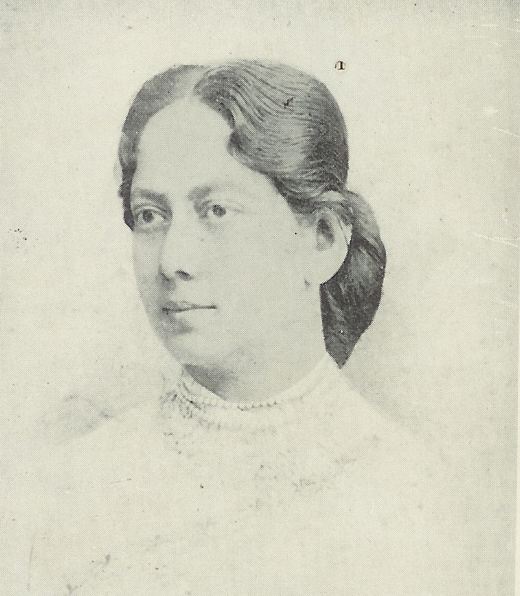
Swarnakumari Devi (1855-1932) was five years older to her sibling, Rabindranath Tagore. She was one of the first women writers of Bengal. She was also a social activist who fought for women’s liberation. Among Bengali women writers, she was one of the first to gain prominence. She helped orphans and widows. She opened an organisation to help women and opposed the evil of sati. In the 5 July 1932 issue of the Bengali newspaper, Amrita Bazar Patrika, just days after her death, she is remembered as “one of the most outstanding Bengali women of the age” who “did her best for the amelioration of the condition of the womanhood of Bengal.”
Chaitali Sengupta is a writer, translator and journalist from the Netherlands. Her published works include two translations “Quiet whispers of our heart” and “A thousands words of heart”. Recently her first prose poem collection Cross- Stitched words was published. Her poems have also been anthologized in many international collections and she writes for many print and online journals.
.
PLEASE NOTE: ARTICLES CAN ONLY BE REPRODUCED IN OTHER SITES WITH DUE ACKNOWLEDGEMENT TO BORDERLESS JOURNAL
A story about Man and Nature written in Bengali by Rabindranath Tagore in 1928, translated by Chaitali Sengupta.
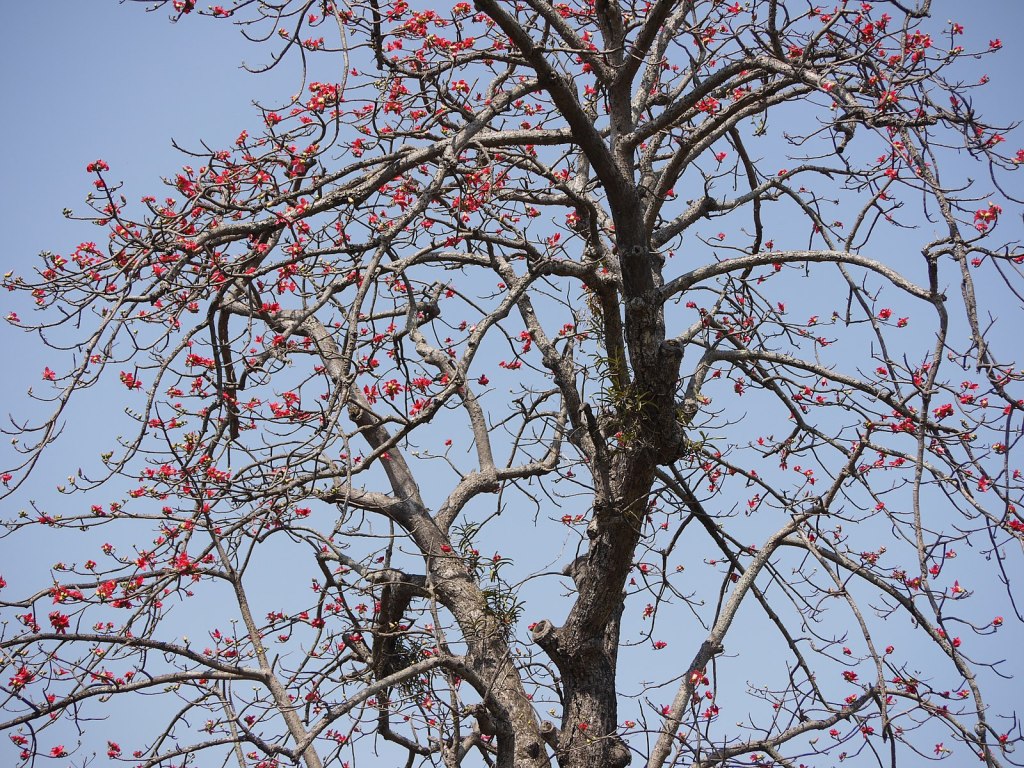
Simul tree, also known as Rokto Simul in Bengali. Photo Credit: Wiki
It is often said that human life is a culmination of various other life forms in this world. In our daily lives, most often, we come across diverse characteristics of other animals in a human being. Honestly said, in the character of a human, we see a blend of attributes usually found in animals. The domesticity of a cow and the ferocity of a tiger reside in the same human; it is, as if, the snake and the mongoose are both put together. It is somewhat like the melody that is created when the entire range of notes come together. Only then, a raga is formed. However, in a raga, one note can be more prominent than the other.
In the character of my nephew Bolai, I believe the affinity for flora and fauna, perhaps, reigned supreme. He was an observant child rather than an active one. Even at an early age, he’d quietly observe Nature around him. The dark, billowing clouds in layers, on the eastern sky would collect and pour. They would moisten his heart and bring forth the untamed breeze of the forests. It was, as if, his entire being could hear the pitter-patter of the rain.
He seemed to want to fill his being with rays of the departing sun, perhaps, in an attempt to collect something precious from it. In the end of Magh (the month of January), when the trees would be laden with the tiny fruits, an intrinsic, deep happiness, a joy defying description awakened in him. His inner nature would blossom forth, expand and take on a deeper shade of colour, much like those flowering Sal trees, with the advent of Falgun (the month of February). In those moments, he had a deep urge to sit in solitude, in conversation with himself, piecing together the various tales he’d heard. Like the story of that very old pair of birds, who had made their nest in the deep crevice of the ancient banyan tree. He never talked much, this wide-eyed, staring boy. In the silence of his being, his thoughts ran deep.
Once, I took him along on a trip to the mountains. His joy was immense, when he saw the lush carpet of the green grass, sprawling across the valley from our house at the top. In his mind, the grass carpet on the slope was not an inanimate, lifeless thing; he felt it to be a living one, that rolled playfully down. Often, he would roll down the slope, become a part of the grass, enjoy it tickling his back. He giggled aloud.
After a rain-washed night, when the first rays of sun gently broke free, and its golden light kissed the tops of the clustering deodar trees, he would tip-toe out of our home, alone. He would walk to those tall trees, and stand in awe, watching the motionless mighty trunks. In them, he’d envision a living spirit, a human presence, as it were. The spirits who wouldn’t talk but would know all our secrets like our ancestral grandfathers, from times immemorial.
His deep-thinking eyes weren’t always heavenwards. Many a times, I’d seen him roaming in my garden, his eyes on the ground, as if in quest something new or unusual. His curiosity knew no bounds, when he discovered new seedlings piercing out of the soil. Each day, bending down, he would talk to them, as if asking, “What’s next? Now what?” Those were, like his eternally incomplete stories — like those new, tender leaves, with whom he shared a strange affinity, verging on companionship.
And they, too, would be eager to ask him questions. Perhaps, they asked him his name. Or, about his mother, where was she? In his mind, Bolai perhaps would reply, “But I don’t have a mother.”
When someone plucked a flower from the tree, it hurt him. He realised soon enough that his concern or hurt was not at all important to others. He tried to hide his pain. When the young boys of his age threw stones at the trees, trying to bring down amlokis (gooseberries) from fully laden branches, he ran away from the scene. To tease him further, his companions would walk through the garden, thrashing the row of shrubs on both sides with their sticks; they would tear the branch of the bakul tree (Minnesap species) — he felt like crying but couldn’t. Then, others might have thought of him as mad. The worst days in his life were when the grasscutter came to mow the grass in the garden.
For he would have noticed the small tendrils of creepers, rousing their heads within the patch of grass, and those purple-yellow tiny nameless flowers, embedded with them. Here and there, the kantakari (wild eggplant) shrubs, with small bluish flowers sporting a speck of gold in their hearts. Those creepers of kalmegh (bitter medicinal plant) near the fence borders, and the anantamul (a medicinal plant) displaying their leaves; the sprouting neem that blossomed forth out of the seeds dropped by birds, how beautiful they looked! And all these were brutally mowed down by the cruel grass mowing machine. Nobody listened to their pleas or protests, for these were not the most sought-after plants in the garden.
Somedays, Bolai would come to his aunt, sit on her lap and wrapping his small arms around her neck. He would only say, “Why don’t you ask those grasscutters not to kill my plants?”
His aunt replied, “Bolai, don’t be a fool. These are overgrown weeds, almost a jungle, these must be cleaned.”
Bolai had by then understood that there were some pains, some sorrows, that were exclusively his own. Those never resonated with others.
Bolai probably was truly born in that age and time, when the universe first swam out of the womb of the ocean, taking its first breath, eons of years ago. At a time, when on the newly formed layers of mud, the nascent forests rose and cried out for the first time. Then, there were no birds, no noise, no life — only layers of rocks, slime and water. Those tall trees, heralding other life forms on the path of time, calling out to the glowing sun, with their raised hands, saying, “I’ll live, I’ll exist, I’ll survive, like the eternal traveler, through the cycles of death, through days and nights, rain and shine, I’ll progress on the path of my growth, my evolution.”
Those murmurings of trees can be heard still, through the forests and the hills; on the tendrils of their leaves the life force of Earth murmurs, “I’ll live, I’ll exist.” These mute trees, like foster mothers of the Earth, have milked the heavens for endless time, to gather life’s nectar, it’s radiance, for this planet. And endlessly, they raise their eager heads to the air, expressing their soul’s call, saying, “I’ll live.” In some strange, miraculous way, Bolai could hear that calling in the blood that coursed through him. The very thought had made us laugh.
One fine morning, as I was reading the newspaper, Bolai came up and took me to the garden. Pointing out to a small shrub, he asked me, “Uncle, what’s that plant?”
It was a small shoot of a simul (silk cotton) tree, growing through the crack of our gravel road. Bolai had made a mistake by bringing me there.
The sapling was a tiny one, just like the first babbling of a child; it was then that Bolai noticed it. Thereafter, Bolai had himself tended to the plant, watering it, checking it earnestly to monitor its growth, each morning and evening. Though the silk cotton plant grows fast, it could not keep pace with Bolai’s eager wait. When it grew to a certain height, Bolai observing the beauty of its rich leaves, was certain it was a tree of a special kind. His observation was quite similar to that of a mother who after observing the first hint of intellect in a child, marks him as a wonder. Bolai, too, had thought that he’d astonish me with his tree.
I said, “I’ve to tell the gardener to uproot the tree.”
Bolai was aghast. Those words were terrible for him. He said, “No Uncle, I beg of you, please don’t get it uprooted.”
“I truly don’t understand you,” I told him. “It stands right on the middle of the path. It’ll spread cotton all over, once it grows bigger. It’ll be a nuisance.”
Bolai realised it was no use arguing with me. The motherless boy then went to his aunt. Sitting on her lap, with his arms around her neck, he sobbingly said, “Aunt, please tell uncle not to uproot the tree.”
His plan worked. His aunt called me and said, “Oh listen, please let his plant be.”
I let it be. Had he not shown me the sapling, I would have surely not noticed it. But now, I notice it every day. Within a year, the tree grew taller shamelessly. As for Bolai, he reserved his best adoration for this tree.
The tree continued to grow in a ridiculous manner, without paying any respect at all to anyone around. It grew to its full height, standing on that inappropriate spot. Whoever saw it, wondered why it was placed there. A couple of times more I proposed to uproot it. I tempted Bolai with my offer of nice, high quality rose saplings. I also proposed, “If you still opt for the silk-cotton tree, then let me get you a fresh sapling. We can plant it next to the fence. It’ll look pretty there.”
But any talk of uprooting it, alarmed Bolai. And his aunt said, “Oh, it doesn’t look that bad there.”
When Bolai was an infant, my sister in-law had passed away. The grief, perhaps, made my elder brother careless; he went abroad to study engineering. Motherless, this child grew up in my childless home, in the lap of his aunt, my wife. Ten years later, my brother returned and took Bolai to Shimla to school him so that he could accompany his father abroad. He was given western education in Shimla.
Bolai cried inconsolably as he left our home, turning it into an empty house.
Two years passed. During this time, Bolai’s aunt, saddened by his absence, dried her tears in solitude, and spent her time in Bolai’s room, arranging and rearranging a single torn shoe that he wore, a damaged rubber ball he played with and that picture book of animals. She wondered if Bolai had outgrown all these by now.
In between, the wretched silk cotton tree continued to grow shamelessly; so tall it had grown, that it was now absolutely mandatory to cut it down. I chopped it down one day.
Very soon after this, Bolai’s letter reached us from Shimla. “Aunt, do send me a photograph of my silk-cotton tree.”
Before going overseas, Bolai was supposed to come and meet us once. But since that had now been cancelled, Bolai wished to take his friend’s photograph along.
His aunt called me, saying, “Listen, please bring a photographer.”
I asked, “Why?”
She showed me the letter in Bolai’s childish handwriting.
I said, “That tree has already been chopped off.”
Bolai’s aunt didn’t touch food for the next couple of days and stopped communicating with me for even longer. When Bolai’s father had taken him away from her, it was the severing of her umbilical cord; but when Bolai’s uncle uprooted his favorite tree forever, it shattered her world and deeply wounded her heart.
For, that tree was, to her, a reflection of Bolai, his substitute image.
Amloki tree
Author’s Bio:
Rabindranath Tagore (1861 to 1941) was a brilliant poet, writer, musician, artist, educator – a polymath. He was the first Nobel Laureate from Asia. His writing spanned across genres, across global issues and across the world. His works remains relevant to this day.
Translator’s Bio:
Chaitali Sengupta is a published writer, translator, journalist from the Netherlands. Her works have been regularly published in both Dutch and Indian literary platforms, her poems also been anthologized in many acclaimed collections.
.
PLEASE NOTE: ARTICLES CAN ONLY BE REPRODUCED IN OTHER SITES WITH DUE ACKNOWLEDGEMENT TO BORDERLESS JOURNAL.









 Borderless

_(5486246516).jpg)