Title:One More Story About Climbing a Hill: Stories from Assam
Author: Devabrata Das (translated from Assamese by multiple translators)
Publisher: Speaking Tiger Books
1. A Night with Arpita
(‘Arpitar Erati’ translated by Meenaxi Barkotoki)
The side berth was created by lowering the back rests of the two single seats along the aisle of the compartment. Crouching in one corner of that berth, chin in her hands, eyes looking out of the window, could the expression on her face be called disinterest, or was it heartache? On the other hand, she had not the slightest curiosity about what was going on inside the compartment. Drawing the free end of her sari tightly around the upper half of her body, she had withdrawn even her feet into the cavity created by her sari. Her presence in the compartment seemed more like an absence. She seemed completely oblivious and unaware of her surroundings; her look betrayed a sense of resignation. Or perhaps of surrender.
Having positioned myself in the compartment, the sense of resignation that was evident in her demeanour attracted me to her the very first time that I looked at her attentively. I told myself that if I wrote a story someday on the girl, I would name her Arpita (the one who offers herself). Arpita what? Ganguly or Acharya, Roy or Majumdar? Because on hearing the Hindi strewn with Bengali words spoken by the girl’s father, (who had complained animatedly to the waiter about the stale fish served for the meal) I was certain that the girl was not an Assamese disguised in a sari, she was actually Bengali. Regardless of whether she was Assamese or Bengali, she was just a girl, a more or less pretty girl, and she was presently in another world, completely oblivious to her surroundings. Her entire being was concentrated on a point in the darkness of the world outside the compartment, a point that could easily be defined as infinity. Her absentminded beauty aroused my curiosity. Puffing at my Charminar cigarette I kept staring at her from my middle berth in the three-tiered compartment. Just then Kiran returned from the bathroom and broke my reverie. ‘What is this? Why are you already in bed? You don’t mean to go to bed so early, do you?’
This story is actually the story of Arpita and me. I am the protagonist, Arpita the heroine. Apart from the two of us, there is no need for anyone else in this story. The problem, however, is that in order to be able to describe the chain of events, the inclusion of some redundant characters becomes necessary; their presence in the story is not essential but without them it is difficult to narrate what happened. Among those extras, unnecessary characters actually, one is my friend Kiran Debnath. We work in the same office and it is on official work that both of us are travelling by train to another city. We had to travel at very short notice, so we had no reserved train seats; hence the second unnecessary character, Krishna, became necessary. Krishna lives in our neighbourhood. A young man barely out of his teens, he had recently joined the NF Railway as Travelling Ticket Inspector, in short TTI. The moment I saw him at the train station, I was relieved; we wouldn’t have to travel in the crowded, unreserved compartment after all. Since Krishna was there, with his help we would get at least two sitting seats for ourselves. But luckily there was not a huge rush that day and after doing the rounds, Krishna arranged two sleeping berths in a three-tier compartment for us. The sleeper charges for a night are five rupees fifty paise each, so eleven rupees in all. I gave him three five-rupee notes. He forgot to return the change. A little while after the train started, another uniformed ticket checker came and wrote out our reservation slips. The fourth unnecessary character in this story is Arpita’s father, who, after finishing the long and animated argument with the waiter about the stale fish served for dinner, turned his attention to his daughter. She was still staring out of the window. He told her to lie down and go to sleep, and gave her other sundry bits of advice, all of which were met with monosyllabic answers. He then climbed onto the upper berth, above his daughter. In a little while, his snoring proved that he was fast asleep. This is the last time I will mention these unnecessary characters, except for Kiran.
I told Kiran that we had a lot to do the next day. We would have to go through all the documents and records of our branch office in the town we were travelling to. It was not clear whether we would have any free time at all. So instead of sitting up chatting till late in the night, since we had secured two sleeping berths, it might be wiser to go to sleep. Like a good boy, Kiran agreed immediately and went to sleep in the berth below me. To tell the truth, I was not at all sleepy. If I had wanted to or if we were somewhere else, I would have easily chatted with Kiran for an hour or two. But at that moment, in that situation, the single-minded desire to enjoy the distracted attractiveness of a beautiful girl made me give up the wish to chat with Kiran.
Arpita sat immersed in herself on the rattling train, on that otherwise still night, ignoring the silent presence of the many other passengers sleeping in the compartment. No exam results had been declared recently. Then why was Arpita so unwaveringly distracted and sad? Was her pain intensely personal? For instance, had some sly lover cheated her and gone away, after having made a thousand promises of many-hued rainbows and eternal love? Or was there some complication in her recent wedding proposal? Had the partner that her parents chose for her, seen and approved of her but demanded a huge dowry, which made it completely impossible for her to leave her parents’ home? What could it be? What was her real story?
(Extracted from One More Story About Climbing a Hill: Stories from Assam by Devabrata Das, Published by Speaking Tiger Books, 2025.)
About the Book:
In ‘A Night with Arpita’, a beautiful young girl in a train compartment captures the imagination of the writer—but he is unable to fathom the reason for her melancholy until it is too late. In ‘Ananta with His Seema’, three apparently disconnected incidents take place on a railway platform. Descriptions of the incidents are interspersed with passages from a letter written by Ananta’s friend, that lays bare his helplessness in the face of injustice and the loss of his youthful ideals.
In the eponymous story, life imitates art with a disastrous twist. A young couple treks up a hillside to recreate for themselves the experience of two characters in a love story set in idyllic Shillong. But the beauty of the pine shrouded hills is marred by extremist violence and their climb to the top of the hill has an unforeseen, macabre end.
Each of the eighteen stories, translated by multiple translators, in this collection provides an insight into life in an area of conflict, told with irony and ingenuity. Regarded as a torchbearer of post-modernism in Assamese literature, Das is often a character in his stories, blurring the distinction between writer and narrator and, often, between fiction and reality, leaving readers to construct their own endings. This first English translation of his work is a valuable addition to the pantheon of India’s regional literature.
About the Author
Devabrata Das is considered to be a torchbearer of post-modernism in Assamese literature, following in the footsteps of other great Assamese writers such as Saurav Kumar Chaliha and Bhabendra Nath Saikia. With more than twenty-five bestselling books to his credit in a career spanning more than four decades, his repertoire ranges from fiction to non-fiction, and from screenplays to reviews and critical essays. He received the Sahityarathi Lakshminath Bezbarua Award in 2018, the Sahitya Sanskriti Award of the literary organization Eka Ebong Koekjan in 2010, and the Tagore Literature Award of the Sahitya Akademi in 2011.
About the Translator
Meenaxi Barkotoki is a mathematician turned anthropologist by profession. An avid translator from Assamese into English, her most recent work includes a couple of novels, notably a children’s novel by Arupa Patangia Kalita titled Taniya (Puffin Classics, 2022). Her translations have appeared in newspapers and periodicals as well as in prestigious compilations like The Oxford Anthology of Writings from North-East India (OUP, 2011) and in Asomiya Handpicked Fictions (Katha, 2003). She also writes short stories, travel pieces and current interest articles, and her work has been published in newspapers, journals and magazines. She is a Founding Member of the North East Writers’ Forum.
.
PLEASE NOTE: ARTICLES CAN ONLY BE REPRODUCED IN OTHER SITES WITH DUE ACKNOWLEDGEMENT TO BORDERLESS JOURNAL.
India is perhaps the one country where the Jews have maintained their identity without ever being exposed to antisemitism at the hands of their host. Although representing a microscopic segment of the Indian population, the Bene Israel is one of the largest and oldest of the three major Jewish communities of India, the other two being the Cochin Jews of the Malabar Coast and the Baghdadi Jews of Bombay and Calcutta. The Bene Israels arrived at the Konkan coast, shipwrecked, and have lived in India for more than 2,000 years and claim descent from the ten lost tribes of Israel. After they had settled down permanently in the Konkan villages of Western Maharashtra, the Bene Israels were called ‘Shaniwar Telis’ or Saturday oil pressers – a relatively low-caste designation – by the local population because they refrained from working on Saturday, the Jewish Sabbath. Later, they also farmed their land, peddled produce, and took up petty jobs, with the majority working as clerks in government offices and private firms. With time, they adopted Hindu names similar to their Biblical names and took up Marathi surnames such as Rohekar, Penkar, Palkar, and Ashtamkar by adding the suffix ‘-kar’ to the villages and town they came from. They adopted Marathi, the local language, as their mother tongue, and to outsiders, became physically indistinguishable from the local population. But within the village society, the Bene Israels were clearly differentiated from others because they adhered to Judaism. Initially overtones of a caste system coloured the Bene Israelis but they changed with time. Intermarriages between other Jewish communities became common.
With the formation of the nation-state of Israel in 1948, the exodus of the Jews of India took place on a very large scale, and only a few hundred members were left in Gujarat. Initially the integration of the Bene Israels into Israeli society was not easy and many of them returned to India but re-emigrated to Israel later after 1964 when their religious status was finally accepted.
Miss Samuel: A Jewish Indian Saga is written by Sheela Rohekar, a Bene Israel Jew, who is probably the sole-living Jewish Hindi author, and she managed to recreate the distinct identity of her own community. Bearing across life histories of her ancestors, she seeks answers to those questions that troubled her in the novel. Originally written in Hindi, it is aptly translated into English for the first time by Madhu Singh, a professor of English teaching at the University of Lucknow. The novel is narrated by Miss Seema Samuel, an almost 70-year-old Bene Israel living at an old age home called Parisar on the outskirts of Pune, and it portrays her unsuccessful struggle to fit into a majoritarian Hindu society along with the plight of being an unmarried woman in India. She tells the story of her community, of their trials and tribulations, love and loss, and their longing for ‘Aliyah’ — the return to the Promised Land of Israel. Shifting from the Konkani shores to the bustling streets of Ahmedabad (called Amdavad in the local parlance), and finally to the tranquility of an old-age home, each generation of Seema’s family grapples with the tension between their Jewish faith and Indian identity, struggling with their fear of persecution on the one hand and a yearning for acceptance on the other.
In the novel, apart from giving a macrocosmic view of the Bene Israel community which makes its members victims of isolation and alienation from mainstream Indians, and depicting their ancient history and present status, Sheela Rohekar also very deftly presents the microcosmic view of the extended family of her community along with the problems of cross-cultural liaisons and the problems each individual member of her family faces. She states: “But some images embed themselves in the mind, not in the eyes, and chase you – all your life. The role of time in fusing images is not much but the trick of a fading memory. They light up in a flash!”
Since her narration spans six generations and moves deftly backwards and forwards in time, in some places it becomes difficult for the readers to keep track of who’s who in the narrative and occasionally one must go back to the family tree chart at the beginning to place the characters in their proper perspective.
Miss Seema tells the story of Isaji Eloji, who, having married a Hindu woman named Narayani, is believed to have ‘blackened’ the Jewish name. Two generations later, burdened by his grandfather’s transgression, David Reuben stops at nothing to keep his Jewish identity pure, even poisoning his daughter Lily for loving a non-Jewish man.
Again, years later, his son Samuel David (Miss Seema’s father) finds that his Jewish identity makes him an outsider in his own country; and his grandson, Bobby, faces persecution of the worst kind – when he is murdered by a mob in Ahmedabad. It is through reading the loose notes and a long essay that Bobby had left behind that Seema manages to tell us the background history of their community. With his collection of yellow, crumbling newspaper cuttings about the Jews, old coins, badges, awards, certificates, degrees, and moth-eaten black and white photographs that were around 150 years old, Bobby tried to illuminate the path taken by the fellow members of his community – the Bene Israel, the pardesi, the foreigners – whom the people of Amdavad did not know in the twentieth century and believed to be Maharashtrians or converted Christians. The story of how his brother, David, and his Hindu wife. Jyotsna Prajapati, managed to throw Seema out of their apartment in Gitanjali Society also reminds us about such machinations that prevail in our Indian society in general. Through the different tales, the narrator remains a constant, and her memories commingling the past with the present are deftly handled by the novelist.
Further, Miss Samuel becomes a key novel to understand not only for its Indian-Jewish identity but also its multicultural Indian identity and its challenges in the present time. The old age home, Parisar, is not at all a closed space and it opens to new forms of solidarity among elderly abandoned women who, though belonging to different faiths and identities, abandon their frustration with the twists of patriarchal society to discover the meaning of friendship, love and solidarity.
Seema writes: “The campus where I live is surrounded by hills. There is silence, always. I can see residents of my age, some even older, shuffle from one room to another. Constructed at a distance of two hours from Pune, all stories seem to end up here, in this building.” Parisar is thus a model of a tolerant society that not only accepts differences but even respects, maintains and transcends them at the same time. The translation is lucid, and the translator labels her endeavour as ‘interpretive performance’ and a journey beyond imaginary borders. A good read indeed.
.
Somdatta Mandal, critic and translator, is a former Professor of English at Visva-Bharati, Santiniketan, India.
.
PLEASE NOTE: ARTICLES CAN ONLY BE REPRODUCED IN OTHER SITES WITH DUE ACKNOWLEDGEMENT TO BORDERLESS JOURNAL
Ratnottama Sengupta tracks the journey of Leslie Carvalho over a quarter century
Leslie CarvalhoPhotos provided by Ratnottama Sengupta
It seems like only the other day. The International Film Festival of India, IFFI, 1998 was on. Along with a colleague, I was seated on the steps outside Siri Fort I auditorium connected to a long corridor going to Siri 2. Someone introduced Leslie Carvalho. “Aha! The young filmmaker from Mangalore?” I responded. “There’s a write up on you in The Times of India today. It says there’s a lot of expectation from The Outhouse.”
The “delightfully sweet” film had lived up to the expectation of the critics. It was bestowed the Aravindan Puraskaram, presented by the Kerala Chalachitra Film Society to commemorate the iconic Malayalam director, and the first Gollapudi Srinivas award, another national level award to recognise filmmakers marking their debut in Indian cinema. So I was not surprised to meet him next as a co-member of the jury for the National Film Awards 2000.
The Tennis coach who is also a German language teacher with a passion for painting has now published his first novel, Smoke on the Backwaters. It centres on Rosa, a twenty-year-old from Mangalore, who is forced to flee overnight because of the storm of gossip, fear and shame unleashed by a single incident in her life. Her unexpected journey across continents becomes a path of healing. Seven years later, armed with education and maturity, she returns home, determined to pursue her purpose in life. But how much had the town she left altered from its old ways?
RS: Leslie, before we talk Backwaters, can we briefly revisit The Outhouse? From where did you derive its content? And what was your compulsion for choosing that subject?
Provided by Ratnottama Sengupta
LC: The Outhouse was a simple, linear narrative about moving on in life despite the odds. A young mother’s need to gain economic independence to supplement the family income; the help she received from her financially independent sister; a kind hearted Bengali landlady’s generosity which causes stress and violence in the Anglo-Indian couple’s day to day life, and how it affects the two children growing up.
RS: Why did you choose this subject as your debut vehicle? If you were to travel in a time machine, would you choose a ‘mainstream’ subject?
LC: I chose this subject as my debut vehicle as I had seen quite a bit of violence in the Anglo- Indian community in the Lingarajapuram area of Bangalore I grew up in.
I was itching to make a movie after my six-month course at the New York Film Academy. As I was working on a very tight budget, I just stuck to what was taught — to keep it simple, straightforward and just tell a story using the various tools of cinema — in short, to make it cinematic.
If I were to go back in time, I don’t think I would have chosen a ‘mainstream subject’. I derived immense satisfaction along with the cast and crew as we felt we were working on something we were passionate about. We all felt drawn towards the characters, the story and the theme of the film.
RS: How did you get interested in cinema? And what were the problems you faced while filming The Outhouse – in terms of funding, casting, shooting location, distribution?
LC: I grew up watching Tamil, Kannada, Hindi, a couple of Konkani and lots of Hollywood films. My mother tailored clothes at home, and she taught a whole lot of women stitching. They were fans of Tamil cinema, especially of Sivaji Ganesan, MGR, and the heroes of Kannada cinema, Dr. Rajkumar and Vishnuvardhan. She also enjoyed the Hindi films of Rajesh Khanna, Dharmendra, Hema Malini, Amitabh Bachchan, Sanjeev Kumar, Jaya Bhaduri and Rekha — that is the popular cinema.
And my father, being an Army person, took us to see English films, like The Ten Commandments, The Bible, Hatari, To Sir, With Love[1]. Also, St. Germain’s School where I studied, screened English films every Friday afternoon in the Hall, from spools off a projector that made a jarring sound. It was an amazing experience — black and white Charlie Chaplin, Laurel & Hardy films and also Patton with all the bad words. Later, when in college, we would bunk classes to watch most of the popular Hindi and English movies.
At the New York Film Academy, I was exposed to an entire range of the world’s best in cinema. Satyajit Ray, Akira Kurosawa, Ingmar Bergman, Antonioni, John Ford, William Wyler, Fellini, Jean Renoir… And I watched a whole lot of films on the American Movie Chain (AMC). There I discovered all of Spencer Tracy’s films and fell in love with his sense of timing and under playing. It was also a time when I discovered Guru Dutt and marveled at his brand of filmmaking from Pyaasa, Kaagaz Ke Phool, Chaudhvin Ka Chand, Sahib Biwi Aur Ghulam to Aar Paar and Mr & Mrs 55[2].
It is hard to believe I began the shoot for The Outhouse on September 18, 1996, and completed it in 14 days – on October 1. After we went through the rushes, we required two more shots to link the gaps. Since I was on a shoestring budget of a few lakh rupees, I had rehearsals with the cast for close to three months. I doff my hat to them in gratitude as 90% of the film was canned on first takes. I could not afford retakes, and I worked with a brilliant cameraman, S Ramachandra, who was very supportive and encouraging. He shot most of B V Karanth, Girish Karnad, and Girish Kasaravalli films as well as the popular tele-serial Malgudi Days[3]. A number of first-time directors like myself, had benefitted immensely by his generosity and patience.
Since it was an independent film, whatever little finance I had, I sunk into the film. And then it took me a year to complete post-production for lack of finance.
I was particular about the casting. I wanted the Anglo-Indian look, feel, mannerisms, costume, interiors to be authentic. I met each cast member and spoke to them at length about the vision I had for my film. Almost all of them were from the Bangalore English Theatre, and all of them were cooperative. Moreover, Cooke Town is a quaint little place with many English bungalows and outhouses. After some struggle, I found one on Milton Street which suited my story perfectly.
After The Outhouse was selected for the Indian Panorama in IFFI ’98 and received the two national awards, I just walked into Plaza Theatre on MG Road in Bangalore and met the owner, Mr Ananthanarayan. He had heard about the film and asked me to meet the distributor, Nitin Shah of Hansa Pictures in Gandhi Nagar, the biggest distributor of English films. He put it on for a noon show for three weeks while Fire was on for the matinee and evening shows. The distributor then put it in Mangalore and Udupi for a week. And when I received the Gollapudi Srinivas National Award in Chennai, Aparna Sen was one of the honoured guests. She saw a small portion of the film and said that she would speak to Mr Ansu Sur to screen it at Nandan in Kolkata — founded by Satyajit Ray to help screen small independent films. A theatre owner in Kolkata recommended a person who took the film to the North East. It was also screened in parts of Kerala.
Coincidentally, this April 30th, The Outhouse will be screened in the leafy neighbourhood of Cooke Town next to the outhouse where the film was shot.
Still from The Outhouse, provided by Ratnottama Sengupta
RS: In the last 50 years we have seen films by directors like Aparna Sen, Ajay Kar, Anjan Dutt. Even before these, Ray had touched upon Anglo Indians in Mahanagar. These are all films made in Kolkata. Is it because this is the erstwhile capital of the Raj?
LC: Many of the films on Anglo-Indians were based in Calcutta. It was the influence of the British Raj and its culture that was so much a part of their long history of ruling there. Of course their influence was in other parts of the country as well like Madras, Hyderabad, Bangalore, Whitefield and Kolar Gold Fields, the railway colonies all over the country, the hill stations, and many other cities which has pockets of Anglo-Indians.
RS: I remember one Hindi film, Julie that had an Anglo-Indian protagonist. How has the community been projected in popular culture? Was it lopsided or biased?
LC: Throughout our film history Anglo-Indians have played bit roles here and there. Some significant roles came their way in Bhowani Junction, the teleserial Queenie, 36 Chowrighee Lane, Bow Barracks Forever, Bada Din, Cotton Mary, The Outhouse, Saptapadi, Mahanagar, Julie, and Calcutta I’m Sorry[4].
Some of the characterisations have been quite biased; some not well fleshed out; some in passing fleeting moments of drunkenness, prostitution. The song and dance sequences have not helped the community, sadly.
RS:What led you to writing? The screenplay for The Outhouse?
LC: I wrote the screenplay of The Outhouse on plain A4 sheets of paper, on both sides. This is not done but I did it to save on cost. I gave the screenplay to my cinematographer S. Ramachandra, and in his generosity he understood my purpose. I went by what was taught at the New York Film Academy. Of course, I had to combine all the elements to make it whole. The idea of the screenplay came to me while I was at the film school in 1995.
RS: What was the trigger for writing Smoke in the Backwaters?
LC: As an artist, filmmaker, and writer, I have tried to combine all the elements of story-telling – fact and fiction — keeping in mind the flow of ideas, pace and momentum to engage and interest my audience and readers.
I remember beginning to write the novel two decades ago when my mother — who studied in Kannada medium — said, “I hope you will write it in simple English so I can read it too.”
And I wanted it to be reader friendly with regard to the font size, the brightness of the paper, the spacing, the clarity and the size of the book. I was lucky my publisher ‘Anglo-Ink’ was supportive and combined well to find that centre.
Provided by Ratnottama Sengupta
RS: How are you marketing the book? Through Litfests? Bookstore readings? Airport bookstalls? A H Wheelers?
LC: Since Anglo-Ink is a small-time publisher, we’ve had a dream launch in my hometown Bangalore at the Catholic Club. My book seller is Bookworm on Church Street in the heart of Bangalore and for people in Cooke Town it is in The Lightroom’ library.
We are looking at launches in various cities as well, through book readings, LitFests, Airport book stalls, AH Wheelers, readings at schools and colleges.
Since a major portion of the novel is set in Germany, we are looking at translating it into German. I hope to get it translated in a few Indian languages as well.
RS:Since the sunset decade of 1900s, Anglo Indians have been migrating to Australia and Canada. What triggered this migration? Economics or politics?
LC: The migration of Anglo-Indians was inevitable. It was bound to happen for reasons more than one, be it political, economic or social. First under the ‘Whites Only’ policy, many fair skinned Anglo-Indians migrated — the brown and dark skinned were left behind. Slowly they opened up and even they left. Some felt they would adapt better to a western culture, and have adopted their new country as their homeland.
RS:You were a big support for me when my son joined NLSUI in 2000. Again, when I curated Anadi, the exhibition of paintings by Contemporary and indigenous artists from MP and Chhattisgarh. Bangalore has since become an international megalopolis. How has life changed for the locals?
LC: Bangalore has changed dramatically and drastically. The change was bound to happen because of its growing prominence of an International City. The IT industry brought jobs, slowly other industries, started picking up from real estate, fashion, digital technology and social media platforms, start-ups, academics, sports, games, recreational and tourism.
The moderate climate was a huge bonus that attracted people from all over. Bangalore has always been cordial, encouraging and accommodative of people from all over through their mild manners, hospitality and gentleness.
Today Bangalore is unrecognisable. Still, some pockets retain that old world charm of neat, clean and green Bengaluru from the old Pensioners Paradise of Bangalore.
.
[1]The Ten Commandments (1956), The Bible (1966), Hatari (1962), To Sir, with Love (1967)
[2]Pyaasa (Thirsty, 1957), Kaagaz Ke Phool (Paper flowers, 1959), Chaudhvin Ka Chand (The Full Moon, 1960), Sahib Biwi Aur Ghulam (The Master, the Wife and the Slave, 1962), Aar Paar (This shore or that, 1954), Mr &Mrs 55 (1955).
[4]Bhowani Junction (1956), TV miniseries Queenie (1987), 36 Chowrighee Lane (1981), Bow Barracks Forever (2004), Bada Din (1998), Cotton Mary (1999), Saptapadi (Seven Steps, 1981), Mahanagar (The Big City, 1963), Julie (1975), and Calcutta I’m Sorry (2019)
Ratnottama Sengupta, formerly Arts Editor of The Times of India, teaches mass communication and film appreciation, curates film festivals and art exhibitions, and translates and write books. She has been a member of CBFC, served on the National Film Awards jury and has herself won a National Award.
.
PLEASE NOTE: ARTICLES CAN ONLY BE REPRODUCED IN OTHER SITES WITH DUE ACKNOWLEDGEMENT TO BORDERLESS JOURNAL
Tumi Kon Kanoner Phulby Tagore andAnjali Loho Morby Nazrul, love songs by the two greats, have been translated from Bengali by Professor Fakrul Alam. Click hereto read.
One Life, One Love, 300 Children : Keith Lyons writes of Tendol Gyalzur, a COVID 19 victim, a refugee and an orphan who found new lives for many other orphans with love and an ability to connect. Click here to read.
When West Meets East & Greatness Blooms: Debraj Mookerjee reflects on how syncretism impacts greats like Tagore,Tolstoy, Emerson, Martin Luther King Jr, Gandhi and many more. Click here to read.
Dilip Kumar: Kohinoor-e-Hind: In a tribute to Bollywood legend Dileep Kumar, Ratnottama Sengupta, one of India’s most iconic arts journalists, recollects the days the great actor sprinted about on the sets of Bombay’s studios …spiced up with fragments from the autobiography of Sengupta’s father, Nabendu Ghosh. Click here to read.
Are Some of Us More Human than Others ?: Meenakshi Malhotra ponders at the exclusivity that reinforces divisions, margins and borders that continue to plague humankind, against the backdrop of the Women’s Month, March. Click here to read.
Reminiscences from a Gallery: MF Husain: Dolly Narang recounts how she started a gallery more than four decades ago and talks of her encounter with world renowned artist, MF Husain. Click hereto read.
Baraf Pora (Snowfall) by Rabindranath Tagore,gives a glimpse of his first experience of snowfall in Brighton and published in the Tagore family journal, Balak (Children), has been translated from Bengali by Somdatta Mandal. Clickhere to read.
Cherry Blossom Forecast: Suzanne Kamata brings the Japanese ritual of cherry blossom viewing to our pages with her camera and words. Clickhere to read.
Two Pizza Fantasies, Rhys Hughes recounts myths around the pizza in prose, fiction and poetry, Click here to read.
An Alien on the Altar!: Snigdha Agrawal writes of how a dog and lizard add zest to festivities with a dollop of humour. Click here to read.
Where it all Began: Sybil Pretious recounts her first adventure, an ascent on Mt Kilimanjaro at the age of sixty. Clickhere to read.
Conversations
Rabindranath Tagore: A Universal Bard.: This conversation between Aruna Chakravarti and Sunil Gangopadhyay that took place at a Tagore Conference organised by the Sahitya Akademi in Kochy in 2011. Click here to read.
Sriniketan: Tagore’s “Life Work”: In Conversation with Professor Uma Das Gupta, Tagore scholar, author of A History of Sriniketan, where can be glimpsed what Tagore considered his ‘life’s work’ as an NGO smoothening divides between villagers and the educated. Click here to read. (Review & Interview).
In conversation with the late Akbar Barakzai, a Balochi poet in exile who rejected an award from Pakistan Academy of Letters for his principles. Click here to read.
Jim Goodman, an American traveler, author, ethnologist and photographer who has spent the last half-century in Asia, converses with Keith Lyons. Click here to read.
InBridge over Troubled Waters, the late Sanjay Kumar tells us about Pandies, an activist theatre group founded by him that educates, bridging gaps between the divides of university educated and the less fortunate who people slums or terror zones. Click here to read.
In Lessons Old and New from a Stray Japanese Cat, Keith Lyons talks with the author of The Cat with Three Passports, CJ Fentiman who likes the anonymity loaned by resettling in new places & enjoys creating a space for herself away from her birthplace. Click hereto read.
Fiction
Aparichitaby Tagore: This short story has been translated as The Stranger by Aruna Chakravarti. Click hereto read.
Hena by Nazrul has been translated from Bengali by Sohana Manzoor. Click here to read.
Playlets byRabindranath Tagore: Two skits that reveal the lighter side of the poet. They have been translated from Bengali by Somdatta Mandal. Click here to read.
Abhagi’s Heaven, a poignant story by Saratchandra Chattopadhyay translated by Aruna Chakravarti. Click here to read.
An Eternal Void, a Balochi story by Munir Ahmed Badini translated by Fazal Baloch. Click hereto read.
The Witch, a short story by renowned Bengali writer Tarasankar Bandopadhyay (1898 to 1971), translated by Aruna Chakravarti. Clickhere to read.
I Grew into a Flute: Balochi Folktale involving magic retold by Fazal Baloch. Click here to read.
Give Me A Rag, Please:A short story by Nabendu Ghosh, translated by Ratnottama Sengupta, set in the 1943 Bengal Famine, which reflects on man’s basic needs. Click here to read
Rakhamaninov’s Sonata: A short story by Sherzod Artikov, translated from Uzbeki by Nigora Mukhammad. Click hereto read.
The Magic Staff , a poignant short story about a Rohingya child by Shaheen Akhtar, translated from Bengali by Arifa Ghani Rahman. Click here to read.
Khaira, the Blind, a story by Nadir Ali, has been translated from Punjabi by Amna Ali. Click here to read.
The Browless Dolls by S.Ramakrishnan, has been translated from Tamil by B Chandramouli. Click hereto read.
No Man’s Land: Sohana Manzoor gives us surrealistic story reflecting on after-life. Click hereto read.
The Protests Outside: Steve Ogah talks of trauma faced by riot victims in Nigeria. Click here to read.
Flash Fiction: Turret: Niles M Reddick relates a haunting tale of ghosts and more. Click here to read.
Henrik’s Journey: Farah Ghuznavi follows a conglomerate of people on board a flight to address issues ranging from Rohingyas to race bias. Click hereto read.
Does this Make Me a Psychic?; Erwin Coombs tells a suspenseful, funny, poignant and sad story, based on his real life experiences. Click here to read.
Phôs and Ombra: Paul Mirabile weaves a dark tale about two people lost in a void. Click here to read.
A Queen is Crowned: Farhanaz Rabbani traces the awakening of self worth. Click here to read.
Painting by Claud Monet (1840-1926). From Public Domain
Acknowledging our past achievements sends a message of hope and responsibility, encouraging us to make even greater efforts in the future. Given our twentieth-century accomplishments, if people continue to suffer from famine, plague and war, we cannot blame it on nature or on God.
–Homo Deus (2015),Yuval Noah Harari
Another year drumrolls its way to a war-torn end. Yes, we have found a way to deal with Covid by the looks of it, but famine, hunger… have these drawn to a close? In another world, in 2019, Abhijit Banerjee had won a Nobel Prize for “a new approach to obtaining reliable answers about the best ways to fight global poverty”. Even before that in 2015, Yuval Noah Harari had discussed a world beyond conflicts where Homo Sapien would evolve to become Homo Deus, that is man would evolve to deus or god. As Harari contends at the start of Homo Deus, some of the world at least hoped to move towards immortality and eternal happiness. But, given the current events, is that even a remote possibility for the common man?
Harari points out in the sentence quoted above, acknowledging our past achievements gives hope… a hope born of the long journey humankind has made from caves to skyscrapers. If wars destroy those skyscrapers, what happens then? Our December issue highlights not only the world as we knew it but also the world as we know it.
In our essay section, Farouk Gulsara contextualises and discusses William Dalrymple’s latest book, The Golden Road with a focus on past glories while Professor Fakrul Alam dwells on a road in Dhaka , a road rife with history of the past and of toppling the hegemony and pointless atrocities against citizens. Yet, common people continue to weep for the citizens who have lost their homes, happiness and lives in Gaza and Ukraine, innocent victims of political machinations leading to war.
Just as politics divides and destroys, arts build bridges across the world. Ratnottama Sengupta has written of how artists over time have tried their hands at different mediums to bring to us vignettes of common people’s lives, like legendary artist M F Husain went on to make films, with his first black and white film screened in Berlin Film Festival in 1967 winning the coveted Golden Bear, he captured vignettes of Rajasthan and the local people through images and music. And there are many more instances like his…
It's always the common people who pay first. They don’t write the speeches or sign the orders. But when the dust rises, they’re the ones buried under...
Echoing the theme of the state of the common people is a powerful poem by Manish Ghatak translated from Bengali by Indrayudh Sinha, a poem that echoes how some flirt with danger on a daily basis for ‘Fire is their life’. Professor Alam has brought to us a Bengali poem by Jibanananda Das that reflects the issues we are all facing in today’s world, a poem that remains relevant even in the next century, Andhar Dekhecche, Tobu Ache (I have seen the dark and yet there is another). Fazal Baloch has translated contemporary poet Manzur Bismil’s poem from Balochi on the suffering caused by decisions made by those in power. Ihlwha Choi on the other hand has shared his own lines in English from his Korean poem about his journey back from Santiniketan, in which he claims to pack “all my lingering regrets carefully into my backpack”. And yet from the founder of Santiniketan, we have a translated poem that is not only relevant but also disturbing in its description of the current reality: “…Conflicts are born of self-interest./ Wars are fought to satiate greed…”. Tagore’s Shotabdir Surjo (The Century’s Sun, 1901) recounts the horrors of history…The poem brings to mind Edvard Munch’s disturbing painting of “The Scream” (1893). Does what was true more than hundred years ago, still hold?
Reflecting on eternal human foibles, Naramsetti Umamaheswararao creates a contemporary fable in fiction while Snigdha Agrawal reflects on attitudes towards aging. Paul Mirabile weaves an interesting story around guilt and crime. Sengupta takes us back to her theme of artistes moving away from the genre, when she interviews award winning actress, Divya Dutta, for not her acting but her literary endeavours — two memoirs — Me and Ma and Stars in the Sky. The other interviewee Lara Gelya from Ukraine, also discusses her memoir, Camels from Kyzylkum, a book that traces her journey from the desert of Kyzylkum to USA through various countries. In our book excerpts, we have one that resonates with immigrant lores as writer VS Naipual’s sister, Savi Naipaul Akal, discusses how their family emigrated to Trinidad in The Naipauls of Nepaul Street. The other excerpt from Thomas Bell’s Human Nature: A Walking History of the Himalayan Landscape seeks “to understand the relationship between communities and their environment.” He moves through the landscapes of Nepal to connect readers to people in Himalayan villages.
The reviews in this issue travel through cultures and time with Somdatta Mandal’s discussion of Kusum Khemani’s Lavanyadevi, translated from Hindi by Banibrata Mahanta. Aditi Yadav travels to Japan with Nanako Hanada’s The Bookshop Woman, translated from Japanese by Cat Anderson. Jagari Mukherjee writes on the poems of Kiriti Sengupta in Onenessand Bhaskar Parichha reviews a book steeped in history and the life of a brave and daring woman, a memoir by Noor Jahan Bose, Daughter of The Agunmukha: A Bangla Life, translated from Bengali by Rebecca Whittington.
We have more content than mentioned here. Please do pause by our content’s page to savour our December Issue. We are eternally grateful to you, dear readers, for making our journey worthwhile.
Huge thanks to all our contributors for making this issue come alive with their vibrant work. Huge thanks to the team at Borderless for their unflinching support and to Sohana Manzoor for sharing her iconic paintings that give our journal a distinctive flavour.
With the hope of healing with love and compassion, let us dream of a world in peace.
This memoir recounts the journey of a young woman from a small island in Bangladesh who discovers the works of Tagore, Marx, and de Beauvoir, ultimately emerging as a prominent advocate for feminist causes.
Noorjahan Bose is a feminist author, social advocate, and activist resides between the United States and Bangladesh. She is the founder of two organizations based in the US aimed at empowering South Asian women: Ashiyanaa (previously known as ASHA) and Samhati. Rebecca Whittington serves as a literary translator specialising in Tamil, Bangla, and Hindi.
The narrative of Daughter of the Agunmukha[1] intricately weaves the life story of Noorjahan Bose, a remarkable woman whose journey is marked by resilience, courage, and an unwavering quest for freedom. Born in 1938 in a rural area of what is now Bangladesh, Noorjahan’s early life was deeply intertwined with the rhythms of nature and the struggles of her family, who were farmers living in close proximity to the tumultuous River Agunmukha, ominously referred to as the Fire Mouth River. This river, with its fierce currents and unpredictable nature, serves as a powerful metaphor for the challenges Noorjahan would face throughout her life.
From a young age, Noorjahan was thrust into a world of hardship and trauma. She endured sexual abuse at the hands of male relatives, a harrowing experience that left deep emotional scars. Compounding her struggles was the influence of her mother, who, having been a child bride herself, was often constrained by the societal norms and expectations of their time. Despite her own limitations, Noorjahan’s mother became a beacon of hope and creativity in her life. She instilled in Noorjahan a sense of joy and the importance of self-expression, encouraging her to explore her talents and dreams even in the face of adversity.
As Noorjahan grew older, her thirst for knowledge and personal freedom became increasingly evident. Education, however, was not easily accessible to her. The societal barriers and gender discrimination prevalent in her community posed significant obstacles to her academic pursuits. Yet, with the unwavering support of her mother and the encouragement of local activists who recognised her potential, Noorjahan began to carve out a path for herself. These activists, driven by a vision of social justice and equality, played a crucial role in empowering her to challenge the status quo.
Emboldened by her experiences and the solidarity she found in progressive movements, Noorjahan’s journey took her beyond the borders of her village. She became an advocate for women’s rights, using her voice to speak out against the injustices faced by women in her community and beyond. Her activism not only transformed her own life but also inspired countless others to join the fight for equality and empowerment.
As she traveled the globe, Noorjahan encountered diverse cultures and perspectives, each enriching her understanding of the world and deepening her commitment to social change. Her experiences abroad further fueled her passion for education and advocacy, leading her to collaborate with international organisations dedicated to uplifting marginalised communities.
Noorjahan’s life has been marked by significant hardships, beginning with the anguish of Partition, followed by the loss of her husband when she was merely 18 and expecting a child. Additionally, she faced the relentless threat of cyclones that jeopardised her family’s home and means of survival. Despite these challenges, her bravery is evident throughout her memoir. She advocated for the rights of the Bangla language in East Pakistan, navigated the tumultuous period of Bangladesh’s Liberation War (1971), and entered into a marriage that transcends her family’s religious boundaries.
This poignant and compelling narrative encapsulates a profound journey of trauma, loss, resilience, and empowerment.
Bhaskar Parichha is a journalist and author of Cyclones in Odisha: Landfall, Wreckage and Resilience, Unbiased, No Strings Attached: Writings on Odisha and Biju Patnaik – A Political Biography. He lives in Bhubaneswar and writes bilingually. Besides writing for newspapers, he also reviews books on various media platforms.
.
PLEASE NOTE: ARTICLES CAN ONLY BE REPRODUCED IN OTHER SITES WITH DUE ACKNOWLEDGEMENT TO BORDERLESS JOURNAL
Author: Kusum Khemani (Translated from Hindi by Banibrata Mahanta)
Publisher: Orient BlackSwan Private Limited
Lavanyadevi is an award-winning 2013 novel by Kusum Khemani written in Hindi that chronicles five generations of a traditional aristocratic Bengali zamindar family as it transitions into modernity from British India to the present with the eponymous protagonist as its principal focus. Lavanyadevi—a compelling woman of perfection, extraordinary vision, qualities, and grace—remains real and credible because she is self-aware, self-critical, open to others, and to change. As a Marwari (people originally belonging to Marwar in Rajasthan) living in Kolkata, in Khemani’s fiction the schisms between ‘Bengali’ and ‘Marwari’ blur to reveal a delightfully plural, composite, and distinctively Indian ethos. Lavanyadevi is a story about women and their search for self, about shared laughter and friendships that endure across generations, beliefs and cultures—between mother and daughter, grandmother and granddaughter, and Marwari and Bengali women. Khemani’s women protagonists are strong, clear-sighted, both worldly and sublime, embodying a larger-than-life idealism while being grounded firmly in the everyday.
In his introduction to his novel Kanthapura (1938), Raja Rao had defined it as a sthala-purana[1], which he defined as a “legendary history” in which the old lady narrator in the village took recourse to the traditional Indian narrative technique, digressed at will to bring forth her point. Somehow the way Kusum Khemani takes recourse to multiple narrative techniques in Lavanyadevi and binds the different digressive stories and incidents into one contiguous whole when she tells us about the history of five generations of the Bengali zamindar family, reminds one of Raja Rao’s theory. She uses diverse narrative strategies like flashbacks, diaries, letters and emails, history, memory and the third person narrator to enrich its telling, lending it depth and range. A large part of the narrative revolves around telling us about past history when Lavanyadevi manages to lay her hands on her mother Jyotirmoyidevi’s diaries and finds great pleasure and thrill of reading one’s own family history. Not only do they offer a wonderful eye-witness account of the private and public sphere of Kolkata of those times, but they also make her easy transition into reading about her mother’s youth, her elaborate description of her magnificent wedding and the rituals that spread over almost a month.
The diary as metanarrative and the protagonist as reader/narrator are particularly effective, offering a telescopic perspective. Though at times it rambles a bit, the polyphonic structure of the novel engages Lavanyadevi the granddaughter, the daughter, the wife, the mother and the grandmother in conversations with her preceding and her succeeding generations. One must sometimes go back to the family tree and chart provided at the beginning of the novel to place people in proper perspective.
From the very beginning of the novel, Khemani portrays the character of Lavanyadevi in superlatives and this continues in different phases of her life till the end when she decides to remain incognito in the mountain ashram and yet control the lives of her descendants, well-wishers and others. From a child who always stood first in school and remained wholly ignorant of the real world, to her unusual marriage to a gentleman who moved over to Rangoon and then to London where she acquired many more degrees, till she came back to Kolkata, to rear her three children successfully, she seemed to excel in everything. This is how she is described at one place:
“Lavanyadevi was indefatigable. She administered the work of several institutions, her college and her home efficiently and with ease. She was never seen to panic. She was like Goddess Durga with her many hands – untiring in her zeal, handling all her duties unfailingly, responsibly and meticulously. No one could ever complain of being ignored by her. She loved all and treated everyone with the same degree of love and warmth. Scrupulous and hardworking, always upholding truth, Lavanyadevi was the unmatched standard of excellence in all aspects of life, her words worth their weight in gold.”
After judiciously assigning different welfare projects in the city as well as in far-flung places like Dhaka and the hills in Uttarkashi from the immense money she inherited from the family, and after her husband’s demise, Lavanyadevi decided it was time for her to leave the family premises and go and live in an ashram in the hills. There she did not stay in hibernation but her travels for work grew even more frenetic.
From the very beginning her rootedness and belief in the philosophical framework of Hinduism formed the core of her being. They propelled her to seek answers to questions of satya (truth) and mukti (liberation) that confronted her in the latter half of her life. She decided to transcend immediate personal concerns and address larger universal issues. Her transition from grihastha (householder) to sanyasa (renunciate) harkens back to the Hindu ideal of human life divided into four phases. However, contrary to the conception of life in isolation, Lavanyadevi, free of any kind of worldly considerations in this final phase of life, marshaled material and human resources to create a strong network of seva (social service) across the country and even beyond its borders. The list of her welfare schemes is too long to mention in the purview of this review, but ranged from renovating brothels in Kolkata’s red-light areas, creating self-help centres for rural women in Dhaka, de-addiction centres, eco-friendly schools in the hills, organic farming in South India, etc.
In the latter half of the novel, we find Lavanyadevi successfully transmitting her values and ideals to her children and grandchildren who are called the “Saptarshi Mandal friends” and who carry her legacy forward and emphasise that progress does not always mean breaking from the past. Here the novelist becomes too idealistic and brings in too many issues that seem a bit far-fetched. Issues of inter-caste and inter-religious relationships apart, the list of social welfare missions seems endless. Her “soul-children” unobtrusively usher in change and create space for diversity in relationships and ways of living. Harmonious cohabitation with nature became the foundational principle of all the education centres she built in the hills but the way she invisibly controls the activities of all her soldiers through emails and emphasises the middle path of life makes the advocacy of humanitarian concerns a bit overemphasised. She becomes larger than life for ideas and wish-fulfilment.
A Hindi novel about a Bengali family by a Marwari woman from Kolkata became significant when it was commissioned for translation into English. Winner of the PEN/Heim Translation Grant 2021, the jury called Lavanyadevi an ‘ambitious, far-reaching’ novel, lauding Khemani’s ‘energetic prose, deadpan sense of humor, and exquisite control’, and Banibrata Mahanta’s translation that ‘stretches and manipulates language to produce a vivid text’ and a must-read for lovers of Indian literature. Here one needs to mention the seriousness with which Mahanta gives us the ‘Translator’s Introduction’ at the beginning of the text and again ‘Translator’s Note’ at the end. This reviewer feels that both these could have been combined into one general essay highlighting the significance of the evolution of the Marwaris in Bengal, how Khemani’s novel is a hybrid artefact born out of multiple linguistic and cultural encounters, how the characters in the novel speak in languages other than Hindi produces dialogues in Bangla, Marwari, Haryanvi or Punjabi; and how between a breezy translation and a linguistically nuanced one, wherever possible the translator has eschewed the former and gone for the latter. As he rightly admits, translating this complex narrative into global or even a pan-Indian English is always risky, but Mahanta should be given due credit for overcoming all obstacles and bringing this immensely readable novel to a wide readership.
In Conversation with Malashri Lal, about her debut poetry collection, Mandalas of Time, Hawakal Publishers
Professor Malashree Lal
Time present and time past Are both perhaps present in time future, And time future contained in time past. If all time is eternally present All time is unredeemable.
‘Mandalas’ means circle in Sanskrit, the root, or at last the influencer, of most of the Indian languages in the subcontinent. Sanskrit belongs to the Indo-Germanic family, which homes Latin and Greek among other languages. Malashri Lal, a former professor in Delhi University, has called her poetry collection Mandalas of Time.
Her poetry reiterates the cyclical nature of the title, loaning from the past to blend the ideas with the present and stretching to assimilate the varied colours of cultures around the world.
Embracing an array of subjects from her heritage to her family — with beautiful touching poems for her grandchild — to migrants and subtle ones on climate change too, the words journey through a plethora of ideas. Nature plays an important role in concretising and conveying her thoughts. In one of the poems there is a fleeting reference to wars — entwined with the Pilkhan (fig) tree:
The Pilkhan tree thinks of its many years
Of shedding leaves, bearing inedible fruit, of losing limbs
But smiles at his troubles being far less
Than of unfortunate humans
Who kill each other in word and deed
But gather around the tree each Christmas
With fulsome gifts and vacant smiles
To bring in another New Year.

--Another New Year
Amaltas (Indian Laburnum) or Bougainvillea bind her love for nature to real world issues:
Only the Amaltas roots, meshed underground
Thrust their tendrils into the earth’s sinews below.
Sucking moisture from the granular sand, desperately.
The golden flowers pendent in the sun, mock the traveller
Plump, succulent, beacon-like, they tease with
The promise of water
Where there is none.

--Amaltas in Summer
And…
The Bougainvillea is a migrant tree, blossom and thorn
That took root in our land
And spread its deception
Of beauty.

--Bougainvillea
Her most impactful poems are women centric.
Words crushed into silence
Lips sealed against utterance
Eyes hooded guardedly
Body cringing into wrinkled tightness
Is this what elders called
‘Maidenly virtue?’

--Crushed
There is one about a homeless woman giving birth at Ratlam station during the pandemic chaos, based on a real-life incident:
Leave the slum or pay the rent
Who cares if she is pregnant,
Get out — go anywhere.
…
Ratlam station; steady hands lead her to the platform.
Screened by women surrounding her
A kind lady doctor takes control.
Pooja sees a puckered face squinting into the first light.
"This is home," she mutters wanly,
"Among strangers who cut the cord and feed my newborn,”

-- Ladies Special
In another, she writes of Shakuntala — a real-world migrant who gave birth during the covid exodus. She birthed a child and within the hour was on her way to her home again — walking. It reminds one of Pearl S Buck’s description of the peasant woman in Good Earth (1931) who pauses to give birth and then continues to labour in the field.
Most interesting is her use of mythology — especially Radha and Sita — two iconic characters out of Indian lore. In one poem, she finds a parallel to “Sita’s exile” in Italy, at Belisama’s shrine. In another, she finds the divine beloved Radha, who was older to Krishna and married to another, pining after the divinity when he leaves to pursue his life as an adult. And yet, she questions modern stances through poems on more historical women who self-immolated themselves when their husbands lost in battle!
Malashri Lal has turned her faculties post-retirement to literary pursuits. One of her co- authored books around the life of the poet Michael Madhusudan Dutt, received the Kalinga award for fiction. She currently serves on the English advisory board of Sahitya Akademi. In this conversation, Lal discusses her poetry, her journey and unique perceptions of two iconic mythological women who figure in her poetry.
When did you start writing poetry?
Possibly my earliest poetry was written when I was about twelve, struggling with the confusing emotions of an adolescent. I would send off my writing to The Illustrated Weekly which used to have pages for young people, and occasionally I got published. After that, I didn’t write poetry till I was almost in my middle age when the personal crisis of losing my parents together in a road accident brought me to the outpourings and healing that poetry allows.
What gets your muse going?
Emotional turmoil, either my own or what I observe within the paradigms of social change. With my interest in women’s issues, my attention is arrested immediately when I hear or read about injustice, violence, exploitation or negligence of women or girl children. It doesn’t have to be a dramatic or extreme event but even the simple occurrences of decision making by a husband without consulting his wife has me concerned about the dignity and agency of a woman. Some poems like “Escape”, hint at such inequality that society takes for granted. On the other hand, my poems about migrant women giving birth on the long march to a hypothetical village “home” during the pandemic, are vivid transferences from newspaper stories. “Ladies Special” is about Pooja Devi giving birth at Ratlam station; “The Woman Migrant Worker” is based on a report about Shakuntala who stopped by the roadside to give birth to a baby and a few hours later, joined the walking crowd again.
Why did you name your poetry book Mandalas of Time?
To me ‘Mandalas’ denote centres of energy. Each node, though distinct in itself, coheres with the others that are contiguous, thus resulting in a corporeal body of interrelatedness. My poems are short bursts of such energy, concentrated on a subject. They are indicative of a situation but not prescriptive in offering solutions. Hence the spiritual energy of ‘Mandalas’, a term used in many traditions, seemed best suited to my offering of poems written during periods of heightened consciousness and introspection. The poems are also multilayered, hence in constant flux, to be interpreted through the reader’s response. Many of them end in questions, as I do not have answers. The reader is implicitly invited to peruse the subject some more . It’s not about closure but openness. See for instance: “Crushed”, or “Shyamoli”.
Today, I rebel and tug at a
Divided loyalty —
The feudal heritage of my childhood
Fights off the reformist Bengali lineage,
My troubled feminism struggling
Between Poshak  and Purdah
White Thaan  and patriotism
Can one push these ghosts aside?

--Shyamoli
*Poshak: Rajasthani dress
*Thaan: White saree worn by the Bengali widow
You have written briefly of your mixed heritage, also reflected in your poem dedicated to Tagore, in whose verses it seems you find resolution. Can you tell us of this internal clash of cultures? What exactly evolved out of it?
My bloodline is purely Bengali but my parents nor I ever lived in Bengal. My father was in the IAS in the Rajasthan cadre and my mother, raised in Dehradun, did a lot of social work. In the 1950s and 1960s, Rajasthan was economically and socially confined to a feudal heritage and a strictly hierarchical structure. Rama Mehta’s novel Inside the Haveli (1979), describes this social construction with great sensitivity. Elite homes had separate areas for men and women, and, within that, a layout of rooms and courtyards that were defined for specific use by specified individuals according to their seniority or significance. Such hierarchies existed in Bengal too — the ‘antarmahal[1]’ references bear this out — but the multiple layers in Rajasthan seemed more restrictive.
In my “mixed heritage” of being born of Bengali parents but raised in Rajasthan, I started noting the contrasts as well as the similarities. I recall that when my father went on tours by jeep into the interior villages along rutted roads, I would simply clamber on. At one time I lived in a tent, with my parents, during the entire camel fair at Pushkar. I would listen to the Bhopa singers of the Phad painting tradition late into the evening. So my understanding and experience of Rajasthan is deep into its roots.
Phad paintingBhopa singersFrom Public Domain
Bengal– that is only Calcutta and Santiniketan–I know through my visits to grandparents, aunts and uncles. My cousins and I continue to be very close. I saw a fairly elite side of Calcutta—the Clubs, the Race Course, the restaurants on Park Street, the shopping at New Market, and sarees displays at Rashbehari Avenue. Santiniketan though was different. I was drawn to the stories of the Santhal communities, visited their villages, attended the Poush Mela[2] regularly and knew several people in the university. After Delhi, the wide-open spaces, the ranga maati (red soil), the Mayurakhi River, and the tribal stories were fascinating. I am fluent in Bengali and because of my relatives in Calcutta as well as Santiniketan, I never felt an outsider. My father’s side of the family has been at Viswa Bharati since the time of Rabindranath Tagore. So, I felt comfortable in that environment. And through an NGO called Women’s Interlink Foundation, established by Mrs Aloka Mitra, I had easy access to Santhal villages such as Bonerpukur Danga.
Poush Mela, started by the Tagore Family in 1894Santhali Performance at Poush Mela
However, in summary, though I lived with both the strains of Bengal and Rajasthan, the daily interaction in Jaipur where I received all my education till PhD, was more deeply my world. The fragmented identity that some poems convey is a genuine expression of figuring out a cultural belonging. Poems such as “To Rabindranath Tagore” helped me to understand that one can have multiple exposures and affiliations and be enriched by it.
Do you feel — as I felt in your poetry — that there is a difference in the cultural heritage of Bengal and Rajasthan that leads you to be more perceptive of the treatment of women in the latter state? Please elaborate.
Indeed, you are right. Bengal has a reformist history, and my family are Brahmo Samaj followers. Education for women, choice in marriage partner, ability to take up a career were thought to be possible. My paternal grandmother, Jyotirmoyi Mukerji, was one of the early graduates from Calcutta University; she worked as an Inspectress of Schools, often travelling by bullock carts, and she married a school teacher who was a little younger than her. They together chose to live in Rangoon in undivided India, heading a school there. These were radical steps for women in the late 19th century. My father grew up in Rangoon and came to Rajasthan as a refugee during the Second World War. My grandmother, who lived with us, was a tremendous influence denoting women’s empowerment. But what we saw around us in Jaipur was the feudal system and purdah for women in Rajasthan.
Fortunately, Maharani Gayatri Devi had set up a school in 1943 in Jaipur to bring modern thinking in the women, and I was fortunate to study there till I went to university. Let’s recall that Maharani Gayatri Devi was from Coochbehar (Bengal) and had studied at Santiniketan. She brought Bengal’s progressive ideas to the privileged classes of Rajasthan. My classmates were mostly princesses. I visited their homes and families and delved deeply into their history of feudalism. Without being judgmental, I must say that Rajasthan’s heritage is very complex and one must understand the reasons behind many practices and not condemn them.
You have brought in very popular mythological characters in your poems — Sita and Radha — both seen from a perspective that is unusual. Can you explain the similarity between Sita’s exile and Belisama’s shrine (in Italy)? Also why did you choose to deal with Radha in a post-Krishna world?
Namita Gokhale and I have completed what is popularly known as the “Goddess Trilogy”. After In Search of Sita and Finding Radha, the latest book, Treasures of Lakshmi: The Goddess Who Gives, was launched in February 2024 at the Jaipur Literature Festival, and the Delhi launch was on 8th October 2024 to invoke the festive season.
Version 1.0.0
In answering your question let me say that myth is storytelling, an indirect way of contending with issues that are beyond ordinary logic or understanding. Sita and Belisama coming together is an illustration of what I mean. The backstory is that Namita Gokhale and I had a joint residency at Villa Serbelloni in Bellagio (Italy) and we were revising the final manuscript of our book In Search of Sita. The thrust of that book is to recall the strength of Sita in decision making, in being supportive of other women, in emerging as an independent minded person. Our research had unearthed a lot of new material including oral history and folklore. In Bellagio, we started enquiring about local mythical stories and chanced upon Belisama,[3] a Celtic goddess known for her radiant fire and light, and in the village we chanced upon an old grotto like structure. Unlike in India, where we have a living mythology of commonly told and retold tales, in Italy the ancient legends were not remembered. The poem “Bellagio, Italy” took shape in my imagination bringing Sita and Belisama, two extraordinary women, together.
As to my poems on Radha, I cannot think of a “post-Krishna” world since Vrindavan and Mathura keep alive the practices that are ancient and continuous. Radha is the symbol of a seeker and Krishna is the elusive but ever watchful divine. They are body and soul, inseparable. The stories about “Radha’s Flute” or “Radha’s Dilemma” in poems by those names have an oral quality about them. The craft of writing is important, and for me, the theme decides the form.
Interesting, as both the poems you mention made me think of Radha after Krishna left her for Rukmini, for his role in an adult world. You have a poem on Padmini. Again, your stance is unusual. Can you explain what exactly you mean — can self-immolation be justified in any way?
This is a poem embedded in the larger query about comparative cultural studies. Rani Padmini’s story was written by Jayasi[4] in 1540, and it described a ‘heroic’ decision by Padmini that she and her handmaidens should commit Jauhar (mass self-immolation) rather than be taken prisoners and face humiliation and violent abuse by the men captors. You will note that my poem ends on a question mark: “I ask you if you can rewrite /values the past held strong?” Self-immolation has to be seen in the context of social practices at the time of Padmini (13-14th queen in Mewar, Rajasthan). The jauhar performed by Rani Padmini of Chittor is narrated even now through ballads and tales extolling the act if one goes into oral culture. But there is counter thinking too, as was evident in the controversy over Sanjay Leela Bhansali’s film Padmavat (2018) which stirred discussions on historicity, customary practice and oral traditions. Sati and Jauhar are now punishable offences under Indian law, but in recording oral history can one change the storyline? It’s not just self-immolation that comes under such a category of questioning the past — polygamy, polyandry, child marriage, prohibitions on widows and many other practices are to be critiqued in modern discourse, but one cannot rewrite what has already been inscribed in an old literary text.
This is a question that draws from what I felt your poems led to, especially, the one on Padmini. Do you think by changing text in books, history can be changed?
“History” is a matter of perspective combined with the factual record of events and episodes. Who writes the “history” and in what circumstances is necessary to ask. The narration or interpretation of history can be changed, and sometimes ought to be. To take an obvious case why is the “Sepoy Mutiny” of 1857 now referred to as the “First War of Independence”? In current discussions on Rana Pratap[5] in Rajasthan’s history, there are documents in local languages that reinterpret the Haldighati battle of 1576 not as the Rana’s defeat but his retreat into the forests and setting up his new kingdom in Chavand where he died in 1597. The colonial writers of history—at least in Rajasthan– were dependent on local informers and had little understanding of the vast oral repertoire of the state. Even Col. James Tod’s Annals and Antiquities of Rajasthan (1829) about the history, culture, and geography of some areas in Rajasthan, is often reproducing what he has heard from the bards and balladeers which are colourful and hyperbolic renderings as was the custom then. In Bengal, the impact of Tod is seen in Abanindranath Tagore’s[6]Rajkahini (1946), which is storytelling rather than verified facts. I feel history cannot be objective, it is author dependent.
Nature, especially certain trees and plants seem to evoke poetry in you. It was interesting to see you pick a fig tree for commenting on conflicts. Why a Pilkhan tree?
The Pilkhan is an enormous, bearded old fig tree that lives in our garden and is a witness to our periodic poetic gatherings. Mandalas of Time is dedicated to “The Poets under the Pilkhan Tree” because my book emerged from the camaraderie and the encouragement of this group. I see the tree as an observer and thinker about social change—it notes intergenerational conflict in “Another New Year”, it offers consolation against the terrors of the pandemic in the poem “Krishna’s Flute”. It’s my green oasis in an urban, concrete-dominated Delhi. In the evening the birds chirp so loudly that we cannot hear ourselves speak. Squirrels have built nests into the Pilkhan’s wide girth. It’s not a glamorous tree but ordinary and ample—just as life is. By now, my poet friends recognise the joy of sharing their work sitting in the shadow of this ancient giant. There are no hierarchies of age or reputation here. We are the chirping birds—equal and loquacious!
You have successfully dabbled in both poetry and fiction, what genre do you prefer and why?
Mandalas of Time is my first book of poems and it comprises of material written unselfconsciously over decades. During the pandemic years, I decided to put the manuscript together, urged by friends. Meanwhile my poems started appearing in several journals.
As to fiction, I’ve published a few short stories and I tend to write ghostly tales set in the mountains of Shimla. Its possibly the old and the new that collides there that holds my attention. I’ve been urged to write a few more and publish a book—but that may take a while.
Should we be expecting something new from your pen?
Mandalas of Time has met with an amazing response in terms of reviews, interviews, speaking assignments, and online presentations. The translation in Hindi by 13 well known poets is going into print very soon. Permission has been sought for a Punjabi translation. I’m overwhelmed by this wide empathy and it is making me consider putting together another book of poems.
Story by Veena Verma, translated from Punjabi by C. Christine Fair
In the darkest of night, a black car was winding its way along the black, wide, and desolate roads of Germany like a snake. Only the sound of the wind broke the all-pervasive silence. The wind and the car seemed to be competing to outpace each other. Far away in the distance, a glimmer of light briefly appeared and then vanished like a firefly. The silence and darkness returned once more. The electricity poles on the side of the road appeared to be standing with their heads bowed in exhaustion, yawning forth a light so dim that Manjit couldn’t even make out the time on her watch.
But Manjit didn’t even bother looking at her watch. She didn’t know the date, the day, much less the time. She didn’t know whether this country’s time zone was ahead of or behind that of India. She only knew that she had left her home on the 25th of October. She didn’t even have a calendar to look at the dates. But nature had given women one way to know the passing of a month. But that clock gifted from nature had become broken along the way. Manjit seemed to bleed every third day.
Sitting in the car, with eyes half open, she looked at her fellow travelers. There was the Gujarati driver and a white man in the passenger seat. Manjit was in the back with her son, Dipu, who rested his head in her lap. Dipu was the only one she knew. Manjit didn’t know who the others were, where they were taking her, or which routes they were driving. She only knew that she would soon meet her husband, Harjit.
Harjit, to whom she had been married six years ago. After spending only two weeks together, Harjit returned to Germany after promising to take her to Germany soon. The two weeks spent with Harjit felt like two minutes. It was like a beautiful dream which disappeared once she opened her eyes. Harjit promised her that within two months at the most, she would be with him in Germany. But years had passed, and Harjit still hadn’t sent the paperwork to call Manjit to Germany. He only wrote once to say that up to now, he had not yet divorced his German wife. Manjit and her family remained silent.
The Bride by Amrita Shergil (1913-1941). From Public Domain.
In this silence, there was also regret. Why did they marry this tall, slender, beautiful Manjit at the tender age of 20 to Harjit, who was already married? Manjit was faultless. No one ever said anything bad about her character. After finishing the tenth grade in the village, her father arranged for her to do her BA in a hostel in Ludhiana. Pragat Singh lived for his daughter whose mother died while she was a child. She was only five years old and her brother was only one year old when their mother passed away from pneumonia. Pragat Singh brought his young children, wailing like birds, under his wing and accepted God’s will. His relatives tried very hard to get him a second wife, but Pragat Singh was not ready to hear this.
“I will not allow a stepmother to come into this home…My children will not be neglected. What happened has happened. If I had had any luck at all, why did my first wife die? My God will take care of me. My children will grow up. Manjit will leave my home. When Kulbir turns 16, I will get him married. Happiness will return to the house. I’ve lived my life. All of you should pray for my children’s well-being.” Whenever Pragit Singh spoke with sorrow in his voice, the entire family wept.
Manjit remembered everything. Even though she was only five years old at the time, she remembered her mother’s passing very well. Throughout her childhood, she carried this loss in her gut. Without a mother, Manjit had to grow up early. She had to care for her little brother. She had to cook food for her father. All of the household responsibilities fell on her. Even though she ostensibly had a large family, they did nothing to help her other than expressing their sympathies.
Passing the tenth grade was a major milestone for Manjit. She had passed with distinction. Pragat Singh was very excited.
“Who says that daughters are less than sons? My daughter is my son. I will make her a lawyer…” Pragat Singh said with pride.
“Excessive education spoils girls…Moreover, because of her education, finding a suitable boy for her will be difficult. It’s hard to marry off well-educated girls. If the girl becomes a lawyer, you’ll have to find a judge,” the relatives caviled.
“So according to your logic, I should dump my daughter on some run-of-the-mill boy? I am going to send her to America or Canada. There, my daughter will enjoy her life. What is there for her here? Here, she’ll just toil away her life.” Pragat Singh had such lofty dreams for his daughter. He wanted to do everything he could to make up for the fact that the children had no mother. He wanted to give them all manner of comforts.
He enrolled Manjit in a girls’ college in Ludhiana where she stayed in a hostel. Sorrow tempered her father’s nature. With Kulbir, her relationship was more like that of a friend. Both siblings shared their secrets freely with each other. Kulbir paid less attention to his studies. She advised him to focus more on his studies, but he would just shrug his shoulders in response.
One day Manjit grabbed his ear and asked, “What do you mean to say by this shoulder shrugging?”
“Sister…If you leave after completing your studies and if I become a government officer, then Father will be left alone. If we both leave, then people will steal our land.” Manjit was incredulous hearing such a profound thing from Kulbir’s tiny mouth.
“I don’t understand, Biri…” She called her brother Biri from childhood.
“Father is alone, sister…All night he is exhausted…He needs someone to help him…Even though he doesn’t say anything, how long can this go on? Moreover, sons are supposed to take over the responsibilities of the family. Daughters become the assets of another family. You have studied a lot. You’ve studied enough for both of us. I am going to stay with Father. I have no plans for further study.” Manjit sighed upon hearing her brother speak as if he were an old man. It seemed to her as if neither she nor her brother ever got to be children. Both had to become responsible as soon as they were born. Both siblings sat there for some time, sharing their sorrows.
From that point onwards, Manjit didn’t pressure Kulbir to study. Moreover, she was very happy when she got called home right before the holidays to go meet a girl for Kulbir.
Kulbir was married even though he hadn’t even passed the tenth grade. The sadness was lifted. Happiness returned to Pragat Singh’s house. The family had a new member and liveliness returned. Relatives visited the house more often. The empty place of a woman had been filled.
Manjit had completed her BA and preparations were underway to marry her off. But no boy met Pragat Singh’s expectations. The prospective grooms came and went, but each time he found some fault with them. The search stretched out. Finally, Pragat Singh’s brother-in-law, Baldev Singh, said that a boy had come to Ludhiana from Germany. He’s an engineer there. To live in Germany permanently, he married a white woman in a “paper marriage” but they lived separately, and they would get divorced. The boy came from so far to marry a special Punjabi girl. He’s a boy from a very good family. He’s an educated, good-looking, strapping young man. He had no shortage of prospects. But because Baldev was Manjit’s uncle he could persuade them not to see these other girls right away. If they were to take out a matrimonial advertisement in the newspaper, there would be a huge line of girls, and it wouldn’t take long for there to be a bidding war.
Pragat Singh began to think about the boy’s second marriage.
Pragat Singh asked, “My daughter is not lacking anything. Why would I marry her off to a boy who is already married?”
Baldev Singh explained, “Look, it’s different in other countries…No one is virtuous there. People get married to settle there permanently. These white women do not find our sons suitable nor do they suit our sons. My friend’s son did exactly this. He went to England and married a white woman. Then after paying her off, he left her. White women agree easily. They never stay with one man for long. Now that boy is very wealthy, and he has taken a bride from Kapurthala back with him. The girl did a double BA!”
“But what will people say?” Pragat Singh was not convinced.
“How can you convince them? You don’t need to tell anyone…The boy knows and you know…Do what suits you. Don’t make a big deal about it. Fulfil your responsibility while you are still alive. In the future, we don’t know what your son and daughter-in-law will do.” Baldev Singh instilled in him the fear of an unknown future.
“No! My son would never betray his sister…” Pragat Singh was hurt by his suggestion.
“You married off your boy. He’s no longer yours to control. For now, you are the boss of your household. Whether you spend five rupees or fifty. It’s your call. No one would dare question you. Moreover, finding a boy from this kind of family is very difficult. The boy is a gem. A total gem. He is beyond reproach. He even takes care to iron his underwear. For the sake of my dead sister, I don’t want my niece to get caught up in the ruses of a mother-in-law or a sister-in-law. In a foreign country, there won’t be such family fights. Both the husband and wife are educated. They can enjoy life. Here, even the best government employee doesn’t make in a month what this boy makes in a week. And this is not temporary work. He has houses and cars. What difference does it make if he married a white woman to live there permanently? If a jatt [1]has land and vigour, then he can marry twice in one year, during the March and July harvests. These days, no one is a saint like you.” Baldev Singh’s flattery brought a smile to Pragat Singh’s sad face which flickered for a moment then disappeared much like a lightning bolt flashing ever so briefly in a dark cloud.
“Okay. I’ll consider your suggestion. You should do as you like. You are family. My daughter is your daughter…But I am asking Manjit’s preference.” Pragat Singh laid down this condition.
“You talk to Manjit. And also get Kulbir’s views. Even though he’s younger, his opinion still matters. By the grace of God, Kulbir is happily married.” Baldev Singh said his peace and got up.
Even though Manjit never argued with her father, Pragat Singh still wanted to have her consent before taking such a big step. When he raised the issue of Harjit with her, she became very bashful.
“If your mother were still alive, I wouldn’t have to ask you about this or discuss this with you. She would have done this herself.” Today he remembered his wife for the first time in years and his eyes welled up in front of his children.
Bride’s Toilette, Painting by Amrita Shergil. From Public Domain
“Do whatever you want father.” Manjit, crying, hugged her father tightly.
They cried for a long time in each other’s embrace.
The next week, he brought Manjit to a friend of Baldev Singh’s to meet Harjit. Manjit kept her eyes lowered and didn’t look at Harjit. Harjit took a liking to the fair-complected, serious, and shy girl. Five days later, she was married to Harjit. Harjit, lacking vacation time, returned to Germany two weeks later. It didn’t seem like two weeks had passed. Manjit dropped Harjit off at the Delhi airport. She felt as if she had seen off her own soul. Only her body was returning. Harjit’s loving touch awoke her virginal body and aroused a thirst in her. Like the hot earth which, upon experiencing a sudden momentary burst of rain, becomes ever thirstier.
Manjit no longer felt at home in her village. What game is Mother Nature playing that she feels like a stranger in her own home?
“It’s a matter of a little time. Harjit will send the papers…Then this separation will be over.” She was trying to console herself and care for the keepsakes of Harjit’s love. But Harjit had left her a hidden gift that she would realise much later – Harjits’s child. This was the real token of his love. Upon learning of this, a wave of happiness swept over the entire family. Manjit went to Ludhiana for the sole purpose of informing Harjit of the good news via phone. Harjit was very happy to hear this news.
Manjit forthrightly told him “Call me soon as I don’t want to remain alone.”
“I also want this…but I am helpless…That bitch is obstinate. She says that she will leave me and have me deported. She isn’t divorcing me. Just be patient for a while. I will do something,” Harjit assured her.
It was like this every time. She would stay up until the middle of the night writing him letters. She told him about her anxieties, she wrote about their love, and their child. She asked him about a name for the child, told him about the village gossip questioning why she hadn’t gone to her in-law’s family, and the growing burden on her father. But every question got the same response, “I am helpless…The issues are still being sorted….”
Some time had passed. Manjit’s son Dipu, began to crawl. But the paperwork from Harjit still had not come. The hopes and aspirations with which Pragat Singh had married off his daughter failed to materialise. After four years of having his daughter sitting at his home, he began to feel fits of panic. On several occasions, he wrote to Harjit to say that even though there was no shortage of wealth in the house, it still didn’t look good to have his daughter at her parent’s home. But Harjit repeated the same story that he wanted to do something but couldn’t.
In the meantime, Kulbir had two daughters. His wife, who had been an adolescent girl, grew into a woman and she began to rule the house indirectly. That very sister-in-law who out-danced everyone in the village at her wedding now did not speak with her politely. Leave aside not having conversations, she found a way to taunt her even in basic matters. She wasn’t half as smart or attractive as Manjit. But a woman whose husband loves her is the queen. The world will bow down to a woman—howsoever ugly or moronic she may be–if her husband values her. But even the most useless man will consider a woman who is beautiful and intelligent to be irrelevant if her husband is not with her. In our society, a man is like a woman’s identity card without which she cannot be identified.
Manjit was an intelligent girl. She very well understood her husband’s compulsions and her father’s responsibilities. So, she made a compromise with time and quietly waited for the papers to be sent from Harjit. She could tolerate all of this. But she couldn’t tolerate Kulbir’s avoidance and silence. Kulbir’s nature had completely changed in the last two years. Her little brother had been a friend. They spent their childhood laughing and playing together. They supported each other in times of sorrow. Now, he didn’t speak to her. He never spoke to her son Dipu nicely– as if he were some illegitimate child. And he didn’t speak that much with Father either. He usually spent his time away and the rest of the time with his wife.
Harjit occasionally sent a bit of money. But Pragit Singh forbade her from spending that money on expenses and told her to save it. Harjit sent clothes for Dipu a few times but Kulbir’s wife burned with jealousy. When her eldest daughter insisted upon wearing new clothes, she would drag her and punch her.
“Your father did not go to Germany…We are villagers…We have to make do with the little we have. I am not going to pamper my girls. I won’t let them become lawyers….” The sister-in-law let out her frustration that had been festering for several days.
“Sister-in-law, why do you beat your daughter? It makes no difference to me whether she or Dipu wear the clothes. Both are the same.” Manjit took her sister-in-law’s hand.
“How can they be the same? He has a rich father…His father seems to be some bigshot and her father toils all day in the soil. This will spoil the girls. There’s no question of me pampering my girls. I’m going to keep them on the straight and narrow otherwise they’ll make my life hell. We are already screwed because we haven’t sorted out the previous problem and we can’t bear more difficulties. My husband can’t sleep at all at night…” The sister-in-law, having made a mountain out of a molehill, went inside.
It seemed to Manjit that her sister-in-law wasn’t taunting her but simply speaking the truth. She hadn’t realised that Kulbir wasn’t her little brother anymore; rather, he was now the father of two daughters. The burden of Manjit wasn’t just born by her father or Kuldip but by the entire family. And not just by the family, but the entire village. And maybe by the entire country, whose culture views women as a burden or the wealth of another family. Perhaps, Harjit had forgotten his culture having settled in Germany. This was perhaps why he had become irresponsible.
Several such incidents made Manjit feel uneasy. Silence spread across the house. It was as if everyone was sulking at each other. Dipu began going to school. He went along with Kulbir’s daughters. Manjit never dropped him off at school. She had stopped leaving the house because people would pepper her with questions.
One asked, “Girl! Do you have any clue about your husband?”
Another said, “We know about those who live abroad…They do what suits them. We heard that he keeps a white woman. What was the need for your father to make this mess by marrying you off to someone so far away? Were there no boys in the Punjab?”
Because Manjit didn’t have the courage to leave the house, she remained inside. She kept her face hidden like a thief. Pragat Singh began to fall ill. His body was not robust to begin with. But the sorrow of his daughter devastated him. He was bedridden. Manjit’s heart sank when she saw him.
One day, Pragat Singh and Kulbir were engrossed in an argument about something. Just two days before, Manjit had gone to her friend’s home in Ludhiana to call Harjit. Upon her return, no one spoke to her.
“Have you done anything for Manjit or not, father?” This was perhaps the first time that Kulbir spoke to their father in a loud voice.
“What should I do, son? The boy turned out to be a duffer. We took a risk with this second marriage…” Pragat Singh took a deep sigh.
“The boy turned out to be a good-for-nothing. Are there no other boys in the world? Marry her off somewhere…” Kulbir’s patience had run out.
“How can we marry her off? What will people say?” Pragat Singh understood his son’s predicament.
“What are people already saying? You are always inside the house. I’m the one who has to interact with them. It’s going to be six years of her living here. In the future, I’ll have to marry off my daughters.” Kulbir was worried about his daughters’ futures.
“It’s not a big deal. Six years have passed by. So will another four. If he doesn’t call her, then he’ll return. Where will a woman with a child get a second husband?” Pragat Singh began coughing.
“So, you keep her for four more years. I can’t care for her. She frequently goes to Ludhiana. People are talking shit about us. So how long can you keep her here? Until her hair goes grey? Then you’ll marry her off? Right now, you should find someone who has been married twice or even thrice. But you won’t like any of them. You said, ‘My daughter will be a magistrate.’ Has the women’s revolution come? Yet, you gave her more education. Even though our relatives objected to more education, you did what you wanted. Even now if I say something, you are unwilling to listen. You, like mom, are going to die. But I’m the one who has to deal with the problems. If in the future she does something that disgraces us, who will we blame?” Kulbir seemed to be trying to find a solution.
Pragat Singh sat there thinking quietly.
“I am going to call your uncle. You don’t worry. First, we’ll hear what advice he has. He was the middleman.” Pragat Singh wanted to calm the situation.
“Forget this useless uncle. This is his mess. This son-of-a-bitch has never even visited. After getting us wrapped up in this bad marriage, he has stepped aside.” Kulbir abused his uncle profusely.
“It’s not a big deal. Don’t worry. Tomorrow, I am going to send someone to Tutian Ali village to call Baldev Singh,” Pragat Singh said calmly.
“Why will you send someone? I am going to Tutian Ali myself to get that bastard.” Kulbir got up.
And the next day, at the break of dawn, he brought Baldev Singh on his motorcycle.
The three men went on arguing for some time. After considerable discussion, Baldev promised to do something quickly and then left.
Even though Manjit didn’t hear everything, she sensed that something important would happen. She was like a bird in the forest who seeing the direction of the wind can predict a storm.
A few days later, Baldev returned and explained that an agent who lived in Jalandhar would illegally deliver Manjit to Germany for Rs 5 lakhs. Once she reached Germany, she could apply for political asylum just as others did. She could live there till Harjit got his divorce and they could live together.
At first, Pragat Singh was not amenable to this. But, seeing no other way, he relented. When Kulbir and his wife learned about the amount of 5 lakhs, they made it clear that they were not going to pay for it. From that point onward, neither spoke to the father or the uncle. Upon hearing this, Manjit felt as if finally, there was a glimmer of hope in her dark world.
When they discussed this with Harjit, he refused.
Harjit explained, “Coming here through an agent is very dangerous. Women are raped by them. How can a woman come like this? Moreover, she has a child with her.”
“The legendary lovers of the Punjab, Sassi and Sohni, took even greater risk to cross rivers to meet their lovers. I will be coming by plane. Don’t worry. It’s become very difficult for me to live here now. I can’t explain everything on the phone. With great difficulty, God has given us this opportunity.” Manjit choked up as she made her appeal. Harjit relented.
“It’s fine. Do as you wish. I won’t stop you.” Harjit gave the green signal.
Pragat Singh immediately agreed without seeking the advice of the pandit. After speaking with his brother-in-law, Baldev, Pragat Singh sold some land and arranged the 5 Lakhs to give to the agent. He didn’t ask Kulbir. However, he did inform him that by selling Manjit’s share of the land, he had fulfilled his obligation. Hearing Kulbir use such hurtful words for his sister, Pragat Singh felt aggrieved, and he wanted to do anything to bring back happiness to his depressed and hapless daughter.
“Why should this poor girl be punished for our mistakes? I feel like I have had two daughters. I spent five lakhs for the marriage of my second daughter. Parents will do anything to settle a daughter in her own home.” God knows how Pragat Singh managed to summon such confidence despite being ill and frail.
Manjit knew that her brother and sister-in-law would be angry when they heard about selling the land. But there were no other options available. She hesitated to speak to her brother. But a woman could understand a woman’s pain. So, she tried to explain everything clearly to her sister-in-law.
“Sister-in-law, I don’t know why I am so unfortunate that my father had to sell ancestral land to reunite me with my husband. But all of these things are on my mind. This is a loan to me and to Harjit. When I reach, I will return every cent.” Manjit felt like a criminal.
“Sister-in-law, go to your in-laws even if you have to take the earrings off my ears to do it. It’s not a loan. Educated girls take their equal share. Had Harjit intended to send money, he would have done it a long time before. Why does he need to do this? Harjit has artfully extracted his share of the land. Fine. It’s finished. We’ll make do. Father must also be very happy that he gave his daughter her share. But he never even spoke with us politely about this.” Manjit lost her courage to discuss things further when her sister-in-law spoke rudely, nostrils flaring.
She didn’t want there to be a conflict in the house because of her. Whatever relationship that she still had with her brother would also be lost. With a heavy heart, she swallowed her tears so that her father wouldn’t know what she was suffering.
Kesar Singh, the agent, was given Rs 4 lakhs. The remaining one lakh was promised to be handed over once Manjit reached Germany. Dipu, who from childhood had picked up on the idea of flying, would see a plane flying in the sky and say “Daddy’s plane has come! I am going to see Daddy!” With her child in her lap, Manjit said her final goodbyes to her village. In the middle of the night, she left her beloved village, like a thief.
“Father, we will come back soon.” She placed her head upon her father’s chest as he lay upon the bed.
Pragat Singh began to wail. He took $500 and some jaggery from underneath his pillow and gave it to his daughter and grandson as a blessing.
“Child, if your mother were alive…” His pillow was soaked with tears.
“Father, my sister-in-law and mother are the same. Don’t you worry about me. Both Kulbir and my sister-in-law have taken very good care of me.” Manjit paid her respects to her brother and sister-in-law who were standing nearby.
Pragat Singh took a deep sigh. Manjit picked up Dipu and left the house.
She had no idea when she left her house how long her journey would be or even how she would know when she reached her destination. The agent, Kesar Singh, had her passport delivered with a visa for Moscow. Kesar Singh’s man would take her from here. At the Moscow airport, she hid herself among the other passengers and came outside. Standing outside the airport she was looking everywhere frantically. For some 15 minutes or so, she stood there waiting for the agent’s man but no one came. She didn’t have a lot of luggage. She had only three suits for herself and three for Dipu in a handbag. The agent explained that she shouldn’t take a lot of luggage because she would have to walk along the way.
Just as she was thoroughly exhausted and thinking about sitting upon the ground, a South Asian man passed by her.
“You are Manjit, right?,” the man asked discretely.
Upon hearing her name, Manjit was startled. But she quickly got a hold of herself and nodded her head affirmatively.
He instructed, “Follow behind me slowly. Don’t arouse suspicion.” He then slipped in front of her.
Manjit put Dipu down to walk, and they began to slowly follow the man. Outside the airport, a white car was waiting, driven by a white man. When the South Asian man went and sat in the car, she picked up Dipu and walked briskly to the car. She climbed inside and sat Dipu on her lap. The car started with a jerk and took off slowly like a bullock cart.
Manjit looked outside the window. people with strange faces and clothes roamed about. Store sign boards were written in Russian, which she didn’t understand. She prayed to God and sat quietly with her son in her lap.
They arrived at some desolate place and stopped in front of a building. When the old, rusty door opened, a foul odor filled the air. Manjit was seated in a room on the second floor. In the room, there was only one bed, a desk, and a chair. Manjit laid the sleeping Dipu on the bed and began looking for water to wash her hands and face.
The South Asian man explained, “There’s a shared kitchen here, Madam…Boys in your situation are staying in the adjoining rooms. I mean those with illegal papers.”
Confused, Manjit responded, “Illegal? But Uncle Kesar arranged my papers…These are genuine…”
“In our profession, no one has an uncle. Agents and goldsmiths don’t even spare their own fathers…. How did you get this wrong impression?” The man gave a lecherous laugh, his black, filthy teeth glimmered like watermelon seeds.
Manjit was in disbelief. “This is fraud,” she said in English.
“Don’t speak English. You will get caught…And if you get caught, four other men will suffer along with you…Sit here quietly. The kitchen and the bathroom are below. You go and wash your face and hands, and I will bring you something to eat.” And as he was leaving, Manjit handed him Dipu’s empty milk bottle.
“Oh. I forgot to tell you my name…People call me Tony…But this is my fake name, just like your passport.” As soon as Tony said this, Manjit’s whole body began to tremble.
After Tony left, she locked the door to the room. Not only did she not go downstairs to wash her hands and face, but she didn’t even as much as turn on the lights in her room. She shivered as she sat in the darkness.
About an hour later, Tony returned with things to eat and drink.
He was worried. “Something terrible has happened.”
“What happened…?” She also became concerned.
“Because your visa is fake your name is not showing up in the computer at the embassy here. The embassy people told me to bring the woman because they are starting a case.” Tony sat down with his head in his hands.
Fearfully, she stood up from the bed. “Now what will happen?”
“Who knows what will happen…We have a man working in the embassy. I have just returned from meeting him. He is on his way here. Look, maybe this will get sorted out…The man is very useful…If he uploads your name in the computer somehow…Otherwise….” Concerned, Tony shook his head.
“Otherwise, what will happen?” Manjit went and stood next to him.
Tony laid out the possible punishments. “The police will capture you. Jail is also possible. They may send you back to India…and you may spend seven years in jail here. They’ll send your kid to an orphanage…”
“No…No…This cannot happen.” Manjit let out a shriek.
“Shut up, you crazy bitch! You’re going to get caught and you’re going to get me caught.” Tony got up and put his hand over her mouth to muffle her sounds and he put the other hand on her back.
“This can’t happen.” Manjit shook her head in disbelief.
“Why can’t it happen? Everything is possible. In the underworld, everything is possible.” Tony removed his hand from her mouth but not from her back.
An idea came to Manjit’s mind. “Can I call my husband or the uncle in India?”
“I thought you’re an intelligent and educated women. But you seem like a complete moron. Where are you going to find a phone here? What if the police record your voice on the phone? You will bring this trouble upon yourself.” Tony expressed sympathy.
Manjit, out of options, asked him, “So…what should I do?”
“Look. I’m not nuts. I am worried about you. This guy is coming, Peter. He can do a lot of things. If he manages to understand the problem, then he will sort it out. Guaranteed.” Tony grabbed her and sat her down on the bed.
Manjit asked, “How should he understand?”
“Bas[2]. Just watch what is going on…” As Tony elaborated, there was a knock on the door.
“Look, he’s here.” Tony ran to open the door.
A short, obese man entered. It was hard to tell from his colour whether he was white or South Asian. He sat down as he blew smoke from his cigar. He stared at Manjit and then at Dipu, who suddenly got up from his sleep. Seeing the situation, Tony picked up Dipu and carried him outside.
Manjit was stunned. Peter got up from the chair and sat her on the bed. Manjit was terrified and tried to get up, but he had pinned down her arms.
“Sit up. Don’t worry.” When Peter spoke Punjabi, Manjit sighed relief.
“I…I…I…am very tired…I want to relax.” She began to sense some looming danger.
“Don’t make such a fuss. There is no shortage of women in Russia. I have come here only to help you because you are an Indian girl. I have an obligation to help out my own people because no one over here is going to look after us.” When Peter spoke, Manjit could smell the alcohol on his breath.
“I don’t need any help.” Manjit pushed him and she ran towards the door.
“Don’t be so stupid, girl. You entered this country illegally. It’s very rare to come across Indian girls here. If anyone gets suspicious, you’ll get caught. You need a visa for Germany, and you need papers.” Peter pulled back her dupatta.
“I don’t need anything…” Manjit tried to open the door, but it was locked from the outside.
Manjit threatened, “I am going to scream and call the others for help.”
“Screaming happens every day here. No one will bother. Everyone here is a thief. Illegal immigrants like you. They value their lives.” Rather than kowtowing to her threat, he scared the shit out of her.
Manjit felt as if she were imprisoned. She banged her head on the door with all her might then she began to wail.
“Don’t be foolish. In life, nothing happens exactly as a person wants. You have to give something to get something. I am with you…I’m going to help you cross over…” Peter forcefully took her into his embrace and turned off the light in the room.
Helpless and in tears, Manjit sat on the floor with her head in her knees. Peter did not force her onto the bed. He satisfied his lust on the foul-smelling carpet on the floor. Leaving Manjit lying on the floor, he took a key from his pocket and opened the door then put on his coat and went outside.
Injured, Manjit stood up and began looking everywhere for something with which she could take her life. Amidst the things on the table, she glimpsed a long knife. She had just picked up the knife when the door opened, and Dipu came in alone.
“Mommy…” Dipu yelled. The knife fell from Manjit’s hand.
“Mommy. Uncle has given me so many toys…” Dipu showed her a large packet which he held in his small hands.
“My son…If you hadn’t been born, I would have killed myself. How can I go to your father being disgraced like this?” Manjit hugged her son and began to sob.
“Mother, who beat you?” It was very difficult for little Dipu to understand his mother’s suffering.
“No one, son.” Manjit collected her wits.
While feeding Dipu, she thought that some way or another, she would hand over Dipu to Harjit to whom he belonged. After this, nothing else would matter. What had she done with her life? She was living only for Dipu. Otherwise, given all that happened after her marriage, she would have killed herself somehow to remove the burden from her father’s mind. She tried to move on from the rape that had happened. Then she wiped her eyes and began to put Dipu to sleep.
That night, Tony did not return. She spent the entire night awake. The next morning, Tony returned with fresh milk and bread. Manjit wanted to smash Tony’s head with a brick. Tony understanding her mental condition went downstairs with eyes glancing downward to make tea. After some time, he came upstairs. He had a smile on his face.
“Your situation will be sorted out, Madam.” Tony said in a conciliatory tone of voice.
But Manjit did not respond. She looked in Tony’s direction with fury in her eyes. With that same, old lustful smirk, he began to pour the tea into the cups.
“Whatever was meant to happen, has happened…Take this tea. Wash your face and hands and change your clothes…Take a look at how ugly you look.
“Your man lives in a country of white women… Where women stand beneath streetlights and call men with a gesture of their hand. How did your husband pick you, such low-grade stuff?” When Tony exceeded all limits of indecency, Manjit could no longer control herself.
“What do you know about my husband, you bastard? When I tell him of your misdeeds, he will eat you alive.” Abuses shot from Manjit’s mouth like bullets.
“You are going to tell your husband? About my misdeeds? From where has this brave man come who will eat me alive? If he had any feelings for you, why didn’t he come and get you himself? Why are you going through an agent?” Tony laughed sarcastically.
“He had to…” Manjit began to say something but quickly stopped herself.
“Compulsion is just an excuse. Here, men sleep around with dozens of women. What do you know about your husband? What will you get by telling him? Your honour is in your hands. Moreover, no man in this world would keep a woman in his house who has slept with strange men. You’ll just create problems for yourself. You’ll pay the price.” Tony’s words silenced Manjit.
For some time, she went on thinking in silence.
“You don’t worry. You are a married woman. Here, we don’t abandon unmarried girls. What will come of you? So, has anyone compromised your virginity? After all, you have a kid…Who will ever know? Your sacrifice will not go wasted. Take a look. I bought your papers from Peter. You’ll be allowed to travel onwards.” Tony withdrew the paperwork from his pocket.
A sparkle returned to Manjit’s sad eyes. Having forgotten all of her pain and sorrow, she began to eat a biscuit with her tea.
“What else is going to happen to me?” Manjit made herself get up to go to the bathroom to wash her face and hands.
Looking at herself in the mirror, she saw that what Tony said was true. Her face looked haggard. Looking at herself carefully after so many months, she sobbed. Her face was gaunt. Her eyes were sunken with dark circles appearing all around them.
Her face had become skeletal. The veins in her long neck were clearly visible. Her body was emaciated. The darkness of her sorrows snatched her rosy glow and left her face sallow. Her one-expressive face had become a portrait of despair. Her youth had faded.
“Sorrow and anguish consume a person…,” she said to her reflection in the mirror then she washed her hands and face.
Deep inside a person, no matter how despondent and defeated by life they may feel, there is still some glimmer of life that illuminates a path out of this darkness. This is where Manjit was. Somehow, her heart told her that there would be an end to her misery. She, like an ordinary woman, would reach her husband’s house and forget all of her hardships. Holding this thought, she spent the whole day playing with Dipu. Just like a person, who after sustaining an injury is weak but healed by nature and rebounds twice as strong to face down challenges, Manjit too resolved to ford this difficult path.
“What was to happen, has happened. What was my fault?” Holding this thought, she began trying to forget the incident of that night.
She was asleep at midnight when she felt something moving on her chest. Fear seized her breath. When she opened her eyes and looked, she saw Tony stretched out next to her, his right hand exploring her body.
“Bastard.” Manjit grabbed his hand and twisted it.
“Don’t speak loudly, Madam. People outside will hear,” Tony whispered.
“Let them hear, you prick. Get out of my room.” Manjit, with all of her strength, kicked him in the legs.
“Stop it…Stop it. It’s not good to get so angry. Am I any worse than Peter? If Peter could enjoy himself, what’s your problem with me taking a turn?” Tony didn’t mind her kicks of rage and smiled, revealing those black teeth.
“That happened once,” Manjit clarified.
“If it happened once, then what’s the problem with it happening again and again?” Tony now began to show his manliness. He tore Manjit’s clothes. Manjit was helpless and looking all around. Tony spread a blanket out on the floor and put Dipu to sleep. Manjit was grateful that at least her child was not watching him violate her.
But Manjit’s wish would not remain fulfilled for long. On the third day, Tony came with two other men, Pala and Narman.
“These are our men, and they will take you across the border with Russia…” Tony introduced them to her.
Upon seeing these men, Manjit didn’t like them. One could see the debauchery in their eyes. Then Manjit began to shake with some unknown fear. A woman, no matter how simple she may be, is an expert in reading the eyes of men. And Manjit set out on that path where there was no dignity or honour. She put Dipu to sleep then she took a blanket and tried to sleep. The loud drunken laughter coming from the other room kept her awake.
A while later, Pala came into her room and dragged her out from underneath the blanket. He was the rape champion. He didn’t let Manjit put up the slightest resistance and, like Peter, gave evidence of manliness on the floor of the room. When Pala had exhausted himself, Narman came. He couldn’t speak a word of Punjabi, but every torturer understands the language of cruelty and how to use it. Narman was not unfamiliar with this language. This happened repeatedly throughout the night. As if both men had decided their turns. Inside, Manjit had lost her will to say anything. She was not prepared for these sudden assaults.
The next day, Tony stayed with her the entire day. Because of the incident the night before, whatever hesitation he had was now gone. Now he violated Manjit in front of Dipu. If Dipu cried, he threatened to turn him over to the police. Several days passed like this. So, when Tony finally handed over the paperwork to travel onwards, Manjit could not believe it. Tony took four hundred dollars from her, claiming that it was for purchasing things and bribing onward agents.
“Take these jeans and top and put it on. You’ll get caught in Indian clothes.” And then he told her to change her clothes.
The next day, Pala and Narman put her on the train going to Budapest. The long trip took two days and nights and was exhausting. But at all times, on the train, there were checkers and other passengers. Because of this, she was not afraid of those two sadists. At the border with Hungary, the railway employees gathered the passports which, upon reaching Budapest, were returned.
Once they reached Budapest, Pala and Narman dropped her off at a flat and returned.
“So be it. I escaped that hell,” Manjit consoled herself.
According to what Paul said, two men going by the names of Ali and Makhan would facilitate her border crossing into Austria that evening. Manjit stretched out on the sofa and began waiting for these two strange men.
It was now quite dark but the two men had not come. Manjit felt restless. She didn’t know where she was, their ages or even what they looked like. But it turns out that she didn’t have to wait much longer. Around nine o’clock at night, the door to the flat opened and the two young men came in together. One was dark complexioned and the other was wheatish.
Manjit sat up on the sofa.
“It’s okay. Be comfortable. You can stay where you were,” the dark-complexioned man said.
The two men looked at each other and made secretive gestures. Manjit saw everything and ignored it. She had become used to tolerating such filthy gazes and rapacious behavior. The two of them went into the kitchen and began warming something. Then they took out a bottle of booze and put it on the table. The dark one, Ali, filled two glasses with alcohol and offered some to Manjit.
“No.” Manjit answered with hatred.
“Makhna. You take this,” Ali yelled at Makhan who was standing in the kitchen.
“No. I am not drinking,” Makhan answered from the kitchen.
“Drink it, bastard! If you drink, you’ll have the courage to act.” Ali picked up the glass and went to give it to him in the kitchen.
Ali returned and put Manjit’s neck in his right arm and kissed her for a long time. Manjit did not resist. It was as if she had lost the power to fight back. Dipu got up and began to play with the brass statues on the shelf. He had become accustomed to seeing everything.
“You do not have a visa for Austria. The police are very strict here…,” Ali began to strike fear in Manjit’s heart.
“I know. I do not have a visa. I know how strict the police are. However strict they are, compared to animals like you, they will be gentle…” Manjit suddenly boiled with rage.
Ali and Makhan looked in her direction in bewilderment.
“What do you want to say, girl?” Ali asked in an annoyed voice.
“Why are all of you dogs all alike?” Manjit’s voice was also piqued.
“From which jackal and wolf-infested jungle have you come? You should be grateful that they didn’t chew on your bones or your kid’s.” Ali’s eyes had the sparkle of a butcher, and he grabbed Manjit by her braid and yanked it hard. Manjit let out a cry and even Dipu began to cry out of fear. Ali slapped Manjit on the face two or three times and grabbing her braid dragged her into the other room.
Ali said “We have become bored with white meat. These days, we rarely get any Indian women.” He then rendered Manjit helpless and threw her on the bed.
“Makhan’s turn came after Ali’s. Then came Ali’s turn, then Makhan’s. Both of them repeatedly did their duty.
After abusing her like this for some time, Ali demanded one hundred dollars from her so that he could give it to the agent who would take her onward. Manjit withdrew the last one hundred dollars from her bag and handed it to him. In the evening, Ali put her in a car and took her to the snow-covered mountains ahead. Before getting out of the car, he gave some instructions to Manjit.
“The next station after this will be your husband’s house. Once you’ve reached there, you should not talk about us. Even we have a reputation. You also will be disgraced. For this reason, you should forget everything that has happened during your journey.” Then he handed her over to Jack, the driver of the Sky Train, and left.
Jack took her to a guest house. He then said something in an unknown language to the older white woman sitting at the reception and they both laughed. Manjit could neither understand anything nor did she want to.
At night, Jack came to make use of his manliness. Manjit laid quietly on the bed like a corpse.
The next evening, Jack took her on foot along the twisting mountainous route. Ahead there was a dense forest and the darkness of night. But Jack wanted to make her cross the border at midnight, when the soldiers on guard would change shifts at midnight. They spent several hours walking along the uneven path. Both were ready to drop due to the cold and exhaustion. Both took turns carrying Dipu, who was asleep.
“Look! There is Germany…” Jack signaled towards the wire fencing ahead.
Manjit looked ahead with wide eyes as if she were searching for her lost destination in the darkness.
“We must crawl under this wire. There is a current running through it twenty-four hours a day. If it is touched by you ever so slightly, you will be caught.” Jack warned her of the dangers.
She hesitated for a moment.
Jack warned her, “Do it quickly. Otherwise, I will leave you here and go back.” Then she gathered her courage and laid herself out in the crevice that had been excavated beneath the wire. She squeezed herself through to the other side on her back. Jack handed her Dipu in the same way, then ran towards the dark forest.
Manjit, without wasting a single minute, turned towards the left following Jack’s instruction. Around five hundred feet ahead, there was a black car waiting for her in the darkness. Without giving it much thought or consideration, she got into the car. The Gujarati driver started the car without even turning around to look.
As the car sped up, Manjit’s memories came flooding back just as rapidly. She remembered each and every moment of her life like some story. Only she knew what had happened to her, what she had suffered, and what she endured in silence. She could tell no one. She was contemplating the deep extent of a woman’s suffering. She worships like a God the very one who destroys her. She wasn’t even considered worthy of explaining the reality of these so-called gentlemen who have been appointed the caretakers of society. If she were to say the slightest thing in protest of their cruelties, she would be punished. Society would boycott her. She would be exiled from the homes of her father and husband, and the mark of the stigma would always be a target on her forehead. Perhaps fearing this, she would tolerate all of the abuse quietly and would not share her agony.
Up to this point, she had endured in silence. Her heart had already been crushed in her own country, where people and her relatives taunted her and ruined her life. Without any other option, she had to set upon this dangerous path. Otherwise, somehow or the other, she would have remained waiting for Harjit her entire life. She had no objection. But in this way, she was kicked out of her village.
Physically, she had been eviscerated by the monsters of this unknown land. Monsters who roamed around everywhere in the guise of men, whose hunger could only be sated by the flesh of women. They didn’t leave any meat on her body. Ali was correct when he said that if they could, they would chew on her bones. There was no part of her body that did not have the marks of the teeth and nails of those monstrous beasts. Even now, she felt their rough hands probing her body as if they wanted to tear away her flesh. Who knew which hand belonged to whom? There were so many hands, and they all felt the same. It was as if they weren’t fingers on her entire body, but lizards slithering. Filthy lizards, under whose stench, the fragrance of the beautiful moments spent with Harjit were vitiated.
She was thinking about Harjit when she recalled with great intensity all of those incidents that happened to her.
“Should I tell Harjit about this?” she asked herself.
“No. You’ll just cause problems for yourself.” Tony’s words were ringing in her ears.
“How can one keep such an enormous truth away from the man with whom one will spend her entire life?” she asked of the darkness.
“In the entire world, there has never been a man born who will let a woman who has been with another man in his house.” Ali’s eyes glimmered in the dark.
“Then what should I do?” Worried, she clutched her bag.
She found a packet of hard cane sugar, which her father had given her for good luck. She felt as if her hands had frozen.
“When your father comes to know your story, he will kill himself by eating poison. Harjit won’t keep you…How will you go — having left Dipu alone in this cruel world? You have seen the savagery and reality of this world. For this reason, you will remain quiet. Leave the decision in the hand of God…Women tolerate anything to preserve the honour of the family.” The packet grabbed her hand.
“So be it…If this ever gets out, then I will explain to Harjit that I destroyed myself for his son. If it hadn’t been for Dipu, she would have ended her story by leaping into a well in the village. Maybe Harjit will forgive me. He is so educated and gentle. If he cannot understand my pain, then curse this life.” Thinking about this, she began her journey quietly like a train that would stop at several stations, and travelers would get on and off continuing forward towards its final destination.
“In just ten minutes, we will deliver you to your husband.” The Gujarati driver said in Hindi, breaking the silence.
Manjit’s heart began to pound hard and her hands and feet began to tremble. Her mouth was dry. She ran her hands over her hair and fixed her chunni[3].
“Have I really reached my husband’s country? What will be the first words I say to him?” But Harjit wouldn’t let her say anything. He would run to her and bring her into his arms in front of everyone…Maybe he’d even forget Dipu…But she would stop him herself to say, “Take care of your child. With great difficulty, I cared for him these last five years. Now it’s your turn.” All of this seemed to be a dream.
Suddenly the car stopped with a jerk beneath an electricity poll. Manjit looked outside from the window. Some man was standing there with his hands inside the pockets of a leather jacket. Manjit watched with great attention. This was indeed Harjit. He got a little heavier and perhaps this was why she didn’t recognise him.
The driver got out of the car and was talking with Harjit for some time. Manjit began to feel anxious. Why was Harjit taking so long? Why hasn’t he come over to open the door and embrace her? When Manjit could no longer control herself, she slowly opened the door and came outside. Outside there was a frigid wind blowing and her chunni flew off, but Manjit didn’t realise this. Taking soft steps, she approached Harjit and the Gujarati man.
“Who is this,” Harjit asked in surprise.
“This is your wife…,” the Gujarati said happily.
“My wife? Dude, you have brought me the wrong woman. This is not my wife…” Harjit said worriedly.
“Believe me, sir… This is your wife. Look carefully.” The Gujrati was very distressed.
“Do you think that I am looking at my wife for the first time? She is very beautiful. Here. Look at her picture…” Harjit took his wallet from his pocket.
Manjit saw that Harjit was showing the photo of her when she was a maiden with two braids in which she is standing holding a book to her chest…a young girl.
Manjit wanted to say something, but the words would not come out.
“You certainly should be able to recognise your child?” The driver wanted to give more proof.
“When the wife isn’t mine, how can the kid be mine? Go. Go make an idiot of someone else…,” Harjit said in a stern voice and quickly went and sat in his car parked on the other side of the road.
“You…You. Please listen to me.” The driver ran behind him.
But Harjit, with a jolt, turned his car around and disappeared in a plume of smoke.
Just as Harjit’s car turned around, Manjit’s mind began to spin… She felt dizzy, and everything around her seemed to be spinning. It was as if the entire universe was spinning…Manjit lost her footing. Before the driver could do anything, she fell to the ground.
[1] Jat here refers to a person from the farming community. It also could be the caste of the boy
Veena Verma is a Punjabi short story writer based in UK. She has brought out three anthologies of short stories.
C. Christine Fair, the translator, is a professor in Georgetown University’s Security Studies Program. Her books include In Their Own Words: Understanding the Lashkar-e-Tayyaba (OUP 2019); Fighting to the End: The Pakistan Army’s Way of War (OUP, 2014); and Cuisines of the Axis of Evil and Other Irritating States (Globe Pequot, 2008). Her translations of Hindi, Urdu and Punjabi stories have appeared in the Bombay Literary Magazine, Bombay Review, Muse India, Kitaab, The Punch Magazine, and Borderless Journal. She reads, writes and speaks Punjabi, Hindi, and Urdu.
.
PLEASE NOTE: ARTICLES CAN ONLY BE REPRODUCED IN OTHER SITES WITH DUE ACKNOWLEDGEMENT TO BORDERLESS JOURNAL
Fakrul Alam writes nostalgically of his visits to Feni in Noakhali, a small town which now suffers from severe flooding due to climate change. Click here to read.
Rakhi Dalal reviews Swadesh Deepak’s A Bouquet of Dead Flowers translated from Hindi by Jerry Pinto, Pratik Kanjilal, Nirupama Dutt, Sukant Deepak. Click here to read.



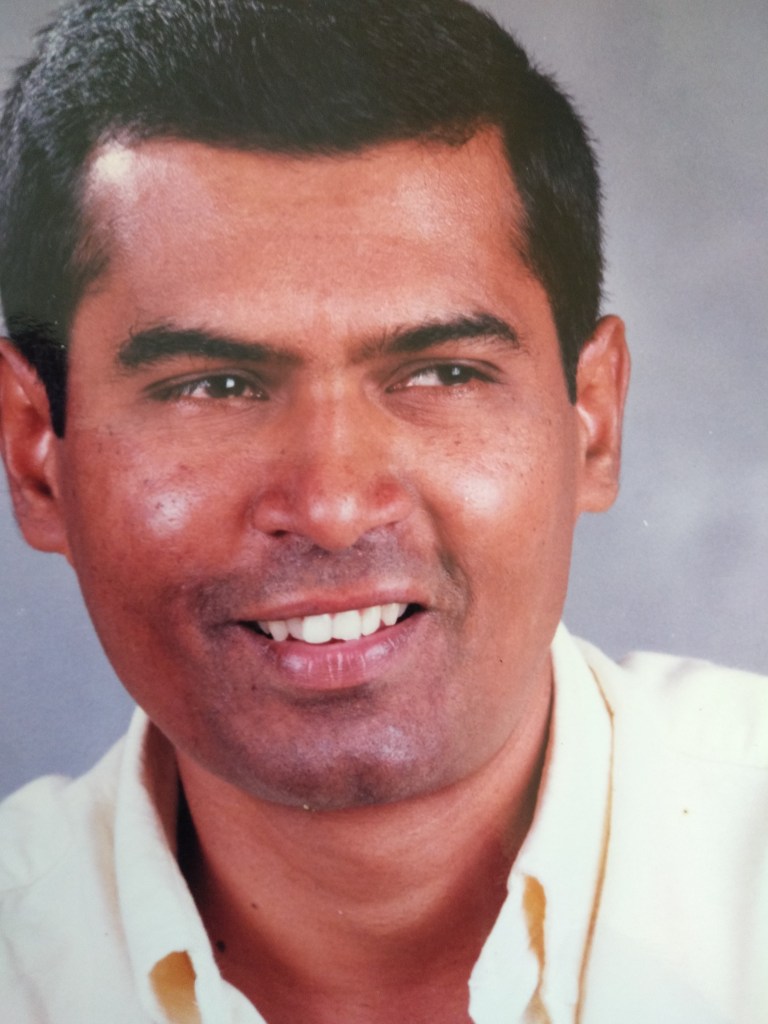
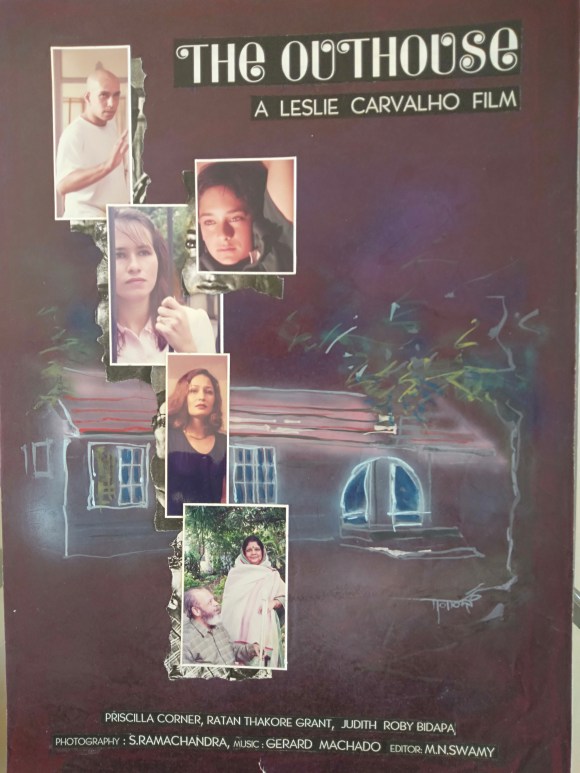
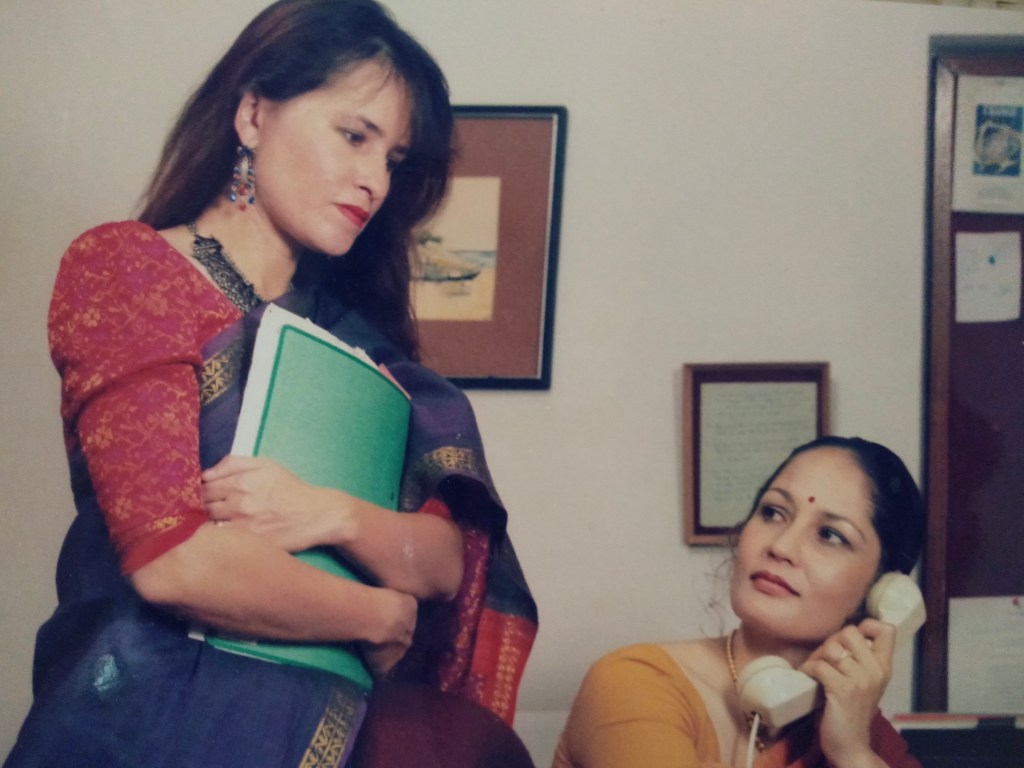




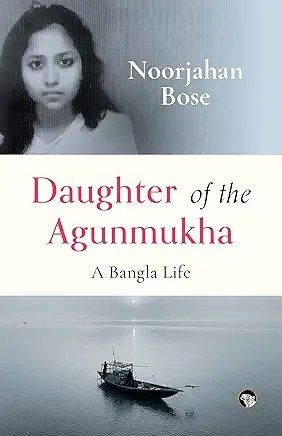
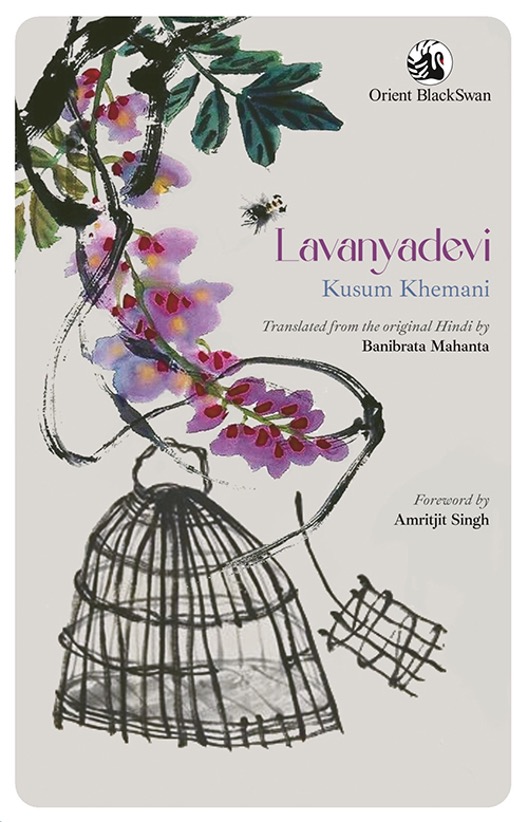
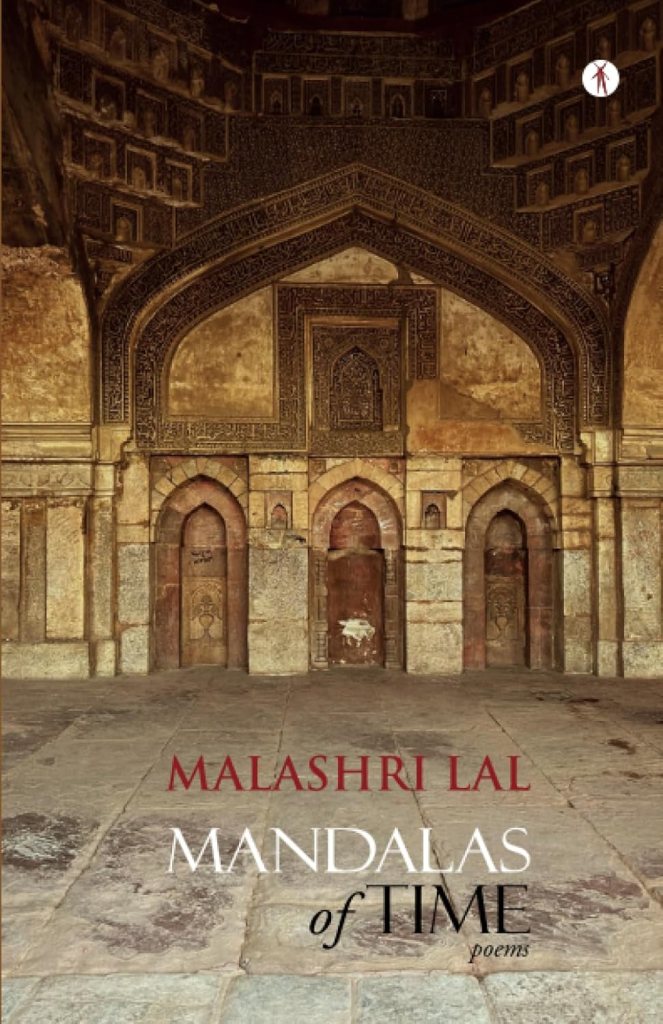
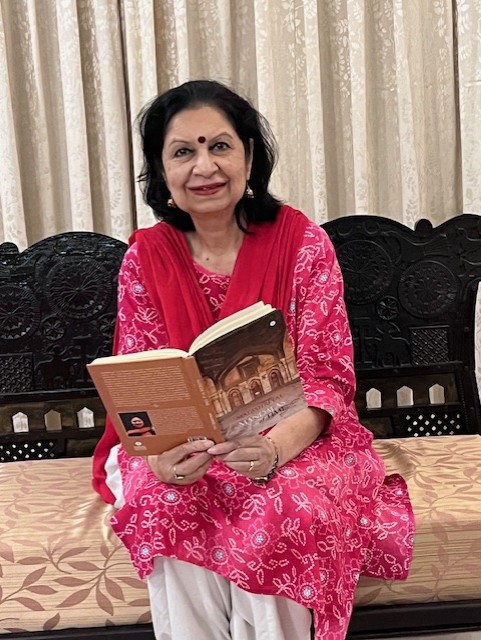
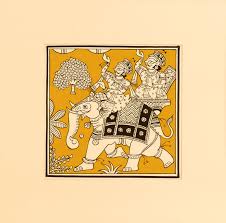
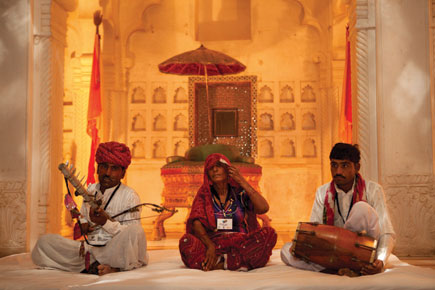
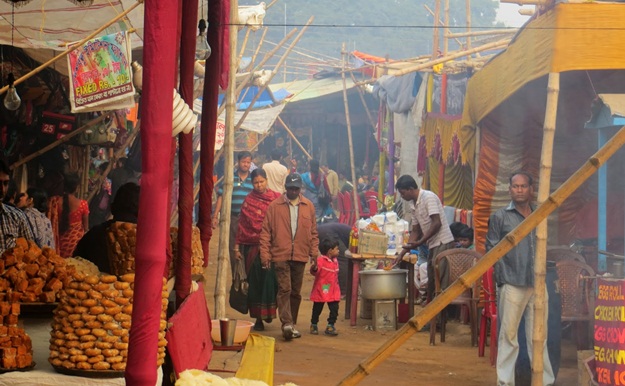
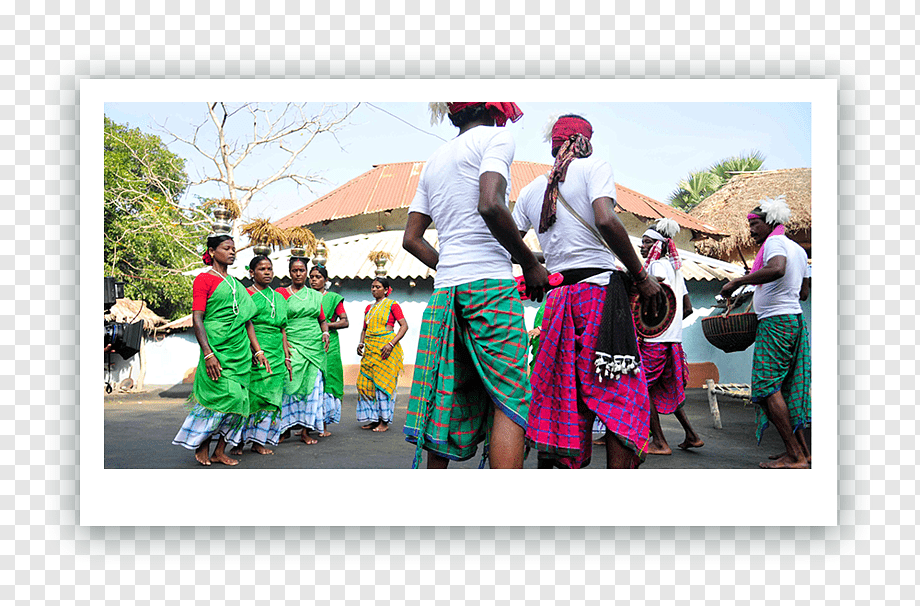
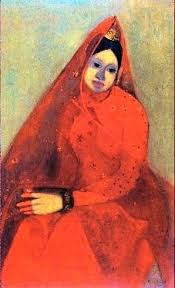

 Borderless