Categories
Discussion

Bridging Cultures across Time and Space

In Conversation with Translators

Translators are bridge builders across cultures, time and place. We have interviewed five of them from South Asia. While the translators we have interviewed are academics, they have all ventured further than the bounds of academia towards evolving a larger literary persona.

The doyen of translation and the queen of historical fiction, Aruna Chakravarti,  and poet, critic and translator, Radha Chakravarty , feel their experience at bridging cultures has impacted their creative writing aswell. Somdatta Mandal, is prolific with a huge barrage of translations ranging from Tagore, to women to travellers, despite being an essayist and reviewer, claims she does not do creative writing and views translations as her passion. Whereas eminent professor and essayist from Bangladesh, Fakrul Alam tells us that translating helped him as a teacher too. Fazal Baloch, translator and columnist from Balochistan, tells us that translation is immersive, creative and an art into itself. We started the conversation with the most basic question – how do they choose the text they want to translate…

How do you choose which texts to translate?
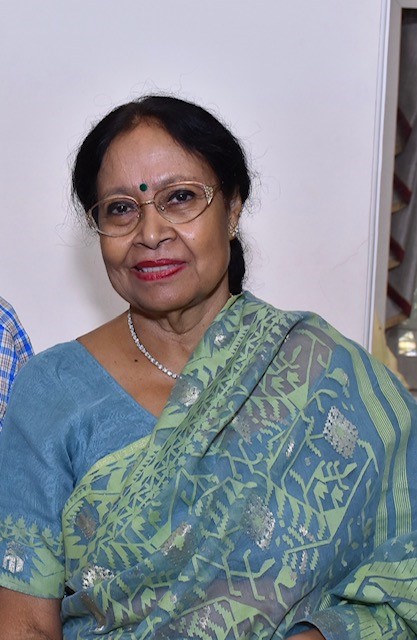
Aruna Chakravarti

Aruna Chakravarti: A translation is an attempt at communication on behalf of a culture, a tradition and a literature. Choosing an author and, more importantly, the most significant areas of his or her work are the first steps towards this communication, because it is only through translation that masterpieces from a small provincial culture become universal ones. Since I come from Bengal, I have always chosen the best of its literature for translation. My first translation was of Rabindranath Tagore’s lyrics. Rabindranath once said that even if all his other work fades to oblivion, his songs would remain. Saratchandra Chattopadhyay, a leading writer of 19th and early 20th century Bengal, considered Srikanta the best of his novels and the most suited to be conveyed to a global readership. I translated Srikanta. Sunil Gangopadhyay is hailed as the most eminent writer of present-day Bengal.  My translations of his novels and short stories are extraordinarily well received by non-Bengali readers, to this day.

Radha Chakravarty

Radha Chakravarty: Every occasion is different. Sometimes a text chooses itself because I feel compelled to translate it. Sometimes I select texts to translate, in response to suggestions or requests from editors, readers and friends who read. Several of my books in translation evolved alongside my research interests as a scholar and academic. For instance, Vermillion Clouds, my anthology of stories by Bengali women, developed from my general interest in feminist literature and my desire to bring texts from our own culture to the English-speaking world. My translations of Mahasweta Devi’s writings, especially the stories on motherhood in the collection titled In the Name of the Mother, happened when I was working on a chapter about Mahasweta for my PhD thesis. Our Santiniketan, my translation of her childhood memoir, emerged from my interest in her writings, as well as my admiration for Rabindranath Tagore. The translations of Chokher Bali1, Farewell Song (Shesher Kabita) and Four Chapters reflect my special fascination with Tagore’s woman-centred novels, for this was also the subject of my post-doctoral work. Later, I developed this research into my book Novelist Tagore: Gender and Modernity in Selected Texts. For my edited anthology Shades of Difference, a compilation of Tagore’s works on the theme of universality in heterogeneity, the selection involved a great deal of thinking and research. And translating Kazi Nazrul Islam’s essays turned out to be an incredible learning experience.
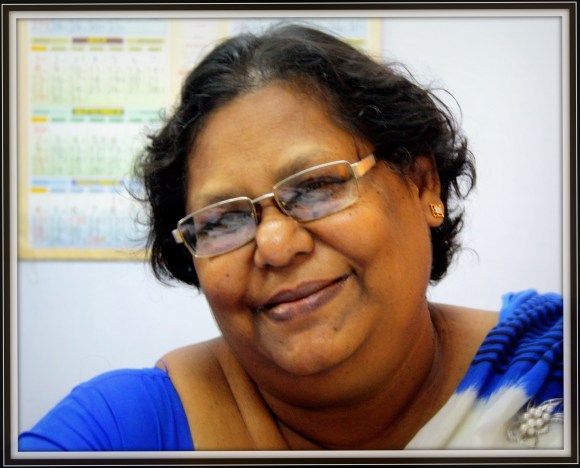
Somdatta Mandal

Somdatta Mandal: I have been translating different kinds of texts over the last couple of decades, and I have no fixed agenda of what I choose to translate. Usually, I am assigned some particular text by the author or a publisher, but sometimes I pick up texts which I like to do on my own. Since I have been working and researching on travel writing for a long time, I have chosen and translated several travel texts from Bengali to English written by women during the colonial times. I have also translated a lot of Rabindranath Tagore’s essays, letters and memoirs of different women related to him. Recently I translated a seminal Bengali travel text of a sadhu’s sojourn in the Himalayas in the late nineteenth century. I have a huge bucket list of texts that I would love to translate provided I find some publisher willing to undertake it. Since copyright permissions have become quite rigid and complicated nowadays, I have learnt from my own experience that it is always advisable to seek permission from the respective authorities before venturing into translating anything. Earlier I was naïve to translate stories which I liked without seeking necessary permission from the copyright holder and those projects ultimately did not see the light of day.
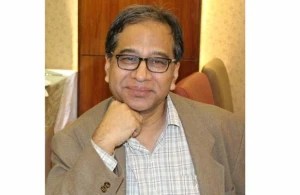
Fakrul Alam

Fakrul Alam: I have no fixed policy on this issue. Sometimes the texts choose me, so to speak. For instance, I began translating poems from Bengali when I first read Jibanananda Das’s “Banalata Sen”. The poem got hold of me and would not let go. I felt at one point an intense desire to translate it and read more of Jibanananda’s poems. Translating the poem elated me and having the end product in my hand in a printed page was joyous. The more poems I read by Jibanananda afterwards, the more I felt like rendering them into English, as if to share my delight and excitement at coming across such wonderful poems with readers who would not have read them in Bengali. That led to my first book of translations, Jibanananda Das: Selected Poems (Dhaka, UPL, 1999). As I ended my work on Jibanananda I thought: why not translate some poems by Rabindranath too? I had climbed one very high mountain satisfactorily and so why not venture forth and climb the topmost peak of Bengali literature?  And so, I began translating Rabindranath’s poems as well as his songs. I had grown up with them, but till now had never imagined I could render them into English. Kumkum Bhattacharya, a dear friend who at that time was in charge of Viswa-Bharati’s publishing wing, Granthana Vibhaga, had seen samples of my work and told me to think of an anthology of his translated works to be published in Tagore’s sesquicentenary year for them. This led me to the poems, prose pieces and songs by him that I translated for The Essential Tagore (Cambridge, Mass, Harvard UP, 2011 and Kolkata: Viswa Bharati, 2011), a book that I had co-edited (with Radha Chakravarty). My last book of translations, Gitabitan: Selected Song-Lyrics of Rabindranath Tagore (Dhaka: Journeyman Books, 2023) alsocame out of this same compulsion of translating works in Bengali. This particular work is a book of translations of nearly 300 songs that I love to listen to again and again—songs that made me feel every now and then that I had to translate them, especially when I heard them sung by a favourite Tagore singer. My translations of a few Kazi Nazrul Islam’s poems and some of his songs are also the result of such compulsive feelings. 

However, I also translated some works because I was requested to do so by people who knew about my Jibanananda Das and Tagore translations and who felt that I would be a competent translator of works they felt were worth presenting to readers in English versions of Bengali books very dear to them. My three translations of works by Sheikh Mujibur Rahman, The Unfinished Memoirs (Dhaka: UPL Books, 2012), The Prison Dairies (Dhaka: Bangla Academy, 2017), and New China 1952 (Dhaka: Bangla Academy, 2021) were all outcomes of requests made to me to translate them. Translating Ocean of Sorrow, the epic 1891 novel by Mir Mosharraf Hossain, has been the most challenging translating work I have had to undertake till now (Dhaka: Bangla Academy, 2016). I would not have dared take on the task of translating such a long and demanding prose work if Shamsuzzaman Khan, the Director of the Bangla Academy of that period, had not kept requesting me to translate this classic of Bengali Literature.

I will end my response to this question by saying that every now and then I translate poems and prose pieces by leading writers who are my contemporaries and who keep requesting me to translate them. Occasionally, I will also translate poems by major poets of our country of the last century—poets like Shamsur Rahman and Al Mahmud—because a poem or two by them had gripped me and made me feel like venturing forth into the realm of translation.  
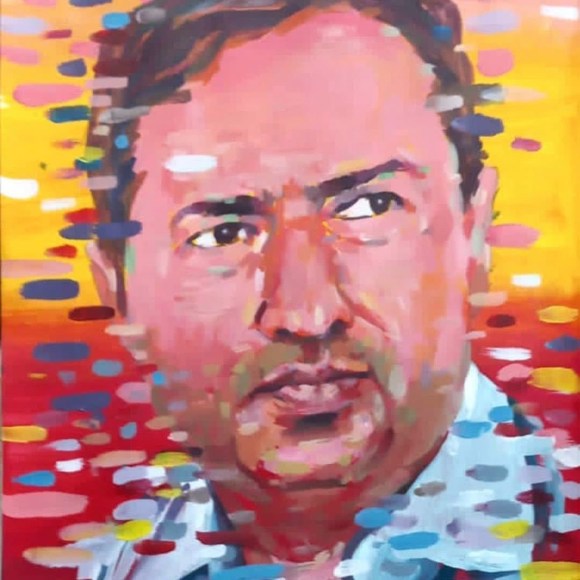
Fazal Baloch

Fazal Baloch: Translating poetry and prose are two very different endeavors. Poetry often makes an immediate impact. Sometimes just a few lines strike me powerfully on the first reading, creating an atmosphere that sets the translation process in motion. In other words, I tend to translate the verses that stir something in me or resonate deeply.

Prose translation, by contrast, works differently. It usually unfolds after a longer process and often requires multiple readings of the text. At times, it even calls for a more deliberate, conscious effort.

Does translating impact your own writing?

Aruna Chakravarti: Yes, it does.  While translating the great masters of Bengali literature I have learned much that has impacted my own writing. From Rabindranath I learned that prose need not necessarily be dry and matter of fact. It could be imbued with lyricism without appearing sentimental and over emotional.  Saratchandra taught me the importance of brevity and precision. Search all his novels and you will not find one superfluous word. I try to follow his example and shun over-writing. From Sunil Gangopadhyay, I learned the art of dialogue. His direct, no-nonsense style and use of colloquialisms work best in dialogue.  

Radha Chakravarty: Yes indeed. As I have just indicated in my answer to your previous question, my translations often take a course parallel to my research, and the two strands of my work sometimes become inseparably interrelated. In my critical works on Indian literature, I remain conscious of bringing these writings to an audience beyond India. Hence an element of cultural translation infuses my analysis of texts by Indian writers. In my own English poetry, when I write about Bengali settings and themes, bilingual overtones often seep in.

Somdatta Mandal: No, not at all. I am not a creative writer per se, so there is no way that translation can influence my own writing.

Fakrul Alam: I will start answering the question by saying that apart from translating and writing nonfiction essays in the creative mode, I have not authored literary works. I am first and foremost an academic. Inevitably, translating Rabindranath’s works have impacted on me academically. By now I have at least one collection of essays on various aspects of Rabindranath’s life and enough essays on him that can lead to another such book. No doubt coming to know Rabindranath so intimately through the kind of close reading that is essential for translation work has made me more sensitive to him as a thinker, educator and visionary, as well as a poet and writer of prose and fictional works. Reading literary creations by him, his letters and lectures that I came across because of my involvement with his work has also lead me to editing; the work I did as co-editor of The Essential Tagore is surely proof of that.

Let me add that my translations have also impacted on my teaching. I am now able to draw on comparisons with Bangladeshi writers and Bengali literature for comparison and contrast in the classroom when I teach texts written in English to my students.  Reading up on the authors I have translated has also equipped me to be more aware of Bangladesh’s roots and national identity formation. This has led me to essays on these subjects.   

Fazal Baloch: Translation is not separate from the process of creativity. Through it, we enter a new world of meaning and explore the experiences of others through a creative lens. As a writer, I find translation essential for nurturing and enriching the mind. It is also worth noting that translation is not partial or fragmentary but a complete and holistic act. When I translate, I move with its current just as I do when I write. Both processes unfold in their own rhythm without obstructing one another. In fact, it is through translation that I have come to recognize and understand great works of creativity in a deeper way.

What is the most challenging part of translation? Do you need to research when you translate?

Aruna Chakravarti:  Yes, since a major part of my translation work was set in 19th century Bengal, I needed to understand and imbibe the ethos and ambience of the times. Being a Probasi Bangali who has lived outside Bengal all her life, this was important. Consequently, a fair amount of research was involved. This has stood me in good stead in my own writing.

Speaking about challenges there are many. The more divergent the two literary traditions the greater the dilemma of the translator. But the test of a good translation is the absence of uncertainty, hesitation and strain. Since translation undertakes to build bridges across cultures it is important that it reads like a creative work. The language must be flowing and spontaneous; one that readers from other languages and cultures don’t feel alienated from. One that they are willing, even eager to read. One they can sail through with effortless ease.

On the other hand, readability or beauty of language cannot be the sole test of a good translation. If the translator becomes obsessed with sounding right in the target language, he/she could run the risk of diluting and distorting the original text which would be a disservice to the author. The reader should hear the author’s voice and be conscious of the source language and culture, down to the finest nuance, if the translation is a truly good one. A good translator is constantly trying to keep a balance between Beauty and Fidelity. No translation is perfect but the finer the balance…the better the translation.

Radha Chakravarty: When translating from Bengali into a culturally distant language like English, the greatest challenge is to bring the spirit of the original alive in the target language, for readers who may not be familiar with the local context. Literal translation does not work.

The need for research can vary, depending on the nature of the text being translated, the purpose of the translation, and the target readership. Some texts travel easily across cultural and linguistic borders, while others need to be interpreted in relation to the time, place and milieu to which they belong. The latter demand more research on the part of the translator, who must act as the cultural mediator or interpreter. When translating Tagore’s writings for my anthology The Land of Cards: Stories, Poems and Plays for Children, I found that these works speak to all children without requiring too much explanation or contextualization; very often the context becomes clear from the writing itself. But Boyhood Days, my translation of Tagore’s childhood memories in Chhelebela, required greater contextualization, for present day readers to grasp unfamiliar details of life in old-world Kolkata.

Somdatta Mandal: The most challenging part of translation is to maintain the readability of the text which I consider to be of foremost importance for any text to communicate with its readers. However, this readability should not be achieved at the cost of omission or suppression of portions of the original. Instead of rigidly following one particular criterion, usually my focus has been to choose what best communicates the nuances of the Source Language [SL]. Sometimes of course when it is best to do a literal translation of cultural material rather than obfuscate it by transforming it into an alien idiom taken from the target language resulting thus in a significant loss of the culture reflected in the original text.

As for doing research when I translate, the answer depends on what kind of text I am working on. If it is a serious academic piece, then occasionally I must consult the dictionary or the thesaurus for the most suitable word. Sometimes contextual or historical references need special attention and background research but such instances are occasional. What really attracts me towards translation is the inherent joy of creativity – of being free to frame the writer’s thoughts in your own words.

Fakrul Alam: The most challenging part of translation is getting it right, that is to say, conveying the words and feel of the original as accurately as possible.  But “getting it right” also means being able to convey the form and tone of the original as well as is possible.  In every way the translator must carry on his translating shoulder the burden of accuracy whenever and whatever he or she is into translating. In this respect a translator like me is different from creative people who take on the task of translating ready to take liberties to render the original in distinctive ways that will bear their signatures. They do not feel constrained like translators of my kind who never dare to move away more than a little distance from the original in order to convey the tone and the meaning as imaginatively and creatively as is possible for them.

I have a simple method when it comes to translating. My first draft is the result of no aid other than printed and/or online dictionaries. If there are allusions I come across when readying the first draft, I Google. Lately, AI has been very helpful in this regard—it even gives me the English equivalence for quite a few Bengali words when, for instance, I type the title in English of a Bengali song-lyric by Rabindranath. Then I compare my translation with that of other translations available online to see if my version is deviating to much from the ones I see.

Occasionally, I will need to do research on the work I am translating. In translating Mir Mosharraf Hossein’s epic novel, for example, I kept searching on the net to know more about the characters and situations of history he had rendered into his narrative than I knew from his writing. I will also do a lot of research if and when I feel a poem or prose work needs to be contextualized and footnotes or end notes needed by readers to understand what is being depicted fully. Thus, for Jibanananda Das’s “Banalata Sen” alone I had to Google a number of times to understand fully the imaginative geography of the piece and get a feel of the real-life equivalents of the places and characters mentioned. In particular, for the first stanza of the poem I had to look for glossaries I intended to provide on words like Vimbisar, Vidarbha, Sravasti and Natore for overseas readers.

Fazal Baloch: Translation is not simply the process of transferring of text from one language to another; it is more like a conversation between cultures, a process through which they come closer and begin to understand one another.

For me, the most challenging part of translation is working with idiomatic and metaphorical expressions. Every language has its own unique idioms and linguistic frameworks, and these are often difficult to carry over into another language. To meet this challenge, I often need to conduct research and explore the etymological roots of words.

What is more important in a translation? Capturing the essence of the work or accuracy?

Aruna Chakravarti:  Capturing the essence of the work is certainly more important than accuracy.  Translators shouldn’t translate words. They should convey the spirit, the intent of the work. There are some authors so obsessed with their own use of language… they want translators to find the exact equivalent for each word they have written. This is a bad idea. Firstly, it is simply not possible to find exact equivalents. At least, not in languages as diverse as Bengali and English. Secondly, the job of the translator is not to satisfy the author’s ego. It is to transfer a literary gem from a small readership to a larger, more inclusive one. If one is unable to do so, the author revered in his own country will fail to speak meaningfully across the language barrier and the onus of the failure will fall on the translator.

Radha Chakravarty: A literary text is a living reality, not a corpus of printed words on the page. It is this living spirit that needs to animate the translated text, rather than precise verbal equivalence. The popular emphasis on fidelity in translation is misplaced. For literary translation cannot be a mechanical exercise. It is, in its own right, a creative process, which depends, not on rigid verbal ‘accuracy’, but on the translator’s ability to recreate, in another language, the very soul of the original. Perhaps ‘transcreation’ is a good word to describe this.

Somdatta Mandal: Regarding translation, it must be kept in mind that though something is always lost in translation, one must always attempt to strike the right balance between oversimplification and over-explanation. Translation is also creative and the challenges it poses are significant. The intricate navigation between the source language and the translated language shows that there are two major meanings of translation in South Asia – bhashantar, altering the language, and anuvad, retelling the story. Without going into major theoretical analyses that crowd translation studies per se, I feel one should have an equal grasp over the SL and the TL [Translated Language] to make a translated piece readable. I translate between two languages – Bengali and English. Sometimes of course, cultural fidelity must be prioritised over linguistic fidelity.

Translating has caught up in a big way over the past five or six years. Now big publishing houses are venturing into publishing from regional bhasha [Language] literatures into English and so the possibilities are endless. Now every other day we come across new titles which are translations of regional novels or short stories. Translating should have as its prime motive current readability and not always rigidly adhering to being very particular about remaining close to each individual line of the source text. The target readership should also be kept in mind and so the choice of words used, and glossary should be eliminated or kept to a minimum. The meaning of a foreign word should as far as possible be embedded within the text itself. All these issues would make translating an enjoyable experience. Way back in 1995, Lawrence Venuti popularised the term ‘foreignized’ so that readers can get access to the source culture as well. He used the term to explain the kind of translation that ‘signifies the difference of the foreign text by disrupting the cultural codes that prevail in the target language.’ Thus, the idea of translation is not to just communicate the plot but also to make readers familiar with the traditions, rituals, and world views of the other.

Fakrul Alam: To me the most important goal is to come as close to the original in every possible way. This means aiming for accuracy, but surely it also means coming as near as possible to the essence of the original. In other words, as far as I am concerned, accuracy will lead to essence. But as I indicate above, most creative writers doing translation will go for the essence and forego accuracy. But knowing something will be lost in translation I will try to minimize the loss by sticking close to the original in every possible way—word meaning, the rhythm of speech, sound elements and imagery. Of course, a man’s reach should exceed his grasp but what else is going to bring the translator close to cloud nine? 

Fazal Baloch: Both essence and accuracy matter, but in poetry translation, the limited space to maneuver often makes essence the priority. As I mentioned earlier, the goal of translation is not only to carry over the meaning of the words but also the rhythm, tone, emotion, and cultural context that bring the original to life.

In practice, this means the translator has to balance several tasks at once: preserving cadence and rhythm, maintaining poetic flow, and ensuring semantic clarity. Yet above all, the translator must not lose the spirit of the original when choosing between essence and accuracy.

Prose, on the other hand, offers more freedom. Because it allows greater room to preserve meaning, accuracy tends to matter more, though essence still plays a role.

In short, poetry often gives more weight to essence, while prose allows essence and accuracy to work together more harmoniously.

  1. Best friend from Childhood, literally Sand from the Eye ↩︎

Bios of Featured Translators:

Aruna Chakravarti has been the principal of a prestigious women’s college of Delhi University for ten years. She is also a well-known academic, creative writer and translator. Her novels, JorasankoDaughters of JorasankoThe InheritorsSuralakshmi Villa and The Mendicant Prince have sold widely and received rave reviews. She has two collections of short stories and many translations, the latest being Rising from the Dust. She has also received awards such as the Vaitalik Award, Sahitya Akademi Award and Sarat Puraskar for her translations.

Radha Chakravarty is a poet, critic and translator based in Delhi, India. She has published over 20 books, including translations of major Bengali writers such as Rabindranath Tagore, Bankimchandra Chatterjee and Kazi Nazrul Islam, anthologies of South Asian writing, and several critical monographs. She has co-edited The Essential Tagore (Harvard and Visva-Bharati), named Book of the Year 2011 by Martha Nussbaum. She was Professor of Comparative Literature and Translation Studies at Ambedkar University Delhi.

Somdatta Mandal is the Former Professor of English and Chairperson at the Department of English & Other Modern European Languages, Visva-Bharati, Santiniketan. Somdatta has a keen interest in translation and travel writing.

Fakrul Alam is an academic, translator and writer from Bangladesh. He has translated works of Jibonananda Das and Rabindranath Tagore into English and is the recipient of Bangla Academy Literary Award (2012) for translation and SAARC Literary Award (2012).

Fazal Baloch is a writer and translator. So far, he has published seven English anthologies and one Urdu collection of his translations. His. works include “God and the Blind Man: Selected short stories by Munir Ahmed Badini (Balochistan Academy of Science and Research, 2020), The Broken Verses: Aphorism and Epigrams by Sayad Hashumi (Balochi Academy Quetta 2021), Rising Stars: English Translations of Selected Balochi Literature by the Writers under the Age of Fifty (Pakistan Academy of Letters Islamabad 2022), Muntakhib Balochi Kahaniyan (Pakistan Academy of Letters Islamabad 2022), Adam’s Remorse and Other Poems by Akbar Barakzai (Balochi Academy Quetta 2023), “Why Does the Moon Look So Beautiful?: Selected short stories by Naguman” (Balochistan Academy Turbat, revised edition 2024) and “Every Verse for You”: Selected Poetry by Mubarak Qazi (Balochistan Academy Turbat, revised edition 2025). His translations have also been included in different anthologies such as ‘Silence between the Note’ (Dhauli Books India, 2019), Unheard Voices: Twenty-One Short Stories in Balochi with English translations (Uppsala University Sweden, 2022) and ‘Monalisa No Longer Smiles: An Anthology of Writings from across the World (Om Books International, 2022). He also contributes literary columns to various newspapers and magazines. He lives in Turbat Balochistan where he serves as an Assistant Professor at Atta Shad Degree College Turbat.     

(The interviews were conducted via email by Mitali Chakravarty)

PLEASE NOTE: ARTICLES CAN ONLY BE REPRODUCED IN OTHER SITES WITH DUE ACKNOWLEDGEMENT TO BORDERLESS JOURNAL

Click here to access the Borderless anthology, Monalisa No Longer Smiles

Click here to access Monalisa No Longer Smiles on Kindle Amazon International

Categories
Interview Review

The Subliminal World of Radha Chakravarty’s Poetry

In conversation with Radha Chakravarty about her debut poetry collection, Subliminal, published by Hawakal Publishers

Radha Chakravarty

Words cross porous walls
In the house of translation—
Leaf cells breathe new air.

We all know of her as a translator par excellence. But did you know that Radha Chakravarty has another aspect to her creative self? She writes poetry. Chakravarty’s poetry delves into the minute, the small objects of life and integrates them into a larger whole for she writes introspectively. She writes of the kantha — a coverlet made for a baby out of soft old sarees, of her grandmother’s saree, a box to store betel leaves… Her poetry translates the culture with which she grew up to weave in the smaller things into the larger framework of life:

Fleet fingers, fashioning
silent fables, designed to swaddle
innocent infant dreams, shielding
silk-soft folds of newborn skin
from reality’s needle-pricks,
abrasive touch of life in the raw.

--'Designs in Kantha’

She has poignant poems about what she observes her in daily life:

At the traffic light she appears 
holding jasmine garlands
selling at your car window for the price
of bare survival, the promise
of a love she never had, her eyes
emptied of the fragrance
of a spring that, for her, never came.

--‘Flower Seller’

Some of her strongest poems focus on women from Indian mythology. She invokes the persona of Sita and Ahalya — and even the ancient legendary Bengali woman astrologer and poet, Khona. It is a collection which while exploring the poet’s own inner being, the subliminal mind, takes us into a traditional Bengali household to create a feeling of Bengaliness in English. At no point should one assume this Bengaliness is provincial — it is the same flavour that explores Bosphorus and Mount Everest from a universal perspective and comments independently on the riots that reft Delhi in 2020… where she concludes on the aftermath— “after love left us    and hate filled the air.”

The poems talk to each other to create a loose structure that gives a glimpse into the mind of the poetic persona — all the thoughts that populate the unseen crevices of her being.

In Subliminal, her debut poetry book, Radha Chakravarty has brought to us glimpses of her times and travels from her own perspective where the deep set tones of heritage weave a nostalgic beam of poetic cadences. Chakravarty’s poems also appear in numerous journals and anthologies. She has published over 20 books, including translations of major Bengali writers such as Rabindranath Tagore, Bankim Chandra Chatterjee, Mahasweta Devi and Kazi Nazrul Islam, anthologies of South Asian writing, and several critical monographs. She has co-edited The Essential Tagore (Harvard and Visva-Bharati), named ‘Book of the Year’ 2011 by Martha Nussbaum.

In this conversation, Radha Chakravarty delves deeper into her poetry and her debut poetry book, Subliminal.

Your titular poem ‘Subliminal’ is around advertisements on TV. Tell us why you opted to name your collection after this poem.

Most of the poems in Subliminal are independent compositions, not planned for a pre-conceived anthology. But when I drew them together for this book, the title of the poem about TV advertisements appeared just right for the whole collection, because my poetry actually delves beneath surfaces to tease out the hidden stories and submerged realities that drive our lives. And very often, those concealed truths are startlingly different from outward appearances. I think much of my poetry derives its energy from the tensions between our illusory outer lives and the realities that lurk within. In ‘Memories of Loss’, for example, I speak of beautiful things that conceal painful stories:

In a seashell held to the ear
the murmur of a distant ocean

In the veins of a fallen leaf
the hint of a lost green spring

In the hiss of logs in the fire,
the sighing of wind in vanished trees

In the butterfly’s bold, bright wings,
The trace of silken cocoon dreams

So, when and why did you start writing poetry?

I can’t remember when I started. I think I was always scribbling lines and fragments of verse, without taking them seriously. Poetry for me was the mode for saying the unsayable, expressing what one was not officially expected to put down in words. In a way, I was talking to myself, or to an invisible audience. Years later, going public with my poems demanded an act of courage. The confidence to actually publish my poems came at the urging of friends who were poets. Somehow, they assumed, or seemed to know from reading my published work in other forms, that I wrote poetry too.

Did being a translator of great writers have an impact on your poetry? How?

Yes, definitely. In particular, translating Tagore’s Shesher Kabita (as Farewell Song), his verses for children, the lush, lyrical prose of Bankimchandra Chatterjee (Kapalkundala) and the stylistic experiments of contemporary Bengali writers from India and Bangladesh (in my books Crossings: Stories from India and Bangladesh, Writing Feminism: South Asian Voices, Writing Freedom: South Asian Voices and Vermillion Clouds) sensitised me to the way poetic language works, and how the idiom, rhythm and resonances change when you translate from one language to another. Translating poetry has its challenges, but it also refined my own work as a poet. Let me share a few lines of poetry from Farewell Song, my translation of Tagore’s novel Shesher Kabita:

Sometime, when you are at ease, 
When from the shores of the past,
The night-wind sighs, in the spring breeze,
The sky steeped in tears of fallen bakul flowers,
Seek me then, in the corners of your heart,
For traces left behind. In the twilight of forgetting,
Perhaps a glimmer of light will be seen,
The nameless image of a dream.
And yet it is no dream,
For my love, to me, is the truest thing …

What writers, artists or musicians have impacted your poetry?

For me, writing is closely associated with the love for reading. Intimacy with beloved texts, and interactions with poets from diverse cultures during my extensive travels, has proved inspirational.

Poetry is also about the art of listening. As a child I loved the sound, rhythm and vivacity of Bengali children’s rhymes in the voice of my great-grandmother Renuka Chakrabarti. She has always been a figure of inspiration for me, a literary foremother who dared to aspire to the world of words at a time when women of her circle were not allowed to read and write. A child bride married into a family of erudite men, and consumed by curiosity about the forbidden act of reading, she took to hiding under her father-in-law’s four-poster bed and trying to decipher the alphabet from newspapers. One day he caught her in the act. Terrified, she crept out from her hiding place, and confessed to the ‘crime’ of trying to read. Things could have gone badly for her, but her father-in-law was an enlightened individual. He understood her craving to learn, and promised that he would teach her to read and write. Under his tutelage, and through her own passion for learning, she became an erudite woman, equally proficient in English and Bengali, an accomplished but unpublished poet whose legacy I feel I have inherited. Subliminal is dedicated to her.

As a child I absorbed both Bengali and English poetry through my pores because in our home, poetry, and music were all around me. I was inspired by Tagore and Nazrul, but also by modern Bengali poets such as Jibanananda Das, Sankho Ghosh and Shamsur Rahman. In my college days, as a student of English Literature, I loved the poetry of Shakespeare, Donne, Yeats, T. S. Eliot and the Romantics.

Later, I discovered the power of women’s poetry: Emily Dickinson, Sylvia Plath and Adrienne Rich, to name a few. I am fascinated by the figure of Chandrabati, the medieval Bengali woman poet who composed her own powerful version of the Ramayana. Art and music provide a wellspring of inspiration too, for poetry can have strong visual and aural dimensions.

You translate from Bengali into English. How is the process of writing poetry different from the process of translation, especially as some of your poetry is steeped in Bengaliness, almost as if you are translating your experiences for all of us?

Translation involves interpreting and communicating another author’s words for readers in another language. Writing poetry is about communicating my own thoughts, emotions and intuitions in my own words. Translation requires adherence to a pre-existing source text. When writing poetry, there is no prior text to respond to, only the text that emerges from one’s own act of imagination. That brings greater freedom, but also a different kind of challenge. Both literary translation and the composition of poetry are creative processes, though. Mere linguistic proficiency is not enough to bring a literary work or a translated text to life.

English is not our mother tongue. And yet you write in it. Can you explain why?

Having grown up outside Bengal, I have no formal training in Bengali. I was taught advanced Bengali at home by my grandfather and acquired my deep love for the language through my wide exposure to books, music, and performances in Bengali, from a very early age. I was educated in an English medium school. At University too, I studied English Literature. Hence, like many others who have grown up in Indian cities, I am habituated to writing in English. I translate from Bengali, but write and publish in English, the language of my education and professional experience. Bengali belongs more to my personal, more intimate domain, less to my field of public interactions.

Both Bengali and English are integral to my consciousness, and I guess this bilingual sensibility often surfaces in my poetry. In many poems, such as ‘The Casket of Secret Stories,’ ‘The Homecoming’ or ‘In Search of Shantiniketan’, Bengali words come in naturally because of the cultural matrix in which such poems are embedded. ‘The Casket of Secret Stories’ is inspired by vivid childhood memories of my great-grandmother’s  daily ritual of rolling paan, betel leaves stuffed with fragrant spices, and arranging them in the metal box, her paaner bata[1]. When she took her afternoon nap, my cousins and I would steal and eat the forbidden paan from the box, and pretend innocence when she woke up and found all her paan gone. Of course, from our red-stained teeth and lips, she understood very well who the culprits were. But she never let on that she knew. It was only later, after I grew up, that I realised what the paan ritual signified for the housebound women of her time:

In the delicious telling,
bright red juice trickling
from the mouth, staining
tongue and teeth, savouring
the covert knowledge
of what life felt like in dark corners
of the home’s secluded inner quarters,
what the world on the outside looked like
from behind veils, screens,
barred windows and closed courtyards
where women’s days began and ended,
leaving for posterity
this precious closed kaansha* casket,
redolent with the aroma of lost stories

*Bronze

But I don’t agree that all my poetry is steeped in Bengali. In fact, in most of my poems, Bengali expressions don’t feature at all, because the subjects have a much wider range of reference. As a globe trotter, I have written about different places and journeys between places.

Take ‘Still’, which is about Mount Everest seen from Nagarkot in Nepal. Or ‘Continental Drift’, about the Bosphorus ferry that connects Asia with Europe. Such poems reflect a global sensibility. My poems on the Pandemic are not coloured by specific Bengali experiences. They have a universal resonance. I contributed to Pandemic: A Worldwide Community Poem (Muse Pie Press, USA), a collaborative effort to which poets from many different countries contributed their lines. It was a unique composition that connected my personal experience of the Pandemic with the diverse experiences of poets from other parts of the world. The poem was nominated for the Pushcart Prize. I guess my poems explore the tensions between rootedness and a global consciousness.

What are the themes and issues that move you?

I tend to write about things that carry a strong personal charge, but also connect with general human experience. My poems are driven by basic human emotions, memory, desire, associations, relationships, and also by social themes and issues. Specific events, private or public, often trigger poems that widen out to ask bigger questions arising from the immediate situation.

Sometimes, poetry can also become for me what T. S. Eliot calls an “escape from personality,” where one adopts a voice that is not one’s own and assume a different identity. ‘The Wishing Tree’ and the sequence titled ‘Seductions’ work as “mask” poems, using voices other than my own. This offers immense creative potential, similar to creating imaginary characters in works of fiction.

There are a lot of women-centred poems in Subliminal. Consider, for example, ‘Designs in Kantha’, ‘Alien’, ‘River/Woman’, ‘That Girl’, ‘The Severed Tongue’ and ‘Walking Through the Flames’. These poems deal with questions of voice and freedom, the body and desire, and the legacy of our foremothers. Some of them are drawn from myth and legend, highlighting the way women tend to be represented in patriarchal discourses.

The natural world and our endangered planet form another thematic strand. I am fascinated by the hidden layers of the psyche, and the unexpected things we discover when we probe beneath the surface veneer of our exterior selves. My poems are also driven by a longing for greater connectivity across the borders that separate us, distress at the growing hatred and violence in our world, and an awareness of the powerful role that words can play in the way we relate to the universe. ‘Peace Process’, ‘After the Riot’ and ‘Borderlines’ express this angst.

How do you use the craft of poetry to address these themes?

Poetry is the art of compression, of saying a lot in very few words. Central to poetry is the image. A single image can carry a welter of associations and resonances, creating layers of meaning that would require many words of explanation in prose. Poems are not about elaborations and explanations. They compel the reader to participate actively in the process of constructing meaning. Reading poetry can become a creative activity too. Poems are also about sound, rhythm and form. I often write “in form” because the challenge of working within the contours of a poetic genre or form actually stretches one’s creative resources. In Subliminal, I have experimented with some difficult short forms, such as the Fibonacci poem, the Skinny, and the sonnet. Take, for instance, the Skinny poem called ‘Jasmine’:

Remember the scent of jasmine in the breeze?
Awakening
tender
memories
bittersweet,
awakening
buried
dormant
desires,
awakening,
in the breeze, the forgotten promise of first love. Remember?

The last two lines of the poem use the same words as the beginning, but to tell a different story. The form demands great economy.

I pay attention to the sound, and even when writing free verse, I care about the rhythm.  Endings are important. Many of my poems carry a twist in the final lines. I mix languages. Bengali words keep cropping up in my English poems.

Are your poems spontaneous or pre-meditated?

The first attempt is usually spontaneous, but then comes the process of rewriting and polishing, which can be very demanding. Some poems come fully formed and require no revision, but generally, I tend to let the first draft hibernate for some time, before looking at it afresh with a critical eye. Often, the final product is unrecognisable.

Which is your favourite poem in this collection and why? Tell us the story around it.

It is hard to choose just one poem. But let us consider ‘Designs in Kantha’, one of my favourites. Maybe the poem is important to me because of the old, old associations of the embroidered kantha with childhood memories of the affection of all the motherly women who enveloped us with their loving care and tenderness. Then came the gradual realisation, as I grew into a woman, of all the intense emotions, the hidden lives that lay concealed between those seemingly innocent layers of fabric. The kantha is a traditional cultural object, but it can also be considered a fabrication, a product of the creative imagination, a story that hides the real, untold story of women’s lives in those times. Behind the dainty stitches lie the secret tales of these women from a bygone era. My poem tries to bring those buried emotions to life.

As a critic, how would you rate your own work?

I think I must be my own harshest critic. Given my academic training, it is very hard to silence that little voice in your head that is constantly analysing your creative work even as you write. To publish one’s poetry is an act of courage. For once your words enter the public domain, they are out of your hands. The final verdict rests with the readers.

Are you planning to bring out more books of poems/ translations? What can we expect from you next?

More poems, I guess. And more translations. Perhaps some poems in translation. My journey has taken so many unpredictable twists and turns, I can never be quite sure of what lies ahead. That is the fascinating thing about writing.

Thank you for giving us your time.

[1] Container for holding Betel leaves or paan

(The online interview has been conducted through emails and the review written by Mitali Chakravarty.)

Click here to read poems from Subliminal.

PLEASE NOTE: ARTICLES CAN ONLY BE REPRODUCED IN OTHER SITES WITH DUE ACKNOWLEDGEMENT TO BORDERLESS JOURNAL. 

Click here to access the Borderless anthology, Monalisa No Longer Smiles

Click here to access Monalisa No Longer Smiles on Kindle Amazon International

Categories
Contents

Borderless, May 2023

Art by Sohana Manzoor

Editorial

Dancing in May? … Click here to read.

Translations

Aparichita by Tagore has been translated from Bengali as The Stranger by Aruna Chakravarti. Click here to read.

The Kabbadi Player, a short story by the late Nadir Ali, has been translated from Punjabi by Amna Ali. Click here to read.

Carnival Time by Masud Khan has been translated from the Bengali poem by Fakrul Alam. Click here to read.

Desolation, a poem by Munir Momin, has been translated from Balochi by Fazal Baloch. Click here to read.

Loneliness, a poem, has been translated from Korean to English by the poet himself, Ihlwha Choi. Click here to read

Jonmodiner Gaan or Birthday Song by Tagore has been translated by Mitali Chakravarty. Click here to read.

Conversations

A conversation with Mitra Phukan about her latest novel, What Will People Say? A Novel along with a brief introduction to the book. Click here to read.

Shantanu Ray Chaudhuri converses with Prerna Gill on her poetry and her new book of poetry, Meanwhile. Click here to read.

Poetry

Click on the names to read the poems

Michael Burch, Lakshmi Kannan, Ryan Quinn Flanagan, Shahriyer Hossain Shetu, Peter Cashorali, K.V. Raghupathi, Wilda Morris, Ashok Suri, William Miller, Khayma Balakrishnan, Md Mujib Ullah, Urmi Chakravorty, Sreekanth Kopuri, Rhys Hughes

Poets, Poetry & Rhys Hughes

In What I Thought I Knew About India When I was Young, Rhys Hughes travels back to his childhood with a soupçon of humour. Click here to read.

Musings/Slices from Life

A Towering Inferno, A Girl-next-door & the Big City

Ratnottama Sengupta writes of actress Jaya Bachchan recounting her first day on the sets of Satyajit Ray’s Mahanagar. Click here to read.

Kissed on Kangaroo Island

Meredith Stephens travels with her camera and her narrative to capture the flora and fauna of the island. Click here to read.

Musings of a Copywriter

In The Reader, Devraj Singh Kalsi revisits his experiences at school. Click here to read.

Notes from Japan

In Making Chop Suey in South Carolina, Suzanne Kamata recaptures a flavour from her past. Click here to read.

Essays

Rabindranath’s Monsoonal Music

Professor Fakrul Alam brings to us Tagore songs in translation and in discussion on the season that follows the scorching heat of summer months. Click here to read.

A Night Hike in Nepal

Ravi Shankar hikes uphill in Nepal on a wet and rainy night along with leeches and water buffaloes. Click here to read.

Moving Images of Tagore

Ratnottama Sengupta talks of Tagore and cinema. Click here to read.

Stories

Threads

Julian Gallo explores addiction. Click here to read.

The Whirlpool

Abdullah Rayhan takes us back to a village in Bangladesh to give a poignant story about a young boy who dreamt of hunting. Click here to read.

Look but with Love

Sreelekha Chatterjee writes a story set in the world of media. Click here to read.

The Mysterious Murder of Adamov Plut

A globe-trotting murder mystery by Paul Mirabile, a sequel to his last month’s story, ‘The Book Hunter’. Click here to read.

Book Excerpts

An excerpt from Aruna Chakravarti’s Daughter’s of Jorasanko describing the last birthday celebration of Tagore. Click here to read.

An excerpt from Bhubaneswar@75 – Perspectives, edited by Bhaskar Parichha/ Charudutta Panigrahi. Click here to read.

Book Reviews

Meenakshi Malhotra revisits Tagore’s Farewell Song, translated from Bengali by Radha Chakravarty. Click here to read.

Somdatta Mandal reviews KR Meera’s Jezebel translated from Malayalam by Abhirami Girija Sriram and K. S. Bijukumar. Click here to read.

Lakshmi Kannan has reviewed Jaydeep Sarangi’s collection of poems, letters in lower case. Click here to read.

Bhaskar Parichha reviews Journey After Midnight – A Punjabi Life: From India to Canada by Ujjal Dosanjh. Click here to read.

PLEASE NOTE: ARTICLES CAN ONLY BE REPRODUCED IN OTHER SITES WITH DUE ACKNOWLEDGEMENT TO BORDERLESS JOURNAL

Click here to access the Borderless anthology, Monalisa No Longer Smiles

Click here to access Monalisa No Longer Smiles on Kindle Amazon International

Categories
Editorial

Dancing in May?

Courtesy: Creative Commons
“May is pretty, May is mild,
Dances like a happy child…”

Annette Wynne (Early twentieth century)

Each month is expressed in a different form by nature in various parts of the world. In the tropics, May is sweltering and hot — peak summer. In the Southern hemisphere, it is cold. However, with climate change setting in, the patterns are changing, and the temperatures are swinging to extremes. Sometimes, one wonders if this is a reflection of human minds, which seem to swing like pendulums to create dissensions and conflicts in the current world. Nothing seems constant and the winds of change have taken on a menacing appearance. If we go by Nazrul’s outlook, destruction is a part of creating a new way of life as he contends in his poem, ‘Ring Bells of Victory’ — “Why fear destruction? It’s the gateway to creation!” Is this how we will move towards ‘dancing like a happy child’?

Mitra Phukan addresses this need for change in her novel, What Will People Say — not with intensity of Nazrul nor in poetry but with a light feathery wand, more in the tradition of Jane Austen. Her narrative reflects on change at various levels to explore the destruction of old customs giving way to new that are more accepting and kinder to inclusivity, addressing issues like widow remarriage in conservative Hindu frameworks, female fellowship and ageing as Phukan tells us in her interview. Upcoming voice, Prerna Gill, lauded by names like Arundhathi Subramaniam and Chitra Divakaruni, has also been in conversation with Shantanu Ray Choudhuri on her book of verses, Meanwhile. She has refreshing perspectives on life and literature.

Poetry in Borderless means variety and diaspora. Peter Cashorali’s poem addresses changes that quite literally upend the sky and the Earth! Michael Burch reflects on a change that continues to evolve – climate change. Ryan Quinn Flanagan explores societal irritants with irony. Seasons are explored by KV Raghupathi and Ashok Suri. Wilda Morris brings in humour with universal truths. William Miller explores crime and punishment. Lakshmi Kannan and Shahriyer Hossain Shetu weave words around mythical lore. We have passionate poetry from Md Mujib Ullah and Urmi Chakravorty. It is difficult to go into each poem with their diverse colours but Rhys Hughes has brought in wry humour with his long poem on eighteen goblins… or is the count nineteen? In his column, Hughes has dwelt on tall tales he heard about India during his childhood in a light tone, stories that sound truly fantastic…

Devraj Singh Kalsi has written a nostalgic piece that hovers between irony and perhaps, a reformatory urge… I am not quite sure, but it is as enjoyable and compelling as Meredith Stephen’s narrative on her conservation efforts in Kangaroo Island in the Southern hemisphere and fantastic animals she meets, livened further by her photography. Ravi Shankar talks of his night hikes in the Northern hemisphere, more accurately, in the Himalayas. While trekking at night seems a risky task, trying to recreate dishes from the past is no less daunting, as Suzanne Kamata tells us in her Notes from Japan.

May hosts the birthday of a number of greats, including Tagore and Satyajit Ray. Ratnottama Sengupta’s piece on Ray’s birth anniversary celebrations with actress Jaya Bachchan recounting her experience while working for Ray in Mahanagar (Big City), a film that has been restored and was part of celebrations for the filmmaker’s 102nd Birth anniversary captures the nostalgia of a famous actress on the greatest filmmakers of our times. She has also given us an essay on Tagore and cinema in memory of the great soul, who was just sixty years older to Ray and impacted the filmmaker too. Ray had a year-long sojourn in Santiniketan during his youth.

Eulogising Rabindrasangeet and its lyrics is an essay by Professor Fakrul Alam on Tagore. Professor Alam has translated number of his songs for the essay as he has, a powerful poem from Bengali by Masud Khan. A transcreation of Tagore’s first birthday poem , a wonderful translation of Balochi poetry by Fazal Baloch of Munir Momin’s verses, another one from Korean by Ihlwha Choi rounds up the translated poetry in this edition. Stories that reach out with their poignant telling include Nadir Ali’s narrative, translated from Punjabi by his daughter, Amna Ali, and Aruna Chakravarti’s translation of a short story by Tagore. We have more stories from around the world with Julian Gallo exploring addiction, Abdullah Rayhan with a poignant narrative from Bangladesh, Sreelekha Chatterjee with a short funny tale and Paul Mirabile exploring the supernatural and horror, a sequel to ‘The Book Hunter‘, published in the April issue.

All the genres we host seem to be topped with a sprinkling of pieces on Tagore as this is his birth month. A book excerpt from Chakravarti’s Daughters of Jorasanko narrates her well-researched version of Tagore’s last birthday celebration and carries her translation of the last birthday song by the giant of Bengali literature. The other book excerpt is from Bhubaneswar@75 – Perspectives, edited by Bhaskar Parichha/ Charudutta Panigrahi. Parichha has also reviewed Journey After Midnight – A Punjabi Life: From India to Canada by Ujjal Dosanjh, a book that starts in pre-independent India and travels with the writer to Canada via UK. Again to commemorate the maestro’s birth anniversary, Meenakshi Malhotra has revisited Radha Chakravarty’s translation of Tagore’s Farewell Song. Somdatta Mandal has critiqued KR Meera’s Jezebeltranslated from Malayalam by Abhirami Girija Sriram and K. S. Bijukuma. Lakshmi Kannan has introduced to us Jaydeep Sarangi’s collection of poems, letters in lower case.

There are pieces that still reach out to be mentioned. Do visit our content page for May. I would like to thank Sohana Manzoor for her fantastic artwork and continued editorial support for the Tagore translations and the whole team for helping me put together this issue. Thank you. A huge thanks to our loyal readers and contributors who continue to bring in vibrant content, photography and artwork. Without you all, we would not be where we are today.

Wish you a lovely month.

Mitali Chakravarty

borderlessjournal.com

Categories
A Special Tribute

A Glimpse into Tagore’s Imagined World

There is no bar to losing myself in an imaginary world.
I can soar high on the wings of a song in my mind. 

-- Tagore, Losing Myself
Painting of Rabindranath Tagore (7th May 1861- 7th August 1941) by his nephew, Gaganendranath Tagore (1867-1938). Courtesy: Creative Commons

Soaring on imaginary wings, on Rabindranath Tagore’s 162nd birth anniversary, we explore his vision for a better world while trying to recreate in English the first poem the maestro wrote for his own birthday which was later made into a song, his last birthday celebration as imagined by Aruna Chakravarti in her historical novel, Daughters of Jorsanko, and also the translation of the last song he wrote for the occasion.

As a change-maker, the maestro tried to close gaps by both his actions— Santiniketan and Sriniketan — and by his writings. The translations of the birthday songs written by the maestro himself brings to the fore what he looked forward to and prayed for. The fiction explored here creates fantastically independent women Tagore visualised, breaking the boundaries of social conventions. The characterisations can be seen both in the short story translated by Aruna Chakravarti especially for this issue  and also in the novel Farewell Song, translated by Radha Chakravarty. This has been brought to attention in Meenakshi Malhotra’s review of the novel. Both the short story and the novel show the emergence of the new independent woman of Tagore’s imagined world. A hundred years later, are we able to accept women as independent as visualised by Tagore? As progressive? 

And to round up our section is Professor Fakrul Alam’s musing on seasonal songs of Tagore as he translates the lyrics and discusses their relevance. These also reflect on the maestro’s need to close social gaps as Alam translates in one of the songs:

Rain streams down incessantly
Alas wayfarer; alas disabled, homeless ones!
The wind moans on and on.

Pause by our issue and explore— 

Bhoy hote tobo, the first Birthday Song by Tagore, a poem written in 1899, has been translated by Mitali Chakravarty. Click here to read.

Tagore’s Last Birthday Celebration excerpted from Aruna Chakravarti’s Daughters of Jorasanko, has her translation of the last birthday song he wrote in 1941 a few months before he died. Click here to read 

Aparichita by Tagore has been translated as The Stranger by Aruna Chakravarti. Click here to read. 

In Farewell Song: Revisiting Tagore’s Vision of Modern Love, Meenakshi Malhotra revisits Tagore’s Shesher Kobita, translated by Radha Chakravarty and reflects on the modern woman and romance as shown by Tagore by bringing in a brief comparison between the women leads of Aparichita and the novel. Click here to read. 

In Rabindranath’s Monsoonal Music, Professor Fakrul Alam brings to us Tagore songs in translation and in discussion on the season that follows the scorching heat of summer months. Click here to read.

Bird Fantastic by Tagore. Courtesy: Creative Commons
Categories
Review

Farewell Song: Revisiting Tagore’s Vision of Modern Love

By Meenakshi Malhotra

Romance and reality inevitably clash. While Tagore is not unconvinced about the existence of conjugal love in some of his stories, conjugality and romance make uneasy bedfellows in Farewell Song. Marriage is rooted in the humdrum, quotidian, everyday but romantic love dwells on another astral plane. It is the realisation of the gap between the two that informs the novel/la, a realisation that never the twain shall truly  meet,  manifesting itself in the pages of this complex narrative that folds into itself a romantic love story, social satire and literary criticism. The  multiple strands  are brilliantly woven into the plot of this novel, which could be classified as a prose-poem. Its very title, “Shesher Kobita”, literally meaning last poem and  translated by Professor Radha Chakravarty as Farewell Song, is evocative of its lyricality.

Shesher Kobita is primarily a love story between two young people, Amit Raye and Labanyalata, both of whom express their love in the most lyrical vein imaginable. Labanya, like many of Amit’s compatriots in Calcutta, is an avid reader and staunch admirer of Rabindranath Tagore’s writing, and her familiarity with Tagore’s work is evident in much of her conversation and in many of her perceptions. Amit, on the other hand, persists in citing the words of a ‘modern’ poet, Nibaran Chakrabarti, who is a persona created by Amit himself, to express his views about poetry. Readers see through this ruse quickly enough, and the third person narrative , often allows space for narrative commentary. As the translator, Radha Chakravarty points out, “Two schools of Bengali poetry, pro and anti-Tagore, are pitted against each other through the dialectic of the Amit-Labanya encounter.” Tagore cleverly plays out and into the literary /poetic debates of his later decades (1920s onwards) in order to prove his contemporary relevance and above all, the modernity of his work.

Amit, the protagonist, is from an elite and rich family, privileged enough to have gone to Oxford and wealthy enough to be under no compulsion to earn immediately. He’s a dilettante who is interested in the vagaries of style, which is seen as being a notch higher than fashion. Brilliant but restless, mercurial as quicksilver, he cannot commit himself to any one thing or relationship. Yet, getting away from the highly artificial social life of Kolkata, to the relatively pristine and pastoral world of Shillong, he falls deeply, unequivocally in love, with the quiet, studious but unassuming young girl, Labanyalata and establishes a soul-connection, as it were, with her. Yet this deep commitment pales and collapses in the face of the demands of the everyday social world. It is this space–“habitus”– which is occupied by Amit’s sister’s friend, Ketaki (Katy) Mitra. To quote from Radha Chakravarty’s introduction to her translation of the book, “Two forms of love are presented through Amit’s involvements with Katy Mitter and Labanya-one rooted in the material and the social, the other, embedded deep within the soul”

The expression of this soulful love dips into and is expressed through not only Bangla literature and poetry but is steeped in the idioms of English poetry, from Shakespeare to the metaphysical poets. Seeing a book of John Donne’s poems on Labanya’s table, Amit quotes, “for God’s sake, hold your tongue and let me love.” And yet, his intense love seems doomed as an idealistic ephemeral bliss, to be swept away by the ‘real’. Not a keen observer of nature, Amit seems to indulge frequently in “pathetic fallacy”, appropriating aspects of the landscape in order to express his moods and feelings. The landscape is often symbolic with Amit and Labanya meeting for their trysts at the site of a waterfall, always a significant feature of  Tagore’s  landscapes. Mita (meaning friend) and Banya (of the forest) –the lovers’ names for each other– create a world of their own, full of poetry and lyricality. And yet, inevitably, inexorably, the social, material, everyday world presses upon them and the lovers part. And yet, as the novel draws to a close, we do not experience this parting/ estrangement as a tragedy but almost as much of a  resolution and closure that the novel could offer.

For Amit Ray/e is an embodiment of the modern split subject, the divided self. He has made up a world of words, and it is in this world that his heart and mind dwell. It is this inner space-the still centre of the turning world (to quote from another modern poet) that Labanya inhabits. And this is what Labanya, intelligent and perceptive, realises. Labanya, in her own way, is the new woman- independent and emotionally self-reliant, reminding one of Kalyani in ‘Aparichita, translated by Aruna Chakravarti as ‘The Stranger‘. They are women who dream of  a life beyond domesticity and conjugal felicity. For them marriage would be a slippery slope, not a nesting ground. In these versions of ‘modern’ love, each person, especially the women, are complete and self-assured in themselves. This is particularly true of Kalyani, where we get a sense that she towers over the suitors in her life.

Labanya is able to connect to connect with Amit as a friend. to Amit, the friendship acts as  an anchor, a stay against the vacuousness of his urban existence. Such a soulful connection belongs to the realm of dreams and these connects are what dreams are made of. However, dreams often shatter, or worse, fester. When Amit is asked whether in marriage, partnership and companionship cannot combine, his reply is illuminating. Marriage is the finite to the infinity of love and romance. He compares his relationship to the westernised Ketaki/Katy, his girlfriend in England who later becomes his wife, after the interlude with Labanya. “My initial relationship with Katy was indeed based on love but it was like water in a pitcher, to be collected daily, and used up everyday.” In contrast, his love for Labanya “remains a lake, its waters not be carried home but meant for” his “consciousness   to swim in”. This realisation creates no inner conflict because he also glimpses that Labanya is someone who lives in his dreams, “in the twilight of gleams and of glimpses” (Tagore’s lines from Gitanjali, a basket of song-offerings). In a serendipitious resolution, Labanya also finds her companion in domesticity, her father’s brilliant student Shobhanlal, who has yearned for her for years, only to be spurned. Thus the story becomes not a tragedy of betrayal, but an extended musing and discussion on love, romance and marriage of the modern subject, in a world where the ground beneath the feet of the characters is constantly shifting.

It is this sense of a world in flux and its nuances that Radha Chakravarty’s translation deftly captures. Translating a novel of discussion requires a constant awareness of key concepts and multiple contexts — literary, social, cultural and philosophical. As a skilled translator and litterateur with an extensive repertoire and many years of experience, the editor-translator has brought her many accomplishments to the task of translation. Translating poetry and its nuances is challenging; here, the translation conveys immense wealth of meaning and richness of detail. The novel, in a sense, is a plea for romantic yearning and aspiration, for reaching out to those “unheard melodies” that are far sweeter than those which are available for the asking.

Unlike Bankim, who had depicted  the new woman in an unflattering light a few decades earlier, Rabindranath was essentially sympathetic to women. Women were often among his closest associates and companions, and his friendship with women like the Argentinian Victoria Ocampo not  only spurred him into song , but made him rethink the contours of modern cosmopolitan womanhood. Well-read and accomplished, women like Labanya not only challenge traditional ideas of womanhood, but is reflexive and aware enough not to judge Katy Mitra. Torn between the pull of intellectual independence and the desire for surrender, Labanya also represents the emergence of the female subject in modern Bangla literature.   

.                

Dr Meenakshi Malhotra is Associate Professor of English Literature at Hansraj College, University of Delhi, and has been involved in teaching and curriculum development in several universities. She has edited two books on Women and Lifewriting, Representing the Self and Claiming the I, in addition  to numerous published articles on gender, literature and feminist theory.       

.

PLEASE NOTE: ARTICLES CAN ONLY BE REPRODUCED IN OTHER SITES WITH DUE ACKNOWLEDGEMENT TO BORDERLESS JOURNAL

Click here to access the Borderless anthology, Monalisa No Longer Smiles

Click here to access Monalisa No Longer Smiles on Kindle Amazon International

.

Categories
Contents

Borderless, December 2022

Art by Sohana Manzoor

Editorial

It’s Only Hope… Click here to read.

Conversations

Shantanu Ray Chaudhari converses with writer Gajra Kottary, a well-known writer of Indian TV series, novels and stories. Click here to read.

A discussion on Samaresh Bose’s In Search of the Pitcher of Nectar, a book that takes us to the heart of the Kumbh Mela, a festival recognised by the UNESCO as an Intangible Cultural Heritage, with the translator, Nirmal Kanti Bhattacharjee. Click here to read.

Translations

Nazrul’s Why Provide Thorns has been translated by Professor Fakrul Alam. Click here to read.

Mercy, a story be P. F. Mathews, has been translated from Malayalam by Ram Anantharaman. Click here to read.

Even A Simurgh Cannot Change Destiny, a Balochi folktale translated and retold by Fazal Baloch. Click here to read.

Confessions, a poem written by and translated from Korean by Ihlwha Choi. Click here to read.

The Sun on the First Day, a translation of Tagore’s Prothom Diner Shurjo by Mitali Chakravarty. Click here to read.

Pandies’ Corner

Songs of Freedom: Vikalangta or Disability is an autobiographical narrative by Kajal, translated from Hindustani by Janees. These narrations highlight the ongoing struggle against debilitating rigid boundaries drawn by societal norms, with the support from organisations like Shaktishalini and Pandies. Click here to read.

Poetry

Click on the names to read

Jared Carter, Sukrita Paul Kumar, Rhys Hughes, Asad Latif, Luis Cuauhtémoc Berriozábal, Santosh Bakaya, Phil Wood, Sharanya B, George Freek, Saibal Chatterjee, Jonathan Chan, Sutputra Radheye, Shambhu Nath Banerjee, Michael Burch

Poets, Poetry & Rhys Hughes

In Some Differences Between Wales and India, Rhys Hughes makes some hilarious comparisons. Click here to read.

Musings/ Slices from Life

Near-Life Experiences: Hiking in New Zealand

Keith Lyons escapes city life to find his happy place while hiking in New Zealand. Click here to read.

The Seven Grandfather Teachings

Saeed Ibrahim introduces us to Native Indian lore from Canada and shows its relevance in the current times. Click here to read.

Dismasted in Bass Strait

Meredith Stephens takes us for a sailing adventure with photographs in the Southern Hemisphere. Click here to read.

Musings of a Copywriter

In Of Mice & Men, Devraj Singh Kalsi talks of his encounters with rats. Click here to read.

Notes from Japan

In A Clean Start, Suzanne Kamata tells us how the Japanese usher in a new year. Click here to read.

Stories

Annapurna Bhavan

Lakshmi Kannan closes class divides in Chennai over a meal. Click here to read.

Two Faces of a Mirror

Tulip Chowdhury gives us a story set in a Bangladeshi village. Click here to read.

The Slip

Sushma R Doshi takes a look at the pandemic against an Indian middle-class set up. Click here to read.

Till Life Do Us Part

Devraj Singh Kalsi explores a strange new trend. Click here to read.

Essays

Orangutans & a School at Sarawak

Christina Yin, a conservationist, travels to Borneo in an attempt to create awareness for conserving the Orangutan. Click here to read.

Taiping of the Raj Era

Ravi Shankar explores Taiping in Malaysia with a camera and words. Click here to read.

Ivory Ivy & Stephen Dedalus

Paul Mirabile explores James Joyce’s Stephen Dedalus and his passion for words keeping in mind the hundred year old Ulysees & the even older, A Portrait of the Artists as a Young Man. Click here to read.

Book Excerpts

An excerpt from Radha Chakravarty’s translation of Tagore’s Farewell Song. Click here to read.

An excerpt or two short narratives from Rhys Hughes’ Yule Do Nicley. Click here to read.

Book Reviews

Somdatta Mandal reviews The Shaping of Modern Calcutta: The Lottery Committee Years, 1817 – 1830 by Ranabir Ray Chaudhury. Click here to read.

Rakhi Dalal reviews Freny Manecksha’s Flaming Forest, Wounded Valley: Stories from Bastar and Kashmir. Click here to read.

Basudhara Roy reviews Manoranjan Byapari’s How I Became a Writer: An Autobiography of a Dalit. Click here to read.

Bhaskar Parichha reviews In Search of the Divine: Living Histories of Sufism in India by Rana Safvi. Click here to read.

.

Click here to access the Borderless anthology, Monalisa No Longer Smiles

You are all welcome to the book talks of our first anthology

Categories
Editorial

Its Only Hope…

Painting by Sybil Pretious

New year, like a newborn, starts with hope.

The next year will do the same – we will all celebrate with Auld Lang Syne and look forward to a resolution of conflicts that reared a frightening face in 2022 and 2021. Perhaps, this time, if we have learnt from history, there will not be any annihilation but only a movement towards resolution. We have more or less tackled the pandemic and are regaining health despite the setbacks and disputes. There could be more outbreaks but unlike in the past, this time we are geared for it. That a third World War did not break out despite provocation and varied opinions, makes me feel we have really learnt from history.

That sounds almost like the voice of hope. This year was a landmark for Borderless Journal. As an online journal, we found a footing in the hardcopy world with our own anthology, Monalisa No Longer Smiles: Writings from Across the World, which had a wonderful e-launch hosted by our very well-established and supportive publisher, Om Books International. And now, it is in Om Book Shops across all of India. It will soon be on Amazon International. We also look forward to more anthologies that will create a dialogue on our values through different themes and maybe, just maybe, some more will agree with the need for a world that unites in clouds of ideas to take us forward to a future filled with love, hope and tolerance.

One of the themes of our journal has been reaching out for voices that speak for people. The eminent film critic and editor, Shantanu Ray Chaudhuri , has shared a conversation with such a person, the famed Gajra Kottary, a well-known writer of Indian TV series, novels and stories. The other conversation is with Nirmal Kanti Bhattajarchee, the translator of Samaresh Bose’s In Search of a Pitcher of Nectar, a book describing the Kumbh-mela, that in 2017 was declared to be an Intangible Cultural Heritage of Humanity by UNESCO. Bhattacharjee tells us how the festival has grown and improved in organisation from the time the author described a stampede that concluded the festivities. Life only gets better moving forward in time, despite events that terrorise with darkness. Facing fear and overcoming it does give a great sense of achievement.

Perhaps, that is what Freny Manecksha felt when she came up with a non-fiction called Flaming Forest, Wounded Valley: Stories from Bastar and Kashmir, which has been reviewed by Rakhi Dalal. Basudhara Roy has also tuned in with a voice that struggled to be heard as she discusses Manoranjan Byapari’s How I Became a Writer: An Autobiography of a Dalit. Somdatta Mandal has reviewed The Shaping of Modern Calcutta: The Lottery Committee Years, 1817 – 1830 by Ranabir Ray Chaudhury, a book that explores how a lottery was used by the colonials to develop the city. Bhaskar Parichha has poured a healing balm on dissensions with his exploration of Rana Safvi’s In Search of the Divine: Living Histories of Sufism in India as he concludes: “Weaving together facts and popular legends, ancient histories and living traditions, this unique treatise running into more than four hundred pages examines core Sufi beliefs and uncovers why they might offer hope for the future.”

In keeping with the festive season is our book excerpt from Rhys Hughes’ funny stories in his Christmas collection, Yule Do Nicely. Radha Chakravarty who brings many greats from Bengal to Anglophone readers shared an excerpt – a discussion on love — from her translation of Tagore’s novel, Farewell Song.

Love for words becomes the subject of Paul Mirabile’s essay on James Joyce’s Stephen Dedalus, where he touches on both A Portrait of the Artist as a young Man and  Ulysees, a novel that completed a century this year. Love for animals, especially orangutans, colours Christina Yin’s essay on conservation efforts in Borneo while Keith Lyons finds peace and an overwhelming sense of well-being during a hike in New Zealand. Ravi Shankar takes us to the historical town of Taiping in Malaysia as Meredith Stephens shares more sailing adventures in the Southern hemisphere, where it is summer. Saeed Ibrahim instils the seasonal goodwill with native Indian lores from Canada and Suzanne Kamata tells us how the Japanese usher in the New Year with a semi-humorous undertone.

Humour in non-fiction is brought in by Devraj Singh Kalsi’s ‘Of Mice and Men’ and in poetry by Santosh Bakaya. Laughter is stretched further by the inimitable Rhys Hughes in his poetry and column, where he reflects on his experiences in India and Wales. We have exquisite poetry by Jared Carter, Sukrita Paul Kumar, Asad Latif, Luis Cuauhtémoc Berriozábal, Michael R Burch, Sutputra Radheye, George Freek, Jonathan Chan and many more. Short stories by Lakshmi Kannan, Devraj Singh Kalsi, Tulip Chowdhury and Sushma R Doshi lace narratives with love, humour and a wry look at life as it is. The most amazing story comes from Kajal who pours out the story of her own battle in ‘Vikalangta or Disability‘ in Pandies’ Corner, translated from Hindustani by Janees.

Also touching and yet almost embracing the school of Absurd is PF Mathew’s story, ‘Mercy‘, translated from Malayalam by Ram Anantharaman. Fazal Baloch has brought us a Balochi folktale and Ihlwha Choi has translated his own poem from Korean to English. One of Tagore’s last poems, Prothom Diner Shurjo, translated as ‘The Sun on the First Day’ is short but philosophical and gives us a glimpse into his inner world. Professor Fakrul Alam shares with us the lyrics of a Nazrul song which is deeply spiritual by translating it into English from Bengali.

A huge thanks to all our contributors and readers, to the fabulous Borderless team without who the journal would be lost. Sohana Manzoor’s wonderful artwork continues to capture the mood of the season. Thanks to Sybil Pretious for her lovely painting. Please pause by our contents’ page to find what has not been covered in this note.

We wish you all a wonderful festive season.

Season’s Greetings from all of us at Borderless Journal.

Cheers!

Mitali Chakravarty

borderlessjournal.com

.

Click here to access the Borderless anthology, Monalisa No Longer Smiles

Categories
Excerpt

Farewell Song

Title: Farewell Song

Author: Rabindranath Tagore

Translator: Radha Chakravarty

Publisher: Penguin, Hesperus Press

‘I may go away from Shillong, but the month of Agrahayan can’t suddenly slip away from the almanac! Do you know what I shall do in Calcutta?’

‘What will you do?’

‘While Mashima makes arrangements for the wedding, I must prepare for the days that are to follow. People forget that conjugal life is an art, to be created anew each day. Do you remember, Banya, how King Aja had described Indumati in Raghuvamsha?’

‘‘‘My favourite pupil has artistry in her blood,’ quoted Labanya.

‘Such artistry of the blood belongs to conjugal life,’ declared Amit. ‘Barbarians generally imagine the wedding ceremony to be the real moment of union, which is why the idea of union is often so utterly neglected afterwards.’

‘Please explain the art of union as you imagine it in your heart. If you want me to be your disciple, then let today be the first lesson.’

‘Very well, then, listen. The poet creates rhythm out of deliberately placed obstructions. Union, too, should be rendered beautiful by means of deliberately placed obstacles. To cheapen a precious thing so that it is to be had for the asking is to cheat your own self. For the pleasure of paying a high price is by no means negligible.’

‘Let’s hear how the price is to be calculated.’

‘Wait! Let me describe what my heart has visualized. Beside the Ganga, there will be a garden-estate on the other side of Diamond Harbour. A small steam-launch would take us to Calcutta and back, within a couple of hours.’

‘But why the need to travel to Calcutta?’

‘Now there is no need to, please be assured. I do visit the bar- library, not to engage in trade but to play chess.The attorneys have realized that I have no need for work and, therefore, no interest in it. When a case comes up, concerning some mutual dispute, they hand me the brief but nothing more than that. But right after marriage, I’ll show you what it means to set to work, not in search of a livelihood but in search of life. At the heart of the mango lies the seed, neither sweet, nor soft, nor edible; yet the entire mango depends on it, takes shape from it. You understand, don’t you, why the stony seed of Calcutta is necessary? To keep something hard at the core of all the sweetness of our love.’

‘I understand. In that case, I need it, too. I must also visit Calcutta, from ten to five.’

‘What’s wrong with that? But it should be for work, and not in order to explore the neighbourhood.’

‘What work can I take up, tell me? Without any wages?’

‘No, no, a job without wages is neither work nor play: it’s mostly all about shirking. If you wish, you can easily become a professor in a women’s college.’

‘Very well, that shall be my wish.What then?’

‘I can visualize it clearly: the shore of the Ganga. From the lowest level of the paved bathing area rises an ancient banyan tree, laden with aerial roots. While cruising down the Ganga to Ceylon, Dhanpati may have tethered his boat to this same banyan tree and cooked his dinner under its shade. To the south is the moss-encrusted paved bathing ghat, the stone cracked in many places, eroded in patches. At that ghat is tethered our slim, elegant boat, painted green and white. On its blue flag, inscribed in white lettering, is the name of the boat. Please tell me what the name should be.’

‘Should I? Let it be named Mitali, for friendship.’

‘Just the right name: Mitali. I had thought of Sagari, in fact I was rather proud of having thought up such a name. But you have defeated me, I must admit.Through the garden flows a narrow channel, bearing the pulsebeat of the Ganga. You live on one side of the channel, and I live just across, on the other side.’

‘Would you swim across every evening, and must I await you at my window, with a lighted lamp?’

‘I’ll swim across in my imagination, crossing a narrow wooden footbridge. Your house is named Manasi, the desired one; and you must give a name to my house.’

‘Deepak—the lamp.’

‘Just the right name. Atop my house, I shall place a lamp to suit the name. A red light will burn there on the evenings when we meet, and a blue one on nights of separation. When I return from Calcutta, I shall daily expect a letter from you. It should sometimes reach me, sometimes not. If I don’t receive it by eight in the evening, I shall curse my ill-fortune and try to read Bertrand Russell’s textbook on logic. It will be our rule, that I must never visit you uninvited.’

‘And can I visit you?’

‘Ideally, both of us should follow the same rule, but if you occasionally break it, I shall not find it intolerable.’

‘If the rule is not to be observed in the breaking, what would be the condition of your house! Perhaps I should visit you in a burkha.’

‘That’s all very well, but I want my letter of invitation. The letter need contain nothing but a few lines of verse, taken from some poem.’

‘And will there be no invitations for me?Am I to be discriminated against?’

‘You are invited once a month, on the night when the moon is at its full, after fourteen days of fragmented existence.’

‘Now offer your favourite pupil an example of the kind of letter to be written.’

‘Very well.’ He produced a notebook from his pocket and wrote, first in English, then in Bengali:

Blow gently over my garden 
Wind of the southern sea
In the hour my love cometh 
And calleth me

Labanya did not return the piece of paper to him.

‘Now for an example of the kind of letter you would write. Let’s see how much you have gained from your lessons.’

Labanya was about to write on a piece of paper. ‘No,’ insistedAmit, ‘you must write in this notebook of mine.’

Labanya wrote, in Sanskrit, and then in English:

Mita, twamasi mama jivanam, twamasi mama bhushanam, 
Twamasi mama bhavajaladhiratnam.
Mita, you are my life, my adornment, 
The jewel in the ocean of my world.

‘The amazing thing is, I have written the words of a woman, and you the words of a man,’ remarked Amit, putting the notebook in his pocket. ‘There is nothing incongruous about it. Whether the wood comes from a red silk cotton tree or from a bakul tree, when set alight, the fire looks the same.’

About the Book

Rabindranath Tagore reinvented the Bengali novel with Farewell Song, blurring the lines between prose and poetry and creating an effervescent blend of romance and satire. Through Amit and Labanya and a brilliantly etched social milieu, the novel addresses contemporary debates about ‘good’ and ‘bad’ writing, the nature of love and conjugality and the influence of Western culture on Bengali society. Set against the idyllic backdrop of Shillong and the mannered world of elite Calcutta society, this sparkling novel expresses the complex vision and the mastery of style that characterised Tagore’s later works.

About the Author

Rabindranath Tagore (1861-1941), the Renaissance man, reshaped Bengal’s literature and music, and became the first non-European to win the Nobel Prize in Literature in 1913. He introduced new prose and verse forms and the use of colloquial language into Bengali literature, thereby freeing it from traditional models based on classical Sanskrit. He was highly influential in introducing the best of Indian culture to the West and vice versa, and was a living institution for India, especially for Bengal.

About the Translator:

Radha Chakravarty is a writer, critic and translator based in New Delhi, India. She has co-edited The Essential Tagore and translated Rabindranath Tagore’s major works including Chokher Bali, Gora, Farewell Song, Four Chapters, The Land of Cards: Stories, Poems and Plays for Children and Boyhood Days. She has also translated other Bengali writers from India and Bangladesh, such as Bankimchandra Chatterjee, Kazi Nazrul Islam, Sunil Gangopadhyay, Nabaneeta Dev Sen, Mahasweta Devi, Anita Agnihotri, Selina Hossain, Hasan Azizul Haq and Syed Shamsul Huq. She is the author of Feminism and Contemporary Women Writers and Novelist Tagore. Her latest books in translation are Our Santiniketan by Mahasweta Devi and Four Chapters by Tagore. Nominated for the Crossword Translation Award, she also is also a widely published poet. She taught Comparative Literature & Translation at Dr B R Ambedkar University Delhi.