Categories
Interview Review

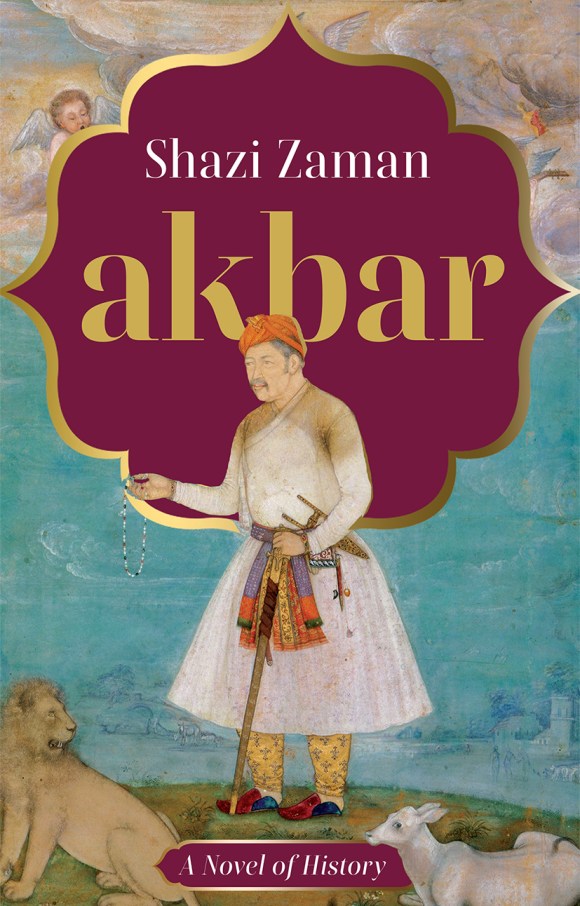
Akbar: The Man Who was King

In Conversation with Shazi Zaman, author of Akbar: A Novel of History, published by Speaking Tiger Books
“I profess the religion of love, and whatever direction
Its steed may take, Love is my religion and my faith.”
— Ibn-i-Arabi (1165-1240), Akbar: A Novel of History by Shazi Zaman

These lines were written by a mystic from Spain who influenced Emperor Akbar (1542-1605), a ruler who impacted the world with his broad outlook. Based on such ideology as preached by Ibn-i-Arabi more than three hundred years before him, with an urge to transcend differences and unite a world torn by strife, the great Mughal founded his own system of beliefs. He had few followers. But Akbar chose to be secular and not to impose his beliefs on courtiers, many of whom continued to follow the pre-existing religions. He tried to find tolerance in the hearts of practitioners of different faiths so that they would respect each other’s beliefs and live in harmony, allowing him to rule impartially.

Akbar is reported to have said: “We perceive that there are varying customs and beliefs of varying religious paths. For the teachings of the Hindus, the Muslims, the Parsis, the Jews and the Christians are all different. But the followers of each religion regard the institutions of their own religion as better than those of any other. Not only so, but they strive to convert the rest to their own way of belief. If these refuse to be converted, they not only despise them, but also regard them for this very reason as their enemies. And this causes me to feel many serious doubts. Wherefore I desire that on appointed days the books of all the religious laws be brought forward, and that the doctors meet together and hold discussions, so that I may hear them, and that each one may determine which is the truest and the mightiest religion.” Of such discussions and ideals was born Akbar’s new faith, Din-i-ilahi.

Was it exactly like this? Were these Akbar’s exact words?

They have been put in perspective by an author and a journalist who has written a novel based on his research on the grand Mughal, Shazi Zaman. He tells us in the interview why he opted to create a man out of Akbar rather than a historical emperor based only on facts. He has even mentioned that Akbar might have been dyslexic in the introduction. But Zaman’s admiration for the character he has recreated for us overflows and floods the reader with enthusiasm for this legendary Mughal. Akbar is depicted as a man who was far ahead of his times. He talked of syncretism and secularism in a world where even factions within the same religion were killing each other.
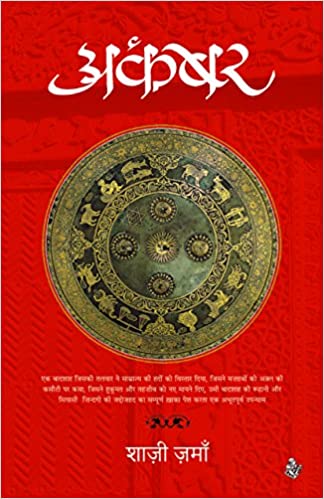
Akbar by Shazi Zaman in Hindi

The novel was first written and published in Hindi in 2017 by the bilingual Zaman, who started his three-decade-long career in broadcast journalism at Doordarshan and has since, worked with several media organisations. Zaman trans created his Hindi novel on Akbar to English to reach out to a broader audience. The whole experience has been a heady one for Zaman as the interview shows but for the reader what is it like? To start with one felt like the Connecticut Yankee in King Arthur’s court, except one was flitting around in the Indian subcontinent of the sixteenth century, with a few incursions to the Middle-East, but mostly within India. Transported to a different age, it takes a while to get one’s bearings. Once that is established, the novel is a compelling read.

The first part deals with Akbar’s developmental years and the second part with his spiritual outlook which helped him create an empire with many colours of people and religions. This is a novel that has been written differently from other historical novels, like Aruna Chakravarti’s  Jorasanko (2013), for the simple reason that it belongs to a different time and ethos which was farther from our own or Tagore’s times.  Akbar has a larger tapestry of people across a broader canvas than Jorasanko and it takes time to grasp the complexities of relationships and interactions. The other recent non-fiction which springs to the mind while reading Akbar is Avik Chanda’s Dara Shukoh: The Man Who would be King (2019) about the great grandson of the emperor who lived from 1615-1659. Again, this was a narrative closer to our times and was not a novel, but a creative non-fiction based strongly on history. While Dara’s character painted by Chanda showed weaknesses like an inability to respect the nobility or plan wars, Akbar painted by Zaman is kind but a man of action who ruled and intended to rule well. A leader — one has to remember — is not always the most popular man. Nor was Akbar with his eccentricities and erudition despite his inability to read — the book does tell us why he did not learn to read and how he educated himself. Most of the novel is a work of passion based on extensive research over two decades. As Henry Kissinger had said at a much later date, “The task of the leader is to get their people from where they are to where they have not been.” And the Akbar recreated by Zaman does just that.
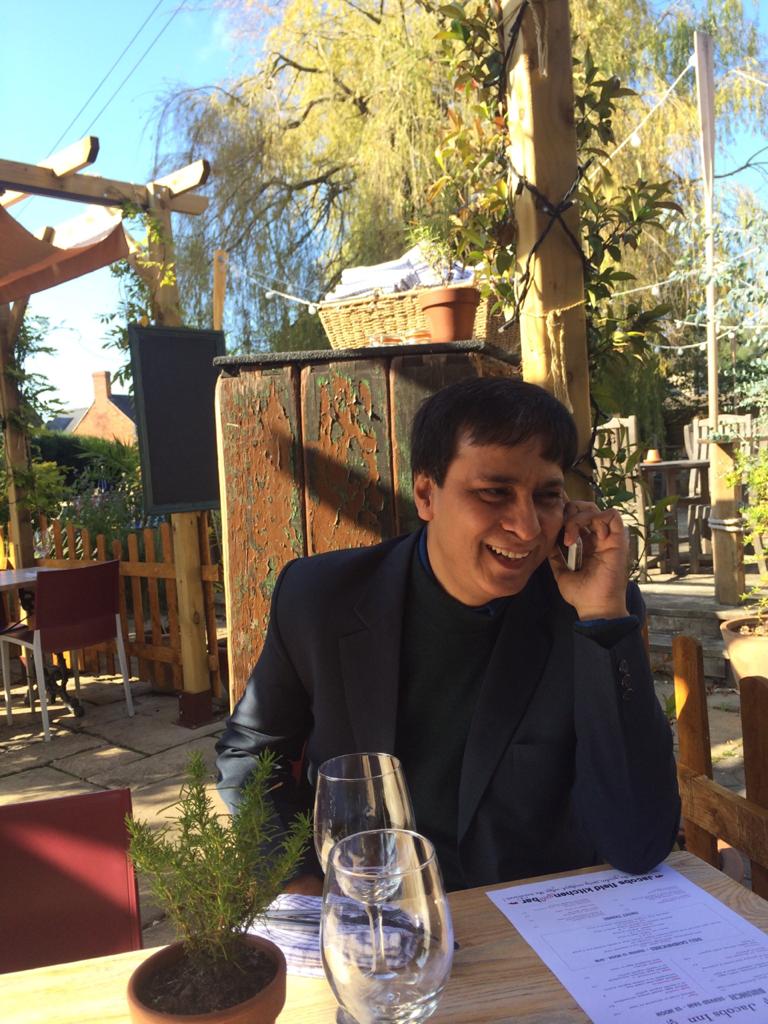
Shazi Zaman

Zaman who had been with the ABP (Anand Bazar Patrika) News Network as their Group Editor, was on the governing bodies of the Film and Television Institute of India, Pune, and the Indian Institute of Mass Communication, Delhi. He has worked with Aaj Tak, Zee News, Star News and also with the BBC World Service, London. He has served as the Director, Video Services of the Press Trust of India. Akbar is his third novel. He has authored two novels in Hindi earlier. In Akbar: A Novel of History (2021), Zaman with his journalistic background and his love for literature inherited from his novelist father, Khwaja Badiuzzaman, has done the mammoth task of astutely bringing to life a character who might have been a perfect solution to the leadership crisis that many are facing in the current day.

If you are still wondering how close this novel comes to the Bollywood movie called Jodha Akbar (2008), the major things in common were the grand Mughal’s sense of justice and his ability to tame wild elephants! For a deeper understanding of both the emperor and the book, in this exclusive, Zaman tells us what went into the making of this novel and his journey.

Why did you choose to write of Akbar?

One has to have a bit of Akbar inside oneself to write on him—and to read about him as well. Writing on Akbar was not a conscious decision. By the time I realised that I was going to write a novel of history on Akbar, my sub-conscious was miles ahead. Of course his personality had attributes that appealed to me consciously and sub-consciously, especially his belief in primacy of ‘aql’ (reason) over ‘naql’ (blind imitation of tradition) and his ability to question all orthodoxies.

Do you think Akbar is relevant in the current context?

I believe that his message is so ennobling that it transcends the boundaries of space and time. Across ages and across geographies, and within a geography by various groups and communities, his memory has been kept alive.

There was a book a few years ago called Dara Shukoh: The Man who would be King. Would you say he would be more relevant for our times than Akbar or is Akbar a better choice?

It is difficult to give them a comparative score. Dara could have been a very worthy successor to Akbar. And his initiatives and writings are really inspiring. Robustness of ideas and your resolve to push them are tested when faced with exigencies of statecraft. Sadly, Dara did not get that chance and Akbar did. I find that Akbar could navigate but sometimes be audacious to the extent that his courtier poet-musician Tansen had to caution, ‘dheere dheere dheere man, dheere hi sab kachhu hoye (Slowly, slowly, slowly, all happens at a slow pace)’.How would Dara have navigated while on throne is an unanswered question in Indian history. Having said this, his defeat in the battle of succession should not undermine the originality of his initiatives.

Why did you choose to write this in a novel form? Dara Shukoh was a non-fiction. Have you introduced fiction into this?

History largely tells us what happened. Most often it does not tell us of the state of mind that brought people to the point where we find them take momentous decisions. I think momentous events or actions are rooted in mental journeys. And these journeys are seldom documented. When Akbar faced a mental crisis—‘haalat-i-ajeeb’ (a strange state) as a contemporary called it— in the summer of 1578 on the banks of the river Jhelum, one wants to map what was happening in his mind and what had brought him to that point.

What lay behind the agitation of this man who was one of the mightiest emperors of the world, who had never lost a battle and was at the peak of his power ? Were there some forces testing his patience ?  Or as he stood at a place linked to the history of his forefathers, did he wonder about the trauma they had faced ? Or when he dealt a physical blow to a top cleric of yester years, there must have been a mental journey preceding this act. One can try and go into a person’s mind by closely studying his actions and utterances as also that of people and texts that influence him. We all know that people often mean much more than what they choose to say and sometimes, they say one thing and mean the other.

A close examination of this maze can give a glimpse of what was happening inside the great mind. As you try to create a period piece around his state of mind you mine information from all available sources—textual, aural, visual, architectural. For me fidelity to known facts is essential even in historical fiction. But there does come a point when the trail goes cold. Even the best documentary evidence might be insufficient in finding all the pieces of the period piece. For example, we do not know what Akbar was wearing the night he experienced the ‘haalat-i-ajeeb‘ but we have a Mughal miniature in all likelihood of the next morning when Akbar takes an unexpected decision about the great game. Now, it has come down to us that he appeared wearing last night’s clothes. So we know what he was probably wearing at the time he was in ‘haalat-i-ajeeb’ of the previous day. Or we do not know the details of the carpet of the room where he lay dying. Nobody recorded that. Thankfully, some details have come down to us of carpets of those times. I have chosen to use them. After exhausting all means of finding the right pieces of this period piece, I have exercised my imagination. So this is fiction very much rooted in history. If I have been able to do what I had intended, you would feel you have read his mind as also feel that you are actually standing backstage in the Akbarian arena.

In the debate I often encounter about the element of history in historical fiction, perhaps we miss a basic point. Most fiction has history in it. Some have history that is known. Some have history that is personal or unique to the author. It is only when known history figures in your work that the issue of reality versus fiction surfaces. Otherwise, this mingling is not questioned.

What was the kind of research you did? How long did it take you to research and write this book? Tell us about its evolution.

The idea had been simmering under the surface since early years. As I have mentioned in my preface, a childhood incident imprinted Akbar on my mind. During my school days, a member of the education department of the government made a surprise inspection and gave a short introduction to Akbar’s life and his relevance to our times. It left a mark. I was especially blessed to have teachers who stoked my interest. I shall be eternally grateful to my teacher Muhammad Amin–Amin Saheb as he was called at St.Stephen’s College (Delhi University) — to have brought history to life in classroom and sessions outside classroom. Amin Saheb taught us Akbar’s ‘sulh-i-kul’ , which he said stands not for tolerance or co-existence because even these terms denote some separation. He said, Akbar’s ‘sulh-i-kul’ meant harmony. Amin Saheb taught us about Akbar’s desire to build bridges and his respect for diversity. Many like me graduated from the university but never left his class. I feel privileged that for quarter of a century after leaving College I continued to sit at his feet and learn about Akbar. A good teacher teaches and also shows the path to further learning.

My interest in Mughal miniatures took me to various museums within the country and abroad and of course to places like Fatehpur Sikri–a city that Akbar created with a purpose– very often.  Over decades I have gathered in my personal collection most of what has been written about Akbar and almost all books published on his art and architecture. I can say that all published Mughal miniatures reside in my study now.  So Akbar was a character I had been breathing much before it became the idea of a novel.  However, for a period spread over two decades I did consciously try to piece together a story.

 How did you create the character of Akbar ?

Akbar was not merely a historical figure. He was also acutely conscious that he was making history. And as a person conscious of this, he left ample footprints.

When you try to get into a person’s mind you piece together all he saw and read (or in case of Akbar, was read to) and experienced; all he interacted with; all he surrounded himself with; all he spoke and wanted to be spoken, read and spread; and all that he created. Foremost, of course, is  Akbarnama which was a monumental image  building exercise entrusted to a close and trusted courtier, Abul Fazl. Abul Fazl knew what went on in Akbar’s mind. This work is rich in details and is a comprehensive history of Akbar and his forefathers. Akbar also commissioned others who knew his forefathers to write histories that would help Abul Fazl in his work. Akbarnama is an official account. It was vetted by Akbar and tells us how Akbar wanted to be seen by his contemporaries and by future generations. It is extremely useful in giving us the image the emperor aimed to project.

Then there were many others who wrote their histories during his reign. But it is the history called Muntakhab-ut-Tawarikh by a disgruntled cleric, Mulla Abdul Qadir Badayuni, which was written secretly that gives us an unofficial perspective.  I am grateful to the anonymous author of the historic Rajasthani work, Dalpat Vilas, for giving an informal and unique access into the emperor’s mind. Anybody studying Akbar feels especially grateful for the elaborate atelier —tasveer khana — as it was called — that the emperor established. Paintings made under his direction and patronage give us a vivid picture of what he thought was worth projecting. If you look closely, Mughal miniatures of his time often have a story and even a back story that gives you an indication of the emperor’s mind.

Akbar built at a huge scale and many of his buildings still stand tall and the stones speak even now of why he gave them the shape that he did. Then of course are works related to his ancestors like Baburnama which Akbar was fond of and later, of his son’s Tuzuk-i-Jahangiri. Akbar’s public contact and communication was prolific. We might well have seen him if we were living in that age. He travelled and interacted widely.

Almost every morning of his half a century long reign he appeared at the balcony so that the subjects could see him. Even those who did not see him felt his presence. Banarsidas, a trader of his time, who also wrote a chronicle, notes the widespread alarm amongst common people when the emperor fell ill. Letters  Jalaluddin Muhammad Akbar wrote to Uzbek and Persian kings, the emperor of Spain and Portugal, to nobles and others have been handed down to us. His interactions with religious persons find mention in Vaishnavite, Jain and Mahdawi literature. The letters that Jesuits at his court were writing to their superiors are useful for their perspective as also for the ‘unofficial’ details. Then there were personalities Akbar drew to his court who were poets, warriors, administrators and diplomats who were themselves eminent enough to be written about, or  were writers themselves. I closely studied them.

Abdur Rahim Khan-i-khanan was like a son to Akbar and wrote poetry that is timeless in its appeal. Tansen, an eminent poet and musician at his court wrote ‘takhat baitho Mahabali ishvar hoye avtar (the mighty Emperor sits on the throne as incarnation of God)’, which is how Akbar would have wanted to be described.  Works written on Raja Mansingh like Mancharit and Mancharitra Raso helped me understand a mighty noble, who again was like a son—‘farzand’—to Akbar. Akbar himself is believed to have been a poet and pieces of poetry deemed to be his have come down to us. His memory resonates even now in folk songs.

In terms of material evidence of personal effects, we have an armour of Akbar which was helpful in ascertaining his approximate height. Of course, this was achieved with the help of experts.  Not all that one gathered necessarily went into this work but I tried to gather as much as I could so as to know how Akbar lived, ate, slept, worked, played, deliberated, relaxed, fought and thought and what was the world he inhabited, and also what was the kind of world he wanted to inhabit.

I must say that I tried to access original sources in Persian, Sanskrit and other languages with the help of experts, in addition to what I could read myself in English, Hindi and Urdu.

In your introduction you have said Akbar might have been dyslexic or bipolar. Why? What made you think he might have been dyslexic or bipolar? Could it not be that as a child he was not just into books and therefore did not learn to read?

There has been some academic work on some of the issues Akbar faced. I think his behaviour on the full moon night of the year 1578 on the banks of the river Jhelum and on occasions before that definitely call for more investigations in that direction, though one is conscious that the emperor himself is not available for close examination. As for dyslexia specifically, one can say that the man loved books. He commissioned and collected them at a huge scale but he did not read them. They were read out to him. Historical sources indicate that he could not read or write. Though I have seen copies of his handwriting, they seem laboured. It would be a fair assumption that he was dyslexic. I think he was a great visual learner. That is why no Mughal emperor before or after had as big a tasveer khana as him.

You have repeated this phrase thrice in the book. ‘Hindus should eat beef, Muslims should eat pork, and if not this, fry a sheep in the pan. If it turns into pork, Hindus and Muslims should have it together. If it turns into beef, Hindus and Muslims should have it together. If it becomes pork, Muslims should have it. If it becomes beef, Hindus should have it. A divine miracle would thus happen.’ Why?

More than one account reveal puzzling behaviour and utterances of the emperor. This forced one person to say that this was ‘haalat-i-ajeeb’. Nobody at that time could fully understand his state or his words. I feel that it was reflective of his anguish over religious disputes and religious orthodoxy. An emperor who had never lost a contest was getting impatient. In moments of mental crisis it is possible for a person to  say things which have layers of meaning. One has to peep underneath the words to fathom the anguish of  a sensitive mind. This was one such utterance. 

What is the most endearing quality you found in Akbar? And why?

It is difficult to pinpoint one in a person who embodied numerous qualities. His belief in giving precedence to ‘aql’ (reason) over ‘naql’ (blind adherence to tradition). His spirit of enquiry and his desire to provide space for differing thoughts. He believed—“It is my duty to have good understanding with all men. If they walk in the way of God’s will, interference with them would be in itself reprehensible; and if otherwise, they are under the malady of ignorance and deserve my compassion.”

There is an incident mentioned in the book. The Jesuits who came with the intention of converting Akbar finally despaired because he would give them ample space and ample attention but stop short of conversion. So one evening, they came and sought leave since their embassy had failed in its purpose. Jalaluddin Muhammad Akbar replied, “…how can you say that the time you have spent with us has been profitless, seeing that formerly the Muslims had so much credit in my land that if any had dared to say that Jesus Christ was the true God, he would straightway have been put to death; whereas you are now able to say this, and to preach the same in all security ?”

You wrote the novel first in Hindi and then trans created it to English. Why? What is the difference between the Hindi and the English versions?

The novel Akbar naturally came to my mind in Hindi, a language the emperor would have been comfortable with had he been alive. Having said this, I am grateful to my publishers, Rajkamal and Speaking Tiger, for initiating the idea of an English  version. And I did immediately see the need to take Akbar to a wider audience because the novel has an idiom and language rooted in Hindustan but Akbarian thought and vision have an appeal that is wider than the regions he ruled. So the challenge was to take the text, sub-text and the idiom to an English audience. The challenge was also to make Akbar’s 16th century intelligible to 21st century English-speaking world. I have tried my best with help of editors at Speaking Tiger to make it a work English speakers would be at home with. I am sure they would be able to savour the milieu, the plot and the sensibility of 16th century Hindustan in their preferred language.  A good translation should in fact be a trans creation and should read like it has been written in the same language. 

You have two novels in Hindi. Do you plan to translate those too to English? Why? Why not write directly in English?

I believe that no thought is completely translatable into words and no words are completely translatable into another set of words. Thus the word transcreation. The first two novels Premgali Ati Sankri (The Narrow Alley of Love) and Jism Jism Ke Log (Various Bodies) have intense conversation between characters which is rooted in their shared understanding of an idiom. Translation is desirable and relatable because stories strike a chord across space but works have texts, sub-text and idiom. The problem and the challenge lies in taking the sub-text and the idiom into another language. That is why trans creation requires a deep understanding of the text, the sub-text and the idiom of the original work as also of the sensibilities of the audience for whom you are trans creating. Having said this, I would be happy to translate the first two novels for an English readership. The theme would strike a chord, the idiom would need some fine work.

Will you shuttle between English and Hindi in the future? Are you planning more books?

Shuttling between Hindi and English is an interesting thought. I am already seized by an idea that came to my mind as an English text. It is germinating. As for more books, I have already sent a Hindi novelet for publication which could be thematically seen as third in series after Premgali Ati Sankri and Jism Jism Ke Log. While telling stories to my children, and making them up as I went along, I created a short novel for children which awaits publication. I am also in the process of writing another novel in the genre of historical fiction.

Thank you for your time.

This is an online interview conducted on behalf of Borderless Journal by Mitali Chakravarty.

Click here to read an excerpt from Akbar: A Novel of History

.

PLEASE NOTE: ARTICLES CAN ONLY BE REPRODUCED IN OTHER SITES WITH DUE ACKNOWLEDGEMENT TO BORDERLESS JOURNAL

Categories
Editorial

Elephants & Laughter

Run, Painting by Sybil Pretious

Ideally, I would love to start the New Year with laughter and happiness! Then perhaps, the whole year would be dotted with humour …

Laughter clubs often practice laughing for health benefits. I know the pandemic makes both guffawing outdoors or in a group hard but think of the funniest possible thing and, perhaps, you will start laughing. For me what works other than children’s and monkeys’ antics, are my trips to the dentist, especially the trip where I wondered on the fringe benefits of ‘laughing gas’ (as given in the PG Wodehouse novel of the same name), only to be informed that it was used exclusively for young children. For me, an adult, there was only — you have guessed it — the jab that numbs your lip function to lubber. I discovered if I could make light of a dentist drilling by learning from Harry Potter (the spell to get rid of the terrifying boggart, who took the shape of the thing you feared most, was to imagine the funniest thing, focus on the humour in it, and shout ‘Riddikulus’ with a wand pointed at the creature in the form of your worst nightmare), then I could pretty much get rid of most fears.

The other thing I have been wondering for sometime is can one write an editorial that is humorous when the content is serious? I would have wanted to ask that question to many, including Ruskin Bond, who continues as one of my idols. I would love to touch hearts with the humour and the sensitivity that flavours his writing. It is tough to convey a complex thought with the simplicity and elegance of a writer who can be read and understood easily. I think we have a few of them around and I interviewed one. You all probably know him well— Rhys Hughes. I have given the reasons for the interview in lieu of Mr Bond, who continues a distant star beyond the horizon of online interviews. We discussed humour and its role in literature, leaving out completely in the cold, the fictional Mr Bond who answers to the names of James and 007 and has made entertaining films, which can be seen as serious or non-serious.

Hughes has of course, given some writerly advice not just in the interview but in ‘Making Something of Nothing’ – pretty much the advice that God had probably been given when he asked an unspecified friend on how to create the universe and multiple realities. Hughes has also added to our galaxy of poets where Michael Burch, Ryan Quinn Flanagan, Anasuya Bhar, Vernon Daim, William Miller, Pramod Rastogi, Mike Smith, Jay Nicholls and many more continue to sparkle. Taking up the theme of God’s creations, Devraj Singh Kalsi has added to more humour with a dream of divine intervention to make the ‘New Normal’ in 2022 – a plan for this year. Will it ever be real?

Another major issue in this world currently is climate change. In keeping with the need for acceptance of this reality, Keith Lyons introduced us to a nature lover, author and adventurer Kenny Peavy, who loved the fictional adventurer called Indiana Jones and has been working towards living in harmony with nature. He moved to Indonesia from America and is trying to raise awareness. You can find much, though not elephants, in the interview that encompasses the story of a man who cycled across a continent on a bike made of bamboo. However, you can find some writing on a king who acquired the skill to ride and tame elephants in our book excerpt from Shazi Zaman’s Akbar: A Novel of History. The excerpt does not showcase his elephant taming skills as did the Bollywood blockbuster Jodha Akbar but is focussed on bringing out the syncretism in the Mughal monarch’s outlook which made him seek out exponents of other religions. Sangita Swechcha’s and Andrée Roby’s anthology, A Glimpse Into My Country, with excerpts of short stories from Nepal and Zimbabwe, like Kenny Peavy, cycle across multiple borders as does our fiction. We feature stories from within and without the continent with Fazal Baloch recombining a couple of folklores from Balochistan to a single tale. Fiction from young writers highlight compassion and a varied perspective. Steve Ogah has a story from Nigeria which almost rings with overtones of Alex Haley’s Roots. Sohana Manzoor has given us a poignant narrative with an inspiring twist at the end, an absolute antithesis of the humorous one she rolled out for us last month. Candice Louisa Daquin has also given us an exceptional short fiction along with her column where she discusses the changing face of families in the current context.

While Daquin’s focus is mainly towards the West, we have an essay from Sanjay Kumar on families that live in the greyer zones of big cities, children from an outcropping called Nithari in Delhi, where they or theirs suffered neglect, abuse, carnage and cannibalism in their formative years.  Introducing the impacted children, Kumar explains how they transcended the wounds that lacerated their lives. This piece is a precursor to a column called ‘Children of Nithari’. Starting February, the abuse victims will give us a story a month which will be translated by young volunteers from pandies’, an activist theatre group founded by Kumar, and published in Borderless. Another article from Balochistan reflects on the lack of literacy and efforts to bring children into the folds of schooling. Pakistan ranked 99th out of 132 countries on the literacy survey in 2021. We are privileged to be the voice of the unheard.

Two essays that ring of concerns raised in the Kenny Peavy interview are to do with climate crisis in the Sunderbans and waste disposal in Delhi. Both of these are written by researchers who are working on these issues.

We have travel pieces from Australia – one is a sailing adventure by Meredith Stephens and the other is about a trip to the Sand Dunes of Western Australia by Shernaz Wadia. Ravi Shankar has also taken us through winters from the Everest to New York with his globe-trotting non-fiction. Penny Wilkes takes us on a flight of creativity with beautiful photography.

We have a stellar layout of translations. Professor Fakrul Alam translated another poem by Jibananada Das and Borderless is honoured to publish it to the world for the first time. We have a translation from Korea and another of a Brahmo hymn, Aji Shubho Dine, by Tagore, which is sung often during festivals. The icing in our Tagore section in this issue is Ratnottama Sengupta’s translation of the Kobiguru’s ‘Two Birds’ (Khanchar Pakhi Chhilo) along with a musing which reflects on the perspectives of the two contemporaries, Tagore and Saratchandra. She has also translated a well-known Bengali poet, Michael Madhusudan Dutt. Dutt wrote just before the advent of Tagore and had an interesting past which has been vividly depicted by Sunil Gangopadhyay in Those Days (Sei Somoy in Bengali), a novel that has been translated by Aruna Chakravarti. Bhaskar Parichha has given us a tribute on the occasion of the birth anniversary of Fakir Mohan Senapati, who, he claims, has the same standing in Odia literature as Tagore in Bengali or Premchand in Hindi.

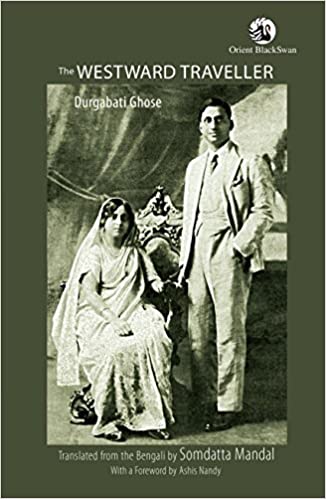
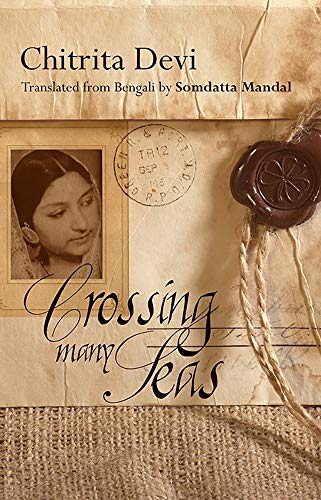
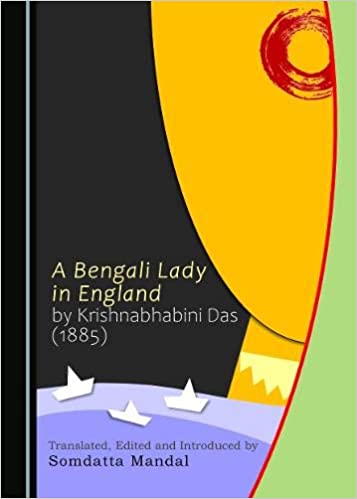
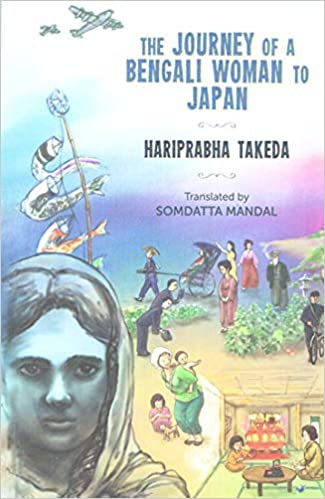
Parichha has also reviewed Amit Ranjan’s John Lang; Wanderer of Hindoostan; Slanderer in Hindoostanee; Lawyer for the Ranee. It looks like an interesting read where an immigrant Australian came supported Rani of Jhansi in India. Rakhi Dalal has reviewed Selma Carvalho’s Sisterhood of Swans, again a story of migrants and their lives. The theme seems to echo among the books that have been reviewed this time, including Gracy Samjetsabam’s take on Anuradha Kumar’s The Hottest Summer in Years, a story about a German immigrant to India in the twentieth century. Meenakshi Malhotra’s review of Somdatta Mandal’s translation of A Bengali Lady in England by Krishnabhabini Das (1885) highlights the views of a traveller rather than an immigrant as the lady did return home after a ten-year sojourn in Britain. As Meenakshi contends, “The process of travel offers opportunities for emancipation where exposure to other cultures offers her a way of viewing and of gaining a perspective on her own experiences and that of her sisters in India. Krishnabhabini constantly refers to her Indian sisters and bemoans their sorry state and ignorance when she sees how active British women were in their families and societies…”

I was supposed to try my hand at a humorous editorial, but I realise that is tough when the ground is small. For humour, we need rolling acres where we can etch out each detail till it cannot be milked further for laughter. But I promise you I will keep trying to please the readers till one evolves to write like Ruskin Bond.

I would like to thank my fabulous team who even if not actively contributing to content are always at hand to advise and help. I would especially want to thank both Sohana Manzoor and Sybil for their fantastic artwork, which is as wonderful as their writings. I would like to give heartfelt thanks to all the contributors who have made this journal possible and each reader who comes back to our journal for more every month. Some of the pieces remain unmentioned adding to the mystery of the content, just like, Christmas gifts which need to be unwrapped and continue a reality even in January in some parts of the world – the Russians celebrate on January 7th and the Spaniards extend their festivities to January 6th.

Do take a look at this month’s edition for not just the stories mentioned here but for more.

I wish you all a wonderful New Year filled with laughter.

Mitali Chakravarty

Borderless Journal

Categories
Interview

Rhys Hughes Unbounded

In conversation with Rhys Hughes

I have always wanted to interview Ruskin Bond who lives in Landour, near the hill-station of Mussoorie in India. Bond, now 87, grew up in Dehradun, tried a stint in England and returned to the country that had nurtured him to write stories that make us laugh and yet bring out the flavours of love and kindness in the Himalayas. Sadly, no one seems to be able to get me an online interview with him. So, I did the next best thing…

I interviewed Rhys Hughes.

Rhys Hughes in Srilanka

You have to see it from my perspective, here was a humourist migrating from UK to India, just like Bond. Both their names begin with R — Ruskin wrote of monkeys conducting a fashion parade in colourful pyjamas borrowed from him, perhaps permanently and Rhys wants to interview a monkey who took a bottle of coconut oil from his current home. Only, Hughes’ monkey happens to be in Sri Lanka and Bond’s monkeys were in India. In fact, I told Hughes he could be the next Bond and could perhaps get into an apprenticeship. He has the basic compassion and humour in his writing that endears Bond to so many hearts. However, Hughes has not made it across to India as yet. He waits on the lush shores of Sri Lanka to make a landfall on the Coromandel Coast or … maybe the Himalayas… as the pandemic continues to upheave in tsunami-like waves. Maybe, Rhys Hughes will become the Ruskin Bond of Sri Lanka! Let us tread into the world of Hughes to check out what he thinks.

Tell us since when have you been writing? What gets your muse going?

I began writing when I was six years old or so. My earliest stories were inspired by films and comics I enjoyed and mostly were about monsters, adventures, space travel, robots, dinosaurs and ghosts. I doubt if any of them made much sense.

The first short story I wrote with a plot I remember was about a man who jumps off a cliff so that he will turn into a ghost and can create mischief in his village, which he does, but the twist is that he survives the fall and only thinks he is a ghost. The enraged villagers chase him back over the same cliff, and he isn’t frightened because he believes he can float on air, but he can’t and this time he doesn’t survive. I was about ten years old when I wrote that. But I didn’t begin writing short stories in earnest until I was fourteen. That was the real beginning of my writing career. I have been writing regularly ever since. I don’t require prompting to write these days. It has become a habit, a reflex, something I just do. I still write about the same old things as always, monsters, adventures, space travel, etc, but I have added a few more themes since I was a young child and my style has improved considerably. At least I hope it has!

That story you wrote as a ten-year-old definitely has potential! And we enjoy your writing as we read it now.  Now tell us why do you write?

Ideas come unbidden into my mind and they won’t leave me alone unless I put them into stories. The moment I embody these ideas in a work of fiction they stop bothering me. I get ideas all the time, especially when I am walking or travelling somewhere, but also in the middle of the night. I try to make notes so I can use them later but sometimes I neglect to note them down and I forget them. Then the ideas go away temporarily but return days, weeks, months or years later and bother me again. Only when I pin them down into a narrative of some kind will they go away forever. So writing is a compulsion for me as well as a voluntary activity. It wasn’t always like this.

In the beginning I found it difficult to come up with original ideas. I had to work hard at it. I would say that most of my ideas back then were fairly ordinary ones and only occasionally truly original. But I persisted and exercised my mind, and just like muscles do, the parts of my mind responsible for the invention of original ideas got bigger and stronger, and now the ideas come without effort. As it happens, not all these ideas turn out to be as original as I like to think they are. Sometimes I get excited that I have come up with a totally new concept only to later discover that some other author beat me to it years ago. But I do believe that originality is possible.

The oft-repeated maxim that there are no new ideas simply isn’t true. If originality is impossible, how were any ideas generated in the first place? I don’t mean to say that originality is the ultimate objective of writing, of course not, there are a great many other reasons to write, but I am talking about it from my own particular point of view. And all I am really saying here is that practice is the most important thing, the only essential thing. I write a lot and the very act of writing regularly seems to make writing in the future easier and smoother.

What is your favourite genre for writing and for reading?

The genre question is a difficult one to answer but I am going to say that if I had to choose only one genre to describe my own writing I would answer “comedy”. This doesn’t mean that everything I write is comedic, but a large percentage of it certainly is. And I don’t necessarily mean laugh-out-loud comedy but other types of comedy too, whether subtle irony, philosophical farce, absurdist and surrealist works. There are many grades of comedy, from wit to parody, and I enjoy most of them. When it comes to reading, I still have a focus on comedy, I suppose, but I will read very sober and serious works too. If I made a list of my favourite works of fiction, comedic works would be at the top of the list.

Broadly speaking there are two types of humorous literature, one in which incidents are funny and one in which it is the telling that is comic. Writers who combine both types tend to win my deepest admiration. Yet quite a few of my favourite books have no comedy in them at all, neither in subject nor in style, for example The Adventures and Misadventures of Maqroll by Alvaro Mutis ( 1993, translated by Edith Grossman, 2002) which is a sequence of tropical and troubling narratives, often sombre in tone, that nonetheless remains an enthralling and uplifting read.

Which writers have influenced your work? Are you influenced by other art forms?

I wanted to become a professional writer because of Robert Louis Stevenson. It was Treasure Island (1883) that opened the gates into the entire world of literature for me. I still admire him hugely but I have had much bigger influences since then. Delving deeper into the novels and short stories that were available to me, I was lucky enough to find authors who resonated with some deep part of my being and made me not only want to continue trying to be a writer, but to be a writer who wrote as they did. Of course, it’s better to develop one’s own style, but I suspect that ‘distinctive’ styles are really the result of amalgams of influences, a blend of prior styles. Italo Calvino (1923-1985) has been my favourite writer for more than thirty years, with Donald Barthelme (193i-1989), Boris Vian (1920-1959), Flann O’Brien (1911-1966) and Stanislaw Lem (1921-2006) not far behind. At the moment I am a keen reader of the work of Mia Couto (1955-2013). Alasdair Gray (1934-2019) is another favourite.

To answer the second part of your question, I have definitely been influenced by art forms other than writing, in particular music and visual art. I might even say that the paradoxical imagery in the artwork of M.C. Escher (1898-1972) has been at least as big an influence on me as the prose of any author. I was astounded and captivated when I first saw his graphic designs and have loved them ever since.

You have travelled to many places. How many countries have you visited? Has travel impacted your writing? How?

I have lost count of the number of countries I have visited. I used to keep a map and colour in the countries that I had been to, but I lost the map years ago. The truth is that probably the total isn’t as high as I think it is. Most of my travelling has been done in Africa and Europe, and I have only really dipped my toes into the vastness of Asia, and I haven’t even been to the Americas at all. No one is so well-travelled that they really know the world.

Travel has certainly impacted my writing, though. I can state that with confidence. I am often inspired to write stories set in the places I have visited and I guess I probably wouldn’t do so if I hadn’t been there. Having said that, I do occasionally set a story in a location I have never visited. Such stories can work well but there is nearly always a vital element missing, some immediacy that a certain level of familiarity gives to a work of prose. It’s far easier to create a convincing atmosphere when you are writing from experience rather than from research. Little details will give some solidity to the evocation of scenes, details that can’t be easily imagined without first-hand experience. This doesn’t mean that I think travelling is necessary for the creation of good fiction. Good fiction can be centred in nowhere, almost in no space or time if the author is talented enough. And there’s a paradox in the nature of travel, which is that even though the particulars of your surroundings might change, the essentials remain the same. We can put a lot of effort into the act of travelling only to discover that people are people everywhere. And would we have it any other way?

Tell us a bit about the world you grew up in — we have an interesting piece by you called ‘Dinosaurs in France’ — which claims you grew up in a world of different value systems. Would you see those as better or the present as better?

The past is another country. That’s one of the pithiest and truest maxims anyone has devised. In only half a century I have seen many changes, but in fact most of these changes came so gradually I didn’t notice that things were changing at the time. Only now, looking back, do I see the vast gulf between the present and my past. I was youthful in a world where information was much more difficult to obtain. There were rumours and suppositions and often no way of confirming or refuting them. People believed strange things and adjusted their attitudes to match these odd beliefs. People still do the same now, of course, but it somehow feels different. One can more easily check assertions now than before and learn much more quickly if they are true or false. The world I grew up in was one in which you had no choice but to take another person’s word at face value. So if a supposedly responsible adult, like the postman, told you with a straight face that he lived in a house made entirely from marshmallows, there was no easy way of disproving the claim. You had to take his word for it. I can’t say it was a better world and I don’t want to suggest it was a worse one. It was simply different, a world lacking ready access to information.

You have written a lot of humour. Not too many people do that nowadays. Could you tell us why your funny bone is tickled to create humour as it does? Do you think humour is a good way to address major issues?

Humorous writing has gone out of fashion to a certain extent in the anglophone world, yes, but it’s still there, in the background. There was a great tradition of British humorous writing that lasted about a century or so, and I was fortunate enough to grow up at the end of that phase. I am talking about a particular type of humour, dryly ironic but also theatrical, a sort of blend of surrealism and the old musical hall routines. J.B. Morton (1873-1979) was one of the masters of the form, and he was an influence on many of my favourite comedic writers, such as Spike Milligan (1918-2002), Maurice Richardson (1907-1978) and W.E. Bowman (1911-1985). These humorists also took the language and played with it a little, transforming it into something new, though I feel ultimately that such comedy derives more from the rhythms than the melodies of wordplay.

The entire range of comedic devices might be used but new ones invented as well. There can be over reaction to minor incidents and under reaction to major ones, constant misunderstandings, amplification of repetition, parody of existing forms. W.E. Bowman’s The Ascent of Rum Doodle is my favourite humorous novel, and its sequel, The Cruise of the Talking Fish, is also high on my list of best comedic literature. Bowman apparently wrote a third volume in the series that remains unpublished and is in the safe keeping of his son. If this is true, I hope it will appear one day.

Are you influenced by any specific humourist? If so, who?

Flann O’Brien is probably my biggest influence in terms of comedic prose. His work is quirky, inventive, curiously erudite, absurdist and often metafictional. I am staggered by the wealth of invention in his novels, the supremely silly but also highly ingenious conceits and concepts, and the bone-dry irony contrasted with farcical exuberance, the light touch and the dark tone. W.E. Bowman and Maurice Richardson are another two favourites. That is prose but when it comes to poetry I love Don Marquis (1878-1937), Ogden Nash (1902-1971) and Ivor Cutler (1923-2006) best, all of them with radically different approaches to comedy. Marquis in particular pushed humour in his free verse to a point where it often became profound, serious and socially critical. You asked if humour can be used to address major issues. Yes, sometimes it can, even with great force, but it doesn’t have to.

Tell us the extent of your work. How many books have you written?

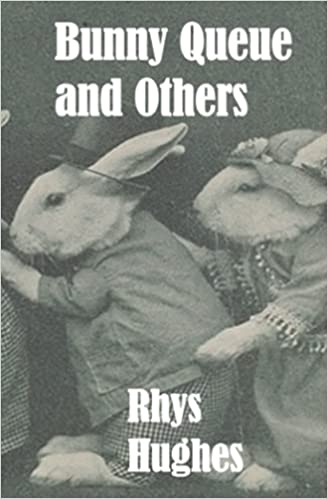
I have published many books. The question is how do I count them. I tend not to count the self-published books. It seems to me that self-publishing is too easy. On the other hand, traditional publishing is maybe too difficult. I have forty or so traditionally published books and twenty self-published books out there, so I am going to give forty as my answer. Most of my books are collections of short stories. I have only written a few novels. My poetry collections so far have been self-published with the exception of one single volume called Bunny Queue.

It is one of my goals to have all the short stories I have ever written appear in my books. At the moment there are many of my short stories that exist in magazines and anthologies that have never been collected. And there are many unpublished short stories in my files too. My plan is to write exactly a thousand short stories and consider them as part of one big story-cycle. This project is almost done. In a few more months, with luck, I will finish writing my thousandth story. Thirty years in total it has taken. When that last story is finished I will devote myself entirely to novels, plays, poetry and articles. No more short stories! So, in reply to your question, I can say that I have written a great deal of work, maybe too much, but as I said earlier, writing has been something of a compulsion for me.

What are your future plans?

I plan to finish my big story-cycle of one thousand stories. Then I will write a few novels that I have been planning for a long time. One of these novels will be called The Hippy Quixote and will be about a young, deluded fellow who in his mind is living in the 1960s. He takes a guidebook written in that decade and follows the old hippy trail to India, blissfully unaware that so many things have changed in terms of societal attitudes and geopolitics. This idea seems to me to be a fruitful one for the creation of comic scenes.

I also have to finish a novel I began a long time ago, The Clown of the New Eternities, sections of which have already been published. It’s long overdue for completion. This novel is about a highwayman who has accidentally outlived his own age and is forced to adjust to the modern world. Another variant of Quixote, I suppose. I think that many or most of my longer narratives are a blend of the Quixote and Candide models with a bit of Gulliver thrown in. We can talk about our future plans all day, of course, but whether we are lucky enough to have a chance to make them real is another question altogether. I intend to do my best, as I have always done, but nothing is certain in this world of ours.

Thanks Rhys Hughes for your time and lovely answers.

Click here to read prose & poetry by Rhys Hughes.

(This is an online interview conducted by Mitali Chakravarty.)

PLEASE NOTE: ARTICLES CAN ONLY BE REPRODUCED IN OTHER SITES WITH DUE ACKNOWLEDGEMENT TO BORDERLESS JOURNAL

Categories
Tagore Translations

A Hymn By Rabindranth

‘On This Auspicious Day’ is a trans-creation of a Brahmo hymn, Aaji Shubhodine Pitaar Bhabone, by Rabindranath Tagore. Written in 1883, this song was first published in TatwaBodhini Patrika, a magazine brought out by the splinter group from Brahmo Sabha led by Tagore’s father, Debendranath Tagore.

A Bengali Rendition of the song by Debabrata Biswas
ON THIS AUSPICIOUS DAY

On this auspicious day, let us go to our 
Father’s heavenly abode. 
Let us go. Let us go, you and I. 

The level of contentment in His blissful
Home is unfathomable to us. 

The three worlds are in ecstasy with
Festivities that spill over with joy.

Let us join the celestials singing in praise of him
Let us go there. Let us go, you and I.

Tagore like his father and grandfather was a Brahmo. The Brahmo festival, Maghotsav, is celebrated at the end of January, by the Bengali calendar on the 11th of Magh. Brahmo Samaj grew out of Brahmo Sabha. These were attempts at a reform movement on Hinduism initiated in the early part of the nineteenth century Calcutta by Raja Ram Mohan Roy and Dwarakanath Tagore, the poet’s grandfather.

(Trans-created for Borderless Journal  by Mitali Chakravarty with editorial support from Sohana Manzoor and Anasuya Bhar.)

.

PLEASE NOTE: ARTICLES CAN ONLY BE REPRODUCED IN OTHER SITES WITH DUE ACKNOWLEDGEMENT TO BORDERLESS JOURNAL
Categories
Excerpt

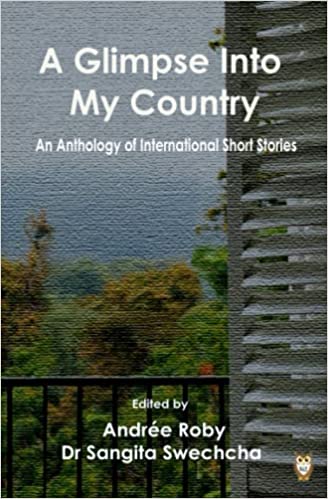
A Glimpse Into My Country: An Anthology of International Short Stories

Title: A Glimpse Into My Country: An Anthology of International Short Stories

Editors: Andrée Roby & Dr Sangita Swechcha

Publisher: Book Hill International

1.

Excerpted from The Goats and the Cow by Sanjib Chaudhary (Nepal)

Shubhavati was humming a folk song. The sun was above her head. The easterly wind was hitting hard on her face. The wind along with the Peepal’s shadow provided her relief from the heat.

The 10 goats were grazing on the nearby field. The landowner had recently harvested rice and the juicy tender sprouts were perfect feast for the goats. While feeling the easterly winds caress she saw a humanlike spot in the horizon. Coming towards her, in a hurried pace. As the figure got nearer, the once single spot broke into four distinct figures. A woman in her mid-twenties, a 40 newly born baby clinging to her shoulder, a boy of around seven years trudging along her and a goat in tow.

 As the group came near her, Shubhavati asked the woman, ‘Why are you running so fast in the midday sun? Have some rest.’

The small boy, tired, sat next to her and started humming a Bollywood song. The woman tethered the goat to a small shrub and started suckling her baby, sitting beside Shubhavati. Her eyes were red with weeping and, as she saw Shubhavati gazing at her with love, she broke down. She started whimpering. Shubhavati consoled her, washed off the tears rolling down her eyes. The woman broke into a loud cry and the little boy, perplexed, started crying with his mother.

She said, ‘This boy’s father returned from Qatar a few days ago. We had a reunion after two 41 years. This little girl was not born when he left us. Everything was so good for few days and suddenly he beat me up.’

‘Small fights between wife and husband are a normal, my dear,’ said Shubhavati.

‘But it was not a small thing. His mother is so jealous that she wants everything that her son brought to be hers. Even the toys that he brought for this little boy!’ She was furious.

She continued, ‘Can you imagine? She threw away a bowl of milk he was sipping in. For me it had been always like that. My husband has been to Rajbiraj. But had he been there he would not say anything to her. He is a coward and doesn’t have courage to say anything to his mother.’

The goat was a small kid when she had brought it along with her from her mother’s house. She had run almost two kilometres and it was still three kilometres to reach her maternal house. Shubhavati lighted a biri and offered it to the young woman. She refused it, saying that she is a non-smoker. Shubhavati sent the puffs of smoke to the skies and started advising the young woman.

‘See, quarrels never will do any good to you, neither to you, nor to your mother-in-law. In between your quarrel, this little boy will suffer. He will be deprived of going to school for many days. Your husband loves you but he can’t take your side.’

‘If you take me as your mother, return to your home. But if you have already made your mind, go, stay for few days and return as your husband comes to fetch you.’ The woman nodded to her advice, clutched her baby and, with the goat and the little boy in tow, continued her journey.

Shubhavati thought had she had a baby girl in her early twenties, she would have had a daughter like the fleeing woman. As the four figures disappeared in the horizon, she saw a man running towards her. She at once knew that he was the father of the two little children when he asked whether she saw a woman running away with two young kids. She told him not to worry, asked him to pacify his wife and to try to maintain a cordial relation with her. The man ran in the direction the woman had headed.

Shubhavati felt good and thanked the lord.

2.

Excerpted from Crossing the Bridge  by Norma Hall (Zimbabwe)

Leila sat in the back of the blue Ford Mondeo, trying to peer out of the car window, over the larger figure of her older brother Spike, who sat next to her. On her other side, her sister Susan, head down, was engrossed in one of the pile of brightly coloured comics the children took with them on one of these long journeys over the border from Zimbabwe into South Africa. Leila’s father, who was driving, had half turned his head to exclaim to the children in the back, that they were now approaching the ‘Great, grey, green, greasy Limpopo River,’ and crossing the bridge, would bring them across the border.

Excitedly Leila looked at the huge muddy green river, which ran like a thick ribbon through the yellow stubbly countryside on either side. Some women could be seen on some of the rocks below doing their washing and a few children swam in the shallows. Then they were over the expansive bridge and soon arrived at the bustling border, with numerous buses, trucks and queuing people waiting out in the sun next to the buildings, beyond which the barrier gate could be seen guarded by some uniformed customs officers and a few soldiers, slouching around, talking and laughing among themselves. Knowing, like others, there was no hurry, they were in for the long wait.

The children were left in the car, windows wound down for the heat which made it almost too hot for the inevitable bickering that would ensue, while the adults, gathering up their various documents, sighed and went off resignedly for the long, arduous process they were accustomed to encountering at the Zimbabwe border post.

Car documents had already been checked by the required visit to the Harare Police Station a few days earlier, which was a mission in itself. There, similar queues, often lengthened by those who curried favour or paid bribes to receive attention first, had to be dealt with. Was the car stolen, who was the owner, where was the insurance, road worthiness, road recovery service documents? With all the requirements, it was strange how one later encountered so many wrecks on the roads caused by accidents and broken-down vehicles, as well as the number of stolen cars being reported.

Leila remembered having seen the strewn clothes and luggage in the bush alongside the road and remnants of a recently crashed car, they’d come across on a previous trip. One of her father’s friends had also been killed one night when his car had crashed into an army truck which was parked with no warning lights, sticking out into the road.

The family had done this journey every two years now, to visit family in South Africa and for the long-anticipated holidays by the sea. And it had been worth it, exciting and adventurous, despite the problems at the border or being stopped by Police on either side of the bridge, for whatever usually ‘cooked up’ reasons that could be used to elicit bribes for an underpaid work force. The two-day journey was long and hot, but they knew it well by now. The snake like road that never seemed to end, driving through small villages, sporadic rocky granite outcrops and rundown towns. Then the climb up Louis Trichardt with its mountain views and winding roads before the long exhilarating drive down to their destination for the first night, an inexpensive motel just outside of Polokwane.

Towards the end of another long day of driving, the children would crane their necks, eyes straining for the prize of being the first to see the sea. Zimbabwe was landlocked, mostly dry and that incredible expanse of aquamarine and then deeper greenish blue water encircling the land at this southern-most tip of Africa, never ceased to enthral the family on these much-anticipated trips.

Leila thought she could have watched forever the sight of that foam riding on the top of the waves, as they rushed to shore and then slowly retreated with a sigh.

About the Book:

A Glimpse Into My Country is a collection of international, fiction and non-fiction, short stories giving the reader a chance to travel from France to England, to Zimbabwe, to India, to South Africa, to Nepal, to Bangladesh and to discover something new about each country through the lens of new and published authors.

The writers from Nepal include Mahesh Paudyal, Sanjib Chaudhary, Mamata Mishra, Jayant Sharma, Neelima Shrestha, Sangita Swechcha & Deepak Rana. The other contributors are Mitali Chakravarty (India), Farah Ghuznavi (Bangladesh), Micaela Grove (South Africa), Norma Hall (Zimbabwe), Derek McMillan (England), Sara Kapadia (UK), and Andrée Roby (France).

About the Editors:

Andrée Roby

After spending over thirty-five years in South London, Régine, originally from France, now lives in West Sussex. She writes under the pen name of Andrée Roby, a name she chose as a tribute to her father (André) and her uncle (Roby). Régine is fluent in French, Spanish and English. As a language teacher, she has a passion for the written word. Her novella “Double Vision” – a creative crime drama, was published in January 2019 and revamped in July2021. Her second book published in April 2020 is a collection of original poems, flash fiction and short stories.  Her crime fiction “Failed Vision”, launched in October 2020, is the prequel to “Double Vision”.


Dr Sangita Swechcha

Dr Sangita Swechcha is an ardent lover of literature from an early age, Sangita has published a novel and co-authored a collection of short stories before the collection ‘Gulafsanga ko Prem’, collection of short stories. She has many short stories, poems and articles published in various international journals and online portals. She was the Guest Editor for the ‘Nepali Literature Month – Nov 2019’ held at Global Literature in Libraries Initiative (GLLI), a USA based organisation. ‘The Himalayan Sunrise: Exploring Nepal’s Literary Horizon’ edited by Sangita Swechcha and Karen Van Drie was released in London in November 2021. The book, A Glimpse Into My Country, is the second publication from Book Hill International. Currently, Sangita Swechcha is working on her second novel.

.

PLEASE NOTE: ARTICLES CAN ONLY BE REPRODUCED IN OTHER SITES WITH DUE ACKNOWLEDGEMENT TO BORDERLESS JOURNAL

Categories
Contents

Borderless December 2021

Editorial

Towards a Brave New World… Click here to read.

Interviews

In Bridge over Troubled Waters, academic Sanjay Kumar tells us about Pandies, an activist theatre group founded by him that educates, bridging gaps between the divides of University educated and the less fortunate who people slums or terror zones. Click here to read.

In Lessons Old and New from a Stray Japanese Cat, Keith Lyons talks with the author of The Cat with Three Passports, CJ Fentiman who likes the anonymity loaned by resettling in new places & enjoys creating a space for herself away from her birthplace. Click here to read.

Translations

Poetry by Jibananda

Translated from Bengali by Fakrul Alam, two poem by the late Jibananda Das. Click here to read.

Shorter Poems of Akbar Barakzai

Translated from Balochi by Fazal Baloch, five shorter poems by Akbar Barakzai. Click here to read.

Long Continuous Battle

Written and translated from Korean by Ihlwha Choi. Click here to read.

Colour the World

Rangiye Diye Jao, a song by Tagore, transcreated by Ratnottama Sengupta. Click here to read.

Rakhamaninov’s Sonata

A short story by Sherzod Artikov, translated from Uzbeki by Nigora Mukhammad. Click here to read.

Robert Burns & Tagore in Harmony

A transcreation of Tagore’s song, Purano Sei Diner Kotha, based on Robert Burn’s poem associated with new year’s revelries by Mitali Chakravarty. Click here to read.

Poetry

Click on the names to read

Michael R Burch, Dibyajyoti Sarma, Anasuya Bhar, Ryan Quinn Flanagan, Sambhu Nath Banerjee, Michael Brockley, Malachi Edwin Vethamani, George Freek, Mitra Samal, William Miller, Harsimran Kaur, Jay Nicholls, Sangeeta Sharma, Rhys Hughes

Nature’s Musings

In Lewie, the Leaf, Penny Wilkes explores the last vestiges of autumn with her camera and a touching story. Click here to read.

Poets, Poetry & Rhys Hughes

In Trouser Hermits, Rhys Hughes muses over men’s attire and the lack of them. Click here to read.

Musings/ Slices from Life

Kungfu Panda & Matrimony

Alpana gives a glimpse into her own marital experiences through the lockdown. Click here to read.

How I Transitioned from a Desk Worker to a Rugged Trail Hiker at Age Sixty

Meredith Stephens shares the impact of the pandemic on her life choices. Click here to read.

A Tale of Two Houses

P Ravi Shankar travels back to the Kerala of his childhood. Click here to read.

The Voice that Sings Hope through Suffering…

Rakibul Hasan Khan pays a tribute with a twist to a recently deceased Bangladeshi writer, Hasan Azizul Huq. Click here to read.

Canada: A Live Canvas

Sunil Sharma reflects on the colours of the fall in Canada. Click here to read.

To Infinity & Beyond!

Candice Louisa Daquin explores the magic of space travel. Click here to read.

Joy Bangla: Memories of 1971

Ratnottama Sengupta recaptures a time when as a teenager she witnessed a war that was fought to retain a language and culture. Click here to read.

Musings of a Copywriter

In Statue Without Stature, Devraj Singh Kalsi muses on erecting a bust with a dollop of humour. Click here to read.

Stories

Flash Fiction: In Search of a New Home

Marzia Rahman shares a short narrative about refugees. Click here to read.

Floating Free

Lakshmi Kannan travels with a humming bird to her past. Click here to read.

Driving with Murad

Sohana Manzoor unfolds her experiences while learning to drive with a dash of humour. Click here to read.

Dinner with Bo Stamford in Hong Kong

Steve Davidson has a ghostly encounter in Hong Kong. Click here to read.

The Literary Fictionist

In Walls, Sunil Sharma peers into fallacies and divides. Click here to read.

Essays

What’s Novel in a Genre?

Indrasish Banerjee explores why we need a genre in this novel-based essay. Click here to read.

Of Palaces and Restorations

Rupali Gupta Mukherjee visits a restored palace in the heartland of Bengal. Click here to read.

The Incongruity of “Perfect” Poems

Rakibul Hasan Khan discusses Bangladeshi poet Sofiul Azam’s poetry from a post colonial perspective. Click here to read.

The Birth of Bangladesh & the University of Dhaka

Professor Fakrul Alam takes us through the three Partitions of Bengal which ultimately led to the creation of Bangladesh, with focus on the role of Dhaka University. Click here to read.

The Observant Migrant

In When is a mental illness not a mental illness?, Candice Lousia Daquin provides us with a re-look into what is often judged as a psychiatric issue. Click here to read.

Book Excerpts

Somdatta Mandal’s translation of A Bengali Lady in England by Krishnabhabini Das (1885). Click here to read.

Suzanne Kamata’s The Baseball Widow. Click here to read.

Book Reviews

Aruna Chakravarti reviews Devika Khanna Narula’s Beyond the Veil. Click here to read.

Rakhi Dalal reviews Anirudh Kala’s Two and a Half Rivers. Click here to read.

Keith Lyons reviews CJ Fentiman’s The Cat with Three Passports: What a Japanese cat taught me about an old culture and new beginnings. Click here to read.

Bhaskar Parichha reviews BP Pande’s In the Service of Free India –Memoirs of a Civil Servant. Click here to read.

Categories
Contents

Borderless, November, 2021

Autumn: Painting in Acrylic by Sybil Pretious

Editorial

Colours of the Sky…Click here to read.

Interviews

In Conversation with Akbar Barakzai, a Balochi poet in exile who rejected an award from Pakistan Academy of Letters for his principles. Click here to read.

In Conversation with Somdatta Mandal, a translator, scholar and writer who has much to say on the state of Santiniketan, Tagore, women’s writing on travel and more. Click here to read.

Translations

Rebel or ‘Bidrohi’

Nazrul’s signature poem,Bidrohi, translated by Professor Fakrul Alam. Click here to read.

Motorcar

Jibonananda Das‘s poetry translated from Bengali by Rakibul Hasan Khan. Click here to read.

The Beloved City

Poetry of Munir Momin, translated from Balochi by Fazal Baloch. Click here to read.

Rebranding

A poem in Korean, written & translated by Ihlwha Choi. Click here to read.

Perhaps the Last Kiss

A short story by Bhupeen giving a vignette of life in Nepal, translated from Nepali by Ishwor Kandel. Click here to read.

Morichika or Mirage by Tagore

Tagore’s poetry translated by Mitali Chakravarty. Click here to read.

Poetry

Click on the names to read

Rhys Hughes, Sutputra Radheye, Luis Cuauhtémoc Berriozábal, Sheshu Babu, Michael Lee Johnson, Prithvijeet Sinha, George Freek, Sujash Purna,  Ashok Manikoth, Jay Nicholls, Pramod Rastogi, Ryan Quinn Flanagan, Vijayalakshmi Harish, Mike Smith, Neetu Ralhan, Michael R Burch

Poets, Poetry & Rhys Hughes

A story poem about The Clock Tower of Sir Ticktock Bongg. Click here to read.

Nature’s Musings

Penny Wilkes takes us for a stroll into the avian lives with photographs and poetry in Of Moonshine & Birds. Click here to read.

Stories

Waking Up

Christina Yin takes us on a strange journey in Sarawak, Malaysia. Click here to read.

Rains

A pensive journey mingling rain and childhood memories by Garima Mishra. Click here to read.

Khatme Yunus

Jackie Kabir brings us a strange story from Bangladesh. Click here to read.

First International Conference on Conflict Continuation

Steve Davidson explores an imaginary conference. Click here to read.

The Literary Fictionist

In Fragments of a Strange Journey, Sunil Sharma sets out with Odysseus on a tour of the modern day world. Click here to read.

Musings/Slices from Life

Yesterday Once More?

Ratnottama Sengupta recalls her experiences of the Egyptian unrest while covering the 35th Cairo International Film Festival in 2012. Click here to read.

Embroidering Hunger

An account of life of dochgirs (embroiderers) in Balochistan by Tilyan Aslam. Click here to read.

To Daddy — with Love

Gita Viswanath takes us into her father’s world of art and wonder. Click here to read.

Simon Says

Ishita Shukla, a young girl, explores patriarchal mindset. Click here to read.

Welcoming in the dark half of the year

Candice Louisa Daquin takes a relook at the evolution of Halloween historically. Click here to read.

Musings of the Copywriter

In Crematoriums for the Rich, Devraj Singh Kalsi regales his readers with a dark twist of the macabre. Click here to read.

Essays

Renewal

Jayat Joshi, a student of development studies, takes a dig at unplanned urban development. Click here to read.

Once Upon A Time in Burma: Leaving on a Jet Plane

John Herlihy’s last episode in his travels through Burma. Click here to read.

A Legacy of Prejudice, Persecution and Plight

Suvrat Arora muses on the impact of a classic that has been coloured with biases. Click here to read.

The Observant Migrant

In Is Sensitivity a Strength or a Weakness?, Candice Louisa Daquin explores our value systems. Click here to read.

Book Excerpts

Arundhathi Subramaniam’s Women Who Wear Only Themselves. Click here to read.

CJ Fentiman’s award winning book, The Cat with Three Passports. Click here to read.

Book Reviews

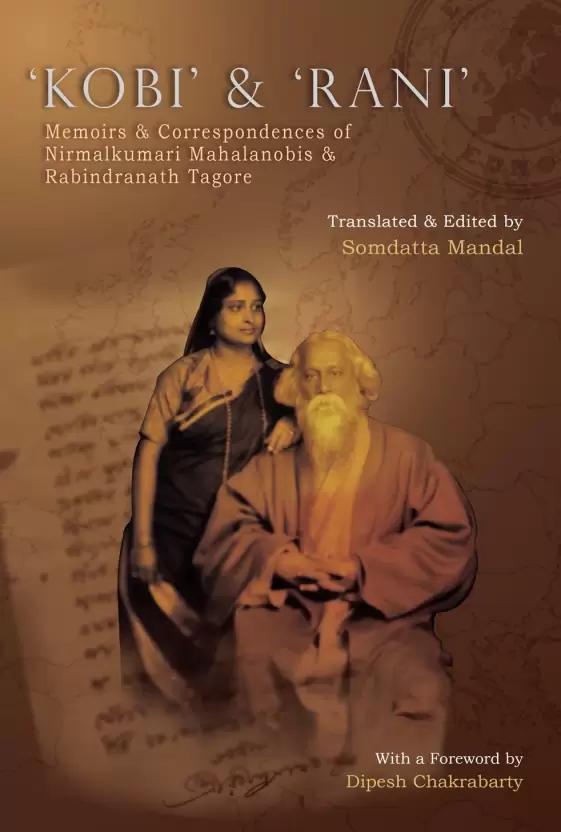
Himadri Lahiri reviews Somdatta Mandal’s ‘Kobi’ and ‘Rani’: Memoirs and Correspondences of Nirmalkumari Mahalanobis and Rabindranath Tagore. Click here to read.

Suzanne Kamata reviews Iain Maloney’s Life is Elsewhere/ Burn Your Flags. Click here to read.

Bhaskar Parichha reviews Anita Agnihotri’s Mahanadi –The Tale of a River, translated from Bengali by Nivedita Sen. Click here to read.

Meenakshi Malhotra reviews Turmeric Nation: A Passage Through India’s Tastes, authored by Shylashri Shankar. Click here to read.

Categories
Interview

Where the Whole World Meets in a Single Nest

In Conversation with Somdatta Mandal

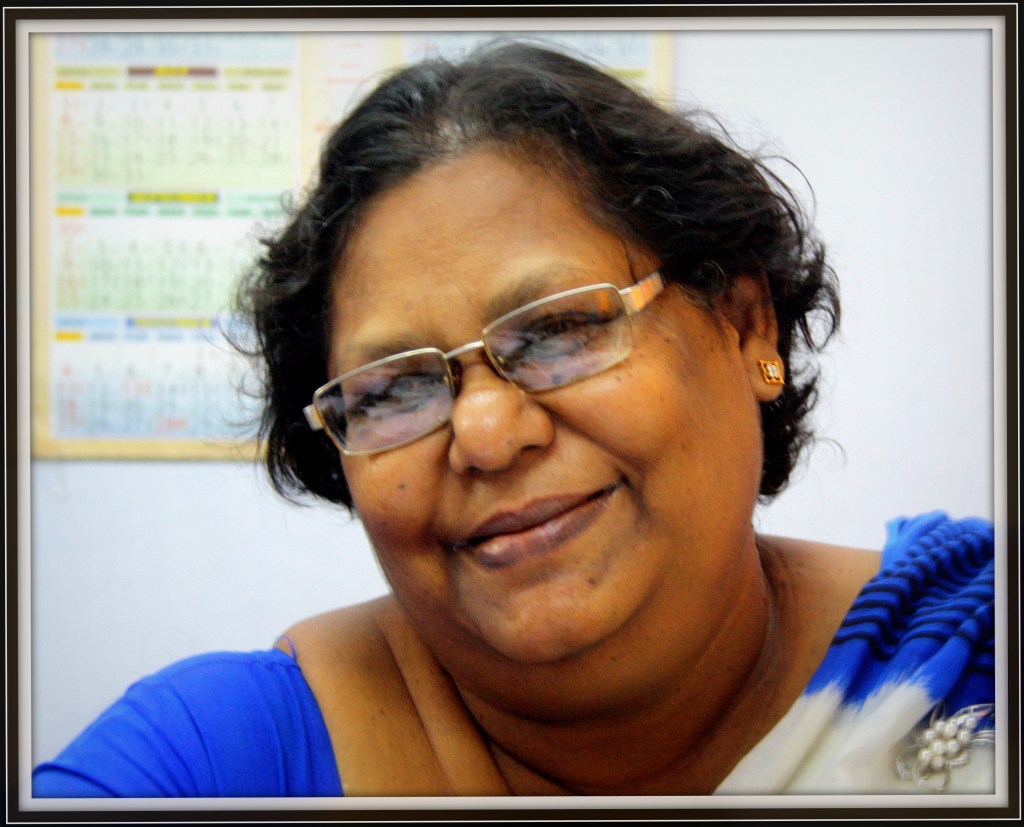
Professor Somdatta Mandal

Somdatta Mandal, an eminent academic, has translated so many books and writers that it is difficult to pin her down as a doyen of one great. Her extensive work amazes with its variety intercepted with humour. Reading through her translations, Nirmalakumari’s account of how Tagore was manipulated by Mussolini, is like comprehending and living through history. It adheres and makes an impact to lead to the realisation that history is often repeated, only the cast of characters and locations change. That Tagore could put that behind him and rise above this incident (hyped by the media then) to connect with his vision reflected not just in his writings but also in the institution (Santiniketan) he created and which he reached out for help to keep intact. All this is brought home to us through just one of Mandal’s many translations, Kobi and Rani.

She talks more of her extensive findings while translating and experiencing the world from writings across the ages. She reflects on how Tagore’s vision for Santiniketan remains to be yet realised. Her answers showcase a scholar who shines in any setting not just with reflected light of others she translates but with her own inner convictions laced with a rare sense of humour. She has much to say and share in this extensive interview. We are happy to project her voice to you.

You were teaching in Santiniketan. Tell us a bit about the legendary university. How is it different from others? Has it lived up to what the Kobiguru visualised?

I retired from Visva-Bharati two years ago after teaching in the English Department there for about eighteen years. My area of specialization has been American Literature, Film and Culture Studies and Diaspora Literature. I started teaching in Santiniketan initially thinking of it as a new job at a university, but soon realised that away from the cacophony of life in Kolkata where I was born and bred, working and living all that while, the place would gradually exert its own idyllic charm upon me. Now in my retirement I want to live there in peace and use the place as a writer’s retreat. In spite of being in the news at present for all the wrong reasons, Santiniketan has its own charm, lifestyle and culture that grows within you and cannot be imposed from outside.

I think most people know, but nevertheless let me reiterate a few facts about Santiniketan. Kobiguru had visualized the institution to be different from other standard ones so that away from rote learning methods, students could imbibe the fresh ambience of studying in the lap of nature. As publicity pictures still project it, the classes in the school section are still held open air under the trees, but the university section is similar to other standard institutions.

In fact, ever since Visva-Bharati was established in 1921, it was considered to be a special place of learning inviting teachers and students from all over the world. The poet selected for its motto an ancient Sanskrit verse, Yatra visvam bhavatieka nidam, which means, ‘where the whole world meets in a single nest’.“Visva-Bharati,” he declared, ” represents India where she has her wealth of mind which is for all. Visva-Bharati acknowledges India’s obligation to offer to others the hospitality of her best culture and India’s right to accept from others their best.” The institution has excelled in areas of fine arts, singing, painting, dance, different Indian and foreign languages, and especially in the idea of rural reconstruction.

Tagore laid great emphasis on universal humanism, internationalism and trans-culturalism. He sought a positive outcome from the East-West encounters. This syncretic culture imbues the vast oeuvre of his work: it has propelled his activism and lives in his pragmatic projects today. His vision was to ultimately strengthen the fundamental conditions of world peace through the establishment of free communication of ideas between the two hemispheres.

Since 1951, when Visva-Bharati was considered as an institution of special eminence by an act of Parliament and was turned into a Central University, problems started creeping out gradually from Pandora’s box. On the one hand, it had to abide by the rules laid down by the University Grants Commission (UGC), follow its basic dictates of syllabi formulation etc. and on the other, the old ashramites and others consistently worried about the institution losing its special character to become like any other run-of-the-mill university. This dichotomy has not been resolved till date and sometimes the conflict between ‘insiders’ and ‘outsiders’ takes an ugly shape. Apparently, Tagore had made a special rule that in order to generate local employment people residing within the radius of twenty kilometres of the university should be given jobs but according to Central Government dictates, it should have a pan-Indian profile and recruit people from all over the country. This turmoil has resulted in a sort of stalemate for the past few years.

I mention all this to emphasise that the glory of erstwhile Santiniketan and Visva-Bharati has diminished greatly in the process, and it is no longer the experimental school that Tagore had initially wanted it to be. Even during his lifetime, he went from country to country delivering lectures to generate funds for his dream project and had realised how difficult it was becoming to sustain the institution financially. There is the famous saying that he had even requested Mahatma Gandhi to help and run the institution in his absence. In 1940 a year before he died, he put a letter in Gandhi’s hand,

“Visva-Bharati is like a vessel which is carrying the cargo of my life’s best treasure, and I hope it may claim special care from my countrymen for its preservation.”

Anyhow, after joining Visva-Bharati, I realised that apart from some cursory reading, I hardly knew anything about this great man, this polymath, someone who queried some interpretations of his life and work through a holistic perspective. Also, interdisciplinary seminars and interactions with faculty members of other departments made me aware of many new areas that I was oblivious of. It was quite unconsciously that little by little the spirit of Tagore, his work, his culture, seeped into my veins as it did into that of many of my city-bred colleagues.

My impetus to read and translate Tagore also gained momentum when we had to work for the academic excellence of our department by working for the UGC SAP (Special Assistance Programme). The thrust area of this Departmental Research Scheme was “Tagoreana” – we started visiting libraries and academic institutions all over India and began compiling all available material on Tagore in English. It gave us a clear picture that in reality very few critical books had been written on him in English and the plight of translated volumes was even worse. It seemed as if the work done till date was equal to a few pebbles lying on the vast seashore of knowledge. Along with this comprehensive checklist, at the end of each year, we organised a seminar on different perspectives related to Tagore and his work. Also, in order to justify the seriousness of the project, we started bringing out a book publication every year, with each teacher contributing to it. This was when I got interested in reading and translating Tagore’s non-fiction, his selected letters, his humorous pieces of dramatic skits known as Hasyakoutuk, and different essays and travel narratives. It was a vast gold mine in front of me just waiting to be explored. Here was a man of all seasons and gradually by default, being in Visva-Bharati, all of us gradually veered away from our initial area of expertise and got seeped into reading, writing and translating him. I remembered how in a light vein a professor of the Hindi department saw our first publication on ‘Tagoreana’ and told me, “Even you English professors have now got stuck in the old man’s beard!!”

You have translated lot of Tagore. What got you interested in translation — and as tough a writer as the maestro in English?

Before coming to my translation work on Tagore and how it began, I need to mention here that my role as a translator began in a strange way with a commissioned piece of work many years ago. Professor Sukumari Bhattacharya had an interesting Bengali book entitled Ramayan O Mahabarater Anupratik Jonopriyota (The Comparative Popularity of the Ramayana and the Mahabharata) and she wanted it to be translated into English. Her daughter Tanika Sarkar had begun doing the first few chapters but could not complete it. So, she was looking for a competent translator whose style would not clash with the earlier section already translated. I was given a sample chapter to work on and had to literally go and face her in a serious interview before being assigned the job. She went through my translation meticulously, pencilled a few changes, and gave me the green signal to go on. Translating very difficult Sanskritised Bengali was a real challenge in my life which very often had to be combatted armed with a thesaurus and dictionary. Sometimes, I found that after a whole afternoon’s labour I had proceed only two sentences. Anyhow, after I eventually submitted the entire work, the file somehow got lost. In a bed-ridden state Professor Bhattacharya went through the entire manuscript and approved it, often suggesting a few changes in the use of words. A few months later she passed away and nothing was heard of that translation anymore. For almost five years I would brood over the fate of my unborn first child. Fortunately, when her house was being cleaned and vacated, the lost file was recovered, and the book was published by Anustoop under the joint names of Tanika Sarkar and me.

That difficult initiation as a translator gave me tremendous moral boost and confirmed my capability as a serious translator. Tagore was no longer a problem. The only fear that I had was being too close to the original text as taking liberties with such a canonical writer was unthinkable for me. But times changed. I realised that readability of a translated text was a very important criterion than mere literal translation. So gradually I started becoming even more colloquial with Tagore’s texts. It should read as if it was written in English itself and not in the convoluted style of late 19th century or early 20th century. Contributing to The Essential Tagore volume brought out by Harvard University Press and Visva-Bharati in 2011, to commemorate the sesquicentennial anniversary of Rabindranath Tagore, was also an eye-opener for me. The extremely meticulous editors Fakrul Alam and Radha Chakravarty made me revise my entries several times in order to make the text read not like a vintage piece but a living vibrant text. Translating some of the skits from Hasyakoutuk was challenging and fun at the same time, as we could come across a different Rabindranath, full of pun, wit and satire, and quite different from the serious philosophical poet he is usually considered to be.

Again, teaching the very poor quality of translation of Tagore’s Home and the World done by Surendranath Tagore during the poet’s lifetime to graduate and undergraduate students at the university made me realise why so many of my non-Bengali professor friends spoke so badly about the text.  Gradually I found myself translating many more different areas of Tagore’s writing. The essays of Pother Sonchoy (Gleanings of the Road) that Tagore wrote during his 1912 visit to England were not travel pieces per se and often ventured into philosophical musings. Niyogi Books readily brought out the volume and it was released in Kolkata at the Oxford Book Store with a lot of fanfare by Sankhya Ghosh and many others.

In the meantime, along with many lesser-known letters, early essays on travel by Rabindranath, Visva-Bharati Publications Department brought out the book Wanderlust: Travels of the Tagore Family that contains entries of travel essays written by nineteen members of the Tagore family beginning from Dwarkanath Tagore to Sumitendranath Tagore. Incidentally, among these nineteen entries, nine were by women of the Tagore family. So you see, translating travel writing and Tagore somehow overlapped without any conscious effort on my part.

Again, translating two travel narratives by Nirmalkumari Mahalanobis (aka Rani) is equally important because they are memoirs based on her travels with Tagore. Kobir Shonge Europey (With the Poet in Europe) and Kobir Shonge Dakshinnatey (With the Poet in the South) narrate the incidents of the poet’s tour to Europe in 1926 and to South India and Sri Lanka in 1928 respectively. Incidentally, though written many years later, the first narrative is the only account of the important seven-month trip that Rabindranath undertook to Europe where he met Mussolini and many important political and social stalwarts of the day. Both these travelogues are included in my present volume of translation entitled Kobi’ and ‘Rani’: Memoirs and Correspondences of Nirmalkumari Mahalanobis and Rabindranath Tagore.

Other than Tagore, you have translated more writers from colonial times to English. Why do you translate mainly travel-related writing from the past? What got you interested in this period and in travel-writing?

My interest in travel writing began many years earlier when it was not even recognised as a canonical enough genre. In a seminar on ‘Travel Writing’ that I had organized in our department, I received a great impetus when Mushirul Hasan, the famous historian and then Vice Chancellor of Jamia Millia Islamia, Delhi, attended as the chief-guest and delivered the keynote address. He had already worked and edited several volumes of travel narratives especially in Urdu and made it clear that this area of study upheld immense possibilities.

Now let me mention how apart from the writings of Tagore and his family members, my interest in travel literature grew. After work hours, I started spending the late afternoons in our university library and found immense treasure of travel books in Bengali among the unkept dusty stacks, books which had not been issued for as long as fifty years. No one gave me any computerised list of what texts were available and this manual hunting revealed many unheard names of writers. I just picked them up, issued them and dumped them in my car. Some of the books were brittle, some never issued at all. In this way I had picked up Paschimjatriki by a lady called Durgabati Ghose who went for a tour to Europe with her husband in 1932. I liked the text very much and translated it and Orient Blackswan published it as The Westward Traveller with a foreword by Ashis Nandy. Anyhow, in due course of time, I had developed a handsome collection of travel texts and my interest increased with time. In the meantime, to digress a little, I have edited three volumes on Indian Travel Writing, and one special issue of an online journal, the first one in 2010 and the last one in November 2020. The number of abstracts that flooded my mailbox everyday was unusual and in spite of strict deadlines, I had to reject many good papers due to lack of space. I remember the publisher of the first volume returned 90 copies of the book as he said that since travel writing was not included in any university syllabi or course, they were not selling, and he lacked space in his warehouse. Within a span of a decade, the genre has gained a lot of popularity and many scholars are now keenly pursuing their research in this area. 

Speaking about translating writers from the past I find it safer as in most cases the copyright period is over and seeking permission is easier. Also, I must confess how I underwent a personal trauma after translating a living writer. Let me be a bit more specific. Nabaneeta Deb Sen’s Koruna Tomar Kone Path Diye is an excellent narrative about her visit to a seminar in Hyderabad and her sudden decision to travel to the Kumbh Mela. This book interested me a lot and I went through a publisher seeking her permission to translate the text. She asked me to submit two sample chapters and then gave the green signal to go ahead. I completed the entire translation within the stipulated time and sent it to her. Now began the difficult part. She did not like certain sections (“I don’t see myself in it as I should”, she explained) and the manuscript went through innumerable revisions and alterations, often with the consultation of family members and other editors. The cheeky, colloquial tone of the original Bangla text was lost – one perennial problem of translation for sure. Anyhow, the publisher introduced two more editors and in the end the book did come out under a different translator’s name with a due acknowledgement in the foreword for all my effort! So, it was a wise decision on my part henceforth to stick to older writers from the past.

Also, though for a long time, travel writing had been relegated as an inferior form of literature, I found in many texts what I call little nuggets of history. For example, in Durgabati Ghose’s text there is a hilarious incident about her going to meet Sigmund Freud in Vienna. As the daughter of the famous psychoanalyst Girindra Sekhar Bose, she went to meet Professor Freud who was her father’s friend, and what emerged in that meeting is something unusual when Durgabati felt that Freud himself should be psychoanalyzed for his excessive love of dogs. When I mentioned that incident, Ashis Nandy regretted that if he knew about this incident earlier, he would have definitely included it in his book, The Savage Freud. Again, in Crossing Many Seas, Chitrita Devi tells us how she went to visit the British Parliament in 1947 and on that very day saw the white paper of independence being granted to India. Many other such interesting historical events and significant people are often found in very ordinary travel narratives.

What are the challenges you face while translating Bengali to English? How do you solve them?

Basically, I still consider mine as literal translations and do not venture out into bringing in radical changes. The basic challenge I face is maintaining a readable sentence structure as the English and Bengali have different methods of composition. I don’t translate directly into the computer, rather I prefer to do it in long hand. Though it entails more work, I find that I end up usually reversing the order of the sentence when I am correcting and keying it in the computer. If possible, I then ask any friend of mine to read the translation and offer any necessary suggestions for change. This system works well for me. Also, now I usually try and translate everything in the past tense and that makes it more readable. Breaking up long, convoluted sentences into shorter readable ones is another method I tend to adopt. With time and experience, I feel more confident in making such alterations.

Why do you think translating is important? What is the role of translations in a world with 6500 languages?

In spite of all its drawbacks, translation is the only way in which we can open out to other people, whether in regional languages in India or in other languages across the world. Let me give you an interesting example. Recently I reviewed a book called Rebati: Speaking in Tongues. ‘Rebati’ is a famous short story written in 1898 by the famous Odia writer Fakir Mohan Senapati. It is a tragic tale in which the dream of self-actualisation of a young girl through education comes crashing down as much due to a rampaging epidemic as due to a mindset deeply hostile to change. In this particular book, the editor, Manu Dash, has managed to bring in 36 different incarnations of the story. Arranged alphabetically, ‘Rebati’ is presented in twenty-four Indian and twelve foreign languages in all. As the editor informs us, most of the writers commissioned to translate it in different languages have taken the English or the Hindi version as their source text. For the lay reader therefore, it is not possible to vouch for the quality of the translated text. But that we are able to understand the significance of this late nineteenth century story across so many countries and cultures across the globe is what is more significant than the actual quality of the translation.

Is it possible to have cultural exchanges among languages without losing out nuances in translation?

Translation and its problems, especially when the translated pieces are twice or thrice removed from the original source text, is nothing unique and hence even labelled by terms like ‘transliteration’ and ‘transcreation’. In one of his earlier semiotic investigations, ‘The Search for the Perfect Language’, Umberto Eco argued that the Book of Genesis charts the decline of humanity into the chaos of Babel. The poly-linguistic world we live in is one more punishment from God for our baseness and general nastiness. In ‘Mouse or Rat?: Translation As Negotiation’, Eco is back on the subject of this post-lapsarian movement between different tongues, the perilous attempt to express concepts from one language into another. He suggests that translation is a negotiation’ not just between words but between cultures – “Translation is always a shift, not between two languages but between two cultures. A translator must take into account rules that are not strictly linguistic but, broadly speaking, cultural.”

As a translator I am very conscious about this kind of cultural exchange. Maintaining culture-specific words within the translated version, but at the same time making its meaning clear for the reader to understand, is probably one way of retaining this culture specificity. The lesser the use of glossary the better. Jhumpa Lahiri in her latest novel Whereabouts which she self-translated from Italian into English attests to the fact: “Translation shows me how to work with new words, how to experiment with new styles and forms, how to take greater risks, how to structure and layer my sentences in different ways.”

Which is your favourite writer to translate? And why?

None in particular. I just sometimes happen to like a piece of work and feel it should be translated for a greater pan-Indian readership. Sometimes the reverse is also true. In the summer of 2004, I was residing at Bellagio in Italy on a Rockefeller Fellowship when the latest issue of the New Yorker magazine published a new short story by Jhumpa Lahiri called ‘Heaven-Hell’. Upon reading the story about the protagonist called Pranab-Kaku, I was so taken aback by its Bengaliness, I felt that every Bengalis who usually do not read English fiction and yet basked in the glory that a Bengali girl had recently won the Pulitzer prize should immediately read it.  Without a second thought or even seeking any permission from anyone, I instantly sat down and translated the story into Bangla. Later when I returned to Kolkata and gave it to a senior professor to read. he was so impressed that without even informing me he sent it to the magazine Kali O Kolom which published it. I am lucky that no one sued me for copyright violation.

Recently I read a short story called ‘Barnabaad’ (Casteism) by Manoranjan Byapari in the Sunday supplement of Pratidin newspaper called Robbar and felt the urge to translate into English immediately. Dalit writing in Bengali is slowly gaining academic attention and I immediately asked someone to seek permission from the writer to allow me to translate it into English. Byapari, busy with his own electioneering campaign at that time, was thrilled and immediately gave me the permission. The translated story has been accepted by the international journal Transnational Literature and will see the light of day soon. So, you see there is no special or favourite writer for me to translate. Way back in the nineties, I remember I had voluntarily translated some essays on cinema that Satyajit Ray published in Bishoy Challachitra, but I was too naïve to know then that you needed his wife’s permission to do so. The translated pages therefore travelled to the wastepaper basket in due course.

Was it different translating Bengali women from translating Tagore? How did the experience differ?

Usually, the tone of Bengali women’s writing that I have translated to date is much more colloquial and homely, but we cannot always make generalisations. Many women wrote their travelogues at the request of family and friends and not for public consumption. But some women like Krishnabhabini Das took her job of imparting knowledge rather seriously. Also, we should not make the mistake of assuming that all Tagore’s works are of high philosophical and moral content. There are many pieces of Tagore’s writing which are also simple, homely, easy to translate and again there are places where he often quotes from the Upanishads and one needs the help of Sanskrit scholars to understand the real meaning of those quotations. So, there is no such hard and fast rule, and it all depends on what particular work and by which writer we are translating.

Were the Bengali women, like Krishnabhabini Das, you translated any different from the women associated with Tagore? How and why?

This question is more or less a repetition of the last question. Each woman’s writing has a different aim and purpose and so they cannot be clubbed together under some general definitions. The reason for the travel and the target readership is different in each individual case. Published in 1885, Krishnabhabini Das’s England-e-Bongomohila (A Bengali Lady in England) was published in Calcutta originally without her name in the title. Her identity was just that of a Bengali woman who chanced to go to England along with her husband. Her book was not a travelogue in the true sense of the term, but her aim was to seriously convey the social conditions of England at that time and to educate her sisters back home who were still in fetters and did not know much about female emancipation. Her writing is serious in nature, and she took the help of other sources and books to authenticate and explain everything in detail.

For Hariprabha Takeda, a Bengali Brahmo woman, who went to Japan in 1912 for four months along with her husband to meet her Japanese in-laws there, it was a totally personal affair.  Thus, even though language was a big bar, Bongomohilar Japanjatra [The Journey of A Bengali Woman to Japan] is more intimate in tone and narration where she tries to define the idea of ‘home’ to her readers. For Chitrita Devi, sister of Maitreyi Devi, Onek Sagor Periye (Crossing many Seas) narrates travels to different places in the world in seven different segments. As a member of the P.E. N. network, her outlook and narration is much more erudite and polished than others.

I can go on citing more examples but the basic point I want to make is that the social class and status of the woman narrator is different in each case. For women associated with Tagore, this becomes even more clearly marked. Rabindranath’s daughter-in-law, Protima Devi, wrote Nirbaan (Nirvana) immediately after the poet’s death. This text is very different from the four other women who narrated the last days of their association with Rabindranath. Though the incidents are the same, each woman’s narration comes in different styles. Thus, Rani Chanda or Maitreyi Devi or Nirmalkumari Mahalanobis’s narration have to be read side by side to understand what I mean as to the relationship of the subject to the narrator. My book The Last Days of Rabindranath Tagore in Memoirs does exactly that. Translating each woman’s narration separately was a challenge no doubt but when they are juxtaposed together, the point-of-view of each narrator becomes clearer.

Why do you stick to women and Tagore only? Have you ever thought of exploring translations of other writers like Nazrul or Jibonanondo?

As I have already mentioned, this was not a deliberate choice. I am not a feminist as such but somehow at the end of the day I find that I have translated the works of more women than men. Since none of the translations that I have done till date have been commissioned projects by publishers or authors themselves, I just translate what and when I fancy reading and feel inspired to translate. You know translation has often been called ‘transcreation’ and this creative process is something that interests me very much. Though not a creative writer per se, the translating process also gives me liberty in selecting words, style and that grants me a lot of freedom which is no less important than creative writing. About translating Nazrul or Jibonanando, I must admit that I am not very comfortable with translating poetry. I prefer to stick to prose, whether fiction or non-fiction. The more difficult the prose style, the more challenging the translating process becomes. Also, in hindsight I feel since women were marginalised in the creative process and often not taken seriously at all, as a woman myself, it is my duty to explore and translate the writings of women even more.

Have you ever thought of writing yourself?

I have written a lot of critical essays and articles but when it comes to creative writing, my contribution is negligible. However, for a long period of time I wrote small features for the ‘Now and Again’ column published in the Op-ed section of The Statesman. These pieces made me quite popular as often when introduced to strangers for the first time, I would be asked whether I was the same person who wrote that column. Occasionally, I wrote several short entries about any and everything in life that interested me or I experienced first-hand without any false attributes in them. They were written primarily to divert myself from boring academic schedules and I called them ‘Vignettes of Life’when it was first published. Later it expanded into another edition called ‘More Vignettes of Life’ and the last one being called ‘Vignettes of Life Once More’. They contain any and everything that happened to me and in places around me, I am the narrator and the protagonist, and the result is that I have been able to make people laugh. In this troublesome and problem-ridden world, pure laughter and fun are vanishing so fast that I consider these short entries to be really cathartic. As for serious creative writing like writing short stories or poems, I never attempted to do that. Perhaps I am too prosaic a person you might say with very little imagination. 

What is your next project? Tell us a bit about it.

I am at present involved in a voluminous project which I began at least five years ago about different Bengalis from colonial times travelling to Vilayet or England and narrating their experiences in different genres of writing. Though I had to be selective in choosing the travellers over their two-hundred-year time span, sometimes unavailability of the primary texts made things more difficult. I am at present working on approximately forty such travellers, some of whom had written their memoirs in English. For those who wrote in Bengali, I am translating selected portions of their work for the purpose. So it is a quite laborious and time-consuming work but at the same time, very interesting because the multifarious reasons for each person’s travel to the coloniser’s land is mind-boggling. The structure of the book includes a brief bio-note of each traveller along with several sample pages from the actual narrative so that the reader can savour their experiences first-hand. I hope it sees the light of day soon.

(This is an online interview conducted by Mitali Chakravarty)

PLEASE NOTE: ARTICLES CAN ONLY BE REPRODUCED IN OTHER SITES WITH DUE ACKNOWLEDGEMENT TO BORDERLESS JOURNAL
Categories
Contents

Borderless, October 2021

An Ode to Autumn: Painting by Sohana Manzoor.

Editorial

Making a Grecian Urn… Click here to read.

Interviews

Unveiling Afghanistan: In Conversation with Nazes Afroz, former editor of BBC and translator of a book on Afghanistan which reflects on the present day crisis. Click here to read.

The Traveller in Time: An interview with Sybil Pretious who has lived through history in six countries and travelled to forty — she has participated in the first democratic elections in an apartheid-worn South Africa and is from a time when Rhodesia was the name for Zimbabwe. Click here to read.

Translations

Travels & Holidays: Humour from Rabindranath

Translated from the original Bengali by Somdatta Mandal, these are Tagore’s essays and letters laced with humour. Click here to read.

The Quest for Home

Nazrul’s Kon Kule Aaj Bhirlo Tori translated from Bengali by Professor Fakrul Alam. Click here to read.

Mysteries of the Universe

Akbar Barakzai’s poetry in Balochi, translated by Fazal Baloch. Click here to read.

Gandhi & Robot

A poem reflecting the state of Gandhi’s ideology written in Manipuri by Thangjam Ibopishak and translated from the Manipuri by Robin S Ngangom. Click here to read.

Sorrows Left Alone

A poem in Korean, written & translated by Ihlwha Choi. Click here to read.

The Song of Advent by Tagore

Written by Tagore in 1908, Amaar Nayano Bhulano Ele describes early autumn when the festival of Durga Puja is celebrated. It has been translated from Bengali by Mitali Chakravarty. Click here to read.

Poetry

Click on the names to read

Michael R Burch, A Jessie Michael, John Grey, Rupali Gupta Mukherjee, Mike Smith, Saranyan BV, Tony Brewer, Baisali Chatterjee Dutt, Jay Nicholls, Beni S Yanthan, Luis Cuauhtémoc Berriozábal, Pramod Rastogi, Jason Ryberg, Michael Lee Johnson, Oormila Vijayakrishnan Prahlad, Rhys Hughes

Animal Limericks by Michael R Burch. Click here to read.

Nature’s Musings

In The Lords of Lights, with photographs and a story, Penny Wilkes makes an interesting new legend. Click here to read.

Poets, Poetry & Rhys Hughes

In Pessoa and Cavafy: What’s in a Name?, Rhys Hughes comically plays with the identity of these two poets. Click here to read.

Musings/ Slices From Life

At the Doctor’s

In this lighthearted narration, Farouk Gulsara uses humour to comment on darker themes. Click here to read.

Taking an unexpected turn

Nitya Pandey talks of a virtual friendship that bloomed across borders of countries during the pandemic. Click here to read.

Travel in the Time of Pandemics: Select Diary Entries of an Urban Nomad

Sunil Sharma gives us a slice from his travels with vibrant photographs, changing continents and homes during the pandemic. Click here to read.

Musings of a Copywriter

In Surviving to Tell a Pony-taleDevraj Singh Kalsi journeys up a hill on a pony and gives a sedately hilarious account. Click here to read.

Essays

A Season of Magical Mellow Wistfulness

Meenakshi Malhotra through folk songs that are associated with Durga Puja explores the theme of homecoming. Click here to read.

What Gandhi Teaches Me

Candice Louisa Daquin applies Gandhiism to her own lived experiences. Click here to read.

How Women’s Education Flourished in Aligarh Muslim University

Sameer Arshad Khatlani dwells on the tradition of education among Muslim women from early twentieth century, naming notables like Ismat Chughtai and Rashid Jahan. Click here to read.

Once Upon a Time in Burma: Of Friendships & Farewells

John Herlihy takes us through more of Myanmar with his companion, Peter, in the third part of his travelogue through this land of mystic pagodas. Click here to read.

When Needles Became Canons…

Ratnottama Sengupta, who has edited an encyclopaedia on culture and is a renowned arts journalist, gives us the role ‘kanthas’ (hand-embroidered mats, made of old rags) played in India’s freedom struggle. Click here to read.

Stories

Lunch with Baba Rinpoche in Kathmandu

Steve Davidson takes us for a fictitious interview with a Tibetan guru in Nepal. Click here to read.

The Tree of Life

An unusual flash fiction by Parnil Yodha about a Tibetan monk. Click here to read.

Odysseus & Me: A Quest for Home

A short fiction from Bangladesh by Marzia Rahman on immigrants. Click here to read.

Dawn in Calicut

Krishna Sruthi Srivalsan writes of a past that created the present. Click here to read.

I am a Coward with Priorities

Tejaswinee Roychowdhury tells a story from a soldier’s perspective. Click here to read.

The Literary Fictionist

In Bapu, Denied, Sunil Sharma explores the fate of Gandhiism in a world where his values have been forgotten. Click here to read.

Book Excerpts

An excerpt of In a Land Far From Home: A Bengali in Afghanistan by Syed Mujtaba Ali, translated by Nazes Afroz. Click here to read.

An excerpt from letters written by Tagore from Kobi & Rani, translated by Somdatta Mandal. Click here to read.

Book Reviews

Aruna Chakravarti reviews Golden Bangladesh at 50: Contemporary Stories & Poems edited by Shazia Omar. Click here to read.

Somdatta Mandal reviews Wooden Cow by T. Janakiraman, translated from Tamil by Lakshmi Kannan. Click here to read.

Gracy Samjetsabam reviews Suzanne Kamata’s The Baseball Widow. Click here to read.

Bhaskar Parichha reviews Mohona Kanjilal’s A Taste of Time: A Food History of Calcutta. Click here to read.


Categories
Interview Review

Unveiling Afghanistan: In Conversation with Nazes Afroz

 Cry, My Beloved Country (1948) reflected the plight of Africans and the deep divides that created schisms between different groups in South Africa. The book won the author, Alan Paton, a Nobel prize. Another remarkable book that was published in the same year was a non-fiction written by a student of Tagore called Syed Mujtaba Ali. Mujtaba Ali wrote Deshe Bideshe in Bengali. This has been translated in recent times by the former BBC editor, Nazes Afroz, as In a Land Far from Home: A Bengali in Afghanistan. It is an outstanding memoir that demystifies and explains what led to the issues that are being faced by a country repeatedly jostled by varied regimes, a country that seems to be so steeped in problems that worrying about the pandemic remains a far cry for the common inhabitants.

For many decades this book had been feted by only a small group of readers, though the book is no lesser than Paton’s in crying out against injustices, terrors of violence and starvation, because it was written in Bengali. It was so witty and flavourful that people were afraid to translate it for the fear of losing the nuances of the original. As Afroz tells us in this interview, he had similar reservations. A book written by a scholar, it peppers history and political issues with lucidity and humour, making it an enjoyable experience for the lay reader. The author has a way of turning the mundane or intellectual into an amusing anecdote. During a conversation at an embassy party, the author through the voice of a fellow professor, makes a hilarious observation – but also, one that does convey much about Afghanistan despite its attempts at liberalisation.

Madame Vorvechievichi argued, ‘But there are mullahs in this country.’

“Dost Muhammad said reassuringly, ‘No need to worry, Madame. I know these mullahs very well. Their knowledge of religion is very little and I can teach you all of it in three days. However, a woman can’t be a mullah.’

Madame Vorvechievichi said angrily, ‘Why not?’

“With a deep sigh Dost Muhammad said, ‘Because she can’t grow a beard.’”

The book is speckled with multiple such instances. Along with these witticisms, the pathos of the country, the plight of the people is well captured by poignant observations:

“The real history of the country was buried beneath the soil, much like the way that Indian history was hidden in its Puranas, Mahabharata-Ramayana. Afghanistan is a poor country; Afghans do not have the time or the resources for archaeological excavations to write their own history.”

The writer, Syed Mujtaba Ali (1904-1974) a polyglot, scholar, traveller and humanitarian did just that – he recorded the history of the time he spent in Afghanistan, a time when a swift takeover from the liberal king Amanullah (1892-1960) was staged by Bacha-ye-Saqao (1891-1929) during the Afghan Civil War (1928-29).  Does this sound familiar, reminding one of the recent August 2021 takeover by Taliban?

A Humboldt scholar, Mujtaba Ali was conversant in fourteen languages, lived in five countries, including Afghanistan, where he had gone to teach. That his erudition never interfered but enhanced without marring the simplicity of rendition is what makes the book an attractive read for all lay persons. His astute observations are laced with wit and realism. The residue of the book lingers as the vibrant narrative flows — vicariously bringing to life, with humour and empathy, a culture that is distinct and yet warm in its uniqueness. His style is reflective of an in depth understanding of the situation and a sense of empathy for the common people with who he interacted daily – like his man Friday and the colleagues he mentions. For the author, everyone, from an uneducated villager to the crown prince (who invited him to play tennis), seemed to grow effortlessly into a rounded persona of a friend. All these have been transmitted by Afroz in the translation too. Translating two cultures across borders in a language that does not have all the words to capture the intimate nuances is not an easy feat, but it has fruited into an unusual and captivating read.

Nazes Afroz

Afroz’s maiden venture at translation was shortlisted for the Raymond Crossword Book Award. Afroz himself has spent a long stretch of time in Afghanistan. He joined the BBC in London in 1998. He was a senior editor in charge of South and Central Asia for a number of years. He has visited Afghanistan, Central Asia and West Asia regularly for over a decade. In 2013, he moved back to India. A passionate photographer, he writes in English and Bengali for various newspapers and magazines. In recent articles, he has been voicing his own concerns about developments in Afghanistan. In this interview, he reflects on what led him to translate the book, the situation as it was then and as it is now.  He dwells not only on the historic civil war as captured in the book but also on current day politics and the Taliban takeover.

You are a journalist. What got you interested in translating a Bengali classic from the last century?

I became a journalist five years after I read Deshe Bideshe. I was still a teenager when I picked up the book from a library rack. Reading Mujtaba Ali at that age had a profound impact on me. The erudition, the smooth sailing between multitude of cultures and languages, the gripping storytelling in his writing mesmerised me. I had never read anything like that in Bangla. Every Bengali reader of Syed Mujtaba Ali had felt the same way as I did. As a child I had the uncontrollable urge for travels and seeing the world. In Mujtaba Ali I found a role model. Deshe Bideshe stayed with me since then. It was one book that I would read two to three times a year from my teenage. So, by the time I decided to translate Deshe Bideshe more than thirty years after I first laid my hands on the book, I had read it for more than a hundred times! I knew its each page, I knew its each story and Afghanistan had seeped inside me permanently as I could relate to all the characters of the book.

While working for the BBC World Service in London, I had the opportunity to go to Afghanistan in 2002 soon after the Taliban were dislodged from power in a short war towards the end of 2001. I visited the country a number of the times in the following few years. As I travelled more, I befriended my BBC colleagues there and met other journalists and people on various walks of life. Some of them became good friends as well. I used to refer to events from the times of King Amanullah while discussing Afghanistan. They were surprised to hear all the details that I mentioned from a time that they said, ‘Even we don’t know!’ So, I mentioned how a Bengali scholar came from Kolkata to Kabul in 1927 and taught here, was a participant of the modernisation project of Amanullah by teaching English and French, played tennis with the crown prince Inyatullah (1888-1946) became an eyewitness of the rebellion against the king, got caught in the anarchy in the winters of 1928-29, and nearly perished starving before managing to go back to India. Hearing my story, they asked if there was any English translation of the book as they were keen to read. I told them that there was none as it was untranslatable!

As years went by and more and more of my Afghan friends got to know about Deshe Bideshe, they demanded that I did the translation. But I had my doubts. Would I be able to capture Mujtaba Ali’s unique language? Would I be able to transpose his wicked sense of humour? Would I be able to convey his erudition?

Eventually in 2011, I had already made up my mind to quit the BBC and move back to India. At that point my day-to-day workload in the BBC was significantly reduced. As I had ample time in hand, I thought I would attempt the translation. At that point I didn’t think of any publication; I wanted to do it just for fun and for my Afghan and non-Afghan friends who knew about the book and were keen to read it. I thought I would give them a taste of Mujtaba Ali’s writing by doing a few chapters. So, I did the first few chapters and shared them with a few friends. After reading those chapters they wanted to read more. I felt encouraged and I carried on with the translation for the following few months. Eventually the whole book was complete in about a year. After completing the translation, I let it sit for a few months before picking it up again and reread it as new text without looking at the original text. That exercise went on several times over the following one year till the final manuscript shaped up.

How many countries have you worked from? You were also in Afghanistan for several years I believe. Can you share your experiences?

My work has taken me to a dozen country or so. But as an intrepid traveller, I have visited more than 40 countries so far across four continents. Apart from my regular visits to Afghanistan, I spent months at a stretch on several occasions. Working in Afghanistan was certainly a unique experience. It wasn’t a country where one could travel and roam around freely. There were always the security alerts. One needed to negotiate security barriers everywhere. The accommodations – hotels, guesthouses were guarded by armed men. In the early years – in 2002 to 2004, there weren’t so much security in the hotels or guesthouses we stayed in. But that started to change from 2010 onwards as the Taliban had at that time started to regroup, and they made their presence felt in the country and in Kabul. Even at that time, cities like Mazar-e-Sharif and Herat were considered lot safer than Kabul. With increased and unpredictable attacks by the Taliban, the country became more and more edgy.

What was it about the book that drew you to it?

As I mentioned earlier, the uniqueness of Mujtaba Ali was that his erudition wasn’t frightening. He penned Deshe Bideshe almost twenty years after he left Kabul. By then, he had completed his PhD in comparative religion from Germany as a Humboldt scholar, did his post-doctoral research from al-Azhar university in Cairo, learned more than a dozen languages, and travelled extensively in Europe. So, even though his narrative of Afghanistan was drawn from what he had witnessed in his mid-twenties while teaching there, when he decided to write the book, he had acquired profound knowledge in philosophy, literature, culture and history of the world in many languages. The multilingual and multicultural references with an oblique yet gripping story-telling style infused with a wicked sense of humour that came in his writing, had been drawing ardent followers, including me, since 1948 when Deshe Bideshe was first published.

The book highlighted a growing divide between the minority with liberal education and the majority without education. Is that true still? Would you call the book relevant to the present-day crisis?

Yes, that divide between the educated and the not educated that Mujtaba Ali elicited in Deshe Bideshe is still there. But the gap has certainly reduced. The years between 1929 to 1978 had been relatively stable and peaceful in Afghanistan. Modern education had spread but without giving a jolt to the conservative society and keeping the clergy more or less content. In Kabul and other major cities, girls and women were getting more and more education; they were also seen in public life more. Following the coup through which the communists – the People’s Democratic Party of Afghanistan or PDPA came to power in 1978, there was a big push for universal education. This created a much bigger educated class. Women were the biggest beneficiary of that time in terms of acquiring knowledge and finding jobs. Women were joining the police and military as well. Following the capitulation of the PDPA government in 1992, the modern education system collapsed during the Mujahideen civil war years until 1996 and then after the takeover of virtually the whole of the country by the Taliban.

A large number of Afghans – almost a quarter of the population became refugees in neighbouring countries or elsewhere. When the American led international forces ousted the Taliban from power in 2001 following the 9/11 attacks in the USA, the population got a fresh chance to get education. Schools opened again. Both girls and boys went back to school. Internationally there were many programmes to give scholarships to Afghan women and men who were seeking higher education. As a country with a very young population (the average age of Afghanis is 18), a large number of students joined the public and private universities. So, tens of thousands of young women and men are now educated holding masters or even PhD degrees in the country. But the rural areas lagged behind. So, the gap is more of the city and rural areas.

Do you find similarities between the Afghanistan of then and of now?

The way the Afghan society works, based on its ethnic and tribal identities as witnessed by Mujtaba Ali, still exist. The stranglehold that the clergy had on the uneducated mass about a century ago has possibly changed; it’s been replaced with more political interpretation of their religion. The ethnic divisions have sharpened for multitude reasons – primarily due to the outside interference and the way ethnic groups have been used in the larger geo-political game of the world powers.

One of the issues that tussles through the book is that people were basically poor and lacked education. Syed Mustaba Ali spoke of the vicious cycles of poverty, how much has it changed from what he wrote and what you experienced? Please elaborate.

Mujtaba Ali talked about how poverty contributed to the cycle of unrest in Afghan history. Yes, that poverty still exists but with that, a toxic potion of religio-politics has been added to the cauldron. The conflict of the past four decades is more due to the global religio-political dynamics rather that its own poverty.

Did/ do you find parallels in the political situation where Amanullah and his brother escaped from the invading hardliner, Bacha-ye-Saqao? Would you see Bacha as a precursor of Taliban?

The only parallel that one can draw between 1929 when Amanullah and his brother Inayetullah fled and now in 2021 is that the suddenness of the events. Amanullah’s fall happened in months and Bacha took over Kabul in matter of days – almost the same way the Taliban took control of the country.

I don’t think Bacha-ye-Saqao or Habibullah Kalakani as he called himself, was a precursor of the Taliban. Bacha was more of an opportunist; he grabbed the opportunity that came his way. But the Taliban are more of an organised religio-political force what was the product of the geo-politics of the last decade of the Cold War. So, they two are not comparable.

Did the American or Russian intrusions into Afghanistan serve any purpose? Did they actually help the Afghans?

The short answer is no. Both the superpowers came to achieve their own strategic and foreign policy objectives. The Soviets came to expand their sphere of influence beyond their borders in Central Asia. In the process they were badly bruised and had to retreat. The Americans came to get hold of Osama-bin-Laden and dismantle the al-Qaeda infrastructure. It was never about helping a nation that had been devastated by decades of conflict in which they had no role. They just became pawns in the greater game of geopolitics.

By the descriptions in the book, Afghans seem to be fairly open as humans and yet, they have a distinct identity borne of their culture, their ethos — very different from any other. Was that undermined in any way by the attempts at modernisation?

Like many other rural, traditional and old societies, Afghans are hospitable and warm people. They are bound and governed by their age-old custom and codes of conduct.

Even when they are outside of their own land – in the West too, they extend their hospitality to strangers the same way they would in their own country and their behaviour would not differ much. It is not the question, if modernisation has or will undermine their tradition. They have had encounters with modernisation – the way modernisation is understood from the Western prism. Did that change the people who had experienced that modernisation in the time of Amanullah? Mujtaba Ali saw that the ‘so called’ modern people did not lose their Afghan-ness. The same can be said now. As a people they have largely remained unchanged despite connecting with the outside world like never before.

In the book, the international community was practically chased off Afghanistan. As the US troops left, one felt the same way. Do you feel intervention from the international community is necessary in Afghanistan? Why?

The backdrops of 1929 and the present are not identical. In 1929, the rebellion was against the king who had lost the support of the clergy. The king did not come to power with foreign intervention. So, the international community was not chased out in 1929. The Europeans left because of the chaos and the violence. The rebels didn’t fight with the foreigners. Yes, there was an armed opposition to the presence of the USA since the war in 2001, but that opposition wasn’t big enough to send the USA packing.

The USA left because they had achieved their goals in Afghanistan, and it was becoming hugely expensive for them to stay on. Many are also drawing parallels of the US’s departure from Afghanistan with their hasty retreat from Vietnam in 1975. But they were again not identical. In Vietnam, the USA visibly lost the war. But in Afghanistan they did not lose. They could have stayed on if they wanted but it made no sense to them to spend tens of billions of dollars each year. Hence, they left. They had been talking about withdrawing from Afghanistan since 2012, a year after they killed Osama bin Laden in Pakistan.

The intervention that the Afghans had been experiencing since 1979 – first by the Soviets, then Pakistan and finally the US led Western nations, devastated the country and the ordinary Afghans had been paying for it with all they had. No external intervention is beneficial for any country. It’s not desirable to have; certainly not the way the global powers had been intervening for the past 40 odd years in various corners of the world. But the question is, if unspeakable atrocities are committed on certain sections of a country or society, what does the international community do? Should the international community intervene? The world powers have unfortunately always used these as pretexts to intervene to further and achieve their own objectives not only in Afghanistan but in other countries too.

In the book, only foreigners with work seemed to be in Afghanistan. Is/ Was it possible for tourists to visit Afghanistan, even before the Taliban took over?

In the last twenty years, Afghanistan had been unstable. Violent incidents kept happening. So, it was not advisable for tourist to go there. But the country always issued tourist visa for short visits! For a few years, Japanese tourist used to come to visit the ancient Buddhist sites like Bamiyan. That too waned due to the escalating conflict.

Thank you for this wonderful interview and also for the flawless translation of a classic memoir.

Click here to read a book excerpt from In a Land Far from Home: A Bengali in Afghanistan.

(This is an online interview/review by Mitali Chakravarty.)

PLEASE NOTE: ARTICLES CAN ONLY BE REPRODUCED IN OTHER SITES WITH DUE ACKNOWLEDGEMENT TO BORDERLESS JOURNAL