Categories
Interview

 When a Hobo in a Fedora Hat Breathes Tolkien…

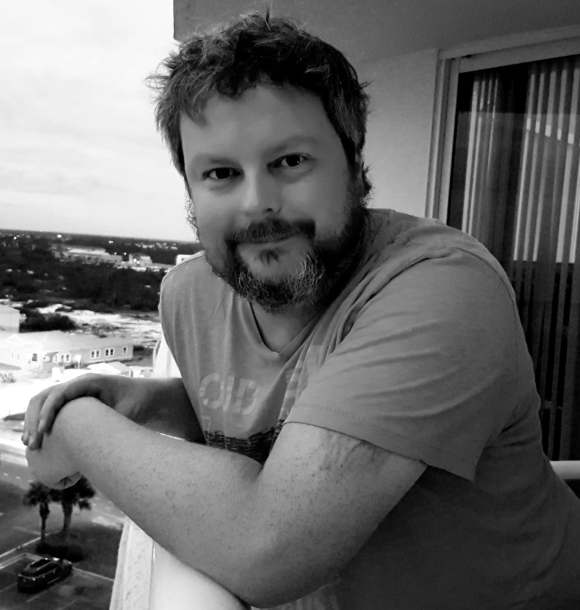
In Conversation with Strider Marcus Jones

Strider Marcus Jones
i'm come home again
in your Lothlorien

Strider Marcus Jones wrote these lines about an idyllic utopia that was named Lothlorien by JRR Tolkien in Lord of the Rings. Jones writes beautiful poetry that touches the heart with its music and lyricality and recreates a world that hums with peace, beauty, acceptance and tolerance – values that have become more precious than gems in the current world of war, strife and distress. He has created his own Lothlorien in the form of a journal which he has named after the elfin utopia of Tolkien. An avid reader and connoisseur of arts, for him all his appreciation congeals in the form of poetry which draws from music, art and he says, perhaps even his legal training! Let us stride into his poetic universe to uncover more about a man who seems to be reclusive and shy about facing fame and says he learns from not just greats but every poet he publishes.

What started you out as a writer? What got your muse going and when?

In my childhood, I sought ways to escape the poverty of the slums in Salford. My escape, while gathering floorboards from condemned houses every winter and carrying them through back entries in crunching snow to our flat, above two shops for my dad to chop up and burn on the fire was to live in my imagination. I was an explorer and archaeologist discovering lost civilisations and portals to new dimensions our mind’s had lost the ability to see and travel between since the time of the druids. Indoors I devoured books on ancient history, artists, and poetry from the library. I was fascinated by the works of Picasso, Gauguin, Bruegel and many others and sketched some of their paintings. Then one day, my pencil stopped sketching and started to compose words into lines that became “raw” poems.  My first mentor was Anne Ryan, who taught me English Literature at High School when I was fourteen. Before this, I had never told anyone I was writing poetry. My parents, siblings and friends only found out when I was in my twenties and comfortable in myself with being a ranger, a maverick in reality and imagination.

When I read your poetry, I am left wondering… Do you see yourself in the tradition of a gypsy/mendicant singing verses or more as a courtly troubadour or something else?

I don’t have the legs to be a courtly troubadour in tights and my voice sounds like a blacksmith pounding a lump of metal on his anvil.

I feel and relate to being gypsy and am proud of my Celtic roots passed down to me from my Irish Gypsy grandmother on my Father’s side who read the tea leaves, keys, rings, and other items telling people’s fortunes for years with scary accuracy. I seem to have inherited some of her seer abilities for premonition.

Like my evening single malt whiskey, age has matured the idealism of my youth and hardened my resolve to give something back to the world and society for giving me this longevity in it. The knocks from the rough and tumble of life have hardened my edges, but my inner core still glows like Aragorn’s calm courage and determination in the quest to bring about a more just and fairer world that protects its innocent people and polluted environment. Since Woody Guthrie, Tom Waits and Bukowski are influences I identify with deeply, I suppose I am a mendicant in some of my poetry but a romantic and revolutionary too, influenced by Neruda, Rumi, Byron, and Shelley shielded by The Tree of Life in Tolkien’s Lothlorien:

THE HEAD IN HIS FEDORA HAT

a lonely man,
cigarette,
rain
and music
in a strange wind blowing

moving,
not knowing,
a gypsy caravan
whose journey doesn't expect
to go back
and explain
why everyone's ruts have the same
blood and vein.

the head in his fedora hat
bows to no one's grip
brim tilted inwards
concealing his vineyards
of lyrical prose
in a chaos composed
to be exposed,
go, git
awed
and jawed
perfect and flawed,
songs from the borderless
plain
where no one has domain
and his outlaw wit
must confess
to remain

a storyteller
that hobo fella

a listening barfly
for a while,
the word-winged butterfly
whose style
they can't close the shutters on
or stop talking about
when he walks out
and is gone.

whiskey and tequila
with a woman who can feel ya
inside her, and know she's not Ophelia
as ya move as one,
to a closer and simplistic,
unmaterialistic
tribal Babylon,

becomes so,
when she stands, spread
all arms and legs
in her Eskimo
Galadriel glow,
sharing mithril breath,
no more suburban settlements
and tortured tenements
of death,
just a fenceless forest
and mountain quests
with a place to rest
on her suckled breasts,
hanging high, swinging slow.

war clouds HARP
through stripped leaves and bark,
where bodies sleeping in houseboat bones
reflect and creak in cobbled stones:
smokey sparks from smoked cigars
drop like meteorites from streetlight stars,
as cordons crush civil rights
under Faust's fascist Fahrenheit’s.
 
one more whiskey for the road.
another story lived and told

under that
fedora hat
inhaling smoke
as he sang and spoke
stranger fella
storyteller.

You seem to have a fascination for JRR Tolkien. You have a poem and a journal by the name of Lothlorien. Why this fascination? Do you think that JRR Tolkien is relevant in the current context? We are after all, reverting to a situation similar to a hundred years ago.

Yes, on all counts. Tolkien and his Lord of The Rings trilogy have been part of my life since I first read one summer when I was twelve years old.  My young mind, starved of adventure and elevenses in Salford’s slums, willingly absorbed the myths and magic, lore’s and legends beguiling me to enter the ‘Age of Man’. This living in a time of relative peace alongside other, more ancient races with musical-poetic languages reflected part of my own reality in living through the Cold War decades under the impending doom of nuclear annihilation where daily life often felt the shadows cast by the Cuban Missile Crisis, war in Vietnam, Pol Pot’s Cambodia, and famine in Biafra.

Sauron’s evil eye and invading armies echo an outgoing President Eisenhower’s ominous warning to curtail the influence and corruption of the banking-military-industrial-complex. Instead, Martin Luther King and President John F Kennedy were assassinated and a surveillance state and gilded slavery ideology is being imposed globally using artificial intelligence. Ancient civilisations in Iraq and Libya have been destroyed for control of oil and to maintain global Petro dollar power. Tolkien and The Lord of the Rings is just as relevant today in Ukraine, Yemen, and Syria and as it was through the slaughters of Verdun, the Somme and Flanders Fields. It is a warning that good must prevail over evil and this burden is borne by those with courage and conviction who cannot be corrupted.  

What is your Lothlorien? What does poetry mean to you and your existence?

My Lothlorien is a more peaceful world, with more tolerance of other individuals and cultures. Not perfect by any stretch but a place where people laugh, have their neighbours back and work with each other. A place of social justice and equality, music, poetry and art. It is no place for racism, sexism, ageism, corruption, or war. A kind of homestead with birdsong, forest, mountains and rivers, preferably in the French Pyrenees or Alaskan Bush. A place of words composed into poems and stories read and spoken, passed down and added to by each inspired generation in the Native American tradition. Poetry is all about communication and community in my existence. We are caretakers of our words and the world.

You have used Orwell, Gaugin and many more references in your poetry. Which are the writers and artists that influence you the most? What do you find fascinating about them?

Individuality of expression through fiction, poetry, art and music fascinates me. Now, at 62 years of age so many have influenced my poetry with or without me knowing or realising it. These include:

From the past – Chaucer, Tennyson, Shelley, Keats, Blake, W.B. Yeats, Auden, Langston Hughes, Hart Crane, Sexton, Plath, Kerouac, Heaney, Lorca, Orwell, Dickens, Dylan Thomas, Tolkien, Steinbeck, Heller, Donaldson, P.D. James, Ian Rankin, Vonnegut, Dostoyevsky, Rilke, Rumi, E.E.Cummings, Neruda, Leadbelly, Robert Johnson, Miles Davis, Thelonious  Monk, John Coltrane, Dylan, Tom Waits. So many.

From now – They know who they are. I have published their work in Lothlorien Poetry Journal.

You play instruments — saxophone and clarinet? Does that impact your poetry?

Saying I play instruments is a huge stretch of the imagination. I get strange notes out of my saxophone and clarinet that must sound like a hurricane blowing in anyone’s ears. My black Labrador, Mysty, covers her ears with her paws but I enjoy trying to play. I love jazz music, anything from the 1920s to early 70s, but Miles Davis, Monk, Coltrane, Mingus, and Ornette Coleman took jazz music to a level that transcends mortality.

Jazz music continues to be a profound influence in my poetry. I will explain how.     

Does any kind of music impact your writing?

In some way, unbeknown to me, jazz music, particularly that of Davis, Monk and Coltrane runs parallel to and interweaves with the rhythms of how I think when I write poetry. It closes my mind to the distractions of the outside world. The sound of those perfect and imperfect notes opens a door in my mind, I close my eyes, float into this dark room and my senses fill with images and words, which hover in the air like musical notes where I conduct them into rhythms and phrases bonded to a theme. Some become poems, others disintegrate into specks of dust, the moment gone. Sometimes, the idea and train of thought sleeps in my subconscious for years. This happened with my poems “Visigoth Rover” and “Life is Flamenco” which come from   my sojourns randomly wandering through Spain but were born years later listening to Paco playing Spanish guitar and Flamenco music which is another key influence in my poetry.

VISIGOTH ROVER

i went on the bus to Cordoba,
and tried to find the Moor's
left over
in their excavated floors
and mosaic courtyards,
with hanging flowers brightly chameleon
against whitewashed walls
carrying calls
behind gated iron bars-
but they were gone
leaving mosque arches
and carved stories
to God's doors.

in those ancient streets
where everybody meets-
i saw the old successful men
with their younger women again,
sat in chrome slat chairs,
drinking coffee to cover
their vain love affairs-
and every breast,
was like the crest
of a soft ridge
as i peeped over
the castle wall and Roman bridge
like a Visigoth rover.

soft hand tapping on shoulder,
heavy hair
and beauty older,
the gypsy lady gave her clover
to borrowed breath, 
embroidering it for death,
adding more to less
like the colours fading in her dress.
time and tune are too planned
to understand
her Trevi fountain of prediction,
or the dirty Bernini hand
shaping its description.

LIFE IS FLAMENCO

why can't i walk as far
and smoke more tobacco,
or play my Spanish guitar
like Paco,
putting rhythms and feelings
without old ceilings
you've never heard
before in a word.

life is flamenco,
to come and go
high and low
fast and slow-

she loves him,
he loves her
and their shades within
caress and spur
in a ride and dance
of tempestuous romance.

outback, in Andalucian ease,
i embrace you, like melted breeze
amongst ripe olive trees-
dark and different,
all manly scent
and mind unkempt.

like i do,
Picasso knew
everything about you
when he drew
your elongated arms and legs
around me, in this perpetual bed
of emotion
and motion
for these soft geometric angles
in my finger strokes
and exhaled smokes 
of rhythmic bangles
to circle colour your Celtic skin
with primitive phthalo blue
pigment in wiccan tattoo
before entering
vibrating wings
through thrumming strings
of wild lucid moments
in eternal components.

i can walk as far
and smoke more tobacco,
and play my Spanish guitar
like Paco.

Tell us about how music and language weaves into your poetry — “i’m come home again” — there is no effort at punctuation — and yet the poem is clear and lyrical. I really love this poem – Lothlorien. Can you tell me how you handle the basic tool of words and grammar in your poetry?

In my mind, music is poetry through sound instead of words. Like words, the combinations of notes and pauses have intricate rhythms and phrases. In many of my poems like “Lothlorien” and those above, I weave the rhythms and phrases of jazz music or Spanish guitar and words together with run on lines so there is no need for punctuation. This gives these poems, and many others a spontaneity and energy which feels more natural and real and has a potent, more immediate impact on the senses and emotions when combined with images and happenings. This whole process feels natural to me. It began in my early twenties, when I was listening to old Blues and the likes of Leadbelly and Robert Johnson alongside Dylan, Led Zeppelin, Tom Waits and Neil Young. These are the raw underbelly notes of my pain and anger at the world. Jazz is the mellow top notes. I hope this makes sense. It is hard to explain something that is natural to and part of who I am, so forgive any lack of clarity.

Sometimes, I just like to add a moment of mischievous fun to a serious poem as in these two:

REJECTING OVID

the fabulous beauty of your face-
so esoteric,
not always in this place-
beguiles me.

it's late, mesmeric
smile is but a base,
a film to interface
with the movements of the mind behind it.

my smile, me-
like Thomas O'Malley
the alley
cat reclining on a tin bin lid
with fishy whiskers-

turns the ink in the valley
of your quills
into script,
while i sit
and sip

your syllables
with fresh red sepals of hibiscus,
rejecting Ovid
and his Amores
for your stories.


OLD CAFE

a rest, from swinging bar
and animals in the abattoir-
to smoke in mental thinks
spoken holding cooling drinks.

counting out old coppers to be fed
in the set squares of blue and red
plastic tablecloth-
just enough to break up bread in thick barley broth.

Jesus is late
after saying he was coming
back to share the wealth and real estate
of capitalist cunning.

maybe. just maybe.
put another song on the jukebox baby:
no more heroes anymore.
what are we fighting for --

he's hiding in hymns and chants,
in those Monty Python underpants,
from this coalition of new McCarthy's
and it's institutions of Moriarty's.

some shepherds’ sheep will do this dance
in hypothermic trance,
for one pound an hour
like a shamed flower,

watched by sinister sentinels-
while scratched tubular bells,
summon all to Sunday service
where invisible myths exist-

to a shamed flower
with supernatural power
come the hour.  

How do you compose a poem? Is it spontaneous or is it something you do? Do you hear the lines or voices or is it in some other way?

Most poems come from life’s experiences and observations of people, places, nature, and events. These can be from the past, or present and sometimes premonitions of the future which often overlap depending on the theme/s and where I want it to go.

When it comes to composing a poem, I am not robotic, and neither is my Muse. I have no set time and never write for the sake of writing something each day which I find disrupts my subconscious process. A poem can begin at any time of day or night, but my preferred time to think and write is mid-evening going through to witching hour and beyond. I put some music on low, pour myself a slow whiskey and sit down in my favourite chair with pen and folded paper. I never try to force a poem. The urge to write just occurs. I don’t know how, or why. It just happens. My subconscious finds the thread, thinks it through and the poem begins to unravel on the page. I care about the poems since they care about the world and the people in it. So, I often agonise for days and in some cases years, over lines and words and structure, crossing out words and whole lines until they feel right. Editing, and redrafting is a crucial part of the writing process and requires courage and discipline. Butchering your own work feels barbaric in the moment but enhances your poetic voice and strengthens the impact of a poem on the reader.

You are a lawyer and in the Civil Service in UK. How does law blend with poetry?

I am a law graduate and retired legal adviser to the magistrates’ courts/civil servant who retired early. I have never practiced as a lawyer.

I never think about law when I write, but I am sure the discipline brings organisation to the orderly chaos of Spinoza’s universe that resembles the space inside my head.

Tell us about your journal. When and how did you start it?

I started Lothlorien Poetry Journal in January 2021. I publish the online rolling blog of poetry and fiction and printed book volumes — currently standing at eight issues featuring established and emerging poets and fiction writers published on the LPJ blog.

We are a friendly literary journal featuring free verse/rhyming/experimental poetry, short stories, flash fiction, and occasional interviews with poets.

We love poems about enchantment, fantasy, fairy tale, folklore, dreams, dystopian, flora and fauna, magical realism, romance, and anything hiding deep in-between the cracks.

I publish Lothlorien Poetry Journal periodically, 4-6 issues every year. Contributors to each issue (selected from the best work published on the Journal’s Blog) are notified prior to publication and receive a free PDF copy of the issue that features their work.

We nominate for the Pushcart Prize and Best of the Net.

 What do you look for in a poet as a publisher?

I look for a poet or writer’s distinct voice, that spark of originality in their theme/s, the rhythm and musicality in their language and phrasing.  I have no boundaries as to style, form, or subject – prose, rhyming, free verse, sonnets, haiku, experimental or mavericks who break the rules and write about the darker underbelly of society – if it is good and not offensive, racist or sexist Lothlorien Poetry Journal could be the natural home for your work. The best way to find out is to come to Lothlorien, have a read, and decide to submit.

LOTHLORIEN

i'm come home again
in your Lothlorien
to marinate my mind
in your words,
and stand behind
good tribes grown blind,
trapped in old absurd
regressive reasons
and selfish treasons.

in this cast of strife
the Tree of Life
embraces innocent ghosts,
slain by Sauron's hosts-
and their falling cries
make us wise
enough to rise
up in a fellowship of friends
to oppose Mordor's ends
and smote this evil stronger
and longer
for each one of us that dies.

i'm come home again
in your Lothlorien,
persuading
yellow snapdragons
to take wing
and un-fang serpent krakens-
while i bring
all the races
to resume
their bloom
as equals in equal spaces
by removing
and muting
the chorus of crickets
who cheat them from chambered thickets,
hiding corruptions older than long grass
that still fag for favours asked.

i'm come home again
in your Lothlorien
where corporate warfare
and workfare
on health
and welfare
infests our tribal bodies
and separate self
in political lobbies
so conscience can't care
or share
worth and wealth-

to rally drones
of walking bones,
too tired
and uninspired
to think things through
and the powerless who see it true.
red unites, blue divides,
which one are you
and what will you do
when reason decides.


IN THE TALK OF MY TOBACCO SMOKE

i have disconnected self
from the wire of the world
retreated to this unmade croft
of wild grass and savage stone
moored mountains
set in sea
blue black green grey
dyed all the colours of my mood
and liquid language-
to climb rocks
instead of rungs
living with them
moving around their settlements
of revolutionary random place
for simple solitary glory.
i am reduced again
to elements and matter
that barter her body for food
teasing and turning
her flesh to take words and plough.
rapid rain
slaps the skin
on honest hands
strongly gentle
while sowing seeds
the way i touch my lover
in the talk of my tobacco smoke:
now she knows
she tastes
like all the drops
of my dreams
falling on the forest
of our Lothlorien.

Thanks for your lovely poetry and time.

(This is an online interview conducted by Mitali Chakravarty.)

PLEASE NOTE: ARTICLES CAN ONLY BE REPRODUCED IN OTHER SITES WITH DUE ACKNOWLEDGEMENT TO BORDERLESS JOURNAL

Categories
World Poetry Day

Imagine…

And as imagination bodies forth 
The forms of things unknown, the poet's pen 
Turns them to shapes and gives to airy nothing 
A local habitation and a name. 

-- Midsummer Night's Dream (premiered 1605)by William Shakespeare

Imagine… if words could weave a world in harmony! Perhaps… then as Shakespeare declared and more recently John Lennon wrote in his song ‘Imagine’ (1971), we might have constructed a new world…

In hope of the same perhaps, Nazrul had published his poem, ‘Bidrohi‘ or the rebel a hundred years ago, a few months before TS Eliot published Wasteland, again a poem raising humane concerns and reinforcing values post the First World War. More recently Akbar Barakzai who has passed on at the start of this month, wrote about a better world in his poem, ‘We are all Human‘. And yet we have a war …

In response to the war, we have modern voices that ring out in harmony, including the voice of a Ukranian refugee. In reaffirmation of a world that can transcend divisions created by human constructs and soar in a virtual world, we also present to you interviews of half-a-dozen poets.

From the Treasury

Rebel or ‘Bidrohi’: Nazrul’s signature poem from 1922, ‘Bidrohi, translated by Professor Fakrul Alam. Click here to read.

A Special Tribute

We are All Human by Akbar Barkzai, translated by Fazal Baloch, has been published as not only a tribute to the poet who left us forever on 7/3/2022, but also as his paean to humanity to rise about differences which lead to war and horror, to unite us as one humankind. Click here to read.

War, Peace and Poetry

Poetry from across the world in support of peace and voicing concerns over the humanitarian crisis in Ukraine, we have Ukranian Lesya Bakun give us poetry as a war victim, a refugee. Rhys Hughes, Ron Pickett, Michael R Burch, Kirpal Singh, Malachi Edwin Vethamani, Suzanne Kamata, Mini Babu, Sybil Pretious and Mitali Chakravarty have contributed poetry written for the Ukraine crisis. Click here to read.

Poets across Borders

Half-a-dozen poets from different continents tell us about their poetry. The poets include Ryan Quinn Flanagan, George Freek, Luis Cuauhtémoc Berriozabal, Ihlwha Choi, Sutputra Radheye, Anusuya Bhar. Click here to read.

Categories
War & Peace

“How Many Times Must the Cannonballs Fly…?”

Featuring poetry by Lesya Bakun, Rhys Hughes, Ron Pickett, Michael R Burch, Kirpal Singh, Suzanne Kamata, Mini Babu, Malachi Edwin Vethamani, Sybil Pretious and Mitali Chakravarty

These fragments I have shored against my ruins
…
Datta. Dayadhvam. Damyata.         
 Shantih shantih shantih

-- Wasteland (1922) by TS Eliot

These lines from a hundred year old poem by TS Eliot continue to cry out to be part of our civilisation’s ethos as do the lyrics of Bob Dylan’s pacifist song, ‘Blowin’ in the Wind‘ which wonders : “Yes, and how many times must the cannonballs fly/Before they’re forever banned?” The world continues to war destroying nature, lives and a common human’s need to exist in peace and go about his daily tasks, secure that the family will meet in their home for dinner and a good night’s rest. Cries of humanity in crisis from the battle grounds of Ukraine take precedence as Ukrainian Lesya Bakun writes about the plight of the people within the country stalked by violence and death.

REFUGEE IN MY OWN COUNTRY/ I AM UKRAINE
By Lesya Bakun (07.03.2022, Ukraine)


I am Kharkiv.
I am Volnovakha.
I am Kyiv.
I am the blocked Mariupol on the verge of humanitarian catastrophe.

I am the completely destroyed
City of Shchastia --
That is literally translated as "happiness" --
Where people have to sit in the bomb shelters,
Because nothing else is preserved.
The Russian troops are not letting them out.

I am Ukraine.
I am a fighter. 

I am a refugee
In my own country.

What's in the minds of Russians?

Nine years ago, I was in Strasbourg, France.
Seven years ago, I was in Dublin, Ireland.
Two years ago, I was in Istanbul, Turkey.

Today, I am 
In an internally displaced people’s centre --
In a city that I cannot even publicly disclose
For the security of too many families
Who are fleeing to remain safe.

"The Ukrainian IT company N has left the markets of Russia and Belarus forever".
We should have done it eight years ago.
We should have done it thirty-one years ago.

A lot of my friends are switching from Russian to Ukrainian.
We should have done that thirty-one years ago
So that no one comes to "protect us".

I am the gasoline 
that NATO sent us
Instead of closing the sky -- 
Apparently so that we can burn
The Budapest Memorandum

We have seen the real face of Russians
Again
They negotiated green corridors
And started shelling from the heavy weaponry.

Evacuation is cancelled.

"I wish you survival, 
Health
And the closed sky above you."

As the battle rages and razes, some react to what we have gleaned from media reports, some of which move hearts with stories of bravery and the spirit of the people battling the invaders who kill and destroy what they cannot possess… But can freedom of thought and resilience ever be destroyed?

THEY SHALL NOT PASS
By Rhys Hughes

They shall not pass
we cried as we held the pass
against the enemy.
And our sleepy student
days in sunlight
suddenly seemed long gone
and very far away
though it was only
a few weeks since war began.
Would such times
ever return? We had no idea.

Now the conflict is over
and the years pass
with increasing velocity
and right here
in the rebuilt city I am young
no longer. I am
the teacher: it is my turn.
And as I watch my students
dozing in sunlight
instead of revising for exams
an old refrain fills
my head: They shall not pass.

ADVANTAGE INTRUDER
By Ron Pickett

The sun edges over the cluttered horizon.
The cell towers, eucalyptus and large water tank are comforting.
The sun slowly fills the dark.
Life is safe and warm and good – for now.
The sun slides below the western horizon in Kyiv and darkness returns.
 
The dark brings its special unseen terrors.
The rumble and rattle of distant rockets and bombs.
The roar of jets and the throb of helicopters.
Flashes of light fill the night sky but there are no storms in the distance.
The earth trembles: the people quiver.
Daylight is ten long hours away, we who have been there remember, and shudder.
 
There are patches of dirty snow on the ground.
On trees and shrubs and the Peoples Friendship Arch.
And under the rubble of bombed buildings.
The snow is marked by the black stains of explosions and the red stains.
The snow will melt with the coming of spring, but the stains will remain.
The stains are physical and psychological and deep.
 
Dark is the province of the predator.
Dark is a comforting cover for the aggressor.
Dark is the source of fear and anguish for the weak.
This predator is man who can see in the dark.
To see at night is a huge advantage.
Advantage intruder.


FRAIL ENVELOPE OF FLESH
By Michael R Burch
 
for the mothers and children of Ukraine
 
Frail envelope of flesh,
lying cold on the surgeon’s table
with anguished eyes
like your mother’s eyes
and a heartbeat weak, unstable ...
 
Frail crucible of dust,
brief flower come to this—
your tiny hand
in your mother’s hand
for a last bewildered kiss ...
 
Brief mayfly of a child,
to live two artless years!
Now your mother’s lips
seal up your lips
from the Deluge of her tears ...
 

FOR A UKRANIAN CHILD WITH BUTTERFLIES
By Michael R Burch
 
Where does the butterfly go ...
when lightning rails ...
when thunder howls ...
when hailstones scream ...
when winter scowls ...
when nights compound dark frosts with snow ...
where does the butterfly go?
 
Where does the rose hide its bloom
when night descends oblique and chill,
beyond the capacity of moonlight to fill?
When the only relief’s a banked fire’s glow,
where does the butterfly go?
 
And where shall the spirit flee
when life is harsh, too harsh to face,
and hope is lost without a trace?
Oh, when the light of life runs low,
where does the butterfly go?


THE TIMES, THE MORALS
By Kirpal Singh
(After Ee Tiang Hong)

Testy times
Tempers flake, bruise
Blood swells veins
As memories burn.

Times were
When reason prevailed
And men talked --
Eyes glittering.

Now it’s tit for tat
No relenting
Frayed nerves
Know no restraint.

We pray n plead
For sanity’s return
As pall bearers 
Carry another dead.

When will all this horror, violence and sorrow end? Will there be peace anytime soon… many voices across the globe join in quest of harmony.

Mt Fuji: Photo Courtesy: Suzanne Kamata
A VIEW OF MT. FUJI (March 3, 2022)
By Suzanne Kamata

On the third day 
of the third month 
of the fourth year of 
Beautiful Harmony (Reiwa)
which followed the era of
Heiwa (Peaceful Harmony)
my husband, son, and I traveled to Gotemba.
We checked into our mostly vacant hotel
wandered the grounds amongst
oaks and bamboo and volcanic rocks
gazed upon the majestic mountain
symbol of Japan.
Mt. Fuji stood
calm and dormant and frilled by cloud
spotlit by late afternoon sun.

As we stared in wonder and awe
   BOOM!
an explosion resounded.
A black helicopter
like the ones over Kyiv
flew into view.
I recalled the military vehicles 
we’d passed on the highway
those young men driving to 
practice for self-defence.

When will there be peace in Ukraine?
When will there be peace in the world?

RUSSIA AND UKRAINE
By Mini Babu

After the war,
the repose of the dead,
settles over the nations.
The leaders will smile,
shake hands and
interchange the bodies
of the dead, maimed,
captives and,
each will dust
that which belongs to 
the other, wash 
their hands and 
walk away.

Children hold on
expecting their fathers,
unknowing that
fathers never come back
after war.

And I, the ordinary,
instruct my children
how historic these names
are for examination.
Putin and Zelensky.

PEACE TALKS IN THE FOREST
By Sybil Pretious

I breathe
I sit on the hard cushion of root, foundation of growth
Peace talks to me  in the forest
Leaning against the rough trunk  bark,  feeling of strength
Peace talks to me in the forest
Above the leaves, cover me with a protective shade
Peace talks to me in the forest
Flowers flutter giving a splash of colour
Peace talks to me in the forest
Seeds heralding new life hang, dispersed on the wind
Peace talks to me in the forest
And I wonder
Why do warring nations not meet in forests
For peace talks
 where peace talks.


PRICE OF PEACE
By Malachi Edwin Vethamani

(I)

Peace is
a gentle brook,
natural and real. 

Peace is 
not things to come,
not imagined. 

We arrive as beings of peace.
One with all around us,
same flesh, same blood. 

Then labels are thrust upon us.
baptised into communities,
branded as nations. 

Essentialist labels 
bind us and blind us. 
We shed our individual beings,
stitched into communities. 

If you are not with us
You are against us, they say. 
Taking a stand 
comes with a price. 

The price is often peace. 


(II)

This is yet another call to stop a war.
A new plea for peace.
A shout out for prayers. 

The callers change 
with each new 
war cry. 

This too will pass.
How much will remain?
How much decimated?

Then these cries will be repeated. 
What is lost?
Is anything ever gained?

We will smell 
the stink of death 
and see the rubble of destruction.  

All the display of human unkindness 
we inflict on our fellow beings.


(III)

What new enterprise,
what profiteering,
has brought on this new war?
Surely, no noble cause 
can condone this waste of lives.

Whose monuments will we pull down now?
What new statues will we raise for self-proclaimed heroes?

What of the spouses who lost their partners? 
What of the parents who lost their children?
Children and citizenry 
casualties all.
Crushed and broken.


WASTELAND REVISITED AFTER A CENTURY                             
By Mitali Chakravarty

The river flowed with debris, with bodies
of the dead. When the waters reddened
with corpses crossing borders on a train,
nightmares haunted myriads of lives.

The undead cried till infecting more, the
anger, the hatred spread. That was more than
seven decades ago. History repeats itself. 
Will it ever stop? This hatred? This war?

Does killing, destroying ever help? Does 
it dissolve the buried hate, the anger, the 
deaths? Swigging blood like vodka, the madmen 
brew war with oil, weapons, the threat of nukes 
to annihilate all lives — make barren the Earth. 

Cosmic clouds gather to thunder,
‘Da, datta, dayadham, damyata’ till peace 
comes with love songs that echo through the 
Universe. A Brahmic vision of kalpas like waves 
ebb and flow, calming the cries of tortured souls. 

Oh God! Help us learn Mercy. When will the 
white horse ride to our rescue? Or was that all 
a myth? Kalki? Does the white horse ride out of each 
soul to form a lightening that dispels mushroom clouds? 

Peace be unto you.
Om Shantih, Shantih, Shantih! 

PLEASE NOTE: ARTICLES CAN ONLY BE REPRODUCED IN OTHER SITES WITH DUE ACKNOWLEDGEMENT TO BORDERLESS JOURNAL

Categories
A Wonderful World

Poets beyond Borders

In Conversation with Ryan Quinn Flanagan, George Freek, Luis Cuauhtémoc Berriozabal, Ihlwha Choi , Sutputra Radheye, Anasuya Bhar

We surfed virtually around the globe to gather half-a-dozen poets for the lovely lines they write to ask them what makes them write as such. We start from the top of the cold frozen north to travel down to warmer climes where birds and bees have started singing tunes of a vibrant spring. Meet some of the moderns who contribute towards a world undivided by manmade constructs...  

Ryan Quinn Flanagan is a Canadian-born author residing in Elliot Lake, Ontario, Canada with his wife and many bears that rifle through his garbage.  His work can be found both in print and online. He is truly prolific and his poetry endears as you read it repeatedly. Click here to read a poem by him.

Why do you write poetry?

Writing, particularly the physical mechanism, has always been something I enjoyed.  It is a solitary act that I derive great enjoyment from.  To be able to sit down and create something seems a wonderful thing to me, regardless of medium.  I love fine art as you know, but cannot paint.  Writing is my music, my form of painting I guess.  It is a great release as well.  To be able to create and express as I wish is the ultimate freedom.

What is your poetic process? 

I may have a few rough notes and ideas/titles, but nothing really fleshed out.  I get up and never shower on a writing day.  I don’t know why, but it seems to get me in the right head space.  Then I listen to the same music and eat the same thing I have for years.  For writing days, that is oatmeal.  Then I head upstairs and sit down to write with some wine.  I tend to put on some classical music so that my voice is the only one, but I can still zone out to the musicality of what is playing.  I tend to do that for about six hours at a time.  That is the same writing process I have followed for years now. 

Do you believe in inspiration and the Muse? Or is it the sweat of your brow alone?

I most definitely believe in inspiration and the Muse.  That is why I repeat the same processes, to put myself in the right inspirational mood or be ready for the Muse or whatever you wish to call it.  I believe that things are created in a certain time and space and once created, belong to that specific time and space.  You can never really return to that exact place, but you can look back on it through the work for sure.  Other things are then created in a whole other head space and the process continues.  Sweat of the brow or hard work is also important though, not only in creation but in submissions, building and assembling, as well as editing books.  There is a lot of work that goes into everything, so hard work must be there to compliment any inspiration that may come.

Do you think what can be said in poetry can be said in prose too?

I think so.  I don’t really differentiate between poetry and prose that much.  It’s all a voice and time and expression to me, so whatever way it chooses to come out is not overly importance to me.  For me, it is much more to get it out instead of caring much about how or why.  And to enjoy the mechanism while doing so.

George Freek is a poet and playwright living in Illinois. His poetry and plays have been widely published. His plays have been performed by the Milwaukee Repertory Theatre, the Changing Scene in Denver, and the Organic Theatre in Chicago, among others. He has also received grants from the Illinois Arts Council and The National Endowment for the Arts. His poetry is modelled often after Chinese poets of the Tang and Song dynasty. Click here to read his poem.

Why do you write poetry?

I write poetry because it’s the form that best suits my thoughts and feelings.

What is your poetic process?

The process begins with the need to express an emotion. Then it’s work to find the appropriate “objective correlative” in T.S. Eliot’s words.

Do you believe in inspiration and the Muse? Or is it the sweat of your brow alone?

I don’t necessarily believe in “Inspiration” unless that means simply the initial urge to express the emotion or the thought. After that it’s mostly work to make it sound right and unpretentious and yet avoid banality.

Do you think what can be said in poetry can be said in prose as well?

I think my response to your last question is included in my first statement. If something can be expressed in prose, it’s not poetry, although there is some prose which has the quality of poetry, e.g. Joseph Conrad!

Luis Cuauhtémoc Berriozabal is a Mexican-born author, who resides in California and works in the mental health field in Los Angeles. He is prolific and often his poetry shuttles is enriched by his ability to assimilate varied cultures into one lore. Click here to read his poetry.

Why do I write poetry?

I write poetry because I like to read it. In the many years I have been reading poetry, I continue to find new writers, some no longer in this world. These writers have influenced my work over the years. I write poetry because I enjoy writing it. Sometimes I write personal poetry. It is a sort of catharsis. It is a way describing how I am feeling about myself, about others, and about the world. Sometimes I write nonsense and rubbish, which I try to keep away from readers. 

What is your poetic process?

My poetic process is writing one poem a day. It is really that simple for me. It could be a three liner, a ten liner, or a long poem of more than 20 to 30 lines. If a poem comes out like rubbish or a journal entry, I try my best to come up with something better the next time around. There are times I get lucky, and a keeper comes along. I am not writing to impress anyone. I am writing for myself most of all and I share my words with readers. If some like what I have written, then that makes me feel good. If someone hates what I have written, I could not care less. I will not lose any sleep over it. I will continue to write as long as I have breath or until something else comes along that takes up my interest.

Do you believe in inspiration and the Muse? Or is it the sweat of your brow alone?

I do believe in inspiration and the Muse. I am inspired by everything and everyone I come in contact with: nature, night and day, moon and sun, the stars and the rain; the woman I love and the dreams that come along, some haunting and some sublime. I am inspired by the poetry, art, lyrics, and music of others. I am inspired by the news of the world, by the clients I work with in mental health, and those close to me that care for me (my family and friends). I am influenced by the birds in flight, the landscape of Los Angeles, trees, flowers, and animals. The sweat of my brow alone only comes into play when you consider everything else that provides knowledge to one’s mind. Whether clever or strange, imagination is also a great thing to have.

Do you think what can be said in poetry can be said in prose as well?

While poetry is brief and concise as opposed to prose, what can be said in poetry can also be said in prose. Authors writing prose can be poetic in their words and have been throughout the years. If I had more patience, I would give prose a try one day. I am more comfortable in poetry, where I can express something in a few words. Get in, write it, and get it out.

Ihlwha Choi is a South Korean poet. He has published multiple poetry collections and what is most interesting is that he translates his own Korean poetry to English to reach out to the world. Click here to read his poetry.

Why do you write poetry?

I grew up in the countryside. Most of the people at that time were poor agriculturists. I was accustomed to the lifestyle of a farmer. I couldn’t access musical instruments or painting equipment. I naturally expressed my thoughts and feeling with my pencils on the notebook. During my middle school, I fell in love with a popular girl. She was popular because she received a poetry award. I fell in love with her, but my love was unrequited. I was very disappointed, so I began to write something on the paper. Most of them were poems but I have never learned the method of poetry writing. There were no teachers around me who taught me about poetry. I tried hard to write good poetry but always failed. After that period, I was very busy studying for university entrance exam and military service. In our country, all young men must go to the army or navy or air force. I served as a sergeant in the army for three years. Then, I had another problem of earning a living and marriage. My passion for writing poetry revived after I married. I don’t think that I had been born with lot of poetic talent. I don’t want to be famous but try hard to write better poetry for my own satisfaction.

What is your poetic process?

Usually, I do not sit in front of the desk to write a poetry. When I brush my teeth, wash dishes or read, one line of a poem comes to me and I catch it in my memory or on the memo of cell phone. I call it the seed of poetry. Later, when I sit in front of my personal computer, I write a poem based on that line. Sometimes I write a poem very quickly because of the first line and sometimes it is a longer process.

Do you believe in inspiration and the Muse? Or is it the sweat of your brow alone?

I think both sides are necessary. Inspiration gives the poet pleasure and happiness. But if he does not try hard, he will not be able to write poetry.

Do you think what can be said in poetry can be said in prose too?

Yes, what we say in a poetry can be said in prose. The only difference is the form of expression. One poet said that when you want to know if a poem is good or not, it is necessary to rewrite it in prose. Some poems are so difficult to understand that ordinary reader cannot grasp it. When a poetry can be explained meaningfully into prose they are recognised as good poetry. But every prose cannot be changed into poetry. Poetry needs symbol, metaphor, rhythm, simile, compression etc. Though nowadays a poems are sometimes written like a prose without any stanza or poetic line. There should at least be some rhythm to make it into a poem, even  though it is written like a prose.

Sutputra Radheye is a poet from India. He has published two poetry collections — Worshipping Bodies (Notion Press) and Inqalaab on the Walls (Delhi Poetry Slam). His works are reflective of the society he lives in and tries to capture the marginalised side of the story. Click here to read his poetry.

Why do you write poetry? 

I write poetry because it gives me a voice. For me, it is a personal and intimate affair. In poems, I can be naked. I can roam naked on the streets of my mind without pretending. I can be blunt, and raw without filtering myself. I feel safe in my poetry and so I write.

What is your poetic process? 

There is no such process for me. I write when I feel something. I write when I am angry. I write when I am happy (though this only happens sometimes). I write when I am depressed and pessimistic. I write to unleash my demons on paper so that I don’t need to carry them to bed with me. It is more like a release for me. Sometimes, I find it to be metaphysical where you can just leave everything behind once you write it down. But not always. The process keeps changing. I used to listen to music while writing two years back. Now, I don’t. What has remained constant is this burst of raw feelings. 

Do you believe in inspiration and the Muse? Or is it the sweat of your brow alone?

Yes. I believe in inspiration and muse. As human beings with different tastes or choices, we will get intrigued by different things in life and they somehow become a part of our poetry. It is those things that separates our poetry, I believe.

Do you think what can be said in poetry can be said in prose too?

Yes it can be said in prose too. But, the way it will be said will be different. It will lose certain elements that poetry brings but will gain what prose has to offer. 

Anasuya Bhar is an academic teaching English literature in St. Paul’s Cathedral Mission College, Kolkata, India. She would also want to be known as a poet. She writes lovely essays and has written on eminent voices like Tagore and Satyajit Ray. Click here to savour her poetry.

Why do you write poetry?

I write poetry merely to unburden. In many ways, poetry is also therapeutic for me. The motive impulse for my poetry is mostly a moment of pain and sorrow. I feel that the best way to come to terms with such moments is to weave words around them in comfort, camaraderie and friendship. My poetry usually concentrates on the self and its many experiences, moods and flavours.

What is your poetic process? 

Most commonly, poetry comes to me in a whiff of words, pluri-significant and usually in a gust, like a burst of fresh air, triggered by memory. I also often get excited by particular and occasional colours, shades of light, and even smells, because they bring with them a certain cosiness, which is both intimate and personal.  It is only in moments of calm and silence, when my mind usually processes these sudden words into some kind of meaning, trying to give concrete forms to fleeting bouts of impressions. My poems are usually ready after one, or two revisions, but they do need tending and pruning. 

Do you believe in inspiration and the Muse? Or is it the sweat of your brow alone?

Yes, I do believe in inspiration and the concept of the Muse. My poetry is imbued with a feminine presence – that of warmth, care, nurture, protection and sometimes even passion. Such a presence has sometimes found embodiment but, almost always remains elusive and a figment of my imagination, unseen but, powerfully felt. This has always remained with me; it is only now that it has compelled me to express myself in words and through poetry. My muse is a picture of beauty and charm and sometimes even of spirituality.

Do you think what can be said in poetry can be said in prose too?

Yes, at times, perhaps. But poetry is metaphorical, and one can suppress as well as express oneself in it. Prose might prove to be more probing at times. I feel that there are subtle differences between prose and poetry, even though prose can be poetic and philosophical. 

We are grateful to all the poets for sharing with us their personal journeys.

The poets have been interviewed online by Mitali Chakravarty.

PLEASE NOTE: ARTICLES CAN ONLY BE REPRODUCED IN OTHER SITES WITH DUE ACKNOWLEDGEMENT TO BORDERLESS JOURNAL. 

Categories
Contents

Borderless, March 2022

Painting by Sohana Manzoor

Editorial

Where Have All the Sunflowers Gone?… Click here to read.

Ukranian Refrains

In When will we ever learn? Oh, will we ever learn?, Ratnottama Sengupta, comments on the current situation in Ukraine while dwelling on her memorable meeting with folk legend Pete Seeger, a pacifist, who wrote ‘Where have all the Flowers gone’, based on a folk song from Ukraine. Click here to read.

In Can Peace come Dropping by,Candice Louisa Daquin explores war and peace pausing over the attack on Ukraine. Click here to read.

Three Poems from Ukraine by Leslya Bakun. Click here to read.

Translations

Manush: Nazrul’s Lines for Humankind: Translated from Bengali by Professor Fakrul Alam. Click here to read.

Jibananda Das’s Where have all these Birds Gone & On the Pathways for Longtranslated from Bengali by Professor Fakrul Alam. Click here to read.

Munir Momin’s You & I translated from Balochi by Fazal Baloch. Click here to read.

Down the stairs by Nabendu Ghosh, a gripping story exploring the greyer areas of ethical dilemmas, has been translated by Sarmishta Mukhopadhyay with editorial input from Ratnottama Sengupta. Click here to read.

Autumn is Long, a poem written in Korean and translated to English by Ihlwha Choi. Click here to read.

Tagore’s Anondodhara Bohichche Bhubone (The Universe reverberates with celestial ecstasy)…translated from Bengali by Mitali Chakravarty. Click here to read.

Pandies’ Corner

These narratives are written by youngsters from the Nithari village who transcended childhood trauma and deprivation. A letter to God by Tanveer Hussain  uses the epistolary technique to asks questions that would be relevant for all humankind. It has been translated from Hindustani by Vritika Thareja. Click here to read.

Poetry

Click on the names to read

Kirpal Singh, Rhys Hughes, Sutputra Radheye, Jay Nicholls, Uma Gowrishankar, Mike Smith, Anasuya Bhar, Luis Cuauhtémoc Berriozábal, Supatra Sen, George Freek, Pramod Rastogi, Ryan Quinn Flanagan, Ananta Kumar Singh, Michael R Burch, Shaza Khan

Nature’s Musings

In Storms & Seas, Penny Wilkes explores birds and the ocean during rough weather. Click here to read.

Poets, Poetry or Rhys Hughes

In Tall or Short Tales, Rhys Hughes explores the absurd. Click here to read.

Musings/Slices from Life

Eva Zu Beck & Marco Polo

San Lin Tun writes of how, in Yangon, he spends the lockdown watching a travel blog by Eva Zu Beck. Click here to read.

Messages through Space and Time

Meredith Stephens explores how the art of letter writing creates links across borders of time and place. Click here to read.

It’s Amazing the Things We can Do

Erwin Coombs takes us through his life in Egypt and has a relook at Nazi occupied Europe with a dollop of humour to come to an amazing conclusion. Click here to read.

An Existential Dilemma

G Venkatesh uses the laws of thermodynamics to try to interpret the laws that define life. Click here to read.

Musings of a Copywriter

Devraj Singh Kalsi ponders on his Visit to a Book Fair. Click here to read.

Notes from Japan

In Imagining a Possible Future: Filmmaker Felicity Tillack, Suzanne Kamata introduces us to an Australian film maker who is making films in Japan now and some are in Japanese. Click here to read.

Mission Earth

Kenny Peavy starts his column with Mama Calling, a cry to go back to living with nature. Click here to read.

Interviews

From the Himalayas to the Banks of Thames: In Conversation with Sangita Swechcha, a writer shuttles between England and Nepal and writes of her homeland. Click here to read.

At Home Across Continents : In Conversation with Neeman Sobhan, a Bangladeshi-born writer who writes of her experiences as an expat in Pakistan, Bangladesh, Italy and America. Click here to read.

Stories

The Man Who got Eaten

 Kieran Martin tells a tall tale or is it short? Click here to read.

Death Will Come

Munaj Gul Muhammed captures the wafting sadness of grieving in this short poetic narrative. Click here to read.

SofieMol

Sharika Nair paints a vignette of the past merging with the present in her narrative. Click here to read.

Faith & Fortune

Devraj Singh Kalsi shows how the twists of faith are aligned to wealth and fame. Click here to read.

Henrik’s Journey

Farah Ghuznavi follows a conglomerate of people on board a flight to address issues ranging from Rohingyas to race bias. Click here to read.

Essays

The Kaleidoscopic World of Satyajit Ray

Anasuya Bhar takes us into the literary world of Satyajit Ray, the world famous film director. Click here to read.

Are Some of Us More Human than Others ?

Meenakshi Malhotra ponders at the exclusivity that reinforces divisions, margins and borders that continue to plague humankind, against the backdrop of the Women’s Month, March. Click here to read.

The Observant Immigrant

In The Paradox of Modern Communication, Candice Louisa Daquin takes us through the absurdities that haunt modern verbal communication. Click here to read.

Book Excerpts

An excerpt from Friends in Wild Places: Birds, Beasts and Other Companions by Ruskin Bond. Click here to read.

An excerpt of a short story by Yang Ming from Asian Anthology, edited by Ivy Ngeow. Click here to read an excerpt.

Book Reviews

Meenakshi Malhotra reviews Mahasweta Devi, Our Santiniketan translated by Radha Chakravarty. Click here to read.

Indrashish Banerjee reviews The Tombstone in My Garden: Stories From Nagaland by Temsula  Ao. Click here to read.

Keith Lyons reviews Asian Anthology: New Writing Vol. 1: Stories by Writers from Around the World, edited by Ivy Ngeow. Click here to read.

Bhaskar Parichha reviews Why They Killed Gandhi; Unmasking the Ideology and the Conspiracy by Ashok Kumar Pandey. Click here to read.

Special Issues

Imagine… Click here to read our World Poetry Day Special.

Categories
Tagore Translations

Ecstasy & Tagore

Written in 1894, the year his son Samindranath was born, Tagore’s Anondodhhara bohichche bhubone (The Universe reverberates with celestial ecstasy), can be found in the largest collection of his songs, Gitabitan.

Painting by Sohana Manzoor
The Universe reverberates with celestial ecstasy 

The Universe reverberates with celestial ecstasy. 
Days and nights overflow with ambrosia in the limitless sky. 
The moon revels sipping nectar from her cupped palms—
The eternal light that never fades shimmers forever—
Illuminating our daily lives with its aura.

Why do you sit in isolation,
Dwelling on self-centred issues? 
Look around you and expand your heart. 
Petty sorrows are insignificant.
Fill your vacant life with love for humanity. 
The Universe reverberates with celestial ecstasy. 

These lyrics seem to capture not just the distance between Tagore’s own ecstatic experience of the natural universe and the self-centred pettiness that afflict those who continue to remain disconnected from the poet’s euphoria but also his attempts to help humanity discover the same joyful reverberations. Such emotions seem to find an echo in his letters later as found in Uma Dasgupta’s A History of Sriniketan. In 1915, Tagore wrote to an estate worker who was part of his work at Sriniketan (a project to upgrade villages): “I have something else to urge upon you. A note of joy has to be sounded in all your work. Village life has become very dull. The dryness of the heart has to be banished. All welfare work ought to be turned as far as possible into an occasion of festive joy.” Is he doing just that in this song?

Here we present the song beautifully rendered by the legendary singer who was groomed in Tagore’s school at Santiniketan, Kanika Bandopadhyay during his times. Kanika Bandopadhyay was a contemporary of Mahasweta Devi who wrote of her as Mohor in her memoir on Santiniketan (translated by Radha Chakravarty) where she explained the ambience that existed, “But during my time in Santiniketan, how forceful was the torrent of energy that flowed from the source the river of creativity descending from the snowcapped mountain peak!”

(The song has been translated for Borderless Journal  by Mitali Chakravarty, edited by Anasuya Bhar. Tagore’s words used here have been translated by Uma Dasgupta in A History of Sriniketan (2022) and Mahasweta Devi’s by Radha Chakravarty in Mahasweta Devi, Our Santiniketan (2022) )

.

PLEASE NOTE: ARTICLES CAN ONLY BE REPRODUCED IN OTHER SITES WITH DUE ACKNOWLEDGEMENT TO BORDERLESS JOURNAL

Categories
War & Peace

Cry, Our Beloved…

The fakir sings a love song
for peace in times of war.

Can peace be the voice of dissent?

-- Mitali Chakravarty, A Love Song for Peace

With an openly-declared call for nuclear alert blaring in the headlines of newspapers, we bring to you reminders from the past of what hatred and war, nuclear holocausts can do to humanity. Recalling the need for peace and for solidarity with all of the human race, we have here a selection of writing from different parts of the world — people who have been writing for peace even without the war that now darkens our own Earth and further impacts humans, living conditions and the climate.

Here is what climate experts said way back in 2017: “The climatic consequences would be catastrophic: global average temperatures would drop as much as 12 degrees Fahrenheit (7 degrees Celsius) for up to several years — temperatures last seen during the great ice ages. Meanwhile, smoke and dust circulating in the stratosphere would darken the atmosphere enough to inhibit photosynthesis, causing disastrous crop failures, widespread famine and massive ecological disruption.

“The effect would be similar to that of the giant meteor believed to be responsible for the extinction of the dinosaurs. This time, we would be the dinosaurs.” How much worse will it be now, five years later while we are already impacted by rising water levels and climate change?

We start our presentation with the past impact of a nuclear blast on humans and nature.

Nuclear Holocaust

Surviving Hiroshima : Kathleen Burkinshaw is the daughter of a woman who survived the Hiroshima blast. Burkinshaw suffers neural damage herself from the impact of the bomb that her parent faced. She has written a book called The Last Cherry Blossom recounting her mother’s first hand experiences. Her novel has been taken up by the United Nations as a part of its peacekeeping effort. She has been actively participating in efforts to ban nuclear weapons, including presenting with Nobel Laureates. Click here to read the interview.

Commemorating Hiroshima: Poetry by Suzanne Kamata that brings to life August 6th and the impact of the bombing on the victims and the devastation around them. Click here to read.

Oh Orimen! A poem in Nepalese about a victim of the blast written by a sculptor, Manjul Miteri, who while working on the largest Asian statue of the Buddha in Japan visited the museum dedicated to the impact of the blast. The poem has been translated to English by Hem Bishwakarma. Click here to read.

Mushroom Clouds: Poetry by Michael Burch that reflects on Enola Gay and the Bikini atoll. Click here to read

Surviving More Wars

Our Children poetry by Bijan Najdi, translated from Persian by Davood Jalili. Click here to read.

How Will They Know by Sybil Pretious commemorates the Remembrance Day that mark the end of the first world war. Click here to read.

Soldiers & Missives Poetry by Prithvijeet Sinha. Click here to read.

In a Land Far From Home: A Bengali in Afghanistan, an excerpt from an account by Syed Mujataba Ali, translated from Bengali by Nazes Afroz. Click here to read.

Unveiling Afghanistan: In Conversation with Nazes Afroz, former editor of BBC and translator of a book on Afghanistan which reflects on the present day crisis. Click here to read.

Bundu, Consoler of the Rich is a story based on memories of the Partition by Nadir Ali, translated from Punjabi by Amna Ali. Click here to read.

Categories
Contents

Borderless February 2022

Winter in Africa. Painting by Sybil Pretious.

Editorial

What’s Love Got to Do with it’ … Click here to read.

Interviews

Sriniketan: Tagore’s “Life Work”: In Conversation with Professor Uma Das Gupta, Tagore scholar, author of A History of Sriniketan, where can be glimpsed what Tagore considered his ‘life’s work’ as an NGO smoothening divides between villagers and the educated. Click here to read.

Akbar: The Man who was King: In conversation with eminent journalist and author, Shazi Zaman, author of Akbar, A Novel of History. Click here to read.

Translations

One Day in the Fog, written by Jibananda Das and translated from Bengali by Professor Fakrul Alam. Click here to read.

Mahnu, a poem by Atta Shad, translated from Balochi by Fazal Baloch. Click here to read.

A Superpower in the Pandemic, written and translated from Korean by Ihlwha Choi. Click here to read.

Eyes of the Python, a short story by S.Ramakrishnan, translated from Tamil by Dr.B.Chandramouli. Click here to read.

Raatri Eshe Jethay Meshe by Tagore has been translated from Bengali as Where the Night comes to Mingle by Mitali Chakravarty. Click here to read.

Pandies’ Corner

These stories are written by youngsters from the Nithari village who transcended childhood trauma and deprivation. The column starts with a story, Stranger than Fiction from Sharad Kumar in Hindustani, translated to English by Grace M Sukanya. Click here to read.

Poetry

Click on the names to read

Rhys Hughes, A Jessie Michael, Jay Nicholls, Moonmoon Chowdhury, Mike Smith, David Francis, Ananya Sarkar, Matthew James Friday, Ashok Suri, John Grey, Saptarshi Bhattacharya, Candice Louisa Daquin, Emalisa Rose, Ryan Quinn Flanagan

Nature’s Musings

Penny Wilkes explores dewdrops and sunrise in A Dewdrop World. Click here to read.

Poets, Poetry & Rhys Hughes

Rhys Hughes explores the paranormal with his usual wit in Three Ghosts in a Boat. Promise not to laugh or smile as you shiver… Click here to read.

Musings/ Slices from Life

Requiem for the Melody Queen

Ratnottama Sengupta sings her own paean in which a chorus of voices across the world join her to pay a tribute to a legend called Lata Mangeshkar. Click here to read.

Forsaking Distant Hemispheres for the Immediate Locale

Meredith Stephens introduces us to the varied fauna found in South Australia with vivid photographs clicked by her. Click here to read.

Breaking the fast

P Ravi Shankar takes us through a breakfast feast around the world. Click here to read.

Musings of a Copywriter

In Life without a Pet, Devraj Singh Kalsi gives a humorous take on why he does not keep a pet. Click here to read.

Notes from Japan

In Bridging Cultures through Music, author Suzanne Kamata introduces us to Masaki Nakagawa, a YouTuber who loves Lativia and has made it big, playing for the President of Lativia at the Japanese coronation. Click here to read.

Essays

Farewell Keri Hulme

A tribute by Keith Lyons to the first New Zealand Booker Prize winner, Keri Hulme, recalling his non-literary encounters with the sequestered author. Click here to read.

Satyajit Ray’s Cinematic Universe: Can Isolation Lead to a New World?

Rebanta Gupta explores two films of Satyajit Ray, Kanchenjunga & Charulata to see what a sense of isolation can do for humans? Click here to read.

‘What remains is darkness and facing me – Banalata Sen!’

Rakibul Hasan Khan explores death and darkness in Fakrul Alam’s translation of Jibanananda Das’s poetry. Click here to read.

Dhaka Book Fair: A Mansion and a Movement

Ratnottama Sengupta writes of a time a palace called Bardhaman House became the centre of a unique tryst against cultural hegemony. The Language Movement of 1952 that started in Dhaka led to the birth of Bangladesh in 1971. In 1999, UNESCO recognised February 21 as the Mother Language Day. Click here to read.

The Observant Immigrant

 In To Be or Not to Be, Candice Louisa Daquin takes a close look at death and suicide. Click here to read.

Stories

Navigational Error

Luke P.G. Draper explores the impact of pollution with a short compelling narrative. Click here to read.

The Art of Sleeping

Atreyo Chowdhury spins an absurd tale or could it be true? Click here to read.

Dear Dr Chilli…

Maliha Iqbal writes of life as a young girl in a competitive world. Click here to read.

The Literary Fictionist

In MissingSunil Sharma gives us a long literary yarn. Click here to read.

Book Excerpts

Two Banalata Sen poems excerpted from Jibanananda Das: Selected Poems with an Introduction, Chronology and Glossary, translated from Bengali by Fakrul Alam. Click here to read.

An excerpt from Mahasweta Devi, Our Santiniketan. Translated from the Bengali by Radha Chakravarty. Click here to read.

Book Reviews

Indrashish Banerjee reviews The Best of Travel Writing of Dom Moraes: Under Something of a Cloud. Click here to read.

Gracy Samjetsabam reviews Masala and Murder by Patrick Lyons. Click here to read.

Rakhi Dalal reviews Kavery Nambisan’s A Luxury called Health. Click here to read.

Bhaskar Parichha reviews Growing up Jewish in India: Synagogues, Customs, and Communities from the Bene Israel to the Art of Siona Benjamin, edited by Ori Z. Soltes. Click here to read.

Special Issues

Cry, Our Beloved… Click here to read (For Peace)

Born to be Wild …Click here to read (World Wild Life Day)

Categories
Editorial

‘What’s Love Got to Do with It’

Art by Sohana Manzoor
‘Why does education in love not feature in today’s curriculum?’
— Mahasweta Devi, Our Santiniketan (Translated by Radha Chakravarty, 2022, Seagull Books)

As the world celebrates Valentine’s Day, one pauses to think how far commercialisation has seeped in over time that the very concept of a tender emotion was questioned by Tina Turner in a song called, “What’s love got to do with it” nearly four decades ago. 

This was written even before Mahasweta Devi (1926-2016) published a nostalgic memoir of 1930’s Santiniketan in Bengali in 2001. She raised her pen to ask the very pertinent question that is quoted above. Why is education in love not a part of our curriculum anymore? She was reminiscing about her days in Santiniketan where children were brought up with rigorous academics while discipline was coloured with love and affection. They nurtured a love for nature in students too. This has become a rarity for many and perhaps needs to be revived as the Earth struggles to continue habitable for humankind. In the process of educating students to love and give, Santiniketan threw up many greats like the writer herself. We are delighted to host an excerpt from the start of Our Santiniketan translated beautifully by Radha Chakravarty.

Santiniketan was only the very visible part of a huge project taken on by Tagore (1861-1941). The other part now united with Santiniketan under the banner of Visva Bharati University is Sriniketan, a group of villages where Tagore experimented with raising consciousness and standards of villagers to integrate them into a larger world. He brought in new techniques in agriculture and crafts into the villages under this programme involving many prominent scientists, artists and humanists. And the project has blossomed. Did you know Tagore thought of himself as an NGO and his ‘life work’ he felt was developing villages (Sriniketan) and educating young minds to build a world where borders of knowledge, poverty and ignorance could be smoothened?

He wrote: “I alone cannot take responsibility for the whole of India. But even if two or three villages can be freed from the shackles of helplessness and ignorance, an ideal for the whole of India would be established.

“Fulfill this ideal in a few villages only, and I will say that these few villages are my India. And only if that is done, will India be truly ours.”

All this can be found in a book called A History of Sriniketan (Niyogi Books), written by Uma Das Gupta, a major authority on Tagore who moved from Oxford to Santiniketan and made Tagore’s work in these two institutions her own life’s work. We have featured her and her book in our interview/review section.

Raised out of such ashes of poverty that Tagore sought to dispel, are youngsters from the village of Nithari, where ceaseless efforts by volunteers of organisations like Saksham and pandies’ has given a new lease for life to those who have been exposed to violations, violence, divides, poverty and deprivation. One of them, Sharad Kumar, now studying to be an engineer, kicks off our new section called Pandies’ Corner with his story in Hindustani translated by a volunteer, Grace M Sukanya. His story learns from history and shows rather than tells.

A similar approach to view the present through lenses focussed on the past at a much grander scale has been taken by Shazi Zaman, an author and journalist, who has stepped into the Anglophone world with the transcreation of his own novel from Hindi to English, Akbar, A Novel of History (Speaking Tiger Books). He has brought to the fore how in days when sectarian violence based on religions killed, Akbar (1542-1605) tried to create a new path that would lead to peace so that he could rule over an empire united by administration and not broken by contentious religious animosities which often led to wars. In his interview, he tells us of the relevance of the Great Mughal in a period of history that was torn by divides, divisions so deep that they continue to smoulder to this day and date. That history repeats itself is evident though our living standards seem to improve over time. Bhaskar Parichha’s review of Growing up Jewish in India: Synagogues, Customs, and Communities from the Bene Israel to the Art of Siona Benjamin, edited by Ori Z. Soltes, also reinforces these divides and amalgamations in the modern context. The other books that have been reviewed include The Best of Travel Writing of Dom Moraes: Under Something of a Cloud by Indrashish Banerjee, and Gracy Samjetsabam has introduced us to an intriguing murder mystery in Masala and Murder by Patrick Lyons.

Translations have thrown up interesting colours this time with a Tamil story by a Sahitya Akademi winning writer, S Ramakrishnan, translated on our pages by B Chandramouli, one from Korean by Ihlwha Choi and of course a transcreation of Tagore’s songs where he sings of the meeting of horizons. A beautiful poem by eminent Balochi poet Atta Shad (1939-1997) has been translated by Fazal Baloch. We are again privileged to host an original translation of Jibananda Das(1899-1954) by Professor Fakrul Alam. We also managed to get permission to share some of Professor Alam’s fabulous translations of Jibananada Das from UPL (United Press Limited) and are starting it out by excerpting two of his poems on Banalata Sen, which were till now restricted to readership who only had access to the hardcopy. Rakibul Hasan Khan has given us an essay on these translations. An interesting essay on Satyajit Ray (1921-1992) by Rebanata Gupta and personalised tribute to the first Booker Prize winner from New Zealand, Keri Hulme (1947-2021), by Keith Lyons, who had many non-literary encounters with the sequestered author, add to the richness of our oeuvre.

Ratnottama Sengupta has also paid a moving tribute to the music legend, Lata Mangeshkar, who died at the age of 92 on 6th February, 2022. The choral symphony of multiple voices that hums through the paean recreating the larger than life presence of Lata reinforces that her lilting voice will stay embedded in many hearts and lives forever. Her perfect honing of musical skills delivered with the right emotions make her an epitome of human excellence. She gave the best of herself to the world.

Brooding on death and suicide is Candice Louisa Daquin essay. This is a topic under discussion as Switzerland might start a resort for abetting suicides. It is rather frightening that while people value life and as technology and humans work in consonance to preserve it, the rich can think of squandering away this unique process that has till now not been replicated. The other strange long literary yarn that is dark in colours is woven by Sunil Sharma as he explores the futility and self-pity experienced by retirees in their existentialist quest to find a meaning to live. It has bits of poetry too. Penny Wilkes has also introduced verses into her photographic tour of dewdrops. Candice’s vibrant poetry this time has joined that of Ryan Quinn Flanagan, Mike Smith, A Jessie Michael, Ananya Sarkar, Jay Nicholls, Saptarshi Bhattacharya, Rhys Hughes and many more I leave you to unfold. Rhys Hughes has also given us a spooky piece which says ghosts might be genies — check it out. Do you agree or is he just being bizarre and funny?

Wrapped in more dry humour is Devraj Singh Kalsi narrative on why he does not want pets. Meredith Stephens, on the contrary loves pets and sails the seas of West Australia with her camera, words, seals and dolphins. Luke PG Draper also speaks for animals — for the intrusion of pollutants that harm creatures like whales in his short story. Hop all over the world with Ravi Shankar breaking nightly fasts with food from different cultures. More colour is brought in by Suzanne Kamata who starts a new column, Notes from Japan — introducing us to Japanese sensation, Masaki Nakagawa, who has sung his way to hearts with Lativian songs that he loves, so much so that he got to perform at the Japanese coronation and has pictures with the Latvian President.

The time has come to let you discover the mysterious pieces that have not been mentioned here in the February edition — and there are many.  

Before I wind up till the next month, I would like to thank our fabulous team who make this journal possible. Keith Lyons has now become part of that team and has graciously joined our editorial board. Sohana Manzoor and Sybil Pretious deserve a special kudos for their fabulous artwork. Our grateful, heartfelt thanks to all our wonderful contributors and readers who keep the journal alive.

Wish you all a lovely month.

Best wishes,

Mitali Chakravarty

Borderless Journal

Categories
Tagore Translations

At the Confluence of Night & Day

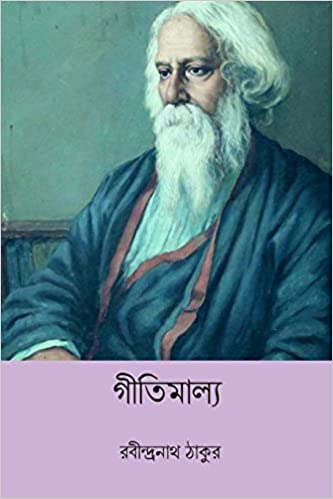
Written in 1910 (15 Ashwin 1317) in Santiniketan, Raatri Eshe Jethay Meshe or where the night comes to mingle was a part of his collection called Gitimalya ( A garland of Songs) first published in 1914.

Gitimalya
WHERE THE NIGHT COMES TO MINGLE

You and I met at the confluence when
Night came to mingle with the ocean of day.
There, the shades of black and white formed dark and light —
There, the waves rushed from bank to bank.
A baritone rang amidst the silence of the skies,
The gold line rose out of the deepest of darkness.
My dreams mingled with tears as I awoke
Searching for contentment in vain.

Here is a rendition of the song in Bengali by Dwijen Mukherjee (1927-2018) a renowned singer from the past. His voice seems to capture the cadence of the song and colours it with the freshness of dawn.

.

.

(Trans-created for Borderless Journal  by Mitali Chakravarty with editorial support from Sohana Manzoor and Anasuya Bhar.)

.

PLEASE NOTE: ARTICLES CAN ONLY BE REPRODUCED IN OTHER SITES WITH DUE ACKNOWLEDGEMENT TO BORDERLESS JOURNAL