Sometimes, after a downpour, there is a rainbow. Though finding a real leprechaun with a pot of gold at the end of the shimmering diaphanous arch seems unlikely, rains inspire another type of treasure — a trove of poetry written around clouds, showers, thunder from across continents. We would like to share with you some of our gatherings from the Borderless treasury, starting with translations of Tagore to modern day poetry — all conversing around seasonal outpourings from the sky in their own way…
Tagore Translations
Monomor Megher Songi (My Friends, The Clouds), a song translated by Professor Fakrul Alam.
My mind keeps company with clouds
And soars with them in all directions.
To the pitter patter pitter patter of sravan showers,
My mind swerves towards infinite space....
Only when it began to rain could I hear it,
in late summer, after they had all risen high
in the saucer magnolia tree – a soft, slow rain
at first, while the light still held in the west.
Tagore’s Mono Mor Megher Shongi (‘The Clouds, My Friends‘)has been translated by Professor Fakrul Alam. Click here to read.
The Welcome, a skit by Tagore, has been translated by Somdatta Mandal. Click here to read.
The Bus Conductor, a short storyby Dalip Kaur Tiwana has been translated from Punjabi by C. Christine Fair. Click here to read.
Hasan Sol: A Balochi Folktale from Geedi Kessah-4(Folktales Vol: 4) compiled and retold by Gulzar Khan Mari, has been translated by Fazal Baloch from Balochi. Click here to read.
Cry of the Sunflower written in Korean and translated to English by Ihlwha Choi, a poem for Ukraine. Click here to read.
This narrative is written by a youngster from the Nithari village who transcended childhood trauma and deprivation. Lockdown had been written in Hindustani by Jishan and translated to English by Grace M Sukanya. Click here to read.
InThe Anthology in my Mind, Rhys Hughes talks of a make believe anthology. Clickhere to read and find out what he imagines.
Conversations
Eminent film journalist, Ratnottama Sengupta, converses with legendary actress, Deepti Naval, on her literary aspirations at the Simla Literary festival, Unmesh, in June 2022. Click hereto read.
Keith Lyons interviews Steve Carr, a writer who has written 500 short stories and has founded the Sweetycat Press. Click here to read.
Meenakshi Malhotra reviews Tagore’sGleanings of the Roadtranslated by Somdatta Mandal. Click here to read.
Rakhi Dalal reviews Geetanjali Shree’s Mai, Silently Mother, a Sahitya Akademi winning translation of the Hindi novel by Nita Kumar. Click hereto read.
When the mountains and grass
had life, stones whispered
how the world came to be…

'Stonehenge', Daily Star
And as the world came to be, there was war — war that seems to rage in some part of the world or other. The British Museum has an exhibit which states the first battle was staged 13,000 years ago… in what is now Sudan, long before the advent of written history. This was even before the advent of people who built the ancient Stonehenge which was constructed around 3000-2000 BCE. And battles still continue to rage. The Jebel Sahaba casualties in Sudan 13000 years ago were less than 100. But the current conflicts claim in terms of tens of thousands which prolonged could stretch to millions. The last world war (1939-1945) which lasted for six years had a total of 75-80 million persons who perished. Ukraine-Russia conflict has within five months had a casualty count of more than 14000. And yet weapons and nuclear arms continue to proliferate decimating humanity, nature and towns, destroying homes, erasing ruthlessly and creating more refugees. The only need for such battles seem to be to satiate the hunger of the warlords secure in their impenetrable fortresses while tens of thousands are annihilated and natural or nurtured landscapes lie emaciated, mutilated and polluted.
What would be a good way of ending such wars?
Tagore sought the development of better instincts in humankind as an antidote. He wrote in the last century: “Any teaching concerning man must have human nature for its chief element. How far it will harmonise with human nature is a matter of time.”
With wars getting deadlier and more horrific, we can only try to awaken, as Tagore suggests, the better nature in man to move towards a peaceful world. What would be a more effective way of doing it than writing with the hope of a kinder and accepting future?
For that let us start with translations of the maestro Tagore himself. We have a song about the season — monsoon, ‘Monomor Megher Songi (My Friends, the Clouds)’, translated by Professor Fakrul Alam, a painting by Sohana Manzoor interpreting the lyrics and a transcreation of ‘Nababarsha or New Rains’ was shrunken into a popular Rabindra Sangeet and reduced to twenty lines in English by Tagore himself. The connect with nature is an important aspect that enables humans to transcend petty concerns leading to dissensions of different kinds as evidenced in the maestro’s humorous feline skit, translated by Somdatta Mandal. A translation of Dalip Kaur Tiwana’s ‘The Bus Conductor’ from Punjabi by C. Christine Fair adds zest to this section. Fazal Baloch has translated a folktale from Balochistan involving the supernatural and Ihlwha Choi has taken on the cry for peace on behalf of Ukraine while translating his own poem in Korean. The Nithari column has a story by Jishan in Hindustani, translated to English by Grace M Sukanya, showcasing the struggle of a youngster during the pandemic – rather a sad narrative, which though fictitious has its roots in reality.
Our short story section has echoes of humour around felines by Manzoor, somewhat in tune with the mind frame seen in Tagore’s skit on this issue. Humour rings tinged with an apparition in Erwin Coombs’s narrative – should one call it dark humour or is it just his style? Paul Mirabile goes for gothic darkness in his meanderings around Italy.
Strangely, we seem to have a focus on short stories this time. Keith Lyons has interviewed Steve Carr, a journalist, a publisher and writer of 500 short stories who is questing to create a ‘perfect short story’. Reading out excerpts from her short story at a literary festival in Simla, Bollywood celebrity, Deepti Naval, was in conversation with eminent film journalist, Ratnottama Sengupta. She spoke of her literary aspirations while unveiling her autobiography in verse, A Country Called Childhood. This conversation has been shared by Sengupta with Borderless. It is interesting to see how Naval’s reactions to social malaise contrasts with that of the film director, cinematographer and actor, Goutam Ghose, who was present during the unveiling of her book. He had responded to communal violence by making a film on Lalan Fakir extolling virtues of love and kindness, called Moner Manush (2010) and then made a book on the film called, The Quest (2013) which has beautiful translations of Lalan Fakir’s lyrics by Sankar Sen.
Our non-fiction sections seem to be hosting multiple travel stories across UK by Mike Smith, along the Australian coastline by Meredith Stephens, on the Himalayas with Ravi Shankar and an unusual visit by Hema Ravi to a farm in US where animals that had been used in Disney films in the past are homed. Our environmental columnist, Kenny Peavy, actually wrote about his cycling trip from Thailand to Indonesia on a bamboo cycle made by a Singaporean! And from Japan, Suzanne Kamata explored a museum in the neighbouring town of Mure. The museum on a hill hosts the art of American Japanese Artists, Isamu Noguchi.
We do have non-fiction that moves away from travel: noir humour by Devraj Singh Kalsi and an essay by Candice Louisa Daquin on a very interesting subject – ‘Is it Okay to be Ordinary?’ Is it? Dan Meloche has written a literary essay on Canadian novelist Andre Alexis’s award-winning novel, Fifteen Dogs: An Apologue(2015). While Meloche spoke of how the novel departed from Orwell’s Animal Farm, his narrative brought to my mind a novel closer to our times set in England by Jasper Fforde called Constant Rabbit (2020) – this a science fiction while Alexis’s was an apologue or an animal fable. Fforde did use the rabbits rather well to highlight the current times.
We have book excerpts of two recent books that I would call really outstanding. One of them is Aruna Chakravarti’s The Mendicant Prince, which is being released this week, and is based on the evergreen contentious case of the prince of Bhawal that has even been explored even in cinema. The other, Dadamoni: The Life and Times of Ashok Kumarby Nabendu Ghosh, has been published posthumously and is not a translation from Bengali but written in English originally by this trilingual writer.
Called ‘Dadamoni’ affectionately, iconic actor Ashok Kumar is regarded as “the one personality who symbolises Indian cinema’s journey from Bombay Talkies to Bollywood”. This book has been reviewed by Indrashish Banerjee, who calls it ‘a reflection on the Hindi film industry’ as well as a biography. Rakhi Dalal has reviewed Booker winner Geetanjali Shree’s Mai, Silently Mother, a Sahitya Akademi winning translation of her Hindi novel by Nita Kumar, reiterating the dialogue that had been kindled on motherhood last month by Rinki Roy Bhattacharya and Maithili Rao’s The Oldest Love Story (2022). Bhaskar Parichha has reviewed Prosanta Chakrabarty’s Explaining Life Through Evolutionplotting how life evolved on earth. Parichha tells us: “Meaningful, wide-ranging and argumentative, this is a must-read book. It will propel us to imagine and reimagine life around us.” Another book that sounds like a must-read has been reviewed by Meenakshi Malhotra, Tagore’s Gleanings of the Road, translated by Mandal. She tells us: “ ‘Gleanings’ represents the quintessential Tagore…Ably introduced and translated by Somdatta Mandal, a renowned Tagore scholar, the translation captures the iridescent and luminous quality of Tagore’s prose and its chiaroscuro effects.”
There is more to tempt. Please stop by on our contents page and take a look.
We would like to hugely thank all our contributors and readers for being with us and helping us grow. I would like to thank my team, who despite hurdles they face, always lend a helping hand and wonderful words from their pens or computers to get Borderless on its feet. I apologise for the delay and thank you all for your patience. Special thanks to Sohana Manzoor for her fabulous artwork.
I wish you all a wonderful July and peace in a war-torn world. We are all affected by the ongoing conflicts. Let us hope for peaceful and just resolutions.
In Conversation withRinki Roy(daughter of legendary director Bimal Roy) about The Oldest Love Story, an anthology on motherhood, edited and curated byjournalist and authors, Rinki Roy and Maithili Rao. Click here to read.
Achingliu Kamei in conversation with Veio Pou, author of Waiting for the Dust to Settle, a novel based on the ongoing conflicts in North-east India. Clickhereto read.
Translations
The Funeral, a satirical skit by Tagore, translated by Somdatta Mandal. Click here to read.
Pie in the Sky is a poem written and translated from Korean by Ihlwha Choi. Click here to read.
Taal Gaachh or The Palmyra Tree, a lilting light poem by Tagore, has been translated from Bengali by Mitali Chakravarty. Click here to read.
Pandies’ Corner
This narrative is written by a youngster from the Nithari village who transcended childhood trauma and deprivation. Dhaani has been written in Hindi and translated to English by Kiran Mishra. Click here to read.
Keith Lyons discovers the import and export of desires in Varanasi, one of the oldest cities in the world, beside one of the most revered rivers. Click here to read.
Notes from Japan
In Marathon Blues, Suzanne Kamata talks of pandemic outcomes in Japan in a lighter tone. Click here to read.
Musings of a Copywriter
In Journey of an Ant, Devraj Singh Kalsi explores life from an insect’s perspective. Click here to read.
Mission Earth
In Tuning in to Nature, Kenny Peavy tells us how to interact with nature. Click here to read.
Yes! It is vacation time, and we are all able to travel at last. Though the pandemic which had closed borders for us seems to be evolving as an endemic, another huge human crisis, a war which cannot be justified in any way, stares us in the face. Loss of lives, homes, towns, cities and threats of global recession follow in the footsteps of refugees wandering into our lives. Lesya Bakun, the Ukrainian refugee whose story we have been following, told me four of her relatives’ homes in Mariupol have been erased out of existence and her extended family has scattered where they found safety as her cousin continues a prisoner of war, captured while defending the iron and steel factory at Azovstal. While majority of the world expresses solidarity with the Ukrainians, another set of refugees remain in shadows. They have completely lost their country in which they had lived from ancient times. I am referring to the Rohingya of Arakan. CNN world states:
“The Rohingya are a stateless Muslim minority in Myanmar’s Rakhine State, thought to number about 1 million people.
“Myanmar does not recognize them as citizens or one of the 135 recognized ethnic groups in the country.”
We are privileged to host a powerful poignant translation by Arifa Ghani Rahman of Shaheen Akhtar’s short story about such a voiceless Rohingya child in a refugee camp. Though this is a fiction inspired by Akhtar’s visits to such shelters, we hope at some point these children will be able to build new lives to create a world free of violence, intolerance, hatred and greed.
One of the questions that springs to one’s mind, watching such atrocities destroy innocent lives is that should one accept bullies and give in to their pressure tactics? Bullies can be found among world leaders as well as perpetrators of decadent societal norms which are often critiqued by satires. Somdatta Mandal has translated one such satirical playlet where social conventions are targeted in a lighter vein by Tagore. In the same spirit, the maestro’s iconic poem about a palmyra tree called Taal Gaachh has been transcreated to bring the joy of innocent wanderings back into the narrative, creating an island of healing thoughts. We continue with our translations of Jibananada Das by Professor Fakrul Alam, a Korean poem by Ihlwha Choi and a magical Balochi folktale by Fazal Baloch. Let us read such translations to connect with varied cultures so that compassion and acceptance of diverse perspectives end horrors like wars, starvation and hunger.
Tagore’s writings translated to English by Mandal in Gleanings of the Road, a collection covering the maestro’s travel to the West, is part one of our book excerpts and highlights Rabindranath’s perspectives on the need to connect with the larger world. The other book excerpt, from Waiting, poetry by Suzanne Kamata, takes up the theme of victimisation, crime and murder. Dwelling on no less horrific narratives, though justified as non-criminal, is a review by Meenakshi Malhotra of Harsh Mander’s Locking down the Poor: The Pandemic and India’s Moral Centre. Gracy Samjetsabam’s assessment of Half-Blood by Pronoti Datta informs about the greyer areas of a whole community in Mumbai. Indrashish Banerjee reviewed Keki Daruwalla’s stories on human relationships anthologised in a collection called Going: Stories of Kinship while Bhaskar Parichha has acquainted us with Deepti Priya Mehrotra’s Her Stories –Indian Women Down the Ages — Thinkers, Workers, Rebels, Queens, a non-fiction that visits inspiring women.
Inspiration can also be drawn from Rinki Roy Bhattacharya’s and Maithili Rao’sThe Oldest Love Story, featuring a medley of men and women writing on the theme of motherhood along with some narratives about their mothers or on the experience of being one. The medley includes well-known names from films and literature like Shabana Azmi, Saeed Mirza, Shashi Deshpande, Nabanita Dev Sen and more. We interviewed Roy Bhattacharya to find out more about this impactful book. Achingliu Kamei, an academic and writer, has conversed with Naga writer, Veio Pou, whose award-winning book, Waiting for the Dust to Settle, was reviewed earlier — a book that gives a glimpse of conflicts in the Northeast of India.
Taking on the theme of conflicts at a personal level, Atreyo Chowdhury’s and Banerjee’s stories create a sense of disquiet as Paul Mirabile’s explores crime, madness and its impact on humans. G Thomas takes a relook at heroism and bravery as a concept. His story set in Kerala shakes our complacency, upending traditional concepts of heroism and bravery just as Candice Louisa Daquin has upended the cult of positivity in her essay. Notes of discord and accord seem to ring through this edition and the undertones of greys spread out towards an exploration of life and death. We have multiple ghost stories this time, even from the Nithari column written by Kiran Mishra, a youngster who got over the trauma of violence in the community and discovered her place as a bilingual writer and educator.
Keith Lyons has got the bug of tongue-in-cheek too as he gives us a piece on his travels in Varanasi that well captures the dichotomies we find in India. Dwelling on social dichotomies also is Ratnottama Sengupta’s powerful tribute to Swatilekha Sengupta, a film and theatre doyenne who brought to life Tagore’s novel, Ghare Baire (Home and the World, 1985). An essay by Mozid Mahmud exploring both the syncretic elements in Tagore’s and Kabir’s works, the medieval poet’s impact on the Nobel laureate and a dispute over Rabindranath’s own translation blends with the tone of greys in this edition.
Travel narratives and photographs by Meredith Stephens sailing the seas in Tasmania and Ravi Shankar trekking on the slopes of the Himalayas to get a view of Mt Everest make for perfect holiday adventures. From Japan, Kamata has given us a narrative set in the pandemic. And environmentalist Kenny Peavy dwells on reconnecting with nature in Mission Earth.
We have a fair deal from across the globe in the June issue. But, as usual, some of the treats in the content have not been mentioned though they are wonderful pieces of writing too. We look forward to your continued support as you delve into our treasure trove of gems from across the oceans. A huge thanks to our fabulous team, to the contributors and readers. I especially want to thank Sohana Manzoor for sharing her lovely artwork and wish you all a wonderful read!
Taal Gaach or The Palmyra Tree was published as part of Shishu Bholanath (Child Bholanath) brought out in 1922. The poem has an inbuilt cadence and rhythm that flows like the sway of palmyra (commonly referred to as taal ) leaves in the breeze.
Taal Gaach, painting by Sohana Manzoor
THE PALMYRA TREE

The palmyra towers over all trees
Standing on one foot, it peeps
Into the sky.
It yearns to fly,
Piercing through dark clouds nigh
But where will it find wings?
That is why, it thinks —
Leaves circling its crown
Are wings to float around.
To soar unhindered, free,
Leaving its home, it flees.
The whole day, the foliage rustles,
Murmurs, susurrates and bustles.
The tree imagines its flight,
Drifting past stars in the sky,
Towards a destination up high.
Then the breeze stalls.
The swish of leaves halts.
When it regards the loam
As its mother, its hearth.
It loves again its home,
The nook on Earth.
(This poem has been translated for Borderless Journal by Mitali Chakravarty with editorial comments from Sohana Manzoor and Anasuya Bhar.)
.
PLEASE NOTE: ARTICLES CAN ONLY BE REPRODUCED IN OTHER SITES WITH DUE ACKNOWLEDGEMENT TO BORDERLESS JOURNAL
Jibananda Das’s All Afternoon Long, translated from Bengali by Fakrul Alam. Click here to read.
The Colour of Time, Korean poetry composed and translated by Ihlwha Choi. Click here to read.
The Ordeal of Fame, a humorous skit by Rabindranath, translated by Somdatta Mandal. Click here to read.
Fazal Baloch translates a retold folktale from Balochi, The Precious Pearl. Click here to read.
Tagores’ Lukochurihas been translated from Bengali as Hide and Seek by Mitali Chakravarty. Click here to read.
Pandies’ Corner
These narratives are written by youngsters from the Nithari village who transcended childhood trauma and deprivation. The Story of Rajesh has been written by Yogesh Uniyal in a mix of English and Hindi, and translated fully to Hindi by Nirbhay Bhogal. Clickhere to read.
Rhys Hughes shares why he put together an anthology of humorous poetry with seventeen writers, Wuxing Lyrical. Is his logic funny or sane? Click here to find out.
In An Encounter with the Monet on Naoshima, Suzanne Kamata writes of snacking on Claude Monet’s hundred year old recipes while savouring his art and that of the famed artist who makes bold art with polka-dots, Yayoi Kusama. Click here to read.
An excerpt from Upamanyu Chatterjee’s Villainy. Click here to read.
An excerpt from Ramy Al-Asheq’sEver Since I Did Not Die, translated from Arabic by Isis Nusair, edited by Levi Thompson. The author was born in a refugee camp. Click here to read.
Book Reviews
Rakhi Dalal revisits Tagore’s The Post Office, translated from Bengali in 1912 by Devabrata Mukherjee. Click here to read.
Indrashish Banerjee reviews Upamanyu Chatterjee’s Villainy. Click here to read.
For when your troubles starting multiplying
And they just might
It's easy to forget them without trying
With just a pocketful of starlight

Catch a falling star and put it in your pocket
Never let it fade away (never let it fade away)
Catch a falling star and put it in your pocket
Save it for a rainy day

'Catch a Falling Star' by Paul Vance and Lee Pockriss
Perhaps, it is time to find that fallen star popularised by pop singer Perry Como is 1957. Optimism glimmers faintly, sometimes even conceals itself, in a world passing through a dark phase in history. For instance, few of us would know that we might find more answers to tackle climate change as dinosaur fossils (from the time an asteroid hit the planet) have been unearthed recently. That sounds like solutions can be had to what was perceived as inevitable doom.
Another bit of news that perhaps will cheer some is the first anthology of Borderless Journal will soon be available in market. It has been accepted by a publisher, an old, trusted and reputed name from India, Om Books International. They have bookshops splattered all over — should make it easy for buyers to access the book. Hopefully, you can target the anthology for your Diwali or Christmas gift hampers. Om Books has one of the most iconic editors-in chief, Shantanu Ray Chaudhuri. A multiple award-winning editor, he has worked in Penguin and Harper Collins and is currently churning out wonderful books from Om with a fabulous production team, working with whom has been a pleasure. Ray Chaudhuri is an outstanding film writer and poet. He is part of a group that is creating a film archive online. To know more about him or his views on publishing, you can read our online conversation with him.
The energy one gets from optimism like starlight from a fallen star, lightens the darker shadows that create gloom with the war leading to rise in prices and threats of recession in a post pandemic scenario. Lesya Bakun, the refugee from Ukraine whose story we carried last month, finds her starlight by sharing updates of her story. She added to her narrative with the news that her cousin has been taken as a prisoner of war by Russia from the besieged factory in Ukraine. Though sharing does not alleviate suffering, Bakun’s ability to cling to hope and imagine a future where she gets her dream highlights the strength of her convictions. The other thing that is revealed by her narrative and media coverage is exclusivity and boxes of ideology split humankind, erase families, cities, countries, lives and sanity. The war can appease only the lust of warlords. Against this desolation caused by the devastation, what could be the starlight that would lead to a happier future?
Laughter. Unleashing the ability to laugh at oneself is as potent as laughter that generates relief and lightens our mood, so that we can view differences as whimsical, treat them with tolerance and compassion and not destroy the diversities that add colours to the world. Perhaps, that is why Tagore took to humour too. Somdatta Mandal has translated a series of humorous skits by Tagore. We are featuring one of these called the ‘Ordeal of Fame’. Yet another translation or transcreation of a poem called ‘Lukochuri’ or ‘Hide and Seek’ reflects the playful in Tagore’s oeuvre. These, along with Rhys Hughes humour on the pandemic in poetry and prose, bring good cheer into our journal. Hughes has also used his column to tell us why he curated a new humorous anthology of verses by seventeen poets called Wuxing Lyrical. I wonder if he is serious or joking!
As we trot around the globe, Suzanne Kamata tells us about a Monet museum in Japan where she ate madeleines made with the artist’s recipe! Meredith Stephens sails to Tasmania with her camera and gives us a glimpse of nature’s plenty. Ravi Shankar relates his trekking adventures among the Himalayas in Nepal, with awesome photographs of these mountains, while Kenny Peavy who lives in Indonesia dwells on the value of falling down and getting up in a light humorous vein against the backdrop of nature – though metaphorically perhaps the world needs to do that. We have G Venkatesh’s story about his stay in Johannesburg where he discovers that skin tones do not matter.
Ratnottama Sengupta makes the whole world look like a home with the story of a legendary screenwriter, Jean Claude Carriere, who wrote the script of Mahabharata for Peter Brook’s play (1985) of the same name and the subsequent film (1989) — with characters drawn from all over the world. Candice gives us an overview of the pandemic, with more focus on US where she lives.
Mike Smith travels back to another time when an ailment called World War II raged and has revived a writer from the past, HE Bates (1905-1974). We have another essay by Dan Meloche on a legendary book which turned 100 this year — Herman Hesse’s Siddhartha. Rakhi Dalal revisits more than a century old translation by Devabrata Mukherjee of Tagore’s The Post Office which bears relevance to the present day as it shows how the human spirit endures over even the darkness of death.
Bhaskar Parichha has reviewed Radhika Gupta’s Limitless: The Power of Unlocking Your True Potential, by his assessment a book that inspires youngsters to take charge of their future. On the other hand, there are books that explore the darkest in humans. Basudhara Roy has reviewed a collection short stories by Sunil Sharma called Burn the Library & Other Fiction. Indrashish Banerjee reviews Upamanyu Chatterjee’s latest novel based on modern day crimes, Villainy, from which we are carrying a book excerpt too. The other excerpt is from a narrative written from a refugee’s perspective, Ramy Al-Asheq’s Ever Since I Did Not Die, translated by Isis Nusair from Arabic. Born in a refugee camp in Damascus, this Syrian-Palestinian poet defies all genres to touch hearts with brutal honesty. No less sincere is Michael Burch’s poetry on summer that ushers in the season as much as Sohana’s beautiful painting that we are using as our cover photo. We have poetry from not just Shantanu Ray Chaudhuri but also by George Freek, S. Srinivas, Tohm Bakelas, Abin Chakraborty, Marianne Tefft and many more. As usual, I have not mentioned all the treats in store for you. Delve into our contents page and browse to find out more.
Before winding up, I would want to extend my thanks not only to our team and contributors, but also to our publisher who is willing to republish our content with some tweaking. Thanks to our readers who, I hope, will be excited to have selected content between their palms as a hardcopy anthology with 49 of our most iconic pieces. We have more than a thousand published works. This anthology will be an iconic sample that you can carry anywhere with you even if there is no internet – that would include Mars and Moon!
I wish you happy reading, happy dreaming and hope… plenty of it.
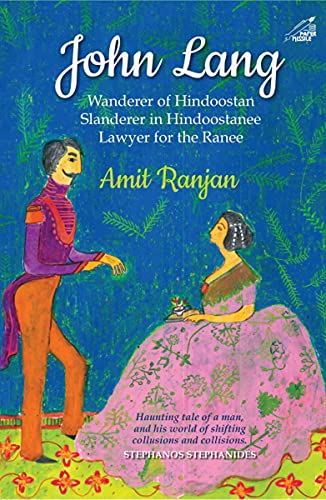
A stranger than fiction book that starts with a limerick and ends with a rhyme, supposed to be a scholarly and playful work on perhaps the first Australian novelist-cum-lawyer-cum-journalist who sold cheap paperbacks for women readers traveling by train in India in the nineteenth century — probably British readership — fought a case for Rani of Jhansi – wrote for Charles Dickens’s Household Words – This can be the description of Amit Ranjan’s John Lang the Wanderer of Hindoostan, Slanderer in Hindoostanee, Lawyer for the Ranee (Niyogi Books). Why would one do a book on a maverick like this Australian journalist-cum-writer of the nineteenth century who opposed the British? What led to such a book? The quest for a ghostly ‘Alice Richman’ who lived in Pune in the 1800s, says Ranjan. And the author’s quest continues…spanning the shores of Australia, ‘Hindoostan’ and America…
The other most interesting thing about this book is the way the story is told – Ranjan says he is deeply influenced by the genre of magic realism and this, perhaps, reflects in his writing. While the research input is awesome, the style is non-academic and even flamboyant at times. It is a book that brings a smile to your face with its obvious cheekiness. But this is also the kind of book you keep on your bookshelf and pull out when you have time to mull over a discussion on historic links and syncretism – for that is the sap that flows through the book concealed behind a laid-back narrative style of a nineteenth-century writer. Who is this Ranjan who has tried to re-invent pedantry and scholarship, treat the serious business of research and academia with such friskiness?
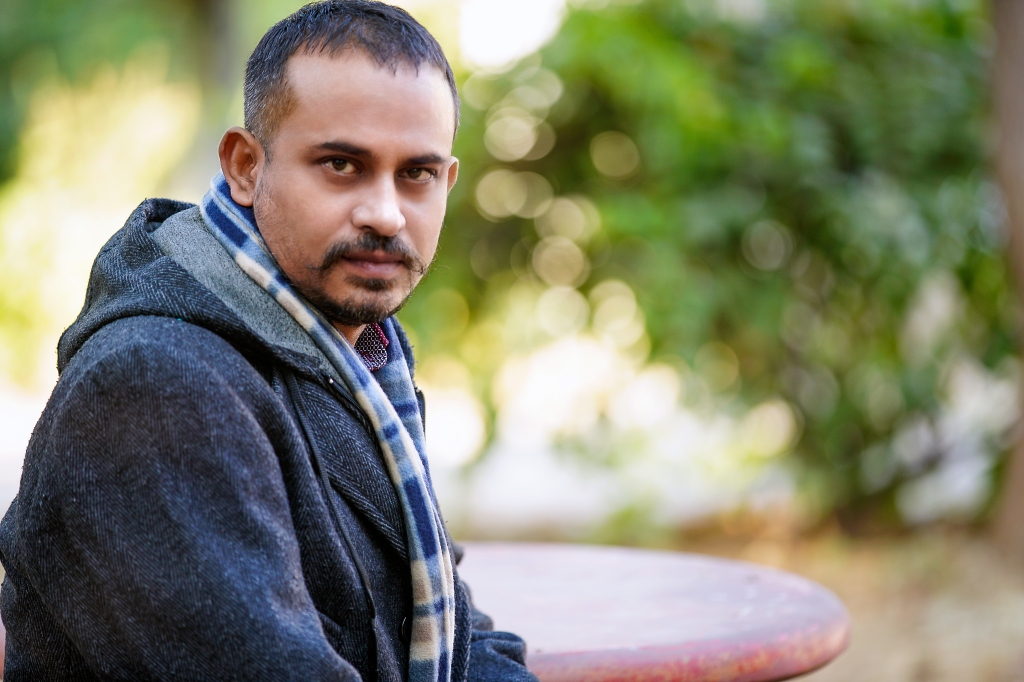
Ranjan is a Visiting Fellow at UNSW [University of New South Wales], Sydney; and a Fulbright Scholar-in- Residence at Miami, an assistant Professor at NCERT [National Council of Educational Research and Training, India] — with eye to the sky, and ear to the ocean. His poetry collection, Find Me Leonard Cohen, I’mAlmost Thirty, came out two years ago, and his biography of Dara Shukoh is due out soon. His poetry collection came out 4 years ago, and a new collection of poems The Knot of Juggernaut was just released in Miami in March. Without more ado, as John Lang would have it, we present to you Amit Ranjan –
What was it that made you map your journey of unearthing Lang in the form of his writings instead of writing about his life directly? You have used the forms of limerick, poetry and the epistolary technique along with essays and Lang’s own writing to build your case. An amazing amalgam — Why? It is rather an unusual form of storytelling.
This is an interesting question, or a set of questions. I think poetry is a powerful medium. At a certain time, it was supposed to regale and break tedium; now it seems to create tedium – the trajectory of human taste is interesting indeed. So, unable to write a book in verse (Vikram Seth debuted with a novel[1] in verse a little more than three decades ago, with elan), the least I could do (and generally do with prose) is having poetic invocations at the beginning and the end. I’ve also tried to maintain a certain poeticity through the book – it does add some funk and spunk, I believe.
About the form of writing – what was available to me was writings about Lang, and writings by Lang. Lang’s own voice is richer and wittier than his contemporaries and commentators, and therefore it came naturally to speak about his voice, rather than speak about what has been spoken about his voice. Unfortunately, the personal papers and artefacts of Lang have all been lost – it would certainly have been a riot to peruse his letters. And since letters by him are missing, I decided to write a letter to him (which is the first chapter) much in the way he’d have liked to write or receive a letter.
Also, about the form of writing – history writing and academic writing is caught in its self-referential niche writing – and needs to be freed from that cage, or that page in the history of stylistics of writing. Much influenced by the Latin American novelists, as also the frame narratives like Bocaccio’s Decameron and Alif Laila[2] – I thought it would be an interesting to approach non-fiction and/or history like a novel of the “lo real maravilloso[3]” genre (well, almost). So one could call it creative non-fiction (this work is completely and heavily annotated, so there’s nothing ‘fictitious’ in the work – just to add that disclaimer). I think these experiments are exciting, much like ficto-criticism as a foil of this form.
You have an interesting tone of narration which is half flippant, but it delves deep into research. Tell us a bit about your research.
The tone is what one makes of it. It is also very Victorian in its language, to keep in sync with Lang’s age. The alleged flippancy is a deliberate device I guess – as a tribute to Lang’s own voice that is playful and yet serious, as also to demonstrate that playful writing can be effective and serious.
Telling a “bit” about this research will occupy a bit of space, for dwelling in the haunt of 19th century is a bit of a habit with me now. Those puns aside, the road of this research has been thrilling across space and time. On the home turf, it took me to Meerut, Mussoorie, Agra and Calcutta. We, being good recyclers of papers, the works by or about Lang barely survive here. The copies of his newspaper, The Mofussilite, published from the above-mentioned cities (minus Mussoorie) weren’t available anywhere except London, Canberra, Chicago – and interestingly Islamabad. And so, I went to UNSW at Sydney for my PhD research, courtesy of Endeavour and Inlaks fellowships. There I met a very interesting 86-year-old gentleman, Mr Victor Crittenden, who was a retired librarian, and who had a very keen interest in John Lang. He had republished a lot of Lang’s work, and it was amazing to have conversations with him. The only little problem was that he was such a hopeless Romantic that he had ascribed several anonymous or pseudonymous works to Lang. This, then, became a daunting task, to research about each of these works and see if they could actually be Lang’s. And of course, it also resulted in funny arguments. Meanwhile, I relaxed the scope and the methodology, made it broad and unorthodox, to see where I could get. I met descendants of Lang’s half-brothers; a rabbi in Melbourne who believed Lang was Jewish; a member of Italian nobility in Paris, bitter about the politics in that family, and so on. At one point I emailed one Motee Persaud in hope that he’s a descendant of Jotee Persaud – only to cause him anxiety, for there was some court against him, and he thought my email was a subterfuge for a bigger design! When I returned from Sydney, I lost a pen drive with scans of Lang’s newspaper, for it was in a pretty UNSW backpack that someone took fancy to. I think I met the purloiner for a fleeting minute a few months later! The bit can go on, but I think this bit should be contained before I write a short story about it here.
Was the journey of discovery as interesting as your discovery of Lang?
Oh yes indeed! I think some of that has been revealed in the previous answer. It’s still an open book, an ongoing journey, I am still working with The Mofussilite. In my three fellowships to Miami (none about Lang), I purloined time to peruse Lang’s journal. The journey has been a thriller all through, I would like to believe – including my not being able to find Lang’s grave ever. Once, my friends and I rolled down Mussoorie hills into Camel’s Back Cemetery and the eight of us hunted for Lang at the haunted forest on a rainy afternoon. No luck, and never after in my subsequent visits, though the directions are fairly easy.
One of the most fun discoveries was that a picture of Lala Jotee Persaud, a client of Lang’s, was printed in The Illustrated London News as Nana Sahib’s! I was thrilled to receive that picture from ILN.
Ruskin Bond, a writer many of us deeply admire, found Lang in the Camel Back cemetery in Mussoorie in 1964. Then an Australian scholar investigated him. Lang finally found a way to instigate your pen to take up his cause. What moved you to research and write on him?
I met Mr Bond in 2009 I think, and my friends and I had a great fan moment. His father had some Lang novels, and that is what interested in him. Almost simultaneous, John Earnshaw was interested Lang’s life in Australia, and he wrote a short 30-page account detailing his timeline. And then the interest was lost for 40 years, when Victor Crittenden and Rory Medcalf of Australian High Commission reinvigorated interest in the matter.
All this, unbeknown to me, I was hunting for Alice’s history. Alice Richman, a girl who died at 26 in 1882, is buried in Alice Garden, Pune University, surrounded by a forest and many urban legends. Not knowing how to go about finding anything about her – I followed the Hanuman methodology – pick up the whole mountain if you can’t identify the herb. In reading about Australians in India in 19th century, I stumbled upon Lang, and since then, there’s been no looking back.
So, Alice the ghost sparked your interest in him from her very presence in Pune, what was it about Lang that attracted you to take a decade long journey into his adventures? Tell us a bit about how Alice pushed you to it.
In the pursuit of Alice, I read about the interesting Australian women missionaries in India (they were brought to India to be ‘tamed’); camels and camel drivers that went from India; and several such fascinating stories. The pursuit of Alice prepared my reading list, and that is how I found Lang. A white man fighting a white empire, with a nuanced understanding of India, and with an infective invective – seemed like a natural resonance to me. It is beyond the scope of this interview to get into the thrilling details of discovering things about Alice’s life too throughout this decade you’ve mentioned. Suffice it to say that it is actually the pursuit of Alice I have been on, and she keeps rewarding with some Lang legend and legacy every now and then.
Did you feel there was a need to bring out Lang to the fore? Is he relevant for our times?
Absolutely so. He was the man who took on Lord Hardinge in his newspaper on a daily basis, to the point where the Governor General summoned him. Lang merely said that he made more profit by writing against him, than he could ever by singing paeans to him. He was a rebel, and witty. Today’s journalists across the world from the age of democracy can take a lesson or two from a man from the time of the Empire.
To understand where we are, we need to look at where we come from. The tedious legal system; the workings and trappings of army; racism; casteism; evolution of sciences and belief in pseudosciences – are explained in detail with wit, rigour and humour in Lang’s writings. To understand our postcolonial ontology, it is very important to understand how deeply colonialism affects us.
Please introduce the most interesting fact about the ‘Wanderer of Hindoostan’ to our readers. Tell us a bit about him concisely, especially as we are told in your preface: “Suddenly, there was an interesting piece of news doing rounds: that the Indian PM gifted his Australian counterpart with John Lang documents to demonstrate how far back the relations between the two countries went. I was not acknowledged. However, it was also a backhanded compliment. Lang had finally found an afterlife.”
Lang died in 1864; his name and works survived until. About 1910. For the afterlife of a writer, critics are important. Shakespeare, for example, was resurrected by the Romantics in the 19th century. After 19th century, Lang was lost until John Earnshaw’s minor interest in the 1960s; and then Victor – as already stated. My research was awarded as a PhD thesis in 2012. Interestingly, in 2014 he was showcased in this prime ministerial meeting. The rest you have told in your question – sometimes one has to take backhanded compliments with high spirits! Of course, it was an anxious time for me, for the cat was out of the bag, and I had to hunt for a publisher fast. However, as stated in the book – Stories forgotten or lying in the cold, find their own time to be told – and therefore finally a book, half in size of the original, in 2021. The advantage of including Lang is of course pushing India-Australia ties to mid-19th century, an idea which has never really been thought of.
Was the John Charnock you mentioned in your book related to Job Charnock, the founder of Calcutta? Was Lang related to him and did that impact his choices? Job Charnock was after all a rebel too in a manner of speaking.
That’s a difficult connection to figure out, which I will try to, on some idle day when curiosity gets the better of me. Job Charnock, the alleged founder of Calcutta, died in 1693; and the reference in the Lang book about John Charnock is from 1843 (p362). Lucy, wife of John Lang, had a sister, Mary, a poet who was married to John Henry Charnock. Mary’s book Legendary Rhymes (1843) was published posthumously, and her husband wrote a preface to this book. This Charnock was Lang’s brother-in-law, so they would have known each other well. John Charnock himself was an agriculturalist and a drainage expert and wrote books on this matter. To answer the last part of the question, in my opinion, Job Charnock and John Lang are as different as chalk and cheese – the former being a thorough imperialist and the latter, the opposite.
In the start of a chapter, you have said: “Lang had foreseen Google.” Elucidate.
Oh, that’s a joke to complement and compliment one of Lang jokes. The novel Ex-Wife revolves around the predicament of a Eva Merrydale, divorced by her husband for “criminal familiarity with another man.” (p370) Eva’s brother tells that this case has been mentioned 114,227 times in the media, with 107 times in the Times alone. These kind of figures are something one would see in a google search result – 114,227 results for “Eva Merrydale divorce”
That is Lang lampooning the British media for its obsessing over a poor divorcee through the exaggerated figures. However, one wonders, if there were people employed to keep track of a particular news appearing in the media.
As a digression to this essay, Lang indeed was looking into the future of journalism – sensational headlines, scandals and so on. In one lead article about the Gorham case, which had been talked about to death, Lang just wrote –‘Damn the Gorham Case!’ – and captured the public sentiment!
What was the purpose of this book? What kind of readership did you expect?
I guess the purpose of a prose book, fiction or non-fiction, is to tell a good story. However, my purpose was to fulfil a calling – I had at hand, the figure of a character lost for a century. It then becomes one’s responsibility to resurrect the figure as one has been entrusted by destiny, too. And of the course, the more general idea holds – the keys to the present lie in the past, as has already been discussed.
In terms of readership, I was looking at anyone who is interested in an interesting story of a maverick figure. This is why the language is jargon free, the stylistics are that of a novel. However, of course, one is also looking at the countries Lang is lost to – India, Australia and UK – and to have them remember an important critic and figure of their past. I expect students of literature and colonial/ postcolonial histories to pick this work up; but I’d love it much more that it appeals to the general reader of fiction and non-fiction.
John Lang had encounters with Dickens, Rani of Jhansi — a very wide range of historic personalities and influenced, you have claimed even George Bernard Shaw. Yet, all these personalities lived on while he faded to obscurity. Why do you think that happened?
Lang fought the British imperial sword with his pen, was declared a “hospital bed novelist” by the critics and buried to the British posterity. He wrote in Australia with convicts as heroes, which of course, didn’t go down well with the convict settlement. For Indians, who he had so much adulation for, he still got lost to history. Probably his interest in wine and women did not go down well with Indian historians too; or he was difficult to slot, being an interloper.
One of the things that does come across is Lang faded to obscurity as no one knew of him. Do you feel the role of historians and critics critical to the survival of an author? Or do you feel the colonials he often wrote against were happy to bury his writings?
Both aspects are at work. As already pointed out, the colonial press gave him bad reviews all the time. Subsequent critics were not kind either. This goes on to suggest how deeply ideological and long drawn out the colonial project was.
How was Lang a rebel in his times? Do you feel your own journey has been a rebellion against pedagogical practices of the current times? After all, can a book based on this much research start with a limerick and end with a tongue-in-cheek rhyme?
Two leitmotifs would suffice to settle the matter about being a rebel. It is said, in Lang’s multiple novels, about the white British protagonists – “India he loved, England he despised.” The second motif is strong women characters, some of them very deliberately parodying Victorian women and Victorian novels.
If my writing is considered rebellious to the current conventions, I would take it as a compliment, and not a back handed one. I wish I wrote the entire book in verse. I hope to pull off that trick successfully someday.
Maybe you will – an upcoming one – Alice’s story…Do you have an upcoming book? What about a novel on the ghostly Alice?
A new poetry book titled The Knot of Juggernaut, Or The Mystery of (Miami Mambo) Vexuality was just released, a day before I left Miami to come back to Delhi. It will be out here soon, too, in a month. This collection has poems written about journeys between the Bay of Bengal and the Bay of Biscayne. The title was suggested by The Right Honourable KB Con, Ducktor Albatross.
A biography of Dara Shukoh is scheduled for the year end.
The Alice book – definitely, whenever Alice wills it!
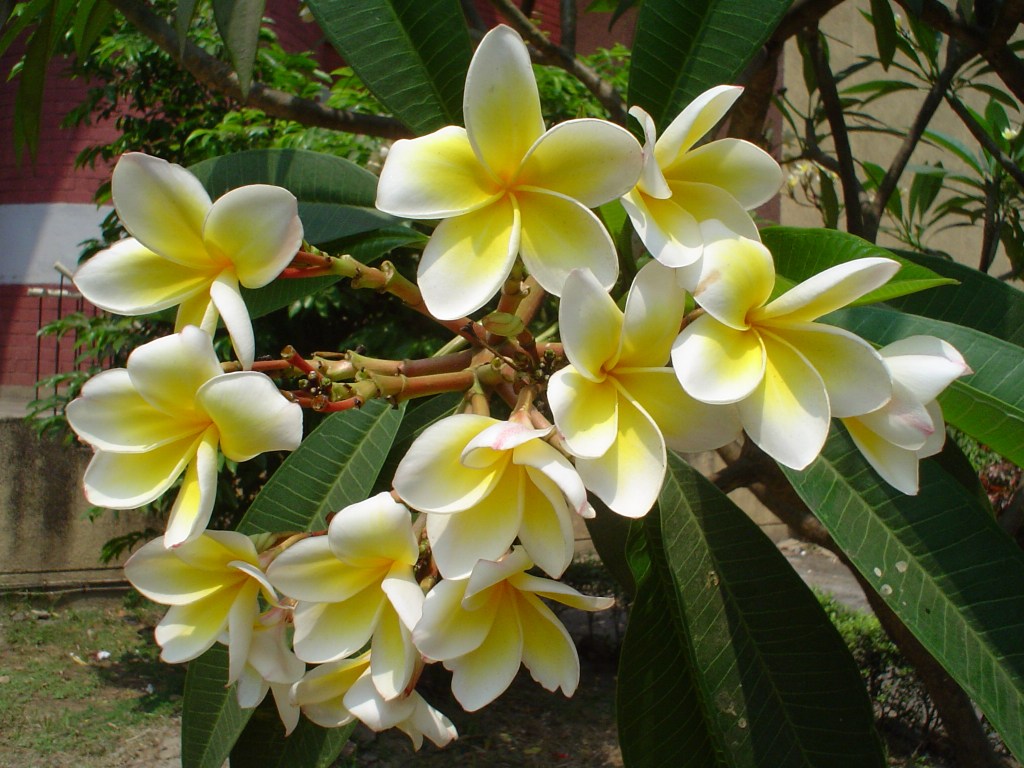
First published in Shishu (Children) in 1909, Lucko Churi (Hide and Seek) is also a part of Tagore’s collection called Sanchayita. It captures the endearing, playful relationship between a mother and her son as well as the innocence of the child.
          HIDE AND SEEK
In a playful mood, if I were to
      Bloom as a champa flower on a tree,
At dawn, O mother, I would frolic
       Amidst the branches of young leaves.
I would win in this game of hide-and-seek.
         Would you have recognised me?
You would call out, “Khoka, where are you? “
       I would only laugh silently.

When you do your household chores
         I would watch from high above.
After a bath, with your wet hair spread on your shoulder,
          When you would walk under the tree
To go to the prayer room
         While inhaling the perfume of the blooms —
You would wonder how
          Your Khoka’s scent mingles with the breeze!

In the afternoon, after everyone has lunched
            When you relax with a Mahabharat,
The shade of the tree by the windowsill
            Would fall on your back and lap.
My tiny shadow would sway
           On the words of your book.
But you would not know the shadow
      Of your darling wafts before your eyes.

In the evening, after lighting a lamp,
       When you go to the cowshed,
I would finish my game
       And drop down from the tree.
Again, I would be your Khoka.
        I would say,”Tell me a story.”
And you would ask,”Naughty! Where were you?”
      I would reply, “I will not tell you my secret.”






 Borderless