Categories
Interview

The Traveller in Time

In Conversation with Sybil Pretious

Sybil Pretious in Morocco. Photograph provided by Sybil Pretious

She paints. She writes. And she has lived through history. She was born in a country that no longer exists. The borders changed with movements of history. In South Africa in the late 80’s, early 90’s she ran a Nursery School attached to the local Primary School for whites. She lived through Nelson Mandela’s movement. As laws changed she admitted the first black child into the school in 1993. She writes of celebrating the first democratic elections in South Africa: “I felt ecstatic. I realised that it was not only the Africans who had been freed to be equal citizens, but I felt free too. I had been released from the enormous guilt and helplessness that had been part of daily living during apartheid.” She lived through it all and soared out to explore more…

Sybil Pretious is a  woman who has travelled through life with an élan for assimilating the best in all cultures she has lived in, and she has lived in many. She has lived in six countries and travelled to forty. I met her in China, where she was teaching in an international school. She was like a beam of sunshine. She retired and left. Then we met virtually in a world devoid of borders. While she wrote of her travels from China, the part of her life where she lived through incidents we only read of in history remained silent. That is what we set out to explore in this interview. At an age where others retire and complain of aches and pains, she is writing a biography of her mother and looks forward to traveling, painting, and writing more. Now, this traveller in time, with a heart full of compassion, calls herself a South African, lives in United Kingdom and unfolds for us the story of her life.

Tell us about your childhood in South Africa.

My childhood was never spent in South Africa. The first 23 years of my life were spent in Southern Rhodesia/ Rhodesia. Rhodesia joined Northern Rhodesia and Nyasaland as the Federation – 1953-1963). Rhodesia declared UDI (Unilateral Declaration of Independence) from Britain in 1965. This lasted for 13 years and in 1980 after much conflict Rhodesia became Zimbabwe.

Only now, when I look back do I realise how much of an influence my childhood had on my passage through life.

Rhodesia, part of the British empire, a land-locked country almost in the centre of Africa, was first colonised by the BSA Company (British South Africa Company) lead by Cecil Rhodes in 1890 when mineral rights were granted by the chief, Lobengula. The country was named after Rhodes. It had a perfect climate and was known as ‘The Breadbasket of Africa’ for the high-quality food crops the farmers produced. Sadly, now, there are many people who do not have enough to eat in the country.

My parents met and married in in 1934. My dad was born in Rhodesia in 1901. His father had been one of the early pioneers in the 1890’s. My mother travelled from Kimberley in South Africa where she was born, to Rhodesia in 1926.

My dad refused to go to university because his father would not allow him to study Mine Engineering. My mother had little education because she was so involved with helping her mother with her six siblings.

I was born in 1942. Fortunately, my father was too old to enlist for World War II. I arrived six years after my elder brother and sister and my arrival was greeted with joy. I was the centre of attention and loved it, generally revelling in the light shining on me and responding to it. From then on, I tried to please everyone. I was not enamoured when two-and-a-half years after my birth my younger sister made an appearance followed a year after that by my younger brother. Of necessity they became the focus of attention, and I became more of a loner and learnt to enjoy my own company.

My father had a great love of the outdoors, prospecting, and mining for gold. Mum grew to love the peace of the veld in his company. During my parents’ first few years of marriage, they moved often as gold reefs ran out. They also farmed during this period. Eventually when they settled in the capital, Salisbury, and made their money by purchasing land, building a house, living in it for a short while before selling it and moving on to the next project.

This made for a rather interrupted childhood where we changed homes and schools often. I attended four different schools in the first four years of my schooling. When I finally had some settled years in a Primary School, I did well. I was the star of the family, but it put a lot of pressure on me to perform.

As children we found it difficult to make and keep friends, but this constant change equipped us for adapting to many different situations. My elder sister insisted on going to Boarding School just so that she could make friends and I think get away from her three younger siblings.

With the wonderful climate in Rhodesia, I spent much of my free time during childhood out of doors. We had one-acre gardens that were generally virgin veld. They provided many opportunities to explore, invent games, problem solve, and use our imaginations.

I loved going to the library in Salisbury and taking out many books, especially adventure stories and visualised myself in the roles of the characters. I created imaginary people and used the natural world to feature in my make-believe stories. Although we were always moving, there was no lack of childhood company as our cousins lived close by. But of course, they were not the same as friends.

Our holidays were spent mainly in Rhodesia, camping in the Eastern Highlands. I loved camping and still do even at my age. On occasion we travelled to Natal in South Africa or Beira in Mozambique for seaside holidays. In our teens we went in friend’s cars on wonderful picnics to dams where we swam and water-skied. We visited the beautiful outdoor places with names like ‘Mermaid’s Pool’ and Sinoia Caves with its mysterious bottomless pool. We scrambled over rocks and climbed hills and had parties on friends’ farms. It was generally a carefree existence in the open air.

My contact with Africans was mainly when we lived on farms. I enjoyed sitting in the dust with a few of the children and pretending to ‘teach’ them. I had a small blackboard, and I would write a word and say it and they had to repeat it and copy in the sand. I used fingers to indicate numbers and showed them how to count (though I am sure they could do that in their own language). They did not attend our schools and we rarely saw the children or mothers in towns. The African men worked as servants in our homes.

Did you often visit other countries during your childhood?

The only other countries I visited during childhood were South Africa and Mozambique for holidays. I loved reading about other countries and was always fascinated the by different peoples, climates, and lifestyles.

Can you recall a memorable event?

The most memorable day in the whole of my time in Africa must be the day of the first democratic elections in South Africa on 27th April 1994.

On that day I remember rising early, stowing a water bottle, some sandwiches and fruit in my backpack.  The closest polling station was not far from where I lived so I walked. It was a beautiful day. Clear sky, warm sun (though that proved to be hot after many hours of standing). My husband had decided to go later. I was astonished at the long queues that had formed – some literally miles long. I approached and found myself standing behind two Africans and Indian lady. We all greeted each other warmly clasping two hands together and greeting in our own languages. Later as the time wore on in the heat I shared my water, fruit and sandwiches. Our discussions were general – the weather, our families, where we had come from and how glad we were to be there at this historic time.  They had all travelled further than I had but there was no grumbling as we stood patiently.

There was an air of calm euphoria.

I felt ecstatic. I realised that it was not only the Africans who had been freed to be equal citizens, but I felt free too. I had been released from the enormous guilt and helplessness that had been part of daily living during apartheid.  We could only treat the people in our employ with sympathy and fairness, but the rules of apartheid shackled our relationships. It was a day of hope for everyone chatting, showing kindness, laughter and waiting patiently to vote.

There was not one adverse incident throughout the country and foreign journalists were disappointed that violence had not broken out. This day was the greatest example of forgiveness and acceptance that I have ever witnessed. I feel privileged and blessed to have been there.

You are writing your mother’s memoirs tell us about it.

My mother was born in 1904 and lived until 2001. At sixteen, she was the eldest of seven siblings in Kimberly, South Africa, when her mother was tragically killed in a shooting accident which involved her brother. When her father remarried, she felt rejected and left to stay with a friend. With little knowledge except of cooking and shopping for her mother she took on the job of manageress of a bakery and improved her education by reading the newspaper to her friend’s blind father and writing letters for him.

Eventually she decided to relocate to the newly annexed colony of Southern Rhodesia. The story records her many personal challenges in this pioneering country – some sad, some hair raising, some very amusing and others poignant. When she married my father, their resourcefulness was tested to the limit with five children to raise. She is an example of courage, inventiveness, creativity, love and sheer grit in pioneering times. It encompasses family life in a fledgling country.

 I want my children and grandchildren to know about their roots so that they may be as fearless and resourceful as my mother was in very testing circumstances.

Why did you write about your mother specifically?

I wrote about my mother because the first sixteen years of her life were very demanding as she helped her mother with her six siblings at home while missing school.  The death of her mother left her without a purpose in life as the family was dispersed.

She is a shining example of getting on with life no matter the circumstances. Subsequently with her marriage the story includes my father. They have both been inspirational in different ways. My mother for her love, steely determination and creative thinking, my father for his quiet, never-ceasing support of her and us.

My mother, despite her poor schooling manged a bakery, worked in a department store, designed the houses they built, helped build them and was there for her children. She never hired any help to look after us. She was thrifty, made all our clothes and was a tower of strength in our family as well as being adored by her siblings.

She remains the most positive person I have ever known despite having no help with getting over the death of her mother. Her influence on my outlook in life is tremendous and while the story is mainly hers, it honours both of my parents.

How many countries have you lived in?  Tell us a bit about why you moved.

I have lived in six countries but travelled to about forty. My home country is of course Rhodesia, now Zimbabwe.

I travelled to UK age 23 and lived here for a year working and travelling.

When I married in 1967 my husband was from Swaziland, so we lived this beautiful mountainous country for three years. Our first precious daughter was born there.

We moved to South Africa in 1971 and lived mainly in Durban and Johannesburg in the next 30 years. Our precious two younger daughters were born in Durban. This was during the apartheid years. In 1988, we bought a trading store in the rural cane farming area out of Durban and with no experience plunged into that way of life. Our customers were mainly Zulu farm workers. During that time, I started a Pre-School and admitted the first African child. These were the years leading up to the first democratic election and there were many tumultuous incidents during that time. Our venture failed and we returned to Johannesburg to recoup our losses.

While I was teaching, I studied for my BA by correspondence, and did a Remedial Teaching qualification.

 In 2003, I obtained a teaching post at an International School in Maputo, Mozambique, commuting back to Durban during the holidays. After two years, I realised that I needed to be on my own and in 2005 our divorce went through.

 In 2006, I secured a teaching post at an international school in Suzhou, China. I spent the next six years in this fascinating country. This was a really special time in my teaching career and life and fuelled my passion for travel. Precious people in a spectacular country, they will always remain dear to me. In 2012, I had no choice but to retire at age 70.

I have not taught since moving to the UK but have enjoyed the history, walking in gentle countryside, painting, singing in a choir, Circle Dancing and of course writing. This has been a beautiful retirement.

Which country has been the most memorable and why?

Many people ask me which is the best country I have ever been to or lived in. My answer is simple:

“The best country in the world is wherever I am.”

Of course, no one is satisfied with that answer even though it is perfectly true. I look for the best in each country I go to and tell the people I meet.

I generally find that it is then very easy to settle into a new place.  

If I was forced to choose a country, my home country would be the one – wonderful people, perfect climate and terrain and a relaxed lifestyle.

What has been your learning from all your travels?

I have learnt that there is no substitute for my own very special daughters. While on my travels they and their families were so often in my thoughts, and I have learnt that sacrifices are made when you are away from your family.

I have learnt to welcome differences instead of looking for similarities in cultures.

I have learnt that you need not speak a language to communicate. Communication comes in many forms.

I have learnt to go with the unexpected as wonderful surprises often ensue.

I have learnt that the way in which you approach people is usually what will be returned to you.

I have learnt that this world of ours is infinitely beautiful in so many different ways.

I have learnt that we need to take better care of our precious planet.

I have learnt to take risks and not to fear the unknown.

And I have learnt to appreciate and understand differences and similarities in countries and peoples.

How did you get impacted by the pandemic? How did you tackle it?

I did not weather the pandemic very well during the first lockdown in 2020. In 2019, I had just moved into a new complex, gone through winter, then spent a month in South Africa with my family so had little time to meet people and settle in. I returned to UK the day that lockdown started. My youngest daughter and family lived fairly close, but I was unable to see much of them.

I am usually positive in most situations, but my mind appeared to lockdown during this time.

I gave up painting, playing the ukulele and at times writing during those months. I cleared out a lot of stuff that I didn’t really need so that was good, but it was a very frustrating time for me as I was considered too old to volunteer for anything. I didn’t consider myself vulnerable and resented being told what was supposedly ‘good for me’. By the time the second lock down came in 2021, I had inherited my granddaughter’s little dachshund called Hope. She has indeed brought hope and joy to my life. And now that we are almost back to normal, I seem to be re-igniting my creativity.

Do you see any commonality among people across different cultures and in different places?

People are people throughout the world. Unfortunately, borders are created by governments. Wherever I have travelled my reception has always been generous and helpful. People are curious and show exceptional interest in the differences between our cultures. Laughter often follows explanations. I have been asked to give a speech at a Chinese wedding and had toasts in my honour. I have slept on beds with bamboo pillows and climbed mountains with local people. I feel blessed for the acceptance I have experienced.

Travelling without expecting other cultures to mimic your own; expecting and experiencing exciting and interesting differences is the most gratifying point of travel. I have been privileged to be accepted into the homes of local people in many countries which is why I like to travel on my own or perhaps with one other. The real joy of travel and culture is to be found in local places with local people, not in hotels and on organised tours.

Click here to read the adventures of the Backpacking Granny – Sybil Pretious.
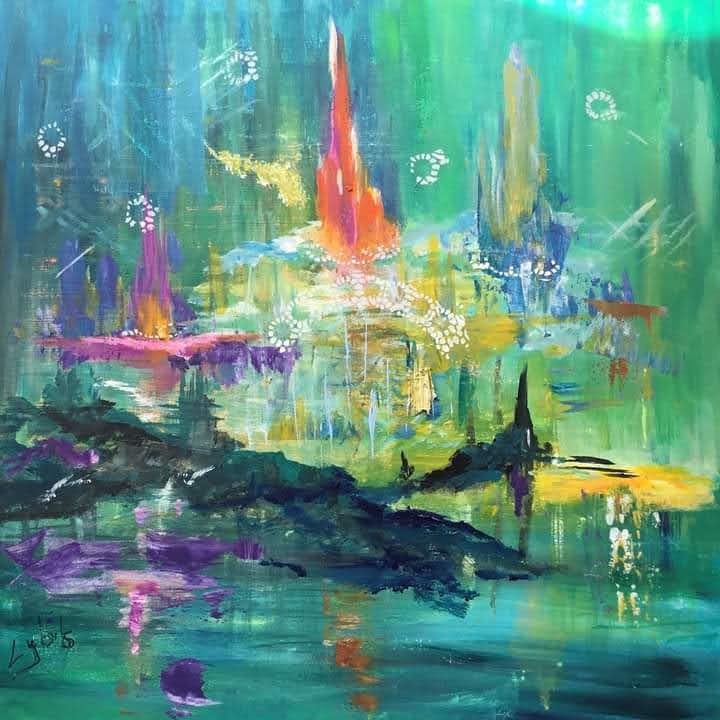
Emerging by Sybil Pretious

(This is an online interview conducted by Mitali Chakravarty)

PLEASE NOTE: ARTICLES CAN ONLY BE REPRODUCED IN OTHER SITES WITH DUE ACKNOWLEDGEMENT TO BORDERLESS JOURNAL
Categories
celebrations

Homecoming Festivals

As the year stretches towards the next one, festivals welcome the delights of autumn. Though our celebrations have been restricted by the ongoing pandemic, human spirit continues to revel with music, words and more. Festivals are a part of this jubilation — a refulgent celebration of our existence across the globe. Some of these occasions jubilate the commencement of our journey home and some of the arrival of Gods and Goddesses, who other than killing demons, are shown to like being with their families too. For those who abstain from worshipping forms, a festival could be just visiting and meeting with families to express their thanks. Autumn is a time when tradition had many headed home to celebrate these events with their near and dear ones.

During Durga Puja, a festival which celebrates the home coming of the Goddess along with that of her devotees, we had a cultural splurge — music, dancing, theatre and special magazines featuring writing that moves to unite people in the spirit of love and harmony. Concerts of songs by bauls or traveling minstrels, Kazi Nazrul Islam and Tagore — both of who believed differently from Hindus — are a part of the celebrations. Writings by many, irrespective of their religious preferences, featured in the special editions of journals around literary and non-literary issues. Often these issues were coveted for being exquisite melanges, showcasing the most flavourful writers.

The cultural mingling despite being attached to a religious observance transcended narrow barriers imposed on faith. It continued inclusive in its celebrations, with food and embracing all cultures. Anyone could attend the festivities, even the British in colonial India. Taking a page off that, Borderless celebrates with writings across all boundaries.

Poetry

The Quest for Home

Nazrul’s Kon Kule Aaj Bhirlo Tori translated from Bengali by Professor Fakrul Alam explores the theme of spiritual homecoming . Click here to read.

The Song of Advent by Tagore

Tagore’s Amaar Nayano Bhulano Ele describes early autumn when the advent of the Goddess, translated from Bengali by Mitali Chakravarty. Click here to read.

Prose

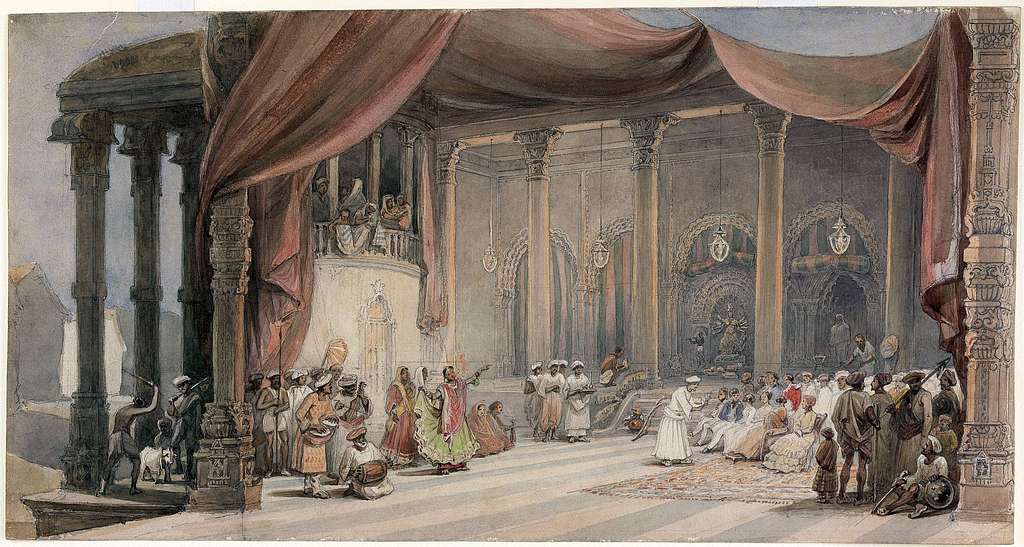
An excerpt from Shakti Ghoshal’s The Chronicler of the Hooghly & Other Stories describes the historic evolution of the Durga Puja around the eighteenth century as a social occasion where the colonials and the nabobs mingled. Click here to read.

Meenakshi Malhotra through autumnal folk songs around Durga Puja explores homecoming in Season of Magical Mellow Wistfulness. Click here to read.

Somdatta Mandal translates from Bengali Travels & Holidays: Humour from Rabindranath. Both the essay and letters are around travel, a favourite past time among Bengalis, especially during this festival. Click here to read.

An excerpt of In a Land Far From Home: A Bengali in Afghanistan by Syed Mujtaba Ali, translated from Bengali by Nazes Afroz. Syed Mujtaba Ali was a popular writer who often featured in such journals. Click here to read.

Bhaskar Parichha reviews Mohona Kanjilal’s A Taste of Time: A Food History of Calcutta. Exploring food has always been a part of festivities. Hope you find some good hints here. Click here to read.

Aruna Chakravarti reviews Golden Bangladesh at 50: Contemporary Stories & Poems edited by Shazia Omar. Click here to read.


A depiction of celebrations inside a house during Durga Puja in  Calcutta (around 1830-40), West Bengal, India, where Europeans are being entertained, water colour by William Prinsep(1794–1874), a merchant with the Calcutta firm of Palmer & Company. Courtesy: Creative Commons
Categories
Essay

A Season of Magical Mellow Wistfulness

Meenakshi Malhotra demystifies the autumnal celebration of Durga Puja as a time of homecoming for married daughters through folk songs that are associated with the festival

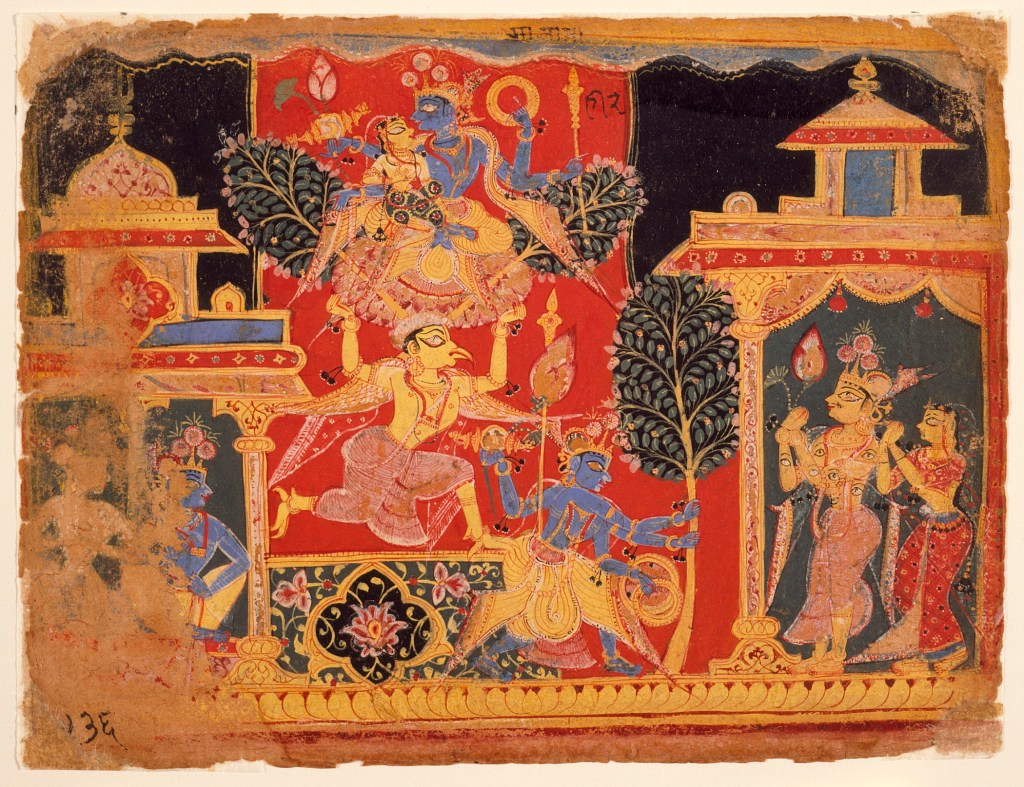
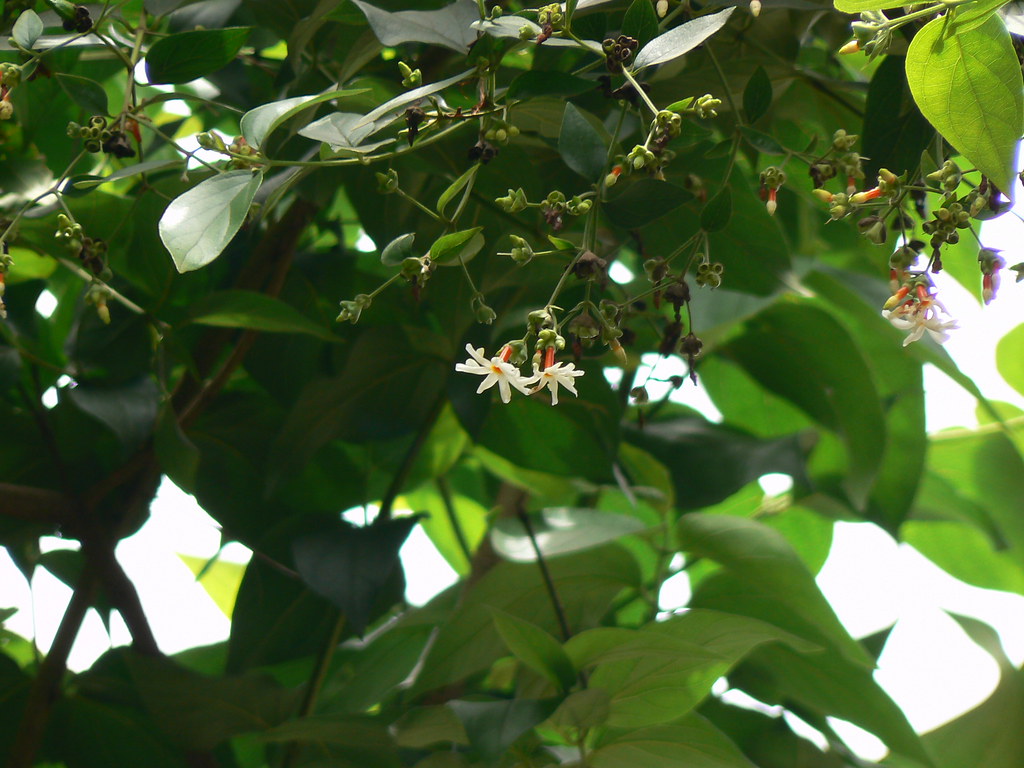
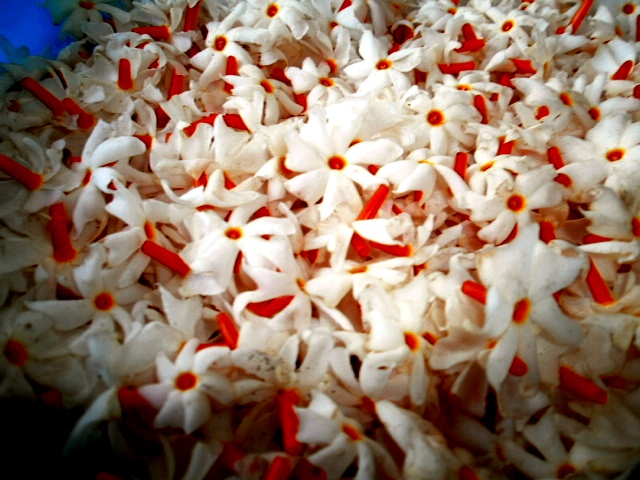
It is that time of the year again… a time of magic and enchantment when the air comes wafting with the fragrance of shiuli flowers, a species of night-flowering coral jasmine also known as the parijat. Legend has it that this flower is from a heavenly tree  that was brought to Earth  by Lord Krishna, one of the central gods in the Hindu pantheon. Interestingly, in a somewhat unusual twist, this tree is considered so sacred that its flowers picked up from the ground are also deemed appropriate for worship, to make sacred offerings. This is rare, given that flowers offered for worship are usually to be plucked from the tree and not picked up from the ground.

In Hindu mythology, the parijat tree is the tree of the universe which is owned by Indrani, the consort of Indra or the king of the Gods in Hindu mythology. Apparently Krishna stole it from Indra’s consort, Indrani and planted it in a region located between heaven and earth. The tree, also known as “kalpa-taru” or wishing tree, is one which grants all objects of desire.

From the sacred texts like Bhagawat Purana, the Vishnu Purana and the Mahabharata, we  learn that the elaborate process of samudra manthan (churning of the ocean of milk) yielded the  parijat tree as one of the three valuables.  This tree is said to have blossomed atop Mount Meru, the garden of paradise. It was claimed by Indra when  it rose to the surface and emitted its fragrance.

Krishna steals the Parijat tree from Mount Meru. Water colour India, app 1525-1550 CE. Courtesy: Creative commons

This is only one of the many gifts of nature, the exquisitely fragrant flowering tree which sheds blossoms and carpets the Earth  around it. Autumn, that season so famously invoked as the time of “mellow fruitfulness”, carries hints of ripening and a mature fecundity. For many sections of Indians, it is the time of the goddess, a time that a lot of us associate with the advent of the goddess Durga, who signifies the triumph of good over evil. In Durga, we have the divine represented both in terms of mythic abstractions and the material everyday, as power and poetry, as divine and human, as mother and daughter. Similarly the goddess Durga’s descent on Earth for the days of the festival, is also the advent of the daughter to the house of the mother, a moment which overflows with affection, feelings and emotions.

The event happens at a certain time in the Hindu calendar and participates in linear time, as well as being a part of time imagined as part of a larger ongoing cycle of temporality. Similarly, it  participates in mythic and magical time or eternity as it were. For the daughter, longing to be enfolded in the mother’s arms, who counts  the days till she can go back to her natal home, albeit for a few days, this is also a special time indeed.

It is this note of longing, dispossession and exile that is captured in the folk songs in the Bengali or Bangla language, which were documented in the 18th century. These songs are called Aagamoni which translates into advent, here referring to one who arrives. Why this gains a certain poignancy is that girlhood in Indian and many traditional cultures was viewed as a fleeting and fugitive time, haunted by transience. Female children were in the past often regarded as temporary occupants in their natal homes and were  characterised as ones who do not belong or belong to someone else, whose real home is with their in-laws.

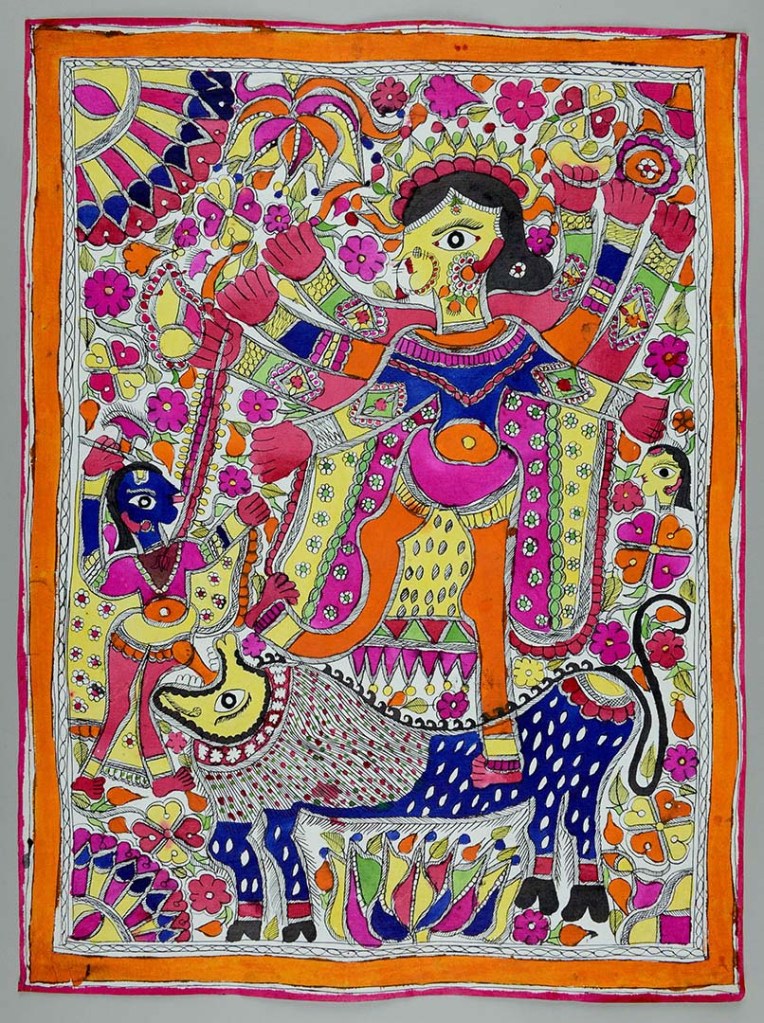
Durga Puja celebrations
Courtesy: Creative Commons

In the Hindu pantheon, Durga, Uma or Parvati is a prominent mother goddess, the consort of Shiva. Her names refer to split roles of the feminine imaginary. As Durga she is the fiery slayer of demons. But– and this is the central theme here– she is also the gentle daughter Uma. It is in her form of the daughter who is separated from her parents, that the songs of Aagomoni and Bijoya emphasise. Bijoya translates as victory and starts with the return of the Goddess to her spouse, Shiva. Aagomoni and Bijoya are genres of Bengali folk songs celebrating the return of the Goddess Durga/Parvati to the home of her parents on the eve of the autumn festival of Durga Puja. The Aagomani songs describe the return of Parvati to her home in rural Bengal, not as Goddess but as daughter, and are followed by Bijoya songs which describe the sorrow of parting three days later as Parvati returns to her husband ShivaAagomoni songs can be interpreted as an expression of collective feelings, experiences and aspirations, another way of rethinking or reimagining the self-inscription of a collectivity.

In one of the best known and common Aagomoni songs, ‘Ogo amar agomoni’ (‘The Advent of Durga’):

The Advent of Durga

I herald the advent of the Goddess 
With the lighting of my lamps 
During the autumn whirlwinds.
At the end of night, the sun bursts forth.

In the swirling storm, 
At the end of the night,
The light in my path is turned off.
The beacon of my life has turned off. 
I herald the advent of my Goddess.

The lamp that reveals my path,
Brightens my life by pouring 
The nectar of your presence. 
I am lost in the blackness of fear. 
When you come in your radiant chariot, 
Your refulgence will shatter the 
Deep darkness in all directions.

Play the aubade of aurora.
It will all be divine. 
I herald the advent of my Goddess 
With the lighting of my lamps.
I herald the advent of our Goddess. 

(Translated by Mitali Chakravarty)

The song is full of the imagery of light and refulgence. My goddess “light of my life’’ could be both a reference to the divine mother, as well as to a daughter, who was very often  referred to as ‘Ma’ as a term of affection. While this song maps the emotional link between the mother and the daughter and can be seen in terms of affect, the focus is on her refulgence and divinity. The reference to the goddess in terms of the mother/ daughter trope is much more evident in other songs, which narrates the saga of dispossession — the fair  princess who has to live in disorderliness and poverty.

Go Get Gouri

Go, go Giriraj
To fetch your daughter Gouri
Uma is in deep sorrow
Uma has cried for her mother
Living in misery

Bhang consuming Shiv
Ash-smeared and wild
Sold off her finery
All her jewellery
To fund his addiction 

Bhola revels in intoxication 
He has collected hashish from 
The three realms….heaven, hell and earth.

Bhola put the intoxicant, bhang
Made with crushed
Datura seed on my Uma’s face.

Go lord of the mountains go
Go to fetch Gouri
Uma has cried herself hoarse.

(Translated by Mitali Chakravarty)

In another evocative song, the mother cries –“Ebaar Uma ele/Aar pathabo naa ( This time when Uma comes/ I will not send her back)”.

When My Uma Returns…

This time when my Uma comes,
I will not send her back. 
If people call me bad, let them. 
I will not listen to anyone. 
This time when my Uma returns,
I will not send her back, 
This time when my Uma comes.

If the conqueror of death comes
To talk of taking Uma back, 
If Mritunjaya comes
To talk of taking her back, 
We, mother and daughter, 
together will quarrel with him.
I will not agree because 
he is my son-in -law       
 
This time when my Uma returns,
I will not send her back, 
This time when my Uma comes...

The poet says 
Can life tolerate such wounds?
Shiva roams the cremation grounds,
And does not think of his own home. 

This time when my Uma comes,
I will not send her back. 
If people call me bad, let them. 
I will not listen to anyone. 
This time when my Uma returns,
I will not send her back, 
This time when my Uma comes...

(Translated by Mitali Chakravarty)

Here, the mother vows not to send Uma back to her wild and undomesticated husband when she comes visiting. This articulates a resolve uttered by the mother not to jeopardize or endanger her daughter by ‘giving’ her to an undeserving husband. The anxiety, insecurity and fear for the daughter’s safety is clearly evident in these lines. Maternity and maternality is here described as a tortuous and beleaguered  state. In all these lines, we see a shift from the narrative account of arming and empowerment of the goddess to a more human and humble register. Begging, cajoling, importuning-the mother’s pain and anxiety for the daughter, married to that strange and alien  figure, the untamed and undomesticated God Shiva, is evident in every line.

The narrative of mother and daughter pining for each other, appears to have similarities with  the Greek myth of Demeter and Persephone. In some,  the daughter is imagined as asking her husband for permission to visit her mother: “It has been so many days since I went home and saw my mother face to face ceaselessly… she weeps for me…” (Bhattacharya, in Mc Dermott 2001:132). The men ( both father  Giriraj and husband Shiva ) emerge as emotionally unreceptive. (Kaul 2022:9) We hear Menaka bemoaning an emotionally unresponsive husband who won’t fetch the daughter:

“Whom can I tell
the way I feel for Uma?"

Thus the story of the festival of Durga embraces not only the radiant, refulgent and resplendent image of the goddess; behind it lurks the secret sorrows of generations of mothers and daughters caught in the inevitable dance of life as they play out sagas of dispossession. As autumn is the season of liminality poised between summer and on the cusp of winter, the goddess visiting her natal home, is poised between humanity and divinity, both as a daughter in exile and as a slayer of demons. From this paradox, this spectacle that hovers between the majestic and the everyday, a sublime beauty is born.   

.

  Dr Meenakshi Malhotra is Associate Professor of English Literature at Hansraj College, University of Delhi, and has been involved in teaching and curriculum development in several universities. She has edited two books on Women and Lifewriting, Representing the Self and Claiming the I, in addition  to numerous published articles on gender, literature and feminist theory.       

.

PLEASE NOTE: ARTICLES CAN ONLY BE REPRODUCED IN OTHER SITES WITH DUE ACKNOWLEDGEMENT TO BORDERLESS JOURNAL
Categories
Contents

Borderless, September 2021

Editorial

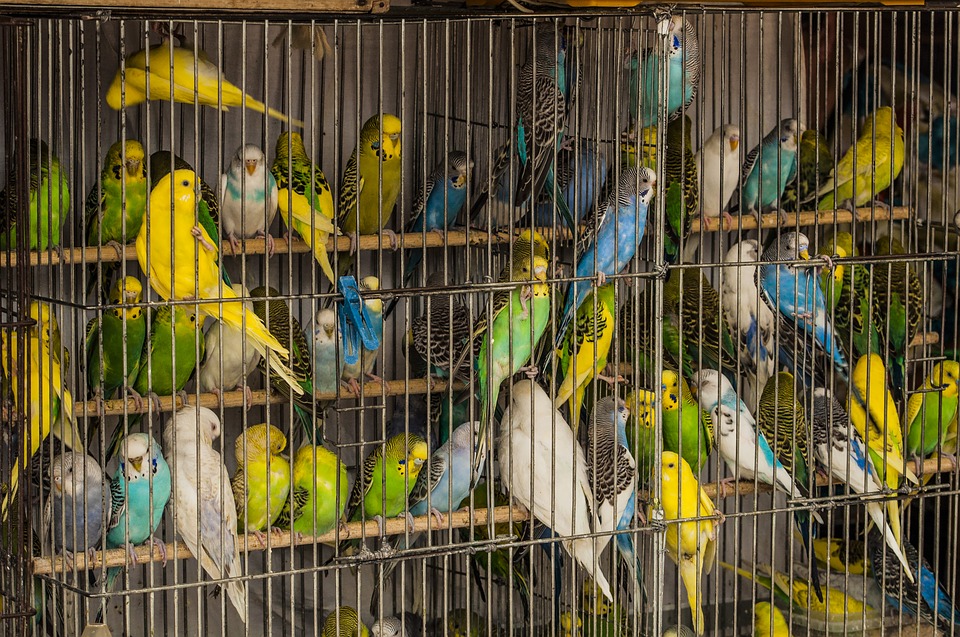
The Caged Birds Sing…Click here to read.

Interviews

Professor Anvita Abbi, a Padma Shri, discusses her experience among the indigenous Andamanese and her new book on them, Voices from the Lost Horizon. Click here to read.

Keith Lyons talks to Jessica Mudditt about her memoir, Our Home in Myanmar, and the current events. Click here to read.

Translations

Be and It All Came into Being

Balochi poetry by Akbar Barakzai, translated by Fazal Baloch. Click here to read.

Adivasi Poetry

A poem by Jitendra Vasava translated from the Dehwali Bhili via Gujarati by Gopika Jadeja. Click here to read.

A Poem for The Ol Chiki

 Poetry by Sokhen Tudu, translated from the Santhali by Hansda Sowvendra Shekhar. Click here to read.

About Time

Korean poetry on time written and translated by Ilwha Choi. Click here to read.

Of Days and Seasons

A parable by the eminent Dutch writer, Louis Couperus (1863-1923), translated by Chaitali Sengupta. Click here to read.

Road to Nowhere

An unusual story about a man who heads for suicide, translated from Odiya by the author, Satya Misra. Click here to read.

Abhisar by Tagore

A story poem about a Buddhist monk by Rabindranath Tagore in Bengali has been translated by Mitali Chakravarty. Click here to read.

Poetry

Click on the names to read the poems

Arundhathi Subramaniam, Michael R Burch, Sekhar Banerjee, Jeff Shakes, Ashok Suri, Tim Heerdink, Srinivas S, Rhys Hughes, A Jessie Michael, George Freek, Saranayan BV, Gigi Baldovino Gosnell, Pramod Rastogi, Tohm Bakelas, Nikita Desai, Jay Nicholls, Smitha Vishwanathan, Jared Carter

Nature’s Musings

In Sun, Seas and Flowers, Penny Wilkes takes us for a tour of brilliant photographs of autumnal landscapes with verses. Click here to read.

Poets, Poetry & Rhys Hughes

In Memory Gongs, Rhys Hughes creates a profound myth tinged with a tongue in cheek outlook … Click here to read.

Essays

Crime and the Colonial Capital: Detective Reid in Calcutta

Abhishek Sarkar explores the colonial setting up of the Calcutta detective department in 1887. Click here to read.

The Myth of Happiness

Candice Louisa Daquin ponders over the impositions on people to declare themselves happy. Click here to read.

Once Upon a Time in Burma: Of Babies and Buddhas

John Herlihy takes us through more of Myanmar with his companion, Peter, in the second part of his travelogue. Click here to read.

Bhaskar’s Corner

Bhaskar Parichha explores links between Politics & the Media. Click here to read.

Musings/Slices from Life

Cyclists

Mike Smith muses about a black and white photograph from his childhood. Click here to read.

Leo Messi’s Magic Realism

Sports fan Saurabh Nagpal explores the magic realism in famous footballer Messi’s play with a soupçon of humour. Click here to read.

Infinite Possibilities & Mysterious Riddles

Keith Lyons gives a lively account of traveling across borders despite the pandemic. Click here to read.

Word Play

Geetha Ravichnadran explores additions to our vocabulary in a tongue-in-cheek article. Click here to read.

Musings of a Copywriter

In When I Almost Became a Professor, Devraj Singh Kalsi gives humour tinged reasons on why he detached himself from being an academician. Click here to read.

Stories

Flash Fiction: Turret

Niles M Reddick relates a haunting tale of ghosts and more. Click here to read.

Silver Lining

Dipayn Chakrabarti travels through moods of the day and night. Click here to read.

Captain Andi is in love

Dr. P Ravi Shankar explores a future beyond climate change in Malaysia. Click here to read.

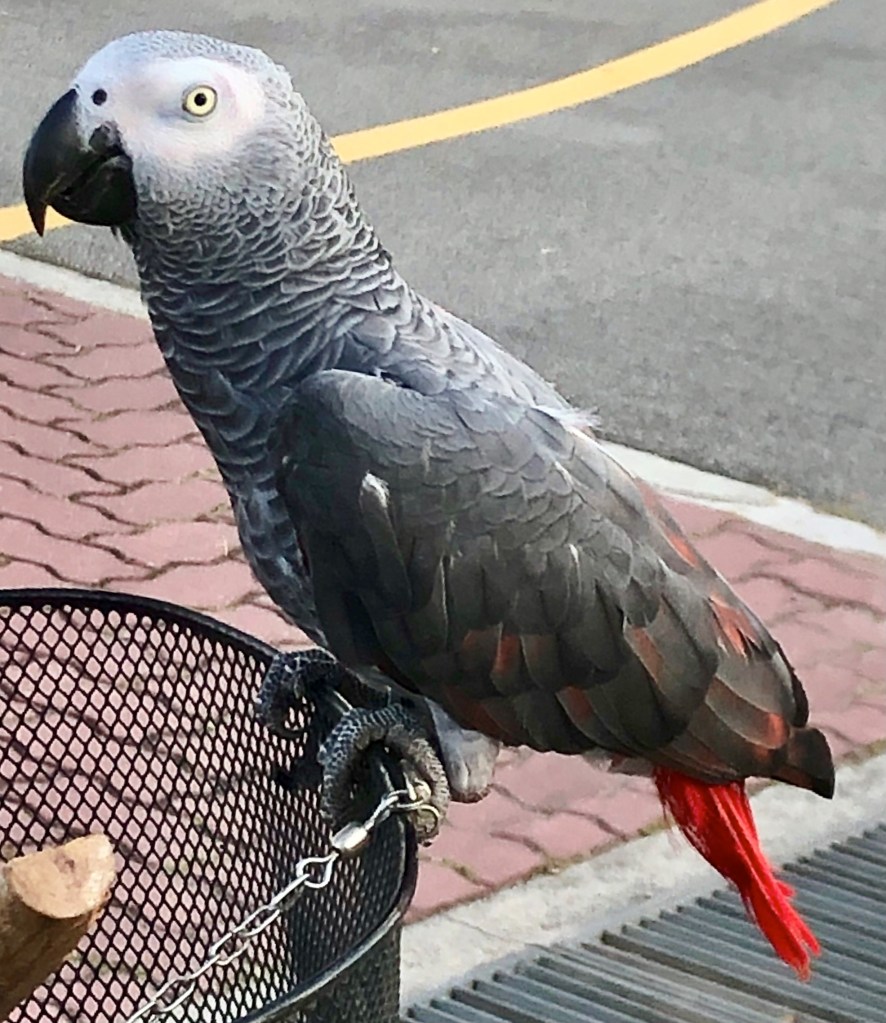
The Cockatoo

Revathi Ganeshsundaram captures the stardust in ripening years. Click here to read.

The Missing Tile

Saeed Ibrahim’s story reflects on the ties between an old teacher and a student. Click here to read.

The Literary Fictionist

In Return of the Ghost, Sunil Sharma explores the borders between life, ideas and death. Click here to read.

Book Excerpt

An excerpt from Kobi’ and ‘Rani’: Memoirs and Correspondences of Nirmalkumari Mahalanobis and Rabindranath Tagore, translated by Somdatta Mandal, showcasing Tagore’s introduction and letters. Click here to read.

Book Reviews

Rakhi Dalal reviews Anvita Abbi’s Voices from the Lost Horizon. Click here to read.

Basudhara Roy reviews Bina Sarkar Ellias’ Song of a Rebel and Other Selected Poems. Click here to read.

Bhaskar Parichha reviews Wendy Doniger’s Winged Stallion and Wicked Mares. Click here to read.

Categories
Editorial

The Caged Birds Sing

...Don't you know
They're talkin''bout a revolution
It sounds like a whisper...
-- Tracy Chapman,'Talkin 'Bout a Revolution
Thou shalt love thy neighbour as thyself. 
— Bible 

We are living in strange times that seem to be filled with events to challenge the innovativeness of man. As if the pandemic were not enough, concepts that had come out of the best in our civilisation to unite mankind have been convoluted by a minority to manipulate and hurt the majority into submission. Life is not about surviving with faint-hearted compliance but about having the courage to live it as you want, facing it full up front, to voice out in unison against injustices, wrongs, and most of all to loan strength to help and care for each other. Often to understand this, we need to hinge on to our past, to learn from our heritage. But do we do that? In the hectic drive to be successful, we tend to ignore important lessons that could have been imbibed from the past. Like, did you know that the tribes in the Andaman can save themselves from a tsunami?

Padma Shri Anvita Abbi tells us all about the Andamanese and her attempts to revive their moribund language in her interview and book, Voices from the Lost Horizon, reviewed by Rakhi Dalal. While the review focusses on the uniqueness of Abbi’s work and the publication with its embedded recordings of the tribe fast dissolving into the morass of mainstream civilisation, her interview highlights the need to revive their lores that evolved out of a 70,000-year-old culture. On the other hand, Jessica Mudditt, interviewed by Keith Lyons, dwells on the ongoing crisis in Myanmar, which has been clearly the focus of her book, Our Home in Yangon. This interview focusses on the here and now of the crisis. But most crises have their roots deep and perhaps an exploration of these could help. There are 135 ethnicities in Myanmar but how many are actually integrated into the mainstream? Are they in the process of getting ‘lost’ like the voices of the speakers of Greater Andamanese?

That is why we tried to showcase a few such strains that are going unheard in the loudness of the ‘civilised’ mainstream. We have translations in poetry from Santhali and Adivasi, touching on the concerns of those who are often considered underdeveloped. And, perhaps, as Abbi said in her interview about the Andamanese, we can say much the same for these tribes too.

“These tribes are neither poor, nor uneducated (their knowledge of environment comprising birds, fishes, medicinal plants and their … weather predictions, and the Earth they walk on is amazing) …”

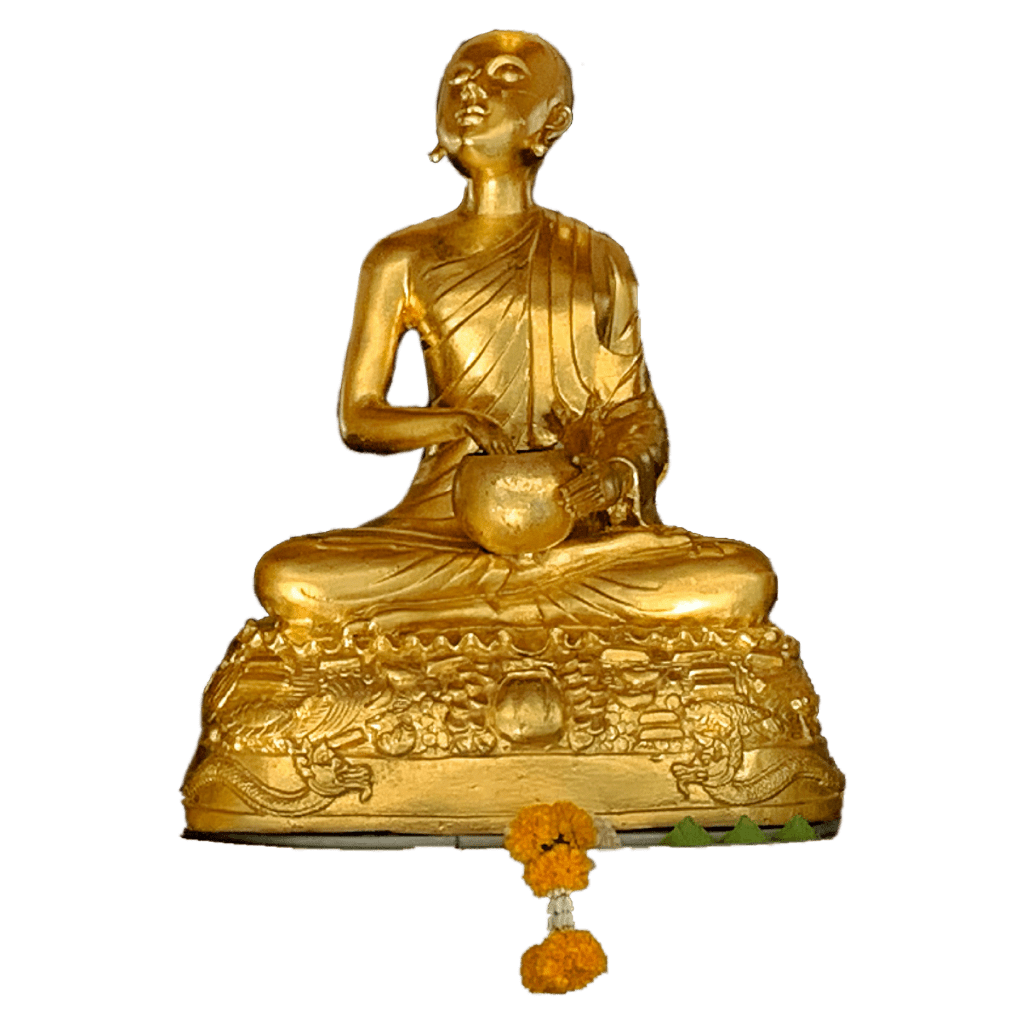
Distinctions have been created by a ‘civilisation’ entrenched in mono-cognitive enforcements leading to the loss of trust, confidence, languages, cultures and valuable knowledge about basic survival. Perhaps we can attempt to heal such wounds by imbibing the openness, love, devotion and compassion shown by the Buddhist monk, Upagupta (who is still revered in Myanmar as Shin Upagutta), in the translation of Tagore’s story poem, ‘Abhisar’ or ‘The Tryst’.  Somdatta Mandal’s translation of Tagore’s letters introduce similar humanitarian concerns when the maestro mentions a German anthropologist and his wife who for the betterment of mankind were journeying to study tribals in India. Tagore remarks, “The people for whom they are willingly prepared to undergo hardship and to overlook all sorts of danger are not their relatives, nor are they civilised.” And yet even a century ago to fathom more about mankind, attempts were being made to integrate with our ancient lore. The concept of being ‘civilised’ is of course now much under the microscope. What is being ‘civilised’?

 Is it about having power? We have Akbar Barakzai’s poem translated by Fazal Baloch on creation looking at the divide between a ‘civilised’ God and man. The theme stresses the two sides of the divide. More translations from Odiya, Dutch and Korean further mingle different flavours of the world into our journal — each questioning the accepted norm in different ways.

In an edition focussed on myths and stories from which we evolved, Rhys Hughes has created an unusual legend around elephants. His poetry also deals with animals — cats. One wonders if the T S Eliot’s famed ‘Macavity, the Mystery Cat’ could have to do something with his choices?  We were fortunate to have Arundhathi Subramaniam share her poetry on myths around Indian figures like Shakuntala and Avvaiyar and the titular poem from When God is a Traveller that won her the 2020 Sahitya Akademi Award. Michael R Burch continues on the theme dwelling on Circe, Mary Magdalene and Helen. Sekhar Banerjee has a more iconoclastic approach to myths in his poetry. Jared Carter talks of modern myths perpetuated through art and cultural studies as does Mike Smith in his musings with his glance back at the last century through a photograph.

We have poetry by a Filipino writer Gigi Baldovino Gosnell from South Africa, looking for a new world, a new legend, perhaps a world without borders. Tohm Bakelas has given us a few lines of powerful poetry. Could these poems be a reaction to world events? Smitha Vishwanath has responded to the situation in Afghanistan with a poem. In this edition, photographs and verses in Penny Wilkes’ ‘Nature’s Musings‘ draw from the universe. She writes, “The sun never asks for applause” — a powerful thought and perhaps one mankind can learn from.

Ghost stories by Niles Reddick and Sunil Sharma perpetuate the theme, especially the latter has a ghost that questions myths of ‘isms’ created in the modern-day world. We also have a writer from Malaysia, P Ravi Shankar, with a futuristic legend set in a far-off time where man has embraced the reality of climate change and artificial intelligence. An interesting and fun read as is Devraj Singh Kalsi’s professions about why he did not become a professor, Geetha Ravichandran’s light musing on word play and a young writer Saurabh Nagpal’s musing, ‘Leo Messi’s Magic Realism‘ — a footballer viewed from a literary perspective!

While our musings make us laugh, our essays this time take us around the world with the myth of happiness deconstructed by Candice Louisa Daquin, to Burma and deep into Kolkata’s iconic history of the detective department started in the nineteenth century. There is an essay by Bhaskar Parichha that explores politics and media and mentions ‘gatekeepers’ of the media who need to be responsible for influencing public opinion. Guess who would be the gatekeepers?

Bhaskar Parichha’s review of Wendy Donniger’s non-fiction exploring myths around horses, Winged Stallion and Wicked Mares, and Basudhara Roy’s review of Bina Sarkar Ellias’ Song of a Rebel and Other Selected Poems perpetuate the theme of the importance of the past on the one hand and question it on the other. But that is what Borderless is about — exploring the dialectics of opposing streams to re-invent myths towards a better future.

We have a bumper issue again this time with nearly fifty posts. I invite our wonderful readers on a magical journey to unfold the hidden, unmentioned gems scattered on the pages of the September Issue of Borderless. Thank you again to an outstanding team, all our global contributors who make every edition an adventure and a reality and our wonderful readers. Thank you all.

Have a beautiful month!

Mitali Chakravarty

Borderless Journal

Categories
Tagore Translations

Abhisar by Rabindranath Tagore

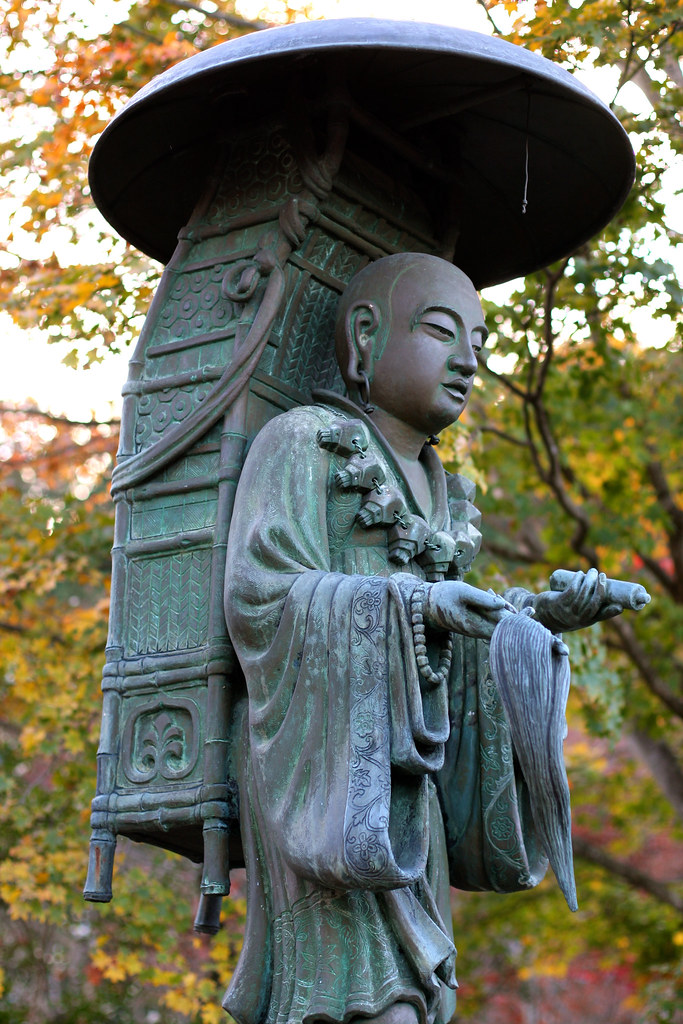
Abhisar, translated as ‘The Tryst’, was written by Rabindranath in 1899. It is a story poem based on Upagupta, a Buddhist monk who lived in the 300 BCE and was revered by Emperor Ashoka and is still said to have a following in Myanmar.

THE Tryst

Sanyasi Upagupta
Was asleep under the shade of 
       The city ramparts of Mathura —
A breeze had blown off the lamps and flares.
The palace doors were shut. 
The stars of the night 
          Had disappeared behind clouds.

Whose foot adorned with anklets
          Suddenly rang on his chest? 
Startled, the sanyasi woke up.
His dreams fled. 
A dim light shone 
       on his forgiving eyes. 

The court dancer was going for a tryst with her lover,
        Intoxicated with her own vernal bloom. 
Dressed in a deep blue saree,
Her ornaments tinkled — 
As her foot fell on the monk, 
         Basabdatta halted.

With her lantern, she examined 
      his young radiant form —
A calm enduring tender face, 
A glance gleaming with compassion,
A white moon-like forehead 
       aglow with gracious peace.

The woman spoke in a gentle voice,
        Her eyes drooping with embarrassment, 
“Pardon me, O youthful one, 
I will be grateful if you come to my home. 
The ground here is hard and rough.
        This is not the right place to sleep.”

The sanyasi responded with kind words,
           “It is not yet time for me 
To visit O graceful one, 
Please go your way in prosperity. 
When the time is right, I will myself
            Come to your bower.”
                      
Eventually, a fiery spark thundered,
          Opened a monstrous mouth.
The young woman shivered with alarm.
As a terrifying destructive wind howled,
A lightning ripped a cruel smile
            Across the sky.

                 *

The year was not out. 
     It was an evening in Chaitra. 
The breeze fluttered with restlessness
The trees along the path were laden with buds. 
The King’s garden was flush with blooms of bakul,
       Parul and rajanigandha. 

From afar, wafting with the draft
      Was the mesmerising timbre of a flute.
The city was empty as everyone had left for
The festival of flowers in the honeyed woods. 
The full moon smiled at the town
      Emptied of people and protectors. 

On the lonely moonlit path, 
        The sanyasi walked alone
Under leafy branches, from where
Cuckoos cooed repeatedly —
After so many days, was it time for him
      To fulfil his tryst with the beloved? 

Crossing the town, the wise one 
        Went beyond the city walls. 
He stood beside the moat —
In the shade of the mango grove,
Who was that young woman 
         Lying near his foot? 

Her body was blistered with sores
         From a deadly disease —
As she darkened with the blight,
The citizens threw her out 
Beyond the city moat, fearing the
             Poison within her.

The sanyasi sat down by her. 
        And put her stiff head on his lap —
He poured water into her chapped lips,
He chanted a mantra on her head,
Covered her body with a soothing
       Cool sandal paste. 

Bakul blooms were falling, the cuckoos were calling, 
       The night was filled with moonlight. 
“Who are you, o compassionate soul?”
The woman asked. The sanyasi replied,
“Tonight is that time. O Basabdatta,
         I have come for our tryst.”


Sanyasi-- a monk or mendicant, in this case a Buddhist Bhikshu

Chaitra -- spring when the old year ends and new starts in the Bengali Calendar. 

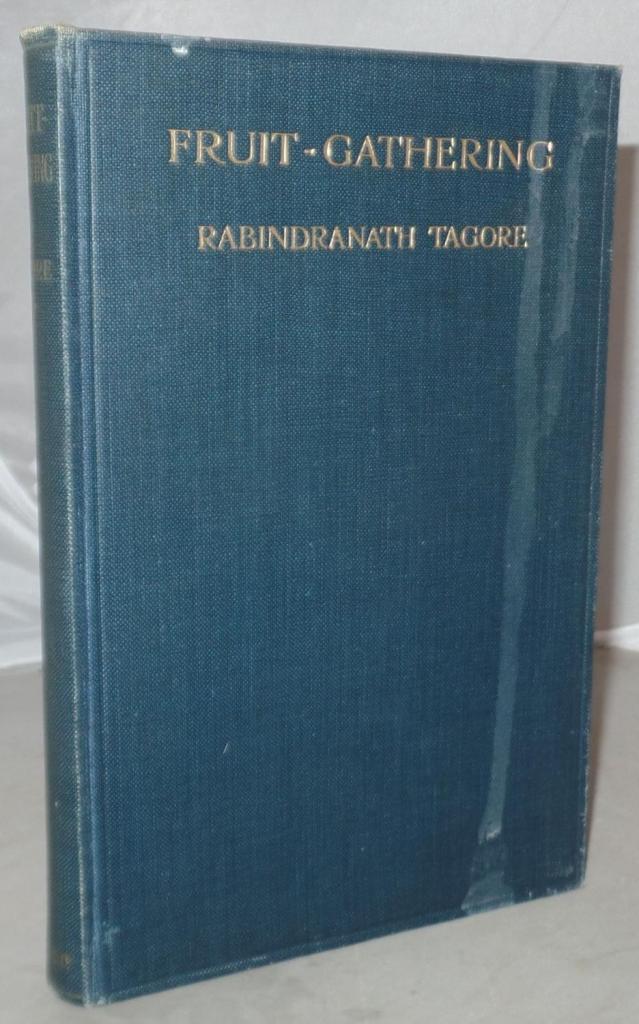
Tagore had translated this poem in English for a collection called Fruit-Gathering, brought out in 1916 by Macmillan. The eighty-six translated poems by Tagore in this edition were from a few selected collections in Bengali: Gitimala, Gitali, Utsarga, Kheya, Naivedya, Gitanjali, Katha and Balaka.

1916 edition of Macmillans’ Fruit-Gathering

(This poem has been translated for Borderless Journal by Mitali Chakravarty and edited by Sohana Manzoor and Anasuya Bhar.)

.

PLEASE NOTE: ARTICLES CAN ONLY BE REPRODUCED IN OTHER SITES WITH DUE ACKNOWLEDGEMENT TO BORDERLESS JOURNAL
Categories
Editorial

Triumph of the Human Spirit

On August 8th 2021, the chief of the International Olympic Committee, Thomas Bach, pointed out during the closing ceremony that these games were “unprecedented” and brought messages of “hope, solidarity and peace” into a world torn with the desolation generated by the pandemic. It was a victory of the human spirit again, a precursor of what is to come. That the Japanese could get over their pandemic wrought hurdles, just as they did post the nuclear disasters wrought by the Second World War and by the 2011 earthquake-tsunami at Fukushimaya, to host something as spectacular and inspiring as these international games reflects, as the commentators contended, a spirit of ‘harmony and humility’. The last song performed by many youngsters seemed to dwell on stars in the sky — not only were the athletes and organisers the stars but this also reminded of unexplored frontiers that beckon mankind, the space.What a wonderful thing it was to see people give their best and unite under the banner of sports to bring messages of survival and glimpses of a future we can all share as human beings! Our way of doing things might have to evolve but we will always move forward as a species to thrive and expand beyond the known frontiers.

One such explorer of yet unknown frontiers who mingles the historic with the contemporary, Goutam Ghose, an award-winning filmmaker and writer, has honoured our pages with an extensive interview showing us how art and harmony can weave lores that can help mankind survive. This is reinforced by the other interview with Singaporean academic, Dr Kirpal Singh, whose poetry reflects his convictions of a better world. With our intelligence, we can redefine processes that hold us back and grind our spirits to dust — be it the conventional ‘isms’ or norms that restrict our movement forward – just as Tagore says in the poem, we have translated this time, ‘Deliverance’.

…On this auspicious dawn,
Let us hold our heads high in the infinite sky 
Amidst the light of bounteousness and the heady breeze of freedom.

As the Kobiguru mentioned earlier in the poem, the factors that oppress could be societal, political, or economic. Could they perhaps even be the fetters put on us by the prescribed preconceived definition of manmade concepts like ‘freedom’ itself? Freedom can be interpreted differently by multiple voices.

This month, on our pages, ‘freedom’ has found multiple interpretations in myriad of ways — each voice visualising a different dream; each dream adding value to the idea of human progress. We have discussions and stories on freedom from Nigeria, Argentina, India, Pakistan, Myanmar, Malaysia and more. Strangely enough, August holds multiple independence/ national days that are always for some reason seen as days of being ‘freed’ by many — at least from oppression. But is that true?

From Malaysia, Julian Matthews and Malachi Edwin Vethamani cry out against societal, religious and political bindings – quite a powerful outcry at that with a story and poems. Akbar Barakzai continues his quest with three poems around ideas of freedom translated from Balochi by Fazal Baloch. Jaydeep Sarangi and Joan Mcnerny pick up these reverberations of freedom, each defining it in different ways through poetry.

Jared Carter takes us back to his childhood with nostalgic verses. Ryan Quinn Flanagan, Michael Lee Johnson, Vandana Sharma and many more sing to us with their lines. Rhys Hughes has of course humour in verse that makes us smile as does Jay Nicholls who continues with her story-poems on Pirate Blacktarn – fabulous pieces all of them. The sport of hummingbirds and cats among jacaranda trees is caught in words and photographs by Penny Wilkes in her Nature’s Musings. A poetic tribute to Danish Siddiqui by young Sutputra Radheye rings with admiration for the Pulitzer prize-winning photographer who met his untimely end last month on 16th while at work in Afghanistan, covering a skirmish between Taliban and Afghanistan security forces. John Linwood Grant takes up interesting issues in his poetry which brings me back to ‘freedom’ from colonial regimes, perhaps one of the most popular themes for writers.

Indo-Pak independence, celebrated now on 14th (Pakistan) and 15th August (India), reflects not only the violence of the Partition which dislocated and killed millions historically but also the trauma caused by the event. Capturing this trauma is a short story based on memories of Partition by Nadir Ali, translated from Punjabi by his daughter, Amna Ali. Ratnottama Sengupta translates from the diary of Sandhya Sinha (1928-2016), a woman’s voice from the past that empathises with the subjugated who were subdued yet again after an upsurge of violence during the Quit India Movement (1942) against the colonials. Sinha contends that though the movement frittered away, the colonials were left with an after-taste of people hankering for self-rule. A thought-provoking short story by Sunil Sharma explores the results of self-rule in independent India.

Alluding to Jinnah’s vision for women, Aysha Baqir muses emotionally about the goals that remain yet to be fulfilled 74 years after independence. Moazzam Sheikh’s story of immigrants explores dementia, giving us a glimpse of the lives of Asian immigrants in America, immigrants who had to find a new home despite independence. Was this the freedom they dreamt of — all those who fought against various oppressive regimes or colonialism?

Tagore’s lyrics might procure a few ideas on freedom, especially in the song that India calls its National Anthem. Anasuya Bhar assays around the history that surrounds the National Anthem of India, composed by Tagore in Bengali and translated to English by the poet himself and more recently, only by Aruna Chakravarti. We also carry Dr Chakravarti’s translation of the National Anthem in the essay. Reflecting on the politics of Partition and romance is a lighter piece by Devraj Singh Kalsi which says much. ‘Dinos in France’ by Rhys Hughes and Neil Reddick’s ‘The Coupon’ have tongue-in-cheek humour from two sides of the Atlantic.

A coming-of-age story has been translated from Nepali by Mahesh Paudyal – a story by a popular author, Dev Kumari Thapa – our first Nepali prose piece.  We start a four-part travelogue by John Herlihy, a travel writer, on Myanmar, a country which has recently been much in the news with its fight for surviving with democracy taking ascendency over the pandemic and leaving the people bereft of what we take for granted.

Candice Louisa Daquin discusses a life well-lived in a thought provoking essay, in which she draws lessons from her mother as do Korean poet, Ihlwha Choi, and Argentinian writer, Marcelo Medone. Maybe, mothers and freedom draw similar emotions, of blind love and adulation. They seem to be connected in some strange way with terms like motherland and mother tongue used in common parlance.

We have two book excerpts this time: one from Beyond the Himalayas by the multi-faceted, feted and awarded filmmaker we have interviewed, Goutam Ghose, reflecting on how much effort went in to make a trip beyond boundaries drawn by what Tagore called “narrow domestic walls”. We carry a second book excerpt this time, from Jessica Muddit’s Our Home in Myanmar – Four years in Yangon. Keith Lyons has reviewed this book too. If you are interested in freedom and democracy, this sounds like a must read.

Maithreyi Karnoor’s Sylvia: Distant Avuncular Ends, is a fiction that seems to redefine norms by what Rakhi Dalal suggests in her review. Bhaskar Parichha has picked a book that many of us have been curious about, Arundhathi Subramaniam’s Women Who Wear Only Themselves. Parichha is of the opinion,Elevated or chastised, exonerated or condemned, the perturbation unworldly women in India face is that they have never been treated as equal to men as spiritual leaders. This lack of equality finds its roots not only in sociological and cultural systems, but more particularly at the levels of consciousness upon which spirituality and attitudes are finally based.”One wonders if this is conclusive for all ‘unworldly women’ in India only or is it a worldwide phenomenon or is it true only for those who are tied to a particular ethos within the geographical concept of India? The book reviewed by Meenakshi Malhotra,  Somdatta Mandal’s The Last Days of Rabindranath Tagore in Memoirs, dwells on the fierce independence of the early twentieth century women caregivers of the maestro from Bengal. These women did not look for approval or acceptance but made their own rules as did Jnadanandini, Tagore’s sister-in-law. Bhaskar Parichha has also added to our Tagore lore with his essay on Tagore in Odisha.

As usual, we have given you a peek into some of our content. There is more, which we leave for our wonderful readers to uncover. We thank all the readers, our fantastic contributors and the outstanding Borderless team that helps the journal thrive drawing in the best of writers.

I wish you all a happy August as many of the countries try to move towards a new normal.

Mitali Chakravarty

Borderless Journal, August 2021

Categories
Independence Day Interview

In Conversation with Goutam Ghose

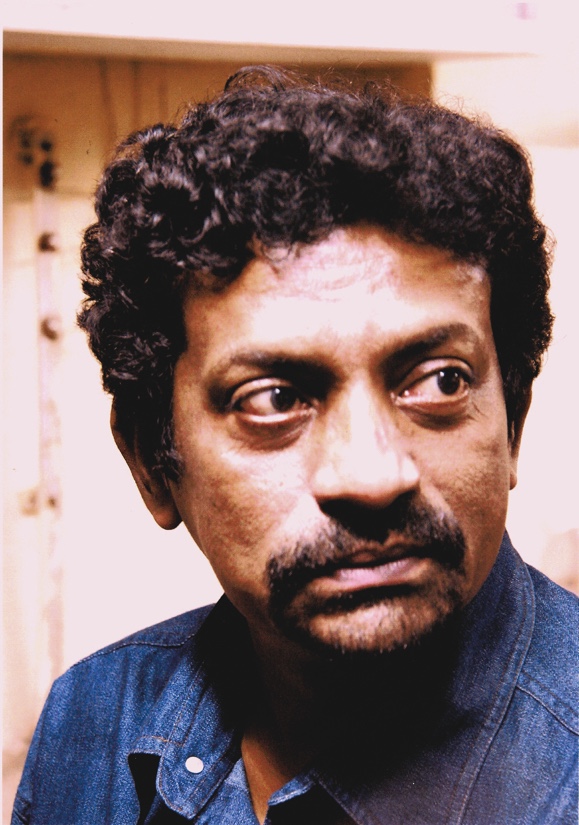
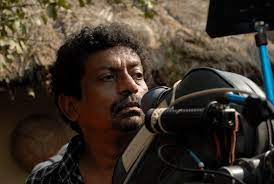
Goutam Ghose: Photo provided by Niyogy Books

Goutam Ghose is a well-known award-winning film director, scriptwriter and even actor. He has been the only Indian to have received the Vittorio Di Sica Award from Italy in 1997 and was awarded the Knighthood of the Star of the Italian Solidarity in July 2006. Ghose has won fifteen National Awards, besides Filmfare Awards and a number of international awards like Silver Balloon, Nantes Film Festival, UNESCO Award at Venice, Golden Semurg at Tashkent, Fipresci Award and Red Cross Award at Verna Film Festival.

But did you know he has also authored a number of books? Just as he bridges borders with his poetic films that touch the human heart with a range of emotions, he does the same with his books. He takes up burning issues with artistry, never inciting with rage or hatred but conveying by his skill with the camera and words. He has created a world without borders with his transcontinental outlook and approach.

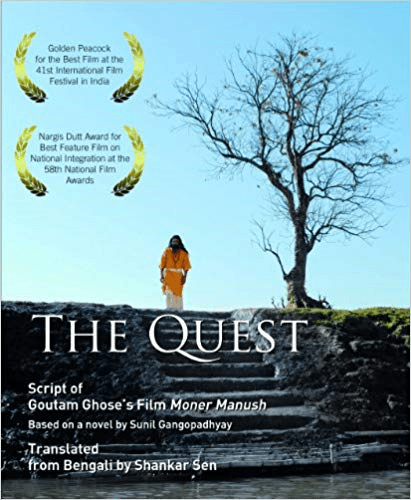
His reaction to the Ram Janmabhoomi riots was Moner Manush (2010), a film based on Lalon Fakir’s life, knitting together the best in Muslim and Hindu traditions instead of filming the clashes and the violence. Published in English as The Quest (2013), the book is a powerful dramatisation with pictures from the film. The book, like the film, is also an emotional lesson in humanism. Based on Sunil Gangopadhyay’s novel on Lalon Fakir’s life, the film is beautiful. But the book allowed me to mull over the words, which have been translated by Sankar Sen. It is a book that needs to be read when casteism and religious divides take precedence over humanitarian values. By bringing these songs into translation to readers unfamiliar with Bengali, both Ghose and Sen have opened a world of love and tolerance to new readers, who will hopefully find the time to mull over the wisdom of these songs.

‘What was your caste when you came here,
What caste did you take on arrival, dear,
What would be your caste when it’s time to go -- 
Ponder and tell me if you know.’

-- Translated by Sankar Sen, from The Quest

 His other book that traverses the silk route and journeys through China, Beyond the Himalayas (2019), transcends boundaries and fills the reader with a sense of exhilaration. It is based on his documentary of the same name. Both these recordings of their journey along the silk route are worth viewing and reading. They show humans are the same across all borders. The book, interspersed with lovely pictures of the landscape and mature writing pauses on history at the right junctures. The narration is poetic in both the book and the documentary.

Though Ghose claims that these texts and photographs capture memories of the film, both his books transported me to a different time and space. I saw the films after reading the books, but both were energising, emotionally charged and entertaining. The journey takes one through different parts of the world and gives a new perspective to a 4000-year-old route. Initiated and organised by Major Hari Singh Ahluwalia and Deng Xiaoping’s son, the travels in Beyond the Himalayas took me across borders to areas I have never visited and now, I hope to visit post pandemic. Both the book and the film acquainted me with cultures that excite. And The Quest reinforced the belief, through the depiction of Lalon’s life, that humanism exists despite the degradations of history. That riots can be calmed with the soothing notes of Lalon’s lyrics, rich in wisdom, would be a win for the human spirit.

Like all great artistes, Ghose speaks in beautiful poetic sentences about concepts that touch the human heart and imagination. In this exclusive, he speaks not just about his film-books, but about the real journey and issues he is facing through the pandemic, including the delay of his film with an Italian male lead and his new short film on the current times, Covid-worn and waiting…

You are a very well-known film director, cinematographer, and music director. You have directed award winning Bollywood and Tollywood movies. Normally books come before films but from two of these films, you have made books. Why did you go in for making books of the films?

I have loved books since my childhood. The shape and form of it, the touch and smell of a book fascinate me. They will never die even if we read on the screen rather than by turning pages of a physical object. A certain sense of the sacred has surrounded books from civilisations’ inception. In cinema, be it fiction or non-fiction, we write a script at the pre-production stage. A film-book is all about times gone by — a book of memories, of both cyclic and linear time. My producer from Bangladesh, Habibur Rehman Khan, had liked the idea of film books and had published three wonderful books on Padma Nodir Majhi (Boatman of the Padma River, filmed in 1993), Moner Manush (filmed in 2010 ) and Shankhachil (Unbound, filmed in 2016) in Bengali. Niyogi books of India has published a beautiful pictorial English version of Moner Manush as The Quest and also Beyond the Himalayas, my journey along the Silk Road. Another lovely film book is Pratikshan’s bilingual centenary tribute to Bismillah Khan (Bismillah in Banaras the film Goutam Ghosh made, 2017).

Is dubbing or subtitling the film not an easier option than doing a film-book?

Well, dubbing or subtitling is for watching a language film, but a film book is meant for reading. It becomes a part of your book collections. I have some wonderful film books published from Europe and United States.

Moner Manush is based on Lalon Fakir’s life and on the novel by Sunil Gangopadhyay. Why did you feel there was a need for a separate book after you made a very powerful film on it?

Lalon Fakir is an eternal savant. Scholars have been doing research on Lalon’s life and philosophy since long. It is heard that Lalon was an illiterate man. But going through the words of his songs and the implied significance, it seems as if he was an erudite scholar tutored in an age-old system of education.  His faith was not guided by any particular religion, rather it could be said to be comprised of the mysticism of Sufi and the love and forgiveness of Vaishnavism and the liberalism of the tantric sect of Buddhism. My film on Lalon fakir is research on this great man aswell. The Bengali film book contains important articles by scholars besides the script, reviews and memoirs.

Do you feel that the message of Moner Manush is relevant in a world beset by not just divides but even a pandemic? Is there something we can learn from the story?

Yes, of course the message of Moner Manush is even more relevant in today’s intolerant world, a world of greed and opportunism. The pandemic has victimised the togetherness of the human race but how can we survive without empathy? I don’t know how good the film is, but Moner Manush will serve as a gospel to those who revere humanity.

Lalon says as his own introduction “I am a human.” How important is that for humankind to see themselves as humans over titles of caste, profession, and economics?

The baul (minstrels in Bengal) community had renounced all recognised institutions of religion and revolted against long established rites, customs and faiths. Breaking down the barriers of the narrow confines of communal faith, they had found a large expanse under the sky which had served as a bountiful meeting place of many religions. Under that open sky, Lalon had found the truth in Humanism.

Lalon dreamt of a borderless world. Do you think adopting his outlook can change the outlook of nations which draw borders between the species? Do you think it is implementable at a personal, national or international level?

I think all mystics believe in borderless space of Earth where all centennial beings live in peace and harmony. But the wheel of time had moved in the direction of Divide and Rule. John Lennon’s Imagine has become the iconic song on the dream of a borderless world. It may have been a failed dream, but I confess it might have been one I shared growing up in India and will cherish till the last breath of my life. Let it be a dream and a wonderful utopia.

Beyond The Himalayas was first a documentary film. How long was it and when was it screened? How many episodes is the film?

Beyond the Himalayas was made as a documentary film during our expedition through the Silk Road in 1994. The final edited version is four-and-a-half hour long. It was shown in Discovery Channel in five parts in the late nineties. A shorter version was screened in BBC as well. The Indian national TV had screened a Hindi version of all five episodes.

The book seems to cover lesser than the documentary. Is that true or do the visuals/ music just seem to impact us more? Why did you leave out Pakistan?

Well watching the film with arresting visuals and absorbing the soundtracks of the trail is a linear viewing of our journey along the fabled Silk Road. It is very, very exciting indeed. But the film is also a journey back in time with many references and anecdotes from history. For instance, while showing the travel through the deadly Taklamakan desert, I referred to Sven Hedin’s(1865-1952) expedition of the region. I quote: ‘The first European to map this desolate region was the Swedish explorer, Sven Hedin. His first expedition in 1895 was very nearly his last.  The local guide supplied enough water for four days in the desert instead of ten requested. When the caravan lost its way, the guide was the first to die. The others became insane with thirst, drinking anything — even Sheep’s blood and camel’s urine. By the fifth day, the men, camels and other livestocks were all dead except for Sven Hedin and one other man. Hedin writes in Through Asia, “If I was doomed to die in the sand, I wanted to be properly attired. I wanted my burial clothes to be both white and clean.” But fate was on its side. Spying the dark green side of an oasis, he dragged himself to safety. “I stood on the brink of a pool with fresh cool water, beautiful water. I drank, drank, drank time after time. Every blood vessel and tissue of my body sucked up the life-giving liquid like a sponge.”’

Here the film-book helps the readers. One can refer back to the time past and time present more deeply to understand time as a metaphor of history.

How many days were you on the road? What was the experience like?

We were out for almost ten weeks covering a distance of 14,000 kms. The journey was fascinating for the entire team. There can be no journey more enchanting than the route we took. The collective trove of memories has made the Silk Road so memorable. We had to negotiate extreme weather conditions in Central Asia and Tibet. In a single day, we experienced two extremes. While negotiating the desert, temperatures rose to 48 degrees Celsius, and by nightfall when we pitched camp at Tianshan mountains, the temperature fell to 2 degrees. The situation is almost like the scenes of Satyajit Ray’s Goopy Gyne Bagha Byne — desert to snow in the blink of an eye.

Did you travel through the part of the route Marco Polo used? Did you find it much different from what you had imagined?

Well, the travels of Marco Polo described the wonders of the silk road, cities far greater than his own and a world more significant than anything imagined by the insular backward Europe of the thirteenth century. But he was a late traveller. The silk road was one of the greatest trade routes in history and men had already been travelling along for 4,000 years. Before sea routes were discovered in the fifteenth century, this trans-Asian highway was the sole link between the East and the West. It ran from Xian in China to all the way to the Mediterranean. There were many tributaries to the mighty river, not least of which were caravan routes across the Himalayan mountain range between India and Central Asia.  We could not follow the planned route through Pakistan and Afghanistan to Central Asia via Khyber Pass because of the civil war. The government of India did not want us to take such risks. All the members of the expedition, including the jeeps and equipment, were flown from Delhi to Uzbekistan on 18th May, 1994.

With the silk route being revived, do you think this film has significance?

Xuanzang took back over 600 Sanskrit text. Courtesy: Creative Commons

Yes, the film is still significant because it carries the memories of time. We were the first group of travellers after many, many years to cross three new republics after the collapse of Soviet Union and a vast territory of China. Now, the route is open to tourists, and I was told that many travel packages are available all along the mighty river and its tributaries. I would like to revisit the cauldron once again to understand how those multi-ethnic republics have survived the onslaught of modern times with its regional rivalries, new mafias, and consumerist pressures. I wish the new silk route trade brings peace and harmony in this intolerant world. Travellers today can choose from many trails as we did during our expedition. My favourite was Xuanzang’s (602-664 AD) trail. I quote from my book. “At 27, he set out his pilgrimage until he was 43. Unconvinced by the translations available in China, he sought the true teachings of Buddha in the holy lands of India. He walked alone into the great unknown, crossing the world’s greatest deserts and its highest mountain ranges. He faced death many times and his courage and equanimity impressed kings, bandits and barbarians alike. He lectured at monasteries and debated with learned monks and by the time he reached his destination, his reputation as a great sage had already preceded him. Xuan Zhang was not the only Chinese pilgrim to visit the homeland of Buddhism, but he was the most important. Like a death star that keeps releasing energy for thousands of years, he continues to be a valuable source of knowledge and inspiration.”

You are making a new film I believe rooted in the present pandemic. What is it about? Will you be making that too into a book?

My 2019 film Rahagir or Wayfarer, starring Adil Hussain, Tillotama Som, Neeraj Kabir, had travelled to many festivals and received awards and appreciations but unfortunately, we could not release it in public theatres due to the pandemic. Another multilingual film is also stuck for obvious reasons. I could finish the Italian shoot in January 2020, but the Indian shoot did not happen till date. It is so frustrating.

Meanwhile, I have finished a short film Memories of Time on pandemic days. It is about a happy, cultured couple living in the heart of Kolkata. Like everyone else, they are caught in the claustrophobia of the pandemic and the consequent lockdown. The film travels back and forth in time as they try to navigate through these hard times and search for fresh air and sanity. The film is an exploration of their fears, realisation and going back to nature. It’s from my own experience — how I have navigated 2020 and moving through the course of this pandemic. I think one can really publish a film-book because it has so many elements, the fear of people and the inhuman approach of the human race and then the migrant labours — their terrible conditions, the psychological problem of people confined inside their home and the most importantly, the problem of the children. They are confined as if in a prison. They can’t go to school. They can’t really meet their friends. I think this could be a very, very interesting material for a film-book.

Thank you for giving us your time.

Click here to read an excerpt and see photographs from his book Beyond the Himalayas.

Goutam Ghose: Courtesy: Creative Commons

(This is an online interview conducted by Mitali Chakravarty)

.

PLEASE NOTE: ARTICLES CAN ONLY BE REPRODUCED IN OTHER SITES WITH DUE ACKNOWLEDGEMENT TO BORDERLESS JOURNAL
Categories
Tagore Translations

Deliverance by Tagore

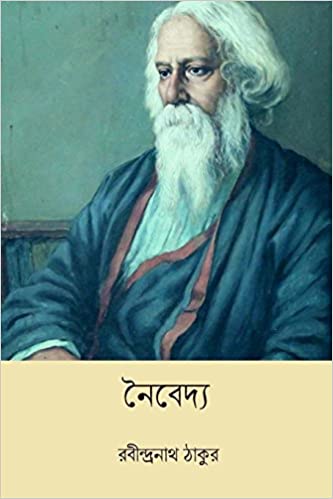
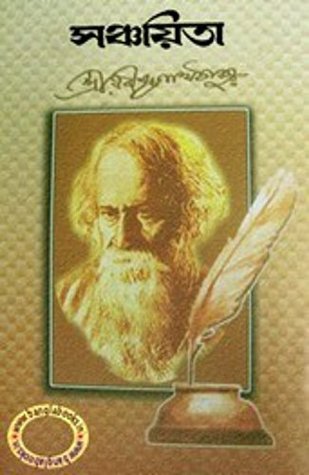
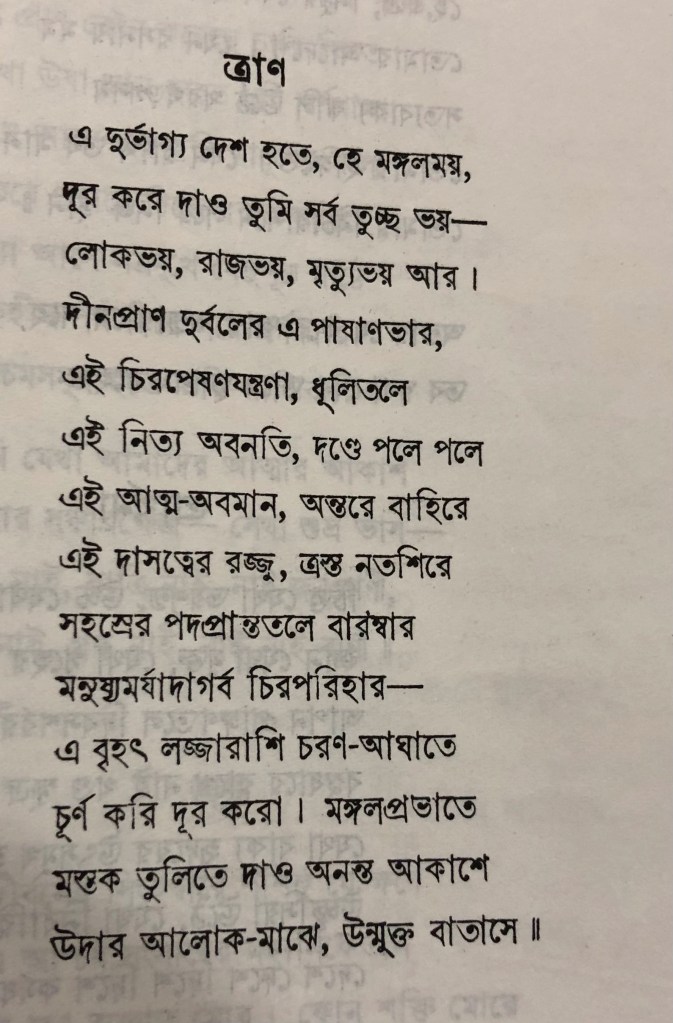
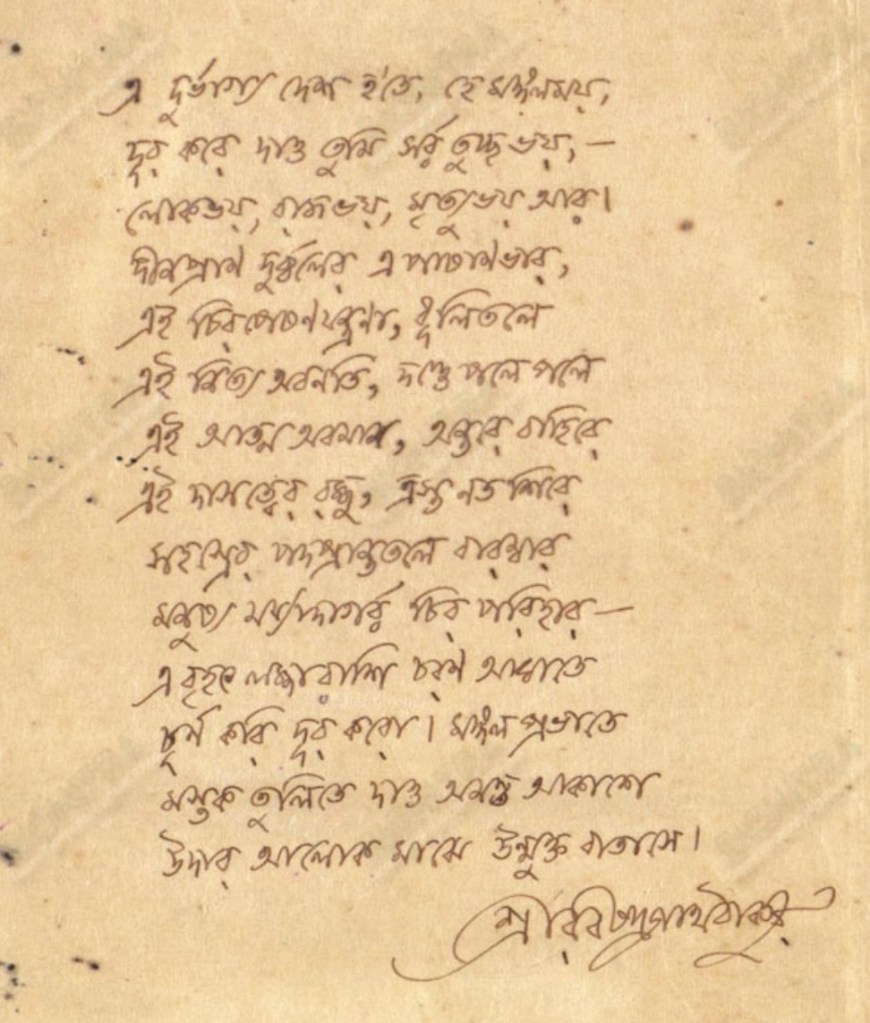
Tran (Deliverance)’ was first published in 1901 in a collection known as Naibedya (Offering to God). Here we present a translation from the Bengali poem as found in Sanchayita (Collection), a compilation of poems published by Visva-Bharati to mark the Tagore septuagenarian celebrations in 1931.

Art by Sohana Manzoor
Deliverance

From this hapless country, oh Benevolent One, 
Efface all petty fears —
Fears of society, governance and death. 
The rock-like burden borne by the impoverished and the weak,
This pain of being ground under dust, 
This endless abuse, reinforced each second,
This self-debasement, within and without,
This yoke of enslavement, terror, subjugation,
Is trod on again and again by many marching feet.
Beaten out of self-worth, pride —
Break this enormous pile of shame
With your foot. On this auspicious dawn,
Let us hold our heads high in the infinite sky 
Amidst the light of bounteousness and the heady breeze of freedom.

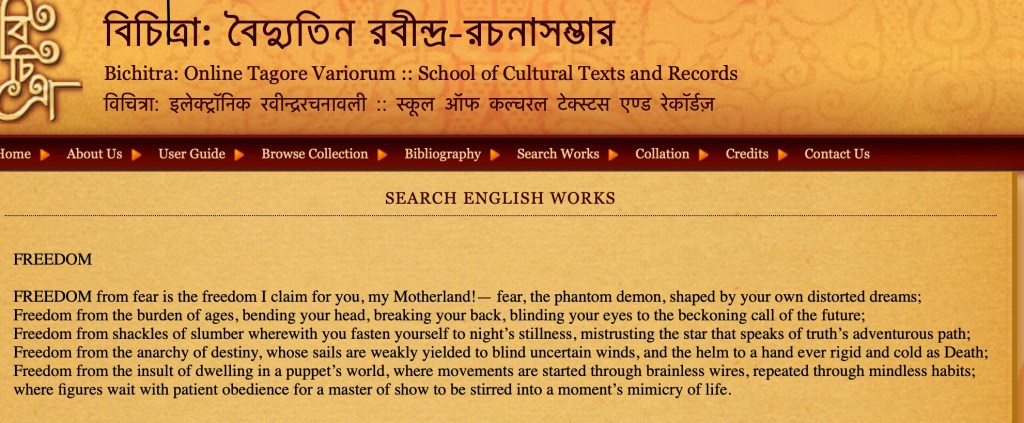
Subsequently, it was translated by Rabindranath Tagore himself as ‘Freedom from Fear’ and published in the Vishwa Bharati Journal in 1933; then, in Modern Review in 1934 according to Bichitra, an online Tagore valorium. It was first anthologised in Collected Poems and Plays of Rabindranath Tagore (Macmillan, London). The translation varies from the original Bengali poem with the last two lines missing completely.

(Translated by Mitali Chakravarty, edited by Sohana Manzoor on behalf of Borderless Journal. Thanks to Anasuya Bhar, Associate Professor of English and Dean of Postgraduate Studies, at St. Paul’s Cathedral Mission College Kolkata University, for helping with the research. Also thanks to Fakrul Alam and Aruna Chakravarti for their feedback.)

.

PLEASE NOTE: ARTICLES CAN ONLY BE REPRODUCED IN OTHER SITES WITH DUE ACKNOWLEDGEMENT TO BORDERLESS JOURNAL
Categories
National Day Special

Vive La Singapore

Singapore is a tiny country connected to the bigger land mass of Malaysia with two causeways. It started out as a small island inhabited by pirates and legends. Sir Stamford Raffles (1781-1826), a British East Indian administrator, thought it strategic and relocated some of the trade routes through the island. Migrants from many countries merged here — some looked for a better life and some served as coolies and prisoners of the colonials. When Malaya threw off the colonial yoke in 1963, Singapore continued part of the country till it gained sovereignty in 1965.

Lee Kuan Yew, the first Prime Minister envisioned a multicultural society where people of different cultures lived as one people. He said in one of his moving speeches in 1965: ” We will prosper, and a multi-racial society will take roots here. And it will do so because when you don’t allow people to play communalism, or racial bigotry, or religious bigotry, you breed an atmosphere of tolerance.”

Fifty-six years later, Prime Minister Brigadier Lee in his National Day speech clearly took the bull by the horns and said, while social media highlights the negative altercations of race and religion, it fails to highlight the positive ones. “Many more happy interactions happen every day but these seldom go viral.” He added these were values that needed to be reinforced with every passing generation. Read to find out what some Singapore residents feel about the outcome of Lee Kuan Yew’s vision, not just of race and religion but of living in a city state which hopes to continue as ” one united people“.

Poetry

Poetry of Kirpal Singh 

Fifty-six years down the line, eminent academic and litterateur, Dr Kirpal Singh, comments on the dream of the first Prime Minister of Singapore. Click here to read.

Unaccompanied Baggage 

Marc Nair, a multifaceted artiste who moves from photography to writing to music with equal elan, reflects on life in Singapore. Click here to savour his work.

Prose

Interview

Dr Kirpal Singh talks of his life and times through colonial rule, as part of independent Malaya, and the current Singapore. Click here to read.

Flash Fiction: Horizon

Tan Kaiyi, a young vibrant writer, evokes the spirit of the Singapore National Day amidst the darkness spread by a deadly virulence. Click here to read.

Singapore’s Secret Recipe

A recent immigrant, Aysha Baqir takes us through the flavours of life here on the tiny island during the lockdown. Click here to read.

The island state continues a home for many immigrants — some came early and some late. As a first generation immigrant, to me the little red dot is Asia’s gateway to the rest of the world. I enjoy its sand and seas very much. We conclude our ensemble with a little poem to the green islet that nestles between the Indian Ocean and South China Sea rippling with notes of harmony…

Anointing with Love 
By Mitali Chakravarty

Listen to the swish of the waves.
Feel the breeze whisper caresses. 
See the mangroves stretch 

their roots above the ground, 
in a siesta during lazy sunrises 
and sunsets. Murmurs from the 

ocean come wafting as 
coconut fronds sing in the
fringes where the sand 

welcomes the surf. It is a 
party at the beach with
differences woven to 

harmonise into a melody 
sung in tune. A crescendo
that anoints with love. 


First published in Daily Star, Bangladesh