Categories
Essay

Sea Days, Sea Flowers

Mike Smith uncovers the wonders of the world of H.E Bates

H.E. Bates (1905-1974), photo taken by his wife, Majorie Bates. Courtesy: Creative Commons

Waiting for the computer to load I turned to the bookshelf and noticed my set of The Saturday Book. Thirty-five of the eclectic annual volumes were published between 1941 and 1975, with a ‘Best of’ following in the early 80s.

I needed a reading project and decided to start at the beginning of volume one. I accumulated the set over many years having been given two as birthday or perhaps Christmas presents in 1959 and 1960, but I’d never read them all from cover to cover. Long after discovering one of my favourite short stories (H.E.BatesThe Little Farm), I found I’d had for years it in Volume One of The Saturday Book. What I hadn’t found was a second piece by Bates in the same volume, or rather, a first piece by him, for it opens the book and the whole series.

Sea Days, Sea Flowers’ begins with recollections of summer trips to the Sussex and Kentish coast ‘as far as the white dunes of Sandwich bay’, and to ‘the flat wide shores beyond the Dymchurch sea-wall’ or to ‘Hastings and Rye’. I assumed at first that I was reading the opening to another short story, though it did cross my mind as odd that he should get two in the same volume. There are many short stories that start with such descriptions of rural England. Du Maurier’s ‘The Old Man’, Coppard’s ‘Weep Not My Wanton’, and Gallico’s ‘The Snow Goose’, all play heavily on the landscape in which their tales are played out.

But here Bates’ description seemed to go on for so long and was in such detail. It was a journey such as that Kipling took in his opening to ‘They’: a drive through England, to England rather than a mere setting for a tale. As that journey entered its second page the penny began to drop that I was reading what we would now call, I suppose, a piece of creative non-fiction.

The detail is astonishing: about the landscape, the topography, the architecture of the towns and villages, the working lives of the fish-hawkers and the fishermen, and the tourists who drive down for the summer to buy their fish; of the “smoke-stacks of ships steaming up the Channel as they come in close at Dungeness”; of the “coast that is full of Napoleonic memories”; of “the toy passenger train that peeps and shrieks across the flat marsh”. And, throughout it all, those flowers: “the tall mauve-pink marshmallows, like delicate wild hollyhocks…the clusters of reed and willow-herb and purple loosestrife…”

It’s a luscious, artist’s eyeful of this southern corner of England, and it goes on for pages. How can you make such a tour, packed as it is with such detailed description, and no narrative, and the only real character a fish-seller with whom Bates’ reminiscing narrator banters, how can you make it work, and over some thirteen pages of text? For it does work.

Scotland has always been a foreign country to me, but I know most of it far better than I know any of the so-called Home Counties, and the country that Bates describes in this piece is totally alien to me. Yet it made me want to visit, to see it, to see how much of that 1941 landscape still lives and shines under his summer sky. Of course, Bates is a superlative writer, but there’s more to it than that. And he knows a lot: about the flowers, about those childhood holidays, about the lives of working people. The piece is jam-packed with detail and keen observation. But there’s more to it than that as well.

The clue is in the date, and in the three words that open the piece, which, at eighty years’ distance you might have missed: ‘IN PEACE TIME’, and yes, they are in capitals too. For this lush description, redolent with nostalgia, elegiac for a lost world, was published in 1941, when World War Two, for England, was already two years old, and the beaches were sealed off to casual visitors, barbed wired and mined for defence, prepared for an invasion that never came. A couple of pages in, Bates gives us a reminding nudge, repeating the phrase, this time in lower case: “it was always so easy, in peace time, to find a light excuse [to make the coast journeys]”.

By 1941 Bates was already at the top of his game. Stories like ‘The Mill, The Kimono, and The Boxer’, had been written, stories that by his own account were more fully developed than those prompted by what he called ‘the facile devil inside’. And he was a master of the descriptive. The sense of heat that pervades the deserted farmyard and surrounding farmland in the story ‘A Great Day for Bonzo’is palpable, and that same intensity is present in many others of his rural tales, not least the often dubbed ‘bucolic’ Kent of The Darling Buds of May (1958). He was already putting those talents to the National Service, most famously in the stories of Flying Officer X. And this piece too, no doubt, had its propaganda purpose, for Britain, like other nations, was fighting for the survival not only of its lives and infra-structures nor merely for its political systems, but for the narratives of its physical homelands. This was one of the notional as well as real England that the majority of the British were fighting for, and here Bates is summoning a sense of loss that could already be felt as war took that landscape, albeit temporarily, away from the people.

You can sense a similar message in wartime films like Tawny Pipit (1944) and Went the Day Well (1942), and some of the Powell Pressburger films, notably, A Canterbury Tale (1944).

Towards the end of his piece Bates makes this context more explicit. “It is a year since I was down on the coast.” And he lets the war intrude more specifically: “A mine was tossing a little out to seaward…”, where the fish-hawkers “would talk to you of the dead Nazi airmen that were washed up every day…”. Not for nothing did the Kent coast, in the days of the Battle of Britain, become known as ‘Hell’s Corner’.

Bates does not end on the war though, but returns us to nostalgia, to the seashore, “the scream of gulls”, and the “toy train, penny plaices, sea-flowers, peace-time world”. He ends on a reflective note, and one, I think, that carries a whiff of English comic irony: “But it’s no use getting sentimental now.” There was, after all, still a war to fight.

.

Mike Smith lives on the edge of England where he writes occasional plays, poetry, and essays, usually on the short story form in which he writes as Brindley Hallam Dennis. His writing has been published and performed. He blogs at www.Bhdandme.wordpress.com 

.

PLEASE NOTE: ARTICLES CAN ONLY BE REPRODUCED IN OTHER SITES WITH DUE ACKNOWLEDGEMENT TO BORDERLESS JOURNAL

Categories
Contents

Borderless, March 2022

Painting by Sohana Manzoor

Editorial

Where Have All the Sunflowers Gone?… Click here to read.

Ukranian Refrains

In When will we ever learn? Oh, will we ever learn?, Ratnottama Sengupta, comments on the current situation in Ukraine while dwelling on her memorable meeting with folk legend Pete Seeger, a pacifist, who wrote ‘Where have all the Flowers gone’, based on a folk song from Ukraine. Click here to read.

In Can Peace come Dropping by,Candice Louisa Daquin explores war and peace pausing over the attack on Ukraine. Click here to read.

Three Poems from Ukraine by Leslya Bakun. Click here to read.

Translations

Manush: Nazrul’s Lines for Humankind: Translated from Bengali by Professor Fakrul Alam. Click here to read.

Jibananda Das’s Where have all these Birds Gone & On the Pathways for Longtranslated from Bengali by Professor Fakrul Alam. Click here to read.

Munir Momin’s You & I translated from Balochi by Fazal Baloch. Click here to read.

Down the stairs by Nabendu Ghosh, a gripping story exploring the greyer areas of ethical dilemmas, has been translated by Sarmishta Mukhopadhyay with editorial input from Ratnottama Sengupta. Click here to read.

Autumn is Long, a poem written in Korean and translated to English by Ihlwha Choi. Click here to read.

Tagore’s Anondodhara Bohichche Bhubone (The Universe reverberates with celestial ecstasy)…translated from Bengali by Mitali Chakravarty. Click here to read.

Pandies’ Corner

These narratives are written by youngsters from the Nithari village who transcended childhood trauma and deprivation. A letter to God by Tanveer Hussain  uses the epistolary technique to asks questions that would be relevant for all humankind. It has been translated from Hindustani by Vritika Thareja. Click here to read.

Poetry

Click on the names to read

Kirpal Singh, Rhys Hughes, Sutputra Radheye, Jay Nicholls, Uma Gowrishankar, Mike Smith, Anasuya Bhar, Luis Cuauhtémoc Berriozábal, Supatra Sen, George Freek, Pramod Rastogi, Ryan Quinn Flanagan, Ananta Kumar Singh, Michael R Burch, Shaza Khan

Nature’s Musings

In Storms & Seas, Penny Wilkes explores birds and the ocean during rough weather. Click here to read.

Poets, Poetry or Rhys Hughes

In Tall or Short Tales, Rhys Hughes explores the absurd. Click here to read.

Musings/Slices from Life

Eva Zu Beck & Marco Polo

San Lin Tun writes of how, in Yangon, he spends the lockdown watching a travel blog by Eva Zu Beck. Click here to read.

Messages through Space and Time

Meredith Stephens explores how the art of letter writing creates links across borders of time and place. Click here to read.

It’s Amazing the Things We can Do

Erwin Coombs takes us through his life in Egypt and has a relook at Nazi occupied Europe with a dollop of humour to come to an amazing conclusion. Click here to read.

An Existential Dilemma

G Venkatesh uses the laws of thermodynamics to try to interpret the laws that define life. Click here to read.

Musings of a Copywriter

Devraj Singh Kalsi ponders on his Visit to a Book Fair. Click here to read.

Notes from Japan

In Imagining a Possible Future: Filmmaker Felicity Tillack, Suzanne Kamata introduces us to an Australian film maker who is making films in Japan now and some are in Japanese. Click here to read.

Mission Earth

Kenny Peavy starts his column with Mama Calling, a cry to go back to living with nature. Click here to read.

Interviews

From the Himalayas to the Banks of Thames: In Conversation with Sangita Swechcha, a writer shuttles between England and Nepal and writes of her homeland. Click here to read.

At Home Across Continents : In Conversation with Neeman Sobhan, a Bangladeshi-born writer who writes of her experiences as an expat in Pakistan, Bangladesh, Italy and America. Click here to read.

Stories

The Man Who got Eaten

 Kieran Martin tells a tall tale or is it short? Click here to read.

Death Will Come

Munaj Gul Muhammed captures the wafting sadness of grieving in this short poetic narrative. Click here to read.

SofieMol

Sharika Nair paints a vignette of the past merging with the present in her narrative. Click here to read.

Faith & Fortune

Devraj Singh Kalsi shows how the twists of faith are aligned to wealth and fame. Click here to read.

Henrik’s Journey

Farah Ghuznavi follows a conglomerate of people on board a flight to address issues ranging from Rohingyas to race bias. Click here to read.

Essays

The Kaleidoscopic World of Satyajit Ray

Anasuya Bhar takes us into the literary world of Satyajit Ray, the world famous film director. Click here to read.

Are Some of Us More Human than Others ?

Meenakshi Malhotra ponders at the exclusivity that reinforces divisions, margins and borders that continue to plague humankind, against the backdrop of the Women’s Month, March. Click here to read.

The Observant Immigrant

In The Paradox of Modern Communication, Candice Louisa Daquin takes us through the absurdities that haunt modern verbal communication. Click here to read.

Book Excerpts

An excerpt from Friends in Wild Places: Birds, Beasts and Other Companions by Ruskin Bond. Click here to read.

An excerpt of a short story by Yang Ming from Asian Anthology, edited by Ivy Ngeow. Click here to read an excerpt.

Book Reviews

Meenakshi Malhotra reviews Mahasweta Devi, Our Santiniketan translated by Radha Chakravarty. Click here to read.

Indrashish Banerjee reviews The Tombstone in My Garden: Stories From Nagaland by Temsula  Ao. Click here to read.

Keith Lyons reviews Asian Anthology: New Writing Vol. 1: Stories by Writers from Around the World, edited by Ivy Ngeow. Click here to read.

Bhaskar Parichha reviews Why They Killed Gandhi; Unmasking the Ideology and the Conspiracy by Ashok Kumar Pandey. Click here to read.

Special Issues

Imagine… Click here to read our World Poetry Day Special.

Categories
Editorial

Where Have All the Sunflowers Gone?

Only when the cries of the wretched of the earth will stop renting the skies,
Only when the oppressor’s bloody sword will cease smearing battlefields,
			A rebel, weary of war,
			Only then I won’t stir.
…
I’m the ever-rebellious hero--
	Soaring over the world, all alone, head forever held high!

--  Rebel or 'Bidrohi' (1922) by Nazrul, translated by Fakrul Alam
Borderless: Digital Art by Ayaan Ghoshal
These fragments I have shored against my ruins
…
Datta. Dayadhvam. Damyata.         
 Shantih shantih shantih

-- Wasteland (1922) by TS Eliot

These lines reiterate values we would do well to live by in a war-torn, dissension-worn world where the need for a rebel to recreate a humane society that lives with values such as peace, generosity, acceptance, tolerance, compassion and restraint — is a felt need. The two great poems made history by remaining as popular a hundred years after they were written — ‘The Rebel’ by Nazrul and TS Eliot’s ‘Wasteland’. Nazrul defined a rebel as an iconoclast who breaks norms to find peace, justice and love for all, to move towards the creation of an ideal world. TS Eliot quoted from the Upanishads and ended with redemption coming with giving (giver perhaps denoted generosity), compassion and restraint. Despite the wisdom of these great poets and seers, war still continues a reality. The values remain neglected not just in as we see in conflicts, like the one in Ukraine that destroys lives, property and nature with intolerance towards differences, but also in our personal lives. Tagore also reiterated the same need for stepping out of personal, social, economic and political insularity. We carry a translation of a song that echoed this need while inviting participation in his ecstasy. He wrote:

Why do you sit in isolation,
Dwelling on self-centred issues? 

Tagore had not only written of the negative impact of isolation from the world but he led by example, building institutions that could lead the world towards pacifism with acceptance of diversity and inclusiveness. Sriniketan and Santiniketan were created to move towards these ideals. Many of the people he influenced or who studied in Santiniketan made history, like Prime Minister Indira Gandhi, Satyajit Ray; many added to the sense of inclusiveness, like Mahasweta Devi, who other than her enormous work to integrate different cultures, also wrote a memoir about Santiniketan in Bengali. Radha Chakravarty, nominated for the Crossword Translation Award (2004) for In the Name of the Mother by Mahasweta Devi, has translated this memoir, a narrative which brings us close to Tagore’s ideals of the whole world being a family. How wonderful it would be if the world were open to such ideals and would behave like a global family and not go to war!  Mahasweta Devi, Our Santiniketan, which has been reviewed by Meenakshi Malhotra, reiterates Tagore’s vision of a planet living in harmony with the flora and fauna.

Bhaskar Parichha has reviewed another non-fiction by Ashok Kumar Pandey, Why They Killed Gandhi; Unmasking the Ideology and the Conspiracy. Parichha writes: “The finest point about this book is its storytelling…” The book review brings to mind in the midst of a war and violence that Gandhi had tried to erase this mindless destruction of lives, nature and cities with Ahimsa or non-violence. Will we ever rise up to it? Perhaps… We see strains of recognising the negative impact of insular outlook in writings like that of Temsula Ao, a Sahitya Akademi Award winner, according to Indrashish Banerjee who has reviewed her new book, The Tombstone in My Garden: Stories from Nagaland. Keith Lyons has reviewed Asian Anthology: New Writing Vol. 1: Stories by Writers from Around the World, edited by Ivy Ngeow, an exotic medley of Asian stories, one of which has been excerpted as well.

We are privileged to carry another excerpt from Ruskin Bond’s Friends in Wild Places: Birds, Beasts and Other Companions, a hilarious story about a pet tiger adopted by the legendary writer’s grandfather. What is amazing about Ruskin Bond’s writing is the love and compassions for all creatures great and small that colours the tongue-in-cheek humour he rolls out to his readers. If only we could think like Bond, there would be no wars. His writing, I feel, transcends political borders or ‘isms’, and laces with love and compassion tales of menageries of monkeys, snakes, mongoose, humans of different denominations. This excerpt is a treat we are giving Borderless Journal as the journal completes two years of its existence. We are truly grateful to Speaking Tiger for sharing this excerpt with us. But our celebrations this time are sombre as the war rages with incoherence accompanied by heart-breaking ravages.

The refrain from Ukraine has been taken up by Ratnottama Sengupta as she takes us through the past and present experiences of the devastated country, bringing in the views of the legendary folk singer and pacifist, Pete Seeger (1919-2014), who she had interviewed over a span of four days. The writer of ‘Where have all the Flowers Gone?’, a song based on an Ukrainian folk song, Seeger said, “The point is not to ask for yourself alone — one has to ask for everybody: Either we all are going to make it over the rainbow or nobody is going to make it.” Candice Louisa Daquin has also pondered on the justification of war, contextualising it with the current one along with her essay on the paradox of modern linguistic communication.

We have an exhaustive essay on the legendary Satyajit Ray’s creations by Anasuya Bhar. Malhotra has pondered at exclusivity reinforcing divisions, margins and borders to plague humankind, against the backdrop of the Women’s Month, March. Highlighting women in writing, we have interviewed two female writers, one from Nepal and another from Bangladesh. Sangita Swechcha lives in UK but her writing, till now largely in Nepali, often pines for her home embedded in the Himalayas whereas, an expat, Neeman Sobhan, shuttles between Bangladesh and Italy with the affluence and assurance of a privileged background.

Finding a way to override lack of privileges, deprivation and violence, are the youngsters of Nithari on the outskirts of Delhi where less than two decades ago other than poverty, savage criminality devastated the local populace. These youngsters transcended the suffering over time with help from volunteering NGOs to create narratives that amaze with their inventiveness and confidence. Tanveer Hussain from Nithari, self-motivated and self-made from a young age, asks questions that would be relevant for all humankind in a letter to God. It has been translated from Hindustani by Vritika Thareja of pandies’. This edition’s translations include Professor Fakrul Alam’s mellifluous rendition of Jibanananda Das’s poetry from Bengali to English, Ihlwha Choi’s Korean poetry and a Balochi poem by Munir Momin rendered in English by Fazal Baloch. Baloch had earlier translated poems by Akbar Barakzai, a great poet who departed on 7th March, depriving the world of yet another powerful writer who imbibed hope of a better future in his poetry. We are privileged to have hosted the translations of some of his poems and his last interview.

Another well-known poetic voice from Singapore, Kirpal Singh, has given us poignant poetry that can be applied to the situation that is leading to the wreck of Ukraine. Anasuya Bhar has  poetry, one of which despite being in the ilk of Nazrul’s great poem, ‘Rebel or Bidrohi’, questions gently mainly social constructs that obstruct the flow of harmony. Ryan Quinn Flanagan has pondered on the acceptance of a changed world. We have humour from Rhys Hughes in poetry and wonderful poems by Michael R Burch on spring. Jay Nicholls shares the last of her dozen Pirate poems as Blacktarn sails the lemon seas to fight pollution. Luis Cuauhtémoc Berriozábal, George Freek, Sutputra Radheye, Mike Smith, Shaza Khan and many more have contributed a wealth of beautiful lines. Penny Wilkes has captured storms and seas with photographs and text and Rhys has surprised us with some strange, bizarre tales in his column.

We have musings from around the world. San Lin Tun, Meredith Stephens, Erwin Coombs, G Venkatesh have all brought in flavours of multiple cultures. Devraj Singh Kalsi has spoken of a book fair he visited in a semi-sardonic tone. He has also given us a short story as has Farah Ghuznavi – a truly borderless story which takes place in an aeroplane, in the sky where all borders collapse. We have more stories from Balochistan, US and India.

Suzanne Kamata continues writing on Japan as she  introduces us to an Australian film maker who is making films in Japan and in Japanese, called Felicity Tillack. Cultures are perhaps truly crossing borders as we can see Kenny Peavy, an environmentalist who moved from US to Indonesia start a new column with us called ‘Mission Earth’. We hope, like Tagore or Rousseau, he will help to revive our felt need to live with nature, acknowledge the nurture that we get from the planet to live in harmony with it and on it.

At the end of twenty-four months of existence – that sounds better than a mere two years— we are happy to host a melange of writers from across the borders and be the meeting grounds of writers and readers from across continents. I am truly thankful to all of you for helping concretise an ideal. Huge thanks to all the writers, artists, photographers and the readers for the contribution of their time, effort and love. And thanks to our fabulous team who continue to support the journal unwaveringly. I would also like to thank Sohana for the lovely visuals she generously shares with us. A special thanks also to young Ayaan Ghoshal for his digital art where hands reach out to support a truly borderless world.

As usual, all the content has not been covered here, I invite you all to enjoy our March edition of Borderless Journal.

At the start of the third year of our existence, let us march onwards towards renewed hope – maybe the Ukraine experience will take us closer to a war-free world with an awakening of a felt need for peace and compassion in a planet without borders.

In quest of a peaceful, humane world, I invite you all to continue being part of this journey.  

Mitali Chakravarty

Borderless Journal

Categories
Poetry

Last Lights

Poetry by Mike Smith

LAST LIGHTS

Some colours glow as darkness falls
Orange of bracken in the last light
The sky’s pink, the grey of walls
Some glories show at the brink of night

Orange of bracken in the last light
Stronger than in mid-day sun
Some glories show at the brink of night
Even in our endings much may be done

Stronger than in mid-day sun
This gloaming will not be for long
Even in our endings much may be done
Listen to the night bird’s song

This gloaming will not be for long
Tho’ blues grow richer as the light fades
Listen to the night bird’s song
Calling the shadows from their glades

And blues grow richer as the light fades
The sky’s pink, the grey of walls
Calling the shadows from their glades
Some colours glow as darkness falls

Mike Smith lives on the edge of England where he writes occasional plays, poetry, and essays, usually on the short story form in which he writes as Brindley Hallam Dennis. His writing has been published and performed. He blogs at www.Bhdandme.wordpress.com 

.

PLEASE NOTE: ARTICLES CAN ONLY BE REPRODUCED IN OTHER SITES WITH DUE ACKNOWLEDGEMENT TO BORDERLESS JOURNAL

Categories
Editorial

‘What’s Love Got to Do with It’

Art by Sohana Manzoor
‘Why does education in love not feature in today’s curriculum?’
— Mahasweta Devi, Our Santiniketan (Translated by Radha Chakravarty, 2022, Seagull Books)

As the world celebrates Valentine’s Day, one pauses to think how far commercialisation has seeped in over time that the very concept of a tender emotion was questioned by Tina Turner in a song called, “What’s love got to do with it” nearly four decades ago. 

This was written even before Mahasweta Devi (1926-2016) published a nostalgic memoir of 1930’s Santiniketan in Bengali in 2001. She raised her pen to ask the very pertinent question that is quoted above. Why is education in love not a part of our curriculum anymore? She was reminiscing about her days in Santiniketan where children were brought up with rigorous academics while discipline was coloured with love and affection. They nurtured a love for nature in students too. This has become a rarity for many and perhaps needs to be revived as the Earth struggles to continue habitable for humankind. In the process of educating students to love and give, Santiniketan threw up many greats like the writer herself. We are delighted to host an excerpt from the start of Our Santiniketan translated beautifully by Radha Chakravarty.

Santiniketan was only the very visible part of a huge project taken on by Tagore (1861-1941). The other part now united with Santiniketan under the banner of Visva Bharati University is Sriniketan, a group of villages where Tagore experimented with raising consciousness and standards of villagers to integrate them into a larger world. He brought in new techniques in agriculture and crafts into the villages under this programme involving many prominent scientists, artists and humanists. And the project has blossomed. Did you know Tagore thought of himself as an NGO and his ‘life work’ he felt was developing villages (Sriniketan) and educating young minds to build a world where borders of knowledge, poverty and ignorance could be smoothened?

He wrote: “I alone cannot take responsibility for the whole of India. But even if two or three villages can be freed from the shackles of helplessness and ignorance, an ideal for the whole of India would be established.

“Fulfill this ideal in a few villages only, and I will say that these few villages are my India. And only if that is done, will India be truly ours.”

All this can be found in a book called A History of Sriniketan (Niyogi Books), written by Uma Das Gupta, a major authority on Tagore who moved from Oxford to Santiniketan and made Tagore’s work in these two institutions her own life’s work. We have featured her and her book in our interview/review section.

Raised out of such ashes of poverty that Tagore sought to dispel, are youngsters from the village of Nithari, where ceaseless efforts by volunteers of organisations like Saksham and pandies’ has given a new lease for life to those who have been exposed to violations, violence, divides, poverty and deprivation. One of them, Sharad Kumar, now studying to be an engineer, kicks off our new section called Pandies’ Corner with his story in Hindustani translated by a volunteer, Grace M Sukanya. His story learns from history and shows rather than tells.

A similar approach to view the present through lenses focussed on the past at a much grander scale has been taken by Shazi Zaman, an author and journalist, who has stepped into the Anglophone world with the transcreation of his own novel from Hindi to English, Akbar, A Novel of History (Speaking Tiger Books). He has brought to the fore how in days when sectarian violence based on religions killed, Akbar (1542-1605) tried to create a new path that would lead to peace so that he could rule over an empire united by administration and not broken by contentious religious animosities which often led to wars. In his interview, he tells us of the relevance of the Great Mughal in a period of history that was torn by divides, divisions so deep that they continue to smoulder to this day and date. That history repeats itself is evident though our living standards seem to improve over time. Bhaskar Parichha’s review of Growing up Jewish in India: Synagogues, Customs, and Communities from the Bene Israel to the Art of Siona Benjamin, edited by Ori Z. Soltes, also reinforces these divides and amalgamations in the modern context. The other books that have been reviewed include The Best of Travel Writing of Dom Moraes: Under Something of a Cloud by Indrashish Banerjee, and Gracy Samjetsabam has introduced us to an intriguing murder mystery in Masala and Murder by Patrick Lyons.

Translations have thrown up interesting colours this time with a Tamil story by a Sahitya Akademi winning writer, S Ramakrishnan, translated on our pages by B Chandramouli, one from Korean by Ihlwha Choi and of course a transcreation of Tagore’s songs where he sings of the meeting of horizons. A beautiful poem by eminent Balochi poet Atta Shad (1939-1997) has been translated by Fazal Baloch. We are again privileged to host an original translation of Jibananda Das(1899-1954) by Professor Fakrul Alam. We also managed to get permission to share some of Professor Alam’s fabulous translations of Jibananada Das from UPL (United Press Limited) and are starting it out by excerpting two of his poems on Banalata Sen, which were till now restricted to readership who only had access to the hardcopy. Rakibul Hasan Khan has given us an essay on these translations. An interesting essay on Satyajit Ray (1921-1992) by Rebanata Gupta and personalised tribute to the first Booker Prize winner from New Zealand, Keri Hulme (1947-2021), by Keith Lyons, who had many non-literary encounters with the sequestered author, add to the richness of our oeuvre.

Ratnottama Sengupta has also paid a moving tribute to the music legend, Lata Mangeshkar, who died at the age of 92 on 6th February, 2022. The choral symphony of multiple voices that hums through the paean recreating the larger than life presence of Lata reinforces that her lilting voice will stay embedded in many hearts and lives forever. Her perfect honing of musical skills delivered with the right emotions make her an epitome of human excellence. She gave the best of herself to the world.

Brooding on death and suicide is Candice Louisa Daquin essay. This is a topic under discussion as Switzerland might start a resort for abetting suicides. It is rather frightening that while people value life and as technology and humans work in consonance to preserve it, the rich can think of squandering away this unique process that has till now not been replicated. The other strange long literary yarn that is dark in colours is woven by Sunil Sharma as he explores the futility and self-pity experienced by retirees in their existentialist quest to find a meaning to live. It has bits of poetry too. Penny Wilkes has also introduced verses into her photographic tour of dewdrops. Candice’s vibrant poetry this time has joined that of Ryan Quinn Flanagan, Mike Smith, A Jessie Michael, Ananya Sarkar, Jay Nicholls, Saptarshi Bhattacharya, Rhys Hughes and many more I leave you to unfold. Rhys Hughes has also given us a spooky piece which says ghosts might be genies — check it out. Do you agree or is he just being bizarre and funny?

Wrapped in more dry humour is Devraj Singh Kalsi narrative on why he does not want pets. Meredith Stephens, on the contrary loves pets and sails the seas of West Australia with her camera, words, seals and dolphins. Luke PG Draper also speaks for animals — for the intrusion of pollutants that harm creatures like whales in his short story. Hop all over the world with Ravi Shankar breaking nightly fasts with food from different cultures. More colour is brought in by Suzanne Kamata who starts a new column, Notes from Japan — introducing us to Japanese sensation, Masaki Nakagawa, who has sung his way to hearts with Lativian songs that he loves, so much so that he got to perform at the Japanese coronation and has pictures with the Latvian President.

The time has come to let you discover the mysterious pieces that have not been mentioned here in the February edition — and there are many.  

Before I wind up till the next month, I would like to thank our fabulous team who make this journal possible. Keith Lyons has now become part of that team and has graciously joined our editorial board. Sohana Manzoor and Sybil Pretious deserve a special kudos for their fabulous artwork. Our grateful, heartfelt thanks to all our wonderful contributors and readers who keep the journal alive.

Wish you all a lovely month.

Best wishes,

Mitali Chakravarty

Borderless Journal

Categories
Poetry

A Falling Frost at Bank House Garden

By Mike Smith

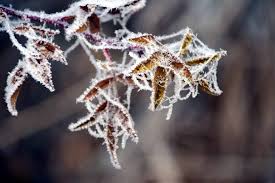
Winter has arrived. I’ve found starved robins
on the path, as pale as old barolo.
 
Hard frost has told the trees, time to let go.
Leaves fall like dead birds from the sycamores.
 
Dew-drips drop from spider threads.
We’re draped with mist,
like garden chairs out of their season.
 
From each bud’s tip as it begins to freeze,
leaf edge and pine needle, pearled globules squeeze.
 
I motionless, while winter breathes me in
and settling air around my shoulders slips.

Mike Smith lives on the edge of England where he writes occasional plays, poetry, and essays, usually on the short story form in which he writes as Brindley Hallam Dennis. His writing has been published and performed. He blogs at www.Bhdandme.wordpress.com . This poem was part of the Crichton Writers’ (Dumfries) anthology (2007).

.

PLEASE NOTE: ARTICLES CAN ONLY BE REPRODUCED IN OTHER SITES WITH DUE ACKNOWLEDGEMENT TO BORDERLESS JOURNAL

Categories
Contents

Borderless January, 2022

Painting by Sohana Manzoor

Editorial

Elephants & Laughter… Click here to read.

Interviews

Keith Lyons introduces us to Kenny Peavy, an author, adventurer, educator and wilderness first-aider who has travelled far and wide and wishes everyone could connect with the natural world right outside their door. Click here to read.

In Rhys Hughes Unbounded, Hughes, an author and adventurer, tells us about his inclination for comedies. Click here to read

Translations

Professor Fakrul Alam translates If Life were Eternal by Jibananada Das from Bengali. Click here to read.

Ratnottama Sengupta translates Bengali poet Michael Madhusudan Dutt’s Bijoya Doushami. Click here to read.

Korean poet Ihlwha Choi translates his own poem, Sometimes Losing is Winning, from Korean. Click here to read.

Give Me A Rag, Please:A short story by Nabendu Ghosh, translated by Ratnottama Sengupta, set in the 1943 Bengal Famine, which reflects on man’s basic needs. Click here to read.

On This Auspicious Day is a translation of a Tagore’s song, Aaji Shubhodine Pitaar Bhabone, from Bengali by Mitali Chakravarty. Click here to read.

Poetry

Click on the names to read

Rhys Hughes, Ryan Quinn Flanagan, Anasuya Bhar, Jay Nicholls, Anuradha Vijayakrishnan, Vernon Daim, Mathangi Sunderrajan, William Miller, Syam Sudhakar, Mike Smith, Pramod Rastogi, Ivan Peledov, Subzar Ahmed, Michael R Burch

Nature’s Musings

In Best Friends, Penny Wilkes takes us for a photographic treat. Click here to read.

Poets, Poetry & Rhys Hughes

In Making Something of Nothing…, Rhys Hughes explores sources of inspirations with a dollop of humour. Click here to read.

Musings/Slices from Life

Wooing Children to School

Munaj Gul writes of how volunteers are engaged in wooing children from poverty stricken backgrounds to school in Turbat, Balochistan. Click here to read.

Historical Accuracy

Ravibala Shenoy ponders over various interpretations of the past in media and through social media. Click here to read.

The Ocean & Me

Meredith Stephens writes of her sailing adventures in South Australia. Click here to read.

Crotons

Kavya RK finds her fascination for plants flourish in the pandemic. Click here to read.

The Great Freeze

P Ravi Shankar trots through winters in different parts of the globe. Click here to read.

Two Birds

Ratnottama Sengupta muses as she translates a Tagore’s song. Click here to read.

Musings of a Copywriter

In The New Year’s Boon, Devraj Singh gives a glimpse into the projection of a new normal created by God. Click here to read.

Essays

Dramatising an Evolving Consciousness: Theatre with Nithari’s Children

Sanjay Kumar gives us a glimpse of how theatre has been used to transcend trauma and create bridges. Click here to read.

Potable Water Crisis & the Sunderbans

Camellia Biswas, a visitor to Sunderbans during the cyclone Alia, turns environmentalist and writes about the potable water issue faced by locals. Click here to read.

The Malodorous Mountain: A Contemporary Folklore

Sayantan Sur looks into environmental hazards due to shoddy garbage disposal. Click here to read.

Where Sands Drift Back in Time…

Shernaz Wadia explores Western Australia. Click here to read.

The Observant Immigrant

In The Changing Faces of the Family, Candice Louisa Daquin explores the trends in what is seen as a family now. Click here to read.

Bhaskar’s Corner

In Fakir Mohan: A Tribute, Bhaskar Parichha introduces us to Fakir Mohan Senapati, the writer he considers the greatest in Odia literature. Click here to read.

Stories

Folklore from Balochistan: The Pearl

Balochi folktales woven into a story and reinvented by Fazal Baloch highlighting the wisdom of a woman. Click here to read.

The American Wonder

Steve Ogah takes us to a village in Nigeria. Click here to read.

The Boy

Neilay Khasnabish shares a story on migrant labours with a twist. Click here to read.

Stranger than Fiction

Sushant Thapa writes of real life in Nepal, which at times is stranger than fiction. Click here to read.

The Solace

Candice Louisa Daquin takes us on a poignant story of longing. Click here to read.

The Doll

Sohana Manzoor tells a story around the awakening of a young woman. Click here to read.

Among Our PeopleDevraj Singh Kalsi gives a fictitious account of a common man’s quest for security in a country that is one of the world’s largest democracy. Click here to read.

Book Excerpts

An excerpt from Shazi Zaman’s Akbar: A Novel of History detailing his interactions with Surdas and Braj. Click here to read.

Excerpts from A Glimpse Into My Country, An Anthology of International Short Stories edited by Andrée Roby & Dr Sangita Swechcha. Click here to read.

Book Reviews

Meenakshi Malhotra reviews Somdatta Mandal’s translation of A Bengali Lady in England by Krishnabhabini Das (1885). Click here to read.

Gracy Samjetsabam reviews Anuradha Kumar’s The Hottest Summer in Years. Click here to read.

Rakhi Dalal reviews Selma Carvalho’s Sisterhood of Swans. Click here to read.

Bhaskar Parichha reviews Amit Ranjan’s John Lang; Wanderer of Hindoostan; Slanderer in Hindoostanee; Lawyer for the Ranee. Click here to read.

Categories
Poetry

An Instant

By Mike Smith

AN INSTANT

Suddenly we stop, the sheep and I,
Even the squirrel on the wall.
I’m carrying sticks. They’re in the field.

I heard nothing at all
But suddenly we stop, the sheep and I,
As if there were a distant call,
Even the squirrel on the wall,
Suddenly motionless eyes peeled.
I’m carrying sticks. They’re in the field.

Maybe there’s some message on the breeze.
I heard nothing at all.
Perhaps they’re more finely tuned than me,
But suddenly we stop, the sheep and I,
As if some deity had drawn us to a halt,
As if there were a distant call
From one who had authority over us all,
Even the squirrel on the wall.
For a moment we’re like a photograph,
Suddenly motionless eyes peeled,
As if something amazing had been revealed.
I’m carrying sticks. They’re in the field.

And the best of it is,
Maybe there’s some message on the breeze
That I can read too.
I heard nothing at all,
But we all know there are other senses.
Perhaps they’re more finely tuned than me,
Or can see more clearly,
But suddenly we stop, the sheep and I
And I’m included with them all,
As if some deity had drawn us to a halt,
Not with a command but
As if there were a distant call
Addressed to someone out of sight
From one who had authority over us all,
That we just overheard,
Even the squirrel on the wall,
That made us stop and realise.
For a moment we’re like a photograph,
Wondering if perhaps there is some deep intent,
Suddenly motionless eyes peeled,
Hiding behind this pure invention,
As if something amazing had been revealed,
Going about our proper business.
I was carrying sticks. They were in the field.

Mike Smith lives on the edge of England where he writes occasional plays, poetry, and essays, usually on the short story form in which he writes as Brindley Hallam Dennis. His writing has been published and performed. He blogs at www.Bhdandme.wordpress.com 

.

PLEASE NOTE: ARTICLES CAN ONLY BE REPRODUCED IN OTHER SITES WITH DUE ACKNOWLEDGEMENT TO BORDERLESS JOURNAL
Categories
Seasonal Outpourings

Auf Wiedersehen Autumn

Autumn by Sohana Manzoor

As autumn gives way to winter, here are explorations that give us a glimpse of the season, its colours, its feel across different parts of the world and their varied interpretations. We have the vibrancy captured in colours by Sohana Manzoor and Sybil Pretious. There are reactions to events that happened at this time in different parts of the globe from Ratnottama Sengupta and Sutputra Radheye — have we healed after these events? Have things got better?

As Europe starts a new wave of pandemic lockdowns, Mike Smith takes us for a trip to Trieste, rich with the heritage of James Joyce, Umberto Saba and Baron Von Trapp of Sound of Music. Prose from Tagore(1861-1941) translated by Somdatta Mandal showcases some of his reactions while traveling in Japan, America and Europe in the autumn of his life. We can vicariously travel to different parts of the planet! While verses by Michael Burch and George Freek explore the season and the autumn of life, poetry by Rhys Hughes and Sekhar Banerjee add zest to the fall with humour. Revathi Ganeshsundram brings us a poignant narrative of new friendships. A short story from maestro storyteller from Holland, Louis Couperus(1863-1923), translated by Chaitali Sengupta, paints a darker hue of autumn while Tagore’s poetry gives us a festive feel generated by the season in Bengal. Enjoy our melange of autumnal lores!

Poetry

Autumn & Me: Poetry by Michael Burch. Click here to read.

Algae Masks: Poetry by Sekhar Banerjee. Click here to read.

Autumnal Dirge: Poetry by Sutputra Radheye. Click here to read.

The Night Music: Poetry by George Freek. Click here to read.

A story poem by Rhys Hughes about The Clock Tower of Sir Ticktock Bongg, who spends his autumn of life in the most peculiar way. Click here to read.

Translation of Amaar Nayano Bhulano Ele or The Advent Song by Tagore describes autumn in Bengal. Click here to read. 

Prose

Yesterday Once More?: Ratnottama Sengupta revisits an autumn in Egypt. Click here to read.

Me & James Joyce in Trieste: Mike Smith travels in autumn to Trieste, an autumn in a pre-pandemic world. Click here to read.

Of Days & Seasons: A parable by Louis Couperus, translated from Dutch by Chaitali Sengupta. Click here to read

The Cockatoo: A short story about new friendships in the autumn of life by Revathi Ganeshsundaram. Click here to read.

 Letters from Japan, Europe & America: An excerpt from letters written by Tagore in the autumn of his life, translated from Bengali by Somdatta Mandal. Click hereto read.

Painting by Sybil Pretious
Categories
Contents

Borderless, November, 2021

Autumn: Painting in Acrylic by Sybil Pretious

Editorial

Colours of the Sky…Click here to read.

Interviews

In Conversation with Akbar Barakzai, a Balochi poet in exile who rejected an award from Pakistan Academy of Letters for his principles. Click here to read.

In Conversation with Somdatta Mandal, a translator, scholar and writer who has much to say on the state of Santiniketan, Tagore, women’s writing on travel and more. Click here to read.

Translations

Rebel or ‘Bidrohi’

Nazrul’s signature poem,Bidrohi, translated by Professor Fakrul Alam. Click here to read.

Motorcar

Jibonananda Das‘s poetry translated from Bengali by Rakibul Hasan Khan. Click here to read.

The Beloved City

Poetry of Munir Momin, translated from Balochi by Fazal Baloch. Click here to read.

Rebranding

A poem in Korean, written & translated by Ihlwha Choi. Click here to read.

Perhaps the Last Kiss

A short story by Bhupeen giving a vignette of life in Nepal, translated from Nepali by Ishwor Kandel. Click here to read.

Morichika or Mirage by Tagore

Tagore’s poetry translated by Mitali Chakravarty. Click here to read.

Poetry

Click on the names to read

Rhys Hughes, Sutputra Radheye, Luis Cuauhtémoc Berriozábal, Sheshu Babu, Michael Lee Johnson, Prithvijeet Sinha, George Freek, Sujash Purna,  Ashok Manikoth, Jay Nicholls, Pramod Rastogi, Ryan Quinn Flanagan, Vijayalakshmi Harish, Mike Smith, Neetu Ralhan, Michael R Burch

Poets, Poetry & Rhys Hughes

A story poem about The Clock Tower of Sir Ticktock Bongg. Click here to read.

Nature’s Musings

Penny Wilkes takes us for a stroll into the avian lives with photographs and poetry in Of Moonshine & Birds. Click here to read.

Stories

Waking Up

Christina Yin takes us on a strange journey in Sarawak, Malaysia. Click here to read.

Rains

A pensive journey mingling rain and childhood memories by Garima Mishra. Click here to read.

Khatme Yunus

Jackie Kabir brings us a strange story from Bangladesh. Click here to read.

First International Conference on Conflict Continuation

Steve Davidson explores an imaginary conference. Click here to read.

The Literary Fictionist

In Fragments of a Strange Journey, Sunil Sharma sets out with Odysseus on a tour of the modern day world. Click here to read.

Musings/Slices from Life

Yesterday Once More?

Ratnottama Sengupta recalls her experiences of the Egyptian unrest while covering the 35th Cairo International Film Festival in 2012. Click here to read.

Embroidering Hunger

An account of life of dochgirs (embroiderers) in Balochistan by Tilyan Aslam. Click here to read.

To Daddy — with Love

Gita Viswanath takes us into her father’s world of art and wonder. Click here to read.

Simon Says

Ishita Shukla, a young girl, explores patriarchal mindset. Click here to read.

Welcoming in the dark half of the year

Candice Louisa Daquin takes a relook at the evolution of Halloween historically. Click here to read.

Musings of the Copywriter

In Crematoriums for the Rich, Devraj Singh Kalsi regales his readers with a dark twist of the macabre. Click here to read.

Essays

Renewal

Jayat Joshi, a student of development studies, takes a dig at unplanned urban development. Click here to read.

Once Upon A Time in Burma: Leaving on a Jet Plane

John Herlihy’s last episode in his travels through Burma. Click here to read.

A Legacy of Prejudice, Persecution and Plight

Suvrat Arora muses on the impact of a classic that has been coloured with biases. Click here to read.

The Observant Migrant

In Is Sensitivity a Strength or a Weakness?, Candice Louisa Daquin explores our value systems. Click here to read.

Book Excerpts

Arundhathi Subramaniam’s Women Who Wear Only Themselves. Click here to read.

CJ Fentiman’s award winning book, The Cat with Three Passports. Click here to read.

Book Reviews

Himadri Lahiri reviews Somdatta Mandal’s ‘Kobi’ and ‘Rani’: Memoirs and Correspondences of Nirmalkumari Mahalanobis and Rabindranath Tagore. Click here to read.

Suzanne Kamata reviews Iain Maloney’s Life is Elsewhere/ Burn Your Flags. Click here to read.

Bhaskar Parichha reviews Anita Agnihotri’s Mahanadi –The Tale of a River, translated from Bengali by Nivedita Sen. Click here to read.

Meenakshi Malhotra reviews Turmeric Nation: A Passage Through India’s Tastes, authored by Shylashri Shankar. Click here to read.