Title: Silver Years: Senior Contemporary Indian Women’s Poetry
Editors: Sanjukta Dasgupta, Malashri Lal and Anita Nahal.
Publisher: Sahitya Akademi
Several centuries ago, women poets had to fight to be heard, their poems often dismissed as unworthy or mediocre. It is a testament to their determination, grace and sheer talent that today female poets are amongst the most celebrated and respected the world over. In India, pathbreaking women poets such as Toru Dutt, Sarojini Naidu and Kamala Das paved the way for more recent talents such as Eunice de Souza, Suniti Namjoshi and Sujata Bhatt. Of course, this list does not include the vast number of women poets writing in Indian languages ranging from Assamese, Bengali, Hindi, Malayalam, Punjabi, Tamil and Telugu to name but a few.
A recent anthology of poems by senior contemporary Indian women poets titled Silver Years, reflects the centrality of women in today’s Indian society. While elders have always been revered in this society, the overwhelming influence of western media has brought in a certain skepticism towards such traditions. In this context, it is refreshing to read these poems that showcase the maturity, resilience, humour and sagacity of these women. They offer their diverse perspectives on the experience of being an Indian woman, exploring changing societal attitudes to their place in the world, the dynamics of their social roles and the trauma and transcendence they encounter in their lives.
The poems in this collection are not just pretty words that pander to social expectations, they carry the weight of the experiences of fifty senior women poets who have lived rich and varied lives, working in their chosen fields and observing the radical transformation of the world around them. The common thread that runs through this anthology is the forthright tone and boldness of expression in the over 160 poems included. As women who have lived full lives, both in India and across the world, these poets never shy away from controversies, rather expressing with rare grace and tenderness what it means to be sixty plus and female in contemporary society.
The introduction to this volume is no less impressive than the poems. Jointly written by the editors of the collection, Sanjukta Dasgupta, Malashri Lal and Anita Nahal, the introduction traces the evolution of Indian women’s poetry in English, eloquently delineating the political and social challenges faced by women writing in English. Furthermore, the introduction also explores the impact of a deeply patriarchal culture on women in Indian society. The recasting of mythology to suit contemporary societal expectations also finds a mention as well as an emphasis on the voice, agency and power these poets claim for themselves through their poetry. Most significantly, the introduction underscores the resolve, resilience and charm of these sixty plus women, who erase with the power of their words the negativity and weakness associated with aging.
The poems in this anthology vary widely in style and theme, ranging from poems that reimagine gender and societal roles, to those that focus on the havoc wrought by humans on the environment. Perhaps understandably, in an anthology of poems by women poets over sixty, perspectives on aging are numerous.
Anita Nahal’s poem ‘We are the Kali Women’ is a searing condemnation of patriarchal oppression, casteism and discrimination based on skin colour. The poems refrain “Ma Kali. Ma Kali. Ma Kali. Don’t think she’s not watching” strikes a warning note to those hypocrites who are guilty of crimes against her followers while piously bowing before her image.
On a similar theme, but in an entirely different key, is the poetry of Lakshmi Kannan. This poet’s feminism is not overt, but the poems convey an effective message nonetheless. ‘Silver Streaks’ sets forth an idea that is common to many of the poems in the anthology, that senior women do not become less attractive as they age. Instead, this poem emphasizes the power of self-knowledge that maturity brings.
Malashri Lal’s poetry slides into the readers’ consciousness as smooth as silk. Replete with irony and layered with nostalgia, her minimalistic verse has a visceral appeal. ‘Book of Doubts’ evokes a sense of loss for the books one used to treasure. ‘Jaipur Bazar’ is almost like a haiku, conveying the beauty of an emerald and the heritage it encapsulates. ‘Kashmir One Morning’ contrasts the senselessness of sectarian violence with the Gandhian legacy of nonviolence. ‘Krishna’s Flute’, juxtaposes the mellifluous music of the flute and the dreaded coronavirus pandemic. One is associated with the certitude of faith that Krishna’s tunes represent while the other stalks the silent city leaving death and loss in its wake. This is elegant poetry, that does not shock for effect, instead gently evoking images that resonate in the reader’s mind.
Sanjukta Dasgupta’s poems focus on aging with honesty interwoven with humour. Her poems cut to the bone without any unnecessary sentimentality or understatement. Aging, for Sanjukta Dasgupta is an undeniable fact, she asserts that one has to accept the harsh reality of physical debility and the inevitability of death. The poet does not try to gloss over the signs of age, rather she sees them as a culmination of a life lived to the hilt.
The poem ‘When Winter Comes’, is a recasting of P. B. Shelley’s famous line ‘…when winter comes, can Spring be far behind’. The optimism of Shelley’s ‘Ode to the West Wind’ is contrasted with the reality of aging as Dasgupta notes:
In such an intimate Winter
No time
To spring back to Spring

Spreading its embrace….
Scripting a cryptic memoir
On every inch
From face to toe
The poem ‘Fall’ resonates with the repetition of the words ‘falling’ and ‘failing’, which sets the tone for the final descent “into everlasting rest”. The images used in these poems are at once concrete and fanciful, “the swan throat a tortoise neck now” with “countless rings of recorded time”. The poem “Crowning Worry” addresses the anxiety of aging:
Silver waved among blackened hair
Like flags of treachery
Flashing grin of metallic strands
This poem highlights the power of poetry to acknowledge the reader’s anxieties and ameliorate their lack of self-worth:
Black and blonde tresses howled
In low self-esteem, utter frustration
And massive bi-polar manic depression
As the Grey Gorgeous divas
Grinned and Glowed
Poems such as these emphasise the beauty of the older woman, whose youthful innocence may have gone, replaced by something finer, the beauty of self-assurance and poise.
Another significant theme among the poems is climate change and environmental degradation, the burning issue of our times. As mature adults who are aware that their legacy to future generations includes denuded forests, polluted rivers and oceans, arid landscapes and a rampantly consumerist mindset, these poets feel compelled to lament. The elegiac tone is prominent in many poems. Well-known poet from Northeast India, Mamang Dai celebrates the biocentric culture of the tribes of the region in her poem ‘Birthplace’. The poem ‘Floating Island’ also describes the harmony that exists between women and nature. ‘Earth Day’ by Smita Agarwal is another poem that focuses on the negative impact humanity has had on the environment.
The poems in this anthology reflect the changing status of women in present day society. The poets are successful women and their clear-sighted view of life reflects their wisdom and rich experience. Aging is not seen as degeneration, but an enlightened phase where the wealth of one’s experience makes for a perspective that is to be celebrated. The poets included herein write with skill, empathy and wisdom, showing readers the hidden nuances of life that are often overlooked in the heedlessness of youth. They are unafraid to boldly present their wrinkles and grey hair as signs of a new beauty, one that is bolstered by maturity and self-acceptance. Pathbreaking feminist Betty Freidan sees aging not as decline, but as a new stage of life filled with power and promise. Her famous quote “Aging is not lost youth but a new stage of opportunity and strength” emphasises her views on the fountain of age.
In these 143 poems, these poets have offered readers a fresh perspective on these new horizons, so that they can be viewed with compassion and a renewed appreciation for the felicities of life. Most significantly, these poems reiterate that the silver years are a time of hope and light that shines on the promise of fresh achievement.
.
Dr. Anita Balakrishnan is former Head, Department of English, Queen Mary’s College, Chennai, India. Author of Transforming Spirit of Indian Women Writers (2012) and contributor to the Routledge Encyclopaedia of Postcolonial Studies, ed by Sangeetha Ray and Henry Schwarz. Has published papers in national and international journals and reviewed books for The Book Review, Borderless Journal and others. Her interests include contemporary Indian Writing in English, Ecocriticism, Ecofeminism, Cultural Studies and Postcolonial studies.
.
PLEASE NOTE: ARTICLES CAN ONLY BE REPRODUCED IN OTHER SITES WITH DUE ACKNOWLEDGEMENT TO BORDERLESS JOURNAL
Odia literature is characterised by a profound tradition of classic narratives, with notable examples such as Fakir Mohan Senapati’s timeless Chha Mana Atha Guntha[1]. This literary corpus is further enhanced by an array of mythological and folk narratives that hold significant importance in the cultural legacy of Odisha.
These narratives persist through time because they reflect universal human experiences, encompassing themes such as land, power, family, and morality, all while being intricately linked to the historical context and cultural identity of the region. They serve not only as stories but also as reflections of society, having been shaped and refined over the years.
Readers are consistently attracted to these literary works for reasons similar to those that draw us to the writings of Shakespeare or the epic narrative of the Mahabharata: their themes are enduring, and the insights they provide remain pertinent. Similarly, publishers and curators, even at the national level, often revisit these classic tales, a trend that is entirely justifiable.
However, it is the transition to contemporary matters that strikes a significant chord. Odia literature has been progressing, albeit perhaps not as prominently or visibly as certain other Indian literary landscapes. Modern voices are addressing current issues—urban isolation, the influence of technology, caste relations, and environmental deterioration. The change is evident, yet it remains less pronounced than it has the potential to be.
What accounts for this? There may be multiple reasons.
The literary tradition of Odisha is profoundly embedded in its heritage. Classic literature is not only revered and taught but frequently eclipses modern works. Both publishers and readers exhibit a conservative inclination, preferring established texts. This trend is not unique to Odia literature; for example, Tolstoy remains a central figure in Russian literary discourse. As a result, this inclination obstructs the acknowledgment of new authors.
Modern Odia literature faces considerable challenges in its distribution. In contrast to Bengali or Tamil literature, which benefits from larger urban readerships and established translation networks, Odia books often struggle to reach broader audiences.
While digital platforms are making significant strides in this domain, the overall development is still sluggish. Without a strong market, numerous authors may opt to concentrate on more conventional themes that are viewed as more commercially viable.
The demographic composition of Odisha is primarily rural, where numerous readers find a stronger connection with stories that delve into village life or ethical dilemmas, as opposed to genres like cyberpunk or themes focused on existential angst. Although there are urban Odia authors, their readership is frequently limited in range. As a result, contemporary themes may seem alien to those who maintain a deep bond with traditional cultural settings.
The literary language of Odia typically possesses a formal tone, significantly influenced by its classical roots. This can lead to a conflict with modern terminology and global themes, posing challenges for writers who wish to innovate without jeopardising their connection to the audience. In contrast, languages such as Hindi and Malayalam readily incorporate colloquial expressions, which thrive in contemporary literature.
Nonetheless, modern Odia literature is dynamic and progressing. Short story writers are exploring a variety of topics including religion, science fiction, feminism, leftist ideologies, and climate change. Prominent authors such as Sarojini Sahu, Satya Mishra, Rabi Swain, Sadananda Tripathy, Jyoti Nanda, Bhima Prusty, Janaki Ballabh Mohapatra, Ajaya Swain, Biraja Mohapatra, Sujata Mohapatra and young writers like Debabrata Das are actively investigating these contemporary themes. Publications like Kadambini, Rebati, and Katha are offering platforms for these creative narratives.
Despite this, the main obstacle remains the need to improve visibility. Social media and over-the-top (OTT) platforms have the potential to revolutionise this landscape—just picture an Odia adaptation of Black Mirror[2]!
There is an immediate need for greater investment in Odia storytelling to effectively bridge the gap between traditional and modern narratives.
.
[1] Six acres and a Third, a novel by Fakir Mohan Senapati(1843-1918) published in 1902
[2]Black Mirror is a British dystopian science fiction television anthology series that started in 2011 and is still on the run.
.
Bhaskar Parichha is a journalist and author of Cyclones in Odisha: Landfall, Wreckage and Resilience, Unbiased, No Strings Attached: Writings on Odisha and Biju Patnaik – A Political Biography. He lives in Bhubaneswar and writes bilingually. Besides writing for newspapers, he also reviews books on various media platforms.
.
PLEASE NOTE: ARTICLES CAN ONLY BE REPRODUCED IN OTHER SITES WITH DUE ACKNOWLEDGEMENT TO BORDERLESS JOURNAL
Borderless Journal started on March, 14, 2020. When the mayhem of the pandemic had just set in, we started as a daily with half-a-dozen posts. Having built a small core of writings by July, 2020, we swung to become a monthly. And we still continue to waft and grow…
Art by Sohana Manzoor
We like to imagine ourselves as floating on clouds and therefore of the whole universe. Our team members are from multiple geographies and we request not to be tied down to a single, confined, bordered land. We would welcome aliens if they submitted to us from another galaxy…
On our Fifth Anniversary, we have collected celebratory greetings from writers and readers stretched across the world who share their experience of the journal with you and offer suggestions for the future. We conclude with words from some of the team, including my own observations on being part of this journey.
Aruna Chakravarti
Heartiest congratulations to Borderless on the occasion of its fifth anniversary! Borderless, an international journal, has the distinction of carrying contributions from many eminent writers from around the world. From its initiation in 2020, it has moved from strength to strength under the sensitive and skillful steering of its team. Today it is considered one of the finest journals of its kind. I feel privileged to have been associated with Borderless from its very inception and have contributed substantially to it. I wish to thank the team for including my work in their distinguished journal. May Borderless move meaningfully towards the future and rise to greater and greater heights! I wish it every success.
Professor Fakrul Alam
Five years ago, when Borderless set out on its literary voyage, who would have imagined the length and breadth of its imaginative crossings in this span of time? The evidence, however, is digitally there for any reader who has seen at least some of its issues. Creative writing spanning all genres, vivid illustrations, instant links giving resolute readers the option to track a contributor’s creative voyaging—here is boundless space always opening up for those seeking writing of considerable variety as well as originality. The best part here is that unlike name-brand journals, which will entice readers with limited access and then restrict their spaces unless you subscribe to them, all of Borderless is still accessible for us even though it has attracted a wide readership in five years. I certainly hope it will stay that way.
And what lies ahead for Borderless? Surely, more opportunities for the creative to articulate their deepest thoughts and feelings in virtual and seemingly infinite space, and innumerable avenues for readers to access easily. And let us hope, in the years to come Borderless will extend itself to newer frontiers of writing and will continue to keep giving space to new as well as emerging writers from our parts of the world.
May the team of Borderless, continue to live up to their claim that “there are no boundaries to human imagination and thought!”
Radha Chakravarty
Since its inception, Borderless Journal has remained true to its name, offering a vital literary space for writers, artists and scholars from around the world to engage in creative dialogue about their shared vision of a world without borders. Congratulations Borderless, and may your dream of global harmony continue to inspire.
Somdatta Mandal
According to the famous Chicana academic and theorist Gloria Anzaldua, the Borderlands are physically present wherever two or more cultures edge each other, where peopIe of different races occupy the same territory, where under, lower, middle and upper classes touch, where the space between two individuals shrinks with intimacy. Hatred, anger and exploitation are the prominent features of this landscape. There, at the juncture of cultures, languages cross-pollinate and are revitalized; they die and are born. Borders are set up to define the places that are safe and unsafe, to distinguish us from them. A border is a dividing line, a narrow strip along a steep edge. A borderland is a vague and undetermined place created by the emotional residue of an unnatural boundary. It is in a constant state of transition. The prohibited and forbidden are its inhabitants.
About five years ago, when a new online journal aptly called Borderless Journal was launched, these ideas which we had been teaching for so long were simply no longer applicable. Doing away with differences, with limits, it became a suitable platform where disparate cultures met, where people from all disciplines could express their views through different genres, be it poetry, translation, reviews, scholarly articles, creative writing and so on. Many new writers from different parts of the world became regular contributors to this unique experimentation with ‘borderlessness’ and its immense possibilities are very apt in this present global context where social media has already changed many earlier notions of scholarship, journalism, and creativity.
Jared Carter
In its first five years Borderless has become an important witness for international peace and understanding. It has encouraged submissions from writers in English based in many different countries, and has offered significant works translated from a wide range of national literatures. Its pages have featured writers based in India, Pakistan, China, Taiwan, Japan, South Korea, Australia, the UK, and the US. In the future, given the current level of world turmoil, Borderless might well consider looking more closely toward Africa and the Middle East. As the magazine continues to promote writing focused on international peace and freedom, new horizons beckon.
Teresa Rehman
The best part of this journal is that it is seamless and knows no margins or fringes. It is truly global as it has cut across geographical borders and has sculpted a novel literary genre called the ‘borderless’. It has climbed the mountains of Nepal, composed songs on the Brahmaputra in Assam, explored the hidden kingdom of Bhutan, walked on the streets of Dhaka, explored the wreckage of cyclones in Odisha, been on a cycling adventure from Malaysia to Kashmir, explored a scenic village in the Indo-China border, taken readers on a journey of making a Japanese-Malayalam dictionary, gave a first-hand account of the war in Bosnia-Herzegovina and described the syncretic culture of Bengal through its folk music and oral traditions. I hope it continues telling the untold and unchartered stories across mountains, oceans and forests.
Kirpal Singh
In a world increasingly tending towards misunderstandings across borders, this wholesome journal provides a healthy space both for diverse as well as unifying visions of our humanity. As we celebrate five distinguished years of Borderless Journal, we also look forward to another five years of such to ensure the underlying vision remains viable and visible as well as authentic and accurate.
My heartfelt Congratulations to all associated with this delightful and impressive enterprise!
Asad Latif
The proliferation of ethnic geographies of identity — Muslim/Arab, Hindu/Indian, Christian/Western, and so on — represents a threat to anything that might be called universal history. The separation and parcelling out of identities, as if they are pre-ordained, goes against the very idea (proclaimed by Edward Said) that, just as men and women create their own history, they can recreate it. Borders within the mind reflect borders outside it. Both borders resist the recreation of history. While physical borders are necessary, mental borders are not. This journal does an admirable job in erasing borders of the mind. Long may it continue to do so.
Anuradha Kumar
I have been one of Borderless’ many readers ever since its first issue appeared five years ago. Like many others, I look forward with great anticipation to every issue, complete with stories, , reviews, poems, translations, complemented with interesting artwork.
Borderless has truly lived up to its name. Within its portal, people, regardless of borders, but bound by common love for literature, and the world’s heritage, come together. I would wish for Borderless to scale even greater heights in the future. As a reader, I would very much like to read more writers from the ‘Global South’, especially in translation. Africa, Asia and Australasia are host to diverse languages, many in danger of getting lost. Perhaps Borderless could take a lead in showcasing writers from these languages to the world. That would be such an invaluable service to readers, and the world too.
Ryan Quinn Flanagan
To me, Borderless Journal is a completely free and open space. Topics and styles are never limiting, and the various writers explore everything from personal travelogues to the limp of a helpful druggist. Writers from all corners of the globe contribute, offering a plethora of unique voices from countless circumstances and walks of life. Because of this openness, Borderless Journal can, and likely will continue to grow and expand in many directions simultaneously. Curating and including many new voices along the way. Happy 5th Birthday to a truly original and wonderfully eclectic journal!
George Freek
I feel the Borderless Journal fills a special spot in the publishing world. Unlike many journals, which profess to be open-minded and have no preference for any particular style of poetry, Borderless actually strives to be eclectic. Naturally, it has its own tastes, and yet truly tries to represent the broad spectrum which is contemporary poetry. I have no advice as to where it should go. I can only say keep up the good work, and stooping to a cliche, if it’s not broken, why try to fix it?
Farouk Gulsara
They say time flies when one is having fun. It sure does when a publication we love regularly churns out its issues, month after month, for five years now.
In the post-truth world, where everybody wants to exert their exclusivity and try to find ways to be different from the person standing next to them, Borderless gives a breath of fresh air. At a time when neighboring countries are telling the world they do not share a common history, Borderless tries to show their shared heritage. We may have different mothers and fathers but are all but “ONE”!
We show the same fear found in the thunderous sounds of a growling tiger. We spill the exact hue of blood with the same pain when our skin is breached. Yet we say, “My pain is more intense than yours, and my blood is more precious.” Somehow, we find solace in playing victimhood. We have lost that mindfulness. One should appreciate freedom just as much as we realise it is fragile. Terrorism and fighting for freedom could just be opposing sides of the same coin.
There is no such thing as a just war or the mother of all wars to end all wars as it has been sold to us. One form of aggression is the beginning of many never-ending clashes. Collateral damage cannot be justified. There can be no excuse to destroy generations of human discoveries and turn back the clock to the Stone Age.
All our hands are tainted with guilt. Nevertheless, each day is another new day to make that change. We can all sing to the tune of the official 2014 World Cup song, ‘Ola Ola,’ which means ‘We are One.’ This is like how we all get together for a whole month to immerse ourselves in the world’s favourite sport. We could also reminisce about when the world got together to feed starving kids in Africa via ‘Band-Aid’ and ‘We Are the World’. Borderless is paving the way. Happy Anniversary!
Ihlwha Choi
I sincerely congratulate Borderless Journal on its 5th anniversary. I am always delighted and grateful for the precious opportunity to publish my poetry in English through this journal. I would like to extend my special thanks for this.
Through this journal, I can read a variety of literary works—including poetry, essays, and prose—from writers around the world. As someone for whom English is a foreign language, it has also been a valuable resource for improving my English skills. I especially enjoy the frequent features on Rabindranath Tagore’s poetry, which I read with great joy. Tagore is one of my favourite poets.
I have had the privilege of visiting Santiniketan three times to trace his legacy and honor his contributions to literature and education. However, one aspect I find a little disappointing is that, despite having published over 30 poems, I have yet to receive any feedback from readers or fellow writers. It would be wonderful to have such an opportunity for engagement.
Additionally, last October, a Korean woman received the Nobel Prize in Literature—the first time an author from South Korea has been awarded this honor by the Swedish Academy. She is not only an outstanding novelist but also a poet. I searched for articles about her in Borderless Journal but was unable to find any. Of course, I understand that this is not strictly a literary newspaper, but I would have been delighted to see a feature on her.
I also feel honoured that one of my poems was included in the anthology Monalisa No Longer Smiles: An Anthology of Writings from across the World. I hope such anthologies will continue to be published. In fact, I wonder if it would be possible to compile and publish collections featuring several poems from contributing poets. If these were made available on Amazon, it would be a fulfilling experience for poets to reach a broader audience.
Moving forward, I hope Borderless Journal will continue to reach readers worldwide, beyond Asia, and contribute to fostering love and peace. Thank you.
Prithvijeet Sinha
The journey of authorship, self-expression and cultural exchange that I personally associate with Borderless Journal’s always diverse archives has remained a touchstone ever since this doorway opened itself to the world in 2020. Going against the ramshackle moods of the 2020s as an era defined by scepticism and distances, The journal has upheld a principled literary worldview close to the its pages and made sure that voices of every hue gets representation. It’s also an enterprise that consistently delivers in terms of goodwill and innocence, two rare traits which are in plenteous supply in the poems, travelogues, essays and musings presented here.
The journey with Borderless has united this writer with many fascinating, strikingly original auteurs, buoyed by a love for words and expression. It is only destined for greatness ahead. Happy Birthday Borderless! Here’s to 50 more epochs.
From Our Team
Bhaskar Parichha
As Borderless Journal celebrates its fifth anniversary, it is inspiring to see its evolution into a distinguished platform for discourse and exploration. Over the years, it has carved a unique niche in contemporary journalism, consistently delivering enlightening and engaging content. The journal features a variety of sections, including in-depth articles, insightful essays, and thought-provoking interviews, reflecting a commitment to quality and fostering dialogue on pressing global issues. The diverse contributions enrich readers’ understanding of complex topics, with a particular focus on climate change, which is especially relevant today. By prioritising this critical issue, Borderless informs and encourages engagement with urgent realities. Having been involved since its inception, I am continually impressed by the journal’s passion and adaptability in a changing media landscape. As we celebrate this milestone, I wish Borderless continued success as a beacon of knowledge and thoughtful discourse, inspiring readers and contributors alike.
Devraj Singh Kalsi
Borderless Journal has a sharp focus on good writing in multiple genres and offers readable prose. The platform is inclusive and does not carry any slant, offering space to divergent opinions and celebrating free expression. By choosing not to restrict to any kind of ism, the literary platform has built a strong foundation in just five years since inception. New, emerging voices – driven by the passion to write fearlessly – find it the ideal home. In a world where writing often gets commercialised and compromised, Borderless Journal is gaining strength, credibility, and wide readership. It is making a global impact by giving shape to the dreams of legendary poets who believed the world is one.
Rakhi Dalal
My heartiest congratulations to Borderless and the entire team on the fifth Anniversary of its inception. The journal which began with the idea of letting writing and ideas transcend borders, has notably been acting as a bridge to make this world a more interconnected place. It offers a space to share human experiences across cultures, to create a sense of connection and hence compassion, which people of this world, now more distraught than ever, are sorely in need of. I am delighted to have been a part of this journey. My best wishes. May it continue to sail through time, navigating languages, literature and rising above barriers!
Keith Lyons
Is it really five years since Borderless Journal started? It seems hard to believe.
My index finger scrolls through Messenger chats with the editor — till they end in 2022. On the website, I find 123 results under my name. Still no luck. Eventually, in my ‘Sent’ box I find my first submission, emailed with high hopes (and low expectations) in March 2020. ‘Countdown to Lockdown’ was about my early 2020 journey from India through Thailand, Malaysia, Indonesia, and Australia to New Zealand as COVID-19 spread.
Just like that long, insightful trip, my involvement with Borderless Journal has been a journey. Three unique characteristics stand out for me.
The first is its openness and inclusiveness. It features writers from all over the globe, with various contributions across a wide range of topics, treatments and formats.
The second feature of the journal is its phenomenal growth, both in readers and writers, and in its reach. Borderless really does ‘walk the talk’ on breaking down barriers. It is no longer just a humble literary journal — it is so much bigger than that.
The third unique aspect of Borderless is the devotion endowed in nurturing the journal and its contributors. I love the way each and every issue is conceived, curated, and crafted together, making tangible the aspiration ‘of uniting diverse voices and cultures, and finding commonality in the process.’
So where can we go from here? One constant in this world is change. I’d like to think that having survived a global pandemic, economic recession, and troubling times, that the core values of Borderless Journal will continue to see it grow and evolve. For never has there been a greater need to hear the voices of others to discover that we are all deeply connected.
Rhys Hughes
I have two different sets of feelings about Borderless Journal. I think the journal does an excellent job of showcasing work from many different countries and cultures. I want to say it’s an oasis of pleasing words and images in a troubled sea of chaos, but that would be mixing my metaphors improperly. Not a troubled sea of chaos but a desert of seemingly shifting values. And here is the oasis, Borderless Journal, where one can find secure ideals of liberty, tolerance, peace and internationalism. I appreciate this very much. As for my other set of feelings, I am always happy to be published in the journal, and in fact I probably would have given up writing poetry two years ago if it wasn’t for the encouragement provided to me by regular publication in the journal. I have written many poems especially for Borderless. They wouldn’t exist if Borderless didn’t exist. Therefore I am grateful on a personal level, as a writer as well as a reader.
Where can Borderless Journal go from here? This is a much harder question to answer. I feel that traditional reading culture is fading away year after year. Poets write poetry but few people buy poetry books. They can read poems at Borderless for free and that is a great advantage. I would like to see more short stories, maybe including elements of fantasy and speculative fiction. But I have no strategic vision for the future of the journal. However, one project I would like to try one day is some sort of collaborative work, maybe a big poem with lots of contributors following specific rules. It’s an idea anyway!
Meenakshi Malhotra
Borderless started with a vision of transcending the shadow lines and has over time, evolved into a platform where good writing from many parts of the world finds a space , where as “imagination bodies forth/ The forms of things unknown, the poet’s pen/Turns them to shapes and gives to airy nothing/A local habitation and a name.”
It has been a privilege to be a part of Borderless’s journey over the last few years. It was a journey based on an idea and a vision. That dream of creating solidarity, of transcending and soaring over borders and boundaries, is evident in almost every page and article in the journal.
Mitali Chakravarty
Looking at all these responses, thinking on what everyone has said, I am left feeling overwhelmed.
Borderless started as a whimsical figment of the imagination… an attempt to bring together humanity with the commonality of felt emotions, to redefine literary norms which had assumed a darker hue in the post Bloomsbury, post existentialist world. The journal tried to invoke humour to brings smiles, joys to create a sense of camaraderie propelling people out of depression towards a more inclusive world, where laughter brings resilience and courage. It hoped to weave an awareness that all humans have the same needs, dreams and feelings despite the multiple borders drawn by history, geographies, academia and many other systems imagined by humans strewn over time.
Going forward, I would like to take up what Harari suggests in Homo Deus — that ideas need to generate a change in the actions of humankind to make an impact. Borderless should hope to be one of the crucibles containing ideas to impact the move towards a more wholesome world, perhaps by redefining some of the current accepted norms. Some might find such an idea absurd, but without the guts to act on impractical dreams, visions and ideas, we might have gone extinct in a post-dino Earth.
I thank the fabulous team, the wonderful writers and readers whose participation in the journal, or in engaging with it, enhances the hope of ringing in a new world for the future of our progeny.
The last two years have been especially sad ones for printed books and magazines. Toward the end of 2023, the iconic magazine, National Geographic stopped selling its print issues. And in April 2024, Reader’s Digest stopped publishing. Many other print magazines have also downed their shutters though the online version continues.
I grew up with the Reader’s Digest. My father subscribed to the magazine and each month a copy wrapped in a brown envelope arrived at our door. The envelope partially covered the magazine inside, and you could see the top and bottom of the magazine. The size was small, and this made for easy handling. Reader’s Digest was a magazine you could read comfortably in bed. During the festival of Diwali, there was a special wrapping for the magazine. We had several magazines in our house when I was growing up. My mother used to read many magazines in Malayalam (our mother tongue).
Reader’s Digest provided shortened versions of stories and articles that had been published elsewhere. Their skill was in condensing the material while still retaining the interest. There was a rich collection of reading material. There were also advertisements for other books published by Reader’s Digest. Unfortunately, these were beyond our family budget. I wanted to purchase these when I grew up and became financially stronger. My neighbour who was a scientist had some of these books that I occasionally borrowed.
Another favourite of mine was the National Geographic. My father was a faculty member at a banker’s training college in Mumbai and their library subscribed to National Geographic. He often brought the magazine home. I was mesmerised by the articles and the photos in the magazine. The artistic quality of the photos was superb. The magazine had only three or four articles in an issue but addressed these at great depth. I travelled to faraway places, to the bottom of the ocean, to within the human body and to outer space with the magazine. Later, National Geographic started a television channel, and I would watch the documentaries in the nineties.
We also subscribed to the Illustrated Weekly of India. This was in a large format and again had very good photographs. I still remember the column by the journalist Khushwant Singh titled ‘With malice towards one and all’. I was also a fan of the comics section of the magazine. I had a huge collection of comics and my father purchased both Amar Chitra Katha and Indrajal Comics. Amar Chitra Katha introduced me to the rich history of India. Indrajal comics had superheroes like Phantom, Mandrake, and Flash Gordon. I used to eagerly await new issues. Most of my comics were lost when we shifted houses.
When the news magazine, India today, made an appearance, we subscribed to it and to Outlook and The week (Indian news magazines). During my school days in May, I used to eagerly await the new textbooks and notebooks for the next class following the results. I used to go with my mother to purchase these from a stationery store near the railway station. The smell of the new paper and the fresh ink was mesmerising. I loved to read some of the easier chapters in these books. Covering the notebooks with brown paper was another major activity. Our school year started with the rains in June.
My good friend, Sanjay Mhatre had a good library and loved to collect books. I loved to borrow from his vast collection. His collection on physics and cosmology were extensive. In those days, the erstwhile Soviet Union used to have cheap books of high quality for Indian readers. I remember the publishers Mir and Progress and I had several of their collections on science. The Soviet publishers used to hold exhibitions in our college. For twenty or thirty rupees, you could purchase high quality hard bound books. My introduction to quantum mechanics and to chemistry was through one such book.
At Thrissur in Kerala most of our medical textbooks were western and predominantly from the United Kingdom. There used to be an English Language Book Society (ELBS) that published cheaper versions of textbooks for developing countries. With our limited resources purchasing textbooks was a challenge. The two major textbooks published from the United States were those of Anatomy and Pathology. Those days we did not have online textbooks and online sources and were limited to the printed word.
I used to write for our medical college magazine and eagerly waited for the annual issue to be published. During my residency days at PGI, Chandigarh I was the literary secretary and was very involved in bringing out the annual magazine, The Resident. We also introduced a newsletter, ARDent Voice, with ARD standing for the Association of Resident Doctors.
At Pokhara, Nepal the college library had a good collection of general books and novels in addition to medical books. I used to read a lot of novels and the author, Frederick Forsyth was one of my favourites. His meticulous research blurred the lines between fact and fiction. Sidney Sheldon was another bestselling author. Novels enabled me to travel vicariously to different places and through varied situations.
Today reading has become less common among the younger generation. Reading strengthens creativity and the imagination as you must imagine in your mind’s eye the situation the author is creating. Is it not magical that the author can communicate with you, the reader through squiggles on a page across the boundaries of space and time?
I started writing during my MBBS days. I still remember the versification competition I took part in and won the first prize. I used to participate in different literary events at my college. In Nepal, I combined my triple loves of writing, photography and hiking with articles for the newly started newspaper, The Himalayan Times. I met my writing guru, Don through the magazine, ECS Nepal. Don was the editor of the magazine and a powerful writer with a deep knowledge of Nepal. I learned a lot from his comments and suggestions and the workshops he conducted. I also used to write a medical column for ECS Nepal. ECS Nepal was a beautifully produced magazine with great photographs. Unfortunately, it stopped publishing around the beginning of the pandemic.
Other travel and lifestyle magazines were also published from Nepal but could not sustain themselves. In the Caribbean Island of Aruba, I used to write off and on for a daily newspaper published in English. Again, the newspaper ceased publishing. During the last two decades several print magazines have ceased to exist. I feel it is a great loss.
I do not read much on paper these days. Most of my reading is done online on computers, laptops and tablets. I also have a Kindle reader. Kindle screen mimics the appearance of paper closely, but it is not the same as reading a printed page. You can no longer feel the smoothness of glazed paper, the smell of fresh ink and the vivid colours of photographs. With the closure of the print version of Reader’s Digest, an era in print publishing has ended. The demise was sadly expected. Without printed books, our (my) world may never be the same again!
.
Dr. P Ravi Shankar is a faculty member at the IMU Centre for Education (ICE), International Medical University, Kuala Lumpur, Malaysia. He enjoys traveling and is a creative writer and photographer.
.
PLEASE NOTE: ARTICLES CAN ONLY BE REPRODUCED IN OTHER SITES WITH DUE ACKNOWLEDGEMENT TO BORDERLESS JOURNAL
Title: Maya Nagari: Bombay-Mumbai A City in Stories
Editors: Shanta Gokhale, Jerry Pinto
Publisher:Speaking Tiger Books
The very mention of the name Mumbai (or Bombay) brings to our minds a great city in India where the thriving metropolis grows at a rapid speed because people not only flock here from different parts of the country to make quick bucks and survive against all odds, but also because the film industry of Bollywood has also established it as a city of dreams, one that never sleeps and instead creates a mirage-of-sorts — an illusion, rightly labelled by the editors of this anthology as ‘Maya Nagari’. Edited by Shanta Gokhale and Jerry Pinto, this book, comprising twenty-one short stories about Mumbai takes the road less taken to create a non-uniform image of the metropolis. In tune with its multicultural and multilingual nature, we have stories about the city that is a sea of people and speaks at least a dozen languages. There are stories translated from Marathi, Urdu, Gujarati, Tamil, Hindi, Kannada, Malayalam, and stories written originally in English. Among the writers are legends and new voices—Baburao Bagul, Ismat Chughtai, Pu La Deshpande, Ambai,Urmila Pawar, Mohan Rakesh, Saadat Hasan Manto, Ambai, Jayant Kaikini, Bhupen Khakhar,Shripad Narayan Pendse, Manasi, Krishan Chander, Udayan Thakker, Cyrus Mistry, Vilas Sarang, Jayant Pawar, Tejaswini Apte-Rahm and Anuradha Kumar.
As Jerry Pinto clearly states in the introduction, the stories can be read as we like, we can begin with the first story or the last, or any story in between. The observant reader might notice that he and the other editor Shanta Gokhale have deliberately chosen not to organise the material according to chronology, or geography. This is partly because they believe that the city lives in several time zones and spaces at once, as does India, but also because there is something essentially chaotic about its nature. So, he says, “the stories echo and bounce off each other, they do not collide, but there is a Brownian motion to these patterns” and he hopes to let the readers find it. Here, Mumbai is stripped of its twinkle; it is deglamourised to reveal how it’s the quotidian that lends the city its character—warmth and hostility alike and as inhabitants of the city the editors call ‘home,’ they hope a narrative will emerge.
In the twenty-one stories of this collection, there is the city that labours in the mills and streets, and the city that sips and nibbles in five-star lounges, the city of Ganapati, Haji Malang and the Virgin Mary. What binds the stories together is ‘human muscle’ – the desperate attempts of men and women of all classes and castes to survive in this heartless city amid all odds.
The stories are of different lengths and written in different narrative styles. Of the five or six stories translated by Shanta Gokhale herself from Marathi, one is struck by the excessive length of the so called ‘short’ stories. The very first one “Oh! The Joy of Devotion” by Jayant Pawar, forty-five pages in length, narrates in detail about the Ganapati festival and how it is related to the fate of the local people. Pu La Deshpande’s story “A Cultural Moment is Born”, set in the 1940s, tells stories of people living in chawls [slums] and how they spend their cultural days. Another very long story translated by Gokhale called “The Ramsharan Story” tells us about the rise and fall of a bus conductor by the name of Ramsharan who turns out to become a union leader. Baburao Bagul’s “Woman of the Street”, written originally in Marathi and translated by Gokhale again, tells the story of Girija, a sex-worker trying to collect money to cure her son in the village. The story ends on a disturbing note, as it reaffirms the relativity of success.
Once again, Krishan Chander’s story “The Children of Dadar Bridge” translated from Hindustani by Jerry Pinto is so long that it qualifies to be called a sort of novella. In this powerful story God comes to earth to a chawl and offers food to the first-person narrator. Then, impersonating as a small and innocent child, and along with the child narrator, he moves around different places in the city to witness its activities firsthand — we get to know about behind the scene affairs that take place in the film studios, about satta[1] dens, about bribery, local dons who arm-twist every new hawker to carry on their business after receiving their weekly cut money and more. In “Civic Duty and Physics Practicals”, Malayalam writer Manasi reveals the different experiences one comes across living in a society defined by power equations. Issues of hooliganism, superstition, illegal colonies, corruption, intimidation and violence are explored in a single story where the narrator is struggling, for days, with blaring speakers at a wedding nearby, even as her son tries hard to prepare for his upcoming exams. The story soon takes a dark turn where power trumps over consideration for fellow human beings.
A very powerful story written by Ambai in Tamil called “Kala Ghora Chowk” deals with issues of Marxist ideology, trade unions and the fate of a raped woman called Rosa. Anuradha Kumar’s “Neera Joshi’s Unfinished Book” tells us the life story of one woman who “made the city” and the perennial problems of displaced mill workers when the closed mills give way to high-rise buildings. Some of the stories are of course written in a lighter vein, though they also depict different problems related to city life. As the title of Vilas Sarang’s story “An Afternoon Among the Rocks” suggests, it narrates the plight of a couple trying to make love in the deserted seashore and how they get hijacked by a smuggler! In “The Flat on the Fifth Floor”, Mohan Rakesh writes about two sisters who meet the narrator after one failed love affair. A moving picture of the closing down of cinema halls in Mumbai comes out very beautifully in the Kannada story “Opera House” by Jayant Kaikini, especially narrating the plight of one of the sweepers working there when the declaration of permanent closure is pasted everywhere. Tejaswini Apte-Rahm’s “Mili” tells the story of a man who meets his ex-girlfriend after five years.
Though it is not possible to give the details of each and every story included in this anthology in this review, one must mention some of the stories that were originally written in English. Cyrus Mistry’s “Percy” about a young and lonely Parsi boy is so compelling that it was even made into a Gujarati motion-picture. “House Cleaning” by Jerry Pinto tells the story of a woman cleaner and his son, who talks about the reality of street dwellers. Eunice de Souza’s “Rina of Queen’s Diamonds” is not a straightforward narration at all but offers a collage of different vignettes of life in Bombay.
Though most of the stories portray the seamier side of life and in some ways de-glamourise Mumbai, at the same time they also portray how human resilience can combat all sorts of odds, and the city can be revealed only through shared experiences. Thus, each of the twenty-one stories in this collection tells a different tale of Mumbai, Bombay, Momoi, Bambai, Manbai and many others. As the editors have rightly pointed out at the beginning of their introduction, “You cannot catch a city in words. You cannot catch a city at all.” They felt that “it is not meant to be caught…this city resists even more because it was not designed at all; it just happened and it keeps on happening.” Thus, the four-hundred plus pages of this anthology Maya-Nagari remains a book to be treasured and read now at leisure and also at any time in the future.
Short story by S Ramakrishnan, translated from Tamil by T Santhanam
It was Malavika who sent me the video of the monk who plays guitar. Malavika is my daughter. She is pursuing fashion designing course in Kingston University, England. Her desires and interests are a puzzle to me. Some days ago, she sent a recording of a poem by William Blake in her voice. After that, she sent a photo of her carrying a placard in a demonstration against global warming. As clouds change to forms unimaginable, her interests keep on changing. After watching a butterfly, she had sent her impressions in writing. It seemed as though it was from a seasoned writer.
Children who leave home for far off places, in a sense, leave us. She was no longer the girl she was in Chennai. The new country and new environment have changed her. The changes are reflected in her appearance and deeds. My wife did not like these alterations. Below the video of the monk who played guitar, she had given the caption: “Music is Meditation”. I could not understand her. At the age of twenty-two, I thought she would be fondly giving herself to worldly pleasure. But she was immersed in meditation, agitation and museum visits.
In the video sent by Malavika, the monk must have been about thirty years old. His head was tonsured. He wore a robe coloured orange. His ears were slightly big. He had a sharp nose and small lips where a smile was frozen. It was hard to find out if he was a Nepali or a foreigner. On his left arm, was tattooed the image of Buddha.
It was funny to see a Monk with a guitar. The image we have formed about saints and the looks of current day saints are not alike. Perhaps, we refuse to update that image. Perhaps, the meaning of sainthood has changed.
The musical piece was given the title “Falling flowers”. From the way he was playing, it seemed as real as the blossomed cherry leaves falling gently. The normal rapidity and gush associated with guitar music was not there. Like an insect that moves in the water, his fingers moved on the guitar strings. Music tunes to the past more easily than photographs. A small piece of music is enough to take us back to our school days.
I saw the video once or twice. I felt the urge to listen to it again and again. While listening at night, I felt as if the fragrance of incense was wafting into the vacant spaces of my heart. I found His name was Limang Tolma while searching for his other videos. There were hundreds of musical pieces by him. All of them were only seven minutes long. Evidently, he played the guitar for only seven minutes in a day. That too under the sal tree in Coben Monastery seated on a stool. Hundreds of people from various countries pour in to listen to his performance. All this I gathered while browsing the internet. His music was melodious and sweet. Why did he play for seven minutes only at each stretch was beyond comprehension.
To know more about Limang Dolma, I called Malavika on her mobile. She sent a message that she was observing silence for the past five days. Why this silence? Tongue can be tied down. But the mind?
I told my wife. She responded that she had scolded Malavika and that was why she was doing this.
I could not understand. What was the skirmish between mother and daughter? I sent a message to Malavika asking her how long her silence would continue. “God only knows,” was her reply.
As I am a senior executive in an automobile company, I had to conduct two to three meetings in a day. My blood pressure sometimes would rise after returning from these meetings.Sometimes, I would have a headache too. At times, the meetings would last for ten hours. After the meeting, I would feel as if somebody has placed a pile of iron on my shoulders. I would feel sick, wondering why we could not conduct our work without talking, discussing or fighting.
One day, before the commencement of the meeting, I started to listen to the monk’s guitar music from my cell phone rather impulsively. I closed my eyes for seven minutes as though I was in a deep meditation. It was as pleasant a feeling as a moist breeze caressing my body. There was peace in my heart and an exhilaration I had never known before. On that day, I could sense the change in my voice and the way I was moving towards a solution. Somehow the officials of the sales department seemed to understand this. After the conclusion of the meeting while coming down in the lift, Amarnath said, “There was something new in your speech today. You spoke like a Zen Master.”
“Yes” I nodded approvingly with a smile. I was just wondering how a small piece of music could bring such a tremendous change in me.
I wanted to know more about Limang Dolma. Searching through the internet I was more and more astonished. The real name of Limang Dolma is Christopher Cane. He was born in Milan. He had pursued Anthropology. After coming into contact with a Buddhist monk, he has embraced Buddhism and become a monk in the Buddhist Monastery. He plays the guitar only under the tree of the monastery and nowhere else. Young people throng to him. They listen to his music. Some of them stay there for days together to savour his music. They wear T-shirts bearing his image with the words, “Buddha plays Guitar”. In an interview, a young lady asks him. “All saints in India hold one or other instruments. Why does Buddha not play any instrument nor is seen holding one?”
“He himself is a musical instrument. One who knows how to tune himself finds no need for a musical instrument. In the same way, Nature tunes itself. Is there any tune better than what the water plays?”
“Why do you play only for seven minutes?”
“Seven is the symbol of consciousness in Buddhism.”
“Seven minutes is not enough for us. Can’t you play more?”
“Will you take honey in a gulp? Is a spoonful not enough?” he asks.
I admired Limong Dolma fo his speech, poise and the way he handled guitar. I too felt like wearing a T-shirt bearing his image. I sent the video of Limang Dolma to some of my friends asking them to listen to his music. Only Mohan Muralidharan, a neurologist and my school mate, sent a reply saying that a man from Turkey played better than the monk and shared the video. Why should one musician be compared to another? Can’t this foolishness be avoided?
I called Mohan and blurted out my irritation. He said in a mocking tone, “You’re aging. That is why you listen to a monk playing the guitar. Music should make us feel young. It should twinge our nerves. You have never touched a musical instrument in your entire life. Can you whistle atleast?”
Mohan was right. I haven’t even played the mouth organ which many played during my school days.
I felt like owning a guitar. The same evening, I went to a musical store in Leo mall. I showed the video of Limang Dolma and asked for a guitar like the one in the video. The face of the girl at the counter brightened. “Limang Dolma?” she asked. I felt glad that she too has listened to the music. She brought a guitar from inside. I told her, ” I don’t know how to play guitar. This is for my daughter.”
The girl told with a smile, “Limang Dolma was a thief. He was in prison. After his release, he became a Monk. People say he speaks to Buddha through his music.”
“Really!”
“I overheard two girls talk of it when they came to purchase a guitar.”
“Do you believe that?”
“I believe it partially.”
“Which part?”
“That he speaks to Buddha,” she smiled.
She looked like my daughter when she smiled. Perhaps for young girls Buddha is a different personality. May be, the Buddha known by the ones who have crossed fifty years like me and the Buddha these young girls adore are not the same.
When I brought guitar home, my wife chided me.
“Why have you brought this? Who will play?”
“Just let it be,” I responded.
“Is it a show piece to be kept just like that?” she asked.
I did not reply.
I placed the guitar in Malavika’s room close to her bed. I had a feeling that Malavika had returned. I sent that night the picture of guitar to Malavika by WhatsApp. She sent an emoji of two clapping hands. Also, she sent a message “We are going to visit Limang Dolma.”
Though I felt happy, I was eager to know who was the other in the ‘We’. I did not venture to ask Malavika. Instead, I asked, “When?” She did not respond.
After five days, she sent a picture to me. She was among the hundreds of youngsters before Limang Dolma, as he was playing the guitar. My eyes were cast on a young man with long hair, not on Limang Dolma. The young man hung his arms around Malavika’s shoulder.
Who was this fellow? How long had she known him? I could not see his face properly. I widened the image. An European face. Perhaps was he also a musician? I thought of asking Malaviika. But I curbed that thought and went on to ask about the musical event, as I called her. She was full of cheer. She told me,” Listening to Dolma’s music, one feels like a kite fluttering in the air. I do not know what to say. Flying to heaven.”
“I read somewhere that he was a thief,” I said.
” Oh, that’s a myth constructed by magazines. When asked about this, Dolma says raindrops do not have a past. Jonah and myself were in the Monastery for three days. Wonderful experience!”
A question arose on my mind as to who Jonah was. I was not sure whether to ask her or not. Why wouldn’t she talk about him?
I asked, “Is Jonah a musician?”
“Dad, how do you know? Indeed, he is. He plays the guitar well. It was he who introduced me to Dolma’s music.”
“Is Jonah your classmate?”
“No, he works in a bar where I hold a part time job.”
“You didn’t tell me,” I pretended to be angry.
“Dad, don’t tell Mom about this.”
“About your working in bar?” I asked deliberately.
“About Jonah too?” she laughed. As she was so laughing, she seemed to be some other young girl. After she hung up, I was thinking about Jonah. Was he a good person or bad? Was he also a thief earlier? Or could he be a drug addict? Who were his parents? Was he in love with Malavika? Had I become old? Was Mohan right? I
admired a Monk playing guitar somewhere. But I do not like Jonah who also plays guitar. Why? I was perplexed. Suppose if Limong Dolma put his arm around the shoulder of my daughter, would I dislike him too? I was confused.
Two days later, Malavika forwarded a video of Limang Dolma downloaded in her phone. Limong Dolma walked as though he was floating in the air. He sat under the tree. Peace was on his face as he tuned the guitar — the same music that I savoured earlier. No longer did I feel close to that music. Somehow, instead of Limang, Jonah’s face came before me. I felt as if a bitterness had settled down on my tongue.
The same night, Malavika called me. Before my asking anything, she said, ” After visiting Limang Dolma, I do not feel like listening to his music again”
“Why?” I asked as if I did not know anything.
“I do not like it any more just the way I suddenly liked it before.”
“How is Jonah?” I asked intentionally.
“Do not talk about him. I hate him. I hate whatever he introduced to me.”
Inwardly I was happy.
” Any problem? Shall I talk to Jonah?”
“Why should you talk to him? The days I moved with him, it was a nightmare. Daddy, why do you not rebuke me?”
“You are not a kid, after all.”
“But you think of me as a kid only. You don’t know me as Mom does.”
I was flummoxed. I could hear Malavika sobbing for the first time ever. I did not know how to console her. I hurriedly gave the phone to my wife. She started walking towards the kitchen with her words of consolation. What has transpired between her and Jonah? Why was she weeping? I could not make out. At the same time, I was happy that she disliked the world she created for herself and moved back towards my world. A thought arose that she was coming home. I asked my wife what Malavika had said.
“That boy is not good. I told her from the beginning itself. But she did not pay heed.”
“Did you know about Jonah before?”
“She told me six months back. I scolded her saying that your Dad will not like this. I have spoken to Jonah also.”
“To Jonah? You?”
“Yes, I could not understand a bit of what he spoke.”
“What is the problem now?”
“It’s over. No use talking about it!”
I could not understand what happened. But Malavika had been closer to her mother than to me. She had shared everything with her mother. I was pained at this. Why then did she asked me not to tell her mother? Why this drama? Children after growing up, treat their father as a plaything. The daughter I know is now the girl I do not know. I could not reconcile myself to this.
I heard the guitar music of the monk that night. I was more attracted to the tree than to the music.
Leaves do not stay on the tree for long. When a leaf falls, the tree does not reach out to catch it. When falling leaves sail along the wind, the trees can do nothing but look at them in silence. Somehow, the music stirred a grief in me.
As I prepared to leave for office next morning, I saw my wife keeping the guitar next to dustbin. What was the fault of the guitar after all?
” What are you going to do with this?” I asked.
“Anish told me, he will take it. What do we do with this? Malavika does not want it any more.”
I nodded giving the impression that she was right. But I felt sorry while doing that.
.
S. Ramakrishnan is an eminent Tamil writer who has won the Sahitya Akademi Award in the Tamil Language category in 2018. He has published 10 novels, 20 collections of short stories, 75 collections of essays, 15 books for children, 3 books of translation and 9 plays. He also has a collection of interviews to his credit. His short stories are noted for their modern story-telling style in Tamil and have been translated and published in English, Malayalam, Hindi, Bengali, Telugu, Kannada and French.
T Santhanam is a retired Bank Executive in Bangalore, India. He has a passion for literature with a special affinity for poetry. He writes poetry in Tamil. He is also a blogger.
.
PLEASE NOTE: ARTICLES CAN ONLY BE REPRODUCED IN OTHER SITES WITH DUE ACKNOWLEDGEMENT TO BORDERLESS JOURNAL
Is it appropriate to speak of transnational glee as a legitimate audience response to a film? If so, that might be a fitting label for the global spectator reaction to the blockbuster Indian film, Jailer, released worldwide on August 10, 2023. The film whose OTT rights were purchased by Amazon Prime is streaming online while simultaneously playing to packed theatres in India, Sri Lanka, Malaysia, China, the Middle East, Australia, Canada, the US, the UK, France, and other countries. In its first month of theatrical release, Jailer brought in an impressive 300 crores in India alone with over 600 crores and counting (just shy of 22 million US dollars) as its worldwide earnings. Many Indian blockbuster films have had a worldwide high-performance index recently with the likes of Ponniyin Selvan, Pathaan, Bahubali etc. thriving on an exoticised glamour of an India of kings and queens and palaces and freedom fighters and medieval breakdance routines, a sort of mystified enchanting India of the travel brochure version for viewers both inside and outside India. Even a mediocre film like RRR had a localised transnational success in the United States during the academy award season as well.
Unlike these historical and revisionist costume dramas, Jailer is a full-on pop culture phenomenon, a movie of the moment, a tale of its time; it is as au courant as cellphones and police corruption. It is full of attitude, and packed chockful of allusions and homages to both Indian and western movies in what is essentially a fun romp. Shot mostly in sumptuous wide shots and rhythmic cuts, it establishes an onscreen India, dry and dusty, with industrial warehouses running forgery, guns and knives, roadside ice cream vendors, fly-by beheadings, and struggling gardens along with elementary school YouTube influencers. Its real distinction is that people all over the world get it. But it is as Indian, specifically, it is as Tamil as a Tamil can be, and it puts a smile on the face of anyone anywhere who watches it. The international blockbuster with no pretensions to anything other than cinematic entertainment is back, thanks to Jailer and its vibrant young director Nelson Dilipkumar.
Jailer tells the story of two men, a hero and a villain, a retired police officer Tiger Muthuvel Pandian, the eponymous jailer, and a criminal mastermind Varman who runs an art forgery ring. They make counterfeit Indian statuary and sells them in the international market. Their encounter becomes complicated when the jailor’s son, a corrupt police officer, starts working for the villain, the male melodrama of father-son conflict being a favorite trope in Tamil cinema from older films like Thangappathakkam (The Golden Badge,1974) that starred an earlier era’s superstar Shivaji Ganesan. Jailer belongs to the same pedigree of male melodramatic films. The hero is played by the Tamil superstar Rajnikanth and the villain, the psychopathic leader of the forgers by Vinayakan from the nearby Malayalam film industry in Kerala.
Both Rajnikanth and Vinayakan belong to the highly successful world of mainstream, commercial Indian cinema with strong populist reception while also maintaining a certain level of middle-class entertainment sophistication. When compared to Rajnikanth, Vinayakan is relatively a newcomer, but one who has very quickly claimed his own space in Mollywood, Kerala’s film industry that produces Malayalam language-based films.
Vinayakan’s breakout performance as an underworld operative, an executioner and strongman, a complex character who is right, wrong and everything in between in Kammatti Padam[1] (2016) earned him a Kerala State Film Award for Best Actor. Jailer sees him as a criminal psychopath with unpredictable ticks like instructing his lackeys to dance for him, drowning his enemies in big vats of sulphuric acid, delivering his Tamil-Malayalam pidgin with menacing comic timing etc. The overall excesses of his character have the potential to turn him into a stereotypical villain, especially since the sulphuric acid dunking trope has a colourful cinematic legacy in Indian popular culture. (The “sulphuric acid joke” is an instantly recognisable film joke in Indian pop culture attributed to the persona of an outlandish villain played by the erstwhile Bollywood star Ajit who is credited with asking his henchman Raabert (Hindi pronunciation of Robert) the following purely apocryphal lines: “Raabert, is haraami ko liquid oxygen mein dal do; liquid ise jeene nahin dega, oxygen ise marna nahin dega” (Robert, drown him in Liquid Oxygen; the Liquid won’t let him live, and the Oxygen won’t let him die!”). Jailer abounds in many such recognisable “quotation marks” throughout the film, including an ear-slicing scene, an evident homage to Quentin Tarantino’s Reservoir Dogs(1992), and “Stuck in the Middle with You”. These artfully placed allusions create an enjoyable self-reflexive layer in the film where Jailer talks to film materials that have provided evident inspiration. The self-conscious scripting and direction, and the sheer enjoyment and abandonment with which Vinayakan embraces the deranged psyche of Varman makes him a bonafide villain and not a caricature.
Rajnikanth who plays the title role of the jailer is the 72-year-old veteran superstar of Tamil cinema known to his massive adoring fan base as thalaivar (“Leader/Chief” in Tamil). Rajanikanth started his film career with the 1975 romantic drama Apoorva Ragangal (Rare Melodies), a far cry from the action crime thriller genre which would soon become synonymous with his name in the industry. With his trademark moustache, lopsided pursed lips, thick mop of straight black hair swiped across the forehead, lean frame, and long lanky legs, Rajnikanth from the 80s onwards played the righteous underdog on both sides of the law who took on the snobbish elite as well as the violent underworld players and won. He played orphans, rickshaw drivers, underworld consigliere, police officer, milkman, engineer, writer, grandfather, father, son, brother, husband, lover – he played the full spectrum of masculine roles in mainstream Indian cinema.
There is an underacknowledged colour line in Indian films where the relatively whiter-complexioned actors and actresses are considered stardom material. Rajnikanth with his dark-complexion and Midas touch at the box office demolished this industry practice and became the mirror for the ordinary darker Dravidian face on the Indian silver screen. Jailer sees him aged but fuller and lighter than his earlier years, though what has not changed are his instantly recognisable dance moves; underworld or the penthouse, underdog or the aggressor, Rajnikanth’s dance moves set the tone in his films. The standing jogs, the high kicks, the hip shake, the robotic arm movements and hand props like dark glasses and hand towels showed a new definition of “cool” to his fans. His tentative dance performance in Jailer is reminiscent of another accomplished dancer who exhibits a pretend stage fright; John Travolta in Pulp Fiction dancing with Uma Thurman to Chuck Berry’s “You Never Can Tell.”
Other significant performances include Vasanth Ravi as the jailor’s corrupt and clueless son, Ramya Krishnan as the jailer’s visibly irritated wife, along with hilarious cameos by Malayalam superstar, Mohanlal, Bollywood star, Jackie Shroff, and Kannada star, Shiva Rajkumar — all of them act as outlaws who help the jailer in his fight against Varman. An equally hilarious subplot involves a love triangle between the dancing beauty Kamna, her lecherous costar “Blast” Mohan, and her lover, the timid film director.
The film clocks an impressive two hours and fifty minutes on the strength of these men and their vivacious performances, smart, sharp, and funny dialogue, over-the-top violence, and a sizzling cameo dance sequence, popularly known in Indian film lingo as an “item number” by the alluring Bollywood actress Tamannah. The single “Kaavaala[2]” composed by the music director, Anirudh, is a proper earworm turned worldwide viral hit with the young and the old alike shaking their hips to its mood altering percussive rhythm, the latest being a Japanese version of the song. Perhaps as a testament to the song’s instant infectious popularity, the original dance features dancers of multiple ethnicities, a global potpourri as it were, with a set reminiscent of the production design of Raiders of the Lost Ark[3] (1981) as well as a flute intro that calls out to Andean musicians. If any song can bring the world together, “Kaavaala” can.
Indeed, the multiple references to Quentin Tarantino, Reservoir Dogs and Pulp Fiction are unavoidable while watching Jailer. As with Tarantino, director Nelson (as he is popularly known) too operates inside a similar vision of cinematic storytelling.
The proper subject of Jailer is cinema, cinemas of India, cinemas of the world. Tamil melodramas of the 1970s, the middle class Tamil comedies of the eighties and the nineties, Bollywood action flicks, Hollywood adventure films, the black crime comedies of Quentin Tarantino, the epic blood splatter of Robert Rodriguez, the bumbling and menacing sociopathic capers of Guy Ritchie films – Jailer tips its hat to all of these crime-as-entertainment influences through its multilayered dense scripting, the large cast of characters, and the no holds barred display of gory violence. It is a refreshingly confident film without any false notes though some of the repeated explosion scenes could be tightened.
Jailer tells an old story familiar to the Tamil audience, a story as old as Shivaji Ganesan in Thangappathakkam(1974)—the upright police officer father and the fallen corrupt son. The film chugs through its dense thicket of plot and counterplot towards an inevitable moral resolution to this impasse. This is where the power of the star system in Indian cinema, a status equal to that of gods, plays its trump card. With Rajnikanth playing the jailer father there can be only one moral resolution, son, or no son. It is a formula that never fails, and speaks of a justice perhaps unique to cinema.
.
[1]Kammatti Paadam — is the name of a slum in Kochi, Kerala. It is a place name. Kammatti is a proper noun without any traceable etymology. Paadam means “field” in Malayalam. “The Slum Fields” of “The Slum” could be an appropriate translation.
[2]Kaavaalaya — A Telugu phrase, “I Want You, Man”
Vincent Van Gogh written is different scripts. Courtesy:Creative Commons
The whole world opens up in the realm of ideas that have existed wafting and bridging across time and space. Sometimes they find conduits to come to the fore, even though they find expression in different languages, under varied cultural milieus. One way of connecting these ideas is to translate them into a single language. And that is what many have started to do. Celebrating writers and translators who have connected us with these ideas across boundaries of time and place, we bring to you translated writings in English from twenty eight languages on the International Translation Day, from some of the most iconic thinkers as well as from contemporary voices.
Prose
Tagore’s short story, Aparichita, has been translated from Bengali as The Stranger by Aruna Chakravarti. Click hereto read.
Nadir Ali’s The Kabbadi Player has been translated from Punjabi by Amna Ali. Click here to read.
Kamaleswar Barua’s Uehara by has been translated from Assamese and introduced by Bikash K. Bhattacharya. Click here to read.
S Ramakrishnan’s Muhammad Ali’s Singnature has been S. Ramakrishnan, translated from Tamil by Dr B. Chandramouli. Click here to read.
PF Mathews’Mercy, has been translated from Malayalam by Ram Anantharaman. Click here to read.
Road to Nowhere, an unusual story about a man who heads for suicide, translated from Odiya by the author, Satya Misra. Click here to read.
An excerpt from A Handful of Sesame by Shrinivas Vaidya, translated from Kannada by Maithreyi Karnoor. Click hereto read.
Writings from Pandies’ Cornerhighlight the ongoing struggle against debilitating rigid boundaries drawn by societal norms. Each piece is written in Hindustani and then translated by a volunteer from Pandies’ in English. Clickhere to read.
Rakhamaninov’s Sonata, a short story by Sherzod Artikov, translated from Uzbeki by Nigora Mukhammad. Click hereto read.
Of Days and Seasons, a parable by the eminent Dutch writer, Louis Couperus (1863-1923), translated by Chaitali Sengupta. Click here to read.
The Faithful Wife, a folktale translated from Balochi by Fazal Baloch. Click hereto read.
An excerpt from Ramy Al-Asheq’sEver Since I Did Not Die, translated from Arabic by Isis Nusair, edited by Levi Thompson. The author was born in a refugee camp. Click here to read.
Poetry
Two songs byTagore written originally in Brajabuli, a literary language developed essentially for poetry in the sixteenth century, has been translated by Radha Chakravarty. Click here to read.
Rebel or ‘Bidrohi’, Nazrul’s signature poem, ‘Bidrohi‘, translated from Bengali by Professor Fakrul Alam. Click here to read.
Banlata Sen, Jibananada Das’s iconic poem, translated from Bengali by Professor Fakrul Alam. Click here to read.
ECLIPSE

Sometimes I pencil an octave across
the sky, when it grows blue, I sense
the sea burn and blisters on my skin.
When I was younger, I used to wonder
why seagulls in certain oceans had to

sound like falcons toward the onset
of autumn. I belong to that ocean where
Odysseus returned to Ithaca slaying
the lotophagi. Borne of thought,
in the cast of Pallas, we could persuade

Neptune without a disguise or Ravan
without burning the island. Yet a woman
has to grow into a blood moon sometimes,
grow an arc to leap across the tides.
At one point she would cross the boundaries

of Earth and eclipse the shadows lurking
around the horizon. On the last day
of spring,  hyacinths grow by the lagoon of
rancour in the promise of redemption. I wonder
how the female dragonfly deals with the times

she feels the need to rise beyond the lake
and go right into the moon’s cold breath.
Frozen in her words, I wonder how the female
centipede meets with an earthquake,
in deep meditation inside the hollow of the oak tree.
Smitha Sehgal is a legal professional in Govt of India CPSE and a bilingual poet who writes in English and Malayalam. Her poems have been featured in contemporary literary publications such as Usawa Literary Journal, EKL Review, Madras Courier, Ink Sweat & Tears and elsewhere.
PLEASE NOTE: ARTICLES CAN ONLY BE REPRODUCED IN OTHER SITES WITH DUE ACKNOWLEDGEMENT TO BORDERLESS JOURNAL
“May is pretty, May is mild,
Dances like a happy child…”

Annette Wynne (Early twentieth century)
Each month is expressed in a different form by nature in various parts of the world. In the tropics, May is sweltering and hot — peak summer. In the Southern hemisphere, it is cold. However, with climate change setting in, the patterns are changing, and the temperatures are swinging to extremes. Sometimes, one wonders if this is a reflection of human minds, which seem to swing like pendulums to create dissensions and conflicts in the current world. Nothing seems constant and the winds of change have taken on a menacing appearance. If we go by Nazrul’s outlook, destruction is a part of creating a new way of life as he contends in his poem, ‘Ring Bells of Victory’ — “Why fear destruction? It’s the gateway to creation!” Is this how we will move towards ‘dancing like a happy child’?
Mitra Phukan addresses this need for change in her novel, What Will People Say — not with intensity of Nazrul nor in poetry but with a light feathery wand, more in the tradition of Jane Austen. Her narrative reflects on change at various levels to explore the destruction of old customs giving way to new that are more accepting and kinder to inclusivity, addressing issues like widow remarriage in conservative Hindu frameworks, female fellowship and ageing as Phukan tells us in her interview. Upcoming voice, Prerna Gill, lauded by names like Arundhathi Subramaniam and Chitra Divakaruni, has also been in conversation with Shantanu Ray Choudhuri on her book of verses, Meanwhile. She has refreshing perspectives on life and literature.
Devraj Singh Kalsi has written a nostalgic piece that hovers between irony and perhaps, a reformatory urge… I am not quite sure, but it is as enjoyable and compelling as Meredith Stephen’s narrative on her conservation efforts in Kangaroo Island in the Southern hemisphere and fantastic animals she meets, livened further by her photography. Ravi Shankar talks of his night hikes in the Northern hemisphere, more accurately, in the Himalayas. While trekking at night seems a risky task, trying to recreate dishes from the past is no less daunting, as Suzanne Kamata tells us in her Notes from Japan.
May hosts the birthday of a number of greats, including Tagore and Satyajit Ray. Ratnottama Sengupta’s piece on Ray’s birth anniversary celebrations with actress Jaya Bachchan recounting her experience while working for Ray in Mahanagar(Big City), a film that has been restored and was part of celebrations for the filmmaker’s 102nd Birth anniversary captures the nostalgia of a famous actress on the greatest filmmakers of our times. She has also given us an essay on Tagore and cinema in memory of the great soul, who was just sixty years older to Ray and impacted the filmmaker too. Ray had a year-long sojourn in Santiniketan during his youth.
Eulogising Rabindrasangeet and its lyrics is an essay by Professor Fakrul Alam on Tagore. Professor Alam has translated number of his songs for the essay as he has, a powerful poem from Bengali by Masud Khan. A transcreation of Tagore’s first birthday poem , a wonderful translation of Balochi poetry by Fazal Baloch of Munir Momin’s verses, another one from Korean by Ihlwha Choi rounds up the translated poetry in this edition. Stories that reach out with their poignant telling include Nadir Ali’s narrative, translated from Punjabi by his daughter, Amna Ali, and Aruna Chakravarti’s translation of a short story by Tagore. We have more stories from around the world with Julian Gallo exploring addiction, Abdullah Rayhan with a poignant narrative from Bangladesh, Sreelekha Chatterjee with a short funny tale and Paul Mirabile exploring the supernatural and horror, a sequel to ‘The Book Hunter‘, published in the April issue.
All the genres we host seem to be topped with a sprinkling of pieces on Tagore as this is his birth month. A book excerpt from Chakravarti’s Daughters of Jorasankonarrates her well-researched version of Tagore’s last birthday celebration and carries her translation of the last birthday song by the giant of Bengali literature. The other book excerpt is from Bhubaneswar@75 – Perspectives, edited by Bhaskar Parichha/ Charudutta Panigrahi. Parichha has also reviewed Journey After Midnight – A Punjabi Life: From India to Canadaby Ujjal Dosanjh, a book that starts in pre-independent India and travels with the writer to Canada via UK. Again to commemorate the maestro’s birth anniversary, Meenakshi Malhotra has revisited Radha Chakravarty’s translation of Tagore’s Farewell Song. Somdatta Mandal has critiqued KR Meera’sJezebel, translated from Malayalam by Abhirami Girija Sriram and K. S. Bijukuma. Lakshmi Kannan has introduced to us Jaydeep Sarangi’s collection of poems, letters in lower case.
There are pieces that still reach out to be mentioned. Do visit our content page for May. I would like to thank Sohana Manzoor for her fantastic artwork and continued editorial support for the Tagore translations and the whole team for helping me put together this issue. Thank you. A huge thanks to our loyal readers and contributors who continue to bring in vibrant content, photography and artwork. Without you all, we would not be where we are today.

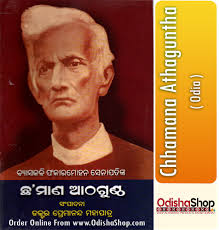


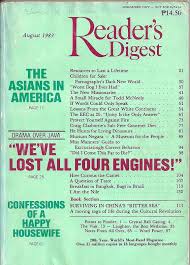


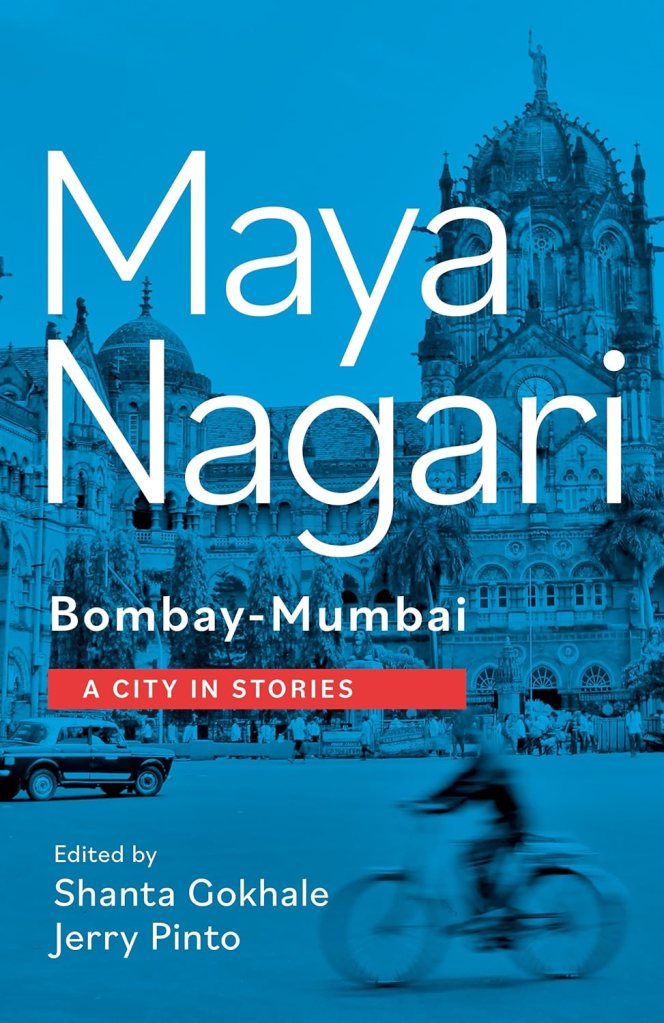


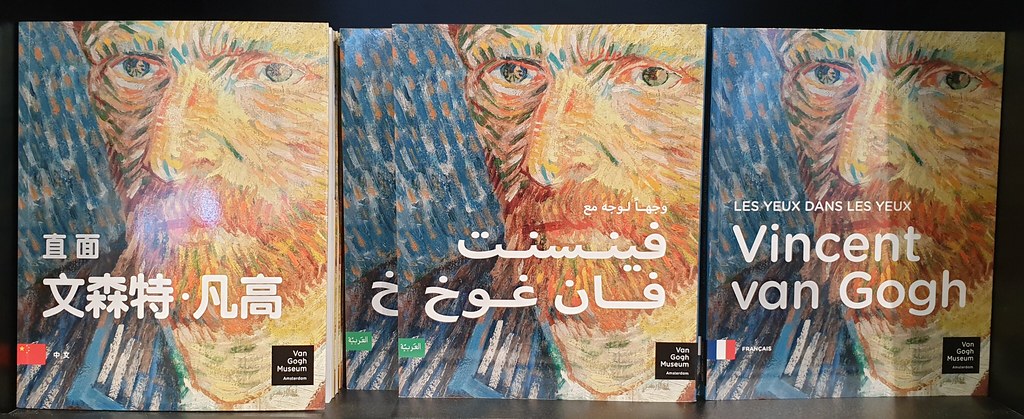


 Borderless