The door slammed shut with a thud.
And then, with another thud, it swung open again.
The door that should have remained closed,
Opened, allowing the unwanted noises and the wind
To fill the room.
The wind outside and the clamour assail me,
So, I gather myself and politely shut the door once more.
The door becomes calm again.
The wind finds its own path among the alleys of wind,
And the room becomes tranquil,
Filled with the stillness of the room, the air of the room,
And the thoughts of the room.
Ihlwha Choi is a South Korean poet. He has published multiple poetry collections, such as Until the Time When Our Love will Flourish, The Color of Time, His Song and The Last Rehearsal.
.
PLEASE NOTE: ARTICLES CAN ONLY BE REPRODUCED IN OTHER SITES WITH DUE ACKNOWLEDGEMENT TO BORDERLESS JOURNAL.
Perhaps, most sceptics will say it is against human nature to stop fighting and fanning differences. The first recorded war was fought more than 13,000 years ago in what is now a desert but was green long ago. Nature changed its face. Continents altered over time. And now again, we are faced with strange shifts in climate that could redefine not just the dimensions of the surface area available to humankind but also our very physical existence. Can we absorb these changes as a species when we cannot change our nature to self-destruct for concepts that with a little redefining could move towards a world without wars leading to famines, starvation, destruction of beautiful edifices of nature and those built by humankind? That we could feed all of humans — a theory that won economist Abhijit Banerjee his Nobel Prize in 2019 so coveted by all humanity — almost seems to have taken a backseat. This confuses — as lemmings self-destruct…do humans too? I would have thought that all humanity would have moved towards resolving hunger and facing the climate crises post-2019 and post-pandemic, instead of killing each other for retaining constructs created by powerbrokers.
In the timeless lyrics of ‘Imagine’, John Lennon found peace by suggesting we do away with manmade constructs which breed war, anger and divisions and share the world as one. Wilfred Owen and many writers involved in the World Wars wrote to showcase the desolation and the heartfelt darkness that is brought on by such acts. Nazrul also created a story based on his experience in the First World War, ‘Hena’, translated for us by Sohana Manzoor. Showcasing the downside of another kind of conflict, a struggle to survive, is a story with a distinctive and yet light touch from S Ramakrishnan translated from Tamil by B Chandramouli. And yet in a conflict-ridden world, humans still yearn to survive, as is evident from Tagore’s poem Pran or ‘Life’. Reflecting it is the conditioning that we go through from our birth that makes us act as we do are translations by Professor Fakrul Alam of Masud Khan’s poetry and from Korean by Ihlwha Choi.
A figure who questioned his own conditioning and founded a new path towards survival; propounded living by need, and not greed; renounced violence and founded a creed that has survived more than 2500 years, is the man who rose to be the Buddha. Born as Prince Siddhartha, he redefined the norms with messages of love and peace. Reiterating the story of this legendary human is debutante author, Advait Kottary with his compelling Siddhartha:The Boy Who Became the Buddha, a book that has been featured in our excerpts too. In an interview, Kottary tells us more of what went into the making of the book which perhaps is the best survivor’s guide for humanity — not that we need to all become Buddhas but more that we need to relook at our own beliefs, choices and ways of life.
Another thinker-cum-film maker interviewed in this edition is Vinta Nanda for her film Shout, which highlights and seeks resolutions for another kind of crisis faced by one half of the world population today. She has been interviewed and her documentary reviewed by Shantanu Ray Chaudhuri. Chaudhuri has also given us an essay on a bookshop called Kunzum which continues to expand and go against the belief we have of shrinking hardcopy markets.
Gastronomical adventures seem to be another concurrent theme in this edition. Rhys Hughes has written of the Indian sweets with gulab jamun as the ultimate life saver from Yetis while trekking in the Himalayas! A musing on lemon pickle by Raka Banerjee and Ravi Shankar’s quest for the ultimate dosaaround the world — from India, to Malaysia, to Aruba, Nepal and more… tickle our palate and make us wonder at the role of food in our lives as does the story about biryani battles by Anagaha Narasimha.
Talk of war, perhaps, conjures up gastronomic dreams as often scarcity of food and resources, even potable water and electricity is a reality of war or conflict. Michael Burch brings to us poignant poetry about war as Ramesh Karthik Nayak has a poem on a weapon used in wars. Ryan Quinn Flanagan has brought another kind of ongoing conflict to our focus with his poetry centring on the National Day (May 5th) in Canada for Vigils for Missing and Murdered Indigenous Women by hanging red clothes from trees, an issue that perhaps has echoes of Vinta Nanda’s Shout and Suzanne Kamata’s poetry for her friend who went missing decades ago as opposed to Rachel Jayen’s defiant poetry where she asserts her womanhood. Ron Pickett, George Freek and Sayantan Sur have given us introspective perspectives in verse. We have more poetry asking for a relook at societal norms with tongue-in -cheek humour by Jason Ryberg and of course, Rhys Hughes with his heartfelt poem on raiders in deserts.
The piece that really brought a smile to the lips this time was Farouk Gulsara’s ‘Humbled by a Pig’, a humorous recount of man’s struggles with nature after he has disrupted it. Keith Lyons has taken a look at the concept of bucket lists, another strange construct, in a light vein. Devraj Singh Kalsi has given a poignant and empathetic piece about trees with a self-reflective and ironic twist. We have narratives from around the world with Suzanne Kamata taking us to Osaka Comic Convention, Meredith Stephens to Sierra Nevada and Shivani Shrivastav to Ladakh. Paul Mirabile has travelled to the subterranean world with his fiction, in the footsteps perhaps of Jules Verne but not quite.
We are grateful to all our wonderful contributors some of whom have not been mentioned here but their works were selected because they truly enriched our June edition. Do visit our contents page to meet and greet all our wonderful authors. I would like to thank the team at Borderless without whose efforts and encouragement our journal would not exist and Sohana Manzoor especially for her fantastic artwork as well. Thank you all.
Wish you another lovely month of interesting reads!
ProfessorFakrul Alam brings to us Tagore songs in translation and in discussion on the season that follows the scorching heat of summer months. Clickhereto read.
LONELINESS

Like a breeze, I tread softly.
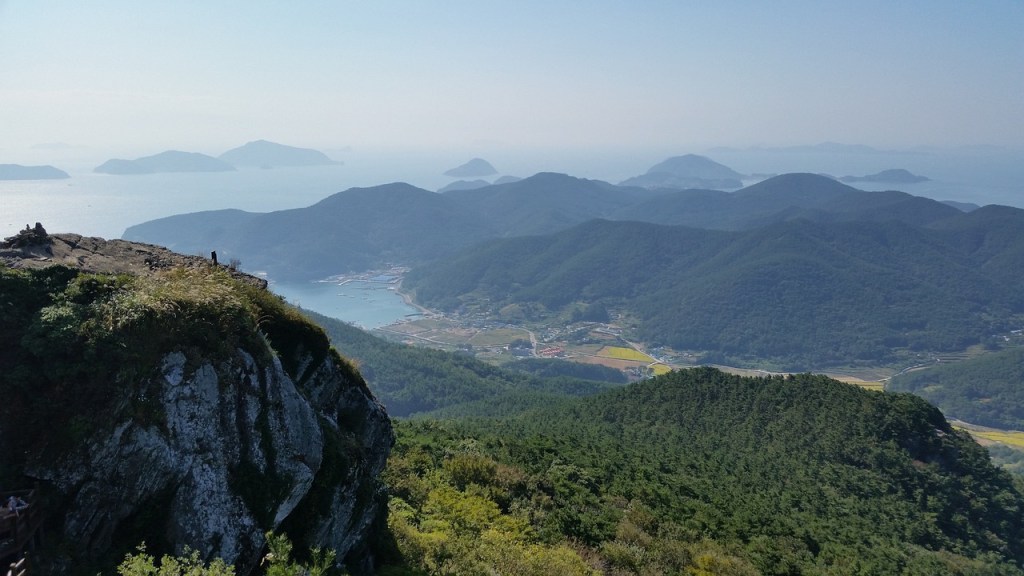
Sitting in the spring sun, gazing at the green mountain valley,
Life is truly a lonely thing.
Even with yesterday's memories and tomorrow's hopes,
Even with friends coming and going, amidst the daily bustles,
Living is truly a lonely thing.

All day today, I've been thinking of you.
Is my life lonely because I miss you?
Is this spring day lonely because you're there?
Like a breeze, I walk aimlessly.
Sitting in the grassy field, gazing at the lake's waves,
Even this blossoming season is lonely like this.
Ihlwha Choi is a South Korean poet. He has published multiple poetry collections, such as Until the Time When Our Love will Flourish, The Color of Time, His Song and The Last Rehearsal.
.
PLEASE NOTE: ARTICLES CAN ONLY BE REPRODUCED IN OTHER SITES WITH DUE ACKNOWLEDGEMENT TO BORDERLESS JOURNAL.
Keith Lyons interviews Asian Australian poet Adam Aitken about cross-cultural identity, and the challenges of travel, writing, and belonging. Click here to read.
Translations
Gandhiji, a short story by Nabendu Ghosh, has been translated from Bengali by Ratnottama Sengupta. Click here to read.
Khaira, the Blind, a story by Nadir Ali, has been translated from Punjabi by Amna Ali. Click here to read.
Clothes of Spirits, a folktale, has been translated from Balochi by Fazal Baloch. Click here to read.
Many Splendored Love, four poems by Masud Khan, have been translated from Bengali by Fakrul Alam. Click hereto read.
Birds are Alive, has been written and translated from Korean by Ihlwha Choi. Clickhere to read.
Nobo Borshe or on New Year, Tagore’s poem on the Bengali New Year, has been translated from Bengali by Mitali Chakravarty for the occasion this April. Click here to read.
Ratnottama Sengupta shows the impact of Gandhi and his call for non-violence on Nabendu Ghosh as she continues to emote over his message of Ahimsa and call for peace amidst rioting. Click here to read.
A translation from Nabendu Ghosh’s autobiography, Eka Naukar Jatri(Journey of a Lonesome Boat), translated by Dipankar Ghosh, from Bengali post scripted by Ratnottama Sengupta. Clickhereto read.
Ueharaby Kamaleswar Barua has been translated from Assamese and introduced by Bikash K. Bhattacharya. Clickhere to read.
Kurigram by Masud Khan has been translated by Professor Fakrul Alam from Bangla. Clickhere to read.
Bonfire by Ihlwha Choi has been translated from Korean by the poet himself. Clickhere to read.
In Indian Pale Ale, Rhys Hughes experiments with words and brews. Click here to read.
Conversation
Being fascinated with the human condition and being vulnerable on the page are the two key elements in the writing of fiction, author and poet Heidi Northtells Keith Lyons in a candid conversation. Clickhere to read.
In Multicultural Curry, Suzanne Kamata reflects on mingling of various cultures in her home in Japan and the acceptance it finds in young hearts. Clickhere to read.
Ratnottama Sengupta explores the poetry in lyrics of Bollywood songs, discussing the Sahityotsav (Literary Festival) hosted by the Sahitya Akademi. Clickhere to read.
BONFIRE

You are the wood,
I am the bonfire,
I embrace you and burn intensely.
You nestle in me
and ignite a brilliant flame.
In the pitch-black darkness,
in the biting cold that burns the flesh,
you disappear in the blaze,
and I, following you, am consumed.
You are the bonfire,
I am the wood,
in this fervent life we share.
Ihlwha Choi is a South Korean poet. He has published multiple poetry collections, such as Until the Time When Our Love will Flourish, The Colour of Time, His Song and The Last Rehearsal.
.
PLEASE NOTE: ARTICLES CAN ONLY BE REPRODUCED IN OTHER SITES WITH DUE ACKNOWLEDGEMENT TO BORDERLESS JOURNAL
Abhirup Dhar, a horror writer whose books are being extensively adopted by Bollywood, talks about his journey and paranormal experiences. Click here to read.
Translations
Munshi Premchand’s Balak or the Child has been translated from Hindi by Anurag Sharma. Click hereto read.
Atta Shad’s Today’s Child has been translated from Balochi by Fazal Baloch. Click here to read.
Masud Khan’s History has been translated from Bengali by Professor Fakrul Alam. Click here to read.
Ihlwha Choi translates his own poem,Lunch Time, from Korean. Click here to read.
Tagore’s Somudro or Ocean has been translated from Bengali by Mitali Chakravarty. Click here to read.
“Here with a Loaf of Bread beneath the Bough,
A Flask of Wine, a Book of Verse -- and Thou
Beside me singing in the Wilderness --
And Wilderness is Paradise enow.”

― Omar Khayyám (1048-1131); translation from Persian by Edward Fitzgerald (Rubaiyat, 1859)
I wonder why Khayyam wrote these lines — was it to redefine paradise or just to woo his beloved? I like to imagine it was a bit of both. The need not to look for a paradise after death but to create one on Earth might well make an impact on humankind. Maybe, they would stop warring over an invisible force that they call God or by some other given name, some ‘ism’. Other than tens of thousands dying in natural disasters like the recent earthquake at the border of Turkiye and Syria, many have been killed by wars that continue to perpetrate divides created by human constructs. This month houses the second anniversary of the military junta rule in Myanmar and the first anniversary of the Ukrainian-Russian war that continues to decimate people, towns, natural reserves, humanity, economics relentlessly, polluting the environment with weapons of mass destruction, be it bombs or missiles. The more weapons we use, the more we destroy the environment of our own home planet.
Sometimes, the world cries for a change. It asks to be upended.
We rethink, reinvent to move forward as a species or a single race. We relook at concepts like life and death and the way we run our lives. Redefining paradise or finding paradise on Earth, redefining ‘isms’ we have been living with for the past few hundred years — ‘isms’ that are being used to hurt others of our own species, to create exclusivity and divisions where none should exist — might well be a requisite for the continuance of our race.
Voices of change-pleaders rang out in the last century with visionaries like Tagore, Gandhi, Nazrul, Satyajit Ray urging for a more accepting and less war-bound world. This month, Ratnottama Sengupta has written on Ray’s legendary 1969 film, Goopy Gyne, Bagha Byne: “The message he sent out loud and with laughter: ‘When people have palatable food to fill their belly and music to fill their soul, the world will bid goodbye to wars.’” Shantanu Ray Chaudhuri has given an essay on one of the greatest pacifists, Gandhi, and his attitudes to films as well as his depiction in movies. What was amazing is Gandhi condemned films and never saw their worth as a mass media influencer! The other interesting thing is his repeated depiction as an ethereal spirit in recent movies which ask for changes in modern day perceptions and reforms. In fact, both these essays deal with ghosts who come back from the past to urge for changes towards a better future.
Delving deeper into the supernatural is our interviewee, Abhirup Dhar, an upcoming writer whose ghost stories are being adapted by Bollywood. While he does investigative stories linked to supernatural lore, our other interviewee, Andrew Quilty, a renowned journalist who has won encomiums for his coverage on Afghanistan where he spent eight years, shows in his book, August in Kabul:America’s Last Days in Afghanistan and the Return of the Taliban, what clinging to past lores can do to a people, especially women. Where does one strike the balance? We also have an excerpt from his book to give a flavour of his exclusive journalistic coverage on the plight of Afghans as an eyewitness who flew back to the country not only to report but to be with his friends — Afghans and foreigners — as others fled out of Kabul on August 14 th 2021. While culturally, Afghans should have been closer to Khayyam, does their repressive outlook really embrace the past, especially with the Taliban dating back to about only three decades?
This intermingling of life and death and the past is brought to life in our fiction section by Sreelekha Chatterjee and Anjana Krishnan. Aditi Yadav creates a link between the past and our need to travel in her musing, which is reminiscent of Anthony Sattin’s description of asabiyya, a concept of brotherhood that thrived in medieval times. In consonance with wanderlust expressed in Yadav’s essay, we have a number of stories that explore travel highlighting various issues. Meredith Stephens travels to explore the need to have nature undisturbed by external interferences in pockets like Kangaroo Island in a semi-humorous undertone. While Ravi Shankar travels to the land’s end of India to voice candid concerns on conditions within Kerala, a place that both Keith Lyons and Rhys Hughes had written on with love and a sense of fun. It is interesting to see the contrasting perspectives on Southern India.
Professor Fakrul Alam has also translated poetry where a contemporary Bengali writer, Masud Khan, cogitates on history while Ihlwha Choi has translated his own poem from Korean. A translation of Tagore’s poem on the ocean tries to capture the vastness and the eternal restlessness that can be interpreted as whispers carried through eons of history. Fazal Baloch has also shared a poem by one of the most revered modern Balochi voices, that of Atta Shad. Our pièce de resistance is a translation of Premchand’s Balak or the Child by Anurag Sharma.
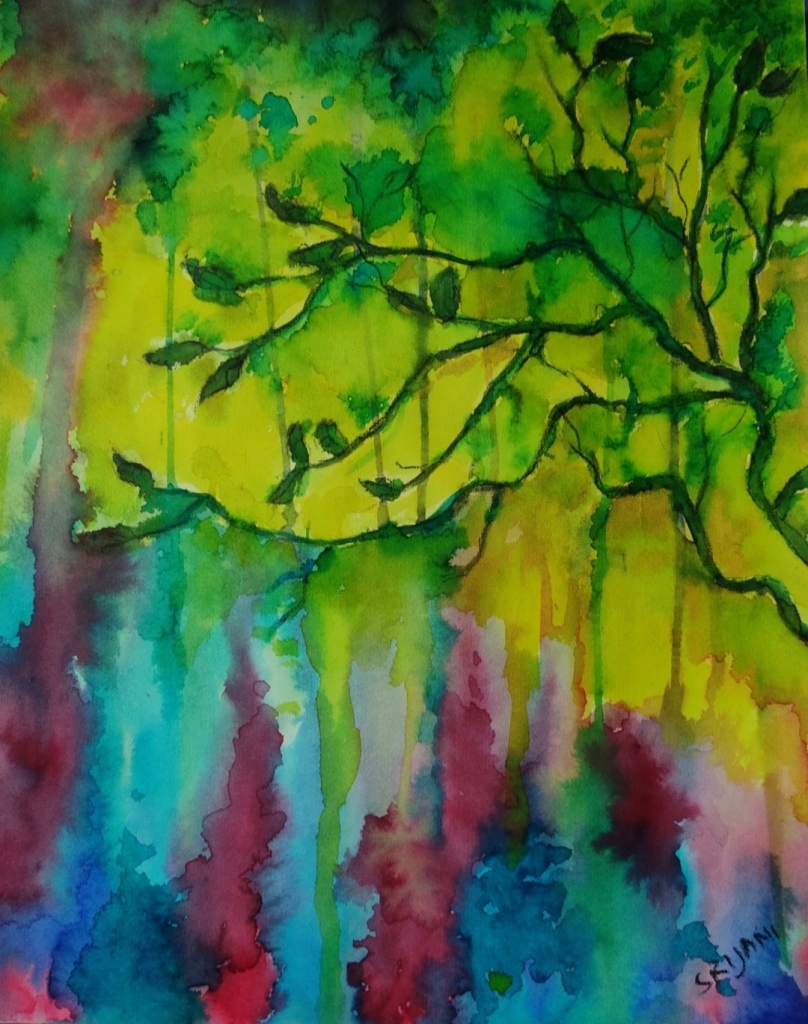
This vibrant edition would not have been possible without all the wonderful translators, writers, photographers and artists who trust us with their work. My heartfelt thanks to all of you, especially, Srijani Dutta for her beautiful painting, ‘Hope in Winter’, and Sohana for her amazing artwork. My heartfelt thanks to the team at Borderless Journal, to our loyal readers some of whom have evolved into fabulous contributors. Thank you.
Do write in telling us what you think of the journal. We look forward to feedback from all of you as we head for the completion of our third year this March.
LUNCH TIME

Magpies eat the cat's lunch after the feline finishes.
Sparrows eat the leftovers after the magpies finish.
Since a monk gave the cat something to eat,
The cat ate lunch with relish.
The magpies and sparrows also were satiated.
After all finished their lunch,
The monk entered his sunbang* to take a nap.
The cat climbed to the hill to rest in the shade.
The magpie and sparrows scattered in the field to play with friends.

*sunbang(禪房):A room for Zen meditation at a Buddhist temple
Ihlwha Choi is a South Korean poet. He has published multiple poetry collections, such as Until the Time When Our Love will Flourish, The Colour of Time, His Song and The Last Rehearsal.
.
PLEASE NOTE: ARTICLES CAN ONLY BE REPRODUCED IN OTHER SITES WITH DUE ACKNOWLEDGEMENT TO BORDERLESS JOURNAL




 Borderless