"I wish you survival,
Health
And the closed sky above you."

— Refugee in my own Country/I am Ukraine, Lesya Bakun
Despite this being the season of multiple new years around Asia, we cannot close our eyes to the skies that connect all the world like a blue dome. Though celebrations and humour continue to lighten the darkness of war, while Ukraine is being wrecked, can we turn our faces towards only festivities?
I had an interesting anecdote about how before the onset of the Gregorian calendar, new years in the world were celebrated around March and in some places in September. The Earth would turn fecund and green with spring, a beautiful season sprinkled with love and nostalgia as Michael R Burch tells us in his poetry. However, despite all the opulence of nature, it is hard to watch a country being bombed and families splintered to man a war that supposedly guards a human construct called ideology and blocs. Ukranian refugee, Lesya Bakun, in an interview says: “It is not a clash of ideologies. It is a fight for our country and nation to exist.” Listening to Lesya’s stories makes one amazed at the bravery of the Ukrainians battling what seems to be cultural hegemony. It reminds of the war in Bangladesh in 1971. Though incredibly courageous in voicing her experiences, Lesya is traumatised and has a psychosomatic cough as she sends her voice and text messages from her mobile through Telegram. There were times when she was just weeping or angry for the questions asked, and justifiably so, as her home in Kharkiv, where she lived was under attack, and the town of Mariupol, where she was born, has been wrecked by the war.
The refrain of the pain of a refugee continues to reverberate in a book reviewed by Rakhi Dalal, Ramy Al-Asheq’s Ever Since I Did Not Die, written originally in Arabic and translated by Isis Nusair. The Syrian-Palestinian poet refused to clarify whether his writing was prose or poetry — perhaps these borders and boxes drawn by humankind are breaking down in reality. Perhaps, this new year, the time is ripe to look forward to a new world that transcends these borders. This is also the first time we have had the privilege of carrying reviews of translations from Arabic and also from Turkish. Gracy Samjetsabam has reviewed a translation of a Turkish novel by Iskendar Pala called The Tulip of Istanbul, translated by Ruth Whitehouse. Bhaskar Parichha has reviewed a book by Kiran Manral, Rising: 30 Women Who Changed India while Candice Louisa Daquin has drawn our focus on a poetry collection by Marjorie Maddox, Begin with a Question, where the perceived divisions do not matter while the poet questions the larger issue of faith in quest of answers.
Is it the same kind of quest that has led Strider Marcus Jones to create the Lothlorien Journal, named reminiscently after Tolkien’s elvish ‘Lothlorien’ in Lord of the Rings? Find out Jones’s views and flow with his fluid poetry in the featured interview. Keith Lyons has been in conversation with Ivy Ngeow, an upcoming writer and the editor of a recent anthology of Asian writing where she has retained different styles of English across the world in a single book. While this could be beneficial to writers, would readers be comfortable reading stories with different styles or dialects of English without a glossary?
Our book excerpts are from more Asian books. The Year of the Rat and Other Poemsedited by Malachi Edwin Vethamani has an interesting title poem which has been shared in the excerpt. The other excerpt is from a fast-paced novel, Half-Blood, by Pronoti Datta. We also have a fast-paced story by a writer from France called Paul Mirabile set in Portugal; two that verge on the bizarre from Keiran Martin and Amjad Ali Malik; a poignant story from Sutputra Radheye and another that shows the positive side of voicing a protest against wrongs by Devraj Singh Kalsi. Kalsi has also given us a tongue in cheek musing called When Books have Wings.
On the lighter vein are travel essays by Ravi Shankar and Meredith Stephens. They take us to the Himalayas in Nepal and to Tasmania! Suzanne Kamata has taken us to an owl cafe in Japan! At the end of her column, one feels sad for the owls as opposed to Erwin Coombs’ narrative that evokes laughter with his much-loved pet cat’s antics.
Humour is evoked by G. Venkatesh who with an ability to find silver linings in dark clouds talks of cricket and lessons learnt from missing his school bus. Adnan Zaidi has also analysed his poetic abilities with tongue-in-cheek comments. Kenny Peavy gives a lighthearted rendition in praise of boredom and interactions with nature. It is good to have laughter to combat the darkness of the current times, to give us energy to transcend our grief. Keith Lyons hovers on the track between humour and non-humour with his cycling adventures. Rhys Hughes seems to talk of both his favourite poem and the war in a lighter shades, in no way insensitive but his observations make us wonder at the sanity of war. We have much of war poetry by a number of writers, poetry on varied issues by Luis Cuauhtémoc Berriozabal, George Freek, Sybil Pretious, Kisholoy Roy, J.D. Koikoibo and many more.
Candice Louisa Daquin has taken on the onus of bringing to our notice how language can impact us in the long run while Ratnottama Sengupta has explored beggary in films, fiction and fact. The Nithari column runs a real-life story of a young boy narrated by his brother, Sachin Sharma. It has been translated from Hindustani by Diksha Lamba. The trauma faced in 2006 is strangely not discussed in the story though it hovers in the backdrop between the lines. We also have a translation of a Balochi folk story by Fazal Baloch and a Korean poem by Ihlwha Choi. Translations from Tagore by Fakrul Alam and Somdatta Mandal have honoured our pages again. Mandal has sent us fun-filled skits by Tagore. But are they just fun or is there something more? We also have a translation of a long poem that explores a different aspect of Tagore, his empathy for the downtrodden which led him to create Sriniketan and regard it as his ‘life work’.
We have a bumper issue this time again — especially for the Asian new years; Thai, Nepalese, Bangladeshi, multiple Indian and more…
We would like to thank Sohana Manzoor for our cover painting and Gita Viswanath for her artwork. I would like to thank our wonderful team who with their contributions make this journal a reality. All the contributors deserve a huge thanks as do our loyal readers.
I wish you all a wonderful start to a non-Gregorian new year and hope that peace prevails over parts torn by wars and dissensions.
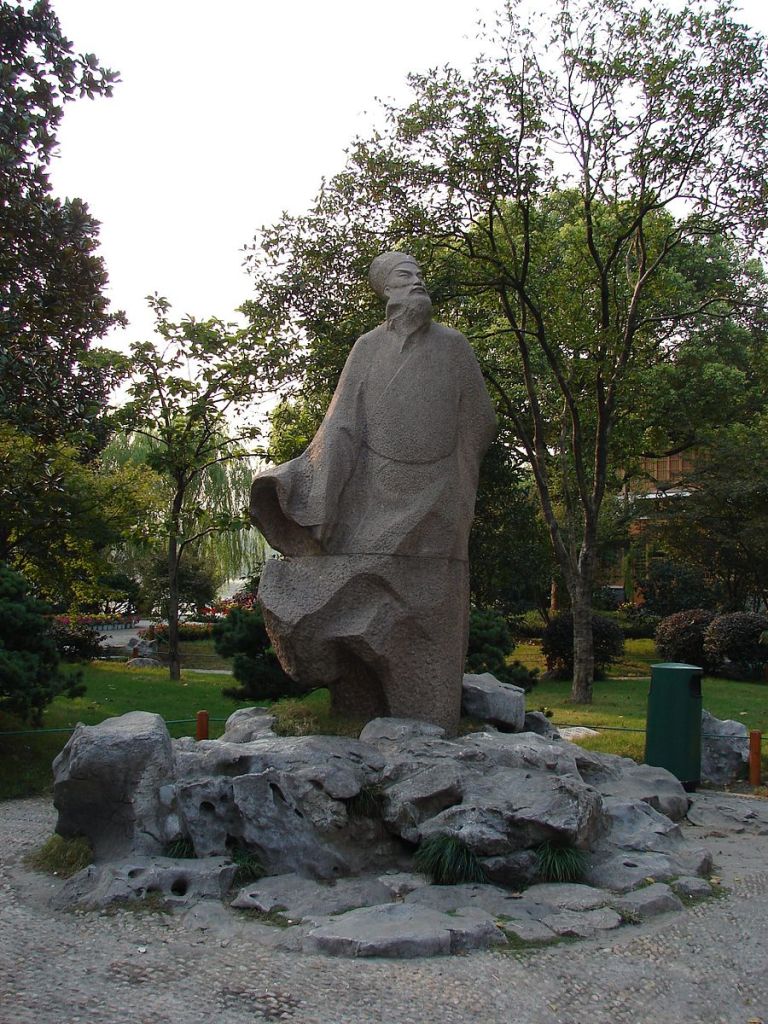
POEM AFTER OU YANG HSIU

In my younger days,
I was arrogant, thinking
I was wise. I had friends,
who reassured me.
Now they’re dead,
and I’m sixty-five.
I took to wine.
It helped, but
life moves by so fast,
nothing lasts. Alone,
I watch the river
and its eternal flow.
I sip a cup of tea,
listening to clamouring geese.
They make me smile.
I think, perhaps,
they’re laughing at me.
George Freek’s poetry has recently appeared in The Ottawa Arts Review, Acumen, The Lake, The Whimsical Poet, Triggerfish and Torrid Literature.
.
PLEASE NOTE: ARTICLES CAN ONLY BE REPRODUCED IN OTHER SITES WITH DUE ACKNOWLEDGEMENT TO BORDERLESS JOURNAL
And as imagination bodies forth
The forms of things unknown, the poet's pen
Turns them to shapes and gives to airy nothing
A local habitation and a name.

-- Midsummer Night's Dream (premiered 1605)by William Shakespeare
Imagine… if words could weave a world in harmony! Perhaps… then as Shakespeare declared and more recently John Lennon wrote in his song ‘Imagine’ (1971), we might have constructed a new world…
In hope of the same perhaps, Nazrul had published his poem, ‘Bidrohi‘ or the rebel a hundred years ago, a few months before TS Eliot published Wasteland, again a poem raising humane concerns and reinforcing values post the First World War. More recently Akbar Barakzai who has passed on at the start of this month, wrote about a better world in his poem, ‘We are all Human‘. And yet we have a war …
In response to the war, we have modern voices that ring out in harmony, including the voice of a Ukranian refugee. In reaffirmation of a world that can transcend divisions created by human constructs and soar in a virtual world, we also present to you interviews of half-a-dozen poets.
From the Treasury
Rebel or ‘Bidrohi’: Nazrul’s signature poem from 1922, ‘Bidrohi‘, translated by Professor Fakrul Alam. Click here to read.
A Special Tribute
We are All Humanby Akbar Barkzai, translated by Fazal Baloch, has been published as not only a tribute to the poet who left us forever on 7/3/2022, but also as his paean to humanity to rise about differences which lead to war and horror, to unite us as one humankind. Clickhere to read.
War, Peace and Poetry
Poetry from across the world in support of peace and voicing concerns over the humanitarian crisis in Ukraine, we have Ukranian Lesya Bakun give us poetry as a war victim, a refugee. Rhys Hughes, Ron Pickett, Michael R Burch, Kirpal Singh, Malachi Edwin Vethamani, Suzanne Kamata, Mini Babu, Sybil Pretious and Mitali Chakravarty have contributed poetry written for the Ukraine crisis. Click here to read.
Poets across Borders
Half-a-dozen poets from different continents tell us about their poetry. The poets include Ryan Quinn Flanagan, George Freek, Luis Cuauhtémoc Berriozabal, Ihlwha Choi, Sutputra Radheye, Anusuya Bhar. Click here to read.
We surfed virtually around the globe to gather half-a-dozen poets for the lovely lines they write to ask them what makes them write as such. We start from the top of the cold frozen north to travel down to warmer climes where birds and bees have started singing tunes of a vibrant spring. Meet some of the moderns who contribute towards a world undivided by manmade constructs...
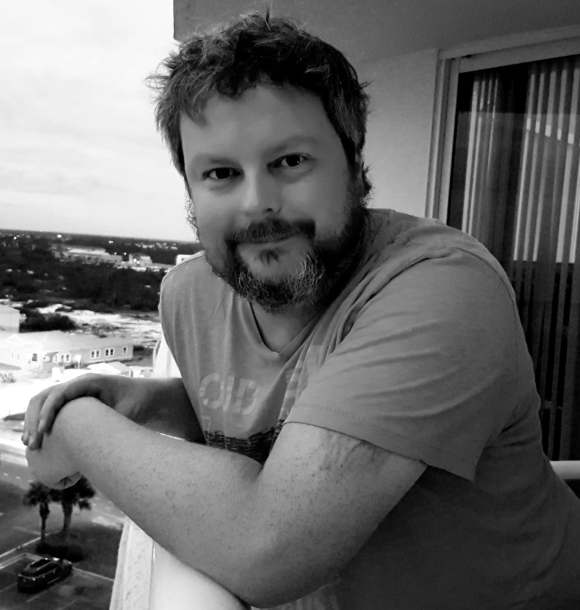
Ryan Quinn Flanagan is a Canadian-born author residing in Elliot Lake, Ontario, Canada with his wife and many bears that rifle through his garbage. His work can be found both in print and online. He is truly prolific and his poetry endears as you read it repeatedly. Click here to read a poem by him.
Why do you write poetry?
Writing, particularly the physical mechanism, has always been something I enjoyed. It is a solitary act that I derive great enjoyment from. To be able to sit down and create something seems a wonderful thing to me, regardless of medium. I love fine art as you know, but cannot paint. Writing is my music, my form of painting I guess. It is a great release as well. To be able to create and express as I wish is the ultimate freedom.
What is your poetic process?
I may have a few rough notes and ideas/titles, but nothing really fleshed out. I get up and never shower on a writing day. I don’t know why, but it seems to get me in the right head space. Then I listen to the same music and eat the same thing I have for years. For writing days, that is oatmeal. Then I head upstairs and sit down to write with some wine. I tend to put on some classical music so that my voice is the only one, but I can still zone out to the musicality of what is playing. I tend to do that for about six hours at a time. That is the same writing process I have followed for years now.
Do you believe in inspiration and the Muse? Or is it the sweat of your brow alone?
I most definitely believe in inspiration and the Muse. That is why I repeat the same processes, to put myself in the right inspirational mood or be ready for the Muse or whatever you wish to call it. I believe that things are created in a certain time and space and once created, belong to that specific time and space. You can never really return to that exact place, but you can look back on it through the work for sure. Other things are then created in a whole other head space and the process continues. Sweat of the brow or hard work is also important though, not only in creation but in submissions, building and assembling, as well as editing books. There is a lot of work that goes into everything, so hard work must be there to compliment any inspiration that may come.
Do you think what can be said in poetry can be said in prose too?
I think so. I don’t really differentiate between poetry and prose that much. It’s all a voice and time and expression to me, so whatever way it chooses to come out is not overly importance to me. For me, it is much more to get it out instead of caring much about how or why. And to enjoy the mechanism while doing so.
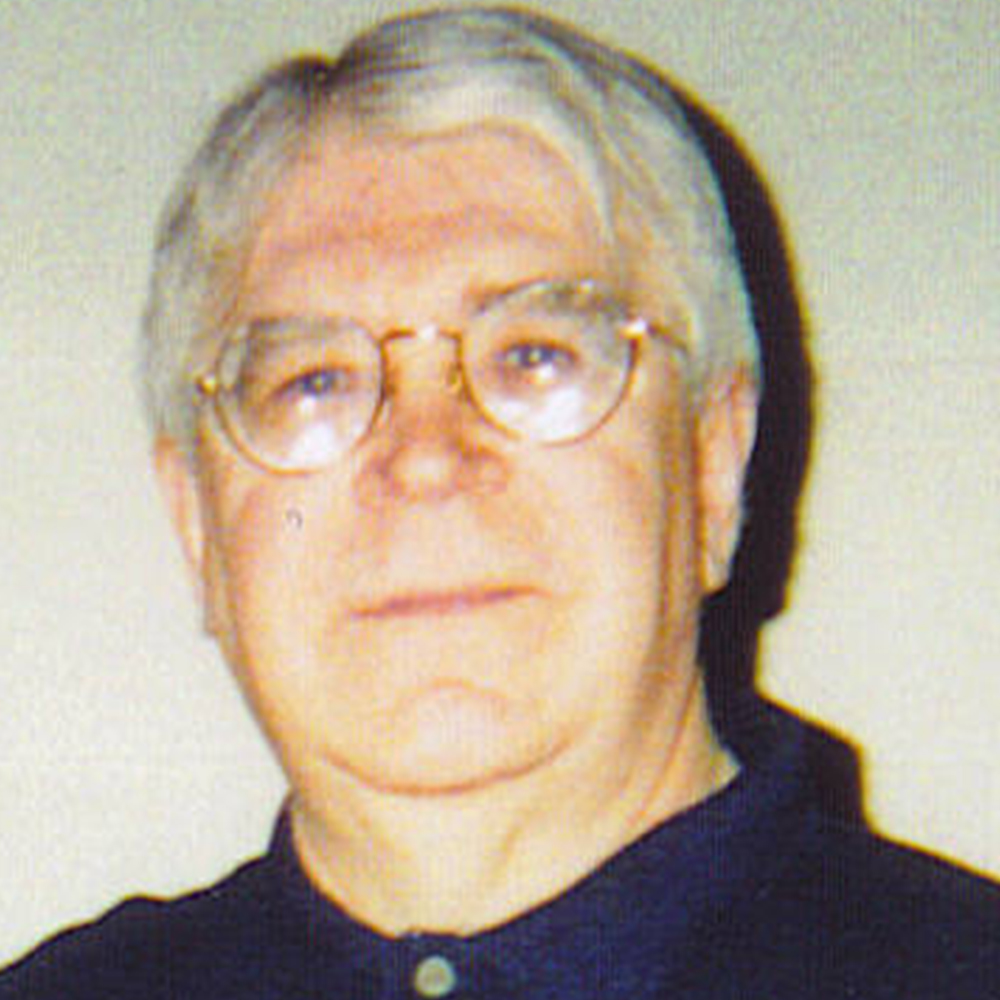
George Freek is a poet and playwright living in Illinois. His poetry and plays have been widely published. His plays have been performed by the Milwaukee Repertory Theatre, the Changing Scene in Denver, and the Organic Theatre in Chicago, among others. He has also received grants from the Illinois Arts Council and The National Endowment for the Arts. His poetry is modelled often after Chinese poets of the Tang and Song dynasty. Click here to read his poem.
Why do you write poetry?
I write poetry because it’s the form that best suits my thoughts and feelings.
What is your poetic process?
The process begins with the need to express an emotion. Then it’s work to find the appropriate “objective correlative” in T.S. Eliot’s words.
Do you believe in inspiration and the Muse? Or is it the sweat of your brow alone?
I don’t necessarily believe in “Inspiration” unless that means simply the initial urge to express the emotion or the thought. After that it’s mostly work to make it sound right and unpretentious and yet avoid banality.
Do you think what can be said in poetry can be said in prose as well?
I think my response to your last question is included in my first statement. If something can be expressed in prose, it’s not poetry, although there is some prose which has the quality of poetry, e.g. Joseph Conrad!
Luis Cuauhtémoc Berriozabal is a Mexican-born author, who resides in California and works in the mental health field in Los Angeles. He is prolific and often his poetry shuttles is enriched by his ability to assimilate varied cultures into one lore. Click here to read his poetry.
Why do I write poetry?
I write poetry because I like to read it. In the many years I have been reading poetry, I continue to find new writers, some no longer in this world. These writers have influenced my work over the years. I write poetry because I enjoy writing it. Sometimes I write personal poetry. It is a sort of catharsis. It is a way describing how I am feeling about myself, about others, and about the world. Sometimes I write nonsense and rubbish, which I try to keep away from readers.
What is your poetic process?
My poetic process is writing one poem a day. It is really that simple for me. It could be a three liner, a ten liner, or a long poem of more than 20 to 30 lines. If a poem comes out like rubbish or a journal entry, I try my best to come up with something better the next time around. There are times I get lucky, and a keeper comes along. I am not writing to impress anyone. I am writing for myself most of all and I share my words with readers. If some like what I have written, then that makes me feel good. If someone hates what I have written, I could not care less. I will not lose any sleep over it. I will continue to write as long as I have breath or until something else comes along that takes up my interest.
Do you believe in inspiration and the Muse? Or is it the sweat of your brow alone?
I do believe in inspiration and the Muse. I am inspired by everything and everyone I come in contact with: nature, night and day, moon and sun, the stars and the rain; the woman I love and the dreams that come along, some haunting and some sublime. I am inspired by the poetry, art, lyrics, and music of others. I am inspired by the news of the world, by the clients I work with in mental health, and those close to me that care for me (my family and friends). I am influenced by the birds in flight, the landscape of Los Angeles, trees, flowers, and animals. The sweat of my brow alone only comes into play when you consider everything else that provides knowledge to one’s mind. Whether clever or strange, imagination is also a great thing to have.
Do you think what can be said in poetry can be said in prose as well?
While poetry is brief and concise as opposed to prose, what can be said in poetry can also be said in prose. Authors writing prose can be poetic in their words and have been throughout the years. If I had more patience, I would give prose a try one day. I am more comfortable in poetry, where I can express something in a few words. Get in, write it, and get it out.
Ihlwha Choi is a South Korean poet. He has published multiple poetry collections and what is most interesting is that he translates his own Korean poetry to English to reach out to the world. Click here to read his poetry.
Why do you write poetry?
I grew up in the countryside. Most of the people at that time were poor agriculturists. I was accustomed to the lifestyle of a farmer. I couldn’t access musical instruments or painting equipment. I naturally expressed my thoughts and feeling with my pencils on the notebook. During my middle school, I fell in love with a popular girl. She was popular because she received a poetry award. I fell in love with her, but my love was unrequited. I was very disappointed, so I began to write something on the paper. Most of them were poems but I have never learned the method of poetry writing. There were no teachers around me who taught me about poetry. I tried hard to write good poetry but always failed. After that period, I was very busy studying for university entrance exam and military service. In our country, all young men must go to the army or navy or air force. I served as a sergeant in the army for three years. Then, I had another problem of earning a living and marriage. My passion for writing poetry revived after I married. I don’t think that I had been born with lot of poetic talent. I don’t want to be famous but try hard to write better poetry for my own satisfaction.
What is your poetic process?
Usually, I do not sit in front of the desk to write a poetry. When I brush my teeth, wash dishes or read, one line of a poem comes to me and I catch it in my memory or on the memo of cell phone. I call it the seed of poetry. Later, when I sit in front of my personal computer, I write a poem based on that line. Sometimes I write a poem very quickly because of the first line and sometimes it is a longer process.
Do you believe in inspiration and the Muse? Or is it the sweat of your brow alone?
I think both sides are necessary. Inspiration gives the poet pleasure and happiness. But if he does not try hard, he will not be able to write poetry.
Do you think what can be said in poetry can be said in prose too?
Yes, what we say in a poetry can be said in prose. The only difference is the form of expression. One poet said that when you want to know if a poem is good or not, it is necessary to rewrite it in prose. Some poems are so difficult to understand that ordinary reader cannot grasp it. When a poetry can be explained meaningfully into prose they are recognised as good poetry. But every prose cannot be changed into poetry. Poetry needs symbol, metaphor, rhythm, simile, compression etc. Though nowadays a poems are sometimes written like a prose without any stanza or poetic line. There should at least be some rhythm to make it into a poem, even though it is written like a prose.
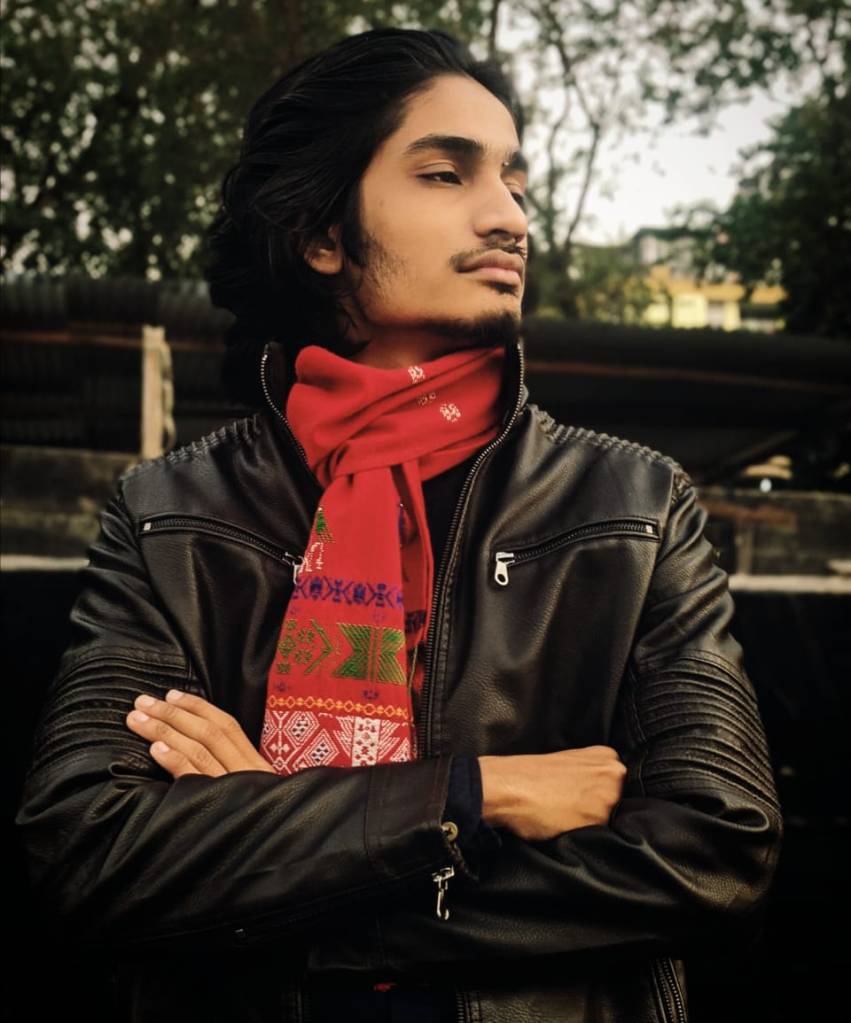
Sutputra Radheye is a poet from India. He has published two poetry collections — Worshipping Bodies (Notion Press) and Inqalaab on the Walls (Delhi Poetry Slam). His works are reflective of the society he lives in and tries to capture the marginalised side of the story. Click here to read his poetry.
Why do you write poetry?
I write poetry because it gives me a voice. For me, it is a personal and intimate affair. In poems, I can be naked. I can roam naked on the streets of my mind without pretending. I can be blunt, and raw without filtering myself. I feel safe in my poetry and so I write.
What is your poetic process?
There is no such process for me. I write when I feel something. I write when I am angry. I write when I am happy (though this only happens sometimes). I write when I am depressed and pessimistic. I write to unleash my demons on paper so that I don’t need to carry them to bed with me. It is more like a release for me. Sometimes, I find it to be metaphysical where you can just leave everything behind once you write it down. But not always. The process keeps changing. I used to listen to music while writing two years back. Now, I don’t. What has remained constant is this burst of raw feelings.
Do you believe in inspiration and the Muse? Or is it the sweat of your brow alone?
Yes. I believe in inspiration and muse. As human beings with different tastes or choices, we will get intrigued by different things in life and they somehow become a part of our poetry. It is those things that separates our poetry, I believe.
Do you think what can be said in poetry can be said in prose too?
Yes it can be said in prose too. But, the way it will be said will be different. It will lose certain elements that poetry brings but will gain what prose has to offer.
Anasuya Bhar is an academic teaching English literature in St. Paul’s Cathedral Mission College, Kolkata, India. She would also want to be known as a poet. She writes lovely essays and has written on eminent voices like Tagore and Satyajit Ray. Click here to savour her poetry.
Why do you write poetry?
I write poetry merely to unburden. In many ways, poetry is also therapeutic for me. The motive impulse for my poetry is mostly a moment of pain and sorrow. I feel that the best way to come to terms with such moments is to weave words around them in comfort, camaraderie and friendship. My poetry usually concentrates on the self and its many experiences, moods and flavours.
What is your poetic process?
Most commonly, poetry comes to me in a whiff of words, pluri-significant and usually in a gust, like a burst of fresh air, triggered by memory. I also often get excited by particular and occasional colours, shades of light, and even smells, because they bring with them a certain cosiness, which is both intimate and personal. It is only in moments of calm and silence, when my mind usually processes these sudden words into some kind of meaning, trying to give concrete forms to fleeting bouts of impressions. My poems are usually ready after one, or two revisions, but they do need tending and pruning.
Do you believe in inspiration and the Muse? Or is it the sweat of your brow alone?
Yes, I do believe in inspiration and the concept of the Muse. My poetry is imbued with a feminine presence – that of warmth, care, nurture, protection and sometimes even passion. Such a presence has sometimes found embodiment but, almost always remains elusive and a figment of my imagination, unseen but, powerfully felt. This has always remained with me; it is only now that it has compelled me to express myself in words and through poetry. My muse is a picture of beauty and charm and sometimes even of spirituality.
Do you think what can be said in poetry can be said in prose too?
Yes, at times, perhaps. But poetry is metaphorical, and one can suppress as well as express oneself in it. Prose might prove to be more probing at times. I feel that there are subtle differences between prose and poetry, even though prose can be poetic and philosophical.
We are grateful to all the poets for sharing with us their personal journeys.
The poets have been interviewed online by Mitali Chakravarty.
PLEASE NOTE: ARTICLES CAN ONLY BE REPRODUCED IN OTHER SITES WITH DUE ACKNOWLEDGEMENT TO BORDERLESS JOURNAL.
Only when the cries of the wretched of the earth will stop renting the skies,
Only when the oppressor’s bloody sword will cease smearing battlefields,
			A rebel, weary of war,
			Only then I won’t stir.
…
I’m the ever-rebellious hero--
	Soaring over the world, all alone, head forever held high!

--  Rebel or 'Bidrohi' (1922) by Nazrul, translated by Fakrul Alam
Borderless: Digital Art by Ayaan Ghoshal
These fragments I have shored against my ruins
…
Datta. Dayadhvam. Damyata.
 Shantih shantih shantih

-- Wasteland (1922) by TS Eliot
These lines reiterate values we would do well to live by in a war-torn, dissension-worn world where the need for a rebel to recreate a humane society that lives with values such as peace, generosity, acceptance, tolerance, compassion and restraint — is a felt need. The two great poems made history by remaining as popular a hundred years after they were written — ‘The Rebel’ by Nazrul and TS Eliot’s ‘Wasteland’. Nazrul defined a rebel as an iconoclast who breaks norms to find peace, justice and love for all, to move towards the creation of an ideal world. TS Eliot quoted from the Upanishads and ended with redemption coming with giving (giver perhaps denoted generosity), compassion and restraint. Despite the wisdom of these great poets and seers, war still continues a reality. The values remain neglected not just in as we see in conflicts, like the one in Ukraine that destroys lives, property and nature with intolerance towards differences, but also in our personal lives. Tagore also reiterated the same need for stepping out of personal, social, economic and political insularity. We carry a translation of a song that echoed this need while inviting participation in his ecstasy. He wrote:
Why do you sit in isolation,
Dwelling on self-centred issues?
Tagore had not only written of the negative impact of isolation from the world but he led by example, building institutions that could lead the world towards pacifism with acceptance of diversity and inclusiveness. Sriniketan and Santiniketan were created to move towards these ideals. Many of the people he influenced or who studied in Santiniketan made history, like Prime Minister Indira Gandhi, Satyajit Ray; many added to the sense of inclusiveness, like Mahasweta Devi, who other than her enormous work to integrate different cultures, also wrote a memoir about Santiniketan in Bengali. Radha Chakravarty, nominated for the Crossword Translation Award (2004) for In the Name of the Mother by Mahasweta Devi, has translated this memoir, a narrative which brings us close to Tagore’s ideals of the whole world being a family. How wonderful it would be if the world were open to such ideals and would behave like a global family and not go to war! Mahasweta Devi, Our Santiniketan, which has been reviewed by Meenakshi Malhotra, reiterates Tagore’s vision of a planet living in harmony with the flora and fauna.
Bhaskar Parichha has reviewed another non-fiction by Ashok Kumar Pandey, Why They Killed Gandhi; Unmasking the Ideology and the Conspiracy. Parichha writes: “The finest point about this book is its storytelling…” The book review brings to mind in the midst of a war and violence that Gandhi had tried to erase this mindless destruction of lives, nature and cities with Ahimsa or non-violence. Will we ever rise up to it? Perhaps… We see strains of recognising the negative impact of insular outlook in writings like that of Temsula Ao, a Sahitya Akademi Award winner, according to Indrashish Banerjee who has reviewed her new book,The Tombstone in My Garden: Stories from Nagaland. Keith Lyons has reviewed Asian Anthology: New Writing Vol. 1: Stories by Writers from Around the World, edited by Ivy Ngeow, an exotic medley of Asian stories, one of which has been excerpted as well.
We are privileged to carry another excerpt from Ruskin Bond’s Friends in Wild Places: Birds, Beasts and Other Companions, a hilarious story about a pet tiger adopted by the legendary writer’s grandfather. What is amazing about Ruskin Bond’s writing is the love and compassions for all creatures great and small that colours the tongue-in-cheek humour he rolls out to his readers. If only we could think like Bond, there would be no wars. His writing, I feel, transcends political borders or ‘isms’, and laces with love and compassion tales of menageries of monkeys, snakes, mongoose, humans of different denominations. This excerpt is a treat we are giving Borderless Journal as the journal completes two years of its existence. We are truly grateful to Speaking Tiger for sharing this excerpt with us. But our celebrations this time are sombre as the war rages with incoherence accompanied by heart-breaking ravages.
The refrain from Ukraine has been taken up by Ratnottama Sengupta as she takes us through the past and present experiences of the devastated country, bringing in the views of the legendary folk singer and pacifist, Pete Seeger (1919-2014), who she had interviewed over a span of four days. The writer of ‘Where have all the Flowers Gone?’, a song based on an Ukrainian folk song, Seeger said, “The point is not to ask for yourself alone — one has to ask for everybody: Either we all are going to make it over the rainbow or nobody is going to make it.” Candice Louisa Daquin has also pondered on the justification of war, contextualising it with the current one along with her essay on the paradox of modern linguistic communication.
We have an exhaustive essay on the legendary Satyajit Ray’s creations by Anasuya Bhar. Malhotra has pondered at exclusivity reinforcing divisions, margins and borders to plague humankind, against the backdrop of the Women’s Month, March. Highlighting women in writing, we have interviewed two female writers, one from Nepal and another from Bangladesh. Sangita Swechcha lives in UK but her writing, till now largely in Nepali, often pines for her home embedded in the Himalayas whereas, an expat, Neeman Sobhan, shuttles between Bangladesh and Italy with the affluence and assurance of a privileged background.
Finding a way to override lack of privileges, deprivation and violence, are the youngsters of Nithari on the outskirts of Delhi where less than two decades ago other than poverty, savage criminality devastated the local populace. These youngsters transcended the suffering over time with help from volunteering NGOs to create narratives that amaze with their inventiveness and confidence. Tanveer Hussain from Nithari, self-motivated and self-made from a young age, asks questions that would be relevant for all humankind in a letter to God. It has been translated from Hindustani by Vritika Thareja of pandies’. This edition’s translations include Professor Fakrul Alam’s mellifluous rendition of Jibanananda Das’s poetry from Bengali to English, Ihlwha Choi’s Korean poetry and a Balochi poem by Munir Momin rendered in English by Fazal Baloch. Baloch had earlier translated poems by Akbar Barakzai, a great poet who departed on 7th March, depriving the world of yet another powerful writer who imbibed hope of a better future in his poetry. We are privileged to have hosted the translations of some of his poems and his last interview.
Another well-known poetic voice from Singapore, Kirpal Singh, has given us poignant poetry that can be applied to the situation that is leading to the wreck of Ukraine. Anasuya Bhar has poetry, one of which despite being in the ilk of Nazrul’s great poem, ‘Rebel or Bidrohi’, questions gently mainly social constructs that obstruct the flow of harmony. Ryan Quinn Flanagan has pondered on the acceptance of a changed world. We have humour from Rhys Hughes in poetry and wonderful poems by Michael R Burch on spring. Jay Nicholls shares the last of her dozen Pirate poems as Blacktarn sails the lemon seas to fight pollution. Luis Cuauhtémoc Berriozábal, George Freek, Sutputra Radheye, Mike Smith, Shaza Khan and many more have contributed a wealth of beautiful lines. Penny Wilkes has captured storms and seas with photographs and text and Rhys has surprised us with some strange, bizarre tales in his column.
Suzanne Kamata continues writing on Japan as she introduces us to an Australian film maker who is making films in Japan and in Japanese, called Felicity Tillack. Cultures are perhaps truly crossing borders as we can see Kenny Peavy, an environmentalist who moved from US to Indonesia start a new column with us called ‘Mission Earth’. We hope, like Tagore or Rousseau, he will help to revive our felt need to live with nature, acknowledge the nurture that we get from the planet to live in harmony with it and on it.
At the end of twenty-four months of existence – that sounds better than a mere two years— we are happy to host a melange of writers from across the borders and be the meeting grounds of writers and readers from across continents. I am truly thankful to all of you for helping concretise an ideal. Huge thanks to all the writers, artists, photographers and the readers for the contribution of their time, effort and love. And thanks to our fabulous team who continue to support the journal unwaveringly. I would also like to thank Sohana for the lovely visuals she generously shares with us. A special thanks also to young Ayaan Ghoshal for his digital art where hands reach out to support a truly borderless world.
As usual, all the content has not been covered here, I invite you all to enjoy our March edition of Borderless Journal.
At the start of the third year of our existence, let us march onwards towards renewed hope – maybe the Ukraine experience will take us closer to a war-free world with an awakening of a felt need for peace and compassion in a planet without borders.
In quest of a peaceful, humane world, I invite you all to continue being part of this journey.
IN THE LAST ANALYSIS
(After Su Tung Po)

The sky is a vast table
I’m hiding under,
but it seems fragile as glass.
Clouds drift through its cracks,
and when night arrives,
another day is lost.
A star flickers. Then
like this fleeting day,
it simply burns away.
It’s what we’re made of.
It does what it was
meant to do. It rises.
It flickers and it dies.
It was only meant
for me to wonder why.
Su Tung Po (1037-1101) Chinese writer, poet and governor. Courtesy: Creative Commons
George Freek’s poetry has recently appeared in The Ottawa Arts Review, Acumen, The Lake, The Whimsical Poet, Triggerfish and Torrid Literature.
.
PLEASE NOTE: ARTICLES CAN ONLY BE REPRODUCED IN OTHER SITES WITH DUE ACKNOWLEDGEMENT TO BORDERLESS JOURNAL
InBridge over Troubled Waters, academic Sanjay Kumar tells us about Pandies, an activist theatre group founded by him that educates, bridging gaps between the divides of University educated and the less fortunate who people slums or terror zones. Click here to read.
In Lessons Old and New from a Stray Japanese Cat, Keith Lyons talks with the author of The Cat with Three Passports, CJ Fentiman who likes the anonymity loaned by resettling in new places & enjoys creating a space for herself away from her birthplace. Click hereto read.
A transcreation of Tagore’s song, Purano Sei Diner Kotha, based on Robert Burn’s poem associated with new year’s revelries by Mitali Chakravarty. Click here to read.
Professor Fakrul Alam takes us through the three Partitions of Bengal whichultimately led to the creation of Bangladesh, with focus on the role of Dhaka University. Click hereto read.
With Christmas at our heels and the world waking up slowly from a pandemic that will hopefully become an endemic as the Omicron seems to fizzle towards a common cold, we look forward to a new year and a new world. Perhaps, our society will evolve to become one where differences are accepted as variety just as we are fine with the fact that December can be warm or cold depending on the geography of the place. People will be welcomed even if of different colours and creed. The commonality of belonging to the same species will override all other disparities…
While we have had exciting developments this year and civilians have moved beyond the Earth — we do have a piece on that by Candice Louisa Daquin — within the planet, we have become more aware of the inequalities that exist. We are aware of the politics that seems to surround even a simple thing like a vaccine for the pandemic. However, these two years dominated by the virus has shown us one thing — if we do not rise above petty greed and create a world where healthcare and basic needs are met for all, we will suffer. As my nearly eighty-year-old aunt confided, even if one person has Covid in a remote corner of the world, it will spread to all of us. The virus sees no boundaries. This pandemic was just a start. There might be more outbreaks like this in the future as the rapacious continue to exploit deeper into the wilderness to accommodate our growing greed, not need. With the onset of warmer climates — global warming and climate change are realities — what can we look forward to as our future?
Que sera sera — what will be, will be. Though a bit of that attitude is necessary, we have become more aware and connected. We can at least visualise changes towards a more egalitarian and just world, to prevent what happened in the past. It would be wonderful if we could act based on the truth learnt from history rather than to overlook or rewrite it from the perspective of the victor and use that experience to benefit our homes, planet and all living things, great and small. In tune with our quest towards a better world, we have an interview with an academic, Sanjay Kumar, founder of a group called Pandies, who use theatre to connect the world of haves with have-nots. What impressed me most was that they have actually put refugees and migrant workers on stage with their stories. They even managed to land in Kashmir and work with children from war-torn zones. They have travelled and travelled into different dimensions in quest of a better world. Travelling is what our other interviewee did too — with a cat who holds three passports. CJ Fentiman, author of The Cat with Three Passports, has been interviewed by Keith Lyons, who has reviewed her book too.
This time we have the eminent Aruna Chakravarti review Devika Khanna Narula’sBeyond the Veils, a retelling of the author’s family history. Perhaps, history has been the common thread in our reviews this time. Rakhi Dalal has reviewed Anirudh Kala’sTwo and a Half Rivers, a fiction that focusses on the Sikh issues in 1980s India from a Dalit perspective. It brought to my mind a family saga I had been recently re-reading, Alex Haley’s Roots, which showcased the whole American Revolution from the perspective of slaves brought over from Africa. Did the new laws change the fates of the slaves or Dalits? To an extent, it did but the rest as fact and fiction showcase were in the hands that belonged to the newly freed people. To enable people to step out of the cycle of poverty, the right attitudes towards growth and the ability to accept the subsequent changes is a felt need. That is perhaps where organisations like Pandies step in. Another non-fiction which highlights history around the same period and place as Kala’s novel is BP Pande’sIn the Service of Free India –Memoirs of a Civil Servant. Reviewed by Bhaskar Parichha, the book explores the darker nuances of human history filled with violence and intolerance.
That violence is intricately linked to power politics has been showcased often. But, what would be really amazing to see would be how we could get out of the cycle as a society. With gun violence being an accepted norm in one of the largest democracies of the world, perhaps we need to listen to the voice of wisdom found in the fiction by Steve Davidson who meets perhaps a ghost in Hong Kong. Musing over the ghost’s words, the past catches up in Sunil Sharma’s story, ‘Walls’. Sharma has also given us a slice from his life in Canada with its colours, vibrancy and photographs of the fall. As he emigrated to Canada, we read of immigrants in Marzia Rahman’s touching narrative. She has opted to go with the less privileged just as Lakshmi Kannan has opted to go with the privileged in her story.
Sharma observes, while we find the opulence of nature thrive in places people inhabit in Canada, it is not so in Asia. I wonder why? Why are Asian cities crowded and polluted? There was a time when Los Angeles and London suffered smogs. Has that shifted now as factories relocated to Asia, generating wealth in currency but taking away from nature’s opulence of fresh, clean air as more flock into crowded cities looking for sustenance?
Humour is introduced into the short story section with Sohana Manzoor’s hilarious rendering of her driving lessons in America, lessons given to foreigners by migrants. Rhys Hughes makes for more humour with a really hilarious rendition of men in tea cosies missing their…I think ‘TrouserHermit’ will tell you the rest. He has perhaps more sober poetry which though imaginative does not make you laugh as much as his prose. Michael Burch has shared some beautiful poetry perpetuating the calmer nuances of a deeply felt love and affection. George Freek, Anasuya Bhar, Ryan Quinn Flanagan, Dibyajyoti Sarma have all given us wonderful poetry along with many others. One could write an essay on each poem – but as we are short shrift for time, we move on to travel sagas from hiking in Australia and hobnobbing with kangaroos to renovated palaces in Bengal.
We have also travelled with our book excerpts this time. Suzanne Kamata’sThe Baseball Widowshuttles between US and Japan and Somdatta Mandal’s translation of A Bengali lady in England by Krishnabhabi Das, actually has the lady relocate to nineteenth century England and assume the dress and mannerisms of the West to write an eye-opener for her compatriots about the customs of the colonials in their own country.
While mostly we hear of sad stories related to marriages, we have a sunny one in which Alpana finds much in a marriage that runs well with wisdom learnt from Kung Fu Panda. Devraj Singh Kalsi has given us a philosophical piece with his characteristic touch of irony laced with humour on statues. If you are wondering what he could have to say, have a read.
In Nature’s Musings, Penny Wilkes has offered us prose and wonderful photographs of the last vestiges of autumn. As the season hovers between summer and winter, geographical boundaries too can get blurred at times. A nostalgic recap given by Ratnottama Sengupta along the borders of Bengal, which though still crossed by elephants freely in jungles (wild elephants do not need visas, I guess), gained an independence from the harshness of cultural hegemony on December 16th, 1971. Candice Louisa Daquin has also looked at grey zones that lie between sanity and insanity in her column. An essay which links East and West has been given to us by Rakibul Hasan about a poet who mingles the two in his poetry. A Bengali song by Tagore, Purano shei diner kotha, that is almost a perfect trans creation of Robert Burn’s Scottish Auld Lang Syne in the spirit of welcoming the New Year, has been transcreated to English. The similarity in the content of the two greats’ lyrics showcase the commonalities of love, friendship and warmth that unite all cultures into one humanity.
Our first translation from Uzbekistan – a story by Sherzod Artikov, translated from Uzbeki by Nigora Mukhammad — gives a glimpse of a culture that might be new to many of us. Akbar Barakzai’s shorter poems, translated by Fazal Baloch from Balochi and Ratnottama Sengupta’s transcreation of a Tagore song, Rangiye Die Jao, have added richness to our oeuvre along with one from Korean by Ihlwha Choi. Professor Fakrul Alam, who is well-known for his translation of poetry by Jibonanda Das, has started sharing his work on the Bengali poet with us. Pause by and take a look.
There is much more than what I can put down here as we have a bumper end of the year issue this December. There is a bit of something for all times, tastes and seasons.
I would like to thank my wonderful team for helping put together this issue. Sohana Manzoor and Sybil Pretious need double thanks for their lovely artwork that is showcased in our magazine. We are privileged to have committed readers, some of who have started contributing to our content too. A huge thanks to all our contributors and readers for being with us through our journey.
I wish you a very Merry Christmas and a wonderful transition into the New Year! May we open up to a fantastic brave, new world!
I LOOK AT DEATH
(After Li Shangyin)

An icy wind cracks the trees.
Their once colourful leaves
are buried under deep snow.
I’m suddenly gripped by sadness.
Forever men have felt as I do.
With a sharp, swift blade,
it’s as if my guts were removed,
and I feel the hole it’s made.
I take no interest in combing my hair,
or tying my careworn shoes.
I gaze at the moon and the stars.
In that far off world,
they look safe and blessed.
But I know that they, too,
are fragile at best.
I watch a solitary sparrow
shiver in a leafless tree.
He’s cold. He hasn’t been fed.
I shake my head, ashamed,
and return to my comfortable bed.
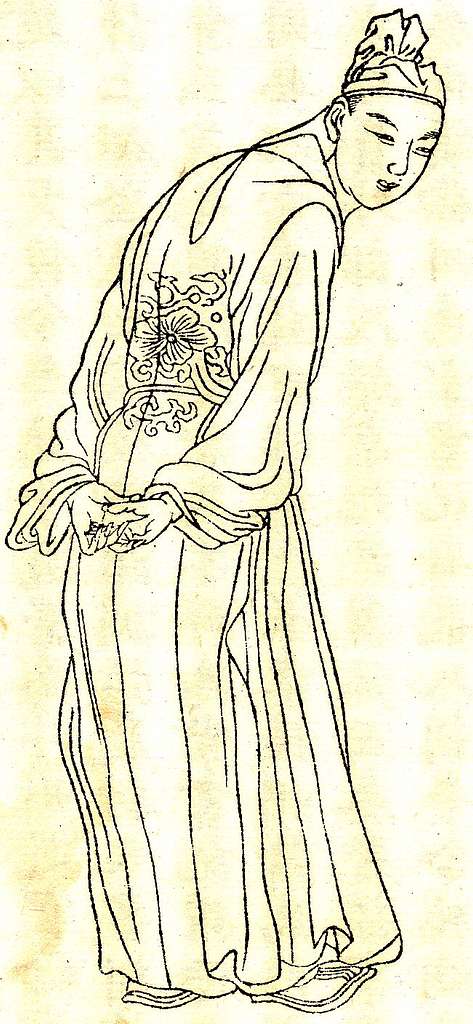
Li Shangyin( 813-858) was a Tang Dynasty poet whose poetry had an imagistic quality. Courtesy: Creative Commons
George Freek’s poetry has recently appeared in The Ottawa Arts Review, Acumen, The Lake, The Whimsical Poet, Triggerfish and Torrid Literature.
.
PLEASE NOTE: ARTICLES CAN ONLY BE REPRODUCED IN OTHER SITES WITH DUE ACKNOWLEDGEMENT TO BORDERLESS JOURNAL
As autumn gives way to winter, here are explorations that give us a glimpse of the season, its colours, its feel across different parts of the world and their varied interpretations. We have the vibrancy captured in colours by Sohana Manzoor and Sybil Pretious. There are reactions to events that happened at this time in different parts of the globe from Ratnottama Sengupta and Sutputra Radheye — have we healed after these events? Have things got better?
As Europe starts a new wave of pandemic lockdowns, Mike Smith takes us for a trip to Trieste, rich with the heritage of James Joyce, Umberto Saba and Baron Von Trapp of Sound of Music. Prose from Tagore(1861-1941) translated by Somdatta Mandal showcases some of his reactions while traveling in Japan, America and Europe in the autumn of his life. We can vicariously travel to different parts of the planet! While verses by Michael Burch and George Freek explore the season and the autumn of life, poetry by Rhys Hughes and Sekhar Banerjee add zest to the fall with humour. Revathi Ganeshsundram brings us a poignant narrative of new friendships. A short story from maestro storyteller from Holland, Louis Couperus(1863-1923), translated by Chaitali Sengupta, paints a darker hue of autumn while Tagore’s poetry gives us a festive feel generated by the season in Bengal. Enjoy our melange of autumnal lores!










 Borderless