Title: River Traveller: Journeys on the TSANPO-BRAHMAPUTRA from Tibet to the Bay of Bengal
Author: Sanjoy Hazarika
Publisher: Speaking Tiger Books
Sanjoy Hazarika, a former reporter for the New York Times, dons many hats, combining roles as researcher, columnist, mentor and practitioner. Over decades this veteran journalist has travelled extensively across the Northeast and its neighbourhood. His interests include developments in Myanmar, Bhutan, Tibet (PRC), Bangladesh and Nepal and he has produced over a dozen documentaries including on the Brahmaputra, dolphins, governance, conflict, and rights.
River Traveller tells the story of a great river, as powerful as it is mysterious. The Brahmaputra rises in Tibet, travels through three countries and, after travelling over 2,900 kms, flows into the Bay of Bengal. But the most interesting part is that this river is known by many names: Yarlung Tsangpo and Po Tsangpo in Tibet, Siang in Arunachal Pradesh, Brahmaputra in Assam, the Jamuna in Bangladesh, merging with the Ganga at Arichar Ghat, to form the vast Padma on its unending flow to the Bay of Bengal and its quest for union with the sea.
This book has come together over decades of travels on this braided river (including on the boat clinics that he launched in 2005 in Assam) where Hazarika had seen its beauty and faced its wrath, been stuck on sandbanks and swept out to sea. He listened to those who plied the boats, the pilots, drivers, fishermen and their families, the sick and the ailing, women and children, Buddhist and Hindu monks, Sikh and Muslim priests, officials, politicians, students and scientists. He has listened to poets, singers, writers and artists, and to businessfolk and daily wage earners, boat builders, contractors, tea planters and workers. The writer amalgamated all their stories which were a mix of sadness, a determination to survive, an acceptance of fate and joy. Therefore, his traveller’s tales span not just his own journeys but the stories of those who had gone before him. Like the river, the region and its neighbourhood “never cease to delight, surprise, inspire, sadden and confound.”
Of course, the most ostentatious reason for Hazarika’s travels is the filming of documentaries on the river at different points of time. His first travel was for the film A River’s Story, the Quest for the Brahmaputra that he scripted and produced with Jahnu Barua as the director, Sudheer Palsane as cinematographer, Sanjoy Roy and Jugal Debta as audiographers as well as many others. The thrust area was to study the stories of the river and its people, from its beginnings in the Tibetan Plateau to the end in the Bay of Bengal. It wasn’t about science and theory, or politics and the environment, or climate change, but about the river and its moods, and especially its people and their relationship with each other, through history and changing geography, culture, faith, peace and poverty.
In the second venture, Gautam Bora was director and cinematographer of Brahmaputra, a six-part series for Doordarshan, shot in Arunachal Pradesh and Assam. In his third venture, he was involved in the making of Children of the River, the Xihus of Assam, which was directed and filmed by Maulee Senapati and where he learned much about dolphins.
Divided into three parts, the book is as exhaustive a study on the river as can be imagined. The Brahmaputra is one of the world’s longest and widest rivers—sustaining entire civilizations and agrarian systems. It has fascinated cartographers, lured adventurers, attracted kings and dynasts, and has supported life and ways of living by its banks. Before beginning with the actual travel in Part One that includes his sojourns in Tibet and Arunachal Pradesh, Hazarika goes back to history of the thirteenth century when in about 1215 AD, the Tai-Ahom prince Siu-ka-pha left his native land now on the China-Myanmar border and undertook a long march before settling down in Charaideo, his capital, with its surrounding flat plains, rich red soil, streams and the vast Brahmaputra nearby. After that for centuries, traders, smugglers, fighters, fugitives, goods, cuisines, languages and ideas as well as religions and religious people have travelled in either direction on the Siu-ka-pha trail.
Hazarika begins his yatra in Tibet and narrates how the challenges relating to it were not new. He describes a Tibet that was trying to hold on to its cultural legacy in the face of Chinese rule and the land’s exploitation for its resources. He recounts stories of explorers, spymasters and mapmakers, especially a motley crowd of intrepid men in the service of the East India Company and the Survey of India, who discovered the route of the river especially when it’s source was hidden in the most inhospitable terrain on earth. They finally solved the puzzle of the vanishing river and established that the Brahmaputra and the Tsangpo were the same river.
In Arunachal Pradesh, Hazarika views the river from a helicopter and to him it resembled a great, brown meandering serpent, moving in huge loops, with many channels; at times, a stream or two which joined the flow backed down on themselves, creating elegant oxbow lakes. At Gelling, the first village on the Indian side, the turbulent Tsangpo churns its way through a narrow valley after a cascading drop from Tibet. Here for the first time the Tsangpo changes its name and is known as the Siang or Dibang for the next 200 kilometers before it enters Assam. At a place called Kobo, the Lohit meets the Dibang, Noa Dihing, Tengapani and Siang and develops the immense power that is mirrored in the Brahmaputra in full flow.
Part Two comprising of nine chapters focuses on Assam. After the earthquake of 1950, water ‘blockades’ happened not just on the Siang but also on several other rivers flowing into the Assam Valley and as a result the river changed its course, lifted the riverbed, flattened the banks and land, and braided it in many places far more than ever before. As a result, many towns like Rohmoria, Sadiya simply vanished after being embraced by flood waters, and places like Barpeta, Goalpara and Dhubri underwent demographic changes.
In separate chapters we learn about the tea gardens of Assam, the influence of Srimanta Sankaradeva and his satras[1], about the great river island Majuli, the singer Bhupen Hazarika, the presence of dolphins in the Brahmaputra, the thousands of islands known as the chars and saporis, which are permanent in their impermanence, where the Muslim residents are known as Miyas, the large number of migrants that inhabit the place, the sand bars and sandbanks that dot the riverscape from Upper Assam and how the collection of sand and its sale and distribution has changed the lives of many along the river to the point where it enters Bangladesh. He also gives us details about the ferry system, the boat clinics on the river that represent both a dream and a reality, as annually, nearly three lakh people are treated in these mobile structures.
The third part of the narrative obviously ends with four chapters on Bangladesh. We are told how to move from a slow riverine economy to a bustling one is quite challenging. This section includes fear of being hunted by pirates on an open sea, the faith in the navigators, ‘drivers’, pilots and other crew members who can read the mind of the river, the trip to the confluence of the Ganga and the Brahmaputra along with a Bangladeshi singer called Maqsoodul Haque or Mac. Both these rivers have different names in Bangladesh. The Ganga is the Padma while the Brahmaputra is the Jamuna. We are told about the story of the island known to Indians as New Moore Island and to the Bangladeshis as Sandwip island that appeared and disappeared, causing a diplomatic furore. The Brahmaputra’s role in shaping the destiny of low-lying Bangladesh is well-established and we are told of the connectedness of the people to the river, on either side of the human-made border. There are many places where the turbulent river refuses to accept human markers and controls and the border just remains an imaginary line snaking across shifting sands.
After reading about the multifarious experiences of Hazarika, it is needless to state that this book of non-fiction mesmerizes the readers to such a great extent that one hankers for more information. It is best to conclude the review by quoting from the poetic way Hazarika himself speaks at the end of the book about the interconnectedness that lies even in a grain of sand:
“I have traversed the river, shared my secrets with it and laid my fears and troubles to rest there. It too has spoken to me and has been kind and generous, in the midst of its vastness and power, to someone who could not swim.
“River Traveller is deeply personal and piloted by my life and learnings on the river, failings, shortcomings, understanding. It’s about shared stories, loves gained and lost, inspiration and sadness. Autobiographical in parts, it navigates history and crosses borders.
“Many travels beckon, for the river still calls.“
From extremism to environmental responsibility, politics to ethnography, River Traveller touches on a multitude of subjects, and is an enduring study of human life and natural history. It is a rich and memorable portrait of one of the mightiest rivers on our planet. The colour photographs that are included in the middle of the narrative add extra charm to the narration. A volume worth possessing and reading and rereading repeatedly.
[1] Specialised Vaishnavi monasteries in Assam serving as socio-religious, cultural and educational centres since the fifteenth century.
.
Somdatta Mandal, critic and translator, is a former Professor of English at Visva-Bharati University, Santiniketan, India.
.
PLEASE NOTE: ARTICLES CAN ONLY BE REPRODUCED IN OTHER SITES WITH DUE ACKNOWLEDGEMENT TO BORDERLESS JOURNAL
Titles: Little Lhasa: Reflections in Exiled Tibet and Tibetan Suitcase
Author: Tsering Namgyal Khortsa
Publisher: Speaking Tiger Books
Following the forced escape of His Holiness the Dalai Lama in March 1959, thousands of Tibetans were forced to flee Tibet, and it was these refugees who formed the early exiled community. The refugee community now stands at a figure of around 130,000, with Tibetans spread across numerous settlements in India, Nepal and Bhutan, and thousands more displaced all around the world. The Tibetan government in exile is based in Dharamsala, India. It is called the Central Tibetan Administration (CTA) and was founded in 1959 by the 14th Dalai Lama. In the 1980s, a second wave of Tibetans fled due to political repression. The CTA advocates for human rights, self-determination, and the preservation of religion and culture for Tibetans. The CTA has a parliament, judiciary, and executive branch and its principles include truth, non-violence, and genuine democracy. The Dalai Lama has said that the exile administration would be dissolved as soon as freedom is restored in Tibet.
After over seventy years of being in exile, a whole generation of Tibetans have come of age in a land far from home. With the Dalai Lama and other great masters as their spiritual guides, they have grown up cut off from their homeland. Their experiences have been unique, as they have, despite globalization, kept alive their religion and culture. In Little Lhasa: Reflections in Exiled Tibet, Tsering Namgyal Khortsa writes comprehensively about the different aspects of their life today. Comprising of ten essays and six interviews, this volume becomes an eye-opener on the multifarious aspects of the present situation of Tibetans at large. Beginning with different writers writing about Tibet and exile in the very first essay titled ‘Little Lhasa’, the next one ‘Shangrila Online’ tells us about the role of social media, internet cafes and how technology in remote Dharamsala often enables one to participate in other people’s experiences in real time. The writer describes in detail how such lifestyle changes in contemporary times have enabled the creation of a “virtual Tibet”. In the next essay ‘Buddha’s Children’, Khortsa describes the young generation of exiled children in India and how their religious identity has triumphed over all other identities. We are also told about the different kinds of foreigners who come to India to take religious courses, and the writer wonders whether they go home feeling merely inspired by their visit to India and their meetings with Tibetan masters or whether such exposure and experience actually triggers a paradigm shift in the way they view the world.
In the next essay we are told how Tibetans lead demonstrations in Dharamsala and other parts of India every year, especially the one held on March 10th that commemorates the anniversary of the failed uprising against Chinese invasion. ‘Movies and Meditation’ mentions a film festival in Dharamsala which reveals how recent Tibetan films highlight a growing and vibrant filmmaking community within the Tibetan diaspora, but Khortsa laments the paucity of full-length films about Tibetans in exile and the issues they confront, namely patriotism, individualism, and reconciliation of personal fulfilment with the Tibetan cause. The titles of the three following essays, ‘Dharma Talk’, ‘The Lure of India’ and ‘The Monk at Manali’ are self-explanatory. The last essay of this section ‘Nation of Stories’ tells us about writers who write and publish in the English language, and though diverse in terms of their education, upbringing, background and geographical location, one common condition that they all share is the collective trauma of the Chinese occupation of Tibet, which is invariably a leitmotif in Tibetan literature.
Part Two consists of six interviews, each one different in perspective than the other, and they must be mentioned here to understand the kaleidoscopic nature of the people involved in the Tibetan cause. Thus, we have conversations with Lisa Gray as ‘A Western Buddhist’, Ananda Nand Agnihotri as ‘An Indian Tibetan Buddhist,’ Ngawang Woeber, ‘An Ex-Political Prisoner’, Nyima Dhondup, ‘A Swiss Tibetan’, Tenzing Sonam, ‘A Tibetan Writer and Filmmaker’ and Tenphun, ‘The Tibetan Poet’. All in all, Little Lhasa becomes a valuable record of the life of a people who refuse to bow down or forget, and even while adapting to a rapidly changing world, continue to nurture their roots.
II
After the non-fiction, Tsering Namgyal Khortsa comes up with a brilliant piece of fiction and read together, each text complements the other beautifully. In the ‘Editor’s Note’ at the very beginning of the novel Tibetan Suitcase, Tsering Namgyal Khortsa tells us that while he was working as a business journalist in Hong Kong he once ran into Dawa Tashi, an old acquaintance and an aspiring novelist from Dharamsala, India who was working as a meditation teacher and was quite busy with his job. He had a suitcase full of letters and documents and wanted him to turn the contents of the suitcase into a book. After going through the collection, Khortsa discovered that the contents of the suitcase, if organized with care and discipline, could indeed make for an epistolary novel. So, he declares that except for correcting a few typos here and there and add note and datelines to the letters, he had not done anything. He also categorically states, “None of the letters are mine, except some entries that I wrote, making the book partly fictionalized.” He also wanted to leave room for readers to imagine (or ‘feel’ for themselves) what is not mentioned in the book, in deference to the Tibetan culture of reticence and taciturnity, rather than turning himself into an all-knowing chatterbox.
Tibetan Suitcase is a remarkable novel about the peripatetic Tibetan community in exile. It is divided into six parts, beginning roughly from 1995 to 2000. It opens in Hong Kong where a tycoon Peter Wong opens a meditation centre and employs Dawa Tashi, our protagonist as a meditation teacher and a guru, though he is not really trained to be a lama. Dawa Tashi is an India-born Tibetan. His parents fled Tibet when the Chinese invaded, and Dawa has grown up in the quiet, verdant Indian Himalayas. When Dawa applies to a well-known university in America (Appleton University in Wisconsin) to pursue a course in creative writing, his hitherto ordinary life changes dramatically. At the university he befriends, and falls in love with, Iris Pennington, an unusual American student who is studying Buddhist literature. He also comes in contact with Khenchen Sangpo, a renowned scholar of Buddhism and a reincarnated Rinpoche himself. Circumstances lead Dawa back to India too soon, but the connections he makes take his life into many new directions. Some, with Iris and Khenchen, take him deeper into the mystical and mysterious world of Buddhist scholarship. Other journeys take him back to his roots, making him question his life’s directions.
Apart from the interesting incidents and characters we meet in the first four parts of the novel, Part Five is an exceptionally engrossing to read. Beginning with the reportage in the Fall Issue of the journal Meridian, which is edited by Brent Rinehart, we are told that on his seventy-ninth birthday Khenchen decided that he had to go back to Tibet to see his native land. Having gained a quick residency status in the United States, and possessing an American passport, Khenchen still had many relatives in Tibet, some of them quite alive and well, despite the Chinese occupation. He travels to Lhasa in 1996 and goes for a trip to Lake Manasarovar but things take a different turn when he is arrested by the Chinese authority because he was apparently “endangering national security”. What follows are different press releases from the US Statement Department, reports from the International Association of Tibetan Studies in London, address by the President of Appleton University and as Iris writes to Dawa, she never expected herself to be so politically involved and “did not realize Tibet was such a political subject”. It was ironic that one of the world’s most spiritual places was one of its most burning political issues. Tibet might be a small place, but it has a reasonably big space in the collective consciousness of the world. Of course, Khenchen Sangpo is ultimately released and without disclosing the actual ending of the novel, which in a circular fashion ends in Hong Kong from where it began, many loose ends are tied up and life came to a full circle for everybody, especially for Iris Pennington who finally managed to find her roots.
Both the non-fiction and the fiction book by Tsering Namgyal Khortsa prove to be eye-openers for all readers who have very little knowledge about the sorrow and plight of the uprooted Tibetans who live in exile and many of whom do not even have a country to call their own. Based in Dehradun, India at present, Khortsa’s narratives are so powerful that it has aptly prompted Speaking Tiger Books to reprint the updated versions of both the books in 2024 and one can call it a yeoman service to readers both serious and casual. A must read.
.
Somdatta Mandal, critic and translator, is a former Professor of English at Visva-Bharati, Santiniketan, India.
.
PLEASE NOTE: ARTICLES CAN ONLY BE REPRODUCED IN OTHER SITES WITH DUE ACKNOWLEDGEMENT TO BORDERLESS JOURNAL
Tumi Kon Kanoner Phulby Tagore andAnjali Loho Morby Nazrul, love songs by the two greats, have been translated from Bengali by Professor Fakrul Alam. Click hereto read.
One Life, One Love, 300 Children : Keith Lyons writes of Tendol Gyalzur, a COVID 19 victim, a refugee and an orphan who found new lives for many other orphans with love and an ability to connect. Click here to read.
When West Meets East & Greatness Blooms: Debraj Mookerjee reflects on how syncretism impacts greats like Tagore,Tolstoy, Emerson, Martin Luther King Jr, Gandhi and many more. Click here to read.
Dilip Kumar: Kohinoor-e-Hind: In a tribute to Bollywood legend Dileep Kumar, Ratnottama Sengupta, one of India’s most iconic arts journalists, recollects the days the great actor sprinted about on the sets of Bombay’s studios …spiced up with fragments from the autobiography of Sengupta’s father, Nabendu Ghosh. Click here to read.
Are Some of Us More Human than Others ?: Meenakshi Malhotra ponders at the exclusivity that reinforces divisions, margins and borders that continue to plague humankind, against the backdrop of the Women’s Month, March. Click here to read.
Reminiscences from a Gallery: MF Husain: Dolly Narang recounts how she started a gallery more than four decades ago and talks of her encounter with world renowned artist, MF Husain. Click hereto read.
Baraf Pora (Snowfall) by Rabindranath Tagore,gives a glimpse of his first experience of snowfall in Brighton and published in the Tagore family journal, Balak (Children), has been translated from Bengali by Somdatta Mandal. Clickhere to read.
Cherry Blossom Forecast: Suzanne Kamata brings the Japanese ritual of cherry blossom viewing to our pages with her camera and words. Clickhere to read.
Two Pizza Fantasies, Rhys Hughes recounts myths around the pizza in prose, fiction and poetry, Click here to read.
An Alien on the Altar!: Snigdha Agrawal writes of how a dog and lizard add zest to festivities with a dollop of humour. Click here to read.
Where it all Began: Sybil Pretious recounts her first adventure, an ascent on Mt Kilimanjaro at the age of sixty. Clickhere to read.
Conversations
Rabindranath Tagore: A Universal Bard.: This conversation between Aruna Chakravarti and Sunil Gangopadhyay that took place at a Tagore Conference organised by the Sahitya Akademi in Kochy in 2011. Click here to read.
Sriniketan: Tagore’s “Life Work”: In Conversation with Professor Uma Das Gupta, Tagore scholar, author of A History of Sriniketan, where can be glimpsed what Tagore considered his ‘life’s work’ as an NGO smoothening divides between villagers and the educated. Click here to read. (Review & Interview).
In conversation with the late Akbar Barakzai, a Balochi poet in exile who rejected an award from Pakistan Academy of Letters for his principles. Click here to read.
Jim Goodman, an American traveler, author, ethnologist and photographer who has spent the last half-century in Asia, converses with Keith Lyons. Click here to read.
InBridge over Troubled Waters, the late Sanjay Kumar tells us about Pandies, an activist theatre group founded by him that educates, bridging gaps between the divides of university educated and the less fortunate who people slums or terror zones. Click here to read.
In Lessons Old and New from a Stray Japanese Cat, Keith Lyons talks with the author of The Cat with Three Passports, CJ Fentiman who likes the anonymity loaned by resettling in new places & enjoys creating a space for herself away from her birthplace. Click hereto read.
Fiction
Aparichitaby Tagore: This short story has been translated as The Stranger by Aruna Chakravarti. Click hereto read.
Hena by Nazrul has been translated from Bengali by Sohana Manzoor. Click here to read.
Playlets byRabindranath Tagore: Two skits that reveal the lighter side of the poet. They have been translated from Bengali by Somdatta Mandal. Click here to read.
Abhagi’s Heaven, a poignant story by Saratchandra Chattopadhyay translated by Aruna Chakravarti. Click here to read.
An Eternal Void, a Balochi story by Munir Ahmed Badini translated by Fazal Baloch. Click hereto read.
The Witch, a short story by renowned Bengali writer Tarasankar Bandopadhyay (1898 to 1971), translated by Aruna Chakravarti. Clickhere to read.
I Grew into a Flute: Balochi Folktale involving magic retold by Fazal Baloch. Click here to read.
Give Me A Rag, Please:A short story by Nabendu Ghosh, translated by Ratnottama Sengupta, set in the 1943 Bengal Famine, which reflects on man’s basic needs. Click here to read
Rakhamaninov’s Sonata: A short story by Sherzod Artikov, translated from Uzbeki by Nigora Mukhammad. Click hereto read.
The Magic Staff , a poignant short story about a Rohingya child by Shaheen Akhtar, translated from Bengali by Arifa Ghani Rahman. Click here to read.
Khaira, the Blind, a story by Nadir Ali, has been translated from Punjabi by Amna Ali. Click here to read.
The Browless Dolls by S.Ramakrishnan, has been translated from Tamil by B Chandramouli. Click hereto read.
No Man’s Land: Sohana Manzoor gives us surrealistic story reflecting on after-life. Click hereto read.
The Protests Outside: Steve Ogah talks of trauma faced by riot victims in Nigeria. Click here to read.
Flash Fiction: Turret: Niles M Reddick relates a haunting tale of ghosts and more. Click here to read.
Henrik’s Journey: Farah Ghuznavi follows a conglomerate of people on board a flight to address issues ranging from Rohingyas to race bias. Click hereto read.
Does this Make Me a Psychic?; Erwin Coombs tells a suspenseful, funny, poignant and sad story, based on his real life experiences. Click here to read.
Phôs and Ombra: Paul Mirabile weaves a dark tale about two people lost in a void. Click here to read.
A Queen is Crowned: Farhanaz Rabbani traces the awakening of self worth. Click here to read.
Borderless Journal started on March, 14, 2020. When the mayhem of the pandemic had just set in, we started as a daily with half-a-dozen posts. Having built a small core of writings by July, 2020, we swung to become a monthly. And we still continue to waft and grow…
Art by Sohana Manzoor
We like to imagine ourselves as floating on clouds and therefore of the whole universe. Our team members are from multiple geographies and we request not to be tied down to a single, confined, bordered land. We would welcome aliens if they submitted to us from another galaxy…
On our Fifth Anniversary, we have collected celebratory greetings from writers and readers stretched across the world who share their experience of the journal with you and offer suggestions for the future. We conclude with words from some of the team, including my own observations on being part of this journey.
Aruna Chakravarti
Heartiest congratulations to Borderless on the occasion of its fifth anniversary! Borderless, an international journal, has the distinction of carrying contributions from many eminent writers from around the world. From its initiation in 2020, it has moved from strength to strength under the sensitive and skillful steering of its team. Today it is considered one of the finest journals of its kind. I feel privileged to have been associated with Borderless from its very inception and have contributed substantially to it. I wish to thank the team for including my work in their distinguished journal. May Borderless move meaningfully towards the future and rise to greater and greater heights! I wish it every success.
Professor Fakrul Alam
Five years ago, when Borderless set out on its literary voyage, who would have imagined the length and breadth of its imaginative crossings in this span of time? The evidence, however, is digitally there for any reader who has seen at least some of its issues. Creative writing spanning all genres, vivid illustrations, instant links giving resolute readers the option to track a contributor’s creative voyaging—here is boundless space always opening up for those seeking writing of considerable variety as well as originality. The best part here is that unlike name-brand journals, which will entice readers with limited access and then restrict their spaces unless you subscribe to them, all of Borderless is still accessible for us even though it has attracted a wide readership in five years. I certainly hope it will stay that way.
And what lies ahead for Borderless? Surely, more opportunities for the creative to articulate their deepest thoughts and feelings in virtual and seemingly infinite space, and innumerable avenues for readers to access easily. And let us hope, in the years to come Borderless will extend itself to newer frontiers of writing and will continue to keep giving space to new as well as emerging writers from our parts of the world.
May the team of Borderless, continue to live up to their claim that “there are no boundaries to human imagination and thought!”
Radha Chakravarty
Since its inception, Borderless Journal has remained true to its name, offering a vital literary space for writers, artists and scholars from around the world to engage in creative dialogue about their shared vision of a world without borders. Congratulations Borderless, and may your dream of global harmony continue to inspire.
Somdatta Mandal
According to the famous Chicana academic and theorist Gloria Anzaldua, the Borderlands are physically present wherever two or more cultures edge each other, where peopIe of different races occupy the same territory, where under, lower, middle and upper classes touch, where the space between two individuals shrinks with intimacy. Hatred, anger and exploitation are the prominent features of this landscape. There, at the juncture of cultures, languages cross-pollinate and are revitalized; they die and are born. Borders are set up to define the places that are safe and unsafe, to distinguish us from them. A border is a dividing line, a narrow strip along a steep edge. A borderland is a vague and undetermined place created by the emotional residue of an unnatural boundary. It is in a constant state of transition. The prohibited and forbidden are its inhabitants.
About five years ago, when a new online journal aptly called Borderless Journal was launched, these ideas which we had been teaching for so long were simply no longer applicable. Doing away with differences, with limits, it became a suitable platform where disparate cultures met, where people from all disciplines could express their views through different genres, be it poetry, translation, reviews, scholarly articles, creative writing and so on. Many new writers from different parts of the world became regular contributors to this unique experimentation with ‘borderlessness’ and its immense possibilities are very apt in this present global context where social media has already changed many earlier notions of scholarship, journalism, and creativity.
Jared Carter
In its first five years Borderless has become an important witness for international peace and understanding. It has encouraged submissions from writers in English based in many different countries, and has offered significant works translated from a wide range of national literatures. Its pages have featured writers based in India, Pakistan, China, Taiwan, Japan, South Korea, Australia, the UK, and the US. In the future, given the current level of world turmoil, Borderless might well consider looking more closely toward Africa and the Middle East. As the magazine continues to promote writing focused on international peace and freedom, new horizons beckon.
Teresa Rehman
The best part of this journal is that it is seamless and knows no margins or fringes. It is truly global as it has cut across geographical borders and has sculpted a novel literary genre called the ‘borderless’. It has climbed the mountains of Nepal, composed songs on the Brahmaputra in Assam, explored the hidden kingdom of Bhutan, walked on the streets of Dhaka, explored the wreckage of cyclones in Odisha, been on a cycling adventure from Malaysia to Kashmir, explored a scenic village in the Indo-China border, taken readers on a journey of making a Japanese-Malayalam dictionary, gave a first-hand account of the war in Bosnia-Herzegovina and described the syncretic culture of Bengal through its folk music and oral traditions. I hope it continues telling the untold and unchartered stories across mountains, oceans and forests.
Kirpal Singh
In a world increasingly tending towards misunderstandings across borders, this wholesome journal provides a healthy space both for diverse as well as unifying visions of our humanity. As we celebrate five distinguished years of Borderless Journal, we also look forward to another five years of such to ensure the underlying vision remains viable and visible as well as authentic and accurate.
My heartfelt Congratulations to all associated with this delightful and impressive enterprise!
Asad Latif
The proliferation of ethnic geographies of identity — Muslim/Arab, Hindu/Indian, Christian/Western, and so on — represents a threat to anything that might be called universal history. The separation and parcelling out of identities, as if they are pre-ordained, goes against the very idea (proclaimed by Edward Said) that, just as men and women create their own history, they can recreate it. Borders within the mind reflect borders outside it. Both borders resist the recreation of history. While physical borders are necessary, mental borders are not. This journal does an admirable job in erasing borders of the mind. Long may it continue to do so.
Anuradha Kumar
I have been one of Borderless’ many readers ever since its first issue appeared five years ago. Like many others, I look forward with great anticipation to every issue, complete with stories, , reviews, poems, translations, complemented with interesting artwork.
Borderless has truly lived up to its name. Within its portal, people, regardless of borders, but bound by common love for literature, and the world’s heritage, come together. I would wish for Borderless to scale even greater heights in the future. As a reader, I would very much like to read more writers from the ‘Global South’, especially in translation. Africa, Asia and Australasia are host to diverse languages, many in danger of getting lost. Perhaps Borderless could take a lead in showcasing writers from these languages to the world. That would be such an invaluable service to readers, and the world too.
Ryan Quinn Flanagan
To me, Borderless Journal is a completely free and open space. Topics and styles are never limiting, and the various writers explore everything from personal travelogues to the limp of a helpful druggist. Writers from all corners of the globe contribute, offering a plethora of unique voices from countless circumstances and walks of life. Because of this openness, Borderless Journal can, and likely will continue to grow and expand in many directions simultaneously. Curating and including many new voices along the way. Happy 5th Birthday to a truly original and wonderfully eclectic journal!
George Freek
I feel the Borderless Journal fills a special spot in the publishing world. Unlike many journals, which profess to be open-minded and have no preference for any particular style of poetry, Borderless actually strives to be eclectic. Naturally, it has its own tastes, and yet truly tries to represent the broad spectrum which is contemporary poetry. I have no advice as to where it should go. I can only say keep up the good work, and stooping to a cliche, if it’s not broken, why try to fix it?
Farouk Gulsara
They say time flies when one is having fun. It sure does when a publication we love regularly churns out its issues, month after month, for five years now.
In the post-truth world, where everybody wants to exert their exclusivity and try to find ways to be different from the person standing next to them, Borderless gives a breath of fresh air. At a time when neighboring countries are telling the world they do not share a common history, Borderless tries to show their shared heritage. We may have different mothers and fathers but are all but “ONE”!
We show the same fear found in the thunderous sounds of a growling tiger. We spill the exact hue of blood with the same pain when our skin is breached. Yet we say, “My pain is more intense than yours, and my blood is more precious.” Somehow, we find solace in playing victimhood. We have lost that mindfulness. One should appreciate freedom just as much as we realise it is fragile. Terrorism and fighting for freedom could just be opposing sides of the same coin.
There is no such thing as a just war or the mother of all wars to end all wars as it has been sold to us. One form of aggression is the beginning of many never-ending clashes. Collateral damage cannot be justified. There can be no excuse to destroy generations of human discoveries and turn back the clock to the Stone Age.
All our hands are tainted with guilt. Nevertheless, each day is another new day to make that change. We can all sing to the tune of the official 2014 World Cup song, ‘Ola Ola,’ which means ‘We are One.’ This is like how we all get together for a whole month to immerse ourselves in the world’s favourite sport. We could also reminisce about when the world got together to feed starving kids in Africa via ‘Band-Aid’ and ‘We Are the World’. Borderless is paving the way. Happy Anniversary!
Ihlwha Choi
I sincerely congratulate Borderless Journal on its 5th anniversary. I am always delighted and grateful for the precious opportunity to publish my poetry in English through this journal. I would like to extend my special thanks for this.
Through this journal, I can read a variety of literary works—including poetry, essays, and prose—from writers around the world. As someone for whom English is a foreign language, it has also been a valuable resource for improving my English skills. I especially enjoy the frequent features on Rabindranath Tagore’s poetry, which I read with great joy. Tagore is one of my favourite poets.
I have had the privilege of visiting Santiniketan three times to trace his legacy and honor his contributions to literature and education. However, one aspect I find a little disappointing is that, despite having published over 30 poems, I have yet to receive any feedback from readers or fellow writers. It would be wonderful to have such an opportunity for engagement.
Additionally, last October, a Korean woman received the Nobel Prize in Literature—the first time an author from South Korea has been awarded this honor by the Swedish Academy. She is not only an outstanding novelist but also a poet. I searched for articles about her in Borderless Journal but was unable to find any. Of course, I understand that this is not strictly a literary newspaper, but I would have been delighted to see a feature on her.
I also feel honoured that one of my poems was included in the anthology Monalisa No Longer Smiles: An Anthology of Writings from across the World. I hope such anthologies will continue to be published. In fact, I wonder if it would be possible to compile and publish collections featuring several poems from contributing poets. If these were made available on Amazon, it would be a fulfilling experience for poets to reach a broader audience.
Moving forward, I hope Borderless Journal will continue to reach readers worldwide, beyond Asia, and contribute to fostering love and peace. Thank you.
Prithvijeet Sinha
The journey of authorship, self-expression and cultural exchange that I personally associate with Borderless Journal’s always diverse archives has remained a touchstone ever since this doorway opened itself to the world in 2020. Going against the ramshackle moods of the 2020s as an era defined by scepticism and distances, The journal has upheld a principled literary worldview close to the its pages and made sure that voices of every hue gets representation. It’s also an enterprise that consistently delivers in terms of goodwill and innocence, two rare traits which are in plenteous supply in the poems, travelogues, essays and musings presented here.
The journey with Borderless has united this writer with many fascinating, strikingly original auteurs, buoyed by a love for words and expression. It is only destined for greatness ahead. Happy Birthday Borderless! Here’s to 50 more epochs.
From Our Team
Bhaskar Parichha
As Borderless Journal celebrates its fifth anniversary, it is inspiring to see its evolution into a distinguished platform for discourse and exploration. Over the years, it has carved a unique niche in contemporary journalism, consistently delivering enlightening and engaging content. The journal features a variety of sections, including in-depth articles, insightful essays, and thought-provoking interviews, reflecting a commitment to quality and fostering dialogue on pressing global issues. The diverse contributions enrich readers’ understanding of complex topics, with a particular focus on climate change, which is especially relevant today. By prioritising this critical issue, Borderless informs and encourages engagement with urgent realities. Having been involved since its inception, I am continually impressed by the journal’s passion and adaptability in a changing media landscape. As we celebrate this milestone, I wish Borderless continued success as a beacon of knowledge and thoughtful discourse, inspiring readers and contributors alike.
Devraj Singh Kalsi
Borderless Journal has a sharp focus on good writing in multiple genres and offers readable prose. The platform is inclusive and does not carry any slant, offering space to divergent opinions and celebrating free expression. By choosing not to restrict to any kind of ism, the literary platform has built a strong foundation in just five years since inception. New, emerging voices – driven by the passion to write fearlessly – find it the ideal home. In a world where writing often gets commercialised and compromised, Borderless Journal is gaining strength, credibility, and wide readership. It is making a global impact by giving shape to the dreams of legendary poets who believed the world is one.
Rakhi Dalal
My heartiest congratulations to Borderless and the entire team on the fifth Anniversary of its inception. The journal which began with the idea of letting writing and ideas transcend borders, has notably been acting as a bridge to make this world a more interconnected place. It offers a space to share human experiences across cultures, to create a sense of connection and hence compassion, which people of this world, now more distraught than ever, are sorely in need of. I am delighted to have been a part of this journey. My best wishes. May it continue to sail through time, navigating languages, literature and rising above barriers!
Keith Lyons
Is it really five years since Borderless Journal started? It seems hard to believe.
My index finger scrolls through Messenger chats with the editor — till they end in 2022. On the website, I find 123 results under my name. Still no luck. Eventually, in my ‘Sent’ box I find my first submission, emailed with high hopes (and low expectations) in March 2020. ‘Countdown to Lockdown’ was about my early 2020 journey from India through Thailand, Malaysia, Indonesia, and Australia to New Zealand as COVID-19 spread.
Just like that long, insightful trip, my involvement with Borderless Journal has been a journey. Three unique characteristics stand out for me.
The first is its openness and inclusiveness. It features writers from all over the globe, with various contributions across a wide range of topics, treatments and formats.
The second feature of the journal is its phenomenal growth, both in readers and writers, and in its reach. Borderless really does ‘walk the talk’ on breaking down barriers. It is no longer just a humble literary journal — it is so much bigger than that.
The third unique aspect of Borderless is the devotion endowed in nurturing the journal and its contributors. I love the way each and every issue is conceived, curated, and crafted together, making tangible the aspiration ‘of uniting diverse voices and cultures, and finding commonality in the process.’
So where can we go from here? One constant in this world is change. I’d like to think that having survived a global pandemic, economic recession, and troubling times, that the core values of Borderless Journal will continue to see it grow and evolve. For never has there been a greater need to hear the voices of others to discover that we are all deeply connected.
Rhys Hughes
I have two different sets of feelings about Borderless Journal. I think the journal does an excellent job of showcasing work from many different countries and cultures. I want to say it’s an oasis of pleasing words and images in a troubled sea of chaos, but that would be mixing my metaphors improperly. Not a troubled sea of chaos but a desert of seemingly shifting values. And here is the oasis, Borderless Journal, where one can find secure ideals of liberty, tolerance, peace and internationalism. I appreciate this very much. As for my other set of feelings, I am always happy to be published in the journal, and in fact I probably would have given up writing poetry two years ago if it wasn’t for the encouragement provided to me by regular publication in the journal. I have written many poems especially for Borderless. They wouldn’t exist if Borderless didn’t exist. Therefore I am grateful on a personal level, as a writer as well as a reader.
Where can Borderless Journal go from here? This is a much harder question to answer. I feel that traditional reading culture is fading away year after year. Poets write poetry but few people buy poetry books. They can read poems at Borderless for free and that is a great advantage. I would like to see more short stories, maybe including elements of fantasy and speculative fiction. But I have no strategic vision for the future of the journal. However, one project I would like to try one day is some sort of collaborative work, maybe a big poem with lots of contributors following specific rules. It’s an idea anyway!
Meenakshi Malhotra
Borderless started with a vision of transcending the shadow lines and has over time, evolved into a platform where good writing from many parts of the world finds a space , where as “imagination bodies forth/ The forms of things unknown, the poet’s pen/Turns them to shapes and gives to airy nothing/A local habitation and a name.”
It has been a privilege to be a part of Borderless’s journey over the last few years. It was a journey based on an idea and a vision. That dream of creating solidarity, of transcending and soaring over borders and boundaries, is evident in almost every page and article in the journal.
Mitali Chakravarty
Looking at all these responses, thinking on what everyone has said, I am left feeling overwhelmed.
Borderless started as a whimsical figment of the imagination… an attempt to bring together humanity with the commonality of felt emotions, to redefine literary norms which had assumed a darker hue in the post Bloomsbury, post existentialist world. The journal tried to invoke humour to brings smiles, joys to create a sense of camaraderie propelling people out of depression towards a more inclusive world, where laughter brings resilience and courage. It hoped to weave an awareness that all humans have the same needs, dreams and feelings despite the multiple borders drawn by history, geographies, academia and many other systems imagined by humans strewn over time.
Going forward, I would like to take up what Harari suggests in Homo Deus — that ideas need to generate a change in the actions of humankind to make an impact. Borderless should hope to be one of the crucibles containing ideas to impact the move towards a more wholesome world, perhaps by redefining some of the current accepted norms. Some might find such an idea absurd, but without the guts to act on impractical dreams, visions and ideas, we might have gone extinct in a post-dino Earth.
I thank the fabulous team, the wonderful writers and readers whose participation in the journal, or in engaging with it, enhances the hope of ringing in a new world for the future of our progeny.
Aparna Vats shares a narrative around female infanticide centring her story around a BBC interview and an interview with the journalist who unfolded the narrtive. Click here to read.
Dolly Narang recounts how she started a gallery more than four decades ago and talks of her encounter with world renowned artist, MF Husain. Click hereto read.
Ghoom, Darjeeling, is almost 2.5 km above sea level. Standing in the rarified air of Ghoom, you can watch the Kanchenjunga turn gold as it gets drenched in the rays of the rising sun. The phenomenon lasts for a short duration. The white pristine peak again returns to its original colour blending and disappearing among the white cirrus clouds that flit in the sky. Over time, it’s shrouded by mists that hang over this region. The event is transitory and repeats itself on every clear morning like life that flits in and out of existence over and over again…
Witnessing this phenomenon feels like a privilege of a lifetime as is meeting people who shine brightly and unusually, like the Kanchenjunga, to disappear into mists all too early. One such person was the founder of pandies’ 1 who coordinated the pandies’ corner for Borderless Journal, the late Sanjay Kumar (1961-2025). The idea of starting this column was to bring out the unheard voices of those who had risen above victimhood to find new lives through the work done by pandies’. In his book, Performing, Teaching and Writing Theatre: Exploring Play, published by Cambridge Scholars Publishing, he described his scope of work which in itself was stunning. His work ranged from teaching to using theatre and play to heal railway platform kids, youngsters in Kashmir, the Nithari survivors and more — all youngsters who transcended the scars seared on them by violations and violence. We hope to continue the column in coordination with pandies’.
Another very renowned person whose art encompassed a large number of social concerns and is now lost to time was the artist, MF Husain (1915-2011). This issue of Borderless is privileged to carry an artwork by him that has till now not been open to the public for viewing. It was a gift from him to the gallerist, Dolly Narang, on her birthday. She has written nostlgically of her encounters with the maestro who walked bare-feet and loved rusticity. She has generously shared a photograph of the sketch (1990) signed ‘McBull’ — a humorous play on his first name, Maqbool, by the artist.
Drenched with nostalgia is also Professor Fakrul Alam’s essay, dwelling on more serious issues while describing with a lightness his own childhood experiences. Many of the nonfiction in this issue have a sense of nostalgia. Mohul Bhowmick recalls his travels to Bhutan. And Prithvijeet Sinha introduces as to a grand monument of Lucknow, Bara Imambara. Lokenath Roy takes us for a stroll to Juhu, dwelling on the less affluent side. Suzanne Kamata describes her source of inspiration for a few stories in her new book, River of Dolls and Other Stories. A darker hue is brought in by Aparna Vats as she discusses female infanticide. But a light sprays across the pages as Devraj Singh Kalsi describes how his feisty grandmother tackled armed robbers in her home. And an ironic tone rings out in the rather whimsical musing by Farouk Gulsara on New Year days and calendars.
Everyone was at each other's throats, insistent that the world was ending. But I felt differently, as though I were just beginning, or just beginning again…
Poets, like visionaries across time and cultures, often see hope where others see despair. And humour always has that hum of hope. In a lighter tone, Rhys Hughes makes one laugh or just wonder as he writes:
I once knew a waiter who jumped in alarm when I somersaulted across his restaurant floor after entering the front door on my way to my favourite table: he wasn’t able to control his nerves and the meal he was bearing ended up on the ceiling with people staring as it started to drip down.
Translations feature poetry. Lyrics of Nazrul (1899-1976) and Tagore (1861-1941) appear together in Professor Alam’s translations of their love songs from Bengali. He has also transcreated a Bengali poem by Jibananada Das (1899-1854). Profoundly philosophical lines by Atta Shad (1939-1997) in Balochi has been rendered to English by Fazal Baloch for his birth anniversary this month. Ihlwah Choi has translated his poem from Korean, taking up the poignant theme of transience of life. A Tagore poem called ‘Kheya (Ferry)’, inspired by his rustic and beautiful surroundings, has been brought to us in English.
Huge thanks to all our contributors, the Borderless team for all these fabulous pieces. Thanks to Gulsara, Kamata, Bhowmick and Sinha for the fabulous photography by them to accompany their writings. Heartfelt gratitude to Sohana Manzoor for her cover art and to Dutta for her artwork accompanying her poem. Without all your efforts, this issue would have been incomplete. And now, dear readers, thank you for being with us through this journey. I turn the issue over to all of you… there is more as usual than mentioned here. Do pause by our contents page.
pandies’ was started in 1987. It’s spelled with a small ‘p’ and the name was picked by the original team. Read more about pandies’ by clicking here. ↩︎
Young lamas, or monks, appearing for their annual examinations in the monsatry of Simtokha Dzong, Thimphu.
Bhutan, 2024
The sun sets far too quickly for my liking in Phuentsoling. There is little to no entertainment to speak of that is worth its name. The town, by and large, presents itself in its entirety and goes to bed by the time my friend, S, and I crisscross our way to our hotel uphill. It does not help that we enter Bhutanese soil on its National Day, celebrated to mark the coronation of their first king Ugyen Wangchuk in 1907, and find most places of public convenience closed.
The stark contrast that the Indian border town of Jaigaon offers to its Bhutanese counterpart Phuentsoling is remarkable. The lack of men — and their wherewithal — on crossing the north-eastern frontier is welcome, as is the steep upkeep that the Himalayan kingdom pushes upon its citizens.
*
The Phuentsoling-Thimphu highway has improved by leaps and bounds since Queen Mother Ashi Dorji Wangmo Wangchuck made her initial foray into the hills of Kalimpong from the village of Nobgang in the 70s. I try my best to spot a mule — or its track — but am left disappointed by the presence of a modern-day state-of-the-art business college in Gedu[1] instead.
The lower reaches of the Himalayas that surround us to the east act as forbidding barriers into the hidden crevices of the hidden kingdom we are attempting to climb in a motor vehicle, the likes of which were first seen in this country in the 1980s. The light — of which I had been so painfully deprived in Phuentsoling — seeps in with zeal I have seldom seen in the plains of the Deccan, and the lifeblood that flows inside me is roused enough to taste the incandescent flavours of kewa datsi[2]with red rice. And before I know it, a lifelong love affair has begun with this enticing dish.
*
We are welcomed into Bhutan proper only after arriving in Thimphu the next day, or so it seems. The capital city of this virgin kingdom has evolved significantly from Pico Iyer’s assumptions in 1989 that all of it could be explored over the course of an afternoon. That the Druk Hotel in which the legendary essayist stayed remains steadfast beyond the clocktower that shows no change of hands is a testament to the art of stillness that the Bhutanese so pride themselves upon; at 11 AM on a weekday at a laundromat not far from the main street hangs a signboard proclaiming, ‘closed for lunch.’ Iyer is not too far off the mark even thirty-five years later.
That the people smile easily takes me by surprise; I have seldom known a populace so unburdened by the weight of living that they have overtaken all their consternations and settled finally upon the art of being. Jigme Khesar Namgyel Wangchuk, Bhutan’s present king, finds himself immortalised in pictures across every restaurant, hotel and store across the country.
The fervour seems, to me, all the more in Thimphu, where the local masses try to outdo their neighbours in anticipation of the gentle 44-year-old stepping out of the Tashicho Dzong grounds (his palace) to inspect these pictures and possibly reward their owners for their loyalty. I suspect this ardour stems as much from devotion to their ‘living God’ as to the fear of missing out or merely keeping up with the Joneses — or Wangchucks. Some modern predicaments seem to have crept into Druk after all.
It is not without these frailties that one’s mornings in Thimphu are strewed. Gather and scatter, as the bard Vikram Seth[3] was wont to have mentioned, applies less to the hounding of the dogs mid-street all night than to the karaoke bars that pride themselves on staying open when the rest of the world sleeps.
Had Nehru not arrived in Paro from Nathu La in 1958 on the back of a yak, this journey would have seemed almost romantic to that of the least fatalistic of Indian prime ministers. It is not known whether the venerable freedom fighter from Allahabad shared any of his midnight oil burning advice with the Bhutanese during his state visit; it appears for certain that the karaoke bars sprung up like mushrooms much later and took his guiding directions to heart.
*
If it is not the baying of the foolhardy dogs, it is the crowing of the late-night suppliers at the fifty shops selling similar products on the Thimphu main street that keeps me — and my journalistic tendencies — awake. Onitsuka Tiger [4]rubs shoulders with Adidas Samba[5] with a glee that one forsakes in favour of the warmth that a bowl of tofu thukpa[6]offers; before long, a handsome policeman in his impeccable uniform including a heartening jacket and betel-stained teeth joins me for a cup of tea. He has just finished his duty of acting as the traffic signal in a city that has no traffic signals.
With the precision best described as that of mimicking an archer — of whose credulity there is a lot in Bhutan — my newfound friend diverts the few cars that choose to make the hike into Thimphu’s central business district on this cold night. He tells me about how gently the tea goes with the thukpa I have with me, all while seated on the plank of a wooden crate left behind by the Adidas doppelgangers.
A plate of momos — beef for him, and cabbage for me — soon arrives from Kinley Tsering, a lady who sells home-cooked food at night after tending to her household all day to augment the family income. In a horror mixed with incomprehension of protocol, my friend in livery whips out his wallet to pay; I am stunned by an act I have never seen uniform-clad men do in the past. The temperature plunges to minus six degrees Celsius as I walk back with the numbing, tear-inducing breeze on my face. I feel exhilarated.
*
The Paro airport is considered to be one of the most dangerous places in the world to land in.
Paro[7], imperious, meek and all-abiding, comes too soon and whisks away any perceptible delight that one feels at having escaped the wrath that Thimphu denotes upon those who cannot see. The dzong, located several miles outside of town, is the only real attraction besides the museum on the way down; modern tourists — and locals besides — tend to find enjoyment in climbing up the steep hillocks to gain a view of a Druk Airplane taking flight from what is considered to be among the most dangerous airports in the world. Back on the main strip that connects this valley to Chuyul in the north, dinner consists of dried ema (Bhutanese chilli), vegetables and rice, with accompaniments of dumplings.
The Taktsang Lakhang[8] stands upright on the shoulder of a cliff the next day; I am perplexed as to how I could be so close as to see the finer details of its inner sanctum in my mind yet far enough to appreciate the impossible angle at which it is perched. The monastery, which had dominated so many of my dreams about Bhutan in the past, is often referred to as the ‘Tiger’s Nest’ by the West. It takes its name from a spot allegedly visited by the Indian guru, Padmasambhava[9], on the back of a mythical flying tiger in the eighth century to flay a demoness who was tormenting the locals of the area.
The Taktsang LakhangSunset at Taktsang Lakhang
The climb is demanding, but the panoramic views of the valley to the east make it seem less so. The ardour of the fellow pilgrim is contagious enough for me to push past the mental barriers I have erected for myself without even trying, and before I know it, we are at the halfway point where the government has been kind enough to let an eatery ply its trade. The Local Train’s Vaaqif[10] accompanies us as Taktsang appears all the more closer, and all the more dangerous.
The ascent, dusty and translucent though it is due to the lack of rain for several months, troubles me with its penchant for nonchalance. I loathe to fall into the reverie that takes me over every minute while glimpsing at a branch of the hundred-year-old rhododendron that has stood firm while men have grappled past their anxieties. I awaken soon enough with the realisation that my worries and physical ailments may seem impotent to the staunch Buddhist who makes the six-kilometre hike to the monastery by prostrating himself full-length, getting up and repeating the feat till he gets to the top a week after he has begun.
The top is still way off from where one reaches the monastery proper. Perched dangerously on the edge of this cliff, the monastery virtually hangs into oblivion attracting gusts of wind, who somehow choose not to play to the gallery. Yet, it has survived for centuries, and if faith were one’s sole determinator, it shall survive for several more. The inside has temples dedicated to Padmasambhava in his various forms: astounded, wrathful and compassionate.
Propitiating the gods — and as an extension, their other halves, the demons — is commonplace in Bhutan, and the same holds for ParoTaktsang. While the inordinate thangkas[11] and artefacts collected over the years provide the inner sanctum sanctorum of the monastery with its sheen, it is the historical hostility that the local deities have displayed towards demons that make it eerily attractive. Indeed, folk tales observe that several local, protective deities were demons won over by the Buddhist dharma when Padmasambhava arrived on the back of his mythical tiger.
And so it is that I find myself in the dark, indistinct crevices of the cliff on which the monastery proper is located but beneath which is the original Tiger’s Nest which the Bhutanese claim to have a pug mark of Padmasambhava’s beast. The descent into the darkness, almost as if plunging into the unknown, requires one to be on his back and flatten himself along the rocks to reach the acute angle where the pug mark is located.
A lonely candle blows in this unventilated corner of the cliff, and only a sliver of light to the east remains to remind me of the vast world outside, that which I have forsaken to witness this tiny fraction of hope at Taktsang. This hope flutters unabated, almost as if without any beginning or end, and for a moment, I am suspended in the brilliant sunshine overlooking a valley fit for the heroic landscapes I so fervently pursue. Might this be the only time when I forsake my attachment to life in search of a glorious future, real or imagined?
There is no end to the ruminations that I have while being assailed by the light that peeps in almost as if it is too shy to ask for permission. The way out may be more difficult than the way in — as in life — but how do I respond to the call I have heard inside, the one that compels me to sing the songs of my fathers in the temples of my gods?
The thought strikes with a speed I had not known I possessed until I see the boulder above me swerve in its position in a quarter of a millisecond; with an equal lack of precision and comfort, I come out of the cave, for all the world a dishevelled a youth with an abrasive attitude towards the world, but in my own estimation, a changed man. I did not need new eyes, but merely a new way of seeing.
*
The magnificent Punakha dzong is surrounded by the river Mo Chhu.
The dzong[12] of Punakha is a magnificent object of interest to lovers of history and architecture alike; straddled on an oasis that one must reach after crossing the timid-looking Mo Chhu River, it looms large into the thoughtful sunshine all the while immersed in a meditative calm that only its altitude has any makings of. Like all dzongs in Bhutan, the one in Punakha too is much more impressive from the outside. Tall, gaunt and imperial in its outlook, it acts more as a presence of the godly authority that the king and abbot enjoy in Bhutanese society, the former only matched in his regal bearing by the latter.
Even more impressive, if the word is right, is the suspension bridge that takes one across the river Po Chhu (the male consort of Mo Chhu) behind the dzong. There is little to look at but the other end as one sways with the wind — and the breeze is far too strong for my liking even at three in the afternoon here — while praying to the Gods, both Indian and Bhutanese, that the bridge does not give way and deposit me into the freezing waters of the river about three vertical kilometres below. The 160-metres bridge span seems more than a mile to me; awake finally at the reality of life slipping away from my grasp in the blink of an eye, I experience the innards of a fear that I thought I had buried deep inside myself.
For the entire time that I cross the bridge — and return — for there is nothing to see on the other side but an eatery that sells delightful ice cream, this fear flares in a bid to reignite my passions for a world I had once deeply cared for and strongly felt like changing. For all the lack of consideration that I display, either in terms of material or intangible riches, there is little that stays on par with this kind of fear, the one that reminds me at every step that I am virtually playing with my fate, and that everything I have with me, most perceptibly my heartbeat, could drown in a second if the heavens so choose. A strong gust of wind and I can finally sense what Matthiessen[13] meant when he wrote:
‘This is a fine chance to let go, to win my life by losing it…’
I am driven back to life when a local teenager rides across the heavily swaying bridge and into the sun — with the mildly flowering dandelions emitting a heady scent ideal for such gallant terrains, on his bicycle — too young to care about life’s intricacies, yet old enough to realise that everything one wants is on the other side of fear.
It is in such heroic landscapes that I change my stance towards the heavens; where I drink the water from the stream gurgling past the Po Chhu and gulp in the air that promises a revival of a dream seen long ago. Such dreams deserve their rightful places in a world shorn of temerity in a way that human emotions can seldom fathom. And yet the dandelions, by now competing with the rhododendrons that shall have to wait till spring, promise a tomorrow that may not get swayed by this incredible afternoon breeze.
*
When I wake up a month later in the arid plains of the Deccan, unsure if such dreams are still worth chasing — or life still worth living — I remember that the dandelions would soon be in bloom in the hidden kingdom I so arduously seek within myself.
The gently flowing Paro Chhu river makes one lie down beside it and do nothing.
[13] Peter Mattheissen (1927-2014) novelist, naturalist and CIA Agent
Mohul Bhowmick is a national-level cricketer, poet, sports journalist, essayist and travel writer from Hyderabad, India. He has published four collections of poems and one travelogue so far. More of his work can be discovered on his website: www.mohulbhowmick.com.
PLEASE NOTE: ARTICLES CAN ONLY BE REPRODUCED IN OTHER SITES WITH DUE ACKNOWLEDGEMENT TO BORDERLESS JOURNAL.
Salma A. Shafi writes from ground level at Noakhali
From Public Domain
The Greater Noakhali region of Bangladesh is experiencing one of the most severe flood and water-logging crises in recent memory, driven by persistent heavy rainfall since mid-August 2024. The flood affected more than 5 million people, submerging houses, roads, and marketplaces, and leaving large portions of the region inundated. A total of 71 people, including women and children, lost their lives in the flood affected areas. With water levels reaching alarming heights, the disaster has raised significant concerns about vulnerability of the region for future flooding.
Almost every year floods occur in Bangladesh, but the intensity and magnitude vary from year to year. Their nature causes and extent of destruction gives them various definitions such as river flood, rainfall flood, flash flood, tidal flood, storm surge flood. The term manmade flood is a recent phenomenon attributed to encroachment on vital water channels, such as canals and wetlands sometimes for construction of roads and bridges and frequently for fish cultivation, hatcheries and shrimp farming.
Context of recent flood in Bangladesh
Since August 20, 2024, Bangladesh has been facing severe flooding triggered by continuous heavy rainfall and, according to the Bangladesh Ministry of External Affairs, water releases from Dumbur Dam, upstream in Tripura, India[1], a claim that is denied by the Indian government. Tripura also suffered severe floods and landslides[2] from this August. The flood impacted several districts in Bangladesh, including Feni, Noakhali, Comilla, Lakshmipur, Brahmanbaria, Cox’s Bazar, Khagrachhari, Chattogram, Habiganj, and Moulvibazar. By August 23, 2024, the Ministry of Disaster Management and Relief reported that floods had affected 4.5 million people across 77 upazilas in 11 districts. Nearly 194,000 people, along with over 17,800 livestock sought refuge in 3,170 shelters as the crisis continued.
In addition to widespread displacement, the floods led to tragic fatalities, with deaths reported across multiple districts. Communication with key river stations, such as Muhuri[3] and Halda[4], were completely severed, hampering collection of vital data necessary for relief and rescue operations. The extensive flooding has caused significant damage to property, crops, and infrastructure, displacing thousands of families. The disruption to transportation and agriculture deepened the humanitarian crisis, demanding immediate action to mitigate long-term impacts of disaster on the affected communities.
The flood situation in Noakhali District worsened due to continuous heavy rainfall and rising water levels of the Muhuri River. The district Weather Office recorded 71 mm of rainfall within 24 hours, exacerbating the flooding. Approximately 2 million people were stranded as floodwaters submerged roads, agricultural fields, and fish ponds. Seven municipalities in the district went underwater, with widespread waterlogging affecting both rural and urban settlements.
Map provided by Salma A Shafi
On September 1, 2024, the Noakhali Meteorological Office reported a staggering 174 mm of rainfall within a 12-hour period, causing widespread flooding and waterlogging across low-lying areas. The worst-affected upazilas include Noakhali, Senbagh, Sonaimuri, Chatkhil, Begumganj, Kabirhat, Companiganj, and Subarnachar, where over 2.1 million people were stranded. Additionally, more than 264,000 individuals sought refuge in emergency shelters and school buildings. The prolonged water-logging devastated local economy, particularly the agricultural sector, where vast areas of farmland, including Aman rice seedbeds and vegetable fields, were submerged, jeopardizing livelihoods of farmers and disrupting essential food production for a prolonged period.
With 90% of Noakhali district’s population impacted by this flash flood, the region faced critical humanitarian and environmental emergency. An analysis of the causes and consequences of flood and waterlogging in Greater Noakhali reveals an interplay of meteorological, infrastructural, and environmental factors coupled with geographic location of Bangladesh and the geo morphology of the river systems of the region. Bangladesh and India share 54 rivers of which the Teesta, Ganges, Brahmaputra, Meghna forming the GBM basin are the most important. This river basin is one of the largest hydrological regions in the world and stretches across five countries Bangladesh, Bhutan, China, India and Nepal. This basin area is home to 47 percent of the Indian population and 80 percent of the Bangladeshi population. Food security, water supply, energy and environment of both countries are dependent on the water resource of the rivers.
Uncertainty and Challenges in Flood situation
During the monsoon periods development of a low-pressure system over northern Bangladesh can bring very heavy to extremely heavy rainfall in Assam, Meghalaya, and Tripura posing great threat to flood-prone areas in Bangladesh. These overlapping weather patterns and regional dynamics create highly uncertain and dangerous situation, making it difficult to coordinate an effective response and leave millions of people vulnerable to worsening flood conditions.
Map provided by Salma A Shafi
Flooding in Noakhali region resulted from heavy rainfall and floods in western Tripura in August and as per MEA[5] news broadcast that the Dumbur Dam, a hydro power project had been, “auto releasing”, water as a consequence of the rainfall. The Dumbur Dam in Tripura is located far from the border about 120km upstream of Bangladesh. It is a low height dam (30m) that generates power and feeds into a grid from which Bangladesh also draws 40MW power. There are three water level observation sites along the 120km river course. As per news from the monitoring agencies excess water from the Gumti reservoir was automatically released through the spillway once it crossed the 94m mark which is the reservoirs full capacity. It is a known fact there is no comprehensive regional mechanism for transboundary water governance or multilateral forum involving the five Asian nations. The lower riparian nations particularly India and Bangladesh are therefore the worst sufferers.
Key Impact Areas in Bangladesh:
The flood in the Noakhali region was caused by overflow of water from the large catchment areas downstream of the Dumbur Dam. While river channels were not deep enough to accommodate the excess water, unplanned constructions on rivers and canals caused the water to spill into settlement areas causing humanitarian crisis unseen in decades. Kompaniganj and Hatiya upazilas (sub-districts) were completely inundated by floodwaters, while Subarna Char, Sonaimuri, Noakhali Sadar, Kabir Hat, and Senbag upazilas were partially affected. The flooding submerged homes, roads, and marketplaces, with water levels reaching roof levels in the high flood zones, waist-deep in some areas and knee-deep inside most homes. The rising floodwaters devastated farmlands, particularly Aman paddy seedbeds and vegetable fields, swept away, a large number of the cattle, poultry including the sheds which sheltered them.
Current Challenges
The ongoing flood crisis in Bangladesh faces several critical challenges. One of the most immediate issues is the submersion of roads and the disruption of communication networks, which has significantly hindered relief efforts. The situation is fluid, with new districts continuously being affected, complicating the delivery of aid and emergency services to those in need. This has also resulted in delays in evacuations, leaving many communities stranded without access to basic necessities.
Another key challenge is the conflicting information from different meteorological agencies. The Bangladesh Meteorological Department and the Flood Forecasting and Warning Center (FFWC) have issued varying reports regarding upcoming weather conditions. This uncertainty is affecting the preparedness of the affected populations, making it difficult for them to take timely and appropriate measures to protect themselves and their property.
Geo-political Tension in River Management in Bangladesh
Bangladesh, known as one of the most climate-vulnerable nations globally is facing increasing geopolitical challenges due to its strategic location on the Ganges-Brahmaputra Delta. Besides, annual monsoon floods, flash flood, particularly in northeastern districts of Sylhet, Feni and Cumilla, Noakhali are exacerbated by water releases from upstream dams, such as the Dumbur Dam. These actions have intensified tensions between Bangladesh and India, highlighting the complex dynamics of transboundary river management.
Despite legal recognition of rivers as living entities, both nations continue to exploit these water resources through infrastructure projects that disrupt natural river flows. Extensive dam and hydropower projects on shared rivers have caused significant environmental and social injustices downstream, impacting both ecosystems and livelihoods. This situation reflects a broader pattern of unilateral control and inadequate cooperation in water management, which contradicts international agreements and hinders equitable water sharing.
The Bangladesh-India Joint River Commission, established in 1972, is yet to resolve these critical issues. The recent floods have further underscored the need for more effective communication and cooperation between the two nations to prevent future disasters. As calls for water justice grow louder, there is increasing pressure on both countries to remove barriers and ensure the free flow of rivers across borders, upholding the principles of transboundary water governance and protecting the rights of those affected downstream.
Flood Map of Noakhali District, 2024. Map provided by Salma A Shafi
[5] Ministry of External Affairs, in this case Bangladesh.
Salma A. Shafi is an architect and urban planner. She did her MSc. in Urban Planning from AIT, Bangkok, Thailand and has a Bachelor of Architecture (B. Arch.) degree from BUET, Dhaka. Salma Shafi has extensive experience in urban research and consultancy, specialising in urban land use and infrastructure planning, housing and tenure issues. She is a well-known researcher in the field of urbanisation and urban planning. Urban Crime and Violence in Dhaka published by the University Press Limited (2010), Housing Development Program for Dhaka City, Centre for Urban Studies, Dhaka (2008) and Feroza, a biography of her mother published by Journeyman (2021).
.
PLEASE NOTE: ARTICLES CAN ONLY BE REPRODUCED IN OTHER SITES WITH DUE ACKNOWLEDGEMENT TO BORDERLESS JOURNAL
We live on a huge planet, a watery world, which is a small cosmos in itself.Keith Lyons discovers humanity in his local swimming pool.
In recent years, I’ve increasingly sought an elixir of life. Even though I know this magical potion won’t grant me eternal life — not even eternal youth. The elixir doesn’t even promise to cure all diseases, though it seems a lot of other people are taking this tonic as treatment for every kind of ailment.
My pursuit of this higher realm means that most days, if I am able, I take a break from work, life and the busy-ness of it all to replenish, relax, and rejuvenate. My woo-woo astrological friend reckons that because my star sign is Cancer (one of the three water signs along with Pisces and Scorpio), I am drawn to water. But then, we all need water. Water is Life. It keeps all life going – for without water, life cannot exist. As the saying goes, “No Blue – No Green.” We need water to survive, to thrive, for our hygiene, for our wellbeing, and for the ice cubes in our virgin piña colada cocktails.
When I heard about the prospect of a new swimming pool opening up nearby my home, in the dark days of the Covid-pandemic, I was doubly happy and expectant. I even turned up to the new venue before it had actually opened, when they were still finishing the build and checking all the systems worked. The local government funded facility offered not only a swimming pool, but also a point of contact for interactions with the council, and the pool was twinned with a modern library. In my mind, I imagined that it might be possible to go swimming, then to glide over to a cafe or bar to get a drink, and then to select a book to read while reclining on an in-water lounger. Could it possible? I know I had stayed at a fancy hotel with a wet bar in Macau, where the bartender served cocktails to me and a photographer as we lived our best lives — until the next morning when we didn’t feel so flash.
Water, as you may know, makes up over 70% of the Earth’s surface. Up to 60% of the human body is actually water — depending on how much fluids you’ve drunk. A cucumber is made up of around 96% water. I recall these facts from a high school science project as I push the button of the water dispenser and a half circle of cool water arcs up for me to catch as much as I can in my mouth. I’m thirsty and know I need to drink lots of fluids, as I’ve just spent the last 80 minutes exercising and soaking in warm water. And I feel like I’m dehydrated from all the exertion.
Ever since a new indoor swimming pool opened in my neighbourhood, I’ve been making the effort to go as often as I can, to move and stretch in the warm hydrotherapy pool and then relax in the even-hotter spa. It has become something of a pilgrimage for me, even on the coldest, rainy days of winter. My route there from my house goes along a new cycleway, through a park (where a dog recently tried to attack me on my bike) cuts through a local ‘secret shortcut’ beside offices and a new church, then tracks along an industrial area of factories, warehouses, and commercial premises. After 6pm, the road to the pool has little traffic, just the occasional truck and security vehicle. If road conditions, traffic and winds are favourable, I can be door-to-door in under 10 minutes. But once I enter the new complex, change into my swimming gear, and walk down the ramp of the hydrotherapy pool, time becomes less important. I change from the demands of a busy world to more me-time.
But there’s more than devoting an hour to honour and exercise one’s physical body. Moving in water offers benefits beyond the physical realm, whether one’s aim is to help the heart, the waistline or the body’s strength. Because water is a lot denser than air, water provides more resistance — around 12-14% — compared to doing the same exercises on land. That resistance assists cardio and strength training. There’s another factor for water-based activities: buoyancy. The feeling of being lighter or weightless when submerged in water means you take the pressure off bones, joints and muscles. It is the closest thing you or I might get to being in space. You don’t even need one of those NASA t-shirts with the iconic blue, red and white logo of the National Aeronautics and Space Administration.
The 1.4-metre-deep hydrotherapy pool, which is kept at 33-36C, sits alongside the traditional 25-metre swimming pool, which is kept at 26-28C. The therapeutic pool’s inclusion in the new community complex was the result of lobbying by locals, who previously had to drive across to the opposite side of the city to access a suitably warm pool.
Photo Courtesy: Keith Lyons
It has only been a few months since the pool opened, but already many come to the waters, from when it opens at 5.30am each weekday (7am weekends) to when the last are forced to leave at 9.30pm (8pm in weekends). I’m more of an afternoon and evening swimmer, preferring to go to the pool after work or at the end of the day. Some attend the twice-a-week gentle exercise class, where the average age is 65+. Others visit almost every day at nearly the same time.
Some arrive in wheelchairs, pushing walking frames, or hobbling on crutches. Others walk from the changing rooms to the water smiling expectantly as they pace towards the transformative pool. At mid-morning, with the light from the wall-to-ceiling windows slanting across the pool, it could easily be a scene from the 1985 movie, Cocoon, where the retirement home pool helped them rediscover their youth (it was full of aliens). If you had to paint the scene, there would be a lot of blue hues, along with off-white and grey tones, with silvery reflections off the water.
While some exercise by themselves, focusing on their routines, the set prescribed by their physiotherapist, or whatever takes their fancy, for many it is also a social time, as they aqua jog up and down the lengths, or stand at the sides doing calisthenics. If you listen carefully over the music soundtrack of upbeat, positive songs playing over the public speakers, you can hear the water gushing and flowing. It bubbles up from the floor of the pool. Jets roll in from the sides of the hydrotherapy pool. In the spa pool, there’s a force field strategically placed around the pool. Modern water treatment means there’s no smell of chlorine.
The pool is a very tactile, sensual in-body experience. It is also somewhat humbling. Patrons must change into suitable bathing costumes, which can be as skimpy and revealing as bikinis and togs, though some prefer full body covering for modesty or self-perceptions. The water in the hydrotherapy pool is so warm that there’s never any hesitation on entering. People are only limited by the speed at which they can move from the air environment to the watery world of buoyancy and drag.
My local swimming pool is a microcosm of the wider community, and the big wide world. As where I live has experienced significant migration in recent decades, it is certainly a diverse multi-national cross-section of the community. Chinese are the largest group, with a swim school, coached sometimes in Mandarin, operating most weeknights. There are also families from the Philippines, a group of learn-to-swimmers from Nepal, and occasionally a non-swimmer from India who needs to be rescued from the deep end of the main pool by lifeguards. On one afternoon and evening, the whole pool becomes ‘women-only’, with the blinds drawn so women can use the pools without the glare of men. With more refugees from other countries now making up our neighbourhood, there are often people from Afghanistan, Eritrea, Kurdistan, Ethiopia, Somalia and Bhutan venturing into the pools for the first time.
Is the swimming pool I go to special? Can such a multi-sensory, multi-cultural, relaxing-yet-reviving experience only be found in my swimming pool? Nope. Seek out a public swimming pool in your area and discover another world.
Photo Courtesy: Keith Lyons
.
Keith Lyons (keithlyons.net) is an award-winning writer and creative writing mentor originally from New Zealand who has spent a quarter of his existence living and working in Asia including southwest China, Myanmar and Bali. His Venn diagram of happiness features the aroma of freshly-roasted coffee, the negative ions of the natural world including moving water, and connecting with others in meaningful ways. A Contributing Editor on Borderless journal’sEditorial Board, his work has appeared in Borderless since its early days, and his writing featured in the anthology Monalisa No Longer Smiles.
.
PLEASE NOTE: ARTICLES CAN ONLY BE REPRODUCED IN OTHER SITES WITH DUE ACKNOWLEDGEMENT TO BORDERLESS JOURNAL.
Title: Digesting India: A Travel Writer’s Sub-Continental Adventures with the Tummy (A Memoir À La Carte)
Author: Zac O’Yeah
Publisher: Speaking Tiger Books
Digesting India: A Travel Writer’s Sub-Continental Adventures with the Tummy (A Memoir À La Carte)is a culmination of thirty years of experience with the three things Zac O’Yeah loves most about life — eating, drinking and travelling — that put together a delightful travel-cum-food book. A detective novelist, O’Yeah is the creator of the Majestic Trilogy. He freelanced for the Swedish radio for 25 years before moving to India in 2000. Subsequently, he has written several bestsellers, both fiction and nonfiction. His writings have been part of Hindu Business Line and National Geographic Traveler.
The Scandinavian-Indian novelist takes us on an entertaining and informative journey through the country in this book. We learn about dishes we may not have heard of before, and food habits we may not have known about. The author takes the reader through the pleasures of drinking beer in Bengaluru, drinking toddy in Kerala, and eating boiled vegetables and masala-less curries in Sevagram, Maharashtra, to prepare himself for Rajasthan’s rich red flavours. During his travels, he discovers Goa’s literati culture while sipping cashew fenny. He finds two of his favourite foods, mushrooms and cheese, in Bhutan, and finds out what astronauts eat and drink in space.
The book is an intriguing and profound story of an avid traveler’s untiring quest for evolving cultural and culinary experiences. It is a fast-paced, exciting book. In a nutshell, it is a very substantial, coconut-sized shell that captures all of India within its dimensions. It is the right place to learn about dishes we might not have heard of before, and food habits we may never have known existed. It is similar to what we experience when accompanying O’Yeah on a ‘spare parts’ tour. This starts in Shivajinagar, Bengaluru’s slaughterhouse area, where the exploration begins.
As he winds his way through India, he shows us the pleasures of drinking beer in Bengaluru (a slang for ‘beer galore’), drinking toddy in Kerala, and eating boiled vegetables and masala-less curries in Sevagram, the Mahatma’s ashram in Maharashtra, to prepare him for the rich red ‘lal maas’ [deer meet] in Rajasthan. During his visit to Goa, he discovers the literati culture of the state while sipping cashew fenny alongside Nobel laureates Orhan Pahmuk and Amitav Ghosh. In a delightful digression, he explores two of his favourite mushrooms and cheese in the Bhutanese dish, shamudatsi, and learns — while still on earth — what astronauts eat, and more importantly, what they consume, in outer space while still on earth.
It takes O’Yeah more than three hundred pages to guide us through India’s diverse food culture, which he explores in a fascinating way over the course of the book. The author combines history, anecdotes, and travel effortlessly. It is a mesmerising narrative that captures the reader’s attention.
He tells us Indian food traditions are no exception to the diversity of cultures in the country. The cuisine is incredibly diverse, with influences from many cultures. He explains how customs and religion are reflected in food. Food culture is incredibly varied, ranging from the spicy, vegetarian dishes of the south to the rich, meaty curries of the north. Many dishes are cooked with a variety of spices, from mild to extremely hot. Rice is a staple in many parts of the country, and chapati, a flatbread, is common.
Indian cuisine is also known for its wide variety of desserts. Sweets are usually made with milk and sugar, and often feature nuts and dried fruit. One of the most popular sweets is non-diary, jalebi, a deep-fried, syrupy dessert. The cuisine also features many savoury dishes. Another favourite is dal, a stew made with lentils or beans, and spices. Samosas are also a favourite snack, usually filled with vegetables and served with chutney.
He contends through his narrative how the country’s culture can also be observed in the process by which people prepare and consume their food. Meals are often served on large plates and eaten with their hands. “Eating off the floor” is a tradition in India that reflects the country’s diversity and history. India has something for everyone, including vegan curries and rich desserts. Whether you’re looking for something spicy or sweet, he concludes, India has a dish to suit every taste.
A thoroughly enjoyable and informative tour through Indian culinary art, Digesting India is the perfect introduction to Indian cuisine. As O’Yeah explores it, he can stomach anything and everything that grows or walks on earth. A delightful romp based on thirty years of understanding India through its food culture.
The book is an engrossing read — it’s like having a multi-course meal full of wonderful discoveries at every turn. There are thousands of interesting, unanticipated facts about local foods and the many places they come from in this book. A virtual adventure awaits you in the book.
.
Bhaskar Parichha is a journalist and author of Unbiased, No Strings Attached: Writings on Odisha and Biju Patnaik – A Political Biography. He lives in Bhubaneswar and writes bilingually. Besides writing for newspapers, he also reviews books on various media platforms.
.
PLEASE NOTE: ARTICLES CAN ONLY BE REPRODUCED IN OTHER SITES WITH DUE ACKNOWLEDGEMENT TO BORDERLESS JOURNAL
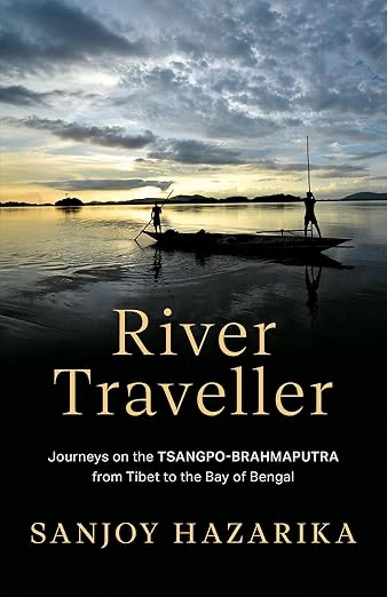
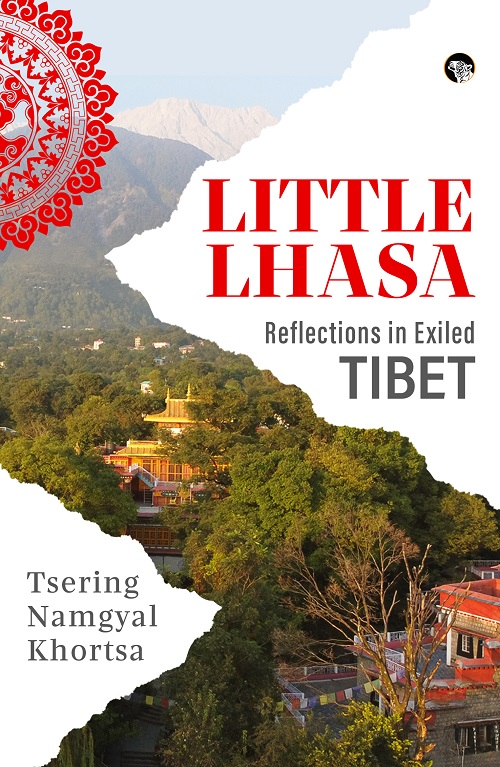
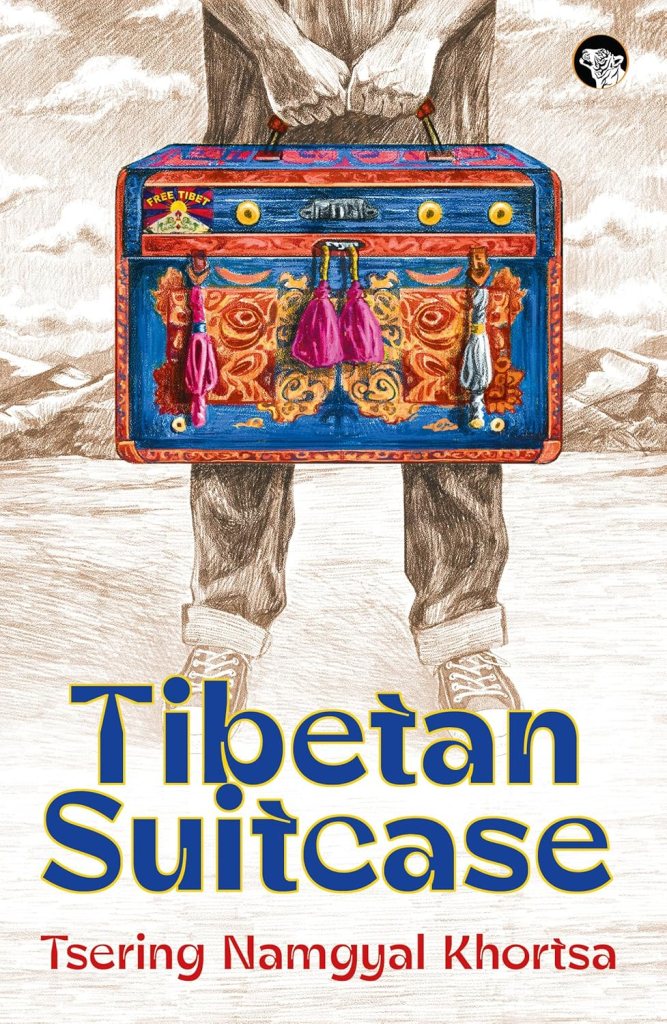

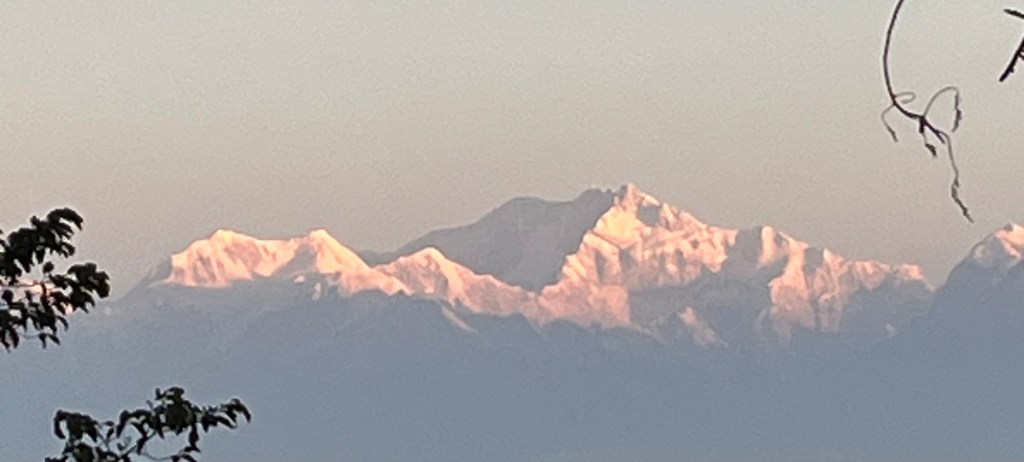
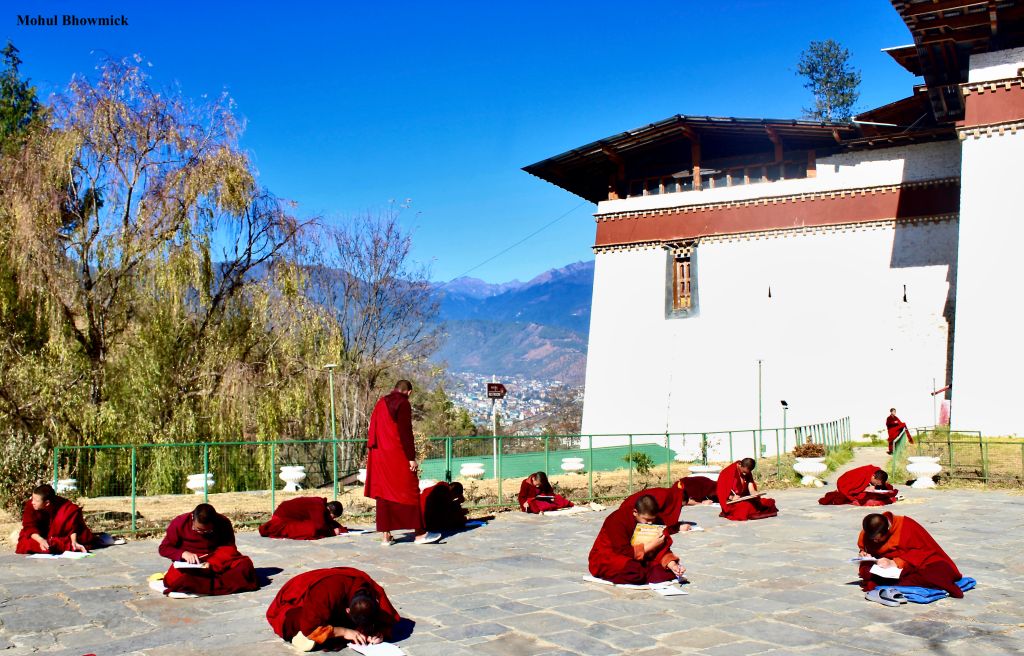
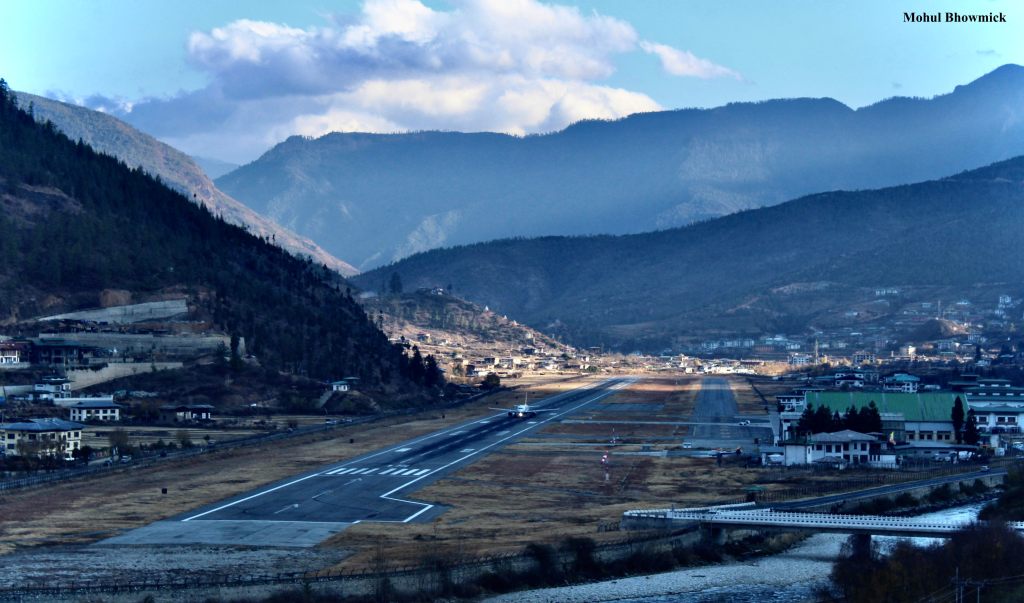
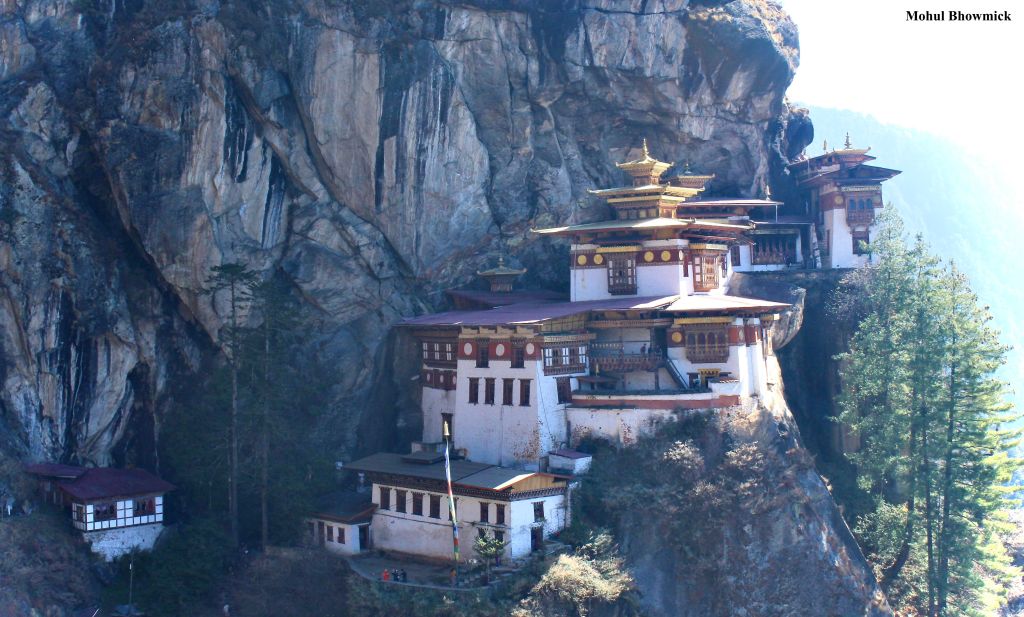
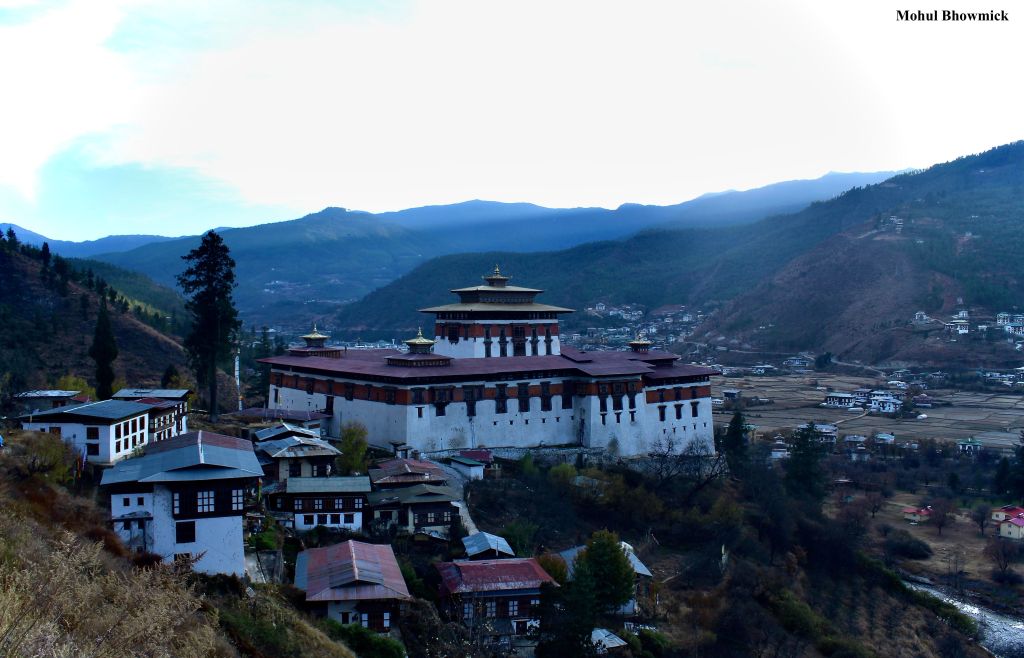
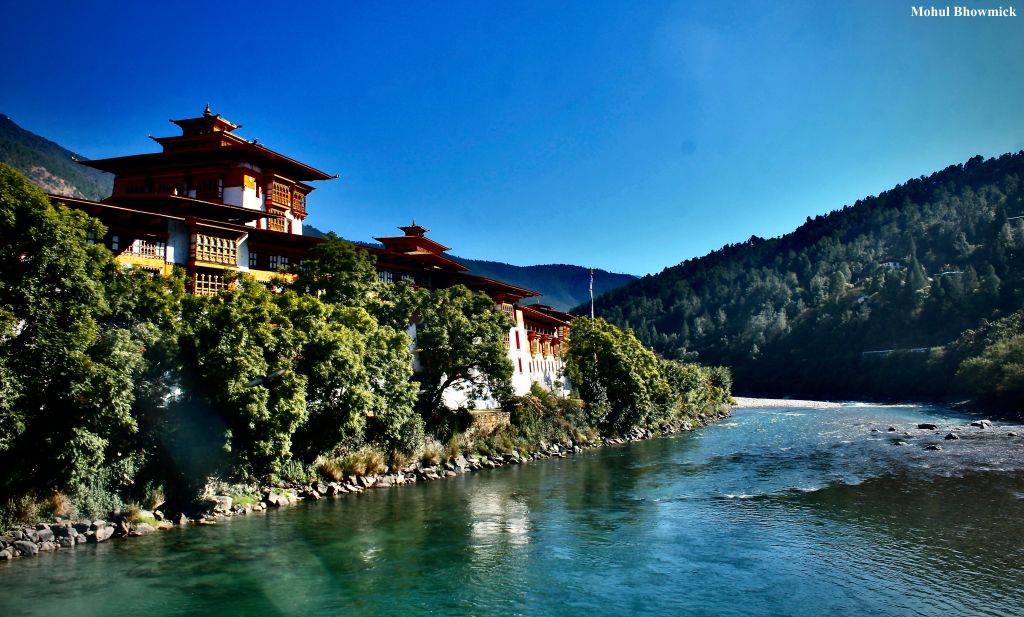
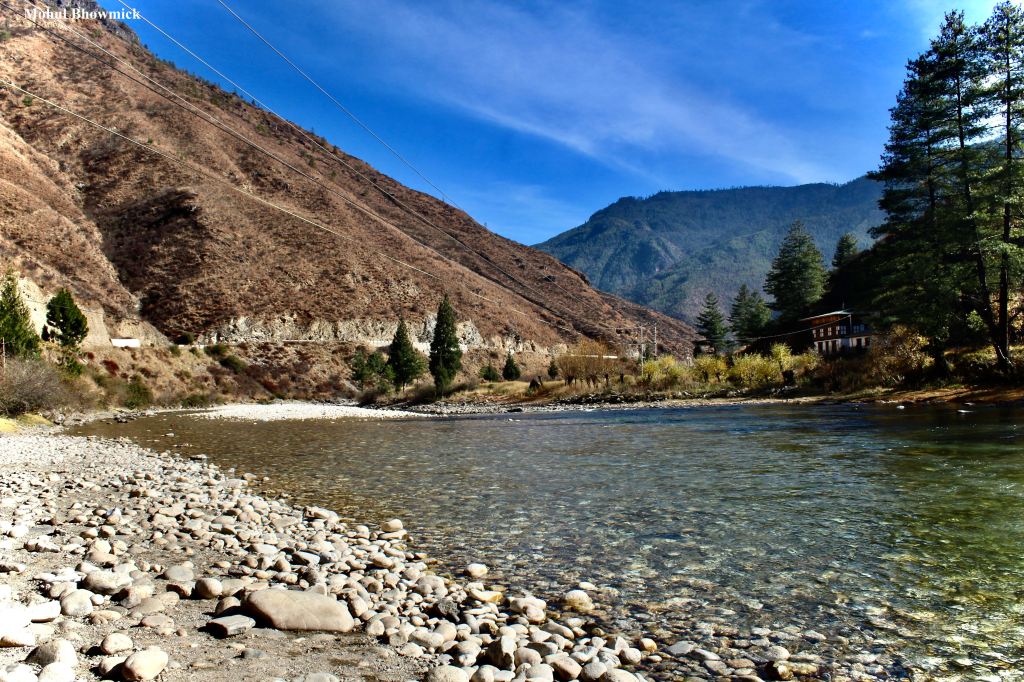
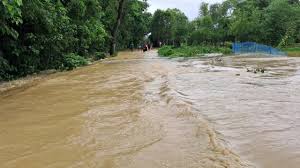
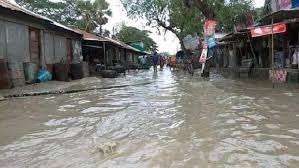
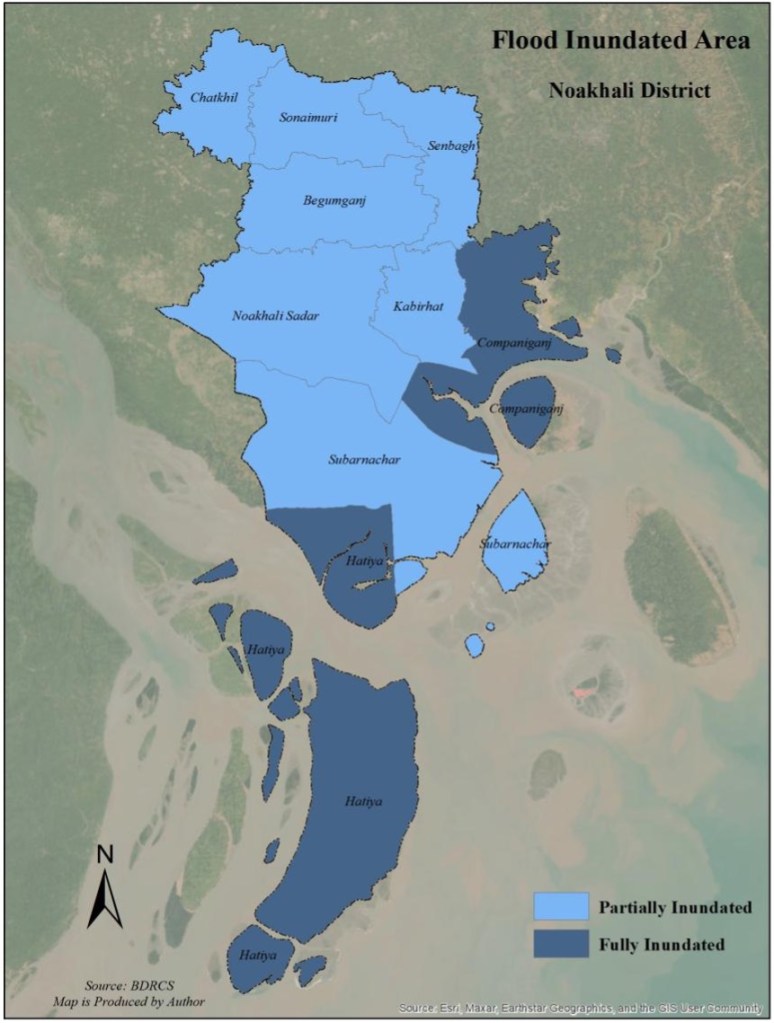
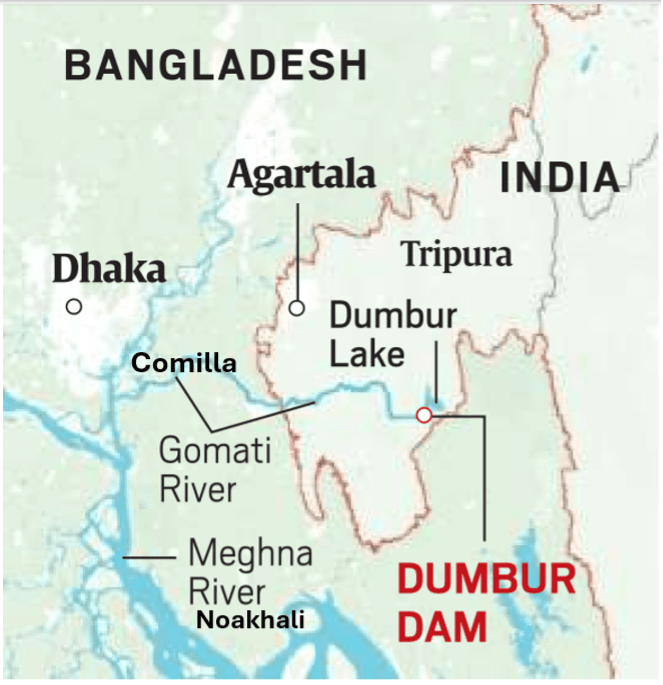
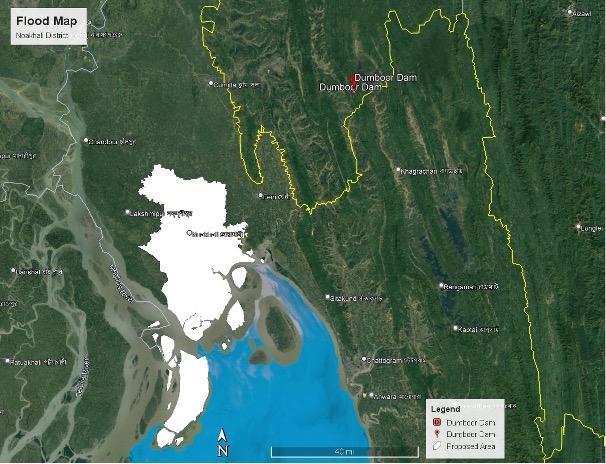

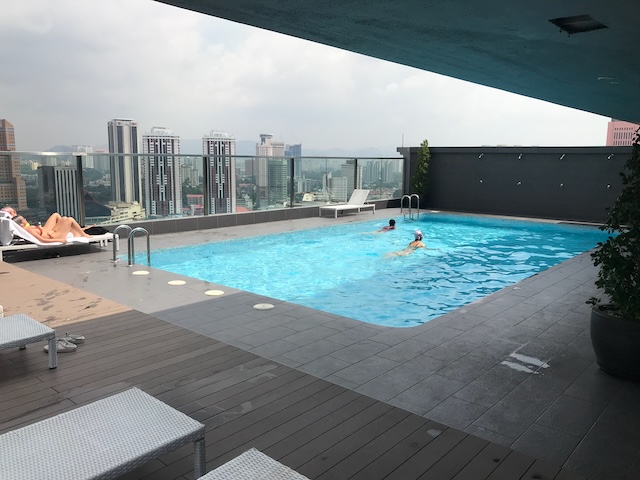
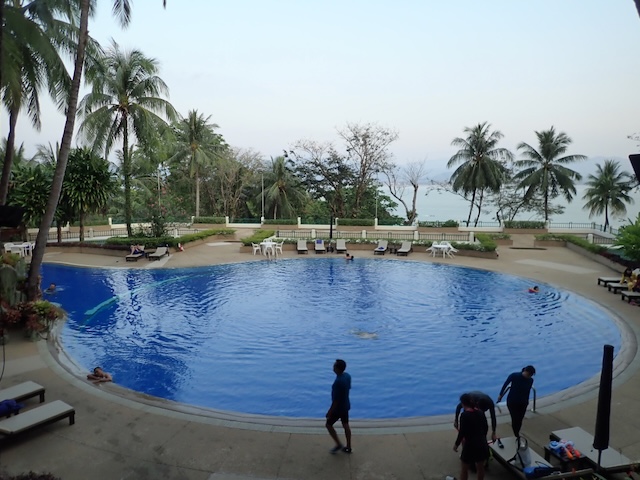

 Borderless