Categories
Stories

The Clay Toys and Two Boys

By Haneef Shareef, translated from Balochi by Fazal Baloch

Courtesy: Creative Commons

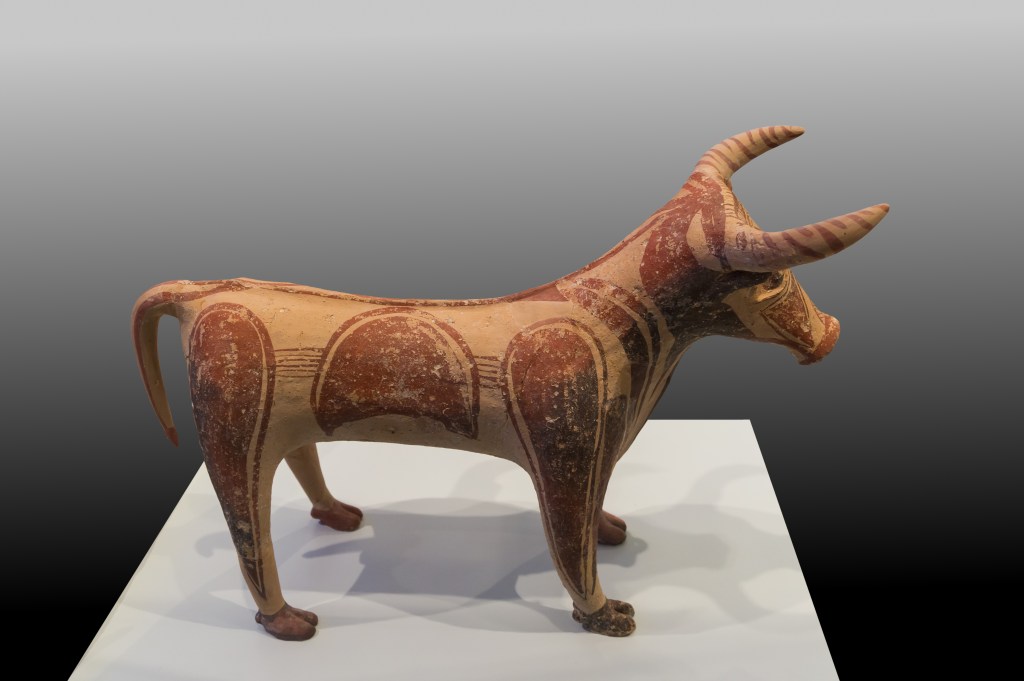
The boy smashed his clay toy and threw its pieces into the sewage water. He did not like his friend’s father at all because he never bought toys for his son. He loved his clay toys because his friend always lamented that he did not have any kind of toy. But despite his insistence he refused to carry his toys home. Not even once.

They always met at the corner of the street and played there by the sewerage line in front of his friend’s house. His mother took all household chores upon herself and deputed the servant at the door to keep an eye on her son.

His friend lived somewhere in the western side of the street. He always emerged in the western corner of the street and went back in that direction. He always said that the sewage water flew by their house. If something fell in it, it would resurface by their house. But he never told his friend exactly where he lived. Nor did he ever reveal if the window of their house opened to the south or north. Nor did he say, when the wind blew, in which direction the jujube fruits would fall. He also did not reveal if they lived in a government quarter or in a rented bungalow or had a house of their own.

They just met at the corner of the street and played there and smiled at being the co-owner of the sewerage line. A few times they made up their mind to step into the water and retrieve the toys lying buried in its bottom but every time, at the last moment, courage failed them. The sewage water was dark, full of waste and it also ran deep. And on top of that, they were just two small boys ironically looking for clay toys and that too in the bottom of sewage water.

They sat at the edge of the drain and played there. They built kingdoms and ruled over them like kings. At times they made fields and meadows, raised their hands to pray for rain. some other times, they became herd owners. Every day they scored new marvels. Shopkeeper, street vendors and people around them smiled even at times they laughed at their innocent adventures. It was small world — transparent like water — hung by a thread. As the sun went down the horizon, they took leave of each other hoping to meet on the next day. His friend had aligned his routine with sun. The moment the sun set, he would say goodbye to his kingdom and leave for home. Thereafter, his friend piled up the toys and the servant put them in the basket and carried his little master against his chest leaving behind the kingdom of two little kings in darkness.

Heaven knows which day of the month it was, when for the first time his friend did not turn up there. He piled up his toys, laid down rules and roadmaps for his kingdom but the second king had not arrived yet and his subject was nowhere around the kingdom. He waited for him till dusk, but he did not come. Then along with his servant he went looking for his friend’s house. They passed through several lanes and streets and finally stopped at a door by the edge of the sewerage line. The branches of a jujube were dropping on the wall. It was not obvious if it was a rented house, a government quarter or someone’s private property. The boy assumed it was the house his friend lived in. But its doors and windows were closed. Lamps and light had been blown off. They put their ears against the walls, but they could not hear any human voices. A flock of sparrows were singing in the jujube tree. Otherwise, everything was shrouded in silence. An old rusty lock was hanging on the door bearing witness to all past seasons.

For the next three days the boy waited for his friend, but he did not turn up. He spread the toys on the ground and waited for him. As the sun set and dusk fell, lamps were lit in the neighborhood. The young boy held his servant’s hand and went to the closed door where he thought his friend had lived. As usual, the place was shrined in silence. They stayed there for a while and then the boy looked at the servant. They exchanged gazes. The servant carried the basket of toys on his head. His little master followed him.

However, one Thursday, the two friends ran into each other at the corner of the street by the bank of the sewer line. He did not tell his friend where he was all that while nor did the boy reveal that he had found his home silent and locked.

A few days later, the young master’s father took him to the school. His mother insisted that he was five years old—still too young for the school but his father believed he was seven. They argued with each other. His father won. The boy insisted on taking his friend along. However, his friend had never appeared in the mornings. A few times, he thought he saw his friend at school. He seemed to be wandering alone in middle of the noise of hundreds of children. After that, he disappeared.

The two friends always met in the evening. No questions were asked by either of the young boys focused on their games.

One day when his friend arrived in the evening, he noticed tears in his eyes and his face looked pale. On that day, he went home early taking his friend’s clay bull along. The next day when came, he looked a little anxious. The bull was broken into two pieces. His friend did not ask him what had happened to it. Nor did the boy tell him anything about it. They tried a lot to join the broken parts of the bull, but they failed in their attempt. For a moment, the boy felt like crying loudly but he held back his tears.

They dug a little grave by the sewage water and buried the remains of the bull there. On that night the boy cried incessantly. In the morning, he told his teacher that his bull died the day before and that was why he was late. But his teacher was angry that he failed to distinguish between a truth and a lie. He thought the boy was too young to own a bull. Thus, he thrashed him like other naughty children.

In the evening the boy wanted to tell his friend that he was beaten by the teacher, but he could not. The boy plastered the grave with clay and erected a little epitaph on it. His looked at him and smiled. At dusk the boy called his brother, who in the glow of the lamp wrote on the stone ‘My Bull’. When they reached at the door, the boy halted, as if he remembered something. Thus, they turned back to the grave. Now, the epitaph on the grave read ‘Our Bull”.

My Bull…. Our Bull….The crowd….The door….The servant….The clay toys and two boys and the drain. It was a different world.

A few days later, the gap in their friendship began to widen. The boy stopped coming regularly but his friend always waited for him at the corner of the street with his clay toys piled up before him. Perhaps his companion had forgotten someone was waiting for him at the corner of the street. He felt quite lonely in the middle of the clay toys.

One day when the boy did come, he was shocked to discover that the grave of ‘Our Bull’ had been dismantled by someone. The remains lay scattered. He anxiously looked at the crowd bustling around. There was no trace of his friend. He picked up the pieces of the clay bull and threw them into the drain. Now, when there was not any trace of the ‘Our Bull’ he desperately wished not to have his friend over. Not in that hour of grief at least. He sat at the empty grave of the ‘Our Bull’ fearing the arrival of his friend. But he did not turn up.

The next evening when his friend arrived, he found the grave had been renovated. He scanned the heap of the toys, but the new clay bull was not there amongst the toys. His friend told him that he broke and buried it in the very grave. His eyes welled up and voice almost chocked. He admitted that it was he who dismantled the grave. His friend was shocked to hear it. For a while the whole world came to a halt, the sewage water stopped flowing and he felt himself all alone in a never-ending labyrinth. He could not ask him why he dismantled the grave nor did his friend tell him the reason. On that evening they did not play at all. They did not build kingdoms and did not dispatch emissaries to the neighbouring kingdoms. The boy had his eyes fixed on the pile of the clay toys and his friend sat by the grave and vacantly gazed at sewage water flowing in silence. The evening passed into dusk and on the foundation of the dusk, the night eventually erected it walls around the neighbourhood.

The next evening, the boy waited for his friend, but he did not show up. The street was crowded. Indifferent people were treading back and forth. For a moment the boy tried to find his friend in the jungle of people but, in the next moment, he gave up.

A month passed by but there was again no trace of his friend. One day, he took his servant and went to his friend’s house. They sat for a long time at the door, but nobody came out. Then they knocked the door, called out loudly but nobody responded. As the evening shadows lengthened, the boy for the first time realised that there was not a single house by the bank of the drain. Rather it flowed through the entire neighbourhood, bustling with young and old men and women, children, boys and girls and flock of goats. But the companion of his evenings, the co-owner of the ‘Our Bull’, was nowhere to be seen.

Nobody in the neighbourhood knew the boy. They believed he did not live there. Rather he came from somewhere else. But from where? Nobody had the answer. The boy did not know anything about him either.

The sun was setting. The boy started musing. He cast a look at the crowd and started crying loudly. The servant tried to console him but to no avail. He carried him back home. He continued to cry inconsolably. Then he told everybody that he knew where his friend had gone. He told them that he knew why he did not come back. Thus, he asked the servant to step into the sewage water. The servant was knee deep in the drain with stones, pebbles and pieces of broken glasses under his feet. He could not find anything. The servant grumbled and so did boy’s mother. The shopkeeper and the customers smile and laughed. But the boy was sure that his friend had stepped into drain looking for the pieces of the clay bull.

From then on, the boy broke his clay toys and threw them into the sewer hoping that they would be flown to his friend so that he would know he, his friend, was alive and waiting for him beside the grave of ‘Our Bull’.

.

Dr. Haneef Shareef, a trained medical professional, is one of the most cherished contemporary Balochi fiction writers and film directors. So far, he has published two collections of short stories and one novel. His peculiar mode of narration has rendered him a distinguished place among the Balochi fiction writers. He has also directed four Balochi movies.

Fazal Baloch is a Balochi writer and translator. He has translated many Balochi poems and short stories into English. His translations have been featured in Pakistani Literature published by Pakistan Academy of Letters and in the form of books and anthologies. He has the translation rights to Haneef Shareef’s works.

.

PLEASE NOTE: ARTICLES CAN ONLY BE REPRODUCED IN OTHER SITES WITH DUE ACKNOWLEDGEMENT TO BORDERLESS JOURNAL. 

Categories
Halloween Greetings

Ghosts, Spooks & Spirits of the Night Arise…

Halloween returns, bringing back memories of trick or treating with children collecting candies, celebrating — celebrating perhaps to get over the fear of darkness, the unknown or perhaps, even the experience of global disasters ? The Bengali equivalent of Halloween — Bhoot Chaturdashi — was celebrated a day before Diwali. And as people do up ‘haunted homes and dress as witches, zombies and ghosts, I wonder, why do we celebrate such dark festivals and also enjoy them?

Perhaps, the answer is given in an essay by Candice Louisa Daquin that we have a gene that helps us enjoy such occasions… And then there is always the necessary adjunct of ghost stories and spooky rhymes that makes us feel ooky as our hearts beat and nervous snots of laughter explode from chests beating in anticipation…Wafting on borderless clouds that float mysteriously on Halloween nights, we invite you to visit a few spooks, ghosts, goblins, witches and spirits…

Poetry

It’s Halloween by Michael R Burch… Click here to read.

Horrific Humour by Rhys Hughes… Click here to read.

Prose

My Christmas Eve “Alone” : Erwin Coombs has a ghostly encounter at night. Is it real? Click here to read. 

Flowers on the Doorstep :Shivani Shrivastav writes of an encounter with a mysterious creature in Almora. Click here to read. 

A Curse: San Lin Tun gives us a macabre adventure with malicious spirits lurking in a jungle in Myanmar. Click here to read.

Pothos: Rakhi Pande gives us a macabre story set in Singapore that borders on the supernatural? Click here to read.

I Grew into a Flute: A Balochi Folktale involving the supernatural retold by Fazal Baloch. Click here to read.

Categories
Editorial

When Autumn Leaves Start to Fall…

                     “Where are the songs of Spring? Ay, where are they?
                      Think not of them, thou hast thy music too…”

                                 — John Keats (1795-1851), To Autumn
Art by Sybil Pretious

For long writers have associated autumn with “mellow wistfulness”. That loss of spring, or loss of youth is not bleak or regretful has been captured not just by Keats but also been borne out by historical facts. Anthropocene existence only get better as the human race evolves … If we view our world as moving towards an autumn, we perhaps, as Keats suggests, need to find the new “music” for it. A music that is ripe and matures with the passage of time to the point that it moves more towards perfection. Though sometimes lives fade away after autumn gives way to winter as did those of  Queen Elizabeth II (April 21st 1926 – September 8th 2022) after a reign of seventy historic years and Mikhail Gorbachev (2nd March 1931 – 30thAugust 2022) with his admirable efforts to bridge divides. Both of them have left footprints that could be eternalised if voices echo in harmony. Thoughts which create bonds never die – they live on in your hearts and mine.

Imagine… ten thousand years ago, were we better off? Recorded history shows that the first war had already been fought 13,000 years ago. And they have continued to rage – but, at least, unlike the indomitable Gauls in Asterix[1] comics – not all jumped into the fray. They did during the last World Wars — which also led to attempts towards institutionalising humanitarian concerns and non-alignment. Yes, we have not had a perfect world as yet but as we age, the earth matures and we will, hopefully, move towards better times as we evolve. Climate change had happened earlier too. At a point, Sahara was green. Continental shifts split Pangaea  into seven continents – that was even earlier. That might have driven the dinosaurs to extinction. But I am sure mankind will find a way out of the terror of climate change and wars over a period of time, as long as we believe in deciphering the sounds of autumn as did Keats in his poem.

Tagore had also sung of the joys of autumn which happens to be a time for festivities. Professor Fakrul Alam has translated three such songs, reflecting the  joie de vivre of the season, The translation of a small poem, Eshecche Sarat[2], brings the beauty of the season in Bengal to the fore. We have a celebration of youth and romance in a Balochi folksong, an anti-thesis to autumn and aging, translated for us by Fazal Baloch and also, poetic prose in quest of God and justice by Haneef Sharif, translated from Balochi by Mashreen Hameed. Lost romance recapitulated makes interesting poetry is borne out by Ihlwha Choi’s translation of his own poem from Korean. But the topping in our translation section is a story called ‘Nagmati[3]’ by eminent Bengali writer, Prafulla Roy, translated by no less than a Sahitya Akademi winning translator – Aruna Chakravarti. This story illustrates how terrifying youthful follies can lead to the end of many young lives, a powerful narrative about the snake worshipping community of Bedeynis that highlights destruction due to youthful lusts and an inability to accept diverse cultures.  

When this cultural acceptance becomes a part of our being, it creates bonds which transcend manmade borders as did the films of Satyajit Ray. His mingling was so effective that his work made it to the zenith of an international cinematic scenario so much so that Audrey Hepburn, while receiving the Oscar on his behalf, said: “Dear Satyajit Ray. I am proud and privileged to have been allowed to represent our industry in paying tribute to you as an artist and as a man. For everything you represent I send you my gratitude and love.”

This and more has been revealed to us in a book, Satyajit Ray: The Man Who Knew Too Much, authored by a protagonist from Ray’s film, Barun Chanda. This book brought out by Om Books International reflects not just Ray as a person but also how he knitted the world together with his films and took the Indian film industry to an international level. Barun Chanda has been interviewed with a focus on Satyajit Ray. Keith Lyons has also interviewed a man who has defied all norms and, in the autumn of his life, continues his journey while weaving together cultures across, China, India and Thailand by his ethnographic studies on tribes, Jim Goodman. Goodman says he left America when speaking for a war-free world became a cause for censorship. This makes one wonder if war is a game played for supporting a small minority of people who rule the roost?  Or are these ramblings of a Coleridge writing ‘Kubla Khan’ under the influence of narcotics?

Poetry also brings the season into our pages with an autumnal interpretation of life from Michael Burch. More poetry from Sunil Sharma, Ryan Quinn Flanagan, Gayatri Majumdar, George Freek, Ron Pickett, Sutputra Radheye, Marianne Tefft brings a wide range of concerns to our pages – from climate to the vagaries of human nature. Poetry by an Albanian writer, Irma Kurti, and photographs by her Italian spouse, Biagio Fortini, blend together the colours of humanity. Rhys Hughes as usual, makes it to the realm of absurd – perhaps voicing much in his poetry, especially about the environment and human nature, though he talks of woodpeckers on Noah’s ark (were there any?) and of cows, yetis, monkeys and cakes… He has also given us a hilarious cat narrative for his column. Can that be called magic realism too? Or are the edges too abstract?

A book excerpt from Hughes’ Comfy Rascals Short Fiction and a review of it by Rakhi Dalal makes us wonder with the reviewer if he is a fan of Kafka or Baudelaire and is his creation a tongue-in-cheek comment on conventions? A book review by Hema Ravi of Mrutyunjay Sarangi’s A Train to Kolkata and Other Stories and another by Bhaskar Parichha of Netaji Subhash Chandra Bose’s Life, Struggle and Politics, authored by Netaji’s nephew’s wife, Krishna Bose, translated and edited by her son, Sumantra Bose, unveils the narratives around his life and death.

A leader who quested for freedom and roamed the world after being passed over by the Congress in favour of Nehru, Netaji raised an army of women who were trained in Singapore – not a small feat in the first half of the twentieth century anywhere in the world. His death in an air crash remained an unsolved mystery — another one of those controversies which raged through the century like the Bhawal case. In his review, Parichha spells out: “Aiming to bring an end to the controversies and conspiracy theories surrounding the freedom fighter, the over 300-page book gives a detailed and evidence-based account of his death in one of its chapters.”

Our book excerpts in this edition both feature writers of humour with the other being the inimitable Ruskin Bond. We have an excerpt of Bond’s nostalgia from Between Heaven and Earth: Writings on the Indian Hillsedited by Ruskin Bond and Bulbul Sharma.

Our non-fiction also hosts humour from Devraj Singh Kalsi about his interactions with birds and, on the other hand, a very poignant poetic-prose by Mike Smith reflecting on the vagaries of autumn. From Japan, Suzanne Kamata takes us to the Rabbit Island – and murmurings of war and weapons. We have the strangest story about a set of people who are happy to be ruled by foreign settlers – we would term them colonials – from Meredith Stephens. G Venkatesh delights with a story of love and discovery in Korea, where he had gone in pre-pandemic times. Paul Mirabile travels to Turkey to rediscover a writer, Sait Faik Abasiyanik (1906-1954). And Ravi Shankar gives us an emotional story about his trek in the Himalayas in Nepal with a friend who has passed on. Candice Louisa Daquin has written of the possibilities towards integrating those who are seen as minorities and marginalised into the mainstream.

The edition this time is like Autumn – multi-coloured. Though I am not able to do justice to all our contributors by mentioning them here, my heartfelt thanks to each as every piece only enriches our journal. I urge you to take a look at the September edition.

I would like to give huge thanks to our readers and our team too, especially Sohana Manzoor and Sybil Pretious for their artwork. We could not have come this far without support from all of you.

Thank you.

Happy Reading!

Mitali Chakravarty

borderlessjournal.com


[1] The men in the indomitable Gaulish village (which the Romans failed to conquer) in times of Julius Caesar loved to jump into a fight for no reason…Asterix was the protagonist of the comics along with his fat friend Obelix

[2] Arrival of Autumn

[3] Snake Maiden

Categories
Stories

A Letter Adrift in the Breeze

Haneef Sharif

By Haneef Sharif, translated from Balochi by Mashreen Hameed

From the world,

coldness,

autumn,

silence… intense silence.

My lord!

Fair wishes…

I am somewhere between the better and the best in this world. Safe and sound. Breathing. Every morning, I had walked to my job and the evening breeze had wafted me back home. Drifting like this, many times I pondered over penning down a letter to you but was held back…. lack of address ….my own fears…. dread of time…. Therefore, I never quite made up my mind to complete the task.

My Lord! Today I am feeling very dispirited. I have been expelled by the head of the post office from my job. He said, I happen to deliver the letters, orders, registry and parcels on wrong addresses. The recipients receive the wrong mail. He states, for three months I kept reiterating these mistakes.

I had never envisioned this situation.

Giving it some thought, I concluded that this is all because I did not write a letter to you. Thus, today, I am writing to you.

I apologise in advance for any errors in my penning.

The crucial thing is — My Lord! Tonight, is curtained by stillness, the fire is inhaling its final breath. After the fire dies, I remain with taciturnity alone at home. Whosoever obtains more power than others, will press them down, and you know well who is more powerful than me and who….

God Almighty! To say worthily, I love you a lot and very much —

like toys kept on carts,

like whirlwinds on mosques,

like ash that clings tired on jammed wheels,

like wandering cows on streets,

like the daughters of neighbours…

Almighty God! I love you limitlessly. I don’t know how to convince your ears about my profound affections. I love everything about you, I stoop to your every word, and your every creation is beyond examples, wordless and irreplaceable.

But my Lord! This is also true that you left nothing but confusion in this world, everywhere inconclusiveness, lack of fulfilment, no ins and outs but all the edges of incompletion.

My Lord, who are you? What are you?

The pouring light of lamp igniting before the home of Khuda Baksh[1], I wonder are you

the tyre-prints of police cars,

the pay-day for teachers,

the rock on the pavement of road,

or the first daily paper each morning?

Who are you? Where are you? In the skies…

No, I cannot admit this, how come my friend, my companion is so far? My Lord is not cruel. He is alone, childfree, poor, miserable like me… stricken by hunger, and knows that the most powerful thing in the world is hunger… hunger… ufff…. I cannot explain. But My Lord, what do you think, is the most powerful among your creations —

drug filled cigarettes,

leftovers of bread,

a cold, collapsed lonely road,

sunsets in summers,

or relics of autumn leaves?

As per my heart, these all are powerful, frightening, but tempting.

What do you say my lord?

What is your point of view?

Do you know one more thing Almighty God, you made abundant useless things in your world; they are meaningless, unimportant, but absurdly you are accountable for creating them.

Lord Almighty! Don’t you realise some surplus things remain unnoticed when you look at the world, like —

school going children in the morning,

busloads of travelers to cities,

 ‘wedlocks’ in marriages,

ventilators of bathrooms,

 and traffic police on roads.

My lord!! These all are complaints, all protests. These are our grievances echoing before you.

We are wretched, distressed, dead hearted. Other people are engulfing us. We are being thrown out of the world. Lord, my heart has become the residence of hatred, enmity and envy; I feel jealous of everyone. I suffer in anguish. I am changing into a devil, converting to wickedness. In spite of all these, I am amazed to discover that, My Lord, I love you a lot, in fact, very, very much –

like a healthy fish,

like the last drop of wine,

like a full plate of curry,

like a room filled with water,

like… like…

God Almighty! There is nothing more vital to pen down except, the fire is dead now. My stomach is screaming, hunger creeps, cold extends, surfeits, magnifies and I am…

My best regards to all.

Your son,

And… actually…. I am handing over this letter to the breeze; I hope you will receive it.

Everything is pretty well.

.

(This story was first published in Balochi in Teeran Dask, a collection of stories by Haneef Sharif and is being published in translation with permission from the author and the Balochistan Academy of Literature and Research, Turbat.)

Haneef Sharif, born on December 25, 1976, is a well-recognised author, filmmaker, YouTuber, photographer and  script writer. He completed his basic education in Turbat, Balochistan, and received his MBBS degree from Bolan Medical College, Quetta, in 2003. He currently lives in Germany. He has published a novel, Chegerd Poll enth ( The Chegerd Tree is blossoming), and a number of short stories in Balochi. Some of his short stories have been published in 3 collections: Shapa ke Hour Gwareth ( The Night When It Rains), Teeran Dask ( Teeran Dask) and Haneefnaam ( Hey you Haneef). He has also directed four films in Balochi. He also runs a YouTube channel Radio Balochistan where he publishes videos, short stories, interviews and lectures on miscellaneous subjects. 

Mashreen Hameed is a fresh graduate of University of Turbat with a Masters’ degree in English literature. She is a writes fiction, poetry and translates from Balochi and English.

.

PLEASE NOTE: ARTICLES CAN ONLY BE REPRODUCED IN OTHER SITES WITH DUE ACKNOWLEDGEMENT TO BORDERLESS JOURNAL

Categories
Poetry

A Balochi Folk Song

Translated from Balochi by Fazal Baloch

Balochistan. Courtesy: Creative Commons
A CONVERSATION BETWEEN A LADY AND HER SUITOR

She: Hither come, help me get off the cliff, O white-shawled lad!
He: I’ll, O, red-dressed lass, but what will be the reward, I have?

She: Either my necklace or my bangles, you will have.
He: Of your necklace and bangles, none I ever need!
‘Tis your shapely nose and flowing tresses I seek.

She: Shapely nose and flowing tresses lie beyond your reach
-- I’ll become a wild citron on a lofty tree.
Boy: I’ll become grasshopper and nibble your tender leaves.

She: I’ll become a cumulus and on the valley burst forth.
He: A thirsty deer I’ll become, and drink all the fresh water you pour.

She: I’ll become a sorghum grain and rest on the field.
He: I’ll become a grey dove and hold you in my beak.

She: I’ll become a rabbit, in rosebushes I’ll sleep.
He: I’ll become a shepherd, you with my crook I’ll gently beat.

She: I’ll become a turban that rests on a bride’s head.
He: I’ll play my mouth-harp, and as a reward, you I’ll seek. 

She: I’ll become the helpless daughter of a poor man.
He: I’ll become the grim-reaper, and whisk you off to the heaven.

She: You’ve filled my heart with boundless joy and delight
Hurry to the wedding chamber, I’m your bride.

This folk song was originally featured in Dreen (The Rainbow: A Collection of Folksongs) collected and translated into Urdu by Atta Shad and A. Salam and published by the Balochi Academy Quetta. Fazal Baloch has the rights to the translation in English.

Fazal Baloch is a Balochi writer and translator. He has translated many Balochi poems and short stories into English. His translations have been featured in Pakistani Literature published by Pakistan Academy of Letters and in the form of books and anthologies.

.

PLEASE NOTE: ARTICLES CAN ONLY BE REPRODUCED IN OTHER SITES WITH DUE ACKNOWLEDGEMENT TO BORDERLESS JOURNAL. 

Categories
Contents

Borderless May 2022

Painting by Sohana Manzoor

Editorial

Catch a Falling StarClick here to read

Interviews

Shantanu Ray Chaudhuri: In Search of Serendipity: Shantanu Ray Chaudhuri, an iconic editor and film writer from India, converses on his own journey and traditional publishing. Click here to read.

A Wonderer Who Wanders Between Waves and Graveyards and Digs Up Ancient Tales: In Conversation with Amit Ranjan, a writer-academic, who is trying to redefine academic writing, starting with his book, John Lang the Wanderer of Hindoostan, Slanderer in Hindoostan, Lawyer for the Ranee. Click here to read.

Translations

Jibananda Das’s All Afternoon Long, translated from Bengali by Fakrul Alam. Click here to read.

The Colour of Time, Korean poetry composed and translated by Ihlwha Choi. Click here to read.

The Ordeal of Fame, a humorous skit by Rabindranath, translated by Somdatta Mandal. Click here to read.

Fazal Baloch translates a retold folktale from Balochi, The Precious Pearl. Click here to read.

Tagores’ Lukochuri has been translated from Bengali as Hide and Seek by Mitali Chakravarty. Click here to read.

Pandies’ Corner

These narratives are written by youngsters from the Nithari village who transcended childhood trauma and deprivation. The Story of Rajesh has been written by Yogesh Uniyal in a mix of English and Hindi, and translated fully to Hindi by Nirbhay Bhogal. Click here to read.

Poetry

Click on the names to read

Michael R Burch, Shantanu Ray Chaudhuri, Ron Pickett, Abin Chakraborty, Tohm Bakelas, Mini Babu, Sudakshina Kashyap, George Freek, Shailja Sharma, Allison Grayhurst, Amritendu Ghosal, Marianne Tefft, S Srinivas, Rhys Hughes

Poets, Poetry & Rhys Hughes

Rhys Hughes shares why he put together an anthology of humorous poetry with seventeen writers, Wuxing Lyrical. Is his logic funny or sane? Click here to find out.

Stories

Intersleep

Nileena Sunil gives us a flash fiction. Click here to read.

Ants

Paul Mirabile tells a strange tale set in Madrid. Click here to read.

Mausoleum

Hridi gives us a poignant story on the banks of the river Seine. Click here to read.

The Persistence of Memory

Vedant Srinivas reflects on a childhood lost and a career found. Click here to read.

Viral Wisdom

Rhys Hughes finds humour within pandemic sagas. Is it dark or light? Click here to read.

Musings/Slices from Life

Sea Days, Sea Flowers

Mike Smith uncovers the wonders of British writer, H.E Bates. Click here to read.

Ruleman Ngwenya and Johannesburg

G Venkatesh shares the experience of his first trip out of India long, long ago. Click here to read.

“You don’t have to understand life. You just have to live”

Shubha Apte muses on a book that taught her life lessons. Click here to read.

Mission Earth

In Falling Down and Getting Up, Kenny Peavy explores how to raise resilient children. Click here to read.

Notes from Japan

In An Encounter with the Monet on Naoshima, Suzanne Kamata writes of snacking on Claude Monet’s hundred year old recipes while savouring his art and that of the famed artist who makes bold art with polka-dots, Yayoi Kusama. Click here to read.

A Special Tribute

In Jean Claude Carriere: A Writer for all Directors, Ratnottama Sengupta pays homage to Jean Claude Carriere (1931-2021), the legendary screenwriter of Peter Brook’s Mahabharata. Click here to read.

Essays

Hesse’s Siddhartha: Towards a Shadowless Present

Dan Meloche revisits a hundred-year-old classic by Herman Hesse that is based on Buddhist lore. Click here to read.

Himalayan Stories: Evenings with Nuru at Pheriche

P Ravi Shankar takes us to a trekkers’ life in the Himalayas. Click here to read.

Living up to my Seafaring Name in Tasmania

Meredith Stephens explores Tasmania on a boat and with hikes with a gripping narrative and her camera.Click here to read.

The Observant Immigrant

In A Post Pandemic Future …?, Candice Louisa Daquin takes a look at our future. Click here to read.

Book Excerpts

An excerpt from Upamanyu Chatterjee’s Villainy. Click here to read.

An excerpt from Ramy Al-Asheq’s Ever Since I Did Not Die, translated from Arabic by Isis Nusair, edited by Levi Thompson. The author was born in a refugee camp. Click here to read.

Book Reviews

Rakhi Dalal revisits Tagore’s The Post Office, translated from Bengali in 1912 by Devabrata Mukherjee. Click here to read.

Indrashish Banerjee reviews Upamanyu Chatterjee’s Villainy. Click here to read.

Basudhara Roy reviews Sunil Sharma’s Burn The Library & Other Fiction. Click here to read.

Bhaskar Parichha reviews Radhika Gupta’s Limitless: The Power of Unlocking Your True Potential. Click here to read.

Categories
Editorial

Catch a Falling Star…

Art by Sohana Manzoor
For when your troubles starting multiplying
And they just might
It's easy to forget them without trying
With just a pocketful of starlight

Catch a falling star and put it in your pocket
Never let it fade away (never let it fade away)
Catch a falling star and put it in your pocket
Save it for a rainy day

'Catch a Falling Star' by Paul Vance and Lee Pockriss

Perhaps, it is time to find that fallen star popularised by pop singer Perry Como is 1957. Optimism glimmers faintly, sometimes even conceals itself, in a world passing through a dark phase in history. For instance, few of us would know that we might find more answers to tackle  climate change as dinosaur fossils (from the time an asteroid hit the planet) have been unearthed recently. That sounds like solutions can be had to what was perceived as inevitable doom.

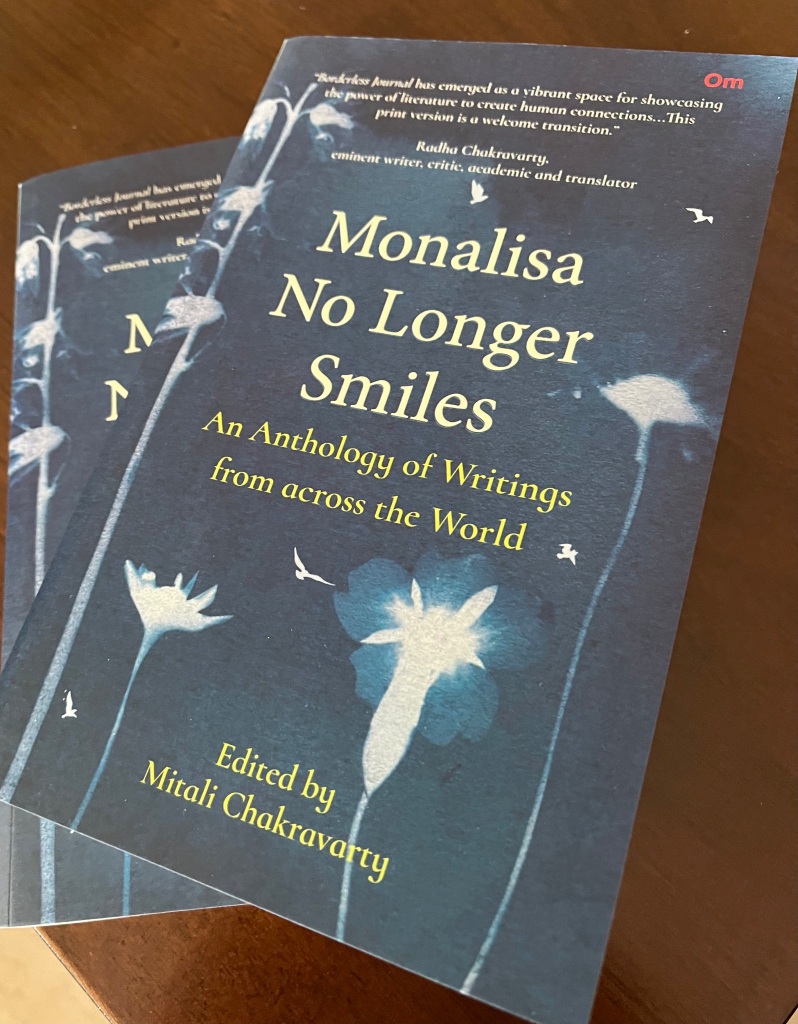
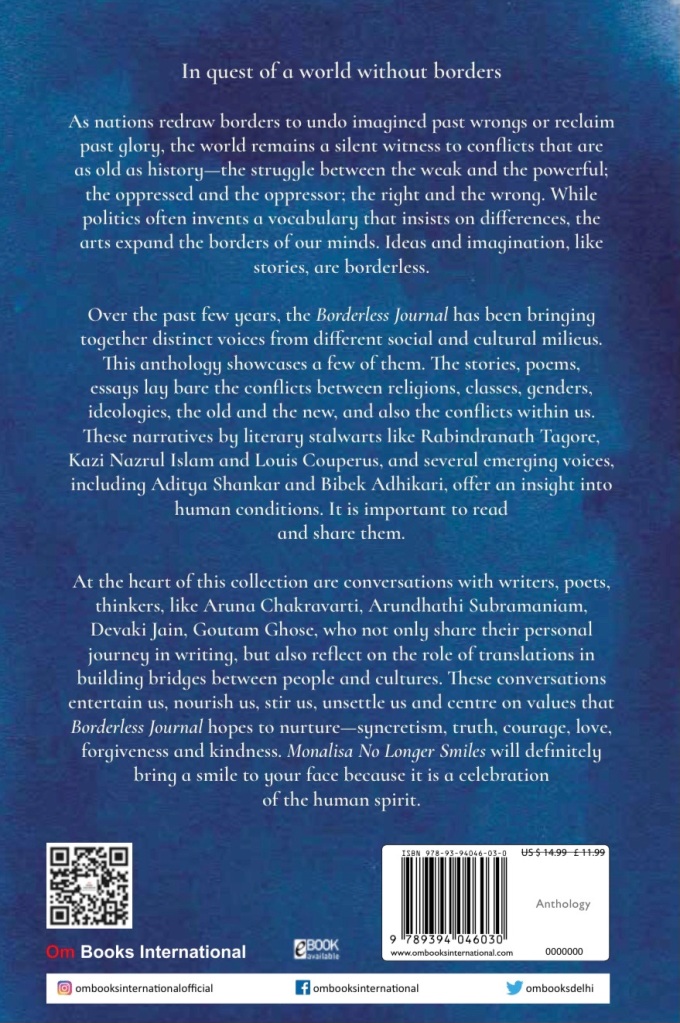
Another bit of news that perhaps will cheer some is the first anthology of Borderless Journal will soon be available in market. It has been accepted by a publisher, an old, trusted and reputed name from India, Om Books International. They have bookshops splattered all over — should make it easy for buyers to access the book. Hopefully, you can target the anthology for your Diwali or Christmas gift hampers. Om Books has one of the most iconic editors-in chief, Shantanu Ray Chaudhuri. A multiple award-winning editor, he has worked in Penguin and Harper Collins and is currently churning out wonderful books from Om with a fabulous production team, working with whom has been a pleasure. Ray Chaudhuri is an outstanding film writer and poet. He is part of a group that is creating a film archive online. To know more about him or his views on publishing, you can read our online conversation with him.

The energy one gets from optimism like starlight from a fallen star, lightens the darker shadows that create gloom with the war leading to rise in prices and threats of recession in a post pandemic scenario. Lesya Bakun, the refugee from Ukraine whose story we carried last month, finds her starlight by sharing updates of her story.  She added to her narrative with the news that her cousin has been taken as a prisoner of war by Russia from the besieged factory in Ukraine. Though sharing does not alleviate suffering, Bakun’s ability to cling to hope and imagine a future where she gets her dream highlights the strength of her convictions. The other thing that is revealed by her narrative and media coverage is exclusivity and boxes of ideology split humankind, erase families, cities, countries, lives and sanity. The war can appease only the lust of warlords. Against this desolation caused by the devastation, what could be the starlight that would lead to a happier future?

Laughter. Unleashing the ability to laugh at oneself is as potent as laughter that generates relief and lightens our mood, so that we can view differences as whimsical, treat them with tolerance and compassion and not destroy the diversities that add colours to the world. Perhaps, that is why Tagore took to humour too. Somdatta Mandal has translated a series of humorous skits by Tagore. We are featuring one of these called the ‘Ordeal of Fame’. Yet another translation or transcreation of a poem called ‘Lukochuri’ or ‘Hide and Seek’ reflects the playful in Tagore’s oeuvre. These, along with Rhys Hughes humour on the pandemic in poetry and prose, bring good cheer into our journal. Hughes has also used his column to tell us why he curated a new humorous anthology of verses by seventeen poets called Wuxing Lyrical. I wonder if he is serious or joking!

We were fortunate to have a tongue-in-cheek online discussion with an academic with a witty sense of humour who started a book based on his PhD research with a limerick, Amit Ranjan, author of John Lang the Wanderer of Hindoostan, Slanderer in Hindoostan, Lawyer for the Ranee. While Ranjan brought to us a narrative of an Australian who challenged the colonial mindset, went to court representing the Rani of Jhansi, wrote for Charles Dickens in Household Words and moved around the world just like one of us, hopping jobs and looking for a life, we have diverse cultural streams woven into the journal with translations of a Balochi folktale from Fazal Baloch, a Korean poem by Ihlwha Choi and Professor Fakrul Alam’s translation of Jibananda’s poetry, an ongoing project in Borderless.

The Nithari column has yielded us a story that was written in a mix of Hindi and English by Yogesh Uniyal and translated fully to English by Nirbhay Bhogal. We have strange stories this time. Nileena Sunil’s short narrative and Paul Mirabile’s longer one set in Madrid explore the unusual. More stories delve into the intricacies of the human mind.

As we trot around the globe, Suzanne Kamata tells us about a Monet museum in Japan where she ate madeleines made with the artist’s recipe! Meredith Stephens sails to Tasmania with her camera and gives us a glimpse of nature’s plenty. Ravi Shankar relates his trekking adventures among the Himalayas in Nepal, with awesome photographs of these mountains, while Kenny Peavy who lives in Indonesia dwells on the value of falling down and getting up in a light humorous vein against the backdrop of nature – though metaphorically perhaps the world needs to do that. We have G Venkatesh’s story about his stay in Johannesburg where he discovers that skin tones do not matter.

Ratnottama Sengupta makes the whole world look like a home with the story of a legendary screenwriter, Jean Claude Carriere, who wrote the script of Mahabharata for Peter Brook’s play (1985) of the same name and the subsequent film (1989) — with characters drawn from all over the world. Candice gives us an overview of the pandemic, with more focus on US where she lives.

Mike Smith travels back to another time when an ailment called World War II raged and has revived a writer from the past, HE Bates (1905-1974). We have another essay by Dan Meloche on a legendary book which turned 100 this year — Herman Hesse’s Siddhartha. Rakhi Dalal revisits more than a century old translation by Devabrata Mukherjee of Tagore’s The Post Office which bears relevance to the present day as it shows how the human spirit endures over even the darkness of death.

Bhaskar Parichha has reviewed Radhika Gupta’s Limitless: The Power of Unlocking Your True Potential, by his assessment a book that inspires youngsters to take charge of their future. On the other hand, there are books that explore the darkest in humans. Basudhara Roy has reviewed a collection short stories by Sunil Sharma called Burn the Library & Other Fiction. Indrashish Banerjee reviews Upamanyu Chatterjee’s latest novel based on modern day crimes, Villainy, from which we are carrying a book excerpt too. The other excerpt is from a narrative written from a refugee’s perspective, Ramy Al-Asheq’s Ever Since I Did Not Die, translated by Isis Nusair from Arabic. Born in a refugee camp in Damascus, this Syrian-Palestinian poet defies all genres to touch hearts with brutal honesty. No less sincere is Michael Burch’s poetry on summer that ushers in the season as much as Sohana’s beautiful painting that we are using as our cover photo. We have poetry from not just Shantanu Ray Chaudhuri but also by George Freek, S. Srinivas, Tohm Bakelas, Abin Chakraborty, Marianne Tefft and many more. As usual, I have not mentioned all the treats in store for you. Delve into our contents page and browse to find out more.

Before winding up, I would want to extend my thanks not only to our team and contributors, but also to our publisher who is willing to republish our content with some tweaking. Thanks to our readers who, I hope, will be excited to have selected content between their palms as a hardcopy anthology with 49 of our most iconic pieces. We have more than a thousand published works. This anthology will be an iconic sample that you can carry anywhere with you even if there is no internet – that would include Mars and Moon!

I wish you happy reading, happy dreaming and hope… plenty of it.

Best wishes,

Mitali Chakravarty

borderlessjournal.com

Categories
Editorial

For the People, Of the People, By the People

Painting by Gita Viswanath
"I wish you survival, 
Health
And the closed sky above you."

— Refugee in my own Country/I am Ukraine, Lesya Bakun

Despite this being the season of multiple new years around Asia, we cannot close our eyes to the skies that connect all the world like a blue dome. Though celebrations and humour continue to lighten the darkness of war, while Ukraine is being wrecked, can we turn our faces towards only festivities?

I had an interesting anecdote about how before the onset of the Gregorian calendar, new years in the world were celebrated around March and in some places in September. The Earth would turn fecund and green with spring, a beautiful season sprinkled with love and nostalgia as Michael R Burch tells us in his poetry. However, despite all the opulence of nature, it is hard to watch a country being bombed and families splintered to man a war that supposedly guards a human construct called ideology and blocs. Ukranian refugee, Lesya Bakun, in an interview says: “It is not a clash of ideologies. It is a fight for our country and nation to exist.” Listening to Lesya’s stories makes one amazed at the bravery of the Ukrainians battling what seems to be cultural hegemony. It reminds of the war in Bangladesh in 1971. Though incredibly courageous in voicing her experiences, Lesya is traumatised and has a psychosomatic cough as she sends her voice and text messages from her mobile through Telegram. There were times when she was just weeping or angry for the questions asked, and justifiably so, as her home in Kharkiv, where she lived was under attack, and the town of Mariupol, where she was born, has been wrecked by the war.

The refrain of the pain of a refugee continues to reverberate in a book reviewed by Rakhi Dalal, Ramy Al-Asheq’s Ever Since I Did Not Die, written originally in Arabic and translated by Isis Nusair. The Syrian-Palestinian poet refused to clarify whether his writing was prose or poetry — perhaps these borders and boxes drawn by humankind are breaking down in reality. Perhaps, this new year, the time is ripe to look forward to a new world that transcends these borders. This is also the first time we have had the privilege of carrying reviews of translations from Arabic and also from Turkish. Gracy Samjetsabam has reviewed a translation of a Turkish novel by Iskendar Pala called The Tulip of Istanbul, translated by Ruth Whitehouse. Bhaskar Parichha has reviewed a book by Kiran Manral, Rising: 30 Women Who Changed India while Candice Louisa Daquin has drawn our focus on a poetry collection by Marjorie Maddox, Begin with a Question, where the perceived divisions do not matter while the poet questions the larger issue of faith in quest of answers.

Is it the same kind of quest that has led Strider Marcus Jones to create the Lothlorien Journal, named reminiscently after Tolkien’s elvish ‘Lothlorien’ in Lord of the Rings? Find out Jones’s views and flow with his fluid poetry in the featured interview. Keith Lyons has been in conversation with Ivy Ngeow, an upcoming writer and the editor of a recent anthology of Asian writing where she has retained different styles of English across the world in a single book. While this could be beneficial to writers, would readers be comfortable reading stories with different styles or dialects of English without a glossary?

Our book excerpts are from more Asian books.  The Year of the Rat and Other Poems edited by Malachi Edwin Vethamani has an interesting title poem which has been shared in the excerpt. The other excerpt is from a fast-paced novel, Half-Blood, by Pronoti Datta. We also have a fast-paced story by a writer from France called Paul Mirabile set in Portugal; two that verge on the bizarre from Keiran Martin and Amjad Ali Malik; a poignant story from Sutputra Radheye and another that shows the positive side of voicing a protest against wrongs by Devraj Singh Kalsi. Kalsi has also given us a tongue in cheek musing called When Books have Wings.

On the lighter vein are travel essays by Ravi Shankar and Meredith Stephens. They take us to the Himalayas in Nepal and to Tasmania! Suzanne Kamata has taken us to an owl cafe in Japan! At the end of her column, one feels sad for the owls as opposed to Erwin Coombs’ narrative that evokes laughter with his much-loved pet cat’s antics.

Humour is evoked by G. Venkatesh who with an ability to find silver linings in dark clouds talks of cricket and lessons learnt from missing his school bus. Adnan Zaidi has also analysed his poetic abilities with tongue-in-cheek comments. Kenny Peavy gives a lighthearted rendition in praise of boredom and interactions with nature. It is good to have laughter to combat the darkness of the current times, to give us energy to transcend our grief. Keith Lyons hovers on the track between humour and non-humour with his cycling adventures. Rhys Hughes seems to talk of both his favourite poem and the war in a lighter shades, in no way insensitive but his observations make us wonder at the sanity of war. We have much of war poetry by a number of writers, poetry on varied issues by Luis Cuauhtémoc Berriozabal, George Freek, Sybil Pretious, Kisholoy Roy, J.D. Koikoibo and many more.

Candice Louisa Daquin has taken on the onus of bringing to our notice how language can impact us in the long run while Ratnottama Sengupta has explored beggary in films, fiction and fact. The Nithari column runs a real-life story of a young boy narrated by his brother, Sachin Sharma. It has been translated from Hindustani by Diksha Lamba. The trauma faced in 2006 is strangely not discussed in the story though it hovers in the backdrop between the lines. We also have a translation of a Balochi folk story by Fazal Baloch and a Korean poem by Ihlwha Choi. Translations from Tagore by Fakrul Alam and Somdatta Mandal have honoured our pages again. Mandal has sent us fun-filled skits by Tagore. But are they just fun or is there something more? We also have a translation of a long poem that explores a different aspect of Tagore, his empathy for the downtrodden which led him to create Sriniketan and regard it as his ‘life work’.

We have a bumper issue this time again — especially for the Asian new years; Thai, Nepalese, Bangladeshi, multiple Indian and more…

We would like to thank Sohana Manzoor for our cover painting and Gita Viswanath for her artwork. I would like to thank our wonderful team who with their contributions make this journal a reality. All the contributors deserve a huge thanks as do our loyal readers.

I wish you all a wonderful start to a non-Gregorian new year and hope that peace prevails over parts torn by wars and dissensions.

Thank you all!

Mitali Chakravarty

borderlessjournal.com

Categories
Stories

The Faithful Wife

A Balochi folktale translated by Fazal Baloch

Courtesy: Creative Commons

Once there lived a king who had a son. With the passage of time, the prince grew into a young man.  The king thought that before he shut his eyes forever, the prince should be married off. He expressed his desire to his son who responded with his choice. He wanted to marry a princess of a distant land. The next day, the king summoned his vizier and told him what the prince desired. Moreover, he said that he would pay as much dower as they asked for.

The vizier sent a messenger to the king for the purpose. The king gave his consent. The messenger returned to his country with the good news. The prince was married with great pomp and splendour. A few days after their marriage, the king brought his daughter-in-law to the palace. She was beautiful and well-mannered.

Days passed by. One day the king breathed his last and his son subsequently ascended the throne and became the king. But he loved his wife so much that he did not pay much attention to the affairs of his kingdom. At last, he abdicated his throne to live a happy and peaceful life with his beautiful wife. Soon he ran out of his wealth and become so poor that he had nothing left. A few days later his wife turned to him and said, “By sitting idle at home we will die of hunger. You should do something or engage yourself in a business”. He replied, “First, I can’t live without you. Separation from you will rend my heart. Second I’m not well-versed in any craft. There is however a desire in my heart to conduct some trade but I don’t have any capital for it”.

“Don’t worry I will finance you,” his wife told him.

“How come?” asked the husband.

“Take all my jewels and sell them off and bring me the sum you receive for them.”

The husband did what his wife had told him. The wife then advised him to buy goods with the money and board a ship. Thus he loaded the goods on a ship and returned to his wife and asked her, “What should I do next?”

She gave him a flower and said, “Whenever you feel sorrowful for me, just look at the flower. It will ease off your sorrows”.

He put the flower into his pocket, boarded the ship and set on his journey. After journeying for many days and night he finally landed in a distant country. He anchored the ship in the harbour. Meanwhile, the soldiers arrived and demanded duties. He paid the duty for the ship but surprised the soldiers saying that he had something else on him but neither was he going to pay any duty for it nor show it to them.

“How strange! What is it?” a soldier asked him but he refused to reveal.

When the soldiers continued to insist, he at last told them that it was the flower given by his wife. The soldiers took him to the king’s court and told the king about the flower he was keeping with him. The king turned to him and asked him sarcastically, “Oh, you think your wife is such a good woman that you can live by her token?”

“Yes, I think so” was his reply.

“If we produce your wife here at our court, what would you say?”

“If you think you can convince her to come here, I will give her to you”, he told the king. Then he turned to the court and said, “A man or two could go and try to persuade his wife to come.”

Two young men, one was king’s own son and the other was the vizier’s, presented themselves for the adventure. After making necessary preparations, they set out on their journey.

Meanwhile, the man sought permission to sell his goods. The king granted permission happily.

The king’s and vizier’s son traveled long and finally reached the city where the wife of the king who was now a merchant lived. There they ran into an old lady who invited them to her cottage. They asked the old woman to go to the merchant’s wife and tell her that the son of a king was desperate to see her. Initially she refused but when the prince gave her a sack full of gold coins, the old woman hurried to merchant’s wife and conveyed her prince’s message. At first she made excuses but when the old woman gave her no rest she at last said, “Ask the prince to visit me at night”.

The old woman told the prince what she had been told by the merchant’s wife. In the evening, the prince spruced himself up and took leave of his friend, the vizier’s son and left for his desired destination.

When he reached there, the woman pointed towards the bathroom and said, “Go there and refresh yourself. I do the same. Then we will have a conversation. We’ve a long night ahead”.

The moment the prince entered the bathroom, the woman locked the door from outside. Two days later, when the prince failed to return, the vizier’s son grew anxious about him. He wondered if someone had done him ill or he had gone somewhere. The next night he decided to see the woman and ask her about the prince. But when his eyes fell on her, he forgot the prince and thought that it would be a lucky hit if he managed to trick her.

He told her that he had been desperate to see her and would be much obliged if she would spare some moments to talk to him. The woman told him to do what she had asked the prince the other night. When he entered the bathroom she locked it from the outside. Now the prince and vizier’s son both lay locked in the bathroom. Six or seven days later she sent for a carpenter and asked him to make two giant sixed boxes in which a man could sleep easily. He also asked the carpenter to make two holes on the side of the each box.

The carpenter went off and made the boxes as she had ordered him. She then summoned two men who owned camels. She instructed them thus, “I have locked two men in the bathroom, put them in these two boxes, load them on the camels”.

When they were all done she asked the camel owners to follow her. She fed them water and food through the holes in the boxes. After travelling for many days and night, they finally reached the land of the king who wished to have her in his court. Upon reaching there, she rented a quarter and placed the two boxes there. She locked the house and went out. On her way to the city, she encountered the kotwal or the police chief of the city. He inquired her: “Who are you?”

“I am a courtesan”, she replied.

“Don’t you know courtesans are not allowed to move around freely in this city? I wouldn’t let you wander like this.”

“Is there any way that I could be spared?” She asked the kotwal.

“If you visit my home in the evening, I will let you go,” the kotwal put the condition before her.

“Of course I will come. This is what I do. But being a servant of the king you have always people around you. If any of your sentries or soldiers catches the sight of me, it will bring ruin to your reputation. I have rented a house in the corner of the city. It is better we meet there”.

Thus, the kotwal let her go.

The Imam of the mosque was the next she encountered. He asked her:

“Who are you?”

“I am a courtesan,” she replied.

“I seek refuge from the Holy Lord! Don’t you know such impure women are not allowed to roam freely in this city? I will take you to the king”.

“Please for God’s sake, let me go,” she pleaded.

“If you visit me in the evening I will let you go,” he told her.

“Of course, I will come. This is what I do. But as you are the Imam of the entire city, whether it is death or marriage people will come to you to perform the rituals. If someone saw me with you, it would tarnish your dignity and honor. I have rented a house in the corner of the city. It is better we meet there”.

Hence the Imam let her go.

She then ran into the vizier who inquired: “Who are you?”

“I am a courtesan”, she replied.

“The king has banned the movement of courtesans in the city. I will take you to the king”.

“Is there any way that I may be spared?” she asked the vizier.

“Yes, if you come at my home near king’s palace tonight, then I will leave you,” said the vizier.

“Of course, I will come. This is what I do. But as you are the vizier, if king sends someone for you and he happens to catches the sight me with you it will dent your dignity. I have rented a room in the city. It is better we meet there”.

The vizier agreed and let her go.

At last she bumped into the king himself. He asked her: “Who are you?”

“I am a courtesan,” she replied.

“In my kingdom sinful women like you are not allowed. I will put you in the prison”.

“I am a poor woman. Let me earn a livelihood. Take pity on me,” she pleaded.

“No, I can’t,” the king replied.

“Isn’t there any way that I may be spared?” she asked the king earnestly.

“Yes, there is but one condition. If you accept it I will let you go the very instant”.

“What is it”?

“If you come at my palace in the evening, I will let you go,” said the king.

“Of course I will. This is what I do. But as you are the king of the land, if someone saw me with you; it would stain your honour and esteem. I have rented a house in the corner of the city. It is better we meet there”.

Thus the king was agreed to see her at her house. He noted down the details of the location and told her that he would pay her a visit at her place that night.

The woman returned to her quarter. At dusk she cooked herself a dinner. She was just done with her meal when someone knocked at the door. She got up and opened the door. The kotwal was standing outside. She let him in. He had barely seated himself when someone again knocked at the door. The kotwal pleaded with the woman:

“For God sake hide me somewhere.”

“There is no such place in the house where I could hide you, but I have an idea,” replied the woman.

“What is the idea?” the kotwal instantly asked her.

“I will give you a sack of grain and you grind the content in the quern. Thus, nobody will suspect you”.

The kotwal agreed.

She opened the door and found the mullah standing outside. She welcomed him. The mullah had just started the conversation with the woman, when someone knocked at the door again. The mullah grew worried, and he begged to the woman saying: “Pray hide me somewhere”.

“There is no such place in the house where I could hide you but I have an idea”, replied the woman.

“What is the idea?” the mullah asked her trembling.

“You should bend down on your knees, and I will place the water-pitchers on your back,” said the woman.

The mullah consented and she placed two water-pitchers on his back and strolled out of the room.

She opened the door and let the vizier in. The vizier had barely stepped into the house, when there was a knock on the door again. The vizier turned to the woman and urged her: “Please hide me somewhere”.

“There is no such place in the house where I could hide you but I have an idea,”replied the woman.

“What is the idea?” The vizier asked her in an earnest voice.

“You should snuggle against the wall and I will place the lamp on your head. It will be dark beneath the lamp and nobody will notice your presence,” said the woman.

The vizier did what the woman told him. She placed the lamp on his head and left the room.

She opened the door and to her surprise she found the king himself standing before her. She courteously greeted him and conducted him into the house. Then she went and unlocked the two giant boxes. A moment later she excused herself and said: “Let me take a bath to refresh myself before I join you”.

The king granted her the permission, and she stole out of the door and started her journey back home.

Back in the house, the king kept waiting for her. When after a long time she failed to show up, the king decided to ask the maidservant who was grinding the grain. Hence he walked over there and he was astonished to discover that instead of a maidservant it was the kotwal grinding the grains. When the kotwal saw the king there he smiled and said: “Thank God! I’m not alone. His Majesty too has been tricked by the woman”.

The vizier also felt relieved and so did the mullah. The king said that since they had been tricked by the woman, they would take away the two boxes of the woman. The king went forward and opened one box and but instead of any finery or jewelry he found his own son lying in the box. The king lost his temper saying, “I spit on your face. You damn coward!”

The prince turned to his father and said, “I was made a captive away from home, but I curse you for you all have been tricked in your own kingdom.”

The king asked him about vizier’s son. The prince told him that he was lying in the next box. They all broke the door and sheepishly went to the merchant and sought his forgiveness for they couldn’t bring his wife into the palace. The king presented him a shipload of silver and gold.At last he reached his home. He felt very proud to have a clever woman as his wife who with her shrewdness not only protected her own honour but also did not let any stain spoil her husband’s dignity. Thus, she remained honoured and exalted in the eyes of both her husband and God.

(This folktale was originally featured in Balochi in Geedi Kessah-5, compiled by Mahmood Mari published by Balochi Academy Quetta in 1979. Fazal Baloch has the translation rights of this collection.)

Fazal Baloch is a Balochi writer and translator. He has translated many Balochi poems and short stories into English. His translations have been featured in Pakistani Literature published by Pakistan Academy of Letters and in the form of books and anthologies.

.

PLEASE NOTE: ARTICLES CAN ONLY BE REPRODUCED IN OTHER SITES WITH DUE ACKNOWLEDGEMENT TO BORDERLESS JOURNAL

Categories
Tribute

Akbar Barakzai’s Paean to Humanity

Poem by Akbar Barakzai, translated from Balochi by Fazal Baloch

Akbar Barakzai (1939-2022)
WE ARE ALL HUMAN

Russia, China and India,
Arabs and the New World*,
Africa and Europe,
The land of the Baloch and Kurds --
Indeed, the whole world is ours.
We are all human.
We are all human.

Of blood and brotherhood,
We share common traits and ties.
Love is all we harvest.
On freedom our faith does rest.
Indeed, the whole world is ours.
We are all human.
We are all human.

A life free from strife,
A world blooming with 
Dreams and desires,
Happiness and delight --
This is all we seek.
Indeed, the whole world is ours.
We are all human.
We are all human.


From murderers and tyrants,
Like Genghis,
With our swords and soul,
We protect the beautiful Earth.
Indeed, the whole world is ours.
We are all human.
We are all human.

Together along with the downtrodden, 
The wretched of the Earth,
We shall wage a war 
Against brutes of the world,
And for truth we shall lay our lives.
Indeed, the whole world is ours.
We are all human.
We are all human.

With the stars of our blood,
Like our beloveds, we shall adorn
The night-bitten cities and valleys.
The dark night will vanish forever.
Indeed, the whole world is ours.
We are all human.
We are all human.

The sun will rise from our blood,
the prophet of glory will appear,
The night will pass into dawn --
There will be happiness everywhere.
Indeed, the whole world is ours
We are all human.
We are all human.

*By the New World, the poet means the continents of Americas and Australia.

Akbar Barakzai (1939-2022) was born in Shikarpur, Sindh. He is ranked amongst the proponents of modern Balochi literature. His poetry reflects the objective realities of life. Love for motherland, peace and prosperity and dignity of a man are the recurrent themes of his poetry. His love for human dignity transcends all geographical and cultural frontiers. Barakzai is not a prolific poet. In a literary career which spans over half a century, Barakzai has managed to bring out just two anthologies of his poems, but his poetry has depth and reaches out to human hearts with its profundity. Last year, Barakzai rejected the Pakistan Academy of Letters (PAL) award, quoting  the oppressive policies meted out to his region by the government as the reason.

Fazal Baloch is a Balochi writer and translator. He has translated many Balochi poems and short stories into English. His translations have been featured in Pakistani Literature published by Pakistan Academy of Letters and in the form of books and anthologies. Fazal Baloch has the translation rights to Barakzai’s works and is in the process of bringing them out as a book.

.

PLEASE NOTE: ARTICLES CAN ONLY BE REPRODUCED IN OTHER SITES WITH DUE ACKNOWLEDGEMENT TO BORDERLESS JOURNAL