Crowds crossing borders defined by colonials in 1947. Courtesy: Creative Commons
At the stroke of midnight, on 14th-15th August, 1947, the colonials handed the Indian subcontinent back to the indigenous population — but they did not leave it as they had found it. They made changes: some reforms and alterations, like the introduction of railways helped the subcontinent move towards a better future once the plundering of raw materials and the transport of British mill cloth halted. However, the major change which continues to create conflicts in the sub-continent to date was the Partition on the basis of religions. This was initiated by the colonial policy of divide and rule, which came into play post the revolt of 1857 and is often perpetrated still by the local inheritors of the colonies. Was it justified and does the packaging by the colonials have to be given credence so that the progeny of the ruled keep othering and thinking of differences?
To help you find answers, we bring to you writings about the days of the Raj like Aruna Chakravarti’s The Mendicant Prince, where the colonials try to deprive a state of its rightful ruler to fill their own coffers, and Premchand’s Pus ki Raat (A Frigid Winter Night) that reflects the sorry state of peasantry under the Raj. Prince or pauper — both suffered. Voices that pleaded for secularism, like that of Nazrul, Tagore or Gandhi remained unheard by those who drew the lines of division. Bhaskar Parichha tells us in his review: “On his way to Noakhali and in the face of the large-scale massacre, to the question ‘Will Partition Change Us Forever?’ Mahatma Gandhi replied: ‘I have seen more of history than anyone of you, and I tell you that I have known Hindu boys who called Muslims ‘uncle’. Hindus and Muslims used to participate in each other’s festivals and other auspicious occasions.’”
And perhaps this is borne out from the life of Zohra Sehgal, a legendary dancer as reflected by the essay written by Ratnottama Sengupta, based on Ritu Menon’sZohra: A Biography in Four Actsand her own interactions with the aging performer. Along with these, we have the voices from the present like that of G Venkatesh who finds that the borders may not be what the indigenous population had wanted and Aysha Baqir’s narrative reflecting on the darker aspects of life in the sub-continent.
Aruna Chakravarti unfolds through the life of a prince in pre-independence era in her latest novel,The Mendicant Prince, based on the prince of Bhawal controversy in the first part of the last century. Click here to read.
Ratnottama Sengupta gives a glimpse of the life of Zohra Sehgal, based on the book Zohra: A Biography in Four Acts by Ritu Menon, and her own personal interactions with the aging Zohra Sehgal. Click here to read.
In Istanbul, G Venkatesh stops over at the airport to make a friend from the other side of the divide. Click here to read.
In I am Not the End, Aysha Baqir takes on the persona of a computer to unleash a poignant and chilling story based on the darker side of modern living. Click hereto read.
Bhaskar Parichha reviews Rakesh Batabyal’s Building a Free India, dynamic speeches by freedom fighters of the last century. Click here to read.
Near the Indo-Pak border Near the India-Bangladesh borderCourtesy: Creative Commons
Aruna Chakravarti reveals how she wove a historic novel, The Mendicant Prince(Published by Picador India, 2022), from a controversial court case that took place in the early twentieth century and created ripples through not just Bengal but the whole country and even England.
Perhaps we can call her the queen of historical fiction or an author inspired by history, but Aruna Chakravarti, an eminent award-winning Anglophone writer, evokes the past of a united Bengal – long before the Partition along religious lines in 1947 — repeatedly giving us a glimpse of an age where culture superseded beliefs. She recreates a period where we can see the seeds of the present sowed. In her last novel, Suralakshmi Villa (2020), she gave a purely fictitious account of a woman who pioneered changes in a timeframe that dates back to more than a century. Before that in the Jorasanko novels (2013, 2016), she brought to life the Tagore family history. By then, she had written her own family history set in the same period called The Inheritors (2004), which was shortlisted for the Commonwealth Award. Perhaps, her grounding comes from having translated Sunil Gangopadhyay’sFirst Light and Those Days, both novels set around the nineteenth and early twentieth centuries. She also won the Sahitya Akademi Award for translating Sarat Chandra’sSrikanta, a novel again set in a similar timeframe. She started her journey as a writer translating Tagore songs for which she won the Vaitalik award. Perhaps, this grounding has made her what she is today – a powerful re-creator of history where the characters come to life. You emote and react to their statements and on their actions. Her narrative carries you with it.
Her novel based on the real story of the Bhawal Prince which was launched last month, gives a clear glimpse of the event with historical accuracy. The Bhawal prince turned mendicant after losing his memory in 1909 in Darjeeling. He was recovering from a bout of syphilis. He fell prey to intrigue and might have been poisoned. The prince was abandoned as a corpse during his cremation and yet he survived …and then, twelve years later, he returned — having travelled through much of the country with a band of Naga sadhus — to claim his rightful place. Swapan Dasgupta, a journalist turned politician, wrote when he thought of the Bhawal case, the “Dreyfus affair in late 19th century France, the John F. Kennedy assassination in the US and the James Hanratty case in Britain are ones that come readily to mind.” He was reviewing an earlier historical narrative written by Partha Chatterjee(2002) called A Princely Imposter?, which Chakravarti tells us she has used as a resource.
Set against the independence movement and colonial era, she has painted a man, who though flawed, gains the sympathy and wins the heart of the reader. The writing is fluid and evocative. Given that the trial lasted for more than sixteen years, and his first wife and her family refused to acknowledge the prodigal prince, the story has been made into films multiple times, once Sanyasi Raja(Bengali, Mendicant Prince, 1975), the second time, a remake in Telugu Raja Ramesh (1977) and more recently somewhat anachronistic, a movie called, Ek je Chhilo Raja (There was a King, 2018). The Mendicant Princedeparts from the films in being a stickler for the period, the historicity and brings to fore events and nuances the author researched by interviewing surviving Bhawal family relatives. What is amazing is the way in which Chakravarti has fleshed out each character to make the persona real, to the point where, as in her earlier Jorasanko novels, the reader can visualise them. Aruna Chakravarti’s strength is definitely her mastery over the language and her ability to breathe life into the past.
In this interview, Aruna Chakravarti tells us how she has woven the novel into the timeframe and created a novel based on history – an excellent lesson for aspiring writers of historical fiction from the empress of the genre herself.
What moved you to write a novel on the Prince of Bhawal?
The controversial prince of Bhawal, Ramendra Narayan Roy. The top is a picture of the claimant and the bottom has the picture of the prince as a Naga sannyasi or mendicant.
I first heard of the Bhawal case in 1950 when I was about ten years old. The time was the aftermath of Indian Independence and Partition when many Hindus from Pakistan were relocating in India. A family from East Bengal came to live in the government quarter next to ours and became very friendly with us. One of its members, we called him Uncle, was an excellent story teller and regaled us with many tales.
One was about a legal case concerning a prince turned sannyasi [mendicant] then prince again. It had taken place in Bhawal, a principality in present day Bangladesh. The case was still fresh in his memory. The Privy Council verdict had been announced as recently as July 1946 and it was natural for him, still nostalgic for the land he had left behind, to wish to talk about it. I was so mesmerised by the tale that it stayed with me for decades afterwards.
I never thought of writing about it till recently, when some friends distantly related to the royal family urged me to. ‘You havealready done two novels on the Tagores so why not the Bhawals?’ I didn’t take to the idea easily. It seemed too big and complex a project. Then, during the Covid years, in the state of incarceration we all found ourselves, I started thinking seriously about it. But I was constantly beset with anxiety. ‘Would I be able to pull off sucha delicate operation?’ A meticulous adherence to the facts together with dates was called for since these were already out in the public domain. There was no way I could take liberties with them. A reconstruction of the life and times of the concerned people, within these limits, called for tremendous imaginative power and an equal amount of discipline and concentration. Covid worked in my favour. In the complete silence and absence of activity; in the total encapsulation of self by the mind; I found myself getting slowly entrenched in the world I was creating. A world of queens and mistresses, liaisons and stratagems, faith and betrayal and a desperate British imperialism slowly eroding under the pressure of an awakening nationalism.
It seems amazing to me now. But it worked.
What kind of research went into it? Did you travel to Jaidevpur?
No. That was one of the hurdles Covid put in my way. For all my other novels I have made it a point to do an extensive amount of field work. This time, travel being rendered impossible, I had to depend entirely on secondary sources. My chief source was Dr Partha Chatterjee’s book A Princely Imposter? It contained a treasure trove of information. Articles in Bangladeshi journals of which there was quite a significant number and other books, both English and Bengali, fiction and non-fiction, helped me to understand and visualise the context in which the drama had unfolded. The two films Sanyasi Raja and Ek je Chhilo Raja also offered a few glimmerings. These, however, were negligible. What came in truly useful was the first-hand research I had done for my earlier work such as my translations and other novels. As also the conversations I had with some distant relatives and family friends of the Bhawals.
How much of your story is fact and how much is fiction?
This question, invariably put to me in the context of my creative writing, is difficult to answer since it is impossible to put a quantum to either. All I can say is that the events the reader is taken through in The Mendicant Prince are historically accurate and documented. But the book is not history. It is a novel; an imaginative reconstruction of a prominent legal case fought in the dwindling twilight of British India. The fictional element travels beyond the case to the lives of the people it affected, particularly the women of the family. Nothing much is known about these women so I have had to give them backgrounds and contexts; personalities and distinguishing characteristics that are wholly imagined.
It is true that you have woven history and fiction meticulously and seamlessly in the book. In creating the ambience of the period, you have touched on prevalent myths such as the education of a woman results in her widowhood. You have also mentioned bedes and kheersapati mangoes. Were these actually part of what you found in the Bhawal story? Or is it something you introduced? If so, what was the intention?
No. They had nothing to do with the Bhawal case. These details were provided to intensify the ambience; to make the world of early twentieth century Bengal come dynamically alive. Reformers like Ishwar Chandra Vidyasagar, Raja Ram Mohan Roy and Debendranath Tagore had advocated education for women. But the idea was fiercely resisted by the conservative section of Bengali society. Many clung to an age-old belief that educated women were liable to become widows. It was natural for Rani Bilasmoni [the prince’s mother], with her disdain for education even for her sons, to hold such a belief. In terms of the novel, this is a distinguishing trait of her character and brings into focus Bibhavati’s difficulties with her mother-in-law and her alienation in her husband’s home.
Pannalal Basu’s preference for kheersapati mangoes, along with other fictional details about his nature and tastes, takes him out of the realm of history and gives him a personality and voice. The presence of bedes at the river bank, just before the monsoon sets in, is a regular feature of the riverine culture of East Bengal, now Bangladesh. The addition of this detail enhances authenticity. In this case it provides a bit of dramatic irony as well. The band is travelling to Bhawal. Bhawal which has been the central focus of Pannalal Basu’s life for over six years…
You discussed the story with a relative of the royal family. What kind of interview did you have with him? Please share with us.
Actually I spoke to several members of the family. None of them are directly connected to the royal line. The person with whom I interacted most closely is the grand-nephew of the bara rani [the eldest queen], Sarajubala Debi. It was not a structured interview. Some family gossip and reminiscences, were shared, from time to time. That, too, mainly in connection with the bara rani. Among the bits of information I gathered, was the bricked over Bhawal vaults, filled with gold vessels, which ran across one entire wall of a room in the palace. Another was the conversation in which Bibhavati tells Sarajubala about the aridity of her sex life. I also came to know that the mejo kumar’s [second prince’s] second marriage was arranged by Sarajubala and that she had initial doubts about its suitability since Dhara Debi was small and slight and the mejo kumar very tall and hefty.
Your characters, each one are very well drawn, and the narrative makes readers travel back in time. How do you manage this? How do you gauge the reactions of the characters?
It is difficult to answer this. It has, I suppose, to do with instinct and the ability to internalise. In a historical novel, characters are conceived within a factual framework to begin with, then internalised and allowed to evolve through the course of the novel. The process is not planned. There is no strategy involved. It flows naturally and spontaneously. Not only the characters… the world that the author is recreating expands and grows in depth and richness as one goes along. Gradually it pervades one’s whole consciousness. So much so that sometimes one is not even aware of where fact ended and the imagination took over. I find myself in this state of confusion quite often. Did I read or hear about this somewhere, I’m often caught wondering, or did I imagine it?
Some women in your Jorasanko and Suralakshmi Villa are path breakers. But in The Mendicant Prince, they are more within the stream of history. Was this a conscious call or was it the circumstances? Please elaborate.
Suralakshmi Villa was pure fiction and I wanted to project a certain kind of woman as the central character. A woman who is far ahead of the times in which she lives; who breaks stereotypes and lives on her own terms; who dismisses societal expectations without giving it a second thought. A complex, enigmatic character whom people find difficult to understand, even a century later.
In Jorasanko, some of the characters were indeed path breakers. Digambari forbade her husband entry into his own home because, in her opinion he had strayed from the moral path. Jogmaya refused to obey her brother-in-law’s diktat that his entire family embrace the Brahmo faith, resulting in the rift that divided the Tagores into the Hindu branch and the Brahmo branch. Tripurasundari refused to give up her husband’s property. Jnanadanandini introduced many changes in the way the women of the household lived. These were real people and their actions are documented facts. There were no such progressive women in the Bhawal family. So how could I present them as path breakers?
The Bhawal case had been a mystery for a long time and no one knew why the prince’s first wife, Bibhavati, refused to recognise him. Have you figured that one out? Do you have an opinion on it?
No one knows the truth. Bibhavati’s insistence that the sanyasi was not her husband has left people baffled to this day. The case was fought many years after the alleged death and cremation of the prince and the verdicts given were based mostly on circumstantial evidence. I have tried to rationalise her stance and find a cause for it. This is where the fictional element comes in. It lies in the kind of person Bibhavati is and her relationship with her brother. In terms of the novel, I mean. Nothing has been made very explicit. But there are hints. I’m hoping readers will be able to figure it out for themselves.
You have written historical novels before this one. You have dealt with the Tagore family ancestry and your own. How different was working on this novel?
The difference was that this one dealt with a court case the details of which were already out in the public domain. There was very little known about the Tagore women and my own family of course. For the latter, I had to depend on what I had heard from family members, which was very little. For the Tagore women project I gleaned titbits of information from their own writing, biographies of Rabindranath, and Rabindranath’s autobiographical writing. The facts being few and far between the imagination was allowed full play.
Writing The Mendicant Prince was a different proposition altogether. The facts were well known. What could I add to them to justify a new work? And then an idea came to me. How would it be if I were to bring to the fore the women of the family who were strongly affected by what was happening but about whom nothing is known? They were only names in the drama that was unfolding around them. I could flesh out these women, give them thoughts, emotions, aspirations and distinguishing characteristics. This component would be pure fiction. As a result, the book came to be structured on two levels. It is an authentic record of the Bhawal case supported by documents like letters, diary entries, newspaper cuttings, legal papers and case histories. But the account is interspersed with the personal revelations of the women of the family. Gradually the musings of a few other characters were added. The District Judge and some of the subjects were also given a voice.
Do you have another book on the cards? What should we look forward from you next?
A collection of stories titled Through a looking glass: Stories is scheduled for publication by Om International. It should be in the market in a few months. There are nine stories showcasing women from across the spectrum of Indian society. Though coming from diverse religions and provincial cultures, they are all trapped in the tradition of silence which is the woman’s lot. Each has a secret space within her with a hidden story.
Thank you for giving us your time.
The Prince of Bhawal before he became a mendicant, early 1900s.
Tagore’s Mono Mor Megher Shongi (‘The Clouds, My Friends‘)has been translated by Professor Fakrul Alam. Click here to read.
The Welcome, a skit by Tagore, has been translated by Somdatta Mandal. Click here to read.
The Bus Conductor, a short storyby Dalip Kaur Tiwana has been translated from Punjabi by C. Christine Fair. Click here to read.
Hasan Sol: A Balochi Folktale from Geedi Kessah-4(Folktales Vol: 4) compiled and retold by Gulzar Khan Mari, has been translated by Fazal Baloch from Balochi. Click here to read.
Cry of the Sunflower written in Korean and translated to English by Ihlwha Choi, a poem for Ukraine. Click here to read.
This narrative is written by a youngster from the Nithari village who transcended childhood trauma and deprivation. Lockdown had been written in Hindustani by Jishan and translated to English by Grace M Sukanya. Click here to read.
InThe Anthology in my Mind, Rhys Hughes talks of a make believe anthology. Clickhere to read and find out what he imagines.
Conversations
Eminent film journalist, Ratnottama Sengupta, converses with legendary actress, Deepti Naval, on her literary aspirations at the Simla Literary festival, Unmesh, in June 2022. Click hereto read.
Keith Lyons interviews Steve Carr, a writer who has written 500 short stories and has founded the Sweetycat Press. Click here to read.
Meenakshi Malhotra reviews Tagore’sGleanings of the Roadtranslated by Somdatta Mandal. Click here to read.
Rakhi Dalal reviews Geetanjali Shree’s Mai, Silently Mother, a Sahitya Akademi winning translation of the Hindi novel by Nita Kumar. Click hereto read.
When the mountains and grass
had life, stones whispered
how the world came to be…

'Stonehenge', Daily Star
And as the world came to be, there was war — war that seems to rage in some part of the world or other. The British Museum has an exhibit which states the first battle was staged 13,000 years ago… in what is now Sudan, long before the advent of written history. This was even before the advent of people who built the ancient Stonehenge which was constructed around 3000-2000 BCE. And battles still continue to rage. The Jebel Sahaba casualties in Sudan 13000 years ago were less than 100. But the current conflicts claim in terms of tens of thousands which prolonged could stretch to millions. The last world war (1939-1945) which lasted for six years had a total of 75-80 million persons who perished. Ukraine-Russia conflict has within five months had a casualty count of more than 14000. And yet weapons and nuclear arms continue to proliferate decimating humanity, nature and towns, destroying homes, erasing ruthlessly and creating more refugees. The only need for such battles seem to be to satiate the hunger of the warlords secure in their impenetrable fortresses while tens of thousands are annihilated and natural or nurtured landscapes lie emaciated, mutilated and polluted.
What would be a good way of ending such wars?
Tagore sought the development of better instincts in humankind as an antidote. He wrote in the last century: “Any teaching concerning man must have human nature for its chief element. How far it will harmonise with human nature is a matter of time.”
With wars getting deadlier and more horrific, we can only try to awaken, as Tagore suggests, the better nature in man to move towards a peaceful world. What would be a more effective way of doing it than writing with the hope of a kinder and accepting future?
For that let us start with translations of the maestro Tagore himself. We have a song about the season — monsoon, ‘Monomor Megher Songi (My Friends, the Clouds)’, translated by Professor Fakrul Alam, a painting by Sohana Manzoor interpreting the lyrics and a transcreation of ‘Nababarsha or New Rains’ was shrunken into a popular Rabindra Sangeet and reduced to twenty lines in English by Tagore himself. The connect with nature is an important aspect that enables humans to transcend petty concerns leading to dissensions of different kinds as evidenced in the maestro’s humorous feline skit, translated by Somdatta Mandal. A translation of Dalip Kaur Tiwana’s ‘The Bus Conductor’ from Punjabi by C. Christine Fair adds zest to this section. Fazal Baloch has translated a folktale from Balochistan involving the supernatural and Ihlwha Choi has taken on the cry for peace on behalf of Ukraine while translating his own poem in Korean. The Nithari column has a story by Jishan in Hindustani, translated to English by Grace M Sukanya, showcasing the struggle of a youngster during the pandemic – rather a sad narrative, which though fictitious has its roots in reality.
Our short story section has echoes of humour around felines by Manzoor, somewhat in tune with the mind frame seen in Tagore’s skit on this issue. Humour rings tinged with an apparition in Erwin Coombs’s narrative – should one call it dark humour or is it just his style? Paul Mirabile goes for gothic darkness in his meanderings around Italy.
Strangely, we seem to have a focus on short stories this time. Keith Lyons has interviewed Steve Carr, a journalist, a publisher and writer of 500 short stories who is questing to create a ‘perfect short story’. Reading out excerpts from her short story at a literary festival in Simla, Bollywood celebrity, Deepti Naval, was in conversation with eminent film journalist, Ratnottama Sengupta. She spoke of her literary aspirations while unveiling her autobiography in verse, A Country Called Childhood. This conversation has been shared by Sengupta with Borderless. It is interesting to see how Naval’s reactions to social malaise contrasts with that of the film director, cinematographer and actor, Goutam Ghose, who was present during the unveiling of her book. He had responded to communal violence by making a film on Lalan Fakir extolling virtues of love and kindness, called Moner Manush (2010) and then made a book on the film called, The Quest (2013) which has beautiful translations of Lalan Fakir’s lyrics by Sankar Sen.
Our non-fiction sections seem to be hosting multiple travel stories across UK by Mike Smith, along the Australian coastline by Meredith Stephens, on the Himalayas with Ravi Shankar and an unusual visit by Hema Ravi to a farm in US where animals that had been used in Disney films in the past are homed. Our environmental columnist, Kenny Peavy, actually wrote about his cycling trip from Thailand to Indonesia on a bamboo cycle made by a Singaporean! And from Japan, Suzanne Kamata explored a museum in the neighbouring town of Mure. The museum on a hill hosts the art of American Japanese Artists, Isamu Noguchi.
We do have non-fiction that moves away from travel: noir humour by Devraj Singh Kalsi and an essay by Candice Louisa Daquin on a very interesting subject – ‘Is it Okay to be Ordinary?’ Is it? Dan Meloche has written a literary essay on Canadian novelist Andre Alexis’s award-winning novel, Fifteen Dogs: An Apologue(2015). While Meloche spoke of how the novel departed from Orwell’s Animal Farm, his narrative brought to my mind a novel closer to our times set in England by Jasper Fforde called Constant Rabbit (2020) – this a science fiction while Alexis’s was an apologue or an animal fable. Fforde did use the rabbits rather well to highlight the current times.
We have book excerpts of two recent books that I would call really outstanding. One of them is Aruna Chakravarti’s The Mendicant Prince, which is being released this week, and is based on the evergreen contentious case of the prince of Bhawal that has even been explored even in cinema. The other, Dadamoni: The Life and Times of Ashok Kumarby Nabendu Ghosh, has been published posthumously and is not a translation from Bengali but written in English originally by this trilingual writer.
Called ‘Dadamoni’ affectionately, iconic actor Ashok Kumar is regarded as “the one personality who symbolises Indian cinema’s journey from Bombay Talkies to Bollywood”. This book has been reviewed by Indrashish Banerjee, who calls it ‘a reflection on the Hindi film industry’ as well as a biography. Rakhi Dalal has reviewed Booker winner Geetanjali Shree’s Mai, Silently Mother, a Sahitya Akademi winning translation of her Hindi novel by Nita Kumar, reiterating the dialogue that had been kindled on motherhood last month by Rinki Roy Bhattacharya and Maithili Rao’s The Oldest Love Story (2022). Bhaskar Parichha has reviewed Prosanta Chakrabarty’s Explaining Life Through Evolutionplotting how life evolved on earth. Parichha tells us: “Meaningful, wide-ranging and argumentative, this is a must-read book. It will propel us to imagine and reimagine life around us.” Another book that sounds like a must-read has been reviewed by Meenakshi Malhotra, Tagore’s Gleanings of the Road, translated by Mandal. She tells us: “ ‘Gleanings’ represents the quintessential Tagore…Ably introduced and translated by Somdatta Mandal, a renowned Tagore scholar, the translation captures the iridescent and luminous quality of Tagore’s prose and its chiaroscuro effects.”
There is more to tempt. Please stop by on our contents page and take a look.
We would like to hugely thank all our contributors and readers for being with us and helping us grow. I would like to thank my team, who despite hurdles they face, always lend a helping hand and wonderful words from their pens or computers to get Borderless on its feet. I apologise for the delay and thank you all for your patience. Special thanks to Sohana Manzoor for her fabulous artwork.
I wish you all a wonderful July and peace in a war-torn world. We are all affected by the ongoing conflicts. Let us hope for peaceful and just resolutions.
It was a raw, blustery morning in late January. A small knot of people could be seen standing near the Buckland Bund, an embankment on the Buriganga river. The river, which swirled and foamed along the edges of the city of Dhaka, was especially turbulent this winter.
All eyes were fixed on a man, a stranger to these parts. He had been sitting cross-legged on the Bund, gazing into the distance day and night, for the past three months, impervious to the cold gusts of wind and spray that rose from the agitated waters below. There was something odd about his appearance. He could be a Bengali, the locals surmised, judging by the shape of his face with its somewhat square jawline, wide nose and high cheekbones. His body was covered with ash but the patches that were visible were as fair as a European’s and his eyes, hooded by dark, heavy lids, a greenish brown. Masses of tawny hair fell in dreadlocks down his sturdy back and shoulders and a matted beard almost touched his navel. A tattoo—a word in some strange language—could be seen on his right arm. He was naked except for the strip of coarse orange cloth that covered his genitals. The men standing around stared at him with unabashed curiosity and exchanged glances. Once in a while someone would fling a question at him. They had been doing so from the first day they saw him sitting on the Bund.
‘Who are you? Why are you here?’ A middle-aged man in a silk lungi and woollen vest asked in a stern voice.
‘Main Bangla nahin jaanta.’ [1]The stranger’s lower lip twisted to the right as he answered in Hindi.
A barrage of questions followed in a Hindi thickly accented with Bengali.
‘What are you doing here?’ ‘Nothing. Just sitting.’
‘That we can see. But why here?’
‘No reason. I just … just came here …’
‘Are you a sannyasi?’
‘Yes. I’m a roaming sadhu.’
‘You look quite young. Must be in your mid-thirties. Am I right?’ The stranger shrugged his heavy shoulders and turned his eyes northwards on a massive structure looming in the distance. It was the zamindar’s mansion locally known as the Rajbari. The zamindars of Bhawal were rich and powerful beyond ordinary landowners and had been dignified by the title of Raja. Their sons were addressed as Kumar, each according to his position in the hierarchy.
The man in the lungi moved aside. Another, an elderly gentleman in a dhuti[3] and shawl, took his place.
‘You are too young to abandon the world. When did you become a sannyasi?’ The old man leaned forward and examined the stranger’s face and head closely. There was a puzzled look in his eyes.
‘I ran away from home in my youth and joined a group of holy men.’
‘How long ago was that?’
‘I don’t remember.’
‘Where did they take you?’
‘To the mountains. I spent many years there.’
The old man nodded. But the answer didn’t seem to satisfy him.
The crowd ebbed, melted and swelled once more. Others took up the interrogation.
‘Do you have parents?’
‘No.’
‘Are you married?’
The man, calm and unruffled all this while, stiffened at this question. As though alerted to some hidden hostility. He had a prominent Adam’s apple which jumped up and down his throat.
‘Um …’ he hesitated, ‘yes … n-no. Yes. I had a wife … once.’
‘You left her too?
‘Yes.’
‘Why do you keep looking at the Rajbari?’
‘No reason.’ The answer came pat as though he had prepared for the question. ‘There’s nothing else to see …’
The men walked away and stood a little apart. They exchanged meaningful looks and nudged and whispered. Snatches of their conversation came floating through the air.
‘Exactly like the mejo kumar[4]. The same height and build. The same small hands and feet. Even the tiny wart on the lower lid of the right eye. What do you think, Taufique?’ The elderly gentleman turned to the man in the lungi.
‘Yes, indeed, Kashi kaka. I never did believe the story.’
‘You think anyone does?’
‘I don’t know about the family. The subjects certainly don’t. Not one.’
‘The man seems to be about thirty-five or thirty-six. Exactly the age the mejo kumar would have been today. Have you noticed the way he sits? Hunched forward like a bull.’
‘And his complexion! What man other than a royal could be that fair? His body is covered with ashes but I noticed his hands and feet. Particularly the feet. Rough and scaly but shell pink. Like new milk with a drop of vermilion mixed in it.’
‘The colour of his eyes? And the tiny angles sticking out from the tops of his ears? The resemblance is uncanny. The mejo kumar too had …’
‘There are marks on his back and legs. And tiny patches on the scalp in between the dreadlocks. I looked at them closely …’
‘Yes, I noticed them too. The mejo kumar’s body was ridden with syphilis when he was sent to Darjeeling. These must be the scars.’
‘He seemed a bit rattled when I asked if he was married.’
‘He did indeed. He couldn’t decide what to say.’
‘He is the mejo kumar,’ a chorus of voices joined in. ‘The story we have been told is bunkum.’
‘Mark my words, brothers,’ an old man wearing a skull cap observed darkly, ‘this man is pretending to be a sadhu, when he is in fact the mejo kumar – the second prince of the royal family. Now that both his brothers are dead, he is the sole heir of the estate. The real ruler. If I’m proved wrong, I’ll never venture another opinion as long as I live.’ He moved his head solemnly from side to side.
About the Book:
In the winter of 1909, Ramendranarayan Roy, the ailing second prince of the Bhawal zamindari, proceeds to Darjeeling with his wife Bibhavati, brother-in- law Satyendranath and a retinue of officials and servants, after being advised a change of air by his physicians. Three weeks later, a telegram from Satyendranath arrives at the Bhawal estate, carrying news of the prince’s demise and subsequent cremation.
Soon peculiar rumours start circulating around Bhawal and the surrounding town. Some say that the prince was poisoned, while others suspect that his body was taken to the burning ghat but not actually cremated. There are also whispers about an incestuous relationship between Bibhavati and her brother. The story takes a bewildering turn when, twelve years later, a mendicant comes to Bhawal, claiming to be the long-lost prince and the heir to the estate.
With no resolution in sight, matters reach the court, where the so-called prince and some family members face off against Bibhavati and her brother, aided by the British Court of Wards who are keen on maintaining ownership of the zamindari. The breathless legal drama that ensues will culminate in an incredible series of events, permanently altering the course of the estate’s history.
Inspired by the legendary Bhawal sannyasi case and evocative in its recreation of pre-Partition Bengal, The Mendicant Prince is an intriguing tale of dual identity and the inexplicable quirks of fate.
About the Author:
Aruna Chakravarti has been Principal of a prestigious women’s college of Delhi University for ten years. She is also a well-known academic, creative writer and translator with fifteen published books to her name. Her novels, The Inheritors, Jorasanko, Daughters of Jorasanko and Suralakhsmi Villa, have sold widely and received rave reviews. She is the recipient of the Vaitalik Award, the Sahitya Akademi Award and the Sarat Puraskar.
In Conversation with Shazi Zaman, author of Akbar: A Novel of History, published by Speaking Tiger Books
“I profess the religion of love, and whatever direction
Its steed may take, Love is my religion and my faith.”
— Ibn-i-Arabi (1165-1240), Akbar: A Novel of History by Shazi Zaman
These lines were written by a mystic from Spain who influenced Emperor Akbar (1542-1605), a ruler who impacted the world with his broad outlook. Based on such ideology as preached by Ibn-i-Arabi more than three hundred years before him, with an urge to transcend differences and unite a world torn by strife, the great Mughal founded his own system of beliefs. He had few followers. But Akbar chose to be secular and not to impose his beliefs on courtiers, many of whom continued to follow the pre-existing religions. He tried to find tolerance in the hearts of practitioners of different faiths so that they would respect each other’s beliefs and live in harmony, allowing him to rule impartially.
Akbar is reported to have said: “We perceive that there are varying customs and beliefs of varying religious paths. For the teachings of the Hindus, the Muslims, the Parsis, the Jews and the Christians are all different. But the followers of each religion regard the institutions of their own religion as better than those of any other. Not only so, but they strive to convert the rest to their own way of belief. If these refuse to be converted, they not only despise them, but also regard them for this very reason as their enemies. And this causes me to feel many serious doubts. Wherefore I desire that on appointed days the books of all the religious laws be brought forward, and that the doctors meet together and hold discussions, so that I may hear them, and that each one may determine which is the truest and the mightiest religion.” Of such discussions and ideals was born Akbar’s new faith, Din-i-ilahi.
Was it exactly like this? Were these Akbar’s exact words?
They have been put in perspective by an author and a journalist who has written a novel based on his research on the grand Mughal, Shazi Zaman. He tells us in the interview why he opted to create a man out of Akbar rather than a historical emperor based only on facts. He has even mentioned that Akbar might have been dyslexic in the introduction. But Zaman’s admiration for the character he has recreated for us overflows and floods the reader with enthusiasm for this legendary Mughal. Akbar is depicted as a man who was far ahead of his times. He talked of syncretism and secularism in a world where even factions within the same religion were killing each other.
Akbar by Shazi Zaman in Hindi
The novel was first written and published in Hindi in 2017 by the bilingual Zaman, who started his three-decade-long career in broadcast journalism at Doordarshan and has since, worked with several media organisations. Zaman trans created his Hindi novel on Akbar to English to reach out to a broader audience. The whole experience has been a heady one for Zaman as the interview shows but for the reader what is it like? To start with one felt like the Connecticut Yankee in King Arthur’s court, except one was flitting around in the Indian subcontinent of the sixteenth century, with a few incursions to the Middle-East, but mostly within India. Transported to a different age, it takes a while to get one’s bearings. Once that is established, the novel is a compelling read.
The first part deals with Akbar’s developmental years and the second part with his spiritual outlook which helped him create an empire with many colours of people and religions. This is a novel that has been written differently from other historical novels, like Aruna Chakravarti’sJorasanko (2013), for the simple reason that it belongs to a different time and ethos which was farther from our own or Tagore’s times. Akbar has a larger tapestry of people across a broader canvas than Jorasanko and it takes time to grasp the complexities of relationships and interactions. The other recent non-fiction which springs to the mind while reading Akbar is Avik Chanda’sDara Shukoh: The Man Who would be King (2019) about the great grandson of the emperor who lived from 1615-1659. Again, this was a narrative closer to our times and was not a novel, but a creative non-fiction based strongly on history. While Dara’s character painted by Chanda showed weaknesses like an inability to respect the nobility or plan wars, Akbar painted by Zaman is kind but a man of action who ruled and intended to rule well. A leader — one has to remember — is not always the most popular man. Nor was Akbar with his eccentricities and erudition despite his inability to read — the book does tell us why he did not learn to read and how he educated himself. Most of the novel is a work of passion based on extensive research over two decades. As Henry Kissinger had said at a much later date, “The task of the leader is to get their people from where they are to where they have not been.” And the Akbar recreated by Zaman does just that.
Shazi Zaman
Zaman who had been with the ABP (Anand Bazar Patrika) News Network as their Group Editor, was on the governing bodies of the Film and Television Institute of India, Pune, and the Indian Institute of Mass Communication, Delhi. He has worked with Aaj Tak, Zee News, Star News and also with the BBC World Service, London. He has served as the Director, Video Services of the Press Trust of India. Akbar is his third novel. He has authored two novels in Hindi earlier. In Akbar: A Novel of History (2021), Zaman with his journalistic background and his love for literature inherited from his novelist father, Khwaja Badiuzzaman, has done the mammoth task of astutely bringing to life a character who might have been a perfect solution to the leadership crisis that many are facing in the current day.
If you are still wondering how close this novel comes to the Bollywood movie called Jodha Akbar (2008), the major things in common were the grand Mughal’s sense of justice and his ability to tame wild elephants! For a deeper understanding of both the emperor and the book, in this exclusive, Zaman tells us what went into the making of this novel and his journey.
Why did you choose to write of Akbar?
One has to have a bit of Akbar inside oneself to write on him—and to read about him as well. Writing on Akbar was not a conscious decision. By the time I realised that I was going to write a novel of history on Akbar, my sub-conscious was miles ahead. Of course his personality had attributes that appealed to me consciously and sub-consciously, especially his belief in primacy of ‘aql’ (reason) over ‘naql’ (blind imitation of tradition) and his ability to question all orthodoxies.
Do you think Akbar is relevant in the current context?
I believe that his message is so ennobling that it transcends the boundaries of space and time. Across ages and across geographies, and within a geography by various groups and communities, his memory has been kept alive.
There was a book a few years ago called Dara Shukoh: The Man who would be King. Would you say he would be more relevant for our times than Akbar or is Akbar a better choice?
It is difficult to give them a comparative score. Dara could have been a very worthy successor to Akbar. And his initiatives and writings are really inspiring. Robustness of ideas and your resolve to push them are tested when faced with exigencies of statecraft. Sadly, Dara did not get that chance and Akbar did. I find that Akbar could navigate but sometimes be audacious to the extent that his courtier poet-musician Tansen had to caution, ‘dheere dheere dheere man, dheere hi sab kachhu hoye (Slowly, slowly, slowly, all happens at a slow pace)’.How would Dara have navigated while on throne is an unanswered question in Indian history. Having said this, his defeat in the battle of succession should not undermine the originality of his initiatives.
Why did you choose to write this in a novel form? Dara Shukoh was a non-fiction. Have you introduced fiction into this?
History largely tells us what happened. Most often it does not tell us of the state of mind that brought people to the point where we find them take momentous decisions. I think momentous events or actions are rooted in mental journeys. And these journeys are seldom documented. When Akbar faced a mental crisis—‘haalat-i-ajeeb’ (a strange state) as a contemporary called it— in the summer of 1578 on the banks of the river Jhelum, one wants to map what was happening in his mind and what had brought him to that point.
What lay behind the agitation of this man who was one of the mightiest emperors of the world, who had never lost a battle and was at the peak of his power ? Were there some forces testing his patience ? Or as he stood at a place linked to the history of his forefathers, did he wonder about the trauma they had faced ? Or when he dealt a physical blow to a top cleric of yester years, there must have been a mental journey preceding this act. One can try and go into a person’s mind by closely studying his actions and utterances as also that of people and texts that influence him. We all know that people often mean much more than what they choose to say and sometimes, they say one thing and mean the other.
A close examination of this maze can give a glimpse of what was happening inside the great mind. As you try to create a period piece around his state of mind you mine information from all available sources—textual, aural, visual, architectural. For me fidelity to known facts is essential even in historical fiction. But there does come a point when the trail goes cold. Even the best documentary evidence might be insufficient in finding all the pieces of the period piece. For example, we do not know what Akbar was wearing the night he experienced the ‘haalat-i-ajeeb‘ but we have a Mughal miniature in all likelihood of the next morning when Akbar takes an unexpected decision about the great game. Now, it has come down to us that he appeared wearing last night’s clothes. So we know what he was probably wearing at the time he was in ‘haalat-i-ajeeb’ of the previous day. Or we do not know the details of the carpet of the room where he lay dying. Nobody recorded that. Thankfully, some details have come down to us of carpets of those times. I have chosen to use them. After exhausting all means of finding the right pieces of this period piece, I have exercised my imagination. So this is fiction very much rooted in history. If I have been able to do what I had intended, you would feel you have read his mind as also feel that you are actually standing backstage in the Akbarian arena.
In the debate I often encounter about the element of history in historical fiction, perhaps we miss a basic point. Most fiction has history in it. Some have history that is known. Some have history that is personal or unique to the author. It is only when known history figures in your work that the issue of reality versus fiction surfaces. Otherwise, this mingling is not questioned.
What was the kind of research you did? How long did it take you to research and write this book? Tell us about its evolution.
The idea had been simmering under the surface since early years. As I have mentioned in my preface, a childhood incident imprinted Akbar on my mind. During my school days, a member of the education department of the government made a surprise inspection and gave a short introduction to Akbar’s life and his relevance to our times. It left a mark. I was especially blessed to have teachers who stoked my interest. I shall be eternally grateful to my teacher Muhammad Amin–Amin Saheb as he was called at St.Stephen’s College (Delhi University) — to have brought history to life in classroom and sessions outside classroom. Amin Saheb taught us Akbar’s ‘sulh-i-kul’ , which he said stands not for tolerance or co-existence because even these terms denote some separation. He said, Akbar’s ‘sulh-i-kul’ meant harmony. Amin Saheb taught us about Akbar’s desire to build bridges and his respect for diversity. Many like me graduated from the university but never left his class. I feel privileged that for quarter of a century after leaving College I continued to sit at his feet and learn about Akbar. A good teacher teaches and also shows the path to further learning.
My interest in Mughal miniatures took me to various museums within the country and abroad and of course to places like Fatehpur Sikri–a city that Akbar created with a purpose– very often. Over decades I have gathered in my personal collection most of what has been written about Akbar and almost all books published on his art and architecture. I can say that all published Mughal miniatures reside in my study now. So Akbar was a character I had been breathing much before it became the idea of a novel. However, for a period spread over two decades I did consciously try to piece together a story.
How did you create the character of Akbar ?
Akbar was not merely a historical figure. He was also acutely conscious that he was making history. And as a person conscious of this, he left ample footprints.
When you try to get into a person’s mind you piece together all he saw and read (or in case of Akbar, was read to) and experienced; all he interacted with; all he surrounded himself with; all he spoke and wanted to be spoken, read and spread; and all that he created. Foremost, of course, is Akbarnama which was a monumental image building exercise entrusted to a close and trusted courtier, Abul Fazl. Abul Fazl knew what went on in Akbar’s mind. This work is rich in details and is a comprehensive history of Akbar and his forefathers. Akbar also commissioned others who knew his forefathers to write histories that would help Abul Fazl in his work. Akbarnama is an official account. It was vetted by Akbar and tells us how Akbar wanted to be seen by his contemporaries and by future generations. It is extremely useful in giving us the image the emperor aimed to project.
Then there were many others who wrote their histories during his reign. But it is the history called Muntakhab-ut-Tawarikh by a disgruntled cleric, Mulla Abdul Qadir Badayuni, which was written secretly that gives us an unofficial perspective. I am grateful to the anonymous author of the historic Rajasthani work, Dalpat Vilas, for giving an informal and unique access into the emperor’s mind. Anybody studying Akbar feels especially grateful for the elaborate atelier —tasveer khana — as it was called — that the emperor established. Paintings made under his direction and patronage give us a vivid picture of what he thought was worth projecting. If you look closely, Mughal miniatures of his time often have a story and even a back story that gives you an indication of the emperor’s mind.
Akbar built at a huge scale and many of his buildings still stand tall and the stones speak even now of why he gave them the shape that he did. Then of course are works related to his ancestors like Baburnama which Akbar was fond of and later, of his son’s Tuzuk-i-Jahangiri. Akbar’s public contact and communication was prolific. We might well have seen him if we were living in that age. He travelled and interacted widely.
Almost every morning of his half a century long reign he appeared at the balcony so that the subjects could see him. Even those who did not see him felt his presence. Banarsidas, a trader of his time, who also wrote a chronicle, notes the widespread alarm amongst common people when the emperor fell ill. Letters Jalaluddin Muhammad Akbar wrote to Uzbek and Persian kings, the emperor of Spain and Portugal, to nobles and others have been handed down to us. His interactions with religious persons find mention in Vaishnavite, Jain and Mahdawi literature. The letters that Jesuits at his court were writing to their superiors are useful for their perspective as also for the ‘unofficial’ details. Then there were personalities Akbar drew to his court who were poets, warriors, administrators and diplomats who were themselves eminent enough to be written about, or were writers themselves. I closely studied them.
Abdur Rahim Khan-i-khanan was like a son to Akbar and wrote poetry that is timeless in its appeal. Tansen, an eminent poet and musician at his court wrote ‘takhat baitho Mahabali ishvar hoye avtar (the mighty Emperor sits on the throne as incarnation of God)’, which is how Akbar would have wanted to be described. Works written on Raja Mansingh like Mancharit and Mancharitra Raso helped me understand a mighty noble, who again was like a son—‘farzand’—to Akbar. Akbar himself is believed to have been a poet and pieces of poetry deemed to be his have come down to us. His memory resonates even now in folk songs.
In terms of material evidence of personal effects, we have an armour of Akbar which was helpful in ascertaining his approximate height. Of course, this was achieved with the help of experts. Not all that one gathered necessarily went into this work but I tried to gather as much as I could so as to know how Akbar lived, ate, slept, worked, played, deliberated, relaxed, fought and thought and what was the world he inhabited, and also what was the kind of world he wanted to inhabit.
I must say that I tried to access original sources in Persian, Sanskrit and other languages with the help of experts, in addition to what I could read myself in English, Hindi and Urdu.
In your introduction you have said Akbar might have been dyslexic or bipolar. Why? What made you think he might have been dyslexic or bipolar? Could it not be that as a child he was not just into books and therefore did not learn to read?
There has been some academic work on some of the issues Akbar faced. I think his behaviour on the full moon night of the year 1578 on the banks of the river Jhelum and on occasions before that definitely call for more investigations in that direction, though one is conscious that the emperor himself is not available for close examination. As for dyslexia specifically, one can say that the man loved books. He commissioned and collected them at a huge scale but he did not read them. They were read out to him. Historical sources indicate that he could not read or write. Though I have seen copies of his handwriting, they seem laboured. It would be a fair assumption that he was dyslexic. I think he was a great visual learner. That is why no Mughal emperor before or after had as big a tasveer khana as him.
You have repeated this phrase thrice in the book. ‘Hindus should eat beef, Muslims should eat pork, and if not this, fry a sheep in the pan. If it turns into pork, Hindus and Muslims should have it together. If it turns into beef, Hindus and Muslims should have it together. If it becomes pork, Muslims should have it. If it becomes beef, Hindus should have it. A divine miracle would thus happen.’ Why?
More than one account reveal puzzling behaviour and utterances of the emperor. This forced one person to say that this was ‘haalat-i-ajeeb’. Nobody at that time could fully understand his state or his words. I feel that it was reflective of his anguish over religious disputes and religious orthodoxy. An emperor who had never lost a contest was getting impatient. In moments of mental crisis it is possible for a person to say things which have layers of meaning. One has to peep underneath the words to fathom the anguish of a sensitive mind. This was one such utterance.
What is the most endearing quality you found in Akbar? And why?
It is difficult to pinpoint one in a person who embodied numerous qualities. His belief in giving precedence to ‘aql’ (reason) over ‘naql’ (blind adherence to tradition). His spirit of enquiry and his desire to provide space for differing thoughts. He believed—“It is my duty to have good understanding with all men. If they walk in the way of God’s will, interference with them would be in itself reprehensible; and if otherwise, they are under the malady of ignorance and deserve my compassion.”
There is an incident mentioned in the book. The Jesuits who came with the intention of converting Akbar finally despaired because he would give them ample space and ample attention but stop short of conversion. So one evening, they came and sought leave since their embassy had failed in its purpose. Jalaluddin Muhammad Akbar replied, “…how can you say that the time you have spent with us has been profitless, seeing that formerly the Muslims had so much credit in my land that if any had dared to say that Jesus Christ was the true God, he would straightway have been put to death; whereas you are now able to say this, and to preach the same in all security ?”
You wrote the novel first in Hindi and then trans created it to English. Why? What is the difference between the Hindi and the English versions?
The novel Akbar naturally came to my mind in Hindi, a language the emperor would have been comfortable with had he been alive. Having said this, I am grateful to my publishers, Rajkamal and Speaking Tiger, for initiating the idea of an English version. And I did immediately see the need to take Akbar to a wider audience because the novel has an idiom and language rooted in Hindustan but Akbarian thought and vision have an appeal that is wider than the regions he ruled. So the challenge was to take the text, sub-text and the idiom to an English audience. The challenge was also to make Akbar’s 16th century intelligible to 21st century English-speaking world. I have tried my best with help of editors at Speaking Tiger to make it a work English speakers would be at home with. I am sure they would be able to savour the milieu, the plot and the sensibility of 16th century Hindustan in their preferred language. A good translation should in fact be a trans creation and should read like it has been written in the same language.
You have two novels in Hindi. Do you plan to translate those too to English? Why? Why not write directly in English?
I believe that no thought is completely translatable into words and no words are completely translatable into another set of words. Thus the word transcreation. The first two novels Premgali Ati Sankri (The Narrow Alley of Love) and Jism Jism Ke Log (Various Bodies) have intense conversation between characters which is rooted in their shared understanding of an idiom. Translation is desirable and relatable because stories strike a chord across space but works have texts, sub-text and idiom. The problem and the challenge lies in taking the sub-text and the idiom into another language. That is why trans creation requires a deep understanding of the text, the sub-text and the idiom of the original work as also of the sensibilities of the audience for whom you are trans creating. Having said this, I would be happy to translate the first two novels for an English readership. The theme would strike a chord, the idiom would need some fine work.
Will you shuttle between English and Hindi in the future? Are you planning more books?
Shuttling between Hindi and English is an interesting thought. I am already seized by an idea that came to my mind as an English text. It is germinating. As for more books, I have already sent a Hindi novelet for publication which could be thematically seen as third in series after Premgali Ati Sankri and Jism Jism Ke Log. While telling stories to my children, and making them up as I went along, I created a short novel for children which awaits publication. I am also in the process of writing another novel in the genre of historical fiction.
Thank you for your time.
This is an online interview conducted on behalf of Borderless Journal by Mitali Chakravarty.
Ideally, I would love to start the New Year with laughter and happiness! Then perhaps, the whole year would be dotted with humour …
Laughter clubs often practice laughing for health benefits. I know the pandemic makes both guffawing outdoors or in a group hard but think of the funniest possible thing and, perhaps, you will start laughing. For me what works other than children’s and monkeys’ antics, are my trips to the dentist, especially the trip where I wondered on the fringe benefits of ‘laughing gas’ (as given in the PG Wodehouse novel of the same name), only to be informed that it was used exclusively for young children. For me, an adult, there was only — you have guessed it — the jab that numbs your lip function to lubber. I discovered if I could make light of a dentist drilling by learning from Harry Potter (the spell to get rid of the terrifying boggart, who took the shape of the thing you feared most, was to imagine the funniest thing, focus on the humour in it, and shout ‘Riddikulus’ with a wand pointed at the creature in the form of your worst nightmare), then I could pretty much get rid of most fears.
The other thing I have been wondering for sometime is can one write an editorial that is humorous when the content is serious? I would have wanted to ask that question to many, including Ruskin Bond, who continues as one of my idols. I would love to touch hearts with the humour and the sensitivity that flavours his writing. It is tough to convey a complex thought with the simplicity and elegance of a writer who can be read and understood easily. I think we have a few of them around and I interviewed one. You all probably know him well— Rhys Hughes. I have given the reasons for the interview in lieu of Mr Bond, who continues a distant star beyond the horizon of online interviews. We discussed humour and its role in literature, leaving out completely in the cold, the fictional Mr Bond who answers to the names of James and 007 and has made entertaining films, which can be seen as serious or non-serious.
Hughes has of course, given some writerly advice not just in the interview but in ‘Making Something of Nothing’ – pretty much the advice that God had probably been given when he asked an unspecified friend on how to create the universe and multiple realities. Hughes has also added to our galaxy of poets where Michael Burch, Ryan Quinn Flanagan, Anasuya Bhar, Vernon Daim, William Miller, Pramod Rastogi, Mike Smith, Jay Nicholls and many more continue to sparkle. Taking up the theme of God’s creations, Devraj Singh Kalsi has added to more humour with a dream of divine intervention to make the ‘New Normal’ in 2022 – a plan for this year. Will it ever be real?
Another major issue in this world currently is climate change. In keeping with the need for acceptance of this reality, Keith Lyons introduced us to a nature lover, author and adventurer Kenny Peavy, who loved the fictional adventurer called Indiana Jones and has been working towards living in harmony with nature. He moved to Indonesia from America and is trying to raise awareness. You can find much, though not elephants, in the interview that encompasses the story of a man who cycled across a continent on a bike made of bamboo. However, you can find some writing on a king who acquired the skill to ride and tame elephants in our book excerpt from Shazi Zaman’sAkbar: A Novel of History. The excerpt does not showcase his elephant taming skills as did the Bollywood blockbuster Jodha Akbar but is focussed on bringing out the syncretism in the Mughal monarch’s outlook which made him seek out exponents of other religions. Sangita Swechcha’s and Andrée Roby’s anthology, A Glimpse Into My Country, with excerpts of short stories from Nepal and Zimbabwe, like Kenny Peavy, cycle across multiple borders as does our fiction. We feature stories from within and without the continent with Fazal Baloch recombining a couple of folklores from Balochistan to a single tale. Fiction from young writers highlight compassion and a varied perspective. Steve Ogah has a story from Nigeria which almost rings with overtones of Alex Haley’s Roots. Sohana Manzoor has given us a poignant narrative with an inspiring twist at the end, an absolute antithesis of the humorous one she rolled out for us last month. Candice Louisa Daquin has also given us an exceptional short fiction along with her column where she discusses the changing face of families in the current context.
While Daquin’s focus is mainly towards the West, we have an essay from Sanjay Kumar on families that live in the greyer zones of big cities, children from an outcropping called Nithari in Delhi, where they or theirs suffered neglect, abuse, carnage and cannibalism in their formative years. Introducing the impacted children, Kumar explains how they transcended the wounds that lacerated their lives. This piece is a precursor to a column called ‘Children of Nithari’. Starting February, the abuse victims will give us a story a month which will be translated by young volunteers from pandies’, an activist theatre group founded by Kumar, and published in Borderless. Another article from Balochistan reflects on the lack of literacy and efforts to bring children into the folds of schooling. Pakistan ranked 99th out of 132 countries on the literacy survey in 2021. We are privileged to be the voice of the unheard.
Two essays that ring of concerns raised in the Kenny Peavy interview are to do with climate crisis in the Sunderbans and waste disposal in Delhi. Both of these are written by researchers who are working on these issues.
We have travel pieces from Australia – one is a sailing adventure by Meredith Stephens and the other is about a trip to the Sand Dunes of Western Australia by Shernaz Wadia. Ravi Shankar has also taken us through winters from the Everest to New York with his globe-trotting non-fiction. Penny Wilkes takes us on a flight of creativity with beautiful photography.
We have a stellar layout of translations. Professor Fakrul Alam translated another poem by Jibananada Das and Borderless is honoured to publish it to the world for the first time. We have a translation from Korea and another of a Brahmo hymn, Aji Shubho Dine, by Tagore, which is sung often during festivals. The icing in our Tagore section in this issue is Ratnottama Sengupta’s translation of the Kobiguru’s ‘Two Birds’ (Khanchar Pakhi Chhilo) along with a musing which reflects on the perspectives of the two contemporaries, Tagore and Saratchandra. She has also translated a well-known Bengali poet, Michael Madhusudan Dutt. Dutt wrote just before the advent of Tagore and had an interesting past which has been vividly depicted by Sunil Gangopadhyay in Those Days (Sei Somoy in Bengali), a novel that has been translated by Aruna Chakravarti. Bhaskar Parichha has given us a tribute on the occasion of the birth anniversary of Fakir Mohan Senapati, who, he claims, has the same standing in Odia literature as Tagore in Bengali or Premchand in Hindi.
Parichha has also reviewed Amit Ranjan’sJohn Lang; Wanderer of Hindoostan; Slanderer in Hindoostanee; Lawyer for the Ranee. It looks like an interesting read where an immigrant Australian came supported Rani of Jhansi in India. Rakhi Dalal has reviewed Selma Carvalho’s Sisterhood of Swans, again a story of migrants and their lives. The theme seems to echo among the books that have been reviewed this time, including Gracy Samjetsabam’s take on Anuradha Kumar’s The Hottest Summer in Years, a story about a German immigrant to India in the twentieth century. Meenakshi Malhotra’s review of Somdatta Mandal’s translation of A Bengali Lady in England by Krishnabhabini Das (1885) highlights the views of a traveller rather than an immigrant as the lady did return home after a ten-year sojourn in Britain. As Meenakshi contends, “The process of travel offers opportunities for emancipation where exposure to other cultures offers her a way of viewing and of gaining a perspective on her own experiences and that of her sisters in India. Krishnabhabini constantly refers to her Indian sisters and bemoans their sorry state and ignorance when she sees how active British women were in their families and societies…”
I was supposed to try my hand at a humorous editorial, but I realise that is tough when the ground is small. For humour, we need rolling acres where we can etch out each detail till it cannot be milked further for laughter. But I promise you I will keep trying to please the readers till one evolves to write like Ruskin Bond.
I would like to thank my fabulous team who even if not actively contributing to content are always at hand to advise and help. I would especially want to thank both Sohana Manzoor and Sybil for their fantastic artwork, which is as wonderful as their writings. I would like to give heartfelt thanks to all the contributors who have made this journal possible and each reader who comes back to our journal for more every month. Some of the pieces remain unmentioned adding to the mystery of the content, just like, Christmas gifts which need to be unwrapped and continue a reality even in January in some parts of the world – the Russians celebrate on January 7th and the Spaniards extend their festivities to January 6th.
Do take a look at this month’s edition for not just the stories mentioned here but for more.
I wish you all a wonderful New Year filled with laughter.
Commemorating fifty years of Bangladesh which struggled for the right to freedom from oppression and succeeded finally on 16th December, 1971
Landscape in Bengal. Painting by Sohana Manzoor
Bengal went through three Partitions, the final one being in 1971, when Bangladesh came to be its own entity. The first Partition of Bengal was in 1905, when Lord Curzon sliced it along the lines of faith, which as Ratnottama Sengupta points out in her musing was the result of the colonial policy of divide and rule implemented along religious lines for earlier when Hindus and Muslims had combined forces against colonials, it took a year to quell the revolt of 1857. Due to opposition from many, including Tagore, the colonials were forced to revoke the Partition in 1911.
19051947Post-1971The three Partitions of Bengal in Maps: Courtesy: Creative Commons
In 1947, the subcontinent was again divided along religious lines. So, technically, there was Pakistan and India. Pakistan included East (Bengal) and West. As Fakrul Alam tells us in his essay, the Bengalis resented the imposition of Urdu by Pakistan. After a struggle of three decades, and a war in which India supported East Pakistan and America supported West Pakistan, Bangladesh gained complete independence in 1971 with Sheikh Mujibur Rahman, the founding father of the country, at its helm.
We present to you a glimpse of this part of history as told by various contributors on our forum.
Interview
Professor Fakrul Alam, the translator of Bongobondhu (friend of Bengal) Mujibur Rahman’s autobiography, to takes us on a journey to the inception of Bangladesh and beyond. Click here to read the interview.
Professor Fakrul Alam takes us through the three Partitions of Bengal whichultimately led to the creation of Bangladesh, with focus on the role of Dhaka University. Click hereto read.
Ratnottama Sengupta recaptures vignettes from her past, from across the border where the same language was spoken, some in voices of refugees from East Pakistan to India. Click here to read.
Rakibul Hasan Khan pays a tribute with a twist to a recently deceased Bangladeshi writer, Hasan Azizul Huq, a writer who wrote of the Partition victims. Click here to read.
Aruna Chakravarti reviews Golden Bangladesh at 50: Contemporary Stories & Poemseditedby Shazia Omar, bringing to focus the Partition between 1905-1911. She also explains the story of the creation of Aamar Shonar Bangla (My Golden Bengal, the Bangladesh National Anthem) by Tagore around this period. Click here to read.
InBridge over Troubled Waters, academic Sanjay Kumar tells us about Pandies, an activist theatre group founded by him that educates, bridging gaps between the divides of University educated and the less fortunate who people slums or terror zones. Click here to read.
In Lessons Old and New from a Stray Japanese Cat, Keith Lyons talks with the author of The Cat with Three Passports, CJ Fentiman who likes the anonymity loaned by resettling in new places & enjoys creating a space for herself away from her birthplace. Click hereto read.
A transcreation of Tagore’s song, Purano Sei Diner Kotha, based on Robert Burn’s poem associated with new year’s revelries by Mitali Chakravarty. Click here to read.
Professor Fakrul Alam takes us through the three Partitions of Bengal whichultimately led to the creation of Bangladesh, with focus on the role of Dhaka University. Click hereto read.
With Christmas at our heels and the world waking up slowly from a pandemic that will hopefully become an endemic as the Omicron seems to fizzle towards a common cold, we look forward to a new year and a new world. Perhaps, our society will evolve to become one where differences are accepted as variety just as we are fine with the fact that December can be warm or cold depending on the geography of the place. People will be welcomed even if of different colours and creed. The commonality of belonging to the same species will override all other disparities…
While we have had exciting developments this year and civilians have moved beyond the Earth — we do have a piece on that by Candice Louisa Daquin — within the planet, we have become more aware of the inequalities that exist. We are aware of the politics that seems to surround even a simple thing like a vaccine for the pandemic. However, these two years dominated by the virus has shown us one thing — if we do not rise above petty greed and create a world where healthcare and basic needs are met for all, we will suffer. As my nearly eighty-year-old aunt confided, even if one person has Covid in a remote corner of the world, it will spread to all of us. The virus sees no boundaries. This pandemic was just a start. There might be more outbreaks like this in the future as the rapacious continue to exploit deeper into the wilderness to accommodate our growing greed, not need. With the onset of warmer climates — global warming and climate change are realities — what can we look forward to as our future?
Que sera sera — what will be, will be. Though a bit of that attitude is necessary, we have become more aware and connected. We can at least visualise changes towards a more egalitarian and just world, to prevent what happened in the past. It would be wonderful if we could act based on the truth learnt from history rather than to overlook or rewrite it from the perspective of the victor and use that experience to benefit our homes, planet and all living things, great and small. In tune with our quest towards a better world, we have an interview with an academic, Sanjay Kumar, founder of a group called Pandies, who use theatre to connect the world of haves with have-nots. What impressed me most was that they have actually put refugees and migrant workers on stage with their stories. They even managed to land in Kashmir and work with children from war-torn zones. They have travelled and travelled into different dimensions in quest of a better world. Travelling is what our other interviewee did too — with a cat who holds three passports. CJ Fentiman, author of The Cat with Three Passports, has been interviewed by Keith Lyons, who has reviewed her book too.
This time we have the eminent Aruna Chakravarti review Devika Khanna Narula’sBeyond the Veils, a retelling of the author’s family history. Perhaps, history has been the common thread in our reviews this time. Rakhi Dalal has reviewed Anirudh Kala’sTwo and a Half Rivers, a fiction that focusses on the Sikh issues in 1980s India from a Dalit perspective. It brought to my mind a family saga I had been recently re-reading, Alex Haley’s Roots, which showcased the whole American Revolution from the perspective of slaves brought over from Africa. Did the new laws change the fates of the slaves or Dalits? To an extent, it did but the rest as fact and fiction showcase were in the hands that belonged to the newly freed people. To enable people to step out of the cycle of poverty, the right attitudes towards growth and the ability to accept the subsequent changes is a felt need. That is perhaps where organisations like Pandies step in. Another non-fiction which highlights history around the same period and place as Kala’s novel is BP Pande’sIn the Service of Free India –Memoirs of a Civil Servant. Reviewed by Bhaskar Parichha, the book explores the darker nuances of human history filled with violence and intolerance.
That violence is intricately linked to power politics has been showcased often. But, what would be really amazing to see would be how we could get out of the cycle as a society. With gun violence being an accepted norm in one of the largest democracies of the world, perhaps we need to listen to the voice of wisdom found in the fiction by Steve Davidson who meets perhaps a ghost in Hong Kong. Musing over the ghost’s words, the past catches up in Sunil Sharma’s story, ‘Walls’. Sharma has also given us a slice from his life in Canada with its colours, vibrancy and photographs of the fall. As he emigrated to Canada, we read of immigrants in Marzia Rahman’s touching narrative. She has opted to go with the less privileged just as Lakshmi Kannan has opted to go with the privileged in her story.
Sharma observes, while we find the opulence of nature thrive in places people inhabit in Canada, it is not so in Asia. I wonder why? Why are Asian cities crowded and polluted? There was a time when Los Angeles and London suffered smogs. Has that shifted now as factories relocated to Asia, generating wealth in currency but taking away from nature’s opulence of fresh, clean air as more flock into crowded cities looking for sustenance?
Humour is introduced into the short story section with Sohana Manzoor’s hilarious rendering of her driving lessons in America, lessons given to foreigners by migrants. Rhys Hughes makes for more humour with a really hilarious rendition of men in tea cosies missing their…I think ‘TrouserHermit’ will tell you the rest. He has perhaps more sober poetry which though imaginative does not make you laugh as much as his prose. Michael Burch has shared some beautiful poetry perpetuating the calmer nuances of a deeply felt love and affection. George Freek, Anasuya Bhar, Ryan Quinn Flanagan, Dibyajyoti Sarma have all given us wonderful poetry along with many others. One could write an essay on each poem – but as we are short shrift for time, we move on to travel sagas from hiking in Australia and hobnobbing with kangaroos to renovated palaces in Bengal.
We have also travelled with our book excerpts this time. Suzanne Kamata’sThe Baseball Widowshuttles between US and Japan and Somdatta Mandal’s translation of A Bengali lady in England by Krishnabhabi Das, actually has the lady relocate to nineteenth century England and assume the dress and mannerisms of the West to write an eye-opener for her compatriots about the customs of the colonials in their own country.
While mostly we hear of sad stories related to marriages, we have a sunny one in which Alpana finds much in a marriage that runs well with wisdom learnt from Kung Fu Panda. Devraj Singh Kalsi has given us a philosophical piece with his characteristic touch of irony laced with humour on statues. If you are wondering what he could have to say, have a read.
In Nature’s Musings, Penny Wilkes has offered us prose and wonderful photographs of the last vestiges of autumn. As the season hovers between summer and winter, geographical boundaries too can get blurred at times. A nostalgic recap given by Ratnottama Sengupta along the borders of Bengal, which though still crossed by elephants freely in jungles (wild elephants do not need visas, I guess), gained an independence from the harshness of cultural hegemony on December 16th, 1971. Candice Louisa Daquin has also looked at grey zones that lie between sanity and insanity in her column. An essay which links East and West has been given to us by Rakibul Hasan about a poet who mingles the two in his poetry. A Bengali song by Tagore, Purano shei diner kotha, that is almost a perfect trans creation of Robert Burn’s Scottish Auld Lang Syne in the spirit of welcoming the New Year, has been transcreated to English. The similarity in the content of the two greats’ lyrics showcase the commonalities of love, friendship and warmth that unite all cultures into one humanity.
Our first translation from Uzbekistan – a story by Sherzod Artikov, translated from Uzbeki by Nigora Mukhammad — gives a glimpse of a culture that might be new to many of us. Akbar Barakzai’s shorter poems, translated by Fazal Baloch from Balochi and Ratnottama Sengupta’s transcreation of a Tagore song, Rangiye Die Jao, have added richness to our oeuvre along with one from Korean by Ihlwha Choi. Professor Fakrul Alam, who is well-known for his translation of poetry by Jibonanda Das, has started sharing his work on the Bengali poet with us. Pause by and take a look.
There is much more than what I can put down here as we have a bumper end of the year issue this December. There is a bit of something for all times, tastes and seasons.
I would like to thank my wonderful team for helping put together this issue. Sohana Manzoor and Sybil Pretious need double thanks for their lovely artwork that is showcased in our magazine. We are privileged to have committed readers, some of who have started contributing to our content too. A huge thanks to all our contributors and readers for being with us through our journey.
I wish you a very Merry Christmas and a wonderful transition into the New Year! May we open up to a fantastic brave, new world!


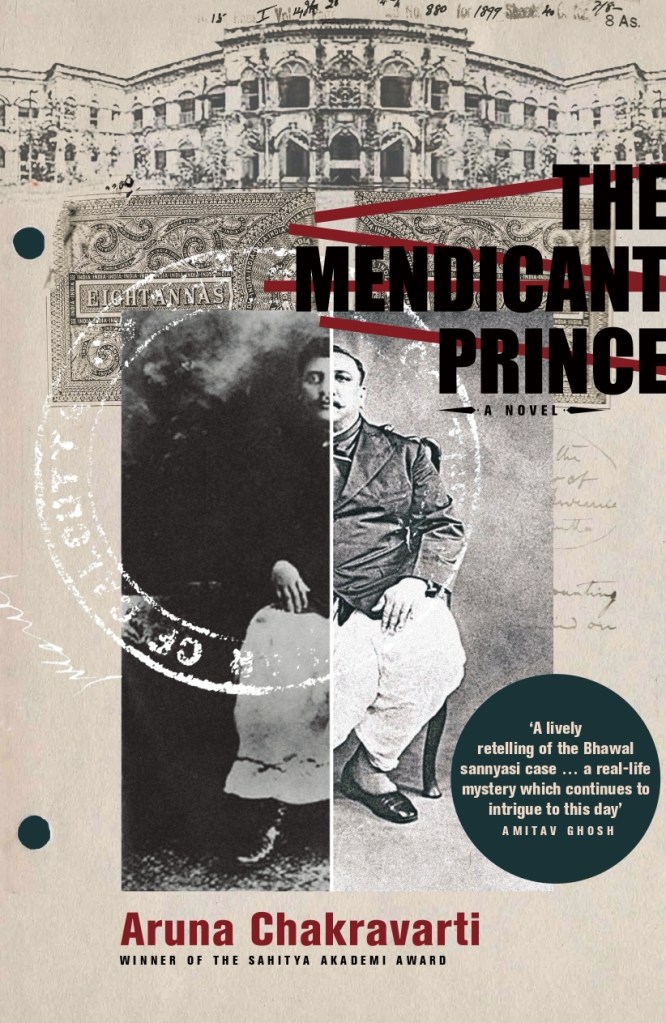
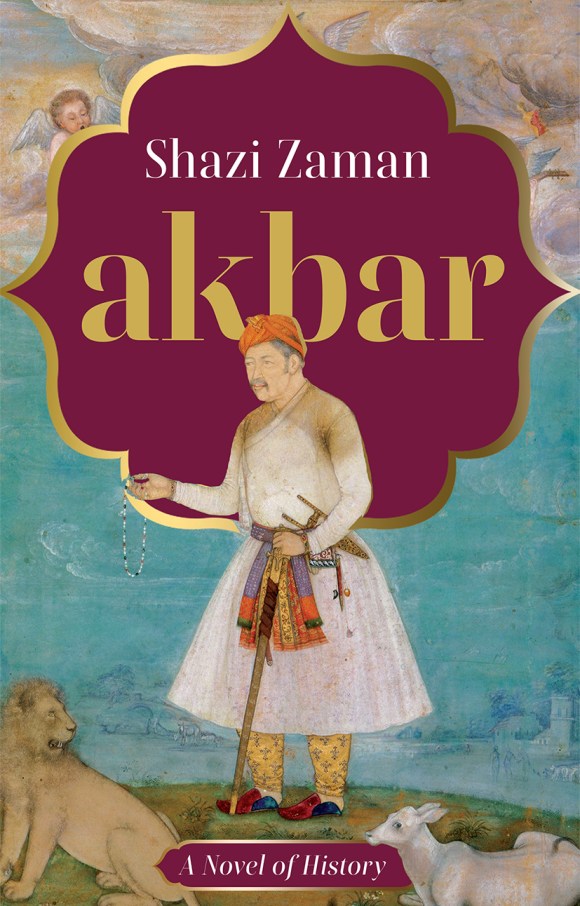
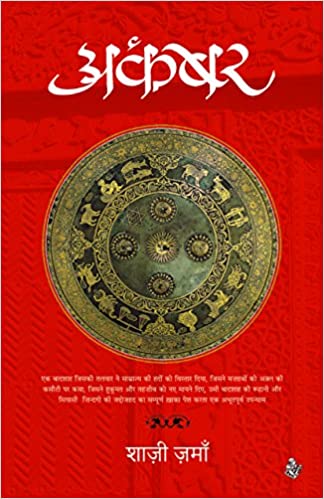

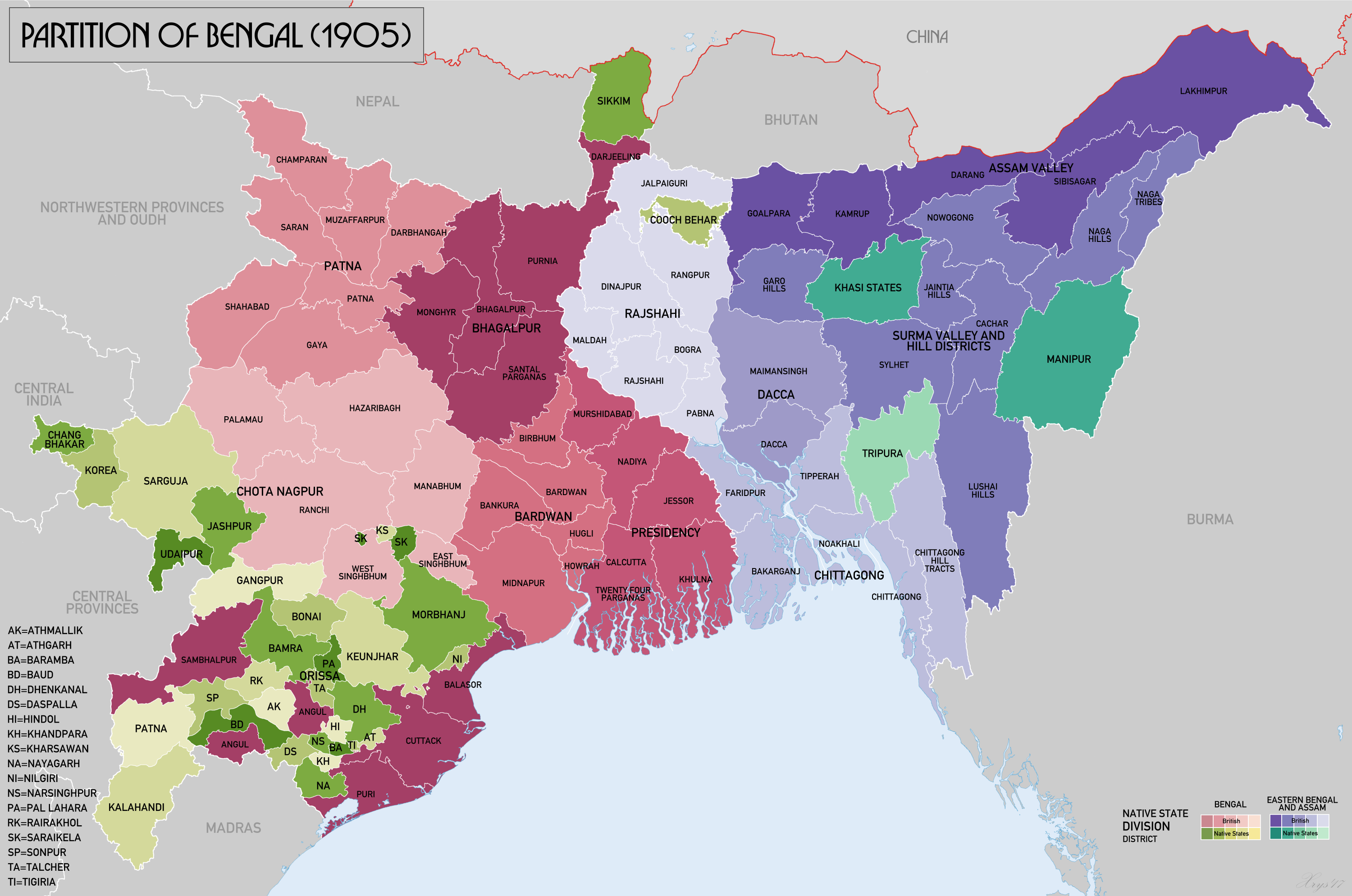
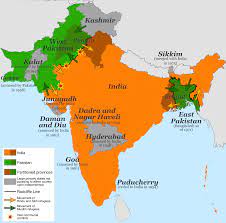
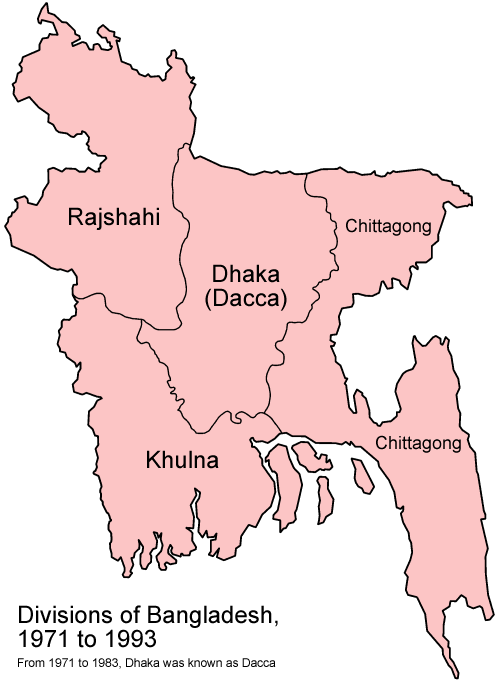

 Borderless