Categories
Editorial

Catch a Falling Star…

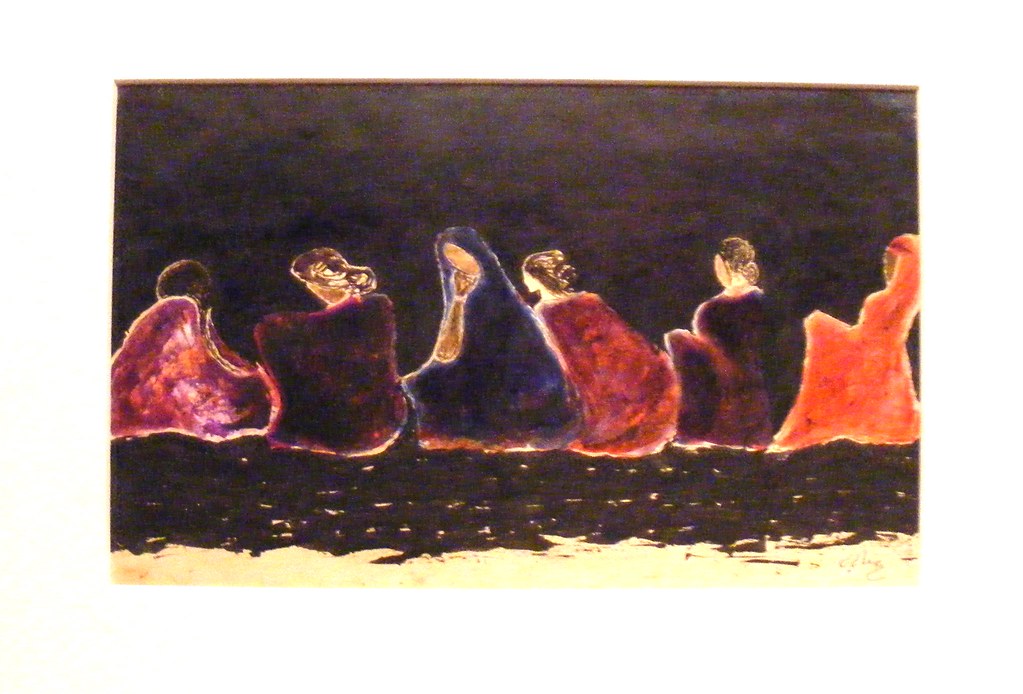
Art by Sohana Manzoor
For when your troubles starting multiplying
And they just might
It's easy to forget them without trying
With just a pocketful of starlight

Catch a falling star and put it in your pocket
Never let it fade away (never let it fade away)
Catch a falling star and put it in your pocket
Save it for a rainy day

'Catch a Falling Star' by Paul Vance and Lee Pockriss

Perhaps, it is time to find that fallen star popularised by pop singer Perry Como is 1957. Optimism glimmers faintly, sometimes even conceals itself, in a world passing through a dark phase in history. For instance, few of us would know that we might find more answers to tackle  climate change as dinosaur fossils (from the time an asteroid hit the planet) have been unearthed recently. That sounds like solutions can be had to what was perceived as inevitable doom.

Another bit of news that perhaps will cheer some is the first anthology of Borderless Journal will soon be available in market. It has been accepted by a publisher, an old, trusted and reputed name from India, Om Books International. They have bookshops splattered all over — should make it easy for buyers to access the book. Hopefully, you can target the anthology for your Diwali or Christmas gift hampers. Om Books has one of the most iconic editors-in chief, Shantanu Ray Chaudhuri. A multiple award-winning editor, he has worked in Penguin and Harper Collins and is currently churning out wonderful books from Om with a fabulous production team, working with whom has been a pleasure. Ray Chaudhuri is an outstanding film writer and poet. He is part of a group that is creating a film archive online. To know more about him or his views on publishing, you can read our online conversation with him.

The energy one gets from optimism like starlight from a fallen star, lightens the darker shadows that create gloom with the war leading to rise in prices and threats of recession in a post pandemic scenario. Lesya Bakun, the refugee from Ukraine whose story we carried last month, finds her starlight by sharing updates of her story.  She added to her narrative with the news that her cousin has been taken as a prisoner of war by Russia from the besieged factory in Ukraine. Though sharing does not alleviate suffering, Bakun’s ability to cling to hope and imagine a future where she gets her dream highlights the strength of her convictions. The other thing that is revealed by her narrative and media coverage is exclusivity and boxes of ideology split humankind, erase families, cities, countries, lives and sanity. The war can appease only the lust of warlords. Against this desolation caused by the devastation, what could be the starlight that would lead to a happier future?

Laughter. Unleashing the ability to laugh at oneself is as potent as laughter that generates relief and lightens our mood, so that we can view differences as whimsical, treat them with tolerance and compassion and not destroy the diversities that add colours to the world. Perhaps, that is why Tagore took to humour too. Somdatta Mandal has translated a series of humorous skits by Tagore. We are featuring one of these called the ‘Ordeal of Fame’. Yet another translation or transcreation of a poem called ‘Lukochuri’ or ‘Hide and Seek’ reflects the playful in Tagore’s oeuvre. These, along with Rhys Hughes humour on the pandemic in poetry and prose, bring good cheer into our journal. Hughes has also used his column to tell us why he curated a new humorous anthology of verses by seventeen poets called Wuxing Lyrical. I wonder if he is serious or joking!

We were fortunate to have a tongue-in-cheek online discussion with an academic with a witty sense of humour who started a book based on his PhD research with a limerick, Amit Ranjan, author of John Lang the Wanderer of Hindoostan, Slanderer in Hindoostan, Lawyer for the Ranee. While Ranjan brought to us a narrative of an Australian who challenged the colonial mindset, went to court representing the Rani of Jhansi, wrote for Charles Dickens in Household Words and moved around the world just like one of us, hopping jobs and looking for a life, we have diverse cultural streams woven into the journal with translations of a Balochi folktale from Fazal Baloch, a Korean poem by Ihlwha Choi and Professor Fakrul Alam’s translation of Jibananda’s poetry, an ongoing project in Borderless.

The Nithari column has yielded us a story that was written in a mix of Hindi and English by Yogesh Uniyal and translated fully to English by Nirbhay Bhogal. We have strange stories this time. Nileena Sunil’s short narrative and Paul Mirabile’s longer one set in Madrid explore the unusual. More stories delve into the intricacies of the human mind.

As we trot around the globe, Suzanne Kamata tells us about a Monet museum in Japan where she ate madeleines made with the artist’s recipe! Meredith Stephens sails to Tasmania with her camera and gives us a glimpse of nature’s plenty. Ravi Shankar relates his trekking adventures among the Himalayas in Nepal, with awesome photographs of these mountains, while Kenny Peavy who lives in Indonesia dwells on the value of falling down and getting up in a light humorous vein against the backdrop of nature – though metaphorically perhaps the world needs to do that. We have G Venkatesh’s story about his stay in Johannesburg where he discovers that skin tones do not matter.

Ratnottama Sengupta makes the whole world look like a home with the story of a legendary screenwriter, Jean Claude Carriere, who wrote the script of Mahabharata for Peter Brook’s play (1985) of the same name and the subsequent film (1989) — with characters drawn from all over the world. Candice gives us an overview of the pandemic, with more focus on US where she lives.

Mike Smith travels back to another time when an ailment called World War II raged and has revived a writer from the past, HE Bates (1905-1974). We have another essay by Dan Meloche on a legendary book which turned 100 this year — Herman Hesse’s Siddhartha. Rakhi Dalal revisits more than a century old translation by Devabrata Mukherjee of Tagore’s The Post Office which bears relevance to the present day as it shows how the human spirit endures over even the darkness of death.

Bhaskar Parichha has reviewed Radhika Gupta’s Limitless: The Power of Unlocking Your True Potential, by his assessment a book that inspires youngsters to take charge of their future. On the other hand, there are books that explore the darkest in humans. Basudhara Roy has reviewed a collection short stories by Sunil Sharma called Burn the Library & Other Fiction. Indrashish Banerjee reviews Upamanyu Chatterjee’s latest novel based on modern day crimes, Villainy, from which we are carrying a book excerpt too. The other excerpt is from a narrative written from a refugee’s perspective, Ramy Al-Asheq’s Ever Since I Did Not Die, translated by Isis Nusair from Arabic. Born in a refugee camp in Damascus, this Syrian-Palestinian poet defies all genres to touch hearts with brutal honesty. No less sincere is Michael Burch’s poetry on summer that ushers in the season as much as Sohana’s beautiful painting that we are using as our cover photo. We have poetry from not just Shantanu Ray Chaudhuri but also by George Freek, S. Srinivas, Tohm Bakelas, Abin Chakraborty, Marianne Tefft and many more. As usual, I have not mentioned all the treats in store for you. Delve into our contents page and browse to find out more.

Before winding up, I would want to extend my thanks not only to our team and contributors, but also to our publisher who is willing to republish our content with some tweaking. Thanks to our readers who, I hope, will be excited to have selected content between their palms as a hardcopy anthology with 49 of our most iconic pieces. We have more than a thousand published works. This anthology will be an iconic sample that you can carry anywhere with you even if there is no internet – that would include Mars and Moon!

I wish you happy reading, happy dreaming and hope… plenty of it.

Best wishes,

Mitali Chakravarty

borderlessjournal.com

Categories
Tagore Translations

The Ordeal of Fame

A humorous skit[1] by Rabindranath Tagore, translated by Somdatta Mandal

Hasyakoutuk(1914) or Humour by Tagore, the collection in which this skit was published.

Scene One

The lawyer Dukori Dutta is sitting on a chair. Kangalicharan enters nervously, ledgers in hand.

 Dukori: What do you want?

Kangali: Sir, you are a well-wisher of the nation –

Dukori: Everyone knows that. But what do you actually want?

Kangali: You have devoted your life for the welfare of the ordinary man –

Dukori: And I do so while I am carrying on my legal business but what is your point?

Kangali: Sir, actually I don’t have much to say.

Dukori: Then why don’t you finish soon.

Kangali: Think for a while and you’ll have to admit “ganat paratrang nahi”, that is to say, nothing is better than music —

Dukori: Look here, man. Before I admit anything, I need to know the meaning of what you just said. Say it in Bangla.

Kangali: Sir, I don’t know the exact Bangla meaning. But the main idea is that one loves to listen to songs a lot.

Dukori: Everyone doesn’t like them.

Kangali: Anyone who doesn’t like songs must be —

Dukori: Lawyer Dukori Dutta.

Kangali: Sir, don’t say such things.

Dukori: Then should I lie?

Kangali: The sage Bharata is the first Aryan to have…

Dukori: If you have any lawsuits to file against the Sage Bharata then tell me. Otherwise stop giving a speech on him.

Kangali: I had a lot of things to say.

Dukori: But I don’t have the time to listen to a lot of things.

Kangali: Then let me state the case in brief. In this city we’ve established a society called “Gannonati Bidhyaini” – The Society for the Betterment of Music. Sir, we want you —

Dukori: To deliver a lecture?

Kangali: No, Sir.

Dukori: To be the chairman?

Kangali: No, Sir.

Dukori: Then tell me what it is that I have to do. Let me tell you before hand, singing songs and listening to songs – I have done neither previously and will not do either of these things in future.

Kangali: Sir, you won’t have to do either. (Advancing a receipt book) Just some donation–

Dukori: (Startled, gets up) Donation! Good grief! You aren’t an easy man to please. When you came in you appeared to be a good-natured man and came in with an embarrassed face – I thought then that you were in legal trouble. Take your donation booklet immediately or I will file a police case against you for trespassing.

Kangali: Wanted a donation but got a beating! (To himself). But I I’ll teach you a lesson.


Scene Two

Dukori Babu with newspapers in his hand.

Dukori: This is great fun. Someone called Kangali Charan has informed all English and Bengali newspapers that I have donated five thousand rupees to their “Gannonati Bidhayini Society”. What donation, the only thing I didn’t do is throw him out by the collar. In the meantime, I’ve gained a reputation that will be very good for my business. They will also benefit from this. People will think that since they have got five thousand rupees as donation, it will turn out to be a huge meeting. No doubt they will get greater donations from elsewhere. Nevertheless, fortune will surely favour me.

The clerk enters.

Clerk: Sir, have you donated five thousand rupees to “Gannonati Sabha?”

Dukori: (scratching his head and smiling) Well, it is just a story some one has made up. Why do you listen to it? Who told you that I have donated? Suppose I did, so what? Why make a fuss about it?

Clerk: Oh, what humility! Paying five thousand rupees in cash and then trying to conceal the deed is no feat for an ordinary man.

Enter servant.

Servant: Plenty of people have assembled downstairs.

Dukori: (To self) See! In one day, my income has increased. (Gladly) Bring them upstairs one by one – and bring paan leaves and betel nut as well as some tobacco.

The first supplicant enters.      

Dukori: (Shifting a seat) Come – be seated. Sir, have some tobacco. Who is there? Hey—could we have some paan.

First Supplicant: (to himself) Really, what an amiable person! If he doesn’t fulfil one’s desires desires, who will?

Dukori: And what could have brought you here?

First Supplicant: Your generosity is famous all over the country.

Dukori: Why listen to such gossip?

First Supplicant: What humility! I had heard about you earlier, but today the difference between sight and sound has been eliminated.

Dukori: (To self) I hope he will come to the point now. Plenty of men are waiting downstairs. (Openly) So, what do you need?

First Supplicant:  For the development of the nation, from the heart —

Dukori: Yes, it is good of you to mention the heart.

First Supplicant:  That’s right. Great honourable persons like you are India’s —

Dukori: I am agreeing to all that you are saying so why don’t you concede this part to me? And so —

First Supplicant: It’s the habit of people who are full of humility that when it comes to their own virtues –

Dukori: Spare me sir. Come to the point!

First Supplicant: You know, the fact is that day by day our country is regressing —

Dukori: That is because people don’t know how to say things concisely.

First Supplicant: Our once rich and glorious motherland is now mired in poverty.

Dukori: (Like a long-suffering person, covering his head with his hand) Go on.

First Supplicant: Day by day sinking in the well of poverty –

Dukori: (In a pleading tone) Sir, what is the point?

First Supplicant:  Then let me tell you the real thing –

Dukori: (Enthusiastically) That’s better.

First Supplicant: The English have been looting us.

Dukori: This is something worth pursuing. Collect proof and I will appeal to the    magistrate’s court.

First Supplicant: The magistrates too are sharing the spoils.

Dukori: Then I will lodge an appeal in the court of the District Judge.

First Supplicant: The District Judge is a dacoit.

Dukori: (Surprised) I can’t figure you out.

First Supplicant: Let me tell you, all the money from the country is being sent abroad.

Dukori: That is terrible!

First Supplicant: So, a meeting –

Dukori:(Alarmed) A meeting?  

First Supplicant:Yes, see this is the booklet.

Dukori: (Wide-eyed) Booklet?

First Supplicant: Some donation would be –

Dukori: (Jumping up from the bench) Donation! Get out — out — out!

Quickly the table is turned, ink spilled, the first supplicant tries to exit hurriedly, falls down, gets up, chaos ensues.

The Second Supplicant enters.

Dukori: What do you want?

Second Supplicant: Your country-wide munificence —

Dukori: I’ve gone through it all once before. Tell me if you have anything new to say.

Second Supplicant: Your patriotism –

Dukori: Good lord! He seems to be saying exactly the same things!

Second Supplicant:  Your virtuous acts for the motherland –

Dukori: This is too much! Come straight to the point!

Second Supplicant:  A meeting.

Dukori: What? Another meeting?

Second Supplicant: Here, see this booklet.

Dukori: Booklet? What booklet?

Second Supplicant: To collect donations.

Dukori: Donations! (Pulls his hand) Get up, get out, out – if you love your life —

                        The man leaves without saying anything else

Enter third supplicant.

Dukori: Look, here. Appeals to my patriotism, generosity, politeness – all these have been exhausted. Try something else.

Third Supplicant: Your openness, philanthropy, and liberal views –

Dukori: That’s somewhat better. At least he’s saying something new. But sir, leave all those things and start our discourse.

Third Supplicant:  We have a library –

Dukori: Library? Not a society?

Third Supplicant: No sir, no society.

Dukori: Oh! I’m relieved. Library! Excellent. Go on.

Third Supplicant: Here, see the prospectus.

Dukori: Sure this isn’t a subscription booklet?

Third Supplicant: No sir, not at all. Merely printed leaflets.

Dukori: Oh! What next?

Third Supplicant: Some donation.

Dukori: (Jumping up) Donation! Who’s there? There’s a dacoit in my house today. Policeman! Policeman!

The third supplicant escapes as fast he can. Enter Harashankar Babu.

Dukori: Come in, come in, Harashankar. I remember our college days. But we haven’t met since then. You don’t know how happy I am feeling after seeing you.

Harashankar: I too have a lot of pleasant and unpleasant things to share with you. But I will do those things later. First let us finish a piece of business.

Dukori: (Excited) I haven’t heard anyone talk to me about business for a while now, brother. Tell me, tell me so that I can fill my ears with business talk. (Harashankar takes out a booklet from under his shawl). Oh, what is that? I see a booklet coming out!

Harashankar: The boys in my locality have decided to hold a meeting –

Dukori: (Startled) Meeting?

Harashankar:  Yes, sort of. So, for some donation –

Dukori: Donation! See I have loved you for a long time now but if you utter that word in my presence, we will become enemies for ever.

Harashankar: Is that so! You can donate five thousand rupees to some “Gannonnati Sabha” of Khargachia but cannot sign a cheque of five rupees at the request of your friend? One must be a heartless person to step in here to seek your company!          

Exits with great speed. A man enters, notebook in hand.     

Dukori: Notebook? Bringing a notebook to me yet again? Get lost, will you?

The Man: (Scared) I’ve come from Nandalal Babu —      

Dukori: I don’t care for Nandalal or anyone else. Leave immediately.

The Man: Sir, what about giving some money—

Dukori: I won’t pay you any money. Get lost.

The man runs away

Clerk: Sir, what have you done? He was trying to return the money Nandalal Babu owed you. We need to get the money back today. We can’t do without it.

Dukori: Good grief! Go and call him back.

The clerk goes out and comes back a little later

Clerk: He’s gone. I couldn’t find him anywhere.  

Dukori: This is a problem indeed.

A man enters with a mandolin in hand.

Dukori: What do you want?

The man: We need connoisseurs of music like you. What haven’t you done for the advancement of music! I will sing a song for you.

He starts playing his mandolin immediately and sings a song set to the tune of Raga Iman Kalyan.

                        Glory be to Dukori Dutta

In the world his munificence saw…etc etc.

Dukori: What nonsense! Stop, stop.

Enter a second man with a mandolin in hand.

Second man:    Sir, what does he know of music? Listen to my song:

                        Dukori Dutta you’re a blessed man

                        Whoever knows your greatness can…  

First man:       Glory – g—l—o—r—y

Second man:    D—u—u—u—u—kori—i—i

First man:       Duk—o—o—o—

Dukori:(With fingers in his ears) Oh my god! I can’t take it anymore!  

 A man enters, tabla in hand.

Player: Sir, a song without a musical accompaniment? How can that be?

He begins playing. A second player enters.

2nd player: What does he know of accompaniment? He cannot even hold the tabla correctly.

1st singer: Stop.

2nd singer: Why don’t you stop!

1st singer: What do you know about singing?

2nd singer: What do you know?

The two start arguing about the scales and rhythm of music. Then they fight with their mandolins.

The two players start bandying the beats used in tablas such as “dhekete didhey ghene gedhe ghene.” The contest climaxes with a tabla fight.

Enter a group of singers and some more men with donation booklets in hand.

1st person: Sir, song –

2nd person: Sir, donation –

3rd person: Sir, meeting –

4th person: Your benevolence –

5th person: A khayal in Raga Iman Kalyan –

6th person: For the welfare of the country –

7th person:  A tappa song by Sari Miyan—

8th person:  Shut up, shut up!

9th person:  Please stop, brother. Let me finish my words.

Everyone starts pulling Dukori’s shawl and shouts of “Sir, listen to me, Sir, listen to my words” can be heard etc.

Dukori: (in a voice admitting defeat) I am going to my uncle’s place. I will stay there for a while. Don’t give my address to anybody.

Exit.

The brawl between the singers and the musicians continues in the house for the whole day. In the evening the clerk tries to stop the quarrel, gets injured, and collapses.


[1] [Translated by Somdatta Mandal from “Kshatir Birambana” B.S. Magh 1292].

Somdatta Mandal is a former Professor of English and ex-Chairperson, Department of English, Visva-Bharati, Santiniketan, India. A recipient of several prestigious fellowships like the Fulbright Research and Teaching Fellowships, British Council Charles Wallace Trust Fellowship, Rockefeller Residency at Bellagio, Italy, Salzburg Seminar and Shastri Indo-Canadian Faculty Enrichment Fellowship, she has been published widely both nationally and internationally. She has also an award from Sahitya Akademi for the All India Indian Literature Golden Jubilee (1957-2007) Literary Translation Competition in the Fiction category for translating short stories series ‘Lalu’ by Sarat Chandra Chattopadhyaya.

.

PLEASE NOTE: ARTICLES CAN ONLY BE REPRODUCED IN OTHER SITES WITH DUE ACKNOWLEDGEMENT TO BORDERLESS JOURNAL

Categories
Tribute

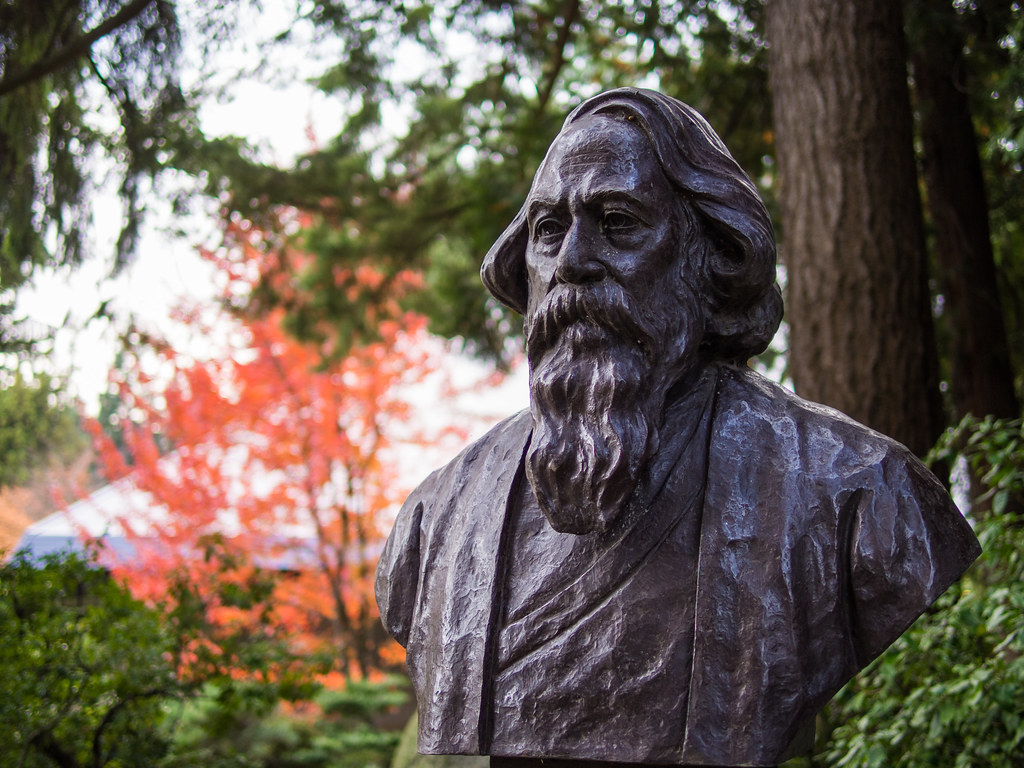
Celebrating Tagore

Was he a poet? A writer? A humorist? A social reformer…

At an intellectual plane, we could keep arguing about labelling Tagore. He was truly a polymath. But, the most important thing is he touched our hearts with his words and used that to earn and pour into projects that benefitted the underprivileged. This year, on his 161st birth anniversary, we will explore some lesser known aspects of the maestro: Rabindranath, the social reformer and the humorist weaving both the Gregorian calendar (7th May) and the Bengali calendar (9th May) dates into our celebrations.

Tagore, the Humorist 

Many of us from Bengal grew up reading light pieces by Tagore embracing his creations as a much-loved part of our hearts. We present translations by Fakrul Alam and Somdatta Mandal of Tagore’s humour — a light poem about a giraffe and playlets by the maestro. 

Giraffe’s Dad by Tagore: Giraffer Baba (Giraffe’s Dad), a short humorous poem by Tagore, has been translated from Bengali by Professor Fakrul Alam. Click here to read.

Playlets by Rabindranath Tagore : Two skits that reveal the lighter side of the poet. They have been translated from Bengali by Somdatta Mandal. Click here to read.

Tagore, the Social Reformer

Tagore thought his “life work” lay in developing villages and bridging gaps. A recent book by Uma Dasgupta brought this to light. We have an interview and review of her book, A History of Sriniketan: Rabindranath Tagore’s Pioneering work in Rural Reconstruction Along with that we have some translations of his poetry focussing on his call to bridge gaps — one of them by Fakrul Alam and another that has been mentioned in Dasgupta’s book as a description of his mindset that led to the Sriniketan project. Meenakshi Malhotra’s review of Radha Chakravarty’s translation of Mahasweta Devi’s Our Santiniketan and an interview with translator Somdatta Mandal, an ex-professor of Visva Bharati shifts the focus to Santiniketan. However, the icing on Tagore’s birthday cake is yet another excerpt from Radha Chakravarty’s latest translation of Char Adhyay or Four Chapters, his last and thirteenth novel which takes up issues of nationalism, gender, gaps in upbringing against the setting of a budding romance. The heroine is truly modern in her outlook and passionate about service to humanity. 

Sriniketan: Tagore’s “Life Work” :In Conversation with Professor Uma Das Gupta, Tagore scholar, author of A History of Sriniketan, where can be glimpsed what Tagore considered his ‘life’s work’ as an NGO. Click here to read. (Review & Interview).

Oikotan (Harmonising) has been translated by Professor Fakrul Alam and published specially to commemorate Tagore’s Birth Anniversary. Click here to read.

Ebar Phirao More (Take me Back) a poem that calls for bridging gaps between the rich and poor translated by Mitali Chakravarty … Click here to read.

Mahasweta Devi, Our Santiniketan : Meenakshi Malhotra reviews Mahasweta Devi, Our Santiniketan translated by Radha Chakravarty. Click here to read.

Where the Whole World Meets in a Single Nest: In Conversation with Somdatta Mandal, a translator, scholar and writer who has much to say on the state of Santiniketan, Tagore and more. Click here to read.

Rabindranath Tagore Four Chapters: An excerpt from a brilliant new translation by Radha Chakravarty of Tagore’s controversial last novel Char Adhyay. Click here to read.

Categories
Contents

Borderless April, 2022

Art by Sohana Manzoor

Editorial

For the People, Of the People, By the People Click here to read.

Ukrainian Refrains

In A Voice from Kharkiv: A Refugee in her Own Country, Lesya Bukan relates her journey out of Ukraine as a refugee and the need for the resistance. Click here to read.

Refugee in my Own Country/ I am Ukraine Poetry by Lesya Bukan of Ukraine. Click here to read.

Translations

Ananto Prem (Endless Love) by Tagore, translated from Bengali by Professor Fakrul Alam. Click here to read.

Playlets by Rabindranath Tagore reveal the lighter side of the poet. They have been translated from Bengali by Somdatta Mandal. Click here to read.

The Faithful Wife, a folktale translated from Balochi by Fazal Baloch. Click here to read.

Leafless Trees, poetry and translation from Korean by Ihlwha Choi. Click here to read.

Ebar Phirao More (Take me Back) by Tagore, translated from Bengali by Mitali Chakravarty. Click here to read.

Pandies’ Corner

These narratives are written by youngsters from the Nithari village who transcended childhood trauma and deprivation. Will to be Human is based on a real life story by Sachin Sharma, translated from Hindustani by Diksha Lamba. Click here to read.

Interviews

In When a Hobo in a Fedora Hat Breathes Tolkien…, Strider Marcus Jones, a poet and the editor of Lothlorien Journal, talks of poetry, pacifism and his utopia or Lothlorien. Click here to read.

In Why We Need Stories, Keith Lyons converses with Ivy Ngeow, author and editor of a recent anthology of Asian writing. Click here to read.

Poetry

Click on the names to read

Michael R Burch, Mini Babu, Luis Cuauhtémoc Berriozabal, Anjali V Raj, George Freek, Ashok Suri, Ron Pickett, Sutputra Radheye, Dr Kisholoy Roy, David Francis, J.D. Koikoibo, Sybil Pretious, Apphia Ruth D’souza, Rhys Hughes

Nature’s Musings

In Studies in Blue and White, Penny Wilkes gives us a feast of bird and ocean photography along with poetry. Click here to read and savour the photographs.

Poets, Poetry & Rhys Hughes

In My Favourite Poem, Rhys Hughes discloses a secret. Click here to read.

Musings/Slices from Life

Getting My Nemesis

Erwin Coombs laces his cat’s story with humour. Click here to read.

A Writer’s Pickle

Adnan Zaidi has analysed his poetic abilities with tongue-in-cheek comments. Click here to write.

Great Work…Keep Going!

G. Venkatesh looks at the ability to find silver linings in dark clouds through the medium of his experiences as a cricketeer and more. Click here to write.

Cycling for my Life

What can be more scary and life-threatening than the risk of getting Covid-19? Keith Lyons finds how his daily joy has menacing dangers. Click here to read.

Musings of the Copywriter

In When Books have Wings, Devraj Singh Kalsi talks of books that disappear from one book shelf to reappear in someone’s else’s shelf. Click here to read.

Notes from Japan

In Owls in Ginza, Suzanne Kamata takes us to visit an Owl Cafe. Click here to read.

Mission Earth

In No Adults Allowed!, Kenny Peavy gives a light hearted rendition in praise boredom and interaction with nature. Click here to read.

Stories

Chameleon Boy

Kieran Martin gives a short fiction woven with shades of nature. Click here to read.

The Circle

Sutputra Radheye narrates a poignant story about love and loss. Click here to read.

Before the Sun Goes Down

Amjad Ali Malik gives us a strange tale of flatmates. Click here to read.

The Agent

Paul Mirabile takes us to Nisa, Portugal, with his narrative. Click here to read.

The Rebel Sardar

Devraj Singh Kalsi has written of how one man’s protest impacts a whole community. Click here to read.

Essays

Beg Your Pardon

Ratnottama Sengupta explores beggary in fact, films and fiction. Click here to read.

A Tasmanian Adventure: Bushwhacking in East Pillinger

A photo-essay set in Tasmania by Meredith Stephens. Click here to read.

The Call of the Himalayas

P Ravi Shankar takes us on a trek to the Himalayas in Nepal and a viewing of Annapurna peak with a narrative dipped in history and photographs of his lived experience. Click here to read.

The Observant Immigrant

In A Bouquet of Retorts, Candice Louisa Daquin discusses the impact of changes in linguistic expressions. Click here to read.

Book Excerpts

An excerpt from a fast-paced novel set in Mumbai, Half-Blood by Pronoti Datta. Click here to read.

An excerpt from a Malaysian anthology, The Year of the Rat and Other Poems edited by Malachi Edwin Vethamani. Click here to read.

Book Reviews

Rakhi Dalal reviews Ramy Al-Asheq’s Ever Since I Did Not Die, translated by Isis Nusair, edited by Levi Thompson. Click here to read.

Gracy Samjetsabam reviews Iskendar Pala’s Tulip of Istanbul, translated from Turkish by Ruth Whitehouse. Click here to read.

Candice Louisa Daquin reviews Marjorie Maddox’s poetry collection, Begin with a Question. Click here to read.

Bhaskar Parichha reviews Kiran Manral’s Rising: 30 Women Who Changed India. Click here to read.

Tagore Anniversary Special

Click here to read.

Categories
Editorial

For the People, Of the People, By the People

Painting by Gita Viswanath
"I wish you survival, 
Health
And the closed sky above you."

— Refugee in my own Country/I am Ukraine, Lesya Bakun

Despite this being the season of multiple new years around Asia, we cannot close our eyes to the skies that connect all the world like a blue dome. Though celebrations and humour continue to lighten the darkness of war, while Ukraine is being wrecked, can we turn our faces towards only festivities?

I had an interesting anecdote about how before the onset of the Gregorian calendar, new years in the world were celebrated around March and in some places in September. The Earth would turn fecund and green with spring, a beautiful season sprinkled with love and nostalgia as Michael R Burch tells us in his poetry. However, despite all the opulence of nature, it is hard to watch a country being bombed and families splintered to man a war that supposedly guards a human construct called ideology and blocs. Ukranian refugee, Lesya Bakun, in an interview says: “It is not a clash of ideologies. It is a fight for our country and nation to exist.” Listening to Lesya’s stories makes one amazed at the bravery of the Ukrainians battling what seems to be cultural hegemony. It reminds of the war in Bangladesh in 1971. Though incredibly courageous in voicing her experiences, Lesya is traumatised and has a psychosomatic cough as she sends her voice and text messages from her mobile through Telegram. There were times when she was just weeping or angry for the questions asked, and justifiably so, as her home in Kharkiv, where she lived was under attack, and the town of Mariupol, where she was born, has been wrecked by the war.

The refrain of the pain of a refugee continues to reverberate in a book reviewed by Rakhi Dalal, Ramy Al-Asheq’s Ever Since I Did Not Die, written originally in Arabic and translated by Isis Nusair. The Syrian-Palestinian poet refused to clarify whether his writing was prose or poetry — perhaps these borders and boxes drawn by humankind are breaking down in reality. Perhaps, this new year, the time is ripe to look forward to a new world that transcends these borders. This is also the first time we have had the privilege of carrying reviews of translations from Arabic and also from Turkish. Gracy Samjetsabam has reviewed a translation of a Turkish novel by Iskendar Pala called The Tulip of Istanbul, translated by Ruth Whitehouse. Bhaskar Parichha has reviewed a book by Kiran Manral, Rising: 30 Women Who Changed India while Candice Louisa Daquin has drawn our focus on a poetry collection by Marjorie Maddox, Begin with a Question, where the perceived divisions do not matter while the poet questions the larger issue of faith in quest of answers.

Is it the same kind of quest that has led Strider Marcus Jones to create the Lothlorien Journal, named reminiscently after Tolkien’s elvish ‘Lothlorien’ in Lord of the Rings? Find out Jones’s views and flow with his fluid poetry in the featured interview. Keith Lyons has been in conversation with Ivy Ngeow, an upcoming writer and the editor of a recent anthology of Asian writing where she has retained different styles of English across the world in a single book. While this could be beneficial to writers, would readers be comfortable reading stories with different styles or dialects of English without a glossary?

Our book excerpts are from more Asian books.  The Year of the Rat and Other Poems edited by Malachi Edwin Vethamani has an interesting title poem which has been shared in the excerpt. The other excerpt is from a fast-paced novel, Half-Blood, by Pronoti Datta. We also have a fast-paced story by a writer from France called Paul Mirabile set in Portugal; two that verge on the bizarre from Keiran Martin and Amjad Ali Malik; a poignant story from Sutputra Radheye and another that shows the positive side of voicing a protest against wrongs by Devraj Singh Kalsi. Kalsi has also given us a tongue in cheek musing called When Books have Wings.

On the lighter vein are travel essays by Ravi Shankar and Meredith Stephens. They take us to the Himalayas in Nepal and to Tasmania! Suzanne Kamata has taken us to an owl cafe in Japan! At the end of her column, one feels sad for the owls as opposed to Erwin Coombs’ narrative that evokes laughter with his much-loved pet cat’s antics.

Humour is evoked by G. Venkatesh who with an ability to find silver linings in dark clouds talks of cricket and lessons learnt from missing his school bus. Adnan Zaidi has also analysed his poetic abilities with tongue-in-cheek comments. Kenny Peavy gives a lighthearted rendition in praise of boredom and interactions with nature. It is good to have laughter to combat the darkness of the current times, to give us energy to transcend our grief. Keith Lyons hovers on the track between humour and non-humour with his cycling adventures. Rhys Hughes seems to talk of both his favourite poem and the war in a lighter shades, in no way insensitive but his observations make us wonder at the sanity of war. We have much of war poetry by a number of writers, poetry on varied issues by Luis Cuauhtémoc Berriozabal, George Freek, Sybil Pretious, Kisholoy Roy, J.D. Koikoibo and many more.

Candice Louisa Daquin has taken on the onus of bringing to our notice how language can impact us in the long run while Ratnottama Sengupta has explored beggary in films, fiction and fact. The Nithari column runs a real-life story of a young boy narrated by his brother, Sachin Sharma. It has been translated from Hindustani by Diksha Lamba. The trauma faced in 2006 is strangely not discussed in the story though it hovers in the backdrop between the lines. We also have a translation of a Balochi folk story by Fazal Baloch and a Korean poem by Ihlwha Choi. Translations from Tagore by Fakrul Alam and Somdatta Mandal have honoured our pages again. Mandal has sent us fun-filled skits by Tagore. But are they just fun or is there something more? We also have a translation of a long poem that explores a different aspect of Tagore, his empathy for the downtrodden which led him to create Sriniketan and regard it as his ‘life work’.

We have a bumper issue this time again — especially for the Asian new years; Thai, Nepalese, Bangladeshi, multiple Indian and more…

We would like to thank Sohana Manzoor for our cover painting and Gita Viswanath for her artwork. I would like to thank our wonderful team who with their contributions make this journal a reality. All the contributors deserve a huge thanks as do our loyal readers.

I wish you all a wonderful start to a non-Gregorian new year and hope that peace prevails over parts torn by wars and dissensions.

Thank you all!

Mitali Chakravarty

borderlessjournal.com

Categories
Tagore Translations

Playlets by Rabindranath Tagore

Rabindranath Tagore wrote several playlets for young people. These reveal the lighter side of the poet. Two of these have been translated from Bengali by Somdatta Mandal

Courtesy: Creative Commons

Aryans and Non-Aryans

Adwaita Charan Chattopadhyay and Chintamani Kundu.

Adwaita: Who are you?

Chintamani: I’m an Aryan, a Hindu.

Adwaita: What is your name?

Chintamani: Sri Chintamani Kundu.

Adwaita: What is your intention?

Chintamani: I want to contribute to your paper.

Adwaita: What would you like to contribute?

Chintamani: I’m an Aryan. I would like to write about the Aryan religion.

Adwaita: Sir, what is this thing that you call Aryan?

Chintamani: (surprised) Sir, you don’t know who an Aryan is? I’m an Aryan, my father Sri Nakur Kundu is an Aryan, his father, Late Nafar Kundu is an Aryan, his father —

Adwaita: I see! What is your religion?

Chintamani: That is a tough question! If I can put it in a nutshell, the religion of the non-Aryans is not that of the Aryans.

Adwaita: Now, who are the non-Aryans?

Chintamani: Those who are not Aryans are non-Aryans. I’m not a non-Aryan, my father Sri Nakur Kundu isn’t a non-Aryan, his father Late Nafar Kundu wasn’t a non-Aryan, his father—

Adwaita: Say no more! So, since Sri Nakur Kundu isn’t my father and since I have no relationship with Nafar Kundu, I’m a non-Aryan.

Chintamani: I can’t say that for sure.

Adwaita: (annoyed) What kind of talk is that? What do you mean that you can’t say for certain? Can’t you say for certain that Nakur isn’t my father? What caste are you? What could I have to do with the likes of you?

Chintamani: I’m not talking about caste, I’m talking about dynasty. You too have been born in the world-famous Aryan dynasty –

Adwaita: I born in the same dynasty in which your father Nakur Kundu was born? How dare you—the son of a peasant—even imagine such a thing?  

Chintamani: Yes, sir. You might not be an Aryan, but I, and my respected father are Aryans. Alas! Where could my glorious ancestors be? Where are Kashyap, Bharadwaj, Bhrigu? What kind of talk is that?

Adwaita: What rot this man speaks? Kashyap happens to be my ancestor. We are all part of the Kashyap clan how can Kashyap, Bharadwaj, Bhrigu be your ancestors?

Chintamani: You know nothing about these issues, so there is no point in discussing these things with you. I’m afraid this is all the tragic consequence of English education.

Adwaita: Hasn’t English education affected you?

Chintamani: Sir, you can’t blame me for such a thing. Because of the Aryan blood coursing through my veins, I ran away from school at quite an early age.

Enter Harihar Babu and several other writers.

Adwaita: Please come in. Have you got it all in writing?

Harihar: Yes. Here it is.

Chintamani: Sir, what have you been writing about?

Harihar: Lots of things.

Chintamani: Have you written anything about the Aryans?

Harihar: No.

Chintamani: About the science of the Aryans?

Harihar: The Europeans are Aryans and their science –

Chintamani: The Europeans are a very inferior race and compared to the knowledge that our Aryan forefathers had, they are really illiterate. I can prove this. Even now all descendants of Aryans invoke Aswathama before massaging oil over their bodies and then pour oil thrice on the earth. Do you know why they do so?

Harihar: No.

Chintamani: Do you?

Adwaita: No.

Chintamani: Do you?

First Writer: No.

Chintamani: If you don’t, then why talk about science? Do you know why Aryans click their fingers when they yawn?

All: (in unison) No, none of us do.

Chintamani: Really? Do you know the reason why our Aryan women beat the hand-fan on the floor if the fan touches the body of the person they are fanning?

All: No, not at all.

Chintamani: See, you know nothing. Without discussing these issues at all, without any sort of enquiry into such matters you persist in saying that European science is the best. And yet you don’t even know why Aryans sneeze, yawn or massage oil.

Harihar: All right, sir. You tell us. Why must oil be poured on the ground before it is poured over the body?

Chintamani: Magnetism! Nothing else. This is what is known in English as magnetism.

Harihar: (surprised) Have you read anything about magnetism in English science?

Chintamani: Nothing. No need for that. There is no need to study English to learn science or anything else. What do our Aryans say? There are three forces in nature – life force, causality and positivism. Just before bath the slippery force of oil being added to these forces creates physical negativity within our body. This is nothing but magnetism. Just think — the practice of wiping the body with a towel prevalent among Englishmen since the nineteenth century has been practiced by our Aryans for thousands of years for they have been using the gamcha for the same purpose since then.

The Writers: (with surprise) Wow! How commendable! What scientific skill the Aryans have! What great research our Aryan Kundu Sir has undertaken!

Harihar: We have fallen into the hands of a real idiot today! But there is no point in annoying him. He writes for several newspapers. I have heard that this Aryan Kundu is quite adept at cursing gentlemen a lot. That is why he is famous.

Chintamani: Look over there. That Aryan Brahmin is plucking flowers early in the morning. Why do you think is he doing such a thing?

Adwaita: To give them to the god during prayers.

Chintamani: Shame, shame. You don’t bother to get to the bottom of things. When the sages  permitted the plucking of flowers at dawn it became obvious that they were aware of the presence of oxygen in the air. Since they knew of this, there is no doubt that they also knew of the presence of other gases too. In this manner we can clearly prove by moving from point to point that they were aware of all that was subsequently discovered by modern European chemistry. Why do we click our fingers when we yawn? That is also magnetism. When the rising gases combine with positivism, then the negative force conducted by the physical force exceeds the life force, causality and the positive force by its own power. Then the three qualities of sattwa, rajah and tama (excellence, essence of activity and lowest attributes) achieve exceptional attributes. During this phase, the heat caused in the air as a result of the friction between the middle finger and the thumb combines with the heat of the nervous system and solar heat to prevent the ultimate destruction of physical heat. If this can’t be called science, what can it be called? Isn’t it curious that none of our Aryan sages ever read any book by Darwin.?

The Writers: Amazing! Blessed be the achievements of the Aryans. All this time we couldn’t understand such theories.

Harihar: (to himself) But even today I don’t understand anything.

Chintamani: If you are wondering about the hitting of the hand fan on the floor, then that too is magnetism. Expansion, expulsion, repulsion and attraction – these physical acts add up to —

Adwaita: Spare us, spare us Sir. My head is reeling. You can write about the hitting of the hand fan in my newspaper. You have said enough already. Let me get you a paan.

Chintamani: No, sir. I haven’t come here to have a paan. You aren’t following Aryan customs and actions. The spiritual force flowing in our Aryan veins for generations, that force –

Adwaita: Enough, enough! I won’t give you a paan; you need not have one. If you permit me I will get you some tobacco instead.

Chintamani: Tobacco! What destruction! What a thought! It is even worse. Do you know why high caste people don’t smoke the hookah used by lower caste people? Why doesn’t one caste consume food touched by another caste? Why did the Aryan in earlier times not even tread over the shadow of a non-Aryan?  Don’t you think there is a science behind it? Of course, there is. Let me explain it all to you. That too is magnetism. The three kinds of bodily radiance – excellent, mediocre and base –

Adwaita: Stop, stop. I won’t give you tobacco. You need not smoke the hookah. No need for paan or for tobacco do what is convenient for you, something that will retain your bodily radiance.

The Writers: Shame on you, Adwaita babu. You did not allow us to listen to the learned words of Sri Kundu, the best of the Aryans.

First Writer: (to the second writer) Sri Kundu has such exceptional reasoning skills and knowledge. But, did you understand anything?

Second Writer: No, nothing. Let us ask him properly once again. Sir, you spoke of causality, reason and many other forces, what are they?

Chintamani: They are nothing than what is known in English as force and magnetism.

The Writers: (in unison) Oh, we’ve understood.

Harihar: Sir, I am none the wiser!

The Writers: (disgusted) You still can’t understand anything? Magnetism, force — these are easy concepts. You know what magnetism is. You know what force is. This is also the same thing. We know all of this because of the exceptional scientific enquiry pursued by the Aryans.

First Writer: If you have to understand these things clearly then you need to know all sorts of scriptures. Haven’t you read the scriptures?

Chintamani: No, I haven’t. My father and I, and Nafar Kundu are Aryans – that’s why I don’t consider it necessary to study the scriptures.

Second Writer: That’s true. But you’ve certainly read science very well.

Chintamani: Not at all. I’ve acquired the theories of sneezing, coughing, breaking the knuckles of the fingers and other specific scientific theories from my imagination. It wasn’t necessary for me to study science. You will probably not believe it, but swearing on the Aryan holy books I can say that I have studied neither Aryan scriptures nor scientific discourse. Everything that I know is the product of my imagination.

Harihar: Yes, but you certainly don’t need not swear by it. No one will ever accuse you of studying!

[Translated from “Arya O Anarya” (Chaitra 1292 B.S.) by Somdatta Mandal]

Testing the Student  

The student is called Sri Madhusudan and Sri Kalachand Master is his tutor.

Enter the guardian.

Guardian: Kalachand babu, how is Madhusudan faring in his studies?

Kalachand: Sir, Madhusudan is very naughty but good in his studies. I never have to repeat anything twice to him. He never forgets what I have taught him once.

Guardian: Really! So let me put him to a test today.

Kalachand: Sure, go ahead.

Madhusudan: (to himself) Yesterday Mastermoshai beat me so badly that my back is still hurting. I will have my revenge today. I am going to have him thrown out.

Guardian: So now Modho, do you remember all that you’ve been taught till now?

Madhusudan: I remember whatever Mastermoshai has taught me.

Guardian: OK. Tell me then — what is a plant?

Madhusudan: Something that comes out of the earth.

Guardian: Give me an example.

Madhusudan: An earthworm!

Kalachand: (with eyes flashing) What did you just say?

Guardian: Shhh Sir…, don’t tell him anything now.

To Madhusudan

You have studied poetry; so, tell me, what blooms in the garden?

Madhusudan: Thorns.

Kalachand takes out a cane.

Why sir, why are you caning me? Am I lying?

 Guardian: All right. Who destroyed Siraj-a-Daulah? What does history teach us?

Madhusudan: Insects.

He is caned again.

Sir, I am being caned for no reason at all! Not only Siraj-a-Daulah, but my entire history book has been eaten up by insects. Have a look.

 He shows the book. Kalachand Master scratches his head.

Guardian: Do you remember any of the grammar you’ve been taught?

Madhusudan: Yes.

Guardian: What is a ‘subject’? Explain it with the help of examples.

Madhusudan: Okay. The subject is Joy Munshi who lives in the other village.

Guardian: Can you tell me why?

Madhusudan: He is a doer, busy with many virtuous rituals and activities.

Kalachand: (angrily) You must be off your head!

He canes him on his back.

Madhusudan: (startled) Sir, it’s not the head I am talking about, it’s my back.

Guardian: Tell me, what is the best way of compounding words?  

Madhusudan: I don’t know.

Kalachand babu canes him again.

I know the answer to this one very well. It’s the grammar of the cane.

The guardian laughs. Kalachand babu is not amused at all.

Guardian: Have you learnt your maths lesson?

Madhusudan: Yes, I have.

Guardian: All right. Suppose you are given six and a half pieces of sweets and told to eat as many as you can in five minutes. Whatever remains will have to be given to your younger brother. If you need two minutes to eat one sweet, how many will you end up giving to your brother?

Madhusudan: Not a single piece.

Kalachand: How come?

Madhusudan: I’ll eat all of them. I wouldn’t want to give the sweets to anybody!

Guardian: All right. Suppose a banyan tree grows a quarter of an inch each day. If the tree was ten inches tall on the first of the month of Baisakh, how tall will it be on the first of Baisakh the next year?

Madhusudan:  If the tree grows crooked then I won’t be able to say; but if it grows straight then we’ll be able to measure it and find out its exact height; but in the meantime if it dries up then there is nothing to be done.

Kalachand: Your brain won’t function at all till you get a good beating. Rascal, it’s only when I’ll beat you black and blue, that you’ll straighten up.

Madhusudan: Sir, even very straight things will bend if you keep beating them.

Guardian: Kalachand babu, you’re mistaken. Physical abuse won’t get you far. There is a saying that you cannot flog a donkey and turn it into a horse, but sometimes a flogged horse can turn into a donkey. Most students are capable of learning, but most teachers aren’t capable of teaching. But it’s the pupil who gets the beating. Please take yourself and your cane away and leave with your cane and let Madhusudan’s back rest for a few days, and then I myself will start teaching him.

Madhusudan: (to himself) Oh, I am so relieved!

Kalachand: Sir, I am so thankful. Only a labourer will enjoy teaching this boy—all it amounts to is manual labour. After working on him for thirty days all I get is only five rupees, while the same labour in tilling the earth would fetch me at least ten rupees per day!

[Translated from “Chhatrer Pariksha” in the Hasyakoutuk ]

Hasyakoutuk(1914) by Tagore

Somdatta Mandal is a former Professor of English and ex-Chairperson, Department of English, Visva-Bharati, Santiniketan, India. A recipient of several prestigious fellowships like the Fulbright Research and Teaching Fellowships, British Council Charles Wallace Trust Fellowship, Rockefeller Residency at Bellagio, Italy, Salzburg Seminar and Shastri Indo-Canadian Faculty Enrichment Fellowship, she has been published widely both nationally and internationally. She has also an award from Sahitya Akademi for the All India Indian Literature Golden Jubilee (1957-2007) Literary Translation Competition in the Fiction category for translating short stories series ‘Lalu’ by Sarat Chandra Chattopadhyaya.

.

PLEASE NOTE: ARTICLES CAN ONLY BE REPRODUCED IN OTHER SITES WITH DUE ACKNOWLEDGEMENT TO BORDERLESS JOURNAL

Categories
A Wonderful World

Can Laughter be Weaponised?

"Against the assault of Laughter, nothing can stand." -- Mark Twain, The Mysterious Stranger 


A sketch by Edward Lear: Courtesy: Creative Commons

Imagine… if there were a world where laughter could help collapse the human construct of war! If only leaders of opposing factions could meet in a match of laughter and resolve their differences with guffaws instead of weapons that kill, maim destroy… 

Imagine… if each cannon chortled with hilarity, shooting absurd images to evoke fun instead of destroying buildings, nature and fauna, the concept of war could be annihilated. To build a new world based on love and harmony, old harmful constructs need to be erased — and battles, weapons and war are exactly that. Hundred years ago, Nazrul wrote about destroying walls and differences in his famous poem ‘Rebel or Bidrohi’ to create new civilisation based on love and acceptance.

For a world we dream of building with love, peace and hope, here is a deluge of laughter from our treasure chests to help heal gloom, doom and hate, often the tools of warlords. Let us step into the realm of the fantastic where with a dash of humour the pen creates Pirate Blacktarn who sails the Lemon seas to meet strange creatures, mermaids and Gods and battles pollution with catfish! Let us laugh while we battle Gretchums, go on pony rides or drives and pay a tribute to the great Lear who created limericks. On April 1st, 2022, let us with a pinch of humour and lot of laughter thaw warmongers and wall builders by making them snigger away their grouches with the aid of the tickle imp so that battles collapse into peaceful resolutions. Let us cheer war victims and recreate a beautiful imaginary world. To that end, we have the humorous writing of Tagore to start us out on our cheerful voyage towards a beautiful world…

Prose

 Humour from Rabindranath: Translated from the original Bengali by Somdatta Mandal, these are Tagore’s essays and letters laced with humour. Click here to read.

Surviving to Tell a Pony-tale: Devraj Singh Kalsi journeys up a hill on a pony and gives a sedately hilarious account. Click here to read.

Driving with Murad: Sohana Manzoor unfolds her experiences while learning to drive with a dash of humour. Click here to read.

Lear And Far: Rhys Hughes on Edward Lear who wrote fabulous humorous verses to laugh away our fears and founded the popular genre of limericks. Click here to read.

Poetry

Pirate Blacktarn poems … Wander into the fantastical world of Pirate Blacktarn, terror of the Lemon seas with twelve story poems by Jay Nicholls. Click here to read.

Walking GretchumsSaptarshi Bhattacharya takes us into a land of the fantastical… Do such creatures exist and can we battle them? Click here to read.

Animal LimericksMichael Burch introduces the absurd in the format created by Lear. Click here to read.

The Tickle ImpRhys Hughes introduces us to an imp who tickles… a most powerful weapon. Click here to read.

A LAUGHING LIMERICK 
(With Due Apologies to the Maker of Prufock)

Let us go there you and I...
Where laughter etches out against the sky
To a fun-tastical world of the absurd —
Fun-loving creatures, animals and birds.
Let us replace gloom with laughter. Let us do, you and I...

-- Mitali Chakravarty
Categories
Contents

Borderless January, 2022

Painting by Sohana Manzoor

Editorial

Elephants & Laughter… Click here to read.

Interviews

Keith Lyons introduces us to Kenny Peavy, an author, adventurer, educator and wilderness first-aider who has travelled far and wide and wishes everyone could connect with the natural world right outside their door. Click here to read.

In Rhys Hughes Unbounded, Hughes, an author and adventurer, tells us about his inclination for comedies. Click here to read

Translations

Professor Fakrul Alam translates If Life were Eternal by Jibananada Das from Bengali. Click here to read.

Ratnottama Sengupta translates Bengali poet Michael Madhusudan Dutt’s Bijoya Doushami. Click here to read.

Korean poet Ihlwha Choi translates his own poem, Sometimes Losing is Winning, from Korean. Click here to read.

Give Me A Rag, Please:A short story by Nabendu Ghosh, translated by Ratnottama Sengupta, set in the 1943 Bengal Famine, which reflects on man’s basic needs. Click here to read.

On This Auspicious Day is a translation of a Tagore’s song, Aaji Shubhodine Pitaar Bhabone, from Bengali by Mitali Chakravarty. Click here to read.

Poetry

Click on the names to read

Rhys Hughes, Ryan Quinn Flanagan, Anasuya Bhar, Jay Nicholls, Anuradha Vijayakrishnan, Vernon Daim, Mathangi Sunderrajan, William Miller, Syam Sudhakar, Mike Smith, Pramod Rastogi, Ivan Peledov, Subzar Ahmed, Michael R Burch

Nature’s Musings

In Best Friends, Penny Wilkes takes us for a photographic treat. Click here to read.

Poets, Poetry & Rhys Hughes

In Making Something of Nothing…, Rhys Hughes explores sources of inspirations with a dollop of humour. Click here to read.

Musings/Slices from Life

Wooing Children to School

Munaj Gul writes of how volunteers are engaged in wooing children from poverty stricken backgrounds to school in Turbat, Balochistan. Click here to read.

Historical Accuracy

Ravibala Shenoy ponders over various interpretations of the past in media and through social media. Click here to read.

The Ocean & Me

Meredith Stephens writes of her sailing adventures in South Australia. Click here to read.

Crotons

Kavya RK finds her fascination for plants flourish in the pandemic. Click here to read.

The Great Freeze

P Ravi Shankar trots through winters in different parts of the globe. Click here to read.

Two Birds

Ratnottama Sengupta muses as she translates a Tagore’s song. Click here to read.

Musings of a Copywriter

In The New Year’s Boon, Devraj Singh gives a glimpse into the projection of a new normal created by God. Click here to read.

Essays

Dramatising an Evolving Consciousness: Theatre with Nithari’s Children

Sanjay Kumar gives us a glimpse of how theatre has been used to transcend trauma and create bridges. Click here to read.

Potable Water Crisis & the Sunderbans

Camellia Biswas, a visitor to Sunderbans during the cyclone Alia, turns environmentalist and writes about the potable water issue faced by locals. Click here to read.

The Malodorous Mountain: A Contemporary Folklore

Sayantan Sur looks into environmental hazards due to shoddy garbage disposal. Click here to read.

Where Sands Drift Back in Time…

Shernaz Wadia explores Western Australia. Click here to read.

The Observant Immigrant

In The Changing Faces of the Family, Candice Louisa Daquin explores the trends in what is seen as a family now. Click here to read.

Bhaskar’s Corner

In Fakir Mohan: A Tribute, Bhaskar Parichha introduces us to Fakir Mohan Senapati, the writer he considers the greatest in Odia literature. Click here to read.

Stories

Folklore from Balochistan: The Pearl

Balochi folktales woven into a story and reinvented by Fazal Baloch highlighting the wisdom of a woman. Click here to read.

The American Wonder

Steve Ogah takes us to a village in Nigeria. Click here to read.

The Boy

Neilay Khasnabish shares a story on migrant labours with a twist. Click here to read.

Stranger than Fiction

Sushant Thapa writes of real life in Nepal, which at times is stranger than fiction. Click here to read.

The Solace

Candice Louisa Daquin takes us on a poignant story of longing. Click here to read.

The Doll

Sohana Manzoor tells a story around the awakening of a young woman. Click here to read.

Among Our PeopleDevraj Singh Kalsi gives a fictitious account of a common man’s quest for security in a country that is one of the world’s largest democracy. Click here to read.

Book Excerpts

An excerpt from Shazi Zaman’s Akbar: A Novel of History detailing his interactions with Surdas and Braj. Click here to read.

Excerpts from A Glimpse Into My Country, An Anthology of International Short Stories edited by Andrée Roby & Dr Sangita Swechcha. Click here to read.

Book Reviews

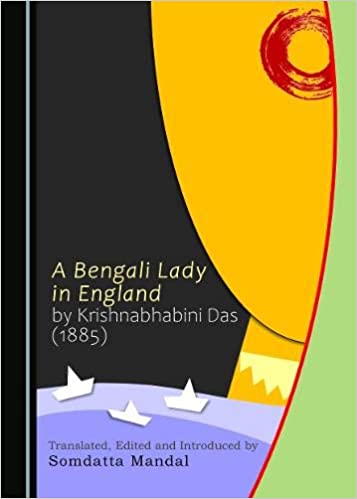
Meenakshi Malhotra reviews Somdatta Mandal’s translation of A Bengali Lady in England by Krishnabhabini Das (1885). Click here to read.

Gracy Samjetsabam reviews Anuradha Kumar’s The Hottest Summer in Years. Click here to read.

Rakhi Dalal reviews Selma Carvalho’s Sisterhood of Swans. Click here to read.

Bhaskar Parichha reviews Amit Ranjan’s John Lang; Wanderer of Hindoostan; Slanderer in Hindoostanee; Lawyer for the Ranee. Click here to read.

Categories
Review

A Discourse on ‘Freedom as Mobility’

Book Review by Meenakshi Malhotra

Title: A Bengali Lady in England by Krishnabhabini Das (1885)

Translator: Somdatta Mandal

Publisher : Cambridge Scholars Publishing

Somdatta Mandal’s translation from Bengali to English, A Bengali Lady in England, is a first person account  of the first ever woman’s travel narrative written in the late nineteenth century when India was still under British imperial rule. Krishnabhabini Das (1864-1919) was a middle-class  Bengali lady who accompanied her husband to England for eight years between 1882 and 1890.Her narrative, England-e-Bangamahila was published in Calcutta in 1885. 

Women’s travel writing in Bengal circulated /proliferated in the late nineteenth and early twentieth century through the popular form of serialized publications in journals such as Bharati (1877),  Prabasi (1901), Bangadarshan , Kalpataru, among others, but Krishnabhabini’s account was the first full length travelogue. Though there followed a rich output of travel literature, it would be a fallacy  to box the many writings as a single, homogenous genre. Travel writing in this time undergoes several generic modulations and modifications as it journeys through the turn of the century. For example, Krishnabhabini’s account could also be described as ethnographic writing  as she turns her gaze on British society, culture, customs , manners.

In addition to being a wonderful addition to the archive of women’s writing, Das’s account seems to reverse the gaze. It offers a fascinating glimpse into 19th century English life and culture, as she attempts to set the record straight in many ways. Krishnabhabini’s capacity for observation is admirable in its sociological detail, especially so when we consider that she was barely out of her teens when she wrote the book. A Bengali Lady in England also offers a wealth of ethnographic detail on English life, character, interaction between classes, marriage, attitude to work, family organisation and life.

As Krishnabashini responds to a spectrum of sights, sounds, affects during her extended stay in England, we come across many nuggets of information. The process of travel offers opportunities for emancipation where exposure to other cultures offers her a way of viewing and of gaining a perspective on her own experiences and that of her sisters in India. Krishnabhabini constantly refers to her Indian sisters and bemoans their sorry state and ignorance when she sees how active British women were in their families and societies. Her motive here is to overturn the largely negative view of British women that prevailed in colonised spaces like India, based on their view of the “memsahib” who were often stereotyped as being snobbish and indolent. Her endeavour seems to be to inform her Indian sisters that British women in England were more active than the colonial “memsahibs” they usually came across in India.

She is eloquent in lauding the virtues of British domesticity by pointing out the merits of companionate marriages, where the wife is active in being a true helpmate to her husband as well as being the custodian of the private domain. Her perception is that Indian women and men would benefit in emulating such models of domesticity, instead of remaining in segregation and separation. As the translator and editor Somdatta Mandal points out, Krishnabhabini’s opening of the veil as a means of freeing herself from the constraints of her family and society is probably the first step in “the discourse of freedom as mobility’’ that enables her to construct her own sense of self (Mandal p.xx). Though she deplores the materialism evident in English society, she is also acutely conscious of the difference between the two countries. Thus she writes, “the more I compare the two countries, the more I realise the great difference between them and looking at the poor condition of India, I keep on suffering within.”(150)       

The translation and commentary by Somdatta Mandal, a translator and academic of considerable reputation and experience, highlights Krishnabhabini’s keen and observant eye, both in her translation and her comprehensive introduction to it. Her introduction shows evidence of her scholarship as she contrasts Krishnabhabini’s narrative account with her husband, Devendra N. Das, who with “an Orientalist agenda”(Mandal xxiii) was trying to “educate his fellow Britishers with the myths, religion and lifestyle of Indians back in India-speaking about the jogee, the astrologer, the zamindars, the nautch girls, infant marriage, the matchmaker, the Hindoo widow, funeral ceremonies, et al-his wife was trying to educate fellow Indians about different aspects of British life-English race and its nature, the English lady, English marriage and domestic life, education system, religion and celebration, British trade, labour ”, cityscapes and rural life. Both the editorial commentary and Krishnabhabini’s narrative are peppered with delectable nuggets of information.       

Exposure to European literature, proliferation of print culture and ideas of romanticism percolated into the ‘Bhadralok” consciousness creating new modes of self-fashioning and new reading publics that made space for the publication of serialised travelogues . Much of the travel writing which did emerge and prove popular at this time were those authored by Hindu, upper class, western educated males, who were often renowned luminaries, scholars, or litterateurs in their own right. Several of the travel accounts are of men travelling outside India, usually to England. These works contained observations on western culture and a comparative study with India’s own. Romesh Chunder Dutt wrote Three Years in Europe: 1868- 1871, which was published in 1896. Both Rabindranath Tagore and Vivekananda authored various works on travel. An earlier account of travel writing was Bholanauth Chunder’s Travels of a Hindoo (1869) which chronicled his journey from Bengal to Punjab.

In contrast, socially sanctioned forms of travel for women till the mid nineteenth century was largely restricted to pilgrimage. However, with the advent of the railways and the opening of the Suez Canal, by the mid-nineteenth century we have instances of women, usually from educated Bengali upper-class families, travelling for entirely secular reasons—for convalescence, their husbands’ work, for leisure, or even for education. Aru Dutt and Toru Dutt went to England at around 1870 to pursue an education.

In 1871 Rajkumari Bandhopadhyay, wife of social worker Shashipada Bandopadhyay, became the first Indian woman to visit England. In 1877, Rabindranath Tagore’s sister-in -law, Jnadanandini , along with her children, travelled by ship to England to accompany her husband, Satyendranath Tagore(the first Indian ICS officer). This was against the wishes of her father-in -law, Maharshi Debendranath Tagore. In each of these instances, the act of travelling to a foreign land was deemed sacrilegious and transgressive, with the women facing extreme social backlash and, in the case of Rajkumari Bandyopadhyay, ostracisation. However, these acts set the way for further instances of travel, and more importantly, written accounts for the same. In 1894 Jagatmohini Debi set sail for England, and in 1902 published Seven Months in England (England e Saat Mash).

Krishnabhabini’s work is indeed a pioneering effort as far as Bengali women’s documentation of their travels, at home or abroad, are concerned. Yet her travel to England came at a personal cost; she had to leave her daughter behind with her conservative in-laws, resulting in lifelong estrangement. However, what ultimately makes this book unique it the quality of its specularity, its simultaneous awareness  of the self and other. It is this quality of self-consciousness or self-reflexivity which makes it  truly a  text of modernity.

.

Dr Meenakshi Malhotra is Associate Professor of English Literature at Hansraj College, University of Delhi, and has been involved in teaching and curriculum development in several universities. She has edited two books on Women and Lifewriting, Representing the Self and Claiming the I, in addition  to numerous published articles on gender, literature and feminist theory.       

.

PLEASE NOTE: ARTICLES CAN ONLY BE REPRODUCED IN OTHER SITES WITH DUE ACKNOWLEDGEMENT TO BORDERLESS JOURNAL

Categories
Greetings from Borderless

For Auld Lang Syne

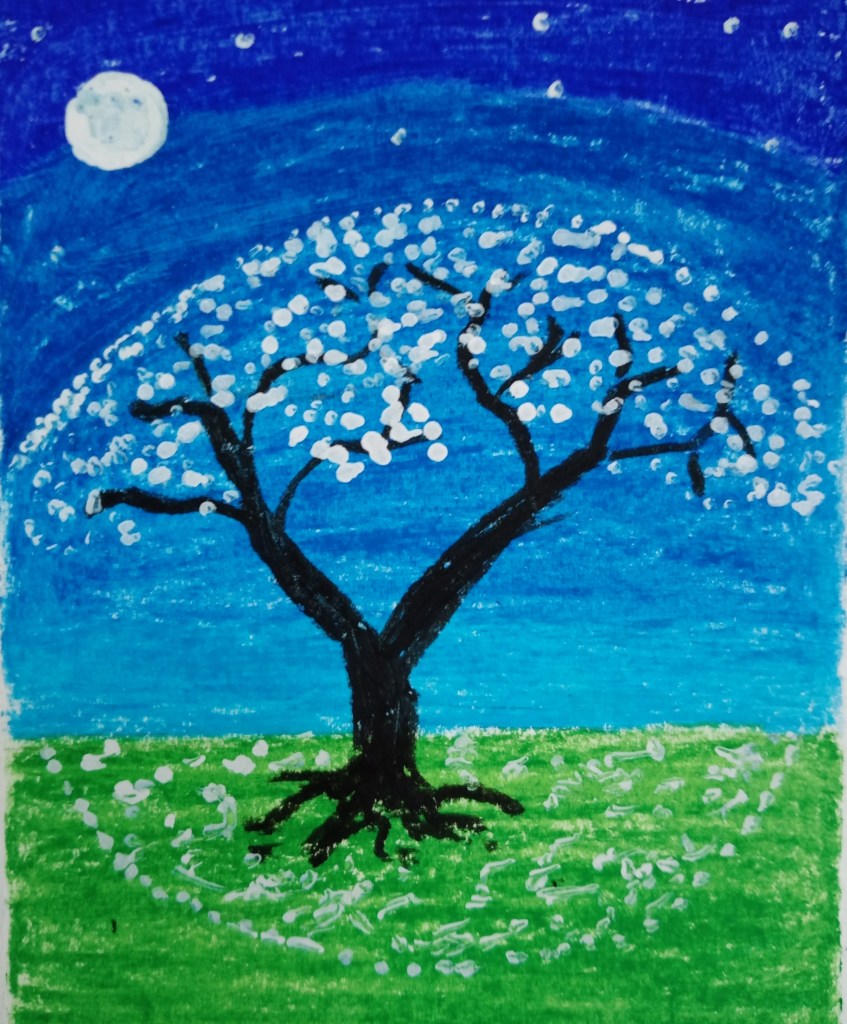
Painting by Sohana Manzoor

What will the New Year bring? Will it connect us all like a tree that has its roots deep in the Earth but reaches out to the sky with its branches rearing high? Its blooms seem like stars on the planet, connecting all life and non-living in its embrace. We hope as global consciousness grows for living in harmony with nature and science, love and kindness, may we all move towards a better more connected world. We, at Borderless Journal, wish you all a happy start to a wonderful New Year!

Our oeuvre this time brings to you a selection from the year 2021 that showcases the change makers we met, and writing that with their values connect us or ring with goodwill and look forward to a better future.

Meet & Greet

These are people you can meet on our pages — people who impact the world in a way that touches lives.

Goutam Ghose, who finds colouring the world with syncretic lore as the best alternative to sectarian violence. Click here to read.

Anvita Abbi, an empathetic linguist who builds bridges to create a seamless world, accepting and co-existing with different ways of life as colours of a rainbow. Click here to read.

Nazes Afroz translated a book on Afghanistan by Tagore’s disciple, Syed Mujtaba Ali, a memoir that shows the roots of the current crises go deep. Also, a senior BBC editor of South Asia, Afroz takes us through the situation with compassion. Click here to read.

Jessica Mudditt travelled to Myanmar and wrote a book, which is an eye-opener about the current situation. She was brought to focus by Keith Lyons who interviewed her for us. Click here to read.

Sanjay Kumar founded Pandies, an activist theatre group that educates, bridging gaps between the divides of University educated and the less fortunate who people slums or terror zones. Click here to read.

 Sybil Pretious, a teacher who has taught in six countries to impact children, starting her career in Africa and living through and beyond Apartheid. Click here to read.

Poetry

Robert Burns & Tagore in Harmony : A transcreation of Tagore’s song, Purano Sei Diner Kotha, based on Robert Burn’s poem associated with new year’s revelries. Click here to read.

Snowball Earth: A long poem by Rhys Hughes in the spirit of a modern man’s Auld Lang Syne, touching on our climate debacle. Click here to read.

Gathering Blossoms: Poetry by Michael R Burch that lingers in the heart. Click here to read.

Humour

Travels & Holidays: Humour from Rabindranath: Translated from the original Bengali by Somdatta Mandal, these are Tagore’s essays and letters laced with humour. Click here to read.

Surviving to Tell a Pony-tale: Devraj Singh Kalsi journeys up a hill on a pony and gives a sedately hilarious account. Click here to read.

 Trouser Hermits: Rhys Hughes muses over men’s attire and the lack of them. Click here to read.

Prose

Temples and Mosques: Kazi Nazrul Islam’s fiery essay on the need for a syncretic lore translated by Sohana Manzoor. Click here to read.

To Infinity & Beyond!: Candice Louisa Daquin explores the magic of space travel. Click here to read.

Near the River Chenab and Under The trees: Sunil Sharma in a poignant telling takes us on a journey to the banks of a river where life, love and death sheathed in terrorism cumulate to a peak. Click here to read.

Richard Hughes: The Reporter Who Inspired Ian Fleming: Bhaskar Parichha showcases a journalist who wrote globally, spicing it up with humour. Click here to read.

The Lords of Lights: With photographs and a story, Penny Wilkes makes an interesting new legend. Click here to read.