Sometimes, we have an idea, a thought and then it takes form and becomes a reality. That is how the Borderless Journal came to be six years ago while the pandemic raged. The pandemic got over and takeovers and wars started. We continued to exist because all of you continue to pitch in, ignoring the differences created by certain human constructs. We meet with the commonality of felt emotions and aesthetics to create a space for all those who believe in looking beyond margins. We try to erase margins or borders that lead to hatred, anger, violence and war. Learning from the natural world, we believe we can be like the colours of the rainbow that seem to grow out of each other or the grass that is allowed to grow freely beyond manmade borders. If nature gives us lessons through its processes, is it not to our advantage to conserve what nurtures us, and in the process, we save our home planet, the Earth? We could all be together in peace, enjoying nature and nurture, living in harmony in the Universe if only we could overlook differences and revel in similarities.
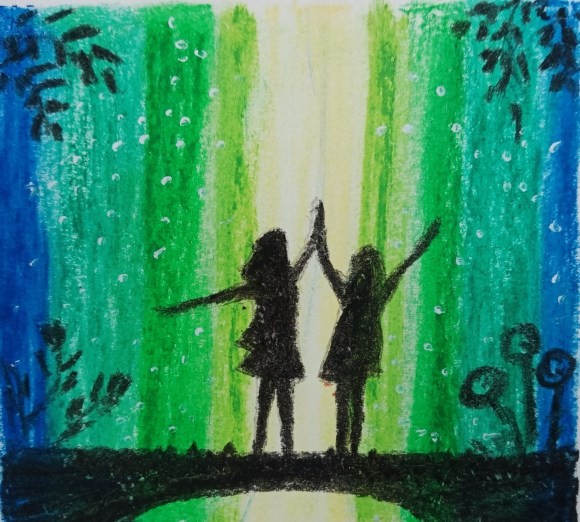
A young poet Nma Dhahir says it all in her poem that is a part of our journal this month —
This is how we stay human together: by refusing the easy damage, by carrying each other without calling it sacrifice, by believing that what we protect in one another eventually protects the world.
Translations has more poetry with Professor Fakrul Alam bringing us Nazrul’s Bengali lyrics in English and Fazal Baloch familiarising us with beautiful Balochi poetry of the late Majeed Ajez, a young poet who left us too soon. Isa Kamari translates his own poems from Malay, capturing the colours of the community in Singapore to blend it with a larger whole. And of course, we have a Tagore poem rendered into English from Bengali. This time it’s a poem called ‘Jatra (Journey)’ which reflects not only on social gaps but also on politics through aeons.
Christine C Fair has translated a story from Punjabi by Lakhvinder Virk, a story that reflects resilience in women who face the dark end of social trends, a theme that reverberates in Flanagan’s poetry and Meenakshi Malhotra’s essay, which while reflecting on the need of different perspectives in histories – like water and nomads — peeks into the need to recall women’s history aswell. This is important not just because March hosts the International Women’s Day (IWD) but because one wonders if women in Afghanistan are better off now than the suffragettes who initiated the idea of such a day more than a century ago?
This time our non-fiction froths over with scrumptious writings from across continents. Tamara-Lee Brereton-Karabetsos muses on looking at numbers and beyond to enjoy the essence of nature. Farouk Gulsara ideates about living on in posterity through deeds and ideas. Gower Bhat shares how he learns story writing skills from watching movies. Meredith Stephens talks of her experience of a fire in the Australian summer. Bhaskar Parichha writes with passion about his region, Odisha. We have a heartfelt tribute to Mark Tully, who transcended borders, from Bhowmick. And an essay on Arundhati Roy’s memoir, Mother Mary Comes to Me, from Somdatta Mandal, which explores not just the book but also the covers which change with continents. Prithvijeet Sinha travels beyond Lucknow and Suzanne Kamata brings to us stories about her trip to Phnom Penh.
Keith Lyons draws from the current crises and writes about changing times, suggesting: “Changes aren’t endings, but thresholds.” Perhaps, if we see them as ‘thresholds of change’, the current events are emphasising the need to accept that human constructs can be redefined. I am sure a Neolithic or an Australopithecus would have been equally scared of evolving out of their system to one we would deem ‘superior’. Life in certain ways can only evolve towards the future, even if currently certain changes seem to be retrogressive. We can never correctly predict the future… but can only imagine it. And Devraj Singh Kalsi imagines it with a dollop of humour where tails become a trend among humans again!
Humour and absurdity are woven into a series of short fables by Hughes while Naramsetti Umamaheswarao weaves a fable around acceptanceof differences. In fiction, we have stories of resilience from Jonathon B Ferrini and Terry Sanville. Bhat gives us a story set in Kashmir and Sohana Manzoor gives us one set in Dhaka, a narrative that reminds one of Jane Austen… and perhaps even an abbreviated version of the 2001 film, Monsoon Wedding.
In reviews we have, Mohammad Asim Siddiqui discussing Anisur Rahman’s The Essential Ghalib. Rituparna Khan has written on Malashri Lal’s poetry collection reflecting on women, Signing in the Air. And Bhaskar Parichha has reviewed Deepta Roy Chakraverti’s Daktarin Jamini Sen: The Life of British India’s First Woman Doctor, a book that reflects on the resilience that makes great women. Thus, weaving in flavours of the IWD, which applauds women who are resilient while urging humans for equal rights for one half of the world population.
While we ponder on larger realities, Borderless Journal looks forward to a future with more writings centred around humanity, climate change, our planet and all creatures great and small. This year has not only seen a rise in readership and contributors — and the numbers rose further after our unsolicited Duotrope listing in October 2025 — but has also attracted writers from more challenged parts of the world, like Ukraine, Iran, Tunisia and Kurdistan. We are delighted to home writing from all those who attempt to transcend borders and be a part of the larger race of humanity. I would like to quote Margaret Atwood to explain what I mean. “I hope that people will finally come to realize that there is only one ‘race’—the human race—and that we are all members of it.” And I would like to extend her view to find solidarity with all living beings. I hope that there will be a point in time when we will realise there’s not much difference between, a lizard, a fly, a human or a tree… All these lifeforms are necessary for our existence.
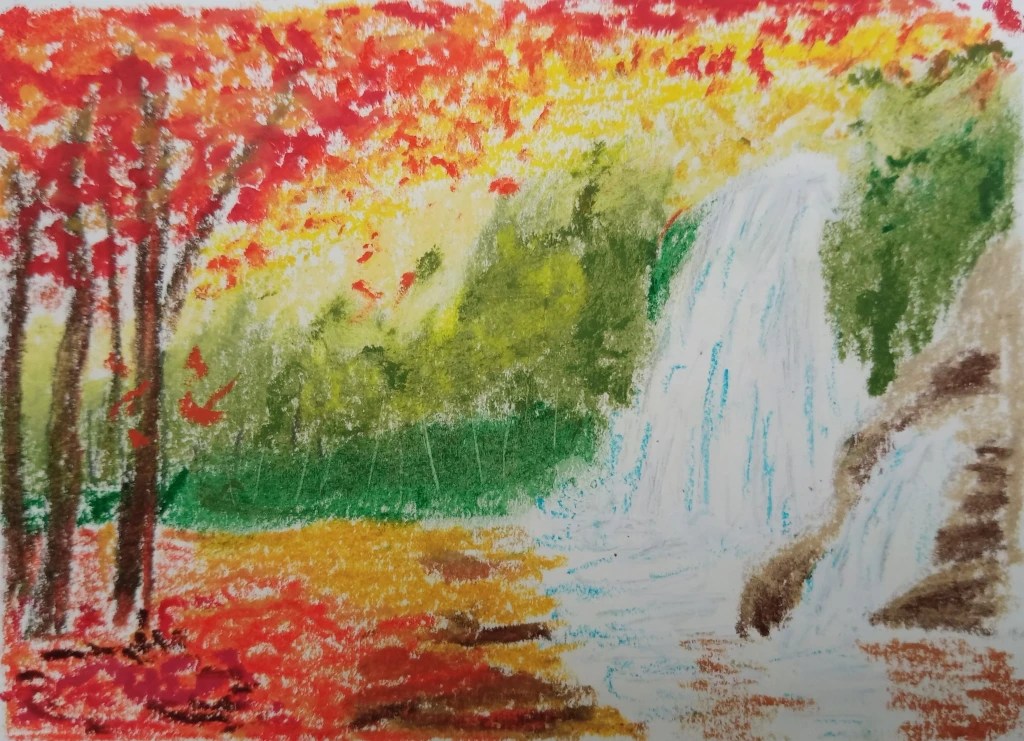
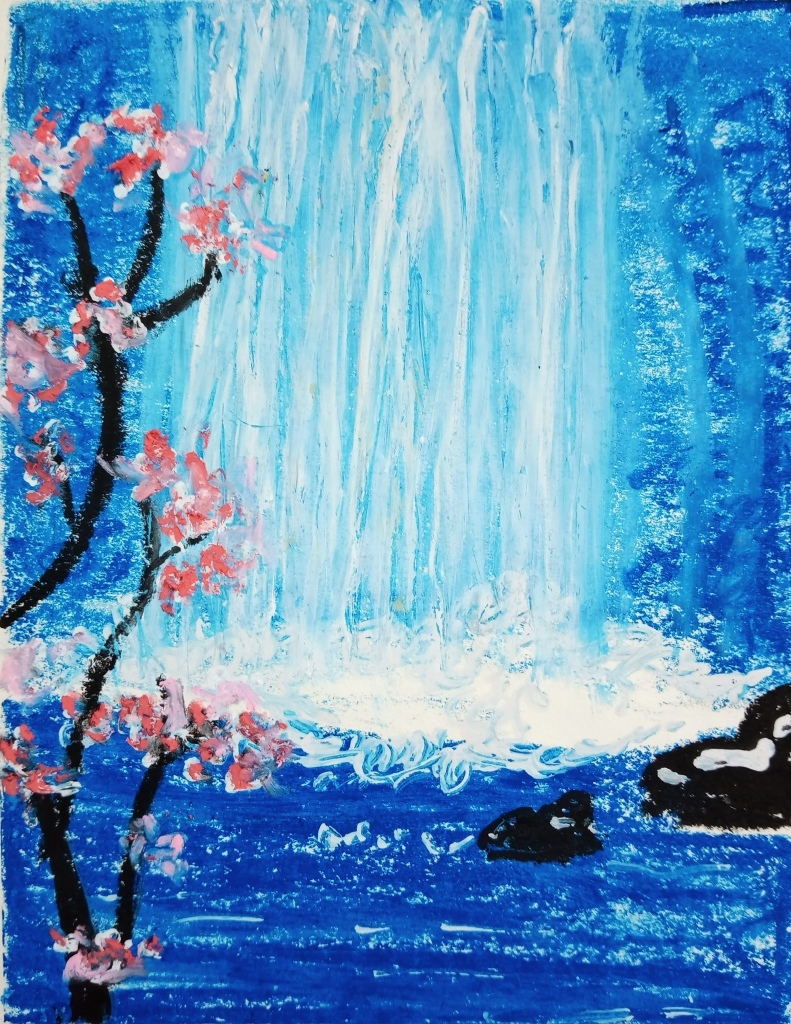
I would want to hugely thank all our team for stretching out and making this a special issue for our sixth anniversary and Manzoor for her fabulous artwork. Huge thanks to all our contributors and readers for being with us through our journey. Let’s change the world with peace, love and friendship!
Story by Lakhvinder Virk, translated from Punjabi by C. Christine Fair
Translator’s note
This story comes from Lakhvinder Virk’s first collection of Punjabi-language short stories titled, Colors that Were Not Red (Rang Jo Suuha Nahin Sin), which was published in 2024 by Ojj Parkashan in India. Punjabi literature, despite the presence of important giants such as Amrita Pritam and Ajeet Cour, is still dominated by male voices and male interiorities. Even when male authors ventrilolocute for female characters, it often feels voyeuristic. Upon reading this story, I was immediately struck by its distinctive voice and storyline. This story is distinctive both because of its adventurous female protagonist, who is willing to explore her own sexuality and negotiate the boundaries of marriage, but also its theme of a husband who seeks an open marriage. In India such concepts are even more rare and controversial than they are in the United States. Upon encountering this story, I was awed by Virk’s brave willingness to engage a subject matter that is so verboten in India. While other stories in her collection of short stories flirt with similarly provocative themes, I believed “Open Marriage” was an important story to translate. While the specificities of this story are rooted in upper-class Mumbai, India, the challenges confronted by the young female protagonist are universal. How do women everywhere negotiate unreasonable demands and behavior from a husband who was heretofore presented as loving and caring? When has the Rubicon been crossed? When does a woman leave a marriage that is destroying her? How much is too much to tolerate? This story presents its own answers.
Lakhvinder Virk
Open Marriage by Lakhvinder Virk
The sound from the phone caught both of their attention. It was likely text message. Indeed, Siddarth got a message on his phone. He did not pick up his phone to look. Tania’s gaze was fixed on the television screen. Because it was Sunday, both were free, and they planned to watch the film Animal on Netflix. They ordered out for food and began watching the movie.
On the TV. screen, there was a scene: the hero, having lied to his wife, formed a physical relationship with another girl. When the wife found out, she was inconsolable. She cried and left the house, taking the children with her.
Siddharth picked up the phone and went to the bathroom. But the sound of the message on his phone kept nagging Tania.
Tania tried to focus on watching the film. “Is it such a big deal if a husband is involved with another woman? He still loved his wife,” she thought to herself. “If what is being depicted is real, then so what?”
*
Siddarth and Tania were married two years ago. Siddarth was the CEO of a multinational company in Mumbai, and Tania was the general manager in a branch of the State Bank of India. They had an arranged marriage through a matchmaking app. After marriage, the husband and wife would clean the kitchen together as well as other household chores. Because Tania shifted from Delhi to Mumbai, she had to work hard to understand the new place and new environment. Siddarth helped her thoroughly in this process.
One day Siddarth asked, “Tania, did you have a boyfriend before marriage?”
“I am not so narrow-minded. Don’t worry. Come on. Tell me.”
“In truth, no.” Tania was collecting herself.
“This isn’t possible, dear. Don’t lie.”
“No Siddarth, it’s the truth.”
“This means that you don’t trust me, Tania. These days, there’s nothing bad about having relationships. Moreover, in our society, if you don’t have a relationship, it means that there is something wrong with you.” Siddarth wanted to know about Tania’s past.
“I never got the free time, Siddarth. I just focused upon my career and studies,” Tania answered, looking away. She was afraid that Siddarth would read her emotions.
“Tell me about yourself,” Tania asked.
“Yes. I had many. I had my first girlfriend when I was in the sixth grade. Before marriage, I had thirteen girlfriends.” Siddarth answered proudly, counting them on his fingers.
“Oh my god! At such a young age,” Tania said in bewilderment.
“Young?” Siddarth looked at Tania as if she had come out of the jungle and knew nothing about the world. “Some of my friends had several physical relationships by the time they were in the tenth grade. I even had a friend who was caught with his girlfriend in the school toilet. Both of them were kicked out of school. In this regard, I was slow. My friends would make fun of me because I was clueless. Then somehow, during my graduation, I mustered the courage with my fourth girlfriend,” Siddarth explained while laughing. Tania was looking at him, astonished.
“Delhi is also an open environment like this. How is it possible that you did not have a boyfriend? Yaar[1], these days one has to do a lot of things due to peer pressure. Among my friends, if someone didn’t have a girlfriend, they would kick him out of the group. I don’t believe you didn’t have a boyfriend. Come on. Tell me,” Siddarth insisted.
“It’s not necessary that every girl has a relationship.”
Tania had two boyfriends. One was in the twelfth grade. When Tania saw him, she fell in love with him. But this was a childhood crush that ended in a few days when he became friends with another girl. The second was when she was doing her MBA. She fell in love with a classmate. She was fairly serious in this relationship. She wanted to marry him, but when she raised this matter with him, he responded in rage. Tania was outdated to him. “I’ve never even thought like this. What does marriage mean?” he had said.
After that, they could never be normal again, and they broke up.
Tania wanted to tell all of this to Siddarth, but she was afraid. She had always heard that a boy could do whatever he wanted, but a boy wouldn’t tolerate hearing this from girls. Her mom said that talking about such things could lead to a divorce. Thinking about all of this, she kept quiet.
Siddharath brought Tania into his embrace and said, “This is normal, Tania. We go out of the house, it’s natural that we’re attracted to members of the opposite sex. If I can, why can’t you? I am not an old school type.”
Even though Tania didn’t want to, she hid the truth. After this, Siddarth did not raise the issue again.
One night after dinner, when all of the work was finished, Tania came into the bedroom. Siddharth was reclining on the bed, reading a magazine.
“Do you know about open marriages?” Siddharth asked, signaling her to come near him.
“Open marriage?” Tania asked out of great curiosity, sitting beside him.
“I am reading some stuff about open marriages and…So be it. I myself am thinking about this,” Siddarth said.
For a moment, silence spread between them.
“What is an open marriage?” Tania stood up and started putting on some lotion. She had put on a nightie in Siddarth’s favourite color, but Siddarth had paid it no attention.
“An open marriage means that within the marriage, there are some commitments, but both partners can form relationships apart from the other,” Siddarth explained. “It’s not cheating but understood as a different aspect of intimacy.” He was looking towards Tania and saying, “In doing this, the couple’s bond can deepen and they never get bored.”
Before responding, Tania was quiet for some time, thinking about this.
“It seems interesting but….is it practical? Moreover, it could bring stress to the couple. And consequently, the marriage will get very complicated.”
Siddarth shook his head, “I know that this isn’t easy, but if one talks openly and honestly with each other, it seems to me that it isn’t so hard.”
For some time, a silence spread between them.
“Tania I don’t want our marriage to become old and conventional, and after some years we fight and become distant. Many of my friends are in open marriages or are into wife swapping. Actually, I didn’t want to get married, but my parents pressured me and I got married.”
“You mean you can have a girlfriend, and I can have a boyfriend. Right?” Tania asked in astonishment.
“Yes. It’s necessary to keep our marriage alive.”
“But how will this work? This seems very awkward to me.” Tania was stuck, conflicted.
“Go back deep into history, there is polygamy in our culture,” he began to explain to Tania. “In our country, there are multiple such examples in which Kings had hundreds of marriages. Apart from this, they had other relations. The queens had relations with the various slaves living in her palace. Were these not open marriages? We boast about that culture. I also want to follow that culture. It’s not impossible.” Siddharth wanted to convince her through whatever means.
Tania, flabbergasted, sat there in silence listening to him speak.
“Then after some time when there are children, nothing can happen anymore. At the very least, until then, we should enjoy our life according to our wishes.”
For some days, this argument went on between them. In the end, after hearing the various arguments, Tania agreed with Siddharth, and they decided to have an open marriage.
Whenever Siddarth had a new girlfriend, he discussed it with Tania. If he went to see a film or went on a date, he definitely told Tania. In the beginning, Tania did not like this. She felt jealous, but this feeling gradually faded. Siddarth kept on asking Tania whether she had a boyfriend. Tania, in those days, was very busy at the office. She didn’t take a liking to any man.
“You are so lazy,” Siddarth teased her, laughing.
“I have made a third girlfriend and tomorrow I am going on a date with her.”
“Well done,” Tania said with great flair. They both began to laugh.
The next day, Tania looked very closely at the men working with her, but none struck her fancy.
For the last few days, Tania had begun taking yoga classes. On that day, she went to her yoga lesson after work, and she saw a new face in the class. He was about 30 years old. He was a tall, attractive young man. Tania’s attention kept floating towards him. As soon as the session finished, people began gathering their mats.
“Hello.” The young man said to Tania, sitting on the same bench where Tania was sitting, and putting on her shoes.
“Oh. Hello, I am Tania.” Tania extended her hand and immediately felt that her hand was the hand that had touched her shoes. She pulled her hand back.
“Gavi.” The young man extended his hand, smiling. “My hands also touched my shoes. It’s no big deal.”
Tania really liked his style. “This is the first time I am seeing you?” Tania asked.
“I have just joined. Actually, I just shifted from Chandigarh a few days ago,” he replied.
“Oh nice. Chandigarh is a happening place. I wonder how people from Chandigarh can live in a congested place like Mumbai,” Tania said as they were heading towards the parking.
“You are right, but this is my first required posting outside of the state. No doubt, Chandigarh is a very beautiful and peaceful city, with zero crime. But you have to leave it for career growth. Chandigarh is a city of retired people. After retirement, I will definitely shift to Chandigarh,” Gavi looked toward Tania while smiling.
“In which department are you?” Tania asked.
“I am an Indian Police Service Officer.”
“Oh Wow!” Tania said happily.
“And you?” Gavi also wanted to learn about her.
“I am a general manager at the State Bank of India.”
“Good post.”
“Thank you. My flat is just here, and where do you live?” Tania asked as she was opening the car door.
“My flat is a five-minute drive from here.”
“Nice to meet you. See you soon.” Saying this, Tania sat in the car.
“Same here.” And as he said this, Gavi closed Tania’s car door.
After some days, Gavi and Tania became good friends. They sat side by side doing yoga. Sometimes, after class, they would stop to drink organic juice, and they would make small talk. Because he was newly arrived in the city, Gavi had no friends, but because of Tania he felt no loneliness. Tania also felt a lot of affection for Gavi. When she was with Gavi, she felt very special herself which she had never felt with anyone else.
On a vacation day, they planned to see a movie.
Tania had a message from Gavi on her phone that they would leave their homes at 10 o’clock. First, they would see the movie, then they would have lunch together. Siddarth read this message.
“You are dating someone?” Siddarth asked over dinner.
“Not exactly dating, but something like that. It’s nothing like this. We are good friends.”
“Hmmm. So you are going?”
“Yes. We made a plan.”
“Listen. I don’t like this,” Siddarth said, twirling his fork on his plate.
“What?” Tania asked with inquisitive eyes.
“This open marriage…Let’s close it.” Siddarth said.
“So…You have been enjoying the open marriage. I am just going to see a movie, and you want to close it?” There was bitterness in Tania’s voice.
“Yes. I want to close it. I cannot now live in an open marriage. You yourself were saying that marriage would get very complicated. Now I think the same.” Siddharth announced his decision.
“OK. No problem.” Tania agreed. “But it should be closed from your side too.”
“Yes. Done.”
Tania messaged Gavi that she was busy and, for this reason, she couldn’t come. After that, on several occasions, Gavi tried to make plans with her, but Tania made some excuse or another. She began to ignore Gavi.
For some days, Siddarth was working from home. One day, Tania finished her work early and returned home quickly so that she could spend some time with Siddarth. She took the duplicate key from her purse, unlocked the door, and went inside.
From inside, she heard a girl’s voice filled with anger. “Bastard. Scumbag. Have you no shame in having relations with me even though you are married? Did you tell me that you are married? I didn’t know anything. Either divorce your wife and marry me, or give me 2 Crore Rupees. Otherwise, I am going to the police station.”
Tania was astonished hearing this.
She went to the bedroom from which this noise was coming. She saw Siddarth begging this girl to forgive him. Tania didn’t know what she should do. She felt pity for Siddarth as well as anger.
Seeing Tania, the girl left quietly.
Siddarth told Tonia that he had been in a relationship with her for the past five months, and now this girl was blackmailing him. “She kept some videos and photos of our private moments, which she is threatening to make viral,” he added.
Tania didn’t know how to help Siddharth.
During this dilemma, she went to her evening yoga class. When the class finished, Gavi asked her why she was so sad, “What happened. Is your health okay? You are absolutely ashen. What happened?”
Tania needed a friend at this time. She went with him to a nearby coffeehouse. While drinking coffee, Tania told Gavi everything. It was like icing on the cake that Gavi was a friend but also a police officer.
Gavi listened to the entire thing and said, “Don’t worry, Tania. These kinds of groups, which ensnare people, are very active these days. They take their photos. Make videos. Then they blackmail them. Sometimes, these people don’t personally meet the victim. They do sexting and then record the phone sex. On this basis, they blackmail them. This is an elaborate net that has been cast. Our entire department is searching for these people. Don’t you worry. I will help you as much as possible.”
“Thank you so much, Gavi. I had no idea what I should do.” Tania felt as if a burden would be lifted.
The next day, Gavi called Tania and Siddarth to the police station. Sitting them in his office, he took the First Information Report and began to take action. It turned out that the girl was a member of such a group. The police wiretapped the entire group and arrested them.
During this, the way Gavi took care of Tania drew her even closer to him. She felt as if she had always needed a wise companion like him. She saw in Gavi’s eyes love and honour for her, something she had always wanted to see in Siddharth’s eyes. But apart from emptiness, there was nothing in his eyes.
*
Siddarth returned from the bathroom and became engrossed again in watching a movie.
Siddarth had taken his phone to the bathroom. She was very bothered by this. For the past few days, she was feeling that Siddarth was hiding something from her, whereas they both had agreed that they would not hide anything from each other.
“Should I ask him straightaway?” Tania thought to herself, but she thought it better to wait a bit. He may tell me himself. Is he still?…”
“Tania, tomorrow I am going to Pune for two days, for a workshop,” Siddarth told Tania while looking at his screen.
“Okay. Alone?” Tania asked.
“Of course. Can I take friends to a workshop?” Siddharth said in irritation.
The film was over, but in Tania’s mind, the phone’s notification kept playing. She could not stop thinking about this.
In the evening, when Tania was in the kitchen working, Siddharth’s phone was on the dining room table when a message came. Tania saw that Siddarth was taking clothes out of the armoire and packing them.
Tania picked up the phone, but it was locked. She was very baffled. Previously, Siddarth did not lock his phone. She tried to unlock it. After some efforts, she managed to unlock the phone. She saw that a message had come on WhatsApp. When she opened the message, she saw a girl in a transparent nightie. The girl wanted to confirm that she should bring this nightie to Lohkhandwala if Siddharth liked it.
Tania, seeing this, was stunned. She messaged Gavi, “Can I stay in your house tonight?”
“Why not. But what happened?” Gavi quickly responded.
“I’ll tell you when I get there.” After messaging Gavi, she went to her armoire and took out clothes and necessary documents and began to pack them in a bag.
Seeing her do this, Siddarth repeatedly asked her where she was going? Why is she packing?
Tania did not answer. When she was leaving the house, she left the key to the flat on the shoe rack, and Siddarth grabbed her arm.
“Where are you going? What happened to you? Why aren’t you talking?” Siddarth didn’t understand what was going on.
“Wherever I may be going, I am definitely not going to Lokhandwala,” she said looking straight into Siddarth’s eyes.
Hearing this, Siddharth knew he was busted. He said nothing, and his grip loosened.
Lakhvinder Virk obtained her PhD from Punjabi University, Patiala in the department of linguistics and lexicography under the supervision of Professor Joga Singh. She lives in Chandigarh and serves as the head of the Punjabi Department in JDSD College in Kheri Gurana, Banur in Punjab. Her first book of short stories, Colors That Were Not Red, (Rang Jo Suuha Nahin sin) was published in 2024. This story was published in that volume.
Christine Fair did her Ph.D. in South Asian Languages and Civilizations at the University of Chicago. She is currently a professor of Security Studies at Georgetown University. Her translations have appeared in LIT Magazine, Muse India, Orientalia Suecana, The Bangalore Review, Borderless, The Punch Magazine, The Bombay Literary Magazine, and The Bombay Review.
PLEASE NOTE: ARTICLES CAN ONLY BE REPRODUCED IN OTHER SITES WITH DUE ACKNOWLEDGEMENT TO BORDERLESS JOURNAL
It has been a strange year for all of us. Amidst the chaos, bloodshed and climate disasters, Borderless Journal seems to be finding a footing in an orphaned world, connecting with writers who transcend borders and readers who delight in a universe knit with the variety and vibrancy of humanity. Like colours of a rainbow, the differences harmonise into an aubade, dawning a world with the most endearing of human traits, hope.
A short round up of this year starts with another new area of focus — a section with writings on environment and climate. Also, we are delighted to add we now host writers from more than forty countries. In October, we were surprised to see Borderless Journal listed on Duotrope and we have had a number of republications with acknowledgement — the last request was signed off this week for a republication of Ihlwha Choi’s poem in an anthology by Hatchette US. We have had many republications with due acknowledgment in India, Bangladesh, Pakistan and UK too among other places. Our team has been active too not just with words and art but also with more publications from Borderless. Rhys Hughes, who had a play performed to a full house in Wales recently, brought out a whole book of his photo-poems from Borderless. Bhaskar Parichha has started an initiative towards another new anthology from our content — Odia poets translated by Snehaprava Das. We are privileged to have all of you — contributors and readers — on board. And now, we invite you to savour some of our fare published in Borderless from January 2025 to December 2025. These are pieces that embody the spirit of a world beyond borders…
I Am Not My Mother: Gigi Baldovino Gosnell gives a story of child abuse set in Philippines where the victim towers with resilience. Click here to read.
Persona: Sohana Manzoor wanders into a glamorous world of expats. Click here to read.
In American Wife, Suzanne Kamata gives a short story set set in the Obon festival in Japan. Click here to read.
Sandy Cannot Write: Devraj Singh Kalsi takes us into the world of advertising and glamour. Click here to read.
Reminiscences from a Gallery: The Other Ray: Dolly Narang muses on Satyajit Ray’s world beyond films and shares a note by the maestro and an essay on his art by the eminent artist, Paritosh Sen. Click here to read.
A discussion of Jaladhar Sen’s The Travels of a Sadhu in the Himalayas, translated from Bengali by Somdatta Mandal, with an online interview with the translator. Click here to read.
Title: Silver Years: Senior Contemporary Indian Women’s Poetry
Editors: Sanjukta Dasgupta, Malashri Lal and Anita Nahal.
Publisher: Sahitya Akademi
Several centuries ago, women poets had to fight to be heard, their poems often dismissed as unworthy or mediocre. It is a testament to their determination, grace and sheer talent that today female poets are amongst the most celebrated and respected the world over. In India, pathbreaking women poets such as Toru Dutt, Sarojini Naidu and Kamala Das paved the way for more recent talents such as Eunice de Souza, Suniti Namjoshi and Sujata Bhatt. Of course, this list does not include the vast number of women poets writing in Indian languages ranging from Assamese, Bengali, Hindi, Malayalam, Punjabi, Tamil and Telugu to name but a few.
A recent anthology of poems by senior contemporary Indian women poets titled Silver Years, reflects the centrality of women in today’s Indian society. While elders have always been revered in this society, the overwhelming influence of western media has brought in a certain skepticism towards such traditions. In this context, it is refreshing to read these poems that showcase the maturity, resilience, humour and sagacity of these women. They offer their diverse perspectives on the experience of being an Indian woman, exploring changing societal attitudes to their place in the world, the dynamics of their social roles and the trauma and transcendence they encounter in their lives.
The poems in this collection are not just pretty words that pander to social expectations, they carry the weight of the experiences of fifty senior women poets who have lived rich and varied lives, working in their chosen fields and observing the radical transformation of the world around them. The common thread that runs through this anthology is the forthright tone and boldness of expression in the over 160 poems included. As women who have lived full lives, both in India and across the world, these poets never shy away from controversies, rather expressing with rare grace and tenderness what it means to be sixty plus and female in contemporary society.
The introduction to this volume is no less impressive than the poems. Jointly written by the editors of the collection, Sanjukta Dasgupta, Malashri Lal and Anita Nahal, the introduction traces the evolution of Indian women’s poetry in English, eloquently delineating the political and social challenges faced by women writing in English. Furthermore, the introduction also explores the impact of a deeply patriarchal culture on women in Indian society. The recasting of mythology to suit contemporary societal expectations also finds a mention as well as an emphasis on the voice, agency and power these poets claim for themselves through their poetry. Most significantly, the introduction underscores the resolve, resilience and charm of these sixty plus women, who erase with the power of their words the negativity and weakness associated with aging.
The poems in this anthology vary widely in style and theme, ranging from poems that reimagine gender and societal roles, to those that focus on the havoc wrought by humans on the environment. Perhaps understandably, in an anthology of poems by women poets over sixty, perspectives on aging are numerous.
Anita Nahal’s poem ‘We are the Kali Women’ is a searing condemnation of patriarchal oppression, casteism and discrimination based on skin colour. The poems refrain “Ma Kali. Ma Kali. Ma Kali. Don’t think she’s not watching” strikes a warning note to those hypocrites who are guilty of crimes against her followers while piously bowing before her image.
On a similar theme, but in an entirely different key, is the poetry of Lakshmi Kannan. This poet’s feminism is not overt, but the poems convey an effective message nonetheless. ‘Silver Streaks’ sets forth an idea that is common to many of the poems in the anthology, that senior women do not become less attractive as they age. Instead, this poem emphasizes the power of self-knowledge that maturity brings.
Malashri Lal’s poetry slides into the readers’ consciousness as smooth as silk. Replete with irony and layered with nostalgia, her minimalistic verse has a visceral appeal. ‘Book of Doubts’ evokes a sense of loss for the books one used to treasure. ‘Jaipur Bazar’ is almost like a haiku, conveying the beauty of an emerald and the heritage it encapsulates. ‘Kashmir One Morning’ contrasts the senselessness of sectarian violence with the Gandhian legacy of nonviolence. ‘Krishna’s Flute’, juxtaposes the mellifluous music of the flute and the dreaded coronavirus pandemic. One is associated with the certitude of faith that Krishna’s tunes represent while the other stalks the silent city leaving death and loss in its wake. This is elegant poetry, that does not shock for effect, instead gently evoking images that resonate in the reader’s mind.
Sanjukta Dasgupta’s poems focus on aging with honesty interwoven with humour. Her poems cut to the bone without any unnecessary sentimentality or understatement. Aging, for Sanjukta Dasgupta is an undeniable fact, she asserts that one has to accept the harsh reality of physical debility and the inevitability of death. The poet does not try to gloss over the signs of age, rather she sees them as a culmination of a life lived to the hilt.
The poem ‘When Winter Comes’, is a recasting of P. B. Shelley’s famous line ‘…when winter comes, can Spring be far behind’. The optimism of Shelley’s ‘Ode to the West Wind’ is contrasted with the reality of aging as Dasgupta notes:
In such an intimate Winter
No time
To spring back to Spring

Spreading its embrace….
Scripting a cryptic memoir
On every inch
From face to toe
The poem ‘Fall’ resonates with the repetition of the words ‘falling’ and ‘failing’, which sets the tone for the final descent “into everlasting rest”. The images used in these poems are at once concrete and fanciful, “the swan throat a tortoise neck now” with “countless rings of recorded time”. The poem “Crowning Worry” addresses the anxiety of aging:
Silver waved among blackened hair
Like flags of treachery
Flashing grin of metallic strands
This poem highlights the power of poetry to acknowledge the reader’s anxieties and ameliorate their lack of self-worth:
Black and blonde tresses howled
In low self-esteem, utter frustration
And massive bi-polar manic depression
As the Grey Gorgeous divas
Grinned and Glowed
Poems such as these emphasise the beauty of the older woman, whose youthful innocence may have gone, replaced by something finer, the beauty of self-assurance and poise.
Another significant theme among the poems is climate change and environmental degradation, the burning issue of our times. As mature adults who are aware that their legacy to future generations includes denuded forests, polluted rivers and oceans, arid landscapes and a rampantly consumerist mindset, these poets feel compelled to lament. The elegiac tone is prominent in many poems. Well-known poet from Northeast India, Mamang Dai celebrates the biocentric culture of the tribes of the region in her poem ‘Birthplace’. The poem ‘Floating Island’ also describes the harmony that exists between women and nature. ‘Earth Day’ by Smita Agarwal is another poem that focuses on the negative impact humanity has had on the environment.
The poems in this anthology reflect the changing status of women in present day society. The poets are successful women and their clear-sighted view of life reflects their wisdom and rich experience. Aging is not seen as degeneration, but an enlightened phase where the wealth of one’s experience makes for a perspective that is to be celebrated. The poets included herein write with skill, empathy and wisdom, showing readers the hidden nuances of life that are often overlooked in the heedlessness of youth. They are unafraid to boldly present their wrinkles and grey hair as signs of a new beauty, one that is bolstered by maturity and self-acceptance. Pathbreaking feminist Betty Freidan sees aging not as decline, but as a new stage of life filled with power and promise. Her famous quote “Aging is not lost youth but a new stage of opportunity and strength” emphasises her views on the fountain of age.
In these 143 poems, these poets have offered readers a fresh perspective on these new horizons, so that they can be viewed with compassion and a renewed appreciation for the felicities of life. Most significantly, these poems reiterate that the silver years are a time of hope and light that shines on the promise of fresh achievement.
.
Dr. Anita Balakrishnan is former Head, Department of English, Queen Mary’s College, Chennai, India. Author of Transforming Spirit of Indian Women Writers (2012) and contributor to the Routledge Encyclopaedia of Postcolonial Studies, ed by Sangeetha Ray and Henry Schwarz. Has published papers in national and international journals and reviewed books for The Book Review, Borderless Journal and others. Her interests include contemporary Indian Writing in English, Ecocriticism, Ecofeminism, Cultural Studies and Postcolonial studies.
.
PLEASE NOTE: ARTICLES CAN ONLY BE REPRODUCED IN OTHER SITES WITH DUE ACKNOWLEDGEMENT TO BORDERLESS JOURNAL
Nazrul’s Jonomo, Jonomo Gelo(Generations passed) has been translated from Bengali by Professor Fakrul Alam. Click here to read and listen to a rendition by the famed Feroza Begum.
Ajit Cour‘s short story, Nandu, has been translated from Punjabi by C Christine Fair. Click here to read.
The Scarecrowby Anwar Sahib Khan has been translated from Balochi by Fazal Baloch. Click here to read.
Naramsetti Umamaheswararao moulds children’s perspectives. Click here to read.
Notes from Japan
In American Wife,Suzanne Kamata gives a short story set set in the Obon festival in Japan. Click here to read.
Conversation
Neeman Sobhan, author of Abiding City: Ruminations from Rome, discusses shuttling between multiple cultures and finding her identity in words. Click here to road.
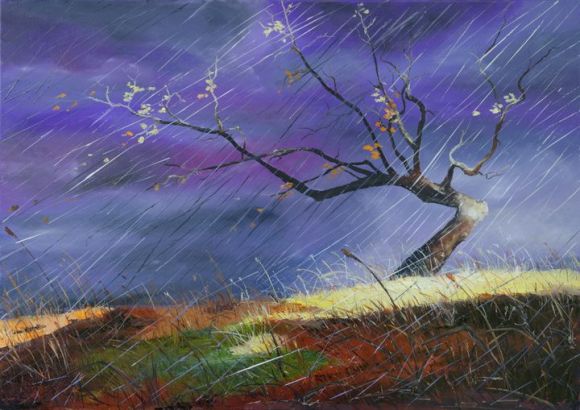
Storm in purple by Arina Tcherem. From Public Domain
If we take a look at our civilisation, there are multiple kinds of storms that threaten to annihilate our way of life and our own existence as we know it. The Earth and the human world face twin threats presented by climate change and wars. While on screen, we watch Gaza and Ukraine being sharded out of life by human-made conflicts over constructs made by our own ‘civilisations’, we also see many of the cities and humankind ravaged by floods, fires, rising sea levels and global warming. Along with that come divides created by economics and technology. Many of these themes reverberate in this month’s issue.
From South Australia, Meredith Stephens writes of marine life dying due to algal growth caused by rising water temperatures in the oceans — impact of global warming. She has even seen a dead dolphin and a variety of fishes swept up on the beach, victims of the toxins that make the ocean unfriendly for current marine life. One wonders how much we will be impacted by such changes! And then there is technology and the chatbot taking over normal human interactions as described by Farouk Gulsara. Is that good for us? If we perhaps stop letting technology take over lives as Gulsara and Jun A. Alindogan have contended, it might help us interact to find indigenous solutions, which could impact the larger framework of our planet. Alindogan has also pointed out the technological divide in Philippines, where some areas get intermittent or no electricity. And that is a truth worldwide — lack of basic resources and this technological divide.
On the affluent side of such divides are moving to a new planet, discussions on immortality — Amortals[1] by Harari’s definition, life and death by euthanasia. Ratnottama Sengupta brings to us a discussion on death by choice — a privilege of the wealthy who pay to die painlessly. The discussion on whether people can afford to live or die by choice lies on the side of the divide where basic needs are not an issue, where homes have not been destroyed by bombs and where starvation is a myth, where climate change is not wrecking villages with cloudbursts. In Kashmir, we can find a world where many issues exist and violences are a way of life. In the midst of such darkness, a bit of kindness and more human interactions as described by Gower Bhat in ‘The Man from Pulwama’ goes some way in alleviating suffering. Perhaps, we can take a page of the life of such a man. In the middle of all the raging storms, Devraj Singh Kalsi brings in a bit of humour or rather irony with his strange piece on his penchant for syrups, a little island removed from conflicts which seem to rage through this edition though it does raise concerns that affect our well-being.
Parichha has also reviewed a book by another contemporary Odia woman author, Snehaprava Das. The collection of short stories is called Keep it Secret. Madhuri Kankipati has discussed O Jungio’s The Kite of Farewells: Stories from Nagaland and Somdatta Mandal has written about Chhimi Tenduf-La’s A Hiding to Nothing, a novel by a global Tibetan living in Sri Lanka with the narrative between various countries. We have an interview with a global nomad too, Neeman Sobhan, who finds words help her override borders. In her musing on Ostia Antica, a historic seaside outside Rome, Sobhan mentions how the town was abandoned because of the onset of anopheles mosquitos. Will our cities also get impacted in similar ways because of the onset of global ravages induced by climate change? This musing can be found as a book excerpt from Abiding City: Ruminations from Rome, her book on her life as a global nomad. The other book excerpt is by a well-known writer who has also lived far from where he was born, MA Aldrich. His book,From Rasa to Lhasa: The Sacred Center of the Mandala is said to be “A sweeping, magnificent biography—which combines historical research, travel-writing and discussion of religion and everyday culture—Old Lhasa is the most comprehensive account of the fabled city ever written in English.”
With that, we come to our fiction section. This time we truly have stories from around the globe with Suzanne Kamata sending a story set in the Bon festival that’s being celebrated in Japan this week for her column. From there, we move to Taiwan with C. J. Anderson-Wu’s narrative reflecting disappearances during the White Terror (1947-1987), a frightening period for people stretched across almost four decades. Gigi Gosnell writes of the horrific abuse faced by a young Filipino girl as the mother works as a domestic helper in Dubai. Paul Mirabile gives us a cross-cultural narrative about a British who opts to become a dervish. While Hema R touches on women’s issues from within India, Sahitya Akademi Award Winner, Naramsetti Umamaheshwararao, writes a story about children.
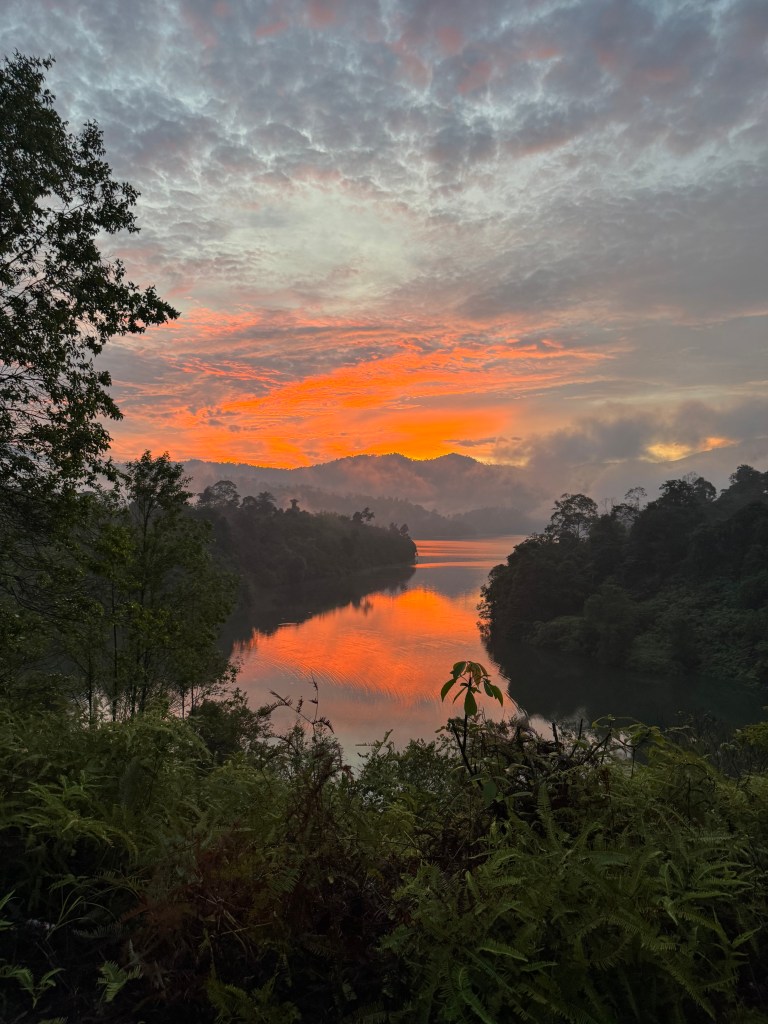
With such hope growing out of a neolithic burial chamber, maybe there is hope for life to survive despite all the bleakness we see around us. Maybe, with a touch of magic and a sprinkle of realism – our sense of hope, faith and our ability to adapt to changes, we will survive for yet another millennia.
We wind up our content for the August issue with the eternal bait for our species — hope. Huge thanks to the fantastic team at Borderless and to all our wonderful writers. Truly grateful to Sohana Manzoor for her artwork and many thanks to all our wonderful readers for their time…
His name was “Nandu”. He was a servant in our neighbour’s house, where he did all of the household chores. He was a smallish boy. Who knows what his actual name was. Everyone just called him Nandu.
Sometimes he would finish his work in the afternoon and would come sit with me. Although he was from Garhwal, he spoke Punjabi well, albeit haltingly. His face always made it appear as though he were laughing. We gave him the nickname “Laughing Man.”
“Nandu, how many brothers and sisters do you have?”
“Four sisters and three brothers. All of the sisters are older than I am, and the brothers are younger.”
Then Nandu fell silent. It was as if he were thinking that if his brothers were older, they would be working, and Nandu would not have cuts on his hands from washing vessels all day at such a young age. Nor would he have been forced to leave his small house nestled in the mountains.
“Nandu, how did you manage to leave your parents and everyone else to come here?”
Then he smiled, and his lips spread out. “Who knows why?” he smiled, but it seemed as if the smile was trying to convince me that it doesn’t matter whether you want to or don’t want to do all of this work, you still have to do it. Right?
“Madam, back there, we barely eat twice a day. We cooked once a day, and we ate the leftovers for a second meal. Moreover, I was not free there at all. I would take the cows outside for grazing. I also bathed them sometimes. I would also feed them fodder. When my mother would milk the cows, I wanted to drink the milk fresh from the bucket. But madam…if we don’t sell the milk, then maybe we won’t even be able to cook one meal.
“And there, people must have their own lands?”
“What kind of lands, Madam? Just small parcels. And then you have to pay land tax and interest on the loan.”
When Nandu spoke like this, it seemed to me that this child was a fifty-year-old man. Yet he was hardly thirteen years old. He was eight or nine when he ran away from his village to come here. Perhaps, he couldn’t tolerate hunger. There had been a time when he had been self-respecting. He would go on saying, “Where I used to work before, the old woman was angry with me one day. And I left.”
I was astonished that now he is verbally abused all day long, but he has gone nowhere. The reason may be that he had grown accustomed to it.
Nandu only spoke Punjabi. He would say that he had forgotten Garhwali. And he never posted letters to his family. He would say that he only knew his father’s name and the name of his village. Nothing else. And the villages in Garhwal had such long addresses. Sometimes he would become very sad thinking of his mother and father. Once, I saw him outside, wiping his eyes with his dirty Ludhiana shirt. But usually, he would try to hide his pain in a smile from which his broad lips would stretch wide. He said carelessly, “According to them, I died long ago.”
Our neighbors were Sikhs. And Nandu bought a gutka[1] with his salary, even though he was completely illiterate. (He only took that part of his salary that he needed for necessities.) He also bought a picture of Guru Gobind Singh Ji and wrapped it in his spare shirt to keep it safe. When the shirt he is wearing gets dirty, he washes it, wraps the picture of Guru Gobind Singh in it, and wears the other shirt.
Over time, he began imitating the children of his boss, a Sikh man, and began wearing a turban. He also got the worn-out turban of his boss’s youngest son. For two annas, he bought some grey dye and dyed the turban. He also acquired a small kirpan[2], which he did not remove while bathing or sleeping. He went from Nandu to Nand Singh.
One time, a man from his village came to find him.
“Does someone by the name of Nandu live here? “There’s no one here by that time. You’ve come here by mistake,” Nandu said with deliberation. He was already afraid that if some man from the village recognised him, he would have to send money home. And maybe he would have to return to that place, where, after caring for the cows all day, he got only one meal, and for the second meal, he was given dried pieces of roti. Here, he could satisfy his hunger at least twice a day. He didn’t need to worry a bit about work. And what about scolding and abuse? Ultimately, a person learns to tolerate these things.
Even though Nandu’s face had completely changed, seeing his wide laughing lips, the man from his village recognised him. He said something to Nandu in Garhwali. Nandu began to say somewhat angrily, “I don’t understand what you are saying. Don’t talk nonsense. Speak correctly.”
And the next day in the afternoon, when he told me that he no longer understood Garhwali, I suddenly let out a sigh. Maybe I sighed because Nandu had forgotten his mother tongue, which must have been the first words he heard when God threw him on this planet, thinking him to be disposable.
“What did he say to you, Nandu?”
“Nothing. He said only that ‘your mother is missing you a lot.’ But I know no one is crying for me. She must be thankful that there is one less hungry mouth to feed. She used to always say to me, ‘May you die.’”
But that man from Nandu’s village kept coming around. Over time, Nandu’s heart softened. Nandu remembered his mother, he remembered his elderly father, who must no longer be able to work the fields. And Nandu remembered his small, dirt shack, whose outside wall was plastered with rocks. The fragrance of fresh soil and paste made of cow dung and mud floated to his mind. And now Nandu was constantly sad. In the end, he was still a child, all of thirteen years old.
Then one day, who knows what happened, but cysts appeared near his ear. The boss, the Sikh, was charry of the illness, thinking no one would keep a sick man in his house. He tossed Nandu out. While leaving, Nandu cried copiously! He gave me the gutka and the picture of Guru Gobind Singh. He was going back to his village. He said he would take them back when he returned from his village.
So much time had passed without hearing from him. On several occasions, my eyes would well up looking at his things. Poor Nandu.
Then one day, there was a knock at my door. It was the afternoon. I opened the door. A smallish boy was standing there wearing a dirty hat and a filthy shirt, and in his hands was a smallish bundle. I thought someone must have come to meet our servant. But seeing those wide lips smiling in his laughter, I immediately recognised him. It was him. Nandu.
Nandu had cut his long hair. Now his name was Anand Ram. I asked him how he was doing and gave him some water. He spoke haltingly. While speaking, he said some words that I had difficulty understanding. In the end, embarrassed, he began to explain that due to living in his village, it was hard for him not to speak Garhwali. In the end, he was still Nandu, who had come to me in the afternoon and to tell me all of his sorrows.
“Your things are still with me, Nandu.”
“You keep them.” It seemed as if words were not coming to him. He didn’t know what to say, “I have another photo.” He began to open his bundle. There were a few pieces of clothing from which Nandu withdrew a picture. It was a picture of Lord Krishna.
I kept on thinking that hunger knows no religion. Wherever one gets food, one adopts that religion and that language. Then what is the essence of a person? A cog that has to fit into every machine because a cog outside of a machine doesn’t get oil, and it becomes rusty. And Nandu? What was Nandu? A thing without life? He was a ball rolling down the mountainside, which, moving very quickly down the hill, would get stuck on a rock momentarily, then again begin rolling. Maybe Nandu was like that same wind-up doll that my little brother has. The only difference is that the wind-up doll is fat, whereas every one of Nandu’s ribs could be counted.
After two years, Nandu came yesterday. There was barely any difference in his build. I recognised him immediately. But he could not recognise my little brother. In those two years, he had grown a lot. The wheels of time leave different marks on different people.
Now Nandu spoke Hindi. He spoke some words very quickly, which I had difficulty understanding.
“So Nandu, where are you these days?”
“I’m working for a woman from Madras. She’s terrible. She harasses me a lot. Otherwise, everything is fine. Initially, I couldn’t eat their food, but now I can.”
Then I thought he was doing this just to keep his belly full, just like sparrows and crows who eat to keep their bellies full. Just like wild dogs roaming the streets to fill their bellies. What is a meal? Whatever you get, you eat, whether it’s leftover food or something else. Something just to fill one’s stomach. But to feed himself, one has to sell himself.
I had thought that Nandu had sometimes become Nand Singh and sometimes Anand Ram. There was a time when he kept a picture of Guru Gobind and a gutka. Now he keeps a picture of Krishna. Sometimes he spoke Garhwali, sometimes Punjabi, and now Hindi. But Nandu kept on washing dishes. Nandu kept on sweeping. He kept on washing clothes. He went on cooking. And he continued to be scolded. Still, he’s a child. Poor Nandu!
“Sister, are you still writing stories?”
“Yes, Nandu. I’m writing now.”
“And you were saying that you were going to write my story?”
I smiled. Feeling demoralized, he began to ask, “But who will read it?”
Then it occurred to me that Nandu couldnot read his story himself, but many others would read it.
“Nandu, the people of future generations will read about Nandu and thousands of Nandus, just like the Bible. And these stories will be worshiped just like you worship these pictures. Because you all strengthen the foundations of the new world.”
Who knows whether he understood what I was saying, but he smiled.
[2] Small dagger, a ritualistic thing carried by Sikh men
Ajit Cour
Ajeet Cour (born 1934) is an Indian writer who writes in Punjabi. She is a recipient of the Sahitya Akademi Award and the Padma Shri, the fourth-highest civilian award by the Government of India. She is the author of twenty-two books, including novels, novellas, short stories, biographical sketches, and translations. Her novellas include Dhup Wala Shehar (The town with Sunshine) and Post Mortem. Her novel, Gauri, was made into a film, while her short story Na Maaro (Don’t Beat) was serialised for television. Her works have been translated into English, Hindi, and several other languages.
C. Christine Fair (born 1968) did her Ph.D. in South Asian Languages and Civilizations at the University of Chicago. She is currently a professor of Security Studies at Georgetown University. Her translations have appeared in Muse India, Orientalia Suecana, The Bangalore Review, Borderless, The Punch Magazine, The Bombay Literary Magazine, and The Bombay Review.
“My story should remain simple, step by step, click by click.” -- Raghu Rai
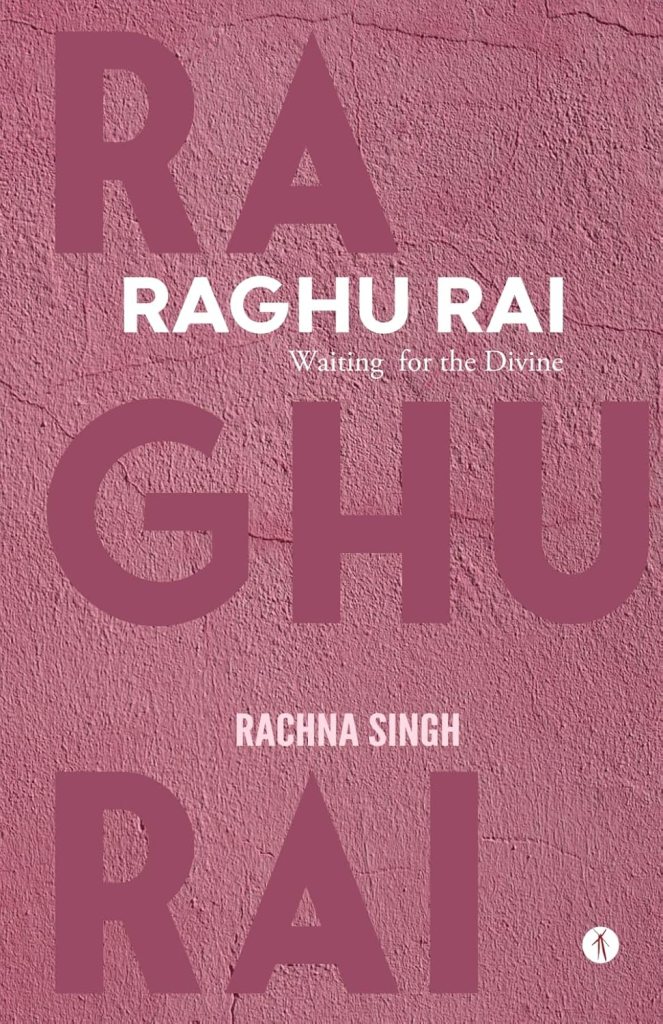
Rachna Singh, notebook and recorder tucked in her bag, pen in hand, first meets Raghu Rai in his picturesque home nestled in the Mehrauli forest of New Delhi, a landscape with occasional medieval structures peeping through the trees. Away from a concrete encrusted city, Rachna, a patient biographer, knows that the legendary photographer whose images shaped the visual progress of a nation, has his own deep stories. But will he reveal them? She pries the tales open by carving pathways through Raghu Rai’s photos— and a remarkable book about the person behind the camera is captured by a literary image-maker, in this sensitive, tender, and insightful biography. Rai permeates a series of chapters that play intricate games with memory because every frame in the camera is connected to myriad threads of experience.
Since the book is sub-titled “Waiting for the Divine”, I naturally look for references to Mother Teresa and the Dalai Lama to discover how the transcendent power of Raghu Rai’s photos of these two personages emerged. Entry into sacred precincts is never easy, and a camera in hand signals a definite obstacle. However, at the Sisters of Charity in Kolkata the photographer is permitted to follow the Mother unobtrusively. Yet, when a curtain flutters to reveal angel-like nuns and Rai dives to the floor to catch the best angle and the right light, even the Mother’s equanimity breaks and she is aghast! From such “shadowing” emerges the divine photograph titled “Mother Teresa in Prayer” with every crease in the luminous face catching the glow, an expression transporting her to realms beyond ordinary comprehension.
If Raghu Rai’s association with Mother Teresa is marked by reverence, his link with His Holiness the Dalai Lama is marked by friendship—one that extends to warm handshakes and brotherly embrace, informal conversations and a conviction about universal compassion. Says Rai, “His Holiness is an uninhibited, wonderfully loving man. How gracious of him to say he is my friend.” Again, it is the camera lens that reveals remarkable facets of the Dalai Lama– his childlike smile as also the sombre spiritual leader of a people in exile. Rachna Singh recounts an almost surreal story of a protective stone gifted to Rai by His Holiness that saw him survive a severe heart condition of ninety percent blockage while still chasing images of a crowded procession!
This takes me back to Rachna Singh’s intention, “My book is not a third-person memoir nor a chronological recounting of Raghu Rai’s life. Instead, it unfolds through candid conversations, inviting the readers into an intimate dialogue.” The reader’s response being part of her textual strategy, I too could add my account of the mystical energy felt in the presence of the Dalai Lama. The book’s attraction lies in this fluidity of the biographer, her subject and the reader being part of the evolving discussion of the deep philosophical pool from which photos are created. The trajectory of Raghu Rai’s life is well known—the photo journalist with The Statesman and India Today; his famous photo essays in the international magazines Time, Life, The New Yorker and numerous others, the award of a Padma Shri, his eminent friends and compeers, but Rachna Singh’s book probes Rai’s mind, his consciousness, his search and his beliefs. Therefore, it offers gems of information through anecdotes and the atmospherics of events, and some delectable quotations in Punjabi and English.
I turn here to Raghu Rai’s series on the Bhopal gas leak of 1984. “The black and white picture of a dead child, eyes open, staring sightlessly into space, lying in the rubble with a hand gently caressing the ravaged face in farewell,” describes Rachna, calling Rai a ‘Braveheart’ who painted a “searing picture of the tragedy.” The conversation is strangely matter of fact as though both the biographer and her subject are numbed by the enormity of that night of terror. Did Rai fear for his health or safety in the toxic air? The answer is “No” because the human pain around was greater than the instinct for self-preservation. All the journalists visited the mass cremations, the hospitals, the dead and the dying as though it was a “job”, Rai being practical enough to say, “You cannot let your spirit turn soggy with emotion.” Those of us who read of such tragedies and see photos in newspapers while sipping our morning tea should admire the intrepid people providing the raw material from ground zero.
Another memorable series was on Bangladesh refugees after the 1971 war—emaciated women and men often carrying sick children in baskets. Rai had been in the frontlines of the war and had once been surrounded by a hostile mob. Rachna is on tenterhooks as he narrates the details but he declared “I was more excited than scared … there was actually no time to feel scared.” At one time he even smiles and says, “It was a lot of fun.” Which brings me to probe the extraordinary grit and strength of photo journalists or reporters from war zones. Where does compassion and newsworthiness meet? Is image more important than the decimated human body? What lasting imprint does such witnessing leave?
Perhaps the answer lies in Raghu Rai’s quest for the Divine—beyond image, outside time. He was born in pre-partition India, in the village of Jhang that is now in Pakistan. He speaks haltingly of the childhood terrors—homes in flames, of escape in the pre-dawn—Rachna notes the tremor in his voice and the reluctance to recall those years. Yet she astutely links Rai’s portrayals of hurt and human sorrow, his sensitivity yet distancing from those early experiences. Finally, it’s been a holistic calm. Rai is quoted: “Photography has been my entire life—it has, in fact become my religion, a faith to which I have dedicated myself completely. My craft led me toward a meditative path that gave me insights to life and the divine.” And that quest bridges the beatific and the aesthetics in this most commendable book.
Malashri Lal, writer and academic, with twenty four books, retired as Professor, English Department, University of Delhi. Publications include Tagore and the Feminine, and The Law of the Threshold: Women Writers in Indian English. Co-edited with Namita Gokhale is the ‘goddess trilogy’, and also Betrayed by Hope: A Play on the Life of Michael Madhusudan Dutt which received the Kalinga Fiction Award. Lal’s poems Mandalas of Time has recently been translated into Hindi as Mandal Dhwani. She is currently Convener, English Advisory Board of the Sahitya Akademi. Honours include the prestigious ‘Maharani Gayatri Devi Award for Women’s Excellence’.
PLEASE NOTE: ARTICLES CAN ONLY BE REPRODUCED IN OTHER SITES WITH DUE ACKNOWLEDGEMENT TO BORDERLESS JOURNAL
Tumi Kon Kanoner Phulby Tagore andAnjali Loho Morby Nazrul, love songs by the two greats, have been translated from Bengali by Professor Fakrul Alam. Click hereto read.
One Life, One Love, 300 Children : Keith Lyons writes of Tendol Gyalzur, a COVID 19 victim, a refugee and an orphan who found new lives for many other orphans with love and an ability to connect. Click here to read.
When West Meets East & Greatness Blooms: Debraj Mookerjee reflects on how syncretism impacts greats like Tagore,Tolstoy, Emerson, Martin Luther King Jr, Gandhi and many more. Click here to read.
Dilip Kumar: Kohinoor-e-Hind: In a tribute to Bollywood legend Dileep Kumar, Ratnottama Sengupta, one of India’s most iconic arts journalists, recollects the days the great actor sprinted about on the sets of Bombay’s studios …spiced up with fragments from the autobiography of Sengupta’s father, Nabendu Ghosh. Click here to read.
Are Some of Us More Human than Others ?: Meenakshi Malhotra ponders at the exclusivity that reinforces divisions, margins and borders that continue to plague humankind, against the backdrop of the Women’s Month, March. Click here to read.
Reminiscences from a Gallery: MF Husain: Dolly Narang recounts how she started a gallery more than four decades ago and talks of her encounter with world renowned artist, MF Husain. Click hereto read.
Baraf Pora (Snowfall) by Rabindranath Tagore,gives a glimpse of his first experience of snowfall in Brighton and published in the Tagore family journal, Balak (Children), has been translated from Bengali by Somdatta Mandal. Clickhere to read.
Cherry Blossom Forecast: Suzanne Kamata brings the Japanese ritual of cherry blossom viewing to our pages with her camera and words. Clickhere to read.
Two Pizza Fantasies, Rhys Hughes recounts myths around the pizza in prose, fiction and poetry, Click here to read.
An Alien on the Altar!: Snigdha Agrawal writes of how a dog and lizard add zest to festivities with a dollop of humour. Click here to read.
Where it all Began: Sybil Pretious recounts her first adventure, an ascent on Mt Kilimanjaro at the age of sixty. Clickhere to read.
Conversations
Rabindranath Tagore: A Universal Bard.: This conversation between Aruna Chakravarti and Sunil Gangopadhyay that took place at a Tagore Conference organised by the Sahitya Akademi in Kochy in 2011. Click here to read.
Sriniketan: Tagore’s “Life Work”: In Conversation with Professor Uma Das Gupta, Tagore scholar, author of A History of Sriniketan, where can be glimpsed what Tagore considered his ‘life’s work’ as an NGO smoothening divides between villagers and the educated. Click here to read. (Review & Interview).
In conversation with the late Akbar Barakzai, a Balochi poet in exile who rejected an award from Pakistan Academy of Letters for his principles. Click here to read.
Jim Goodman, an American traveler, author, ethnologist and photographer who has spent the last half-century in Asia, converses with Keith Lyons. Click here to read.
InBridge over Troubled Waters, the late Sanjay Kumar tells us about Pandies, an activist theatre group founded by him that educates, bridging gaps between the divides of university educated and the less fortunate who people slums or terror zones. Click here to read.
In Lessons Old and New from a Stray Japanese Cat, Keith Lyons talks with the author of The Cat with Three Passports, CJ Fentiman who likes the anonymity loaned by resettling in new places & enjoys creating a space for herself away from her birthplace. Click hereto read.
Fiction
Aparichitaby Tagore: This short story has been translated as The Stranger by Aruna Chakravarti. Click hereto read.
Hena by Nazrul has been translated from Bengali by Sohana Manzoor. Click here to read.
Playlets byRabindranath Tagore: Two skits that reveal the lighter side of the poet. They have been translated from Bengali by Somdatta Mandal. Click here to read.
Abhagi’s Heaven, a poignant story by Saratchandra Chattopadhyay translated by Aruna Chakravarti. Click here to read.
An Eternal Void, a Balochi story by Munir Ahmed Badini translated by Fazal Baloch. Click hereto read.
The Witch, a short story by renowned Bengali writer Tarasankar Bandopadhyay (1898 to 1971), translated by Aruna Chakravarti. Clickhere to read.
I Grew into a Flute: Balochi Folktale involving magic retold by Fazal Baloch. Click here to read.
Give Me A Rag, Please:A short story by Nabendu Ghosh, translated by Ratnottama Sengupta, set in the 1943 Bengal Famine, which reflects on man’s basic needs. Click here to read
Rakhamaninov’s Sonata: A short story by Sherzod Artikov, translated from Uzbeki by Nigora Mukhammad. Click hereto read.
The Magic Staff , a poignant short story about a Rohingya child by Shaheen Akhtar, translated from Bengali by Arifa Ghani Rahman. Click here to read.
Khaira, the Blind, a story by Nadir Ali, has been translated from Punjabi by Amna Ali. Click here to read.
The Browless Dolls by S.Ramakrishnan, has been translated from Tamil by B Chandramouli. Click hereto read.
No Man’s Land: Sohana Manzoor gives us surrealistic story reflecting on after-life. Click hereto read.
The Protests Outside: Steve Ogah talks of trauma faced by riot victims in Nigeria. Click here to read.
Flash Fiction: Turret: Niles M Reddick relates a haunting tale of ghosts and more. Click here to read.
Henrik’s Journey: Farah Ghuznavi follows a conglomerate of people on board a flight to address issues ranging from Rohingyas to race bias. Click hereto read.
Does this Make Me a Psychic?; Erwin Coombs tells a suspenseful, funny, poignant and sad story, based on his real life experiences. Click here to read.
Phôs and Ombra: Paul Mirabile weaves a dark tale about two people lost in a void. Click here to read.
A Queen is Crowned: Farhanaz Rabbani traces the awakening of self worth. Click here to read.
Art by Sohana ManzoorCourtesy: Suzanne Kamata Some of our visuals in 2024
As we wait for the new year to unfold, we glance back at the year that just swept past us. Here, gathered together are glimpses of the writings we found on our pages in 2024 that herald a world of compassion and kindness…writings filled with hope and, dare I say, even goodwill…and sometimes filled with the tears of poetic souls who hope for a world in peace and harmony. Disasters caused by humans starting with the January 2024 in Japan, nature and climate change, essays that invite you to recall the past with a hope to learn from it, non-fiction that is just fun or a tribute to ideas, both past and present — it’s all there. Innovative genres started by writers to meet the needs of the times — be it solar punk or weird western — give a sense of movement towards the new. What we do see in these writings is resilience which healed us out of multiple issues and will continue to help us move towards a better future.
A hundred years ago, we did not have the technology to share our views and writings, to connect and make friends with the like-minded across continents. I wonder what surprises hundred years later will hold for us…Maybe, war will have been outlawed by then, as have been malpractices and violences against individuals in the current world. The laws that rule a single man will hopefully apply to larger groups too…
Courtesy: Ratnottama Sengupta Courtesy: Farouk GulsaraSome of our visuals in 2024
Amalkantiby Nirendranath Chakraborty has been translated from Bengali by Debali Mookerjea-Leonard. Click hereto read.
The Mirror by Mubarak Qazi has been translated from Balochi by Fazal Baloch. Click hereto read.
Homecoming, a poem by Ihlwha Choi on his return from Santiniketan, has been translated from Korean by the poet himself. Click here to read.
Pochishe Boisakh(25th of Baisakh) by Tagore (1922), has been translated from Bengali by Mitali Chakravarty. Click here to read.
Nazrul’sGhumaite Dao Shranto Robi Re(Let Robi Sleep in Peace) has been translated from Bengali by Professor Fakrul Alam. Click hereto read.
Jibananada Das’sAndhar Dekhecche, Tobu Ache (I have seen the dark and yet there is another) has been translated from Bengali by Professor Fakrul Alam. Click here to read.
Tagore’sShotabdir Surjo Aji( The Century’s Sun today) has been translated from Bengali by Mitali Chakravarty. Clickhereto read.
A narrative by Rabindranath Tagore thatgives a glimpse of his first experience of snowfall in Brighton and published in the Tagore family journal, Balak (Children), has been translated from Bengali by Somdatta Mandal. Clickhere to read.
Suzanne Kamata discusses the peace initiatives following the terrors of the 1994 Rwandan Genocide while traveling within the country with her university colleague and students. Click here to read.
A story by Sharaf Shad, has been translated from Balochi by Fazal Baloch. Click here to read.
Conversations
Ratnottama Sengupta talks to Ruchira Gupta, activist for global fight against human trafficking, about her work and introduces her novel, I Kick and I Fly. Click here to read.
A conversation with eminent Singaporean poet and academic, Kirpal Singh, about how his family migrated to Malaya and subsequently Singapore more than 120 years ago. Click hereto read.







 Borderless