The puppies’ mother accepted the baby girl, who was left in an alley unknown to anyone. The puppies all saw the baby girl and licked and jumped atop her. When it rained, the mother dog provided shelter for her and the rest of her pups. Then night fell, and the Nepalese streets were beset by dangers.
The alley was ripe with evils in the form of thugs and perverts. The mother dog knew that she had to guard her puppies. The men weren’t interested in the dogs, though. They were only interested in the tiny girl being protected by them. They wanted to hurt the girl. They enjoyed such distractions. However, the mother dog saw the girl as her own and growled at the men, baring her teeth. They got scared and ran away as the mother dog curled against the child, keeping her safe and warm until morning.
In a lowland region in southern Nepal, a girl child was a very different proposition for the human mother. She had not wanted to know the sex of the child. When she gave birth and the doctors told her that it was a girl, the entire room fell silent. There would have been celebration and adornment if it had been a boy. A hard decision would need to be made for the newborn girl that rested in her arms.
The mother wasn’t from a rich family and having a girl was forbidden. It was considered a curse on the family. Going home with the daughter would have caused an intense strain. Her husband would have deemed her a curse for giving him a daughter instead of a son and possibly leaving her for another woman that would give him a son. That didn’t include the intense financial strains to raise a girl in such a patriarchal ambience.
The mother looked down at the newborn daughter and knew that she would be living a harsh life no matter what. If she kept the girl, she could be left without money or resources to care for her. But as it was her daughter, she contemplated fighting for her. A girl in Nepal wasn’t only a curse to her husband’s family and her family. They would berate her and possibly disown her, leaving her with no husband and no family in her life.
First, this girl would not grow up with an education, for money would not be spent on educating a woman as she was seen to add no value to family coffers. On the contrary, the family would have to pay a large sum for her dowry. So not only would her daughter be subjected to illiteracy, but she also wouldn’t be able to marry a man who could care for her.
She left the hospital with the girl still in her arms tightly and was trying to make up her mind. When she came across an alleyway, she saw a mother dog taking care of all her puppies. This made the woman smile and cry. This mother didn’t need to think of the hard choices like she did. She knew she had to protect her puppies from harm, and the rest would work itself out, whether the puppy was a boy or a girl.
She felt lost staring at the dog protecting her babies. She looked at her own baby. She silently cried as she approached the alley and started to lower the baby to the ground. She didn’t want to leave her newborn baby. But, she felt left without a choice. She didn’t leave the newborn because she herself thought it was a curse for her and her family. She felt the baby would be unfortunate for being part of a family that couldn’t give her what she needed. She took off, walked fast, fearing that she would change her mind and turn around to grab the baby.
She lied and told her husband that a boy had died during childbirth.
Back in the alley, as the sun was rose, the baby was wailing, and the mother dog didn’t know what to do. She wouldn’t latch on like the other puppies and knew she couldn’t take care of her still, though she had compassion like a mother and tried to calm the baby down the best she could. Even her puppies didn’t jump and play rough, knowing that the human child needed a gentler touch. Finally, the noise from the crying baby drew the attention of a woman, who approached the child. The mother dog was weary and started to growl at the strange woman.
The woman only smiled and gently picking up the baby. The baby stopped crying. This woman didn’t know the baby or the dogs but saw what the mother dog was trying to do, though it belonged to a different species.
This woman had money and knew she could pay to educate the newborn and give her a decent life.
Santosh Kalwar’s new non-fiction, “Why Nepal Fails”, is forthcoming. His recent works have appeared in Every Day Fiction, Vine Leaves Press, 50-Word Stories, and Molecule. For more info, please visit: kalwar.com.np
.
PLEASE NOTE: ARTICLES CAN ONLY BE REPRODUCED IN OTHER SITES WITH DUE ACKNOWLEDGEMENT TO BORDERLESS JOURNAL.
The Sun had already set behind the hills. Dark clouds were gathering all around us. We could see occasional flashes of lightning and peals of thunder. The trail was getting difficult to see and was rough and slippery. The forest was dark. It started raining. Our only option was to continue till we came across a lodge. Eventually, we reached a clearing and a lodge by the trailside. The room was fine but the toilets were not in good shape. Trekking articles about Nepal always talk about toileting. Over the years we have got used to comfortable and hygienic toilets and want our time spent there to be as pleasant as possible.
Cellular services were now available. The night was peaceful, and we got up early the next morning. We set out early the next morning as we had a long way to hike. Our target was to reach the settlement of Tiwari and walk to the road head at Syarubesi, the following morning. The hike was long, and it was only after sunset that we reached the Bob Marley guest house at Tiwari. The last part of the hike was along the newly constructed road. The guest house is colourful and located on the banks of the Langtang River. The lodge is well designed but may be past its days of glory. A variety of factors ranging from new road heads, alternative trails, and different trekking groups can make a lodge less popular and lodge owners usually cannot do much about it.
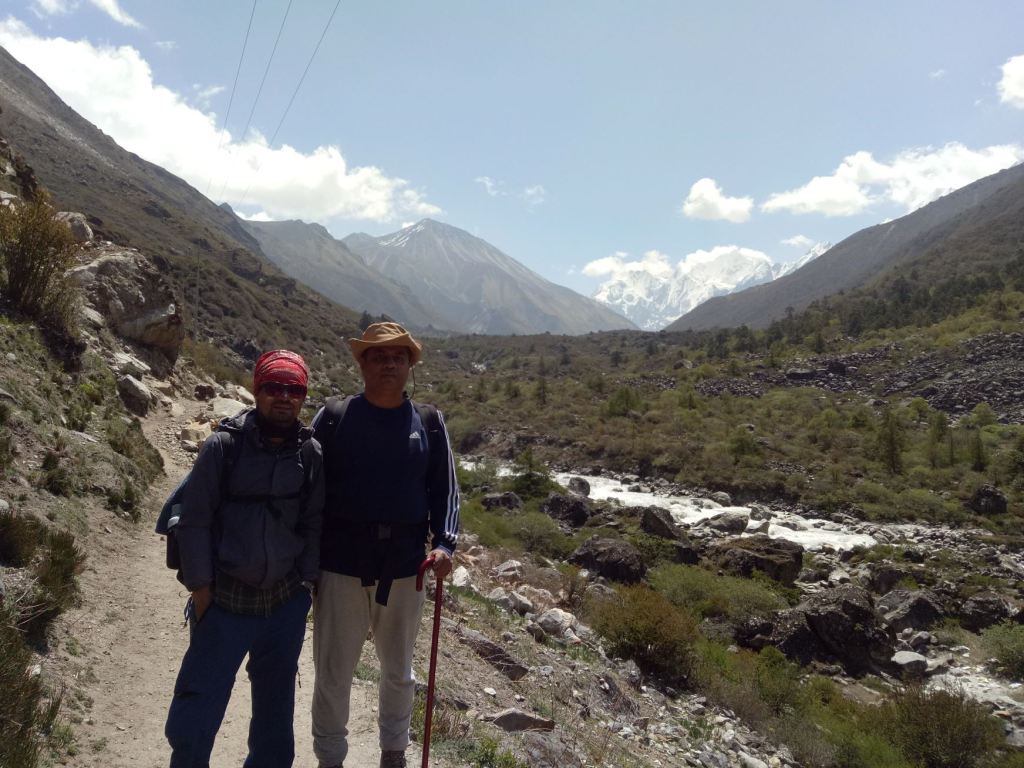
Nabin Ban (Nabinji) is our all-purpose man at Kathmandu Medical College in Lalitpur and has been with the institution from the very beginning. He is a musician, videographer, farmer, craftsman, and small businessman. He is from Bhaktapur in the Kathmandu valley, and his village is on the way to the tourist resort of Nagarkot. He farms his land and raises chickens and breeds dogs and other animals. He is a resourceful and kind person and very useful in an emergency. I was back in Nepal after a long gap and was doing the Langtang trek, the nearest trek to Kathmandu which puts you among the snow-covered mountains.
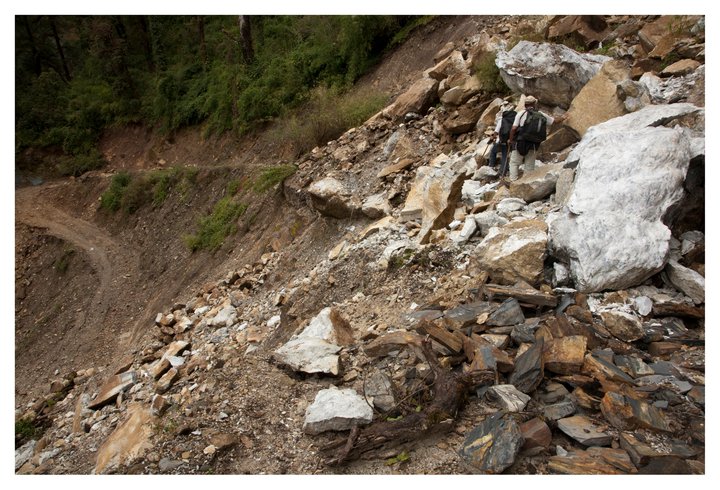
Trekking with NabinjiHiking though a landslide
The 2015 earthquake had hit this region hard and the old Langtang village was still buried under the rubble. We stayed in newly built lodges in the village. The views of the Himalayas were spectacular. I was finding the going difficult. The trail was rough, and I was carrying my winter gear and other necessities. Nepalese usually trek lighter and manage with the clothes they have on them. A large group of Nabin’s classmates were also hiking and planning to visit Gosainkund, the holy lake.
Nabin loved to travel and had hiked in various regions of Nepal. In the less touristy areas, the trails are rougher and the accommodation more basic. Nearly a decade ago we had hiked in the Gauri Shankar region. This trekking region was newly developed and had community lodges built in different villages. Each lodge would also serve as a gathering place for the villagers and had a local store. Dr David Wells, a chiropractor and applied kinesiologist from Singapore accompanied us on our trek.
We took the local bus to the village of Barabhise and started climbing and our first night was in the village of Karthali. The community lodge is situated among smiling mustard fields. Each lodge is built along similar lines. They have a store, a kitchen and dining room on the ground floor, and three bedrooms with bunk beds on the first. There is a balcony on the first floor. Organic fruits and vegetables are grown around the lodge. Karthali is in the gently sloping mid-hills. The next day we climbed steadily to the lodge at Dolangsa, a Sherpa village. The mountainous terrain has both blessed and disadvantaged Nepal. The crinkled landscape ensures a much bigger surface area for the country. There are several hills of around 5000 m in height. People who follow Hinduism stay at the lower elevations in caste-based villages while people of Tibetan descent reside higher up the hill.
A trekking lodgeA reconstructed village
From Dolangsa it is a steep and difficult climb to the Thingsang pass. The forests looked dark and menacing and prayer flags and stones were everywhere. David mentioned that he could sense evil vibrations and the shrines were to protect the valley from evil forces. The path eventually reaches flatter grasslands dotted with ponds. It often rains here. The Hindu shrine of Kalinchowk is nearby. On a clear day from the pass, the Gaurishankar and Rolwaling massif can be seen in the distance.
The descent to the settlement of Bigu is long and you descend through a hillside charred by a forest fire. The community lodge at Bigu painted a dark orange is my favourite. The didi[1] at the lodge prepares delicious food and I enjoy having pooris and aloosabzi[2]for breakfast. The settlement is dominated by the Bigu gompa[3]. Most visitors start their day with a trip to the gompa and attend the morning prayers. The gompa is huge and has an interesting history. After the devastating 1934 earthquake, a Drukpa lama along with the headman of Bigu constructed the monastery. There is a huge population of nuns in residence. The nuns had played an important role in the construction of the monastery and were said to be engaged in long-term silent meditation retreats in caves high up the mountain.
Gompas at Bigu
After a heavy breakfast, we set off to the Chettri[4] village of Loting. The lodge is surrounded by fields and is in the middle of the village. Nabin and David were engrossed in playing Baghchal, a Nepalese board game. The lodge has good views of the settlements on the surrounding hill across the river. Laduk is a large village, and the lodge is next to the village school. David was attracting a lot of attention from the village children. We passed through the old farmhouses of Bulung and the settlement of Orang. The sky was cloudy, and it started raining. Just below the lodge were the fields and a farmer was carrying a huge plough on his shoulder. The clouds parted and we had a clear and spectacular view of Gaurishankar. A young lady studying in Kathmandu had come home for the Dusshera holidays and efficiently took care of us.
Sunrise
Singati at 1100 m is the headquarters of the Eco Himal project and a major local centre. Red flags were everywhere, and I later read that the area was an important base of the Maoists during the civil war. With increasing access to information and travel people are becoming aware of the world beyond their villages. They become better informed and unhappy with their lot. There has been a population explosion in the hills and most young people are unwilling to till the land and live the meagre life of their parents and grandparents. There was a landslide on the road to Charikot, and the road was not passable to buses.
We stayed in a hotel and took a jeep to Charikot the next morning. From there we took an extremely crowded bus to Kathmandu. Many were returning to the city after the Dashain celebrations. Trekking with Nabin is always fun. He is adaptable, resourceful, and enterprising. He has travel in his blood and music in his soul. I look forward to more journeys with Nabinji!
Nabinji (in sunglasses) & the author
[1] Elder sister literally but here used as a term of respect
Dr. P Ravi Shankar is a faculty member at the IMU Centre for Education (ICE), International Medical University, Kuala Lumpur, Malaysia. He enjoys traveling and is a creative writer and photographer.
.
PLEASE NOTE: ARTICLES CAN ONLY BE REPRODUCED IN OTHER SITES WITH DUE ACKNOWLEDGEMENT TO BORDERLESS JOURNAL
I ran through the dark narrow corridor into the cold night air. I had been having a pounding headache since my arrival and lacked the appetite for my evening meal of spaghetti and eggs. My stomach churned violently, and the bile rose in my throat ejecting the contents into the frozen ground surrounding the lodge. Vomiting always makes me uneasy and brings back unpleasant memories of my early childhood when vomiting accompanied most maladies. Luckily this was the only serious episode of altitude sickness that I had during my high-altitude travels.
We had broken most rules of acclimatising to the altitude during this trip. We had flown to the Humde/Hongde airport at Manang from the lakeside town of Pokhara, a day before. Pokhara is at around 800 m above sea level while Humde is at around 3400 m. Most flights to Manang are from Kathmandu and many Manangis are rich and sophisticated traders. The pilot did a visual inspection tour walking around the twin otter aircraft. He seemed satisfied and we were soon skyborne. The view of the Annapurna Himal (snow mountain in Nepali) in the morning sunshine was breath taking. We had lunch at the Airport Hotel in Humde and then hiked up to Khangsar at 3800m. We spent a night at a lodge run by a relative of our Humde didi [1]and started walking to the Tilicho Tal[2] after a substantial breakfast of buckwheat bread, late in the morning.
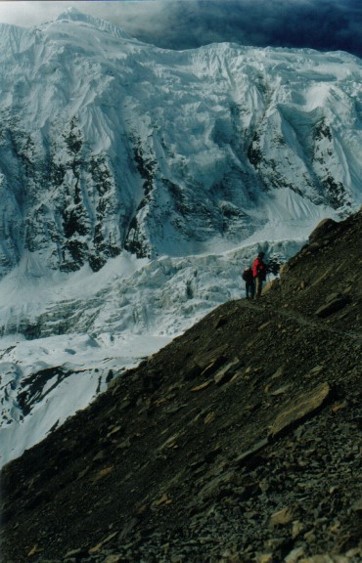
A cold wind was blowing, and the trail wound through scree[3] slopes. The hike was becoming treacherous, and we did some of the worst sections on our hands and knees. The mountain views were becoming spectacular as the Himals closed in on the valley. Our heavy backpacks threatened to unbalance us and push us over the edge to the Khangsar Khola and Marsyangadi river far below. Thorny bushes grew in the arid landscape and snagged our down jackets. We were worried about the condition of these jackets that we had rented in Pokhara. The shop owner was a patient of my fellow trekker, Dr Praveen Partha.
Manang Village Treacherous trail
We could see the Tilicho base camp lodge far below. The descent was along sheer scree slopes. The soil was loose, and the ground could vanish at your feet! Running descents down 45-degree slopes were battering to the knees. Time seemed to stop as we negotiated the vertigo-inducing slopes. Eventually, we reached the valley below and the final stretch was a short level walk. The lodge was dusty and cold. There was some problem with the solar lights and only the dining room was lit.
The next morning dawned cloudy and grey. It had snowed the previous night and I was still feeling nauseous and light-headed. The lodge owner told us about an ultra-marathon race being held that day and that we might meet the runners on our way up. It was a long climb to the lake. The trail initially wound through scree slopes and then climbed more slowly through snowfields. A freezing wind was blowing, and we wore sunglasses with side blinders to protect our eyes from the reflected sunlight and avoid snow blindness. My nose was becoming numb due to the cold. We were struggling at the high altitude (above 4500 m) and in my weakened state, I was finding the going difficult.
The runners were racing through the landscape. Their fitness was astounding. The ones we had met during the early stages of our hike were now returning from the lake. We saw the trail to Yak Kharka[4] and Thorung La[5] in the distance. Our plan was to cross the pass and descend to the holy site of Muktinath and the city of Jomson on the other side.
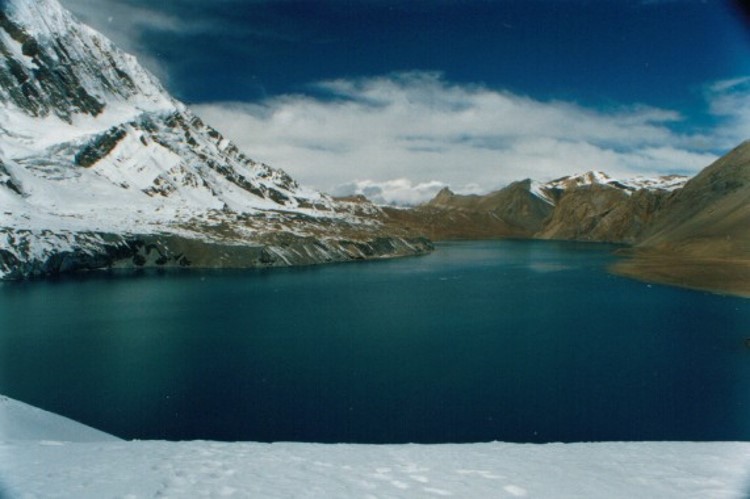
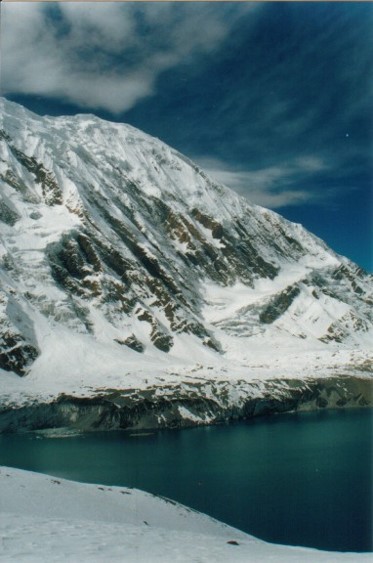
The mountains provided a stark contrast. The north-facing slopes were cloaked in the snow while the south-facing ones were bare. The power of our star, the Sun even at 152 million kilometres was awe-inspiring. We continued climbing. A steep climb along a snow-covered slope and the dark blue waters of the lake could be seen in the distance. The race organizers had set up stations for the runners and race flags and posters were seen on both sides of the trail. The wind was bitterly cold. The snow-cloaked landscape was breathtakingly beautiful. The lake is located at an altitude of 4940 m. No aquatic organisms have been recorded in the lake.
Snowfields
Tilicho lake is believed by Hindus to be the ancient Kak Bhasundi lake mentioned in the Ramayana. The sage Kak Bhasundi told the epic to Garuda, the king of birds near this lake. The lake was also the location of the highest scuba dive by a Russian team in 2000. A trekking route skirting the lake and reaching Thini Gaon in the Kali Gandaki valley is becoming popular.
Tilicho Lake
This route requires at least a night of camping as there are no lodges (tea houses) after Tilicho Base Camp till you reach Thini Gaon[6]. I have never camped during my travels in the Himalayas. Camping gives you more options but may be more challenging in terms of logistics. Many lodges also have well-maintained camping places.
The trekking lodges in Nepal started as converted tea houses. They were places to have tea, exchange gossip, and eat food. They had been around in the hills for a long time. People hiked the trails for different reasons ranging from trade, visiting family and friends, and pilgrimage. As trekking became more popular many of these started offering travellers a place to sleep. They used to charge only for the food. Later the rooms became more elaborate and private accommodations were created. In big towns and popular locations, some have become hotels.
The cold soon drove us down from the lake and the descent was easier on the lungs. Runners were still running up the slopes. The weather was becoming cloudy, and the sun was soon cloaked by clouds. Light snow started falling. In the mountains, it often snows around noon. I was beginning to feel better but was still weak. It was around four in the afternoon when Dr Partha and I reached the base camp lodge. My appetite was slowly returning.
Climbing to the village of Khangsar
The next morning, we started mid-morning to the settlement of Khangsar and eventually continued to Manang village. The village has some excellent hotels and spectacular views of the Gangapurna glacier. Manang is at 3500 m and the plan was for me to rest here and see how I felt the next morning and then decide whether to continue to do the circuit trek through the pass or return down to the road head of base town of Besishahar. My bout with altitude sickness had sapped my confidence and we decided discretion was better and slowly headed down. I felt bad for Praveen who was keen to do the circuit before heading off to the greener pastures of the United Kingdom.
The Thorung pass still remains on my bucket list. Hopefully one day I will be able to do it. The Annapurna circuit trek has steadily contracted over the decades as roads have made deeper inroads into the mountains. The trek used to start from Dumre on the Kathmandu-Pokhara highway, then the trailhead shifted to Besishahar, and with the construction of the new road to the district headquarters of Chame. On the other side, there are regular buses from Pokhara and Kathmandu to Muktinath.
Tim Cahill, a travel writer from Montana, wrote, “A journey is best measured in friends rather than miles.” Praveen was perfect company. We gelled well together, we were adaptable and took the rough with the smooth. We did some interesting treks together and I am sure he must be continuing his walks in the cold English air as he thinks about medicine, health, love, happiness, and eternity!
Dr. P Ravi Shankar is a faculty member at the IMU Centre for Education (ICE), International Medical University, Kuala Lumpur, Malaysia. He enjoys traveling and is a creative writer and photographer.
.
PLEASE NOTE: ARTICLES CAN ONLY BE REPRODUCED IN OTHER SITES WITH DUE ACKNOWLEDGEMENT TO BORDERLESS JOURNAL
The water was hot and the pressure optimum. For me the shower was a moment of pure bliss. I had heard poetic descriptions from fellow trekkers of the shower at the Eco Lodge. The hot water condensed in the cold air forming a welcome cocoon of warmth around me. Unfortunately, the shower duration was limited to five minutes. The water was heated using gas as was common throughout the Everest trekking region of Nepal. In the Annapurna region, north of the city of Pokhara, solar water heaters were common. Gas heaters always make me feel guilty about the environmental impact.
The water washed away the accumulated grime and sweat. The shower was expensive, and I was on a tight budget. My funds only permitted a shower once every ten to fourteen days. We were researchers involved in a clinical trial on high-altitude illness. The participants were enrolled at Pheriche more than 700 meters below and the study end point was at Lobuche (4900 m). Participants received two medical check-ups at high altitudes and two cups of tea/coffee for participating.
The Eco Lodge was an upmarket lodge in Lobuche in the year 2007 and we were staying there for over a month. Participants came to the lodge to complete the study and receive a second medical check-up. We listened to their chests, provided a physical examination, and measured their blood pressure and oxygen saturation. We had received a discount on the room rent but the food was expensive. Lobuche is situated at the foot of the Khumbu glacier. Everything had to be hauled from below.
For a long time, Lobuche had an unwelcome reputation due to the poor quality of the lodges. The restrooms were dirty, and the bedrooms flimsy. Maintaining hygiene in the cold dusty environment was a challenge. The Eco Lodge was the first upmarket lodge offering wood-panelled bedrooms with glass windows and clean toilets. The lodge had night toilets inside and day toilets outside. We were allotted an inside room in the main building. Dr Anup and I were the two doctors at Lobuche. The rooms were unheated and freezing though the main dining room had the ubiquitous cast iron heater burning yak dung. Yak dung is precious as fuel at these altitudes. It burns well with minimal smoke and residue and the flame is hot.
We were also the only doctors camped at Lobuche though some of the larger groups did have a doctor and the Sherpa guides were well-versed in altitude sickness. We did receive occasional calls for assistance. The Mountain Medicine Society of Nepal (MMSN) and the Himalayan Rescue Association (HRA) conduct clinical trials in the Everest and Manang regions of Nepal every fall. These provide medical students an opportunity to work with foreign experts and develop an interest in the subject. You receive transportation to the site, the services of a porter and a subsistence allowance.
Participants in the study had been instructed to check in with us after they had settled in Lobuche. In the evening we used to go around the other lodges looking for participating trekkers who had not yet met us. The evenings were chilly, and a freezing wind blew from the high Himalayas across the glacier. On climbing the moraines of the glacier there were spectacular views of the snow peaks. Sunset on Mt Lobuche and Mt Nuptse is not to be missed. The peaks turn golden yellow, then red, different shades of pink and finally the light is slowly extinguished.
SunsetCampingPhoto courtesy: Ravi Shankar
The dining room at the Eco Lodge was smaller than the one at Nuru’s place in Pheriche and there was no green house. Dining rooms are the beating hearts of trekking lodges. At Lobuche the Sun was often covered in clouds and a cold wind blew off and on. The lodge did have glass tiles in the roof to capture the Sun. At night the dining room was cosy, and we met some interesting persons there during our stay. In those days there was no telephone service and no internet. A satellite phone was available in case of emergencies.
Nights in the room were freezing and I was reminded of Peter Matthiessen’s descriptions in the book The Snow Leopard of the long freezing nights in his tent at Shey Gompa in Dolpa. Our room was inside and out of the wind, and we also had a glass roof to catch the Sun. Anything kept outside in the room would be frozen solid by the morning. You had to keep stuff with you inside the quilt so that it could be gently warmed by your body heat. The long silent nights were conducive to meditating about life (and death).
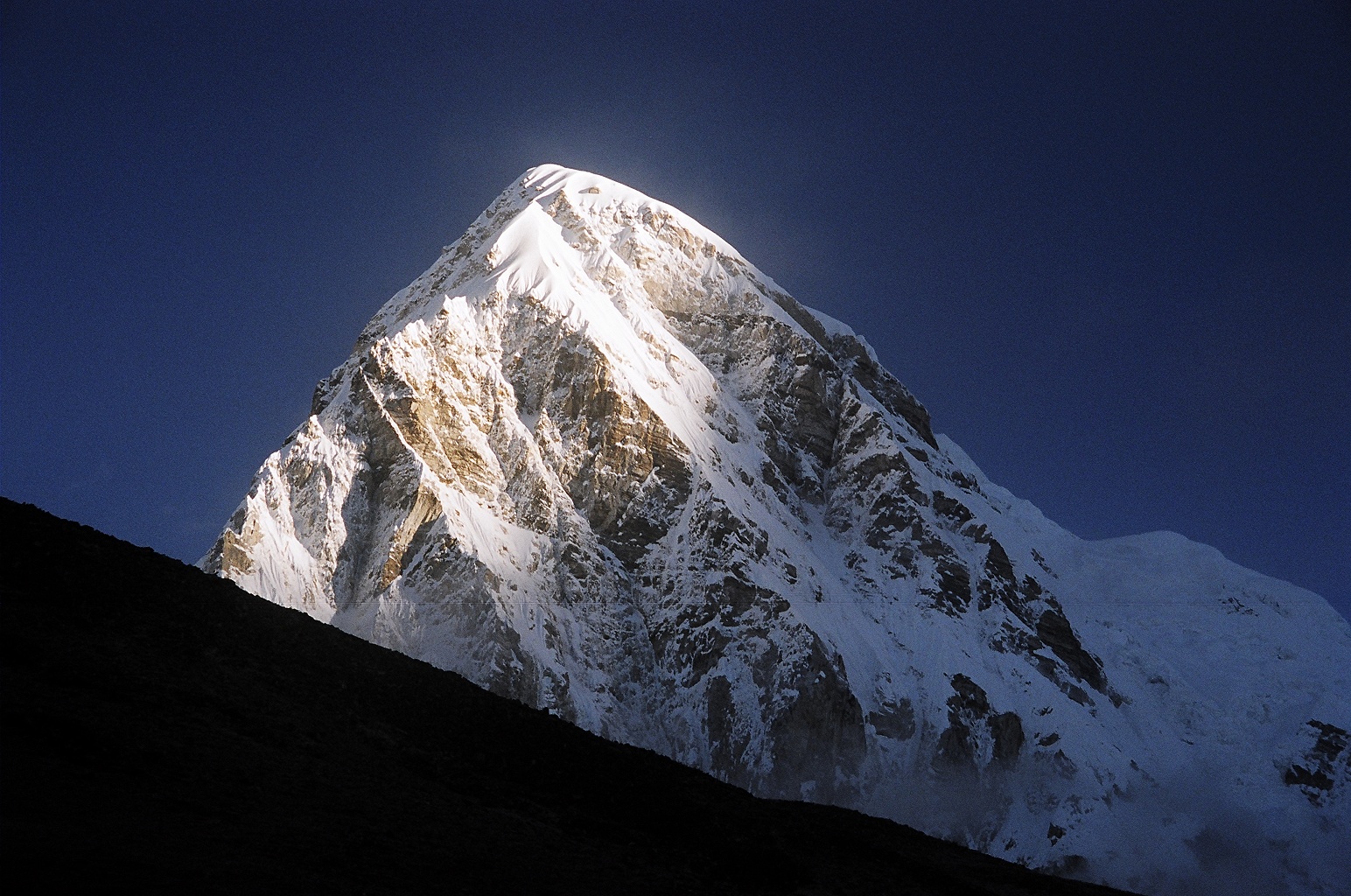
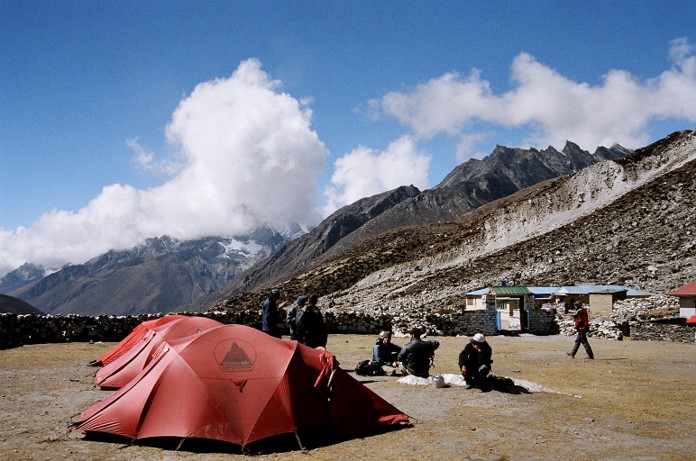
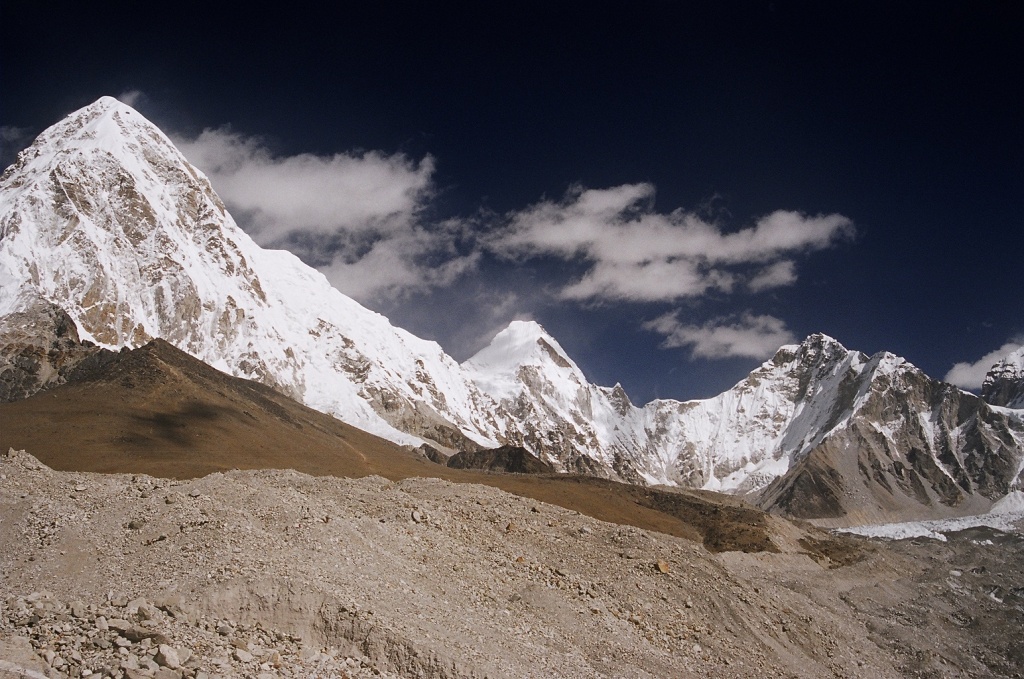
From Lobuche it is a four-hour hike to the Everest Base camp at 5400 m. The hike is through the Khumbu Glacier and through stones and boulders. Some of the boulders were larger than a house. Global warming has resulted in significant shrinking and drying of the glaciers and the Khumbu and Ngozumpa glacier in the Everest region have both retreated significantly. The hike passes through the settlement of Gorak Shep and the weather can change dramatically in a few minutes. I had started my trek on a clear, sunny day but halfway through clouds gathered and the mountains were shrouded in white. Soon it started snowing heavily. The boulders became slick and slippery in the snow and walking became difficult.
During a previous visit I had visited ‘The Pyramid’, a scientific research station run by an international consortium in association with the Nepal Academy of Science and Technology (NAST). The research facilities were great, and the station is located at a 20 minutes’ walk from the trail. The station is entirely powered by solar energy. The location is spectacular, and the station is located far from the trials and tribulations of our imperfect world.
Staying in a trekking lodge for over a month is a different experience. Trekkers come and go but we continued to remain in the lodge. The cold was our constant enemy. The tips of your fingers became numb after a few minutes in the cold wind. The ultraviolet rays were strong at the high altitude, and I was soon tanned a dark shade of brown. Lobuche was the highest altitude at which I had stayed for nearly 40 days. All things considered I still preferred staying with Nuru at Pheriche where the climate is more hospitable, and life was gentler.
My friend Anup left at the end of the month. I had changed my place of work and still had some time before I joined a new medical school being set up in the Kathmandu valley and could stay longer till the next group of doctors could reach Lobuche and manage the study. The settlement of Lobuche was set up to meet the requirements of trekkers to the Everest Base Camp and to Kala Pathar (black rock), a famous Everest viewpoint. I was alone in my room, and it felt strange. The second team soon reached us, and I briefed them about what had been done and handed over the study material. Soon it was time to trek down to Pheriche, Pangboche, Tengboche, Namche Bazar (the Sherpa capital) and eventually fly out from the Tenzing-Hillary airport at Lukla to Kathmandu.
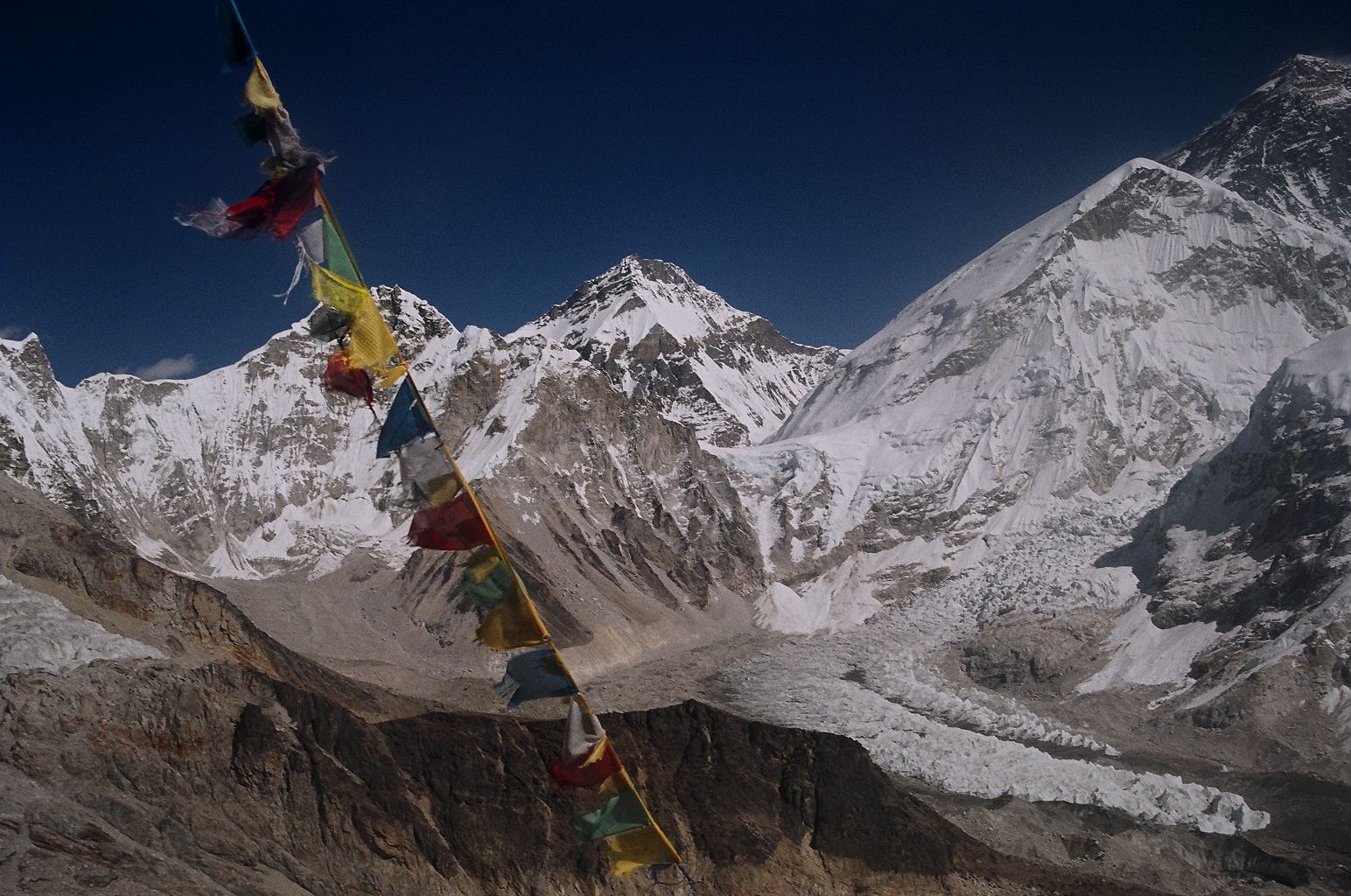
Prayer flags in Kala PatharMt Everest from Kala PatharPhoto courtesy: Ravi Shankar
As mentioned, Lobuche for a long time had a terrible reputation. The quality of the lodges has steadily improved from bunk beds in dormitories to individual rooms. I was searching for lodges in Lobuche on the web recently. Many lodges now offer free wi-fi. The Pyramid also offers lodging at the 8000 Inn. With all these welcome developments, Lobuche can confidently and maybe, indignantly shrug off its reputation as the ‘arm pit’ of Nepal!
The Himals. Photo courtesy: Ravi Shankar
Dr. P Ravi Shankar is a faculty member at the IMU Centre for Education (ICE), International Medical University, Kuala Lumpur, Malaysia. He enjoys traveling and is a creative writer and photographer.
.
PLEASE NOTE: ARTICLES CAN ONLY BE REPRODUCED IN OTHER SITES WITH DUE ACKNOWLEDGEMENT TO BORDERLESS JOURNAL
The Magnificent Himals… Photo courtesy: Ravi Shankar
The windows were getting misty. Outside it was freezing cold and rainy. However, the cast iron heater kept the dining room hot and toasty. We were enrolling trekkers/hikers for a study on high altitude. The Himalayan Rescue Association (an organisation catering to the health needs of trekkers, mountaineers, and the local population) conducts various studies in high altitude locations in Nepal. These studies are usually conducted during the peak trekking and mountaineering seasons in spring and autumn. The participants (trekkers) were enrolled either at Pheriche or at Dingboche, in the Everest region of Nepal. We had just finished dinner and were discussing the how the studies were going. We were happy. The room was warm, our stomachs full and the company interesting. The owner of the lodge, Nuru Sherpa often joined us. Other trekkers were seated at neighbouring tables and could join in. The atmosphere was relaxed and friendly. Our study leader had brought dried apple cider sachets from California, that could be reconstituted with warm water. The apple cider was delicious.
Pheriche had been originally a yak pasture situated at a height of 4300 m in the Everest/Khumbu region of Nepal. There are several place names ending with ‘boche’ in this region. ‘Boche’ means a flat land seen from a hilltop. In this mountainous region a plateau like area is a rarity. As tourism developed in the Khumbu, several lodges were constructed. Pheriche however, is mostly overcast and windy. Most trekkers prefer to stay in Dingboche, 150 m higher on the other side of the hill. The place is higher but gets more sunshine and is warmer.
The research team had split with two of our colleagues staying at Lobuche uphill at 4900 m. We had flown to the Tenzing-Hillary airport at Lukla and then hiked uphill acclimatizing along the way. There is a 700 m ascent between Pheriche/Dingboche and Lobuche and different studies have been done on this stretch of the trail. The Himalayan Rescue Association runs an aid post at Pheriche to provide medical treatment to trekkers, guides, porters, and locals. The post was established in 1973 and has seen extensive upgrades. It has been equipped with oxygen concentrators and has the ability to manage most cases of altitude sickness. The doctors volunteering at the clinic have been giving talks on staying healthy at high altitude every afternoon. We attended these talks, which even helped to recruit trekkers for our study. Later, we would hike uphill to Dingboche and visit the trekkers staying at different lodges. Even in 2007, Dingboche had more than twenty-five lodges spread out along the trail.
We were staying at the Himalayan Hotel in Pheriche. The hotel was run by Nuru Sherpa from Kunde who had studied interior design in Karnataka, India. The rooms were cozy but cold. In the tea houses (lodges), only the dining room is heated during the evening and sometimes during the morning hours. The lodge had squat toilets and Nuru used to mix some kerosene in the toilet water to prevent it from freezing. I saw a recent photo and the lodge has been expanded and now has private rooms with attached western-style toilets. There has been a lot written about toilets at trekking lodges. Some are luxurious, western-style flush toilets while others are just a hole in the ground. Most do not have a sewage system and the environmental consequences may be high. Lobuche had a terrible reputation for its toilets and was widely known as the armpit of Nepal. Things have improved significantly since then.
Most lodges have a greenhouse where you could sit, and lounge comfortably protected from the wind during the day. We used to take full advantage of the greenhouse. As the temperature inside was significantly higher, we could sit in our T-shirts. This was a great luxury in this cold and windy locale. Pheriche is often used as an acclimatisation stop by trekkers before heading higher. The hotel had a good collection of books and we used to spend hours in the greenhouse reading and chatting. People came and went but we stayed on. Staying put in a place in constant flux was a strange experience. Days coalesced into weeks and weeks into a month.
Pheriche had suffered damage during the earthquake of 2015 and rebuilding was mostly by local efforts. Today there are internet and phone services and websites allowing you to book lodges in advance. In the 2000s, you had to book the rooms physically. The lodge owners sometimes used satellite phones to access the internet, but it was expensive. During the peak trekking season in the fall, the lodges could get incredibly crowded. The global pandemic has negatively impacted tourism, and the economic consequences have been bad. Lodge owners often take loans at high-interest rates to renovate and expand their facilities and if the number of tourists drop, they can easily go into debt.
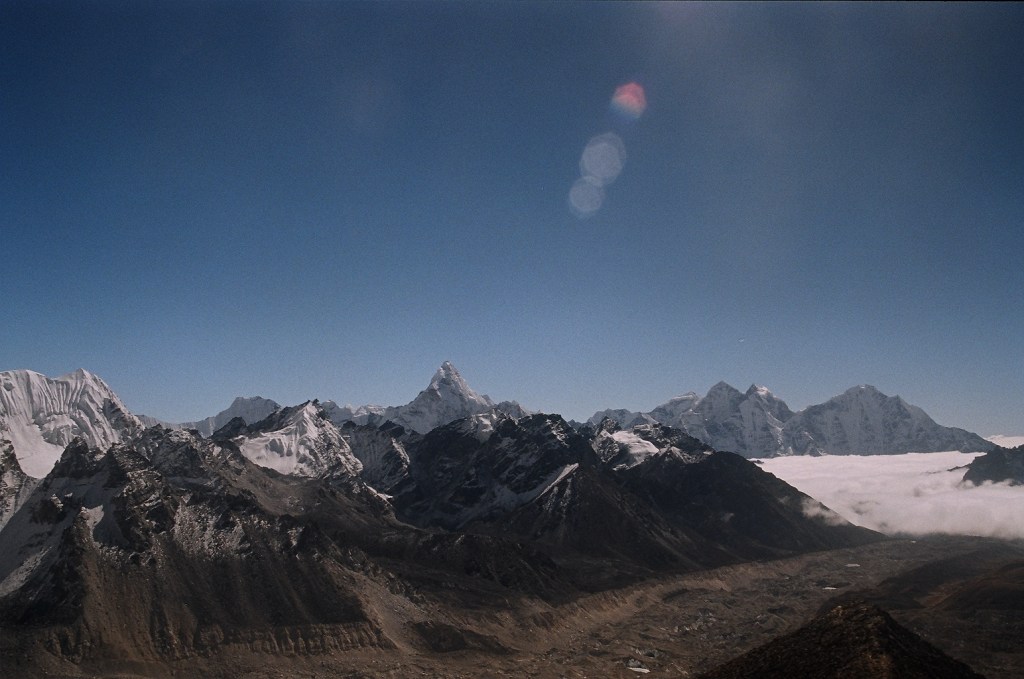
The landscape was barren with a few shrubs struggling to grow in the high altitudes. There are spectacular mountain views from around Pheriche. These are among the tallest mountains in the world at over 7000 m. Pheriche and Dingboche are over 4000 m. The village of Pheriche is on the banks of the Tsola river. The wind roars across the valley and clouds, rain and snow follow. Tibetan Buddhism is dominant and mani walls inscribed with Lamaist prayers and cairns of towers of rocks are scattered all around. Prayer flags send the Buddhist law riding on the wind. On a sunny and warm day, the land is at peace and a hike through this landscape is enchanting. However, at these altitudes, the weather can change rapidly. As you climb towards Dughla and Lobuche, there are spectacular mountain views. There is a memorial to those who have died on Everest as you climb out of Dughla. There are a variety of memorials to climbers in this region. There is one on the grounds of the Pheriche hospital/aid post.
Memorials to climbers… Photo Courtesy Ravi Shankar
Sherpas are the inhabitants of the Khumbu and have earned an enviable reputation as mountain guides. Sherpas originally migrated to Nepal from Tibet several centuries ago. Namche Bazar is the unofficial capital of Sherpa country. Potatoes play an important role in Sherpa cuisine. The introduction of the potato from the South American Andes made settled life possible in many mountain regions globally. Potatoes are used in several ways. Rikikur (potato pancake) is a breakfast staple. There is a small restaurant by a waterfall serving potato pancakes called rikikur on the hike to Namche Bazar. You wait and enjoy the scenery as your pancake is freshly prepared. A spicy chili sauce is a usual accompaniment. There is a type of red round chili grown in the Himalayas called dalle khursani or jyanmaara (life-taker) khursani. The chili is extremely spicy and can literally take your life away, hence the name.
The Khumbu region at an average height of over 3500 m is one of the most spectacular on the planet. Getting there may not be easy, and you need to plan your journey properly. Acclimatization is important. Compared to other treks in Nepal this is more expensive and has a risk of altitude sickness. However, the spectacular views of the highest mountains on earth cannot be matched elsewhere. Things have certainly changed with the advent of cell phones and the internet. Roads have also made steady inroads in the surrounding regions. In the good old days, there were no roads in Nepal outside the Kathmandu valley and the early Everest expeditions used to start their walk from the outskirts of the valley. It used to take well over a month to reach the Khumbu region.
Hopefully, the pandemic will stay controlled. This will allow us to hike this autumn in the Khumbu region and enjoy Sherpa culture, religion, fresh air, cold winds, and the spectacular mountains!
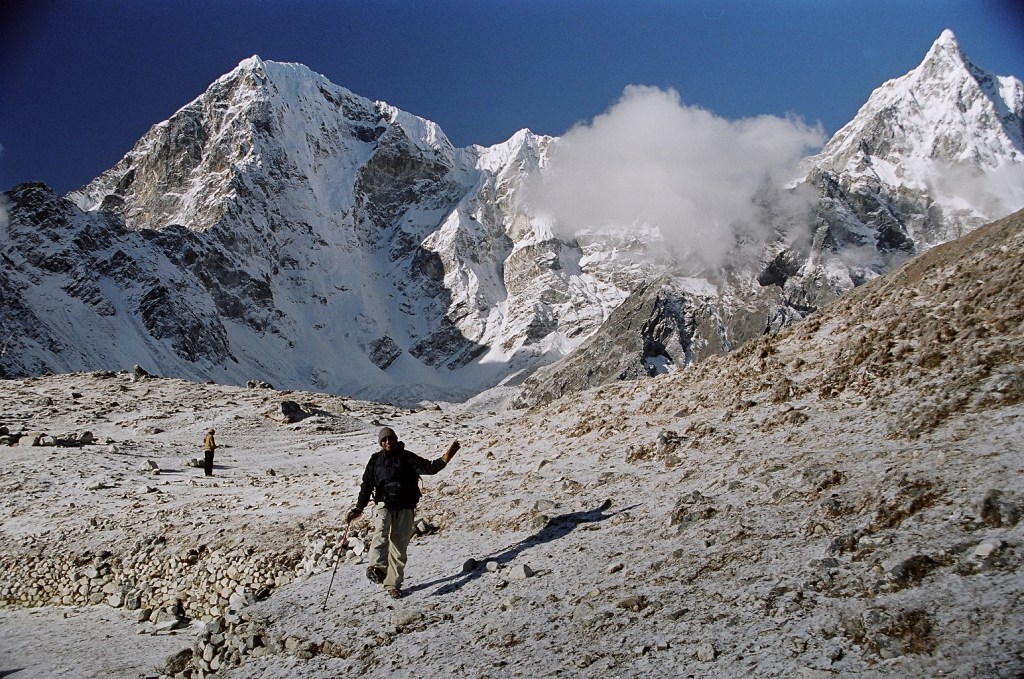
Fun in the snow… Photo courtesy: Ravi Shankar
N.B: We miss our friend Dr Ashutosh Bodhe who accompanied us on several treks. He passed away in 2021. His raw energy and passion for life will be missed!
Dr. P Ravi Shankar is a faculty member at the IMU Centre for Education (ICE), International Medical University, Kuala Lumpur, Malaysia. He enjoys traveling and is a creative writer and photographer.
.
PLEASE NOTE: ARTICLES CAN ONLY BE REPRODUCED IN OTHER SITES WITH DUE ACKNOWLEDGEMENT TO BORDERLESS JOURNAL
"I wish you survival,
Health
And the closed sky above you."
— Refugee in my own Country/I am Ukraine, Lesya Bakun
Despite this being the season of multiple new years around Asia, we cannot close our eyes to the skies that connect all the world like a blue dome. Though celebrations and humour continue to lighten the darkness of war, while Ukraine is being wrecked, can we turn our faces towards only festivities?
I had an interesting anecdote about how before the onset of the Gregorian calendar, new years in the world were celebrated around March and in some places in September. The Earth would turn fecund and green with spring, a beautiful season sprinkled with love and nostalgia as Michael R Burch tells us in his poetry. However, despite all the opulence of nature, it is hard to watch a country being bombed and families splintered to man a war that supposedly guards a human construct called ideology and blocs. Ukranian refugee, Lesya Bakun, in an interview says: “It is not a clash of ideologies. It is a fight for our country and nation to exist.” Listening to Lesya’s stories makes one amazed at the bravery of the Ukrainians battling what seems to be cultural hegemony. It reminds of the war in Bangladesh in 1971. Though incredibly courageous in voicing her experiences, Lesya is traumatised and has a psychosomatic cough as she sends her voice and text messages from her mobile through Telegram. There were times when she was just weeping or angry for the questions asked, and justifiably so, as her home in Kharkiv, where she lived was under attack, and the town of Mariupol, where she was born, has been wrecked by the war.
The refrain of the pain of a refugee continues to reverberate in a book reviewed by Rakhi Dalal, Ramy Al-Asheq’s Ever Since I Did Not Die, written originally in Arabic and translated by Isis Nusair. The Syrian-Palestinian poet refused to clarify whether his writing was prose or poetry — perhaps these borders and boxes drawn by humankind are breaking down in reality. Perhaps, this new year, the time is ripe to look forward to a new world that transcends these borders. This is also the first time we have had the privilege of carrying reviews of translations from Arabic and also from Turkish. Gracy Samjetsabam has reviewed a translation of a Turkish novel by Iskendar Pala called The Tulip of Istanbul, translated by Ruth Whitehouse. Bhaskar Parichha has reviewed a book by Kiran Manral, Rising: 30 Women Who Changed India while Candice Louisa Daquin has drawn our focus on a poetry collection by Marjorie Maddox, Begin with a Question, where the perceived divisions do not matter while the poet questions the larger issue of faith in quest of answers.
Is it the same kind of quest that has led Strider Marcus Jones to create the Lothlorien Journal, named reminiscently after Tolkien’s elvish ‘Lothlorien’ in Lord of the Rings? Find out Jones’s views and flow with his fluid poetry in the featured interview. Keith Lyons has been in conversation with Ivy Ngeow, an upcoming writer and the editor of a recent anthology of Asian writing where she has retained different styles of English across the world in a single book. While this could be beneficial to writers, would readers be comfortable reading stories with different styles or dialects of English without a glossary?
Our book excerpts are from more Asian books. The Year of the Rat and Other Poemsedited by Malachi Edwin Vethamani has an interesting title poem which has been shared in the excerpt. The other excerpt is from a fast-paced novel, Half-Blood, by Pronoti Datta. We also have a fast-paced story by a writer from France called Paul Mirabile set in Portugal; two that verge on the bizarre from Keiran Martin and Amjad Ali Malik; a poignant story from Sutputra Radheye and another that shows the positive side of voicing a protest against wrongs by Devraj Singh Kalsi. Kalsi has also given us a tongue in cheek musing called When Books have Wings.
On the lighter vein are travel essays by Ravi Shankar and Meredith Stephens. They take us to the Himalayas in Nepal and to Tasmania! Suzanne Kamata has taken us to an owl cafe in Japan! At the end of her column, one feels sad for the owls as opposed to Erwin Coombs’ narrative that evokes laughter with his much-loved pet cat’s antics.
Humour is evoked by G. Venkatesh who with an ability to find silver linings in dark clouds talks of cricket and lessons learnt from missing his school bus. Adnan Zaidi has also analysed his poetic abilities with tongue-in-cheek comments. Kenny Peavy gives a lighthearted rendition in praise of boredom and interactions with nature. It is good to have laughter to combat the darkness of the current times, to give us energy to transcend our grief. Keith Lyons hovers on the track between humour and non-humour with his cycling adventures. Rhys Hughes seems to talk of both his favourite poem and the war in a lighter shades, in no way insensitive but his observations make us wonder at the sanity of war. We have much of war poetry by a number of writers, poetry on varied issues by Luis Cuauhtémoc Berriozabal, George Freek, Sybil Pretious, Kisholoy Roy, J.D. Koikoibo and many more.
Candice Louisa Daquin has taken on the onus of bringing to our notice how language can impact us in the long run while Ratnottama Sengupta has explored beggary in films, fiction and fact. The Nithari column runs a real-life story of a young boy narrated by his brother, Sachin Sharma. It has been translated from Hindustani by Diksha Lamba. The trauma faced in 2006 is strangely not discussed in the story though it hovers in the backdrop between the lines. We also have a translation of a Balochi folk story by Fazal Baloch and a Korean poem by Ihlwha Choi. Translations from Tagore by Fakrul Alam and Somdatta Mandal have honoured our pages again. Mandal has sent us fun-filled skits by Tagore. But are they just fun or is there something more? We also have a translation of a long poem that explores a different aspect of Tagore, his empathy for the downtrodden which led him to create Sriniketan and regard it as his ‘life work’.
We have a bumper issue this time again — especially for the Asian new years; Thai, Nepalese, Bangladeshi, multiple Indian and more…
We would like to thank Sohana Manzoor for our cover painting and Gita Viswanath for her artwork. I would like to thank our wonderful team who with their contributions make this journal a reality. All the contributors deserve a huge thanks as do our loyal readers.
I wish you all a wonderful start to a non-Gregorian new year and hope that peace prevails over parts torn by wars and dissensions.
Only when the cries of the wretched of the earth will stop renting the skies,
Only when the oppressor’s bloody sword will cease smearing battlefields,
A rebel, weary of war,
Only then I won’t stir.
…
I’m the ever-rebellious hero--
Soaring over the world, all alone, head forever held high!
-- Rebel or 'Bidrohi' (1922) by Nazrul, translated by Fakrul Alam
Borderless: Digital Art by Ayaan Ghoshal
These fragments I have shored against my ruins
…
Datta. Dayadhvam. Damyata.
Shantih shantih shantih
-- Wasteland (1922) by TS Eliot
These lines reiterate values we would do well to live by in a war-torn, dissension-worn world where the need for a rebel to recreate a humane society that lives with values such as peace, generosity, acceptance, tolerance, compassion and restraint — is a felt need. The two great poems made history by remaining as popular a hundred years after they were written — ‘The Rebel’ by Nazrul and TS Eliot’s ‘Wasteland’. Nazrul defined a rebel as an iconoclast who breaks norms to find peace, justice and love for all, to move towards the creation of an ideal world. TS Eliot quoted from the Upanishads and ended with redemption coming with giving (giver perhaps denoted generosity), compassion and restraint. Despite the wisdom of these great poets and seers, war still continues a reality. The values remain neglected not just in as we see in conflicts, like the one in Ukraine that destroys lives, property and nature with intolerance towards differences, but also in our personal lives. Tagore also reiterated the same need for stepping out of personal, social, economic and political insularity. We carry a translation of a song that echoed this need while inviting participation in his ecstasy. He wrote:
Why do you sit in isolation,
Dwelling on self-centred issues?
Tagore had not only written of the negative impact of isolation from the world but he led by example, building institutions that could lead the world towards pacifism with acceptance of diversity and inclusiveness. Sriniketan and Santiniketan were created to move towards these ideals. Many of the people he influenced or who studied in Santiniketan made history, like Prime Minister Indira Gandhi, Satyajit Ray; many added to the sense of inclusiveness, like Mahasweta Devi, who other than her enormous work to integrate different cultures, also wrote a memoir about Santiniketan in Bengali. Radha Chakravarty, nominated for the Crossword Translation Award (2004) for In the Name of the Mother by Mahasweta Devi, has translated this memoir, a narrative which brings us close to Tagore’s ideals of the whole world being a family. How wonderful it would be if the world were open to such ideals and would behave like a global family and not go to war! Mahasweta Devi, Our Santiniketan, which has been reviewed by Meenakshi Malhotra, reiterates Tagore’s vision of a planet living in harmony with the flora and fauna.
Bhaskar Parichha has reviewed another non-fiction by Ashok Kumar Pandey, Why They Killed Gandhi; Unmasking the Ideology and the Conspiracy. Parichha writes: “The finest point about this book is its storytelling…” The book review brings to mind in the midst of a war and violence that Gandhi had tried to erase this mindless destruction of lives, nature and cities with Ahimsa or non-violence. Will we ever rise up to it? Perhaps… We see strains of recognising the negative impact of insular outlook in writings like that of Temsula Ao, a Sahitya Akademi Award winner, according to Indrashish Banerjee who has reviewed her new book,The Tombstone in My Garden: Stories from Nagaland. Keith Lyons has reviewed Asian Anthology: New Writing Vol. 1: Stories by Writers from Around the World, edited by Ivy Ngeow, an exotic medley of Asian stories, one of which has been excerpted as well.
We are privileged to carry another excerpt from Ruskin Bond’s Friends in Wild Places: Birds, Beasts and Other Companions, a hilarious story about a pet tiger adopted by the legendary writer’s grandfather. What is amazing about Ruskin Bond’s writing is the love and compassions for all creatures great and small that colours the tongue-in-cheek humour he rolls out to his readers. If only we could think like Bond, there would be no wars. His writing, I feel, transcends political borders or ‘isms’, and laces with love and compassion tales of menageries of monkeys, snakes, mongoose, humans of different denominations. This excerpt is a treat we are giving Borderless Journal as the journal completes two years of its existence. We are truly grateful to Speaking Tiger for sharing this excerpt with us. But our celebrations this time are sombre as the war rages with incoherence accompanied by heart-breaking ravages.
The refrain from Ukraine has been taken up by Ratnottama Sengupta as she takes us through the past and present experiences of the devastated country, bringing in the views of the legendary folk singer and pacifist, Pete Seeger (1919-2014), who she had interviewed over a span of four days. The writer of ‘Where have all the Flowers Gone?’, a song based on an Ukrainian folk song, Seeger said, “The point is not to ask for yourself alone — one has to ask for everybody: Either we all are going to make it over the rainbow or nobody is going to make it.” Candice Louisa Daquin has also pondered on the justification of war, contextualising it with the current one along with her essay on the paradox of modern linguistic communication.
We have an exhaustive essay on the legendary Satyajit Ray’s creations by Anasuya Bhar. Malhotra has pondered at exclusivity reinforcing divisions, margins and borders to plague humankind, against the backdrop of the Women’s Month, March. Highlighting women in writing, we have interviewed two female writers, one from Nepal and another from Bangladesh. Sangita Swechcha lives in UK but her writing, till now largely in Nepali, often pines for her home embedded in the Himalayas whereas, an expat, Neeman Sobhan, shuttles between Bangladesh and Italy with the affluence and assurance of a privileged background.
Finding a way to override lack of privileges, deprivation and violence, are the youngsters of Nithari on the outskirts of Delhi where less than two decades ago other than poverty, savage criminality devastated the local populace. These youngsters transcended the suffering over time with help from volunteering NGOs to create narratives that amaze with their inventiveness and confidence. Tanveer Hussain from Nithari, self-motivated and self-made from a young age, asks questions that would be relevant for all humankind in a letter to God. It has been translated from Hindustani by Vritika Thareja of pandies’. This edition’s translations include Professor Fakrul Alam’s mellifluous rendition of Jibanananda Das’s poetry from Bengali to English, Ihlwha Choi’s Korean poetry and a Balochi poem by Munir Momin rendered in English by Fazal Baloch. Baloch had earlier translated poems by Akbar Barakzai, a great poet who departed on 7th March, depriving the world of yet another powerful writer who imbibed hope of a better future in his poetry. We are privileged to have hosted the translations of some of his poems and his last interview.
Another well-known poetic voice from Singapore, Kirpal Singh, has given us poignant poetry that can be applied to the situation that is leading to the wreck of Ukraine. Anasuya Bhar has poetry, one of which despite being in the ilk of Nazrul’s great poem, ‘Rebel or Bidrohi’, questions gently mainly social constructs that obstruct the flow of harmony. Ryan Quinn Flanagan has pondered on the acceptance of a changed world. We have humour from Rhys Hughes in poetry and wonderful poems by Michael R Burch on spring. Jay Nicholls shares the last of her dozen Pirate poems as Blacktarn sails the lemon seas to fight pollution. Luis Cuauhtémoc Berriozábal, George Freek, Sutputra Radheye, Mike Smith, Shaza Khan and many more have contributed a wealth of beautiful lines. Penny Wilkes has captured storms and seas with photographs and text and Rhys has surprised us with some strange, bizarre tales in his column.
Suzanne Kamata continues writing on Japan as she introduces us to an Australian film maker who is making films in Japan and in Japanese, called Felicity Tillack. Cultures are perhaps truly crossing borders as we can see Kenny Peavy, an environmentalist who moved from US to Indonesia start a new column with us called ‘Mission Earth’. We hope, like Tagore or Rousseau, he will help to revive our felt need to live with nature, acknowledge the nurture that we get from the planet to live in harmony with it and on it.
At the end of twenty-four months of existence – that sounds better than a mere two years— we are happy to host a melange of writers from across the borders and be the meeting grounds of writers and readers from across continents. I am truly thankful to all of you for helping concretise an ideal. Huge thanks to all the writers, artists, photographers and the readers for the contribution of their time, effort and love. And thanks to our fabulous team who continue to support the journal unwaveringly. I would also like to thank Sohana for the lovely visuals she generously shares with us. A special thanks also to young Ayaan Ghoshal for his digital art where hands reach out to support a truly borderless world.
As usual, all the content has not been covered here, I invite you all to enjoy our March edition of Borderless Journal.
At the start of the third year of our existence, let us march onwards towards renewed hope – maybe the Ukraine experience will take us closer to a war-free world with an awakening of a felt need for peace and compassion in a planet without borders.
In quest of a peaceful, humane world, I invite you all to continue being part of this journey.
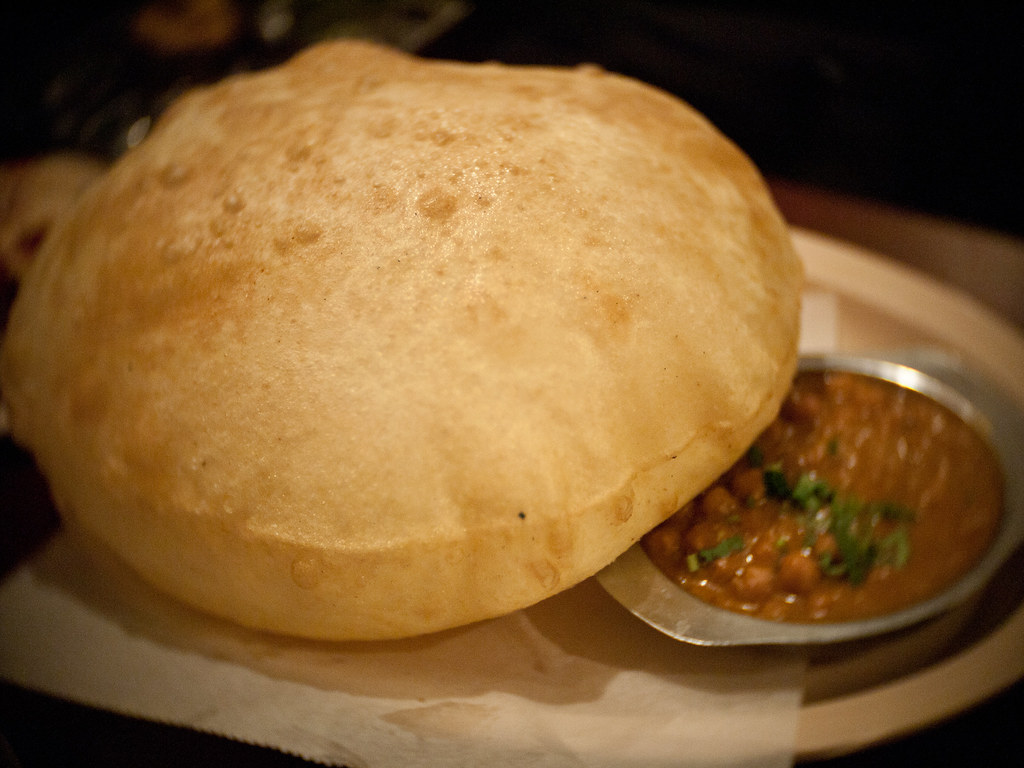
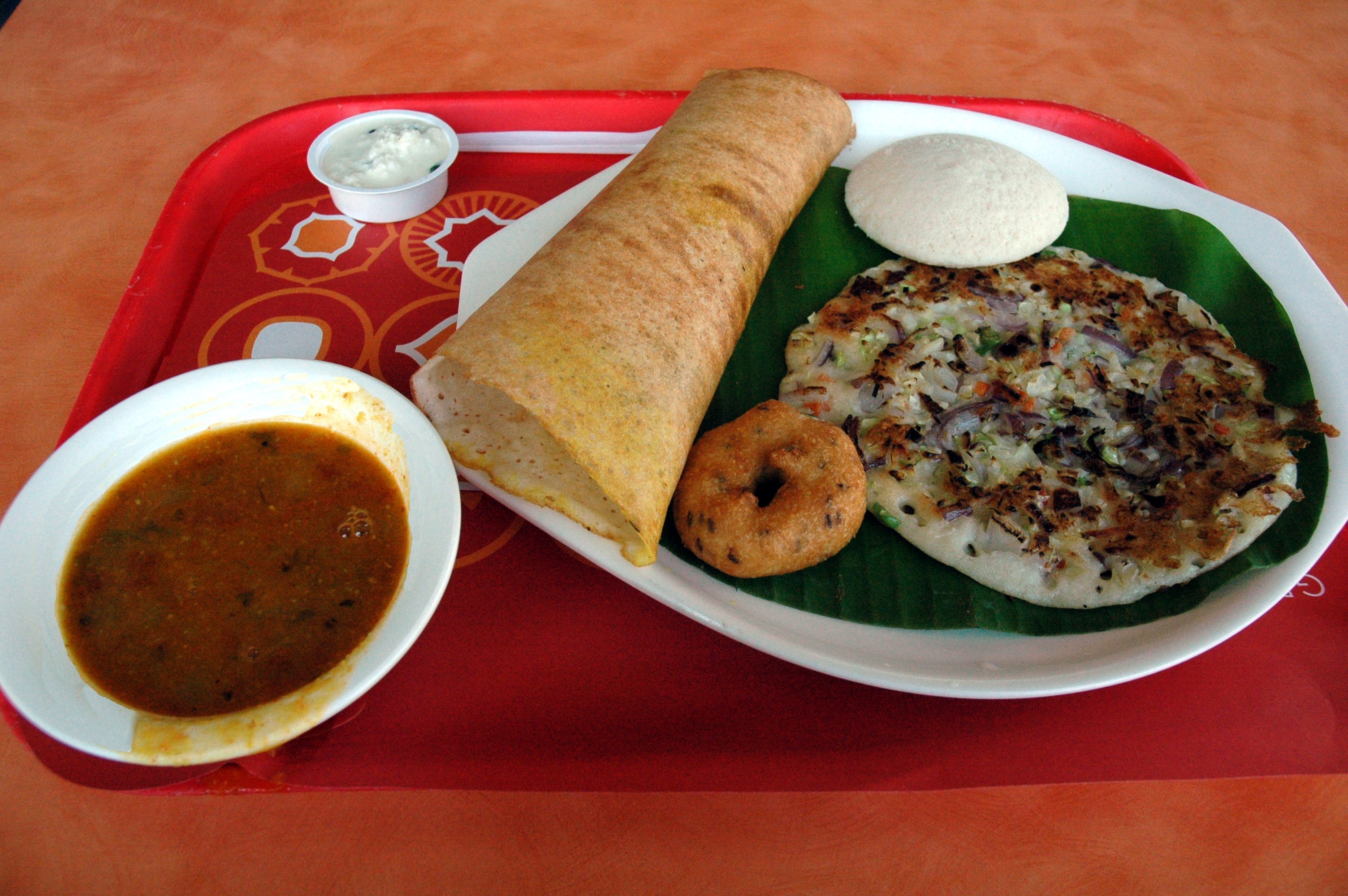
Chana BhaturaMeusliSouth Indian dosa, idli, uthappam Courtesy: Creative Commons
The dosa was perfect! Crisp, thin and a rich golden brown. A beautiful symphony of flavours with the green chilli and the red chilli chutneys and the spicy, aromatic sambar. I was enjoying the breakfast buffet at a hotel in Coimbatore, known as the Manchester of South India. A major manufacturing centre located at the foothills of the Western ghats, Coimbatore (also known as Kovai) is the second biggest city in the southern Indian state of Tamil Nadu.
I enjoy a hearty breakfast. I admit I am partial toward South Indian fare. I absolutely love dosais, and upma. I enjoy crispy medu vadas. Appam and coconut stew is a duet made in heaven. Panizhayaram is Tamil delicacy along with Pongal. I am not very fond of idlis, however. The breakfast buffets in Kovai are superb. I believe and many agree that Kovai combines the best of Tamil Nadu and Kerala. I also enjoy the wide variety of dishes in an American breakfast ranging from toast, eggs in different forms, porridge, cereal, hash browns, bacon, and sausage. All washed down with juices and coffee and tea. A variety of breads are available, especially in Europe. Pancakes are also delicious, especially with maple syrup. Many hotels in the United States do not serve a continental breakfast, however. A few hotels in Kovai offer you both South Indian and western breakfast choices.
As with most other beliefs created in today’s information overload, the role and status ofbreakfast has become confusing. The traditional advice was to never skip breakfast as it was the most important meal of the day. In today’s world, as prolonged periods of fasting and the requirement to have stretches of time with low blood sugar levels have gained footage, some began skipping breakfast and moved directly to lunch. Traditionally humans had their last meal of the day at sundown. A long period of fasting till breakfast, the next morning, was a natural outcome. With the advent of artificial lighting, the time of dinner was steadily pushed back.
In Nepal most people do not have a big breakfast. They usually have tea and biscuits and sit down for a big lunch at ten or even earlier in the morning. Different breakfast snacks are available in the Kathmandu valley. The trekking lodges in Nepal do offer breakfast on their menu to cater to western trekkers. The hotels in Kathmandu and other tourist towns also offer a variety of choices. In the plains bordering northern India, breakfast is usually north Indian fare. When I trek, my breakfast of choice is usually muesli with milk. This is filling and provides both instant and slow-release energy and keeps me going for a few hours. It is said to have been developed around 1900 by a Swiss physician, Maximilian Bircher-Benner for patients in his hospital. The major problem with muesli is that it is dry and requires effort and copious amounts of milk to wash down. Cornbread and toast sometimes find their way into the menu. Nepalese cooks are ingenious and dishes like Swiss rosti are also available. In the Everest region, potato pancakes are dominant though they may not be available for breakfast as they take long to prepare.
North India has a variety of filling breakfasts. Chana bhatura is filling though oily and most bus stations and train stations in the north will have breakfast stalls with such fare. Piping hot pooris are a perennial favorite. When I was working in Nepal, I sometimes used to travel through the eastern Uttar Pradesh town of Gorakhpur. The stuffed parathas are a delight to the palate and are filling. They can be made with aloo (potatoes), radish, cauliflower and even with finely minced meat. Having these piping hot with a dollop of clarified butter on a chilly winter morning is a pure joy. The lower canteen at PGI (Post Graduate Institute), Chandigarh, serves delicious aloo parathas. Kachoris are also eaten for breakfast along with jalebis. Samosas could make a hearty breakfast along with chole. Punjabi samosas are huge and filling and the stalls in the market at Punjab University in Sector 11 in Chandigarh has some of the best samosas I have eaten.
Many cultures may have independently discovered the nutritional benefits of combining cereals and pulses. Considering the lack of knowledge about nutrients and nutrient quality in those days, this was a significant achievement. The combination can be samosas and chickpeas, idlis/dosas and sambar, baked beans and bread, and so forth. Breakfast should provide immediate energy to get you going and slowly release sugars to continue to provide energy. Eggs provide high quality proteins and are an important part of the western breakfast. Meats are also eaten in many parts of the globe.
In Malaysia, noodles of different varieties are eaten for breakfast. Nasi lemak (rice cooked in coconut milk) is also a perennial favourite though I do struggle to eat rice early in the morning. Our breakfast habits are an acquired taste heavily influenced by our childhood. South Indian foods like thosai, idlis, upma, vada and Pongal are also available attesting to the multicultural diversity of the country. Breakfast can be creative in Kerala, God’s own country at the southern tip of India and considered one of the best breakfasts in the world. Among the highlights are appam with different vegetarian and non-vegetarian curries, puttu with black gram curry or puttu with small bananas. Puttu is made of steamed rice flour and grated coconut and can be dry hence requiring curry or bananas for lubrication.
Cultures globally have created a variety of rich and delicious foods for breakfast. There are similarities in the use of leavened or unleavened bread (in different forms and shapes), a combination of grains and pulses, eggs, fruits and tea or coffee. Many have fruit juices for breakfast. After the long overnight fast, getting your sugar levels up again and providing you with the energy resources to get through a long and challenging day is important. At Kuala Lumpur, I usually have my breakfast at the Shirdi Sai canteen at the university. I usually have dosas or upma and sometimes I have uthappams. They also make delicious pooris in the great Tamil tradition served with hot and filling yellow potato curry. Starting your day on a full stomach will surely make you happy, healthy, and wise and if you are lucky, even wealthy.
.
Dr. P Ravi Shankar is a faculty member at the IMU Centre for Education (ICE), International Medical University, Kuala Lumpur, Malaysia. He enjoys traveling and is a creative writer and photographer.
.
PLEASE NOTE: ARTICLES CAN ONLY BE REPRODUCED IN OTHER SITES WITH DUE ACKNOWLEDGEMENT TO BORDERLESS JOURNAL
Ideally, I would love to start the New Year with laughter and happiness! Then perhaps, the whole year would be dotted with humour …
Laughter clubs often practice laughing for health benefits. I know the pandemic makes both guffawing outdoors or in a group hard but think of the funniest possible thing and, perhaps, you will start laughing. For me what works other than children’s and monkeys’ antics, are my trips to the dentist, especially the trip where I wondered on the fringe benefits of ‘laughing gas’ (as given in the PG Wodehouse novel of the same name), only to be informed that it was used exclusively for young children. For me, an adult, there was only — you have guessed it — the jab that numbs your lip function to lubber. I discovered if I could make light of a dentist drilling by learning from Harry Potter (the spell to get rid of the terrifying boggart, who took the shape of the thing you feared most, was to imagine the funniest thing, focus on the humour in it, and shout ‘Riddikulus’ with a wand pointed at the creature in the form of your worst nightmare), then I could pretty much get rid of most fears.
The other thing I have been wondering for sometime is can one write an editorial that is humorous when the content is serious? I would have wanted to ask that question to many, including Ruskin Bond, who continues as one of my idols. I would love to touch hearts with the humour and the sensitivity that flavours his writing. It is tough to convey a complex thought with the simplicity and elegance of a writer who can be read and understood easily. I think we have a few of them around and I interviewed one. You all probably know him well— Rhys Hughes. I have given the reasons for the interview in lieu of Mr Bond, who continues a distant star beyond the horizon of online interviews. We discussed humour and its role in literature, leaving out completely in the cold, the fictional Mr Bond who answers to the names of James and 007 and has made entertaining films, which can be seen as serious or non-serious.
Hughes has of course, given some writerly advice not just in the interview but in ‘Making Something of Nothing’ – pretty much the advice that God had probably been given when he asked an unspecified friend on how to create the universe and multiple realities. Hughes has also added to our galaxy of poets where Michael Burch, Ryan Quinn Flanagan, Anasuya Bhar, Vernon Daim, William Miller, Pramod Rastogi, Mike Smith, Jay Nicholls and many more continue to sparkle. Taking up the theme of God’s creations, Devraj Singh Kalsi has added to more humour with a dream of divine intervention to make the ‘New Normal’ in 2022 – a plan for this year. Will it ever be real?
Another major issue in this world currently is climate change. In keeping with the need for acceptance of this reality, Keith Lyons introduced us to a nature lover, author and adventurer Kenny Peavy, who loved the fictional adventurer called Indiana Jones and has been working towards living in harmony with nature. He moved to Indonesia from America and is trying to raise awareness. You can find much, though not elephants, in the interview that encompasses the story of a man who cycled across a continent on a bike made of bamboo. However, you can find some writing on a king who acquired the skill to ride and tame elephants in our book excerpt from Shazi Zaman’sAkbar: A Novel of History. The excerpt does not showcase his elephant taming skills as did the Bollywood blockbuster Jodha Akbar but is focussed on bringing out the syncretism in the Mughal monarch’s outlook which made him seek out exponents of other religions. Sangita Swechcha’s and Andrée Roby’s anthology, A Glimpse Into My Country, with excerpts of short stories from Nepal and Zimbabwe, like Kenny Peavy, cycle across multiple borders as does our fiction. We feature stories from within and without the continent with Fazal Baloch recombining a couple of folklores from Balochistan to a single tale. Fiction from young writers highlight compassion and a varied perspective. Steve Ogah has a story from Nigeria which almost rings with overtones of Alex Haley’s Roots. Sohana Manzoor has given us a poignant narrative with an inspiring twist at the end, an absolute antithesis of the humorous one she rolled out for us last month. Candice Louisa Daquin has also given us an exceptional short fiction along with her column where she discusses the changing face of families in the current context.
While Daquin’s focus is mainly towards the West, we have an essay from Sanjay Kumar on families that live in the greyer zones of big cities, children from an outcropping called Nithari in Delhi, where they or theirs suffered neglect, abuse, carnage and cannibalism in their formative years. Introducing the impacted children, Kumar explains how they transcended the wounds that lacerated their lives. This piece is a precursor to a column called ‘Children of Nithari’. Starting February, the abuse victims will give us a story a month which will be translated by young volunteers from pandies’, an activist theatre group founded by Kumar, and published in Borderless. Another article from Balochistan reflects on the lack of literacy and efforts to bring children into the folds of schooling. Pakistan ranked 99th out of 132 countries on the literacy survey in 2021. We are privileged to be the voice of the unheard.
Two essays that ring of concerns raised in the Kenny Peavy interview are to do with climate crisis in the Sunderbans and waste disposal in Delhi. Both of these are written by researchers who are working on these issues.
We have travel pieces from Australia – one is a sailing adventure by Meredith Stephens and the other is about a trip to the Sand Dunes of Western Australia by Shernaz Wadia. Ravi Shankar has also taken us through winters from the Everest to New York with his globe-trotting non-fiction. Penny Wilkes takes us on a flight of creativity with beautiful photography.
We have a stellar layout of translations. Professor Fakrul Alam translated another poem by Jibananada Das and Borderless is honoured to publish it to the world for the first time. We have a translation from Korea and another of a Brahmo hymn, Aji Shubho Dine, by Tagore, which is sung often during festivals. The icing in our Tagore section in this issue is Ratnottama Sengupta’s translation of the Kobiguru’s ‘Two Birds’ (Khanchar Pakhi Chhilo) along with a musing which reflects on the perspectives of the two contemporaries, Tagore and Saratchandra. She has also translated a well-known Bengali poet, Michael Madhusudan Dutt. Dutt wrote just before the advent of Tagore and had an interesting past which has been vividly depicted by Sunil Gangopadhyay in Those Days (Sei Somoy in Bengali), a novel that has been translated by Aruna Chakravarti. Bhaskar Parichha has given us a tribute on the occasion of the birth anniversary of Fakir Mohan Senapati, who, he claims, has the same standing in Odia literature as Tagore in Bengali or Premchand in Hindi.
Parichha has also reviewed Amit Ranjan’sJohn Lang; Wanderer of Hindoostan; Slanderer in Hindoostanee; Lawyer for the Ranee. It looks like an interesting read where an immigrant Australian came supported Rani of Jhansi in India. Rakhi Dalal has reviewed Selma Carvalho’s Sisterhood of Swans, again a story of migrants and their lives. The theme seems to echo among the books that have been reviewed this time, including Gracy Samjetsabam’s take on Anuradha Kumar’s The Hottest Summer in Years, a story about a German immigrant to India in the twentieth century. Meenakshi Malhotra’s review of Somdatta Mandal’s translation of A Bengali Lady in England by Krishnabhabini Das (1885) highlights the views of a traveller rather than an immigrant as the lady did return home after a ten-year sojourn in Britain. As Meenakshi contends, “The process of travel offers opportunities for emancipation where exposure to other cultures offers her a way of viewing and of gaining a perspective on her own experiences and that of her sisters in India. Krishnabhabini constantly refers to her Indian sisters and bemoans their sorry state and ignorance when she sees how active British women were in their families and societies…”
I was supposed to try my hand at a humorous editorial, but I realise that is tough when the ground is small. For humour, we need rolling acres where we can etch out each detail till it cannot be milked further for laughter. But I promise you I will keep trying to please the readers till one evolves to write like Ruskin Bond.
I would like to thank my fabulous team who even if not actively contributing to content are always at hand to advise and help. I would especially want to thank both Sohana Manzoor and Sybil for their fantastic artwork, which is as wonderful as their writings. I would like to give heartfelt thanks to all the contributors who have made this journal possible and each reader who comes back to our journal for more every month. Some of the pieces remain unmentioned adding to the mystery of the content, just like, Christmas gifts which need to be unwrapped and continue a reality even in January in some parts of the world – the Russians celebrate on January 7th and the Spaniards extend their festivities to January 6th.
Do take a look at this month’s edition for not just the stories mentioned here but for more.
I wish you all a wonderful New Year filled with laughter.
Old Mr. Bubble sat in his armchair and observed the passers-by. The city rose in the morning when the clock struck five. The silence gave way to morning sounds.
Women walked and talked on the footpaths about educating their daughters and little sons. They believed every lesson should not be taught more than forty-five minutes. The leader’s inability to rule the country became a conscience of some new job holders. The morning walk seemed to be all about venting such problems.
The road ran across the suburban sight. No cargo trucks were parked in the morning although, the day ran on wheels. The path was spacious, and the children played without being deterred. The road carried buses, vans, students cycling to school amidst flocks of sheep that strayed into the road as they grazed along the greenery that often lined the edges or some abandoned patch of grass under the supervision of shepherds.
The city felt like it had to be observed more closely and that is where characters like Mr. Bubble stepped in. Mr. Bubble was a high school teacher. He lost his son during the civil war period in the army. His son’s memories haunted him and every day he washed the memories with a heavy heart. Every evening Mr. Bubble took a walk on the highway. He had lost spaces in his life. Now he seemed to be filling merely a vacuum. The lack of action in his life made him realise the pauses. Fishes do not think of dying when they are safe inside the water. Mr. Bubble was in his bubble and he was still safe until things started getting out of his hands like the time when his son died. He couldn’t stop his son from dying and that did him no good.
One evening while he was on his regular jaunt, he discovered a grassland beside the highway. There was a small pond which did not look dry although, the water was slightly muddy. The trees seemed to bear fruit and some looked burnt. The grass seemed to be smeared with chemicals so that they could not grow. If the place was meant to be abandoned why bother spreading chemicals on the grass so that they would not grow? Mr. Bubble was already inside that grassland and away from the road.
The evening sun was on its way to the dark land somewhere behind the moon. It was about to hide itself and let one part of the world be steeped in darkness. The sun knew when to get hot or when to get cold. Mr. Bubble thought that the world was a fabulous discovery till it was over-used by all.
One thing that Mr. Bubble’s pondered was why houses seemed deserted in the grassland? Perhaps nature took matter into its own hands when things were not cared for by humans, this was a fact and not fiction. Fiction, after all, had been manmade although it could contain natural ingredients. How we perceive every other reality can contain details like clockwork as even things have their hours, minutes and seconds that keep ticking. A beating heart has always been a clockwork before it could be forgotten for good.
Mr. Bubble was really alone after losing his son. When the closest people walk away or disappear, we really cannot make friends with inanimate things. There can always be a reality which engulfs the truth which is stranger than fiction.
A lonely house and again a vast grassland where wind blew alone without a purpose, the sight of an old man and somewhere far, how tides hit the beaches lining the ocean went unnoticed.
Mr. Bubble just waited for another day and another lonely walk away from people’s sight, but he wasn’t running away from himself. Old age was a thing that one could not run away from because death came slowly — speed was only for the escapists. Those who have the time to wait do not worry about the passage of hours, minutes and days…
Sushant Thapa is an M.A. in English Literature from Jawaharlal Nehru University in New Delhi, India, who lives in Nepal. His poems, essays, short stories and flash fictions are published in numerous journals and books.
.
PLEASE NOTE: ARTICLES CAN ONLY BE REPRODUCED IN OTHER SITES WITH DUE ACKNOWLEDGEMENT TO BORDERLESS JOURNAL.