Categories
Review

A Luxury Called Health

Book Review by Rakhi Dalal

Title: A Luxury Called Health

Author: Kavery Nambisan

Publisher: Speaking Tiger Books

India is a country of staggering inequality. It is a fact which is much more apparent in the general ward of a government hospital. The author says that a brief visit to one will tell you everything about the healthcare available to poor. In a country where getting two square meals is arduous for most of them, can they manage when struck by grave illness? Or is health, perhaps their only resource, also a luxury unaffordable for them. 

Kavery Nambisan, a doctor and an author, who has been a rural surgeon for most of her life, through this book attempts to bring our attention to the basic healthcare that must be the right of every citizen of this country irrespective of class. She studied medicine and surgery at St. John’s Medical College in Bangalore and then went onto get a Fellowship of the Royal College of Surgeons from London. This book, her memoir, is her first work of non-fiction.

This book is not just a memoir. It is also a commentary on and a critique of the state of healthcare in India. Nambisan’s decision to return and then to serve as a surgeon in the rural areas of her own country is a testimony of her commitment towards the service which demands complete devotion. Her words echo with integrity, exemplifying her allegiance to her vocation. When she expresses concern over the low percentage of budget allocated to health care or the dismal infrastructure available in government run hospitals, the urgency of her call finds its way to the reader.

Being concerned about the increasing corporatisation of Medical Services in India, which has made good health services much expensive and out of reach of the middle class and the poor, she advocates the concept of Universal Health Care. Her suggestions are based on the system of National Health Scheme as offered by Britain to its citizens as well as on the efficiency of health care systems of countries like Germany, China, Russia, Spain, Cuba, Malaysia and Sri Lanka who seem to be doing better than countries like US and India. Her anxiety over miserable condition of health system in India reverberates with an earnestness which is sadly missing from the present national discourse. Though COVID did bring some attention to the terrifying reality of our incapacity to tackle pandemic like situations, it still hasn’t transformed into any visible effective change.

In the current times when private hospitals have more or less become business ventures focusing mainly on profits, there are few exceptions one may find. Nambisan tells us about her own heroes in the medical field. She talks most admiringly about the Dr Banerjees, a couple who after studying in UK set up Rural Medicare Centre in the outskirts of Delhi. They are the founder member of Association of Rural Surgeons of India (ARSI) which comprises of a spirited group of surgeons who have opted to practice in the rural areas of the country. It is heartening to note that nearly thousand surgeons are its members.

Account of her own experience as a surgeon is frequented by patients from every walk of life, whether it is a gun wielding youth from Mokama in Bihar or close aide of a Chief Minister of Tamil Nadu, a daily wage laborer or an upper middle class working women. Their appearance, accompanying the realities of their social lives, is also followed by the struggle and hardships which the doctor sometimes went through while treating them. She writes about the management of everyday affairs at different hospitals she worked in, about the frustration and vulnerability she was exposed to at times or the complete discipline of a hospital which would become much effective in managing a day.

Though in most of her writing, it is her practice in different rural areas of the country which takes the center stage, she does talk about being on the other side of the table. When her husband, the late poet Vijay Nambisan, was diagnosed with cancer she took the role of care giver. She writes about her nervousness and her apprehensions, about her helplessness and anger while watching him suffer. Her pain, subtly woven in her sentences, is like a palpable rap which makes the reader ache with an intensity unspeakable.

During the course of her narrative, Nambisan also gives the reader a peek into the history and evolution of medical practices. She emphasises the need of team work, touches upon the gender biases in the medical field, talks about the struggles a working woman grapples with and focuses upon the huge class divide much evident in the unequal accessibility to health care facilities.

A Luxury Called Health bravely courses through impeachment and defence as the writer compassionately tries to write about what she feels needs to be done. Sincere and spirited, candid and captivating, this book makes a compelling appeal for equity through the strengthening of India’s public health system by bringing in a national health scheme in operation. A timely and relevant advice the country may ignore at its own peril.

.

Rakhi Dalal is an educator by profession. When not working, she can usually be found reading books or writing about reading them. She writes at https://rakhidalal.blogspot.com/ .

.

PLEASE NOTE: ARTICLES CAN ONLY BE REPRODUCED IN OTHER SITES WITH DUE ACKNOWLEDGEMENT TO BORDERLESS JOURNAL. 

Categories
Editorial

Elephants & Laughter

Run, Painting by Sybil Pretious

Ideally, I would love to start the New Year with laughter and happiness! Then perhaps, the whole year would be dotted with humour …

Laughter clubs often practice laughing for health benefits. I know the pandemic makes both guffawing outdoors or in a group hard but think of the funniest possible thing and, perhaps, you will start laughing. For me what works other than children’s and monkeys’ antics, are my trips to the dentist, especially the trip where I wondered on the fringe benefits of ‘laughing gas’ (as given in the PG Wodehouse novel of the same name), only to be informed that it was used exclusively for young children. For me, an adult, there was only — you have guessed it — the jab that numbs your lip function to lubber. I discovered if I could make light of a dentist drilling by learning from Harry Potter (the spell to get rid of the terrifying boggart, who took the shape of the thing you feared most, was to imagine the funniest thing, focus on the humour in it, and shout ‘Riddikulus’ with a wand pointed at the creature in the form of your worst nightmare), then I could pretty much get rid of most fears.

The other thing I have been wondering for sometime is can one write an editorial that is humorous when the content is serious? I would have wanted to ask that question to many, including Ruskin Bond, who continues as one of my idols. I would love to touch hearts with the humour and the sensitivity that flavours his writing. It is tough to convey a complex thought with the simplicity and elegance of a writer who can be read and understood easily. I think we have a few of them around and I interviewed one. You all probably know him well— Rhys Hughes. I have given the reasons for the interview in lieu of Mr Bond, who continues a distant star beyond the horizon of online interviews. We discussed humour and its role in literature, leaving out completely in the cold, the fictional Mr Bond who answers to the names of James and 007 and has made entertaining films, which can be seen as serious or non-serious.

Hughes has of course, given some writerly advice not just in the interview but in ‘Making Something of Nothing’ – pretty much the advice that God had probably been given when he asked an unspecified friend on how to create the universe and multiple realities. Hughes has also added to our galaxy of poets where Michael Burch, Ryan Quinn Flanagan, Anasuya Bhar, Vernon Daim, William Miller, Pramod Rastogi, Mike Smith, Jay Nicholls and many more continue to sparkle. Taking up the theme of God’s creations, Devraj Singh Kalsi has added to more humour with a dream of divine intervention to make the ‘New Normal’ in 2022 – a plan for this year. Will it ever be real?

Another major issue in this world currently is climate change. In keeping with the need for acceptance of this reality, Keith Lyons introduced us to a nature lover, author and adventurer Kenny Peavy, who loved the fictional adventurer called Indiana Jones and has been working towards living in harmony with nature. He moved to Indonesia from America and is trying to raise awareness. You can find much, though not elephants, in the interview that encompasses the story of a man who cycled across a continent on a bike made of bamboo. However, you can find some writing on a king who acquired the skill to ride and tame elephants in our book excerpt from Shazi Zaman’s Akbar: A Novel of History. The excerpt does not showcase his elephant taming skills as did the Bollywood blockbuster Jodha Akbar but is focussed on bringing out the syncretism in the Mughal monarch’s outlook which made him seek out exponents of other religions. Sangita Swechcha’s and Andrée Roby’s anthology, A Glimpse Into My Country, with excerpts of short stories from Nepal and Zimbabwe, like Kenny Peavy, cycle across multiple borders as does our fiction. We feature stories from within and without the continent with Fazal Baloch recombining a couple of folklores from Balochistan to a single tale. Fiction from young writers highlight compassion and a varied perspective. Steve Ogah has a story from Nigeria which almost rings with overtones of Alex Haley’s Roots. Sohana Manzoor has given us a poignant narrative with an inspiring twist at the end, an absolute antithesis of the humorous one she rolled out for us last month. Candice Louisa Daquin has also given us an exceptional short fiction along with her column where she discusses the changing face of families in the current context.

While Daquin’s focus is mainly towards the West, we have an essay from Sanjay Kumar on families that live in the greyer zones of big cities, children from an outcropping called Nithari in Delhi, where they or theirs suffered neglect, abuse, carnage and cannibalism in their formative years.  Introducing the impacted children, Kumar explains how they transcended the wounds that lacerated their lives. This piece is a precursor to a column called ‘Children of Nithari’. Starting February, the abuse victims will give us a story a month which will be translated by young volunteers from pandies’, an activist theatre group founded by Kumar, and published in Borderless. Another article from Balochistan reflects on the lack of literacy and efforts to bring children into the folds of schooling. Pakistan ranked 99th out of 132 countries on the literacy survey in 2021. We are privileged to be the voice of the unheard.

Two essays that ring of concerns raised in the Kenny Peavy interview are to do with climate crisis in the Sunderbans and waste disposal in Delhi. Both of these are written by researchers who are working on these issues.

We have travel pieces from Australia – one is a sailing adventure by Meredith Stephens and the other is about a trip to the Sand Dunes of Western Australia by Shernaz Wadia. Ravi Shankar has also taken us through winters from the Everest to New York with his globe-trotting non-fiction. Penny Wilkes takes us on a flight of creativity with beautiful photography.

We have a stellar layout of translations. Professor Fakrul Alam translated another poem by Jibananada Das and Borderless is honoured to publish it to the world for the first time. We have a translation from Korea and another of a Brahmo hymn, Aji Shubho Dine, by Tagore, which is sung often during festivals. The icing in our Tagore section in this issue is Ratnottama Sengupta’s translation of the Kobiguru’s ‘Two Birds’ (Khanchar Pakhi Chhilo) along with a musing which reflects on the perspectives of the two contemporaries, Tagore and Saratchandra. She has also translated a well-known Bengali poet, Michael Madhusudan Dutt. Dutt wrote just before the advent of Tagore and had an interesting past which has been vividly depicted by Sunil Gangopadhyay in Those Days (Sei Somoy in Bengali), a novel that has been translated by Aruna Chakravarti. Bhaskar Parichha has given us a tribute on the occasion of the birth anniversary of Fakir Mohan Senapati, who, he claims, has the same standing in Odia literature as Tagore in Bengali or Premchand in Hindi.

Parichha has also reviewed Amit Ranjan’s John Lang; Wanderer of Hindoostan; Slanderer in Hindoostanee; Lawyer for the Ranee. It looks like an interesting read where an immigrant Australian came supported Rani of Jhansi in India. Rakhi Dalal has reviewed Selma Carvalho’s Sisterhood of Swans, again a story of migrants and their lives. The theme seems to echo among the books that have been reviewed this time, including Gracy Samjetsabam’s take on Anuradha Kumar’s The Hottest Summer in Years, a story about a German immigrant to India in the twentieth century. Meenakshi Malhotra’s review of Somdatta Mandal’s translation of A Bengali Lady in England by Krishnabhabini Das (1885) highlights the views of a traveller rather than an immigrant as the lady did return home after a ten-year sojourn in Britain. As Meenakshi contends, “The process of travel offers opportunities for emancipation where exposure to other cultures offers her a way of viewing and of gaining a perspective on her own experiences and that of her sisters in India. Krishnabhabini constantly refers to her Indian sisters and bemoans their sorry state and ignorance when she sees how active British women were in their families and societies…”

I was supposed to try my hand at a humorous editorial, but I realise that is tough when the ground is small. For humour, we need rolling acres where we can etch out each detail till it cannot be milked further for laughter. But I promise you I will keep trying to please the readers till one evolves to write like Ruskin Bond.

I would like to thank my fabulous team who even if not actively contributing to content are always at hand to advise and help. I would especially want to thank both Sohana Manzoor and Sybil for their fantastic artwork, which is as wonderful as their writings. I would like to give heartfelt thanks to all the contributors who have made this journal possible and each reader who comes back to our journal for more every month. Some of the pieces remain unmentioned adding to the mystery of the content, just like, Christmas gifts which need to be unwrapped and continue a reality even in January in some parts of the world – the Russians celebrate on January 7th and the Spaniards extend their festivities to January 6th.

Do take a look at this month’s edition for not just the stories mentioned here but for more.

I wish you all a wonderful New Year filled with laughter.

Mitali Chakravarty

Borderless Journal

Categories
Review

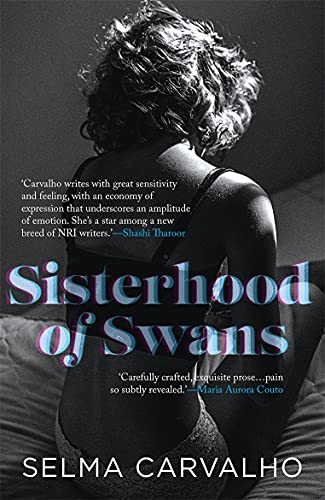
Sisterhood of Swans

Book Review by Rakhi Dalal

Title: Sisterhood of Swans

Author: Selma Carvalho

Publishers: Speaking Tiger Books

To feel a kind of belongingness, to find acceptance in a society is an inherent human desire. Perhaps this desire stems from the need to strengthen alliance with something larger than individual identities. It is not only family, but also the place we live in, the community we come from, as well as the prevalent societal and cultural norms which fall into this ambit for most of us. Sometimes the scales in life do not balance till this desire remains elusive. More so when one makes home a place not native to the community one belongs to.

Selma Carvalho is a British-Asian writer whose work explores the themes of migration, memory and belonging. She is the author of three non-fiction books documenting the Goan presence in colonial East Africa. She led the Oral Histories of British – Goans Project (2011-2014) funded by UK Heritage Lottery Fund. Her stories have been published in various journals and anthologies. She is the editor of two volumes of The Brave New World of Goan Writing & Art (2018 and 2020). Her work has been shortlisted for various literary prizes including London Short Story Prize and the New Asian Writing Prize. She is the winner of the Leicester Writes Prize 2018 and a finalist for prestigious SI Leeds Literary Prize 2018. Sisterhood of Swans, her debut novel, was shortlisted for Mslexia Novella Prize 2018 in the UK.

Carvalho’s book explores the complexities around this desire to belong and yet the inability to fully embrace the possibilities a place offers because of conceived notions a propos the idea of identity. Her writing, traversing the world of immigrant Indian community in London, is focused upon anxieties and their repercussions, as experienced by a second generation immigrant. Anna-Marie Souza is plagued by a yearning to belong and to hold onto the familiar. Her restlessness stems not only from the inescapability of ethnic alienation, being a Goan-Indian in Horton, but also from the inevitable suffering caused by her parents’ separation.

Consequently, she longs to find a soul mate, a bond for life. In her relationships, first with Nathu and then with Sanjay, she seeks a father figure, a man in whom she may find a resemblance of her father. The choices Anna-Marie makes are flawed and she carries on with them even while understanding that they might be doomed for failure.

The men in Anna-Marie’s world are all adulterers, diving into new relationships and then abandoning their families to move onto other women. It appears almost like a cycle. Every woman she comes across goes through the ordeal. Left in misery by their husbands/partners, they desperately try to put the pieces of their shattered selves together. Their kids endure fractured lives. But it is never the men who suffer, they keep moving on like a river flowing into another and renewing itself, unbroken and unburdened.

It is to this sisterhood of pain of women that Anna-Marie belongs. Like swans, these women look to pair for life but it is disappointment they are fated for. Whether it be her mother, Ines, Sanjay’s wife, Kaya, or her schoolmate, Jassie.

In drawing out the characters of Anna-Marie and her best friend, Sujata, Carvalho also puts the focus on what is inherited from parents subconsciously. In case of Sujata, her father’s illness comes a full circle to haunt her person as she grows up and try to make sense of her existence in a place she recognizes as her home but do not completely fit in. Anna-Marie on the other hand, start relating more to her mother once she steps into motherhood herself, recalling that it was never her father but mother who had always stood by her.

 Carvalho’s pen proficiently renders the intricacies brought about by intersection of different cultures and their consequent uncertainties. She handles the notions of belongingness delicately and with much sensitivity. Her characters are not without flaws and yet they are memorable for their openness and ability to perceive things genuinely. As pointed by Sujata, Anna-Marie comes to accept life as a constantly evolving construct in which to grow also means to allow oneself to evolve irrespective of the contradictions confronted with. To come to a juncture where the permanence of a place or constancy of people does not matter and lives are aglow with the radiance of all the love received.  

.

Rakhi Dalal is an educator by profession. When not working, she can usually be found reading books or writing about reading them. She writes at https://rakhidalal.blogspot.com/ .

.

PLEASE NOTE: ARTICLES CAN ONLY BE REPRODUCED IN OTHER SITES WITH DUE ACKNOWLEDGEMENT TO BORDERLESS JOURNAL. 

Categories
Editorial

Towards a Brave New World

Painting by Sohana Manzoor

With Christmas at our heels and the world waking up slowly from a pandemic that will hopefully become an endemic as the Omicron seems to fizzle towards a common cold, we look forward to a new year and a new world. Perhaps, our society will evolve to become one where differences are accepted as variety just as we are fine with the fact that December can be warm or cold depending on the geography of the place. People will be welcomed even if of different colours and creed. The commonality of belonging to the same species will override all other disparities…

While we have had exciting developments this year and civilians have moved beyond the Earth — we do have a piece on that by Candice Louisa Daquin — within the planet, we have become more aware of the inequalities that exist. We are aware of the politics that seems to surround even a simple thing like a vaccine for the pandemic. However, these two years dominated by the virus has shown us one thing — if we do not rise above petty greed and create a world where healthcare and basic needs are met for all, we will suffer. As my nearly eighty-year-old aunt confided, even if one person has Covid in a remote corner of the world, it will spread to all of us. The virus sees no boundaries. This pandemic was just a start. There might be more outbreaks like this in the future as the rapacious continue to exploit deeper into the wilderness to accommodate our growing greed, not need. With the onset of warmer climates — global warming and climate change are realities — what can we look forward to as our future?

Que sera sera — what will be, will be. Though a bit of that attitude is necessary, we have become more aware and connected. We can at least visualise changes towards a more egalitarian and just world, to prevent what happened in the past. It would be wonderful if we could act based on the truth learnt from history rather than to overlook or rewrite it from the perspective of the victor and use that experience to benefit our homes, planet and all living things, great and small.  In tune with our quest towards a better world, we have an interview with an academic, Sanjay Kumar, founder of a group called Pandies, who use theatre to connect the world of haves with have-nots. What impressed me most was that they have actually put refugees and migrant workers on stage with their stories. They even managed to land in Kashmir and work with children from war-torn zones. They have travelled and travelled into different dimensions in quest of a better world. Travelling is what our other interviewee did too — with a cat who holds three passports. CJ Fentiman, author of The Cat with Three Passports, has been interviewed by Keith Lyons, who has reviewed her book too.

This time we have the eminent Aruna Chakravarti review Devika Khanna Narula’s Beyond the Veils, a retelling of the author’s family history. Perhaps, history has been the common thread in our reviews this time. Rakhi Dalal has reviewed Anirudh Kala’s Two and a Half Rivers, a fiction that focusses on the Sikh issues in 1980s India from a Dalit perspective. It brought to my mind a family saga I had been recently re-reading, Alex Haley’s Roots, which showcased the whole American Revolution from the perspective of slaves brought over from Africa. Did the new laws change the fates of the slaves or Dalits? To an extent, it did but the rest as fact and fiction showcase were in the hands that belonged to the newly freed people. To enable people to step out of the cycle of poverty, the right attitudes towards growth and the ability to accept the subsequent changes is a felt need. That is perhaps where organisations like Pandies step in.  Another non-fiction which highlights history around the same period and place as Kala’s novel is BP Pande’s In the Service of Free India –Memoirs of a Civil Servant. Reviewed by Bhaskar Parichha, the book explores the darker nuances of human history filled with violence and intolerance.

That violence is intricately linked to power politics has been showcased often. But, what would be really amazing to see would be how we could get out of the cycle as a society. With gun violence being an accepted norm in one of the largest democracies of the world, perhaps we need to listen to the voice of wisdom found in the fiction by Steve Davidson who meets perhaps a ghost in Hong Kong. Musing over the ghost’s words, the past catches up in Sunil Sharma’s story, ‘Walls’. Sharma has also given us a slice from his life in Canada with its colours, vibrancy and photographs of the fall. As he emigrated to Canada, we read of immigrants in Marzia Rahman’s touching narrative. She has opted to go with the less privileged just as Lakshmi Kannan has opted to go with the privileged in her story.

Sharma observes, while we find the opulence of nature thrive in places people inhabit in  Canada, it is not so in Asia. I wonder why? Why are Asian cities crowded and polluted? There was a time when Los Angeles and London suffered smogs. Has that shifted now as factories relocated to Asia, generating wealth in currency but taking away from nature’s opulence of fresh, clean air as more flock into crowded cities looking for sustenance?

Humour is introduced into the short story section with Sohana Manzoor’s hilarious rendering of her driving lessons in America, lessons given to foreigners by migrants. Rhys Hughes makes for  more humour with a really hilarious rendition of men in tea cosies missing their…I  think ‘Trouser Hermit’ will tell you the rest. He has perhaps more sober poetry which though imaginative does not make you laugh as much as his prose. Michael Burch has shared some beautiful poetry perpetuating the calmer nuances of a deeply felt love and affection. George Freek, Anasuya Bhar, Ryan Quinn Flanagan, Dibyajyoti Sarma have all given us wonderful poetry along with many others. One could write an essay on each poem – but as we are short shrift for time, we move on to travel sagas from hiking in Australia and hobnobbing with kangaroos to renovated palaces in Bengal.

We have also travelled with our book excerpts this time. Suzanne Kamata’s The Baseball Widow shuttles between US and Japan and Somdatta Mandal’s translation of  A Bengali lady in England by Krishnabhabi Das, actually has the lady relocate to nineteenth century England and assume the dress and mannerisms of the West to write an eye-opener for her compatriots about the customs of the colonials in their own country.

While mostly we hear of sad stories related to marriages, we have a sunny one in which Alpana finds much in a marriage that runs well with wisdom learnt from Kung Fu Panda.  Devraj Singh Kalsi has given us a philosophical piece with his characteristic touch of irony laced with humour on statues. If you are wondering what he could have to say, have a read.

In Nature’s Musings, Penny Wilkes has offered us prose and wonderful photographs of the last vestiges of autumn. As the season hovers between summer and winter, geographical boundaries too can get blurred at times. A nostalgic recap given by Ratnottama Sengupta along the borders of Bengal, which though still crossed by elephants freely in jungles (wild elephants do not need visas, I guess), gained an independence from the harshness of cultural hegemony on December 16th, 1971. Candice Louisa Daquin has also looked at grey zones that lie between sanity and insanity in her column. An essay which links East and West has been given to us by Rakibul Hasan about a poet who mingles the two in his poetry. A Bengali song by Tagore, Purano shei diner kotha,  that is almost a perfect trans creation of Robert Burn’s Scottish Auld Lang Syne in the spirit of welcoming the New Year, has been transcreated to English. The similarity in the content of the two greats’ lyrics showcase the commonalities of love, friendship and warmth that unite all cultures into one humanity.

Our first translation from Uzbekistan – a story by Sherzod Artikov, translated from Uzbeki by Nigora Mukhammad — gives a glimpse of a culture that might be new to many of us. Akbar Barakzai’s shorter poems, translated by Fazal Baloch from Balochi and Ratnottama Sengupta’s transcreation of a Tagore song, Rangiye Die Jao, have added richness to our oeuvre along with  one from Korean by Ihlwha Choi. Professor Fakrul Alam, who is well-known for his translation of poetry by Jibonanda Das, has started sharing his work on the Bengali poet with us. Pause by and take a look.

There is much more than what I can put down here as we have a bumper end of the year issue this December. There is a bit of something for all times, tastes and seasons.

I would like to thank my wonderful team for helping put together this issue. Sohana Manzoor and Sybil Pretious need double thanks for their lovely artwork that is showcased in our magazine. We are privileged to have committed readers, some of who have started contributing to our content too. A huge thanks to all our contributors and readers for being with us through our journey.

I wish you a very Merry Christmas and a wonderful transition into the New Year! May we open up to a fantastic brave, new world!

Mitali Chakravarty

Borderless Journal

Categories
Review

A Sagacious Tale of Oppression & Turmoil

Book Review by Rakhi Dalal

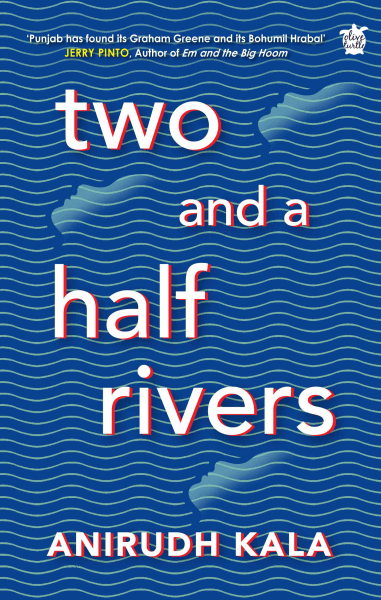
Title: Two and a Half Rivers

Author: Anirudh Kala

Publisher: Niyogi Books, 2021

How do we understand a land and its people? How do we look at its history, at a phase of turbulence which once ravaged the lives of its people? At the social structures rarely talked about? And how do we make sense of it? Can the perception be whole if only selective truths are voiced?

The Partition of India in 1947 had left Punjab with only two and a half rivers out of a total of five. From the early 1980s onwards, a state which had witnessed much violence and bloodshed at the time of Partition, began to be devastated by the spread of militancy again. This period of unrest spanning almost a decade was the time when common people, who had yet not recovered from the trauma of partition, faced the torment of not only terrorism but also counter insurgency. And though there are numerous reports on the violation of Human rights during counter insurgency in Punjab, both the Central and the State Governments have continually refuted such reports.

Two and a Half Rivers is a fictionalised account of those troubled years of Punjab through the lives of three main characters — a clinically depressed doctor, trying to take on life one day at a time, and Shamsie and Bheem, both Dalits, struggling to make their dreams a reality. Writing with keen perception, the author, Anirudh Kala, not only offers a striking account of the many ordeals that people went through that period and the solidarity which helped them keep afloat but also of the less addressed issue of oppression of lower castes and their sufferings.  

Kala is a psychiatrist by profession. His aim is to educate people about mental health and mental illness, focusing on eradicating stigma, labels, and prejudice. His debut fiction The Unsafe Asylum: Stories of Partition and Madness was published in 2018. Two and a Half Rivers published by Niyogi Books is his second work of fiction.

In this novel, he juxtaposes the situation of state with that of the mental illness of the doctor who is also the narrator. As the fog of depression descends on his mind, the state is also veiled by the layers of sorrows and anxieties from which no escape seems visible. With the increase in terrorists activities, the rivers start filling with the dead again as if to devour those who had somehow survived the Partition. An increase in extortion, abduction and killing by the terrorists leads to the nabbing of common people on doubt by police. The custody, seldom resulting in the release of those apprehended. Jails become torture centres and those captured subjects of experiments for effective torturing. The unrest that follows compels Shamsie and Bheem to shift to Bombay in search of a peaceful life only to return back few years later in the aftermath of a crackdown on Dance bars.

Following the timeline of those difficult years, the author looks at the tragic events which made the ‘Punjab problem’ worse in succeeding years. He takes into account Operation Bluestar, the assassination of the Prime Minister (who he names as Durga), the pogrom of November 1984 and counter insurgency. The novel offers a commentary upon the inept tackling of the situation by the state including ruling dispensation and police. The narrator minces no words while observing that the State and Army had conveniently forgotten that there were to be a large number of pilgrims in the Golden Temple at the time of that operation as it was the celebration of the martyrdom day of a Sikh guru or that more common people began disappearing after the police chief announced incentives and rewards to curtail terrorism.

While the narrator narrowly escapes the custodial torture after being picked for alleged connection with militants, Bheem isn’t that lucky. His identity becomes the final noose around his neck. Shamsie suffers assault too, a punishment for escaping advances of an upper caste boy in her teenage. Whilst common people die and more disappear, Punjab is steeped in sorrow of losing loved ones from which only the tears of grief bring some respite. We are told that more than eight thousand young people have not come home, and never will.

With the poignant telling of this tale, the author also prompts the reader to ask why the lives of those from lower castes are far more easily dispensable, why are they inconsequential, why this malaise is so deeply ingrained in the minds of upper caste and why is it a normal way of life. In a religion which believes “Awwal allah noor upaya qudrat keh sab banday, aik noor toh sab jag upjaiya kaun bhale ko mande” (All humanity was born from a single divine light, and everybody is born equal. All are the children of nature, and no one is good or bad), how can there really be a discrimination based upon caste?

Sensitive is one word that can be best used to describe Kala’s writing. He writes not only from a place of awareness but perhaps also pain and anguish. His description of the distressed years of Punjab carries a rare sensitivity which warrants a deeper understanding of the place as well as its people. That he chooses to tell it through the lives of two Dalit characters, also bring forward his focus on the otherwise lesser talked about issue of caste discrimination in Punjab. The narrative voice is subtle and sometimes seems distant, which works well for the reason that it gives the narrative a sagacious tenor, making it compelling and very moving.

.

Rakhi Dalal is an educator by profession. When not working, she can usually be found reading books or writing about reading them. She writes at https://rakhidalal.blogspot.com/ .

.

PLEASE NOTE: ARTICLES CAN ONLY BE REPRODUCED IN OTHER SITES WITH DUE ACKNOWLEDGEMENT TO BORDERLESS JOURNAL. 

Categories
Contents

Borderless, September 2021

Editorial

The Caged Birds Sing…Click here to read.

Interviews

Professor Anvita Abbi, a Padma Shri, discusses her experience among the indigenous Andamanese and her new book on them, Voices from the Lost Horizon. Click here to read.

Keith Lyons talks to Jessica Mudditt about her memoir, Our Home in Myanmar, and the current events. Click here to read.

Translations

Be and It All Came into Being

Balochi poetry by Akbar Barakzai, translated by Fazal Baloch. Click here to read.

Adivasi Poetry

A poem by Jitendra Vasava translated from the Dehwali Bhili via Gujarati by Gopika Jadeja. Click here to read.

A Poem for The Ol Chiki

 Poetry by Sokhen Tudu, translated from the Santhali by Hansda Sowvendra Shekhar. Click here to read.

About Time

Korean poetry on time written and translated by Ilwha Choi. Click here to read.

Of Days and Seasons

A parable by the eminent Dutch writer, Louis Couperus (1863-1923), translated by Chaitali Sengupta. Click here to read.

Road to Nowhere

An unusual story about a man who heads for suicide, translated from Odiya by the author, Satya Misra. Click here to read.

Abhisar by Tagore

A story poem about a Buddhist monk by Rabindranath Tagore in Bengali has been translated by Mitali Chakravarty. Click here to read.

Poetry

Click on the names to read the poems

Arundhathi Subramaniam, Michael R Burch, Sekhar Banerjee, Jeff Shakes, Ashok Suri, Tim Heerdink, Srinivas S, Rhys Hughes, A Jessie Michael, George Freek, Saranayan BV, Gigi Baldovino Gosnell, Pramod Rastogi, Tohm Bakelas, Nikita Desai, Jay Nicholls, Smitha Vishwanathan, Jared Carter

Nature’s Musings

In Sun, Seas and Flowers, Penny Wilkes takes us for a tour of brilliant photographs of autumnal landscapes with verses. Click here to read.

Poets, Poetry & Rhys Hughes

In Memory Gongs, Rhys Hughes creates a profound myth tinged with a tongue in cheek outlook … Click here to read.

Essays

Crime and the Colonial Capital: Detective Reid in Calcutta

Abhishek Sarkar explores the colonial setting up of the Calcutta detective department in 1887. Click here to read.

The Myth of Happiness

Candice Louisa Daquin ponders over the impositions on people to declare themselves happy. Click here to read.

Once Upon a Time in Burma: Of Babies and Buddhas

John Herlihy takes us through more of Myanmar with his companion, Peter, in the second part of his travelogue. Click here to read.

Bhaskar’s Corner

Bhaskar Parichha explores links between Politics & the Media. Click here to read.

Musings/Slices from Life

Cyclists

Mike Smith muses about a black and white photograph from his childhood. Click here to read.

Leo Messi’s Magic Realism

Sports fan Saurabh Nagpal explores the magic realism in famous footballer Messi’s play with a soupçon of humour. Click here to read.

Infinite Possibilities & Mysterious Riddles

Keith Lyons gives a lively account of traveling across borders despite the pandemic. Click here to read.

Word Play

Geetha Ravichnadran explores additions to our vocabulary in a tongue-in-cheek article. Click here to read.

Musings of a Copywriter

In When I Almost Became a Professor, Devraj Singh Kalsi gives humour tinged reasons on why he detached himself from being an academician. Click here to read.

Stories

Flash Fiction: Turret

Niles M Reddick relates a haunting tale of ghosts and more. Click here to read.

Silver Lining

Dipayn Chakrabarti travels through moods of the day and night. Click here to read.

Captain Andi is in love

Dr. P Ravi Shankar explores a future beyond climate change in Malaysia. Click here to read.

The Cockatoo

Revathi Ganeshsundaram captures the stardust in ripening years. Click here to read.

The Missing Tile

Saeed Ibrahim’s story reflects on the ties between an old teacher and a student. Click here to read.

The Literary Fictionist

In Return of the Ghost, Sunil Sharma explores the borders between life, ideas and death. Click here to read.

Book Excerpt

An excerpt from Kobi’ and ‘Rani’: Memoirs and Correspondences of Nirmalkumari Mahalanobis and Rabindranath Tagore, translated by Somdatta Mandal, showcasing Tagore’s introduction and letters. Click here to read.

Book Reviews

Rakhi Dalal reviews Anvita Abbi’s Voices from the Lost Horizon. Click here to read.

Basudhara Roy reviews Bina Sarkar Ellias’ Song of a Rebel and Other Selected Poems. Click here to read.

Bhaskar Parichha reviews Wendy Doniger’s Winged Stallion and Wicked Mares. Click here to read.

Categories
Editorial

The Caged Birds Sing

...Don't you know
They're talkin''bout a revolution
It sounds like a whisper...
-- Tracy Chapman,'Talkin 'Bout a Revolution
Thou shalt love thy neighbour as thyself. 
— Bible 

We are living in strange times that seem to be filled with events to challenge the innovativeness of man. As if the pandemic were not enough, concepts that had come out of the best in our civilisation to unite mankind have been convoluted by a minority to manipulate and hurt the majority into submission. Life is not about surviving with faint-hearted compliance but about having the courage to live it as you want, facing it full up front, to voice out in unison against injustices, wrongs, and most of all to loan strength to help and care for each other. Often to understand this, we need to hinge on to our past, to learn from our heritage. But do we do that? In the hectic drive to be successful, we tend to ignore important lessons that could have been imbibed from the past. Like, did you know that the tribes in the Andaman can save themselves from a tsunami?

Padma Shri Anvita Abbi tells us all about the Andamanese and her attempts to revive their moribund language in her interview and book, Voices from the Lost Horizon, reviewed by Rakhi Dalal. While the review focusses on the uniqueness of Abbi’s work and the publication with its embedded recordings of the tribe fast dissolving into the morass of mainstream civilisation, her interview highlights the need to revive their lores that evolved out of a 70,000-year-old culture. On the other hand, Jessica Mudditt, interviewed by Keith Lyons, dwells on the ongoing crisis in Myanmar, which has been clearly the focus of her book, Our Home in Yangon. This interview focusses on the here and now of the crisis. But most crises have their roots deep and perhaps an exploration of these could help. There are 135 ethnicities in Myanmar but how many are actually integrated into the mainstream? Are they in the process of getting ‘lost’ like the voices of the speakers of Greater Andamanese?

That is why we tried to showcase a few such strains that are going unheard in the loudness of the ‘civilised’ mainstream. We have translations in poetry from Santhali and Adivasi, touching on the concerns of those who are often considered underdeveloped. And, perhaps, as Abbi said in her interview about the Andamanese, we can say much the same for these tribes too.

“These tribes are neither poor, nor uneducated (their knowledge of environment comprising birds, fishes, medicinal plants and their … weather predictions, and the Earth they walk on is amazing) …”

Distinctions have been created by a ‘civilisation’ entrenched in mono-cognitive enforcements leading to the loss of trust, confidence, languages, cultures and valuable knowledge about basic survival. Perhaps we can attempt to heal such wounds by imbibing the openness, love, devotion and compassion shown by the Buddhist monk, Upagupta (who is still revered in Myanmar as Shin Upagutta), in the translation of Tagore’s story poem, ‘Abhisar’ or ‘The Tryst’.  Somdatta Mandal’s translation of Tagore’s letters introduce similar humanitarian concerns when the maestro mentions a German anthropologist and his wife who for the betterment of mankind were journeying to study tribals in India. Tagore remarks, “The people for whom they are willingly prepared to undergo hardship and to overlook all sorts of danger are not their relatives, nor are they civilised.” And yet even a century ago to fathom more about mankind, attempts were being made to integrate with our ancient lore. The concept of being ‘civilised’ is of course now much under the microscope. What is being ‘civilised’?

 Is it about having power? We have Akbar Barakzai’s poem translated by Fazal Baloch on creation looking at the divide between a ‘civilised’ God and man. The theme stresses the two sides of the divide. More translations from Odiya, Dutch and Korean further mingle different flavours of the world into our journal — each questioning the accepted norm in different ways.

In an edition focussed on myths and stories from which we evolved, Rhys Hughes has created an unusual legend around elephants. His poetry also deals with animals — cats. One wonders if the T S Eliot’s famed ‘Macavity, the Mystery Cat’ could have to do something with his choices?  We were fortunate to have Arundhathi Subramaniam share her poetry on myths around Indian figures like Shakuntala and Avvaiyar and the titular poem from When God is a Traveller that won her the 2020 Sahitya Akademi Award. Michael R Burch continues on the theme dwelling on Circe, Mary Magdalene and Helen. Sekhar Banerjee has a more iconoclastic approach to myths in his poetry. Jared Carter talks of modern myths perpetuated through art and cultural studies as does Mike Smith in his musings with his glance back at the last century through a photograph.

We have poetry by a Filipino writer Gigi Baldovino Gosnell from South Africa, looking for a new world, a new legend, perhaps a world without borders. Tohm Bakelas has given us a few lines of powerful poetry. Could these poems be a reaction to world events? Smitha Vishwanath has responded to the situation in Afghanistan with a poem. In this edition, photographs and verses in Penny Wilkes’ ‘Nature’s Musings‘ draw from the universe. She writes, “The sun never asks for applause” — a powerful thought and perhaps one mankind can learn from.

Ghost stories by Niles Reddick and Sunil Sharma perpetuate the theme, especially the latter has a ghost that questions myths of ‘isms’ created in the modern-day world. We also have a writer from Malaysia, P Ravi Shankar, with a futuristic legend set in a far-off time where man has embraced the reality of climate change and artificial intelligence. An interesting and fun read as is Devraj Singh Kalsi’s professions about why he did not become a professor, Geetha Ravichandran’s light musing on word play and a young writer Saurabh Nagpal’s musing, ‘Leo Messi’s Magic Realism‘ — a footballer viewed from a literary perspective!

While our musings make us laugh, our essays this time take us around the world with the myth of happiness deconstructed by Candice Louisa Daquin, to Burma and deep into Kolkata’s iconic history of the detective department started in the nineteenth century. There is an essay by Bhaskar Parichha that explores politics and media and mentions ‘gatekeepers’ of the media who need to be responsible for influencing public opinion. Guess who would be the gatekeepers?

Bhaskar Parichha’s review of Wendy Donniger’s non-fiction exploring myths around horses, Winged Stallion and Wicked Mares, and Basudhara Roy’s review of Bina Sarkar Ellias’ Song of a Rebel and Other Selected Poems perpetuate the theme of the importance of the past on the one hand and question it on the other. But that is what Borderless is about — exploring the dialectics of opposing streams to re-invent myths towards a better future.

We have a bumper issue again this time with nearly fifty posts. I invite our wonderful readers on a magical journey to unfold the hidden, unmentioned gems scattered on the pages of the September Issue of Borderless. Thank you again to an outstanding team, all our global contributors who make every edition an adventure and a reality and our wonderful readers. Thank you all.

Have a beautiful month!

Mitali Chakravarty

Borderless Journal

Categories
Contents

Borderless August 2021

Editorial

Triumph of the Human Spirit… Click here to read.

Interviews

Goutam Ghose, multiple award-winning filmmaker, writer, actor discusses his films, film-books and journey as a humanitarian artiste. Click here to read.

Dr Kirpal Singh, a well-known poet and academic from Singapore, talks of his life and times through colonial rule, as part of independent Malaya, and the current Singapore. Click here to read.

Translations

Bundu, Consoler of the Rich

A story based on memories of Partition by Nadir Ali, translated from Punjabi by Amna Ali. Click here to read.

Akbar Barakzai’s Songs of Freedom

Akbar Barakzai’s poetry translated from Balochi by Fazal Baloch. Click here to read.

An August Account of ‘Quit India’ Movement

Ratnottama Sengupta translates from Bengali the excerpts recorded by Sandhya Sinha (1928-2016), who witnessed an upsurge in the wake of the Quit India Movement, part of India’s struggle against colonial rule. Click here to read.

Froth

A short story by Dev Kumari Thapa, translated from Nepali by Mahesh Paudyal. Click here to read.

Mother’s Birthday Dinner Table

Ihlwha Choi translates his own poem set in Santiniketan from Korean to English. Click here to read.

Deliverance by Tagore

Tran’ by Tagore translated from Bengali to English by Mitali Chakravarty, art and editing by Sohana Manzoor for Borderless Journal. Click here to read.

Essays

The Idea of India: Bharata Bhagya Bidhata – The Making of a Motherland

Anasuya Bhar explores the history of the National Anthem of India, composed by Tagore in Bengali and translated only by the poet himself and by Aruna Chakravarti. Click here to read.

A Life Well-Lived

Candice Louisa Daquin discusses the concepts of a life well-lived. Click here to read.

Once Upon a Time in Burma: Land of a Thousand Pagodas

John Herlihy explores the magnificent sites of Mandalay in company of a Slovenian friend in the first episode of his quartet on his Myanmar. Click here to read.

Bhaskar’s Corner

In Tagore & Odisha, Bhaskar Parichha explores Tagore’s interactions with Odisha, his impact on their culture and the impact of their culture on him. Click here to read

Poetry

Click on the names to read the poems

Jaydeep Sarangi, Joan McNerney, Vandana Sharma Michael Lee Johnson, Priyanka Panwar, Mihaela Melnic, Ryan Quinn FlanaganKirpal Singh, Sutputra Radheye, John Linwood Grant, Julian Matthews, Malachi Edwin Vethamani, Rhys Hughes, Rachel Jayan, Jay Nicholls, Jared Carter

Nature’s Musings

Becoming Marco Polo: Poetry and photography by Penny Wilkes

Poets, Poetry & Rhys Huges

In Dinosaurs in France, Rhys Hughes explores more than tall tales; perhaps, the passage of sense of humour in our lives. Click here to read.

Musings/Slices from Life

Me and Mr Lowry’s Clown

Mike Smith’s nostalgia about artist Pat Cooke (1935-2000) takes us back to England in the last century. Click here to read.

Seventy-four Years After Independence…

“Mil ke rahe gi Azadi” (We will get our Freedom) by Aysha Baqir muses on Pakistani women’s role in the independence movement and their current state. Click here to read.

The Road to Freedom

Kanchan Dhar explores personal freedom. Click here to read.

The Coupon

Niles Reddick tells us how Covid and supermarkets combined into a discount coupon for him. Click here to read.

Musings of a copywriter

 In 2147 without Borders, Devraj Singh Kalsi meanders over Partitions, borders and love stories. Click here to read.

Stories

Rituals in the Garden

Marcelo Medone discusses motherhood, aging and loss in this poignant flash fiction from Argentina. Click here to read.

The Best Word

Maliha Iqbal explores the impact of wars in a spine chilling narrative, journeying through a range of emotions. Click here to read.

Do Not Go!

Moazzam Sheikh explores dementia, giving us a glimpse of the lives of Asian immigrants in America. Click here to read.

The Protests Outside

Steve Ogah talks of trauma faced by riot victims in Nigeria. Click here to read.

Brother Felix’s Ward

Malachi Edwin Vethamani takes us to an exploration of faiths and borders. Click here to read.

The Literary Fictionist

In The Chained Man Who Wished to be Free, Sunil Sharma explores freedom and democracy versus conventions. Click here to read.

Book Excerpts

Beyond The Himalayas by Goutam Ghose, based on a five-part documentary taking us on a journey along the silk route exploring parts of Pakistan and China. Click here to read.

Our Home in Myanmar – Four years in Yangon by Jessica Muddit, a first hand account of a journalist in Burma. Click here to read.

Book Reviews

A review by Meenakshi Malhotra of Somdatta Mandal’s The Last Days of Rabindranath Tagore in Memoirs, a translation from a conglomeration of writings from all the Maestro’s caregivers. Click here to read.

A review by Keith Lyons of Jessica Muddit’s Our Home in Myanmar – Four years in Yangon. Click here to read.

A review by Rakhi Dalal of Maithreyi Karnoor’s Sylvia: Distant Avuncular Ends. Click here to read.

A review by Bhaskar Parichha of Arundhathi Subramaniam’s Women Who Wear Only Themselves. Click here to read.

Categories
Editorial

Triumph of the Human Spirit

On August 8th 2021, the chief of the International Olympic Committee, Thomas Bach, pointed out during the closing ceremony that these games were “unprecedented” and brought messages of “hope, solidarity and peace” into a world torn with the desolation generated by the pandemic. It was a victory of the human spirit again, a precursor of what is to come. That the Japanese could get over their pandemic wrought hurdles, just as they did post the nuclear disasters wrought by the Second World War and by the 2011 earthquake-tsunami at Fukushimaya, to host something as spectacular and inspiring as these international games reflects, as the commentators contended, a spirit of ‘harmony and humility’. The last song performed by many youngsters seemed to dwell on stars in the sky — not only were the athletes and organisers the stars but this also reminded of unexplored frontiers that beckon mankind, the space.What a wonderful thing it was to see people give their best and unite under the banner of sports to bring messages of survival and glimpses of a future we can all share as human beings! Our way of doing things might have to evolve but we will always move forward as a species to thrive and expand beyond the known frontiers.

One such explorer of yet unknown frontiers who mingles the historic with the contemporary, Goutam Ghose, an award-winning filmmaker and writer, has honoured our pages with an extensive interview showing us how art and harmony can weave lores that can help mankind survive. This is reinforced by the other interview with Singaporean academic, Dr Kirpal Singh, whose poetry reflects his convictions of a better world. With our intelligence, we can redefine processes that hold us back and grind our spirits to dust — be it the conventional ‘isms’ or norms that restrict our movement forward – just as Tagore says in the poem, we have translated this time, ‘Deliverance’.

…On this auspicious dawn,
Let us hold our heads high in the infinite sky 
Amidst the light of bounteousness and the heady breeze of freedom.

As the Kobiguru mentioned earlier in the poem, the factors that oppress could be societal, political, or economic. Could they perhaps even be the fetters put on us by the prescribed preconceived definition of manmade concepts like ‘freedom’ itself? Freedom can be interpreted differently by multiple voices.

This month, on our pages, ‘freedom’ has found multiple interpretations in myriad of ways — each voice visualising a different dream; each dream adding value to the idea of human progress. We have discussions and stories on freedom from Nigeria, Argentina, India, Pakistan, Myanmar, Malaysia and more. Strangely enough, August holds multiple independence/ national days that are always for some reason seen as days of being ‘freed’ by many — at least from oppression. But is that true?

From Malaysia, Julian Matthews and Malachi Edwin Vethamani cry out against societal, religious and political bindings – quite a powerful outcry at that with a story and poems. Akbar Barakzai continues his quest with three poems around ideas of freedom translated from Balochi by Fazal Baloch. Jaydeep Sarangi and Joan Mcnerny pick up these reverberations of freedom, each defining it in different ways through poetry.

Jared Carter takes us back to his childhood with nostalgic verses. Ryan Quinn Flanagan, Michael Lee Johnson, Vandana Sharma and many more sing to us with their lines. Rhys Hughes has of course humour in verse that makes us smile as does Jay Nicholls who continues with her story-poems on Pirate Blacktarn – fabulous pieces all of them. The sport of hummingbirds and cats among jacaranda trees is caught in words and photographs by Penny Wilkes in her Nature’s Musings. A poetic tribute to Danish Siddiqui by young Sutputra Radheye rings with admiration for the Pulitzer prize-winning photographer who met his untimely end last month on 16th while at work in Afghanistan, covering a skirmish between Taliban and Afghanistan security forces. John Linwood Grant takes up interesting issues in his poetry which brings me back to ‘freedom’ from colonial regimes, perhaps one of the most popular themes for writers.

Indo-Pak independence, celebrated now on 14th (Pakistan) and 15th August (India), reflects not only the violence of the Partition which dislocated and killed millions historically but also the trauma caused by the event. Capturing this trauma is a short story based on memories of Partition by Nadir Ali, translated from Punjabi by his daughter, Amna Ali. Ratnottama Sengupta translates from the diary of Sandhya Sinha (1928-2016), a woman’s voice from the past that empathises with the subjugated who were subdued yet again after an upsurge of violence during the Quit India Movement (1942) against the colonials. Sinha contends that though the movement frittered away, the colonials were left with an after-taste of people hankering for self-rule. A thought-provoking short story by Sunil Sharma explores the results of self-rule in independent India.

Alluding to Jinnah’s vision for women, Aysha Baqir muses emotionally about the goals that remain yet to be fulfilled 74 years after independence. Moazzam Sheikh’s story of immigrants explores dementia, giving us a glimpse of the lives of Asian immigrants in America, immigrants who had to find a new home despite independence. Was this the freedom they dreamt of — all those who fought against various oppressive regimes or colonialism?

Tagore’s lyrics might procure a few ideas on freedom, especially in the song that India calls its National Anthem. Anasuya Bhar assays around the history that surrounds the National Anthem of India, composed by Tagore in Bengali and translated to English by the poet himself and more recently, only by Aruna Chakravarti. We also carry Dr Chakravarti’s translation of the National Anthem in the essay. Reflecting on the politics of Partition and romance is a lighter piece by Devraj Singh Kalsi which says much. ‘Dinos in France’ by Rhys Hughes and Neil Reddick’s ‘The Coupon’ have tongue-in-cheek humour from two sides of the Atlantic.

A coming-of-age story has been translated from Nepali by Mahesh Paudyal – a story by a popular author, Dev Kumari Thapa – our first Nepali prose piece.  We start a four-part travelogue by John Herlihy, a travel writer, on Myanmar, a country which has recently been much in the news with its fight for surviving with democracy taking ascendency over the pandemic and leaving the people bereft of what we take for granted.

Candice Louisa Daquin discusses a life well-lived in a thought provoking essay, in which she draws lessons from her mother as do Korean poet, Ihlwha Choi, and Argentinian writer, Marcelo Medone. Maybe, mothers and freedom draw similar emotions, of blind love and adulation. They seem to be connected in some strange way with terms like motherland and mother tongue used in common parlance.

We have two book excerpts this time: one from Beyond the Himalayas by the multi-faceted, feted and awarded filmmaker we have interviewed, Goutam Ghose, reflecting on how much effort went in to make a trip beyond boundaries drawn by what Tagore called “narrow domestic walls”. We carry a second book excerpt this time, from Jessica Muddit’s Our Home in Myanmar – Four years in Yangon. Keith Lyons has reviewed this book too. If you are interested in freedom and democracy, this sounds like a must read.

Maithreyi Karnoor’s Sylvia: Distant Avuncular Ends, is a fiction that seems to redefine norms by what Rakhi Dalal suggests in her review. Bhaskar Parichha has picked a book that many of us have been curious about, Arundhathi Subramaniam’s Women Who Wear Only Themselves. Parichha is of the opinion,Elevated or chastised, exonerated or condemned, the perturbation unworldly women in India face is that they have never been treated as equal to men as spiritual leaders. This lack of equality finds its roots not only in sociological and cultural systems, but more particularly at the levels of consciousness upon which spirituality and attitudes are finally based.”One wonders if this is conclusive for all ‘unworldly women’ in India only or is it a worldwide phenomenon or is it true only for those who are tied to a particular ethos within the geographical concept of India? The book reviewed by Meenakshi Malhotra,  Somdatta Mandal’s The Last Days of Rabindranath Tagore in Memoirs, dwells on the fierce independence of the early twentieth century women caregivers of the maestro from Bengal. These women did not look for approval or acceptance but made their own rules as did Jnadanandini, Tagore’s sister-in-law. Bhaskar Parichha has also added to our Tagore lore with his essay on Tagore in Odisha.

As usual, we have given you a peek into some of our content. There is more, which we leave for our wonderful readers to uncover. We thank all the readers, our fantastic contributors and the outstanding Borderless team that helps the journal thrive drawing in the best of writers.

I wish you all a happy August as many of the countries try to move towards a new normal.

Mitali Chakravarty

Borderless Journal, August 2021

Categories
Review

Sylvia: A Genre-Bending Book

Book Review by Rakhi Dalal

Title: Sylvia: Distant Avuncular Ends

Author: Maithreyi Karnoor

Publisher: Tranquebar, 2021

Maithreyi Karnoor’s Sylvia is a genre-bending book which appreciates the immensity of life while treading insouciantly.

Maithreyi Karnoor has won the Kuvempu Bhasha Bharti Prize for translation from Kannada to English. She was shortlisted for the Lucien Stryk Asian Translation Prize, and twice for the Montreal International Poetry Prize. Her essays, poetry, translations and reviews have been published in most mainstream and literary journals in India. She is currently putting together her poetry collection Skinny Dipping in Tiger Country, and collaborating with Rhys Hughes on Rainbow Territory. Sylvia is her debut novel. 

We live life linearly. Growing, ageing and experiencing, we pass through events which stop us by to assert the primacy of time. Still, too often, we tend to dwell much upon the emotions we happen to go through – focusing hugely on our own desires and despairs. So much so that we lose sight of the only event which is bound to be certain – death. We overlook the fact that our lives, though lived in a linear manner, are also tangentially connected to lives of others, to all those people we come across. And taken together, the web that it creates, affirms our nothingness in the immensity of this design. Wouldn’t it be then wise to live the life in the constant knowledge of it. And not to take our own emotions too seriously, to make the journey bit easier for us.

Maithreyi Karnoor’s experimental novel appears to be an exploration of this idea. She gives us a character, Sylvia, and then proceeds to create a tapestry of life which includes warps of lives of the people she either meets or stumbles by, where her own life runs as an underlying nap, at times palpable while at others, invisible.

The novel is divided into two parts. Part I tells us the story of Bhaubaab, Sylvia’s uncle whom she happens to meet accidently, and of Lakshmi, Bhaubaab’s neighbour in a sleepy Goan village. Part II consists of nine distinct stories, telling the tales of its characters who may or may not be acquainted with Sylvia. At times, one wonders whether it is the same Sylvia in each story but the author doesn’t make it apparent. She weaves these stories with a confident hand, like a weaver who knows the design instinctively and doesn’t have to necessarily abide by the set patterns of construct.

Spanning sixty pages, Bhaubaab is also the longest story in the book. Cajetan Pereira or Bhaubaab returns and settles down in a village in native Goa from Africa where his forefathers had migrated. Karnoor’s research into the practices of living in both the places comes through her deft narrative. She touches upon the notions of familial conflict, ambitiousness of impressionable youngsters, smugness of educated elite and homosexuality as she intertwines the three characters of Bhaubaab, Lakshmi and Sylvia in the first part.

In Bhagirati, Karnoor probes mental illness of a character who dies by suicide. In Venison, she looks at the superstitious beliefs of people of a village where a young couple, Shaila and Sujeeth, make a home far away from conventional city life. In Blue Barrel, Karnoor tells us the story of Reshma, from an underprivileged background, who has to steal water even to bathe. Eighteen Spoons, presents a snippet of Sylvia’s life as a well-established writer through the lens of another character with whom she exchanges messages. The title draws its name from a poem included in the narrative which exemplifies Karnoor’s craft as a poet.        

The story A Cat named Insomnia seems to render a closure to the stories of characters from previous stories in the sense that it suggests an ending whereas the other stories give the impression of seeping into each other. We meet Bhaubaab from Part I again in The Afterlife of Trees and RIP but not Lakshmi. The last story, RIP of Part II, also appears to suggest a closure as we witness Sylvia getting ready to go back to her home after what looks like some years of travelling.  

All rest and peace is for the living

Know peace while you can

What if what lies beyond is more of the same thing

Get some sleep tonight

Appearing at the beginning of last story, these lines are a remarkable expression of the underlying idea of the genre-bending book – that of appreciating life for its vastness, of accepting, to borrow from the author, that love, loss, success, disappointments, shouldn’t be taken as seriously as we do. That if all these are taken in our stride perhaps they would hurt less. That we must know peace and cling to it. The pen which so assertively forges to interpret and portray this imperative view towards life is a pen worth watching for.

.

Rakhi Dalal is an educator by profession. When not working, she can usually be found reading books or writing about reading them. She writes at https://rakhidalal.blogspot.com/ .

.

PLEASE NOTE: ARTICLES CAN ONLY BE REPRODUCED IN OTHER SITES WITH DUE ACKNOWLEDGEMENT TO BORDERLESS JOURNAL.