Shantanu Ray Chaudhari converses with writer Gajra Kottary, a well-known writer of Indian TV series, novels and stories. Clickhereto read.
A discussion on Samaresh Bose’s In Search of the Pitcher of Nectar, a book that takes us to the heart of the Kumbh Mela, a festival recognised by the UNESCO as an Intangible Cultural Heritage, with the translator, Nirmal Kanti Bhattacharjee. Clickhere to read.
Translations
Nazrul’s Why Provide Thorns has been translated by Professor Fakrul Alam. Clickhere to read.
Mercy, a story be P. F. Mathews, has been translated from Malayalam by Ram Anantharaman. Clickhere to read.
Songs of Freedom: Vikalangta or Disability is an autobiographical narrative by Kajal, translated from Hindustani by Janees. These narrations highlight the ongoing struggle against debilitating rigid boundaries drawn by societal norms, with the support from organisations like Shaktishalini and Pandies. Clickhere to read.
Paul Mirabile explores James Joyce’s Stephen Dedalus and his passion for words keeping in mind the hundred year old Ulysees & the even older, A Portrait of the Artists as a Young Man. Clickhere to read.
Book Excerpts
An excerpt from Radha Chakravarty’s translation of Tagore’s Farewell Song. Clickhere to read.
An excerpt or two short narratives from Rhys Hughes’ Yule Do Nicley. Clickhere to read.
The next year will do the same – we will all celebrate with Auld Lang Syneand look forward to a resolution of conflicts that reared a frightening face in 2022 and 2021. Perhaps, this time, if we have learnt from history, there will not be any annihilation but only a movement towards resolution. We have more or less tackled the pandemic and are regaining health despite the setbacks and disputes. There could be more outbreaks but unlike in the past, this time we are geared for it. That a third World War did not break out despite provocation and varied opinions, makes me feel we have really learnt from history.
That sounds almost like the voice of hope. This year was a landmark for Borderless Journal. As an online journal, we found a footing in the hardcopy world with our own anthology, Monalisa No Longer Smiles: Writings from Across the World, which had a wonderful e-launch hosted by our very well-established and supportive publisher, Om Books International. And now, it is in Om Book Shops across all of India. It will soon be on Amazon International. We also look forward to more anthologies that will create a dialogue on our values through different themes and maybe, just maybe, some more will agree with the need for a world that unites in clouds of ideas to take us forward to a future filled with love, hope and tolerance.
One of the themes of our journal has been reaching out for voices that speak for people. The eminent film critic and editor, Shantanu Ray Chaudhuri , has shared a conversation with such a person, the famed Gajra Kottary, a well-known writer of Indian TV series, novels and stories. The other conversation is with Nirmal Kanti Bhattajarchee, the translator of Samaresh Bose’s In Search of a Pitcher of Nectar, a book describing the Kumbh-mela, that in 2017 was declared to be an Intangible Cultural Heritage of Humanity by UNESCO. Bhattacharjee tells us how the festival has grown and improved in organisation from the time the author described a stampede that concluded the festivities. Life only gets better moving forward in time, despite events that terrorise with darkness. Facing fear and overcoming it does give a great sense of achievement.
In keeping with the festive season is our book excerpt from Rhys Hughes’ funny stories in his Christmas collection, Yule Do Nicely. Radha Chakravarty who brings many greats from Bengal to Anglophone readers shared an excerpt – a discussion on love — from her translation of Tagore’s novel,Farewell Song.
Love for words becomes the subject of Paul Mirabile’s essay on James Joyce’s Stephen Dedalus, where he touches on both A Portrait of the Artist as a young Man and Ulysees, a novel that completed a century this year. Love for animals, especially orangutans, colours Christina Yin’s essay on conservation efforts in Borneo while Keith Lyons finds peace and an overwhelming sense of well-being during a hike in New Zealand. Ravi Shankar takes us to the historical town of Taiping in Malaysia as Meredith Stephens shares more sailing adventures in the Southern hemisphere, where it is summer. Saeed Ibrahim instils the seasonal goodwill with native Indian lores from Canada and Suzanne Kamata tells us how the Japanese usher in the New Year with a semi-humorous undertone.
Also touching and yet almost embracing the school of Absurd is PF Mathew’s story, ‘Mercy‘, translated from Malayalam by Ram Anantharaman. Fazal Baloch has brought us a Balochi folktale and Ihlwha Choi has translated his own poem from Korean to English. One of Tagore’s last poems, Prothom Diner Shurjo, translated as ‘The Sun on the First Day’ is short but philosophical and gives us a glimpse into his inner world. Professor Fakrul Alam shares with us the lyrics of a Nazrul song which is deeply spiritual by translating it into English from Bengali.
A huge thanks to all our contributors and readers, to the fabulous Borderless team without who the journal would be lost. Sohana Manzoor’s wonderful artwork continues to capture the mood of the season. Thanks to Sybil Pretious for her lovely painting. Please pause by our contents’ page to find what has not been covered in this note.
We wish you all a wonderful festive season.
Season’s Greetings from all of us at Borderless Journal.
Reflections by Paul Mirabile on James Joyce’s Stephen Dedalus who found fruition in A Portrait of the Artist as a Young Man (1916) & a key role in the 1922 classic, Ulysees
“You have a queer name, Dedalus,” says Brother Michael to Stephen Dedalus, the hero of A Portrait of anArtistas a Young Man in the first chapter. Strange perhaps, but quite significant for this tale : Daidalos in Greek means ‘architect, wiseman, artist, craftsman’[1]. He was the universal artist in Greek mythology, the ingenious Athenian architect, who exiled to Crete, designed the labyrinth within which the terrible Minotaur was kept, a complex formation which analogues Dedalus’ intricate or labyrinth-like thinking patterns. A formidable name, thus, for Joyce’s protagonist, one in fact that evokes many of the author’s own traits.
James Joyce (1882-1941) once remarked that a male artist (writer, painter, musician) generally inherits many effeminate attributes from his mother (or from other female figures of the family), and as he matures and grows conscious of them, exploits them to create. Effeminate characteristics in a male engenders a sensitivity that overshadows the ‘virility’ of the father. This is certainly the case with Stephen Dedalus in our story, and perhaps too with James Joyce.
In chapter one, Stephen’s leanings towards his mother appear to be projections of Joyce’s, although the reader should be aware that A Portrait of an Artist as a Young Man, published in 1916, is not an autobiography per se. However, Stephen’s word-associations and flashbacks dissociate, and concomitantly link the ‘masculinity’ of his boarding school surroundings with happy memories which depict his mother and her daily gestures and occupations. There is little doubt that these depictions were drawn from Joyce’s own experiences during his boarding school years.
Stephen felt lonely at the boarding school, studying and playing with boys who were tough, hardened by their fathers’ stern discipline and rough language, many of whom were footballers, pranksters or schemers. He had been brought up by his mother. She never taught him to play football, be a prankster or a schemer. Should that have been his father’s task ? His mother would never have taught him to rub rosin in his hands to harden them against flogging. Fleming, a school comrade, did, and you can be sure that his father had counselled him on that point. When Stephen was flogged along with Fleming, we are witness to the differences in their domestic upbringing : Stephen describes his flogger Father Dolan with great vividness ”looking through his glasses”, those same glasses that were seen through by his father in the first passage at the beginning of chapter one. Had Father Dolan — his ‘brotherly’ father– a ‘tough’ man indeed, misunderstood the scorn that young Stephen’s artistic propensities led him to experience?
Perhaps it is the lack of sympathy and understanding on the part of the father-figures he encounters throughout life that transports Stephen into a lonely, private world dominated by the mother-figure. When he is ill in the infirmary he is quick to address a letter to his mother ; his mother who smells ”nicer” than his father. Joyce, the narrator, also informs us that she played the piano, whereas the father did not …
The boys at the school teased him because he would kiss his mother every night before going to bed, something quite normal for him, yet ”girlish” for the boys. And even if they did kiss their mothers they would never have admitted it in front of the other boys, a habit that their fathers probably told them not to disclose when at school. Stephen had no ‘official training’ in these delicate matters by his father.
He discovered this lack of ‘manliness’ in him through his sensitive, perceptive insight into all that he felt, heard, smelt and observed. His mother’s sensitive world was an innate attribute, one that he consciously cultivated in a creative fashion, examining all that took place, criticising what he felt had been unjust or false. In fact, the opening chapter draws a suggestive parallel of Stephen’s (Joyce’s?) life as an artist and his inner relationship with his mother (and his father to a certain extent) as if she were an inseparable ally on his path to artistic glory.
”He longed to be home and lay on his mother’s lap,” grieves the narrator, defending the downcast Stephen, for indeed the boarding school proved terribly trying for him, violent in many ways, even physically violent by the flogging administered by the brothers and the fights against his comrades. Stephen would reminisce : ”She was a nice mother but she was not so nice when she cried.” Did this prevent him from crying when flogged by the brothers or humiliated by the boys ?
Stephen opens chapter one by recounting what his father had told him when he was a baby. But his father’s language is a child’s, spoken exactly as a child would. On the contrary, Stephen’s childish attempts at communication : too many pronouns, the repetition of a song sung by Betty Byrne : “O,the green wothe botheth … ,” his insight into the ages of his immediate family : “[T]hey were older than his father and mother but Uncle Charles was older than Dante,” and his eventual intellectual developments and abandonment of a Jesuit education due to a very severe and masculine environment, all bespeak a precociousness of character inherited from his mother, which did not prevent him, however, from showing great respect for his father.
At the end of chapter two, he stumbles across a prostitute. Stephen is greatly distressed. He is drawn towards this female but, ”His lips would not end to kiss her. He wanted to be held firmly in her arms, to be caressed slowly, slowly.‘‘ Like his mother would do ? This being said, the poor, lonely Stephen yielded to the prostitute’s charms …
Stephen’s love for his mother is deep: when he ‘exiles’ himself to Paris to study medicine in the first chapter of Ulysses (1922) he receives a letter that his mother has taken to bed very ill. He returns quickly, but refuses to kneel at her bedside and pray for her : ” ‘You could have knelt down, damn it, Kinch, when your dying mother asked you,’ Buck Mulligan said.”[2] Buck even accuses him of killing his mother: “He kills his mother but he can’t wear grey trousers.”[3] It goes without saying that Stephen did not kill his mother ; he deeply regretted her death. However, this disgraceful act towards her pleadings is explained by the fact that to kneel down on both knees represents a Church rite, ”the Jesuit strain in him”[4]. The tortured Stephen disavows this ‘ecclesiastical’ gesture, this gesture of absolute obedience before authority. It were as if at that difficult moment his confused state of mind confounded the love of a mother and the hate of a Jesuit institution that Stephen (and Joyce) bore. It is true that the severity and pain of his seminary years had all but deadened the youth’s love for his mother. However, if he did feel a disliking at his mother’s bedside for those few moments, they should not be interpreted as hate for her, but rather as a transient absence of love. He will be redeemed of this absence of love by the love of languages, especially his ‘mother’ tongue, in spite of the sorrow he bore within him like some original sin.
Born from the mother, the mother breathes into her child the force and the will to live. Wrought from the womb, the child bathes in the sounds, accents and musical rhythms of his or her mother: the lullabies and nursery songs, the praises and reproaches. And a day will come when he or she must be weaned, and although the umbilical cord is cut the cultural cord continues to nourish the child, of which language is the most vital nourishment.
It is the mother tongue that motivates Dedalus/Joyce to desire his language … and the Others’ languages ! The desire to possess or master English, Italian, French, German, Norwegian, Latin and Greek. A polyglot’s desire to penetrate the womb of the Other out of which all languages have been wrought.
Throughout A Portrait of an Artist as a Young Man Joyce is very methodical in developing Stephen’s acumen in word usage. The hero’s pursuit of intellectual ‘purity’ oftentimes turns him into a pedantic perfectionist correcting a word used outside its proper context with the person whom he is addressing. This preoccupation with perfection in proper word usage is only natural for someone who studies languages and realises that verbal force can be a veritable weapon. A word, above all other linguistic features, can be an instrument of puissance and persuasion when wielded with accuracy and precision. Stephen’s effort to instrumentalise English and use it to overpower his ‘opponent’ is manifest in his attempts to seek the word which best fits the circumstances of his daily human intercourse.
In chapter one, even at an early age, Stephen is asking himself ethnico-linguistic questions, making word comparisons when used in idiomatic expressions. For example, ”that was a belt round his pocket. And belt was also to give a fellow a belt.” (page 9) Stephen’s extraordinary memory focuses in and captures the moment the word or expression is used from which he could then make his point :”Go and fight your match. Give Cecil Thunder a belt.”
He knew this was not a ‘nice’ word, as his mother had told him, but one which belonged to a certain class of people. The youngster would soon come to accept these ‘not nice words’ however, comprise the very beauty of language, their social realism and above all their power to persuade! These idiomatic expressions were surely not learnt from his mother; they were acquired from his daily brushes with the many folds of social commerce.
In the same chapter he utters to himself the word ‘wine’ ; it immediately gives him the image of ”… dark purple because the grapes were dark purple that grow in Greece…” (page 43). Uttering a word and conjuring up its ‘topographic image’ also developed his intricate word-image analogies.
Stephen Dedalus hears: ” You are McGlade’s suck. Suck was a queer word,” reports the narrator. Stephen learns the meaning of this word by observing dirty water going down the drain in a wash-bowl; it made a sound like a suck, and he resumes : “The sound was ugly.” Here he devises an ‘aural relationship’ to word signification which one may define as an ‘onomatopoeic analogy’.
Similar word-image associations emerge in the boy’s mind with expressions such as ‘Tower of Ivory’ and ‘House of Gold’ spoken by his father, and whose precise significance escaped his young mind. It would take some time before he understood their semantic impact. The occasion occurred when he stole a glance at the cool, soft ‘ivory-like’ hands of a girl, and at ”her fair hair streaking behind her like gold in the sun.” And he concluded : “By thinking things you could understand them.” In other words by ‘visual analogical’ efforts Stephen could relate to and grasp the meaning of words.
The first chapter of the book represents a young boy beginning his intellectual-linguisitc voyage, and as the story unfolds and Stephen’s mental capacities become more and more meticulous and keener, his discernment into word usage becomes more demanding when speaking to his peers or to elders.
The second chapter deals with his mental and physical vicissitudes : his father sells the house. The family moves to Dublin. Stephen goes to college. These changes affect his way of thinking, for he is a boy who is already conscious of his detachment from the rest of his schoolmates. He excelled in essay writing and was good in Latin. Stephen’s remark concerning his friend Heron is worthy of mention. Stephen ruminated over the fact that Heron, like the bird, had the same bird-like features. The name Heron suited the boy’s features quite nicely : ‘‘Vincent Heron had a bird’s face as well as a bird’s name. A shock of pale hair lay on his forehead like a ruffled crest.” His forehead too was ”narrow and bony” and he possessed ”a hooked nose.” (page 70) Again, Stephen’s capacity to ‘see’ and associate, analogically, words, or as he says their ”logical parallel”, marks a perspicacious penchant for conjoining the signifier with the signified. In the case of Heron: the name fitted the face. For Heron indeed was the perfect heron.
On page 83, again, whilst attending a seminar in the anatomy theatre, Stephen found the word foetus carved into a desk. This made him suddenly concentrate deeply on the meaning of this odd word. Did it portray reality, a raw and life-like reality, beyond all formal study and ‘higher’ education ? Did this word represent mankind in both its primitive and highest stages ? Did it not evoke the image of the mother … his mother ? Indeed fœtus remained in Stephen’s thoughts for the entire day. He wrestled with it, coming to the conclusion that a word is what man is : ” in the outer world a trace of what he had deemed till then a brutish and individual malady of his own mind.” The words brutish and malady are significant inasmuch as they actually do go far beyond the formal education that Stephen was pursuing. In fact, fœtus provoked yet another urge in the need for reality in language, which his studies in Latin certainly strengthened by discovering the origins of words and their semantic impact on human communication ; they taught him to train his mind to think in terms of precision, brevity and beauty. However, Stephen’s plunge into reality was more often forged outside the sacred walls of that ‘manly’ institution, amongst his myriad frequenting with the world of words uttered by the ‘womanly’ creatures of the whore-filled Dublin streets. This remarkable double-life, in chapter three, manifests itself sharply when Stephen is torn from those ‘womanly’ streets and is plunged into a ‘manly’ Jesuit retreat, where by the force of many well-delivered Hell-fire sermons a multitude of salacious temptations put his semantic perspicacity to trial.
In the Jesuit homilies or sermons during mass, the power of word usage is fully revealed to our heroic hero. So powerful is this usage that he confesses his previous dealings with prostitutes to a father confessor after listening to the ravings of a Jesuit concerning Judgement Day, death, hell, brimstone, fire and other Catholic-contrived image-filled words. The barrage of religiously-orientated words left him reeling in disbelief, which in turn obliged him to ‘believe’ the meanings of all the words which resonated clearly in his mind: judgement, death, soul and heaven. Yet, where were their true meanings? Were they what Stephen really thought them to be, or were they the Jesuit brothers’ invention, forcing themselves upon his young mind? Indeed, the answer becomes clear at the end of the book: Stephen sought his own definitions, his own knowledge, not the knowledge delivered from the books or the sermons of erudite Jesuit priests and brothers. Every word preached were weighed carefully to suit the disposition of the students, to create an ambiance of need, of weakness; a weakness to be satisfied in the pure thought and ‘word’ of God. Every ‘priestly’ word declaimed during mass weighed heavy upon Stephen’s mind. It only lightened when our hero was able to ‘think it through’ and not fall into an abominable, guilt-riddled contempt of himself.
A decisive step in Stephen’s life occurs in chapter four. Instead of accepting a career as a novice, then as a Jesuit priest, he strides out into the world on his own, knowing well his method of attaining knowledge would never have found favour in the eyes of the Jesuit brothers. To give an example, during a long conversation with a Jesuit priest, Stephen again scrutinises word usage. The priest mentions his journey to Brussels. He remarks that the people there wear ‘jupes[5]‘, and when they ride bicycles, it makes them look ridiculous. The mention of this foreign word causes Stephen to smile : ”The vowel was so modified as to be indistinct”. Stephen’s thought was obviously an attack against the priest’s pronunciation of the French word, an attack that went far beyond this one priest to humiliate the Jesuit institution as a whole. The word ‘jupe’ also emitted an olfactory sensation ; a perfumed fragrance. Stephen says that when articles of clothing were mentioned he could actually smell perfume. Here again we read another indication of a word’s power upon Stephen’s mind, whether it be aural, visual or olfactory ; that is, the ‘femininity’ of the image-sensation overrides the ‘masculine’ pronunciation of the word. The loquacious priest’s voice faded into the background as Stephen’s innate linguistic conscious rose to the surface : ”As the priest spoke, Stephen’s mind erred : ‘The echoes of certain expressions used in Clongrowes[6] (his boarding school) sounded in remote caves of his mind. At this point he was interrupted …”’ Stephen’s linguistic prowess acts like an etymological Time Machine, now straining back in intellectual pleasure, now fixed in the present which creates a spiral movement to his thought patterns. Chapter four ends with this beautiful passage which depicts the young artist’s sagacious ability to put into motion that spiral rhythm. I shall quote the passage in full.
”He drew forth a phrase from his treasure and spoke it softly to himself.
“-A day of dappled seaborne clouds-
“The phrase and the day and the scene harmonised in a chord. Words. Was it their colours ? He allowed them to glow and fade, hue after hue ; sunrise gold, the russet and green of apple orchards, azure of waves, the grey fringed fleece of clouds. No, it was not their colours ; it was the poise and balance of the period itself. Did he then love the rhythmic rise and fall of words better than their association of legend and colour ? Or was it that being as weak of sight as he was shy of mind, he drew less pleasure from the reflection of the glowing sensible world through the prism of a language many coloured and richly storied than from the contemplation of an inner world of individual emotions mirrored perfectly in a lucid supple periodic prose ?”
Here the past has been contracted into Stephen’s present circumstances: And no doubt, Joyce’s, too.
“Bous Stephaneforos!” mock his comrades. Yet, Stephen took great pleasure in the distorted orality of his name: did not ‘Bous’ in Greek mean ‘cow’ or ‘bull’ and his first name ‘Stephen’, ‘crown’? He was indeed the ‘crowned bull’! The ‘engarlanded bull’! ”His strange name seemed to him a prophecy. […] He would forge a legend, his name a symbol of the artist forging anew in his workshop out of the sluggish matter of the earth a new soaring imperishable being?” Was Stephen not the sacred bull of distant mythological or legendary heroes? Could he also be the victorious bull in the Irish epic tale the Tain Bo Cuailngy ? Whatever bull it be, Stephen knew his Destiny would be a glorious one, bathed in golden aura. Did his comrades know it?
Chapter five opens with Stephen’s acute criticism when reading poetry; certain verses arrest his attention: “Whoever heard of ivy whining on a wall ? And what about ivory ivy ? […] The word now shone bright in his brain, clearer and brighter than any ivory sawn from the mottled tusks of elephants’‘. Perhaps this poetic oddity of ‘ivy’ reminded him of the ‘Tower of Ivory’ that his father had mentioned, and recalled, too, those of the girl’s soft hands. Could analogical processes elicit such linguistic associations ? In Stephen’s case they certainly did.
Chapter five also initiates the beginning of Stephen’s literary career, his life as an artist, dedicated to ”putting words on paper”. Although the spiral rhythm of his mind abets him in his linguistic and poetic quests, he realises, too, that words belong to the epochs in which they were couched. Whilst reading Ben Jonson: ”He thought : ‘The language in which we are speaking is his before it is mine. How different are the words home, Christ, ale, master on his lips and mine ! I cannot speak or write these words without unrest of spirit. His language, so familiar and so foreign, will always be for me an acquired speech. I have not made or accepted its words. My voice holds them at bay. My soul frets in the shadow of his language.’”
How perspicacious Stephen has become at the end of his formal education : He understands that words of past literature, however potent or poetic, are acquired speech, whereas his present tongue, his ‘mother’ tongue, is innate. It would seem that once again he refutes the authoritative voice of the past, its literary ‘fixedness’, its stringent rules which must be acquired — as if these usages were quite artificial, dead — museum pieces for show and admiration. Stephen strains towards the future … towards horizonless linguistic freedom: His own invented Discourse because now innate (his mother’s), now acquired in the daily social practice of language production or creation.
Indeed his comments on word usage reflect a growing intellectual acumen, and permits us to comprehend fully his overpowering knowledge of ‘innate’ language. Stephen defines beauty and art in this chapter, surpassing Artistotle and Thomas d’Aquinas (or so he believes!). He rebukes his father’s ”curious idea of gender‘‘ ; Mr. Dedulas calls his son ”a lazy bitch”. Stephen muses mockingly: ”he has a curious idea of gender if he thinks a bitch is masculine” (page 259). A snippy remark aimed at his father’s linguistic ignorance, which in fact represents a critique of authority : the church … the father-image … the Jesuit priest. Only art will triumph. Art as a spiral cadence of an alternating succession of static and kinetic energies that leads us ”to action, to do”. Static energy holds or arrests our attention, as do words said by others that arrest Stephen’s attention. Kinetic energy thrusts words into our present circumstances which in turn sends them hurtling into the future. For example, further on in the chapter, Stephen is speaking with a Jesuit priest about his decision to take leave of the school ; the word ‘funnel’ is brought up in their conversation pertaining to the pouring of oil into a lamp. Stephen is quick to point out that funnel is out of place here, and that the word ‘tundish’ should be employed in this function. The priest confessed that he had no idea that the word existed and promised Stephen that he would look it up. Stephen insisted on its semantic veracity as if the priest did not take him ‘on his word’.
It is at this moment in the book where Stephen’s expanding linguistic knowledge runs parallel to his diminishing reverence towards those who had educated him.
Again on page 227 we read the word tundish, only this time written in Stephen’s diary : ”… that tundish has been on my mind for a long time. I looked it up and find it English and good old blunt English too. Damn the dean of studies and his funnel! What did he come here for to teach us his own language or to learn it from us? Damn him one way or the other!”
This plain-spoken critique and rejection of authority, and Stephen’s meticulous manner, had made him a better man than even his mentors. Is our hero then a self-sufficient snob ? An overweening upstart ? A pompous prig ? No doubt he can be characterised by all three … Yet, his passion for language spurred him on to become the artist he longed to be after experimenting with the tools of empiricism, since language, being both innate (the mother) and acquired (schooling/social intercourse), can only be learnt with the tools with which it had been forged. Language is human ; it is an integral part of humanity and not the sole property of an authoritative elite.
Stephen plunged into the complex world of word usage at all levels, a sort of socio-linguistic adventure and scrutiny, and like his narrator, James Joyce, emerged from it in all his ‘graphic’ self : The young writer-artist who rebelled against ‘good grammar’, refusing to put hyphens between nouns, or nouns and qualifying adjectives to create compound words ; it was his way of rebelling against prescribed grammar ; that is, against authority. Here is a short list of the ‘rebels’ taken at random : “moocow, hornpipe, terrorstricken, softhue, priestridden, seventyseven, seventysix, whitegrey, granduncle, strangelooking, deathwound, ironingroom, slateblue, rainladen, priestlike, darkplumaged, carriagelamps, suddenwoven (anger), freshfaced, hollowsounding, curtainrings, etc.” The long ligatured or hyphen-less words contrast greatly with Joyce’s use of short, choppy, racy, sentences; sentences devoid of detail. The characters are description less. ‘Literary’ or Dickension-type interpolated clauses are rare (he ejaculated, she ruminated, etc.). Joyce oftentimes has recourse to the simple ”he/she said”.
The rhythm of writing is a flux of Stephen’s verbal consciousness or series of dialogues with brief, curt responses or questions. We are no longer reading ‘classical’ literature but not exactly something that Joyce will experiment in Ulysses or in Finnegans Wake (1939). Something perhaps unfamiliar, estranged from the reading habits of the early twentieth century reader, not the story-plot, but the form in which the story-plot has been cast. It were as if Joyce turned to the languages of the Other in order to express both his own mother tongue and a discourse of his own, embedded within that mother tongue. As if the mature writer-artist in trespassing the rules of ‘good’ English grammar, not only trespassed the authority of the ‘father-figure’, be it his father, Father Dolan or any Jesuit priest, but also instituted an invented discourse which distanced him from the mother tongue (the mother?) only tocome back to it in a creative attempt to strike out on his own.
There is no doubt that Stephen Dedalus/ James Joyce is indeed the ”prince of words” …[7]
Burgess, Anthony, Re Joyce Here comes Everyone, (W.W. Norton Company, London England) 1965.
[1] The verbal form in Greek of the proper name is ‘daidallo’ ‘to work, adorn’, the nominal form ‘daidalon‘ ‘a work of art’ and the adjectival form ‘daidalos’ ‘cunning’. These forms have given the French noun ‘dédale‘ ‘maze, labyrinth’.
[7] Anthony Burgess, Re Joyce. Here comes Everybody. Faber and Faber, 1963.
Paul Mirabile is a retired professor of philology now living in France. He has published mostly academic works centred on philology, history, pedagogy and religion. He has also published stories of his travels throughout Asia, where he spent thirty years.
.
PLEASE NOTE: ARTICLES CAN ONLY BE REPRODUCED IN OTHER SITES WITH DUE ACKNOWLEDGEMENT TO BORDERLESS JOURNAL
We did it! … Announcing our first anthology … Monalisa No Longer Smiles… Click here to read.
Conversations
Suchen Christine Lim, an iconic writer from Singapore in conversation about her latest book, Dearest Intimate. Click here to read.
Blazing trails, as well as retracing the footsteps of great explorers, Christopher Winnan, a travel writer, delves into the past, and gazes into the future while conversing with Keith Lyons. Click hereto read.
Saturday Afternoon is a poem by Ihlwha Choi, translated from Korean by the poet himself. Click here to read.
Tagore’s poem, Tomar Shonkho Dhulay Porey (your conch lies in the dust), has been translated from Bengali by Mitali Chakravarty as The Conch Calls. Click here to read.
Basudhara Roy has reviewed Afsar Mohammad’s Evening with a Sufi: Selected Poems, translated from Telugu by Afsar Mohammad and Shamala Gallagher. Click hereto read.
The good sister slid out of her cell into the dank obscurity of the long and hollow corridor of the abbey which led to the august wooden front doors. She lifted the heavy latch then penetrated the cold layers of thick night, carefully closing the doors behind her. A moonless and starless night it was : greyish clouds fringed with undulating black hung low in the cold air, an air filled with the scent of jonquils. The good sister crossed the tussock grass of the meadow, glistening with moisture, swiftly to the rhythm of the howling wolves, whose ululations seemed to make quiver the cloudlets, driving them galloping across the sullen skies, grazing ever so lightly the pinnacles of the friendless, fretted cliffs of Saint Martin. Those precipices stole furtive glances down at the hastening young sister, their hanging pines, minatory fingers pointing to the nocturnal interloper. And as the wind wailed like the melancholic notes of an organ, the fingers quietly lamented, shedding needles and cones of utter sorrow …
The holy sister, sandal-less, dressed only in a bleached white nightdress, seemed to waft on strings of mist like a phantom as she glided alongside the mighty abbey walls, rising high. She stole a glance at the soundless immured fountain of the abbey and the holy niche next to it housing the Virgin Mary. She lowered her eyes, crossed herself then sped on. Noiselessly she made her way upon the path which serpentined to the source of the Paillon streamlets. The exuding fragrance of jonquils caused her a moment of vertigo as she hied higher and higher towards the sacred source. Once she reached the source, she halted before the little cascade, silvery in the ill-lit sky, tinkling an odd tinkle amidst the whimpering of the groves of weeping willows that enshrined it. She took a furtive glance behind her … no one …
The good sister stepped into the rushing icy waters. Lifting her nightdress in a rather girlish manner, she let it drop, and there it spread in cadence to the precipitating flow like the opening of a lotus. The freezing waters seized her slender thighs in a vice-like grip. At that moment the wolves renewed their howl after a ritornello[1]. She raised her head to the tune, such soothing music to her ears, and slowly opened her fist: a shard of glass lay in her tiny palm. Her hand trembled from the coldness at the source ; her body gradually became rigid like a marble statue, the turbulent waters sweeping round her.
The holy sister murmured several prayers then gazed alternatively at the deepening violet tinge of the sky and the deep blue of the veins of her wrists. In one rapid stroke she slid the shard of glass across those deep blue veins : as quickly as that ! Two sharp painless incisions and it was over, all accomplished in such cold-blooded precision. There she remained standing, her rich, red blood dripping down over her now steady hands, then into the pure waters of the source : drop, drop, drop …
Some time passed. The howling of the wolves had abated, the wind, too. The dreary clouds hung lower and lower over the paling sister, who wavered not once, adamantly erect, watching in the most unperturbable manner the blood desert her frail body into the moving waters. Her face, lovely like the fourteenth day of the moon, turned an ashen white.
Soon, however, her knees began to buckle, her slender body to sway, emptied of its life-giving fluid. She appeared to be lost in some dreamy plane of consciousness, her face, blank, expressionless. At length, like a icicle fallen from a frost-bitten tree, she tumbled gently into the churning white foam, and there floated listlessly down the streamlet, the traces of blood trailing behind her, until here and there they settled upon the smooth mossy stones and pebbles that lay at the bed. Her nightdress swelled with water and resembled a hoisted sail, yet mast-less, a vessel adrift, driven from one bank to the other.
Finally, the bloodless body got snagged onto several smooth, flat-surfaced mossy rocks, and there undulated to the rhythm of the current, eyes wide open, mouth agape, basking in the blackness of Eternal Night …
With the coming of dawn, the call to Matins[2] brought the holy sisters of the Saint Pons Abbey scurrying to the chapel. All were accounted besides one : Where was Sister Theresa ? Had she not heard the tolling bell? The Abbess, somewhat worried by her absence (Theresa was never absent for service), rushed out to see whether the young girl had fallen ill and taken to bed. But her cell was empty ; her bed lay unmade, not a crease in the bedsheets. More startling still, her cornet[3] and habit[4] lay neatly placed and folded on the chair next to her writing-table. Had she left a note ? None …
The Abbess interrupted Matins and commanded that the sisters go in search for the young girl both in the cloister and outside in the meadow and wooded areas. Taking four or five sisters with her, the old Abbess hurried down the corridor to the great wooden doors : the latch had been displaced ! Seized with an emotional foreboding, she led the troop of sisters through the cold air of early morning, an air saturated with icy dew and a scent of spruce. They avoided the meadow for now, choosing to hug the great stone walls glistening with creeping and climbing plants, and search behind the abbey in the woods now painted in aurora freshness. “Theresa ! Theresa !” They all called, the name resounding sullenly in the lifting mist, its echo growing fainter and fainter only to disappear without a response. “Here ! Here !” cried a sister who had been searching near the sacred source. To her frantic cries the good sisters scrambled up the path, alive to the shouts and cries near the source ; they ran as fast as their aged legs could carry them, tucking up their habits under their hempen cords, clinging to the wings of their cornets as they flapped in the crisp, cold air.
Hieing ever higher up the path, they followed the cries near the source, dipping into the hollows of the dingle, rushing as rapidly as their sandalled feet would carry them along the streamlet fringed with high reeds, tiny poppies and those pendent weeping willows. The old Abbess noted that the smooth mossy stones in the streamlet bed had been besprinkled with long streaks or large splotches of crimson red. Her emotion reached frightful peaks as she hurried onwards towards the cries …
And there, at the bank of the streamlet, the sister who had been calling and clamouring so wildly pointed a trembling finger at the lifeless, undulating body of their consœur[5], floating like a lotus amongst the sun-dappled babbling morning waters, her waxen cheeks bloodless, her limbs stiff, her stony eyes staring off into void. There arose from her watery presence an eerie peacefulness, serenity, quiescence, a presence far beyond that undulating corpse upon the sun-dappled waters of the Paillon.
All the holy sisters dropped to their knees at the banks of the streamlet and prayed. Then they dragged the water-logged body out of the stream and lay it upon the grassy bank. To their bewilderment, the moss which clung to the smooth stones and pebbles of the stream-bed, always a dull green or a rusty ochre-yellow, had become lacquer red ! Large patches of this red moss lay at the bottom of the shallow, foamy waters. The Abbess touched, pulled and scraped at the woolly crimson ; the satiny colour remained impressed in the moss. She hadn’t the faintest idea how the rusty red had not been washed away or dispersed by her fiddling with it. Was it Theresa’s blood ?
The very thought made her shudder … Daunted by this dreadful phenomena and by the death of their consœur, the Abbess ordered the holy sisters to kneel and lift their eyes to Heaven again.
The days that followed the tragic event throngs of priests, led by the Bishop of the region, inspected the place of death and the red moss. The Abbess was at a loss to explain Theresa’s act to them, but she truly believed that it was the innocent blood of the poor young sister that had ‘dyed’ the green moss red, this colour being the ‘consubstantial proof’ of the consummation of her marriage to Christ. And for this very ‘theological’ reason, her act, albeit a sinful one, the moss disavowed any attempt to be ‘washed off’ and become green again. The Abbess went on to expound that upon taking the veil, the girl had seemed so loyal to her vows, so happy to spend her life at the abbey in company with her consœurs, all the more so since her parents had died, and the aunt that had taken her in was too old to provide the orphan with a correct upbringing and education. No other enquiry followed after the Abbess’ account and the Bishop’s report …
Thus the suicide and the colouring of the moss remained a Mystery to the clergy and to the laymen of the region of Geminos[6] until the closing of the abbey in 1427.
Centuries have gone by since the mysterious event, and the great walls and halls of the Saint Pons Abbey presently lay in quiet dormancy. However, little by little, hikers, nature-lovers, botanists, geologists and the curious-minded who reside in the area of Geminos began noticing this unusual moss, even snatching little pieces of it out of the water for scientific scrutiny. The scientists were indeed at loggerheads about this chromatic colouring, and obviously scoffed at the mediaeval clergy’s ridiculous ‘dark age’ inferences of suicide and consummation, although it must be said here that after months of examination in several laboratories, those scoffing rationally-minded scientists could make neither heads nor tails of how ‘normal green’ moss could ‘become’ satine crimson red overnight …
And so the Mystery still stands today as hikers, nature-lovers, scientists and members of the clergy come to inspect, admire or simply stare in wonder at the red moss of the Abbey of Saint Pons, undulating in stoic silence beneath the crystal clear waters of the Paillon streamlet. Many indeed believe in the tragic tale of Theresa, and in the good Abbess’ hypothesis, whilst others gibe and mock, believing the isolated sisters to have been possessed by some mediaeval demon, or taken to religious zealotry after so many fastings and privations.
I for one believe in the tale as told by the good Abbess, however steeped in ‘dark age superstition’ it may appear to the scientific-minded, modern layman. Indeed, according to the regional archives, a certain sister Theresa did take the veil and did live at the abbey in the XVth century, and after several years her bloodless body was found lifeless, floating in those rolling waters of the Paillon. This being said, several historians claim that Theresa had been abducted by bandits, whose presence in the dark wooded mountains had always caused great fright to the sisters. When Theresa attempted to escape from captivity, she was killed. Just as a matter of interest, it was because of those bands of roaming bandits that the holy sisters were obliged to leave the abbey by order and mandate of the constable of the region. The Abbey, thus, was closed down never to reopen …
Whatever the ‘rational’ or ‘romantic’ reason may be, the red moss at Saint Pons Abbey attracts a growing number of the curious-minded, and has become so ‘famous’ that the Forest Rangers have given strict orders to all and sundry not to pick it out of its hallow bed. I shall not attempt to debate whether this interdiction be due to any ‘scientific’ or ‘superstitious’ prompting …
[1] A short refrain or interlude in a musical performance
[2] The first prayer of the day in a monastery or convent.
[3] Bonnets worn by religious sisters until the 1960s.
[5] A community of Catholic sisters living in a convent or in a monastery. The word is of French origin.
[6] A small village twenty or thirty kilometres from Marseilles. The abbey is located about five or six kilometres from Geminos.
Paul Mirabile is a retired professor of philology now living in France. He has published mostly academic works centred on philology, history, pedagogy and religion. He has also published stories of his travels throughout Asia, where he spent thirty years.
.
PLEASE NOTE: ARTICLES CAN ONLY BE REPRODUCED IN OTHER SITES WITH DUE ACKNOWLEDGEMENT TO BORDERLESS JOURNAL
It stretches without borders, without interruptions, without contentions, unifying all under its life-giving ambience. We live nurtured by the sky, the water and the Earth. If we think back to times before humans made constructs and built walls to guard their own, to times when their ancestors roamed the Earth and moved to meet their needs, the population was not huge, and resources were abundant. Our species lived in consonance with nature. People revered natural forces and found trends that evolved into traditions and constructs which eventually made their progeny forget that the sky, water and Earth did not belong to them. These belong or perhaps exist for some reason that we do not comprehend despite the explanations given by science and religions. Being merely transient passers-by through these, humanity, unlike dinosaurs, has an urge to survive and be like the sky — with a past, present and future and a sense of the eternal. Though we all have short lives compared to the sky, Earth or universe, we continue to find ourselves in a homo centric world that considers all else to be made to meet their aspirations. But there was a time, when humans lacked this arrogance. They just tried to survive. And move with shifting rivers in an unbordered world.
Exploring such times, is Anthony Sattin’s profound book, Nomads: The Wanderers Who Shaped our World. He converses to reinforce reviving the concept of asabiyya or bonding between humans so that they find it in their hearts to move forward with necessary changes to avoid following in the footsteps of mammoths. A change maker who redefined constructs for humankind, a devdasi’s[1] daughter who rose to become a pioneering doctor and activist a hundred years ago, is Dr Muthulakshmi Reddy. We have an interview with her recent biographer, R Devika, who authored Muthulakshmi Reddy: A Trailblazer in Surgery and Women’s Rights.
The books reviewed this time include one featuring the writings by the greatest change maker in cinema — Satyajit Ray. Bhaskar Parichha has reviewed Satyajit Ray Miscellany: On Life, Cinema, People & Much More while Professor Somdatta Mandal has given us a candid opinion on BM Zuhara’s The Dreams of a Mappila Girl: A Memoir, translated from Malayalam by Fehmida Zakir. Taranath Tantrik and Other Tales from the Supernatural by Bibhutibhushan, translated from Bengali by Devalina Mookerjee brings unexplored dark mysterious forces into play and has been reviewed by Basudhara Roy. We have an excerpt from the titular stories of Tarantath Tantrik. Bibhutibhushan Bandopadhyay(1894-1950) was a legendary writer from Bengal. He wrote stories and novels, some of which were immortalised in cinema, such as the Apu triology by Satyajit Ray. The other book excerpt is from a translation from Kannada by an upcoming voice that needs to be heard, Maithreyi Karnoor. She has brought to the anglophone world Shrinivas Vaidya’s Handful of Sesame.
Evoking humour is not easy, but we do have a few such writers who manage it very well. Hughes has given us a tongue-in-cheek piece on the dateline, which has more than humour. And Devraj Singh Kalsi has shared his discovery that laughter is the best medicine to shrug off a dentist’s drill. He has also visited the colours of Durga Puja which, with its spirit of inclusivity, transported visitors in one marquee near Kolkata to the iconic Malaysian Twin Towers. Thus, bringing festivals in October into our purview. Candice Lousia Daquin has actually explored why we celebrate festivals and the God gene… Did you know we have a biological need for spirituality?
Suzanne Kamata has introduced us to Mount Bizan, which houses a writer by the surname of Moraes – Wenceslau José de Souza de Moraes, an expat writer who lived in Japan at the turn of the twentieth century. Wonder if he could have been related to the Anglo Indian writer, Dom Moraes? Aditi Yadav has also given us an essay on the Japanese philosophy of Wabi-sabi with its world view centred on imperfections and transience. Ravi Shankar has suggested walks for all of us, sharing his experiences in the Himalayas, the Caribbean island of Aruba and in many more places. Meredith Stephens has written of sailing to Tasmania.
The essay that brought back a flavour of home for me is one by Asad Latif, now a journalist in Singapore but long ago, he was an icon in India. We are very privileged to have his writing on what borders do for us… a piece exploring the idea on which we base our journal, also perhaps with a touch of Anthony Sattin’ s asabiyya. ‘Pandies’ Corner‘ starts another run, showcasing women’s tryst for freedom. Amreen’s ‘Moh-Reen’, her own story, translated from Hindustani by Janees, is a brave start to the series. The voices ring out asking for a change, to heal social norms to accommodate love and kindness with the backing of Shaktishalini and Pandies as does the unsupported solo voice of an older woman from Balochistan, Ganji Baloch, brought to our notice by Ali Jaan Maqsood.
We have fiction from Sohana Manzoor – again bringing to fore strange stories of women rebelling against social norms. Paul Mirabile explores death and the sea in a horrific story. Sunil Sharma’s fiction explores madness and ideators, making a social comment on recent happenings. As the sky stretches out to accommodate all kinds of writings, all creatures great and small, we try our best to give voice to a fair cross section from around the world as we have done thistime too.
There are as usual pieces that we have not mentioned in this note but they are all worth a read. Do drop in to check out our contents in this October issue. We are truly grateful to our contributors who continue to connect with words and thoughts that waft along with clouds. We would like to thank Sohana Manzoor especially for her wonderful artwork. The journal would not be a possibility without the support of the whole team and our valuable readers who make writing worth the effort. It is lovely to be read and remembered for the words we write.
The ship hauled anchor then glid smoothly over the placid, thick black waters. Overhead, thousands of stars studded the midnight sky. Most of the passengers chose to sleep but not Reuven, who at starboard, leaning heavily on the railing, inhaled and exhaled that nocturnal air of sea lust he nurtured, yearned and desired. Reuven had walked the decks of so many ships at night. He slept restlessly during the day. For it was at night that the treasures of the sea beckoned him with their illuminating allure, whose phosphorescent radiance touched and tugged at his heart as he attempted to pry open the lid of that still undiscovered treasure hidden unfathomed within him.
The ship rocked ever so gently as he peered into the inky depths. Deeper and deeper Reuven sought to probe, to sound, to err amongst the phantoms. But as night advanced, and the air grew cooler and he had to stop. His lungs were at the point of bursting. He gasped for air. He had failed once again, panting breathlessly. It was only the first white ray of the morning that he returned to the surface, throbbing with anguish, shivering with cold, smelling of brine.
He would have to exercise himself more strenuously, discipline his breathing rhythms, purify his heart further in order to attain … to attain what ? The un-pried trove ? The entrance to the azure cave whose lithic cavities and chambers would deliver him to the heart of his ‘Quest’ ? “But all three are One !” he murmured to the morning light. “All three are decidedly One, I’m sure of it.” He concluded.
But was he absolutely sure ? Since the nineteen-seventies how many years, how many vessels, how many dives into the oceans and seas of the world had he waited, ridden out, taken in in search of the seemingly unattainable? How many nights aboard the rocking and rolling bridges, under the brilliant or luminous less skies had he held his breath and made the vital plunge ? At times, he felt that he had ‘touched’ something : shoals of darting fish, a school of breaching dolphins, curious at this interloper, a lone blue or white whale ready to swallow him up like Jonas, yet hesitant due to the urgency of the diver’s dive downwards, and perhaps also to the oddity of such a ‘mouthful’. Once a soft, silken squid touched him with its suction-cupped tentacles. This touch sent icy chills through his body. Other odd phantoms that wiggled through the depths eyed him with their bulging, bulbous eyes rolling in their protruding orbits as they rubbed noses with him. Alas, this was the furthest he had sounded: the crushing coldness of the sea enveloped his body, and his lungs, aching, failed him once again. His lungs and his will ! This lack of intestinal fortitude and energy in overcoming the frigid deep would bring tears to his red, fatigued eyes …
“How many plunges would it then take ? How many crossings and trials ? Confrontations with the phantoms of the deep ? Were these uncanny and oftentimes terrifying creatures the guardians of the cherished trove ? Were they responsible for my lack of will … my shortage of breath … my fear of limits ? But is not the tracing of a limit a means of surmounting it ?
“I class these plunges as voyages. They are extraordinary. Extraordinary because beyond what I may call ordinary reality. For this extraordinary reason I believe my will retracts, my lungs fail, my fear reaches an acme of indescribable terror. Yet, I persevere. No treasure chest is easily discovered and its lid pried open. This knowledge I acknowledge, and in doing so, have hurried half the way by overcoming the consensus of a sole vision of reality. For I have come to understand that the treasure I have so desperately sought lies not in an ordinary vision of things, but within them, through them, over and under them. There lies the treasure I am speaking about. There in a land or space of the ‘Other Reality’,” wrote the dauntless diver in his logbook.
“And this space exists ! I have plunged into it, but have been thwarted in my attempts to reach ‘the bottom’, if that is all possible. The ‘bottom’ where lies the treasure …”
And so many years passed. Many decks paced. Many plunges plunged. Many expectancies sunk …
“It was on this particular cargo vessel as we left Southhampton for Cape Town that my efforts would prevail …or I believed would prevail. At the equator, one very still and humid night, the waters of the Atlantic were as thick as molasses, as calm as a pond in a wooded glen, as black as pitch. I leaned at the railing, quite alone at late hours of the night. I peered down into this uncanny oceanic instant and a sentiment of great excitement crept up upon me …
“It was the instant expected : I plunged anew …
“As I slowly descended the stillness of the cool waters, the titillating sensation of my kindling blood awakened a contrast that my mind found difficult to organise. It were as if my subjective make-up, my ‘personal space’ lay exposed to the various living entities that either obstructed my way, obliging me to circumvent them, or rushed towards me as if to scrutinise this alien interloper that had trespassed their ‘personal space’. It was not an uncomfortable feeling at all, but the collision of the two ‘personal spaces’ seemed to meld into an ‘impersonal one’, drawing me now out of my self now drawing them into me. Beautiful crimson corals provided the backdrop of this alternating movement, aglow with bulbous branch tips that undulated at my approach ; its branches were aswarm with sponges, molluscs, star fish, sea urchins and sea spiders. The coral quivered and quaked under their continual agitation, a silent and stunning quavering as I passed them by, several detaching themselves to examine the diver! Yet, they kept at a reasonable distance, hardly inhospitable, even friendly, my ‘human aura’ perhaps attracting them as they slid through the myriad incandescent branches …
“I felt so relieved that these fellow creatures welcomed my presence amongst them, and I thanked them for not upsetting my rhythmic breathing as I descended. I broke through layers of soft, silent, swishy beds of seagrass of the most viridian green. Nothing stirred within them; only the strong current of waters tossed them to and fro — like the sea vessel that I had long since abandoned — or so it seemed. Here at these depths ,Time had lost its tick-tock humdrum. It had become Space.
“Gradually the waters became terribly cold. My heart was palpitating. At these inky depths, no ray of the sun penetrated. No sound, human or other, pervaded. Now the queerest of creatures swam in the wake of my vertical drop, glaring at me either through tubular eyes that swivelled or through telescopic ones with lenses. They appeared amiable, in spite of the fact that I had disturbed their environment. They meant me no harm, even a giant squid, terrifying creature, who had made a bee-line towards me, stopped a short distance away. The creature began to feel my body with the many suction cups that padded its lengthy tentacles. I imagine it was verifying whether I were friend or foe. After several minutes, it let me pass, its beady eyes encrusted in its bulbous mantle fixed on me as I drifted deeper into colder waters, waters that were compressing my body and soul more and more.
“The darkness became truly frightening. My drop slowed down as if the waters were solidifying, gripping me in some viscid, glutinous substance. An image from the past darted through my mind : it was in the Pacific, I had encountered the terrible phantom of the abyss and had skirted that danger, miraculously. All of a sudden I was shaken out of my reminiscence by many spots of soft ochre-yellow light that sluggishly trudged their way towards me : I believe they were lantern fish flashing upon their prey. They swarmed around me, training their luminous photophore organs into my face. What an unusual prey they had stumbled upon! So huge. So unappetising. So unlike their daily diet. I think I was dealing with a viperfish, whose enormous dagger-like teeth shone under the softness of its lantern organ. And there, to the left, swimming as speedily as the thickness would allow it, a humpback angelfish, an ugly beast indeed with its deadly spiked teeth ready to devour me. Both of them eyed me, until at length turned against themselves. The turbulence of the waters blurred my vision, thousands and thousands of bubbles jolted and jostled me from left to right, dragged me downwards, helplessly caught in the vortex of this bellicose maelstrom. When the tempest had abated, peace and darkness reigned once again. Regaining my composure, I ventured a peek upwards: nothing …
“Heavier and heavier my body weighed, lighter and lighter my head as I plummeted to deeper depths, quite unknown to me. I became estranged from my Self … from my human identity. I had never experienced such uncanny emotions in my former marine voyages. It were as if my body had blended into the environment, had become one with it, whereas my mind, quite lucid, refused to yield to this inhuman ‘It’. Was my body detaching itself away from my mind ? How could that be ? They are inextricably connected … or so I thought … How many hours now beneath the ocean ? How many days ? Would I have both the physical and mental strength to weather the fathomless Deep … the soundless ‘It’ ? To overcome the abyss ? To reach the treasured Depth ? Yes, I must advance wither : Had I any other chance ? It was too late to turn back … Yet I had to surface at some time …
“Ah ! Now what is this ? I’ve seen that bugger before in picture-books – the black swallower. This phantom of the deep can be a deadly adversary with its bloated, distensible belly that even swallows small whales. It’s coming straight at me and I have nothing to defend myself, only prayers, only a thought of the Absolute One whom I seek with firm resolution. And there, a blazing light burns through the thickness. Either it too is headed for me or for the charging black swallower. It’s the pelican eel that was going into battle against the other, brandishing a large photophore at the end of its tail to attract the terrible black swallower away from me. Its enormous mouth has dropped open and in a jiffy the unprepared black swallower existed no longer, gobbled up within the grinding cavity. The spot lights of the eel flashed on and off as it struggled to digest such a crude repast. All this emotion caused my heart to beat faster and faster … my chest ached and swelled. My breathing became more and more erratic, almost uncontrollable. As I witnessed these turbulent events a rather metaphysical thought crossed my mind : Are all these creatures not traces, imprints, vestiges of His Presence ? Are they not, in the chilliest depths of the deep, enigmatic signs, obscure indeed, even frightening, of my communication … no, of my communion with Him, however ugly, gruesome or hostile their appearance be to me ? They are the true signs that I am on the right road : the Royal Road …
“My eyelids no longer obeyed their nerve commands to remain on the alert. I wished to sleep. To lay down and doze off for a while … a long while. I’ve had enough. I’ve come too far and my quest has come to nothing. I long to see the light of day, to savour earthly creatures, to breathe an unsalty air. I yearned to return to humankind. To the colours and sounds of life … Yet, I’m still alive, or at least I believe I am alive, albeit everything I touch has no feeling. A numbness has settled into my drifting body ; so light, so weary, so empty … a floating debris from an embattled, erring vessel …
“The debris floats into the crevice of a sponge-like lithic palisade. I am penetrating some sort of grotto, drifting in an airless, soundless world, tugged along horizontally as if a strong current were tossing and rocking me gently from one wall to the other. The haze that had veiled my eyes slowly lifts, and I discern a phosphorescent glow of myriad colours. The colours played upon my sensations without disturbing the numbness that had seized my body. At last, the ‘Separate Reality’? The twilight of gleams and glimpses ? Of undulating figures or phantoms that emerge in my mind when I feel myself entwined within the fumes of sleep ?
“But I am fully awake to my novel surroundings: A purple haze has crept into this grotto, chandelier-like stalactites hang in series of threes, all perfectly symmetric in their sponge-like textures and forms. I reach out to touch them but I felt nothing, my arm balancing heavily in some sort airless vacuum. Gigantic stalagmites studded with bulging, knotty boles and prominent tumours soared high into empty chambers like frothy fairy chimneys, dripping colours of blue and green, fading fast as they penetrate the darkened upper cavities. And away I drift, billows of silken lithic walls roll by. I serpentine like a snake through this intestinal gallery, chamber to chamber, passageway to passageway, the air or water current conducting me deeper into intermittent contrasts of sapphire flush, ultramarine malachite and pall blackness. Air or water current ? My body breathes ‘normally’, although I cannot ‘feel’ the air through my nostrils or throat. Have I transcended the conditioned reality ? Have I identified myself with this unknown alienness … reached the ‘Separate Reality of the Divine One’? The Absolute One is indeed known to us naturally, but will I be able to recognise him ?
“Nothing moves: no fish, no reptiles. I myself cannot move, yet beyond the inertness of my corporality something enlightens me upon the marvels of this cavernous world. All beauty does have a sense of the physical. Alas, I am quite unable to participate ‘corporally’ in that sensation, for I possess at these very moments none. A tulle-like curtain is drawn before my eyes; but on each side of me what an enchanting view of so many enfiladed pillars, like ossified soldiers on guard duty. Are they real ? Am I dreaming them ? I must say, however, that in spite of my benumbed state, I do feel this polychromic beauty. A sort of conscious feeling of a penetration of colours and configurations that leaves trails and traces as I sail by them, or better put, as they engulf me then expel me further into the never-ending warren of passageways and chambers.
“Ah ! Wonders of wonders ! Here and there I discern mural drawings of the most exquisite artistic stamp : aurochs, bisons, horses, hands with thick thumbs, tiny ochre-coloured men shooting arrows … Perhaps these regions were inhabited by creatures like myself. Prehistoric or primitive artists carving out their visions of reality, real or imagined.
“Am I then dead to this forlorn world ? To mine ? Am I passing into the Other World ? Is this where the quest has brought me … to the end … or to the beginning ? The phosphorescence glows of melding colours: blues slipping into turquoise, greens into shades of violent. Slashing amber yellows drip into rushes of rusty reds, which in turn suddenly explode into large patches of black shutting out all until bursts of dulcet rose and bright orange bring tears to my half-closed eyes. This I sense but without a sense of being separate from it all.
“Yes, there is something eerie about this voyage, something uncommon. From one of the arched, vaulted chambers a shower of arrow-like sparks falls upon me ; yet I feel nothing. I speed through a maze of silver and gold. I circumvent a sulphurous gauze of stalagmites of the most confounding shapes: pillars whose capitals overflow with spongy tendrils and drooping pistils, sprouting mushrooms, swollen menhirs, frozen standing stones and other awesome monoliths coated with red damask, crustacean Moorish arches, spiky gold steeples and then the passage cleaves into opaque chambers, odourless, soundless, fraught with the feeling of hopelessness. From one of the greenish Moorish arches, I see a stone mouse hanging by its tail, or so it appeared, and from another, silken silvery threads of weird waning, waxing waterfalls.
“Here, afloat, I am spinning through a wondrous world quite impervious to its smells and touches, yet moved by it as if it were sheltered within me. Sheltered by the commotion of colours and the seductive shapes, the endless erring of the same patches of pitch black, exposed to the sudden bursts of iridescent colours, I turn and turn and turn in circles ever wider.
“The momentous moment has it arrived? The Great Encounter — I mean between myself and the Absolute. No, impossible, why all this turning and turning ? Why the intermittent snatches of blackness that smother the chromatic bursts of phosphorescent hope ? Why am I not able to voice or move within the vortex of the revelation ? And the sacred trove ? Am I not worthy of it ?
“My heart bursts with melancholic joy. Pangs of glee spill out … I sense the midst of mellow musings rising like a curtain; the lid has opened, and the image of the Invisible One has come upon me … I gasp in awesome delight: No more angry, reddening suns will henceforth set upon me…”
*
After several hours of searching the sailors finally found Reuven’s bloated body floating in the ocean. The crew and passengers had been searching for him since his disappearance on deck after midnight. The doctor aboard concluded that his lungs had burst. His body was filled with water and microscopic sea creatures.
When the cargo ship ported at Cape Town, the captain reported the incident to the police. A certain Reuven Whaler had apparently fallen overboard during their route, and not having been seen by either crew or passenger, had drowned. When the police enquired whether he might have committed suicide, the captain shrugged his shoulders. When asked about a possible murder, the good captain turned red and vehemently denied any possible attempt of murder, premeditated or not!
In spite of the captain’s affirmative disposition against any sort of mischief aboard his vessel, all the crew members and passengers were subject to long interrogations: No one was permitted to disembark for two or three days until the coroner’s inquest had been completed and delivered to the police aboard the ship. The inquest stated that the aforementioned passenger, Reuven Whaler, forty-nine years of age, had drowned by accident off the coast of Gabon. As he had no family or close relatives, no further enquiries were made.
Reuven’s death thus remained somewhat veiled in mystery. Whether his body was buried or thrown back into the sea is anyone’s guess …
Now the readers may be curious to know how is it that I have come to relate these incidents given the fact that Reuven vanished one balmy night off the coast of Africa quite alone. How is it that I can account with such precision and emotion his ‘plunge’. Fortunately I was Reuven’s cabin mate aboard that cargo vessel, and when his body was discovered, before the captain arrived to check his cabin belongings, I quickly recuperated the logbook that he had been keeping and hid it in my belongings. I do not consider it as a theft, but as a keepsake … a testimony to Reuven’s ardent quest for the Absolute.
Paul Mirabile is a retired professor of philology now living in France. He has published mostly academic works centred on philology, history, pedagogy and religion. He has also published stories of his travels throughout Asia, where he spent thirty years.
.
PLEASE NOTE: ARTICLES CAN ONLY BE REPRODUCED IN OTHER SITES WITH DUE ACKNOWLEDGEMENT TO BORDERLESS JOURNA
Meet Barun Chanda, an actor who started his career as the lead protagonist of a Satyajit Ray film and now is a bi-lingual writer of fiction and more recently, a non-fiction published by Om Books International,Satyajit Ray:The Man Who Knew Too Much in conversation Click here to read.
Jim Goodman, an American traveler, author, ethnologist and photographer who has spent the last half-century in Asia, converses with Keith Lyons. Click here to read.
Translations
Professor Fakrul Alam has translated three Tagore songs around autumn from Bengali. Click here to read.
Nagmati by Prafulla Roy has been translated from Bengali as Snake Maiden by Aruna Chakravarti. Click here to read.
A Balochi Folksong that is rather flirtatious has been translated by Fazal Baloch. Click here to read.
                     “Where are the songs of Spring? Ay, where are they?
                      Think not of them, thou hast thy music too…”

                                 — John Keats (1795-1851), To Autumn
Art by Sybil Pretious
For long writers have associated autumn with “mellow wistfulness”. That loss of spring, or loss of youth is not bleak or regretful has been captured not just by Keats but also been borne out by historical facts. Anthropocene existence only get better as the human race evolves … If we view our world as moving towards an autumn, we perhaps, as Keats suggests, need to find the new “music” for it. A music that is ripe and matures with the passage of time to the point that it moves more towards perfection. Though sometimes lives fade away after autumn gives way to winter as did those of Queen Elizabeth II (April 21st 1926 – September 8th 2022) after a reign of seventy historic years and Mikhail Gorbachev (2nd March 1931 – 30thAugust 2022) with his admirable efforts to bridge divides. Both of them have left footprints that could be eternalised if voices echo in harmony. Thoughts which create bonds never die – they live on in your hearts and mine.
Imagine… ten thousand years ago, were we better off? Recorded history shows that the first war had already been fought 13,000 years ago. And they have continued to rage – but, at least, unlike the indomitable Gauls in Asterix[1] comics – not all jumped into the fray. They did during the last World Wars — which also led to attempts towards institutionalising humanitarian concerns and non-alignment. Yes, we have not had a perfect world as yet but as we age, the earth matures and we will, hopefully, move towards better times as we evolve. Climate change had happened earlier too. At a point, Sahara was green. Continental shifts split Pangaea into seven continents – that was even earlier. That might have driven the dinosaurs to extinction. But I am sure mankind will find a way out of the terror of climate change and wars over a period of time, as long as we believe in deciphering the sounds of autumn as did Keats in his poem.
Tagore had also sung of the joys of autumn which happens to be a time for festivities. Professor Fakrul Alam has translated three such songs, reflecting the joie de vivre of the season, The translation of a small poem, Eshecche Sarat[2], brings the beauty of the season in Bengal to the fore. We have a celebration of youth and romance in a Balochi folksong, an anti-thesis to autumn and aging, translated for us by Fazal Baloch and also, poetic prose in quest of God and justice by Haneef Sharif, translated from Balochi by Mashreen Hameed. Lost romance recapitulated makes interesting poetry is borne out by Ihlwha Choi’s translation of his own poem from Korean. But the topping in our translation section is a story called ‘Nagmati[3]’ by eminent Bengali writer, Prafulla Roy, translated by no less than a Sahitya Akademi winning translator – Aruna Chakravarti. This story illustrates how terrifying youthful follies can lead to the end of many young lives, a powerful narrative about the snake worshipping community of Bedeynis that highlights destruction due to youthful lusts and an inability to accept diverse cultures.
When this cultural acceptance becomes a part of our being, it creates bonds which transcend manmade borders as did the films of Satyajit Ray. His mingling was so effective that his work made it to the zenith of an international cinematic scenario so much so that Audrey Hepburn, while receiving the Oscar on his behalf, said: “Dear Satyajit Ray. I am proud and privileged to have been allowed to represent our industry in paying tribute to you as an artist and as a man. For everything you represent I send you my gratitude and love.”
This and more has been revealed to us in a book,Satyajit Ray: The Man Who Knew Too Much, authored by a protagonist from Ray’s film, Barun Chanda. This book brought out by Om Books International reflects not just Ray as a person but also how he knitted the world together with his films and took the Indian film industry to an international level. Barun Chanda has been interviewed with a focus on Satyajit Ray. Keith Lyons has also interviewed a man who has defied all norms and, in the autumn of his life, continues his journey while weaving together cultures across, China, India and Thailand by his ethnographic studies on tribes, Jim Goodman. Goodman says he left America when speaking for a war-free world became a cause for censorship. This makes one wonder if war is a game played for supporting a small minority of people who rule the roost? Or are these ramblings of a Coleridge writing ‘Kubla Khan’ under the influence of narcotics?
Poetry also brings the season into our pages with an autumnal interpretation of life from Michael Burch. More poetry from Sunil Sharma, Ryan Quinn Flanagan, Gayatri Majumdar, George Freek, Ron Pickett, Sutputra Radheye, Marianne Tefft brings a wide range of concerns to our pages – from climate to the vagaries of human nature. Poetry by an Albanian writer, Irma Kurti, and photographs by her Italian spouse, Biagio Fortini, blend together the colours of humanity. Rhys Hughes as usual, makes it to the realm of absurd – perhaps voicing much in his poetry, especially about the environment and human nature, though he talks of woodpeckers on Noah’s ark (were there any?) and of cows, yetis, monkeys and cakes… He has also given us a hilarious cat narrative for his column. Can that be called magic realism too? Or are the edges too abstract?
A book excerpt from Hughes’ Comfy RascalsShort Fiction and a review of it by Rakhi Dalal makes us wonder with the reviewer if he is a fan of Kafka or Baudelaire and is his creation a tongue-in-cheek comment on conventions? A book review by Hema Ravi of Mrutyunjay Sarangi’s A Train to Kolkata and Other Stories and another by Bhaskar Parichha of Netaji Subhash Chandra Bose’s Life, Struggle and Politics, authored by Netaji’s nephew’s wife, Krishna Bose, translated and edited by her son, Sumantra Bose, unveils the narratives around his life and death.
A leader who quested for freedom and roamed the world after being passed over by the Congress in favour of Nehru, Netaji raised an army of women who were trained in Singapore – not a small feat in the first half of the twentieth century anywhere in the world. His death in an air crash remained an unsolved mystery — another one of those controversies which raged through the century like the Bhawal case. In his review, Parichha spells out: “Aiming to bring an end to the controversies and conspiracy theories surrounding the freedom fighter, the over 300-page book gives a detailed and evidence-based account of his death in one of its chapters.”
Our non-fiction also hosts humour from Devraj Singh Kalsi about his interactions with birds and, on the other hand, a very poignant poetic-prose by Mike Smith reflecting on the vagaries of autumn. From Japan, Suzanne Kamata takes us to the Rabbit Island – and murmurings of war and weapons. We have the strangest story about a set of people who are happy to be ruled by foreign settlers – we would term them colonials – from Meredith Stephens. G Venkatesh delights with a story of love and discovery in Korea, where he had gone in pre-pandemic times. Paul Mirabile travels to Turkey to rediscover a writer, Sait Faik Abasiyanik (1906-1954). And Ravi Shankar gives us an emotional story about his trek in the Himalayas in Nepal with a friend who has passed on. Candice Louisa Daquin has written of the possibilities towards integrating those who are seen as minorities and marginalised into the mainstream.
The edition this time is like Autumn – multi-coloured. Though I am not able to do justice to all our contributors by mentioning them here, my heartfelt thanks to each as every piece only enriches our journal. I urge you to take a look at the September edition.
I would like to give huge thanks to our readers and our team too, especially Sohana Manzoor and Sybil Pretious for their artwork. We could not have come this far without support from all of you.
[1] The men in the indomitable Gaulish village (which the Romans failed to conquer) in times of Julius Caesar loved to jump into a fight for no reason…Asterix was the protagonist of the comics along with his fat friend Obelix
Narrative by Paul Mirabile with photographs by Françoise Mirabile.
The Treewood sculpture by Çağdaş Ercelik of Sait Faik greets the visitor at the Burgaz docks on his or her arrival.
To have sojourned on Burgaz Island was such a marvellous experience. This experience resulted from the fact that I worked twelve years in Istanbul and had rented a small flat on the island from an Armenian woman whose daughter had been a student of mine at University.
I rented the small, rooftop flat for about five or six years. Then I met one of the protagonists of my story, Abi Din Bey, a Turkish Alevite[1] who had been living on Burgaz since the 1940s in his two room wooden dwelling on the beach, opposite Yassi (Flat) Island and Sivri ( Pointed ) Island in the Marmara Sea, which he and his brother had built. He sold coffee or tea with little cakes or grilled cheese sandwiches to infrequent visitors, hikers or swimmers who happened to stumble across his home on the beachhead. That was in fact how he made his living. We got to know one another well, and soon he offered to rent me the smaller room of his lodgings whenever I arrived on the island for week-ends or for the longer holidays at a much more advantageous price than my flat in the village. I took him up on it without a second thought …
Abi Din Bey’s front gardens, peppered with shady fruit trees, under which he had placed long or square tables with benches or chairs for the occasional visitors, touched the stony beach. From those gardens one had a wide open view of the Sea of Marmara. It was truly a place of magic ! In the mornings we would take our coffee or tea in the gardens and contemplate those placid waters lapping the pebbly strand, a slight breeze coming in from the North, the sky and the sea, enamel blue. Hikers or visitors would stop in after eleven, and he would serve them cold beverages and grilled cheese toast, which he prepared in his kitchenette. I would help him on the week-ends when students arrived with their tents to stay on for a day or two on in the wooded areas.
Marmara Sea seen from Abi Din Bey’s front gardens. Pointed (Sivri) and Flat (Yassi) Islands can be seen in the background
Burgaz, the second of the four Princes’ Islands of the Sea of Marmara, known to the Greeks as Antigone, was as popular if not more than the first island Kınalada (Prōtē), the third, Heybeliada (Halki) and the largest Büyükada (Prinkēpos). Their Greek names fell out of use after the Greek-Turkish War in 1921, and following the founding of the Turkish Republic in 1923. Burgaz was a world of poetry, in rhythm wth the movements of steamers coming and going, lapping waves and rough winds … screaming seagulls, the long solitary walks up into the hilly woods and along the sandless beaches, by the evening strolls amongst the white-washed nineteenth century wooden Ottoman-era mansions of Burgaz village, whose fretted pitches mounted from the cornice to the high gabled roofs of the façade. Bougainvillaea and wisteria of bright blues, purples and whites overflowed from the cast-iron balconied façades. Neatly kept gardens hugged the quiet lanes and streets fringed with mimosas and pomegranate trees, pricked here and there with aging trees, one of which near the House of the Alevites, was said to be over six-hundred years of age.
Indeed, life on Burgaz contrasts so starkly with that of Istanbul: no vehicles, no mass movements of people rushing to and from work, no tram, metro or train ; a world of enchantment and marvels, of monasteries, churches and cathedrals, of dancing boats at the piers, of leather-faced fisherman casting nets or having tea; of forested hills, rocky cliffs, of bougainvillea sagging in great clusters and copses of cypress … of crimson sunsets dipping into the Marmara. Truly, Burgaz is ideal for the painter’s palette …
How I inhaled and exhaled those wonderful visions as I made my way down upon the winding path towards Abidin Bey’s home — splashes of roses, honeysuckles and oleanders blazing orange and crimson through the deep forest greens. And as I did, the voice of my foremost protagonist, the hero of this story, Sait Faik Abasıyanık[2], would implore me to reanimate his presence on this island paradise, to hearken to and bring forth, as if snatched up in some dreamy reminiscence of poetic éclat, that forlorn, melancholic voice:
Yes, that Sait Faik voice, elliptic, forlorn and melancholic, as if he solicited an unaffected sincere souvenir of his masterful art: the Art of Poetics … of the short-story, a palatable keepsake of his short-lived grandeur :
The wind that bears the salt to the shore,
I hear the swimming of the fish
I listen to the seaweed talking amongst themselves,
So many journeys into the past borne by that doleful voice of the solitary poet and story-teller of fishermen, wood-choppers, street vendors, birds, steamers, cafés; of motley dressed street children, long, starry nights meditating the brushing waves of the Marmara Sea along the indented coasts of Burgaz … of insular Freedom …
What exactly is insular Freedom? A land free of noisome noise; the islanders hear only the laughing seagull in flight, the chants of fishermen repairing their nets, the brays of donkeys, the wheedling of jays and the coarse hawking of merchants on market days, the neighs and snorts of work-horses, the cock-a’doodle doos of roosters at the break of dawn.
A land where the naked eye embraces gold-gilded sunrises and dragon-red sunsets at the not so distant point where the azures of the sky touch those of the briny sea.
A land of a myriad flowery perfumed fragrances, free from the toxic fumes of vehicle emission, from chemical discharge and human waste. A land of powerful telluric forces where the islanders’ footfalls tread dirt tracks, sandy or stony beachheads, soft, leafy trails; where he or she communes with the trees, the sea, tastes the salty air free of pollution. Even the taste of Burgaz coffee smacks of that island brew, a nice commingling of robust richness and timeless tincture! Freedom which releases all the senses from their ensnared urban uniformity, their artificial, conventional urbanity of foot-shuffling routine and tiresome ennui …
So I descended and descended towards Abi Din Bey’s strand home, winding steeply in zig-zag fashion, alive to that distant but clear, impelling voice:
When reading or listening to these verses I experienced a veil of despondency, a dash of fury that underscores a struggle of consciousness, of surpassing vanity as the principal motivation of solitude within an island envelope. The consciousness may be called nostalgia; that is, suffering of and from a past, familiar lieu, a stead-sickness of some remote time within the fantastic unfolding of a man’s former existences. And yet, these former existences may not be as remote as I believed. So I continued to lend an ear as I approached the beachcomber’s humble abode:
Ah, Sait, you have been my faithful road companion ; the herald of the short story, of the furtive glimpse, of the snap-shot of possible realities which have been the ardent desire of our existential Way … the Flame of Life …
Here, at long last, Abi Din Bey has come to greet me at his welcoming gate — a hearty greeting indeed. Abi Din Bey towers over me in all his nobleness; he is a descendent of the great Ali, fourth Caliph of the Sunna, first Imam of the Shia.[7] He took great pleasure and pride in showing me his genealogical tree finely printed out on vellum in triptych form as he had done in the past every time I visited him. He had it done by specialists at the Vatican for a meagre fee. He never fully explained why he had it done at the Vatican.
Noble, humble, ascetic and combative like his distant descendant, he stands erect for his advanced age (perhaps eighty), and remarkably lucid when discussing religious matters and Sufi poets. He was well versed in Ali’s conquests as well as Sait Faik Abasıyanık’s life and personality, whom he knew personally in his younger days. How many nights under a speckless sky did my friend and host narrate Saik’s life to me, abridged of course, and oftentimes modified to enfold the atmosphere of that night’s solicitude, the turbulence of the waves pounding the jutting rocks, the scrapings of the pines against the rising cliffs that arched over his diminutive home.
It was the month of May in the year 2006. The mimosas were in full bloom as we sat in his front gardens, breathing in the fresh balmy air of the calm, morning sea. The fragrance of rose attar mounted from the morning dew which clung to the garden trees like hoarfrost. The tea, too, had a fresh taste to it. Abi Din Bey looked out upon the cool blues of the late morning sky and waters :
“Sait was a rebel !” he began abruptly in his deep, coarse voice. “You know, he didn’t look to transform the world like some revolutionary, he wanted to be as useless as possible to the whims and caprices of our political and economic decision-makers, to the ideological escapades of social redeemers or misfits so as to accomplish his own destiny for the benefit of all Humanity.”
“Is that why he wrote ‘The Useless Man’?” I ventured, a lovely short story that I had translated several years back.
“Yes, for the whole of Humanity,” he continued excitedly as if not hearing my rhetorical question. “That may sound strange because he lived such a hermit’s life, a socially useless life, especially here on Burgaz. However, if you’ve noticed, and I’m sure you have noticed, he always wrote ‘on the road’ : at the docks waiting for the steamers, on the steamers, in cafés, whilst strolling about the island plunged in his world of creative imagination … even when fishing or rowing. He loved to stroll up the dirt tracks into the forested hills and visit the Greek priest on Hristo’s Hill in his chapel.
“Nothing revolutionary. No message to peddle or to plead, only the solemn and sober cheerfulness of his flamboyant and oftentimes eccentric character which he consciously or unconsciously weaved into his short stories and poetry. His voice was not the authoritative, pompous voice booming from above, but the unfettered voice of pure simplicity, describing simple gestures, simple acts, simple conversations, freed from conventional social and literary shackles. A rebel is neither serf nor master: he is absolutely free from social rank and class …”
Abi Din Bey paused to take a sip of tea. This man, too, lived an unfettered, unconventional life in his two-room cabin on the pebbly strand of Burgaz, alone, besides the occasional visitor. But he was no rebel ; his parents had long since been deceased, and since he had never married had no children. His only brother died many years ago of alcohol in middle age. And so there we sat, alone, the sun rising high on the wooded hills of the Kalpazankaya peninsula bay, Abi Din Bey spinning his own tale of Sait, a timeless reminiscence where story-telling reveals not only the pleasures of listening, of sharing, but more important still, the essence of identification with the Other of that story …
“You know, he hadn’t always lived on Burgaz; he had his schooling in Bursa, where he lodged at a boarding school for boys. His father wished him to be a merchant or a diplomat, but this lifestyle suited him not. Deep in his heart, Sait yearned to be a wandering, carefree writer who observes the details of life that wheel and whirl around him. It was in High School where he wrote his first story ‘The Silken Handkerchief‘ (Ipekli Mendil). It aroused much interest from his literature teacher who encouraged him to work harder to flesh out his ideas, rear in his galloping imagination. His father, on the other hand, disliked the route his son was taking, so he promptly sent him to Switzerland in 1931, I think, to study economics. Unstable as he was, the agitated student dropped his studies and left for France, exploring its towns and literature, especially those short stories of Maupassant, the finest of the French short-story writers, which he read in the original, as he developed a solid base in that language. Finally in 1935, he returned to Istanbul via Marseilles by ship, and there took up different employments, ignoring his father’s growing obsessions about lumber merchant opportunities. He even taught Turkish at an Armenian School for orphans …He translated, too. Since he excelled in French, he translated André Gide’s books for the literary journal Varlık (Existence). Translation served as an exercise in style and intellectual perspicacity for his own writings, which by the way, were gaining more and more attention within the small literary cliques of Istanbul.”
Abi Din Bey stopped for a moment to gather his thoughts. This was not the first time he was narrating Sait Faik’s story to me (and assuredly to others), with of course the usual modifications. I noted, however, that his memory seemed to wane and to compensate for its loses and lapses, he filled in the gaps with judgemental remarks. Oddly enough, his attitude towards Sait became more and more distant, almost academic, as if Sait’s person, long since passed, betrayed Abi Din Bey’s own anguish of passing … His relation to Sait had been casual, not intimate ; yet, there were moments when recounting the events of Sait’s life that Abi Din Bey gave the impression that he was reliving his own past, concomitantly with Sait’s ! This might have explained the urgency in his voice, often broken, the lapses and chronological errors. Did he already know that he would be expropriated in the not so distant future? I cannot say …
“He never earned a great deal of money from his stories, although they were quickly catching the eye of important literary critics and publishing firms. It was his father’s money that provided his bread, tea … and alcohol. More and more collections of his narratives poured out from his energetic pen, written in every possible place on every possible situation that he experienced. How many I cannot say or remember … I haven’t read them all …”
I interrupted to refresh his memory, “Semaver (The Sarmovar), Lüzsüz Adam (The Useless Man), Alemdağ’da Var Bir Yılan (There’s a Snake on Alemdağ), Son Kuşlar (The Last Birds), Az Şekerli (A Wee bit of Sugar), Havuz Başı (At the Poolside), Mahalle Kahvesi (The Neighbourhood Café), Şahmedan (The Pile Driver).”
“Yes! Yes, so many stories in those collections!”
“There are twenty or so in each collection,” I added quickly.
“Have you read them all?”
The question posed so bluntly caught me off guard. I shook my head : “No, perhaps twenty or thirty. I’ve only translated seven or eight of them.”
“Yes, seven or eight,” he echoed in a flat voice, gazing dreamily out to sea beyond his front garden fence. A few young people were strolling amongst the smooth rocks jutting into the sea.
“You know, Abi Din Bey, his stories are not easy to translate,” I rejoined, observing that my loquacious host remained unusually silent. “His vocabulary jumps from Ottoman word-hoards to Burgaz jargon ; from street talk to poetic solipsism. His syntax, so elliptic at times, coils like a snake on the branch of a tree on others ; to follow this coiling I had to slither like a snake.” Abi Din Bey broke into a wide grin : he enjoyed simile and metaphor. “Saik Fait’s reasoning defies Cartesian logic with his uncanny sounding rhythms and odd visual associations ; he had such an eye for details.” I pursued after Abi Din Bey had withdrawn into his cabin to procure a few cakes and returned to our table. “I’m sure I have done violence to the English language with my translations. Then again, my approach to translation has always been a Poetics one ; that is, a unique adventure by which Sait’s enonciations and utterances, his ‘style’ of writing if you like, are ‘transferred’ to my poetic expression in English. Poetics in translation is not one of language to language, but discourse to discourse …” Abi Din Bey nodded kindly in my direction. He knew nothing about translation, but had been grateful to me for having translated his deceased brother’s poems, a marginal poet amongst the plethora of Turkish poetic writers[8]. Yet, Abi Din Bey refused that I seek out a publisher for them; his brother’s tragic death would not be flaunted and besmirched publicly by the blood-thirsty horde of scandalmongers who called themselves literary critics. His poetry, whatever its worth, translated or not, would remain a ‘family affair’ … which it did … Abi Din Bey poured out some more tea, then resumed his reminiscing. He was drifting into his favourite souvenirs, those to which, I am sure, he identified himself: “Many so-called critics despised Sait. Not his stories but his way of living ! They trumped up intrigues against him, accused him of political incorrectness, of social disorder. But this man never advocated any political ideology, nor did he mingle with criminals, as some imbeciles claimed. How the mediocre can conjure up calamitous falsehoods through jealousy, malice and hate. He reacted badly to these accusations and insinuations, withdrawing from the world’s fair ; it was also then that he began to drink very heavily and lead a very unproductive life.
“His father died, and Sait, fed up with all that puerile scandal-mongering, left for Burgaz, where he inherited his mother’s lovely two-storey house near the Greek Cathedral of Saint John. A whole new existential vista opened up for him on his island retreat, far from vanity and pseudo-intellectualism. On Burgaz, he regained that the freedom of the beachcomber, that artful notion of being humane to all living creatures, confronting Nature’s formidable forces, interlacing his childhood dreams and fantasies with natural surroundings. He explored the psychic of individuals of meagre living and of strenuous trades. Sait Faik’s daily existence transpired on the pages of his stories : modest or tragic family events, streets filled with vendors or motley children, fishing expeditions, prawn catching at midnight, flocks of seagulls on the wing and shoals of fish frolicking in gay abandon. He recorded the voices that echoed off the walls of cafés filled with fisherman, spoons tinkling in their glasses, the crisp sounds of cards shuffled or dominoes tumbling. His was an unaffected world of banal circumstances acted out in harmony or disharmony with roaming wildlife, teeming vegetation or simple, working people.
“Sometimes I met him at his favourite café, which no longer exists. There we chatted and chatted for hours; I know he was using me as his first reader, narrating details of his day’s activities, and those of the islanders.
Sait Faik’s house and Gardens on Burgaz facing the façade of Saint John’s Cathedral
“You know at that time very little Turkish was spoken on Burgaz ; many of the inhabitants spoke Greek, Armenian or Jewish-Spanish. Sait savoured these foreign sounds, so exotic to his ears since he none of these languages. But he listened as if he understood them perfectly. Anyway, we would meet every now and then, stroll about or just have tea or coffee in the village. He led a simple, hermit’s life.”
“Like yours?” I put in slyly.
He turned a bit red, the limpidity of his eyes losing their usual sunset softness. He rubbed his arching nose: “Perhaps. But I never wrote a sentence or verse in my life ; that was my brother’s destiny. And please, don’t publish those poems of his that you translated,” he admonished me in a colourless voice.
I promised not to do so for the hundredth time. Abi Din Bey, relieved for the hundredth time, resumed rather pedantically: “Sait rubbed shoulders with people of whom he had ignored the very existence, whether in Bursa or in Istanbul, and by all this rubbing, however awkward or uncouth, he came to realise that his Destiny was one of Freedom, a philosophy of Life, an Art of Existence that he gradually cultivated here on Burgaz, and which blossomed out into the most beautiful bouquet of literary flowers.”
“Yes, Abi Din Bey,” I began slowly, pleased at my host’s sudden poetic élan. “A Destiny of a sovereign being who regards each and every being as equal in value. An equality of value that can be gauged not particularly by choice of theme, but rather in the glimpses of detail that strikes the ear and eye: a miaowing cat, a reduplicated adjective or noun, the howling wind or soft breeze, a bright scarf on a darkening day, a bird hopping among the trees or on the wing ; details that play not a major role in the setting of his stories but should not be regarded as mere rhetorical artifice. They produce not a ‘local atmosphere’ but generate an intensity to his oftentimes plotless narratives or actionless plots. In fact, they rhythm the levels of narrative threads that weave the dramaless narrations no matter how insignificant or banal. I have never experienced a climax or a ‘dénouement‘ in any of his stories.”
Abi Din Bey agreed, then added: “Unlike most Turkish writing, Saik’s stories are written in plain language, they carry no overweening pomposity.” (Here I refrained from objecting : Orhan Pamuk[9] does not write in any overweening, bombastic language !). “They are unburdened by bloated images. His choice of vocabulary captures the accents of Greek, Armenian, Jew and Turk of Burgaz and Istanbul at that time. You noticed, of course, that there are no proverbs in his writings, so salient in Turkish literature ?” I of course had noted. And it is true that Sait shied away from the Persian and Arabic influences in Turkish literature, still read in modern or contemporary Turkish writers. “You know why?” I did, but shrugged my shoulders ; I preferred to hear his opinion on the subject. “Because proverbs are associated now with the Ottoman aristocratic literati, the çelebi we call them, now with the folk sayings of the Anatolian Turkish villagers. Sait created a new form of writing in Turkish …”
“On the road writing or insular writing?” I chanced. He took out a handkerchief and wiped the perspiration from his large forehead. I wasn’t sure whether he subscribed to my viewpoint or simply ignored it. “Sait was not a writer who sought desperately to compose a great œuvre, but one who arranged movement by movement the myriad glimpses of human reality. There lies his universality!”
There followed a profound silence between us. The waves broke against the rocks. The pines scraped against the flat roof of his abode. The seagulls screamed. Abi Din Bey scratched the remaining white bristles on his round head then spoke in a half whisper:“He was such a mild-mannered man, so gentle, so attentive to others, never intrusive, only curious of life’s gifts to mankind.” He shook his big head sadly: “Can you imagine, the literati of Istanbul dared call him a tramp and a vagrant!”
“They were devoured by jealousy, Abi Din Bey. The majority of those critics hardly ever wrote one sentence that could rival with Sait’s whimsical seizing of gestures and conversations, his alacrity and precision in story-plot and transition. Had any one of them ever traced a vision of the world where animals commingle with humans, children with adults, elders with youngsters? Ostriches and seagulls are compared to human beings; he even compares himself to an ostrich! Had any one of them ever composed homespun characters who express their inner world of trials and tribulations without the narrator meddling in their affairs, however tragic or exuberant? Had any one of them ever experienced the insular life as a source of narrative inspiration, then externalise it, touching the sensitive notes on the scale of universality? His was the open, horizonless, borderless life, in spite of an existence as a ‘recluse’. Instead of sentences written at a desk and smelling of the oil lamp, his literary creations exude the aroma of cypress and spruce, the fragrance of the salty sea, of the fisherman’s catch and the common man’s labouring moils. The rusticity of his new life on Burgaz was in no way condescending, nor the parenthetical plunge of a dilettante.” I concluded.
“Sait never caroused with the literary lackeys and scribblers during his short life.” Abi Din Bey stated emphatically with a bit of harshness in his tone. “He told me that he had found comfort and inspiration here on Burgaz, and that we were all children of a timeless present … of a past fallen into oblivion.”
“So true,” I rejoined immediately. “The writer explores the many levels of reality which diverge and converge as silently and indiscreetly as dreams, phantasies and musings cohere with daily mundane events. Does this not mark the novelty of the modern short story, of which Sait was one of the initiators, artisans and masters ?”
“I shall not object to that!” he laughed. “He even won a prize for his stories, but I have forgotten the name.”
“The Mark Twain Prize,” I reminded him. “In 1953. I remember it because it was the year of my birth.”
“Mark Twain … an American short-story writer, I think? Yes. How tragic, he died a year later of cirrohis, like my brother … They both drank too much rakı[10]… Horrible stuff ! It has killed off many excellent Turkish poets. His doctor, the good Selahatin Hanın, warned him about his heavy drinking, but the doctor, too, would indulge in bouts of boozing with Sait! What a shame … You know, we would sometimes meet. He would chat about the events of the island, his writing, or this or that. Then he would just get up and leave, stroll slowly along the beach, stop to converse with a visitor or an islander. He was not a man who impressed you by his stature or knowledge or personality; he would just carry on a conversation whilst dreamily looking out to sea, or follow the flight of the seagulls. He never invited me to his home, although I visited it when it became a museum. What a shame …”
With those words said in a broken voice lacking in resonance, Abi Din Bey stood and with a half smile trudged languidly into his lodging to retire for an afternoon nap ; the heat was becoming unbearable. I observed him disappear into his room. I noted that his footfalls had lost that former blithe spring to them, and his hunched back seemed more and more enshrouded in a halo of solitude … of quiet resignation. I turned my attention to the sheen of the sea growing bluer and bluer, the seagulls plunging downwards to fetch their silvery prey. Tonight would be my last night on Burgaz. The next afternoon I had classes at the university …
In fact, it would be my last night spent with Abi Din Bey. For little did I know that in a few months I would begin a three-year teaching sojourn in Siberia. And when I did return to Istanbul, take the boat to Burgaz and amble down that old and winding path to my friend’s humble home nothing appeared to have changed : the steep path, the dense, leafy vegetation, the briny fragrance of the sea, the laughing seagulls. Yet upon reaching the welcoming gate it had been sealed shut by order of the municipality! The shutters of his home were closed. The tables and chairs in his garden overturned and strewn about. The plants and trees unattended … lifeless. The barefoot islander who, for some unknown reason, would pile up the stones on the beachhead every day into huge cairns here and there, strolled over and informed me that the authorities had expropriated the ‘old man’s’ property, which forced him to leave Burgaz. Apparently he died of loneliness and of a broken heart. So said the bare-footed stone cairn piler of Burgaz …
Abi Din Bey was the last descendant of the great Ali ibn Abi Talib, and the last person to have personally known Sait Faik Abasıyanık, one of the finest short story writers of the twentieth century …
Portrait of Sait Faik Abasıyanık by Sabri Erat Siyavuşgil hung in Sait’s Burgaz museum-home
[1] Alevites are a branch of Muslim Shias who settled in Anatolia Turkey during the Middle Ages.
[2] Turkish writer, 18 November 1906 – 11 May 1954
[7] Ali ibn Abi Talib was Mohammad’s son-in-law, having married Fatima, the Prophet’s only daughter.
[8] Ali Ekbar Aksu, and his collection of poems ‘Bir Göz Orda Bir Göz Burda‘ (A Glance There A Glance Here) and ‘YaArif Kul Ya BoşÇul‘ ( Ether a Wise Servant Or an Empty Moneybags).
[9] Turkish novel writer who won the Nobel Price for literature in 2006.
[10] A strong alcoholic beverage commonly referred to as arrack in English.
Paul Mirabile is a retired professor of philology now living in France. He has published mostly academic works centred on philology, history, pedagogy and religion. He has also published stories of his travels throughout Asia, where he spent thirty years.
.
PLEASE NOTE: ARTICLES CAN ONLY BE REPRODUCED IN OTHER SITES WITH DUE ACKNOWLEDGEMENT TO BORDERLESS JOURNAL


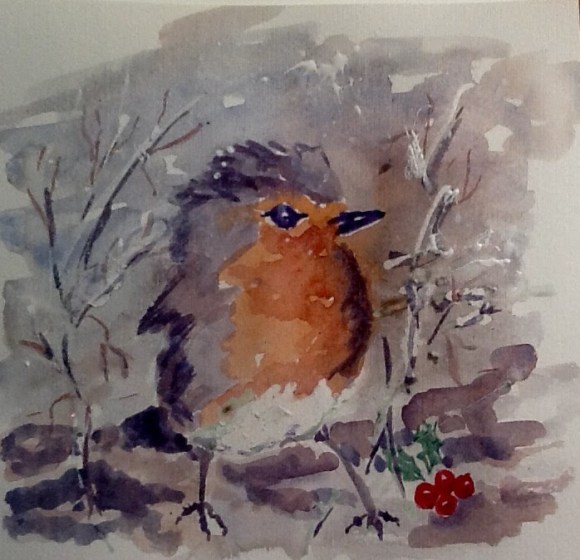



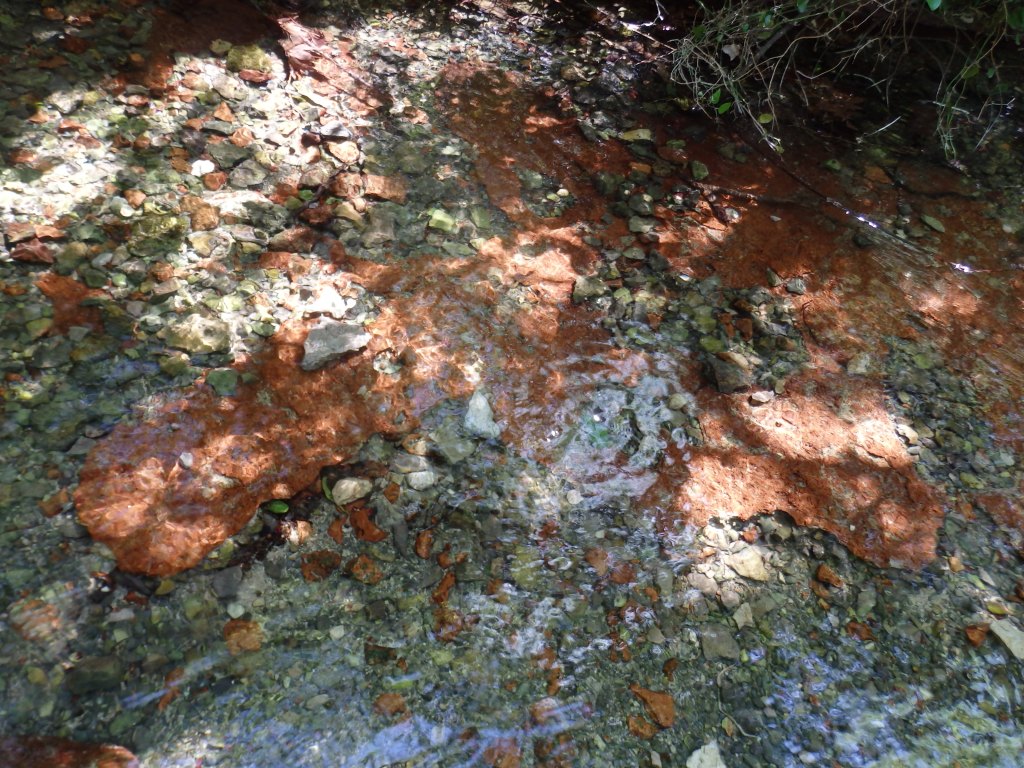
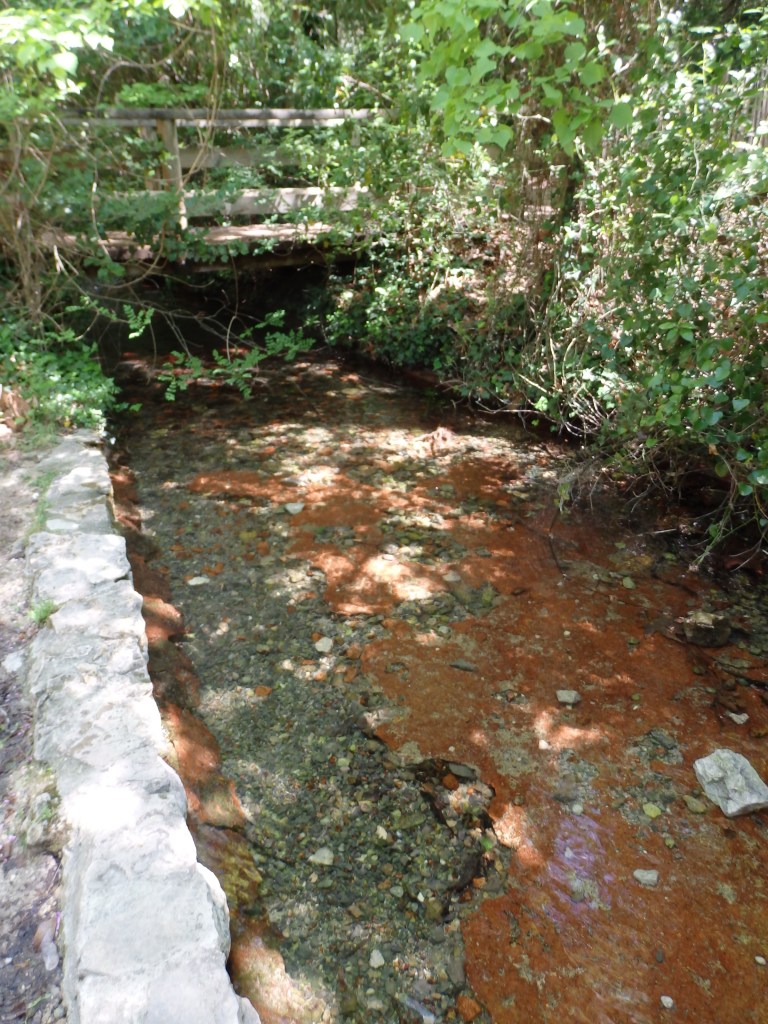


 Borderless