There is no bar to losing myself in an imaginary world.
I can soar high on the wings of a song in my mind.

-- Tagore, Losing Myself
Painting of Rabindranath Tagore (7th May 1861- 7th August 1941) by his nephew, Gaganendranath Tagore (1867-1938). Courtesy: Creative Commons
Soaring on imaginary wings, on Rabindranath Tagore’s 162nd birth anniversary, we explore his vision for a better world while trying to recreate in English the first poem the maestro wrote for his own birthday which was later made into a song, his last birthday celebration as imagined by Aruna Chakravarti in her historical novel, Daughters of Jorsanko, and also the translation of the last song he wrote for the occasion.
As a change-maker, the maestro tried to close gaps by both his actions— Santiniketan and Sriniketan — and by his writings. The translations of the birthday songs written by the maestro himself brings to the fore what he looked forward to and prayed for. The fiction explored here creates fantastically independent women Tagore visualised, breaking the boundaries of social conventions. The characterisations can be seen both in the short story translated by Aruna Chakravarti especially for this issue and also in the novel Farewell Song, translated by Radha Chakravarty. This has been brought to attention in Meenakshi Malhotra’s review of the novel. Both the short story and the novel show the emergence of the new independent woman of Tagore’s imagined world. A hundred years later, are we able to accept women as independent as visualised by Tagore? As progressive?
And to round up our section is Professor Fakrul Alam’s musing on seasonal songs of Tagore as he translates the lyrics and discusses their relevance. These also reflect on the maestro’s need to close social gaps as Alam translates in one of the songs:
Rain streams down incessantly
Alas wayfarer; alas disabled, homeless ones!
The wind moans on and on.
In Farewell Song: Revisiting Tagore’s Vision of Modern Love, Meenakshi Malhotra revisits Tagore’s Shesher Kobita, translated by Radha Chakravarty and reflects on the modern woman and romance as shown by Tagore by bringing in a brief comparison between the women leads of Aparichita and the novel. Click here to read.
In Rabindranath’s Monsoonal Music, ProfessorFakrul Alam brings to us Tagore songs in translation and in discussion on the season that follows the scorching heat of summer months. Clickhere to read.
Written in summer of 1899, the poem, ‘Jonmodiner Gaan or Birthday Song’ by Tagore, was later converted to a song, ‘Bhoy Hote Tobo Abhayomaajhe’ (translates as ‘Amidst Fears, May Fearlessness’), by the maestro himself. It can be found in Gitabitan but was published originally as a part of his collection of poems called Kalpana, published in 1900.
Rabindranath Tagore (7th May 1861- 7th August 1941) Courtesy: Creative Commons
BIRTHDAY SONG

Amidst fears, may fearlessness
             Find new life, O Lord.
May poverty be erased by inexhaustible wealth,
May doubt give way to the haven of truth,
Inertness to new-born vitality —
           Confer upon me new life, O Lord.

Amidst my self-centred desires,
          O Lord, may your benevolence
Kindle the yearning for
         Your divine work —
Unite us all;
Amidst joys and sorrows,
Help us find peace —
      Confer new life upon me, O Lord
Below is a rendition of Tagore’s song, Bhoy Hotey Tobo Abhayo Majjhe, by a well-known modern vocalist, Sahana Bajpaie.
(This poem has been translated by Mitali Chakravartywith editorial support from Sohana Manzoor)
PLEASE NOTE: ARTICLES CAN ONLY BE REPRODUCED IN OTHER SITES WITH DUE ACKNOWLEDGEMENT TO BORDERLESS JOURNAL
Keith Lyons interviews Asian Australian poet Adam Aitken about cross-cultural identity, and the challenges of travel, writing, and belonging. Click here to read.
Translations
Gandhiji, a short story by Nabendu Ghosh, has been translated from Bengali by Ratnottama Sengupta. Click here to read.
Khaira, the Blind, a story by Nadir Ali, has been translated from Punjabi by Amna Ali. Click here to read.
Clothes of Spirits, a folktale, has been translated from Balochi by Fazal Baloch. Click here to read.
Many Splendored Love, four poems by Masud Khan, have been translated from Bengali by Fakrul Alam. Click hereto read.
Birds are Alive, has been written and translated from Korean by Ihlwha Choi. Clickhere to read.
Nobo Borshe or on New Year, Tagore’s poem on the Bengali New Year, has been translated from Bengali by Mitali Chakravarty for the occasion this April. Click here to read.
Ratnottama Sengupta shows the impact of Gandhi and his call for non-violence on Nabendu Ghosh as she continues to emote over his message of Ahimsa and call for peace amidst rioting. Click here to read.
The night has nearly come to an end.
The old year is almost past.
Under this dust, it will lay down
Its worn-out life at last.
Whether friend or foe,      wherever you go,
Old wrongs cast
Away. On this auspicious day,
Old grievances shed as the old year parts.

— Nobo Borshe or on New Year by Tagore
Art by Sohana Manzoor
Mid-April, Thailand celebrates Songkran and Cambodia, Thingyan — water festivals like Holi. These coincide with the celebration of multiple New Years across Asia. Sikhs celebrate Baisakhi. Kerala celebrates Bishu and Tamil Nadu, Puthandu. Nepal celebrates Nava Varsha and Bengal Nobo Borsho or Poila Boisakh. A translation of Tagore’s poem on the Bengali New Year in spirit asks us to dispense with our past angst and open our hearts to the new day — perhaps an attitude that might bring in changes that are so needed in a world torn with conflicts, hatred and anger. The poet goes on to say, “I want to tie all lives with love” but do we do that in our lives? Can we? Masud Khan’s poems on love translated by Professor Fakrul Alam explore this from a modern context. From Korea, Ihlwha Choi tells us in his translation, “Loving birds is like loving stars”. But the translation that really dwells on love bringing in changes is Nabendu Ghosh’s ‘Gandhiji’, translated by Ratnottama Sengupta, his daughter. The short story by Ghosh highlights the transformation of a murderous villain to a defender of a victim of communal violence, towering above divides drawn by politics of religion.
Another daughter who has been translating her father’s works is Amna Ali, daughter of award-winning Punjabi writer, Nadir Ali. In ‘Khaira, the Blind‘, the father-daughter duo have brought to Anglophone readers a lighter narrative highlighting the erasure of divides and inclusivity. A folktale from Balochistan, translated by Fazal Baloch, echoes in the footsteps of ‘Emperor’s New Clothes’ — a story that can found in the Andersen’s Fairy Tales published in the nineteenth century. I wonder which narrative had come first? And how did it cross cultures retaining the original ideas and yet giving it a local colour? Was it with traders or immigrants?
That such narratives or thoughts are a global phenomenon is brought to the fore by a conversation between Keith Lyons and Asian Australian poet Adam Aitken. Aitken has discussed his cross-cultural identity, the challenges of travel, writing, and belonging. Belonging is perhaps also associated with acceptance. How much do we accept a person, a writer or his works? How much do we empathise with it — is that what makes for popularity?
Cross cultural interactions are always interesting as Rhys Hughes tells us in his essay titled ‘My Love for RK Narayan’. He writes: “Narayan is able to do two contradictory things simultaneously, namely (1) show that we are all the same throughout the world, and (2) show how cultures and people around the world differ from each other.” The underlying emotions that tie us together in a bond of empathy and commonality are compassion and love, something that many great writers have found it necessary to emphasise.
Mitra Phukan’sWhat Will People say?: A Novel is built around such feelings of love, compassion and patience that can gently change narrow norms which draw terrifying borders of hate and unacceptance. We carry an excerpt this time from her ‘Prologue’. Somdatta Mandal has reviewed Chitra Banerjee Divakurni’s latest , Independence. Starting from around the time of the Indian Independence too is Song of the Golden Sparrow – A Novel History of Free India by Nilanjan P. Choudhary, which has been discussed by Rakhi Dalal. The Partition seems to colour narratives often as does the Holocaust. Sometimes, one wonders if humanity will ever get over the negative emotions set into play in the last century.
Closer to our times, when mingling of diverse cultures is becoming more acceptable in arts, Basudhara Roy introduces us to Bina Sarkar Ellias’s Ukiyo-e Days…Haiku Moments, a book that links poetry to a Japanese art-form. While a non-fiction that highlights the suffering of workers by enforcing unacceptable work ethics, Japanese Management, Indian Resistance: The Struggles of the Maruti Suzuki Workersby Anjali Deshpande and Nandita Haksar has been reviewed by Bhaskar Parichha. The narrative, he writes, “tells the story of the biggest car manufacturer in India through the voices of the workers, interviewed over three years. They give us an understanding that the Maruti Suzuki revolution wasn’t the unmitigated success it was touted to be when they tell us about their resistance to being turned into robots by uncompromising management.” That lack of human touch creates distress in people’s hearts, even if we have an efficient system of management and mass production is well elucidated in the review.
These changes are reflected in our musings too. Sengupta has written on how change is wrought on a murderous villain by the charisma of Gandhi in her father’s fiction, as well as this world leader’s impact on Ghosh and her. Devraj Singh Kalsi addresses food fads with a pinch of sarcasm. From Japan, Suzanne Kamata has written of a little island with Greek influences, a result of cultural ties brought in by the emperor Hirohito. Ravi Shankar takes us to Pokhara, Nepal, and Meredith Stephen expresses surprise on meeting a shipload of people from Colorado in the far reaches of the Southern Hemisphere while on her sailing adventures with beautiful photographs. Stories by moderns reflect diverse nuances depicting change. While Brindley Hallam Dennis writes of the passing of an era, PG Thomas integrates the past into the present to reflect how they have a symbiotic structure in the scheme of creating or recreating natural movements through changes wrought over time in his story. Paul Mirabile explores the darker recesses of the human existence in his fiction. As if in continuation, the excerpt from Rhys Hughes’ The Wistful Wanderings of Perceval Pitthelmseems to step out of darker facets of humanity with a soupçon of wit at its best.
To create a world that endures, one looks for values that create inclusivity as reflected in these lines from Charles Chaplin’s My Autobiography, “Mother illuminated to me the kindliest light this world has ever known, which has endowed literature and the theatre with their greatest themes: love, pity and humanity.” This quote starts off a wonderful essay from film-buff Nirupama Kotru. Her narrative carries the tenor of Chaplin’s ‘themes’ to highlight not only her visit to the actor’s last home in Switzerland but also glances at his philosophy and his contributions to cinema across borders.
Our issue rotates around changes and the need for love and compassion to rise in a choral crescendo whirling with the voices of Tagore, Charles Chaplin as well as that of twenty-first century writers. Perhaps this new year, we can move towards a world – at least an imagined world — where love will wipe away weapons and war, where love will take us towards a future filled with the acceptance of myriad colours, where events like the Partition and the Holocaust will be history, just like dinosaurs.
Huge thanks to all our readers and contributors, some of whom may not have been mentioned here but are an integral and necessary part of the issue. Do pause by our April edition. I would also like to give my thanks to our indefatigable team whose efforts breathe life into our journal every month. Sohana Manzoor needs a special mention for her lovely artwork.
Written in April 1894 for the Bengali New Year, Tagore’s poem, Nobo Borshe, was part of his poetry collection called Chitra, published in 1896.
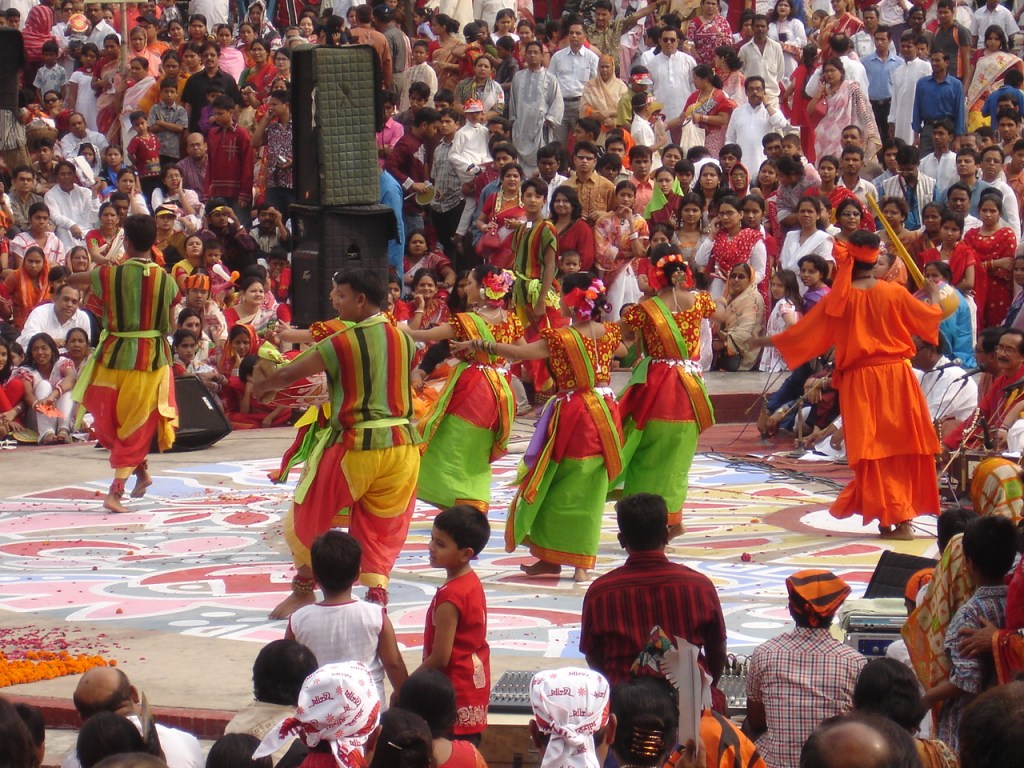
Bengali New Year Celebrations in Dhaka. Courtesy: Creative Commons. Poila Boisakh or Bengali New Year is celebrated in West Bengal, India and Bangladesh. Huge festivities are held in Santiniketan, the University started by Tagore. Multiple Asian New Years across Thailand, Nepal, India and more countries are celebrated mid-April.
The night has nearly come to an end.
The old year is almost past.
Under this dust, it will lay down
Its worn-out life at last.
Whether friend or foe,    wherever you go,
Old wrongs cast
Away. On this auspicious day,
Old grievances shed as the old year departs.

Today, I make new resolutions
Within my heart.
But, when I am reborn, maybe,
I will not recollect this part.
My judgement, perchance,    might be harsh.
Another’s tearful pleas thwart.
On this new-year’s morn,
I beg for clemency from the start.

As today blends into the morrow,
the future continues, unfathomable.
Will the current love and happiness
Still persist, be stable?
The flickering light     may stop tomorrow night.
Our home may be steeped with sable.
Come, this New Year’s Day,
Give what you are able.

Vast and limitless is this world.
There are so many countries.
Where will we find the confluence of
All these people and their synergies?
Spread good cheer,    with a smile appear,
Like flowers on the same trees.
If you cannot do this daily,
At least come close once please.

The time to meet will pass.
We do not know where we will go.
In the middle of eternity, we may
Never find friend or foe.
Joys and sorrows     will leave no furrows,
They will disappear like bubbles. So,
Glance at your beloved’s
Face forevermore.

For our own personal petty gains,
We raise a ruckus.
For self-conceit and blind beliefs,
We become unjust.
Today I give my best,     I dedicate
My life thus —
I will be content with what you give,
And not expect too much.

I will embrace with daily patience,
All burdens and sorrows.
I will tread the difficult path, my
Life’s mission follow.
If I break my vow,    weakened by this tired brow,
With humility, I will my head bow.
I will accept the burden
Of all my flaws.

If life seems meaningless, if there are sorrows —
They are all in transience.
It will all be wiped away in life’s
Futile insipience.
Are you alone on this earth?    Beauty, pain, hurts,
Can be found in all ambience.
You are but a tiny speck in the
Endlessness of human existence.

As long as you exist, shine
Like a star.
If you do not find happiness,
Let there be peace in your heart.
If you cannot survive,     timeless conflicts outlive,
If defeats bar,
Then learn to die with
Sincerity on your part.

In this life’s journey, who can say how
Far we need to go
While stepping on the razor’s edge of
Heartrending sorrow?
Again, in the dark,     we walk the fiery path.
At least on this day, please pardon.
With the old year
Let all the old grudges go.

There goes, there goes the time,
My past departs.
On this dawn, with tears express
Your indebtedness, O heart.
Fill the cup of life    with joys and strife.
Tell her, her memories will stay past
All times, forever.
I dedicate to you my past.

This dawn heralds new life in the
New Year.
I want to tie all lives with love,
But I hesitate, I fear.
Do not send away     visitors on this day.
Welcome the New Year,
Filling the pitcher with
Virtuous tears.
This poem has been translated by Mitali Chakravarty with editorial support from Sohana Manzoor and Anasuya Bhar
PLEASE NOTE: ARTICLES CAN ONLY BE REPRODUCED IN OTHER SITES WITH DUE ACKNOWLEDGEMENT TO BORDERLESS JOURNAL
A translation from Nabendu Ghosh’s autobiography, Eka Naukar Jatri(Journey of a Lonesome Boat), translated by Dipankar Ghosh, from Bengali post scripted by Ratnottama Sengupta. Clickhereto read.
Ueharaby Kamaleswar Barua has been translated from Assamese and introduced by Bikash K. Bhattacharya. Clickhere to read.
Kurigram by Masud Khan has been translated by Professor Fakrul Alam from Bangla. Clickhere to read.
Bonfire by Ihlwha Choi has been translated from Korean by the poet himself. Clickhere to read.
In Indian Pale Ale, Rhys Hughes experiments with words and brews. Click here to read.
Conversation
Being fascinated with the human condition and being vulnerable on the page are the two key elements in the writing of fiction, author and poet Heidi Northtells Keith Lyons in a candid conversation. Clickhere to read.
In Multicultural Curry, Suzanne Kamata reflects on mingling of various cultures in her home in Japan and the acceptance it finds in young hearts. Clickhere to read.
Ratnottama Sengupta explores the poetry in lyrics of Bollywood songs, discussing the Sahityotsav (Literary Festival) hosted by the Sahitya Akademi. Clickhere to read.
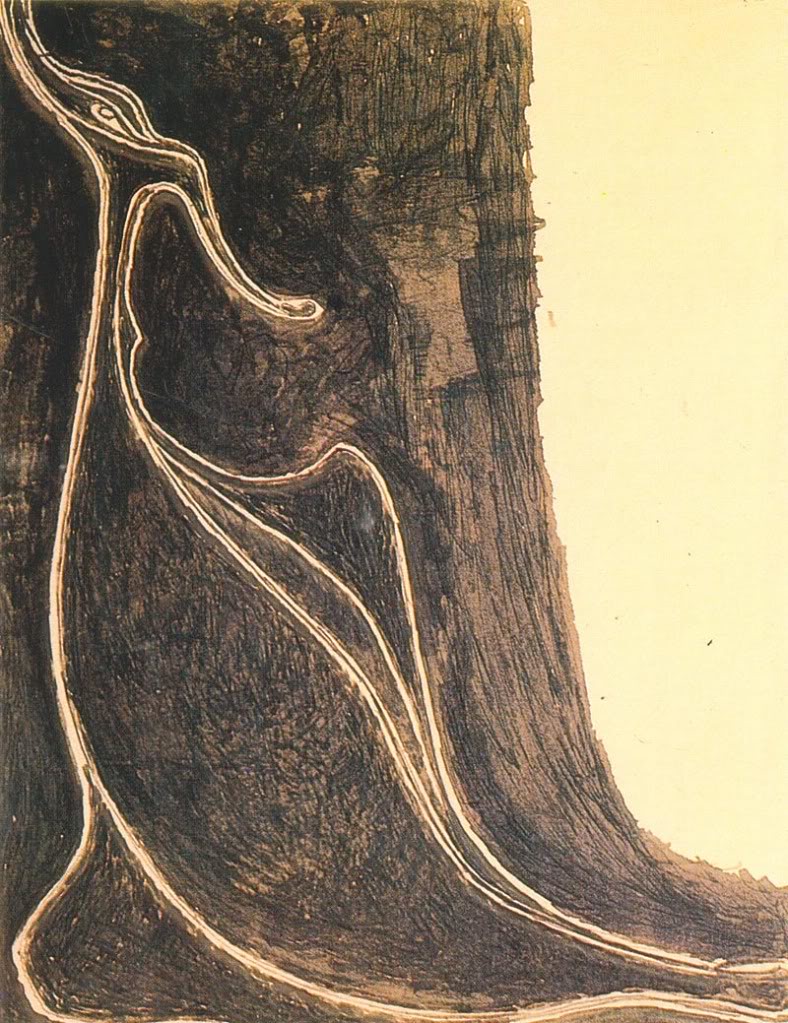
Borondala(Basket of offerings) was written by Tagore in 1928 and published in a collection called Mahua in 1929.
Mahua(1929), named after Madhuca Longifolia, a tropical treeBorondala or basket offerings. Courtesy: Creative Commons
BASKET OF OFFERINGS

Today, in this quiet bower,
Within my being
My offering has grown
Into a garland of light.
In this spring, with climbers
Of leaves and flowers,
My verses waft in the dawn
Of the golden rays.
My whole being dances
Swinging with rhythm.
If this song doesn’t find form
I will die of shame.
Oh beloved, my body reverberates
To the beat.
I have not got you an
external offering,
My prayer flows from my own
Being like a stream.
My heart leaps
Free of my being
Impatiently pleading
A meeting with you.
Just as the stars glimmer
With light in the dark night,
A spark awakens within
My body.
This luminosity illuminates
All my work.
This poem has been translated by Mitali Chakravarty with editorial input from Sohana Manzoor & Anasuya Bhar
PLEASE NOTE: ARTICLES CAN ONLY BE REPRODUCED IN OTHER SITES WITH DUE ACKNOWLEDGEMENT TO BORDERLESS JOURNAL
Figments caught straying in whispers of a dream,
Weave together till they form a visible stream,
Filling a void with voices that sing,
With freedom and impunity ring,
Giving credence to a distant, imagined realm.

— Introduction, Monalisa No Longer Smiles: An Anthology of Writings from across the World
As we complete three years of our virtual existence in clouds, connecting, collecting and curating words of ideators, we step into our fourth year with the pleasurable experience of being in bookshops in hardcopy too. Monalisa No Longer Smiles: An Anthology of Writings from across the World, our first hardcopy anthology, takes us into the realm of real books which have evolved over eons in history. This anthology connects us to those who hesitate to step into the virtual world created by technology. And there are many such people – as ingrained in the human heritage is a love for rustling paper and the smell of books. We have had some excellent reviews, praising not just the content but also the production of the book – the cover, the print and the feel. The collection bonds traditional greats with upcoming modern voices. We are grateful to our publisher, Om Books International, Shantanu Ray Chaudhuri, Jyotsna Mehta and their team for giving our book a chance. We do look forward to more anthologies hopefully in the future.
The writings we have collected over the last three years are reflective of diverse voices— some in concurrence with our thought processes and some in discussion or even in divergence. We have a variety of forms — poetry, conversations, fiction and non-fiction. Some are humorous and some serious. We try to move towards creating new trends as reflected in our anthology and our journal. For instance, Monalisa No Longer Smiles starts with an experiment — a limerick was adapted to express the intent of our book and journal; whereas normally this form is used to express light, or even bawdy sentiments. Perhaps, as the limerick says, we will find credence towards a new world, a new thought, a restructuring of jaded systems that cry out for a change.
Borderless Journaldid not exist before 2020. Within three years of its existence, our published pieces have found voices in this anthology, in other books, journals and even have been translated to a number of languages. Our own translation section grows stronger by the day supported by translators like Aruna Chakravarti, Fakrul Alam, Radha Chakravarty and Somdatta Mandal. Our interviews and conversations probe to find similarities and divergences in viewpoints. Our stories tell a good tale rather than indulge in stylistic interplay and our poetry is meant to touch hearts, creating a bond between the writers and anglophone readers. What we hope to do is to expose our readers to writing that they can understand. Writers get lost at times with the joy of creating something new or unique and construct an abstraction that can be intimidating for readers. We hope to host writing that is comprehensible, lucid and clear to the lay person.
What we look forward to homing in the coming months is a mingling of different art forms to birth new ideas that will help our species move progressively towards a world in harmony, filled with peace and love, giving credence to voices like that of Tagore, Nazrul or Lennon. “Imagine there’s no heaven…Imagine there’s no countries…no religion, too…Imagine all the people/ Livin’ life in peace…Imagine all the people/ Sharing all the world…” The need to redefine has been felt and as Lennon says in his last paragraph: “You may say I’m a dreamer/ But I’m not the only one/ I hope someday you’ll join us/ And the world will live as one.” With this hope, we continue our journey into another year – a new adventure that will take us to a universe where heaven can be found on Earth, grounded and real, within the human reach and can be shared without war, greed, hatred and anger.
Here, we share with you a few iconic pieces that have found their way to our pages within the last three years.
Professor Anvita Abbi, a Padma Shri, discusses her experience among the indigenous Andamanese and her new book on them, Voices from the Lost Horizon. Click here to read.
In Conversation with Akbar Barakzai, a ‘Part-time Poet’ in Exile: The last interview of Akbar Barakzai where he says, ‘The East and the West are slowly but steadily inching towards each other. Despite enormous odds “the twain” are destined to “meet” and be united to get rid of the geographical lines…’ Click hereto read more.
Half-Sisters: Sohana Manzoor explores the darker regions of human thought with a haunting psychological narrative about familial structures. Click hereto read.
Rituals in the Garden: Marcelo Medone discusses motherhood, aging and loss in this poignant flash fiction from Argentina. Click here to read.
Navigational Error: Luke P.G. Draper explores the impact of pollution with a short compelling narrative. Click here to read.
Pandies’ Corner: These narratives highlight the ongoing struggle against debilitating rigid boundaries drawn by societal norms, with the support from organisations like Shaktishalini and Pandies. Click here to read.
Dilip Kumar: Kohinoor-e-Hind: Ratnottama Sengupta recollects the days the great actor sprinted about on the sets of Bombay’s studios …spiced up with fragments from the autobiography of Sengupta’s father, Nabendu Ghosh. Click here to read.
Farewell Keri Hulme: A tribute by Keith Lyons to the first New Zealand Booker Prize winner, Keri Hulme, recalling his non-literary encounters with the sequestered author. Click here to read.
Tagore Translations, including translations by Aruna Chakravarti, Fakrul Alam, Somdatta Mandal and Radha Chakravarty. Click here to read.
Nazrul Translations, including Professor Fakrul Alam and Sohana Manzoor. Click here to read.
Gandhi & Robot by Thangjam Ibopishak, translated from the Manipuri by Robin S Ngangom. Click here to read.
Songs of Freedom by Akbar Barakzai, poems translated from Balochi by Fazal Baloch. Clickhere to read.
Give Me A Rag, Please:A short story by Nabendu Ghosh, translated by Ratnottama Sengupta, set in the 1943 Bengal Famine, which reflects on man’s basic needs. Click here to read.
Thanks to our team, contributors and readers for being a part of our journey. Let’s sail onwards…
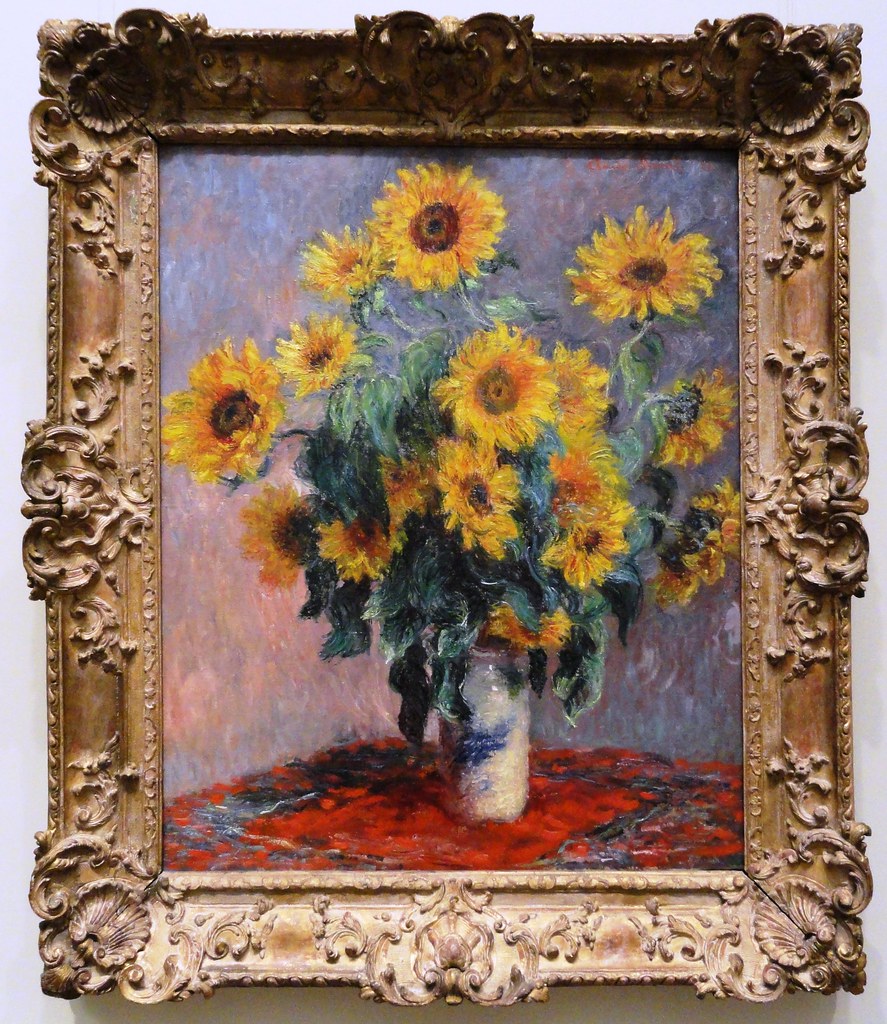
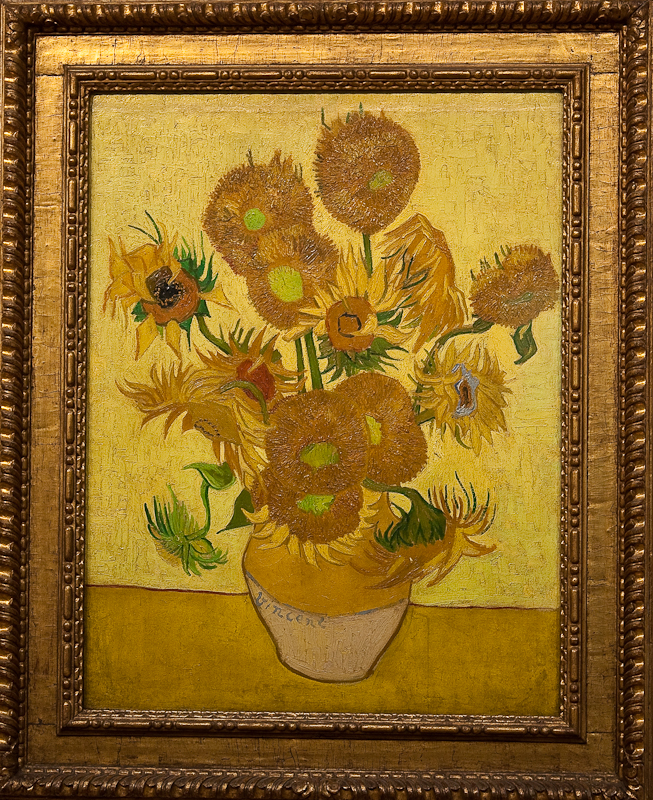
Sunflowers by Calude MonetSunflowers by Vincent VangoghCourtesy: Creative Commons
With resilience, they have withstood what could have become an international disaster for all humankind — an outbreak of a Third World War. The spirit that has resisted the ongoing invasion of Ukraine is admirable. They have stayed strong without bowing, crumbling or annihilating themselves in the wake of an onslaught that hurts humanity across all borders in different degrees and creates a huge population of refugees. We gave voice to one such refugee, Lesya Bakun — not just in our site but also in our first anthology — Monalisa No Longer Smiles: An Anthology of Writings from across the World.
This year, we quest for hope towards peace, a better, more accepting world with poetry on Ukraine. One of the poems here is accompanied by art from Ukrainian artist, Maria Kirichenko. We feature some of the poems gathered on Ukraine over the year.
“How Many Times Must the Cannonballs Fly…?” Featuring poetry by Lesya Bakun, Rhys Hughes, Ron Pickett, Michael R Burch, Kirpal Singh, Suzanne Kamata, Mini Babu, Malachi Edwin Vethamani, Sybil Pretious and Mitali Chakravarty. Click here to read.
Why is the vast ocean restless?
What bonds does it want to sunder?
It howls like a child in distress.
With incomprehensible words, it blusters.
Over eons, it rises, it soars,
It swells with an exhilarated gait —
Turbulent and huge, it roars.
The calm sky silently hears it reverberate.
Crushing its heart, it flays, it beats,
Against the rocky seaside. At high tide, its waves
Rise to smash, heralding apocalyptic feats.
Yet as the tide ebbs, the ocean gently laves
The dark core of nature, bordered by mud.
The ocean of tears continues to sway.
Each moment, desires staunched at the bud
Want to cry and drench the world away.
I yearn to be the scribe who translates
The ocean’s upheaves for humankind,
Calm the eternal unrest that agitates
The sea breeze to swish, shush and pine.
I yearn that my song rings day and night
Harmonising tunes with the Earth’s infinite…
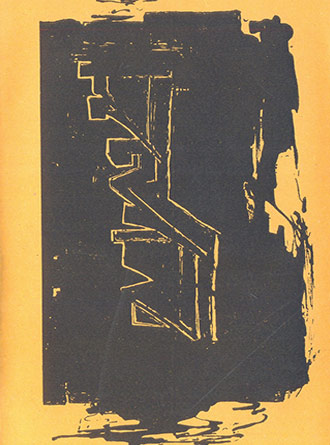
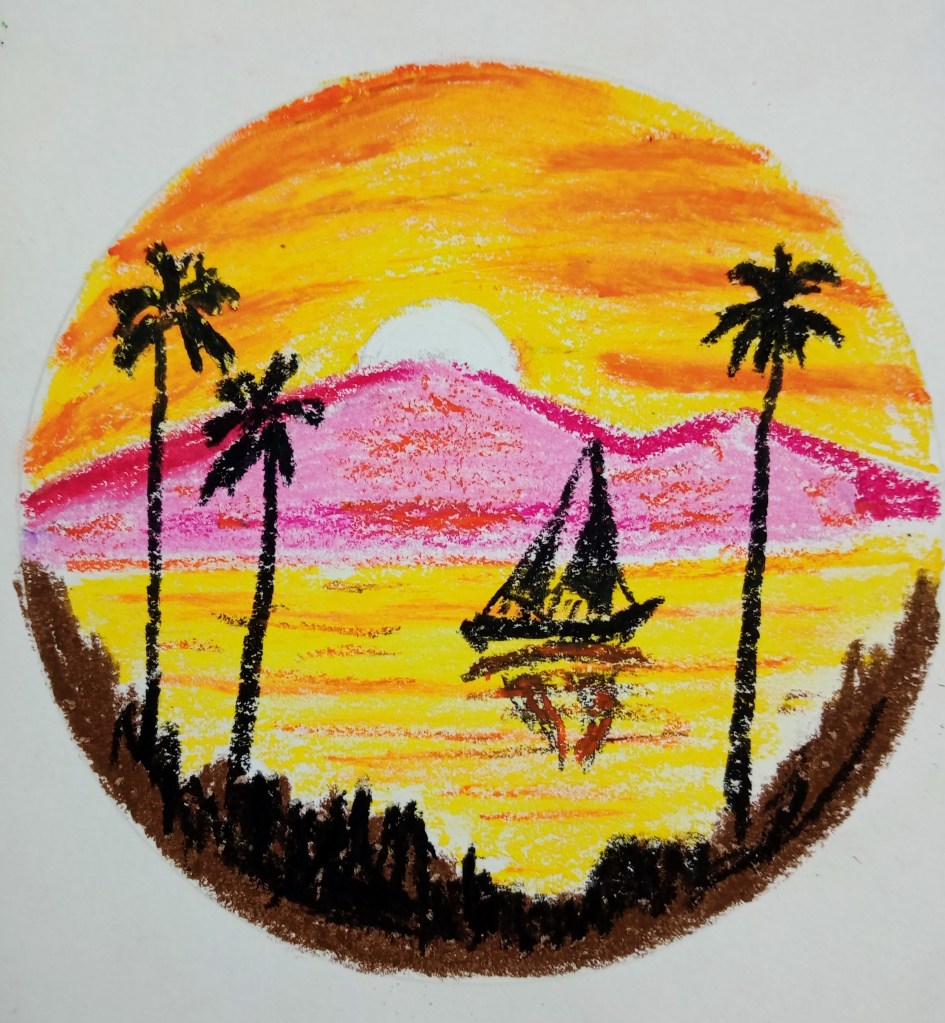
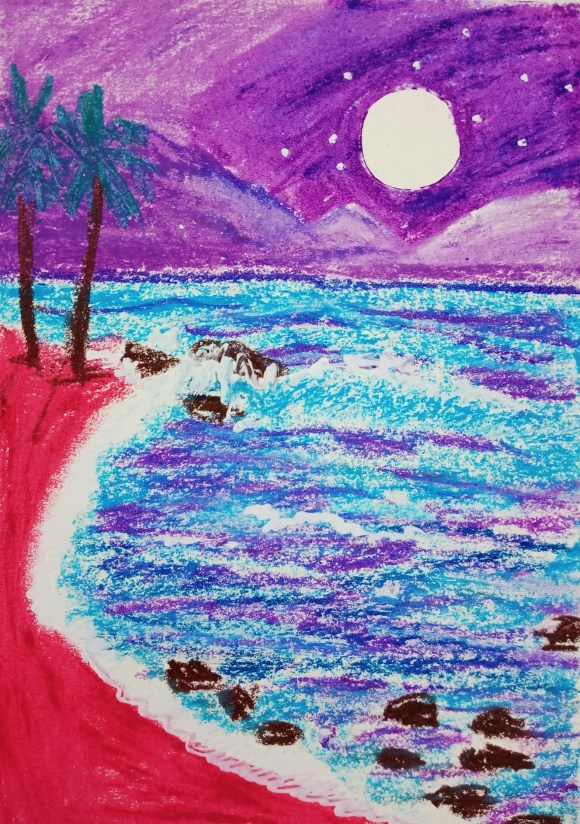
This poem has been translated by Mitali Chakravarty with editorial input from Sohana Manzoor and Anasuya Bhar & Art by Sohana Manzoor
PLEASE NOTE: ARTICLES CAN ONLY BE REPRODUCED IN OTHER SITES WITH DUE ACKNOWLEDGEMENT TO BORDERLESS JOURNAL






 Borderless