And as imagination bodies forth
The forms of things unknown, the poet's pen
Turns them to shapes and gives to airy nothing
A local habitation and a name

 A Midsummer Night's Dream (1595) by William Shakespeare
Famous lines by Shakespeare that reflect on one of the most unique qualities in not only poets — as he states — but also in all humans, imagination, which helps us create our own constructs, build walls, draw boundaries as well as create wonderful paintings, invent planes, fly to the moon and write beautiful poetry. I wonder if animals or plants have the same ability? Then, there are some who, react to the impact of imagined constructs that hurt humanity. They write fabulous poetry or lyrics protesting war as well as dream of a world without war. Could we in times such as these imagine a world at peace, and — even more unusually — filled with consideration, kindness, love and brotherhood as suggested by Lennon’s lyrics in ‘Imagine’ – “Imagine all the people/ Livin’ life in peace…”. These are ideas that have been wafting in the world since times immemorial. And yet, they seem to be drifting in a breeze that caresses but continues to elude our grasp.
Under such circumstances, what can be more alluring than reflective Sufi poetry by an empathetic soul. Featuring an interview and poetry by such a poet, Afsar Mohammad, we bring to you his journey from a “small rural setting” in Telangana to University of Pennsylvania, where he teaches South Asian Studies. He is bilingual and has brought out many books, including one with his translated poetry. Translations this time start with Bankim Chandra Chattopadhyay’s advice to new writers in Bengali, introduced and brought to us by Abdullah-Al-Musayeb. Tagore’s seasonal poem, ‘Megh or Cloud’, has been transcreated to harmonise with the onset of monsoons. However, this year with the El Nino and as the impact of climate change sets in, the monsoons have turned awry and are flooding the world. At a spiritual plane, the maestro’s lines in this poem do reflect on the transience of nature (and life). Professor Fakrul Alam’s translation of Masud Khan’s heartfelt poetry on rain brings to the fore the discontent of the age while conveying the migrant’s dilemma of being divided between two lands. Fazal Baloch has brought us a powerful Balochi poet from the 1960s in translation, Bashir Baidar. His poetry cries out with compassion yet overpowers with its brutality. Sangita Swechcha’s Nepali poem celebrating a girl child has been translated by Hem Bishwakarma while Ihlwha Choi has brought his own Korean poem to readers in English.
An imagined but divided world has been explored by Michael Burch with his powerful poetry. Heath Brougher has shared with us lines that discomfit, convey with vehemence and is deeply reflective of the world we live in. Masha Hassan is a voice that dwells on such an imagined divide that ripped many parts of the world — division that history dubs as the Partition. Don Webb upends Heraclitus’s wisdom: “War is the Father of All, / War is the King of All.” War, as we all know, is entirely a human-made construct and destroys humanity and one cannot but agree with Webb’s conclusion. We have more from Kirpal Singh, Ryan Quinn Flanagan, Nivedita N, John Grey, Carol D’Souza, Vernon Daim, George Freek, Saranyan BV, Samantha Underhill and among the many others, of course Rhys Hughes, who has given us poetry with a unique alphabetical rhyme scheme invented by him and it’s funny too… much like his perceptions on ‘Productivity’, where laziness accounts for an increase in output!
Ratnottama Sengupta takes us back to how imagined differences can rip humanity by sharing a letter from her brother stationed in Bosnia during the war that broke Yugoslavia (1992-1995). He writes: “It is hard to be surrounded by so much tragedy and not be repulsed by war and the people who lead nations into them.” This tone flows into our book excerpts section with Red Sky Over Kabul: A Memoir of a Father and Son in Afghanistanby Baryalai Popalzai and Kevin McLean. Popalzai was affected by the Russian invasion of Afghanistan in 1980 and had to flee. A different kind of battle can be found in the other excerpt from The Blue Dragonfly – healing through poetry by Veronica Eley – a spiritual battle to heal from experiences that break.
In our reviews section, KPP Nambiar reviews The Stolen Necklace: A Small Crime in a Small Town by Shevlin Sebastian and VK Thajudheen, a book that retells a true story. Sangeetha G’s novel, Drop of the Last Cloud, we are told by Rakhi Dalal, explores the matrilineal heritage of Kerala, that changed to patriarchal over time. Bhaskar Parichha reviews Burning Pyres, Mass Graves and A State That Failed Its People: India’s Covid Tragedy by Harsh Mander. Parichha emphasises the need never to forget the past: “It is a powerful book and sometimes it is even shattering. The narrative is a live remembrance of a national tragedy that too many of us wish to forget when we should, instead, etch it in our minds so that we can prevent another national tragedy like this one from recurring in the future.” While we need to learn from the past as Parichha suggests, Somdatta Mandal has given a review that makes us want to read Ujjal Dosanjh’s book, The Past is Never Dead: A Novel. She concludes that it “pays tribute to the courage and tenacity of the human spirit and its capacity for hope despite all odds.”
We have more content than mentioned here… all of it enhances the texture of our journal. Do pause by our July issue to savour all the writings. Huge thanks to all our contributors, artists, all our readers and our wonderful team. Without each one of you, this edition would not have been what it is.
Community weed-pulling is one of the things that produces anxiety in me. At times like this, when we are summoned to the shrine on a Sunday morning, I miss my Japanese mother-in-law. You only have to send one person from your household, and for as long as we lived with her, she was the one to go.
Sometimes my husband takes part, but on this particular weekend – well, most weekends – he was playing golf. (He is the three-time overall champion at his golf club.)
I am an insomniac and an introvert. The evening before, I was thinking about how I would sleep in the next morning, and then I would make a pot of coffee and continue reading this wonderful novel that I had been immersed in.
“Tomorrow is weed-pulling at the shrine,” my husband said. “Sorry. You’ll have to go.”
I must admit that I did not always look at the memos attached to the clipboard circulated in the neighbourhood. (No, we did not have a Facebook group or use What’s App.) The groundskeeping had probably been mentioned, and I had ignored it.
Most of our neighbours are farmers, growing carrots, rice, and smaller amounts of other vegetables such as corn. Many families have lived here for generations, and know each other from helping out at harvest time. My husband and I are educators – him at a nearby high school, me at a teacher’s college. We moved into this neighbourhood to look after my mother-in-law, who has now passed on. I don’t really know most of the people who live in the houses nearby.
The neighbours probably know more about me than I know about them. Before she went, my mother-in-law suffered from mental illness. Her delusions included stories about me – my alleged affairs, my theft of her dishes and other things – which she shared with the neighbours. I always wonder if these rumours come to mind when the farmers look at me. Like, not only is there a foreigner in their midst, but do they also think I’m some kind of Jezebel?
My husband said that weed-pulling would be from eight thirty to nine o’clock. Before leaving very early for golf at his fancy club in the mountains, he laid out a cloth hat with a back flap to keep the sun off my neck, a pair of guntei – white cotton gloves sold in packs and used for all manner of outdoor chores – sleeves for protecting my arms from the sun, and some money – annual “dues” for the neighbourhood committee. He didn’t prepare a gardening tool for me.
I got dressed, had a cup of coffee, and fed the cats. I wondered whether I should carry a mask. Probably, yes. Although the government had put out a statement weeks earlier that pandemic protocols need no longer be followed, and the local newspaper had stopped posting the daily number of COVID-19 cases (which here, in Tokushima, had been zero for weeks at a time), most people still wore those white paper masks. They wore masks while outdoors, washing a car, alone; while driving alone; while shopping; while out walking for exercise. I had pretty much stopped wearing a mask, unless someone asked me to, like while visiting the buffet at a work-related party, but on this occasion, I figured I had better put one on.
I recalled how early in the pandemic, someone in our neighbourhood had returned from a cruise on the Diamond Princess and tested positive for the coronavirus. That person had been pelted with carrots. A window was broken in their home. They’d had to move away, at least until the furore died down. I recalled how our son had been stranded in South Carolina for months, after being kicked off campus during studies abroad. My sister-in-law had sent urgent messages wondering when he would leave her house. Meanwhile, my husband forbade him from returning to our home in Japan. What if he caught the virus en route? We would become pariahs. These neighbours would torment us, too.
I put on the hat, but since I was wearing a long-sleeved red shirt, I didn’t wear the sleeves. When I arrived at the grounds of the wooden shrine, raking and weed-pulling was already underway. Of course, everyone was wearing a mask. Women in aprons and hats similar to mine squatted on the ground, hacking at weed sprouts with small scythes. I realised that I should have brought a tool. A man sitting on the shrine steps was collecting money. I waited while he wrote out a receipt, after which he handed me a plastic bag containing coloured garbage bags (orange for plastics, pink for combustibles) and a bottle of Pocari Sweat.
I decided to take the swag back home and get a tool. Our house is only a few yards from the shrine; it would only take a minute. I thought about not going back; they probably wouldn’t really miss me. But they would notice I had been there and gone, me with my red shirt. Duty prevailed. I found a trowel in the shed and returned. I found a spot.
I’m probably doing this wrong, I thought, as I loosened the soil with my trowel and tugged at weeds. The woman nearest me — a farmer, no doubt – was pulling briskly with both hands. She wasn’t using a tool. Huh. I never did things “correctly” in Japan. There was the time when I was called out for eating curry and rice with a fork instead of a spoon. There was the time when I was helping serve lunch at my daughter’s kindergarten and I was chastised for heaping the rice too high in the rice bowl – as one would prepare a bowl of rice for the dead.
Then, an ambulance appeared. Apparently, in those few minutes when I had been gone, retrieving my gardening tool, someone had fainted or otherwise felt poorly. I looked around and saw an elderly man lying on the shrine steps. He was wearing a mask. I wondered if he had felt faint because he was exerting himself on a warm morning while wearing that mask. I wondered why he didn’t take it off. He lay completely still. From where I crouched, he resembled a corpse with a white handkerchief over his face.
I heard someone say that the man was alright, and he didn’t need to go to the hospital. The ambulance attendants dragged a gurney over anyway and took a look at him. They lingered for a while, then left. The man remained prone on the shrine steps, completely still, the white mask on his face.
The other women seemed to have no problem crouching and pulling, but I had to stand up from time to time to stretch my legs. My cotton-gloved fingers scrabbled at dried leaves and uprooted weeds, which I shook the dirt from and tossed into a net. I kept glancing at my watch. Nine o’clock came and went.
Finally, someone approached and announced that weed-pulling was over. I helped another woman carry the net to a flat-bed truck heaped with leaves. I arched my back, happy to stand up straight, and edged toward the periphery of the group, where a few younger women stood. I was done. I could go back to my book and my coffee.
“From now, we will have disaster training,” a man announced.
Oh, no. This could go on all day.
“Are you going to stay?” one of the younger women asked me.
It occurred to me that I could set an example – maybe not a good one, in the eyes of the neighbourhood committee, but I could give these women the courage to leave. I sensed they were outliers like me. We could be rebels together.
“No,” I said. “I’m escaping.”
They giggled and followed me away from the shrine.
Suzanne Kamatawas born and raised in Grand Haven, Michigan. She now lives in Japan with her husband and two children. Her short stories, essays, articles and book reviews have appeared in over 100 publications. Her work has been nominated for the Pushcart Prize five times, and received a Special Mention in 2006. She is also a two-time winner of the All Nippon Airways/Wingspan Fiction Contest, winner of the Paris Book Festival, and winner of a SCBWI Magazine Merit Award.
PLEASE NOTE: ARTICLES CAN ONLY BE REPRODUCED IN OTHER SITES WITH DUE ACKNOWLEDGEMENT TO BORDERLESS JOURNAL
Shadows, a poem in Korean, has been translated by the poet himself, Ihlwha Choi. Click hereto read.
Pranor Lifeby Tagore has been translated from Bengali by Mitali Chakravarty. Click hereto read.
Conversations
Shantanu Ray Chaudhuri converses withVinta Nanda about the Shout, a documentary by Vinta Nanda that documents the position of women in Indian society against the backdrop of the #MeToo movement and centuries of oppression and injustice. Click here to read.
When my twenty-three-year-old daughter Lilia, who is deaf, sent me a text saying that she wanted to attend the Osaka Comic Convention, I messaged back “Go ahead!” I figured she would want to go with her friends, fellow manga and anime and Marvel movie enthusiasts. I am more of a literary-novel-type person, unfamiliar with the DC universe. My idea of a good time is reading a book of poetry with a cat on my lap. However, a week or so later, she repeated her desire, along with a GIF of a crying cat, fountains of tears gushing from its eyes. This was followed by three attempted video phone calls while I was at work.
“Do you want me to go with you?” I texted.
“Yes,” she replied.
Well, I could do this for her. On our mother-daughter trip to Paris several years back, she had put up with my dragging her (okay, pushing; she is a wheelchair user) to the Orsay Museum, even though she would have rather gone to the Concierge to look at a lock of Marie Antoinette’s hair. She had made concessions for me, so I could make some for her. Besides, I had never been to a comic convention before. It might be fun. At the very least, I could write about it.
I put her in charge of buying the tickets from the Japanese website. She sent me a screen shot: 25,000 per ticket. What? “That’s really expensive,” I texted her. “I’ll pay for it,” she texted back.
I later found out that admission was only 3,610 yen. The extravagant fees were for a photo opportunity with one of the celebrities who would be headlining the event. One of them played the role of Lilia’s favourite character in her favourite TV series. She had watched all ten episodes of all thirteen seasons, and regularly posted related fan art on her Instagram feed. She had purchased the chance to be in close proximity to the actor.
Sure, it was expensive, but research has shown that experiences are often ultimately more satisfying than things. I know that to be true myself. In Paris, we had a never-to-be-forgotten dinner at the top of the Eiffel Tower. When we went to Hawaii, on our last trip together pre-pandemic, we had gone on an open-door helicopter ride. For Lilia, having her photo taken with the celebrity would probably be just as thrilling. She had also bought a ticket for me.
I didn’t know much about the celebrity. In fact, I knew nothing. I had glimpsed him onscreen, occasionally, when Lilia was bingeing episodes of the show on our widescreen TV. I looked him up on Wikipedia. He had an impressive background. He’d started out in politics, had probably met President Obama, and then transitioned into entertainment. He had kids, whom he was concerned about feeding well. His wife was a university professor, like me, and he’d published a book of poetry, which I immediately ordered.
I started thinking about how I could make the most of this opportunity. As the author of several novels published by small presses, I was always looking for ways to promote my books. I knew that a celebrity endorsement – or even having a famous person be photographed while holding one’s novel – could bring attention to a book. Maybe I could get the celebrity to hold my book during the photo-op, and then I could post it on Instagram.
But then I went to the website for the Comic Con. I came across a notice that one of the celebrities who had been scheduled to appear in Tokyo in 2022, would not be coming after all. The message read, “Due to a last-minute personal issue,” the celebrity “is unable to travel and had to postpone his appearance at this year’s Tokyo Comic Con. He was looking forward to coming back to Japan and seeing everyone. He is deeply sorry and looks forward to coming back to Japan next year.” But the actor was not attending this year either. He had been run over by a snow plow a few months before and was still in recovery. (This was not mentioned on the website.)
Elsewhere on the website, I came across a list of exhibitors, food vendors, celebrity guests (seven men, one woman), and rules regarding the autograph and photo sessions. So many rules! We would not be allowed to hug the celebrities or touch them at all. We would not be allowed to take selfies or other photos with our own smartphones, or bring props (like a book?), or wear masks, or give gifts to the celebrities. Okay, so maybe I wouldn’t be able to ask the TV star to hold my book.
Since the Comic Convention started relatively early, Lilia and I stayed overnight at a nice hotel in Osaka. The next morning, I put on make-up and a pretty dress. I helped Lilia with her hair. We went down to the dining room for a gorgeous buffet breakfast – made-to-order omelettes, tiny French pastries, a big bowl of fresh lychee fruits, and other delights. Although I had splurged on accommodations, I thought that we would take public transportation to the convention site to save money. But that morning, on the third day of the event, the day of our scheduled photo op, rain poured down. We had forgotten to bring waterproof ponchos and umbrellas. I decided we’d go by taxi.
We hopped into a cab at the hotel. The driver was surprised when I mentioned the destination. “We’ll have to go by highway,” he said. That would mean toll fees. But at least we would get there on time, and we would be relatively dry.
The venue, Intex Osaka, was over a bridge on a small island with lots of boxy warehouses. At first, I was amazed by the lack of cars. And people. Were we even in the right place? I didn’t have enough cash on me for a taxi ride back to Osaka Station, and this driver didn’t appear to take credit cards. At last, we reached the huge convention center.
“This is it!” the driver said. Still, no people. He continued to drive around the building, rain spattering his windshield, until, to my relief, we came across some men in uniform waving orange batons, and then to the front, where a long stream of young people holding umbrellas flowed toward the entrance.
Once inside, Lilia flashed our tickets. After a cursory bag check, red paper Comic Con bracelets were fastened to our wrists. I grabbed a map, and tried to get my bearings, but Lilia whipped out her tablet, wrote something on it in Japanese, and showed it to one of the many attendants, a young man wearing a white surgical mask. She’d asked, “Where do we go for the celebrity photos?”
“I’ll show you,” the attendant said. “Follow me.” We scurried past cosplayers dressed up like Spiderman and the Joker and one woman dressed in green carrying a huge candy cane. Some people, not in costume were slurping noodles at a table near a food booth.
Cosplayers. Courtesy: Suzanne Kamata
The attendant indicated an area at the back of the building. We still had a couple of hours before our photo session. “So, we just come here at one fifteen?” I asked. We had an appointment, after all.
“You should get here early,” he said. “At least an hour before.”
I nodded. “Now, where is the Celebrity Stage?”
According to the program, another actor, famous to this crowd, at least, for his role in a movie based on an American comic book, would be participating in a Q and A session onstage in another twenty minutes. I figured we had plenty of time to find a good spot, but when we entered the enormous hall, I saw that all of the seats were filled. We were late.
“This way,” another attendant said, lifting the chain to the wheelchair-accessible area, just to the left of the stage.
We had a good view, but I couldn’t help thinking that at such an event in my native country, the United States, there would probably be a sign language interpreter. In Japan, there was almost never one, unless it was requested in advance. I did my best to interpret for my daughter.
In the program, the celebrity was pictured as bald and sleek. With his dark glasses, he appeared to be the epitome of cool. The man who ambled onto the stage, however, looked a bit scruffy, as off-duty actors often do. He had a beard, glasses, and a leather newsboy cap over his frizzy grey hair. One of his teeth was missing. He greeted the crowd in Japanese and was met with applause.
The emcee tried to engage him in conversation, but he was hard to pin down. He wandered around the stage, joking around. When asked a fan’s earnest question, “What special thing did you have to do to prepare for your role in the film?” he replied, “Nothing.” Later, he was asked if he would appear in another superhero movie. He rubbed his fingers together to indicate it would depend on how much money he was offered, and then, to demonstrate how little most actors actually earn, he took out a one-thousand-yen bill and ripped a tiny corner off. I imagined the horror of all of the frugal, hard-working people in the audience who would never do such a thing. The emcee gently admonished him for tearing money.
Finally, in true Japanese fashion, the emcee asked him to deliver a “special message” to his fans. The celebrity avoided responding to the request, at first, hopping off the stage, and peering into the camera, pretending to check his teeth. Again, “A message for your fans, please?” He got back onstage and adjusted the interpreter’s mic, before, at last, delivering his “message,” one Japanese word: “Hai.”
In this country where everyone was always so orderly and polite, I couldn’t help but be a bit embarrassed by his behaviour. I mean, I wouldn’t have shown up to a writer’s festival or an academic conference without thinking about what I would say. Then again, maybe his performance – and he was performing – was better than him sitting calmly in the chair, giving straight answers. Maybe the unpredictability of this mad genius was entertaining. Maybe just seeing this man who had brought beloved characters to life onscreen, live and in-person, and to be able to pay homage to him, was enough for his fans.
At about 12:10, after we had checked out the exhibitors’ tables and a display of manga posters, I suggested that we get in line for the photo session. Lilia eagerly rolled herself back to the spot we’d been shown to upon arrival. This time, we were early. Not only that, we were first in line. As we waited, Lilia composed a message to the celebrity on her smartphone. I figured that since she was deaf, the convention organisers would allow her to use her phone as a communication device.
A young woman in an orange kimono filed in behind us. More and more people followed. There were other cordoned-off rows for the other celebrities who would be signing autographs and posing for photos, including a Norwegian actor who was known for his role as a cannibal.
When we got closer to the appointment time, an attendant led us to another room, cordoned off like the immigration area of an international airport. Because my daughter uses a wheelchair, we got to take a shortcut. We were still at the head of the line. We were told to put all of our possessions into baskets – again, like the security line at the airport.
“My daughter is deaf,” I explained. “Is it okay if she hangs on to her phone? She just wants to show a few words to the celebrity.”
The attendant shook his head. “Talking to the celebrity is NG.” No good. Prohibited.
Regretfully, I explained what he’d said to my daughter. Lilia, who had also read all the rules on the website, was nonplussed. She put her phone away without complaint.
We stood there, waiting. Although I had the addict’s urge to check my email and scroll through social media, I left my phone in my bag. But I did reach for a notebook and pen.
“What are you doing?” my daughter asked.
“I’m just going to make a few notes,” I told her. “I might write an essay about this.”
“No, you can’t write an essay.” She made an “X” with her arms. No selfies, no touching the celebrity, no talking to the celebrity, and probably no writing about the celebrity.
“I think it’s okay to write an essay,” I said. I scribbled a few words then put the notebook and pen back into my bag.
I asked the attendant where the nearest subway or train station was, already thinking about how we would get home. My daughter asked me what we were talking about and then became irritated. I understood that she wanted me to focus on the celebrity, to think only about him, and what would happen when he arrived. I tried.
More and more people, mostly Japanese women, lined up behind us. I began to realise why the organisers didn’t allow conversation. If the celebrity had to engage in small talk with a hundred or more people, he would become exhausted. As it was, he’d have to smile non-stop for an hour or so. His cheeks would ache. But he would probably make a lot of money from doing this. I wondered how much of a cut he would actually get from the photo-op fees. I thought about all the times I had sat at a table in a bookstore or at a book festival, hoping to sell my novels, and no one had come. Yes, I envied the celebrity.
We waited and waited. The celebrity was late to the photo op. He was probably still signing autographs. Finally, we were led, just a few of us, including the young woman in the orange kimono, into a tented area with a backdrop. A photographer and team stood at the ready. My daughter began to tremble. She indicated that her heart was pounding: doki doki. I thought she was going to hyperventilate. We waited some more.
I wondered if this guy would be scruffy and irreverent like the actor onstage. I hoped not, for my daughter’s sake. We had been planning to have our photo taken together, the three of us, but at the last minute, Lilia changed her mind. She wanted to be in the photo alone with the celebrity. Fine with me.
“He’s coming soon,” someone said. “Please be patient.”
And then…at last…he entered the tent. He was dressed nicely in a blue collared shirt and black pants, a bit of stubble peppering his handsome, now familiar face, his hair neatly groomed.
Lilia’s hands flew to her flaming cheeks. She let out a squeal. The celebrity, and everyone else, were amused by her extreme excitement. He smiled at her as she pulled up next to him in her wheelchair. A piece of tape served as a divider: fan on one side, celebrity on the other. He stood there towering over her, with his aura of fame.
And then, Lilia’s favourite actor, the man who brought her most beloved fictional character to life, crouched down so that their heads were at the same level. He put his arm firmly around her shoulders. The woman behind me, no doubt as aware of the “no touching” rule as I was, gasped. The photographer clicked the shutter, and just like that, it was over. Lilia wheeled out of the way.
Next was my turn. I stepped up to the screen. The celebrity put his arm around me, and I smiled for the camera. “Thank you,” I said in a low voice and exited the tent.
By the time we gathered our belongings, the photos were already printed and ready to be picked up. In the first one, Lilia and the celebrity grinned widely. She held both thumbs up. His body leaned toward hers. They both looked cute. In the second photo, my hands hung down, my posture was stiff, the celebrity’s smile was a tad dimmer, and…my eyes were closed.
But it was okay. The celebrity would probably never see this unflattering, awkward version of me, or the hundreds of other photos taken at this and other Comic Cons. And at least I got an essay out of it. For my daughter, though, this has been the thrill of a lifetime — expensive, yes, but more precious than gold!
A cosplayer holding Suzanne Kamata’s TheBaseball Widow. Courtesy: Suzanne Kamata
Suzanne Kamatawas born and raised in Grand Haven, Michigan. She now lives in Japan with her husband and two children. Her short stories, essays, articles and book reviews have appeared in over 100 publications. Her work has been nominated for the Pushcart Prize five times, and received a Special Mention in 2006. She is also a two-time winner of the All Nippon Airways/Wingspan Fiction Contest, winner of the Paris Book Festival, and winner of a SCBWI Magazine Merit Award.
PLEASE NOTE: ARTICLES CAN ONLY BE REPRODUCED IN OTHER SITES WITH DUE ACKNOWLEDGEMENT TO BORDERLESS JOURNAL
“May is pretty, May is mild,
Dances like a happy child…”

Annette Wynne (Early twentieth century)
Each month is expressed in a different form by nature in various parts of the world. In the tropics, May is sweltering and hot — peak summer. In the Southern hemisphere, it is cold. However, with climate change setting in, the patterns are changing, and the temperatures are swinging to extremes. Sometimes, one wonders if this is a reflection of human minds, which seem to swing like pendulums to create dissensions and conflicts in the current world. Nothing seems constant and the winds of change have taken on a menacing appearance. If we go by Nazrul’s outlook, destruction is a part of creating a new way of life as he contends in his poem, ‘Ring Bells of Victory’ — “Why fear destruction? It’s the gateway to creation!” Is this how we will move towards ‘dancing like a happy child’?
Mitra Phukan addresses this need for change in her novel, What Will People Say — not with intensity of Nazrul nor in poetry but with a light feathery wand, more in the tradition of Jane Austen. Her narrative reflects on change at various levels to explore the destruction of old customs giving way to new that are more accepting and kinder to inclusivity, addressing issues like widow remarriage in conservative Hindu frameworks, female fellowship and ageing as Phukan tells us in her interview. Upcoming voice, Prerna Gill, lauded by names like Arundhathi Subramaniam and Chitra Divakaruni, has also been in conversation with Shantanu Ray Choudhuri on her book of verses, Meanwhile. She has refreshing perspectives on life and literature.
Devraj Singh Kalsi has written a nostalgic piece that hovers between irony and perhaps, a reformatory urge… I am not quite sure, but it is as enjoyable and compelling as Meredith Stephen’s narrative on her conservation efforts in Kangaroo Island in the Southern hemisphere and fantastic animals she meets, livened further by her photography. Ravi Shankar talks of his night hikes in the Northern hemisphere, more accurately, in the Himalayas. While trekking at night seems a risky task, trying to recreate dishes from the past is no less daunting, as Suzanne Kamata tells us in her Notes from Japan.
May hosts the birthday of a number of greats, including Tagore and Satyajit Ray. Ratnottama Sengupta’s piece on Ray’s birth anniversary celebrations with actress Jaya Bachchan recounting her experience while working for Ray in Mahanagar(Big City), a film that has been restored and was part of celebrations for the filmmaker’s 102nd Birth anniversary captures the nostalgia of a famous actress on the greatest filmmakers of our times. She has also given us an essay on Tagore and cinema in memory of the great soul, who was just sixty years older to Ray and impacted the filmmaker too. Ray had a year-long sojourn in Santiniketan during his youth.
Eulogising Rabindrasangeet and its lyrics is an essay by Professor Fakrul Alam on Tagore. Professor Alam has translated number of his songs for the essay as he has, a powerful poem from Bengali by Masud Khan. A transcreation of Tagore’s first birthday poem , a wonderful translation of Balochi poetry by Fazal Baloch of Munir Momin’s verses, another one from Korean by Ihlwha Choi rounds up the translated poetry in this edition. Stories that reach out with their poignant telling include Nadir Ali’s narrative, translated from Punjabi by his daughter, Amna Ali, and Aruna Chakravarti’s translation of a short story by Tagore. We have more stories from around the world with Julian Gallo exploring addiction, Abdullah Rayhan with a poignant narrative from Bangladesh, Sreelekha Chatterjee with a short funny tale and Paul Mirabile exploring the supernatural and horror, a sequel to ‘The Book Hunter‘, published in the April issue.
All the genres we host seem to be topped with a sprinkling of pieces on Tagore as this is his birth month. A book excerpt from Chakravarti’s Daughters of Jorasankonarrates her well-researched version of Tagore’s last birthday celebration and carries her translation of the last birthday song by the giant of Bengali literature. The other book excerpt is from Bhubaneswar@75 – Perspectives, edited by Bhaskar Parichha/ Charudutta Panigrahi. Parichha has also reviewed Journey After Midnight – A Punjabi Life: From India to Canadaby Ujjal Dosanjh, a book that starts in pre-independent India and travels with the writer to Canada via UK. Again to commemorate the maestro’s birth anniversary, Meenakshi Malhotra has revisited Radha Chakravarty’s translation of Tagore’s Farewell Song. Somdatta Mandal has critiqued KR Meera’sJezebel, translated from Malayalam by Abhirami Girija Sriram and K. S. Bijukuma. Lakshmi Kannan has introduced to us Jaydeep Sarangi’s collection of poems, letters in lower case.
There are pieces that still reach out to be mentioned. Do visit our content page for May. I would like to thank Sohana Manzoor for her fantastic artwork and continued editorial support for the Tagore translations and the whole team for helping me put together this issue. Thank you. A huge thanks to our loyal readers and contributors who continue to bring in vibrant content, photography and artwork. Without you all, we would not be where we are today.
Vanitas Still Life, painting by Evert Collier(1640 –1708). Courtesy: Creative Commons
Back home in Madrid, having abandoned Adamov Plut to his posthumous fate, I was a bit surprised that neither the New York Times nor the Washington Post reported anything about the murder, not even a paragraph, or as the French so imagitively put it, an entre-filet ! I soon realised, due to this journalistic silence, that the time had come for me to give a full account of my relation to Mr Plut ; that the time had come for me to expose, publicly, by way of this revelation, his ‘mysterious murder’.
My information is of the surest sources for the simple reason that it was I who had Mr Plut murdered ! Yes, I ! And for reasons that shall be shortly disclosed. A mysterious man he might have been; however, his methods of acquiring priceless books and other inestimable valuables can hardly be called mysterious: Mr Plut was a vulgar thief, a scoundrel, an ingenious trickster whose singular flair caused much grief to many individuals, enraged those whose trust had been flouted.
It was in Istanbul, where I was invited to sojourn with an Armenian merchant, that I witnessed Mr Plut’s dupery. And if my naive friend fell for his crooked smile, I certainly didn’t swallow his high tale of returning to pay him for the two illuminated manuscripts my friend had graciously offered the blighter on condition that he be held accountable for them. His thick, coarse lips translated a smile that held contempt and disdain towards those who trusted him. So infuriated and insulted did I feel on behalf of my friend that that I reacted on a lightning urge and decided to follow him. I said nothing of this to my disbelieving companion, but left immediately in pursuit of my game — and game it was — for I, to tell the truth, had nothing more substantial to do at the moment and felt disposed for a good hunt.
I said that Mr Plut was a genius. Yes, in his own way. However, genius has its limitations. His arrogance and haughtiness knew no bounds, although he knew that his foul doings had attracted the attention of police and Interpol. Some may surmise that a certain paranoia drove him to invent individuals tracking him down like a wild boar or moose. No, no one was tracking him down except me, and that as subtlety as possible. In Uzbekistan, I actually chatted with him over a cup of coffee on two occasions disguised as a professor of Slavic philology, dressed in a quilted chapan robe and silk embroidered tubeteyka cap. There we sat in Samarkand, sipping our thick beverages in the vaulted bazaar at one of the storied cafés that dot the town. He was all smiles, obsequious and gold-toothed. I had the impression that I was dealing with a child or a mentally-dwarfed man whose sense of reality lacked all discernment or sagacity. I concluded that he had come into quite a bit of money, and never having had to work for a livelihood, traipsed about the world at his leisure, buying or stealing books, cheating people out of their invaluable collections. So self-indulgent and confident was he that he never saw through my masquerade as we conversed in broken Russian.
It was at that café where I learned about his fabulous treasure, as he called his book hoard. Only an idiot would have divulged this information to a perfect stranger, but as I said, Mr Plut’s contemptible demeanour caused him to fall into the most infantile traps. Traps that I began laying out for him, and that would lead to his downfall. For I had begun to design my own plan to relieve the rogue of his fabulous possessions, all the more so since he also let slip that his parents had passed away, and he had inherited the house. How I would make his treasure mine and ‘disinherit’ the owner still remained vague in my mind.
We departed as ‘friends’, as two strangers seeking an answer to the mystery of their existence. Or so I made him believe. Mr Plut appeared to me a dying species, a worldly aesthete, in spite of his extreme vulgarity and ponderous gait, whose debonair demeanour masked a loathing for his victims, a bent for the lowest duplicity, a gratification in spinning the most treacherous stratagems in order to allay his desire to prevail.
Mr Plut slipped out of Uzbekistan without my knowing it. He probably used his Russian passport, one of the four of five in his possession. I felt a twinge of misgiving. Had the fat fellow got on to me? After many enquiries, I finally discovered that he had crossed into China at the Xinjiang border, and was hastening towards the Yunnan. Why ? I hadn’t the faintest idea …
His brief sojourn in the town of Lijiang enabled me to catch up with him. My Chinese was fluent enough not only to query his whereabouts in that lovely town, but more important still, to learn of his new ‘purchases’, once I had questioned the director of the Dongba Museum of Culture. Mr Plut had planned to gone there to acquire several Naxi pictographic sacred books, which he did from a rather corrupt priest with whom he had been corresponding for some time, using a special code so as not to be unmasked by the Chinese authorities of the Centre. The director only learned of this a week after the unlawful negotiations had occurred, and three or four very valuable Dongba liturgical books had been stolen. It goes without saying that the rapacious priest was severely punished.
I immediately left Lijiang much to my displeasure for it was indeed a quiet, pleasant place, and set out in hot pursuit of the marauder. I followed his all too familiar scent through Nepal into North-western India to the Zanskar region where he put up for a while at the Phuktal Gompa[1], a strange spot to make a halt. But a perfect hideout to gain time in order for planning his next move, whilst at the same time inveigling in the most repulsive manner his generous hosts.
The monastery is nestled in the most remotest of valleys, ensconced within a cliff of tuft of fairy chimneys, crags and honey-combed spires which bulge black and red against the background of sandy, dazzling ash and cinerous tones of hemp. I had trekked there from Lamayuru in twenty days, and as I was to learn, Mr Plut had arrived there three days ahead of me, but by way of Padum. To gain the main entrance of the gompa, the pilgrim had to climb a steep path, keeping his or her right shoulder to the seventeen chortens[2] that mark the steep climb towards the vaulted entrance. I had shaved my head, grown a long beard and donned a woollen chuba tightened around my waist with a long colourful sash. It kept me warm, for in spite of it being Summer, the nights were very cold, and my cell had only a small wood-burning stove to keep me warm.
I spent three weeks at the monastery, sleeping on a ratten matting, eating skieu, tsampa and chappatti, drinking steaming salt-buttered tea off a chopsey — a low, small table — reading or gazing out of the little window that offered me a full view of the dusty, treeless courtyard below, where monks would mutter their mantras, and beyond into soundless nights whose stars were generally veiled.
Without Mr Plut’s slightest suspicions, I assisted at all the ceremonies, mornings and evenings, even vigils, while in the afternoon, I would venture out into the monastic complex, twisting and turning in the warren of lanes, under the low archways and high ladders, at times pursuing my promenades upon the rather precipitous mountain paths. As to Mr Plut, he hardly left his cell, and when we did cross paths, he most probably took me for a Buddhist pilgrim. Once or twice I sat near him in the prayer hall in the meditation grotto, but he never attempted to communicate with me, albeit he did not seem very deep in prayer or contemplation. He was probably scheming his next miserable move. His face had become terribly pale and flabby. His darting, black eyes seemed to have sunk deeper into their sockets. Unable to sit cross-legged on the low benches at the back of the prayer hall, he sat ‘western style’, staring off into the clusters of chanting monks, tilting his huge, bobbing head every so often to the banging drums, blowing ox-horns and tinkling triangles. Observing him from afar, I sought to sound his soul, to wring out his innermost thoughts, to extract from his evident lassitude and apathy his flight from both his victims and himself. But Mr Plut was a sphinx. Would he rise out of his own ashes when his hour came ?
I left the good monks three days after his departure, a hasty one indeed. And they were furious! The scoundrel had stolen several pustuks[3] and thangkas, and failed to pay for the prayer masks that he ‘purchased’. They implored me to find the culprit, inform the police and recover their stolen property. It was perhaps the beseeching words of the infuriated monks, after having received such incomparable hospitality from them, that my plans to have the thief killed began to germinate ! The theft was not only gratuitous, it exposed the very ugliness of the man’s heart, blackened by greed, cynicism and remorselessness. It would only be a matter of time before he tasted a soupçon of his own medicine.
Meanwhile the cat would play with the mouse, a rather fat mouse at that ! I boarded the cargo ship that took the fugitive from Karachi to Oakland via Japan. On the long, monotonous voyage across the Pacific, my ominous shadow crossed his at the most unsuspecting moments. Attired as a Pashtun merchant, bearded, long-haired and turbaned, Mr Plut sensed an onerous presence whenever he laboriously carried his huge body across the decks. How many times had my eyes penetrated his anguish, his torment, his pangs, not of compunction, but of incomprehension. He scented a sleepless menace pressing him. Fear inflamed his dark, beady, mirthless eyes like the burning incision of the trenchant knife.
Oakland … Sacramento … Reno … Tombstone … Boulder … Santa Fe … Saint Louis … Chicago … New Orleans … Birmingham … Miami … Atlanta and finally New York. Yes, New York, where the curtains would finally fall on this tragic fat figure. Where upon the stage of 8 million walk-ons, and against the backdrop of the grottiest of hotels, the last act of Mr Plut’s abominable performance would be played out.
His infatuation with Louis Wolfson amused me, as well as his grandiose project to write twelve stories in twelve different languages signed by twelve different authors. I found all this quite pompous and pathetic. A real exercise in self-indulgence to say the least. All this information I culled when I ‘accidentally’ met him in the ill-lit corridor of that hotel on Water street in downtown Manhattan. In New York, I played the role of a French researcher in mediaeval literature, a field that he completely ignored, in spite of possessing several manuscripts of Anglo-Norman stamp, apparently purchased (so he said ?) from a London book-seller. I pretended to be interested, taking the opportunity to study him closely. Besides, he was such an inveterate liar how could one believe anything he said ? He lied to curry favour and win confidence, only to swindle and steal from the naive and simple-hearted. Better to observe his eyes, his gestures, his bouncing from one tongue to another. These were all genuine signs of his distorted psychological make-up. To play my part well, I sported an immaculate white suit, orange tie, a pair of silver-rimmed glasses and spanking new alligator shoes. I had shaved my beard and moustache and had my hair cut very short, leaving a few gossamer wisps which touched the tips of my ears and fell bouncily on my forehead.
Every day I followed his Humpty Dumpty gait as he waddled to and from the public library, in and out of Central Park. And it was there, in Central Park, that I noted two blond-haired rough fellows slouching on a bench, eating the remains of fried chips or chicken sandwiches, cursing and making gross signs at the passers-by, drinking beer and spitting. They were seated at the same bench daily — the bench that Mr Plut walked by every day. They seemed to know him because they would hoot at him, call him names and ask for money. Fatso passed by without even a glance at them.
One Saturday, I decided to approach the two ruffians. They sized me up with obvious contempt, and made it perfectly clear that I was intruding on their ‘territory’. I sat down none the less, and exposed my scheme to be rid of Mr Plut once and for all, explaining how the culprit had cheated and robbed so many people. The two burly blokes, former marines in the Green Beret (or so they vaunted!) listened attentively as I unfolded my plan: Three thousand dollars for each if they would simply walk up to his room in the early morning hours, the night porter always being asleep, knock at his door and kill him, however, without any blood shed or theft of his belongings. It must be a murder without reason, without any sign of bestial violence. One of them suggested strangulation. Yes, excellent idea. It would thus be a ‘clean’ murder.
And so it was, very professional at that I must say. They were paid off, as agreed. And I left New York two days later, as planned, a very satisfied man indeed …
This all happened five years ago. Now … well, here is where my account ends and my confession begins. For you see, Mr Plut was never really murdered ! Those two ‘ruffians’ were in fact F.B.I. agents who had been trailing me since disembarking in California. To tell the truth, Interpol and local police had been following me since the Istanbul affair. How and why they began doing so I cannot say. During my trial neither the judge nor the prosecuting attorney afforded any information as how the F.B.I. learnt of my scheme, nor why they had decided, at one point in time, to cooperate with Plut. What was I convicted of ? What was my indictment ? As to my appointed lawyer, a young short-sighted clerk more than a seasoned lawyer, who could be easily cajoled by the ‘evidence’ against me, pliantly manipulated by the prosecutor, after he had taken the floor and had made an absolute fool of himself. He let out a sigh of relief when the judge pronounced a sentence of fifteen years instead of twenty-five! The wigged judge, a grotesque figure studded with huge warts, yawned throughout my lawyer’s deplorable speech for the defense, as well as during my feeble plea. There was no jury either to lament or to applaud his verdict. It was a trial held at ‘huis clos’[4], military style. I buried my face in my hands. As expected, my lawyer made no effort to appeal.
Had Plut sensed my innermost aversion towards him ? Or seen through my many disguises ? He was a clever man, and probably had hired detectives to learn why I was following him. The hotel room murder was staged. Plut lay recumbent on the floor, waiting for me to steal his papers so that I would be indicted for premeditated murder (although there was no murder!), of paying off hoodlums to commit this murder (although they were F.B.I. agents!) and the theft, which indeed it was (but fifteen years for that?) of his household papers, keys, and other official documents concerning his inheritance … and that vile short story of his.
So here I sit in my rancid smelling cell in Madrid, having been arrested at the aeroport on my arrival some five years ago, writing out this confession. I do not to repent mind you, I have no intention of atoning for my doings, nor avowing my sins. These words wrenched from my pen seek to vent the animosity and hatred I harbour towards that fat impostor who had the cheek to write me a letter from the Seychelles revealing how he had got on to me since Uzbekistan, and how our little cat and mouse game had amused him greatly : “You thought me a fool, deary, but I sawthrough your pusillanimous scheme in Samarkand ; that was some outfit, but you forgot the galoshes ! Not to mention your pilgrim weeds at Phuktal which truly charmed me, and your blazing orange tie in New York. Come, come, what French professor would ever sport an orange tie with a badly tailored, cheap white suit ?” The vicious irony underlining these sentences, along with a soupçon of cynicism caused me to gag. The blighter added in a post-script that he had sold all his books for a fabulous sum of money, and had retired from the world’s wearisome fair. In the envelope I found a photo of him sipping coconut juice, lying on the golden sands of a crescent-shaped beach under groves of swaying palm trees and an indigo blue sky. I laughed bitterly, and yet, in spite of my nettled nerves, pinned up the blasted photo in my lonely cell, a sort of souvenir of our enshrouded relationship …
One day at the prison library, browsing idly through a dull, detective story, I thought of Plut’s or Hilarius Eremita’s story The Enchanted Garden, which I had taken and read to amuse myself on the aeroplane to Buenos Aires. Had anyone ever published such ridiculous trash? To my horror, the answer came three days later whilst I rummaged through a new batch of literary magazines, some of which contained short stories in English, French and German. And there it was — The Enchanted Garden, by Hilarius Eremita, Plut’s pen name. I couldn’t believe my eyes — someone had published that rubbish ! Plut indeed had the last laugh, adding insult to injury, salt to my festering wounds.
I savagely tore out the pages of his story from the magazine, went to the toilet, ripped them into tiny pieces and flushed the filth down the bowl. So much for hiss ‘first of the twelve’ ! I shan’t be punished for it, no inmate in this prison reads any language besides Spanish, and that with a dictionary … I’m sure it was Plut who sent me that magazine to drive the knife deeper into my wounded pride. The miserable rat !
So here I sit at my iron table, staring at Plut’s photo as he sips his coconut drink under the blue skies and swaying palm trees whilst I sip my wretched thin noodle soup with strips of hard, nervy beef under a cracked, peeling, dirty grey prison ceiling …
[2] The Tibetan word for stûpa, a Buddist shrine which initially housed the relics of the Buddha.
[3] Books used for Buddhist ceremonies written in Tibetan.
[4] Behind closed door without any public participation or observers. It is a French legal term.
Paul Mirabile is a retired professor of philology now living in France. He has published mostly academic works centred on philology, history, pedagogy and religion. He has also published stories of his travels throughout Asia, where he spent thirty years.
.
PLEASE NOTE: ARTICLES CAN ONLY BE REPRODUCED IN OTHER SITES WITH DUE ACKNOWLEDGEMENT TO BORDERLESS JOURNAL
In her heyday, my mother was a full-time homemaker, and an excellent cook and baker. She managed to have lunch and dinner on the table at the exact time every day, and there was always a homemade dessert. She followed recipes closely, something that I also have a tendency to do, which irritates my freewheeling husband. Mom had a box crammed with recipes handwritten on three by five cards, and a shelf of cookbooks, many of which were community compilations filled with recipes by the members of various churches she and my grandmother had attended. Occasionally, she made alterations which became notations in the margins: “Only half a teaspoon of sugar.” “Omit garlic.”
Several years ago, my mother, now in her eighties, lost her ability to follow a recipe. Although she can handle making a sandwich or opening and heating a can of mixed vegetables, she no longer makes meals. That task has fallen mainly to my father, but on my annual trips home from Japan, where I now live, I try to help out. On my most recent visit, I made a meat loaf using the recipe that my mother used exclusively, which calls for evaporated milk, chopped onions and peppers; Japanese-style curry and rice; and macaroni and cheese. I asked my dad what else he might have a craving for. He said “chop suey.”
When I was a kid in 1970s Michigan, chop suey was one of my favorite dishes, but I hadn’t had it in ages. Last I recall, Mom had made it when my Japanese husband had accompanied me on a visit. Her version called for chunks of pork, bean sprouts, and celery with some kind of sauce. This mixture was layered over rice and topped with crunchy chow mein noodles. I knew that it wasn’t authentic Asian cuisine, that it was more of an interpretation for Americans. But the dish still conjures memories of my childhood, those days of riding bikes and climbing trees until dusk, of no homework, and ‘Gilligan’s Island’ and ‘I Dream of Jeannie’ on our black and white TV.
“Okay,” I told my dad. “I’ll make it.” I turned to my mother and asked her where the recipe was. Although she can’t cook, she remembers in exactly which cookbook certain recipes are located. But this time she said, “There’s no recipe. It’s in my head.” But she couldn’t tell me how to make it.
I turned to the internet and learned that chop suey had been all the rage in the 1950s, and that every American housewife had had her own way of making it. Some used chicken, some added snow peas and baby corn, but I remember my mother’s as being totally brown. She had never added anything green or any other color. The sauces were slightly different, too, calling for oyster sauce in one case, soy with dark molasses in another.
I went back to my mother’s cookbooks to see what I could find. Finally, I came across a recipe in a community cookbook produced by a Methodist women’s group at the church we had attended in Grand Haven, Michigan, when I was a child, before we moved to South Carolina. It was annotated in blue ink: “See p. 78 Good Housekeeping Cookbook.” I couldn’t find the volume in question.
“Maybe you don’t have it any more,” I told my dad.
He shook his head. “It’s there somewhere. She never threw anything away.”
I looked again. Nothing. Even so, the recipe I’d found seemed pretty close to what I recalled. I made a shopping list and headed to Walmart.
The grocery section at the local Walmart had a modern selection of Indian curries and Japanese Pocky sticks and Thai noodles, but I couldn’t find canned bean sprouts or those crunchy chow mein noodles. Was it due to a supply chain issue? Or maybe no one produced those ingredients anymore. Maybe, along with chipped beef on toast, chop suey was a relic of the past. Disheartened, I scoured the rows of raw vegetables; still, no luck.
As a last resort, I made a stop at Food Lion, which also had an international foods isle, heavy on the Mexican. Lo and behold, they stocked a few cans of bean sprouts and a bag or two of those crunchy La Choy noodles from my past!
Back home, after sleuthing around the shelf a bit more, I came across a thick old cookbook which had lost its cover. It turned out to be the Good Housekeeping Cookbook. Some of the pages had fallen out, and been tucked back in. I immediately turned to page 78 and found a recipe for “California Chop Suey” with further annotations.
My South Carolina version was a combination of the one found in the Methodist church community cookbook and the Good Housekeeping version. I had substituted fresh chopped celery and onions, and a can each of mushrooms, beans sprouts and water chestnuts, for the “canned oriental vegetables.”
Due to a variety of dietary restrictions, real or imagined, my mother declined to partake. She did peer into the pot and declare my concoction watery, but I didn’t want to add more cornstarch. I hefted the pot onto the table, along with the rice I’d cooked, and a bag of those crispy chow mein noodles. My dad had made salads.
We heaped our plates with rice, then ladled chop suey on top. Lastly, we sprinkled some of those chow mein noodles over the mounds.
Dad dug in with a spoon. “Mmmm! Good!”
I thought it had turned out pretty well, too. Maybe that chop suey wasn’t authentically Chinese, or any other Asian country’s dish, but it hinted at a flavour that resonated more deeply. My tongue recognised that chop suey as the taste of Mom.
Suzanne Kamatawas born and raised in Grand Haven, Michigan. She now lives in Japan with her husband and two children. Her short stories, essays, articles and book reviews have appeared in over 100 publications. Her work has been nominated for the Pushcart Prize five times, and received a Special Mention in 2006. She is also a two-time winner of the All Nippon Airways/Wingspan Fiction Contest, winner of the Paris Book Festival, and winner of a SCBWI Magazine Merit Award.
PLEASE NOTE: ARTICLES CAN ONLY BE REPRODUCED IN OTHER SITES WITH DUE ACKNOWLEDGEMENT TO BORDERLESS JOURNAL
Keith Lyons interviews Asian Australian poet Adam Aitken about cross-cultural identity, and the challenges of travel, writing, and belonging. Click here to read.
Translations
Gandhiji, a short story by Nabendu Ghosh, has been translated from Bengali by Ratnottama Sengupta. Click here to read.
Khaira, the Blind, a story by Nadir Ali, has been translated from Punjabi by Amna Ali. Click here to read.
Clothes of Spirits, a folktale, has been translated from Balochi by Fazal Baloch. Click here to read.
Many Splendored Love, four poems by Masud Khan, have been translated from Bengali by Fakrul Alam. Click hereto read.
Birds are Alive, has been written and translated from Korean by Ihlwha Choi. Clickhere to read.
Nobo Borshe or on New Year, Tagore’s poem on the Bengali New Year, has been translated from Bengali by Mitali Chakravarty for the occasion this April. Click here to read.
Ratnottama Sengupta shows the impact of Gandhi and his call for non-violence on Nabendu Ghosh as she continues to emote over his message of Ahimsa and call for peace amidst rioting. Click here to read.
The night has nearly come to an end.
The old year is almost past.
Under this dust, it will lay down
Its worn-out life at last.
Whether friend or foe,      wherever you go,
Old wrongs cast
Away. On this auspicious day,
Old grievances shed as the old year parts.

— Nobo Borshe or on New Year by Tagore
Art by Sohana Manzoor
Mid-April, Thailand celebrates Songkran and Cambodia, Thingyan — water festivals like Holi. These coincide with the celebration of multiple New Years across Asia. Sikhs celebrate Baisakhi. Kerala celebrates Bishu and Tamil Nadu, Puthandu. Nepal celebrates Nava Varsha and Bengal Nobo Borsho or Poila Boisakh. A translation of Tagore’s poem on the Bengali New Year in spirit asks us to dispense with our past angst and open our hearts to the new day — perhaps an attitude that might bring in changes that are so needed in a world torn with conflicts, hatred and anger. The poet goes on to say, “I want to tie all lives with love” but do we do that in our lives? Can we? Masud Khan’s poems on love translated by Professor Fakrul Alam explore this from a modern context. From Korea, Ihlwha Choi tells us in his translation, “Loving birds is like loving stars”. But the translation that really dwells on love bringing in changes is Nabendu Ghosh’s ‘Gandhiji’, translated by Ratnottama Sengupta, his daughter. The short story by Ghosh highlights the transformation of a murderous villain to a defender of a victim of communal violence, towering above divides drawn by politics of religion.
Another daughter who has been translating her father’s works is Amna Ali, daughter of award-winning Punjabi writer, Nadir Ali. In ‘Khaira, the Blind‘, the father-daughter duo have brought to Anglophone readers a lighter narrative highlighting the erasure of divides and inclusivity. A folktale from Balochistan, translated by Fazal Baloch, echoes in the footsteps of ‘Emperor’s New Clothes’ — a story that can found in the Andersen’s Fairy Tales published in the nineteenth century. I wonder which narrative had come first? And how did it cross cultures retaining the original ideas and yet giving it a local colour? Was it with traders or immigrants?
That such narratives or thoughts are a global phenomenon is brought to the fore by a conversation between Keith Lyons and Asian Australian poet Adam Aitken. Aitken has discussed his cross-cultural identity, the challenges of travel, writing, and belonging. Belonging is perhaps also associated with acceptance. How much do we accept a person, a writer or his works? How much do we empathise with it — is that what makes for popularity?
Cross cultural interactions are always interesting as Rhys Hughes tells us in his essay titled ‘My Love for RK Narayan’. He writes: “Narayan is able to do two contradictory things simultaneously, namely (1) show that we are all the same throughout the world, and (2) show how cultures and people around the world differ from each other.” The underlying emotions that tie us together in a bond of empathy and commonality are compassion and love, something that many great writers have found it necessary to emphasise.
Mitra Phukan’sWhat Will People say?: A Novel is built around such feelings of love, compassion and patience that can gently change narrow norms which draw terrifying borders of hate and unacceptance. We carry an excerpt this time from her ‘Prologue’. Somdatta Mandal has reviewed Chitra Banerjee Divakurni’s latest , Independence. Starting from around the time of the Indian Independence too is Song of the Golden Sparrow – A Novel History of Free India by Nilanjan P. Choudhary, which has been discussed by Rakhi Dalal. The Partition seems to colour narratives often as does the Holocaust. Sometimes, one wonders if humanity will ever get over the negative emotions set into play in the last century.
Closer to our times, when mingling of diverse cultures is becoming more acceptable in arts, Basudhara Roy introduces us to Bina Sarkar Ellias’s Ukiyo-e Days…Haiku Moments, a book that links poetry to a Japanese art-form. While a non-fiction that highlights the suffering of workers by enforcing unacceptable work ethics, Japanese Management, Indian Resistance: The Struggles of the Maruti Suzuki Workersby Anjali Deshpande and Nandita Haksar has been reviewed by Bhaskar Parichha. The narrative, he writes, “tells the story of the biggest car manufacturer in India through the voices of the workers, interviewed over three years. They give us an understanding that the Maruti Suzuki revolution wasn’t the unmitigated success it was touted to be when they tell us about their resistance to being turned into robots by uncompromising management.” That lack of human touch creates distress in people’s hearts, even if we have an efficient system of management and mass production is well elucidated in the review.
These changes are reflected in our musings too. Sengupta has written on how change is wrought on a murderous villain by the charisma of Gandhi in her father’s fiction, as well as this world leader’s impact on Ghosh and her. Devraj Singh Kalsi addresses food fads with a pinch of sarcasm. From Japan, Suzanne Kamata has written of a little island with Greek influences, a result of cultural ties brought in by the emperor Hirohito. Ravi Shankar takes us to Pokhara, Nepal, and Meredith Stephen expresses surprise on meeting a shipload of people from Colorado in the far reaches of the Southern Hemisphere while on her sailing adventures with beautiful photographs. Stories by moderns reflect diverse nuances depicting change. While Brindley Hallam Dennis writes of the passing of an era, PG Thomas integrates the past into the present to reflect how they have a symbiotic structure in the scheme of creating or recreating natural movements through changes wrought over time in his story. Paul Mirabile explores the darker recesses of the human existence in his fiction. As if in continuation, the excerpt from Rhys Hughes’ The Wistful Wanderings of Perceval Pitthelmseems to step out of darker facets of humanity with a soupçon of wit at its best.
To create a world that endures, one looks for values that create inclusivity as reflected in these lines from Charles Chaplin’s My Autobiography, “Mother illuminated to me the kindliest light this world has ever known, which has endowed literature and the theatre with their greatest themes: love, pity and humanity.” This quote starts off a wonderful essay from film-buff Nirupama Kotru. Her narrative carries the tenor of Chaplin’s ‘themes’ to highlight not only her visit to the actor’s last home in Switzerland but also glances at his philosophy and his contributions to cinema across borders.
Our issue rotates around changes and the need for love and compassion to rise in a choral crescendo whirling with the voices of Tagore, Charles Chaplin as well as that of twenty-first century writers. Perhaps this new year, we can move towards a world – at least an imagined world — where love will wipe away weapons and war, where love will take us towards a future filled with the acceptance of myriad colours, where events like the Partition and the Holocaust will be history, just like dinosaurs.
Huge thanks to all our readers and contributors, some of whom may not have been mentioned here but are an integral and necessary part of the issue. Do pause by our April edition. I would also like to give my thanks to our indefatigable team whose efforts breathe life into our journal every month. Sohana Manzoor needs a special mention for her lovely artwork.
My daughter Lilia, my friend Wendy, and I set out on a Saturday morning for Shodoshima. It’s the largest island in the Inland Sea, home to about thirty thousand people, many of them aging. My mother-in-law went there years before on a group tour. She brought back olive oil as a souvenir. I am intrigued by the idea of a Japanese island with a Greek flavour. Because of its relatively large size and population, and its popularity with tour groups, I figure it would be somewhat accessible for my daughter, who uses a wheelchair and is deaf.
On the island, we stop at a tourist center for maps. I drive through the town. Some of the streetlights are shaded by green or yellow globes. Maybe they are supposed to look like olives. The road follows the seashore. Off the coast we see fishing boats. Here and there are small clusters of olive trees, the branches beaded with black olives. We finally come across a sign advertising the Olive Garden. I pull over and park in a handicapped parking space. A restaurant is up the hill.
“Shall we go eat lunch?” I ask.
“Yes,” Lilia nods. The hill is steep, but there are no steps. Lilia gets into her wheelchair and I begin to push her up the slope. From the restaurant, the view of the sea is marvelous. I smell olive oil. Wendy and I order spaghetti, which comes with bread. Lilia orders Japanese noodles, which are served with tempura fried shrimp and vegetables. When the food arrives, the server tells us how to eat it. “You should drizzle olive oil on the tempura,” she says. “You should put some olive oil and herbed salt in a small dish and dip your bread in it.”
According to a brochure, locals make olive lip gloss, olive soap, olive wax, olive hand cream, and olive-oil smoothies. You can even take classes in using olives to dye fabric. Every October the island holds an Olive Harvest Festival. People come to pick olives. They enter the “Healthy Olive Cooking Recipe Contest.” I imagine that the people of Shodoshima spend a lot of time thinking about new ways to use the olive oil that they produce. The islanders have been growing olives since 1908, and from the taste of our lunch, it’s clear that they have gotten quite good at it.
“Shall we find the Greek windmill?” I ask after we’ve eaten. I had caught a glimpse of it on our way up the hill. It’s actually a replica of the white windmills often seen on postcards from Mykonos.
Olive Park is just down the road. According to the brochure, the chalk- white building is “an exact replica” of an ancient Greek building. The brochure continues, “You may feel as if you are standing on an island in the Aegean Sea.” I’m surrounded by people speaking Japanese. Somehow, I still feel as if I am on an island in the Inland Sea. I really want to see the Greek windmill, but it’s down another hill.
“I don’t care if I see it,” Wendy says. “I can stay here with Lilia while you go.”
I ask Lilia if she wants to see the windmill. “Yes!” she replies.
Wendy and I take turns backing the wheelchair down the hill. It’s laborious, and maybe dangerous. If we lose control, we could all be injured. At last, we enter an olive grove and get close to the white windmill, which was built to commemorate the friendship between Shodoshima and Milos Island in Greece. Emperor Hirohito planted an olive tree near the windmill. As we walk back to the main building, I pluck an olive from a branch. I pop it into my mouth. It’s bitter and tough-skinned. I spit out the black skin. So much for raw olives.
We enter the small museum. A large statue of Athena greets us. Some brooms are on sale. They’re imitations of brooms in a movie about Kiki, a young witch who runs a delivery service, which has recently been filmed on the island. Lilia wants to watch the film about olive cultivation on the island. While she watches, I look at the exhibits. There are photos of Japanese women in kimonos covered with aprons, pressing olives. “They don’t look happy,” Wendy says. “It looks like hard work,” I add. “And in those clothes!”
“Anger at the Bottom,” an art installation by Takeshi Kitano, is in another small port town called Sakate. In Japan, the artist is a famous comedian called Beat Takeshi who often appears on TV. In the West, he is considered a serious actor, writer, and artist. He created this work of art with another artist, Kenji Yanobe. At first glance, this installation is a well. On the hour, however, a monster rises out like a jack-in-the-box. Water spews from its mouth. I think that Lilia would enjoy seeing this. She loves stories about ghosts and monsters.
On the way, we pass a soy sauce factory, and a small gift shop advertising soy sauce–flavored ice cream. Yuck. But Lilia signs that she wants ice cream. “Later,” I sign back, determined to see the monster rise from the well. It’s almost three o’clock. If we’re late, we’ll have to wait another hour to see the beast rise up. We arrive at the port. Another sculpture, which resembles a silver star, faces the harbor. Some elderly men sit idly in front of a nearby building. I decide to ask one of them where the installation is located. I show him the photo I had printed from the Internet. “Where is this?” He points toward some houses. People probably ask him all the time.
“Is it within walking distance?”
“Yes, but there are few tourists now so you would be able to park closer.” He nods at the wheelchair. “It would be better to drive.”
Wendy has to go back to Takamatsu. We decide that I will drop her off at the nearest ferry terminal and then Lilia and I will come back to see the monster. After that, we’ll go farther north to our hotel. I notice that there are many signs in English directing visitors to “Anger at the Bottom.” I didn’t really need to ask how to get there. I follow the signs down a narrow road. We pass a persimmon tree heavy with fruit. There’s another slight incline. I find a parking area near the well. The monster is already out of the well, but it isn’t moving.
Lilia gets into her wheelchair and I begin pushing her up the hill. She could help me by gripping the wheels and moving them forward. She doesn’t. She sits with her hands on her lap on top of her sketchbook. “Go, Mama, go!” she says. I huff and puff. “What do you mean? Why aren’t you helping?” Surprised at my reaction, she grabs onto the wheels and pulls.
At the well, the monster is still. This is the off- season. As the man at the harbour said, there aren’t many tourists this time of year. Perhaps the monster doesn’t rise and spit out water on the hour in this season. Maybe it stays in place. The monster’s red eyes seem to stare at the sea. I detect a yearning in its expression. Its lips are pressed together. No teeth are visible. The neighbourhood is quiet. The only sounds are the flapping of a crow’s wings and the twitter of an invisible bird. A slight breeze stirs the goldenrods. I wait while Lilia sketches the monster. I’m disappointed that she couldn’t see it in motion. Since it isn’t moving, however, she takes her time drawing it. When she finishes, she shows me her work. “Good job,” I say. “Now how about some soy sauce–flavoured ice cream?”
I read that the sunset somewhere on Shodoshima has been rated one of Japan’s hundred best sunsets. Since our hotel room has a view of the sea, I’m eager to check in before sundown so we can watch. I drive along twisty mountain roads, past a quarry, and past stone sculptures, down to another tiny port town in a secluded cove. I check us in to the hotel. “You can borrow DVDs,” the desk clerk says. “Or borrow books.” The lounge is filled with comfortable white leather armchairs. Some books in English are on a shelf, as well as many books in Japanese. I grab a DVD of a movie called 24 Eyes which is based on a novel written by Sakae Tsuboi, a famous Japanese writer who was born in Shodoshima. From our eighth-floor room, we can look out upon the sea from the bathtub. However, I discover that a mountain is blocking our view of the sunset.
We have dinner in the restaurant on the first floor. All the food is fresh and healthy – fish, followed by peeled grapes and slices of persimmon. After a while, we go back to our room and watch the movie. The plot of 24 Eyes is about a young teacher from the larger island of Shikoku who gets a job on Shodoshima in the 1920s. Most people on the island were poor. They wore kimonos. The teacher wore Western clothes and rode a bicycle, which shocked everyone on the island. Later, of course, everyone grew to love the teacher.
In the movie, there is a lot of singing. The children sing about dragonflies and crows. There is also a lot of crying. One girl has to give up her dream of going to music school because her parents are against it. Another gets sick and dies. Three boys go off to war. Many miserable things happen. Sometimes there is singing and crying at the same time. Lilia cries, too. I bring her tissues and give her a hug.
The next morning, we set out for The Movie Village on the southern coast of the island. Many of the tourists at the theme park are much older than us. I spot a group of senior citizens communicating in sign language. One of them notices that I am signing to Lilia and approaches us. “Where are you from?” she asks in sign language.
“Tokushima,” Lilia signs back.
The woman signs that she is from Osaka. “Is that your mother?” She gestures to me. I’m pleased. We look nothing alike. When we are in America, most people think she is adopted.
“Yes,” Lilia replies. She draws her hand down the middle of her face. “I am half.”
“It’s the first time I’ve met an American,” the woman signs.
We look at the old-fashioned wooden buildings. Kimonos are hung on bamboo poles, as if someone has just finished the laundry. Shops sell vintage toys and candies. Visitors try to walk on bamboo stilts or roll a hoop with a stick.
We come to a restaurant with painted pictures of Japanese movie stars propped in front. At the entrance is a photo of the food served. The restaurant’s theme is Shōwa- era school lunch. I ate Japanese school lunches when I first came to Japan. I taught English at junior high schools, and I ate with the students. I don’t feel nostalgic for those lunches, but Lilia wants to eat here. We go inside. Posters from different movies filmed on Shodoshima cover the walls. Some clothes worn in one movie are on display in a corner. We order school lunch. It’s served on a metal tray, just as I remember. There is a bowl of watery curry, a big white roll sprinkled with sugar, and a tangerine. Lilia gets milk in a bottle. I ask for the milk mixed with coffee, also served in a bottle. To tell the truth, it isn’t that great. I’m glad that the food in Japan has gotten better.
Lilia wants to visit the monkey park. She also wants to check out the ravine with a ropeway going across it. Sadly, we don’t have enough time. But now that she knows this island is here, she can return. We drive along the coast, back to the ferry port. The sea glistens in the late afternoon sun. Sometimes it seems as if all the beauty of the world is within our reach.
Lilia in Sodoshima
Suzanne Kamatawas born and raised in Grand Haven, Michigan. She now lives in Japan with her husband and two children. Her short stories, essays, articles and book reviews have appeared in over 100 publications. Her work has been nominated for the Pushcart Prize five times, and received a Special Mention in 2006. She is also a two-time winner of the All Nippon Airways/Wingspan Fiction Contest, winner of the Paris Book Festival, and winner of a SCBWI Magazine Merit Award.
PLEASE NOTE: ARTICLES CAN ONLY BE REPRODUCED IN OTHER SITES WITH DUE ACKNOWLEDGEMENT TO BORDERLESS JOURNAL






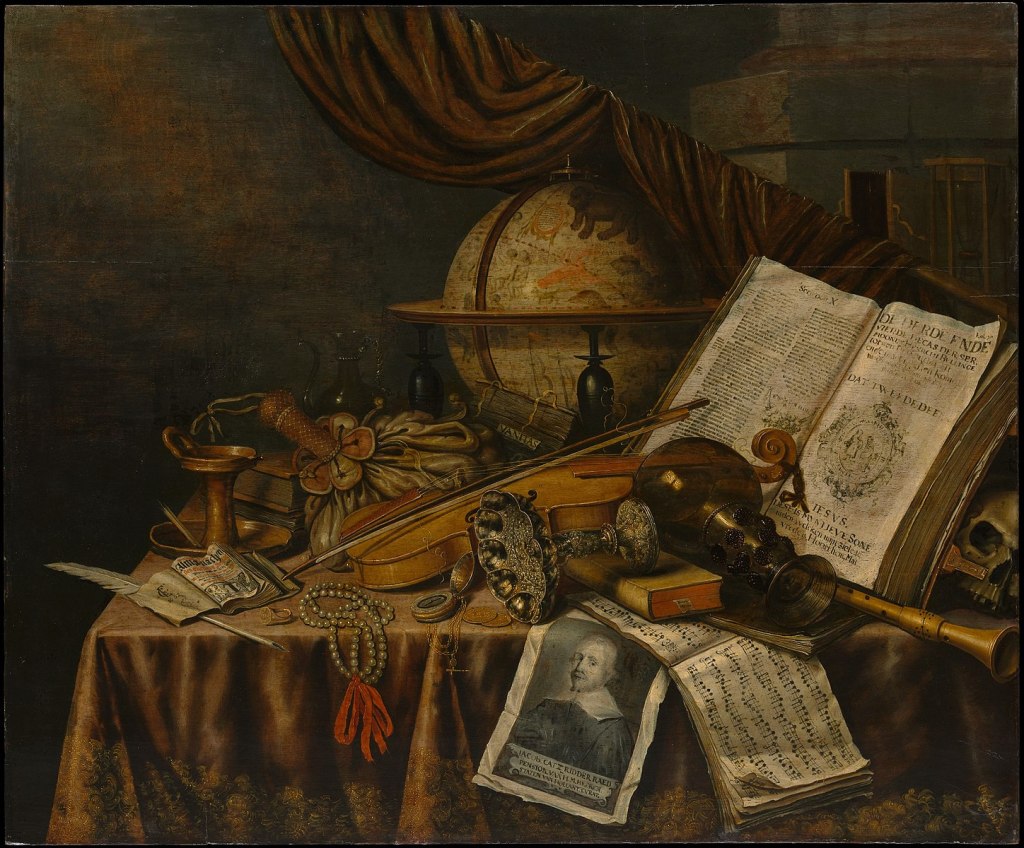





 Borderless