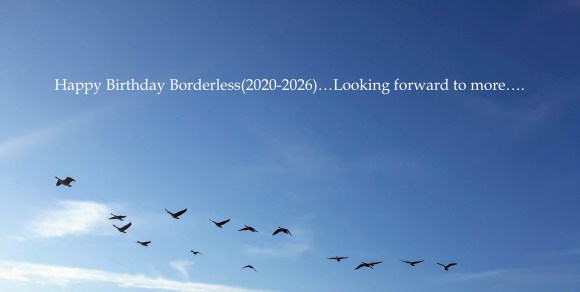
Six years ago, a few of us got together to bring out the first issue of Borderless Journal. We started as a daily blog and then congealed into a monthly journal offering content that transcends artificial borders to meet with the commonality of felt emotions, celebrating humanity and the Universe. Today as we complete six years of our existence in the clouds, we would like to celebrate with all writers and readers who made our existence a reality. We invite you to savour writings collected over the years that reflect and revel in transcending borders, touching hearts and some even make us laugh while exploring norms.
In this special issue. we can only offer a small sample of writings but you can access many more like these ones at our site…Without further ado, let us harmonise with words. We invite you to lose yourselves in a borderless world in these trying times.
Rebel or ‘Bidrohi’, Nazrul’s signature poem, ‘Bidrohi‘, translated by Professor Fakrul Alam. Click here to read.
Manish Ghatak’s Aagun taader Praan (Fire is their Life) has been translated from Bengali by Indrayudh Sinha. Click here to read.
Tagore’s poem, Tomar Shonkho Dhulay Porey (your conch lies in the dust), has been translated from Bengali by Mitali Chakravarty as ‘The Conch Calls’. Click here to read.
Ihlwha Choi spent some time in Santiniketan and here are poems he wrote in reaction to his observations near the ‘home of R.Tagore’, as he names Santiniketan and the Kobiguru. Click here to read Nandini.
Rituals in the Garden: Marcelo Medone discusses motherhood, aging and loss in this poignant flash fiction from Argentina. Click here to read.
Navigational Error: Luke P.G. Draper explores the impact of pollution with a short compelling narrative. Click here to read.
Henrik’s Journey: Farah Ghuznavi follows a conglomerate of people on board a flight to address issues ranging from Rohingyas to race bias. Click hereto read.
The Magic Staff , a poignant short story about a Rohingya child by Shaheen Akhtar, translated from Bengali by Arifa Ghani Rahman. Click here to read.
A Cat Story : Sohana Manzoor leaves one wondering if the story is about felines or… Clickhere to read.
When West Meets East & Greatness Blooms: Debraj Mookerjee reflects on how syncretism impacts greats like Tagore,Tolstoy, Emerson, Martin Luther King Jr, Gandhi and many more. Click here to read.
The Day Michael Jackson Died: A tribute by Julian Matthews to the great talented star who died amidst ignominy and controversy. Click here to read.
Potable Water Crisis & the Sunderbans: Camellia Biswas, a visitor to Sunderbans during the cyclone Alia, turns environmentalist and writes about the potable water issue faced by locals. Click here to read.
My Love for RK Narayan, Rhys Hughes discusses the novels by ths legendary writer from India. Click here to read.
Travels ofDebendranath Tagore: These are travel narratives by Debendranath Tagore, father of Rabindranath Tagore, translated from Bengali by Somdatta Mandal. Click here to read.
Baraf Pora (Snowfall): This narrative gives a glimpse of Tagore’s first experience of snowfall in Brighton and published in the Tagore family journal, Balak (Children), has been translated by Somdatta Mandal . Clickhere to read.
The Day of Annihilation: An essay on climate change by Kazi Nazrul Islam has been translated from Bengali by Radha Chakravarty. Clickhereto read.
Reminiscences from a Gallery: The Other Ray: Dolly Narang muses on Satyajit Ray’s world beyond films and shares a note by the maestro and an essay on his art by the eminent artist, Paritosh Sen. Click here to read.
The Bauls of Bengal: Aruna Chakravarti writes of wandering minstrels called bauls and the impact they had on Tagore. Click here to read.
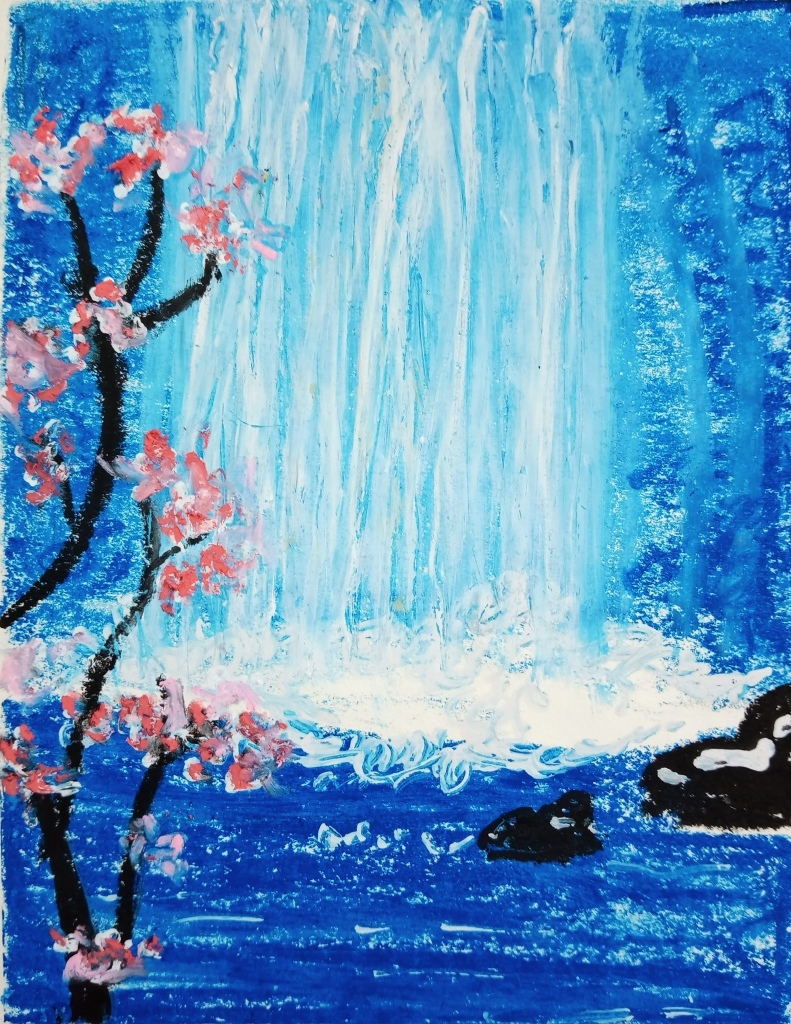
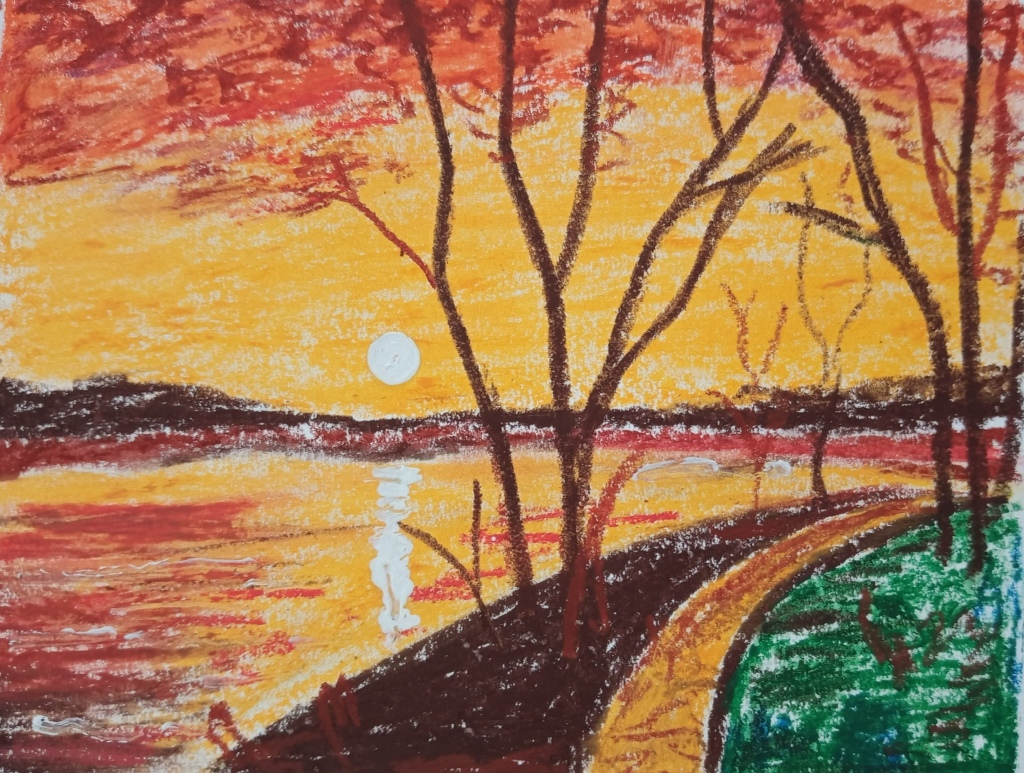
Art by Sohana ManzoorCourtesy: Suzanne Kamata Some of our visuals in 2024
As we wait for the new year to unfold, we glance back at the year that just swept past us. Here, gathered together are glimpses of the writings we found on our pages in 2024 that herald a world of compassion and kindness…writings filled with hope and, dare I say, even goodwill…and sometimes filled with the tears of poetic souls who hope for a world in peace and harmony. Disasters caused by humans starting with the January 2024 in Japan, nature and climate change, essays that invite you to recall the past with a hope to learn from it, non-fiction that is just fun or a tribute to ideas, both past and present — it’s all there. Innovative genres started by writers to meet the needs of the times — be it solar punk or weird western — give a sense of movement towards the new. What we do see in these writings is resilience which healed us out of multiple issues and will continue to help us move towards a better future.
A hundred years ago, we did not have the technology to share our views and writings, to connect and make friends with the like-minded across continents. I wonder what surprises hundred years later will hold for us…Maybe, war will have been outlawed by then, as have been malpractices and violences against individuals in the current world. The laws that rule a single man will hopefully apply to larger groups too…
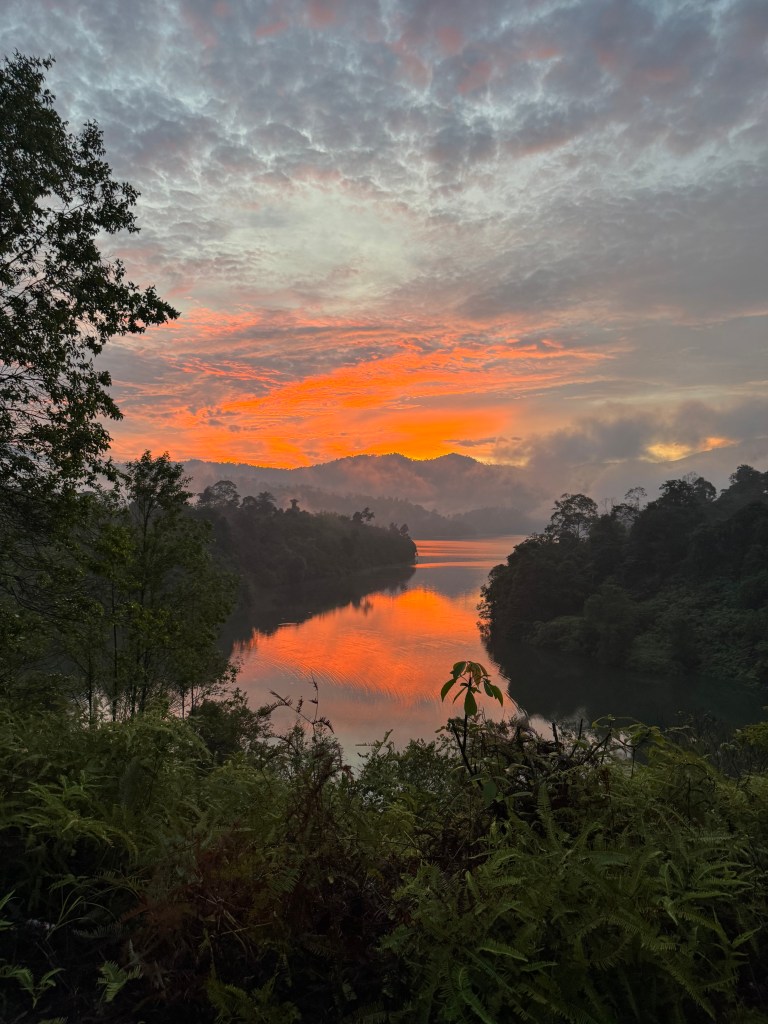
Courtesy: Ratnottama Sengupta Courtesy: Farouk GulsaraSome of our visuals in 2024
Amalkantiby Nirendranath Chakraborty has been translated from Bengali by Debali Mookerjea-Leonard. Click hereto read.
The Mirror by Mubarak Qazi has been translated from Balochi by Fazal Baloch. Click hereto read.
Homecoming, a poem by Ihlwha Choi on his return from Santiniketan, has been translated from Korean by the poet himself. Click here to read.
Pochishe Boisakh(25th of Baisakh) by Tagore (1922), has been translated from Bengali by Mitali Chakravarty. Click here to read.
Nazrul’sGhumaite Dao Shranto Robi Re(Let Robi Sleep in Peace) has been translated from Bengali by Professor Fakrul Alam. Click hereto read.
Jibananada Das’sAndhar Dekhecche, Tobu Ache (I have seen the dark and yet there is another) has been translated from Bengali by Professor Fakrul Alam. Click here to read.
Tagore’sShotabdir Surjo Aji( The Century’s Sun today) has been translated from Bengali by Mitali Chakravarty. Clickhereto read.
A narrative by Rabindranath Tagore thatgives a glimpse of his first experience of snowfall in Brighton and published in the Tagore family journal, Balak (Children), has been translated from Bengali by Somdatta Mandal. Clickhere to read.
Suzanne Kamata discusses the peace initiatives following the terrors of the 1994 Rwandan Genocide while traveling within the country with her university colleague and students. Click here to read.
A story by Sharaf Shad, has been translated from Balochi by Fazal Baloch. Click here to read.
Conversations
Ratnottama Sengupta talks to Ruchira Gupta, activist for global fight against human trafficking, about her work and introduces her novel, I Kick and I Fly. Click here to read.
A conversation with eminent Singaporean poet and academic, Kirpal Singh, about how his family migrated to Malaya and subsequently Singapore more than 120 years ago. Click hereto read.
Translations are like bridges. Three years ago, we decided to start a bridge between Tagore’s ideas and the world that was unfamiliar with his language, Bengali. He has of course written a few pieces in Brajbuli too. We started our journey into the territory of Tagore translations with Aruna Chakravarti’s Songs of Tagore. Now we have expanded hugely this section of our translations with many prose pieces and more translations of his lyrics and poetry by writers like Aruna Chakravarti, Fakrul Alam, Radha Chakravarty, Somdatta Mandal, Himadri Lahiri, Ratnottama Sengupta, Chaitali Sengupta and Nishat Atiya other than our team’s efforts. To all these translators our heartfelt thanks. We share with you their work celebrating one of the greatest ideators of the world.
Prose
Stories
.Aparichitaby Tagore :This short story has been translated as The Stranger by Aruna Chakravarti. Click hereto read.
Musalmanir Galpa(A Muslim Woman’s Story): This short story has been translated by Aruna Chakravarti. Clickhere to read.
One Small Ancient Tale: Rabindranath Tagore’s Ekti Khudro Puraton Golpo (One Small Ancient Tale) from his collection Golpo Guchcho ( literally, a bunch of stories) has been translated by Nishat Atiya. Click hereto read.
Bolai: Story of nature and a child translated by Chaitali Sengupta. Click hereto read.
Baraf Pora (Snowfall) : This narrative gives a glimpse of Tagore’s first experience of snowfall in Brighton and published in the Tagore family journal, Balak (Children), has been translated by Somdatta Mandal . Clickhere to read.
Himalaya Jatra( A trip to Himalayas) :This narrative about Tagore’s first trip to Himalayas and beyond with his father, has been translated from his Jibon Smriti (1911, Reminiscenses) by Somdatta Mandal. Click here to read.
Library: A part of Bichitro Probondho(Strange Essays) by Rabindranath Tagore, this essay was written in 1885, translated by Chaitali Sengupta. Click hereto read.
Book Excerpts
The Parrot’s Tale: Excerpted from Rabindranth Tagore. The Land of Cards: Stories, Poems and Plays for Children, translated by Radha Chakravarty, with a foreword from Mahasweta Devi. Clickhere to read
Rabindranath Tagore Four Chapters: An excerpt from a brilliant new translation by Radha Chakravarty of Tagore’s controversial last novel Char Adhyay. Click here to read.
Farewell Song :An excerpt from Radha Chakravarty’s translation of Tagore’s novel. Click hereto read.
Oikotan(Harmonising) has been translated by Professor Fakrul Alam and published specially to commemorate Tagore’s Birth Anniversary. Click hereto read.
Monomor Megher O Shongi (or The Cloud, My friend) has been translated by Professor Fakrul Alam. Click here to read.
Professor Fakrul Alam has translated Tomra Ja Bolo Tai Bolo, Hridoy Chheele Jege and Himer Raate — three songs around autumn from Clickhere to read.
Tagore’sAchhe Dukhu, Achhe Mrityu, (Sorrow Exists, Death Exists) has been translated from Bengali by Fakrul Alam. Click hereto read.
Tagore’s long poem, Dushomoy (translated as Journey of Hope though literally the poem means bad times). Click here to read the poem in English and listen to Tagore’s voice recite his poem in Bengali. We also have a sample of the page of his diary where he first wrote the poem as ‘Swarga Pathhe'(On the Path to Heaven).
Deliverance by Tagore: ‘Tran’by Tagore, a prayer for awakening of the subjugated. Click here to read the translation.
Abhisar byTagore: A story poem about a Buddhist monk by Rabindranath Tagore in Bengali. Click here to read the translation.
Amaar Nayano Bhulano Eledescribes early autumn when the festival of Durga Puja is celebrated. Click here to read the translation from Bengali.
Morichika or Mirage by Tagoreis an early poem of the maestro that asks the elites to infringe class divides and mingle. Click here to read the translation from Bengali.
Pochishe Boisakh(25th of Baisakh) is a birthday poem Tagore wrote in 1922 and from he derived the lyrics of his last birthday song written in 1941. Click here to read.
Chhora or Rhymes, a poem describing the creative process, it was written in 1941. Click here to read.
Okale or Out of Syncgives a glimpse of how out of sync situations are also part of our flow. Click here to read.
Mrityu or Death dwells on Tagore’s ability to accept death as a reality. Clickhere to read.
Songs of Tagore: Seven songs translated by Aruna Chakravarti from a collection that started her on her litrary journey and also our Tagore translation section. Click here to read.
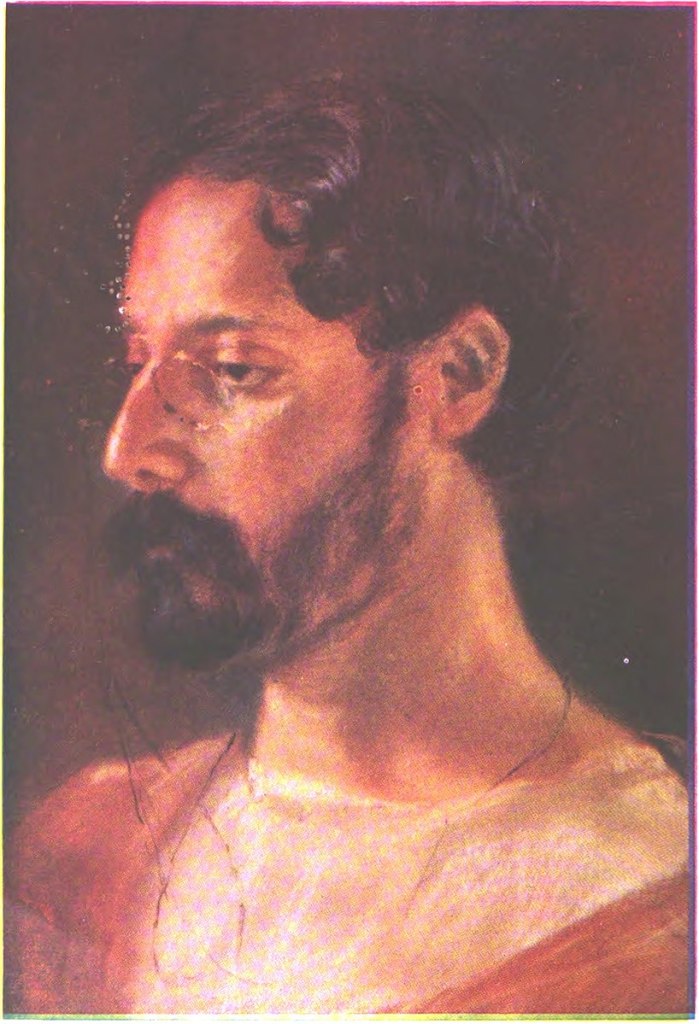
Portraits of Tagore by his nephew, Abanindranath Tagore (1871-1951)
Rabindranath Tagore (1861-1941) has a unique place in many lives. His works continue to impact us. His songs continue to feel relevant. It is not easy to grasp him in totality, to comprehend how he towered over divisive constructs created by humans with his work at Sriniketan and Santiniketan, funded eventually by his Nobel Prize money that poured in with his writings. We all unite not just under the umbrella of his writings and wisdom, but also seek solutions from his life and times — a period of dynamic changes, a renaissance. Can we find these answers? Is it to be found in the breeze that wafts across boundaries at war… or in an eternity where he continues to touch hearts…
For many of us who have not grown up listening to Tagore songs and know of him as a distant figure, here is an attempt to bring his life to you starting with the naming of the infant Rabindranath — reimagined by Aruna Chakravarti, to his first trip out of his cloistered home in Jorsanko and his first experience of snow as he went to study in England — both translated from his writings by Somdatta Mandal. We have a transcreation of a poem he wrote celebrating his birthday on pochishhe boisakh where he shares the joy of his birth with all of us. We wind up translations with Ratnottama Sengupta’s rendition of a song where he offers his lyrics to all those who are willing to listen.
Showcasing the current relevance of Tagore is a brief musing from Sengupta. To relate the wonder of Tagore’s lyrics, we have writings from professor Fakrul Alam and Asad Latif, who contend how Tagore continues evergreen…
Birth
The Naming of Rabindranath: Aruna Chakravarti shares how he chanced upon the name Rabindranath in this excerpt from Jorasanko. Click here to read.
Joys of Living
Himalaya Jatra ( A trip to Himalayas) by Tagore, has been translated from his Jibon Smriti (1911, Reminiscenses) by Somdatta Mandal from Bengali. This records his first trip out of Jorasanko as a teenager. Click here to read.
Baraf Pora (Snowfall) by Rabindranath Tagore, gives a glimpse of his first experience of snowfall in Brighton and published in the Tagore family journal, Balak (Children), has been translated from Bengali by Somdatta Mandal. Clickhereto read.
Pochishe Boisakh (25th of Baisakh), a birthday poem by Tagore(1922), has been translated from Bengali by Mitali Chakravarty. Click here to read.
Bhumika (Introduction) by Tagore has been translated from Bengali by Ratnottama Sengupta. Click here to read.
Professor Fakrul Alam muses on the impact of Tagore in his life. Click here to read.
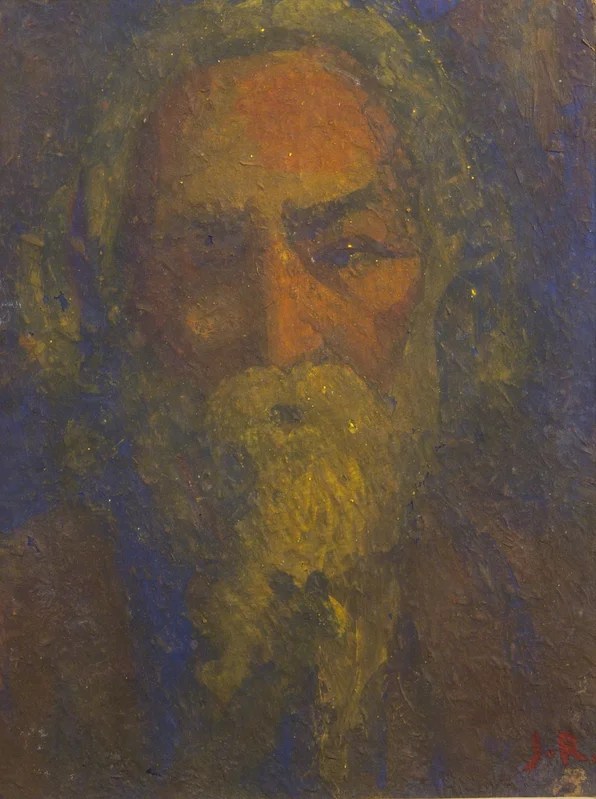
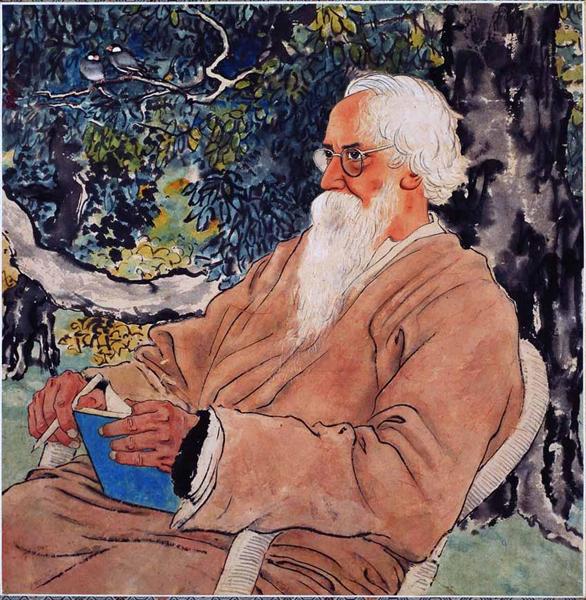
Portrait of Tagore by Jamini Roy (Indian Artist, 1887-1972)Portrait of Tagore by Xu Beihong ( Chinese Artist, 1895-1953)
Celebrate Tagore’s legacy not only with translations but with a unique discussion on Tagore between Aruna Chakravarty and the late Sunil Gangopadhyay (1934-2012). The discussion took place under the auspices of Sahitya Akademi during the celebration of 150 years of Tagore. The book is available online on Amazon, in Om and more bookstores in India and in Bookworm, Bangladesh.
Baraf Pora (Snowfall) by Rabindranath Tagore,gives a glimpse of his first experience of snowfall in Brighton and published in the Tagore family journal, Balak (Children), has been translated from Bengali by Somdatta Mandal. Clickhere to read.
Himalaya Jatra( A trip to Himalayas) by Tagore, has been translated from his Jibon Smriti (1911, Reminiscenses) by Somdatta Mandal from Bengali. Click here to read.
Bhumika (Introduction) by Tagore has been translated from Bengali by Ratnottama Sengupta. Click here to read.
The Fire-grinding Quern by Manzur Bismil has been translated from Balochi by Fazal Baloch. Clickhere to read.
The Tobacco Lover by Ihlwha Choi has been translated from Korean by the poet himself. Clickhere to read.
Pochishe Boisakh(25th of Baisakh) by Tagore(1922), has been translated from Bengali by Mitali Chakravarty. Click here to read.
Pandies Corner
Songs of Freedom: Dear Me… is an autobiographical narrative by Ilma Khan, translated from Hindustani by Janees. These narrations highlight the ongoing struggle against debilitating rigid boundaries drawn by societal norms, with the support from organisations like Shaktishalini and pandies’. Click here to read.
Paul Mirabile gives a gripping tale about a young pyromaniac. Click hereto read.
Conversation
Ratnottama Sengupta in conversation about Kitareba, a contemporary dance performance on immigrants, with Sudarshan Chakravorty, a choreographer, and founder of the Sapphire Dance Company. Click here to read.
Travel writing by Tagore: Translation by Somdatta Mandal
In 1885, under Jnanadanandini’s1 editorial venture, a children’s magazine called Balak was published from the Tagore household in Calcutta. It contained different writings of the young Rabindranath, who would handle a lot of things for the publication. This magazine was later merged with Bharati and edited by his elder sister, Swarnakumari Devi. Among the different entries that Rabindranath contributed for Balak are two interesting travel pieces. One travelogue published in Vol. 3, Ashar 1292 B.S. (July-August 1885) called “Das Diner Chhuti” (Ten Days’ Holiday) narrates his trip to Hazaribagh that year along with his nephew and niece during their school holidays. The second one called “Baraf Pora” (Snowfall) describes his first experience of snowfall in England in the winter of 1878 when he was living in Brighton along with his brother Satyendranath’s family2.
Rabindranth Tagore (1861-1941) in England
Baraf Pora (Snowfall)
The outlines of pictures gradually blur out of the mind; the shadows of all that we see every day come ahead and crowd it, replacing the things we had seen a few days earlier. We cannot clearly understand where the earlier images get lost in the melee.
I went to England in the year 1878 A.D. That was about seven years ago. At that time, I was young too. I can remember overall what I had seen in England, but all her pictures are no longer clear in my mind. I cannot match one line with another. A kind of mist has already descended on my memories of England. The pictures must be brought out occasionally and aired in the sun. That is why I have brought out my memories in the sunlight today.
It was the middle of October when I reached England. I didn’t feel it to be too cold then. We stayed in Brighton. It was sunny in Brighton then. Happy with the sunshine, all men, both young and old, had come in hordes to the seashore. The sick and the elderly people moved in pushcarts with one or two young girls or any other member of the family accompanying them. The ladies were dressed up in different kinds of clothing with umbrellas over their heads. Small boys dragged iron wheels and ran along with them. Some ladies sat on the seashore with open umbrellas over their heads. Some were busy following the movement of the waves and collecting different kinds of seashells. An Italian beggar was moving around playing an organ. Vegetable and milk vendors were returning after supplying their products in different houses. A man and a woman were riding their own horses on the pathway and the dressed up stable boys were following them. Some schoolmasters were walking with a big group of boys following them; on the other hand, each schoolmistress had a whole trail of schoolgirls following her. They had come to enjoy the sea breeze, or if not, at least the sunshine. Quite often we would run around the grassy fields near the seashore. Though the age was not conducive for running around, we didn’t mind because no one suitable was present there to criticise us for our out-of-the-way behaviour. The best time for our outing was ten or eleven o’clock in the morning. Whatever it might be, the seaside was celebrating the festival of sunshine when we reached Brighton.
As the days went by, the cold started increasing. The mud on the streets froze in the cold weather. The dew on the grass would freeze too and it seemed as if someone had scattered lime powder everywhere. On waking up in the morning I found that ice crystals had formed different designs on the windowpane. Sometimes I also found one or two sparrows that had died in the cold lying on the road. The few yellow leaves remaining on the trees also fell down, leaving the lean bare branches behind. The small little robin birds came to the glass windows with reliable hearts begging for bits of bread. Everyone assured us that we would soon witness snowfall.
Christmas was almost approaching. It was biting cold on a moonlit night. The doors and the windows of the room were all shut tight with the curtains drawn over them. The gas was burning. A fire was lit to warm up the place. After dinner we were all around the fireplace busy chatting. The two young boys attacked me. Despite having plenty of proof, I do not want to mention here that they never behaved politely with me. They have grown up now, they even read Balak; so, I do not want to write about them and then make my life more miserable answering their questions. A few days later they will also learn to protest. Because I would not be able to counter them, I remained quiet. You readers can guess whatever you like about their behaviour – I will not volunteer to take any responsibility on my shoulders.
Everyone was sitting warm enough when suddenly we got the news of the snowfall. As all our doors were shut, we did not know when it began. All of us including the children ran outside to see the beautiful sight. The cold seemed to have frozen the moonlight in layers and stuck on the streets, on the grass, the bare branches, the sloped slate roofs. There was no one on the street. All the houses in front of us had their doors and windows shut. The night and quietness, the moonlight and the snow all blended to create a wonderful scene! The children (and I too) picked up the snow on the grass and turned it into little balls. As soon as we brought them in, they melted into water.
For me this was the first night of snowfall. After this I have seen snowfall several times. But describing it is not easy, especially after so many years. I was walking on the street covering myself entirely in black woolen clothes. The sky was grey. Little flakes of snow were falling all around like quinine powder. It did not fall like raindrops – it came in lightly as if flying or dancing. It came and touched your clothes lightly; you could dust and collect them. The wheels of cars left their marks on the soft white layers of snow. One also felt sad to leave dirty and muddied shoe imprints on the white layer of snow. It seemed as if the petals of the parijat flower were falling from the sky. Snow also got stuck on the black dresses and black umbrellas of the pedestrians.
Parijat flowers fallingSnowflakes falling
It was wonderful to watch how everything got covered with snow gradually. At first, it fell merely like some white streaks on the streets. There was a small plot of land in front of our house. It had a few saplings and creepers – no leaves on the shrubs but just bare branches. Those branches were still not covered with snow, so it was a mixture of green and white. The saplings seemed to be freezing in the cold. Their clothes were gone; wearing white funeral clothes of snow, the sap in their veins also seemed to be freezing. The black slate roof of the house was gradually turning grey and then white. Soon the streets were also covered with snow – the small saplings got buried in it. The snow also piled up on the narrow windowsill. The noses of the few pedestrians on the street turned blue, their faces shriveled in the cold. Far off at a distance, the church steeple was faintly visible like a white ghost in the sky.
It is very difficult now in this hot and humid summer month to even imagine how cold it was. I remember how after taking a cold-water bath in the morning my hands would become so numb that I could not find the handkerchief in my pocket. There was no limit to the amount of warm clothes on my body. Despite the thick shoes and socks, the soles of my feet would become cold in no time. Even after getting inside a bundle of blankets at night, I would be worried how I would turn on the other side because whenever I turned, I would get a shock. We heard the story about four fishermen who had gone out to fish in the sea. When a ship came near their boat, they saw that the four of them had already frozen to death. The coachman who was sleeping on his carriage at night had also died. The water in the pipes often froze and caused the pipes to burst. Snow had covered up the River Thames. The lake inside Hyde Park was also frozen. Hundreds of people wore a kind of iron shoes and skated over that lake every day.
This skating was a wonderful affair. Hundreds of people wearing skating shoes turned and bent and twisted and glided over that hard lake. The way people skated was like the way a boat moved with its sail. With the body slightly tilted on one side, one could float easily on the ground. No effort was needed to step forward – one did not have to quarrel with the ground or defeat it with each footstep.
Trying to bring back the winter of England to our country even through our imagination is futile. The heat here rises very quickly, melts like the snow and cannot be grasped. It is not sufficiently welcomed within the blankets and quilts here.
Rabindranath Tagore (1861 to 1941) was a brilliant poet, writer, musician, artist, educator – a polymath. He was the first Nobel Laureate from Asia. His writing spanned across genres, across global issues and across the world. His works remains relevant to this day.
Somdatta Mandal is a critic and translator and a former Professor of English at Visva-Bharati, Santiniketan, India.
.
PLEASE NOTE: ARTICLES CAN ONLY BE REPRODUCED IN OTHER SITES WITH DUE ACKNOWLEDGEMENT TO BORDERLESS JOURNAL
“Here with a Loaf of Bread beneath the Bough,
A Flask of Wine, a Book of Verse -- and Thou
Beside me singing in the Wilderness --
And Wilderness is Paradise enow.”

― Omar Khayyám (1048-1131); translation from Persian by Edward Fitzgerald (Rubaiyat, 1859)
I wonder why Khayyam wrote these lines — was it to redefine paradise or just to woo his beloved? I like to imagine it was a bit of both. The need not to look for a paradise after death but to create one on Earth might well make an impact on humankind. Maybe, they would stop warring over an invisible force that they call God or by some other given name, some ‘ism’. Other than tens of thousands dying in natural disasters like the recent earthquake at the border of Turkiye and Syria, many have been killed by wars that continue to perpetrate divides created by human constructs. This month houses the second anniversary of the military junta rule in Myanmar and the first anniversary of the Ukrainian-Russian war that continues to decimate people, towns, natural reserves, humanity, economics relentlessly, polluting the environment with weapons of mass destruction, be it bombs or missiles. The more weapons we use, the more we destroy the environment of our own home planet.
Sometimes, the world cries for a change. It asks to be upended.
We rethink, reinvent to move forward as a species or a single race. We relook at concepts like life and death and the way we run our lives. Redefining paradise or finding paradise on Earth, redefining ‘isms’ we have been living with for the past few hundred years — ‘isms’ that are being used to hurt others of our own species, to create exclusivity and divisions where none should exist — might well be a requisite for the continuance of our race.
Voices of change-pleaders rang out in the last century with visionaries like Tagore, Gandhi, Nazrul, Satyajit Ray urging for a more accepting and less war-bound world. This month, Ratnottama Sengupta has written on Ray’s legendary 1969 film, Goopy Gyne, Bagha Byne: “The message he sent out loud and with laughter: ‘When people have palatable food to fill their belly and music to fill their soul, the world will bid goodbye to wars.’” Shantanu Ray Chaudhuri has given an essay on one of the greatest pacifists, Gandhi, and his attitudes to films as well as his depiction in movies. What was amazing is Gandhi condemned films and never saw their worth as a mass media influencer! The other interesting thing is his repeated depiction as an ethereal spirit in recent movies which ask for changes in modern day perceptions and reforms. In fact, both these essays deal with ghosts who come back from the past to urge for changes towards a better future.
Delving deeper into the supernatural is our interviewee, Abhirup Dhar, an upcoming writer whose ghost stories are being adapted by Bollywood. While he does investigative stories linked to supernatural lore, our other interviewee, Andrew Quilty, a renowned journalist who has won encomiums for his coverage on Afghanistan where he spent eight years, shows in his book, August in Kabul:America’s Last Days in Afghanistan and the Return of the Taliban, what clinging to past lores can do to a people, especially women. Where does one strike the balance? We also have an excerpt from his book to give a flavour of his exclusive journalistic coverage on the plight of Afghans as an eyewitness who flew back to the country not only to report but to be with his friends — Afghans and foreigners — as others fled out of Kabul on August 14 th 2021. While culturally, Afghans should have been closer to Khayyam, does their repressive outlook really embrace the past, especially with the Taliban dating back to about only three decades?
This intermingling of life and death and the past is brought to life in our fiction section by Sreelekha Chatterjee and Anjana Krishnan. Aditi Yadav creates a link between the past and our need to travel in her musing, which is reminiscent of Anthony Sattin’s description of asabiyya, a concept of brotherhood that thrived in medieval times. In consonance with wanderlust expressed in Yadav’s essay, we have a number of stories that explore travel highlighting various issues. Meredith Stephens travels to explore the need to have nature undisturbed by external interferences in pockets like Kangaroo Island in a semi-humorous undertone. While Ravi Shankar travels to the land’s end of India to voice candid concerns on conditions within Kerala, a place that both Keith Lyons and Rhys Hughes had written on with love and a sense of fun. It is interesting to see the contrasting perspectives on Southern India.
Professor Fakrul Alam has also translated poetry where a contemporary Bengali writer, Masud Khan, cogitates on history while Ihlwha Choi has translated his own poem from Korean. A translation of Tagore’s poem on the ocean tries to capture the vastness and the eternal restlessness that can be interpreted as whispers carried through eons of history. Fazal Baloch has also shared a poem by one of the most revered modern Balochi voices, that of Atta Shad. Our pièce de resistance is a translation of Premchand’s Balak or the Child by Anurag Sharma.
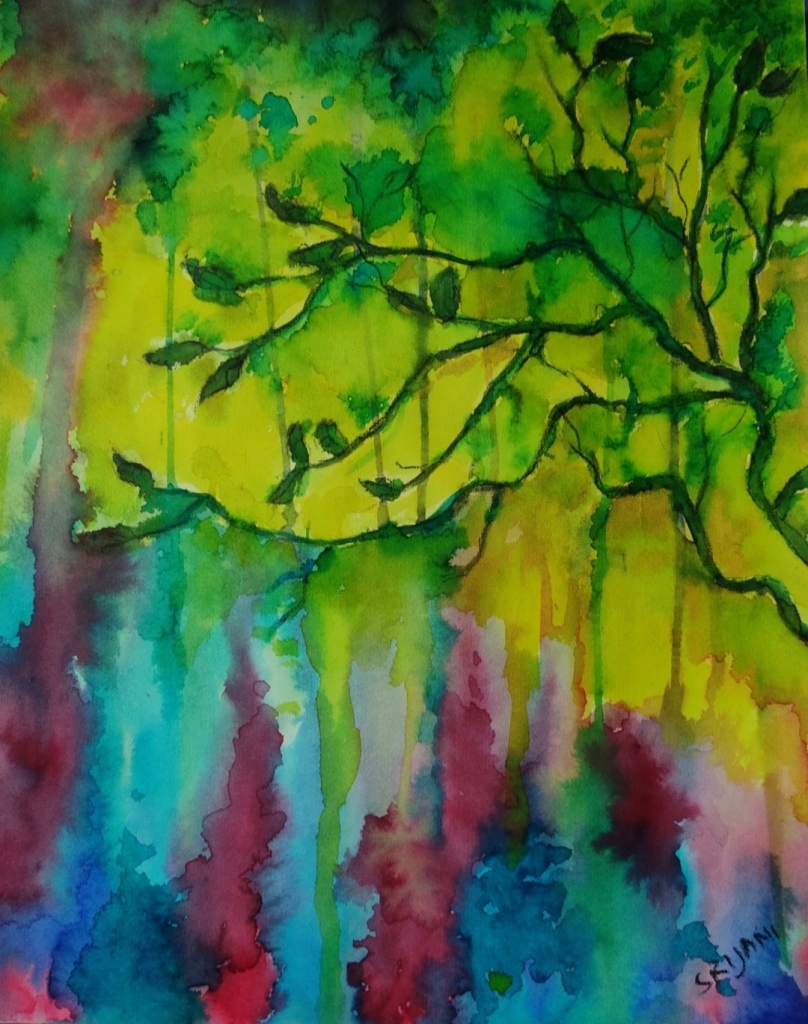
This vibrant edition would not have been possible without all the wonderful translators, writers, photographers and artists who trust us with their work. My heartfelt thanks to all of you, especially, Srijani Dutta for her beautiful painting, ‘Hope in Winter’, and Sohana for her amazing artwork. My heartfelt thanks to the team at Borderless Journal, to our loyal readers some of whom have evolved into fabulous contributors. Thank you.
Do write in telling us what you think of the journal. We look forward to feedback from all of you as we head for the completion of our third year this March.
Translated from the original Bengali by Somdatta Mandal
Translator’s Note
The earliest journeys of Rabindranath Tagore (1861 – 1941) were in his mind and he has left us accounts of these as well as of the later physical journeys in various travel writings – letters, diaries, poems, songs, and essays. Right from his childhood he made innumerable trips both within India and abroad. Apart from his regular full-fledged travelogues, we find many lesser known but interesting experiences of his travel. Included below are four such entries. The first essay is a trip to Hazaribagh with his nephew and niece. The second entry is a hilarious letter about his second visit to Darjeeling. The third a letter that narrates his trip to Satara in Maharashtra State, one of the towns where his elder brother Satyendranath Tagore served in the Civil Service. The last one is from Balia in Uttar Pradesh where Rabindranath complains that he is tired of travelling and wants to settle down peacefully as a bird in its nest.
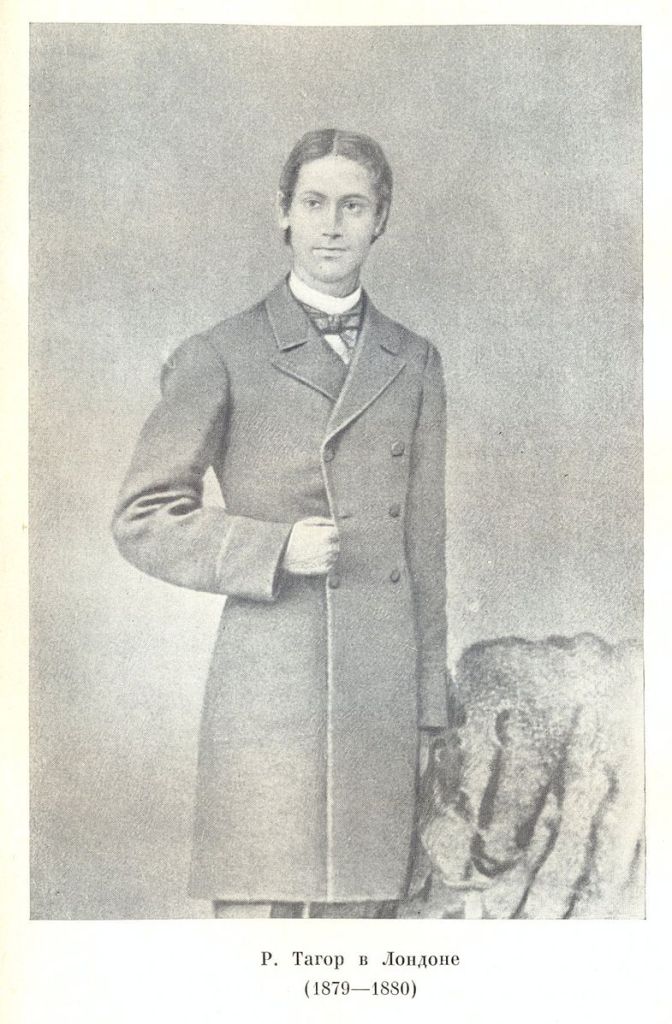
Tagore in London, 1879. Courtesy: Creative Commons
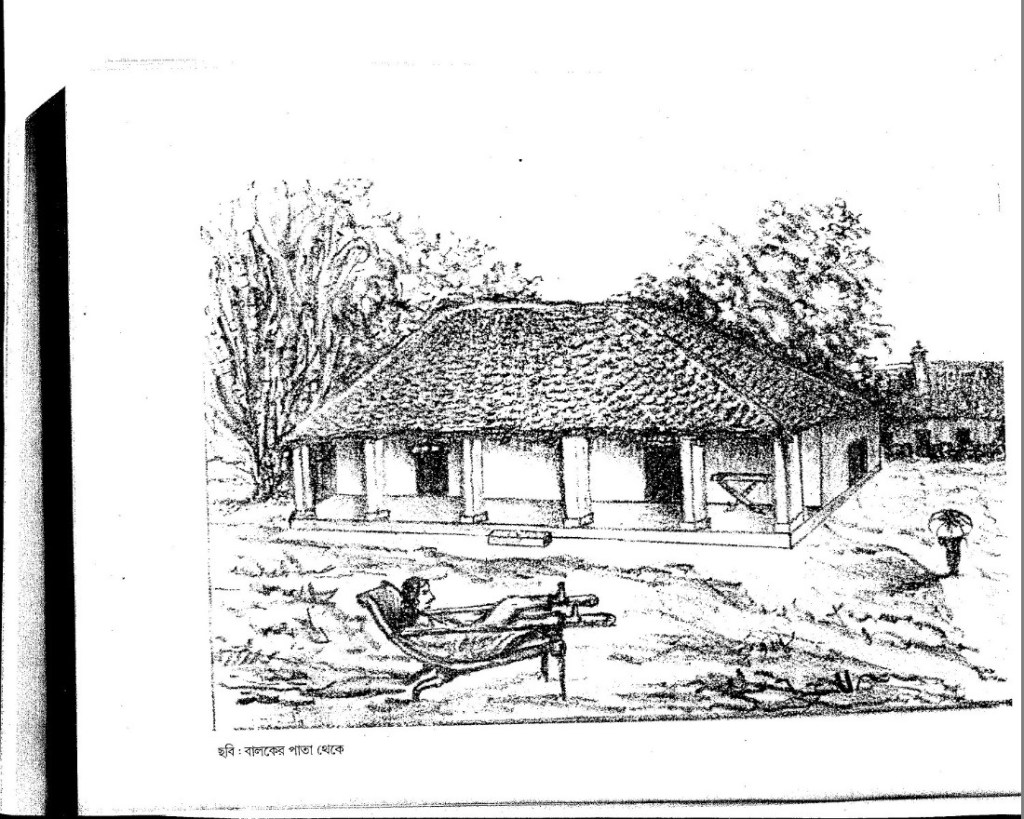
In 1885, under his sister-in-law Jnanadanandini’s editorial venture, a children’s magazine called Balak was published from the Tagore household in Calcutta. Though the life-span of this magazine was less than a year and only eleven issues were totally published, it contained different writings of the young Rabindranath, who would handle a lot of things for the publication. This magazine was later merged with Bharati and edited by his elder sister Swarnakumari Devi. Among the different entries that Rabindranath contributed for Balak and published in Vol. 3, Ashar 1292 B.S. (July-August 1885) was an essay called “Dus Diner Chhuti” (Ten Days’ Holiday) that narrates his trip to Hazaribagh that year during the school holidays. The two children referred to in this article were Surendranath and Indira, son and daughter of his elder brother Satyendranath and Jnadadanandini Devi. The sketch of the bungalow below is also done by him.
An illustration accompanying the essay ‘Dus Diner Chhuti’ (Ten Days’ Holiday). First published in Balak magazine. Somdatta Mandal suggests it could be the handiwork of the Kobiguru.
Trip to Hazaribagh – First published in Balak Magazine
Two children have made me homeless in this summer heat! Their school has been closed for ten days but that’s not just the reason. There would not be so much chaos in the house even if twelve suns appeared on the horizon. The older brother blunted the tips of all the pens he found within his reach, drew pictures on whatever paper he found; tried out the sharpness of a knife on his existing thigh; took out the machine from the watch he found and tried to rectify it; undid the bindings of all the books within his reach; climbed up on my shoulders if he found the opportunity – and so on! He moved on parapet walls in places where there were stairs for climbing; though everyone in the whole world believed in getting out of a car only when it stopped, he thought it was his only duty to jump out of a running car.
Everyone accepted the fact that the sun was too hot during the summer but the human child that I am talking about probably did not differentiate much between sunshine and moonlight. So during the school vacation, the difference in belief and behaviour between him and other ordinary people created a sort of revolution in the neighbourhood. The news that recently the elder brother has got leave for ten days spread everywhere. People were not so overwhelmed even when they received the news of the English-Russian war.
In the meantime, his younger sister came to me off and on and demanded – “Uncle–.” It would be nice if he called me ‘Uncle’ but I would receive new names at least three times in a day – names which were not heard in any civilized country. These naughty children also scattered and turned my own possessions upside down. My own name also did not have a proper address. I could not make them understand that my own name was my personal possession. Anyhow, the small girl (not that she was too small) came and pleaded, “Uncle, come with us to Hazaribagh.” After a lot of thought I did not say anything else and ventured out on this summer day.
One cannot see much in a vacation of eight or ten days but at least we can peek at nature outside. At least one can stand beneath the open expanse of the blue sky and the vast open green fields for a few seconds and feel free. We live in the city and occasionally it becomes essential to prove that the world is not built entirely with bricks, wood and mortar. So, four of us began our journey. I have already acquainted you with the boy and the girl. I need to introduce the other person. He was a fat, round and simple man. He was older than all of us but even younger than these children. His fair and stout figure was full of humour and he seemed like a ripe and juicy fruit. Just like the bubbles in a huge pot of rice being cooked, his humour came out from his nose and eyes. There are some people who resembled the ‘sandesh’ – the sweetmeat without a covering, without anything hard inside, without thorns – just a smooth, juicy blend of cottage cheese and sugar. Our innocent and harmless companion was that kind of a very edible man.
We boarded the train at Howrah at night. The swaying of the train confused one’s sleep – the sleeping conscience and the dream and waking up all got mixed up. There were occasional series of lights, sound of gongs, shouting, and calling the name of a station in a strange intonation. Again after three strikes of a gong all the sounds would subside within a few seconds and everything would become dark and quiet except for the continuous sound of the train wheels moving in the dark. Keeping in tune with that sound all the strange dreams would keep on dancing in my head all night. We had to change trains at Madhupur Station at four o’clock in the morning. As the darkness faded away, I sat at the train window and looked outside at the early morning light. This was a new country! It seemed that due to some disturbance our flat land had cracked and was torn apart. It was rough, broken and full of big and small sal trees and there were high and low undulations everywhere. There were plenty of sal trees but they did not endear each other as they did in Bengal. Each tree stood independently on its own soil. In Bengal all the trees, plants and creepers entwined each other in a familial bonding, but I did not notice that in this hard soil here. Maybe the people here were also like that. We did not notice much habitation. Only occasionally one or two huts stood friendless here and there. In the wet and salubrious climate of Bengal, trees and plants, men and men, houses and houses all stick to each other, but here in this rough and dry place everything seemed to be standing independently on their own.
The train moved on continuously. In the cracked fields one could sometimes see the sand of dry river beds and in those river beds huge black rocks and stones lay like skeletons of the earth. Sometimes a few hills stood up like severed heads. The hills in the distance were dark blue in colour. The blue clouds in the sky that came to play with the earth seemed to get caught up here. They had raised their wings to fly back to the sky but could not do so because they were tied up. The maidens from the sky came and embraced them. I saw one dark man with a broad face, with his wild hair tied up in a knot, standing there with a stick in his hand. The plough was attached to the back of two buffaloes; they had not begun tilling yet, and they stood still looking at the train. Occasionally there were some clear plots of land encircled with fencing made of ghritakumari plants and with a brick well that was constructed in the centre. The whole region looked very dry. The thin, tall and white dry grass looked like grey hair. The short leafless berry plants were shriveled, dry, and dark. In the distance a few palm trees stood with their small heads and one long leg. Occasionally a peepul or a mango tree was also visible. A lone old roofless cottage with its broken frame stood in the middle of the dry land and looked at its own shadow. Nearby there was a stump of a huge burnt tree.
We reached Giridih station at six o’clock in the morning. There were no more train lines after that and so we had to take carriage drawn by human beings from here. Could we call this a car? It was a small cage over four wheels. As we began our journey in the morning, the four of us started chirping inside it like four fledglings. The young brother and sister began to talk about many things and also pester me with joy. Our stout companion mingled with the children and turned into such a child that by just looking at them my own age was reduced by fourteen years and eight months. At first we went to the Giridih Dak Bungalow and refreshed ourselves. There was no sign of grass anywhere as far as we could see. There were a few trees in between and waves of red earth everywhere. A lean pony was tied under the tree; after looking all around it didn’t know what to eat. Having nothing to do it stood scratching its back on the wooden post. A goat was tied to another tree with a long rope and after a lot of research it stood breaking a sort of green plant with ease.
We resumed our journey from here. There were coal mines in Giridih but we could not see it due to lack of time. The road was hilly. We could see a great distance both in front and behind us. The long and winding road lay on the dry and empty terrain like a serpent basking in the sun. The car was pushed on the uphill road with a lot of effort and then it would slide smoothly downhill. As we went along we saw hills on the way. There were tall and thin sal trees, termite heaps, stumps of trees that had been cut down. At certain places some hills were covered with only tall, thin and leafless trees. The starving trees seemed to spread their lean dry fingers towards the sky and the mountains seemed as if they had been pierced by hundreds of arrows like the bed of arrows on which Bhisma rested on the battlefield of Kurukshetra. The sky was overcast and it began to drizzle. The coolies were letting out loud shouts while pulling the carriage and when their steps occasionally hit pebbles on the road, the carriage would suddenly shake up. Somewhere on the way the road ended and we saw a huge bed of sand with a narrow river in the distance. On asking the coolies we were told that it was the Barakar River. The carriage was pulled across the river and taken to the road on the other side. There were shallow ponds on both sides of the road and four or five buffalos leaning their heads on one another, dipped half their bodies in the water to relaxed themselves and gave us very casual glances.
When evening descended we got down from the carriage and went walking for the rest of the way. We saw two hills in the distance and the road went up and down through them. Whichever way we looked, there were no people, no human habitation, no grains, no tilled land. On all sides the undulated earth stood silent and barren like a hard ocean. The golden hue of dusk in the horizon cast dark shadows on us. Though there were no human beings or animals around us, there was a feeling that this huge earth was preparing for a huge person to come and sleep on its bosom. Like a sentinel someone was guarding the place with fingers on his lips and so everyone felt scared to breathe. The shadow of a traveller with luggage on his horseback came along from a distance and gradually crossed our path.
The night somehow passed between sleep and waking and tossing and turning sides. Upon waking up we saw a thick forest on the left hand side. There were creepers on the trees and the ground was covered with different kinds of shrubs. Above the forest we could see the blue peaks of distant hills. There were huge rocks and among their crevices were a few trees, their hungry roots growing long and spreading out on all sides. It seemed as if they wanted to break the rock in search of food and grasp it with their strong grip. Where did the forest on the left disappear all on a sudden?
There were fields stretching at a distance. Cows were grazing. They looked as small as goats. Farmers were tilling their land with the plough attached to bovine shoulders. Sometimes, they twisted the cows’ and buffaloes’ tails. The tilled lands rose like steps on the hills. We had come close to Hazaribagh. One or two of the hills stood as relics of some great natural revolution.
We reached the dak bungalow at Hazaribagh at three o’clock in the afternoon. The town of Hazaribagh looked very clean amidst the wide landscape. There was no city-centric ambience here – no narrow lanes, dirt, drains, jostling, commotion, traffic, dust, mud, flies or mosquitoes. Amid the fields, trees and hills the town was absolutely clean. The giant houses in Kolkata are proud as stone – they stand treading the earth below, but here it was different. Here the clean and small thatched roof houses stand quietly in friendship with nature; they do not have glamour, they don’t exert might. The town seemed to be like a nest in the trees. There was deep silence and peace everywhere. We hear that even the Bengalis who live here do not quarrel among themselves. If this was true, then there would be no enmity between the crow and the eagle or between the cat and the dog.
One day was gone. It was afternoon now. I sat alone quietly in a couch on the verandah of the dak bungalow. The sky was blue. Two thin pieces of clouds sailed by. A mild breeze blew an earthy, grassy smell. There was a squirrel on the roof of the verandah. Two shalik birds (mynahs) were hopping about on the verandah and shaking their tails. I could hear the sound of cow bells as they from the adjacent road. People were moving in different ways. Some carried luggage on their shoulders and walked with open umbrellas on their heads; some were chasing a couple of cows, and some moved slowly riding on the back of a pony. There was no commotion, no hurry, and no sign of worry on their faces. It seemed that human life here did not pant rapidly like a fast railway engine or move with screeching noises emanating from the wheels of a heavily laden bullock cart. Life here moved in the manner of a gentle breeze blowing beneath the shade of trees.
The courthouse was in front of us. But even the court was not that rigid here. While the two lawyers in their black coats fought with each other inside, two papaya birds sat outside on the peepul tree and conversed among themselves constantly. The people who came here seeking justice sat in a group in the shade of the mango tree and laughed loudly among themselves. I could hear them. Sometimes, the midday gong started ringing in the courthouse. Its sound seemed very serious in this leisurely ambience and slow rhythm of life. The occasional sound of the gong was a reminder that time did not flow by in the casual slow cadence of life here. Standing in between it seemed to pronounce in its iron tone, “I am awake, even if others are not.” But the writer’s condition was not exactly the same. I felt sleepy. It was not a deep sleep. I realised that though the all-pervading stillness of nature and beauty encircled me with great care, my senses were failing to capture the details.
I spoke whatever I had to say about Hazaribagh (some might be thinking that I could have spoken much less) except that I did not mention that we became newly acquainted with the children of one of my friends. Upen Babu read the Akshanmanjari so we had to treat him with respect. I had mistakenly confused the alphabet sequence and he had instantly corrected it. That is why I was grateful to him. But in spite of many entreaties his sweet-looking naughty sister did not speak to us. I threatened to write an article and take revenge on her, so according to that promise I am spreading the word today letting the whole world know about her shy and coy words, and how she would run away whenever guests came to her house. I also cannot keep it a secret how we had received sweet sandesh and even sweeter welcome from our friend.
In order to save time on our return journey we came down in a two-wheeled small carriage. If nothing else happened, at least it reduced our longevity as the whole body got shaken up with the bones and the joints fighting against each other. As the body went on jerking and dancing like mad, the five elements with which it was composed gave us a tough time. I could hold it together somehow but nothing much beyond that. With so much of revolution in the whole body, I could not hold books in my hands, the cap on my head, the spectacles on my nose, food in my stomach. To add to all that was the scorching heat of the sun. I had left home with the full sixteen annas of my body intact but when I returned, I could not even account for twelve annas of it. The ten days’ holiday is over. Ah!!
More Humour: Letters from Tagore
I
Darjeeling
September 1887
Here we have reached Darjeeling. On the way Be_____ behaved very well. Didn’t cry much. Shouted a lot, created commotion, made various noises with her mouth, turned her wrists and even called birds, though we couldn’t see birds anywhere. There was a lot of trouble in boarding the steamer at Sara_____ Ghat. It was ten o’clock at night – hundreds of pieces of luggage, a few coolies, five women and only one man[1]. After crossing the river, we boarded a small train – in it there were four berths and we were six people. The ladies along with their luggage were put up in the ladies’ compartment. Though it sounds pretty simple, the actual process wasn’t so. There was a lot of calling, shouting, and running around but even then Na___ said that I did nothing. That means that the image of a terribly annoyed grown up human being was the only one suitable for a man. But no gentleman of twenty-six years has done what I have done in the last two days – opened so many boxes and closed them, pushed them under the benches, again pulled them out from there, run here and there behind so many boxes and bundles, so many boxes and bundles have chased me like a curse, so many have been lost, so many regained, so many not found and so much attempt made to recover the lost ones. I am surely suffering from box-phobia – my teeth start chattering whenever I see boxes.
When I look all around me, I see boxes, just boxes – small, big, medium, light and heavy, made of wood, tin, leather, and cloth—one below me, one above me, one next to me and one behind me – then all my natural strength to call, shout and run around totally disappears. And then my blank look, dry face and poor countenance makes me seem like a mere coward; so whatever Na____r have said about me is correct. Anyhow, let it be. After that I went and slept in another coach.
Two other Bengalis were there in that coach. They were coming from Dhaka; one of them was almost totally bald and his language was very different. He asked me whether my father was in Darjeeling. If Lakshmi was around she would have replied to him in his incorrect Bangla but I did not have such an instantaneous answer.
The way from Siliguri to Darjeeling was filled with continuous exciting comments from S_____: “Oh my god!”, “How strange,” “How wonderful!” – She kept on nudging me and saying: “R_____ look, look.” What to do, I had to look at whatever she pointed out – sometimes trees, sometimes clouds, sometimes an indomitable flat-nosed girl from the hills, sometimes such things which passed by because the train was moving forward and S______ lamenting that R_____ could not see them. The train kept on moving. Gradually there was cold, then clouds, then running noses, then sneezing, then shawls, blankets, quilts, thick socks, chilly feet, cold hands, blue faces, sore throats and just after that Darjeeling. Again those boxes, those bags, those beddings, and those bundles! Luggage upon luggage, coolies after coolies! It took me about two hours to retrieve our luggage from the brake-van, identify them, put them upon the heads of coolies, show the receipts to the sahib, have arguments with him, unable to find some things and then make necessary arrangements to retrieve them.
II
Calcutta
June 1889
As soon as the train departed Be___ looked all around and sat seriously thinking from where we arrive in this world, where we move, what the intention of life was. Thinking about all these issues I saw her yawning frequently and after a little while she put her head on the ayah’s lap, spread out her legs and went to sleep. I too kept on thinking both about pleasant as well as unpleasant ideas about life but could not sleep. So I started humming the Bhairavi raga on my own. Once you hear the melody of the Bhairavi raga, you develop a strange attitude towards life. It seems as if a routine mechanical hand is constantly winding the organ and from that pain of friction a deep and sad raga emerges from the centre of the whole world. The light of the early morning sun seems to fade. the trees listen quietly as the sky seems to be engulfed by a world full of tears. In other words, if one looks at the distant sky, it seems as if a pair of tearful blue eyes are staring at you.
Near the backyard of the station we saw our sugarcane fields, lines of trees, the tennis field, houses with glass windows; for a few moments my heart felt sad. This was really strange! When I lived here, I did not have much sympathy for this house – I cannot even say that I was very emotional when I left it. But when I saw it for a split second from the window of the running train, the way the lonely house was standing with its playground and empty rooms, then my entire heart went and pounced upon that house – a sound inside my chest from left to right – the train passed by quickly, the sugarcane field disappeared, everything ended, only the strings of the heart got fixed on a lower scale. But the engine of the train didn’t bother much about these things; it went on moving at the same speed over the rails; it doesn’t have the time to notice who was going where. It only drank water, belched smoke, gave loud shouts and went on rolling. Its movement could be beautifully compared to the motion of life, but it was so old and hackneyed that I just mentioned it and stopped. Once we came near Khandala the sky was full of clouds and rain. The mountain tops looked blurred because of the clouds – as if someone had drawn some mountains and then later rubbed them with an eraser – a few outlines were visible and in some places the pencil marks had got smudged.
At last, the bell rang for the train to leave. From a distance one could see its sleepless red eyes; the earth started quivering, the people working at the station emerged with their shoes and sandals from different rooms — their decorative jackets and round caps with metallic labels on their heads; the huge lantern in their hands radiated light in all directions; the servants stood alert taking care of all their belongings. Be____ went on sleeping. We boarded the train. Be____ started being restless for no reason. Though there was no sunshine, we started feeling hot as the day advanced. But time didn’t seem to move. It seemed that we had to touch every minute and push it forward. Fortunately, after travelling for some time it started raining heavily. Shutting the windows all around us, it was a pleasant experience to watch the clouds and the rain through the glass panes. At one place I was amazed to see the activities of the river in this monsoon season. It had swelled up and ran at full speed, digging its head on the stones, encircling them, then flowing over them and creating a sort of commotion. I hadn’t seen such wildness anywhere else. In the afternoon when we came and had our food at Sohagpur, the rain had stopped by then. When the train started again, the sun with its bright redness was setting among the clouds. I thought that all the other passengers were spending their time quite comfortably by eating, gossiping playing or reading and therefore were not bothered about the existence of time at all; whereas I was swimming upon time, its entire expanse was hitting me on my face and body … The train reached Howrah in due time. One by one we saw different people – first the sweeper of our house, the Jo___, after that Sa___. After that we dumped the rolled up luggage, my dented tin suitcase and a big basket (which contained milk bottle, different utensils, tin pot, bundles etc.) on the roof of the second class carriage, we reached home.
A commotion, gathering of people, salute of the durwans, obeisance of the servants, the greetings of the clerks, all the contradictory opinions about who had reduced and who had gained weight among us, the exuberance that S___ and company had with Be___, people surrounding the table during tea, bath, food, etc.
III
Balia
Tuesday, February 1893
I do not feel like travelling any more. I really wish to sit down in one quiet corner in a relaxed mood of adda. India has two parts – one part is domestic, and the other ascetic; some do not move out from the corner of their house at all, and some are totally homeless. I have both these parts of India within me. The nook at home pulls, and the outside world also beckons me. I wish to travel a lot and see everything and again my perturbed and tired mind gets lured by a nest. The feelings are like that of a bird. It has a small nest to live in and the huge open sky to fly. I love the nook only to pacify my mind. Within my mind I feel a desire to work untiringly and I am perturbed when it gets deterred at every step in such a way when I am among people — it keeps on constantly hurting me from within a cage. It can think freely in solitude, it can look all around, and express all its feelings in a satisfactory manner. It wants eternal rest day and night. Just as the creator is alone within his own creation, it also wants to live alone in its world of emotions.
[1] The people in this trip included Rabindranath, Mrinalini Devi, Madhurilata, Soudamini Devi, Swarnakumari Devi, Hironmoyee Devi, Sarala Devi and a maidservant. This was his second trip to Darjeeling. He had started for Darjeeling for the first time on 19th October 1882. The details of this travel are found in Swarnakumari Devi’s article “Darjeeling Patra” published in Bharati and Balak.
Rabindranath Tagore (1861 to 1941) was a brilliant poet, writer, musician, artist, educator – a polymath. He was the first Nobel Laureate from Asia. His writing spanned across genres, across global issues and across the world. His works remains relevant to this day.
Somdatta Mandal is a critic and translator and a former Professor of English at Visva-Bharati, Santiniketan, India.
.
PLEASE NOTE: ARTICLES CAN ONLY BE REPRODUCED IN OTHER SITES WITH DUE ACKNOWLEDGEMENT TO BORDERLESS JOURNAL







 Borderless