Categories
A Special Tribute

Sunflowers of Resilience

With resilience, they have withstood what could have become an international disaster for all humankind — an outbreak of a Third World War. The spirit that has resisted the ongoing invasion of Ukraine is admirable. They have stayed strong without bowing, crumbling or annihilating themselves in the wake of an onslaught that hurts humanity across all borders in different degrees and creates a huge population of refugees. We gave voice to one such refugee, Lesya Bakun — not just in our site but also in our first anthology — Monalisa No Longer Smiles: An Anthology of Writings from across the World.

This year, we quest for hope towards peace, a better, more accepting world with poetry on Ukraine. One of the poems here is accompanied by art from Ukrainian artist, Maria Kirichenko. We feature some of the poems gathered on Ukraine over the year.

My friend, Maria Kirichenko by Vineetha Mekkoth. Click here to read.

Poetry by Chad Norman on Ukraine. Click here to read.

Poems by Sukrita Paul Kumar on Ukraine. Click here to read.

Poetry by Scott Thomas Outlar on Ukraine. Click here to read.

Cry of the Sunflower by Ihlwha Choi. Click here to read.

“How Many Times Must the Cannonballs Fly…?” Featuring poetry by Lesya Bakun, Rhys Hughes, Ron Pickett, Michael R Burch, Kirpal Singh, Suzanne Kamata, Mini Babu, Malachi Edwin Vethamani, Sybil Pretious and Mitali Chakravarty. Click here to read.

Categories
Contents

Borderless, February 2023

Painting by Sohana Manzoor

Editorial

And Wilderness is Paradise Enow…Click here to read.

Conversations

Andrew Quilty, an award winning journalist for his features on Afghanistan, shares beyond his book, August in Kabul: America’s Last Days in Afghanistan and the Return of the Taliban, in a candid conversation. Click here to read.

Abhirup Dhar, a horror writer whose books are being extensively adopted by Bollywood, talks about his journey and paranormal experiences. Click here to read.

Translations

Munshi Premchand’s Balak or the Child has been translated from Hindi by Anurag Sharma. Click here to read.

Atta Shad’s Today’s Child has been translated from Balochi by Fazal Baloch. Click here to read.

Masud Khan’s History has been translated from Bengali by Professor Fakrul Alam. Click here to read.

Ihlwha Choi translates his own poem, Lunch Time, from Korean. Click here to read.

Tagore’s Somudro or Ocean has been translated from Bengali by Mitali Chakravarty. Click here to read.

Poetry

Click on the names to read the poems

Rhys Hughes, Chad Norman, Amit Parmessur, Sister Lou Ella Hickman, Anjali V Raj, Alex Z Salinas, Swati Mazta, Pragya Bajpai, John Grey, Saranyan BV, Dee Allen, Sanjukta Dasgupta, David Francis, Mitra Samal, George Freek, Vineetha Mekkoth, Ron Pickett, Ryan Quinn Flangan, Asad Latif

Poets, Poetry & Rhys Hughes

In Climbing Sri Pada, Rhys Hughes takes us on a trek to the hilltop with unusual perceptive remarks which could evoke laughter. Click here to read.

Musings/Slices from Life

Wanderlust or Congealed Stardust

Aditi Yadav meanders through the human journey and suggests travel as an ultimate panacea. Click here to read.

The Roy Senguptas

Ratnottama Sengupta continues with her own family saga looking back to the last century. Click here to read.

From Gatwick to Kangaroo Island

Meredith Stephens compares her experience of immigration at London airport to the bureaucracy she faces at Kangaroo Island. Click here to read.

Musings of a Copywriter

In Camel Ride in Chandigarh, Devraj Singh Kalsi talks of animal rides with a dollop of humour. Click here to read.

Notes from Japan

In Sweet Diplomacy, Suzanne Kamata tells us how candies can well save the day in Japan. Click here to read.

Essays

Gandhi in Cinema

Shantanu Ray Chaudhuri explores Gandhi in films and also his views on the celluloid screen. Click here to read.

Where Three Oceans Meet

P Ravi Shankar takes us on a photographic and textual tour of the land’s end of India. Click here to read.

When ‘they’ Danced…

Ratnottama Sengupta discusses the unique Bhooter Naach or the Ghost Dance, in Satyajit Ray’s Goopy Gyne Bagha Byne. Click here to read.

Stories

Between Light and Darkness

Sreelekha Chatterjee tells us a spooky tale of intrigue. Click here to read.

Letting Go

Tasneem Hossian gives a story of what bipolar disorders can do to a relationship. Click here to read.

Is it the End Today?

Anjana Krishnan gives a poignant flash fiction spanning eras. Click here to read.

Book Excerpts

An excerpt from Andrew Quilty’s August in Kabul: America’s Last Days in Afghanistan and the Return of the Taliban. Click here to read.

An excerpt from Vinoy Thomas’s Anthill, translated by Nandakumar K. Click here to read.

Book Reviews

Somdatta Mandal reviews Sudeshna Guha’s A History of India Through 75 Objects. Click here to read.

Meenakshi Malhotra reviews  Priyadarshini Thakur Khayal’s Padmini of Malwa: The Autobiography of Rani Ruupmati. Click here to read.

Bhaskar Parichha reviews Colleen Taylor Sen’s Ashoka and The Maurya Dynasty: The History and Legacy of Ancient India’s Greatest Empire. Click here to read.

.

Click here to access the Borderless anthology, Monalisa No Longer Smiles

Categories
Editorial

And Wilderness is Paradise Enow…

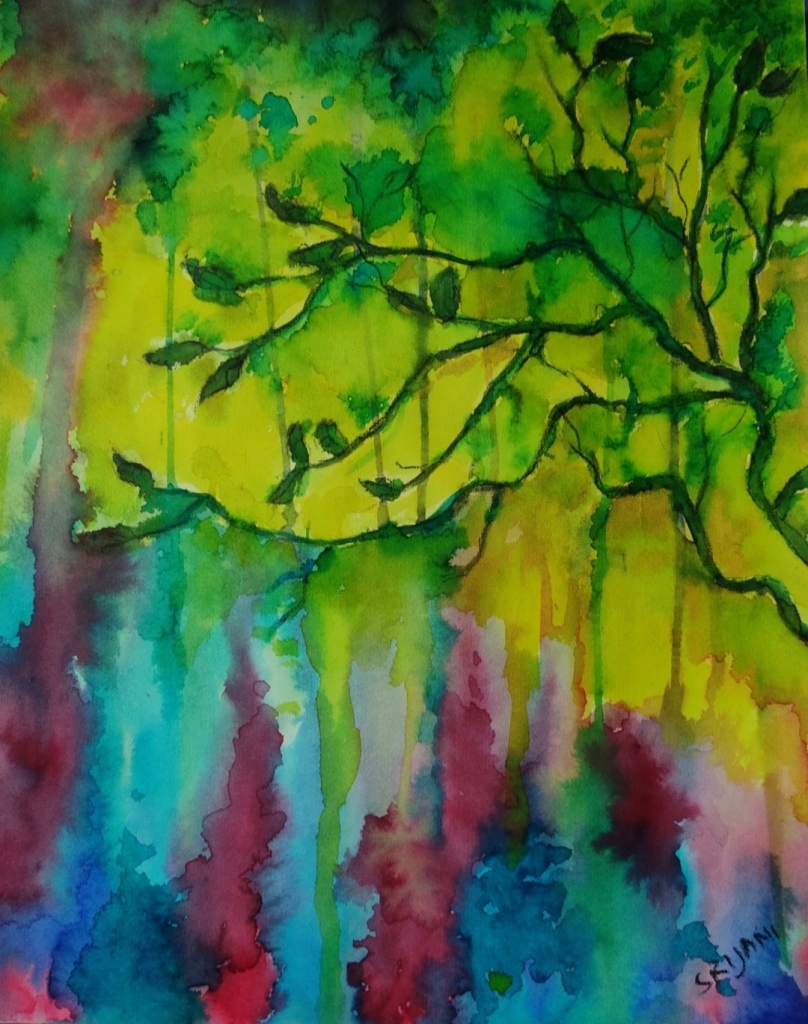
Hope in Winter(2020) by Srijani Dutta
“Here with a Loaf of Bread beneath the Bough,
A Flask of Wine, a Book of Verse -- and Thou
Beside me singing in the Wilderness --
And Wilderness is Paradise enow.”

― Omar Khayyám (1048-1131); translation from Persian by Edward Fitzgerald (Rubaiyat, 1859)

I wonder why Khayyam wrote these lines — was it to redefine paradise or just to woo his beloved? I like to imagine it was a bit of both. The need not to look for a paradise after death but to create one on Earth might well make an impact on humankind. Maybe, they would stop warring over an invisible force that they call God or by some other given name, some ‘ism’. Other than tens of thousands dying in natural disasters like the recent earthquake at the border of Turkiye and Syria, many have been killed by wars that continue to perpetrate divides created by human constructs. This month houses the second anniversary of the military junta rule in Myanmar and the first anniversary of the Ukrainian-Russian war that continues to decimate people, towns, natural reserves, humanity, economics relentlessly, polluting the environment with weapons of mass destruction, be it bombs or missiles. The more weapons we use, the more we destroy the environment of our own home planet. 

Sometimes, the world cries for a change. It asks to be upended.

We rethink, reinvent to move forward as a species or a single race. We relook at concepts like life and death and the way we run our lives. Redefining paradise or finding paradise on Earth, redefining ‘isms’ we have been living with for the past few hundred years — ‘isms’ that are being used to hurt others of our own species, to create exclusivity and divisions where none should exist — might well be a requisite for the continuance of our race.

Voices of change-pleaders rang out in the last century with visionaries like Tagore, Gandhi, Nazrul, Satyajit Ray urging for a more accepting and less war-bound world. This month, Ratnottama Sengupta has written on Ray’s legendary 1969 film, Goopy Gyne, Bagha Byne: “The message he sent out loud and with laughter: ‘When people have palatable food to fill their belly and music to fill their soul, the world will bid goodbye to wars.’” Shantanu Ray Chaudhuri has given an essay on one of the greatest pacifists, Gandhi, and his attitudes to films as well as his depiction in movies. What was amazing is Gandhi condemned films and never saw their worth as a mass media influencer! The other interesting thing is his repeated depiction as an ethereal spirit in recent movies which ask for changes in modern day perceptions and reforms. In fact, both these essays deal with ghosts who come back from the past to urge for changes towards a better future.

Delving deeper into the supernatural is our interviewee, Abhirup Dhar, an upcoming writer whose ghost stories are being adapted by Bollywood. While he does investigative stories linked to supernatural lore, our other interviewee, Andrew Quilty, a renowned journalist who has won encomiums for his coverage on Afghanistan where he spent eight years, shows in his book, August in Kabul: America’s Last Days in Afghanistan and the Return of the Taliban, what clinging to past lores can do to a people, especially women. Where does one strike the balance? We also have an excerpt from his book to give a flavour of his exclusive journalistic coverage on the plight of Afghans as an eyewitness who flew back to the country not only to report but to be with his friends — Afghans and foreigners — as others fled out of Kabul on August 14 th 2021. While culturally, Afghans should have been closer to Khayyam, does their repressive outlook really embrace the past, especially with the Taliban dating back to about only three decades?

The books in our review section have a focus on the past and history too. Meenakshi Malhotra’s review of Priyadarshini Thakur Khayal’s Padmini of Malwa: The Autobiography of Rani Rupmati, again focusses on how the author resurrects a medieval queen through visitations in a dream (could it be her spirit that visited him?). Somdatta Mandal writes of a book of history too — but this time the past and the people are resurrected through objects in Sudeshna Guha’s A history of India through 75 Objects. Bhaskar Parichha has also reviewed a history book by culinary writer-turned-historian Colleen Taylor Sen, Ashoka and The Maurya Dynasty: The History and Legacy of Ancient India’s Greatest Empire.

This intermingling of life and death and the past is brought to life in our fiction section by Sreelekha Chatterjee and Anjana Krishnan. Aditi Yadav creates a link between the past and our need to travel in her musing, which is reminiscent of Anthony Sattin’s description of asabiyya, a concept of brotherhood that thrived in medieval times. In consonance with wanderlust expressed in Yadav’s essay, we have a number of stories that explore travel highlighting various issues. Meredith Stephens travels to explore the need to have nature undisturbed by external interferences in pockets like Kangaroo Island in a semi-humorous undertone. While Ravi Shankar travels to the land’s end of India to voice candid concerns on conditions within Kerala, a place that both Keith Lyons and Rhys Hughes had written on with love and a sense of fun. It is interesting to see the contrasting perspectives on Southern India.

Hughes of course brings in dollops of humour with his travel to Adam’s Peak in Sri Lanka as does Devraj Singh Kalsi who writes about camel rides in Chandigarh, a place I known for its gardens, town planning and verdure. Suzanne Kamata colours Japan with humour as she writes of how candies can save the day there! Sengupta continues to travel to the past delving into the history of the last century.

Poetry that evokes laughter is rare but none the less the forte of Hughes as pensive but beautiful heartfelt poetry is that of Asad Latif. This February, the edition features poetry by Ryan Quinn Flanagan that borders on wry humour and on poignancy by George Freek. More poems by Pragya Bajpai, Sanjukta Dasgupta, Chad Norman, John Grey, Amit Parmessur, Sister Lou Ella Hickman, Saranyan BV and many more bring in varied emotions collected and honed to convey varieties that flavour our world.

Professor Fakrul Alam has also translated poetry where a contemporary Bengali writer, Masud Khan, cogitates on history while Ihlwha Choi has translated his own poem from Korean. A translation of Tagore’s poem on the ocean tries to capture the vastness and the eternal restlessness that can be interpreted as whispers carried through eons of history. Fazal Baloch has also shared a poem by one of the most revered modern Balochi voices, that of Atta Shad. Our pièce de resistance is a translation of Premchand’s Balak or the Child by Anurag Sharma.

This vibrant edition would not have been possible without all the wonderful translators, writers, photographers and artists who trust us with their work. My heartfelt thanks to all of you, especially, Srijani Dutta for her beautiful painting, ‘Hope in Winter’, and Sohana for her amazing artwork. My heartfelt thanks to the team at Borderless Journal, to our loyal readers some of whom have evolved into fabulous contributors. Thank you.

Do write in telling us what you think of the journal. We look forward to feedback from all of you as we head for the completion of our third year this March.

Best wishes,

Mitali Chakravarty

borderlessjournal.com

Click here to access the Borderless anthology, Monalisa No Longer Smiles

Categories
Notes from Japan

Sweet Diplomacy

By Suzanne Kamata

 Courtesy: Creative Commons

Many readers of a certain age are familiar with the story of Mary Poppins, a spirited British nanny with supernatural powers. (She could fly with just an umbrella, for example.) Although the book version didn’t include any songs, the film rendition was a musical, and even now those tunes are lodged in my brain, especially the one about a spoonful of sugar helping the medicine go down.

Sugar gets a bad rap these days all around the world. My Japanese husband was adamantly opposed to letting our children have sweets when they were small. I, however, had grown up in a household where dessert was served after every lunch and dinner – mostly cookies and pies baked by my mother. He did give in when our kids had the flu.  I recall one sticky afternoon when we melted chocolate and sprinkled bitter powder into molds in order to get our children to take their medicine.

Chocolate is a big deal in Japan on Valentine’s Day. In the weeks before, stores are filled with an array of chocolates in various shapes and sizes, which women are expected to give the men in their lives. But generally, cakes and cookies are often seen as feminine. It’s not manly to confess to a sweet tooth.

In Japan, I’ve found that desserts do exist, and they are often exquisite and delicious, but they are mostly shared on special occasions or when diplomacy is required. Cake can serve as an apology, while candy might be a form of persuasion, a way to literally “sweeten the pot.” To wit, a few years ago, our next-door neighbor came to the door with a white carton with the name of a popular bakery on the side.

“We are going to have some construction done on our house,” she said. “It will be noisy for a while. I apologise in advance.” She handed over the box with a bow. Later, when I looked inside, I found the box full of cream puffs. Although, as our neighbor said, the next few weeks were noisy, each hammer pound reminded me of the flaky pastry balls filled with custard. I could hardly be annoyed.

More recently, I answered the door to find another neighbor bearing a big box of cookies.

“Sorry about the commotion earlier,” he said.

Later, I found out that his car had exploded or at least caught on fire. Apparently, he had left a laptop with a lithium battery on the car seat on that hot day. The police and fire department had come by.

To be honest, I hadn’t really noticed that anything out of the ordinary was going on, but I appreciated his consideration, and my family and I enjoyed the cookies.

These days, when I take a trip out of town, I bring back something sweet as a souvenir for my neighbors. Also, when the farmers who live around here bring us vegetables from their fields, I usually reciprocate by baking carrot cake for them.

In my own country, people sometimes have noisy parties, which lead to complaints and phone calls from irritated others. As a person who likes to sleep in on weekends, I have been peeved by neighbours who cranked their lawnmowers at the crack of dawn. A little bit of sugar, however, can go a long way in keeping the peace and smoothing out relations.

.

Suzanne Kamata was born and raised in Grand Haven, Michigan. She now lives in Japan with her husband and two children. Her short stories, essays, articles and book reviews have appeared in over 100 publications. Her work has been nominated for the Pushcart Prize five times, and received a Special Mention in 2006. She is also a two-time winner of the All Nippon Airways/Wingspan Fiction Contest, winner of the Paris Book Festival, and winner of a SCBWI Magazine Merit Award.

PLEASE NOTE: ARTICLES CAN ONLY BE REPRODUCED IN OTHER SITES WITH DUE ACKNOWLEDGEMENT TO BORDERLESS JOURNAL

Click here to access the Borderless anthology, Monalisa No Longer Smiles
Categories
Contents

Borderless, January 2023

Painting by Sohana Manzoor

Editorial

Will Monalisa Smile Again? … Click here to read.

Translations

Nazrul’s Ring Bells of Victory has been translated from Bengali by Professor Fakrul Alam. Click here to read.

Nobody in the Sky by S Ramarishnan, has translated from Tamil by R Sathish. Click here to read.

The Bike Thief by Ihlwha Choi has been translated from Korean by the poet himself. Click here to read.

Tagore’s Banshi or Flute has been translated by Mitali Chakravarty from Bengali.Click here to read.

Poetry

Click on the names to read

Jared Carter, Ranu Uniyal, Rhys Hughes, Saranyan BV, Scott Thomas Outlar, Priyanka Panwar, Ron Pickett, Ananya Sarkar, K.S. Subramaniam, George Freek, Snigdha Agrawal, Jenny Middleton, Asad Latif, Michael R Burch

Poets, Poetry & Rhys Hughes

In I Went to Kerala, Rhys Hughes treads a humorous path. Click here to read.

Conversation

In Conversation with Abhay K, a poet turned diplomat, translator and a polyglot, converses of how beauty inspired him to turn poet and translating Kalidasa and other poets taught him technique. Click here to read.

Musings/Slices from Life

What do Freddy Mercury, Rishi Sunak & Mississipi Masala have in Common?

Farouk Gulsara muses on the human race. Click here to read.

Ghosh & Company

Ratnottama Sengupta relives the past. Click here to read.

Sails, Whales, and Whimsical Winds

Meredith Stephens continues on her sailing adventures in New South Wales and spots some sporting whales. Click here to read.

Tsunami 2004: After 18 years

Sarpreet Kaur travels back to take a relook at the tsunami in 2004 from Andaman and Nicobar Islands. Click here to read.

‘I am in a New York state of mind’

Ravi Shankar shares his travel adventures in the city. Click here to read.

Half a World Away from Home

Mike Smith introspects on his travels to New Zealand. Click here to read.

Musings of a Copywriter

In Back to the Past, Devraj Singh Kalsi muses on the need to relive nostalgia. Click here to read.

Notes from Japan

In The Year of the Tiger Papa, Suzanne Kamata gives us a glimpse of Japan’s education system with a touch of humour. Click here to read.

Essays

A Solitary Pursuit: The Art of Suhas Roy

Ratnottama Sengupta journeys with the signature art of Suhas Roy as it transformed in theme, style, and medium. Click here to read.

New Perspectives on Cinema & Mental Health

Between 1990 and 2017 one in seven people in India suffered from mental illness. However, the depiction of this in cinema has been poor and sensationalist contends Shantanu Ray Chaudhuri. Click here to read.

The Observant Immigrant

In The Immigrant’s Dilemma, Candice Louisa Daquin explores immigrants and the great American Dream. Click here to read.

Stories

The Book Truck

Salini Vineeth writes a story set in the future. Click here to read.

The Scholar

Chaturvedi Divi explores academia. Click here to read.

Little Billy

Paul Mirabile renders the poignant tale of a little boy. Click here to read.

Book Excerpts

An excerpt from Sanjay Kumar’s Performing, Teaching and Writing Theatre: Exploring Play. Click here to read.

An excerpt from Abhay K’s Monsoon: A Poem of Love & Longing. Click here to read.

Book Reviews

Somdatta Mandal reviews Priya Hajela’s Ladies Tailor: A novel. Click here to read.

Rakhi Dalal reviews Shrinivas Vaidya’s A Handful of Sesame, translated from Kannada by Maithreyi Karnoor. Click here to read.

Gracy Samjetsabam reviews K.A. Abbas’s Sone Chandi Ke Buth: Writings on Cinema, translated and edited by Syeda Hameed and Sukhpreet Kahlon. Click here to read.

Bhaskar Parichha reviews MA Sreenivasan’s Of the Raj, Maharajas and Me. Click here to read.

.

Click here to access the Borderless anthology, Monalisa No Longer Smiles

Categories
Editorial

Will Monalisa Smile Again?

The first month of 2023 has been one of the most exciting! Our first book, Monalisa No Longer Smiles: An Anthology of Writings from across the World, is now in multiple bookstores in India (including Midlands and Om Bookstores). It has also had multiple launches in Delhi and been part of a festival.

We, Meenakshi Malhotra and I, were privileged to be together at the physical book events. We met the editor in chief of Om Books International, Shantanu Ray Chaudhuri, the editor of our anthology, Jyotsna Mehta, along with two translators and writers I most admire, Aruna Chakravarti and Radha Chakravarty, who also graced a panel discussion on the anthology during our physical book launch. The earlier e-book launch had been in November 2022. My heartfelt thanks to the two eminent translators and Chaudhuri for being part of the discussions at both these launches. Chaudhuri was also in the panel along with Debraj Mookerjee at a launch organised by Malhotra and the English Literary Society steered by Nabaneeta Choudhury at Hans Raj College, Delhi University. An energising, interactive session with students and faculty where we discussed traditional and online publishing, we are immensely grateful to Malhotra for actively organising the event and to the Pandies’ founder, Sanjay Kumar, for joining us for the discussion. It was wonderful to interact with young minds. On the same day, an online discussion on the poetry in Monalisa No Longer Smiles was released by the Pragati Vichar Literary Festival (PVLF) in Delhi.

At the PVLF session, I met an interesting contemporary diplomat cum poet, Abhay K. He has translated Kalidasa’s Meghaduta and the Ritusamhara from Sanskrit and then written a long poem based on these, called Monsoon. We are hosting a conversation with him and are carrying book excerpts from Monsoon, a poem that is part of the curriculum in Harvard. The other book excerpt is from Sanjay Kumar’s Performing, Teaching and Writing Theatre: Exploring Play, a book that has just been published by the Cambridge University Press.

Perhaps because it is nearing the Republic Day of India, we seem to have a flurry of book reviews that reflect the Sub-continental struggle for Independence from the colonials. Somdatta Mandal has reviewed Priya Hajela’s Ladies Tailor: A novel, a book that takes us back to the trauma of the Partition that killed nearly 200,000 to 2 million people – the counts are uncertain. Bhaskar Parichha has discussed MA Sreenivasan’s Of the Raj, Maharajas and Me, a biography of a long serving official in the Raj era — two different perspectives of the same period. Rakhi Dalal has shared her views on Shrinivas Vaidya’s A Handful of Sesame, translated from Kannada by Maithreyi Karnoor, a book that dwells on an immigrant to the Southern part of India in the same time period. The legendary film writer K.A. Abbas’s Sone Chandi Ke Buth: Writings on Cinema, translated and edited by Syeda Hameed and Sukhpreet Kahlon, has been praised by Gracy Samjetsabam.

We have a piece on mental health in cinema by Chaudhuri, an excellent essay written after interviewing specialists in the field. Ratnottama Sengupta has given us a vibrant piece on Suhas Roy, an artist who overrides the bounds of East and West to create art that touches the heart. Candice Louisa Daquin has written on border controls and migrants in America. High profile immigrants have also been the subject of Farouk Gulsara’s ‘What do Freddy Mercury, Rishi Sunak & Mississipi Masala have in Common?’ Sengupta also writes of her immigrant family, including her father, eminent writer, Nabendu Ghosh, who moved from Bengal during the Partition. There are a number of travel pieces across the world by Ravi Shankar, Meredith Stephens and Mike Smith — each written in distinctively different styles and exploring different areas on our beautiful Earth. Sarpreet Kaur has revisited the devastation of the 2004 tsunami and wonders if it is a backlash from nature. Could it be really that?

Suzanne Kamata gives us a glimpse of the education system in Japan in her column with a humorous overtone. Devraj Singh Kalsi dwells on the need for nostalgia with a tongue-in-cheek approach. Rhys Hughes makes us rollick with laughter when he talks of his trip to Kerala and yet there is no derision, perhaps, even a sense of admiration in the tone. Hughes poetry also revels in humour. We have wonderful poetry from Jared Carter, Ranu Uniyal, Asad Latif, Anaya Sarkar, Michael R Burch, Scott Thomas Outlar, Priyanka Panwar, George Freek and many more.

The flavours of cultures is enhanced by the translation of Nazrul’s inspirational poetry by Professor Fakrul Alam, Korean poetry written and translated by Ihlwha Choi and a transcreation of Tagore’s poem Banshi (or flute) which explores the theme of inspiration and the muse. We have a story by S Ramakrishnan translated from Tamil by R Sathish. The short stories featured at the start of this year startle with their content. Salini Vineeth writes a story set in the future and Paul Mirabile tells the gripping poignant tale of a strange child.

With these and more, we welcome you to savour the January 2023 edition of Borderless, which has been delayed a bit as we were busy with the book events for our first anthology. I am truly grateful to all those who arranged the discussions and hosted us, especially Ruchika Khanna, Om Books International, the English Literary Society of Hans Raj College and to the attendees of the event. My heartfelt thanks to the indefatigable team and our wonderful writers, artists and readers, without who this journey would have remained incomplete. Special thanks to Sohana Manzoor for her artwork. Many thanks to the readers of Borderless Journal and Monalisa No Longer Smiles. I hope you will find the book to your liking. We have made a special page for all comments and reviews.

I wish you a wonderful 2023. Let us make a New Year’s wish —

May all wars and conflicts end so that our iconic Monalisa can start smiling again!

Mitali Chakravarty,

borderlessjournal.com

.

Photographs of events around Monalisa No Longer Smiles: An Anthology of Writings from across the World. Click here to access the Book.

.

Insta Link to an excerpt of the launch at Om Bookstore. Click here to view.

E-Launch of the first anthology of Borderless Journal, November 14th 2022. Click here to view.

Categories
Notes from Japan

The Year of the Tiger Papa

By Suzanne Kamata

Courtesy: Creative Commons

When I returned to the university where I teach at the beginning of the year – the Year of the Rabbit in Japan — my Canadian colleague and I greeted each other.

“How was your winter break?” he asked me.

“Wonderful!” I told him about how both of my children, who have finished school and left home, returned for the holidays. We’d enjoyed feasting on traditional foods and lazing in front of the TV. “And yours?”

He rolled his eyes. “My son is studying for his high school entrance exam,” he told me. “It was so-o-o stressful.”

How well I remember those days! I think of the year that my own son faced that all-important test, the one that would supposedly determine his entire future, predicting what college he would enter, and then what kind of job, as the Year of the Tiger Papa.

You have probably heard of “tiger mothers” or “education mamas,” stereotypical Asian moms who push their children to succeed academically. Although after having lived in Japan for 23 years at that point I felt that I almost qualified as an Asian mother, no one had ever called me by either of those names. Of course, I wanted my children to do well in school. I was a good student myself, and I was well aware of the value of a good education. However, during PTA meetings, when other mothers were begging the homeroom teacher to assign more homework, mine was the lone voice lobbying for more recess.

Then, my son became a third-year junior high school student. I’d heard that in Japan everything gets put on hold while the kid in question prepares for the all-important high school entrance exam. Since I didn’t have to take an exam to get into my American high school, I really had no idea of the preparation involved. I deferred to my Japanese husband, whom I began to refer to as Tiger Papa.

During the long school holiday, I proposed a family trip to the United States.

“No, “ Tiger Papa said. “Our boy needs to study.”

“Can’t he study while he’s on vacation?” I asked.

Tiger Papa was doubtful. “He needs to study for ten hours a day. Plus, there’s cram school.”

“Well, okay.”

There are many debates about how many hours kids should study, and which country has the best educational system, but we live in Japan. For our kids, success in school meant doing well in the Japanese school system. If our son was willing to study ten hours a day to get into the high school of his choice, then I wasn’t going to stand in his way.

During the end of the year cleaning, my husband and daughter and I washed the windows and polished the floors while our son was holed up in his room with his books. He didn’t have time to hang out with his friends, but he was exempt from all chores. Occasionally, I would bring a cup of hot chocolate to his room.

On the morning of his entrance exam, he sharpened his pencils, strapped on a watch, and rode his bike to the high school where he sat for a five-hour exam. When he came home, he smiled for what seemed the first time in weeks. Come what may, his year of studying was over. I made his favourite soup to celebrate.

“It’s your turn to do the dishes,” Tiger Papa said afterwards. “And then you can clean your room.”

(And yes, dear reader, he got into the school of his choice.)

Suzanne Kamata was born and raised in Grand Haven, Michigan. She now lives in Japan with her husband and two children. Her short stories, essays, articles and book reviews have appeared in over 100 publications. Her work has been nominated for the Pushcart Prize five times, and received a Special Mention in 2006. She is also a two-time winner of the All Nippon Airways/Wingspan Fiction Contest, winner of the Paris Book Festival, and winner of a SCBWI Magazine Merit Award.

PLEASE NOTE: ARTICLES CAN ONLY BE REPRODUCED IN OTHER SITES WITH DUE ACKNOWLEDGEMENT TO BORDERLESS JOURNAL

Click here to access the Borderless anthology, Monalisa No Longer Smiles
Categories
Greetings from Borderless

Happy New Year

Art by Sohana Manzoor

As the old year winds up, we wait for the new year in anticipation… We wait to see how the new born blossoms as each year takes a unique form. This year, while we strengthened the population with vaccines, other kind of politics set in, which finally found fruition in a war that has perhaps been one of the saddest events of human history — people made homeless, towns erased, lives lost, nature polluted with gunpowder and shreds of machinery along with the ultimate threat of nuclear weapons erupting every now and then. What could possibly give hope amidst the darkness of the receding year with price hikes, the threat of looming hunger, joblessness, more conflicts and fear?

The fact that we have survived for more than 200,000 years in our current form is heartening. That we have lived through wars, plagues and disasters without being erased out of existence only highlights the resilience of our species to adapt to all kinds of contingencies. Perhaps, with the current crises, we will move towards new world orders…perhaps, we will find hope in creating and evolving new ways of living in consonance with nature and more by our need than greed.

With that hope in heart, we wish you a wonderful start to the New Year with a few interesting pieces from our journal, including a highly entertaining piece by Suzanne Kamata on how the Japanese traditionally, literally make a clean start each New Year and Michael Burch’s fun poems and a translation of Tagore’s adaptation of the traditional year-end Auld Lang Syne. We have sprinkled more humour in poetry by Rhys Hughes and Santosh Bakaya and, in prose, by Tagore, translated by Somdatta Mandal, Ruskin Bond and Devraj Singh Kalsi. Laughter at the this juncture will hopefully give us a year with more shades of happiness.

Poetry 

Tagore’s Purano Sei Diner Kotha or ‘Can old days ever be forgot?’ based on Robert Burn’s Auld Lang Syne, translated from Bengali by Mitali Chakravarty. Click here to read.

Fun Poems for the New Year by Michael R Burch… Click here to read.

Kissing Frogs by Rhys Hughes… Click here to read.

The Recliner by Santosh Bakaya… Click here to read.

Prose

Travels & Holidays: Humour from Rabindranath: Translated from the original Bengali by Somdatta Mandal, these are Tagore’s essays and letters laced with humour. Click here to read.

A short tale from Friends in Wild Places: Birds, Beasts and Other Companions by Ruskin Bond. Click here to read.

In A Clean Start, Suzanne Kamata tells us how the Japanese usher in a new year. Click here to read.

In The New Year’s Boon, Devraj Singh gives a glimpse into the projection of a new normal created by God. Click here to read.

Art by Sohana Manzoor

Click here to access the Borderless anthology, Monalisa No Longer Smiles

Book Talks

Categories
Contents

Borderless, December 2022

Art by Sohana Manzoor

Editorial

It’s Only Hope… Click here to read.

Conversations

Shantanu Ray Chaudhari converses with writer Gajra Kottary, a well-known writer of Indian TV series, novels and stories. Click here to read.

A discussion on Samaresh Bose’s In Search of the Pitcher of Nectar, a book that takes us to the heart of the Kumbh Mela, a festival recognised by the UNESCO as an Intangible Cultural Heritage, with the translator, Nirmal Kanti Bhattacharjee. Click here to read.

Translations

Nazrul’s Why Provide Thorns has been translated by Professor Fakrul Alam. Click here to read.

Mercy, a story be P. F. Mathews, has been translated from Malayalam by Ram Anantharaman. Click here to read.

Even A Simurgh Cannot Change Destiny, a Balochi folktale translated and retold by Fazal Baloch. Click here to read.

Confessions, a poem written by and translated from Korean by Ihlwha Choi. Click here to read.

The Sun on the First Day, a translation of Tagore’s Prothom Diner Shurjo by Mitali Chakravarty. Click here to read.

Pandies’ Corner

Songs of Freedom: Vikalangta or Disability is an autobiographical narrative by Kajal, translated from Hindustani by Janees. These narrations highlight the ongoing struggle against debilitating rigid boundaries drawn by societal norms, with the support from organisations like Shaktishalini and Pandies. Click here to read.

Poetry

Click on the names to read

Jared Carter, Sukrita Paul Kumar, Rhys Hughes, Asad Latif, Luis Cuauhtémoc Berriozábal, Santosh Bakaya, Phil Wood, Sharanya B, George Freek, Saibal Chatterjee, Jonathan Chan, Sutputra Radheye, Shambhu Nath Banerjee, Michael Burch

Poets, Poetry & Rhys Hughes

In Some Differences Between Wales and India, Rhys Hughes makes some hilarious comparisons. Click here to read.

Musings/ Slices from Life

Near-Life Experiences: Hiking in New Zealand

Keith Lyons escapes city life to find his happy place while hiking in New Zealand. Click here to read.

The Seven Grandfather Teachings

Saeed Ibrahim introduces us to Native Indian lore from Canada and shows its relevance in the current times. Click here to read.

Dismasted in Bass Strait

Meredith Stephens takes us for a sailing adventure with photographs in the Southern Hemisphere. Click here to read.

Musings of a Copywriter

In Of Mice & Men, Devraj Singh Kalsi talks of his encounters with rats. Click here to read.

Notes from Japan

In A Clean Start, Suzanne Kamata tells us how the Japanese usher in a new year. Click here to read.

Stories

Annapurna Bhavan

Lakshmi Kannan closes class divides in Chennai over a meal. Click here to read.

Two Faces of a Mirror

Tulip Chowdhury gives us a story set in a Bangladeshi village. Click here to read.

The Slip

Sushma R Doshi takes a look at the pandemic against an Indian middle-class set up. Click here to read.

Till Life Do Us Part

Devraj Singh Kalsi explores a strange new trend. Click here to read.

Essays

Orangutans & a School at Sarawak

Christina Yin, a conservationist, travels to Borneo in an attempt to create awareness for conserving the Orangutan. Click here to read.

Taiping of the Raj Era

Ravi Shankar explores Taiping in Malaysia with a camera and words. Click here to read.

Ivory Ivy & Stephen Dedalus

Paul Mirabile explores James Joyce’s Stephen Dedalus and his passion for words keeping in mind the hundred year old Ulysees & the even older, A Portrait of the Artists as a Young Man. Click here to read.

Book Excerpts

An excerpt from Radha Chakravarty’s translation of Tagore’s Farewell Song. Click here to read.

An excerpt or two short narratives from Rhys Hughes’ Yule Do Nicley. Click here to read.

Book Reviews

Somdatta Mandal reviews The Shaping of Modern Calcutta: The Lottery Committee Years, 1817 – 1830 by Ranabir Ray Chaudhury. Click here to read.

Rakhi Dalal reviews Freny Manecksha’s Flaming Forest, Wounded Valley: Stories from Bastar and Kashmir. Click here to read.

Basudhara Roy reviews Manoranjan Byapari’s How I Became a Writer: An Autobiography of a Dalit. Click here to read.

Bhaskar Parichha reviews In Search of the Divine: Living Histories of Sufism in India by Rana Safvi. Click here to read.

.

Click here to access the Borderless anthology, Monalisa No Longer Smiles
You are all welcome to the book talks of our first anthology

Categories
Editorial

Its Only Hope…

Painting by Sybil Pretious

New year, like a newborn, starts with hope.

The next year will do the same – we will all celebrate with Auld Lang Syne and look forward to a resolution of conflicts that reared a frightening face in 2022 and 2021. Perhaps, this time, if we have learnt from history, there will not be any annihilation but only a movement towards resolution. We have more or less tackled the pandemic and are regaining health despite the setbacks and disputes. There could be more outbreaks but unlike in the past, this time we are geared for it. That a third World War did not break out despite provocation and varied opinions, makes me feel we have really learnt from history.

That sounds almost like the voice of hope. This year was a landmark for Borderless Journal. As an online journal, we found a footing in the hardcopy world with our own anthology, Monalisa No Longer Smiles: Writings from Across the World, which had a wonderful e-launch hosted by our very well-established and supportive publisher, Om Books International. And now, it is in Om Book Shops across all of India. It will soon be on Amazon International. We also look forward to more anthologies that will create a dialogue on our values through different themes and maybe, just maybe, some more will agree with the need for a world that unites in clouds of ideas to take us forward to a future filled with love, hope and tolerance.

One of the themes of our journal has been reaching out for voices that speak for people. The eminent film critic and editor, Shantanu Ray Chaudhuri , has shared a conversation with such a person, the famed Gajra Kottary, a well-known writer of Indian TV series, novels and stories. The other conversation is with Nirmal Kanti Bhattajarchee, the translator of Samaresh Bose’s In Search of a Pitcher of Nectar, a book describing the Kumbh-mela, that in 2017 was declared to be an Intangible Cultural Heritage of Humanity by UNESCO. Bhattacharjee tells us how the festival has grown and improved in organisation from the time the author described a stampede that concluded the festivities. Life only gets better moving forward in time, despite events that terrorise with darkness. Facing fear and overcoming it does give a great sense of achievement.

Perhaps, that is what Freny Manecksha felt when she came up with a non-fiction called Flaming Forest, Wounded Valley: Stories from Bastar and Kashmir, which has been reviewed by Rakhi Dalal. Basudhara Roy has also tuned in with a voice that struggled to be heard as she discusses Manoranjan Byapari’s How I Became a Writer: An Autobiography of a Dalit. Somdatta Mandal has reviewed The Shaping of Modern Calcutta: The Lottery Committee Years, 1817 – 1830 by Ranabir Ray Chaudhury, a book that explores how a lottery was used by the colonials to develop the city. Bhaskar Parichha has poured a healing balm on dissensions with his exploration of Rana Safvi’s In Search of the Divine: Living Histories of Sufism in India as he concludes: “Weaving together facts and popular legends, ancient histories and living traditions, this unique treatise running into more than four hundred pages examines core Sufi beliefs and uncovers why they might offer hope for the future.”

In keeping with the festive season is our book excerpt from Rhys Hughes’ funny stories in his Christmas collection, Yule Do Nicely. Radha Chakravarty who brings many greats from Bengal to Anglophone readers shared an excerpt – a discussion on love — from her translation of Tagore’s novel, Farewell Song.

Love for words becomes the subject of Paul Mirabile’s essay on James Joyce’s Stephen Dedalus, where he touches on both A Portrait of the Artist as a young Man and  Ulysees, a novel that completed a century this year. Love for animals, especially orangutans, colours Christina Yin’s essay on conservation efforts in Borneo while Keith Lyons finds peace and an overwhelming sense of well-being during a hike in New Zealand. Ravi Shankar takes us to the historical town of Taiping in Malaysia as Meredith Stephens shares more sailing adventures in the Southern hemisphere, where it is summer. Saeed Ibrahim instils the seasonal goodwill with native Indian lores from Canada and Suzanne Kamata tells us how the Japanese usher in the New Year with a semi-humorous undertone.

Humour in non-fiction is brought in by Devraj Singh Kalsi’s ‘Of Mice and Men’ and in poetry by Santosh Bakaya. Laughter is stretched further by the inimitable Rhys Hughes in his poetry and column, where he reflects on his experiences in India and Wales. We have exquisite poetry by Jared Carter, Sukrita Paul Kumar, Asad Latif, Luis Cuauhtémoc Berriozábal, Michael R Burch, Sutputra Radheye, George Freek, Jonathan Chan and many more. Short stories by Lakshmi Kannan, Devraj Singh Kalsi, Tulip Chowdhury and Sushma R Doshi lace narratives with love, humour and a wry look at life as it is. The most amazing story comes from Kajal who pours out the story of her own battle in ‘Vikalangta or Disability‘ in Pandies’ Corner, translated from Hindustani by Janees.

Also touching and yet almost embracing the school of Absurd is PF Mathew’s story, ‘Mercy‘, translated from Malayalam by Ram Anantharaman. Fazal Baloch has brought us a Balochi folktale and Ihlwha Choi has translated his own poem from Korean to English. One of Tagore’s last poems, Prothom Diner Shurjo, translated as ‘The Sun on the First Day’ is short but philosophical and gives us a glimpse into his inner world. Professor Fakrul Alam shares with us the lyrics of a Nazrul song which is deeply spiritual by translating it into English from Bengali.

A huge thanks to all our contributors and readers, to the fabulous Borderless team without who the journal would be lost. Sohana Manzoor’s wonderful artwork continues to capture the mood of the season. Thanks to Sybil Pretious for her lovely painting. Please pause by our contents’ page to find what has not been covered in this note.

We wish you all a wonderful festive season.

Season’s Greetings from all of us at Borderless Journal.

Cheers!

Mitali Chakravarty

borderlessjournal.com

.

Click here to access the Borderless anthology, Monalisa No Longer Smiles