Categories
Review

Behind Latticed Marble: Inner Worlds of Women

Book Review by Somdatta Mandal

Title: Behind Latticed Marble: Inner Worlds of Women

Author: Jyotirmoyee Devi Sen, translated from Bengali by Apala G. Egan

New Delhi: Niyogi Books

The very mention of the name of Jyotirmoyee Devi (1894 – 1988) brings to our mind the strong feminist Bengali writer, author of the famous Partition novel, Epar Ganga Opar Ganga (The River Churning), mainly depicted the lives of the women in Bengal who bore the burden of this communal divide, their bodies being inflicted with sexual violence, rape, and social exclusion as a consequence to the former two. Owing to the dearth in the literature that records such gruesome atrocities that were inflicted upon women, till date her work is extremely important. This present anthology however focuses on a totally different perspective of the writer where she tells us interesting stories about the life of the women and little girls of Rajasthan, and the discriminatory gender and caste norms that policed and defined their existence. 

Jyotirmoyee Devi was born in Jaipur in an upper-caste and economically well-off family. Her grandfather, who had emigrated there from Bengal during the British Raj, rose to occupy a high administrative position as the dewan or prime minister to the Maharaja of Jaipur. Thus, Rajasthan had a profound impact on her writings in the later years. Not being given an opportunity for formal education, her sole means to establish a relationship with reading became her grandfather’s library where she, along with her sister, were assigned to arrange newly arrived books and magazines. Therefore, even though she was a little girl, she attempted to make use of her multiple privileges that could help her access books and writing material. Married at the age of ten and widowed at twenty-five, she returned to her parents’ home along with her children and became a prolific writer during her long period of widowhood.

The ten fictional narratives in this anthology are all set in Rajasthan, and they create an elegant tapestry amidst the backdrop of Rajput grandeur and chivalry. Based on an eyewitness account of life in royal harems, these stories describe the very human interaction between men and women in this milieu. They highlight power play, disinheritance, and the threat of assault, which are perennial concerns for women. These include fascinating narration about the machinations that went on inside the royal households, as well as stories which tells us the plight of the veiled women in different strata of society. For instance, in “Beneath the Aravalli Hills,” a young village girl Dhapi disappears in the city where her father sold her for two hundred rupees. She is kept in a harem and punished for entering the festive hall without permission, she ends her life in prison. In “Frame Up” when the king dies, there is a heavy pall of suspicion in the kingdom that the queen had murdered him. Two decades later, when she is on her deathbed, she calls her son to tell him that the harem housekeeper and the chief eunuch had hatched a plot to kill his father but the young king walks away without acknowledging his mother’s innocence. In “The Child Bride” we read about the plight of a young widow Kesar whose jewellery is unlawfully snatched from her by the in-laws and she spends the rest of her life in poverty by serving like other destitute widows in the Govindji temple at Vrindavan.

Women-centric issues also recur in a story called “The Queen and the Concubine” where despite having plenty of riches befitting the Rajput royals, the ladies muse secret sorrows since their husbands, seldom, if ever, visited them. They spent their time in their sumptuous villas by holding pageants, dance dramas, and musical soirees. It tells the story of how the protagonist Kesar moved to the king’s harem upon his desire, metamorphosed from a mere maid to a courtesan, till she was burnt to death in the end. As per the rules of the state, sons of courtesans and concubines also lived luxurious and leisure lives, but somehow there always existed a fine dividing line between these men and the real heir to the throne. “The Taint” tells us of the king’s youngest son Samudra, who after receiving college education decides to take up a simple job in the British Indian army while his father arranges for his marriage with plenty of dowry albeit without his consent.

The human side of man is beautifully expressed in “Ungendered” where the royal eunuch decides not to have an heir and lets two young boys live a normal man’s life. Several other stories reiterate tragic tales of women in purdah and how many of them reach unfortunate ends when they try to escape from the strict socially imposed patriarchal norms that keep them totally voiceless. “The Princess Baby” (Beti ka Baap or Father of a daughter) calls for attention towards the evil of female infanticide by feeding them with an overdose of opium and focus on the limited social interactions allowed to young women. Though sometimes repetitive, the stories overall try and tell us about the miserable plight of women in Rajasthan, whether they were commoners or part of the royalty.

Before concluding, a few words about the translation. This anthology contains ten stories, each of which had been translated and published in different journals abroad (nine in different American journals and one in Turkey) before collating them into this present volume. The translator, residing in the USA, obviously had the western reader in mind and sometimes several complicated and difficult words and phrases are used probably to remain politically correct to the original text. But what this reviewer finds problematic is the introduction by the author. Who are the targeted readers? In her introduction, she mentions at random women’s issues from around the world and in different ages one wonders why the context of the stories translated here is not provided at all — except for giving us a bio-note of Jyotirmoyee Devi which is briefly included in the back flap cover. Also, the page-long bibliography provided at the end of the rather out-of-context introduction seems totally redundant. Apart from this lacuna of course, the volume will interest those readers who marvel at the eyewitness accounts of life of women and men, common and royal alike, in Rajasthan in the first few decades of the twentieth century.

Somdatta Mandal, author, academic and translator, is former Professor of English at Visva-Bharati, Santiniketan, India.

.

PLEASE NOTE: ARTICLES CAN ONLY BE REPRODUCED IN OTHER SITES WITH DUE ACKNOWLEDGEMENT TO BORDERLESS JOURNAL. 

Click here to access the Borderless anthology, Monalisa No Longer Smiles

Click here to access Monalisa No Longer Smiles on Kindle Amazon International

Categories
Contents

Borderless, May 2023

Art by Sohana Manzoor

Editorial

Dancing in May? … Click here to read.

Translations

Aparichita by Tagore has been translated from Bengali as The Stranger by Aruna Chakravarti. Click here to read.

The Kabbadi Player, a short story by the late Nadir Ali, has been translated from Punjabi by Amna Ali. Click here to read.

Carnival Time by Masud Khan has been translated from the Bengali poem by Fakrul Alam. Click here to read.

Desolation, a poem by Munir Momin, has been translated from Balochi by Fazal Baloch. Click here to read.

Loneliness, a poem, has been translated from Korean to English by the poet himself, Ihlwha Choi. Click here to read

Jonmodiner Gaan or Birthday Song by Tagore has been translated by Mitali Chakravarty. Click here to read.

Conversations

A conversation with Mitra Phukan about her latest novel, What Will People Say? A Novel along with a brief introduction to the book. Click here to read.

Shantanu Ray Chaudhuri converses with Prerna Gill on her poetry and her new book of poetry, Meanwhile. Click here to read.

Poetry

Click on the names to read the poems

Michael Burch, Lakshmi Kannan, Ryan Quinn Flanagan, Shahriyer Hossain Shetu, Peter Cashorali, K.V. Raghupathi, Wilda Morris, Ashok Suri, William Miller, Khayma Balakrishnan, Md Mujib Ullah, Urmi Chakravorty, Sreekanth Kopuri, Rhys Hughes

Poets, Poetry & Rhys Hughes

In What I Thought I Knew About India When I was Young, Rhys Hughes travels back to his childhood with a soupçon of humour. Click here to read.

Musings/Slices from Life

A Towering Inferno, A Girl-next-door & the Big City

Ratnottama Sengupta writes of actress Jaya Bachchan recounting her first day on the sets of Satyajit Ray’s Mahanagar. Click here to read.

Kissed on Kangaroo Island

Meredith Stephens travels with her camera and her narrative to capture the flora and fauna of the island. Click here to read.

Musings of a Copywriter

In The Reader, Devraj Singh Kalsi revisits his experiences at school. Click here to read.

Notes from Japan

In Making Chop Suey in South Carolina, Suzanne Kamata recaptures a flavour from her past. Click here to read.

Essays

Rabindranath’s Monsoonal Music

Professor Fakrul Alam brings to us Tagore songs in translation and in discussion on the season that follows the scorching heat of summer months. Click here to read.

A Night Hike in Nepal

Ravi Shankar hikes uphill in Nepal on a wet and rainy night along with leeches and water buffaloes. Click here to read.

Moving Images of Tagore

Ratnottama Sengupta talks of Tagore and cinema. Click here to read.

Stories

Threads

Julian Gallo explores addiction. Click here to read.

The Whirlpool

Abdullah Rayhan takes us back to a village in Bangladesh to give a poignant story about a young boy who dreamt of hunting. Click here to read.

Look but with Love

Sreelekha Chatterjee writes a story set in the world of media. Click here to read.

The Mysterious Murder of Adamov Plut

A globe-trotting murder mystery by Paul Mirabile, a sequel to his last month’s story, ‘The Book Hunter’. Click here to read.

Book Excerpts

An excerpt from Aruna Chakravarti’s Daughter’s of Jorasanko describing the last birthday celebration of Tagore. Click here to read.

An excerpt from Bhubaneswar@75 – Perspectives, edited by Bhaskar Parichha/ Charudutta Panigrahi. Click here to read.

Book Reviews

Meenakshi Malhotra revisits Tagore’s Farewell Song, translated from Bengali by Radha Chakravarty. Click here to read.

Somdatta Mandal reviews KR Meera’s Jezebel translated from Malayalam by Abhirami Girija Sriram and K. S. Bijukumar. Click here to read.

Lakshmi Kannan has reviewed Jaydeep Sarangi’s collection of poems, letters in lower case. Click here to read.

Bhaskar Parichha reviews Journey After Midnight – A Punjabi Life: From India to Canada by Ujjal Dosanjh. Click here to read.

PLEASE NOTE: ARTICLES CAN ONLY BE REPRODUCED IN OTHER SITES WITH DUE ACKNOWLEDGEMENT TO BORDERLESS JOURNAL

Click here to access the Borderless anthology, Monalisa No Longer Smiles

Click here to access Monalisa No Longer Smiles on Kindle Amazon International

Categories
Editorial

Dancing in May?

Courtesy: Creative Commons
“May is pretty, May is mild,
Dances like a happy child…”

Annette Wynne (Early twentieth century)

Each month is expressed in a different form by nature in various parts of the world. In the tropics, May is sweltering and hot — peak summer. In the Southern hemisphere, it is cold. However, with climate change setting in, the patterns are changing, and the temperatures are swinging to extremes. Sometimes, one wonders if this is a reflection of human minds, which seem to swing like pendulums to create dissensions and conflicts in the current world. Nothing seems constant and the winds of change have taken on a menacing appearance. If we go by Nazrul’s outlook, destruction is a part of creating a new way of life as he contends in his poem, ‘Ring Bells of Victory’ — “Why fear destruction? It’s the gateway to creation!” Is this how we will move towards ‘dancing like a happy child’?

Mitra Phukan addresses this need for change in her novel, What Will People Say — not with intensity of Nazrul nor in poetry but with a light feathery wand, more in the tradition of Jane Austen. Her narrative reflects on change at various levels to explore the destruction of old customs giving way to new that are more accepting and kinder to inclusivity, addressing issues like widow remarriage in conservative Hindu frameworks, female fellowship and ageing as Phukan tells us in her interview. Upcoming voice, Prerna Gill, lauded by names like Arundhathi Subramaniam and Chitra Divakaruni, has also been in conversation with Shantanu Ray Choudhuri on her book of verses, Meanwhile. She has refreshing perspectives on life and literature.

Poetry in Borderless means variety and diaspora. Peter Cashorali’s poem addresses changes that quite literally upend the sky and the Earth! Michael Burch reflects on a change that continues to evolve – climate change. Ryan Quinn Flanagan explores societal irritants with irony. Seasons are explored by KV Raghupathi and Ashok Suri. Wilda Morris brings in humour with universal truths. William Miller explores crime and punishment. Lakshmi Kannan and Shahriyer Hossain Shetu weave words around mythical lore. We have passionate poetry from Md Mujib Ullah and Urmi Chakravorty. It is difficult to go into each poem with their diverse colours but Rhys Hughes has brought in wry humour with his long poem on eighteen goblins… or is the count nineteen? In his column, Hughes has dwelt on tall tales he heard about India during his childhood in a light tone, stories that sound truly fantastic…

Devraj Singh Kalsi has written a nostalgic piece that hovers between irony and perhaps, a reformatory urge… I am not quite sure, but it is as enjoyable and compelling as Meredith Stephen’s narrative on her conservation efforts in Kangaroo Island in the Southern hemisphere and fantastic animals she meets, livened further by her photography. Ravi Shankar talks of his night hikes in the Northern hemisphere, more accurately, in the Himalayas. While trekking at night seems a risky task, trying to recreate dishes from the past is no less daunting, as Suzanne Kamata tells us in her Notes from Japan.

May hosts the birthday of a number of greats, including Tagore and Satyajit Ray. Ratnottama Sengupta’s piece on Ray’s birth anniversary celebrations with actress Jaya Bachchan recounting her experience while working for Ray in Mahanagar (Big City), a film that has been restored and was part of celebrations for the filmmaker’s 102nd Birth anniversary captures the nostalgia of a famous actress on the greatest filmmakers of our times. She has also given us an essay on Tagore and cinema in memory of the great soul, who was just sixty years older to Ray and impacted the filmmaker too. Ray had a year-long sojourn in Santiniketan during his youth.

Eulogising Rabindrasangeet and its lyrics is an essay by Professor Fakrul Alam on Tagore. Professor Alam has translated number of his songs for the essay as he has, a powerful poem from Bengali by Masud Khan. A transcreation of Tagore’s first birthday poem , a wonderful translation of Balochi poetry by Fazal Baloch of Munir Momin’s verses, another one from Korean by Ihlwha Choi rounds up the translated poetry in this edition. Stories that reach out with their poignant telling include Nadir Ali’s narrative, translated from Punjabi by his daughter, Amna Ali, and Aruna Chakravarti’s translation of a short story by Tagore. We have more stories from around the world with Julian Gallo exploring addiction, Abdullah Rayhan with a poignant narrative from Bangladesh, Sreelekha Chatterjee with a short funny tale and Paul Mirabile exploring the supernatural and horror, a sequel to ‘The Book Hunter‘, published in the April issue.

All the genres we host seem to be topped with a sprinkling of pieces on Tagore as this is his birth month. A book excerpt from Chakravarti’s Daughters of Jorasanko narrates her well-researched version of Tagore’s last birthday celebration and carries her translation of the last birthday song by the giant of Bengali literature. The other book excerpt is from Bhubaneswar@75 – Perspectives, edited by Bhaskar Parichha/ Charudutta Panigrahi. Parichha has also reviewed Journey After Midnight – A Punjabi Life: From India to Canada by Ujjal Dosanjh, a book that starts in pre-independent India and travels with the writer to Canada via UK. Again to commemorate the maestro’s birth anniversary, Meenakshi Malhotra has revisited Radha Chakravarty’s translation of Tagore’s Farewell Song. Somdatta Mandal has critiqued KR Meera’s Jezebeltranslated from Malayalam by Abhirami Girija Sriram and K. S. Bijukuma. Lakshmi Kannan has introduced to us Jaydeep Sarangi’s collection of poems, letters in lower case.

There are pieces that still reach out to be mentioned. Do visit our content page for May. I would like to thank Sohana Manzoor for her fantastic artwork and continued editorial support for the Tagore translations and the whole team for helping me put together this issue. Thank you. A huge thanks to our loyal readers and contributors who continue to bring in vibrant content, photography and artwork. Without you all, we would not be where we are today.

Wish you a lovely month.

Mitali Chakravarty

borderlessjournal.com

Categories
Review

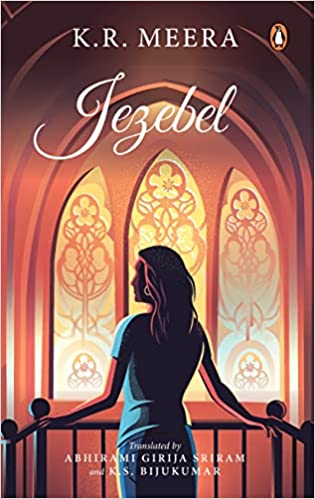
Jezebel

Book Review by Somdatta Mandal

Title:     Jezebel

Author: K.R. Meera, translated from Malayalam by Abhirami Girija Sriram and K. S. Bijukumar)

Publisher: Penguin Random House India

In a multicultural and multilingual country like India, it is very difficult to ascertain the progress of literary creativity in all the regions because of language barriers. Translation is one of the means through which this deficiency can be met. Recently even big publishing houses are paying a lot of attention to translate texts from different bhasha[1] literatures into English so that they can cater to a pan-Indian readership. K.R. Meera’s original Malayalam novel Jezebel is one such recent addition. It has the eponymous protagonist Jezebel, a young doctor in Kerala, struggling against the cruel realities of a patriarchal world –realities that not even her education, resolve or professional brilliance can shield her from. Trapped in an abusive and claustrophobic marriage that had been arranged by one of her relatives for some ulterior motive, the novel begins with a powerful metaphor of suffering and endurance:

“As she stood in the family court, pelted with the blame of having paid a contract killer to murder her husband, Jezebel had this revelation: To endure extreme torture, imagine yourself as Christ on the cross.”

In this novel, which takes the form of a courtroom drama to show us the rich inner worlds of its characters, we see Jezebel reflect on her life and its pivotal points as she takes the stand. Through her memories, we see her grow from a reticent, serious young woman to a rebel who refuses to bend to the conventions of society. In the Old Testament of the Bible, Jezebel was a prophet and she was the only one to challenge prophet Elijah. She was at the same time a strong woman and an accursed one. Like the Biblical story of Queen Jezebel, who was much maligned as a scheming harlot and infamously thrown to her death from her palace window, Jezebel is a novel that asks if independent women can ever live lives that are free of judgement. The marriage between Jezebel and Ahab was an agreement between two communities that worshipped two different gods. Poor King Ahab was a good king who ruled for twenty-two years. His only mistake was to marry the Sidonian princess Jezebel. And that too to improve relations between the two kingdoms and to trade with them. When they got married, Queen Jezebel brought her gods along with her to Samaria. In our protagonist’s case, her already contentious divorce proceedings go suddenly awry, and her unhappy marriage holds complex secrets. Throughout the novel, K.R. Meera’s powerful prose makes resonant allusions to the Bible in different ways that elucidate the correlations between legend and the protagonist’s life while also exploring how sexuality and gender roles are manipulated by the dictates of society.

In the novel we are shown how Jezebel’s arranged marriage with Doctor Jerome George Marakkaran ended in disaster from day one, and in the two and a half years they lived together as husband and wife, their marriage was never consummated. Her father-in-law, George Jerome Marakkaran is a brute straight from TV serials, and starts cursing Jezebel right from the first day believing in his god-ordained mission to punish her in any form whatsoever. The court hearings frame the narrative, with the (very filmy) lawyer’s dramatic queries triggering flashbacks, each a tale of tremendous misery, shocking injustice or unbearable trauma – a veritable catalogue of the woes of a half of the world even in this day and age. The mother-in-law, Lilly George Marakkaran, however, is kind-hearted even if meek, and she too secretly supports her daughter-in-law to break the shackles of patriarchy and go out into the world – something she was unable to do. This inability leads to her suicide in the end. Jezebel’s parents, too, are characters who refuse to come out of clichés. The result is a series of unfortunate events, and they all end up in a family court for divorce. In order to narrate the plight of her protagonist from the very beginning, Meera creates the canvas with plenty of characters, who like Chaucer’s ‘God’s plenty’ fill the pages of the novel from the beginning to the end. Most of these characters are stereotypes and yet they manage to make the story convincing, though melodramatic at times. Jezebel has a difficult childhood growing up with her mother Ammachi who explains every move in Biblical terms and who argues that “a good woman will not ever speak a word” against her husband, however worthless he is; her maternal grandmother Valiyammachi is the one who understands her and asks her to discontinue her marriage immediately and live life on her own terms. Throughout the novel she offers her shoulders for Jezebel to weep upon.

In between, a lot of melodrama is thrown in. The novel itself confesses the soap opera part:

“John’s wedding was a frugal affair. George Jerome Marakkaran stood ramrod stiff, hands clasped behind his back, chin tilted up at a hundred-and-twenty degrees. In his sandalwood-coloured silk jibba and gold-bordered mundu, he looked every bit the father in television serials.”

The rigid patriarch that he is, George Jerome Marakkaran is no exception; almost all characters and situations befit TV serials. There are no surprises, no nuances, no gray between black and white. To give an entire cross-section of society, we have sympathetic characters like Father Ilanjikkal from the nearby church, Jezebel’s uncle Abraham Chammanatt, who was a party to the injustice inflicted upon her and to whom she begs, “Please give me back my life. That’s all. My happiness …my ability to laugh.” We also have sexually abused children, references to other broken marriages, gay relationships, the story of Advait, who had undergone a sex-change surgery to become a man, and who tells Jezebel, “To prove that a man is a man and a woman is a woman, you need a certificate.” On another occasion explains it thus:

“‘Society is a great playwright, Jezebel. Our job is to act out our cliched roles again and again in the ancient play that it has scripted. Every role has its prescribed dress code, make-up, hairstyle, and dialogue. Our job is to play those roles, no matter how ill-fitting the costume, without changing the course of the script. If I decide to change my costume midway through the play, then what will happen to the play? What will the audience, eager to hear a story that they like, do?’ he sighed.”

 Amidst the struggle of Jezebel to come to terms with society, Meera also mentions the flitting relationships that Jezebel undergoes with different men and all of which fizzle out due to different reasons. When her lawyer informs her that the verdict for her divorce suit would come out soon, this is how Jezebel reacts:

“Verdict? What verdict? Verdict against whom? In an instant, Jezebel was flung from heaven to the netherworld. She despaired about the she-who-was, and the she-who-had-been. She felt emboldened thinking about the she-who-would-be, though. Just then, she saw four creatures in the centre of and around the throne under the sea. They had many eyes in the front and the back. The first creature looked like Ranjith, the second had Jerome’s face, the third resembled Nandagopan, the fourth had Kabir’s looks. The four creatures had six wings each, many eyes all around and within. They proclaimed day and night. In their midst, she saw a lamb that looked like it had been slain.”

Each ordeal leads the reader to the next in a highly skilfully woven narrative that becomes unputdownable after the opening. That, arguably, is what Meera is aiming for, getting every reader to care for the fate of the characters no matter how stereotypical they might be. Indeed, their being stereotypes helps in making the story universal, whereas nuances and specifics might have made it different. While Meera’s story-telling abilities are way above average, the simplistic treatment of many subplots may mar the reading experience for a few readers. Paradoxically, that is what at the same time may compel the kind of readers who don’t bother about ‘feminism’ and ‘patriarchy’ to keep reading this novel till the end, and even think through it.


 Jezebel reflects on her life and its pivotal points as she takes the stand. Through her memories, we see her grow from a reticent, serious young woman to a rebel who refuses to bend to the conventions of society. Jezebel is a novel that asks if independent women can ever live lives that are free of judgement. K.R. Meera’s prose, in this elegant translation from the Malayalam by Abhirami Girija Sriram and K.S. Bijukumar, makes resonant allusions to the Bible in powerful ways that elucidate the correlations between legend and the protagonist’s life while also exploring how sexuality and gender roles are manipulated by the dictates of society.

The beginning of the novel is set seven years after that day the Marakkaran family arrives at Jerusalem, Jezebel’s home, to “appraise” her. A broken Jezebel is facing a barrage of questions from Jerome’s lawyer in a family court which is hearing her divorce petition. She feels like Jesus Christ on the cross, enduring extreme torture. There is yet another round of accusations, all built around an alleged attempt to murder her husband. A courtroom saga begins as Jezebel looks back and remembers scenes from her marriage that brought her exciting life and career to a screeching halt.

Jezebel’s is not the only story of suffering in the novel. There is Sneha, a schoolgirl traumatised by the sexual abuse at the hands of her math teacher, and Angel, a four-year-old girl, who survived a mass suicide by her family because of debts, only to be sexually assaulted by her sixty-year-old neighbour. Jezebel is also a story of the will to survive physical and mental wounds and standing up to force the change of a medieval mindset. Anitha, one of the novel’s characters, picks up the brushes to become an artist after both her husband and lover abandon her. And Jezebel stands tall above everybody else while she fights a system rigged in favour of men. The novel is a serious attempt to end the silent suffering of gender injustices in homes and outside, especially when women find themselves always constrained by the limits that patriarchy imposed upon them. Indeed, the work is a testament to the fact that even in this modern age, in India at least, patriarchal social norms wield an inordinate power over women and restrict their ability to exercise their agency and achieve self-determination.

Reading through the 390 pages of a novel is not an easy task but the way K.R. Meera manages to retain the reader’s interest is praiseworthy. Despite having so many stereotypical characters strewn throughout the narrative, Meera’s manner of storytelling is unique and like a detective novel one often goes on guessing what happened next.

The book drags a little towards the end and would have read much better if some sort of precision was adopted in the narrative technique. To remain politically correct and elaborate on the reasons and ramifications of the story line sometimes, such details may have been unnecessary.  

In the author’s acknowledgements section Meera states that she shadowed Dr. Dhanya Lakshmi in her professional life and for verifying the medical facts and interpretations in the novel. In some places these details seem superfluous and could have been avoided. The author also thanks the advocates who accompanied her to Kottayam’s family courts and observed the court proceedings. The way the interjections of the lawyer and the judge are narrated in the novel sometimes seems rather contrived as the author seems to rely on sensationalism as found in films. The translators use informal expressions in Malayalam for the retention of the local idiom and unlike several other translated texts where the reader is often confused because different relationships are addressed in the local lingo, in this novel it does not seem so. Finally, the way issues of ‘feminism’ and ‘patriarchy’ – the two main thrust areas of the novel – that plague contemporary society in Kerala even today, are wonderfully resolved by the author must be mentioned. K.R. Meera tried to break free from Malayalam literary traditions. Jezebel’s reluctance to take a stand for herself in the novel and the consequent adversities in her life tell a tale of epistemic marginalization. According to the author, “I have seen bold, patient women take their time to stand up for themselves. What we often forget is that to sprout wings, one must go through the stages of being a cocoon and a pupa.” The last sentence of the novel therefore speaks of the resilience of Jezebel when she turned her face up to the sun. The old Jezebel was no more. The new Jezebel is one who received the revelation — “And so, the woman adorned with the sun will weep and wail no more.” The novel is recommended to all readers who will find interest in reading about contemporary Christian society in Kerala and realise that societies in other parts of India are also not free from accepting a powerful educated woman who wants to live her life without paying heed to the shackles imposed at every step through patriarchal domination.

[1] Language

Somdatta Mandal, academic, critic and translator, is a former Professor of English at Visva-Bharati University, Santiniketan, India.

.

PLEASE NOTE: ARTICLES CAN ONLY BE REPRODUCED IN OTHER SITES WITH DUE ACKNOWLEDGEMENT TO BORDERLESS JOURNAL

Click here to access the Borderless anthology, Monalisa No Longer Smiles

Click here to access Monalisa No Longer Smiles on Kindle Amazon International

Categories
Contents

Borderless, April 2023

Painting by Sohana Manzoor

Editorial

Can Love Change the World?… Click here to read.

Conversation

Keith Lyons interviews Asian Australian poet Adam Aitken about cross-cultural identity, and the challenges of travel, writing, and belonging. Click here to read.

Translations

Gandhiji, a short story by Nabendu Ghosh, has been translated from Bengali by Ratnottama Sengupta. Click here to read.

Khaira, the Blind, a story by Nadir Ali, has been translated from Punjabi by Amna Ali. Click here to read.

Clothes of Spirits, a folktale, has been translated from Balochi by Fazal Baloch. Click here to read.

Many Splendored Love, four poems by Masud Khan, have been translated from Bengali by Fakrul Alam. Click here to read.

Birds are Alive, has been written and translated from Korean by Ihlwha Choi. Click here to read.

Nobo Borshe or on New Year, Tagore’s poem on the Bengali New Year, has been translated from Bengali by Mitali Chakravarty for the occasion this April. Click here to read.

Poetry

Click on the names to read the poems

Michael R Burch, Vipanjeet Kaur, William Miller, Sutputra Radheye, Jim Landwehr, Namrata Varadharajan, Phil Wood, Akshada Shrotryia, Richard Stevenson, Abdul Jamil Urfi, Scott Thomas Outlar, Anasuya Bhar, George Freek, Malachi Edwin Vethamani, Ryan Quinn Flanagan, Rhys Hughes

Poets, Poetry & Rhys Hughes

In My Love for RK Narayan, Rhys Hughes discusses the novels by ths legendary writer from India. Click here to read.

Musings/Slices from Life

Magic of the Mahatma & Nabendu

Ratnottama Sengupta shows the impact of Gandhi and his call for non-violence on Nabendu Ghosh as she continues to emote over his message of Ahimsa and call for peace amidst rioting. Click here to read.

Kindred Spirits

Anjali V Raj writes of an endearing friendship. Click here to read.

Colorado comes to Eden

Meredith Stephens sails to meet more people in Eden. Click here to read.

Us vs Them

Shivani Agarwal talks of sharing the planet with all creatures great and small. Click here to read.

Musings of a Copywriter

In To Be or Not to Be, Devraj Singh Kalsi muses on food fads. Click here to read.

Notes from Japan

In Olives and Art in the Inland Sea, Suzanne Kamata explores the island of Sodoshima. Click here to read.

Essays

Charlie and I: My Visit to Corsier-sur-Vevey

Nirupama Kotru talks of her trip to Charlie Chaplin’s home and writes about the legendary actor. Click here to read.

The Wonderland of Pokhara

Ravi Shankar explores, Pokhara, a scenic town in Nepal. Click here to read.

Stories

Sparks

Brindley Hallam Dennis captures the passing of an era. Click here to read.

The Moulting

PG Thomas brings us a glimpse of Kerala — the past merging to create a new present. Click here to read.

The Book Hunter

Paul Mirabile gives a tale about a strange obsession. Click here to read.

Book Excerpts

An excerpt from What Will People Say?: A Novel by Mitra Phukan. Click here to read.

An excerpt from The Wistful Wanderings of Perceval Pitthelm by Rhys Hughes. Click here to read.

Book Reviews

Somdatta Mandal reviews Chitra Banerjee Divakaruni’s Independence. Click here to read.

Rakhi Dalal reviews Song of the Golden Sparrow – A Novel History of Free India by Nilanjan P. Choudhary. Click here to read.

Basudhara Roy reviews Ukiyo-e Days… Haiku Moments by Bina Sarkar Ellias. Click here to read.

Bhaskar Parichha reviews Japanese Management, Indian Resistance: The Struggles of the Maruti Suzuki Workers by Anjali Deshpande and Nandita Haksar. Click here to read.

.

.

Click here to access the Borderless anthology, Monalisa No Longer Smiles

Click here to access Monalisa No Longer Smiles on Kindle Amazon International
Click here to learn more about our first anthology, Monalisa No Longer Smiles

Categories
Editorial

Can Love Change the World?

The night has nearly come to an end.
The old year is almost past.
Under this dust, it will lay down
Its worn-out life at last.
Whether friend or foe,      wherever you go,
Old wrongs cast
Away. On this auspicious day,
Old grievances shed as the old year parts.

— Nobo Borshe or on New Year by Tagore

Art by Sohana Manzoor

Mid-April, Thailand celebrates Songkran and Cambodia, Thingyan — water festivals like Holi. These coincide with the celebration of multiple New Years across Asia. Sikhs celebrate Baisakhi. Kerala celebrates Bishu and Tamil Nadu, Puthandu. Nepal celebrates Nava Varsha and Bengal Nobo Borsho or Poila Boisakh. A translation of Tagore’s poem on the Bengali New Year in spirit asks us to dispense with our past angst and open our hearts to the new day — perhaps an attitude that might bring in changes that are so needed in a world torn with conflicts, hatred and anger. The poet goes on to say, “I want to tie all lives with love” but do we do that in our lives? Can we? Masud Khan’s poems on love translated by Professor Fakrul Alam explore this from a modern context. From Korea, Ihlwha Choi tells us in his translation, “Loving birds is like loving stars”. But the translation that really dwells on love bringing in changes is Nabendu Ghosh’s ‘Gandhiji’, translated by Ratnottama Sengupta, his daughter. The short story by Ghosh highlights the transformation of a murderous villain to a defender of a victim of communal violence, towering above divides drawn by politics of religion.

Another daughter who has been translating her father’s works is Amna Ali, daughter of award-winning Punjabi writer, Nadir Ali. In ‘Khaira, the Blind‘, the father-daughter duo have brought to Anglophone readers a lighter narrative highlighting the erasure of divides and inclusivity. A folktale from Balochistan, translated by Fazal Baloch, echoes in the footsteps of ‘Emperor’s New Clothes’ — a story that can found in the Andersen’s Fairy Tales published in the nineteenth century. I wonder which narrative had come first? And how did it cross cultures retaining the original ideas and yet giving it a local colour? Was it with traders or immigrants?

That such narratives or thoughts are a global phenomenon is brought to the fore by a conversation between Keith Lyons and Asian Australian poet Adam Aitken. Aitken has discussed his cross-cultural identity, the challenges of travel, writing, and belonging. Belonging is perhaps also associated with acceptance. How much do we accept a person, a writer or his works? How much do we empathise with it — is that what makes for popularity?

Cross cultural interactions are always interesting as Rhys Hughes tells us in his essay titled ‘My Love for RK Narayan’. He writes: “Narayan is able to do two contradictory things simultaneously, namely (1) show that we are all the same throughout the world, and (2) show how cultures and people around the world differ from each other.” The underlying emotions that tie us together in a bond of empathy and commonality are compassion and love, something that many great writers have found it necessary to emphasise.

Mitra Phukan’s What Will People say?: A Novel is built around such feelings of love, compassion and patience that can gently change narrow norms which draw terrifying borders of hate and unacceptance. We carry an excerpt this time from her ‘Prologue’. Somdatta Mandal has reviewed Chitra Banerjee Divakurni’s latest , Independence. Starting from around the time of the Indian Independence too is Song of the Golden Sparrow – A Novel History of Free India by Nilanjan P. Choudhary, which has been discussed by Rakhi Dalal. The Partition seems to colour narratives often as does the Holocaust. Sometimes, one wonders if humanity will ever get over the negative emotions set into play in the last century.

Closer to our times, when mingling of diverse cultures is becoming more acceptable in arts, Basudhara Roy introduces us to Bina Sarkar Ellias’s Ukiyo-e Days…Haiku Moments, a book that links poetry to a Japanese art-form. While a non-fiction that highlights the suffering of workers by enforcing unacceptable work ethics, Japanese Management, Indian Resistance: The Struggles of the Maruti Suzuki Workers by Anjali Deshpande and Nandita Haksar has been reviewed by Bhaskar Parichha. The narrative, he writes, “tells the story of the biggest car manufacturer in India through the voices of the workers, interviewed over three years. They give us an understanding that the Maruti Suzuki revolution wasn’t the unmitigated success it was touted to be when they tell us about their resistance to being turned into robots by uncompromising management.” That lack of human touch creates distress in people’s hearts, even if we have an efficient system of management and mass production is well elucidated in the review.

To lighten the mood, we have humour in verses from Rhys Hughes and Richard Stevenson’s tongue-in-cheek dino poems. Michael Burch’s poetry explores nuances of love and, yet, changes wrought in love has become the subject of poetry by Malachi Edwin Vethamani and Anasuya Bhar with more wistful lines by George Freek highlighting evanescence.  Sutputra Radheye and Jim Landwehr bring darker nuances into poetry while Scott Thomas Outlar mingles nature with philosophical meanderings. We have more poetry by Ryan Quinn Flanagan, Abdul Jamil Urfi and many more exploring various facets of changes in our lives.

These changes are reflected in our musings too. Sengupta has written on how change is wrought on a murderous villain by the charisma of Gandhi in her father’s fiction, as well as this world leader’s impact on Ghosh and her. Devraj Singh Kalsi addresses food fads with a pinch of sarcasm. From Japan, Suzanne Kamata has written of a little island with Greek influences, a result of cultural ties brought in by the emperor Hirohito. Ravi Shankar takes us to Pokhara, Nepal, and Meredith Stephen expresses surprise on meeting a shipload of people from Colorado in the far reaches of the Southern Hemisphere while on her sailing adventures with beautiful photographs. Stories by moderns reflect diverse nuances depicting change. While Brindley Hallam Dennis writes of the passing of an era, PG Thomas integrates the past into the present to reflect how they have a symbiotic structure in the scheme of creating or recreating natural movements through changes wrought over time in his story. Paul Mirabile explores the darker recesses of the human existence in his fiction. As if in continuation, the excerpt from Rhys Hughes’ The Wistful Wanderings of Perceval Pitthelm seems to step out of darker facets of humanity with a soupçon of wit at its best.

To create a world that endures, one looks for values that create inclusivity as reflected in these lines from Charles Chaplin’s My Autobiography, “Mother illuminated to me the kindliest light this world has ever known, which has endowed literature and the theatre with their greatest themes: love, pity and humanity.” This quote starts off a wonderful essay from film-buff Nirupama Kotru. Her narrative carries the tenor of Chaplin’s ‘themes’ to highlight not only her visit to the actor’s last home in Switzerland but also glances at his philosophy and his contributions to cinema across borders.

Our issue rotates around changes and the need for love and compassion to rise in a choral crescendo whirling with the voices of Tagore, Charles Chaplin as well as that of twenty-first century writers. Perhaps this new year, we can move towards a world – at least an imagined world — where love will wipe away weapons and war, where love will take us towards a future filled with the acceptance of myriad colours, where events like the Partition and the Holocaust will be history, just like dinosaurs.

Huge thanks to all our readers and contributors, some of whom may not have been mentioned here but are an integral and necessary part of the issue. Do pause by our April edition. I would also like to give my thanks to our indefatigable team whose efforts breathe life into our journal every month. Sohana Manzoor needs a special mention for her lovely artwork.

Thank you all and wish you a wonderful April.

Mitali Chakravarty

borderlessjournal.com

.

Read reviews and learn more about Monalisa No Longer Smiles: An Anthology of Writings from across the World by clicking here

Categories
Review

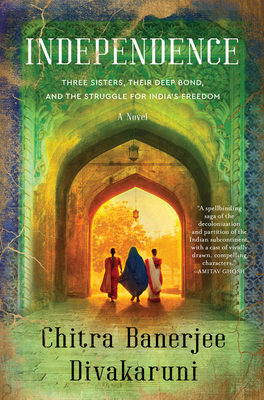
Independence by Chitra Banerjee Divakaruni

By Somdatta Mandal

Title: Independence

Author:  Chitra Banerjee Divakaruni

Publisher: Harper Collins 

Over the last two or three decades, the Indian American writer, Chitra Banerjee Divakaruni, has managed to carve a niche for herself by regaling in stories of cross-cultural issues prevalent in India and the United States with special emphasis on experiences of diasporic immigrant women. Though most of her stories are women-centric, with time one notices a gradual tectonic shift in her selection of themes. Initially she would write on problems of immigration and culture clash plaguing Indians in the New World. In Palace of Illusions, she went back to the Indian epic and narrated the story of the Mahabharata told from Draupadi’s point of view. In her novel The Forest of Enchantments, she brought Sita at the centre of the epic narrative The Ramayana and accorded her parity with Ram, revealing her innate strength. Then she took recourse to Indian history and rebuilt the story of Maharaja Ranjit’s Singh’s empire in Punjab narrating it from the viewpoint of Rani Jindan Kaur, his last wife as one of the most fearless women of the nineteenth century. Apart from the available historical data, she filled in The Last Queen by imagining many things Jindan would have said and done and thus painted a complete picture of a woman from all perspectives. A perfect blending of fact with fiction, the novel interested all categories of readers, serious and casual alike.

Now with Independence, Divakaruni widens her canvas to tell us the story of a doctor’s family and his three daughters against the freedom movement in India, particularly Bengal, beginning from August 1946 till the epilogue in 1954. The story of India’s independence is narrated through the eyes of three sisters, each of whom is uniquely different, with her own desires and flaws. They live in a rural village Ranipur and right at the beginning of the novel, which is divided into five parts and an epilogue, the author manages to give us the idyllic ambience of the place in very selective poetic language:

    “Here is a river like a slender silver chain, here is a village bordered by green gold rice-fields, here is a breeze smelling of sweet water-rushes, here is the marble balcony of a grand old mansion with guards at its iron gates and servants transporting trays of delicacies up the stairs, here are a man and a woman on carved teak chairs. Here is the country that contains them all.
     “The river is Sarasi, the village is Ranipur in Bengal, the mansion belongs to Somnath Chaudhury, zamindar. He is playing chess with Priya, daughter of his best friend, Nabakumar Ganguly. The country is India, the year is 1946, the month is August.
      “Everything is about to change."

Doctor Nabakumar Ganguly is an idealist and with his practice in their native village Ranipur, where the family resides, he also treats patients in a slum region in Calcutta. He is highly regarded but earns little as he refuses to charge patients without sufficient means. His wife Bina complains about this but supplements the family income by making exquisite quilts for sale and gifting them to those in need. Among the three daughters, Priya is intelligent and idealistic, and resolved to follow in her father’s footsteps she wants to become a doctor, though society frowns on it. She is fortunate to have the support of zamindar Somnath Chowdhury, her father’s best friend. The eldest daughter Deepa is very beautiful and is determined to make a marriage that will bring her family joy and status. The third daughter, Jamini, is devout, sharp-eyed, and a talented quiltmaker, with deeper passions than she reveals.

Theirs is a home of love and safety, a refuge from the violent events taking shape in the nation. This idyllic setting changes rapidly, as the violence of Direct Action Day in August 1946 takes Nabakumar’s life and introduces fear and a communal bitterness in the once largehearted Bina’s veins. Soon their neighbours turn against them, bringing the events of their country closer to home. Deepa is estranged from her mother and eventually isolated on the other side of the border in what becomes East Pakistan, when she falls in love with Raza, a Youth Leader at the Muslim League. As Priya is determined to pursue her career goal, her attempts to get into medical school in India are thwarted by a gender bias, and she finds herself at a college in America. But due to several reasons she cannot complete her degree there and comes back to India to run the clinic where her father worked. And Jamini attempts to hold her family together, even as she secretly longs for the handsome Amit, her sister’s fiancé. When India is partitioned, the sisters find themselves separated from one another, afraid of what will happen to not only themselves, but also each other. It is only then that they understand what it means to be independent, and the price one must pay for it.

After a lot of twists and turns to the story, including smuggling of arms and rescue mission on the Ichhamati River dividing the two Bengals, Amit shot to death, by the time we come to the Epilogue it is 1954 where we learn about Deepa’s daughter Sameera, Jamini’s son Tapan, Deepa managing the zamindari estate and Manorama and Somnath eager to find a suitable match for Priya when she tells them that she is happy as she is now. Feminism, communal amity, empathy, and self-growth are among the requisite qualities Divakaruni identifies for both a country and a human being to be truly independent. Though set in households more than seventy years ago, towards the end we still find some hope. The Postscript to the story is rather interesting as it comes even after the epilogue. It reads thus:

   “Here is a river. Here is a wind rising. Here is a village. Here is the year.
   “The river is time, ebbing, flooding. The wind is memory, it can carry flowers, it can carry flames. The village is the world, and you are at its centre. The year is now.
   “What will you do with it? What will you do?”

As a Professor of Creative Writing in an American university, Divakaruni has gained the expertise of playing her cards well – her narrative technique in each of her novels and short story anthologies preaches what she teaches – the saleability and marketability of a book in this electronic age should be of utmost concern. Like her earlier novel The Oleander Girl, which seemed to have been written as a sort of film script in mind, (incidentally two other novels are being made into motion pictures at the moment), Independence too seems to follow suit with the right amount of ingredients necessary for promoting the book to different kinds of readers and in different forms as well. One is therefore taken by surprise to find a QR code even before the Contents page which tells us to “Listen to the soundtrack for Independence. A playlist of songs that inspired the freedom movement.” For her Western readers, Divakaruni managed to blend history and fiction very well where along with the fictitious characters we get to read about Mahatma Gandhi and the Noakhali riots, Sarojini Naidu, Nehru and others as they played their parts in the freedom movement. Here we find Priya actively engaged in conversation with Sarojini who gives a letter of recommendation to Bidhan Chandra Roy to help Priya to run a clinic.

One praiseworthy aspect of the novel is how Divakaruni manages to give us details of the streets and sounds of Calcutta – the Calcutta of the 1950s with her double decker buses, the shops at New Market, the quaint little restaurants with curtained cubicles to maintain privacy in a public place – all brought back from memory of the city in which she was born and brought up. The novel is also full of translations of several patriotic songs in Bangla which the swadeshis sang during that period. Several lines from Tagore’s songs are also interspersed to express the moods of characters – a technique used by Divakaruni in some of her earlier fiction as well. The exoticism of India, especially rural Bengal of the time is deftly portrayed through many other incidents of killing and looting at different regions of undivided Bengal. As for her Indian readers we are given the story of Priya’s brief stay in America to study medicine at the Woman’s Medical College in Philadelphia where along with her homesickness, we have Arthur, a lovelorn American doctor, who lends her support and patiently waits for her to come back to him as “his heart has been empty” without her.

Despite such manipulations to the story to bring in as wide a canvas as possible, including sufficient examples of Hindu-Muslim amity and hatred as well, the novel remains a page-turner no doubt and can be recommended for its lucid and racy style of narration, something that Chitra Banerjee Divakaruni excels in.

Somdatta Mandal, author, critic, and translator, is former Professor of English at Visva-Bharati, Santiniketan, India.

PLEASE NOTE: ARTICLES CAN ONLY BE REPRODUCED IN OTHER SITES WITH DUE ACKNOWLEDGEMENT TO BORDERLESS JOURNAL

Click here to access the Borderless anthology, Monalisa No Longer Smiles

Click here to access Monalisa No Longer Smiles on Kindle Amazon International

Categories
Contents

Borderless, March 2023

Art by Sohana Manzoor

Editorial

Imagine… Click here to read.

Translations

A translation from Nabendu Ghosh’s autobiography, Eka Naukar Jatri (Journey of a Lonesome Boat), translated by Dipankar Ghosh, from Bengali post scripted by Ratnottama Sengupta. Click here to read.

Uehara by Kamaleswar Barua has been translated from Assamese and introduced by Bikash K. Bhattacharya. Click here to read.

Kurigram by Masud Khan has been translated by Professor Fakrul Alam from Bangla. Click here to read.

Bonfire by Ihlwha Choi has been translated from Korean by the poet himself. Click here to read.

Tagore’s Borondala (Basket of Offerings) has been translated by Mitali Chakravarty from Bengali. Click here to read.

Poetry

Click on the names to read the poems

Michael R Burch, Kirpal Singh, Luis Cuauhtémoc Berriozábal, Amit Parmessur, Carl Scharwath, Isha Sharma, Gale Acuff, Anannya Dasgupta, Vaishnavi Saritha, Ryan Quinn Flanagan, Pragya Bajpai, George Freek, Sanket Mhatre, Ron Pickett, Asad Latif, Rhys Hughes

Poets, Poetry and Rhys Hughes

In Indian Pale Ale, Rhys Hughes experiments with words and brews. Click here to read.

Conversation

Being fascinated with the human condition and being vulnerable on the page are the two key elements in the writing of fiction, author and poet Heidi North tells Keith Lyons in a candid conversation. Click here to read.

Musings/Slices from Life

Mother Teresa & MF Hussian: Touching Lives

Prithvijeet Sinha muses on how Mother Teresa’s painting by MF Hussain impacted his life. Click here to read.

The Night Shift to Nouméa

Meredith Stephens writes of her sailing adventures to Nouméa. Click here to read.

Musings of a Copywriter

In Simian Surprises, Devraj Singh Kalsi describes monkey antics. Click here to read.

Notes from Japan

In Multicultural Curry, Suzanne Kamata reflects on mingling of various cultures in her home in Japan and the acceptance it finds in young hearts. Click here to read.

Essays

Which way, wanderer? Lyric or screenplay…

Ratnottama Sengupta explores the poetry in lyrics of Bollywood songs, discussing the Sahityotsav (Literary Festival) hosted by the Sahitya Akademi. Click here to read.

One Happy Island

Ravi Shankar takes us to Aruba, a Dutch colony, with photographs and text. Click here to read.

Cadences in A Portrait of the Artist as a Young Man

Paul Mirabile explores the stylistic nuances in this classic by James Joyce. Click here to read.

Stories

Heafed

Brindley Hallam Dennis plays with mindsets. Click here to read.

Busun

A Jessie Michael narrates a moving saga of displacement and reservations. Click here to read.

A Wooden Smile

Shubhangi gives us poignant story about a young girl forced to step into the adult world. Click here to read.

The Infallible Business

Sangeetha G tells a story set in a post-pandemic scenario. Click here to read.

Book Excerpts

An excerpt from Robin S. Ngangom’s My Invented Land: New and Selected Poems. Click here to read.

An excerpt from Vikas Prakash Joshi’s My Name is Cinnamon. Click here to read.

Book Reviews

Aruna Chakravarti reviews Bornali Datta’s In A Better Place: A Doctor’s Journey. Click here to read.

Somdatta Mandal reviews Baba Padmanji’s Yamuna’s Journey, translated from Marathi by Deepra Dandekar. Click here to read.

Basudhara Roy reviews Robin Ngangom’s My Invented Land: New and Selected Poems. Click here to read.

Bhaskar Parichha reviews S.Irfan Habib’s Maulana Azad – A Life. Click here to read.

.

Click here to access the Borderless anthology, Monalisa No Longer Smiles

Click here to access Monalisa No Longer Smiles on Kindle Amazon International

Categories
Editorial

Imagine…

Art by Pragya Bajpai

Imagine a world without wars, without divisions, where art forms flow into each other and we live by the African concept of Ubuntu — I am because you are’ — sounds idyllic. But this is the month of March, of poetry, of getting in touch with the Dionysian elements in ourselves. And as we have said earlier in the introduction of Monalisa No Longer Smiles: An Anthology of Writings from across the World, what could be a better spot to let loose this insanity of utopian dreams than Borderless Journal!

Having completed three years of our Earthly existence on the 14th of March, we celebrate this month with poetry and writing that crosses boundaries — about films, literature and more. This month in the Festival of Letters or Sahityaotsav 2023, organised by the Sahitya Akademi, films were discussed in conjunction with literature. Ratnottama Sengupta, who attended and participated in a number of these sessions, has given us an essay to show how deep run the lyrics of Bollywood films, where her father, Nabendu Ghosh, scripted legends. It is Ghosh’s birth month too and we carry a translation from his Bengali autobiography which reflects how businessmen drew borders on what sells… After reading the excerpt from Nabendu’s narrative translated by Dipankar Ghosh and post-scripted by Sengupta, one wonders if such lines should ever have been drawn?

Questioning borders of a different kind, we have another piece of a real-life narrative on a Japanese Soldier, Uehara. Written by an Assamese writer called Kamaleswar Barua, it has been translated and introduced by Bikash K. Bhattacharya. The story focusses on a soldier’s narrative at his death bed in an alien land. We are left wondering how his need for love and a home is any different from that of any one of ours? Who are the enemies — the soldiers who die away from their homes? What are wars about? Can people live in peace? They seemed to do so in Kurigram, a land that has faded as suggests the poem by Masud Khan, brought to us in translation from Bangla by Professor Fakrul Alam, though in reality, the area exists. Perhaps, it has changed… as does wood exposed to a bonfire, which has been the subject of a self-translated Korean poem by Ihlwha Choi. Tagore’s poem, Borondala translated as ‘Basket of Offerings’, has the last say: “Just as the stars glimmer / With light in the dark night, / A spark awakens within/ My body. / This luminosity illuminates / All my work.” And perhaps, it is this luminosity that will also help us find our ideal world and move towards it, at least with words.

This is the poetry month, and we celebrate poetry in different ways. We have an interview with poet Heidi North by Keith Lyons.  She has shared a poem that as Bijan Najdi said makes one “feel a burning sensation in …[the]… fingertips without touching the fire”. It flows with some home truths put forward with poignancy. We have poetry by Michael R Burch, Kirpal Singh, Luis Cuauhtémoc Berriozábal, Amit Parmessur, Ryan Quinn Flanagan, George Freek, Sanket Mhatre, Asad Latif and Rhys Hughes. While Burch celebrates spring in his poetry, Parmessur explores history and Hughes evokes laughter as usual which spills into his column on Indian Pale Ale. Devraj Singh Kalsi has written of simian surprises he has had — and, sadly for him, our reaction is to laugh at his woes. Meredith Stephens takes us on a sailing adventure to Nouméa and Ravi Shankar explores Aruba with photographs and words. Suzanne Kamata shows how Japanese curry can actually be a multicultural binder. Prithvijeet Sinha links the legends of artist MF Hussain and Mother Teresa while Paul Mirabile explores the stylistic marvels of James Joyce in his A Portrait of the Artist as a Young Man, a very literary piece.

We have a book review by Aruna Chakravarti of Bornali Datta’s In A Better Place: A Doctor’s Journey, a book that is set amidst immigrants and takes up certain social issues. Baba Padmanji’s Yamuna’s Journey, translated from Marathi by Deepra Dandekar, one of the oldest Indian novels has been discussed by Somdatta Mandal.  Bhaskar Parichha has told us about S.Irfan Habib’s Maulana Azad – A Life. Basudhara Roy has brought out the simplicity and elegance of Robin Ngangom’s My Invented Land: New and Selected Poems. He writes in the title poem that his home “has no boundaries. / At cockcrow one day it found itself/ inside a country to its west,/ (on rainy days it dreams looking east/ when its seditionists fight to liberate it from truth.)”. We also carry an excerpt from his book. Stories by Jessie Michael, Brindley Hallam Dennis, Sangeetha G and Shubhangi bring flavours of diversity in this issue.

Our journey has been a short one — three years is a short span. But, with goodwill from all our readers and contributors, we are starting to crawl towards adulthood. I thank you all as caregivers of Borderless Journal as I do my fabulous team and the artists who leave me astounded at their ability to paint and write — Sohana Manzoor, Gita Vishwanath and Pragya Bajpai.

Thank you all.

Looking forward to the next year, I invite you to savour Borderless Journal, March 2023, where more than the treasures mentioned here lie concealed.

Mitali Chakravarty

borderlessjournal.com

Click here to access the Borderless anthology, Monalisa No Longer Smiles

Click here to access Monalisa No Longer Smiles on Kindle Amazon International
Categories
Review

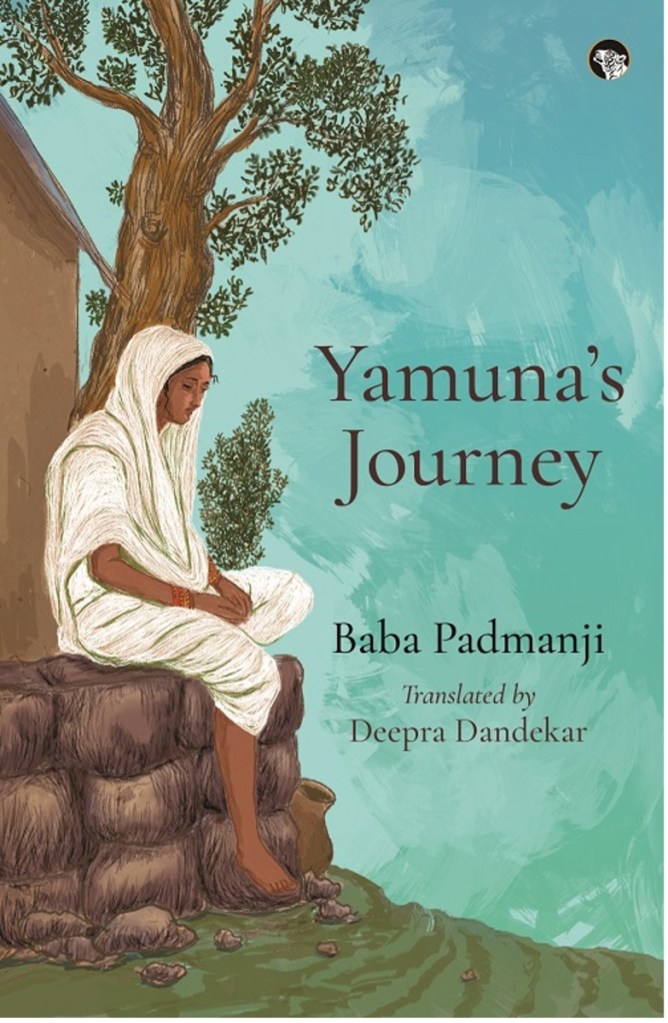
Yamuna’s Journey

Book Review by Somdatta Mandal

Title: Yamuna’s Journey

Author: Baba Padmanji, Translator: Deepra Dandekar

Publisher: Speaking Tiger Books

During the nineteenth century, among the various social concerns that plagued Indian society, three issues were greatly significant — the abolition of sati, or the burning of the widow on the pyre of her dead husband, the passing of the widow-remarriage bill by the British-Indian Parliament in 1856 augmented by the activism of reformers like Pandit Ishwar Chandra Vidyasagar, and of course the attempts at conversion to Christianity of people plagued, tortured and humiliated by the rigid strictures of class hierarchy and torture and humiliation imposed by Brahminical society during that period.

Baba Padmanji’s 1857 Marathi novel, Yamunaparyatan (translated as Yamuna’s Journey), is the first vernacular novel in India meant to provide a realistic account of the travails suffered by Hindu widows in Bombay Presidency region in particular and India in general and is based on empirical facts. It highlights the suffering of Hindu widows, forced into a life of loneliness and torture by their cruel Brahminical families. The heroine of the novel, Yamuna, starts off as a happily married woman, sharing a bond of mutual trust and respect with her husband. She travels with him across various regions of the Bombay Presidency and Western India and her interactions with widows on the way reveal the extent of their suffering within Hindu patriarchal and Brahminical society. Yamuna sympathises with them and calls for urgent reform, while advocating for widow remarriage.

Based on empirical research, and its main storyline composed of empirical anecdotes which were woven together in a single narrative, Yamunaparyatan was only written in the form of a novel. From the very beginning it was never meant to be a poetic, aesthetic book, and was always meant to be hard-hitting, and a realistic treatise. Deeply influenced by Rev. Surendra Nath Banerjea and his writings on women’s education and emancipation, Padmanji described the piteous situation of those young girls who were married off hastily as children to men decades older than themselves. Squeezed between marital duties, childbirth, and heavy domestic work, young girls became victims of their marital families. After their husbands died, they were subjected to further torture – tonsure, inadequate food and clothing, ill-treatment, a heavier than ever workload, and no creature comforts whatsoever. Padmanji argued that women within Brahminical families were constantly on the brink of abandonment and destitution, suffering deeply from the fear of becoming outcasts, even before they became widows.

When tragedy strikes and Yamuna is widowed, she too is tortured and stigmatised. But the feisty young woman manages to start a new chapter in life by converting to Christianity and remarrying a Christian man. In the last chapter of the novel, we are told how Yamuna-bai’s grief diminished gradually as she found solace in religion:

“After some time, God introduced her to an educated and religious young man, who became a loving and caring husband to her. With time, Yamuna dedicated herself to her new life companion and the couple thereafter spent the rest of their years in happiness, helping others and praising God.”

As mentioned earlier, Baba Padmanji was fiercely critical of the stigma accorded to widows within Brahmanical Hinduism and fought against it tooth and nail. In fact, one of the most enduring legacies of Yamunaparyatan is its portrayal of equal, romantic, conjugal partnerships, depicted between spouses of the same age, who shared religious, intellectual, emotional and moral proclivities and insights; spouses who were constantly in conversation and discussion with each other. Yamuna was not her husband’s junior, and their relationship constituted an ideal example of conjugal marital relationships for young, educated and reformed readers. This equality between spouses was something unimaginable in Hindu society of the time and one of Padmanji’s greatest anxieties was concerned with the hesitation of the educated and the reformed youth in taking the step to remarry widows. In fact, one of the book’s junior protagonists even outlines an evolved idea of running an organised, crowd funded, social movement in favour of widow remarriage. Padmanji even articulated the promise of happiness that reformed marriages held out for couples who could live together with social awareness, even if the women were widowed.

Apart from the proselytising mission by Baba Padmanji who himself converted to Christianity a few years earlier and thought it his duty to preach about its merits, especially the way women were respected in that religion, the novel is rather weak in structure. For instance, the last chapter begins in the following manner:

“The time has come for us to end the story and for our readers to finally know what the future held for Yamuna, Shivram, and his mother as the seeds of divine scripture sown in their hearts came to fruition.”

Labelled as the first of its kind in Indian literature, the novel’s weaknesses can of course be overlooked. It is true that the novel form in India was in its nascent stage at the time of composition of this text. The first vernacular novel in India was Fulmoni O Korunar Bibaran ( Fulmoni’s and Karuna’s Account) by Hanna Catherine Mullens published by the Calcutta Christian Tract and Book Society in 1852 and this Bengali book had its aim clearly mentioned in the subtitle –“Written for the purpose of educating women.” But since the author was not Indian by birth, the credit for being the first Indian author to pen a novel remains with Padmanji. It was about a decade later that writers like Bankim Chandra Chatterjee would gradually popularise the genre.  

What makes Yamuna’s Journey special even today is the bold feminist ideas expressed in the novel, and though it was published more than a hundred and fifty years earlier, one still feels the currency of the feminist issues that Padmanji had raised. When we read about the deplorable condition of Hindu widows in religious places like Varanasi and Vrindaban even today, we realise that the vice has not been eradicated from Hindu society even in this twenty-first century.  Not focusing particularly on the plight of lower-caste Hindus, Padmanji instead criticised middle-class Hindus (like the goldsmith caste, or Prabhus) for ritually aligning with Brahmins. The solution for him thus lay, not in focusing on lower-caste emancipation, but in strongly divesting Brahmins and Brahminism of demographic support, singling them out, and subjecting them to legal measures, social activism, and compulsory re-education. If Hindu society was bent on self-destruction by eliminating its women, then Padmanji felt that they had no right to be offended if these same women converted and lived respectful lives thereafter, as part of the Christian community that accorded them equality and dignity. Thus, reading the translation of this Marathi text, despite its proselytising tone and weak narrative structure, one still feels it to be rather significant.

Deepra Dandekar has done yeoman service by translating this vernacular Marathi text into English for a pan-Indian readership. In the note for the readers, she tells us how readability in the 21st century becomes the primary concern for her translation. Though she has kept Padmanji’s arguments intact, she has in other places paraphrased and desisted from providing verbatim translations, especially when Padmanji quotes Sanskrit passages or older Marathi religious texts. Since these verbatim translations do not add special meaning to the storyline, she has simplified the text in places, though she has also striven not to render it too simplistic. Dandekar also admits that in keeping with Padmanji’s aim of writing a fledgling romantic novel, she has desisted from making the text too academic. By avoiding footnotes, she has provided a glossary in the end that explains the meaning of vernacular words in context. So, Yamuna’s Journey is recommended for readers of all categories – those who want to study it as the first vernacular novel in India; those who want to know more about the larger debates concerning widow remarriage in the years 1856 and 1857; and those who want to read it as a feminist text propagating the drawbacks of Hindu contemporary society with its rigid class structures and embracing Christianity as a remedy to all social evils of the time.

.

Somdatta Mandal, critic and translator, is a Former Professor of English at Visva-Bharati, Santiniketan, India.

PLEASE NOTE: ARTICLES CAN ONLY BE REPRODUCED IN OTHER SITES WITH DUE ACKNOWLEDGEMENT TO BORDERLESS JOURNAL

Click here to access the Borderless anthology, Monalisa No Longer Smiles