Six years ago, a few of us got together to bring out the first issue of Borderless Journal. We started as a daily blog and then congealed into a monthly journal offering content that transcends artificial borders to meet with the commonality of felt emotions, celebrating humanity and the Universe. Today as we complete six years of our existence in the clouds, we would like to celebrate with all writers and readers who made our existence a reality. We invite you to savour writings collected over the years that reflect and revel in transcending borders, touching hearts and some even make us laugh while exploring norms.
In this special issue. we can only offer a small sample of writings but you can access many more like these ones at our site…Without further ado, let us harmonise with words. We invite you to lose yourselves in a borderless world in these trying times.
Rebel or ‘Bidrohi’, Nazrul’s signature poem, ‘Bidrohi‘, translated by Professor Fakrul Alam. Click here to read.
Manish Ghatak’s Aagun taader Praan (Fire is their Life) has been translated from Bengali by Indrayudh Sinha. Click here to read.
Tagore’s poem, Tomar Shonkho Dhulay Porey (your conch lies in the dust), has been translated from Bengali by Mitali Chakravarty as ‘The Conch Calls’. Click here to read.
Ihlwha Choi spent some time in Santiniketan and here are poems he wrote in reaction to his observations near the ‘home of R.Tagore’, as he names Santiniketan and the Kobiguru. Click here to read Nandini.
Rituals in the Garden: Marcelo Medone discusses motherhood, aging and loss in this poignant flash fiction from Argentina. Click here to read.
Navigational Error: Luke P.G. Draper explores the impact of pollution with a short compelling narrative. Click here to read.
Henrik’s Journey: Farah Ghuznavi follows a conglomerate of people on board a flight to address issues ranging from Rohingyas to race bias. Click hereto read.
The Magic Staff , a poignant short story about a Rohingya child by Shaheen Akhtar, translated from Bengali by Arifa Ghani Rahman. Click here to read.
A Cat Story : Sohana Manzoor leaves one wondering if the story is about felines or… Clickhere to read.
When West Meets East & Greatness Blooms: Debraj Mookerjee reflects on how syncretism impacts greats like Tagore,Tolstoy, Emerson, Martin Luther King Jr, Gandhi and many more. Click here to read.
The Day Michael Jackson Died: A tribute by Julian Matthews to the great talented star who died amidst ignominy and controversy. Click here to read.
Potable Water Crisis & the Sunderbans: Camellia Biswas, a visitor to Sunderbans during the cyclone Alia, turns environmentalist and writes about the potable water issue faced by locals. Click here to read.
My Love for RK Narayan, Rhys Hughes discusses the novels by ths legendary writer from India. Click here to read.
Travels ofDebendranath Tagore: These are travel narratives by Debendranath Tagore, father of Rabindranath Tagore, translated from Bengali by Somdatta Mandal. Click here to read.
Baraf Pora (Snowfall): This narrative gives a glimpse of Tagore’s first experience of snowfall in Brighton and published in the Tagore family journal, Balak (Children), has been translated by Somdatta Mandal . Clickhere to read.
The Day of Annihilation: An essay on climate change by Kazi Nazrul Islam has been translated from Bengali by Radha Chakravarty. Clickhereto read.
Reminiscences from a Gallery: The Other Ray: Dolly Narang muses on Satyajit Ray’s world beyond films and shares a note by the maestro and an essay on his art by the eminent artist, Paritosh Sen. Click here to read.
The Bauls of Bengal: Aruna Chakravarti writes of wandering minstrels called bauls and the impact they had on Tagore. Click here to read.
A real life narrative by Sumona (pseudonym), translated from Hindustani by Grace M Sukanya
Songs of Freedom bring stories from women — certainly not victims, not even survivors but fighters against the patriarchal status quo with support from the organisation Shaktishalini.[1]
–Sanjay Kumar (1961-2025), founder of pandies’
What I Don’t Know
If I had to choose a moment that changed everything, it would be when the police rang the bell at Nakul’s house. Or perhaps, when I found out that I was pregnant. But both happened within a few hours of each other so… maybe it was that whole day.
Or maybe it was when I was finally rid of the brothels? I am so glad to be out of it and it was Nakul who helped me do that, no matter what he did otherwise. I am grateful for that.
Or maybe when I found out that Sanjay was married. I didn’t believe it for the longest time. And I lost the only family that had ever cared about me because of that…
The First Mystery: Maybe sometimes it can be an accident?
My older brother was sick. They said someone gave him drugs, mixed in with some chicken, and he became an addict. The drugs ate away at him.
Even when I was a child – he was very sick. And he was the most important person to me in the world; my mother had died, my stepmother drank, and my father did bad things to me at night. (I don’t know whether he did it on purpose or accidentally… maybe he didn’t know what he was doing because he used to be quite drunk too?)
So, I had to save my brother somehow… I asked a pastor in my village to help me find work. He knew a couple in Sikkim, he said, who needed help taking care of their two children. I decided to go.
I was very young then. I hadn’t even started my periods. For the first couple of years, things were okay. I even came back home at the end of those two years, to meet my brother. He was still unwell and my employers had told me they’d send my earnings home as soon as I went back to work.
But when I did go back — the man started abusing me. And not like my father – he knew what he was doing because he told me to keep quiet about it or he’d kill me.
I used to believe him too. Of course, he could me kill me – and no one would know. Or even care. Even if I told anyone, who would believe me? His wife would obviously be on his side. And the pastor would scold me. I was ashamed, and I was scared. So, I kept quiet.
I also needed the money. I asked him to send it to my parents, so my brother could get treated. After a few days he said he had done it. Therefore, I kept quiet.
He used to do things to me so frequently that I was not able to complete my chores. His wife started getting annoyed with me. She started burning me with things. Once she did it with a hot pressure cooker. The burn festered and became large and infected.
It was he who took care of me then… He scolded her on my behalf, told her if something happened to me, they would be held responsible. And I don’t know how but he got the wound to heal faster somehow.
I escaped back to my village soon after that.
I came back and found out that my brother was still sick, despite the Rs. 12,000 [2] my employers had sent to my home for the two years of work I had done in their house. I went and asked the doctor why he had not been treated yet. He told me he had never received any payment for the treatment. Then I found out from others that my step mother had used the money to buy alcohol. I had to look for work again…
I finally told the pastor the truth about the couple. He was angry with them, and at first, I was relieved. But then he decided to call and confront the family, and tell them off. The lady told him that they were on their way to speak to me, and that I should not say anything to anyone else until they met with me.
Sikkim was 3 hours away from my village by car (there were no buses plying on this route) and I was terrified of meeting them.
I ran away from home a second time.
The Second Mystery: Can I have a home in city I don’t know?
There was a girl called Rekha in my village, my age, or maybe slightly older than me. She worked in Delhi and earned fairly well. I asked her if she would help me find work in the city too. I told her I had experience working as a maid and a nanny. She said that I could go to Delhi with her.
So when the pastor told me that my former employers from Sikkim were on their way, I hightailed it out of the village with her.
We reached Delhi around 11 am in the morning. Rekha took me to a building that had a lot of small, independent rooms on a floor. In one room were some young men who did some work with computers. One room had a family with some children. And in one room were some young girls just like us. I thought I was to live with the girls and look after the family.
Within 5-10 minutes of reaching, Rekha told me that we had to go shopping. She took me to a large bazaar — it was bigger than any village market I had been to. There, she bought me a bunch of clothes: a lot of short dresses and skirts, the kind I had never worn before. I was happy to be starting this new phase of my life, and I couldn’t believe someone was buying clothes for me. It made me very happy.
We went back to The Home That Wasn’t. Rekha told me to get ready. As I was tired, I asked her why I was getting ready in the evening? Why could I not start working next morning? She told me I had to get ready right then in the new clothes I’d bought. I didn’t understand then what was about to happen.
I got “ready” in my new clothes, and Rekha took me to a hotel. Some men joined us, drinks were passed around, and then I was sent off with one of them to a room.
I was shocked. I didn’t know what to think or even feel about it. I said nothing.
The next morning, Rekha took me back to The House That Wasn’t and told me to pack my bags. I put all my new clothes in a bag and walked out of there. This time she took me to a tall, narrow building in a congested, crowded street. On the 4th floor of The Tower was a very small, very dirty room, not big enough for even a bed. I was told to get in.
I still didn’t understand what was happening.
There was a man there, Nishant. Rekha spoke to him for some time, then left. When I asked what was happening, he told me that she had left me there to work for him. I still didn’t know what to think (I was 11).
Soon after, an old man came to my room. He was as old as my father. He started forcing me to do things, taking advantage of me. This is when I first had the thought that maybe what was happening to me was wrong…
But it was too late. I was never let out of that room. The door was always locked. There was some space between the bottom of the door and the floor – it was used to slide in food. I don’t know how many years I spent in that room.
I used to dream of the things I would do once I got out. I kept trying to figure out how to get out. But I knew nothing at all – I didn’t know this city, or where I was located, or even the language. How would I ever get out?
Soon, they started sending me out to men’s places. The men were supposed to come pick me up and then drop me back. I didn’t know how to run away and they knew that: my captivity was complete.
The Third Mystery: If my work pays someone else, what am I?
There were always other people who got the money I earned.
After a few years in the city, I was sometimes allowed to visit The Home That Wasn’t. Nishant knew that it was the only place I “knew” (except for the The Tower). If I was sent to work from there, Meera got the money. If I was sent to work from The Tower then Nishant got the money. Rekha I never heard from again (she ran away with all the commission she had earned on my work in The Tower, while I was still locked up in the small dirty room).
One day, I was feeling unwell so I went to The Home That Wasn’t.
They had a frequent customer, Nakul. All the girls there had already been to his place. He insisted on someone “new”. So Meera sent me to him.
He was young, maybe about 25 or 26 years old. He was in the police, I don’t know what post. He was married, he told me, but it had been against his will so he was unhappy and therefore sleeping with other women.
That first day he met me, he asked me whether I was doing this out of my own free will or whether I was being coerced. I told him the truth. He said he would help me. I didn’t trust his offer of help – men often asked me whether I was being coerced, and then offered their help; but no one ever actually did anything to help me.
Nevertheless, I was hurt when Nakul proceeded to take advantage of me – I kept telling him no but he did bad things to me anyway. I was hurt that I had told him the truth about my life and he still treated me badly, like everyone else had.
One day he called his friends over and introduced me to them. They were all drinking and encouraged me to have a cold drink too. But they’d put something in it, and I passed out. When I came to, I knew that his friends had done things to me– and I knew it had been planned and he was in on it. I hated that but I didn’t say anything because he had also promised to save me.
Meera and Nishant called him about 2-3 days after he took me to his place, asking when he’d be bringing me back. I told him to say that I had run away and was no longer with him. They threatened to report him to the police. But he was fearless – he told her that he would them report them for forcing me into prostitution. They backed off after that.
And that is how I became free. Nakul helped me get free. So, I started living with him.
The Fourth Mystery: If my “friend” stands between the whole world and me, am I free?
About a week into staying at his place, he bought me an enormous bundle of clothes and so many shoes!
The shoes were all the wrong size though… he said he would go back and exchange them for the right size.
Two days later, he took me out on a drive at night with three other men, two of whom I knew.
We stopped after some time, and everyone was asked to put their phones in a small polybag. I didn’t understand what was happening. At this point, another man was called to the car. All the four men I had arrived with started beating this man up. Gunshots rang out. I don’t know who fired them. A crowd had gathered. We heard the police siren. Nakul shouted at me to get into the trunk of the car. I jumped in, and I saw him get into the car as well. I could see everything from a crack in the cover.
The police chased us through many streets. The car was being driven very fast and recklessly to lose them. I was starting to feel sick and suffocated; I kept banging around inside the trunk and I was hurt. Eventually, after several hours, the car stopped. I was asked to get out. Only one man was left – the one I didn’t know. He asked me to get into the front seat. He’d managed to lose the police.
I finally felt like I could breathe again. We drove some distance. Dawn was breaking. The man stopped the car and started trying to do things to me. But I had had enough. I felt sick and angry. I did everything I could to stop him. Finally, when I had scratched his face, he stopped and agreed to send me to Nakul’s.
Luckily, we also found Nakul’s phone in the car, maybe he had dropped it by mistake. My phone had disappeared with the polybag. I identified Nakul’s friends’ numbers by their profile pictures on Whatsapp. The man tried these numbers one by one and finally got through to Nakul. He took the address down and booked me a cab home.
I arrived back at Nakul’s place around 7 am. The two other men who had been in the car with us were there, as was a woman I didn’t know.
I shouted at Nakul then about what he had put me through. I knew he didn’t treat me well; I knew he slept with other women; I knew he pimped me out – but I also felt like I had a right over him, that I could shout at him and he would listen to him. Not that he gave me any explanations… I still don’t know what exactly happened that night.
Eventually, the two men left for their homes. Nakul also left with the woman, saying he had to drop her off. By 11:30 am, I was alone in the house.
My brain wasn’t working. I had shouted at Nakul. But I had failed to process anything anybody had said that morning. I felt like I kept swimming in and out of consciousness – not literally… but I couldn’t hear people, I couldn’t process what I was hearing… I felt like my brain had shut down.
That was the state I was in when the bell rang at 11:30 pm that night. I was still alone at home. When I went to open the door, it was the police along with the two men who had been there at the house that morning. No sign of Nakul.
The Fifth Mystery: It is my decision
The police took me to the thana[3] with them and questioned me till about 2-3 am that night. Eventually they understood that I had no idea about what these men had been up to. And also, that I had been taken advantage of. Early in the morning they took me to a hospital. I was tested and I (along with everyone else) found out I was pregnant.
At this, my brain shut down even further. I was taken to court. As a minor, I was put under the protection of the state and assigned a hostel. The police asked me if I wanted an abortion – they even urged me to get one. They told me I was still a child, I would not be able to take care of a baby of my own, that I would find it difficult to lead a life of my own, or move on from everything that had happened if I were to become a mother, that it would be best for my future if I aborted the foetus… But there were also people who told me that the baby had a life too, that if I aborted, I would be killing a life and did I want to be a murderer?
For a long time, I could not think for myself at all. But the police did tell me they’d support whatever decision I made… To be honest, I found them very helpful. It took me over a month to come to a decision. I thought about all the things I would be able to do if I didn’t have a child – get educated, get a job, earn money, maybe fall in love again and get married.
I also thought about what life with my kid would be like and all the things I would do for him / her that weren’t done for me. These dreams also made me happy – but I realised I had no means to fulfill them. How would I feed the kid without a job? How would I educate him / her? Some people kept telling me I could give my child up for adoption but that thought filled me with sadness too… So finally, I decided to get an abortion.
The police, as promised, helped me get it done. It was done at a state hospital. I was four months pregnant. The whole thing took almost a month. Then I needed two more months to recover. I wasn’t getting proper food at the hostel I was in, so at my request, my case supervisor had me transferred to another hostel. And this is where a new life began for me.
The Sixth Mystery: How unconditional is the love of a “family”?
I was sent to another hostel in Delhi NCR, which was quite large.
Sometime after the move, my stepmother turned up at the gates and asked me to leave the facility to spend some time with her. Since I was still under state protection, the hostel had to take clearance from them. When they were called, a woman at the institution told them not to let me out at any cost as my life was in danger: Nakul had managed to break out of prison and would try to kill me to stop me from testifying against him. So, I wasn’t let out to see my stepmother.
Years later, when I asked her how she had found the money to come all the way to Delhi to see me, she admitted that some man had bribed her to lure me out of the hostel…
In the 3 years I was there, my father and older brother passed away. My father was an old drunk so it wasn’t a shock. But my brother – he died terribly. By the end, he had TB, cancer, paralyses. He couldn’t move. And with both of them gone, I had no home to go back to anymore…
The hostel warden and other staff had become my new family. Here, I finally felt accepted and taken care of. After I turned 18, they even made me floor-in-charge for one of the floors of the hostel (since I could not be a resident anymore). They were the only people I felt I could depend on.
Until I fell in love with the wrong man.
Sanjay was significantly older than me – perhaps, by about 15 years, definitely more than 10. He was a shopkeeper near the hostel. I used to go to his shop sometimes to buy some groceries. I never noticed him but he started flirting with me one day.
I didn’t respond to it for some time but he was relentless. Every day, he would propose that we start up with something. Eventually I started talking to him. We exchanged numbers. We started talking all day. I’d even write letters to him.
The hostel people found out and they didn’t approve of the age difference. But I said I was in love with Sanjay and that I intended to marry him. I convinced them that I was serious about it and so was he. Therefore, they went off to talk to his family about the relationship.
They came back and told me something I never expected to hear: it turned out that the man I was in love with had been married for three years; he had one child, and another one was on the way.
I couldn’t believe this. For a long time, I didn’t believe it. Then one day, his wife called me. She had found one of my letters to him. She screamed at me a lot on the phone. And then I could no longer deny the truth of the situation…
All this turned my new family against me. I was asked to leave, and that is how I ended up here at Shakti Shalini. Or maybe it was because you can’t stay in the hostel past the age of 19… But they no longer speak to me.
If I could change one thing in life, it would be this. I wish they’d talk to me once again. I miss them all very much.
The Seventh Mystery: The First Revelation: This is Me
I don’t know why I still find it difficult to let go of the feelings I have for Sanjay when I know that everything he ever said to me was a lie…Or why I always love like it’s a drug… Maybe it’s about finally feeling like I belong somewhere. With Sanjay, I had imagined a whole life together. It’s very painful to accept that this’ll never happen.
And there’s so much more I have learnt about myself in all this time…
I know I can take care of myself. I know I can stand up for myself. I know now when someone’s touch feels wrong. For a long time, I didn’t know how to feel or think about these things… I used to be so shut down. I had no control over what I would eat or drink… I could not make any decisions at all.
But now I can fight for myself and others.
I am grateful I am out of the brothel. I am grateful Nakul got me out of it even if he tried to kill me later. I am grateful I got to experience care at the hostel, even if they don’t speak to me anymore.
And I know now what makes me happy:
Making fried rice and momos for myself and everyone else
Travelling to new places — I went to Jim Corbett with the hostel people and loved it!
Meeting new people, making new friends — like at my new workplace!
Earning my own money — I hope to buy myself a phone soon.
Wearing nice clothes and accessorising how I please — I love matching clothes to jewellery.
Listening to songs – this always makes me smile, and I love the feeling.
Dancing – I dance quite well, and I like learning new steps and choreography.
The way my life keeps changing and moving, no matter what happens; people leave, yes, but new people also keep arriving and isn’t that the best part?
From Public Domain
Sumona (pseudonym) is 19 years old and hails from Darjeeling in West Bengal. Currently she working as a Child Caregiver with a family based out of Delhi. Sumona loves her piping hot momos with spicy chutney and finds peace and solace when she spends time with children.
[1] “pandies and Shaktishalini – different in terms of the work they do but firmly aligned in terms of ideological beliefs and where they stand and speak from. It goes back to 1996 when members of the theatre group went to the Shaktishalini office to research on (Dayan Hatya) witch burning for a production and got the chance to learn from the iconic leaders of Shaktishalini, Apa Shahjahan and Satya Rani Chadha. And collaborative theatre and theatre therapy goes back there. It is a mutual learning space that has survived over 25 years. Collaborative and interactive, this space creates anti-patriarchal and anti-communal street and proscenium performances and provides engaging workshop theatre with survivors of domestic and societal patriarchal violence. Many times we have sat together till late night, in small or large groups debating what constitutes violence? Or what would be gender equality in practical, real terms? These and many such questions will be raised in the stories that follow.” — Sanjay Kumar
Grace M Sukanya, the translator, has facilitated workshops with Shaktishalini through 2020 and 2025, and been associated with pandies’ theatre since 2020 in various capacities.
.
PLEASE NOTE: ARTICLES CAN ONLY BE REPRODUCED IN OTHER SITES WITH DUE ACKNOWLEDGEMENT TO BORDERLESS JOURNAL
It has been a strange year for all of us. Amidst the chaos, bloodshed and climate disasters, Borderless Journal seems to be finding a footing in an orphaned world, connecting with writers who transcend borders and readers who delight in a universe knit with the variety and vibrancy of humanity. Like colours of a rainbow, the differences harmonise into an aubade, dawning a world with the most endearing of human traits, hope.
A short round up of this year starts with another new area of focus — a section with writings on environment and climate. Also, we are delighted to add we now host writers from more than forty countries. In October, we were surprised to see Borderless Journal listed on Duotrope and we have had a number of republications with acknowledgement — the last request was signed off this week for a republication of Ihlwha Choi’s poem in an anthology by Hatchette US. We have had many republications with due acknowledgment in India, Bangladesh, Pakistan and UK too among other places. Our team has been active too not just with words and art but also with more publications from Borderless. Rhys Hughes, who had a play performed to a full house in Wales recently, brought out a whole book of his photo-poems from Borderless. Bhaskar Parichha has started an initiative towards another new anthology from our content — Odia poets translated by Snehaprava Das. We are privileged to have all of you — contributors and readers — on board. And now, we invite you to savour some of our fare published in Borderless from January 2025 to December 2025. These are pieces that embody the spirit of a world beyond borders…
I Am Not My Mother: Gigi Baldovino Gosnell gives a story of child abuse set in Philippines where the victim towers with resilience. Click here to read.
Persona: Sohana Manzoor wanders into a glamorous world of expats. Click here to read.
In American Wife, Suzanne Kamata gives a short story set set in the Obon festival in Japan. Click here to read.
Sandy Cannot Write: Devraj Singh Kalsi takes us into the world of advertising and glamour. Click here to read.
Reminiscences from a Gallery: The Other Ray: Dolly Narang muses on Satyajit Ray’s world beyond films and shares a note by the maestro and an essay on his art by the eminent artist, Paritosh Sen. Click here to read.
A discussion of Jaladhar Sen’s The Travels of a Sadhu in the Himalayas, translated from Bengali by Somdatta Mandal, with an online interview with the translator. Click here to read.
Jibanananda Das’ poems on war and for the common masses have been translated from Bengali by Professor Fakrul Alam. Click here to read.
A Scene with an Aged Queen, a poem by Ihlwha Choi has been translated from Korean by the poet himself. Clickhere to read.
Tagore’sEsho Bosonto, Esho Aj Tumi(Come Spring, Come Today) has been translated from Bengali by Mitali Chakravarty. Click here to read.
Pandies’ Corner
For Sanjay Kumar: To Sir — with Love has been written for the founder of pandies’ theatre by Tanvir, a youngster from the Nithari village where pandies’ worked with traumatised victims. Over time, these kids have transcended the trauma to lead fulfilling lives. The late Sanjay Kumar passed on this January. This is a tribute to him by one of his students. It has been translated from the Hindustani original by Lourdes M Surpiya. Click here to read.
Drops of water gather to make a wave. The waves make oceans that reshape land masses over time…
Five years ago, on March 14th, in the middle of the pandemic, five or six of us got together to start an online forum called Borderless Journal. The idea was to have a space that revelled with the commonality of felt emotions. Borderless was an attempt to override divisive human constructs and bring together writers and ideators from all over the Earth to have a forum open to all people — a forum which would be inclusive, tolerant, would see every individual as a part of the fauna of this beautiful planet. We would be up in the clouds — afloat in an unbordered stratosphere— to meet and greet with thoughts that are common to all humans, to dream of a world we can have if we choose to explore our home planet with imagination, kindness and love. It has grown to encompass contributors from more than forty countries, and readers from all over the world — people who have the same need to reach out to others with felt emotions and common concerns.
Borderless not only celebrates the human spirit but also hopes to create over time a vibrant section with writings on the environment and climate change. We launch the new section today on our fifth anniversary.
Devraj Singh Kalsi with a soupçon of ironic amusement muses on humans’ attitude to the fauna around him and Farouk Gulsara lays on a coating of sarcasm while addressing societal norms. Meredith Stephens brings us concerns for a green Earth when she beachcombs in a remote Australian island. Prithvijeet Sinha continues to familiarise us with his city, Lucknow. Suzanne Kamata, on the other hand travels to Rwanda to teach youngsters how to write a haiku!
Professor Fakrul Alam takes us to libraries in Dhaka with the hope that more will start writing about the waning of such paradises for book lovers. Other than being the month that hosts World Environment Day, March also homes, International Women’s Day. Commemorating the occasion, we have essays from Meenakshi Malhotra on the past poetry of women and from Ratnottama Sengupta on women in Bengali Cinema. Sengupta has also interviewed Poulami Bose Chatterjee, the daughter of the iconic actor Soumitra Chatterjee to share with us less-known vignettes from the actor’s life. Keith Lyons has interviewed Malaysian writer-editor Daphne Lee to bring to us writerly advice and local lores on ghosts and hauntings.
We also have a translation by Lourdes M Supriya from Hindustani of a student’s heartrending cry to heal from grief for a teacher who faced an untimely end — a small dirge from Tanvir, a youngster with his roots in Nithari violence who transcended his trauma to teach like his idol and tutor, the late Sanjay Kumar. With this, we hope to continue with the pandies corner, with support from Lourdes and Anuradha Marwah, Kumar’s partner.
Borderless has grown in readership by leaps and bounds. There have been requests for books with writings from our site. On our fifth anniversary, we plan to start bringing out the creative writing housed in Borderless Journal in different volumes. We had brought out an anthology in 2022. It was well received with many reviews. But we have many gems, and each writer is valued here. Therefore, Rhys Hughes, one of our editorial board members, has kindly consented to create a new imprint to bring out books from the Borderless Journal. We are very grateful to him.
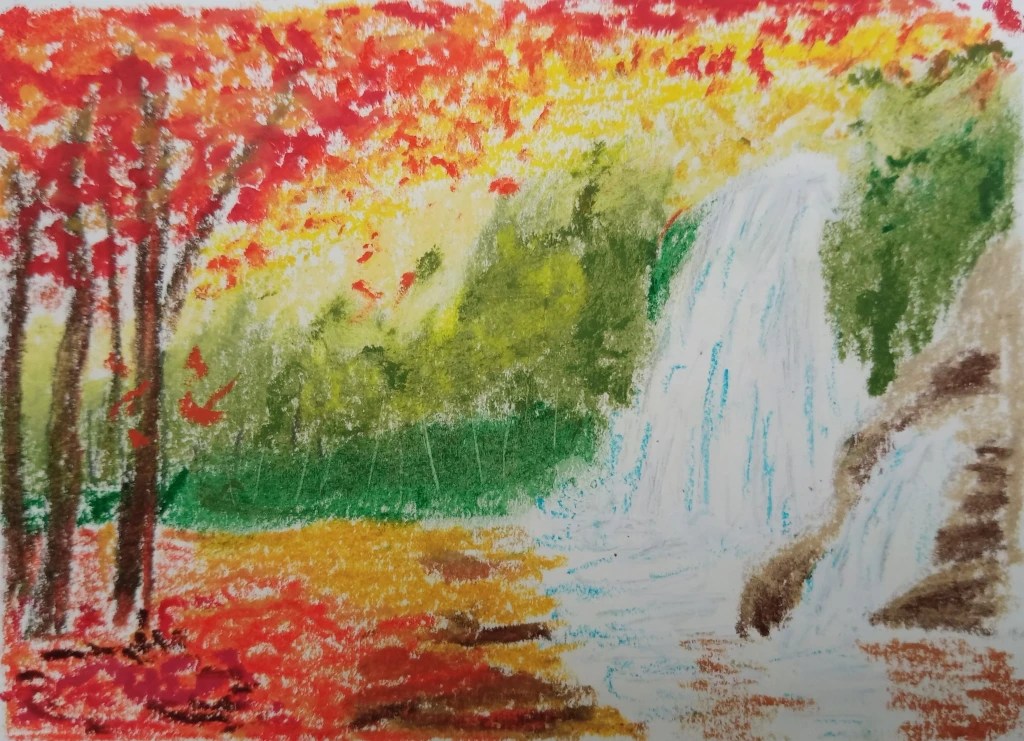
We are grateful to the whole team, our contributors and readers for being with us through our journey. We would not have made it this far without each one of you. Special thanks to Sohana Manzoor for her artwork too, something that has almost become synonymous with the cover page of our journal. Thank you all from the bottom of my heart.
Wish you all happy reading! Do pause by our content’s page and take a look at all the wonderful writers.
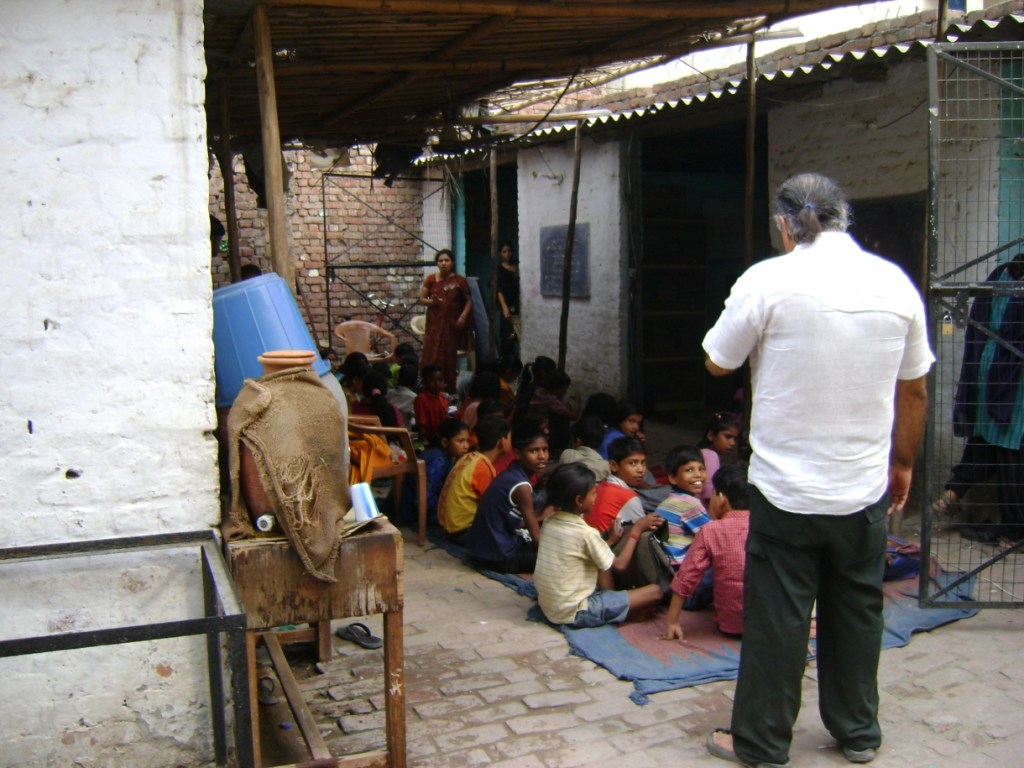
Here is a Hindustani poem by Tanvir from the Nithari village, where pandies’ conducted workshops to help traumatised and deprived youngsters. It has been translated to English by Lourdes M Supriya.
The late Sanjay Kumar (1961-2025), founder of pandies’, creating a story collective at a workshop being conducted for the children at Nithari. Photo provided by the late Sanjay Kumar
Tanvir was first introduced to pandies’ theatre in 2012 as a student at their theatre workshop in Saksham School, Nithari village. After finishing his studies, Tanvir continued to volunteer at the Saksham School till 2019 as a teacher.
How we wish you were here...
This party would have brought more cheer.
A sight so dear --
Could you imagine, friends,
His sense of peace and no fear?
How we wish you were here...
This party, this eve, would have more cheer...

The breeze would seem perfumed with myrrh.
Our best moments were with you right here.
No broken heart, no wounds are as severe --
How we wish you were here...
This party, this eve, would have more cheer...

Even the moon and the stars would appear
Among the thousand dreams gathered here
To hear a single speech by you.
Oh! A scene so sincere--
One more happy day with you here...
How we wish you were here...
This party, this eve, would have more cheer...

It’s only been a few days...
How much can we weep?
The pain is immense Sanjay Sir--
Come back, we cannot walk alone on a road this steep.
Missing your laughter, your voice, and all your ways,
How do we carry on without you? How can we be joyous?
How we wish you were here...
This party, this eve, would have more cheer...
Lourdes M Surpiya is a filmmaker, editor, and theatre practitioner who has been associated with pandies’ theatre since 2015.
.
PLEASE NOTE: ARTICLES CAN ONLY BE REPRODUCED IN OTHER SITES WITH DUE ACKNOWLEDGEMENT TO BORDERLESS JOURNAL
Tumi Kon Kanoner Phulby Tagore andAnjali Loho Morby Nazrul, love songs by the two greats, have been translated from Bengali by Professor Fakrul Alam. Click hereto read.
One Life, One Love, 300 Children : Keith Lyons writes of Tendol Gyalzur, a COVID 19 victim, a refugee and an orphan who found new lives for many other orphans with love and an ability to connect. Click here to read.
When West Meets East & Greatness Blooms: Debraj Mookerjee reflects on how syncretism impacts greats like Tagore,Tolstoy, Emerson, Martin Luther King Jr, Gandhi and many more. Click here to read.
Dilip Kumar: Kohinoor-e-Hind: In a tribute to Bollywood legend Dileep Kumar, Ratnottama Sengupta, one of India’s most iconic arts journalists, recollects the days the great actor sprinted about on the sets of Bombay’s studios …spiced up with fragments from the autobiography of Sengupta’s father, Nabendu Ghosh. Click here to read.
Are Some of Us More Human than Others ?: Meenakshi Malhotra ponders at the exclusivity that reinforces divisions, margins and borders that continue to plague humankind, against the backdrop of the Women’s Month, March. Click here to read.
Reminiscences from a Gallery: MF Husain: Dolly Narang recounts how she started a gallery more than four decades ago and talks of her encounter with world renowned artist, MF Husain. Click hereto read.
Baraf Pora (Snowfall) by Rabindranath Tagore,gives a glimpse of his first experience of snowfall in Brighton and published in the Tagore family journal, Balak (Children), has been translated from Bengali by Somdatta Mandal. Clickhere to read.
Cherry Blossom Forecast: Suzanne Kamata brings the Japanese ritual of cherry blossom viewing to our pages with her camera and words. Clickhere to read.
Two Pizza Fantasies, Rhys Hughes recounts myths around the pizza in prose, fiction and poetry, Click here to read.
An Alien on the Altar!: Snigdha Agrawal writes of how a dog and lizard add zest to festivities with a dollop of humour. Click here to read.
Where it all Began: Sybil Pretious recounts her first adventure, an ascent on Mt Kilimanjaro at the age of sixty. Clickhere to read.
Conversations
Rabindranath Tagore: A Universal Bard.: This conversation between Aruna Chakravarti and Sunil Gangopadhyay that took place at a Tagore Conference organised by the Sahitya Akademi in Kochy in 2011. Click here to read.
Sriniketan: Tagore’s “Life Work”: In Conversation with Professor Uma Das Gupta, Tagore scholar, author of A History of Sriniketan, where can be glimpsed what Tagore considered his ‘life’s work’ as an NGO smoothening divides between villagers and the educated. Click here to read. (Review & Interview).
In conversation with the late Akbar Barakzai, a Balochi poet in exile who rejected an award from Pakistan Academy of Letters for his principles. Click here to read.
Jim Goodman, an American traveler, author, ethnologist and photographer who has spent the last half-century in Asia, converses with Keith Lyons. Click here to read.
InBridge over Troubled Waters, the late Sanjay Kumar tells us about Pandies, an activist theatre group founded by him that educates, bridging gaps between the divides of university educated and the less fortunate who people slums or terror zones. Click here to read.
In Lessons Old and New from a Stray Japanese Cat, Keith Lyons talks with the author of The Cat with Three Passports, CJ Fentiman who likes the anonymity loaned by resettling in new places & enjoys creating a space for herself away from her birthplace. Click hereto read.
Fiction
Aparichitaby Tagore: This short story has been translated as The Stranger by Aruna Chakravarti. Click hereto read.
Hena by Nazrul has been translated from Bengali by Sohana Manzoor. Click here to read.
Playlets byRabindranath Tagore: Two skits that reveal the lighter side of the poet. They have been translated from Bengali by Somdatta Mandal. Click here to read.
Abhagi’s Heaven, a poignant story by Saratchandra Chattopadhyay translated by Aruna Chakravarti. Click here to read.
An Eternal Void, a Balochi story by Munir Ahmed Badini translated by Fazal Baloch. Click hereto read.
The Witch, a short story by renowned Bengali writer Tarasankar Bandopadhyay (1898 to 1971), translated by Aruna Chakravarti. Clickhere to read.
I Grew into a Flute: Balochi Folktale involving magic retold by Fazal Baloch. Click here to read.
Give Me A Rag, Please:A short story by Nabendu Ghosh, translated by Ratnottama Sengupta, set in the 1943 Bengal Famine, which reflects on man’s basic needs. Click here to read
Rakhamaninov’s Sonata: A short story by Sherzod Artikov, translated from Uzbeki by Nigora Mukhammad. Click hereto read.
The Magic Staff , a poignant short story about a Rohingya child by Shaheen Akhtar, translated from Bengali by Arifa Ghani Rahman. Click here to read.
Khaira, the Blind, a story by Nadir Ali, has been translated from Punjabi by Amna Ali. Click here to read.
The Browless Dolls by S.Ramakrishnan, has been translated from Tamil by B Chandramouli. Click hereto read.
No Man’s Land: Sohana Manzoor gives us surrealistic story reflecting on after-life. Click hereto read.
The Protests Outside: Steve Ogah talks of trauma faced by riot victims in Nigeria. Click here to read.
Flash Fiction: Turret: Niles M Reddick relates a haunting tale of ghosts and more. Click here to read.
Henrik’s Journey: Farah Ghuznavi follows a conglomerate of people on board a flight to address issues ranging from Rohingyas to race bias. Click hereto read.
Does this Make Me a Psychic?; Erwin Coombs tells a suspenseful, funny, poignant and sad story, based on his real life experiences. Click here to read.
Phôs and Ombra: Paul Mirabile weaves a dark tale about two people lost in a void. Click here to read.
A Queen is Crowned: Farhanaz Rabbani traces the awakening of self worth. Click here to read.
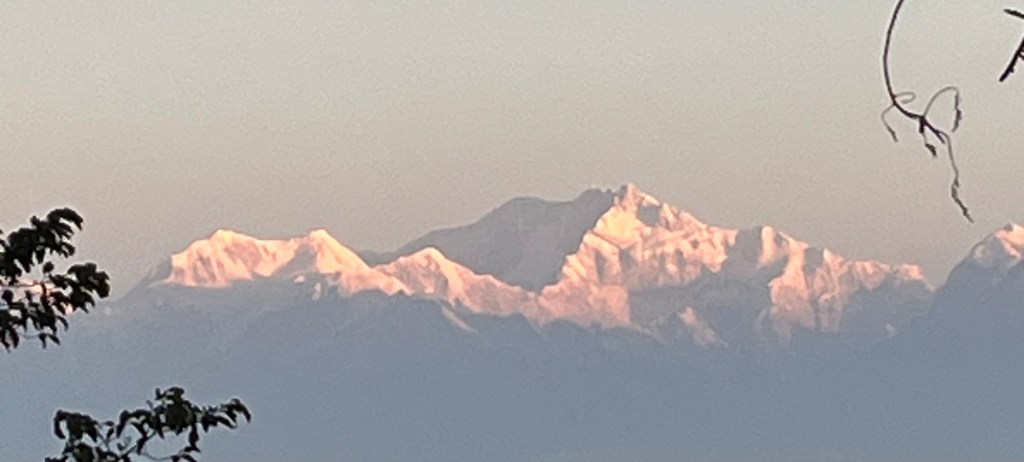
Ghoom, Darjeeling, is almost 2.5 km above sea level. Standing in the rarified air of Ghoom, you can watch the Kanchenjunga turn gold as it gets drenched in the rays of the rising sun. The phenomenon lasts for a short duration. The white pristine peak again returns to its original colour blending and disappearing among the white cirrus clouds that flit in the sky. Over time, it’s shrouded by mists that hang over this region. The event is transitory and repeats itself on every clear morning like life that flits in and out of existence over and over again…
Witnessing this phenomenon feels like a privilege of a lifetime as is meeting people who shine brightly and unusually, like the Kanchenjunga, to disappear into mists all too early. One such person was the founder of pandies’ 1 who coordinated the pandies’ corner for Borderless Journal, the late Sanjay Kumar (1961-2025). The idea of starting this column was to bring out the unheard voices of those who had risen above victimhood to find new lives through the work done by pandies’. In his book, Performing, Teaching and Writing Theatre: Exploring Play, published by Cambridge Scholars Publishing, he described his scope of work which in itself was stunning. His work ranged from teaching to using theatre and play to heal railway platform kids, youngsters in Kashmir, the Nithari survivors and more — all youngsters who transcended the scars seared on them by violations and violence. We hope to continue the column in coordination with pandies’.
Another very renowned person whose art encompassed a large number of social concerns and is now lost to time was the artist, MF Husain (1915-2011). This issue of Borderless is privileged to carry an artwork by him that has till now not been open to the public for viewing. It was a gift from him to the gallerist, Dolly Narang, on her birthday. She has written nostlgically of her encounters with the maestro who walked bare-feet and loved rusticity. She has generously shared a photograph of the sketch (1990) signed ‘McBull’ — a humorous play on his first name, Maqbool, by the artist.
Drenched with nostalgia is also Professor Fakrul Alam’s essay, dwelling on more serious issues while describing with a lightness his own childhood experiences. Many of the nonfiction in this issue have a sense of nostalgia. Mohul Bhowmick recalls his travels to Bhutan. And Prithvijeet Sinha introduces as to a grand monument of Lucknow, Bara Imambara. Lokenath Roy takes us for a stroll to Juhu, dwelling on the less affluent side. Suzanne Kamata describes her source of inspiration for a few stories in her new book, River of Dolls and Other Stories. A darker hue is brought in by Aparna Vats as she discusses female infanticide. But a light sprays across the pages as Devraj Singh Kalsi describes how his feisty grandmother tackled armed robbers in her home. And an ironic tone rings out in the rather whimsical musing by Farouk Gulsara on New Year days and calendars.
Everyone was at each other's throats, insistent that the world was ending. But I felt differently, as though I were just beginning, or just beginning again…
Poets, like visionaries across time and cultures, often see hope where others see despair. And humour always has that hum of hope. In a lighter tone, Rhys Hughes makes one laugh or just wonder as he writes:
I once knew a waiter who jumped in alarm when I somersaulted across his restaurant floor after entering the front door on my way to my favourite table: he wasn’t able to control his nerves and the meal he was bearing ended up on the ceiling with people staring as it started to drip down.
Translations feature poetry. Lyrics of Nazrul (1899-1976) and Tagore (1861-1941) appear together in Professor Alam’s translations of their love songs from Bengali. He has also transcreated a Bengali poem by Jibananada Das (1899-1854). Profoundly philosophical lines by Atta Shad (1939-1997) in Balochi has been rendered to English by Fazal Baloch for his birth anniversary this month. Ihlwah Choi has translated his poem from Korean, taking up the poignant theme of transience of life. A Tagore poem called ‘Kheya (Ferry)’, inspired by his rustic and beautiful surroundings, has been brought to us in English.
Huge thanks to all our contributors, the Borderless team for all these fabulous pieces. Thanks to Gulsara, Kamata, Bhowmick and Sinha for the fabulous photography by them to accompany their writings. Heartfelt gratitude to Sohana Manzoor for her cover art and to Dutta for her artwork accompanying her poem. Without all your efforts, this issue would have been incomplete. And now, dear readers, thank you for being with us through this journey. I turn the issue over to all of you… there is more as usual than mentioned here. Do pause by our contents page.
pandies’ was started in 1987. It’s spelled with a small ‘p’ and the name was picked by the original team. Read more about pandies’ by clicking here. ↩︎
Story by Ilma Khan, translated from Hindustani by Janees
Songs of Freedom bring stories from women — certainly not victims, not even survivors but fighters against the patriarchal status quo with support from the organisation Shaktishalini
Dr.Ilma Khan is 24 years old, was born and brought up in Rampur, Uttar Pradesh, India. She is studying BUMS (Bachelor of Unani Medicine & Surgery) and currently practising in the same field. Ilma loves to describe herself as ambitious, flawless and fearless, believing in ‘good vibes’, big dreams, and self-love always.
Dear Me . . .
2023
This year I met the most broken version of me, but also the strongest…
24 years ago…
Wednesday, 11 November 1998,
I was born into a family where when a woman is pregnant, she was expected to deliver a baby boy, but I was born…
I do not remember my childhood, but I do remember my family always wanting a boy. And so here we are with seven sisters now and one brother. I always wonder why they always wanted a son? What would have changed in their lives if they had a male child?
This greatly impacted my life and I decided to take matters in hand. I decided to do all the work which a boy could do. That didn’t seem to help much because I was constantly reminded of my ‘disabilities’, that ‘physically I was a girl and I should know my limits’, that I ‘should remember that one day when I would turn eighteen and I would get married. My parents’ house was just another impermanent motel’.
So, I started believing that this is my parents’ house and after marriage I would go to my husband’s house. But what if … they tell me someday that, ‘this is NOT YOUR home!’.
THEN WHERE EXACTLY IS MY HOME?
— LETTER TO MYSELF —

Dear Ilma,
I am meeting you after so long. You know it's been six years since we talked…
Just wanted to tell you that you were so genuine and innocent. I remember you always worried about little things, but you know this time it's different -- as in a ‘good different’. The Ilma I know now is strong enough to face her own journey. She has faith that she can always stand up for herself. The only things that haven't changed are the fact that she still likes to chill like you, she loves the rain, she does everything which is full of madness and enjoys every little moment of her life, she loves snow too…Though you were quieter than her you know. This Ilma -- she is aggressive, bold -- unlike your shy and scared self…
Oh yes and her nails have finally grown. She doesn't gnaw her nails like you. She loves to put paint on these. Can you imagine that?
Since that time, I started dreaming of having my home, a life full of adventures and freedom. But as I grew older, my family and relatives started asking about marriage. I was studying in college at that time.
I was completely shattered that I was very close to my career goals, but all this will stop me from achieving my dreams. Religion of course played a very important role in my life, as I was allowed to do things under ‘some limits’ because my family believed so.
I was just sixteen years old when my engagement was fixed with one of my cousins while my heart cried out in loud protest. But I was not able to express this to anyone. I decided that I would do something for myself — so that I could respond to all that was happening to me in which family members were complicit.
I had studied hard. When I completed school. I gave entrance exams and got selected for the medical profession. Since that time, I have been trying to tell my family members that I do not want to marry the person they choose.
Everything was going fine. I was living my life, but one call changed everything.
— LETTER TO MYSELF —

Dear Ilma,

I know you always wonder how you will pursue your career, how you will live your life if allowed to live on your own terms, about how smooth things will go if a person or your family will let you go or just abandon you or not want you to live by their rules.
But don't worry now because time has changed things, she is doing every single thing step by step, the way you thought it would be in future.
She is here to fulfill your dreams. I know you love to help the one in need. You know she has got a platform where she learns these things and is helping other ‘survivors’.
I promise when you will see this Ilma, you will be amazed because she is exactly the way you wanted her to be.
My mother called me, and said, “We are coming to pick you up after 3 days. You are getting married. Resign and come back with us. We have to do the preparations.”
I was silent. I could not utter a single word during the call. A feeling of hopelessness and helplessness mauled at me.
Somehow, I managed to muster the courage, assemble my shattered self together and called my mother –
“I don’t want to resign. I want to work. I want to be financially independent. I can’t marry now. This is not the right time.”
“No! You are 23 now and this is the right age. We have made the decision!”
“I don’t want to marry that person. He is annoying and this is final! I am not coming home!”
“How dare you talk like this? We are coming now to get you and you have to come with us. There’s nothing you can do about it.”
I was thinking about my next step. I took help from an NGO2 and they helped me. When my parents came, they promised that they would not ask me to marry any person and they would allow me to study. Somehow, they managed to convince me emotionally, and I decided to go back home with them to celebrate the festival of Eid.
When we were home, suddenly the behaviour of my mother changed, she snatched my phone and said, “Now do whatever you can? We will see how you will say no to marriage. There, we were helpless because of that NGO but now it’s all our say.”
REMEMBER THAT HEIGHT OF FEAR WHEN…

Her parents abused her physically with a belt, blood was coming out from her nose and head.
After all those arguments her parents finally decided to take her life and locked her in a room.
She was locked up in a room, with no hope of light in the darkest time. She was afraid, they were talking outside the room – planning and plotting. Her uncle was fighting with her family members to let her live. He was asking them not to kill her – to spare her. She lost all hope. Every second she was breathing, thinking this could be the last, this could be the last… this could… be the… last.
It was difficult to control her emotions. Her nose was bleeding, her tears were not coming out, her lips were dry with fear, she was shivering that this could be her last day and she could do nothing to save herself.
You’re alive today, Ilma. You lived through that time. The peak of fear.
But somehow, I was saved… and then I was screaming, crying… I wanted to disappear.
The next day I decided to do anything and everything to save myself, my life. I contacted many NGOs and left my home…and never looked back. How did it all happen? I am yet to make sense of it. One moment, I was trapped and hopeless, and the next moment, I was running for life.
Since then, I have been independently living on my own. I am currently studying, and at some point, I think that everything needs to be left alone – your past, even your pain.
But, yes, I remember when I was young, I thought that I would be helping poor people and I would do something through which I could be the person who would make others happy…
I decided to be a doctor and today it gives me hope and happiness which I cannot define in words. The very first time when I went to the gynaecology department and my duty was in the labour room. When I went there regularly for one month, I used to practice how to deliver a baby. After a few months, I learnt to do that on my own and when I helped one of my patients in delivering her baby, that was the best thing that ever happened to me in life…
The smiles on their faces were precious. Her mother-in-law gave me her blessings and all of them were just so happy.
So many times, I have tried to save the lives of people, pushing through to give them hope even if the situations are not in their favour.
Today when I go to the hospital and my patients, who are very ill and are in pain, give their blessings placing their trust in me, I realise what I’m living for.
YOU SHOULD KNOW --

You were in a toxic relationship, you know, you should know about red flags now. Why do you chase such people who don't value you, who don't care about the efforts you put into everything? You know she wants to be valued and respected by every individual she has in her life.
Things are very different now, but those memories of you with your family, she misses that.
Tell everyone in the past that she has moved on from things and no one can make her feel inferior.
And at last, I just want to say that I am so proud of everything you’ve done. Because of you, she discovered that she is fierce, and strong, and full of fire, and that not even she could hold herself back because her passion burned brighter than her fears.
Will meet you soon. Love and only love.
ME. YOU. US.
I faced a lot of hardships in life – mentally, physically, verbally, and socially. Despite being triggered by those memories I chose to live… I chose to live freely, I chose to love myself, I chose to owe myself a life which I dreamt of from an early age.
I was scared, but I realised that I am my own power. On certain days, when self-doubts creep in, I tell myself that I am worth every great thing. All that I have done till now. I am capable of reaching my dreams even if they’re beyond the stars. It’s only a matter of time. You look back and thank yourself for not giving up and for treating yourself with respect and kindness.
Now I am manifesting my life, my dream and everything I have wanted. I am becoming the best version of myself, and I deserve good things. This moment is always precious to me, the most satisfying moment of my life.
And I think once you choose HOPE, everything is possible in life…
“Establishing itself as a premier women’s organisation in India from 1987, Shaktishalini has spread out and deals with all kinds of gender based violence. A shelter home, a helpline and more than that a stunning activist passion are the hallmarks of this organisation. “pandies and Shaktishalini – different in terms of the work they do but firmly aligned in terms of ideological beliefs and where they stand and speak from. It goes back to 1996 when members of the theatre group went to the Shaktishalini office to research on (Dayan Hatya) witch burning for a production and got the chance to learn from the iconic leaders of Shaktishalini, Apa Shahjahan and Satya Rani Chadha. And collaborative theatre and theatre therapy goes back there. It is a mutual learning space that has survived over 25 years. Collaborative and interactive, this space creates anti-patriarchal and anti-communal street and proscenium performances and provides engaging workshop theatre with survivors of domestic and societal patriarchal violence. Many times we have sat together till late night, in small or large groups debating what constitutes violence? Or what would be gender equality in practical, real terms? These and many such questions will be raised in the stories that follow.” — Sanjay Kumar↩︎
Love is a many splendoured thing and takes many forms — that stretches beyond bodily chemistry to a need to love all humankind. There is the love for one’s parents, family, practices one believes in and most of all nurtured among those who write, a love for words. For some, like Tagore, words became akin to breathing. He wrote from a young age. Eventually, an urge to bridge social gaps led him to write poetry that bleeds from the heart for the wellbeing of all humanity. Tagore told a group of writers, musicians, and artists, who were visiting Sriniketan in 1936: “The picture of the helpless village which I saw each day as I sailed past on the river has remained with me and so I have come to make the great initiation here. It is not the work for one, it must involve all. I have invited you today not to discuss my literature nor listen to my poetry. I want you to see for yourself where our society’s real work lies. That is the reason why I am pointing to it over and over again. My reward will be if you can feel for yourself the value of this work.”
And it was perhaps to express this great love of humanity that he had written earlier in his life a poem called Dhoola Mandirthat urges us to rise beyond our differences of faith and find love in serving humankind. In this month, which celebrates love with Valentine’s Day, we have a translation of this poem that is born of his love for all people, Dhoola Mandir. Another poet who writes of his love for humanity and questions religion is Nazrul, two of whose poems have been translated by Niaz Zaman. Exploring love between a parent and children is poetry by Masood Khan translated from Bengali by Fakrul Alam. From the distant frontiers of Balochistan, we have a poem by Atta Shad, translated from Balochi by Fazal Baloch, for a fair lady — this time it is admiration. Ihlwha Choi translates poetry from Korean to express his love for a borderless world through the flight of sparrows.
Suzanne Kamata writes a light-hearted yet meaningful column on the recent Taylor Swift concert in Tokyo. Aditi Yadav takes up the Japanese book on which was based a movie that won the 2024 Golden Globe Best Animated Feature Film Award. Sohana Manzoor journeys to London as Devraj Singh Kalsi with tongue in cheek humour comments on extracurriculars that have so become a necessity for youngsters to get to the right schools. Snigdha Agrawal gives us a slice of nostalgia while recounting the story of a Santhali lady and Keith Lyons expresses his love for peace as he writes in memory of a man who cycled for peace.
In reviews, Somdatta Mandal has explored Tahira Naqvi’s The History Teacher of Lahore: A Novel. Srijato’s AHouse of Rain and Snow, translated from Bengali by Maharghya Chakraborty, has been discussed by Basudhara Roy and Bhaskar Parichha has reviewed Toby Walsh’s Faking It: Artificial Intelligence in a Human World. News and Documentary Emmy Award winner (1996) Ruchira Gupta’s daring novel born of her work among human traffickers, I Kick and I Fly, has been brought to our notice by Sengupta and she converses about the book and beyond with this socially conscious activist, filmmaker and writer. Another humanist, a doctor who served by bridging gaps between patients from underprivileged backgrounds, Dr Ratna Magotra, also conversed about her autobiography,Whispers of the Heart — Not Just a Surgeon: An Autobiography, where she charts her journey which led her to find solutions to take cardiac care to those who did not have the money to afford it,
We have fiction this time from Neeman Sobhan reflecting on how far people will go for the love of their mother tongue to highlight the movement that started on 21st February in 1952 and created Bangladesh in 1971. Our stories are from around the world — Paul Mirabile from France, Ravi Shankar from Malaysia, Sobhan from Bangladesh and Ravi Prakash and Apurba Biswas from India — weaving local flavours and immigrant narratives. Most poignant of all the stories is a real-life narrative under the ‘Songs of Freedom’ series by a young girl, Jyoti Kaur, translated from Hindustani by Lourdes M Supriya. These stories are brought to us in coordination with pandies’ and Shaktishalini, a women’s organisation to enable the abused. Sanjay Kumar, the founder of pandies’ and the author of a most poignant book about healing suffering of children through theatre, Performing, Teaching and Writing Theatre: Exploring Play, writes, “‘Songs of Freedom’ bring stories from women — certainly not victims, not even survivors but fighters against the patriarchal status quo with support from the organisation Shaktishalini.”
While looking forward in hope of finding a world coloured with love and kindness under the blue dome, I would like to thank our fabulous team who always support Borderless Journal with their wonderful work. A huge thanks to all of you from the bottom of my heart. I thank all the writers who make our issues come alive with their creations and readers who savour it to make it worth our while to bring out more issues. I would urge our readers to visit our contents’ page as we have more than mentioned here.




 Borderless