Categories
A Wonderful World

Vignettes from a Borderless World

Enjoy some of the most memorable gems from our treasury … gems that were borne of pens that have written to make our world bloom and grow over time.

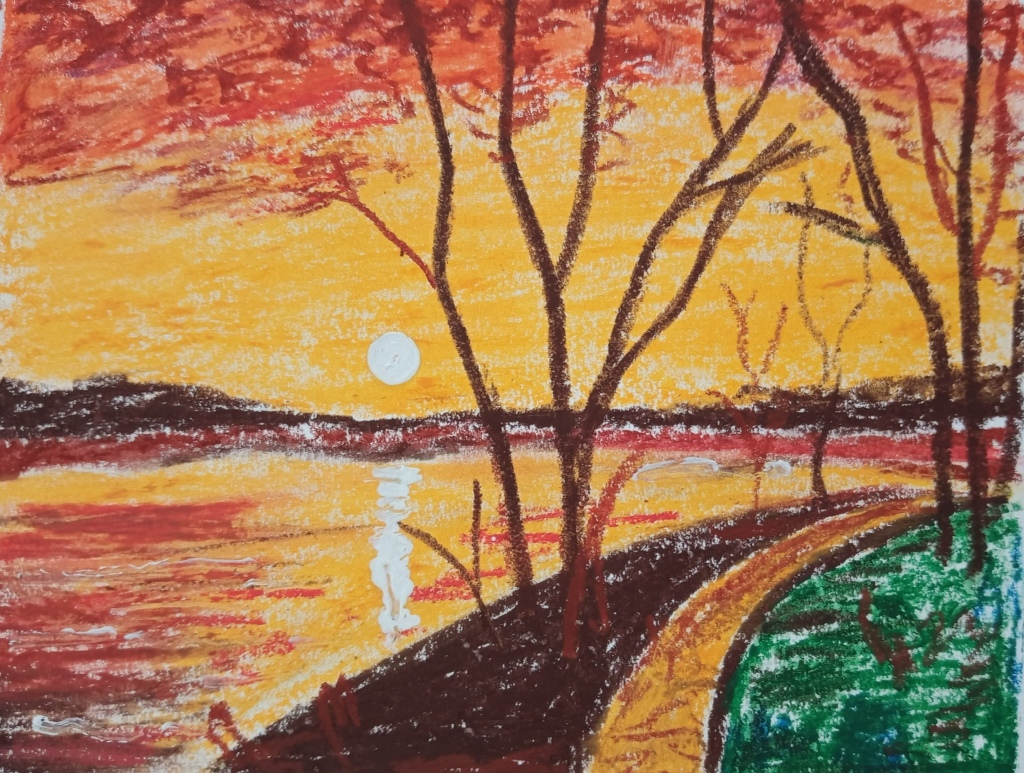
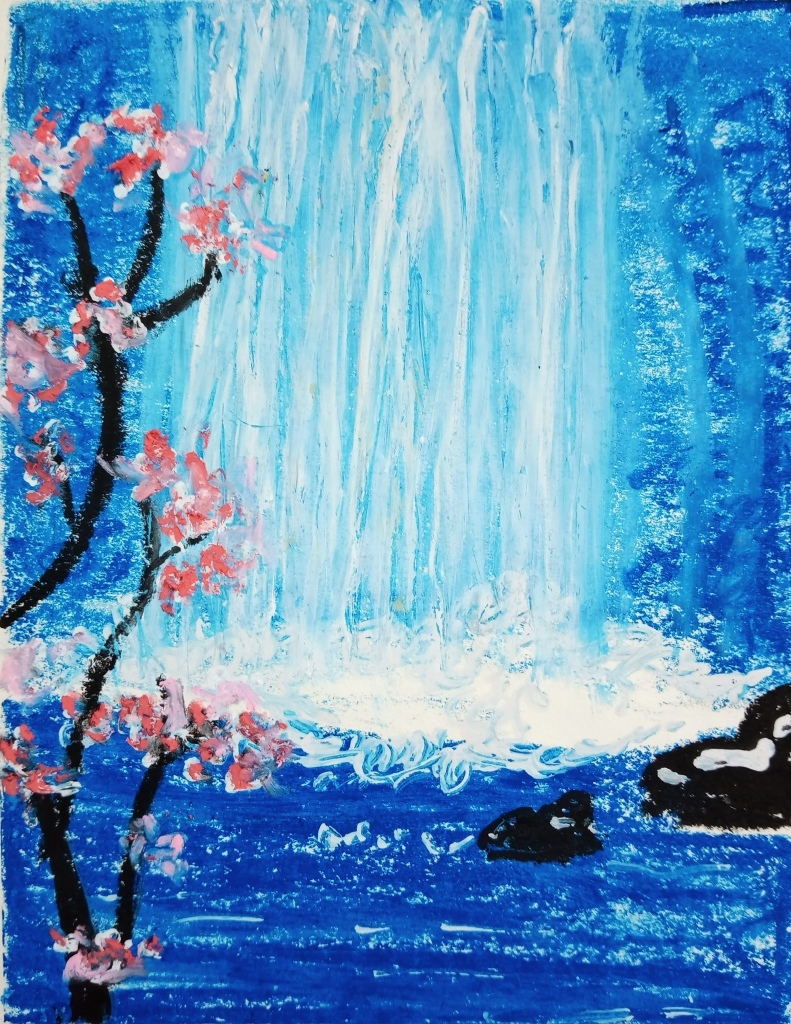
The first cover art by Sohana Manzoor published in Borderless Journal

Poetry

An excerpt from Rabindranath Tagore’sThe Child‘, a poem originally written in English by the poet. Click here to read.

Click on the names to read the poems

 Luis Cuauhtémoc Berriozábal,  Masha Hassan, Ryan Quinn Flangan LaVern Spencer McCarthy, Prithvijeet Sinha, Shamik Banerjee, George FreekG Javaid RasoolRakhi Dalal, Afsar Mohammad, Kiriti Sengupta, Adeline Lyons, Nilsa Mariano, Jared Carter,  Mitra SamalLizzie PackerJenny MiddletonAsad Latif, Stuart Mcfarlane, Kumar Bhatt, Saranyan BVRex Tan, Jonathan Chan, Kirpal Singh, Maithreyi Karnoor, Rhys Hughes, Jay Nicholls

Tumi Kon Kanoner Phul by Tagore and Anjali Loho Mor by Nazrul, love songs by the two greats, have been translated from Bengali by Professor Fakrul Alam. Click here to read.

Poetry of Jibananda Das translated by Fakrul Alam and Rakibul Hasan Khan from Bengali. Click here to read.

Mahnu, a poem by Atta Shad, translated from Balochi by Fazal Baloch. Click here to read. 

Manish Ghatak’s Aagun taader Praan (Fire is their Life) has been translated from Bengali by Indrayudh Sinha. Click here to read.

Amalkanti by Nirendranath Chakraborty has been translated from Bengali by Debali Mookerjea-Leonard. Click here to read.

Ye Shao-weng’s poetry ( 1100-1150) has been translated from Mandarin by Rex Tan. Click here to read.

Homecoming, a poem by Ihlwha Choi on his return from Santiniketan, has been translated from Korean by the poet himself. Click here to read.

Essays

 Travels & Holidays: Humour from Rabindranath: Translated from the original Bengali by Somdatta Mandal, these are Tagore’s essays and letters laced with humour. Click here to read.

Temples and Mosques: Kazi Nazrul Islam’s fiery essay translated by Sohana Manzoor. Click here to read.

The Comet’s Trail: Remembering Kazi Nazrul Islam: Radha Chakravarty pays tribute to the rebel poet of Bengal. Click here to read.

The Oral Traditions of Bengal: Story and Song: Aruna Chakravarti describes the syncretic culture of Bengal through its folk music and oral traditions. Click here to read.

Discovering Rabindranath and My Own Self: Professor Fakrul Alam muses on the impact of Tagore in his life. Click here to read.

One Life, One Love, 300 Children : Keith Lyons writes of Tendol Gyalzur, a COVID 19 victim, a refugee and an orphan who found new lives for many other orphans with love and an ability to connect. Click here to read.

When West Meets East & Greatness Blooms: Debraj Mookerjee reflects on how syncretism impacts greats like Tagore,Tolstoy, Emerson, Martin Luther King Jr, Gandhi and many more. Click here to read.

Amrita Sher-Gil: An Avant-Garde Blender of the East & West: Bhaskar Parichha shows how Amrita Sher-Gil’s art absorbed the best of the East and the West. Click here to read.

A Manmade Disaster or Climate Change?: Salma A Shafi writes of floods in Bangladesh from ground level. Click here to read.

Dilip Kumar: Kohinoor-e-Hind: In a tribute to Bollywood legend Dileep Kumar,  Ratnottama Sengupta, one of India’s most iconic arts journalists, recollects the days the great actor sprinted about on the sets of Bombay’s studios …spiced up with fragments from the autobiography of Sengupta’s father, Nabendu Ghosh. Click here to read. 

Dramatising an Evolving Consciousness: Theatre with Nithari’s Children: Sanjay Kumar gives us a glimpse of how theatre has been used to transcend trauma and create bridges. Click here to read.

Are Some of Us More Human than Others ?: Meenakshi Malhotra ponders at the exclusivity that reinforces divisions, margins and borders that continue to plague humankind, against the backdrop of the Women’s Month, March. Click here to read.

To Be or Not to Be or the Benefits of Borders: Wendy Jones Nakanishi argues in favour of walls with wit and facts. Click here to read. 

Reminiscences from a Gallery: MF Husain: Dolly Narang recounts how she started a gallery more than four decades ago and talks of her encounter with world renowned artist, MF Husain. Click here to read.

In The Hidden Kingdom of Bhutan: Mohul Bhowmick explores Bhutan with words and his camera. Click here to read.

From Srinagar to Ladakh: A Cyclist’s Diary: Farouk Gulsara travels from Malaysia for a cycling adventure in Kashmir. Click here to read.

Musings

Baraf Pora (Snowfall) by Rabindranath Tagore, gives a glimpse of his first experience of snowfall in Brighton and published in the Tagore family journal, Balak (Children), has been translated from Bengali by Somdatta Mandal. Click here to read.

Migrating to Myself from Kolkata to Singapore: Asad Latif explores selfhood in context of diverse geographies. Click here to read. 

Cherry Blossom ForecastSuzanne Kamata brings the Japanese ritual of cherry blossom viewing to our pages with her camera and words. Click here to read.

 Hair or There: Party on My HeadDevraj Singh Kalsi explores political leanings and hair art. Click here to read.

 Ghosts, Witches and My New Homeland: Tulip Chowdhury muses on ghosts and spooks in Bangladesh and US. Click here to read.

 Two Pizza Fantasies, Rhys Hughes recounts myths around the pizza in prose, fiction and poetry, Click here to read.

An Alien on the Altar!: Snigdha Agrawal writes of how a dog and lizard add zest to festivities with a dollop of humour. Click here to read.

Where it all Began: Sybil Pretious recounts her first adventure, an ascent on Mt Kilimanjaro at the age of sixty. Click here to read.

Conversations

Rabindranath Tagore: A Universal Bard.: This conversation between Aruna Chakravarti and Sunil Gangopadhyay that took place at a Tagore Conference organised by the Sahitya Akademi in Kochy in 2011. Click here to read.

Sriniketan: Tagore’s “Life Work”: In Conversation with Professor Uma Das Gupta, Tagore scholar, author of A History of Sriniketan, where can be glimpsed what Tagore considered his ‘life’s work’ as an NGO smoothening divides between villagers and the educated. Click here to read. (Review & Interview).

In conversation with the late Akbar Barakzai, a Balochi poet in exile who rejected an award from Pakistan Academy of Letters for his principles. Click here to read.

In A Voice from Kharkiv: A Refugee in her Own CountryLesya Bukan relates her journey out of Ukraine as a refugee and the need for the resistance. Click here to read.

Andrew Quilty, an award winning journalist for his features on Afghanistan, shares beyond his book,August in Kabul: America’s Last Days in Afghanistan and the Return of the Taliban, in a candid conversation. Click here to read. 

Jim Goodman, an American traveler, author, ethnologist and photographer who has spent the last half-century in Asia, converses with Keith Lyons. Click here to read.

In Bridge over Troubled Waters, the late Sanjay Kumar tells us about Pandies, an activist theatre group founded by him that educates, bridging gaps between the divides of university educated and the less fortunate who people slums or terror zones. Click here to read.

In Lessons Old and New from a Stray Japanese CatKeith Lyons talks with the author of The Cat with Three PassportsCJ Fentiman who likes the anonymity loaned by resettling in new places & enjoys creating a space for herself away from her birthplace. Click here to read.

Fiction

 Aparichita by Tagore: This short story has been translated as The Stranger by Aruna Chakravarti. Click here to read.

Hena by Nazrul has been translated from Bengali by Sohana Manzoor. Click here to read. 

Playlets by Rabindranath Tagore : Two skits that reveal the lighter side of the poet. They have been translated from Bengali by Somdatta Mandal. Click here to read.

Pus Ki Raat or A Frigid Winter Night by Munshi Premchand has been translated from Hindi by C Christine Fair. Click here to read. 

Abhagi’s Heavena poignant story by Saratchandra Chattopadhyay translated by Aruna Chakravarti. Click here to read.

An Eternal Void, a Balochi story by Munir Ahmed Badini translated by Fazal Baloch. Click here to read.

The Witch, a short story by renowned Bengali writer Tarasankar Bandopadhyay (1898 to 1971), translated by Aruna Chakravarti. Click here to read.

I Grew into a Flute: Balochi Folktale involving magic retold by Fazal Baloch. Click here to read.

Give Me A Rag, Please:A short story by Nabendu Ghosh, translated by Ratnottama Sengupta, set in the 1943 Bengal Famine, which reflects on man’s basic needs. Click here to read

Rakhamaninov’s Sonata: A short story by Sherzod Artikov, translated from Uzbeki by Nigora Mukhammad. Click here to read.

The Magic Staff , a poignant short story about a Rohingya child by Shaheen Akhtar, translated from Bengali by Arifa Ghani Rahman. Click here to read.

Khaira, the Blind, a story by Nadir Ali, has been translated from Punjabi by Amna Ali. Click here to read. 

The Browless Dolls by S.Ramakrishnan, has been translated from Tamil by B Chandramouli. Click here to read.

Orang Minyak or The Ghost: A Jessie Michael explores blind belief in a Malay village. Click here to read.

Flash Fiction: Peregrine: Brindley Hallam Dennis tells us the story of a cat and a human. Click here to read.

No Man’s Land: Sohana Manzoor gives us surrealistic story reflecting on after-life. Click here to read.

The Protests Outside: Steve Ogah talks of trauma faced by riot victims in Nigeria. Click here to read.

Flash Fiction: Turret: Niles M Reddick relates a haunting tale of ghosts and more. Click here to read.

Henrik’s Journey: Farah Ghuznavi follows a conglomerate of people on board a flight to address issues ranging from Rohingyas to race bias. Click here to read.

Does this Make Me a Psychic?; Erwin Coombs tells a suspenseful, funny, poignant and sad story, based on his real life experiences. Click here to read. 

Phôs and Ombra: Paul Mirabile weaves a dark tale about two people lost in a void. Click here to read.

A Queen is Crowned: Farhanaz Rabbani traces the awakening of self worth. Click here to read.

The Chopsy Moggy: Rhys Hughes gives us a feline adventure. Click here to read.

Happy Birthday Borderless… Click here to read.
Art by Sybil Pretious
Categories
Editorial

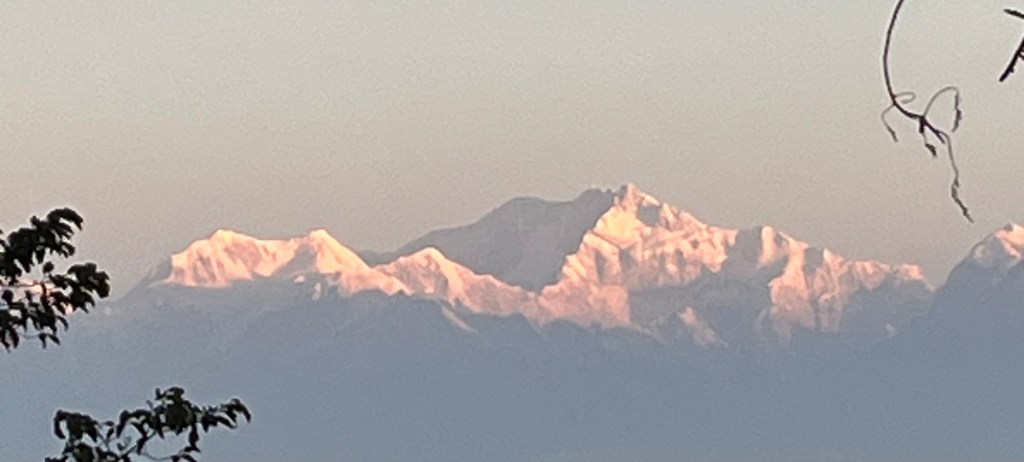
The Kanchenjunga Turns Gold…

The Kanchenjunga turns gold

Ghoom, Darjeeling, is almost 2.5 km above sea level. Standing in the rarified air of Ghoom, you can watch the Kanchenjunga turn gold as it gets drenched in the rays of the rising sun. The phenomenon lasts for a short duration. The white pristine peak again returns to its original colour blending and disappearing among the white cirrus clouds that flit in the sky. Over time, it’s shrouded by mists that hang over this region. The event is transitory and repeats itself on every clear morning like life that flits in and out of existence over and over again…

Witnessing this phenomenon feels like a privilege of a lifetime as is meeting people who shine brightly and unusually, like the Kanchenjunga, to disappear into mists all too early. One such person was the founder of pandies’ 1 who coordinated the pandies’ corner for Borderless Journal, the late Sanjay Kumar (1961-2025). The idea of starting this column was to bring out the unheard voices of those who had risen above victimhood to find new lives through the work done by pandies’. In his book, Performing, Teaching and Writing Theatre: Exploring Play, published by Cambridge Scholars Publishing, he described his scope of work which in itself was stunning. His work ranged from teaching to using theatre and play to heal railway platform kids, youngsters in Kashmir, the Nithari survivors and more — all youngsters who transcended the scars seared on them by violations and violence. We hope to continue the column in coordination with pandies’.

Another very renowned person whose art encompassed a large number of social concerns and is now lost to time was the artist, MF Husain (1915-2011). This issue of Borderless is privileged to carry an artwork by him that has till now not been open to the public for viewing. It was a gift from him to the gallerist, Dolly Narang, on her birthday. She has written nostlgically of her encounters with the maestro who walked bare-feet and loved rusticity. She has generously shared a photograph of the sketch (1990) signed ‘McBull’ — a humorous play on his first name, Maqbool, by the artist.

Drenched with nostalgia is also Professor Fakrul Alam’s essay, dwelling on more serious issues while describing with a lightness his own childhood experiences. Many of the nonfiction in this issue have a sense of nostalgia. Mohul Bhowmick recalls his travels to Bhutan. And Prithvijeet Sinha introduces as to a grand monument of Lucknow, Bara Imambara. Lokenath Roy takes us for a stroll to Juhu, dwelling on the less affluent side. Suzanne Kamata describes her source of inspiration for a few stories in her new book, River of Dolls and Other Stories. A darker hue is brought in by Aparna Vats as she discusses female infanticide. But a light sprays across the pages as Devraj Singh Kalsi describes how his feisty grandmother tackled armed robbers in her home. And an ironic tone rings out in the rather whimsical musing by Farouk Gulsara on New Year days and calendars.

With a touch of whimsy, Ratnottama Sengupta has also written of the art that is often seen in calendars and diaries as well as a musing on birthdays, her own and that of a friend, Joy Bimal Roy. They have also conversed on his new book, Ramblings of a Bandra Boy, whose excerpt is also lodged in our pages, recalling their days in the glitzy world of Bollywood as children of notable film director, Bimal Roy (1909-1966), and award-winning writer, Nabendu Ghosh (1917-2007).

We feature the more serious theme of climate change in our other interview with Bhaskar Parichha, who has written a book called Cyclones in Asia: Landfall, Wreckage and Resilience. He has spoken extensively on resilience and how the incidence of such storms are on the rise. We carry an excerpt from his non-fiction too. His book bears the imprint of his own experience of helping during such storms and extensive research.

Climate change has been echoed in poetry by Gazala Khan and the metaphor of thrashing stormy climate can be found in Luis Cuauhtémoc Berriozábal’s poetry. Touching lines on working men spread across the globe with poems from Michael Burch, Shamik Banerjee, Stuart McFarlane and Ashok Suri while Ryan Quinn Flanagan has written of accepting change as Nazrul had done more than eighty years ago:

Everyone was at each other's throats,
insistent that the world was ending.
But I felt differently, as though I were just beginning,
or just beginning again…

--Changes by Ryan Quinn Flanagan

Poets, like visionaries across time and cultures, often see hope where others see despair. And humour always has that hum of hope. In a lighter tone, Rhys Hughes makes one laugh or just wonder as he writes:

I once knew a waiter
who jumped in alarm
when I somersaulted across
his restaurant floor
after entering the front door
on my way to my favourite
table: he wasn’t able
to control his nerves
and the meal he was bearing
ended up on the ceiling
with people staring
as it started to drip down.

--No Hard Feelings by Rhys Hughes

We have many more colours of poetry from John Drudge, Cal Freeman, Phil Wood, Thompson Emate, George Freek, Srijani Dutta, Akbar Fida Onoto, and others.

Translations feature poetry. Lyrics of Nazrul (1899-1976) and Tagore (1861-1941) appear together in Professor Alam’s translations of their love songs from Bengali. He has also transcreated a Bengali poem by Jibananada Das (1899-1854). Profoundly philosophical lines by Atta Shad (1939-1997) in Balochi has been rendered to English by Fazal Baloch for his birth anniversary this month. Ihlwah Choi has translated his poem from Korean, taking up the poignant theme of transience of life. A Tagore poem called ‘Kheya (Ferry)’, inspired by his rustic and beautiful surroundings, has been brought to us in English.

Our fiction this month features human bonding from across oceans by Paul Mirabile, Naramsetti Umamaheswararao and Snigdha Agrawal. This theme of love and bonding is taken up in a more complex way by our reviews’ section with Meenakshi Malhotra writing of Syed Mujtaba Ali’s novel, Shabnam, translated from Bengali by Nazes Afroz. Bhaskar Parichha has explored the past by bringing to focus Abhay K’s Nalanda: How it Changed the World. Somdatta Mandal’s review of Amitav Ghosh’s latest Wild Fiction: Essays touches upon various issues including climate change.

Huge thanks to all our contributors, the Borderless team for all these fabulous pieces. Thanks to Gulsara, Kamata, Bhowmick and Sinha for the fabulous photography by them to accompany their writings. Heartfelt gratitude to Sohana Manzoor for her cover art and to Dutta for her artwork accompanying her poem. Without all your efforts, this issue would have been incomplete. And now, dear readers, thank you for being with us through this journey. I turn the issue over to all of you… there is more as usual than mentioned here. Do pause by our contents page.

Let’s celebrate life this spring!

Happy Reading!

Mitali Chakravarty

borderlessjournal.com

.

  1. pandies’ was started in 1987. It’s spelled with a small ‘p’ and the name was picked by the original team. Read more about pandies’ by clicking here. ↩︎

Click here to access the contents page for the February 2025 Issue

READ THE LATEST UPDATES ON THE FIRST BORDERLESS ANTHOLOGY, MONALISA NO LONGER SMILES, BY CLICKING ON THIS LINK.

Categories
Contents

Borderless April, 2024

Art by Sohana Manzoor

Editorial

April Showers… Click here to read.

Translations

Baraf Pora (Snowfall) by Rabindranath Tagore, gives a glimpse of his first experience of snowfall in Brighton and published in the Tagore family journal, Balak (Children), has been translated from Bengali by Somdatta Mandal. Click here to read.

Himalaya Jatra ( A trip to Himalayas) by Tagore, has been translated from his Jibon Smriti (1911, Reminiscenses) by Somdatta Mandal from Bengali. Click here to read.

Bhumika (Introduction) by Tagore has been translated from Bengali by Ratnottama Sengupta. Click here to read.

The Fire-grinding Quern by Manzur Bismil has been translated from Balochi by Fazal Baloch. Click here to read.

The Tobacco Lover by Ihlwha Choi has been translated from Korean by the poet himself. Click here to read.

Pochishe Boisakh (25th of Baisakh) by Tagore(1922), has been translated from Bengali by Mitali Chakravarty. Click here to read.

Pandies Corner

Songs of Freedom: Dear Me… is an autobiographical narrative by Ilma Khan, translated from Hindustani by Janees. These narrations highlight the ongoing struggle against debilitating rigid boundaries drawn by societal norms, with the support from organisations like Shaktishalini and pandies’. Click here to read.

Poetry

Click on the names to read the poems

Michael Burch, Kirpal Singh, Scott Thomas Outlar, Nusrat Jahan Esa, George Freek, Snigdha Agrawal, Phil Wood, Pramod Rastogi, Stuart McFarlane, Ahmad Al-Khatat, Shamik Banerjee, Ryan Quinn Flanagan, Lisa Sultani, Jenny Middleton, Kumar Bhatt, Rhys Hughes

Poets, Poetry & Rhys Hughes

In The Desk, Rhys Hughes writes of his writerly needs with a speck of humour. Click here to read.

Musings/Slices from Life

Heatwave & Tagore

Ratnottama Sengupta relates songs of Tagore to the recent heatwave scorching Kolkata. Click here to read.

The Older I get, the More Youthful Feels Tagore

Asad Latif gives a paean in prose to the evergreen lyrics of Tagore. Click here to read.

No Film? No Problem

Ravi Shankar takes us through a journey of cameras and photography, starting with black and white films. Click here to read.

Musings of a Copywriter

In Witches and Crafts: A Spook’s Tale, Devraj Singh Kalsi finds a ghostly witch in his library. Click here to read.

Notes from Japan

In Of Peace and Cheese, Suzanne Kamata gives us a tongue in cheek glimpse of photo-modelling mores. Click here to read.

Essays

Discovering Rabindranath and My Own Self

Professor Fakrul Alam muses on the impact of Tagore in his life. Click here to read.

The Lyric Temper

Jared Carter explores the creative soul of poets through varied times and cultures. Click here to read.

Bengaliness and Recent Trends in Indian English Poetry: Some Random Thoughts

Somdatta Mandal browses over multiple Bengali poets who write in English. Click here to read.

Stories

Hope is the Waking Dream of a Man

Shevlin Sebastian gives a vignette of life of an artist in Mumbai. Click here to read.

Viceregal Lodge

Lakshmi Kannan explores patriarchal mindsets. Click here to read.

The Thirteen-Year Old Pyromaniac

Paul Mirabile gives a gripping tale about a young pyromaniac. Click here to read.

Conversation

Ratnottama Sengupta in conversation about Kitareba, a contemporary dance performance on immigrants, with Sudarshan Chakravorty, a choreographer, and founder of the Sapphire Dance Company. Click here to read.

Book Excerpts

An excerpt from Jessica Mudditt’s Once Around the Sun – From Cambodia to Tibet. Click here to read.

An excerpt from Bhaskar Parichha’s Biju Patnaik: The Rainmaker of Opposition Politics. Click here to read.

Book Reviews

Meenakshi Malhotra reviews Mahasweta Devi: Writer, Activist, Visionary, edited by Radha Chakravarty. Click here to read.

Basudhara Roy reviews Out of Sri Lanka: Tamil, Sinhala and English Poetry from Sri Lanka and its Diasporas, edited by Vidyan Ravinthiran, Seni Seneviratne, Shash Trevett. Click here to read.

Swagata Chatterjee reviews Sanjukta Dasgupta’s Ekalavya Speaks. Click here to read.

Bhaskar Parichha reviews Bhang Journeys: Stories, Histories, Trips and Travels by Akshaya Bahibala. Click here to read.

.

Click here to access the Borderless anthology, Monalisa No Longer Smiles

Click here to access Monalisa No Longer Smiles on Amazon International

Categories
pandies' corner

Songs of Freedom: Dear Me…

Story by Ilma Khan, translated from Hindustani by Janees

Songs of Freedom bring stories from women — certainly not victims, not even survivors but fighters against the patriarchal status quo with support from the organisation Shaktishalini

–Sanjay Kumar, founder, pandies1

Dr.Ilma Khan is 24 years old, was born and brought up in Rampur, Uttar Pradesh, India. She is studying BUMS (Bachelor of Unani Medicine & Surgery) and currently practising in the same field. Ilma loves to describe herself as ambitious, flawless and fearless, believing in ‘good vibes’, big dreams, and self-love always.

Dear Me . . .

2023

This year I met the most broken version of me, but also the strongest…

24 years ago…

Wednesday, 11 November 1998,

I was born into a family where when a woman is pregnant, she was expected to deliver a baby boy, but I was born…

I do not remember my childhood, but I do remember my family always wanting a boy. And so here we are with seven sisters now and one brother. I always wonder why they always wanted a son? What would have changed in their lives if they had a male child?

This greatly impacted my life and I decided to take matters in hand. I decided to do all the work which a boy could do. That didn’t seem to help much because I was constantly reminded of my ‘disabilities’, that ‘physically I was a girl and I should know my limits’, that I ‘should remember that one day when I would turn eighteen and I would get married. My parents’ house was just another impermanent motel’.

So, I started believing that this is my parents’ house and after marriage I would go to my husband’s house. But what if … they tell me someday that, ‘this is NOT YOUR home!’.

THEN WHERE EXACTLY IS MY HOME?

— LETTER TO MYSELF —

Dear Ilma,
I am meeting you after so long. You know it's been six years since we talked…
Just wanted to tell you that you were so genuine and innocent. I remember you always worried about little things, but you know this time it's different -- as in a ‘good different’. The Ilma I know now is strong enough to face her own journey. She has faith that she can always stand up for herself. The only things that haven't changed are the fact that she still likes to chill like you, she loves the rain, she does everything which is full of madness and enjoys every little moment of her life, she loves snow too…Though you were quieter than her you know. This Ilma -- she is aggressive, bold -- unlike your shy and scared self…
Oh yes and her nails have finally grown. She doesn't gnaw her nails like you. She loves to put paint on these. Can you imagine that?

Since that time, I started dreaming of having my home, a life full of adventures and freedom. But as I grew older, my family and relatives started asking about marriage. I was studying in college at that time.

I was completely shattered that I was very close to my career goals, but all this will stop me from achieving my dreams. Religion of course played a very important role in my life, as I was allowed to do things under ‘some limits’ because my family believed so.

I was just sixteen years old when my engagement was fixed with one of my cousins while my heart cried out in loud protest. But I was not able to express this to anyone. I decided that I would do something for myself — so that I could respond to all that was happening to me in which family members were complicit.

I had studied hard. When I completed school. I gave entrance exams and got selected for the medical profession. Since that time, I have been trying to tell my family members that I do not want to marry the person they choose.

Everything was going fine. I was living my life, but one call changed everything.

— LETTER TO MYSELF —

Dear Ilma,

I know you always wonder how you will pursue your career, how you will live your life if allowed to live on your own terms, about how smooth things will go if a person or your family will let you go or just abandon you or not want you to live by their rules.
But don't worry now because time has changed things, she is doing every single thing step by step, the way you thought it would be in future.
She is here to fulfill your dreams. I know you love to help the one in need. You know she has got a platform where she learns these things and is helping other ‘survivors’.
I promise when you will see this Ilma, you will be amazed because she is exactly the way you wanted her to be.

My mother called me, and said, “We are coming to pick you up after 3 days. You are getting married. Resign and come back with us. We have to do the preparations.”

I was silent. I could not utter a single word during the call. A feeling of hopelessness and helplessness mauled at me.

Somehow, I managed to muster the courage, assemble my shattered self together and called my mother –

“I don’t want to resign. I want to work. I want to be financially independent. I can’t marry now. This is not the right time.”

“No! You are 23 now and this is the right age. We have made the decision!”

“I don’t want to marry that person. He is annoying and this is final! I am not coming home!”

“How dare you talk like this?  We are coming now to get you and you have to come with us. There’s nothing you can do about it.”

I was thinking about my next step. I took help from an NGO2 and they helped me. When my parents came, they promised that they would not ask me to marry any person and they would allow me to study. Somehow, they managed to convince me emotionally, and I decided to go back home with them to celebrate the festival of Eid.

When we were home, suddenly the behaviour of my mother changed, she snatched my phone and said, “Now do whatever you can? We will see how you will say no to marriage. There, we were helpless because of that NGO but now it’s all our say.”

REMEMBER THAT HEIGHT OF FEAR WHEN…

Her parents abused her physically with a belt, blood was coming out from her nose and head.
After all those arguments her parents finally decided to take her life and locked her in a room.
She was locked up in a room, with no hope of light in the darkest time. She was afraid, they were talking outside the room – planning and plotting. Her uncle was fighting with her family members to let her live. He was asking them not to kill her – to spare her. She lost all hope. Every second she was breathing, thinking this could be the last, this could be the last… this could… be the… last.
It was difficult to control her emotions. Her nose was bleeding, her tears were not coming out, her lips were dry with fear, she was shivering that this could be her last day and she could do nothing to save herself.
You’re alive today, Ilma. You lived through that time. The peak of fear.

But somehow, I was saved… and then I was screaming, crying… I wanted to disappear.

The next day I decided to do anything and everything to save myself, my life. I contacted many NGOs and left my home…and never looked back. How did it all happen? I am yet to make sense of it. One moment, I was trapped and hopeless, and the next moment, I was running for life.

Since then, I have been independently living on my own. I am currently studying, and at some point, I think that everything needs to be left alone – your past, even your pain.

But, yes, I remember when I was young, I thought that I would be helping poor people and I would do something through which I could be the person who would make others happy…

I decided to be a doctor and today it gives me hope and happiness which I cannot define in words. The very first time when I went to the gynaecology department and my duty was in the labour room. When I went there regularly for one month, I used to practice how to deliver a baby. After a few months, I learnt to do that on my own and when I helped one of my patients in delivering her baby, that was the best thing that ever happened to me in life…

The smiles on their faces were precious. Her mother-in-law gave me her blessings and all of them were just so happy.

So many times, I have tried to save the lives of people, pushing through to give them hope even if the situations are not in their favour.

Today when I go to the hospital and my patients, who are very ill and are in pain, give their blessings placing their trust in me, I realise what I’m living for.

YOU SHOULD KNOW --

You were in a toxic relationship, you know, you should know about red flags now. Why do you chase such people who don't value you, who don't care about the efforts you put into everything? You know she wants to be valued and respected by every individual she has in her life.
Things are very different now, but those memories of you with your family, she misses that.
Tell everyone in the past that she has moved on from things and no one can make her feel inferior.
And at last, I just want to say that I am so proud of everything you’ve done. Because of you, she discovered that she is fierce, and strong, and full of fire, and that not even she could hold herself back because her passion burned brighter than her fears.
Will meet you soon. Love and only love.
ME. YOU. US.

I faced a lot of hardships in life – mentally, physically, verbally, and socially. Despite being triggered by those memories I chose to live… I chose to live freely, I chose to love myself, I chose to owe myself a life which I dreamt of from an early age.

I was scared, but I realised that I am my own power. On certain days, when self-doubts creep in, I tell myself that I am worth every great thing. All that I have done till now. I am capable of reaching my dreams even if they’re beyond the stars. It’s only a matter of time. You look back and thank yourself for not giving up and for treating yourself with respect and kindness.

Now I am manifesting my life, my dream and everything I have wanted. I am becoming the best version of myself, and I deserve good things. This moment is always precious to me, the most satisfying moment of my life.

And I think once you choose HOPE, everything is possible in life…

  1.  “Establishing itself as a premier women’s organisation in India from 1987, Shaktishalini has spread out and deals with all kinds of gender based violence. A shelter home, a helpline and more than that a stunning activist passion are the hallmarks of this organisation. 
    pandies and Shaktishalini – different in terms of the work they do but firmly aligned in terms of ideological beliefs and where they stand and  speak from. It goes back to 1996 when members of the theatre group went to the Shaktishalini office to research on (Dayan Hatya) witch burning for a production and got the chance to learn from the iconic leaders of Shaktishalini, Apa Shahjahan and Satya Rani Chadha. And collaborative theatre and theatre therapy goes back there. It is a mutual learning space that has survived over 25 years. Collaborative and interactive, this space creates anti-patriarchal and anti-communal street and proscenium performances and provides engaging workshop theatre with survivors of domestic and societal patriarchal violence. Many times we have sat together till late night, in small or large groups debating what constitutes violence? Or what would be gender equality in practical, real terms? These and many such questions will be raised in the stories that follow.” — Sanjay Kumar ↩︎
  2. Non-governement Organisation ↩︎

Janees is an independent researcher and theatre practitioner associated with Pandies’ for quite some time.

PLEASE NOTE: ARTICLES CAN ONLY BE REPRODUCED IN OTHER SITES WITH DUE ACKNOWLEDGEMENT TO BORDERLESS JOURNAL

Click here to access the Borderless anthology, Monalisa No Longer Smiles

Click here to access Monalisa No Longer Smiles on Kindle Amazon International
Categories
Contents

Borderless, February 2024

Art by Sohana Manzoor

Editorial

Finding Godot?… Click here to read.

Conversations

Ratnottama Sengupta talks to Ruchira Gupta, activist for global fight against human trafficking, about her work and introduces her novel, I Kick and I Fly. Click here to read.

A conversation with Ratna Magotra, a doctor who took cardiac care to the underprivileged and an introduction to her autobiography, Whispers of the Heart: Not Just a Surgeon. Click here to read.

Translations

Two poems by Nazrul have been translated from Bengali by Niaz Zaman. Click here to read.

Masud Khan’s poetry has been translated by Fakrul Alam. Click here to read.

The White Lady by Atta Shad has been translated from Balochi by Fazal Baloch. Click here to read.

Sparrows by Ihlwha Choi has been translated from Korean by the poet himself. Click here to read.

Tagore’s Dhoola Mandir or Temple of Dust has been translated from Bengali by Mitali Chakravarty. Click here to read.

Pandies Corner

Songs of Freedom: What are the Options? is an autobiographical narrative by Jyoti Kaur, translated from Hindustani by Lourdes M Supriya. These narrations highlight the ongoing struggle against debilitating rigid boundaries drawn by societal norms, with the support from organisations like Shaktishalini and pandies’. Click here to read.

Poetry

Click on the names to read the poems

Rhys Hughes, Maithreyi Karnoor, Luis Cuauhtémoc Berriozábal, Sivakami Velliangiri, Wendy Jean MacLean, Pramod Rastogi, Stuart McFarlean, Afrida Lubaba Khan, George Freek, Saranyan BV, Ryan Quinn Flanagan, Sanjay C Kuttan, Peter Magliocco, Sushant Thapa, Michael R Burch

Poets, Poetry & Rhys Hughes

In City Life: Samples, Rhys Hughes takes on the voice of cities. Click here to read.

Musings/Slices from Life

Ratnottama Sengupta Reminisces on Filmmaker Mrinal Sen

Ratnottama Sengupta travels back to her childhood wonderland where she witnessed what we regard as Indian film history being created. Click here to read.

Suga Didi

Snigdha Agrawal gives us a slice of nostalgia. Click here to read.

Healing Intellectual Disabilities

Meenakshi Pawha browses on a book that deals with lived experiences of dealing with intellectual disabilities. Click here to read.

Musings of a Copywriter

In Hobbies of Choice, Devraj Singh Kalsi explores a variety of extra curriculums. Click here to read.

Notes from Japan

In Becoming a Swiftie in my Fifties, Suzanne Kamata takes us to a Taylor Swift concert in Tokyo. Click here to read.

Essays

Walking about London Town

Sohana Manzoor takes us around the historic town. Click here to read.

How Do You Live?

Aditi Yadav explores the universal appeal of the translation of a 1937 Japanese novel that recently came to limelight as it’s rendition on the screen won the Golden Globe Best Animated Feature Film award (2024). Click here to read.

The Magic Dragon: Cycling for Peace

Keith Lyons writes of a man who cycled for peace in a conflict ridden world. Click here to read.

Stories

A Night at the Circus

Paul Mirabile tells a strange tale set in Montana. Click here to read.

Echoes in the Digital Expanse

Apurba Biswas explores a futuristic scenario. Click here to read.

Two Countries

Ravi Shankar gives a story about immigrants. Click here to read.

Chadar

Ravi Prakash writes about life in an Indo-Nepal border village. Click here to read.

Just Another Day

Neeman Sobhan gives a story exploring the impact of the politics of national language on common people. Click here to read.

Book Excerpts

An excerpt from Nabendu Ghosh’s Journey of a Lonesome Boat( Eka Naukar Jatri), translated from Bengali by Ratnottama Sengupta. Click here to read.

An excerpt from Upamanyu Chatterjee’s Lorenzo Searches for the Meaning of Life. Click here to read.

Book Reviews

Somdatta Mandal reviews The History Teacher of Lahore: A Novel by Tahira Naqvi. Click here to review.

Basudhara Roy reviews Srijato’s A House of Rain and Snow, translated from Bengali by Maharghya Chakraborty. Click here to read.

Bhaskar Parichha reviews Toby Walsh’s Faking It : Artificial Intelligence In a Human World. Click here to read.

.

Click here to access the Borderless anthology, Monalisa No Longer Smiles

Click here to access Monalisa No Longer Smiles on Amazon International

Categories
Editorial

Finding Godot?

Discard all prayers,
Meditation, hymns and rituals.
Why do you hide behind
Closed doors of temples?
....
There is no God in this house.

He has gone to visit the
Farmers who plough the hard ground,
The workers who break rocks ...


— Tagore, Dhoola Mandir or Temple of Dust (1910)

Love is a many splendoured thing and takes many forms — that stretches beyond bodily chemistry to a need to love all humankind. There is the love for one’s parents, family, practices one believes in and most of all nurtured among those who write, a love for words. For some, like Tagore, words became akin to breathing. He wrote from a young age. Eventually, an urge to bridge social gaps led him to write poetry that bleeds from the heart for the wellbeing of all humanity.  Tagore told a group of writers, musicians, and artists, who were visiting Sriniketan in 1936: “The picture of the helpless village which I saw each day as I sailed past on the river has remained with me and so I have come to make the great initiation here. It is not the work for one, it must involve all. I have invited you today not to discuss my literature nor listen to my poetry. I want you to see for yourself where our society’s real work lies. That is the reason why I am pointing to it over and over again. My reward will be if you can feel for yourself the value of this work.”

And it was perhaps to express this great love of humanity that he had written earlier in his life a poem called Dhoola Mandir that urges us to rise beyond our differences of faith and find love in serving humankind. In this month, which celebrates love with Valentine’s Day, we have a translation of this poem that is born of his love for all people, Dhoola Mandir.  Another poet who writes of his love for humanity and questions religion is Nazrul, two of whose poems have been translated by Niaz Zaman. Exploring love between a parent and children is poetry by Masood Khan translated from Bengali by Fakrul Alam. From the distant frontiers of Balochistan, we have a poem by Atta Shad, translated from Balochi by Fazal Baloch, for a fair lady — this time it is admiration. Ihlwha Choi translates poetry from Korean to express his love for a borderless world through the flight of sparrows.

Love has been taken up in poetry by Michael Burch. Borne of love is a concern for the world around us. We have powerful poetry by Maithreyi Karnoor that expresses her concern for humanity with a dash of irony or is it sarcasm? Luis Cuauhtémoc Berriozábal expresses his admiration for the poetry of Italian Poet Antonia Pozzi (1912-1938) in poetry. We have poems by Stuart McFarlane, Pramod Rastogi, Afrida Lubaba Khan, George Freek, Saranyan BV, Ryan Quinn Flanagan and many more. Rhys Hughes brings humour into poetry and voices out in his column taking on the persona of two cities he had lived in recently. There is truth and poignancy in the voices of the cities.

Suzanne Kamata writes a light-hearted yet meaningful column on the recent Taylor Swift concert in Tokyo.  Aditi Yadav takes up the Japanese book on which was based a movie that won the 2024 Golden Globe Best Animated Feature Film Award. Sohana Manzoor journeys to London as Devraj Singh Kalsi with tongue in cheek humour comments on extracurriculars that have so become a necessity for youngsters to get to the right schools. Snigdha Agrawal gives us a slice of nostalgia while recounting the story of a Santhali lady and Keith Lyons expresses his love for peace as he writes in memory of a man who cycled for peace.

Ratnottama Sengupta also travels down the memory lane to recall her encounters with film maker Mrinal Sen as he interacted with her father, Nabendu Ghosh. She has translated an excerpt from his autobiography to highlight his interactions with Ghosh. The other excerpt is from Upamanyu Chatterjee’s latest novel, Lorenzo Searches for the Meaning of Life.

In reviews, Somdatta Mandal has explored Tahira Naqvi’s The History Teacher of Lahore: A Novel. Srijato’s A House of Rain and Snow, translated from Bengali by Maharghya Chakraborty, has been discussed by Basudhara Roy and Bhaskar Parichha has reviewed Toby Walsh’s Faking It: Artificial Intelligence in a Human World. News and Documentary Emmy Award winner (1996) Ruchira Gupta’s daring novel born of her work among human traffickers, I Kick and I Fly, has been brought to our notice by Sengupta and she converses about the book and beyond with this socially conscious activist, filmmaker and writer. Another humanist, a doctor who served by bridging gaps between patients from underprivileged backgrounds, Dr Ratna Magotra, also conversed about her autobiography, Whispers of the HeartNot Just a Surgeon: An Autobiography , where she charts her journey which led her to find solutions to take cardiac care to those who did not have the money to afford it,

We have fiction this time from Neeman Sobhan reflecting on how far people will go for the love of their mother tongue to highlight the movement that started on 21st February in 1952 and created Bangladesh in 1971. Our stories are from around the world — Paul Mirabile from France, Ravi Shankar from Malaysia, Sobhan from Bangladesh and Ravi Prakash and Apurba Biswas from India — weaving local flavours and immigrant narratives. Most poignant of all the stories is a real-life narrative under the ‘Songs of Freedom’ series by a young girl, Jyoti Kaur, translated from Hindustani by Lourdes M Supriya. These stories are brought to us in coordination with pandies’ and Shaktishalini, a women’s organisation to enable the abused. Sanjay Kumar, the founder of pandies’ and the author of a most poignant book about healing suffering of children through theatre, Performing, Teaching and Writing Theatre: Exploring Play, writes, “‘Songs of Freedom’ bring stories from women — certainly not victims, not even survivors but fighters against the patriarchal status quo with support from the organisation Shaktishalini.”

While looking forward in hope of finding a world coloured with love and kindness under the blue dome, I would like to thank our fabulous team who always support Borderless Journal with their wonderful work. A huge thanks to all of you from the bottom of my heart. I thank all the writers who make our issues come alive with their creations and readers who savour it to make it worth our while to bring out more issues. I would urge our readers to visit our contents’ page as we have more than mentioned here.

Enjoy our February fare.

Mitali Chakravarty

borderlessjournal.com

Click here to access the content’s page for the February 2024 Issue.

.

READ THE LATEST UPDATES ON THE FIRST BORDERLESS ANTHOLOGY, MONALISA NO LONGER SMILES, BY CLICKING ON THIS LINK.

Categories
pandies' corner

Songs of Freedom: What are the Options?

By Jyoti[1], translated from Hindustani by Lourdes M Supriya

Songs of Freedom bring stories from women — certainly not victims, not even survivors but fighters against the patriarchal status quo with support from the organisation Shaktishalini[2].

–Sanjay Kumar, founder, pandies

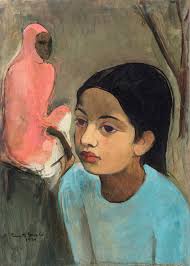
Painting by Amrita Shergil (1913-1941)
What are the Options?

“So then what happened?”

Nothing. My father came and took me back to his house. My nana-nani [3] didn’t stop him. He put me in a good school though, so this time I didn’t mind going back there. Last time he took me, I hated it.

“Why did you hate it?”

He wasn’t a nice man. I think that’s why my grandparents took me in. They knew what kind of a man he was. I loved being at my grandparents’. My mama, mother’s brother, he would take me shopping during holidays. I could pick anything in the entire shop, he’d never say no. Whenever I wanted new clothes, my masi, mother’s sister, took me to the markets\. She was like my mother. I was so loved there. But then my father took me away…

He had too many restrictions. My mother and I weren’t allowed to leave the house. I couldn’t leave after I came back from school. He kept an eye on us from his shop, it was down the street. Then the drinking got too much, the yelling, the swearing. I was afraid of his footsteps. I could tell from the sound of them what the night was going to be like. My mother was very scared of him, she couldn’t protect me from him. She felt helpless, I felt really bad for her. Then I was sent away again to my grandparents. I liked it there. I was studying in a government school. I did well in studies. I liked it. But then he came and took me back to the village. I had to repeat my third standard[4] there. I cried a lot at first, but it was a private school, better than the government one in Delhi.

“So this was the second time you were going there?”

Yes. I’ve lived at my father’s a couple of times. Sometimes I ran away and came back to my grandparents’, sometimes my mother brought me with her and stayed. But she always went back pretty soon. The first time he took me, I used to cry to my grandparents every night to take me back. I had to repeat classes so many times, I’m really behind on my studies. This has ruined my education. That’s why I hate it.

“What about the last time you were there? What happened then?”

Nothing. The same. But worse. He was more violent. My mother herself asked me to go with her to my grandparent’s. But I had exams in a month. I was a good student. I’d worked so hard. That year was especially bad at home; I’d put all my energy into school. I didn’t want to just drop it all and repeat the class again. I begged my mother to stay till the end of the term. He would beat her over everything. So I had to beg her. I promised her I would support her if she’d just let me give those exams. I was 14. I was old enough to start working.

“So did she stay?”

Yes. And then I came back to my grandparents’. But she went back the second day. Then she stopped taking my calls. Finally, I called her from someone else’s phone. She recognised my voice. I could tell. She didn’t say anything for a long time. I kept asking her to come. Then she said, “Aaj se tera mera rishta khatam; you’re not my daughter anymore. Don’t call again.”

I felt very alone. Things at my grandparents’ were also changing. My aunt was getting married. Everyone was busy with the preparations.

Nana[5] used to drive the auto 15 hours a day to save up for it. But he first had to pay back the loan he took out for the auto before he could save for the wedding. It was his last installment and they were really breathing down on him. One day he came home and told us he was short of 1000 bucks and it was time to make the payment. He asked my uncle, who was married by then, but his wife said they couldn’t spare it since they were also paying for the wedding and saving for the baby they planned to have next year. My uncle didn’t even have the balls to refuse his father himself. His wife had to do it. My grandfather turned to my mother, but she said, she couldn’t spare it either, she’d spent it all on me.

“Wait, your mother was there?”

Yes. She’d come eventually, some two months after me. She was working as a cook. It was really nice. For the first time, it felt like she was there. But that day she had used me as an excuse. I didn’t see any of that money. She wasn’t even paying for my school fees. I took tuitions and paid for it. I was starting to resent her too, I could see why the rest of them hated her.

“Wait, who hated her? Why did you resent her, you just said she was there for you.”

She was. When she came. She got a job. She got offs on Sunday and she would spend those with me. On Sundays, I didn’t have to cook for the family, she did. She even gave me money for school supplies, like new copies or pens, whenever I asked for it. She got me a small phone too. But this didn’t last long. She met someone. She used to take the same rickshaw to work everyday. He’d take her from one place to the next, they used to talk, then she’d talk to him at night too. She kept to herself. She started spending her Sundays with him. He wasn’t a good man. One day, he went to the village.

I thought it would end but her late-night conversations continued. They hated her, my grandparents and my uncle, his wife, even my mother’s sister. She knew her sister was to get married soon but she was roaming around with a man. All the neighborhood knew about it. What would they think? And then she stopped contributing to the house. How much could my grandfather do? She didn’t even give me any money anymore. Not even for notebooks. I had to work. And it was so difficult. I had to make breakfast for everyone in the house in the mornings, pack my lunch, rush back and do all the cleaning of the house, make lunch for everyone, then clean up the kitchen and wash the vessels. Then my kids would come. But everyone was selfish then. They were angry with my mother, and then with me. I gave my grandmother a part of my earnings, and I paid for my school. I did everything. She’d stopped staying home on Sundays too, so I had to do the work. That day, when my grandfather asked for money, she said she didn’t have any. He got so angry with her, he called her a slut, a leach, a parasite, draining him, killing him slowly, he slapped her. She ran away. I noticed that he didn’t react the same way when his daughter-in-law had refused to give him the money. But he was just so upset, he started crying. I couldn’t bear it. So I took one thousand from the money I’d saved for all those months and gave it to him. My grandmother took me aside and told me I shouldn’t have done it, that she could have dipped into the money I gave her. I told her that was for her. She didn’t have any money at all. And she’d been so kind to me. She was the only one who didn’t resent me. But she respected my grandfather too much to contradict him when he called me names.

“I thought your grandparents were supportive, that you’d felt safe in their house?”

I did. But my aunt was getting married, that changed everything. And I understand why they were angry with my mother. She brought us so much shame. One day, that man that she’d been having an affair with, he went to her workplace and started beating her up. He forced her onto his rickshaw, holding her hair throughout, and then brought her to our neighborhood and dragged her through the streets by her hair to his friend’s house. She’d started an affair with his friend when he’d gone to his village, and he found out about it. All the people heard him that day. She was so scratched up when he finally let her go. I took her to the police station but they didn’t file a complaint. My grandparents also encouraged her to file a complaint. But she didn’t. The new man she was seeing told her he was going to help her. So she listened to him, trusted that he would get her justice. I’ve never seen him, none of us had. But she really trusted him.

One day my aunt was really anxious. She came into the room when I was taking a class, and she asked me to go to the terrace because she needed the room. I had to move all the kids upstairs, take all the chairs. When I came back after the class, she started yelling at me, telling me I’m a burden, then she started beating me, abusing my mother too. I didn’t say anything to her when she was beating me; she left me in the room. I waited for my mother to come and comfort me. But she didn’t come. So I went looking for her, thinking this could bring us together. But I found her on the terrace, talking to her new boyfriend, telling him about all this. I felt really abandoned. She couldn’t even bother to check on me but she wanted his sympathy. Then they got into a fight. At one point, I overheard her begging him not to leave her or she’d kill herself. It made me so angry, I felt like I could break something.  I didn’t like this man at all. One day, she just got up left. I asked my grandparents to file a missing person’s report but they didn’t want to do it because it would bring shame to the family and my aunt was getting married. So they waited till it was over and then filed it, three years later. But I haven’t seen her since. I think she’s missing, we need to find her.

“How long ago was this?”

I don’t know. I can’t tell.

“What happened after your mother left?”

They all blamed me, they said I drove her to do it, that I hated her, that I was like her. They asked me to start contributing to the house, to stop living like a freeloader. I started giving all my tuition money home. I couldn’t continue school anymore. But they were so angry. One day, after my aunty’s marriage, the police came to our house in response to the missing person’s complaint I’d made them file. They wanted to ask questions about my mother and her boyfriend. I think she planned her escape. She’d been staying overnight at his house 2-3 times a week, and slowly taking her clothes there. The police pointed this out,  how she couldn’t have taken a big bag when she escaped, or we’d have seen her packing. I think they’re right. She abandoned me.

“Do your grandparents believe she’s okay, living somewhere else?”

Yes. It makes sense. She didn’t like it at home. They felt so ashamed by the police visit. They were angry that I’d made them file the complaint only to find out that their daughter had run away willingly. My grandfather was livid that day. He beat me up, then tried to drag me down the stairs. But I fell down at the 3rd floor landing so he started kicking me. Then he left me lying there. My grandmother didn’t come to help me. I was so distraught. I couldn’t even go to school, everyone hated me. What future did I have? No one wanted to help me, I didn’t know anyone who could help me or even who to turn to. I jumped off the landing there. I tried to commit suicide. That’s why I’m here now. Now I go to school.

[1] Note: Loosely based on the writer’s lived experiences

[2]  “Establishing itself as a premier women’s organisation in India from 1987, Shaktishalini has spread out and deals with all kinds of gender based violence. A shelter home, a helpline and more than that a stunning activist passion are the hallmarks of this organisation. 

pandies and Shaktishalini – different in terms of the work they do but firmly aligned in terms of ideological beliefs and where they stand and  speak from. It goes back to 1996 when members of the theatre group went to the Shaktishalini office to research on (Dayan Hatya) witch burning for a production and got the chance to learn from the iconic leaders of Shaktishalini, Apa Shahjahan and Satya Rani Chadha. And collaborative theatre and theatre therapy goes back there. It is a mutual learning space that has survived over 25 years. Collaborative and interactive, this space creates anti-patriarchal and anti-communal street and proscenium performances and provides engaging workshop theatre with survivors of domestic and societal patriarchal violence. Many times we have sat together till late night, in small or large groups debating what constitutes violence? Or what would be gender equality in practical, real terms? These and many such questions will be raised in the stories that follow.” — Sanjay Kumar

[3] Maternal grandparents

[4] Grade. Third grade

[5] Maternal grandfather

Jyoti Kaur is a 19-year-old from Delhi, currently pursuing her 10th grade studies. She likes to dance, read books and loves to travel at night.

Lourdes M Supriya is a Delhi based filmmaker, editor, and theatre practitioner who has been associated with pandies’ theatre since 2015.

PLEASE NOTE: ARTICLES CAN ONLY BE REPRODUCED IN OTHER SITES WITH DUE ACKNOWLEDGEMENT TO BORDERLESS JOURNAL

Click here to access the Borderless anthology, Monalisa No Longer Smiles

Click here to access Monalisa No Longer Smiles on Kindle Amazon International
Categories
Contents

Borderless August 2023

Art by Sohana Manzoor

Editorial

Other Echoes in the Garden… Click here to read.

Interviews

Ujjal Dosanjh, former Minister from Canada and former Premier of British Columbia, discusses his autobiography, Journey After Midnight – A Punjabi Life: From India to Canada, and the need for a world with less borders. Click here to read.

Professor Fakrul Alam discusses his new book of Tagore translations, Gitabitan: Selected Song-Lyrics of Rabindranath Tagore. Click here to read.

Translations

Tagore’s Musalmanir Galpa (A Muslim Woman’s Story) has been translated from Bengali by Aruna Chakravarti. Click here to read.

Masud Khan’s poem, In Another Galaxy, has been translated from Bengali by Professor Fakrul Alam. Click here to read.

Wakeful Stays the Door, a poem by Munir Momin, has been translated from Balochi by Fazal Baloch. Click here to read.

Dangerous Coexistence, written in Korean and translated by Ilhwah Choi. Click here to read.

Proshno or Questions by Tagore has been translated by Mitali Chakravarty. Click here to read.

Pandies Corner

Songs of Freedom: An Ordinary Tale is a narrative by Nandani based on her own experiences, translated from Hindustani by Janees. These narrations highlight the ongoing struggle against debilitating rigid boundaries drawn by societal norms, with the support from organisations like Shaktishalini and Pandies. Click here to read.

Poetry

Click on the names to read the poems

Jared Carter, Rhys Hughes, Malachi Edwin Vethamani, Luis Cuauhtémoc Berriozábal, Saranyan BV, Ryan Quinn Flanagan, A Jessie Michael, Jahnavi Gogoi, George Freek, Koushiki Dasgupta Chaudhuri, David Francis, Akil Contractor, Michael Burch

Poets, Poetry & Rhys Hughes

In An Experiment with Automatic Poetic Translation, Rhys Hughes auto translates an English poem sequentially through 28 languages and then back to English with hilarious results. Click here to read.

Musings/ Slices from Life

Mister, They’re Coming Anyway

Timothy Jay Smith writes on the refugee crisis in Lesbos Island, Greece with photographs by Michael Honegger. Click here to read.

Migrating to Myself from Kolkata to Singapore

Asad Latif explores selfhood in context of diverse geographies. Click here to read.

Islands that Belong to the Seas

Paul Mirabile muses on how humans are like migrants on islands borrowed from the seas. Click here to read.

Of Dreams, Eagles and Lost Children

Aysha Baqir muses on the narrow, closed borders that condemn children. Click here to read.

Mushroom Clouds and Movies: Response from a Hibakusha’s Daughter

Kathleen Burkinshaw discusses Oppenhiemer the movie. Click here to read.

Sleepless in the High Desert, Slumber in the Sierra

Meredith Stephens covers Nevada to Columbia in a car with her camera. Click here to read.

My Hostel Days

Ravi Shankar reminisces on bygone days. Click here to read.

Musings of a Copywriter

In The Amateur Professional, Devraj Singh Kalsi writes of a amateur who thought of himself as a professional. Click here to read.

Notes from Japan

In How I Wound Up in Japan, Suzanne gives her story as an immigrant. Click here to read.

Essays

A Different Persuasion: On Jane Austen’s Novels & their Adaptations

Deepa Onkar delves into the world of Jane Austen books and films. Click here to read.

A Foray into Andamans

Mohul Bhowmik explores Andaman with a camera and narrative. Click here to read.

Bhaskar’s Corner

In Chittaranjan Das: A Centenary Tribute, Bhaskar Parichha discusses the life of one of the most legendary Odia writers. Click here to read.

Stories

Belacan

Farouk Gulsara shares a story based on the life of a migrant in 1950s. Click here to read.

The Japanese Maple

Shivani Shrivastav weaves a story of friendship and loneliness among migrants. Click here to read.

The Coin

Khayma Balakrishnan explores human and supernatural interactions in a school setting in Malaysia. Click here to read.

The Vagrant

Reeti Jamil narrates a strange tale set in a village and told by a farmer. Click here to read.

Book Excerpts

An excerpt from Ujjal Dosanjh’s Journey After Midnight: A Punjabi Life from Canada to India. Click here to read.

An excerpt from Roses in the Fire of Spring: Better Roses for a Warming World and Other Garden Adventures, by M.S. Viraraghavan and Girija Viraraghavan. Click here to read.

Book Reviews

Somdatta Mandal reviews Amitav Ghosh’s Smoke and Ashes: A Writer’s Journey Through Opium’s Hidden Histories. Click here to read.

Basudhara Roy reviews Greening the Earth: A Global Anthology of Poetry, edited by K. Satchidanandan & Nishi Chawla. Click here to read.

Bhaskar Parichha reviews Arunava Sinha’s The Greatest Indian Stories Ever Told: Fifty Masterpieces from the Nineteenth Century to the Present. Click here to read.

.

Click here to access the Borderless anthology, Monalisa No Longer Smiles

Click here to access Monalisa No Longer Smiles on Kindle Amazon International
Categories
pandies' corner

Songs of Freedom: An Ordinary Tale

Story by Nandani, translated from Hindustani by Janees

Songs of Freedom bring stories from women — certainly not victims, not even survivors but fighters against the patriarchal status quo with support from the organisation Shaktishalini[1]

–Sanjay Kumar, founder, pandies


Nandani is an 18 year-old from Delhi, currently studying in the 10th grade. In her free time, she loves to read biographies, hang out with her friends, dancing and singing. She calls books as good friends of hers and looks forward to travelling across the world once in her lifetime. 

An Ordinary Tale

A story set in the year 2002. An ordinary story I must tell.

When a girl child is born in a Panditfamily, the mother welcomes Goddess Lakshmi. But the mother-in-law is unable to fathom bahu’s [2] joy over the girl baby. Call it outdated, archaic, outmoded. For the saas[3], a son would have proven to be a boon, a blessing straight from the heavens, a support to the family’s genes. She, like many others, was of the belief that a girl born is nothing but a burden who must be ‘disposed’ off to another family at the earliest. What are women but estranged wealth?! The world is run by men, their divine masculinities, their valour, by their being. Women are absolute subordinates to men. She failed to understand that being born a ‘male’ is simply a matter of – birth.

But bahu was not ready to give up. She would put in efforts to make her family think otherwise. She named her daughter Avantika. When Avantikahad grown up a bit, the saas one day cunningly said, “Bahu! See I like to put forward things as they are, no sugar-coating. I want you to focus on giving birth to my grandson now. I hope I will not be disappointed this time.”

The poor bahu was busy attending household chores. She tended to ignore the otherwise outrageous demands the mother-in-law burdened her with. Meanwhile the saas thought to herself, “Now that I have explicitly expressed my wish to bahu, maybe it’s better to let my raja beta[4] know of my justified desire.” So, she made sure she had her wish conveyed to her son. “My dear son, I have expressed my wish to Bahu – for a grandson, with whom I can enjoy the joys of grandmotherhood.” For the son, the mother’s wish was as good as a divine decree.

The bahu, who has overheard their conversation, felt betrayed and outraged. “How could you say yes on my behalf? What about my consent? I am not ready for another child. You don’t have a job. You don’t let me go out and work. You are living off your mother’s expenses… drinking, beating me to death every night! I don’t want to traumatise another child the way Avantikahas been traumatised.”

Her husband retorted, “How dare you? Who are you to stop me from taking decisions?” Basically, what he meant was that she was his slave and had no authority in deciding how many kids she wanted, when to have and so on and so forth.

The saas interfered in the matter and somehow convinced, or rather forcibly convinced the bahu to bear a child. We will not go into the details of this.

2005

Another girl child was born! The saas, was not just disappointed this time. She experesses her intolerance of this development. “All I ever wanted was one grandson! Not five or eight. Bahu is deliberately depriving me of this privilege. It was wrong of me to trust her.” Again, she simply failed to comprehend how sex and science works!

With the birth of Nira, the bahu’s life became hell … rather was made hell by her mother-in-law and husband. Violence grew. “Ever since this girl has taken birth, a curse has taken over the joys and prosperity of our home. I refuse to accept her.  Her arrival is a time of tribulation for us.”

The contempt and disgust if the saas towards the bahu and her daughters were echoed by the husband and father, who had turned more violent than before, and why not ? He had all the more reason to inflict pain on his wife. Backed by his mother, he started beating his wife every day, cursed her all day. When Niraturned one-and-a-half, the hostility worsened. The bahu turned numb. A wish as simple as wanting a decent life was out of her reach. “Because of you I live a miserable life despite being a man. You are the reason my brothers and mother don’t respect me. You and your daughters have ruined my relations with them….”

One day something changed. She mustered the courage to say ‘no’ despite the routine beatings. She was not willing to take it anymore and so, with her two little daughters, she decided to leave the house.

“I have not sinned. I have given birth to daughters and that is no sin. There is not a single defect in me or my daughters. It is you, your intentions, and your mentality that is defective…I reject living a life like this.”

She sought refuge at her paternal home and soon began working to support her daughters. Now, she had a life that promised, to all intents and purposes, a relief from the darkness of the past. A few months later, she fell in love with a colleague at work. Nobody knew what occurred to her, but leaving her two daughters behind, the mother eloped with the lover to start a new life. She turned blind to the plight of her own daughters who were just starting out with the promise of a fresh start.

Avantika and Nira, unaware that another calamity had befallen them, adapted to the new life under the shadow of their maternal grandmother, their nani. Unable to look after the girls with growing time, nani took a difficult call due to her ailing health. “Can you look after the girls when I die? Can you take care of them?” she asked her other daughter (the girls’ aunt). “I wish I could…but in today’s time managing two more children… It’s beyond my capacity…I understand what they mean to you…so for you maybe I can look after Avantika, the elder one…however, something must be done about Nira

A few weeks later, the nani sent for their aunt and said, “I am here today, but who knows about tomorrow? We must take final decisions with regards to Avantika and Nira. All they have is me. I am glad you took charge of one of them. But something must be thought about the other as well. I am sure God will send help.”

“Mother, I have an acquaintance who is associated with a shelter home. Sending Nirato a girls’ hostel should take care of our worries. Let me get in touch with her.”

Little Nirawas sent to a girls shelter home. She cried a lot on separation from sister and nani. A year later the news of nani’s death upended the girls’ lives. Trying to cope with the grief, they adapted to their new lives – one day at a time, one goal at a time.

2023

Both Avantika and Nira are growing up at their own pace – finding new goals to focus on. They are not together, nor are they in touch. But they are fighters and survivors. And this is how this story has end for the time being. However, certain questions continue to haunt me…

Do you discriminate between a son and a daughter? What would Avantika and Nira’s mother do if her parents did not offer to support her? Can women discriminate against other women? Why is it that a woman often finds it difficult to find solidarities from fellow women?

It is quite difficult to single out the oppressor and the oppressed in this story, however, that does not spare us from rejecting to inflict this age-old atrocity on our women. This has to stop with our generation.

.

[1] “Establishing itself as a premier women’s organisation in India from 1987, Shaktishalini has spread out and deals with all kinds of gender based violence. A shelter home, a helpline and more than that a stunning activist passion are the hallmarks of this organisation. 

pandies and Shaktishalini – different in terms of the work they do but firmly aligned in terms of ideological beliefs and where they stand and  speak from. It goes back to 1996 when members of the theatre group went to the Shaktishalini office to research on (Dayan Hatya) witch burning for a production and got the chance to learn from the iconic leaders of Shaktishalini, Apa Shahjahan and Satya Rani Chadha. And collaborative theatre and theatre therapy goes back there. It is a mutual learning space that has survived over 25 years. Collaborative and interactive, this space creates anti-patriarchal and anti-communal street and proscenium performances and provides engaging workshop theatre with survivors of domestic and societal patriarchal violence. Many times we have sat together till late night, in small or large groups debating what constitutes violence? Or what would be gender equality in practical, real terms? These and many such questions will be raised in the stories that follow.” — Sanjay Kumar

[2] Daughter-in-law

[3] Mother-in-law

[4] Beta is son and raja is king

Janees is an independent researcher and theatre-practitioner who has been associated with Pandies for the past six years.

PLEASE NOTE: ARTICLES CAN ONLY BE REPRODUCED IN OTHER SITES WITH DUE ACKNOWLEDGEMENT TO BORDERLESS JOURNAL

Click here to access the Borderless anthology, Monalisa No Longer Smiles

Click here to access Monalisa No Longer Smiles on Kindle Amazon International

Categories
celebrations

Borderless Birthday Bonanza

Figments caught straying in whispers of a dream,
Weave together till they form a visible stream,
Filling a void with voices that sing,
With freedom and impunity ring,
Giving credence to a distant, imagined realm.

— Introduction, Monalisa No Longer Smiles: An Anthology of Writings from across the World

As we complete three years of our virtual existence in clouds, connecting, collecting and curating words of ideators, we step into our fourth year with the pleasurable experience of being in bookshops in hardcopy too. Monalisa No Longer Smiles: An Anthology of Writings from across the World, our first hardcopy anthology, takes us into the realm of real books which have evolved over eons in history. This anthology connects us to those who hesitate to step into the virtual world created by technology. And there are many such people – as ingrained in the human heritage is a love for rustling paper and the smell of books. We have had some excellent reviews, praising not just the content but also the production of the book – the cover, the print and the feel. The collection bonds traditional greats with upcoming modern voices. We are grateful to our publisher, Om Books International, Shantanu Ray Chaudhuri, Jyotsna Mehta and their team for giving our book a chance. We do look forward to more anthologies hopefully in the future.

The writings we have collected over the last three years are reflective of diverse voices— some in concurrence with our thought processes and some in discussion or even in divergence. We have a variety of forms — poetry, conversations, fiction and non-fiction. Some are humorous and some serious. We try to move towards creating new trends as reflected in our anthology and our journal. For instance, Monalisa No Longer Smiles starts with an experiment — a limerick was adapted to express the intent of our book and journal; whereas normally this form is used to express light, or even bawdy sentiments. Perhaps, as the limerick says, we will find credence towards a new world, a new thought, a restructuring of jaded systems that cry out for a change.

Borderless Journal did not exist before 2020. Within three years of its existence, our published pieces have found voices in this anthology, in other books, journals and even have been translated to a number of languages. Our own translation section grows stronger by the day supported by translators like Aruna Chakravarti, Fakrul Alam, Radha Chakravarty and Somdatta Mandal. Our interviews and conversations probe to find similarities and divergences in viewpoints. Our stories tell a good tale rather than indulge in stylistic interplay and our poetry is meant to touch hearts, creating a bond between the writers and anglophone readers. What we hope to do is to expose our readers to writing that they can understand. Writers get lost at times with the joy of creating something new or unique and construct an abstraction that can be intimidating for readers. We hope to host writing that is comprehensible, lucid and clear to the lay person.

What we look forward to homing in the coming months is a mingling of different art forms to birth new ideas that will help our species move progressively towards a world in harmony, filled with peace and love, giving credence to voices like that of Tagore, Nazrul or Lennon. “Imagine there’s no heaven…Imagine there’s no countries…no religion, too…Imagine all the people/ Livin’ life in peace…Imagine all the people/ Sharing all the world…” The need to redefine has been felt and as Lennon says in his last paragraph: “You may say I’m a dreamer/ But I’m not the only one/ I hope someday you’ll join us/ And the world will live as one.” With this hope, we continue our journey into another year – a new adventure that will take us to a universe where heaven can be found on Earth, grounded and real, within the human reach and can be shared without war, greed, hatred and anger.

Here, we share with you a few iconic pieces that have found their way to our pages within the last three years.

Poetry

Poems by Arundhathi Subramaniam houses three poems. Click here to read. The following poems from her collection can be found here.

  1. When God is a Traveller (titular poem from her Sahitya Akademi Award winning book)
  2. Eight Poems for Shankuntala
  3. The Fine Art of Ageing

Murmuration by Jared Carter. Click here to read.

Poems by Sukrita Paul Kumar: Poetry on Ukraine. Click here to read.

Arthurian Legends by Michael R Burch. Click here to read.

Conversations

Keith Lyons talks to Jessica Mudditt about her memoir, Our Home in Myanmar, and the current events. Click here to read.

Unveiling Afghanistan: In Conversation with Nazes Afroz, former editor of BBC and translator of a book on Afghanistan which reflects on the present-day crisis. Click here to read.

Professor Anvita Abbi, a Padma Shri, discusses her experience among the indigenous Andamanese and her new book on them, Voices from the Lost Horizon. Click here to read.

In Conversation with Akbar Barakzai, a ‘Part-time Poet’ in Exile: The last interview of Akbar Barakzai where he says, ‘The East and the West are slowly but steadily inching towards each other. Despite enormous odds “the twain” are destined to “meet” and be united to get rid of the geographical lines…’ Click here to read more.

The Making of Historical Fiction: A Conversation with Aruna Chakravarti unfolds the creation of her latest novel, The Mendicant Prince, based on the prince of Bhawal controversy in the first part of the last century. Click here to read. 

Fiction

Half-Sisters: Sohana Manzoor explores the darker regions of human thought with a haunting psychological narrative about familial structures. Click here to read.

Rituals in the Garden: Marcelo Medone discusses motherhood, aging and loss in this poignant flash fiction from Argentina. Click here to read.

Navigational Error: Luke P.G. Draper explores the impact of pollution with a short compelling narrative. Click here to read.

The American Wonder: Steve Ogah takes us to a village in Nigeria. Click here to read.

Columns

Poets, Poetry & Rhys Hughes: A column by Rhys Hughes which can be fun poetry or prose. Click here to read.

Bhaskar’s Corner: Essays on contemporary life by Bhaskar Parichha. Click here to read.

Musings of a Copywriter: Humour by Devraj Singh Kalsi. Click here to read.

Pandies’ Corner: These narratives highlight the ongoing struggle against debilitating rigid boundaries drawn by societal norms, with the support from organisations like Shaktishalini and Pandies. Click here to read.

Notes from Japan by Suzanne Kamata: A column that takes us closer to Japan. Click here to read.

Non- Fiction

Dilip Kumar: Kohinoor-e-Hind: Ratnottama Sengupta recollects the days the great actor sprinted about on the sets of Bombay’s studios …spiced up with fragments from the autobiography of Sengupta’s father, Nabendu Ghosh. Click here to read. 

The Ultimate Genius of Kishore Kumar: Shantanu Ray Chaudhuri, an eminent film critic, writes on the legend of Kishore Kumar. Click here to read.

Farewell Keri Hulme: A tribute by Keith Lyons to the first New Zealand Booker Prize winner, Keri Hulme, recalling his non-literary encounters with the sequestered author. Click here to read.

Epaar Bangla, Opaar Bangla:  Bengals of the Mind: Asad Latif explores if homeland is defined by birth. Click here to read.

At Home in the World: Tagore, Gandhi and the Quest for Alternative Masculinities: Meenakshi Malhotra explores the role of masculinity in Nationalism prescribed by Tagore, his niece Sarala Debi, Gandhi and Colonials. Click here to read.

Just a Face on Currency Notes?: Debraj Mookerjee explores Gandhi-ism in contemporary times. Click here to read.

The Idea of India: Bharata Bhagya Bidhata – The Making of a Motherland: Anasuya Bhar explores the history of the National Anthem of India, composed by Tagore in Bengali and translated only by the poet himself and by Aruna Chakravarti. Click here to read.

Translations

Tagore Translations, including translations by Aruna Chakravarti, Fakrul Alam, Somdatta Mandal and Radha Chakravarty. Click here to read.

Nazrul Translations, including Professor Fakrul Alam and Sohana Manzoor. Click here to read.

Gandhi & Robot by Thangjam Ibopishak, translated from the Manipuri by Robin S Ngangom. Click here to read.

Songs of Freedom by Akbar Barakzai, poems translated from Balochi by Fazal Baloch. Click here to read.

Give Me A Rag, Please:A short story by Nabendu Ghosh, translated by Ratnottama Sengupta, set in the 1943 Bengal Famine, which reflects on man’s basic needs. Click here to read.

Thanks to our team, contributors and readers for being a part of our journey. Let’s sail onwards…

Painting by Sohana Manzoor

Mitali Chakravarty

borderlessjournal.com