Categories
Stories

Viceregal Lodge

By Lakshmi Kannan

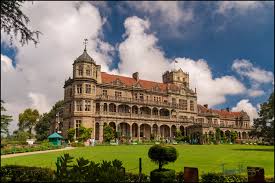
It took a couple of days to sink in, the serene beauty of the place on Summer Hill, Shimla, and the quiet atmosphere of the campus. Indian Institute of Advanced Study (IIAS), now housed in the regal ambience of the Viceregal Lodge[1], still wore its grandeur well, filtering into interior, the corridors, foyer and the conference room that had a stamp of history. Momentous decisions had taken place in this very room. The sylvan surroundings seemed to have rubbed off on the people too who worked in the offices, for they functioned with a quiet harmony, like it was an unstated requirement.  

Tulsi Shankar’s paperwork went off smoothly in the office. She was given the keys to her allotted flat, a man was assigned to go along with her to help, and she was asked to tell the housing department if she would need anything more for her flat, the kitchen and the washroom. The man helped her unpack her big boxes of books and folders and set up her laptop. The vessels in the kitchen were minimal and very basic. She added the small items that she had got from her home, a saucepan, a ladle, spoons, cups, mugs, tea, coffee, sugar and milk powder. That would do. The man offered to fix a milkman who would deliver fresh milk every morning. The mess served two meals in a day, so there was nothing more to be done except rustle up an occasional upma or poha[2], if one fancied a change.  

Tomorrow, she would explore the books for her area of research in the library, and start her work. She sank into her mattress and made a mental list of the reference books but soon slipped into a deep slumber.

The next few weeks rolled by in a rhythm of studies, notes, typing points on her laptop to draw a skeletal sketch of the chapters for her book. Little did she know how the details she sought would soon rain down on her and submerge her overwhelmingly in. They were right there, within her reach, in the huge library. Sure enough, there were some gaps, but she could always visit the Nehru Memorial Museum and Library at Teen Murti Bhavan in Delhi to fill them up.   

She met the three other Fellows who were also working on their manuscript for their books. Whenever they met, at the dining area in the mess, or while strolling back to the institute after meals, or their shopping trips to the mall, the four Fellows  exchanged notes about how much easier it was when they wrote their dissertation for Ph.D. years ago. They knew exactly what was expected from them — their chosen topic in itself ‘set limits’ for their scope and research took them forward with a controlled sense of direction. But a book? A BOOK? Good Lord, it seemed to be like entering an unchartered territory. It felt adventurous, thrilling even, but alternated with bouts of uncertainly and panic. It often loomed like a road not taken, yet to be explored. Exciting, and scary at the same time.

They decided to help each other with their research for the background. Sudipta Banerjee who taught history, offered to help Tulsi with Hari Mohan Maitee’s notorious case of brutally raping his eleven-year-old child bride, Phulmani Dasi,  causing her death. The case was committed to the Sessions Court in Calcutta in 1890, but Justice Wilson let off Maitee lightly by saying that he had just committed ‘a rash and negligent act’. It was Gidumal Dayaram, a reformer from Bombay, who relentlessly pursued the case of Dasi. On his recommendations, Sir Andrew Scoble based his in 1891. Tripti Sharma from Political Science was equally interested in the steps that led to raising the ‘Age of Consent’ from ten to twelve years, from a legal angle. She had a project for which she needed to know more Sir Andrew Scoble (1831-1916), and the legal aspects of his contribution.   

And all three of them took some lessons in yoga from the fourth Fellow Namrata Tripathi in her flat, just before dinner. She had trained in the Tushita Mahayana Meditation Centre. Namrata often warned them – and herself – of the hazards of sitting down on a chair for long hours to read or write. ‘We’ve to move our limbs and walk, or else we’ll become stiff,’ she laughed, even as she herself spent hours poring over her books for her research on the ghats in Varanasi. Sudipta, Tripti and Namrata looked to Tulsi, a published author, for help in writing their drafts.

“Please, Tulsi,” said Tripti. “We’re painfully conscious that we’re not here to write a Ph.D. dissertation. It is a book, a BOOK, for God’s sake.”

“Yes,” said Sudipta. “We’re anxious that thechapters are readable and don’t come across as boring information. You’re a creative writer, so you can tweak our lines.’

*

Then there were the Associate Fellows (called AFs) who could visit the IIAS three times in a span of three years or more, and were allowed each time to stay for one month to consult books in the library and work towards their M.Phil thesis. Hopefully, after their M.Phil, they would be admitted to Ph.D. programmes in their colleges. Each AF was given a single room in the hostel.

 The women were nearly through with their lunch. Over the dining table, they whispered to each other about the time they would meet Namrata in her flat in the evening, for yoga lessons. Also learn some tips for meditation, a most elusive practice for them.   

The Associate Fellow sitting across two tables was loud. No surprise. Ever since he came from Hyderabad, he has been the most vociferous critic of the food served by the Mess. He was unsuccessful in forming a lobby to join him in his protest and ‘do something’ about the ‘atrocious food’. The others AFs heard him out, some nodded in agreement, but carried on with their work.

Tulsi and her friends considered all that as noise and hurried through their meals.

The man from Hyderabad came over to their table.

“How can you stand this horrible food?” he asked.  

“Well…it’s a change, certainly, from what we are used to,” said Namrata, in a placatorytone.

“A change! It’s appalling. You can do something about it. Each one of you haveakitchen in your flat,” he said.

“What!” said Sudipta, getting up from her chair.

“You’re four ladies. You can easily take turns and cook,” he said, glancing at the other AFs over his shoulder.

.

[1] Viceregal Lodge, formerly the residence of the British Viceroy of India, is the present Indian Institute of Advanced Study that has a library with archival acquisitions that go back to the times before the British rule in India.  The magnificent building is also a tourist attraction for its stunningly regal structures designed by the British architect Henry Irwin, built in the Jacobean style during Lord Dufferin’s tenure as Viceroy.

[2] Upma—Semolina based savoury dish: Poha – A savoury preparation of flattened rice

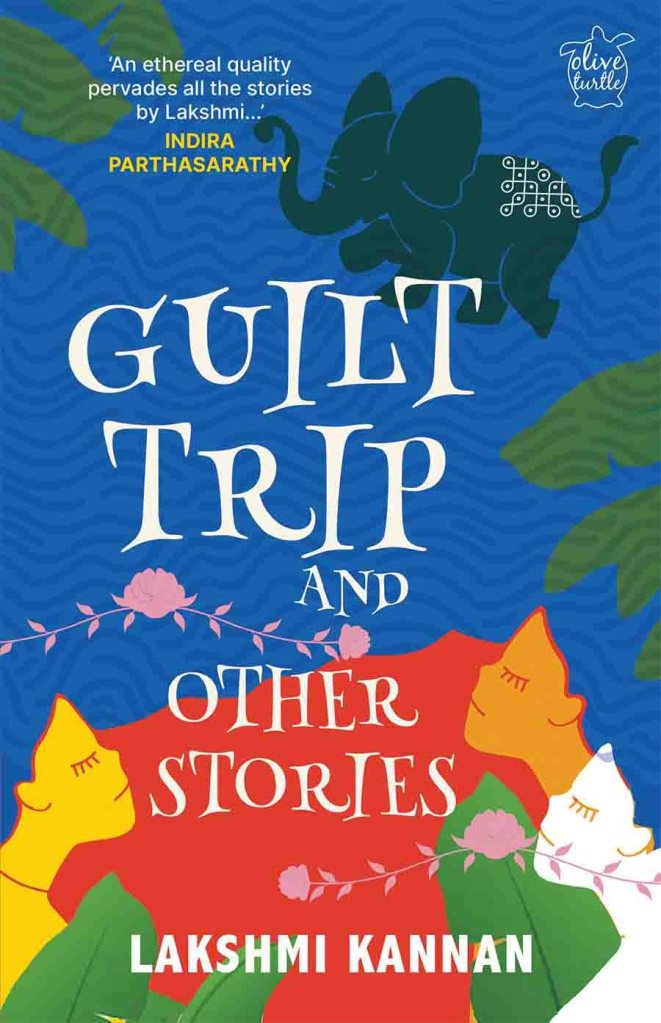
Dr. Lakshmi Kannan is a poet, novelist, short story writer. Her recent books include Guilt Trip and Other Stories (Niyogi Books, 2023) and Nadistuti, Poems (Authors Press, 2024). For more details, please see http://www.lakshmikannan.in and her entry in The Routledge Encyclopedia of Indian Writing in English (2023).

PLEASE NOTE: ARTICLES CAN ONLY BE REPRODUCED IN OTHER SITES WITH DUE ACKNOWLEDGEMENT TO BORDERLESS JOURNAL

Click here to access the Borderless anthology, Monalisa No Longer Smiles

Click here to access Monalisa No Longer Smiles on Amazon International

Categories
Contents

Borderless, November 2023

Art by Sohana Manzoor

Editorial

Counting Colours… Click here to read.

Conversation

Banjara author Ramesh Karthik Nayak discusses his new book, Chakmak (flintsone), giving us a glimpse of his world. We also have a brief introduction to his work. Click here to read.

Translations

Demanding Longevity by Quazi Johirul Islam has been translated from Bengali by Fakrul Alam. Click here to read.

Moonlight, a poem by Bashir Baidar, has been translated from Balochi by Fazal Baloch. Click here to read.

Maithili Poetry by Vidyanand Jha has been translated from Maithili by the poet himself. Click here to read.

The Window and the Flower Vase has been written and translated from Korean by Ihlwha Choi. Click here to read.

Tagore’s Tomar Kachhe Shanti Chabo Na (I Will Not Pray to You for Peace) has been translated from Bengali by Mitali Chakravarty. Click here to read.

Poetry

Click on the names to read the poems

Michael Burch, Aineesh Dutt, Stuart McFarlane, Radhika Soni, David Mellor, Prithvijeet Sinha, John Grey, Ahana Bhattacharjee, Ron Pickett, Suzanne AH, George Freek, Arshi Mortuza, Caroline Am Bergris, Avantika Vijay Singh, Ryan Quinn Flanagan, Kisholoy Roy, Rhys Hughes

Poets, Poetry & Rhys Hughes

In A Parody of a Non-existing Parody: The Recycled Sea, Rhys Hughes uses TS Eliot’s ‘The Waste Land’ to create a new parody. Click here to read.

Musings/Slices from Life

The Theft of a River

Koushiki Dasgupta Chaudhuri tells a poignant truth about how a river is moving towards disappearance due to human intervention. Click here to read.

In Quest of Seeing the Largest Tree in the World

Meredith Stephens writes of her last day in California. Click here to read.

Beyond Horizons: A Love Story

Sai Abhinay Penna shares photographs and narrative about his trek at Chikmagalur. Click here to read.

Musings of a Copywriter

In Crush on Bottles, Devraj Singh Kalsi inebriates his piece with humour. Click here to read.

Notes from Japan

In Address Unknown, Suzanne Kamata shares a Japanese norm with a touch of humour. Click here to read.

Essays

Peeking at Beijing: The Wall

Keith Lyons travels to The Great Wall and writes of the experience. Click here to read.

Cinema, Cinema, Cinema!

Gayatri Devi writes of the translation impact of cinema, contextualising with the Tamil blockbuster, Jailer. Click here to read.

Coffee, Lima and Legends…

Ravi Shankar explores Lima, its legends and Peruvian coffee. Click here to read.

Stories

Jonathan’s Missing Wife

Paul Mirabile sets his story in a small town in England. Click here to read.

The Tender Butcher

Devraj Singh Kalsi weaves a story around a poetic butcher. Click here to read.

Book Excerpts

An excerpt of The White Shirts of Summer: New and Selected Poems by Mamang Dai. Click here to read.

An excerpt from Ramesh Karthik Nayak’s Chakmak. Click here to read.

Book Reviews

Somdatta Mandal reviews Ali Akbar Natiq’s Naulakhi Kothi, translated from Urdu by Naima Rashid. Click here to read.

Ranu Uniyal reviews I am Not the Gardener: Selected Poems by Raj Bisaria. Click here to read.

Anita Balakrishnan reviews Lakshmi Kannan’s Guilt Trip and Other Stories. Click here to read.

Bhaskar Parichha reviews Akshat Rathi’s Climate Capitalism: Winning the Global Race to Zero Emissions. Click here to read.

.

.

Click here to access the Borderless anthology, Monalisa No Longer Smiles

Click here to access Monalisa No Longer Smiles on Amazon International

Categories
Editorial

Counting Colours

Look around you and expand your heart. 
Petty sorrows are insignificant.
Fill your vacant life with love for humanity. 
The Universe reverberates with celestial ecstasy. 

— Anondodhhara Bohichche Bhubone (The Universe reverberates with celestial ecstasy), Tagore, 1894

Some of the most beautiful colours in this universe are blended shades— colours that are born out of unusual combinations. Perhaps that is why we love auroras, sunrises and sunsets. Yet, we espouse clear cut structures for comprehension. As we define constructs created by our kind, we tend to overlook the myriads of colours that hover in the gloaming, the brilliant play of lights and the vibrancy of tints that could bring joy if acknowledged. That ignoring the new-born shades or half-shades and creating absolute structures or constructs lead to wars, hatred, unhappiness and intolerance has been borne true not only historically but also by the current turn of events around the globe. While battles are never fought by the colours or beliefs themselves, they can harm — sometimes annihilate — rigid believers who are victimised for being led to accept their way as the only one and hate another. Perhaps, this has echoes of the battle between the Big Endians and Little Endians over the right way to break eggs in Jonathan Swift’s Gulliver’s Travels (1726). As the book is mere fiction, we can admire, agree and laugh at the content. However, in real life, watching newsreels has become a torture with destruction and violence being the main highlights. These detract from life as we knew it.

Writing or literary inputs seem to have become a luxury. But is it really hedonistic to play with words? Words used effectively over a period of time can impact readers to think peace, acceptance and love and also help people heal from the ensuing violence. That can be a possibility only if we self-reflect. While we look for peace, love and acceptance in others, we could start by being the change-makers and bridge builders ourselves. That is the kind of writing we have managed to gather for our November issue.

Building such bridges across humanity, we have poems on the latest Middle Eastern conflict by Stuart McFarlane and David Mellor, which explore the pain of the victims and not the politics of constructs that encourage wars, destruction of humanity, the flora, the fauna and our home, the Earth. Michael Burch writes against wars. Prithvijeet Sinha and Ahana Bhattacharjee write about refugees and the underprivileged. Reflecting colours of the world are poems from Ryan Quinn Flanagan, Suzayn AH, Radhika Soni, Ron Pickett, George Freek and many more. Rhys Hughes has brought lighter shades into his poetry by trying a new technique while reflecting on yetis and mermaids. His column tries to make a parody of a non-existing parody, using TS Eliot’s century old poem, ‘Wasteland’, with amazing results!

Our translations are all poetry too this time. Professor Fakrul Alam has translated a poem discussing human aspirations by Quazi Johirul Islam from Bengali. Another Balochi poem of hope by Bashir Baidar has been brought to us in English by Fazal Baloch bringing into play the moonlight.

For the first time, we are privileged to carry poetry from a language that has almost till now has eluded majority of Anglophone readers, Maithili. Vidyanand Jha, a Maithili poet, has translated his poetry for all of us as has Korean poet, Ihlwha Choi. Winding up translations are Tagore’s ultimate words for us to introspect and find the flame within ourselves in the darkest of times – echoing perhaps, in an uncanny way, the needs of our times.

Our conversation this month brings to us a poet who comes from a minority group in India, Banjara or gypsies, Ramesh Karthik Nayak. In his attempt to reach out to the larger world, he worries that he will lose his past. But does the past not flow into the future and is it not better for traditions to evolve? Otherwise, we could all well be living in caves… But what Nayak has done — and in a major way — is that he has brought his culture closer to our hearts. His debut poetry book in English, Chakmak (flintstones), brings to us Banjara traditions, lives and culture, which are fast getting eroded and he also visits the judgemental attitude of the majoritarian world. To give you a flavour of his poetry, we bring to you an excerpt from his book, livened beautifully with Banjara art and an essay by Surya Dhananjay that contextualises the poetry for us. Our excerpts also have a focus on poetry for we are privileged to have a few poems from Mamang Dai’s The White Shirts of Summer: New and Selected Poems. Mamang Dai is a well-known name from the North-eastern state of Arunachal Pradesh for both her journalistic and poetic prowess.

We are happy to host Ranu Uniyal’s beautiful review of I am Not the Gardener: Selected Poems by Raj Bisaria. Bisaria among other his distinctions, was named “Father of the modern theatre in North India” by the Press Trust of India. The other reviews are all of prose. Somdatta Mandal has written of Ali Akbar Natiq’s Naulakhi Kothi, a fictional saga of gigantic proportions. Anita Balakrishnan has reviewed Lakshmi Kannan’s short story collection, Guilt Trip. The book that gives hope for a green future, Akshat Rathi’s Climate Capitalism: Winning the Global Race to Zero Emissions has been reviewed by Bhaskar Parichha. Parichha contends: “Through stories that bring people, policy and technology together, Rathi reveals how the green economy is possible, but profitable. This inspiring blend of business, science, and history provides the framework for ensuring that future generations can live in prosperity.”

The anti-thesis to the theme for a welfarist approach towards Earth can be found in Koushiki Dasgupta Chaudhari’s poignant musing titled, “The Theft of a River”. Meredith Stephen’s travel to California and Sai Abhinay Penna’s narrative about Chikmagalur have overtones of climate friendliness. Ravi Shankar writes further of his travels in Peru and Peruvian coffee. Keith Lyons takes us peeking at Beijing and the Great Wall. Gayatri Devi adds to the variety by introducing us to the starry universe of South Indian cinema while Devraj Singh Kalsi brings in the much-needed humour with his narrative about his “Crush on Bottles“. Suzanne Kamata has also given a tongue-in-cheek narrative about the mystique of addresses and finding homes in Japan. We have fiction from Paul Mirabile located in England and Kalsi’s located in India. Pause by our contents page to view more gems that have not been mentioned here.

Huge thanks to our team at Borderless Journal, especially Sohana Manzoor for her fabulous artwork. This journal would not have been as it is of now without each and every one of them and our wonderful contributors and readers. Thank you all.

Wish you all a wonderful month as we head towards the end of a rather tumultuous year.

Mitali Chakravarty

borderlessjournal.com

Click here to access the contents page for the November 2023 issue

.

READ THE LATEST UPDATES ON THE FIRST BORDERLESS ANTHOLOGY, MONALISA NO LONGER SMILES, BY CLICKING ON THIS LINK.

Categories
Review

Guilt Trip and Other Stories

Book review by Anita Balakrishnan

Title: Guilt Trip and Other Stories

Author: Lakshmi Kannan

Publisher: Niyogi Books

The short story distills within its succinct form a moment from the amorphous flow of life experiences and re-presents it with a crystalline clarity.  A reader cannot help but be transformed by this epiphanic moment as it serves to illuminate some of life’s most baffling ambiguities. Lakshmi Kannan’s latest book of short stories, Guilt Trip and Other Stories, published in 2023, includes thirteen such stories that provide an insight into the lives of people navigating the vicissitudes of life.

In a similar vein, the entry on Lakshmi Kannan in the Routledge Encyclopedia of Indian Writing in English, Eds Manju Jaidka and Tej N. Dhar (2023), observes that her short stories “are explorations of lived experience that create an apocalyptic dimension. They pitch the reader between the luminal space of the living and the dead”.

 Several writers have commented on the exacting nature of the short story form, as it denies writers the space to develop their themes or trace the arc of their characters’ lives, its taut boundaries requiring every word to be justified. Given the number of women indulging in practising this genre and attaining great acclaim, it has been suggested that the short story is particularly suited for women’s subjects, the preoccupation with domestic life and the vagaries of human relationships. It is thought that the inflexible limits of the form serve as a restraint on elaborate descriptions of the sprawl of family life, condensing them to into chiselled vignettes that allow gleaming insights to shine.

 Lakshmi Kannan, a virtuoso of the short story, has published twenty-eight books, including collections of poetry, novels in both English and Tamil and translations. She is a bilingual writer who writes in Tamil under the penname Kaaveri. She is a prolific writer whose recent books include a historical novel The Glass Bead Curtain (2020, c2016), an English translation of Tamil writer T. Janakiraman’s acclaimed novel The Wooden Cow (2021) and a collection of poetry Sipping the Jasmine Moon (2019).

This collection Guilt Trip and Other Stories contains eleven short stories and two longer   stories, ‘Janaki turns a Blind Eye’ and ‘VRS’. Although pan-Indian in nature, Lakshmi Kannan’s stories are able to effortlessly showcase the ineffable flavour of Tamil culture. Her protagonists are frequently educated women, who struggle to reconcile their desire to be treated as equals within their families, dealing with the cultural mores that seek to restrict them to their homes and kitchens. The varied themes of Lakshmi Kannan’s stories include the spiritual awareness of the transience of human life as seen in the story ‘Open the Gate’. Another story that evokes spiritual transcendence is ‘Floating Free’, where a grieving daughter is comforted by a hummingbird which she sees as the reincarnated spirit of her mother.

A recurring trope among the stories is the equating of women with food and cooking, a reflection of the way women are often perceived in Indian society. Lakshmi Kannan elaborates on this idea observing that in the Tamil cultural milieu the regressive rural-urban divide continues as the norm. Several people, particularly men, do not have a progressive outlook even when they interact with contemporary women who are successful professionals. The author notes: “In Tamil Nadu, the retrograde maxim that a ‘woman’s place is in the kitchen and backyard’ still functions with a mind-numbing attitude irrespective of her economic, social or professional status”. The author employs this trope in the stories ‘Dregs’, ‘Kitchen Fire’, ‘The Colour Green’ and ‘Ladies Watch’. The latter two stories also delineate an allied theme, the insensitivity of adult children in the diaspora who do not hesitate to use their aging parents as unpaid domestic help. Another food related subtext that Lakshmi Kannan introduces is the selfishness of men who demand that the women serve them plenty of food, yet callously consume it without caring to check if there is enough for the women and children of the household.

Nevertheless, the author does not fall into the trap of essentialising Indian men as selfish, uncaring boors. In the story ‘As Dapper as the Come’ she turns the notion of a well-dressed, attractive man being arrogant and self-obsessed on its head. The dapper young man lends a ready helping hand to an older couple in distress unmindful of sullying his expensive suit. Furthermore, in the charming story ‘A for Apple’, the author explores the delight that a small-town boy from Karnataka takes in the rhythms and sonic vibrations of his vernacular, Kannada.

It is perhaps in narrating the strength of the bonds formed among women who use them to circumvent or subvert the rigid hierarchies and oppressively restrictive customs that govern traditional families that Lakshmi Kannan is at her most impressive. She explores the corrosive jealousies, subterfuges and pettiness that undermine relationships within a family. The long story ‘Janaki turns a Blind Eye’ is replete with irony. Narrated in five sections, the story relates how a nearly blind matriarch Janaki helps a young bride defeat the machinations of the senior members of the family who are plotting to steal her jewellery and silverware. ‘Addigai’ and ‘Annapurna Bhavan’ are two stories where the interaction between women may be set in counterpoint.

In the former, a grandmother furtively bequeaths an heirloom necklace on her granddaughter, warning her never to wear it at family celebrations. When Priya, the granddaughter, wears it just once several years later to a family wedding, she is rudely interrogated by the hostess as to how she came by it. The acquisitiveness and jealousy within this affluent family is in stark contrast to the warm camaraderie that characterizes the bonds between women in a small middle-class eatery in the story ‘Annapurna Bhavan’. The well-to-do narrator insists on eating at the same eatery as her driver where she is assailed by the aromas of the food she had earlier eaten in her childhood. The unabashed enjoyment of their food by the women at the eatery, their friendly banter, their freedom from family constraints and their closeness exhilarates the narrator. 

Yet it is not just Lakshmi Kannan’s significant themes — the refusal to be bound by narrow definitions of womanhood, the flowering of the creative impulse, a child’s playful linguistic experiments, the conflicts between appearance and reality – that make her work stand out. It is her prose that evokes both the asymmetries and passions in everyday life with a poetic intensity that is remarkable. An acutely observant chronicler of the incongruities, the asymmetries, the felicities and the marvellous absurdities of life, Lakshmi Kannan is able to express it with precision, empathy and humour. She has an innate sensitivity to the jealousies, treasons, duplicities, compromises, evasions, tender feelings and sentimentalities that characterise human relationships.

Lakshmi Kannan’s stories highlight the extraordinary within the quotidian, revealing the layering of the concrete and the mysterious, the interweaving of diverse elements that reveal that nothing is ever as it seems on the surface. She shows us that even the most ordinary individual has hidden facets that can never be completely known. It is her treatment of the special bonds that can be forged among individuals and contradictory nature of human relationships that makes Lakshmi Kannan’s fiction so special.

.

Dr Anita Balakrishnan is the author of Transforming Spirit of Indian Women Writers published in 2012. She is a contributor to the Routledge Encyclopaedia of Postcolonial Studies edited by Sangeetha Ray and Henry Schwarz.

Email ID: shalkri@gmail.com

PLEASE NOTE: ARTICLES CAN ONLY BE REPRODUCED IN OTHER SITES WITH DUE ACKNOWLEDGEMENT TO BORDERLESS JOURNAL

Click here to access the Borderless anthology, Monalisa No Longer Smiles

Click here to access Monalisa No Longer Smiles on Kindle Amazon International

Categories
Festive Special

Lighting Lamps of Love

Light of mine, O light, the universe is filled with your effulgence, 
My heart is yours; my eyes drown in your refulgence. 
…. 
The sky awakens, the breeze flits, the Earth laughs. 
As luminous currents surge, thousands of butterflies take flight. 

— Aalo Amar Aalo (Light, My Light), Bichitra, 1911, Rabindranath Tagore 

There was a time when lights were a part of joy and celebrations as in Tagore’s poem above. Lighting lamps, people welcomed home their beloved prince Rama on Deepavali, who returned after a fourteen year exile, and during his banishment, killed the demonic Ravana. On the same day in Bengal, lamps were lit to ward off evil and celebrate the victory of Kali, (the dark woman goddess wooed by Tantrics) over the rakshasa, Raktabeeja. In the Southern part of India, lamps were lit to celebrate the victory of Krishna over Narakasura. The reasons could be many but lights and fireworks were lit to celebrate the victory of good over evil during the festival of lights.

In the current world with lines blurred between good and evil, while climate crises seeks smoke free, coal free energy, flames of fire or fireworks are often frowned upon. In these times, we can only hope to light the lamp of love — so that differences can be settled amicably without killing the helpless and innocent, infact without violence, greed, peacefully and with kindness, keeping in mind the safety of our species and our home, the Earth. We invite you to partake of our content, writings that light the lamp of love — 

Poetry

I Gather Words by Shareefa Beegam P P. Click here to read.

The Language of Dreams by Sister Lou Ella Hickman: Click here to read.

Dreams are like Stars by Mitra Samal: Click here to read.

At Teotihuacan by Jonathan Chan: Click here to read.

Love Poetry by Gayatri Majumdar: Click here to read.

Today’s Child by Atta Shad, translated from Balochi by Fazal Baloch: Click here to read.

Endless Love, Ananto Prem (Endless Love) by Tagore, translated from Bengali by Professor Fakrul Alam. Click here to read.

Prose

Hena: a short story about love and war by Nazrul, has been translated from Bengali by Sohana Manzoor. Click here to read.

Annapurna Bhavan: Lakshmi Kannan closes class divides in Chennai over a meal. Click here to read.

Rituals in the Garden: Marcelo Medone discusses motherhood, aging and loss in this poignant flash fiction from Argentina. Click here to read.

The Tree of Life: An unusual flash fiction by Parnil Yodha about a Tibetan monk. Click here to read.

Adoption: A poignant real life story by Jeanie Kortum on adopting a child. Click here to read.

The Potato Prince: A funny but poignant love story by Sohana Manzoor. Click here to read.

A Taste of Bibimbap & More: G Venkatesh revisits the kindness he that laced his travels within Korea. Click here to read. 

Therese Schumacher and Nagayoshi Nagai: A Love Story: Suzanne Kamata introduces us to one of the first German women married to a Japanese scientist and their love story. Click here to read.

Categories
Contents

Borderless, May 2023

Art by Sohana Manzoor

Editorial

Dancing in May? … Click here to read.

Translations

Aparichita by Tagore has been translated from Bengali as The Stranger by Aruna Chakravarti. Click here to read.

The Kabbadi Player, a short story by the late Nadir Ali, has been translated from Punjabi by Amna Ali. Click here to read.

Carnival Time by Masud Khan has been translated from the Bengali poem by Fakrul Alam. Click here to read.

Desolation, a poem by Munir Momin, has been translated from Balochi by Fazal Baloch. Click here to read.

Loneliness, a poem, has been translated from Korean to English by the poet himself, Ihlwha Choi. Click here to read

Jonmodiner Gaan or Birthday Song by Tagore has been translated by Mitali Chakravarty. Click here to read.

Conversations

A conversation with Mitra Phukan about her latest novel, What Will People Say? A Novel along with a brief introduction to the book. Click here to read.

Shantanu Ray Chaudhuri converses with Prerna Gill on her poetry and her new book of poetry, Meanwhile. Click here to read.

Poetry

Click on the names to read the poems

Michael Burch, Lakshmi Kannan, Ryan Quinn Flanagan, Shahriyer Hossain Shetu, Peter Cashorali, K.V. Raghupathi, Wilda Morris, Ashok Suri, William Miller, Khayma Balakrishnan, Md Mujib Ullah, Urmi Chakravorty, Sreekanth Kopuri, Rhys Hughes

Poets, Poetry & Rhys Hughes

In What I Thought I Knew About India When I was Young, Rhys Hughes travels back to his childhood with a soupçon of humour. Click here to read.

Musings/Slices from Life

A Towering Inferno, A Girl-next-door & the Big City

Ratnottama Sengupta writes of actress Jaya Bachchan recounting her first day on the sets of Satyajit Ray’s Mahanagar. Click here to read.

Kissed on Kangaroo Island

Meredith Stephens travels with her camera and her narrative to capture the flora and fauna of the island. Click here to read.

Musings of a Copywriter

In The Reader, Devraj Singh Kalsi revisits his experiences at school. Click here to read.

Notes from Japan

In Making Chop Suey in South Carolina, Suzanne Kamata recaptures a flavour from her past. Click here to read.

Essays

Rabindranath’s Monsoonal Music

Professor Fakrul Alam brings to us Tagore songs in translation and in discussion on the season that follows the scorching heat of summer months. Click here to read.

A Night Hike in Nepal

Ravi Shankar hikes uphill in Nepal on a wet and rainy night along with leeches and water buffaloes. Click here to read.

Moving Images of Tagore

Ratnottama Sengupta talks of Tagore and cinema. Click here to read.

Stories

Threads

Julian Gallo explores addiction. Click here to read.

The Whirlpool

Abdullah Rayhan takes us back to a village in Bangladesh to give a poignant story about a young boy who dreamt of hunting. Click here to read.

Look but with Love

Sreelekha Chatterjee writes a story set in the world of media. Click here to read.

The Mysterious Murder of Adamov Plut

A globe-trotting murder mystery by Paul Mirabile, a sequel to his last month’s story, ‘The Book Hunter’. Click here to read.

Book Excerpts

An excerpt from Aruna Chakravarti’s Daughter’s of Jorasanko describing the last birthday celebration of Tagore. Click here to read.

An excerpt from Bhubaneswar@75 – Perspectives, edited by Bhaskar Parichha/ Charudutta Panigrahi. Click here to read.

Book Reviews

Meenakshi Malhotra revisits Tagore’s Farewell Song, translated from Bengali by Radha Chakravarty. Click here to read.

Somdatta Mandal reviews KR Meera’s Jezebel translated from Malayalam by Abhirami Girija Sriram and K. S. Bijukumar. Click here to read.

Lakshmi Kannan has reviewed Jaydeep Sarangi’s collection of poems, letters in lower case. Click here to read.

Bhaskar Parichha reviews Journey After Midnight – A Punjabi Life: From India to Canada by Ujjal Dosanjh. Click here to read.

PLEASE NOTE: ARTICLES CAN ONLY BE REPRODUCED IN OTHER SITES WITH DUE ACKNOWLEDGEMENT TO BORDERLESS JOURNAL

Click here to access the Borderless anthology, Monalisa No Longer Smiles

Click here to access Monalisa No Longer Smiles on Kindle Amazon International

Categories
Editorial

Dancing in May?

Courtesy: Creative Commons
“May is pretty, May is mild,
Dances like a happy child…”

Annette Wynne (Early twentieth century)

Each month is expressed in a different form by nature in various parts of the world. In the tropics, May is sweltering and hot — peak summer. In the Southern hemisphere, it is cold. However, with climate change setting in, the patterns are changing, and the temperatures are swinging to extremes. Sometimes, one wonders if this is a reflection of human minds, which seem to swing like pendulums to create dissensions and conflicts in the current world. Nothing seems constant and the winds of change have taken on a menacing appearance. If we go by Nazrul’s outlook, destruction is a part of creating a new way of life as he contends in his poem, ‘Ring Bells of Victory’ — “Why fear destruction? It’s the gateway to creation!” Is this how we will move towards ‘dancing like a happy child’?

Mitra Phukan addresses this need for change in her novel, What Will People Say — not with intensity of Nazrul nor in poetry but with a light feathery wand, more in the tradition of Jane Austen. Her narrative reflects on change at various levels to explore the destruction of old customs giving way to new that are more accepting and kinder to inclusivity, addressing issues like widow remarriage in conservative Hindu frameworks, female fellowship and ageing as Phukan tells us in her interview. Upcoming voice, Prerna Gill, lauded by names like Arundhathi Subramaniam and Chitra Divakaruni, has also been in conversation with Shantanu Ray Choudhuri on her book of verses, Meanwhile. She has refreshing perspectives on life and literature.

Poetry in Borderless means variety and diaspora. Peter Cashorali’s poem addresses changes that quite literally upend the sky and the Earth! Michael Burch reflects on a change that continues to evolve – climate change. Ryan Quinn Flanagan explores societal irritants with irony. Seasons are explored by KV Raghupathi and Ashok Suri. Wilda Morris brings in humour with universal truths. William Miller explores crime and punishment. Lakshmi Kannan and Shahriyer Hossain Shetu weave words around mythical lore. We have passionate poetry from Md Mujib Ullah and Urmi Chakravorty. It is difficult to go into each poem with their diverse colours but Rhys Hughes has brought in wry humour with his long poem on eighteen goblins… or is the count nineteen? In his column, Hughes has dwelt on tall tales he heard about India during his childhood in a light tone, stories that sound truly fantastic…

Devraj Singh Kalsi has written a nostalgic piece that hovers between irony and perhaps, a reformatory urge… I am not quite sure, but it is as enjoyable and compelling as Meredith Stephen’s narrative on her conservation efforts in Kangaroo Island in the Southern hemisphere and fantastic animals she meets, livened further by her photography. Ravi Shankar talks of his night hikes in the Northern hemisphere, more accurately, in the Himalayas. While trekking at night seems a risky task, trying to recreate dishes from the past is no less daunting, as Suzanne Kamata tells us in her Notes from Japan.

May hosts the birthday of a number of greats, including Tagore and Satyajit Ray. Ratnottama Sengupta’s piece on Ray’s birth anniversary celebrations with actress Jaya Bachchan recounting her experience while working for Ray in Mahanagar (Big City), a film that has been restored and was part of celebrations for the filmmaker’s 102nd Birth anniversary captures the nostalgia of a famous actress on the greatest filmmakers of our times. She has also given us an essay on Tagore and cinema in memory of the great soul, who was just sixty years older to Ray and impacted the filmmaker too. Ray had a year-long sojourn in Santiniketan during his youth.

Eulogising Rabindrasangeet and its lyrics is an essay by Professor Fakrul Alam on Tagore. Professor Alam has translated number of his songs for the essay as he has, a powerful poem from Bengali by Masud Khan. A transcreation of Tagore’s first birthday poem , a wonderful translation of Balochi poetry by Fazal Baloch of Munir Momin’s verses, another one from Korean by Ihlwha Choi rounds up the translated poetry in this edition. Stories that reach out with their poignant telling include Nadir Ali’s narrative, translated from Punjabi by his daughter, Amna Ali, and Aruna Chakravarti’s translation of a short story by Tagore. We have more stories from around the world with Julian Gallo exploring addiction, Abdullah Rayhan with a poignant narrative from Bangladesh, Sreelekha Chatterjee with a short funny tale and Paul Mirabile exploring the supernatural and horror, a sequel to ‘The Book Hunter‘, published in the April issue.

All the genres we host seem to be topped with a sprinkling of pieces on Tagore as this is his birth month. A book excerpt from Chakravarti’s Daughters of Jorasanko narrates her well-researched version of Tagore’s last birthday celebration and carries her translation of the last birthday song by the giant of Bengali literature. The other book excerpt is from Bhubaneswar@75 – Perspectives, edited by Bhaskar Parichha/ Charudutta Panigrahi. Parichha has also reviewed Journey After Midnight – A Punjabi Life: From India to Canada by Ujjal Dosanjh, a book that starts in pre-independent India and travels with the writer to Canada via UK. Again to commemorate the maestro’s birth anniversary, Meenakshi Malhotra has revisited Radha Chakravarty’s translation of Tagore’s Farewell Song. Somdatta Mandal has critiqued KR Meera’s Jezebeltranslated from Malayalam by Abhirami Girija Sriram and K. S. Bijukuma. Lakshmi Kannan has introduced to us Jaydeep Sarangi’s collection of poems, letters in lower case.

There are pieces that still reach out to be mentioned. Do visit our content page for May. I would like to thank Sohana Manzoor for her fantastic artwork and continued editorial support for the Tagore translations and the whole team for helping me put together this issue. Thank you. A huge thanks to our loyal readers and contributors who continue to bring in vibrant content, photography and artwork. Without you all, we would not be where we are today.

Wish you a lovely month.

Mitali Chakravarty

borderlessjournal.com

Categories
Review

The River Within

Book Review by Lakshmi Kannan

Title: letters in lower case

Author: Jaydeep Sarangi 

 Jaydeep Srangi is an academic who writes beautiful poetry. letters in lower case is his tenth collection of poems. The poem that bears the title in the first section, blithely mentions the names of super figures such as Tagore, Tutankhamun, Ashoka and others in lower case, like it is an act of defiance, with the last three lines taking on a tongue-in-cheek tone to explain:

my letter to my boy hood idol is undelivered                                                                                                                                                        navigating an outswinger, the peon is on leave.                                                                                                                                                 all letters are in lower case. (Letters in Lower Case) 

He dedicates this book to his father-in law:

I know not how to pray --                                                                                                                               the hot tears I possess                                                                                                                        with that I will worship your cold feet. (Dear Departed)

The poems are classified broadly under three sections – ‘Laws of the Land’, ‘Gesture of Surrender’ and ‘The Window you Hold’. Poetry is often born between the said and the unsaid. Sarangi’s best poems leave some things half-said to reverberate in the mind of the reader. Sarangi returns to the lower case in another poem in the last section, only this time it is not just letters but life itself that is in lower case.

I take off the shirt that i liked so much,                                                                                                                  names written in only lower case                                                                                                                     here i shall rest in peace. (Life in Lower Case) 

The ‘I’ takes its place in a diminutive ‘i’.

Sarangi’s poetry has a distinct sense of geography.  Jhargram in West Bengal where the poet spent his boyhood days, together with the river Dulung, become powerful motifs. They are magnified manifold times to haunt, to evoke associations and emotions that one cannot always explain. Sarangi writes:

Stand near me, speak to me.                                                                                                                              Time arrives at my lips. 

He goes on to evokes a series of vivid images before he concludes:                 

With body carrying memories, dysfunctional habits,                                                                                  I wait for your green touch sometime, somewhere. (When You Visit Jhargram) 

In a number of poems, Sarangi has internalised the river so deeply that it seems to flow in his bloodstream.

Dulung in summer.                                                                                                                                        Where farmers can cross                                                                                                                         Cows can walk down.                                                                                                                                                          Each leaf is green. 
In love, I ask you to become a river.                                                                                        …
Dulung is sleepless tonight.                                                                                                                        It can’t wait to see                                                                                                                                 How dreams meet in a river. (Gifts of the Night)

Dulung calls you at this hour,                                                                                                                        trees are deep with the night,                                                                                                       mysteries of the world are back                                                                                                                         with bats calling a bad weather. (Dulung Moment) 
 
where do we all go? my mate, you know me --                                                                                                           for years, since my family nestled on your bank                                                                                          you have watched me with care and concern.                                                                                                        you always instructed me what to do and how to do. 

dear river, pure silver of the earth                                                                                                                     true mineral in humans, by blood and voice                                                                                                                     lead me to your honest home, always faithful,                                                                                       but never take away the window you hold. (My Growing up as a River) 

Like rivers, the rain holds a special fascination for poets, music composers, singers, dancers, and all artists. Interestingly, it means different things to different people. Sarangi’s poem “Rain Means” needs to be read whole to absorb the impact of the line ‘Rain brings me back to you’ that begins each stanza. So does the beautifully written poem ‘Rains in my Garden of Dreams’ and ‘Raining Always’. Life, memory, new experiences are all inextricably woven into the poem ‘Where the Rain is Born’. However, my favourite is ‘Waiting for Summer Rains in Kolkata’ with its laconic, understated humour, held on a tight leash. There is supplication, anticipation, yet an awareness of the wayward, capricious nature of rain. It is structured in a superbly ironical mode.

If she decides to come,                                                                                                                                               she may not.  
If the forecast is, she will come,                                                                                                            she will not come. 
Taking her on our side,                                                                                                                                               we keep white flowers on doorways

The third section of the collection is refreshing in its mix of poems about some of the most precious things in our lives, such as friendship. A poet’s best tribute to a friend is to pen a poem that could be remembered. It was a joy to read Sarangi’s ‘Makers’ to his ‘Friend Forever’, reminiscent of feelings evoked while reading Alfred Tennyson’s ‘In Memoriam’.

 With friends, Sarangi returns to rain again: ‘my old friends are fresh raindrops’ he declares. Other poems evoke memories so vivid and alive that Sarangi could have opened a box of perfectly preserved treasures. ‘In Folders’, he gives a feel of nostalgia with Jamdani muslin saris or his grandmother’s ‘delightful Bengali silks’. It is in the interstices between paradoxes and enigmatic ironies that Sarangi’s poems speak much the way life does – in fragments, snatches, lucid glimpses and haunting fade outs. 

Keep me in the waiting                                                                                                                       Once you attend to my call                                                                                                         My lines will lose charm. (Gifts of the Night) 

Lakshmi Kannan, also known by her Tamil pen-name ‘Kaaveri’, is a bilingual writer. Her twenty-five books include poems, novels, short stories and translations. For details regarding the fellowships and residencies she received, please visit her website http://www.lakshmikannan.in

PLEASE NOTE: ARTICLES CAN ONLY BE REPRODUCED IN OTHER SITES WITH DUE ACKNOWLEDGEMENT TO BORDERLESS JOURNAL

Click here to access the Borderless anthology, Monalisa No Longer Smiles

Click here to access Monalisa No Longer Smiles on Kindle Amazon International

Categories
Poetry

Poetry By Lakshmi Kannan

JIVA AND ISVARA 

From his perch on the branch of a tree,                                                                                                            Jiva dug into the luscious fig,                                                                                                     his beak buried deep into the fruit.      
Isvara, from another branch of the same tree,                                                                                             looked at Jiva and felt the juice                                                                                                         slide into his own throat, like nectar.                                                                                     
Jiva ate the fig bit-by-delicious-bit                                                                                                    then rubbed his fruit-smeared beak                                                                                                                on the rough trunk of the tree. 
Isvara, his beak clean                                                                                                              felt completely satiated                                                                                                                      by the fruit he never ate.

*Mundaka Upanishad: 3.1. 1-2.                                                                                                           Both the birds are bound to each other in deep friendship. The first bird, Jiva, represents an individual self or soul. It lives in the human body and is covered in desires. The second bird, Isvara, is the Paramatman, an aspect of God who also lives in the heart of every living being, and is beyond sensual desire.

BEING BILINGUAL

The binaries                                                                                                                                 can complement each other,                                                                                                           or nearly split you apart.
It all depends on the wise counsel.                                                                                                               
Just join the dots,                                                                                                                                         said a glib voice in English.                                                                                                             You’ll see a pattern, emerging.
Oh no, countered the voice in Tamil                                                                                                                 go around the dots                                                                                                                                                 you’ll see a lovely pulli kolam* arise from it.  
                                              
*pulli kolam: In Tamil, ‘pulli’ is a dot and ‘kolam’ is a rangoli. In the traditional, elaborate rangolis that are special to Tamil Nadu, patterns are worked around multiple dots sinuously.   

Dr. Lakshmi Kannan is a poet, novelist, short story writer and critic. She has published twenty-seven books to date. She was a Resident Writer for the International Writing Program, Iowa, USA; Charles Wallace Writer with the University of Kent at Canterbury, UK; delegate to the Feminist Book Fairs at Montreal and Amsterdam; Fellow, Indian Institute of Advanced Study, Shimla. In her Tamil pen name “Kaaveri”, she has published a novel and collections of short stories. She taught English on the faculty of colleges, and in IIT – Delhi before she joined a multinational as a Senior Writer & Language Coordinator.For deta ils, please visit www.lakshmikannan.in

.

PLEASE NOTE: ARTICLES CAN ONLY BE REPRODUCED IN OTHER SITES WITH DUE ACKNOWLEDGEMENT TO BORDERLESS JOURNAL

Click here to access the Borderless anthology, Monalisa No Longer Smiles

Click here to access Monalisa No Longer Smiles on Kindle Amazon International

Categories
Editorial

Its Only Hope…

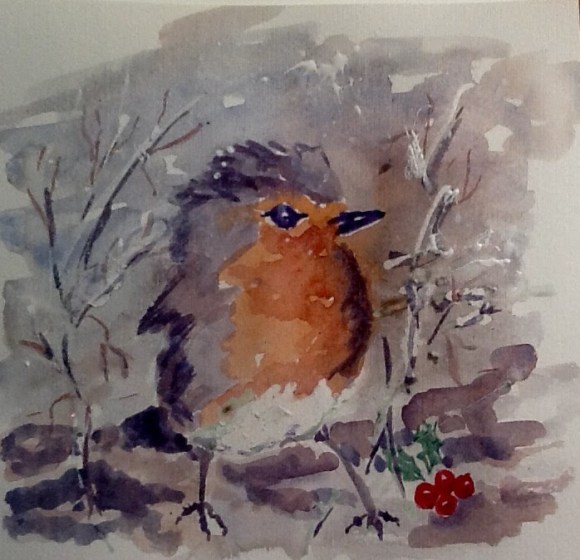
Painting by Sybil Pretious

New year, like a newborn, starts with hope.

The next year will do the same – we will all celebrate with Auld Lang Syne and look forward to a resolution of conflicts that reared a frightening face in 2022 and 2021. Perhaps, this time, if we have learnt from history, there will not be any annihilation but only a movement towards resolution. We have more or less tackled the pandemic and are regaining health despite the setbacks and disputes. There could be more outbreaks but unlike in the past, this time we are geared for it. That a third World War did not break out despite provocation and varied opinions, makes me feel we have really learnt from history.

That sounds almost like the voice of hope. This year was a landmark for Borderless Journal. As an online journal, we found a footing in the hardcopy world with our own anthology, Monalisa No Longer Smiles: Writings from Across the World, which had a wonderful e-launch hosted by our very well-established and supportive publisher, Om Books International. And now, it is in Om Book Shops across all of India. It will soon be on Amazon International. We also look forward to more anthologies that will create a dialogue on our values through different themes and maybe, just maybe, some more will agree with the need for a world that unites in clouds of ideas to take us forward to a future filled with love, hope and tolerance.

One of the themes of our journal has been reaching out for voices that speak for people. The eminent film critic and editor, Shantanu Ray Chaudhuri , has shared a conversation with such a person, the famed Gajra Kottary, a well-known writer of Indian TV series, novels and stories. The other conversation is with Nirmal Kanti Bhattajarchee, the translator of Samaresh Bose’s In Search of a Pitcher of Nectar, a book describing the Kumbh-mela, that in 2017 was declared to be an Intangible Cultural Heritage of Humanity by UNESCO. Bhattacharjee tells us how the festival has grown and improved in organisation from the time the author described a stampede that concluded the festivities. Life only gets better moving forward in time, despite events that terrorise with darkness. Facing fear and overcoming it does give a great sense of achievement.

Perhaps, that is what Freny Manecksha felt when she came up with a non-fiction called Flaming Forest, Wounded Valley: Stories from Bastar and Kashmir, which has been reviewed by Rakhi Dalal. Basudhara Roy has also tuned in with a voice that struggled to be heard as she discusses Manoranjan Byapari’s How I Became a Writer: An Autobiography of a Dalit. Somdatta Mandal has reviewed The Shaping of Modern Calcutta: The Lottery Committee Years, 1817 – 1830 by Ranabir Ray Chaudhury, a book that explores how a lottery was used by the colonials to develop the city. Bhaskar Parichha has poured a healing balm on dissensions with his exploration of Rana Safvi’s In Search of the Divine: Living Histories of Sufism in India as he concludes: “Weaving together facts and popular legends, ancient histories and living traditions, this unique treatise running into more than four hundred pages examines core Sufi beliefs and uncovers why they might offer hope for the future.”

In keeping with the festive season is our book excerpt from Rhys Hughes’ funny stories in his Christmas collection, Yule Do Nicely. Radha Chakravarty who brings many greats from Bengal to Anglophone readers shared an excerpt – a discussion on love — from her translation of Tagore’s novel, Farewell Song.

Love for words becomes the subject of Paul Mirabile’s essay on James Joyce’s Stephen Dedalus, where he touches on both A Portrait of the Artist as a young Man and  Ulysees, a novel that completed a century this year. Love for animals, especially orangutans, colours Christina Yin’s essay on conservation efforts in Borneo while Keith Lyons finds peace and an overwhelming sense of well-being during a hike in New Zealand. Ravi Shankar takes us to the historical town of Taiping in Malaysia as Meredith Stephens shares more sailing adventures in the Southern hemisphere, where it is summer. Saeed Ibrahim instils the seasonal goodwill with native Indian lores from Canada and Suzanne Kamata tells us how the Japanese usher in the New Year with a semi-humorous undertone.

Humour in non-fiction is brought in by Devraj Singh Kalsi’s ‘Of Mice and Men’ and in poetry by Santosh Bakaya. Laughter is stretched further by the inimitable Rhys Hughes in his poetry and column, where he reflects on his experiences in India and Wales. We have exquisite poetry by Jared Carter, Sukrita Paul Kumar, Asad Latif, Luis Cuauhtémoc Berriozábal, Michael R Burch, Sutputra Radheye, George Freek, Jonathan Chan and many more. Short stories by Lakshmi Kannan, Devraj Singh Kalsi, Tulip Chowdhury and Sushma R Doshi lace narratives with love, humour and a wry look at life as it is. The most amazing story comes from Kajal who pours out the story of her own battle in ‘Vikalangta or Disability‘ in Pandies’ Corner, translated from Hindustani by Janees.

Also touching and yet almost embracing the school of Absurd is PF Mathew’s story, ‘Mercy‘, translated from Malayalam by Ram Anantharaman. Fazal Baloch has brought us a Balochi folktale and Ihlwha Choi has translated his own poem from Korean to English. One of Tagore’s last poems, Prothom Diner Shurjo, translated as ‘The Sun on the First Day’ is short but philosophical and gives us a glimpse into his inner world. Professor Fakrul Alam shares with us the lyrics of a Nazrul song which is deeply spiritual by translating it into English from Bengali.

A huge thanks to all our contributors and readers, to the fabulous Borderless team without who the journal would be lost. Sohana Manzoor’s wonderful artwork continues to capture the mood of the season. Thanks to Sybil Pretious for her lovely painting. Please pause by our contents’ page to find what has not been covered in this note.

We wish you all a wonderful festive season.

Season’s Greetings from all of us at Borderless Journal.

Cheers!

Mitali Chakravarty

borderlessjournal.com

.

Click here to access the Borderless anthology, Monalisa No Longer Smiles