Categories
Editorial

Elephants & Laughter

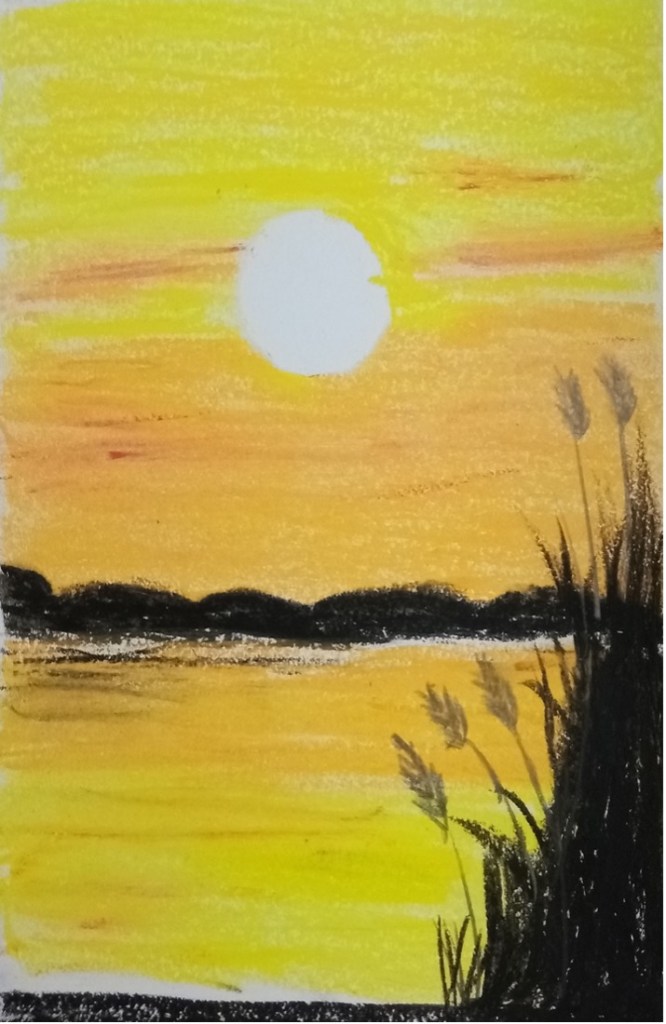
Run, Painting by Sybil Pretious

Ideally, I would love to start the New Year with laughter and happiness! Then perhaps, the whole year would be dotted with humour …

Laughter clubs often practice laughing for health benefits. I know the pandemic makes both guffawing outdoors or in a group hard but think of the funniest possible thing and, perhaps, you will start laughing. For me what works other than children’s and monkeys’ antics, are my trips to the dentist, especially the trip where I wondered on the fringe benefits of ‘laughing gas’ (as given in the PG Wodehouse novel of the same name), only to be informed that it was used exclusively for young children. For me, an adult, there was only — you have guessed it — the jab that numbs your lip function to lubber. I discovered if I could make light of a dentist drilling by learning from Harry Potter (the spell to get rid of the terrifying boggart, who took the shape of the thing you feared most, was to imagine the funniest thing, focus on the humour in it, and shout ‘Riddikulus’ with a wand pointed at the creature in the form of your worst nightmare), then I could pretty much get rid of most fears.

The other thing I have been wondering for sometime is can one write an editorial that is humorous when the content is serious? I would have wanted to ask that question to many, including Ruskin Bond, who continues as one of my idols. I would love to touch hearts with the humour and the sensitivity that flavours his writing. It is tough to convey a complex thought with the simplicity and elegance of a writer who can be read and understood easily. I think we have a few of them around and I interviewed one. You all probably know him well— Rhys Hughes. I have given the reasons for the interview in lieu of Mr Bond, who continues a distant star beyond the horizon of online interviews. We discussed humour and its role in literature, leaving out completely in the cold, the fictional Mr Bond who answers to the names of James and 007 and has made entertaining films, which can be seen as serious or non-serious.

Hughes has of course, given some writerly advice not just in the interview but in ‘Making Something of Nothing’ – pretty much the advice that God had probably been given when he asked an unspecified friend on how to create the universe and multiple realities. Hughes has also added to our galaxy of poets where Michael Burch, Ryan Quinn Flanagan, Anasuya Bhar, Vernon Daim, William Miller, Pramod Rastogi, Mike Smith, Jay Nicholls and many more continue to sparkle. Taking up the theme of God’s creations, Devraj Singh Kalsi has added to more humour with a dream of divine intervention to make the ‘New Normal’ in 2022 – a plan for this year. Will it ever be real?

Another major issue in this world currently is climate change. In keeping with the need for acceptance of this reality, Keith Lyons introduced us to a nature lover, author and adventurer Kenny Peavy, who loved the fictional adventurer called Indiana Jones and has been working towards living in harmony with nature. He moved to Indonesia from America and is trying to raise awareness. You can find much, though not elephants, in the interview that encompasses the story of a man who cycled across a continent on a bike made of bamboo. However, you can find some writing on a king who acquired the skill to ride and tame elephants in our book excerpt from Shazi Zaman’s Akbar: A Novel of History. The excerpt does not showcase his elephant taming skills as did the Bollywood blockbuster Jodha Akbar but is focussed on bringing out the syncretism in the Mughal monarch’s outlook which made him seek out exponents of other religions. Sangita Swechcha’s and Andrée Roby’s anthology, A Glimpse Into My Country, with excerpts of short stories from Nepal and Zimbabwe, like Kenny Peavy, cycle across multiple borders as does our fiction. We feature stories from within and without the continent with Fazal Baloch recombining a couple of folklores from Balochistan to a single tale. Fiction from young writers highlight compassion and a varied perspective. Steve Ogah has a story from Nigeria which almost rings with overtones of Alex Haley’s Roots. Sohana Manzoor has given us a poignant narrative with an inspiring twist at the end, an absolute antithesis of the humorous one she rolled out for us last month. Candice Louisa Daquin has also given us an exceptional short fiction along with her column where she discusses the changing face of families in the current context.

While Daquin’s focus is mainly towards the West, we have an essay from Sanjay Kumar on families that live in the greyer zones of big cities, children from an outcropping called Nithari in Delhi, where they or theirs suffered neglect, abuse, carnage and cannibalism in their formative years.  Introducing the impacted children, Kumar explains how they transcended the wounds that lacerated their lives. This piece is a precursor to a column called ‘Children of Nithari’. Starting February, the abuse victims will give us a story a month which will be translated by young volunteers from pandies’, an activist theatre group founded by Kumar, and published in Borderless. Another article from Balochistan reflects on the lack of literacy and efforts to bring children into the folds of schooling. Pakistan ranked 99th out of 132 countries on the literacy survey in 2021. We are privileged to be the voice of the unheard.

Two essays that ring of concerns raised in the Kenny Peavy interview are to do with climate crisis in the Sunderbans and waste disposal in Delhi. Both of these are written by researchers who are working on these issues.

We have travel pieces from Australia – one is a sailing adventure by Meredith Stephens and the other is about a trip to the Sand Dunes of Western Australia by Shernaz Wadia. Ravi Shankar has also taken us through winters from the Everest to New York with his globe-trotting non-fiction. Penny Wilkes takes us on a flight of creativity with beautiful photography.

We have a stellar layout of translations. Professor Fakrul Alam translated another poem by Jibananada Das and Borderless is honoured to publish it to the world for the first time. We have a translation from Korea and another of a Brahmo hymn, Aji Shubho Dine, by Tagore, which is sung often during festivals. The icing in our Tagore section in this issue is Ratnottama Sengupta’s translation of the Kobiguru’s ‘Two Birds’ (Khanchar Pakhi Chhilo) along with a musing which reflects on the perspectives of the two contemporaries, Tagore and Saratchandra. She has also translated a well-known Bengali poet, Michael Madhusudan Dutt. Dutt wrote just before the advent of Tagore and had an interesting past which has been vividly depicted by Sunil Gangopadhyay in Those Days (Sei Somoy in Bengali), a novel that has been translated by Aruna Chakravarti. Bhaskar Parichha has given us a tribute on the occasion of the birth anniversary of Fakir Mohan Senapati, who, he claims, has the same standing in Odia literature as Tagore in Bengali or Premchand in Hindi.

Parichha has also reviewed Amit Ranjan’s John Lang; Wanderer of Hindoostan; Slanderer in Hindoostanee; Lawyer for the Ranee. It looks like an interesting read where an immigrant Australian came supported Rani of Jhansi in India. Rakhi Dalal has reviewed Selma Carvalho’s Sisterhood of Swans, again a story of migrants and their lives. The theme seems to echo among the books that have been reviewed this time, including Gracy Samjetsabam’s take on Anuradha Kumar’s The Hottest Summer in Years, a story about a German immigrant to India in the twentieth century. Meenakshi Malhotra’s review of Somdatta Mandal’s translation of A Bengali Lady in England by Krishnabhabini Das (1885) highlights the views of a traveller rather than an immigrant as the lady did return home after a ten-year sojourn in Britain. As Meenakshi contends, “The process of travel offers opportunities for emancipation where exposure to other cultures offers her a way of viewing and of gaining a perspective on her own experiences and that of her sisters in India. Krishnabhabini constantly refers to her Indian sisters and bemoans their sorry state and ignorance when she sees how active British women were in their families and societies…”

I was supposed to try my hand at a humorous editorial, but I realise that is tough when the ground is small. For humour, we need rolling acres where we can etch out each detail till it cannot be milked further for laughter. But I promise you I will keep trying to please the readers till one evolves to write like Ruskin Bond.

I would like to thank my fabulous team who even if not actively contributing to content are always at hand to advise and help. I would especially want to thank both Sohana Manzoor and Sybil for their fantastic artwork, which is as wonderful as their writings. I would like to give heartfelt thanks to all the contributors who have made this journal possible and each reader who comes back to our journal for more every month. Some of the pieces remain unmentioned adding to the mystery of the content, just like, Christmas gifts which need to be unwrapped and continue a reality even in January in some parts of the world – the Russians celebrate on January 7th and the Spaniards extend their festivities to January 6th.

Do take a look at this month’s edition for not just the stories mentioned here but for more.

I wish you all a wonderful New Year filled with laughter.

Mitali Chakravarty

Borderless Journal

Categories
Interview

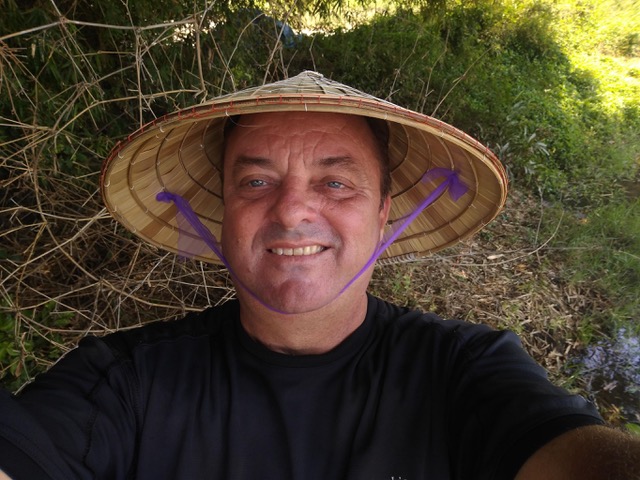
Nature & Kenny Peavy

Keith Lyons introduces us to Kenny Peavy, an author, adventurer, educator and wilderness first-aider who has travelled far and wide and wishes everyone could connect with the natural world right outside their door. 

American Kenny Peavy has spent three decades getting people outdoors. He believes that by playing in and exploring the natural world, we can discover or re-kindle a deep connection with Nature and learn to respect and take care of the planet we all share. 

For the last twenty one years, he’s been based in Asia, working in Thailand, Malaysia and Indonesia. He’s currently at possibly the coolest school in the world, made of bamboo and nestled in lush jungle, the Green School Bali. Kenny is an advocate for education and learning outside the classroom. 

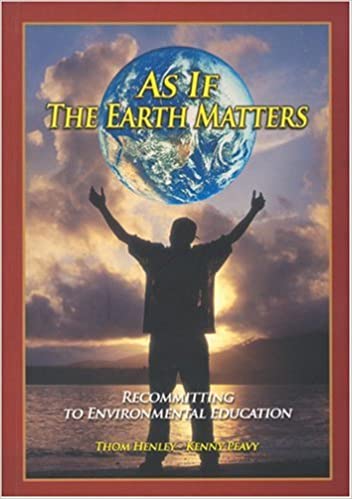
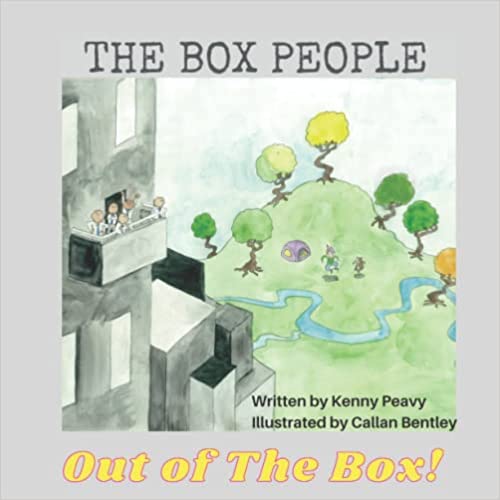
In this conversation, we are going to learn about growing up in the South of the US, how his environmental awareness was instilled, what brought him to Asia, and some of the biggest cultural differences (including breakfast). In addition to his questioning memoir Young Homeless Professional, in 2007 Kenny co-authored the pioneering environmental education handbook, As if the Earth Matters, and recently, an illustrated book, The Box People , was re-released digitally to enable children, young people and their parents and educators anywhere in the world to use the book. He also created Waffle House Prophets: Poems Inspired by Sacred People and Places

In efforts to raise awareness about conservation and sustainability in Southeast Asia, he’s paddled around the island of Phuket in Thailand, and ridden a bamboo-frame bike from Thailand through Malaysia to Singapore and Bali. As well as being a nature guide, project fundraiser and science teacher, Kenny is also a qualified wilderness first responder and first aid trainer. In Bali, he had to flee with his family when an erupting volcano threatened their village. 

Kenny has some advice for city-dwellers afraid of the ‘sometimes scary’ world away from concrete and mobile phones.

Tell me about growing up in Georgia, as I only know it being famous for peanuts, and being the birthplace of Julia Roberts, Kanye West, Martin Luther King Jr, Ray Charles, and Hulk Hogan? 

I was born in 1969 so, essentially, I was a kid in the ’70s and ’80s. Since the ’80s were my high school years, I consider myself a child of the ’80s in all its hair metal, boom box, Pac Man and Donkey Kong glory!

It was very rural. A lot different then. We weren’t as aware of the outside world and didn’t have access to a lot of things like we do now. 

I distinctly remember going to my first ‘real mall’ in about 1984 or maybe 1985. It was Gwinnett Place Mall. A huge commercial shopping centre. Up until then, we only really had local mom-n-pop shops. So, it was astounding. One of my friends could drive and he had a car. 

None of us had much money so we all pitched in a couple of dollars for gas. The parking lot was dizzying and the mall was an amazing place to watch people. We tried this new thing none of us had ever heard of called a Gyro wrap and it was absolutely delicious and strange. Then afterwards I had an Oreo ice cream. Something I had never experienced before since we only had vanilla, strawberry and chocolate ice cream at the local shop. It was all brand new. 

Growing up in the countryside we didn’t have that sort of food or flavours so even those simple things we take for granted today were fascinating novelties back then!

Aside from that, as I said, it was very rural. Most folks had land and cows or chickens. A lot of pine trees which means pulp mills to make paper. Plenty of dirt roads. Atlanta was the BIG CITY and most of us were kind of afraid to go there because we never heard anything but bad news about city folks.

What was the environment you grew up in like

Most folks were into fishing, hunting and other similar recreations. I went to a public school and took the free bus to school. We definitely had jocks, hicks, geeks and other ‘distinctive’ social groups. Me and all my friends were into hard rock and heavy metal and we saved our money so we could see all the shows from AC/DC, Bon Jovi, Ozzy Osbourne and White Snake when they came to Atlanta (even though we were scared of the Big City and fast talking city folks).

Our big entertainment was cruising the strip mall where they had a McDonalds and a hardware store. We’d all just drive in circles wasting time and gas while blasting The Scorpions so we could wave at people we’d seen at school the very same day.

I think most families were basically Blue Collar with jobs in construction, factories or some kind of farming. We all grew up working and my first job at age fifteen was washing dishes at a steak house in town. Other jobs we had as teens were cutting grass, painting curbs, running cashier in a gas station and other similar tasks.

How did you get into writing, was it something you developed a talent for early on, or did you have some inspiration and guidance from others? 

I always wanted to be a poet and swoon the girls with poems and fancy quotes from far-flung novels. It never worked.

I also wanted to be that professor with the patches on the elbows of his tweed jacket and a pipe dangling from my mouth as I pontificated wise philosophical diatribes to impress the masses. I’m still working on that one!

Your interest in Nature, the environment and science, where did that come from? 

Essentially, from growing up and playing outdoors. We were always outside and not allowed in the house during the day. So, we’d get bored and flip over logs, explore the creeks, go fishing and ride our bikes all over the trails in the woods.

This lead me to get curious about the critters we found under the logs and hiding out in the rocks in the stream. Combine that with a love for hunting and fishing and I eventually studied biology at university.

I basically wanted to know how Nature worked. What made it tick? How did all the pieces fit together? That also lead to jobs at the Institute of Ecology at the University of Georgia where I learned a heap about aquatic macro-invertebrates, ichthyology (fish) and ecology — and had a private lunch with the Father of Modern Ecology and author of the very first ecology textbook, Professor Emiritus Eugene Odum.

That’s why I firmly believe that a childhood spent outdoors playing and exploring will later lead to an insatiable curiosity for Nature and an ethic for conservation and stewardship.

You document in your book Young Homeless Professional  about a time in your life when you immersed yourself in the natural world, and were searching for answers. What did you learn from that time about the world and yourself? 

I essentially have many of the same questions today. I think I understand the inner workings of Nature and life’s mysteries a bit better now. With a modicum more insight and quite a few more experiences under my belt than 20+ years ago, I think what’s most important is the process of questioning. The ability to stay open to life’s possibilities is key. We most likely will never fully comprehend or understand life, our roles in the cosmos and Nature’s mysteries, but if we stay curious, keep exploring, stay open to the possibilities and keep questioning then I think that’s the key to finding a place in this world we all share.

How did you end up moving from the US to teaching in Asia? 

On a whim. I wanted adventure. I wanted to see and experience new cultures, try weird foods, learn about different religions and philosophies. Speak strange languages. So with US$ 8,000 in the bank, a teaching degree and a hankering to see the world I set out for Kuala Lumpur in the year 2000: I’ve never looked back!

What are the biggest differences between life in the US and your current life and environment in Bali? 

The biggest difference has to be that it’s a majority Muslim country. My wife is Muslim and I’ve grown quite comfortable being married into a different culture and religion. And here in Bali, it’s mostly Hindu which is vastly different from Islam. Growing up in the Southern US, I was only ever exposed to Methodist and Baptist forms of Christianity. All of this was new to me 20 years ago when I moved here.

I think the tropical climate and easy-going beach lifestyle are also very different from growing up in the foothills of the Appalachian Mountains. 

Another HUGE difference is having rice for breakfast! I was always a hash browns and eggs or better yet, grits, kind of guy. We don’t really have either one of those here. But instead, they eat rice with a spicy sauce and crispy chicken or fish for a typical Indonesian Breakfast!

As well as being a teacher, you’ve done a lot of activities, organising events, initiating projects and raising funds. What’s your motivation for doing these? 

I feel like we should give back. Whatever we have to share, to teach, to give to others is valuable. Being part of something bigger than ourselves, whether it is a project, a group, a movement or an ideology is fundamental to achieving a sense of fulfilment and belonging. When we give, we receive back way more joy and happiness than we originally gave. It gets multiplied! Through giving of ourselves and sharing what we have, we receive a sense of being part of a larger cause and a sense of contentment which is multiplied many times over. 

One of your most notable achievements, in addition to your writing and educational work, is riding a bamboo bicycle across Southeast Asia from Thailand to Bali to raise awareness on sustainability. What was the hardest part of that adventure? 

It was all fun with plenty of excitement and adventure. There were actually very few hiccups and hardships. But I would have to say that cycling some of the monotonous palm oil plantations through peninsular Malaysia from the Thai border to Singapore was hot, boring and so sad. It was heartbreaking to see what was once a beautiful rainforest converted into endless palm oil plantations and a never-ending paved highway.

You also kayaked around the island of Phuket to raise awareness about marine conservation. How important is tangible action to bringing about change? 

Taking action is paramount. We can say anything we want. We can project an image of being eco-friendly and sustainable. We can GreenWash anything. But if you want to see what someone truly believes, watch what they do. Pay attention to their actions. Tangible action, hands-on, in the field, is where it’s at! Especially, if we truly want to bring about change and make a difference we have TO DO, not just SAY or BELIEVE.

Environmental education seems to be at the heart of your mission, how do you encourage students, teachers and adults to re-connect with Nature? 

Ironically, I spent 2 years researching this question as part of my MS degree and what I discovered and concluded after hundreds of peer-reviewed papers, conferences, surveys and questionnaires is that the best way to connect to Nature is simple… get outside and play!

Free time, exploring and playing in Nature are way more effective than any curriculum or lesson plan. When we take time to just wander and wonder we connect in ways that can’t be facilitated through constructed lessons or planning. It happens naturally and spontaneously when we get lost in play, discovery and exploration.

What are people’s (particularly city-dwellers) biggest fears about the natural world? 

I think the main thing people are afraid of is boredom. They don’t know how to wallow in boredom until the sense of wonder kicks in. We’re so used to instantaneous entertainment that we’ve become afraid to just sit, observe and take things as they come.

Another big one is mosquitos! And leeches. People are terrified of leeches!

Tell us about the environmental education book you co-wrote with Thom Henley As if the Earth matters?

It’s basically a teacher training manual and activity guide. We wrote it back before there were any resources to train teachers in Southeast Asia. So, the activities are meant to get kids connected to nature through exploration and engaging the senses. We put an emphasis on showing Southeast Asian flora and fauna as well as locals in Thailand, Malaysia and Indonesia as instructors and participants to make sure it would have a multi-cultural approach to environmental education.

I am hoping to take some of the activities in the book and update them and create a much smaller activity packet. I think it’s now more important and relevant than ever that we try to connect kids and adults to Nature. 

As well as working as a nature guide, trek leader, science teacher, you are also a wilderness first aid instructor. What inspires you to be so active? 

I think the main driver and inspiration comes from a sense of curiosity. I always wanted to be a National Geographic explorer, or some kind of adventurer!

When I was young, I was inspired by the Indiana Jones movies, David Attenborough and TV shows that featured people exploring exotic places, getting lost in mysterious jungles, landing in the middle of some kind of misadventure or a quest.

Those images stuck with me and keep me excited and curious to this day! There is always something new to learn, a new place to see, a new style of music to hear, and new flavours to be tasted.

You’ve also done some personal service projects, such as in Bali helping those affected by the volcano eruption. How challenging is it to initiate projects, particularly in a foreign country? 

It’s easy to do a project but it’s incredibly difficult to do it right.

The key seems to be relationships. If you have a relationship with someone in the village or even someone that knows someone in the village then things tend to go well.

The main issue I see is that many foreigners want to help in some way but they simply don’t know how. During the Mount Agung crisis, we were at a refugee camp and saw a car pull up and start tossing food into the crowd. The local villagers were then forced to run around and grab the donations up off the ground. It was very demeaning. I vowed to never approach any type of service project that way.

Essentially, you just need to ask the village what they truly need. This is the crucial step and it’s often overlooked. What I mostly see are people with good intentions making assumptions about what a village needs and then donating completely irrelevant or unwanted and unneeded stuff. Whether this is inappropriate food items that won’t be used, hot thick blankets in the tropics or painting a wall at a school when the funds and volunteer time could be used much wiser the missing ingredient is always communication with the locals to find out their true needs.

In the case of Mount Agung, what we discovered after meeting the heads of the villages is that they wanted fresh vegetables, fresh fruit, spices, electric fans and N95 masks. They said everyone had donated rice and instant noodles and that they needed something they could cook to go with it! In the end, we delivered those items based on their needs and wants not on assumptions.

So, if and when folks want to help out and do service projects it’s most helpful to find a trustworthy local that can help facilitate communications to ensure that the project is effective and truly wanted and needed.

How much do you feel you are an American in Asia, or a global citizen of the planet? 

I don’t feel very American anymore. Aside from my mom, dad and sister, I don’t have many connections to my country of birth these days.

I’ve been overseas for more than 20 years now. I’ve changed quite a bit personally and the USA has also changed a great deal in that time. 

I would say nowadays I definitely feel more like a global citizen and can be comfortable in almost any situation. These days I’m used to being surrounded by, working with and keeping company with locals of whatever country I am working in.

Being surrounded by people of diverse cultures, exploring and learning about different peoples, traditions, foods and ecosystems are what keep me happy!

When it comes to communicating and writing, what’s your process? 

Ideas always come to me at the strangest times. The best ideas seem to come when I am not thinking about writing but instead, when I am on the motorbike, bicycle, drifting off to sleep or distracted or focused on something entirely different. To catch those ideas, I always keep a pad of paper and pen next to the bed, my phone has a note-taking app and I have a zillion sticky notes. I even e-mail ideas to myself sometimes! So that’s step one. Catch the idea and record it. 

Then I tend to forget about it until I come across a similar thought or idea through reading, listening to a podcast or hearing something or someone that triggers more thought. That’s when I tend to gather up those ideas from the emails, sticky notes and note-taking app and start to map them out and write an outline. Then I forget about it again for a while.

Finally, when I revisit those ideas, I try to develop them into an essay, poem or even a book!

For the writing, I try to use my Southern American voice and interject colloquialisms. I normally write it. Edit it. Re-write. Edit again.

I find the editing is ongoing and every time you ‘rest’ in between versions and then look at your writing with fresh eyes you catch phrases that could be written better, sentences that can be shortened and different ways to say and express things that make them more interesting. Lastly, the thesaurus is my best friend!

What advice do you have some someone reading this, who wants to find their purpose, and also make a difference in the world?

Stay curious. Stay open. Seek out adventure. Don’t be afraid to fail. Keep learning new skills and spend long periods of time reflecting on who you are and what you have to contribute to the world.

Enjoy the adventure of being alive!

CLICK HERE TO READ HIS COLUMN, MISSION EARTH.

You can follow Kenny Peavy on Twitter @kenny_peavy or Instagram @kenny_peavy, and he will reply if you email him at kennywpeavy@gmail.com. Kenny also has a FB group about the Box People project (https://www.facebook.com/groups/boxpeopleunboxed ), and there is more information about the book on Amazon (https://www.amazon.com/Box-People-Out/dp/B09M4R6PRB/), or direct from Kenny via email kennywpeavy@gmail.com

Keith Lyons (keithlyons.net) is an award-winning writer who gave up learning to play bagpipes in a Scottish pipe band to focus on early morning slow-lane swimming, the perfect cup of masala chai tea, and after-dark tabs of dark chocolate. Find him@KeithLyonsNZ or blogging at Wandering in the World (http://wanderingintheworld.com).
.

PLEASE NOTE: ARTICLES CAN ONLY BE REPRODUCED IN OTHER SITES WITH DUE ACKNOWLEDGEMENT TO BORDERLESS JOURNAL

Categories
Greetings from Borderless

For Auld Lang Syne

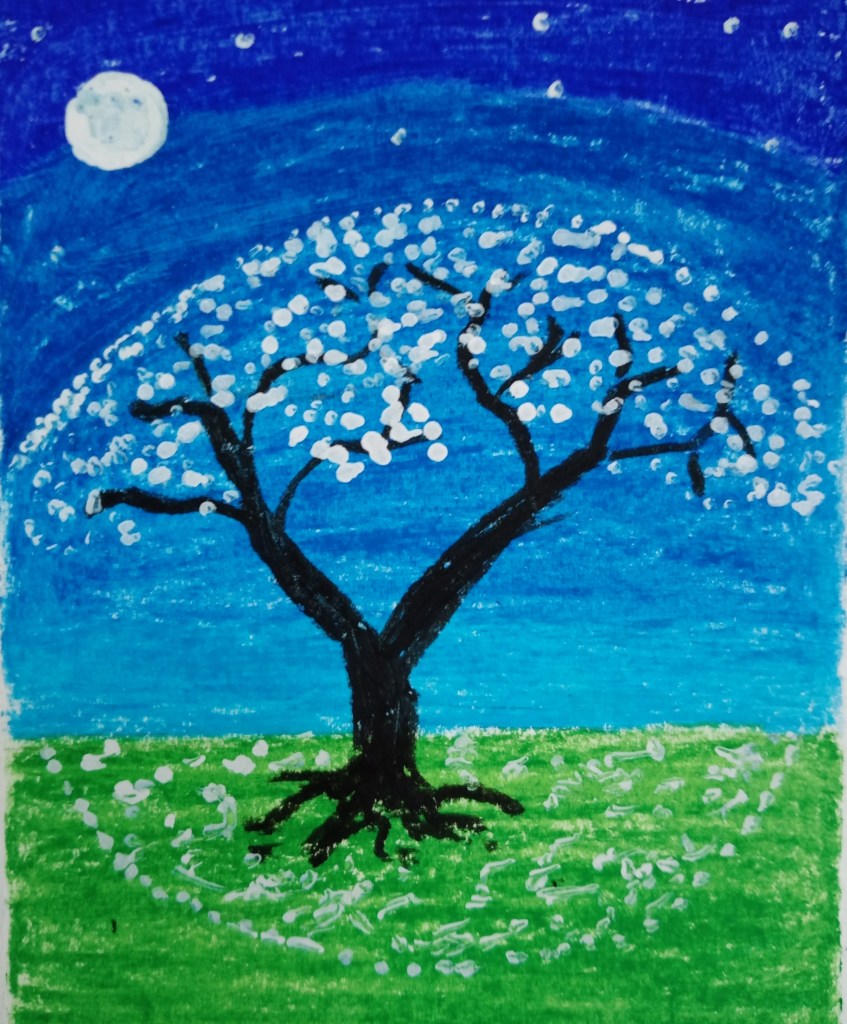
Painting by Sohana Manzoor

What will the New Year bring? Will it connect us all like a tree that has its roots deep in the Earth but reaches out to the sky with its branches rearing high? Its blooms seem like stars on the planet, connecting all life and non-living in its embrace. We hope as global consciousness grows for living in harmony with nature and science, love and kindness, may we all move towards a better more connected world. We, at Borderless Journal, wish you all a happy start to a wonderful New Year!

Our oeuvre this time brings to you a selection from the year 2021 that showcases the change makers we met, and writing that with their values connect us or ring with goodwill and look forward to a better future.

Meet & Greet

These are people you can meet on our pages — people who impact the world in a way that touches lives.

Goutam Ghose, who finds colouring the world with syncretic lore as the best alternative to sectarian violence. Click here to read.

Anvita Abbi, an empathetic linguist who builds bridges to create a seamless world, accepting and co-existing with different ways of life as colours of a rainbow. Click here to read.

Nazes Afroz translated a book on Afghanistan by Tagore’s disciple, Syed Mujtaba Ali, a memoir that shows the roots of the current crises go deep. Also, a senior BBC editor of South Asia, Afroz takes us through the situation with compassion. Click here to read.

Jessica Mudditt travelled to Myanmar and wrote a book, which is an eye-opener about the current situation. She was brought to focus by Keith Lyons who interviewed her for us. Click here to read.

Sanjay Kumar founded Pandies, an activist theatre group that educates, bridging gaps between the divides of University educated and the less fortunate who people slums or terror zones. Click here to read.

 Sybil Pretious, a teacher who has taught in six countries to impact children, starting her career in Africa and living through and beyond Apartheid. Click here to read.

Poetry

Robert Burns & Tagore in Harmony : A transcreation of Tagore’s song, Purano Sei Diner Kotha, based on Robert Burn’s poem associated with new year’s revelries. Click here to read.

Snowball Earth: A long poem by Rhys Hughes in the spirit of a modern man’s Auld Lang Syne, touching on our climate debacle. Click here to read.

Gathering Blossoms: Poetry by Michael R Burch that lingers in the heart. Click here to read.

Humour

Travels & Holidays: Humour from Rabindranath: Translated from the original Bengali by Somdatta Mandal, these are Tagore’s essays and letters laced with humour. Click here to read.

Surviving to Tell a Pony-tale: Devraj Singh Kalsi journeys up a hill on a pony and gives a sedately hilarious account. Click here to read.

 Trouser Hermits: Rhys Hughes muses over men’s attire and the lack of them. Click here to read.

Prose

Temples and Mosques: Kazi Nazrul Islam’s fiery essay on the need for a syncretic lore translated by Sohana Manzoor. Click here to read.

To Infinity & Beyond!: Candice Louisa Daquin explores the magic of space travel. Click here to read.

Near the River Chenab and Under The trees: Sunil Sharma in a poignant telling takes us on a journey to the banks of a river where life, love and death sheathed in terrorism cumulate to a peak. Click here to read.

Richard Hughes: The Reporter Who Inspired Ian Fleming: Bhaskar Parichha showcases a journalist who wrote globally, spicing it up with humour. Click here to read.

The Lords of Lights: With photographs and a story, Penny Wilkes makes an interesting new legend. Click here to read.

Categories
Contents

Borderless December 2021

Editorial

Towards a Brave New World… Click here to read.

Interviews

In Bridge over Troubled Waters, academic Sanjay Kumar tells us about Pandies, an activist theatre group founded by him that educates, bridging gaps between the divides of University educated and the less fortunate who people slums or terror zones. Click here to read.

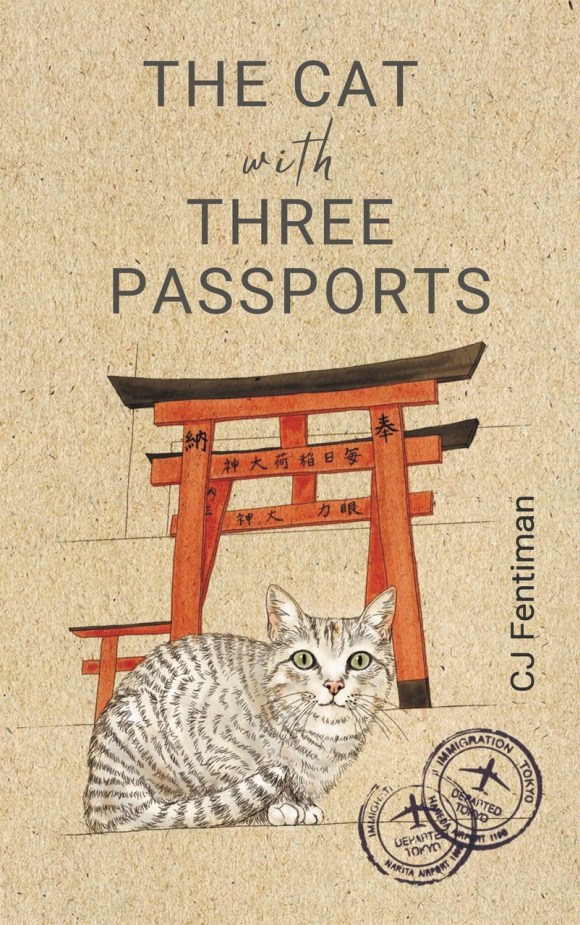
In Lessons Old and New from a Stray Japanese Cat, Keith Lyons talks with the author of The Cat with Three Passports, CJ Fentiman who likes the anonymity loaned by resettling in new places & enjoys creating a space for herself away from her birthplace. Click here to read.

Translations

Poetry by Jibananda

Translated from Bengali by Fakrul Alam, two poem by the late Jibananda Das. Click here to read.

Shorter Poems of Akbar Barakzai

Translated from Balochi by Fazal Baloch, five shorter poems by Akbar Barakzai. Click here to read.

Long Continuous Battle

Written and translated from Korean by Ihlwha Choi. Click here to read.

Colour the World

Rangiye Diye Jao, a song by Tagore, transcreated by Ratnottama Sengupta. Click here to read.

Rakhamaninov’s Sonata

A short story by Sherzod Artikov, translated from Uzbeki by Nigora Mukhammad. Click here to read.

Robert Burns & Tagore in Harmony

A transcreation of Tagore’s song, Purano Sei Diner Kotha, based on Robert Burn’s poem associated with new year’s revelries by Mitali Chakravarty. Click here to read.

Poetry

Click on the names to read

Michael R Burch, Dibyajyoti Sarma, Anasuya Bhar, Ryan Quinn Flanagan, Sambhu Nath Banerjee, Michael Brockley, Malachi Edwin Vethamani, George Freek, Mitra Samal, William Miller, Harsimran Kaur, Jay Nicholls, Sangeeta Sharma, Rhys Hughes

Nature’s Musings

In Lewie, the Leaf, Penny Wilkes explores the last vestiges of autumn with her camera and a touching story. Click here to read.

Poets, Poetry & Rhys Hughes

In Trouser Hermits, Rhys Hughes muses over men’s attire and the lack of them. Click here to read.

Musings/ Slices from Life

Kungfu Panda & Matrimony

Alpana gives a glimpse into her own marital experiences through the lockdown. Click here to read.

How I Transitioned from a Desk Worker to a Rugged Trail Hiker at Age Sixty

Meredith Stephens shares the impact of the pandemic on her life choices. Click here to read.

A Tale of Two Houses

P Ravi Shankar travels back to the Kerala of his childhood. Click here to read.

The Voice that Sings Hope through Suffering…

Rakibul Hasan Khan pays a tribute with a twist to a recently deceased Bangladeshi writer, Hasan Azizul Huq. Click here to read.

Canada: A Live Canvas

Sunil Sharma reflects on the colours of the fall in Canada. Click here to read.

To Infinity & Beyond!

Candice Louisa Daquin explores the magic of space travel. Click here to read.

Joy Bangla: Memories of 1971

Ratnottama Sengupta recaptures a time when as a teenager she witnessed a war that was fought to retain a language and culture. Click here to read.

Musings of a Copywriter

In Statue Without Stature, Devraj Singh Kalsi muses on erecting a bust with a dollop of humour. Click here to read.

Stories

Flash Fiction: In Search of a New Home

Marzia Rahman shares a short narrative about refugees. Click here to read.

Floating Free

Lakshmi Kannan travels with a humming bird to her past. Click here to read.

Driving with Murad

Sohana Manzoor unfolds her experiences while learning to drive with a dash of humour. Click here to read.

Dinner with Bo Stamford in Hong Kong

Steve Davidson has a ghostly encounter in Hong Kong. Click here to read.

The Literary Fictionist

In Walls, Sunil Sharma peers into fallacies and divides. Click here to read.

Essays

What’s Novel in a Genre?

Indrasish Banerjee explores why we need a genre in this novel-based essay. Click here to read.

Of Palaces and Restorations

Rupali Gupta Mukherjee visits a restored palace in the heartland of Bengal. Click here to read.

The Incongruity of “Perfect” Poems

Rakibul Hasan Khan discusses Bangladeshi poet Sofiul Azam’s poetry from a post colonial perspective. Click here to read.

The Birth of Bangladesh & the University of Dhaka

Professor Fakrul Alam takes us through the three Partitions of Bengal which ultimately led to the creation of Bangladesh, with focus on the role of Dhaka University. Click here to read.

The Observant Migrant

In When is a mental illness not a mental illness?, Candice Lousia Daquin provides us with a re-look into what is often judged as a psychiatric issue. Click here to read.

Book Excerpts

Somdatta Mandal’s translation of A Bengali Lady in England by Krishnabhabini Das (1885). Click here to read.

Suzanne Kamata’s The Baseball Widow. Click here to read.

Book Reviews

Aruna Chakravarti reviews Devika Khanna Narula’s Beyond the Veil. Click here to read.

Rakhi Dalal reviews Anirudh Kala’s Two and a Half Rivers. Click here to read.

Keith Lyons reviews CJ Fentiman’s The Cat with Three Passports: What a Japanese cat taught me about an old culture and new beginnings. Click here to read.

Bhaskar Parichha reviews BP Pande’s In the Service of Free India –Memoirs of a Civil Servant. Click here to read.

Categories
Editorial

Towards a Brave New World

Painting by Sohana Manzoor

With Christmas at our heels and the world waking up slowly from a pandemic that will hopefully become an endemic as the Omicron seems to fizzle towards a common cold, we look forward to a new year and a new world. Perhaps, our society will evolve to become one where differences are accepted as variety just as we are fine with the fact that December can be warm or cold depending on the geography of the place. People will be welcomed even if of different colours and creed. The commonality of belonging to the same species will override all other disparities…

While we have had exciting developments this year and civilians have moved beyond the Earth — we do have a piece on that by Candice Louisa Daquin — within the planet, we have become more aware of the inequalities that exist. We are aware of the politics that seems to surround even a simple thing like a vaccine for the pandemic. However, these two years dominated by the virus has shown us one thing — if we do not rise above petty greed and create a world where healthcare and basic needs are met for all, we will suffer. As my nearly eighty-year-old aunt confided, even if one person has Covid in a remote corner of the world, it will spread to all of us. The virus sees no boundaries. This pandemic was just a start. There might be more outbreaks like this in the future as the rapacious continue to exploit deeper into the wilderness to accommodate our growing greed, not need. With the onset of warmer climates — global warming and climate change are realities — what can we look forward to as our future?

Que sera sera — what will be, will be. Though a bit of that attitude is necessary, we have become more aware and connected. We can at least visualise changes towards a more egalitarian and just world, to prevent what happened in the past. It would be wonderful if we could act based on the truth learnt from history rather than to overlook or rewrite it from the perspective of the victor and use that experience to benefit our homes, planet and all living things, great and small.  In tune with our quest towards a better world, we have an interview with an academic, Sanjay Kumar, founder of a group called Pandies, who use theatre to connect the world of haves with have-nots. What impressed me most was that they have actually put refugees and migrant workers on stage with their stories. They even managed to land in Kashmir and work with children from war-torn zones. They have travelled and travelled into different dimensions in quest of a better world. Travelling is what our other interviewee did too — with a cat who holds three passports. CJ Fentiman, author of The Cat with Three Passports, has been interviewed by Keith Lyons, who has reviewed her book too.

This time we have the eminent Aruna Chakravarti review Devika Khanna Narula’s Beyond the Veils, a retelling of the author’s family history. Perhaps, history has been the common thread in our reviews this time. Rakhi Dalal has reviewed Anirudh Kala’s Two and a Half Rivers, a fiction that focusses on the Sikh issues in 1980s India from a Dalit perspective. It brought to my mind a family saga I had been recently re-reading, Alex Haley’s Roots, which showcased the whole American Revolution from the perspective of slaves brought over from Africa. Did the new laws change the fates of the slaves or Dalits? To an extent, it did but the rest as fact and fiction showcase were in the hands that belonged to the newly freed people. To enable people to step out of the cycle of poverty, the right attitudes towards growth and the ability to accept the subsequent changes is a felt need. That is perhaps where organisations like Pandies step in.  Another non-fiction which highlights history around the same period and place as Kala’s novel is BP Pande’s In the Service of Free India –Memoirs of a Civil Servant. Reviewed by Bhaskar Parichha, the book explores the darker nuances of human history filled with violence and intolerance.

That violence is intricately linked to power politics has been showcased often. But, what would be really amazing to see would be how we could get out of the cycle as a society. With gun violence being an accepted norm in one of the largest democracies of the world, perhaps we need to listen to the voice of wisdom found in the fiction by Steve Davidson who meets perhaps a ghost in Hong Kong. Musing over the ghost’s words, the past catches up in Sunil Sharma’s story, ‘Walls’. Sharma has also given us a slice from his life in Canada with its colours, vibrancy and photographs of the fall. As he emigrated to Canada, we read of immigrants in Marzia Rahman’s touching narrative. She has opted to go with the less privileged just as Lakshmi Kannan has opted to go with the privileged in her story.

Sharma observes, while we find the opulence of nature thrive in places people inhabit in  Canada, it is not so in Asia. I wonder why? Why are Asian cities crowded and polluted? There was a time when Los Angeles and London suffered smogs. Has that shifted now as factories relocated to Asia, generating wealth in currency but taking away from nature’s opulence of fresh, clean air as more flock into crowded cities looking for sustenance?

Humour is introduced into the short story section with Sohana Manzoor’s hilarious rendering of her driving lessons in America, lessons given to foreigners by migrants. Rhys Hughes makes for  more humour with a really hilarious rendition of men in tea cosies missing their…I  think ‘Trouser Hermit’ will tell you the rest. He has perhaps more sober poetry which though imaginative does not make you laugh as much as his prose. Michael Burch has shared some beautiful poetry perpetuating the calmer nuances of a deeply felt love and affection. George Freek, Anasuya Bhar, Ryan Quinn Flanagan, Dibyajyoti Sarma have all given us wonderful poetry along with many others. One could write an essay on each poem – but as we are short shrift for time, we move on to travel sagas from hiking in Australia and hobnobbing with kangaroos to renovated palaces in Bengal.

We have also travelled with our book excerpts this time. Suzanne Kamata’s The Baseball Widow shuttles between US and Japan and Somdatta Mandal’s translation of  A Bengali lady in England by Krishnabhabi Das, actually has the lady relocate to nineteenth century England and assume the dress and mannerisms of the West to write an eye-opener for her compatriots about the customs of the colonials in their own country.

While mostly we hear of sad stories related to marriages, we have a sunny one in which Alpana finds much in a marriage that runs well with wisdom learnt from Kung Fu Panda.  Devraj Singh Kalsi has given us a philosophical piece with his characteristic touch of irony laced with humour on statues. If you are wondering what he could have to say, have a read.

In Nature’s Musings, Penny Wilkes has offered us prose and wonderful photographs of the last vestiges of autumn. As the season hovers between summer and winter, geographical boundaries too can get blurred at times. A nostalgic recap given by Ratnottama Sengupta along the borders of Bengal, which though still crossed by elephants freely in jungles (wild elephants do not need visas, I guess), gained an independence from the harshness of cultural hegemony on December 16th, 1971. Candice Louisa Daquin has also looked at grey zones that lie between sanity and insanity in her column. An essay which links East and West has been given to us by Rakibul Hasan about a poet who mingles the two in his poetry. A Bengali song by Tagore, Purano shei diner kotha,  that is almost a perfect trans creation of Robert Burn’s Scottish Auld Lang Syne in the spirit of welcoming the New Year, has been transcreated to English. The similarity in the content of the two greats’ lyrics showcase the commonalities of love, friendship and warmth that unite all cultures into one humanity.

Our first translation from Uzbekistan – a story by Sherzod Artikov, translated from Uzbeki by Nigora Mukhammad — gives a glimpse of a culture that might be new to many of us. Akbar Barakzai’s shorter poems, translated by Fazal Baloch from Balochi and Ratnottama Sengupta’s transcreation of a Tagore song, Rangiye Die Jao, have added richness to our oeuvre along with  one from Korean by Ihlwha Choi. Professor Fakrul Alam, who is well-known for his translation of poetry by Jibonanda Das, has started sharing his work on the Bengali poet with us. Pause by and take a look.

There is much more than what I can put down here as we have a bumper end of the year issue this December. There is a bit of something for all times, tastes and seasons.

I would like to thank my wonderful team for helping put together this issue. Sohana Manzoor and Sybil Pretious need double thanks for their lovely artwork that is showcased in our magazine. We are privileged to have committed readers, some of who have started contributing to our content too. A huge thanks to all our contributors and readers for being with us through our journey.

I wish you a very Merry Christmas and a wonderful transition into the New Year! May we open up to a fantastic brave, new world!

Mitali Chakravarty

Borderless Journal

Categories
Review

From Japan to Australia with a Cat

Book Review by Keith Lyons

Title: The Cat with Three Passports

Author: CJ Fentiman

Going to Japan to teach English seemed like a good way to earn money, but animal lover CJ Fentiman came away from living and working in Japan with more than she expected as chronicled by her in The Cat with Three Passports: What a Japanese cat taught me about an old culture and new beginnings.

A book  that could be  considered a travel memoir, but it stretches beyond the normal scope of a travelogue, due partly to the introverted author’s inner reflection and personal transformation, but mainly due to the courageous actions of the writer in turning a soft spot for a cat into an international animal relocation mission. Sorry to spoil the ending of the book, but in most cases, foreigners going to a strange and different country take a “What happens in Vegas, stays in Vegas” approach. So when they leave, it is with fond memories, tales of culture shock and culinary misadventures, and bulging suitcases.

Not so with Fentiman and her partner, Ryan, who faced new challenges while taking a homeless cat with them to Australia, some 8,000 kilometres away. So why would you rescue from the streets a bedraggled silver tabby and then contemplate taking it with you across the oceans? If you are a cat lover, you already know the answer.

Let’s back up. One of the reasons The Cat with Three Passports is such a good read is that from the outset, the reader is invited in to experience Japan as seen through the eyes of someone right off the plane after a long flight. Throughout the book, there are vivid descriptions of landscapes, encounters and events, including weird festivals (naked men) which give an insight into an unfamiliar culture.

If the anticipation isn’t enough, the author exposes her vulnerability by sharing her anxieties and self-doubts, along with her past patterns of escaping situations and places, and how she has been distant from her estranged family.

Cats feature literally and figuratively throughout the book, and the author has blended in feline-related sayings and some of Japan’s cat wisdom. In a way, the cats make CJ and Ryan more “at home” in Japan among the cherry blossoms, bullet trains and vending machines. Essentially, the cats they encounter are the facilitators of the adaption and softening, helping them discover their purpose and giving them fulfilment.

Things take a turn for the surreal when they transfer to a job at a school set in a British theme park high in the mountains. Their time in Japan is not complete without a visit to the famed Cat Island, where cats outnumber humans perhaps thirty five to one. In the same way that cats love warmth and sun, humans are also attracted to cats because they bestow blessings on homo sapiens. One study found that cat owners have better psychological health than people without pets. Cat feeders claim to feel happier, more confident, less nervous and to sleep, focus and face problems better in their lives.

The Cat with Three Passports will appeal to anyone who has or wants to visit Japan, any animal lover or ailurophile along with readers who enjoy travel memoirs. It is a heart-warming and touching tale of outer and inner discovery.

If you’ve already encountered some travel classics on Japan, such as Lost Japan by Alex Kerr, Hokkaido Highway Blues by Will Ferguson, or Pico Iyer’s recent A Beginners Guide to Japan, consider reading The Cat with Three Passports even if you aren’t a pet lover or Japan fan.

Keith Lyons (keithlyons.net) is an award-winning writer, author and creative writing mentor, who gave up learning to play bagpipes in a Scottish pipe band to focus on after-dark tabs of dark chocolate, early morning slow-lane swimming, and the perfect cup of masala chai tea. Find him@KeithLyonsNZ or blogging at Wandering in the World (http://wanderingintheworld.com).

.

Click here to read the book excerpt.

Click here to read CJ Fentiman’s interview.

.

PLEASE NOTE: ARTICLES CAN ONLY BE REPRODUCED IN OTHER SITES WITH DUE ACKNOWLEDGEMENT TO BORDERLESS JOURNAL

Categories
Interview

Lessons old and new from a stray Japanese cat

CJ Fentiman in conversation with Keith Lyons

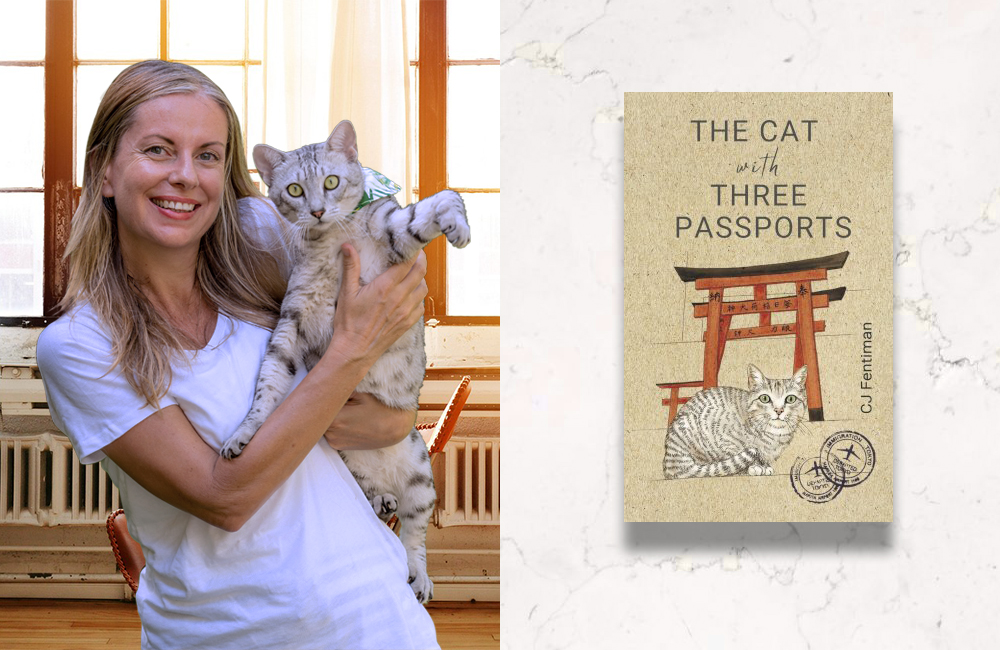
CJ Fentiman & the much travelled cat. Courtesy: CJ Fentiman

CJ Fentiman is a writer, an entrepreneur, and an animal lover, originally from the UK, but currently living in Australia with her partner and two cats. She runs the Australian website, Pet Friendly Accommodation, and published a handy guidebook Travelling with Pets on Australia’s East Coast now in its fifth edition. Regarded as an expert on pet travel, CJ’s memoir The Cat with Three Passports: What a Japanese cat taught me about a old culture and new beginnings tells the story of her adventures as an English teacher in Japan, a fateful encounter with a homeless cat, and her own personal journey of growth and discovery, Fentiman and her partner, Ryan, lived in Japan from 2004 to 2007, but as we’ll learn, some of the biggest challenges came from CJ’s past and their future after working in Japan.

What attracted you to live and work in a place which is very foreign?

When a teaching opportunity came up in Japan, complete with two cats in the work apartment, I jumped at the chance. At first, Japan offered a way to travel and make money, I never thought I’d fall in love with the culture as much as I did, and that I’d learn so much from living there.

Do you think living in a strange and foreign place, and living as a couple, focused more on you, how you are in the world, and past patterns?

It can be quite a culture shock with regard to the work ethic and way of doing things in Japan, but the longer I was there I developed a real appreciation for the attention to detail to things, the politeness, respect, and courtesy. It also made me appreciate how fortunate I am to have the opportunities I have as an English speaker to work and study abroad without too many visa restrictions. I love the anonymity that Japan provided me. There I was just another ‘foreigner’.

Living as a couple in Japan was attractive to many employers, as I guess they saw you as more stable than a single person, so it actually helped when applying for jobs.

One of the themes is about your running away from things in the past. What do you think was behind this flight/escape urge?

That’s a good question. Three generations of women in my family have all emigrated internationally for one reason or another, so I guess I was following in their footsteps. The main temptation in living away from home offers you the opportunity to reinvent yourself and start afresh.

How did Japan, travel and cats (and Ryan) help you deal with this instinctive response?

Being able to just be the gaijin (foreigner) was really liberating for me, I was able to shed a lifetime of labels and reboot myself in a very positive way. Having a cat also meant a commitment, so I couldn’t just flit off when I chose. It gave me a reason to stay in one place and put down some roots and by doing so, connected with local people on a much deeper level, and was warmly welcomed as part of their community.

What do you think makes your book a little different from the standard foreigner goes to Japan travel memoir?

I like to think that it has a message of hope that no matter how bad things get, there is a way out. Changing your location and your surroundings can have a huge impact on how you see the world, and for me travel has been the greatest teacher.

How did your experiences in Japan and then moving Gershwin develop into articles and then your book and website?

It happened very naturally.  Seeing people take their pets on holiday in Japan, was the inspiration for my first book, which is about ‘Travelling with Pets’. I remember seeing a couple at Lake Inawashiro in Fukushima Prefecture with a cat and dog, thinking that’s exactly what I want to do! The inspiration for my second book, The Cat with Three Passports, was the experience of relocating internationally with a pet, and all the amazing people I met along the way.

How was the process of writing The Cat with Three Passports, given that it was your first book of that kind?

It was a challenge because I had so many positive experiences while living in Japan that I felt would be good material, I almost had too much, so I had to spend a lot of time editing. My first book pretty much wrote itself, but as a travel memoir is much more personal, I had to dig a lot deeper, which wasn’t always easy!

Who do you think your book will appeal to?

It will definitely appeal to people interested in going to Japan, cat lovers, and even Japanese people themselves. Recently, I received a lovely message from a Japanese lady, who said how much she enjoyed the book because she was living in New Zealand during the lockdown and couldn’t return home to Japan, she said my book helped her with homesickness. It was a very special moment for me.

How are sales of your book going, and in what countries is it selling? 

It seems to be hugely popular in the USA at the moment, and it even won an award there at the International Book Awards for American Book Fest in the narrative non-fiction category for animals.

What have been the highlights and lasting experiences of having your book appear in print and in bookshops?

I would say the biggest highlight has been the people that I have met, to hear that people have felt connected to the story is amazing. It’s nice to know that there are others out there that have had similar experiences in life.

The comments I get from different people around the world about how much people related to my story are beyond rewarding and make it all worthwhile.

You’ve lived away from the UK for quite some time — where are you now, and what are your plans for future, such as going back to the UK?

Never say never – but the older I get, the more I realise how lucky I am to have lived in many countries. I love the UK and will always consider it home, it’s just there are so many other places I’d love to visit and live in. We currently live in Australia, and although I do have a romantic idea of living back in the UK, I’m unsure when that will happen at the moment.

Click here to read an excerpt of The Cat with Three Passports.

Click here to read the review of the book.

Keith Lyons (keithlyons.net) is an award-winning writer, author and creative writing mentor, who gave up learning to play bagpipes in a Scottish pipe band to focus on after-dark tabs of dark chocolate, early morning slow-lane swimming, and the perfect cup of masala chai tea. Find him@KeithLyonsNZ or blogging at Wandering in the World (http://wanderingintheworld.com).

.

PLEASE NOTE: ARTICLES CAN ONLY BE REPRODUCED IN OTHER SITES WITH DUE ACKNOWLEDGEMENT TO BORDERLESS JOURNAL

Categories
Travel

Planes, Trains & Automobiles

I should like to rise and go
Where the golden apples grow;—
Where below another sky
Parrot islands anchored lie...

-- Travel, RL Stevenson (1850-1894)

December is often a time when we look forward to a vacation and travel. Through the pandemic ravaged years, moving out of the house itself had become a challenge. Now as the world opens up slowly (hopefully the Omicron variant of the virus will be more benign), travel stretches its limbs to awaken to a new day with new trends and rules. Borderless invites you to savour of writing that takes you around the world with backpackers, travellers, hikers, sailors and pirates — fantastical, imaginary or real planned ones in a post-pandemic world. Enjoy!

Poetry

In the Honduran Dusk

Lorraine Caputo takes us on a visit to a small Garífuna village on Honduras’ Caribbean coast. Click here to read.

The Voyages of Caracatus Gibbon

Rhys Hughes time travels back to the first century voyaging vicariously with his imagination and a Welsh king who resisted Roman invasion. Click here to read.

Pirate Blacktarn gets Lost

Have you ever got lost while traveling like Pirate Blacktarn? Who can help the pirate find his way… Narrated by Jay Nicholls, click here to read.

Classics

Travel & Holidays: Humour from Rabindranath

Do you enjoy babysitting nieces, nephews on trips and have you ever traveled with ‘hundreds of pieces of luggage, a few coolies, five women and only one man’? Tagore did. Somdatta Mandal translates hilarious writings from young Tagore on travel. Click here to read.

The Witch

Travel through Bengal with Shorodhoni, a woman dubbed a ‘Daini’ or witch, in her quest to find a home in Aruna Chakravarti’s translation of Tarasankar Bandhopadhyay’s poignant story. Click here to read.

Gliding down the Silk Road

“Stories that tell us about human lives and human emotions highlight one simple thing: Humans are the same everywhere.” That is what Ratnottama Sengupta concludes as she vicariously travels through the famed route from the past. Click here to read.

Around the World

Antarctica

Click here to read Keith Lyon’s travels in Antarctica and savour the photographs he clicked.

Adventures of a Backpacking Granny

Sybil Pretious takes you on her adventures that start at sixty years of age with photographs and narration.

St Petersburg, Russia

Click here to read.

Mount Kiliminjaro

Click here to read.

Lake Baikal in Siberia

Click here to read.

Baoying, Rural China

Click here to read.

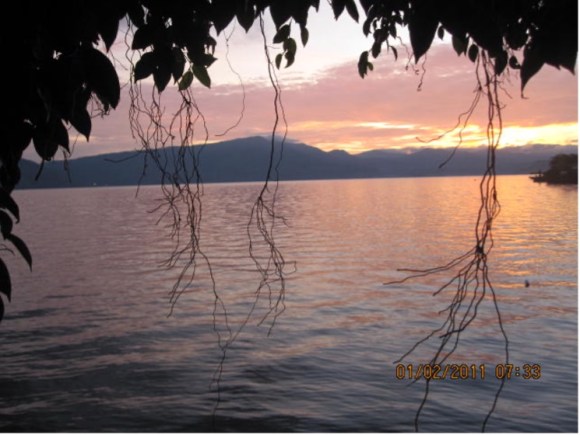
Volcanic Lake Toba. Photo Courtesy: Sybil Pretious

Philippines, Volcanoes & More

Click here to read.

Indonesia

Click here to read

Myanmar

Click here to read John Herlihy’s exhilaration with Myanmar in a pre-pandemic world in four-parts.

Australia

Click here to read Meredith Stephens’ sailing experiences between Adelaide and Kangaroo island.

Pandemic Diaries

Click here to read how Sunil Sharma moved continents, pausing in Maldives to find a new home in Canada.

Categories
Myanmar Special

Rohingyas, Rifts and Peace

One of the countries often in news nowadays is Myanmar or Burma. George Orwell’s novel, Burmese Days (1934), showcased a society afflicted by racism, exclusivity, nepotism and ignorance. Was his depiction accurate? What has changed from then to now? While the international community looks on, waiting for the country to solve its internal crises, citizens are victimised not only by the pandemic but also by a military coup. Some of them have been stateless for some time now, thrown out altogether for being ‘a threat to Buddhism’. Jessica Mudditt, an author and journalist, who spent four years in Myanmar saw fit to voice her experiences within a country with 135 ethnicities. Her memoir, Our Home in Myanmar – Four Years in Yangon ( 2021), showcases a country where anyone can be displaced at any point like the Rohingyas. With 90% of the population following Buddhism, how is the religion, born of the compassionate quest of a prince to alleviate human suffering, being interpreted? Recently, in an interview, Muddit said, “Most people outside Myanmar assume that Buddhism is a religion of peace, so they don’t understand why so much violence has taken place, or that Buddhism can turn militant and be infected with extreme nationalism.”

This special showcases Myanmar from various perspectives: from that of an expat journalist, from a travellers’, a local writer’s and it even has a translation of a Tagore poem that reflects on the compassion of a Buddhist sage revered in Myanmar, called Shin Upagutta or Upagupta. Why should Shin Upagutta’s devotees resort to violence? Seeking answers, we present this selection from our treasury.

Content

The Tryst, a story poem about Upagupta’s mercy by Rabindranath Tagore translated from Bengali. Click here to read.

In Conversation with Jessica Mudditt: Keith Lyons discusses with  Jessica Mudditt her memoir, Our Home in Myanmar, and its current relevance. Click here to read.

Book Review of Our Home in Myanmar by Keith Lyons. Click here to read.

An excerpt from Our Home in Myanmar, describing the trials faced by expat residents and media. Click here to read.

A slice of life in Myanmar from San Lin Tun, reflecting local colours. Click here to read.

In Once Upon a Time in Burma: Land of a Thousand Pagodas, John Herlihy explores the magnificent sites of Mandalay in company of a Slovenian friend in the first episode of his quartet on his Myanmar, set in the pre-covid world. Click here to read.

In Once Upon a Time in Burma: Of Babies and Buddhas, John Herlihy takes us through more of Myanmar with his companion, Peter, in the second part of his travelogue. Click here to read.

Categories
Contents

Borderless, September 2021

Editorial

The Caged Birds Sing…Click here to read.

Interviews

Professor Anvita Abbi, a Padma Shri, discusses her experience among the indigenous Andamanese and her new book on them, Voices from the Lost Horizon. Click here to read.

Keith Lyons talks to Jessica Mudditt about her memoir, Our Home in Myanmar, and the current events. Click here to read.

Translations

Be and It All Came into Being

Balochi poetry by Akbar Barakzai, translated by Fazal Baloch. Click here to read.

Adivasi Poetry

A poem by Jitendra Vasava translated from the Dehwali Bhili via Gujarati by Gopika Jadeja. Click here to read.

A Poem for The Ol Chiki

 Poetry by Sokhen Tudu, translated from the Santhali by Hansda Sowvendra Shekhar. Click here to read.

About Time

Korean poetry on time written and translated by Ilwha Choi. Click here to read.

Of Days and Seasons

A parable by the eminent Dutch writer, Louis Couperus (1863-1923), translated by Chaitali Sengupta. Click here to read.

Road to Nowhere

An unusual story about a man who heads for suicide, translated from Odiya by the author, Satya Misra. Click here to read.

Abhisar by Tagore

A story poem about a Buddhist monk by Rabindranath Tagore in Bengali has been translated by Mitali Chakravarty. Click here to read.

Poetry

Click on the names to read the poems

Arundhathi Subramaniam, Michael R Burch, Sekhar Banerjee, Jeff Shakes, Ashok Suri, Tim Heerdink, Srinivas S, Rhys Hughes, A Jessie Michael, George Freek, Saranayan BV, Gigi Baldovino Gosnell, Pramod Rastogi, Tohm Bakelas, Nikita Desai, Jay Nicholls, Smitha Vishwanathan, Jared Carter

Nature’s Musings

In Sun, Seas and Flowers, Penny Wilkes takes us for a tour of brilliant photographs of autumnal landscapes with verses. Click here to read.

Poets, Poetry & Rhys Hughes

In Memory Gongs, Rhys Hughes creates a profound myth tinged with a tongue in cheek outlook … Click here to read.

Essays

Crime and the Colonial Capital: Detective Reid in Calcutta

Abhishek Sarkar explores the colonial setting up of the Calcutta detective department in 1887. Click here to read.

The Myth of Happiness

Candice Louisa Daquin ponders over the impositions on people to declare themselves happy. Click here to read.

Once Upon a Time in Burma: Of Babies and Buddhas

John Herlihy takes us through more of Myanmar with his companion, Peter, in the second part of his travelogue. Click here to read.

Bhaskar’s Corner

Bhaskar Parichha explores links between Politics & the Media. Click here to read.

Musings/Slices from Life

Cyclists

Mike Smith muses about a black and white photograph from his childhood. Click here to read.

Leo Messi’s Magic Realism

Sports fan Saurabh Nagpal explores the magic realism in famous footballer Messi’s play with a soupçon of humour. Click here to read.

Infinite Possibilities & Mysterious Riddles

Keith Lyons gives a lively account of traveling across borders despite the pandemic. Click here to read.

Word Play

Geetha Ravichnadran explores additions to our vocabulary in a tongue-in-cheek article. Click here to read.

Musings of a Copywriter

In When I Almost Became a Professor, Devraj Singh Kalsi gives humour tinged reasons on why he detached himself from being an academician. Click here to read.

Stories

Flash Fiction: Turret

Niles M Reddick relates a haunting tale of ghosts and more. Click here to read.

Silver Lining

Dipayn Chakrabarti travels through moods of the day and night. Click here to read.

Captain Andi is in love

Dr. P Ravi Shankar explores a future beyond climate change in Malaysia. Click here to read.

The Cockatoo

Revathi Ganeshsundaram captures the stardust in ripening years. Click here to read.

The Missing Tile

Saeed Ibrahim’s story reflects on the ties between an old teacher and a student. Click here to read.

The Literary Fictionist

In Return of the Ghost, Sunil Sharma explores the borders between life, ideas and death. Click here to read.

Book Excerpt

An excerpt from Kobi’ and ‘Rani’: Memoirs and Correspondences of Nirmalkumari Mahalanobis and Rabindranath Tagore, translated by Somdatta Mandal, showcasing Tagore’s introduction and letters. Click here to read.

Book Reviews

Rakhi Dalal reviews Anvita Abbi’s Voices from the Lost Horizon. Click here to read.

Basudhara Roy reviews Bina Sarkar Ellias’ Song of a Rebel and Other Selected Poems. Click here to read.

Bhaskar Parichha reviews Wendy Doniger’s Winged Stallion and Wicked Mares. Click here to read.