Categories
Editorial

“Imagine all the people/Living life in peace”

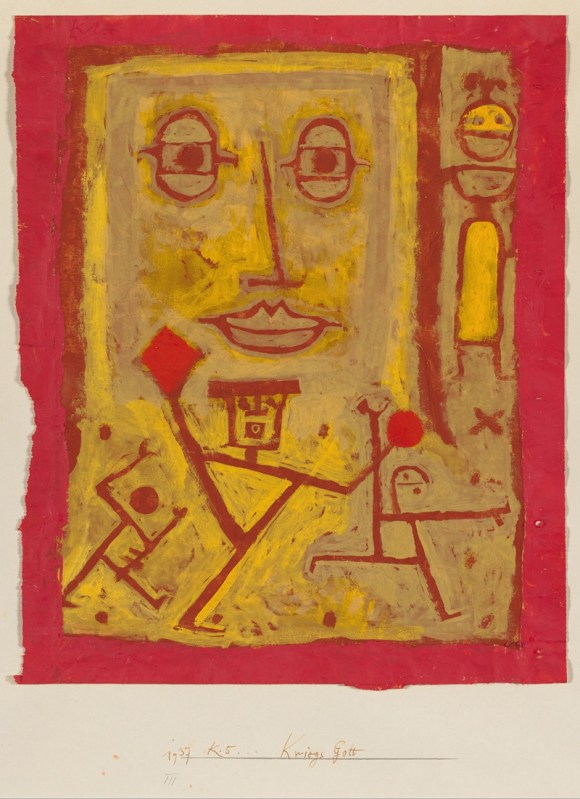
God of War by Paul Klee (1879-1940)
The sky weeps blood, the earth cannot contain
The sorrow of the young ones we've slain.
How now do dead kids laugh while stricken by red rain?

— from Stricken by Red Rain: Poems by Jim Bellamy

When there is war
And peace is gone
Where is their home?
Where do they belong?

— from Poems on Migrants by Kajoli Krishnan

Poetry, prose — all art forms — gather our emotions into concentrates that distil perhaps the finest in human emotions. They touch hearts across borders and gather us all with the commonality of feelings. We no longer care for borders drawn by divisive human constructs but find ourselves connecting despite distances. Strangers or enemies can feel the same emotions. Enemies are mostly created to guard walls made by those who want to keep us in boxes, making it easier to manage the masses. It is from these mass of civilians that soldiers are drawn, and from the same crowds, we can find the victims who die in bomb blasts. And yet, we — the masses — fight. For whom, for what and why? A hundred or more years ago, we had poets writing against wars and violence…they still do. Have we learnt nothing from the past, nothing from history — except to repeat ourselves in cycles? By now, war should have become redundant and deadly weapons out of date artefacts instead of threats that are still used to annihilate cities, humans, homes and ravage the Earth. Our major concerns should have evolved to working on social equity, peace, human welfare and climate change.

One of the people who had expressed deep concern for social equity and peace through his films and writings was Satyajit Ray. This issue has an essay that reflects how he used art to concretise his ideas by Dolly Narang, a gallery owner who brought Ray’s handiworks to limelight. The essay includes the maestro’s note in which he admits he considered himself a filmmaker and a writer but never an artist. But Ray had even invented typefaces! Artist Paritosh Sen’s introduction to Ray’s art has been included to add to the impact of Narang’s essay. Another person who consolidates photography and films to do pathbreaking work and tell stories on compelling issues like climate change and helping the differently-abled is Vijay S Jodha. Ratnottama Sengupta has interviewed this upcoming artiste.

Reflecting the themes of welfare and conflict, Prithvijeet Sinha’s essay takes us to a monument in Lucknow that had been built for love but fell victim to war. Some conflicts are personal like the ones of Odbayar Dorj who finds acceptance not in her hometown in Mongolia but in the city, she calls home now. Jun A. Alindogan from Manila explores social media in action whereas Eshana Sarah Singh takes us to her home in Jakarta to celebrate the Chinese New Year! Farouk Gulsara looks into the likely impact of genetic engineering in a world already ripped by violence and Devraj Singh Kalsi muses on his source of inspiration, his writing desk. Meredith Stephens tells the touching story of a mother’s concern for her child in Australia and Suzanne Kamata exhibits the same concern as she travels to Happy Village in Japan to meet her differently-abled daughter and her friends.

As these real-life narratives weave commonalities of human emotions, so do fictive stories. Some reflect the need for change. Fiona Sinclair writes a layered story set in London on how lived experiences define differences in human perspectives while Parnika Shirwaikar explores the need to learn to accept changes set in her part of the universe. Spandan Upadhyay explores the spirit of the city of Kolkata as a migrant with a focus on social equity. Both Paul Mirabile and Naramsetti Umamaheswararao write stories around childhood, one set in Europe and the other in Asia.

As prose weaves humanity together, so does poetry. We have poems from Jim Bellamy and Kajoli Krishnan both reflecting the impact of war and senseless violence on common humanity. Ryan Quinn Flanagan introduces us to Canadian bears in his poetry while Snigdha Agrawal makes us laugh with her lines about dogs and hatching Easter eggs! We have a wide range of poems from Snehprava Das, George Freek, Niranjan Aditya, Christine Belandres, Ajeeti S, Ron Pickett, Stuart McFarlane, Arthur Neong and Elizabeth Anne Pereira. Rhys Hughes concludes his series of photo poems with the one in this issue — especially showcasing how far a vivid imagination can twist reality with a British postman ‘carrying’ sweets from India! His column, laced with humour too, showcases in verse Lafcadio Hearn, a bridge between the East and West from more than a hundred years ago, a man who was born in Greece, worked in America and moved to Japan to even adopt a Japanese name.

Just as Hearn bridged cultures, translations help us discover how similarly all of us think despite distances in time and space. Radha Chakravarty’s translation of Kazi Nazrul Islam’s concerns about climate change and melting icecaps does just that! Professor Fakrul Alam’s translation of Nazrul’s lyrics from Bengali on women and on the commonality of human faith also make us wonder if ideas froze despite time moving on. Tagore’s poem titled Asha (hope) tends to make us introspect on the very idea of hope – just as we do now. At a more personal level, a contemporary poem reflecting on the concept of identity by Munir Momin has been translated from Balochi by Fazal Baloch. From Korean, Ihlwah Choi translates his own poem about losing the self in a crowd. We start a new column on translated Odia poetry from this month. The first one features the exquisite poetry of Bipin Nayak translated by Snehprava Das. Huge thanks to Bhaskar Parichha for bringing this whole project to fruition.

Parichha has also drawn bridges in reviews by bringing to us the memoirs of a man of mixed heritage, A Stranger in Three Worlds: The Memoirs of Aubrey Menen. Andreas Giesbert from Germany has reviewed Rhys Hughes’ The Devil’s Halo and Somdatta Mandal has discussed Arundhathi Nath’s translation, The Phantom’s Howl: Classic Tales of Ghosts and Hauntings from Bengal. Our book excerpts this time feature Devabrata Das’s One More Story About Climbing a Hill: Stories from Assam, translated by multiple translators from Assamese and Ryan Quinn Flangan’s new book, Ghosting My Way into the Afterlife, definitely poems worth mulling over with a toss of humour.

Do pause by our contents page for this issue and enjoy the reads. We are ever grateful to our ever-growing evergreen readership some of whom have started sharing their fabulous narratives with us. Thanks to all our readers and contributors. Huge thanks to our wonderful team without whose efforts we could not have curated such valuable content and thanks specially to Sohana Manzoor for her art. Thank you all for making a whiff of an idea a reality!

Let’s hope for peace, love and sanity!

Best wishes,

Mitali Chakravarty

borderlessjournal.com

Click here to access the contents page for the May 2025 Issue

READ THE LATEST UPDATES ON THE FIRST BORDERLESS ANTHOLOGY, MONALISA NO LONGER SMILES, BY CLICKING ON THIS LINK.

Categories
Editorial

And Wilderness is Paradise Enow…

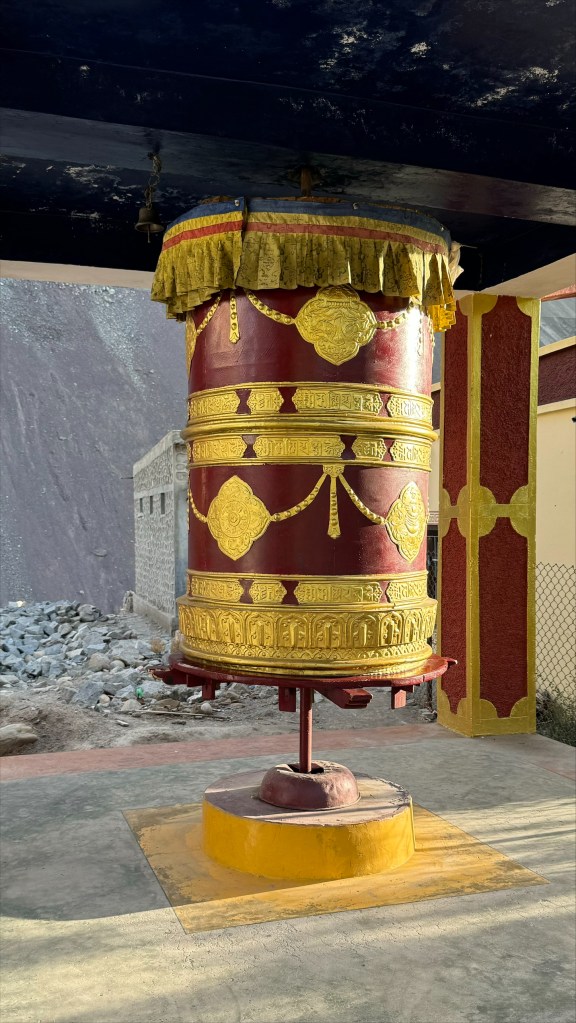
Prayer Wheel at Nurulia, Ladakh. Photo Courtesy: Farouk Gulsara
We lock eyes, find glimmers
of smiles, trust our leaders.
We break bread with strangers
because there aren’t any.

--Imagine by Miriam Bassuk

Imagine the world envisioned by John Lennon. Imagine the world envisioned and partly materialised by Tagore in his pet twin projects of Santiniketan and Sriniketan, training institutes made with the intent of moving towards creating a work force that would dedicate their lives to human weal, to closing social gaps borne of human constructs and to uplifting the less privileged by educating them and giving them the means to earn a livelihood. You might well call these people visionaries and utopian dreamers, but were they? Tagore had hoped to inspire with his model institutions.  In 1939, he wrote in a letter: “My path, as you know, lies in the domain of quiet integral action and thought, my units must be few and small, and I can but face human problems in relation to some basic village or cultural area. So, in the midst of worldwide anguish, and with the problems of over three hundred millions staring us in the face, I stick to my work in Santiniketan and Sriniketan hoping that my efforts will touch the heart of our village neighbours and help them in reasserting themselves in a new social order. If we can give a start to a few villages, they would perhaps be an inspiration to some others—and my life work will have been done.”  But did we really have a new social order or try to emulate him?

If we had acted out of compassion and kindness towards redefining with a new social order, as Miriam Bassuk points out in her poem based on Lennon’s lyrics of Imagine, there would be no strangers. We’d all be friends living in harmony and creating a world with compassion, kindness, love and tolerance. We would not have wars or regional geopolitical tensions which act against human weal. Perhaps, we would not have had the issues of war of climate change take on the proportions that are wrecking our own constructs.

Natural disasters, floods, fires, landslides have affected many of our lives. Bringing us close to such a disaster is an essay by Salma A Shafi at ground level in Noakhali. More than 4.5 million were affected and 71 died in this disaster. Another 23 died in the same spate of floods in Tripura with 65,000 affected. We are looking at a single region here, but such disasters seem to be becoming more frequent. And yet. there had been a time when Noakhali was an idyllic vacation spot as reflected in Professor Fakrul Alam’s nostalgic essay, filled with memories of love, green outdoors and kindnesses. Such emotions reverberate in Ravi Shankar’s account of his medical adventures in the highlands of Kerala, a state that suffered a stupendous landslide last month. While Shafi shows how extreme rainfall can cause disasters, Keith Lyons writes of water, whose waves in oceanic form lap landmasses like bridges. He finds a microcosm of the whole world in a swimming pool as migrants find their way to New Zealand too. Farouk Gulsara muses on kindness and caregiving while Priyanka Panwar ponders about ordinary days. Saeed Ibrahim gives a literary twist to our musings.   Tongue in cheek humour is woven into our nonfiction section by Suzanne Kamata’s notes from Japan, Devraj Singh Kalsi’s piece on premature greying and Uday Deshwal’s paean to his sunglasses!

Humour is wrought into poetry by Rhys Hughes. Supriya Javelkar and Shamik Banerjee have cheeky poems that make you smile. We have poetry on love by Michael Burch and poetry for Dylan Thomas by Ryan Quinn Flanagan. Miriam Bassuk has described a Utopian world… but very much in the spirit of our journal. Variety is brought into our journal with poetry from Jackie Kabir, Jennifer McCormack, Craig Kirchner, Stuart MacFarlane, George Freek, Luis Cuauhtémoc Berriozábal and many more.

In translations, we have Nazrul lyrics transcreated from Bengali by Professor Alam and poetry from Korean by Ihlwha Choi. We pay our respects to an eminent Balochi poet who passed on exactly a year ago, Mubarak Qazi, by carrying a translation by Fazal Baloch. Tagore’s Suprobhat (Good morning) has been rendered in English from Bengali. His descriptions of the morning are layered and amazing — with a hint of the need to reconstruct our world, very relevant even today.  A powerful essay by Tagore called Raja O Praja (The King and His Subjects), has been translated by Himadri Lahiri.

Our fiction hosts two narratives that centre around childhood, one by Naramsetti Umamaheswararao and another by G Venkatesh, though with very different approaches. Mahila Iqbal relates a poignant tale about aging, mental health and neglect, the very antithesis of Gulsara’s musing. Paul Mirabile has given a strange story about a ‘useless idler’.

A short story collection has been reviewed by Rakhi Dalal, Swadesh Deepak’s A Bouquet of Dead Flowers, translated from Hindi by Jerry Pinto, Pratik Kanjilal, Nirupama Dutt, Sukant Deepak. Somdatta Mandal has written about a book by a Kashmiri immigrant which is part based on lived experiences and part fictive, Karan Mujoo’s This Our Paradise: A Novel. Bhaskar Parichha has reviewed Ayurveda, Nation and Society: United Provinces, c. 1890–1950 by Saurav Kumar Rai, a book which shows how healthcare was even a hundred years ago, politicised. Meenakshi Malhotra has reviewed Anuradha Marwah’s novel, Aunties of Vasant Kunj, of which we also have an excerpt. The other excerpt is from Mineke Schipper’s Widows: A Global History. Ratnottama Sengupta converses with Reba Som, author of Hop, Skip and Jump; Peregrinations of a Diplomat’s Wife.

We have more content that adds to the vibrancy of the issue. Do pause by this issue and take a look. This issue would not have been possible without all your writings. Thank you for that. Huge thanks to our readers and our team, without whose support we could not have come this far. I would especially like to thank Sohana Manzoor for her continued supply of her fabulous and distinctive artwork and Gulsara for his fabulous photographs.

Let us look forward to a festive season which awakens each autumn and stretches to winter. May we in this season find love, compassion and kindness in our hearts towards our whole human family.

Have a wonderful month!

Mitali Chakravarty

borderlessjournal.com

Click here to access the content’s page for the September 2024 Issue.

.

READ THE LATEST UPDATES ON THE FIRST BORDERLESS ANTHOLOGY, MONALISA NO LONGER SMILES, BY CLICKING ON THIS LINK.

Categories
Poetry

Imagine by Miriam Bassuk

Miriam Bassuk
IMAGINE
With a nod to John Lennon

Imagine a land
of milk and honey,
a destination, where manna
rains down to nourish us all.

In that space, greed and hunger
have no room. Trust
reigns. Even fear disappears.

We no longer startle
at loud sounds
or imagine shotguns
mowing down
innocent bystanders.

There’s no standing army.
Penguins walk freely
in the Falklands,
where once men
were afraid to tread
because of land mines.

We lock eyes, find glimmers
of smiles, trust our leaders.
We break bread with strangers
because there aren’t any.

Miriam Bassuk is inspired by her daily walks — the teeming life of eagles, herons, and the occasional sighting of Orcas that thrive in the Puget Sound. She has been published in The Journal of Sacred Feminine Wisdom, Raven Chronicles, PoetsWest Literary Journal, and 3 Elements Review. She was one of the featured poets in the digital portion of the WA 129 project sponsored by the Washington State poet laureate.

.

PLEASE NOTE: ARTICLES CAN ONLY BE REPRODUCED IN OTHER SITES WITH DUE ACKNOWLEDGEMENT TO BORDERLESS JOURNAL

Click here to access the Borderless anthology, Monalisa No Longer Smiles

Click here to access Monalisa No Longer Smiles on Kindle Amazon International

Categories
Editorial

As Imagination Bodies Forth…

Painting by Sybil Pretious
And as imagination bodies forth
The forms of things unknown, the poet's pen
Turns them to shapes and gives to airy nothing
A local habitation and a name

 A Midsummer Night's Dream (1595) by William Shakespeare

Famous lines by Shakespeare that reflect on one of the most unique qualities in not only poets — as he states — but also in all humans, imagination, which helps us create our own constructs, build walls, draw boundaries as well as create wonderful paintings, invent planes, fly to the moon and write beautiful poetry. I wonder if animals or plants have the same ability? Then, there are some who, react to the impact of imagined constructs that hurt humanity. They write fabulous poetry or lyrics protesting war as well as dream of a world without war. Could we in times such as these imagine a world at peace, and — even more unusually — filled with consideration, kindness, love and brotherhood as suggested by Lennon’s lyrics in ‘Imagine’ – “Imagine all the people/ Livin’ life in peace…”. These are ideas that have been wafting in the world since times immemorial. And yet, they seem to be drifting in a breeze that caresses but continues to elude our grasp.

Under such circumstances, what can be more alluring than reflective Sufi poetry by an empathetic soul. Featuring an interview and poetry by such a poet, Afsar Mohammad, we bring to you his journey from a “small rural setting” in Telangana to University of Pennsylvania, where he teaches South Asian Studies. He is bilingual and has brought out many books, including one with his translated poetry. Translations this time start with Bankim Chandra Chattopadhyay’s advice to new writers in Bengali, introduced and brought to us by Abdullah-Al-Musayeb. Tagore’s seasonal poem, ‘Megh or Cloud’, has been transcreated to harmonise with the onset of monsoons. However, this year with the El Nino and as the impact of climate change sets in, the monsoons have turned awry and are flooding the world. At a spiritual plane, the maestro’s lines in this poem do reflect on the transience of nature (and life). Professor Fakrul Alam’s translation of Masud Khan’s heartfelt poetry on rain brings to the fore the discontent of the age while conveying the migrant’s dilemma of being divided between two lands. Fazal Baloch has brought us a powerful Balochi poet from the 1960s in translation, Bashir Baidar. His poetry cries out with compassion yet overpowers with its brutality. Sangita Swechcha’s Nepali poem celebrating a girl child has been translated by Hem Bishwakarma while Ihlwha Choi has brought his own Korean poem to readers in English.

An imagined but divided world has been explored by Michael Burch with his powerful poetry. Heath Brougher has shared with us lines that discomfit, convey with vehemence and is deeply reflective of the world we live in. Masha Hassan is a voice that dwells on such an imagined divide that ripped many parts of the world — division that history dubs as the Partition. Don Webb upends Heraclitus’s wisdom: “War is the Father of All, / War is the King of All.” War, as we all know, is entirely a human-made construct and destroys humanity and one cannot but agree with Webb’s conclusion.  We have more from Kirpal Singh, Ryan Quinn Flanagan, Nivedita N, John Grey, Carol D’Souza, Vernon Daim, George Freek, Saranyan BV, Samantha Underhill and among the many others, of course Rhys Hughes, who has given us poetry with a unique alphabetical rhyme scheme invented by him and it’s funny too… much like his perceptions on ‘Productivity’, where laziness accounts for an increase in output!

Keith Lyons has mused on attitudes too, though with a more candid outlook as has Devraj Singh Kalsi with a touch of nostalgia. Ramona Sen has brought in humour to the non-fiction section with her tasteful palate. Meredith Stephens takes us on a picturesque adventure to Sierra Nevada Mountains with her camera and narrative while Ravi Shankar journeys through museums in Kuala Lumpur. We travel to Japan with Suzanne Kamata and, through fiction, to different parts of the Earth as the narratives hail from Bangladesh, France and Singapore.

Ratnottama Sengupta takes us back to how imagined differences can rip humanity by sharing a letter from her brother stationed in Bosnia during the war that broke Yugoslavia (1992-1995). He writes: “It is hard to be surrounded by so much tragedy and not be repulsed by war and the people who lead nations into them.” This tone flows into our book excerpts section with Red Sky Over Kabul: A Memoir of a Father and Son in Afghanistan by Baryalai Popalzai and Kevin McLean. Popalzai was affected by the Russian invasion of Afghanistan in 1980 and had to flee. A different kind of battle can be found in the other excerpt from The Blue Dragonfly – healing through poetry by Veronica Eley – a spiritual battle to heal from experiences that break.

In our reviews section, KPP Nambiar reviews The Stolen Necklace: A Small Crime in a Small Town by Shevlin Sebastian and VK Thajudheen, a book that retells a true story. Sangeetha G’s novel, Drop of the Last Cloud, we are told by Rakhi Dalal, explores the matrilineal heritage of Kerala, that changed to patriarchal over time. Bhaskar Parichha reviews Burning Pyres, Mass Graves and A State That Failed Its People: India’s Covid Tragedy by Harsh Mander. Parichha emphasises the need never to forget the past: “It is a powerful book and sometimes it is even shattering. The narrative is a live remembrance of a national tragedy that too many of us wish to forget when we should, instead, etch it in our minds so that we can prevent another national tragedy like this one from recurring in the future.”  While we need to learn from the past as Parichha suggests, Somdatta Mandal has given a review that makes us want to read Ujjal Dosanjh’s book, The Past is Never Dead: A Novel. She concludes that it “pays tribute to the courage and tenacity of the human spirit and its capacity for hope despite all odds.”

We have more content than mentioned here… all of it enhances the texture of our journal. Do pause by our July issue to savour all the writings. Huge thanks to all our contributors, artists, all our readers and our wonderful team. Without each one of you, this edition would not have been what it is.

Thank you all.

Have a wonderful month!

Mitali Chakravarty

borderlessjournal.com

.

Visit the July edition’s content page by clicking here

READ THE LATEST UPDATES ON THE FIRST BORDERLESS ANTHOLOGY, MONALISA NO LONGER SMILES, BY CLICKING ON THIS LINK.

Categories
Editorial

Where have All the People Gone?

Courtesy: Creative Commons

Can humankind ever stop warring and find peace?

Perhaps, most sceptics will say it is against human nature to stop fighting and fanning differences. The first recorded war was fought more than 13,000 years ago in what is now a desert but was green long ago. Nature changed its face. Continents altered over time. And now again, we are faced with strange shifts in climate that could redefine not just the dimensions of the surface area available to humankind but also our very physical existence. Can we absorb these changes as a species when we cannot change our nature to self-destruct for concepts that with a little redefining could move towards a world without wars leading to famines, starvation, destruction of beautiful edifices of nature and those built by humankind? That we could feed all of humans — a theory that won economist Abhijit Banerjee his Nobel Prize in 2019 so coveted by all humanity — almost seems to have taken a backseat. This confuses — as lemmings self-destruct…do humans too? I would have thought that all humanity would have moved towards resolving hunger and facing the climate crises post-2019 and post-pandemic, instead of killing each other for retaining constructs created by powerbrokers.

In the timeless lyrics of ‘Imagine’, John Lennon found peace by suggesting we do away with manmade constructs which breed war, anger and divisions and share the world as one. Wilfred Owen and many writers involved in the World Wars wrote to showcase the desolation and the heartfelt darkness that is brought on by such acts. Nazrul also created a story based on his experience in the First World War, ‘Hena’, translated for us by Sohana Manzoor. Showcasing the downside of another kind of conflict, a struggle to survive, is a story with a distinctive and yet light touch from S Ramakrishnan translated from Tamil by B Chandramouli. And yet in a conflict-ridden world, humans still yearn to survive, as is evident from Tagore’s poem Pran or ‘Life’. Reflecting it is the conditioning that we go through from our birth that makes us act as we do are translations by Professor Fakrul Alam of Masud Khan’s poetry and from Korean by Ihlwha Choi.

A figure who questioned his own conditioning and founded a new path towards survival; propounded living by need, and not greed; renounced violence and founded a creed that has survived more than 2500 years, is the man who rose to be the Buddha. Born as Prince Siddhartha, he redefined the norms with messages of love and peace. Reiterating the story of this legendary human is debutante author, Advait Kottary with his compelling Siddhartha: The Boy Who Became the Buddha, a book that has been featured in our excerpts too. In an interview, Kottary tells us more of what went into the making of the book which perhaps is the best survivor’s guide for humanity — not that we need to all become Buddhas but more that we need to relook at our own beliefs, choices and ways of life.

Another thinker-cum-film maker interviewed in this edition is Vinta Nanda for her film Shout, which highlights and seeks resolutions for another kind of crisis faced by one half of the world population today. She has been interviewed and her documentary reviewed by Shantanu Ray Chaudhuri. Chaudhuri has also given us an essay on a bookshop called Kunzum which continues to expand and go against the belief we have of shrinking hardcopy markets.

The bookshop has set out to redefine norms as have some of the books featured in our reviews this time, such as Rhys Hughes’ latest The Wistful Wanderings of Perceval Pitthelm. The reviewed by Rakhi Dalal contends that the subtitle is especially relevant as it explores what it says — “The Absurdity of Existence and The Futility of Human Desire” to arrive at what a person really needs. Prerna Gill’s Meanwhile reviewed by Basudhara Roy and poetry excerpted from Greening the Earth: A Global Anthology of Poetry, edited by K. Satchidanandan and Nishi Chawla, also make for relooking at the world through different lenses. Somdatta Mandal has written about Behind Latticed Marble: Inner Worlds of Women by Jyotirmoyee Devi Sen, translated by Apala G. Egan and Bhaskar Parichha has taken us on a gastronomic tour with Zac O’Yeah’s Digesting India: A Travel Writer’s Sub-Continental Adventures with the Tummy (A Memoir À La Carte).

Gastronomical adventures seem to be another concurrent theme in this edition. Rhys Hughes has written of the Indian sweets with gulab jamun as the ultimate life saver from Yetis while trekking in the Himalayas! A musing on lemon pickle by Raka Banerjee and Ravi Shankar’s quest for the ultimate dosa around the world — from India, to Malaysia, to Aruba, Nepal and more… tickle our palate and make us wonder at the role of food in our lives as does the story about biryani battles by Anagaha Narasimha.

Talk of war, perhaps, conjures up gastronomic dreams as often scarcity of food and resources, even potable water and electricity is a reality of war or conflict. Michael Burch brings to us poignant poetry about war as Ramesh Karthik Nayak has a poem on a weapon used in wars. Ryan Quinn Flanagan has brought another kind of ongoing conflict to our focus with his poetry centring on the National Day (May 5th) in Canada for Vigils for Missing and Murdered Indigenous Women by hanging red clothes from trees, an issue that perhaps has echoes of Vinta Nanda’s Shout and Suzanne Kamata’s poetry for her friend who went missing decades ago as opposed to Rachel Jayen’s defiant poetry where she asserts her womanhood. Ron Pickett, George Freek and Sayantan Sur have given us introspective perspectives in verse. We have more poetry asking for a relook at societal norms with tongue-in -cheek humour by Jason Ryberg and of course, Rhys Hughes with his heartfelt poem on raiders in deserts.

The piece that really brought a smile to the lips this time was Farouk Gulsara’s ‘Humbled by a Pig’, a humorous recount of man’s struggles with nature after he has disrupted it. Keith Lyons has taken a look at the concept of bucket lists, another strange construct, in a light vein. Devraj Singh Kalsi has given a poignant and empathetic piece about trees with a self-reflective and ironic twist. We have narratives from around the world with Suzanne Kamata taking us to Osaka Comic Convention, Meredith Stephens to Sierra Nevada and Shivani Shrivastav to Ladakh. Paul Mirabile has travelled to the subterranean world with his fiction, in the footsteps perhaps of Jules Verne but not quite.

We are grateful to all our wonderful contributors some of whom have not been mentioned here but their works were selected because they truly enriched our June edition. Do visit our contents page to meet and greet all our wonderful authors. I would like to thank the team at Borderless without whose efforts and encouragement our journal would not exist and Sohana Manzoor especially for her fantastic artwork as well. Thank you all.

Wish you another lovely month of interesting reads!

Mitali Chakravarty

borderlessjournal.com

.

READ THE LATEST UPDATES ON THE FIRST BORDERLESS ANTHOLOGY, MONALISA NO LONGER SMILES, BY CLICKING ON THIS LINK.
Categories
celebrations

Borderless Birthday Bonanza

Figments caught straying in whispers of a dream,
Weave together till they form a visible stream,
Filling a void with voices that sing,
With freedom and impunity ring,
Giving credence to a distant, imagined realm.

— Introduction, Monalisa No Longer Smiles: An Anthology of Writings from across the World

As we complete three years of our virtual existence in clouds, connecting, collecting and curating words of ideators, we step into our fourth year with the pleasurable experience of being in bookshops in hardcopy too. Monalisa No Longer Smiles: An Anthology of Writings from across the World, our first hardcopy anthology, takes us into the realm of real books which have evolved over eons in history. This anthology connects us to those who hesitate to step into the virtual world created by technology. And there are many such people – as ingrained in the human heritage is a love for rustling paper and the smell of books. We have had some excellent reviews, praising not just the content but also the production of the book – the cover, the print and the feel. The collection bonds traditional greats with upcoming modern voices. We are grateful to our publisher, Om Books International, Shantanu Ray Chaudhuri, Jyotsna Mehta and their team for giving our book a chance. We do look forward to more anthologies hopefully in the future.

The writings we have collected over the last three years are reflective of diverse voices— some in concurrence with our thought processes and some in discussion or even in divergence. We have a variety of forms — poetry, conversations, fiction and non-fiction. Some are humorous and some serious. We try to move towards creating new trends as reflected in our anthology and our journal. For instance, Monalisa No Longer Smiles starts with an experiment — a limerick was adapted to express the intent of our book and journal; whereas normally this form is used to express light, or even bawdy sentiments. Perhaps, as the limerick says, we will find credence towards a new world, a new thought, a restructuring of jaded systems that cry out for a change.

Borderless Journal did not exist before 2020. Within three years of its existence, our published pieces have found voices in this anthology, in other books, journals and even have been translated to a number of languages. Our own translation section grows stronger by the day supported by translators like Aruna Chakravarti, Fakrul Alam, Radha Chakravarty and Somdatta Mandal. Our interviews and conversations probe to find similarities and divergences in viewpoints. Our stories tell a good tale rather than indulge in stylistic interplay and our poetry is meant to touch hearts, creating a bond between the writers and anglophone readers. What we hope to do is to expose our readers to writing that they can understand. Writers get lost at times with the joy of creating something new or unique and construct an abstraction that can be intimidating for readers. We hope to host writing that is comprehensible, lucid and clear to the lay person.

What we look forward to homing in the coming months is a mingling of different art forms to birth new ideas that will help our species move progressively towards a world in harmony, filled with peace and love, giving credence to voices like that of Tagore, Nazrul or Lennon. “Imagine there’s no heaven…Imagine there’s no countries…no religion, too…Imagine all the people/ Livin’ life in peace…Imagine all the people/ Sharing all the world…” The need to redefine has been felt and as Lennon says in his last paragraph: “You may say I’m a dreamer/ But I’m not the only one/ I hope someday you’ll join us/ And the world will live as one.” With this hope, we continue our journey into another year – a new adventure that will take us to a universe where heaven can be found on Earth, grounded and real, within the human reach and can be shared without war, greed, hatred and anger.

Here, we share with you a few iconic pieces that have found their way to our pages within the last three years.

Poetry

Poems by Arundhathi Subramaniam houses three poems. Click here to read. The following poems from her collection can be found here.

  1. When God is a Traveller (titular poem from her Sahitya Akademi Award winning book)
  2. Eight Poems for Shankuntala
  3. The Fine Art of Ageing

Murmuration by Jared Carter. Click here to read.

Poems by Sukrita Paul Kumar: Poetry on Ukraine. Click here to read.

Arthurian Legends by Michael R Burch. Click here to read.

Conversations

Keith Lyons talks to Jessica Mudditt about her memoir, Our Home in Myanmar, and the current events. Click here to read.

Unveiling Afghanistan: In Conversation with Nazes Afroz, former editor of BBC and translator of a book on Afghanistan which reflects on the present-day crisis. Click here to read.

Professor Anvita Abbi, a Padma Shri, discusses her experience among the indigenous Andamanese and her new book on them, Voices from the Lost Horizon. Click here to read.

In Conversation with Akbar Barakzai, a ‘Part-time Poet’ in Exile: The last interview of Akbar Barakzai where he says, ‘The East and the West are slowly but steadily inching towards each other. Despite enormous odds “the twain” are destined to “meet” and be united to get rid of the geographical lines…’ Click here to read more.

The Making of Historical Fiction: A Conversation with Aruna Chakravarti unfolds the creation of her latest novel, The Mendicant Prince, based on the prince of Bhawal controversy in the first part of the last century. Click here to read. 

Fiction

Half-Sisters: Sohana Manzoor explores the darker regions of human thought with a haunting psychological narrative about familial structures. Click here to read.

Rituals in the Garden: Marcelo Medone discusses motherhood, aging and loss in this poignant flash fiction from Argentina. Click here to read.

Navigational Error: Luke P.G. Draper explores the impact of pollution with a short compelling narrative. Click here to read.

The American Wonder: Steve Ogah takes us to a village in Nigeria. Click here to read.

Columns

Poets, Poetry & Rhys Hughes: A column by Rhys Hughes which can be fun poetry or prose. Click here to read.

Bhaskar’s Corner: Essays on contemporary life by Bhaskar Parichha. Click here to read.

Musings of a Copywriter: Humour by Devraj Singh Kalsi. Click here to read.

Pandies’ Corner: These narratives highlight the ongoing struggle against debilitating rigid boundaries drawn by societal norms, with the support from organisations like Shaktishalini and Pandies. Click here to read.

Notes from Japan by Suzanne Kamata: A column that takes us closer to Japan. Click here to read.

Non- Fiction

Dilip Kumar: Kohinoor-e-Hind: Ratnottama Sengupta recollects the days the great actor sprinted about on the sets of Bombay’s studios …spiced up with fragments from the autobiography of Sengupta’s father, Nabendu Ghosh. Click here to read. 

The Ultimate Genius of Kishore Kumar: Shantanu Ray Chaudhuri, an eminent film critic, writes on the legend of Kishore Kumar. Click here to read.

Farewell Keri Hulme: A tribute by Keith Lyons to the first New Zealand Booker Prize winner, Keri Hulme, recalling his non-literary encounters with the sequestered author. Click here to read.

Epaar Bangla, Opaar Bangla:  Bengals of the Mind: Asad Latif explores if homeland is defined by birth. Click here to read.

At Home in the World: Tagore, Gandhi and the Quest for Alternative Masculinities: Meenakshi Malhotra explores the role of masculinity in Nationalism prescribed by Tagore, his niece Sarala Debi, Gandhi and Colonials. Click here to read.

Just a Face on Currency Notes?: Debraj Mookerjee explores Gandhi-ism in contemporary times. Click here to read.

The Idea of India: Bharata Bhagya Bidhata – The Making of a Motherland: Anasuya Bhar explores the history of the National Anthem of India, composed by Tagore in Bengali and translated only by the poet himself and by Aruna Chakravarti. Click here to read.

Translations

Tagore Translations, including translations by Aruna Chakravarti, Fakrul Alam, Somdatta Mandal and Radha Chakravarty. Click here to read.

Nazrul Translations, including Professor Fakrul Alam and Sohana Manzoor. Click here to read.

Gandhi & Robot by Thangjam Ibopishak, translated from the Manipuri by Robin S Ngangom. Click here to read.

Songs of Freedom by Akbar Barakzai, poems translated from Balochi by Fazal Baloch. Click here to read.

Give Me A Rag, Please:A short story by Nabendu Ghosh, translated by Ratnottama Sengupta, set in the 1943 Bengal Famine, which reflects on man’s basic needs. Click here to read.

Thanks to our team, contributors and readers for being a part of our journey. Let’s sail onwards…

Painting by Sohana Manzoor

Mitali Chakravarty

borderlessjournal.com

Categories
Independence Day

“Imagine All the People Livin’ Life in Peace…”

Since 1991, Ukraine has been celebrating its Independence Day on August 24th. As another year of its independent existence starts, it is unfortunately embroiled in a state of war for the last six months where large parts of its territory have been forcefully conquered by the invading Russian army and cities have faced erasure — razed to the ground by incessant, unceasing, ruthless violence. Many human lives have been lost, more refugees generated and thousands have been wounded or taken prisoners. Families have been torn and natural resources depleted.

This year of all years, it’s most important to commemorate Ukraine’s Independence Day — to reaffirm the recognition given to a region and a culture that binds the residents together into an independent entity. One wonders if dreams as Lennon’s of “all the people/ Livin’ life in peace” could ever come true and have us create a beautiful haven on Earth where wars would be a narrative from the past…

Imagine there's no heaven
It's easy if you try
No hell below us
Above us, only sky

Imagine all the people
Livin' for today
Ah

Imagine there's no countries
It isn't hard to do
Nothing to kill or die for
And no religion, too

Imagine all the people
Livin' life in peace
You....

Imagine all the people
Sharing all the world
You

{Excerpted from "Imagine"(1971) by John Lennon (1940-1980)}

Voicing out in unison against the violence and violations faced by our fellow humans in war zones, we bring to you poetry and prose by fourteen writers from nine different countries, including one who had to flee Ukraine as the shelling shattered Kharkiv.

Poetry

Poetry from across the world in support of peace and voicing concerns over the humanitarian crisis in Ukraine, we have Ukranian Lesya Bakun give us poetry as a war victim, a refugee. Rhys HughesRon PickettMichael R BurchKirpal SinghMalachi Edwin VethamaniSuzanne KamataMini BabuSybil Pretious and Mitali Chakravarty have contributed poetry written for the Ukraine crisis. Click here to read How Many Times Must the Cannonballs Fly…?”

Cry the Sunflower by Ihlwha Choi, who wrote the poem in Korean and translated it for our readers. Click here to read.

Utopia by Supatra Sen. Click here to read.

This Grey Morning by Marianne Tefft. Click here to read.

Prose

A Voice from Kharkiv: An interview with a Ukrainian refugee, Lesya Bakun. Click here to read.

When will we ever learn? Oh, will we ever learn?: Ratnottama Sengupta, comments on the situation in Ukraine while dwelling on her memorable meeting with folk legend Pete Seeger, a pacifist, who wrote ‘Where have all the Flowers gone’, based on a folk song from Ukraine. Click here to read.

Categories
World Poetry Day

Imagine…

And as imagination bodies forth 
The forms of things unknown, the poet's pen 
Turns them to shapes and gives to airy nothing 
A local habitation and a name. 

-- Midsummer Night's Dream (premiered 1605)by William Shakespeare

Imagine… if words could weave a world in harmony! Perhaps… then as Shakespeare declared and more recently John Lennon wrote in his song ‘Imagine’ (1971), we might have constructed a new world…

In hope of the same perhaps, Nazrul had published his poem, ‘Bidrohi‘ or the rebel a hundred years ago, a few months before TS Eliot published Wasteland, again a poem raising humane concerns and reinforcing values post the First World War. More recently Akbar Barakzai who has passed on at the start of this month, wrote about a better world in his poem, ‘We are all Human‘. And yet we have a war …

In response to the war, we have modern voices that ring out in harmony, including the voice of a Ukranian refugee. In reaffirmation of a world that can transcend divisions created by human constructs and soar in a virtual world, we also present to you interviews of half-a-dozen poets.

From the Treasury

Rebel or ‘Bidrohi’: Nazrul’s signature poem from 1922, ‘Bidrohi, translated by Professor Fakrul Alam. Click here to read.

A Special Tribute

We are All Human by Akbar Barkzai, translated by Fazal Baloch, has been published as not only a tribute to the poet who left us forever on 7/3/2022, but also as his paean to humanity to rise about differences which lead to war and horror, to unite us as one humankind. Click here to read.

War, Peace and Poetry

Poetry from across the world in support of peace and voicing concerns over the humanitarian crisis in Ukraine, we have Ukranian Lesya Bakun give us poetry as a war victim, a refugee. Rhys Hughes, Ron Pickett, Michael R Burch, Kirpal Singh, Malachi Edwin Vethamani, Suzanne Kamata, Mini Babu, Sybil Pretious and Mitali Chakravarty have contributed poetry written for the Ukraine crisis. Click here to read.

Poets across Borders

Half-a-dozen poets from different continents tell us about their poetry. The poets include Ryan Quinn Flanagan, George Freek, Luis Cuauhtémoc Berriozabal, Ihlwha Choi, Sutputra Radheye, Anusuya Bhar. Click here to read.

Categories
Slices from Life

‘When will we ever learn? Oh, will we ever learn?’

Pete Seeger (1919-2014) lamented about the futility of war, but he also imparted hope, says Ratnottama Sengupta, as she recalls her memorable meeting with folk legend Seeger, in a tete-a-tete with friends

Courtesy: Creative Commons

Last week, as people crowded the Kiev railway station to flee the Ukrainian capital, visuals started trending of the giant staircase inside the pedestrian bridge over the Yauza River to the Kiev Railway Station, the deepest station in the world. It reminded Sonia, my batchmate from Elphinstone College, of the hours she’d spent on the fabulous stairs that take you all the way down with her father who had an attack of trachycardia as they arrived in Kiev by a train from Moscow. “With great difficulty we made our way to the waiting hall from which you have to descend by this enormous staircase. I remember all the Ukrainians helped us, just as all the Russians would help us. And father kept taking Calmposes until I supported him down the stairs into a cab that took us from the station to the hotel.”

Only after that Sonia had called for an ambulance. But why not do that two hours ago? “Because father did not want me to engage with the local health authorities as we didn’t know whether they would have the drugs he used and had forgotten in India,” she explained. “And as soon as I made that call, within five minutes the ambulance was there – with that drug.” Only after that Sonia found out that Kiev has the fastest ambulance service in the world – “and the finest,” she added – “because of what they faced in WWII…” 

All through those few hours Sonia felt so supported by the local people. “I didn’t have to explain anything to the cab driver or the hotel staff – we were whisked into our room and then I went back to check in!” So today Sonia wonders how people in the bunkers are coping with small necessities such as brushing their teeth. Even as she sends Kiev her love and prayers, she feels that “peace keeping forces have to go in rather than arming Ukraine.”

“But who will stand in the line of fire?” quips Liz George, another college mate. “So, may God help the people who are facing such terrible times!” she echoes Sonia. “May god protect everyone in Kiev,” Bhamini Subramanian’s heart goes out to the innocent civilians who lost their lives and the countless families displaced, fleeing and seeking shelter to save their lives…

Watching images of the bizarre war at Kiev opens a floodgate of memories amongst us. “Yet, put aside politics and people anywhere in the world are ready to go out of their way to help people in dire situations,” Sonia sums up. And, like her, I have seen from my travels around the world that people are the same everywhere – they just want the humdrum of a normal, peaceful day to day life. But circumstances – “and policies,” Sonia adds deny a whole lot of them that. “Wish we could find a less harmful way to settle disputes,” we sigh.

*

The mention of the staircase made me think of the Potemkin Steps – the giant stairway in Odessa, another landmark habitation in Ukraine. Originally known as the Boulevard Steps, or the Giant Steps, these are considered the formal entrance into the city from the sea. Odessa, perched on a high steppe plateau, needed direct access to the harbour below which was, in days of yore, connected only by winding path and crude wooden stairs. A hundred years eroded ‘the monstrous stairs’ built with greenish grey sandstone shipped from Italy – and so in 1933, the sandstone was replaced by granite and the landings by asphalt. And in 1955, the Soviet government renamed it as the Potemkin Stairs to honour the 50th anniversary of the mutiny on the battleship Potemkin. After Ukraine gained independence it restored – as it did with many other streets and landmarks — the previous name of Primorsky Stairs.

But why did I recall this bit of history? Because of Sergei Eisenstein’s Battleship Potemkin . “That silent 1925 film is a handbook for every editor!” –  Hrishikesh Mukherjee had said to me as he must have to hundreds of other students of cinema in India. And just seven years ago, in 2015, the European Film Academy put a commemorative plate on the stairs to indicate that the Potemkin staircase is a memorable place for European cinema.

*

Watching the news unfolding tirelessly on the idiot box my friend Shireen Elavia is reminded of the Hindi film Airlift (2016), which had dealt with the evacuation of the Indian expatriates stranded in that state bordering Iraq and Saudi Arabia, at the outbreak of the Gulf War in 1990, when the soldiers of Saddam Hussain’s Iraq had walked into Kuwait and run over it… “In a massive rescue operation in which our friend Raji had also participated, Air India under its regional director Mascarenhas had airlifted 170000 people…” Sonia pitched in. “I was at that time posted in Moscow.”

“It is not a question of the negativity of war,” again Sonia recounted what a dear friend of hers – Polish by birth and Indian by marriage – has said. “Ukraine suffers because of its geopolitical position.” History repeatedly shows that “Countries suffer either because they have a certain geopolitical position or because they sit on earth filled with riches.” How very tragic! For, if they now forget they are all still in East Europe, we all forget that we are inmates of the same home – this planet.

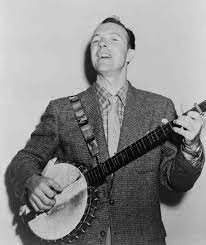
Pete Seeger: Courtesy: Creative Commons

A profound truth that we often overlook – or render to oblivion. A truth that Pete Seeger (1919-2014) had driven home to me in Delhi sometime in 1996. “The point is not to ask for yourself alone — one has to ask for everybody: Either we all are going to make it over the rainbow or nobody is going to make it. And that is how suddenly a song about the greens becomes a song that takes a step forward. This is what I call the folk process.”

*

The human drama unfolding between Russia and Ukraine, the two countries that have been described by a cartoonist as ‘divorced spouses,’ led yet another of my university friends, Usha Kelkar Srivastava, to re-play Where have all the flowers gone (1955), that old Pete Seeger favourite “which turns out to be a Ukrainian folk song”. The poignant melody was a favourite of ours when we went to university – much like Bob Dylan’s Blowin’ in the Wind (1962) and John Lenon’s Imagine (1964) – and for decades after he’d penned it, regardless of which country he was in, the guru of country singing would sing the peace songs and the audience would sing with him. “They would sing the songs in schools and in summer camps. Some of us sang in churches and unions, some sang in coffee houses and people would gather around us and sing with us old songs and new…” Pete had recounted in the course of the four days I was really fortunate to have spent in his company. The legend who sang in defence of humanity, had come to Delhi at the invitation of the Indian Council of Cultural Relations (ICCR) — and when he returned to America, he gifted me a set of CDs signed to me which are among my prized possessions. 

“Just as a river takes the shape of the land it flows through, a song can echo the raw emotions of a land and people,” said Usha culling from her background in Music History. “Rarely has any song touched the world like the simple Where have all the flowers gone…” It has the cyclic structure of another Hebrew folk song about violence that I’d heard in an Amos Gitai film. Pete, while travelling in air, had come across a few lines in Sholokov’s And Quiet Flows the Don: “Where are the flowers, the girls have plucked them. Where are the girls, they’ve all taken husbands. Where are the men, they’re all in the army.” 

The lines from a Caucasian folk song “are sung in the Ukrainian countryside as Tovchu tovchu mak and Koloda Duda,” Usha added. Pete had adapted these words, adding the refrain of ‘Long time passing and Long time ago’ almost as a chorus. At some point in time he combined it with the tune of a traditional Irish lumberjack song – “only, I slowed down the energetic and full of vigour rendition,” and thus was born the haunting song. The three verses were later expanded by other country singers who added two more verses that underscore the tragedy thus: ‘Where have all the soldiers gone? They’re in the graves, everyone of them…and Now the flowers have come back, on the graves…’

“My only complaint is that this song is not specific enough,” Pete once said at a live concert in Sweden. “It’s too easy just to say, ‘When will we ever learn? Oh when will we ever learn?’ without saying what you want people to learn.” Yet, how potent this critique of war is can be gauged by the number of recordings, and the spread of languages in which it has been rewritten. 

The Kingston Trio first recorded it in 1961 not knowing it to be authored by Pete Seeger. In 1962 Marlene Dietrich performed it in English, French and German at a UNICEF concert – “and she sings it even better,” Seeger had said. On a tour of Israel, she rendered it in German, breaking the taboo of using that language publicly in that country. The song has versions in Dutch, Polish, Czech, Croatian, Hungarian, Irish. It has been adapted to the piano, it exists in an instrumental version, and also as a parody! In 1964, Columbia Records released it in the Hall of Fame series and in 2002 Seeger was inducted into the Grammy Hall of Fame in the Folk category. In 2010 New Statesman listed it among the Top 20 Political Songs worldwide.

I had the opportunity to hear the other American icon, Joan Baez, sing the contemporary folk song with operatic flourishes, in Manchester sometime in 1977. The activist songwriter had included the German version in her 1965 album, Farewell, Angelina. The very next year the much-loved voice of Harry Belafonte had recorded it in a Benefit concert in Stockholm. A Russian version was recorded in 1998 by Oleg Nesterov, who founded the Moscow based rock band Megapolis just before Perestroika. In the present century Olivia Newton-John recorded it in her 2004 album Indigo: Women of Song while Dolly Parton recorded it in 2005 for her album Those Were the Days. On August 9, 2009, it was sung at the funeral of Harry Patch, the last surviving British soldier of WW1.

In Kolkata, where I now live, Anjan Dutt had covered “the old but always relevant song” in Rawng (Colour) Pencil, going on to remind us at the outset of the Gulf War, “Ekii chinta Bangla tey korechhe Lalon, Notun korey eki gaan geyechhe Lenon, Shei eki katha aaj gaichhe Suman, gaichhi aami shei eki gaan (The same thought had inspired the Baul Lalon Fakir; the American John Lenon, and Kolkata’s own Suman and me, to ask — When will they ever learn?)” As for Kabir Suman, who penned the Bengali version, Kothay gelo tara: he had himself rendered it on stage with Pete during that India tour of 1996.

Back then Pete was “very happy that the Berlin Wall came down so peacefully”. I distinctly recall asking the self-effacing giant if the wide reach of Where have all the flowers gone indicates that the world is finally learning about not going to war. The Times of India had carried his answer: “I don’t know whether songs really change things. All I do know is that throughout history, leaders have been particular about which songs they want sung!” And then the balladeer sang of a youth who was asked the same question, to say, ‘I don’t know if I can change the world… But I will make sure the world doesn’t change me…’ 

“That was a good song,” Pete had concluded. “When people around the world say that — that’s when the world will be changed.” 

Notes:
Shlokov received the Nobel prize for And Quiet Flows the Don in 1965. The book came out in four parts from 1928 to 1940.

Ratnottama Sengupta thanks the people mentioned here: Both Sonia Singh and Raji Sekhar are her batchmates from Elphinstone College, Bombay (now Mumbai). They worked in Air India. Usha Srivastava and Elizabeth George (then Vergese) were singers in Pranjyoti Choir. Usha Kelkar Srivastava, trained in Western classical music, later went on to give lessons in Music History at the American Embassy School, New Delhi. Bhamini Subramaniam is a designer while Shireen Elavia. Havewala, is a retired banker.

.

Ratnottama Sengupta, formerly Arts Editor of The Times of India, teaches mass communication and film appreciation, curates film festivals and art exhibitions, and translates and writes books. She has been a member of CBFC, served on the National Film Awards jury and has herself won a National Award. 

.

PLEASE NOTE: ARTICLES CAN ONLY BE REPRODUCED IN OTHER SITES WITH DUE ACKNOWLEDGEMENT TO BORDERLESS JOURNAL

Categories
The Observant Immigrant

Is Sensitivity a Strength or a Weakness?

By Candice Louisa Daquin

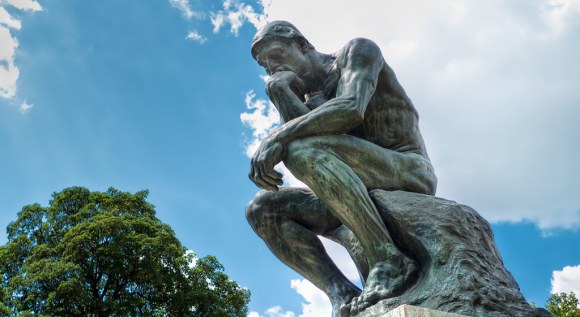
Rodin’s The Thinker. Courtesy: Creative Commons
“I may be a dreamer, 
 But I’m not the only one.” 
 -- John Lennon (Imagine). 

As a child I remember understanding on a very basic level the concept of cruelty. I recall vaguely thinking in the simple way children think; “Why is that person so mean?” It wasn’t because I wasn’t getting what I wanted and stomping my foot, it was more observing a cruelty and trying to make sense of it. Bottom line, children understand these things pretty early on and it forms what becomes their moral compass.

We can and do change over time but those early lessons tend to stick around. My early lesson was that I recognised that I cared. I observed that some other people did care too and some other people did not. I think ever since then I have wondered why some people are cruel.

More recently there has been a debate of sorts over the ‘value’ of being sensitive. Can you be too sensitive? Is there value in being sensitive? The issue is split. Some believe sensitivity is a weakness. Others recognise it makes life harder. Some think sensitivity is related to mental illness, whilst some believe we need more sensitivity in this world.

As a therapist I am often asked this question. I have also asked it of myself. I tend to berate myself when I am ‘too’ sensitive, but this is a learned behavior, based on being shamed for being sensitive in the past. The truth is I think you can literally speaking be too sensitive (for your own good, because it’s you who is hurt most by it) but most people who are told ‘you are too sensitive’ are being gaslighted or manipulated.

Through my life I have been told so a few times. Predictably, I felt ashamed because society perceives sensitivity as weakness. I consider myself a strong person, a resilient person, but I know the way I’m perceived by those who know I’m (also) sensitive, is weaker. This has never been truer than since moving to America, where the ‘bad ass’ mentality rules and women over-compensate by being emotionless and ‘strong’ as a rebuke against sensitivity.

Sensitivity is out of fashion; it has been for a long time. Maybe, by rejecting sensitivity, people believe they are automatically stronger (and perceived by others to be) we hold up role-models of impossibly strong people who are not depicted as sensitive. None of us seem to revere sensitive, kind people. On the contrary, we usually suspect them. We admire the person who is sarcastic, quick-witted, a little ruthless, and undefeatable. Therefore, I will seem like a sensitive person trying to justify sensitivity by writing this. And you wouldn’t be wrong. I think sensitivity has a bad rap and I’m personally tired of how insensitive people are. I don’t think this is commendable, cooler or something to aspire to, but sometimes I feel I’m in the minority.

Most recently I had two conversations within a day of each other, where I was told ‘maybe you’re being too sensitive’ and shortly after that I talked to a good friend of mine about this. Her answer got me thinking about the way sensitivity is perceived and how wrong-headed we are. She said ‘well maybe more people should be sensitive’ and those simple words were a bombshell. Exactly! We wouldn’t have to go around covered in armor if people were more sensitive! We wouldn’t have to be ‘bad ass’ if others were kind and thoughtful!

When did we become a people who worshipped coldness over warmth and compassion?

I might sound like a spiritual evangelist writing this, and ironically, I don’t believe in God, but many of my concepts are in keeping with those you might see in the Bible. Treat others as you would wish to be treated. Be compassionate and kind to those who need it. Those are not concepts we enact, instead we admire the person who is rude, emotionless, ruthless even. What happened to make this happen?

When I left university the first time, armed with my degrees I thought (naively) I could go out into the world and get a good job. Why shouldn’t I have thought that? I had worked hard I deserved it, didn’t I? When I recall how I thought back then, I was really a naïve person (though I thought I knew everything) with no comprehension of how hard the world could be. Not only was the job-market seemingly impenetrable, but nobody was impressed with anything I had to offer, and I felt utterly deflated within a short period of time.

Some would say bringing down a peg or two is a rite most young people go through when they get into the real world. But I still recall that time as being one of deep despair and sadness, to imagine a world that wasn’t fair or kind. I had genuinely thought it could be! The struggle to establish myself financially was uphill and took a long time. During which I experienced repeated knocks to my confidence and was told over and over that I was nothing/nobody. It seemed like colleagues, bosses, etc. thrived on putting down the young people who got on the first rung of the ladder.

I have never forgotten that. I ask people even now if they had the same experience(s); Some say yes, some say no. Initially I took it personally because it felt personal, but I came to realise it was a rite of passage, where young people were put down and put in their place by those who had come before them. It remains a horrible practice with no real value, after all, we need to believe in ourselves, not be trashed and put down. For some, it may be easier to get over than others. I was in the latter camp. I had grown up being put down, so the last thing I needed was for it to happen again.

This is when the idea of grin and bear it, muscle through, take it or leave it, man up, comes into play. This is but one of many times in life where the emphasis is on being ‘strong enough to endure it’ and to put aside one’s true feelings about a situation (outrage, hurt, confusion) in favor of ‘sucking it up.’ Given that I had not joined the military, I found the urge to react this way very strange. I wanted instead to ask why it had to be this way, why people let it be this way?

This relates back to my earliest understanding that some people are cruel. But our response to some people being cruel is weird. Instead of calling them out and doing something collectively about it so that they do not continue to have the power to be cruel, we seem to want to join them? The shaming of those who are sensitive seems a way to a line with those who would be cruel, even as logically all those who a line with the cruel, might once have been sensitive.

Why do we think being sensitive is such a weakness when it is far weaker to be a hard-nosed uncaring person who doesn’t give to anyone, than to be a caring person who wants to treat others as they would wish to be treated? I can’t say I understand it now any better than I did years ago. When my clients ask me, I remain as perplexed at people’s cruelty as I ever have. There simply seems no good justification for it. And moreover, why people glorify cruelty and think kindness is ‘suspect’ ‘insincere’ or ‘weak’ baffles me.

Sensitivity means you notice when someone is upset and you care. Insensitivity means you don’t care to notice what happens to anyone and you don’t give a damn. When you put that bluntly, I find it hard to understand why someone would wish to be the latter, other than it’s easier, and might be less work. But what about conscience and morality? For many of us, we have that prickling of conscience if we have mistreated someone, we want to be a good person. We try to help others, so how could we ever want to align ourselves with someone who didn’t give a damn?

Yet how often, from the schooldays onward, do we see the popular kid is the mean kid, or the most liked child is the one who does nothing for others, but is considered ‘cool’ or the boss who is mean but somehow respected, or the adult who has lots of friends though they never do a thing to help others? It’s not always the kind, sensitive person who is popular, in fact their motivations are often suspected, and they might be considered weak and cloying.

Moving to America I struggled with this considerably. I tend to wear my heart on my sleeve, if I like someone, I do go out of my way to be a good friend to them. I think that’s how it should be. But my good intentions were often suspected, people would even say to me (as an insult) “you’re so NICE” (meaning: Boring) or they wouldn’t believe my kindness was genuine. As to being sensitive, I was told I was ‘too’ sensitive if I stepped over the formality people had with each other, where people didn’t really ask how someone was doing, or follow up and care enough to get closer.

In fact, I didn’t understand how people got close, because everything was so superficial and formal. I began to see that many friendships were just that, convenience based. Those who had children hung out with others who had children, and car pooled. Those who went to the gym talked to others who worked out a lot and maybe met on weekends to work out, etc. But the moment you no longer had that in common, you rarely kept in touch. The deep friendships I had sustained back home, seemed rarer.

I was told this was because you made those kinds of friendships in childhood and once you were an adult you didn’t make friends like that. I wondered why not? All the rules of friendship baffled me and the difficulty of getting meaningfully close to people seemed incredibly hard all of a sudden. With colleagues a work — those I had known for years and whom I worked with closely — I wrongly assumed we were also friends. But they saw me only as a tool for the job I did. They invested no more in me as a person as they would in someone they had just met, even if we worked side-by-side for years.

To this day that strikes me as strange. I’m not standing on a moral high horse saying that I can’t fathom these things, I think I’m just stating a fact. I find it difficult to understand why someone would be cruel. Why someone would make someone else feel bad (deliberately) or why someone would put someone else down for being ‘weak’ just because they’re sensitive and care. Since when were those ever-bad attributes? Could it be in our rejection of older morals, we have adopted ones that cut our nose off to spite our face?

Having been told people do not trust ‘nice’ people I began to understand what that meant. Sometimes socially when you meet someone who is initially really friendly, they turn out to be less than you imagined, whereas someone else, who was perhaps initially aloof, can turn out to be a great person. I have learned friendliness doesn’t always equate to good people. Sometimes it is a front or an act. However, if you are a genuine person and sensitive to others, this is more than just initial friendliness and yet, you might be suspected because of people’s previous experience with ‘kind or friendly’ people.

When did it become rare to be kind and when did we begin to be suspicious of kindness? Intellectually I understand it but emotionally it’s so strange. I have had conversations about related subjects such as why women don’t like other women (they think they are backstabbers) or why women aren’t feminists (their experience has been women are often worse to them than men, so why would they be a feminist?) and I think they’re all related themes.

When we can’t trust the motivations of others, we might suspect the worst if that is our prior experience. Nowadays we’re more liable to mistrust a kind person than someone who is aloof or sarcastic. We’ve got things around the wrong way. And all because some of us are cruel and delight in hurting others, which includes warping the truth. Because the truth hasn’t changed. Being sensitive means caring about others, and this should never be something to ridicule or deride. Nor is it weak.

If after reading this you conclude I’m writing this to justify my own sensitivity, then you wouldn’t be wrong. I hope you see it’s leading to a much bigger picture too. I also hope you know I am not justifying sensitivity emotionally but defending it based on reason and fact. After all, sensitivity isn’t all emotional. We have often mistaken sensitivity for some kind of mental illness but it’s nothing of the kind. True, some mentally ill people may be sensitive, but that’s all. Sensitivity, unless it’s pathological in its extremity, is a natural human response. But still those who wear their heart on their sleeve are humiliated by those who are still in the school yard.

I would love a world that embraced the idea you can be sensitive and strong, because I truly believe you can. I also like the idea of a world where people’s past experiences wouldn’t close them to trusting someone’s kindness, or suspecting kindness of motivation. Do we really want a world where we’re all so removed from each other we no longer care? Is that the world you want to live in? It’s not the world I want to live in. I want my boss to care if I’m struggling, I think on a logical, emotional and realistic level this will improve our relationship. I don’t think humans are robots or unconnected. I think caring is how we connect and I want to. Living in a disconnected world where nobody cares what happens to anyone else, seems a dystopian nightmare. As we grow in numbers this is logistically more likely to occur. Let’s at least let those who are sensitive, flourish rather than shut them down and shame them.

Candice Louisa Daquin is a Psychotherapist and Editor, having worked in Europe, Canada and the USA. Daquins own work is also published widely, she has written five books of poetry, the last published by Finishing Line Press called Pinch the Lock. Her website is www thefeatheredsleep.com

.

PLEASE NOTE: ARTICLES CAN ONLY BE REPRODUCED IN OTHER SITES WITH DUE ACKNOWLEDGEMENT TO BORDERLESS JOURNAL.