Only when the cries of the wretched of the earth will stop renting the skies,
Only when the oppressor’s bloody sword will cease smearing battlefields,
			A rebel, weary of war,
			Only then I won’t stir.
…
I’m the ever-rebellious hero--
	Soaring over the world, all alone, head forever held high!

--  Rebel or 'Bidrohi' (1922) by Nazrul, translated by Fakrul Alam
Borderless: Digital Art by Ayaan Ghoshal
These fragments I have shored against my ruins
…
Datta. Dayadhvam. Damyata.
 Shantih shantih shantih

-- Wasteland (1922) by TS Eliot
These lines reiterate values we would do well to live by in a war-torn, dissension-worn world where the need for a rebel to recreate a humane society that lives with values such as peace, generosity, acceptance, tolerance, compassion and restraint — is a felt need. The two great poems made history by remaining as popular a hundred years after they were written — ‘The Rebel’ by Nazrul and TS Eliot’s ‘Wasteland’. Nazrul defined a rebel as an iconoclast who breaks norms to find peace, justice and love for all, to move towards the creation of an ideal world. TS Eliot quoted from the Upanishads and ended with redemption coming with giving (giver perhaps denoted generosity), compassion and restraint. Despite the wisdom of these great poets and seers, war still continues a reality. The values remain neglected not just in as we see in conflicts, like the one in Ukraine that destroys lives, property and nature with intolerance towards differences, but also in our personal lives. Tagore also reiterated the same need for stepping out of personal, social, economic and political insularity. We carry a translation of a song that echoed this need while inviting participation in his ecstasy. He wrote:
Why do you sit in isolation,
Dwelling on self-centred issues?
Tagore had not only written of the negative impact of isolation from the world but he led by example, building institutions that could lead the world towards pacifism with acceptance of diversity and inclusiveness. Sriniketan and Santiniketan were created to move towards these ideals. Many of the people he influenced or who studied in Santiniketan made history, like Prime Minister Indira Gandhi, Satyajit Ray; many added to the sense of inclusiveness, like Mahasweta Devi, who other than her enormous work to integrate different cultures, also wrote a memoir about Santiniketan in Bengali. Radha Chakravarty, nominated for the Crossword Translation Award (2004) for In the Name of the Mother by Mahasweta Devi, has translated this memoir, a narrative which brings us close to Tagore’s ideals of the whole world being a family. How wonderful it would be if the world were open to such ideals and would behave like a global family and not go to war! Mahasweta Devi, Our Santiniketan, which has been reviewed by Meenakshi Malhotra, reiterates Tagore’s vision of a planet living in harmony with the flora and fauna.
Bhaskar Parichha has reviewed another non-fiction by Ashok Kumar Pandey, Why They Killed Gandhi; Unmasking the Ideology and the Conspiracy. Parichha writes: “The finest point about this book is its storytelling…” The book review brings to mind in the midst of a war and violence that Gandhi had tried to erase this mindless destruction of lives, nature and cities with Ahimsa or non-violence. Will we ever rise up to it? Perhaps… We see strains of recognising the negative impact of insular outlook in writings like that of Temsula Ao, a Sahitya Akademi Award winner, according to Indrashish Banerjee who has reviewed her new book,The Tombstone in My Garden: Stories from Nagaland. Keith Lyons has reviewed Asian Anthology: New Writing Vol. 1: Stories by Writers from Around the World, edited by Ivy Ngeow, an exotic medley of Asian stories, one of which has been excerpted as well.
We are privileged to carry another excerpt from Ruskin Bond’s Friends in Wild Places: Birds, Beasts and Other Companions, a hilarious story about a pet tiger adopted by the legendary writer’s grandfather. What is amazing about Ruskin Bond’s writing is the love and compassions for all creatures great and small that colours the tongue-in-cheek humour he rolls out to his readers. If only we could think like Bond, there would be no wars. His writing, I feel, transcends political borders or ‘isms’, and laces with love and compassion tales of menageries of monkeys, snakes, mongoose, humans of different denominations. This excerpt is a treat we are giving Borderless Journal as the journal completes two years of its existence. We are truly grateful to Speaking Tiger for sharing this excerpt with us. But our celebrations this time are sombre as the war rages with incoherence accompanied by heart-breaking ravages.
The refrain from Ukraine has been taken up by Ratnottama Sengupta as she takes us through the past and present experiences of the devastated country, bringing in the views of the legendary folk singer and pacifist, Pete Seeger (1919-2014), who she had interviewed over a span of four days. The writer of ‘Where have all the Flowers Gone?’, a song based on an Ukrainian folk song, Seeger said, “The point is not to ask for yourself alone — one has to ask for everybody: Either we all are going to make it over the rainbow or nobody is going to make it.” Candice Louisa Daquin has also pondered on the justification of war, contextualising it with the current one along with her essay on the paradox of modern linguistic communication.
We have an exhaustive essay on the legendary Satyajit Ray’s creations by Anasuya Bhar. Malhotra has pondered at exclusivity reinforcing divisions, margins and borders to plague humankind, against the backdrop of the Women’s Month, March. Highlighting women in writing, we have interviewed two female writers, one from Nepal and another from Bangladesh. Sangita Swechcha lives in UK but her writing, till now largely in Nepali, often pines for her home embedded in the Himalayas whereas, an expat, Neeman Sobhan, shuttles between Bangladesh and Italy with the affluence and assurance of a privileged background.
Finding a way to override lack of privileges, deprivation and violence, are the youngsters of Nithari on the outskirts of Delhi where less than two decades ago other than poverty, savage criminality devastated the local populace. These youngsters transcended the suffering over time with help from volunteering NGOs to create narratives that amaze with their inventiveness and confidence. Tanveer Hussain from Nithari, self-motivated and self-made from a young age, asks questions that would be relevant for all humankind in a letter to God. It has been translated from Hindustani by Vritika Thareja of pandies’. This edition’s translations include Professor Fakrul Alam’s mellifluous rendition of Jibanananda Das’s poetry from Bengali to English, Ihlwha Choi’s Korean poetry and a Balochi poem by Munir Momin rendered in English by Fazal Baloch. Baloch had earlier translated poems by Akbar Barakzai, a great poet who departed on 7th March, depriving the world of yet another powerful writer who imbibed hope of a better future in his poetry. We are privileged to have hosted the translations of some of his poems and his last interview.
Another well-known poetic voice from Singapore, Kirpal Singh, has given us poignant poetry that can be applied to the situation that is leading to the wreck of Ukraine. Anasuya Bhar has poetry, one of which despite being in the ilk of Nazrul’s great poem, ‘Rebel or Bidrohi’, questions gently mainly social constructs that obstruct the flow of harmony. Ryan Quinn Flanagan has pondered on the acceptance of a changed world. We have humour from Rhys Hughes in poetry and wonderful poems by Michael R Burch on spring. Jay Nicholls shares the last of her dozen Pirate poems as Blacktarn sails the lemon seas to fight pollution. Luis Cuauhtémoc Berriozábal, George Freek, Sutputra Radheye, Mike Smith, Shaza Khan and many more have contributed a wealth of beautiful lines. Penny Wilkes has captured storms and seas with photographs and text and Rhys has surprised us with some strange, bizarre tales in his column.
Suzanne Kamata continues writing on Japan as she introduces us to an Australian film maker who is making films in Japan and in Japanese, called Felicity Tillack. Cultures are perhaps truly crossing borders as we can see Kenny Peavy, an environmentalist who moved from US to Indonesia start a new column with us called ‘Mission Earth’. We hope, like Tagore or Rousseau, he will help to revive our felt need to live with nature, acknowledge the nurture that we get from the planet to live in harmony with it and on it.
At the end of twenty-four months of existence – that sounds better than a mere two years— we are happy to host a melange of writers from across the borders and be the meeting grounds of writers and readers from across continents. I am truly thankful to all of you for helping concretise an ideal. Huge thanks to all the writers, artists, photographers and the readers for the contribution of their time, effort and love. And thanks to our fabulous team who continue to support the journal unwaveringly. I would also like to thank Sohana for the lovely visuals she generously shares with us. A special thanks also to young Ayaan Ghoshal for his digital art where hands reach out to support a truly borderless world.
As usual, all the content has not been covered here, I invite you all to enjoy our March edition of Borderless Journal.
At the start of the third year of our existence, let us march onwards towards renewed hope – maybe the Ukraine experience will take us closer to a war-free world with an awakening of a felt need for peace and compassion in a planet without borders.
In quest of a peaceful, humane world, I invite you all to continue being part of this journey.
War is among the main stays in human history. Is anything more instinctive than to go to war? I’ve never been able to relate to this but perhaps that’s because I have the advantage of living in a society where we’re protected from the literalisms of war. Or perhaps it’s because I’m female, although I don’t think it is as simple as being a male prerogative (though we can never be sure until a history of women making decisions proves this). To the outsider, war always seems futile. But what we must always do in order to fully understand something is to understand the other side. Not our own opinions but those we do not comprehend. As French philosopher Albert Camus said: “We used to wonder where war lived, what it was that made it so vile. And now we realise that we know where it lives…inside ourselves.”
Why would anyone ever want to go to war?
Imagine the first reason war was enacted. Was it as simple as Cain and Abel? Or one village attacking another village? One child attacking another child?
War tends to be on a larger scale, but perhaps it begins on a smaller scale.
It is said murderers have ‘symptoms’ of evolving as killers as do rapists and predators. If this is true, then watching children and seeing them skinning a cat as a predictor to future violence, could also be applied to war-mongering behaviour. Or conversely, could we establish what experiences that child has that engenders him/her to favour war?
If children who become violent often witness violence, then it stands to reason children who support wars or encourage wars, may witness something that in their minds is pro-war. What could it be? If you grow up in a war-torn country, surely you are more likely to seek peace and an end to violence, than to crave it? The fifth century famed military strategist Sun Tzu is quoted as saying: “Victorious warriors win first and then go to war, while defeated warriors go to war first and then seek to win.” Is war about the appearance of bravery or perceptions of strength? Ironically, Sun Tzu also said: “The wise warrior avoids the battle.” But do we follow this wisdom?
Studies show wars are committed by groups who are cohesive and decide (on invasion) and groups who defend. In essence, there is an aggressor and a protector. Sometimes wars start with two aggressors, but rarely with two protectors (this would cancel the desire for war out). Therefore, the thing everyone has in common who enters a war, is they are either seeking to invade or protect.
If people did not seek to protect, the invader would arrive and receive no resistance, and thus there would be no war. Sadly, it wouldn’t stop the invaders from say, raping and pillaging, so laying down arms and hoping for fairness, may lead to slaughter and oppression.
If people did not seek to invade, there would be no need to go to war.
What are the main reasons historically people have warred? Over land. Religion is a close second. The historic wars were over disputes of land or religion or other reasons related to both of these. The seizure of assets is related to greed/wealth/power, same as seeking to enslave people or promote an agenda (social control – another form of power). Essentially then all invasions can be reduced to one sentence: Seeking power.
One group believes they should have (more) power over another group. They invade. The other group defends or capitulates. This is the essence of war.
If we assume then most wars are enacted over a need to gain power of one sort or another, the next question becomes; Are all humans as likely to war? Or do certain societies promote war more than others? Throughout history there have been wars, many times one group did not want to go to war but were forced to in order to defend themselves. It implies there are those who are (warmongers) and there are those who are not (peacemakers or pacifists) and possibly while the latter may not seek war, they get involved if there is no alternative.
War then is to some extent – a luxury. Odd that if this is so, it’s often during the hardest times in human experience that a war begins. Wouldn’t you think if war is a luxury (by being a choice, as no war is enacted because the invaders have no choice), they’d choose not to go to war during hard times? Yet, the reverse is true.
We’re still in the struggling with the pandemic, but instead of seeking reconciliation and safety, Vladimir Putin has started the invasion into Ukraine. On the face of things this makes no sense because Russia must be hurting economically post the pandemic. To go to war when you are struggling seems madness.
Yet if this is often the case, maybe it’s like when everything is hard, people are less balanced and considerate than when things are easier? People are more charitable when they feel they can be, versus when it’s an emergency. That’s when they start looting and trampling over others. There is an inherent selfishness to humanity where they feel. “If I am alright I might be charitable but if I’m not alright you’re on your own’. It takes a really truly charitable person to stay behind and help others. Most people flee.
If we use this ‘typical’ personality trait and then apply it to a megalomaniac leader, it becomes less surprising they would choose an inopportune moment to strike. Perhaps it’s as inconvenient for everyone else as it is for Putin, therefore they have the element of surprise and inconvenience. They strike when the iron is hot, so to speak. The other impact of war is misdirection. If everyone believes something won’t happen (the invasion of Poland by Germany 1939 in WW2) when it does happen, everyone’s so surprised that they have a delayed reaction (which adds to the invader’s strengthen).
War strategy aside, do some people actually relish war ‘games’ and enjoy the enactment and planning of war? Boys are taught culturally to play with guns, war-gaming, mock-battles etc. If they were not, I suspect they would be no more inclined to go to war than a woman. Then again since we cannot prove or disprove this, we can only guess what is nature and what is nurture. Without doubt, the machinations of the war ‘machine’ promote an ideology of war – not unlike the machinations of a religion to promote an ideology. It’s a form of brain washing. Perhaps, one can agree that “In war, truth is the first casualty.”
When countries encourage a percentage of their population to join the military and have a robust army, they tend to be primarily pro-war – in that – they may not wish to die fighting nor encourage a war, but if one happens, they’re ready and, perhaps, they want it to happen because that’s what they have trained for. If you spend billions on war machines, would you wish them never to be used? Or would you see them as more than deterrents? Would you want to manufacture all this impressive battalion equipment only to see it do nothing? The problem with the creation of tools of war is then someone wants to use them. It is much like the debate raging in America over whether the ownership of guns perpetuates violence. On the one hand some believe if we didn’t have (access to) guns we’d have less violence or gun-deaths. They point to countries with lower rates of gun-ownership to ratify their beliefs. On the other hand, people say it’s not the gun but the person who wields the gun; if they don’t use a gun, they will use something else. They point to the rates of stabbing deaths and other forms of violence endemic in countries with low gun-ownership and to countries with high gun ownership (Switzerland/Canada) who have low gun crime.
There is no easy answer here. Guns have caused countless futile deaths, and gun ownership is a hot topic not likely to be resolved. But if we had less machines of war, would we be less inclined to go to war? Critics point to this as a reason to scale back the US military, whilst others say without such deterrents there would be more attacks on America (or any country without a robust military) because peace is actually wrought by both sides having enough machines of war (and nuclear weapons) that neither side feels they can strike without the other side striking back – and this is what enables us to avoid war. It’s a pretty twisted scenario that makes sense until someone in power decides – I’m not going to play by those rules. In non-interventionist theory, there was a drive to establish international courts to adjudicate disputes between nations and an emphasis on war contributing to moral decline and brutalisation of society in general. Whether true or not, it hasn’t stopped millions signing up for war.
In considering whether being anti-war is realistic, we must analyse the history of war, why humans go to war, what war means to us and what provokes it, as well as whether we can realistically avoid it? It’s one thing to wish for no war, I think a great many of us would share that perspective. But there is an old joke about this: A woman meets a genii and she gets one wish, she wishes for world peace. The world grinds to a halt. Why would the world grind to a halt? Do we depend on war so much? Personally, I don’t think war keeps us ticking over but if we consider our history, much of what we have done revolved around war of some kind (or the prevention of) and thus, we’d have a very different planet earth today if we had world peace. Classics like All Quiet on the Western Front (1929) by German writer Erich Maria Remarque, have become part of a canon of anti-war media, that enduringly influences the pacifist movement. Perhaps without knowing war, we cannot know why war is such a terrible price to pay.
I am utopian in that I would like to see world peace. Imagine a world where people received funding for healthcare and food rather than bullets and violence? But is that like wishing human nature should have been different? Can we ever hope to become enlightened enough to actually stop wars from occurring? In 2022 as with history thus far, humanity as a whole has not been enlightened sufficiently to stop war from occurring. America, as a developed nation, is the only country to have used nuclear bombs on another country in our entire history. A less developed country that has historically been a trigger for war, may have more growing pains and therefore more wars. But let us not believe in ‘developed’ versus ‘developing’ to judge the pacifist intent of one country over another. Historically, we’re all guilty.
“Just war theory has been converted into a form of apologetics for whatever atrocities your favoured state is carrying out,” says Noam Chomsky in his book What We Say Goes: Conversations on U.S. Power in a Changing World. It’s not ethnicity, income or development that causes war. It’s human beings. Within us is a penchant for going to war, that cannot easily be explained but clearly has existed since the beginning of (human) time. Until we can come up with alternatives to war, this destructive cycle shows no hope of ending. We can reason ourselves to death, but it only takes one unpredictable leader, the right speech, and we’re at war again. What we know if nothing else is, humans go to war. What we don’t yet know, is how to remove that impulse.
Is it an impulse like sexual attraction or hunger? Something as intrinsic and hard-wired or more of a defense mechanism for men? Again, I think without proof of this, it makes more sense to assume this is a human predilection and not a gender-driven one. Would women go to war as gladly as men? We may not have enough historical precedence to substantiate this issue. It could be argued they were working with a masculine model, but we have no proof either way. Rather than entering the ‘blame game’ what would be a way to avoid war altogether?
Negotiations only go so far. What one country may wish another country to do, doesn’t mean they will. If that country feels that is a deal breaker, then war is on. How can you ever alter that outcome when it’s as common place as two people disagreeing? This will always occur and if those two people are world leaders, then war may be the result. Is it unavoidable even if so many of us wish for peace? What are the ‘necessities’ of peace? German philosopher, Immanuel Kant was one of the earliest exponents of the idea that “perpetual peace could be secured through universal democracy and international cooperation.” Democracy isn’t a save-all and has severe down-sides, making ideas in reality, less like their philosophical ideal. Novelist Victor Hugo contended, “Peace is the virtue of civilisation. War is its crime.”
I feel fortunate I did not grow up in war-torn countries, but even in my lifetime, I have heard of so many wars. All wars are a huge waste of money. Even the World Wars, where nearly every country entered in order to fight off the invading fascists. Whether anti-imperialism, an end to totalitarianism or nuclear disarmament, are the answers for enduring peace, they’re complicated and don’t explain the enduring penchant for violence and war within humanity.
One thing I noticed when I immigrated to America was how many people believed being pro military meant being pro war. People would say things like; ‘they are defending our freedom’ and I would ask; ‘how are they defending our freedom if our freedom was never in jeopardy?’ I felt most of the wars in America since WW2 were completely unnecessary. Not a single one of them was really justified (in terms of it being necessary to defend America against a true threat). Most were born out of paranoia and a need for control (anti-communism) or greed and a need for control (Afghanistan and beyond). They were not ‘as advertised’ meaning the average American thought America invaded countries for one reason but it was often a completely different reason.
When 9/11 happened, the entire world was shocked. America did not have a history of being attacked on their soil since the Civil War (and that, by their own populous). The outrage with a staggering death toll of about 3000 was so stunning that a need for vengeance or rectitude was experienced. The result was the longest drawn war in American history which led to billions being spent and weapons getting into the hands of ‘the enemy’ which so often has been the case. How can this be a good thing? Anymore than creating a generation of young men who seek vengeance for what was done to their countries in the name of ‘freedom.’
The polarisation of religion, culture, politics and ethos seems more acute than ever before. There is no universal agreement and those who sue for peace, must realise that just wishing for it, isn’t going to resolve those long-standing fractions. Maybe it’s simply not in our nature to want to all get along, to avoid war and seek peace. Maybe humans are warmongers and we’ve replaced the hunt of big game with fighting each other. Maybe the veneer of our so-called civilisation is very thin and waiting for any excuse to implode. That said, I’m an optimist. As such I believe there are ways to gain peace and avoid war. I don’t think it’s as simple as putting our weapons down, because someone will always cheat. Trust must be earned and even then. But if we seek the same goal, that’s a start. It may not happen in my lifetime, but it is my hope with every generation we come closer to a rejection of war. There are quite simply, too many other needs and just imagine — if we poured our collective funds into helping those in need, we could live in a paradise instead of buying bullets that erase life. Ultimately every single one of us is responsible for what happens going forward, collectively.
Quoting Ralph Waldo Emerson, “Nobody can bring you peace but yourself.”
Candice Louisa Daquin is a Psychotherapist and Editor, having worked in Europe, Canada and the USA. Daquins own work is also published widely. She has written five books of poetry, the last published by Finishing Line Press is called Pinch the Lock. Her website is www thefeatheredsleep.com
.
PLEASE NOTE: ARTICLES CAN ONLY BE REPRODUCED IN OTHER SITES WITH DUE ACKNOWLEDGEMENT TO BORDERLESS JOURNAL.
Disclaimer: The opinions expressed are solely that of the author and not of Borderless Journal.
Microaggression is a relatively newly used term to describe less direct action that can cause offence. It is a term that has been setting the social media alight for the past few years, sometimes for good, sometimes not so much.
Having just attended another course on this buzz word du jour, it struck me how absurd some of the ‘lessons’ on identifying microaggression were. One could argue, it’s pop-psychology and political correctness, gone awry.
Before we get to the absurd scales over policing microaggression, it’s important to explain why acknowledgement of passive-aggression and gaslighting (confusing a victim with the perceived reality) does matter and should be discussed (if perhaps not exhaustively).
Think back to those days of old where eve teasing in offices was considered du rigor, where a woman of colour with an afro was told it wasn’t an acceptable ‘hairstyle’ and threatened with being fired if she didn’t ‘tone it down’. Think of a Muslim worker being told he couldn’t pray during work hours, a Jewish colleague not being given time off for Hannukah, a black footballer having bananas thrown at him whilst he played, or an Indian politician being called a ‘Paki.’
These all still happen despite being labelled as racism, bigotry, hate and microaggression in the workplace and beyond. They are intolerable and unacceptable and can lead to suicide, depression, financial insecurity and feelings of ostracisation. The laws protecting against these are sometimes hard to enforce. People who do follow through on a complaint, are considered ‘trouble-makers’ and their careers are thwarted by this unfair reputation.
Stereotyping is part of human nature, even as we try to rinse it out. When we are unfamiliar with a culture (sometimes when we are familiar with it), we reduce people to descriptors that can be stereotypical. In my case, I’m often assumed to be English because I have a slight English accent. In incorrectly assuming this, people often ask me if I would like ‘tea’ (I hate tea) or make fun of my accent. Friends from other parts of the world have the same experience. It’s annoying and a constant reminder that I’m not American. I’m an immigrant.
For people of colour, this is even more extreme. If you are light skinned you are ‘assumed’ not to be a person of colour though you might be (many are) whilst if you are dark skinned you are more likely to be ‘assumed’ a person of colour (though you might not be) and if you have African or Asian ‘features’ as considered by (a stereotype of what constitutes ‘being African’ or ‘being Asian’) you are assumed to be African or Asian though you might not be.
However, this is a complete minefield and I want to take a few scenarios to illustrate this point in relation to the trend toward calling out ‘micro aggressions’ – which if you let it go too far, can be every bit as exclusionary/judging/alienating as if we go in the other direction and return to a mass acceptance of bigotry.
Before I share some examples, I should say, there may be a middle ground where we can all be relatively certain of fair treatment, even if this cannot include historical bias and mistreatment of our ancestors in the past. I would say this is the place we want to aim for, but we’re not there yet. My issue with microaggression is it’s a dog whistle that is going off so often that we’re becoming blunted to real outrages in favour of a knee jerk response daily to little errors in our current way of communicating, that also by default, leave us fearful of saying/doing anything for fear of offence. Yes, it is possible to go too far. And before you say I’m coming from a position of privilege — that’s why I’m saying this — no I’m not. That’s an example of what I’m talking about — taking things so far with political correctness that none of us can say or do anything without fear of serious reprisal.
My friend attended the same course on micro aggression. We discussed it afterwards. She is African American. I am mixed-race but have white skin. She noticed the course tended to use examples of black/white characters and wondered why if race and ethnicity were not specifically mentioned in the course. The point of this microaggression course is to point out the varied ways you can be microaggressive without knowing it – and what you could do about it. However, as my friend pointed out, it’s almost a no-win situation.
The first scenario of microaggression is a (seemingly) white-blonde woman commenting on a (seemingly) black woman’s hair and saying “I like your hair”. Why? Because it’s culturally insensitive, it’s fetishising ‘exotic’ hair by the mainstream (white) which can cause the person being complimented, to feel embarrassed, self-conscious or that they’re being stigmatised or singled out for their (non-white) hair.
Ironically, if my friend were not African American could she even say what she thought without being criticised for being microaggressive herself? Fortunately, she is so, this is what she said and she cannot be called out for saying it because she’s African American herself.
“I thought it was a stupid scenario. A blonde woman is just as likely as a black woman to have people comment on her hair. She wouldn’t think it was racist/insensitive, unless the person went too far and started touching it or saying things that were sexually inappropriate like ‘You have really sexy hair’. Most of the black women I know would be happy if someone said they liked their hair and wouldn’t think it was culturally insensitive if that person wasn’t the same race/ethnicity – as much as anything because how can they be sure they’re not (of the same race/ethnicity?). Plenty of people who don’t look mixed-race, are, or their parent may be, and they might be a light-skinned person of colour saying to a darker-skinned person of colour ‘I like your hair’ in which case that cancels out the microaggression, which is assumptive at best. But even if it were a white person saying this, if their motive was simple, ‘I like your hair’ then assuming they mean anything more/less than that, is assumptive, and thus more of a micro-aggression than the original statement.”
My take on it (although by sharing this I can be accused of being micro aggressive because I have light colored skin) is:
“I have told friends of colour (all races/nationalities) ‘I like your hair.’ Never once did I mean anything less or more than that statement. Recently I saw a girl with hair down to her knees. I said ‘Wow! I like your hair!’ She was (seemingly) a white girl with brown hair (though I have no real idea of her ethnicity (nor did I think about this). She was really happy. But according to the microaggression lessons if I say the very same thing to a girl who does look (to me) to be African American or a ‘minority’ (which is kind of racist in its own right, and thus absurd, because how can any of us know for sure what someone ‘is’ and by thinking about it so much, I find this more potentially offensive than to not think of it) I would be being micro aggressive?”
My friend and I talked about this at length until we got to the impossible scenario which is this: two women meet and one says to the other, I like your hair. The other woman says “Thanks! I like your hair also.” One is microaggressive, but the other isn’t?
This is microaggressive because if one of the women is a person of colour (in any way) then the person saying to the (supposed person of colour) “I like your hair” is being micro aggressive because it’s insensitive for a person who is not of colour to say this to a person of colour.
But what if neither knows what the other person is because it’s not clear, or they don’t want to assume (which is a good thing). What if they’re both saying it for the same reason?
Well then according to the course, they could still be micro aggressive because one of the other concerns is someone ‘hitting’ on someone else in some way, or pointing out something ‘personal’ about them, which could make them feel uncomfortable.
Play the scenario again: Two white women (we’ve removed race for the time being because this was one of the ‘issues’ and we want to see if there are any other ‘issues’ in the scenario) meet, and one says to the other, “I like your hair” and the other woman says “Thanks! I like your hair also.” The one who initially said it, could be accused of being micro aggressive because they overstepped the work relationship which should be professional (meaning, no personal comments). The other person may have replied out of feeling they had no choice but had to respond. If one was a boss and one was not, then it could be microaggression of power and if one was richer than the other, it could be a subtle put-down of their income. So, the list goes on.
Find anything absurd yet?
Again, let me ratify this by saying I am all for equality, and treating people compassionately, with dignity and respect and cultural sensitivity. But I think like my friend said, this can go too far and become a minefield of absurdity.
We laughed and then said – what if the two women were wearing t-shirts that said ‘I am heterosexual’ so the issue of sexuality was removed, and both women were white or both women were black, so the issue of race was removed. Would it be okay to say it then? My friend cleverly pointed out that wearing a t-shirt that said I was heterosexual (as stupid as that is) would be deemed offensive to those who were not. So basically, the bottom line is, you cannot win, you cannot stop going down the rabbit hole.
Here’s the truth. If someone comes into work and touches your hair or your pregnant belly without you asking and makes a big fuss, then you might feel they have violated your space. But if they literally said, “I like your hair”, then it would not necessarily mean they were microaggressive. I know a lot of people of colour who compliment each other all the time. If we segregate races to their compliments, we’re dividing not bringing everyone together. If we say only a black woman can say to a white woman “I like your hair” but not vice-versa, we’re creating absurd rules.
Obviously, this is necessary sometimes. Using the “N” word is a word people of colour can and do sometimes use with each other but if person outside their race says it to them, it is racist. That’s true. It is a double standard that stands because of the history of racism and discrimination, murder and hate. I still think anyone using the “N” word, irrespective of their race, shouldn’t use it because of its history but that’s beside the point.
Sometimes a white woman might say something that is derogatory to a black woman and that statement will be wrapped up in a passive-aggressive “compliment” such as “I like your hair.” But until you know the motivation, isn’t assuming this, impossible to prove and thus, impossible to police? By shutting all such comments down, aren’t we dividing each other more? Segregating our language and what can and cannot be said to each other? How does this help if we then become so afraid of saying anything to anyone?
If my colleague who lives alone asks how my New Year was. I say, “Not bad, how was yours? Did you spend it alone?” This is a microaggression because I’m potentially ‘shaming’ my colleague for living alone, whereas in reality, I was asking because they had previously told me they spend New Year alone. Can you see how we’re increasingly walking on eggshells? How does it help relationships to be that stilted and self-conscious? Isn’t it true that we’ll likely offend everyone repeatedly in little ways, but if they ‘know’ us they will know we didn’t mean to and it was a blunder rather than something intentional?
So how do we police and protect when it is intentional? Someone I work with once said to me, “You are a very long-winded writer with lots of detail aren’t you, Candy?” I felt ‘hurt’ because I thought it wasn’t entirely true and a negative characterisation. But were they gaslighting me or simply stating their opinion about my writing? Does everyone I know have to think I’m a good writer? Is it wrong to offer that I could be more long-winded than them? Does it nullify my writing? Or is it simply an opinion? Not wrong, or right? I let it go because I suspected it was not intended to be gaslighting or passive-aggressive and at the same time I considered how I could avoid being too long-winded.
Surely the same can be done in any conversation/interaction without us having to police every single sentence or condemn people for things they may simply not have meant? I hate the statement “you are too sensitive” because it implies there is such a thing as being too sensitive, yet as we all know, there are times when we’re too sensitive to what is being said, and it’s our assumptions of (their assumptions) that hurt us more than what they actually said.
Yes, if someone says “I think people of colour need to comb their hair more and keep it straight” that’s obviously out-and-out racist and awful. It’s unacceptable. But if someone says “I like your hair” they may be saying I really like your hair, because maybe their hair isn’t thick or a nice colour or maybe their hair is lank and lifeless, and they perceive your hair to be beautiful. It may be nothing more than that and why should it be a statement only people in your ethic group can say? I get told “I like your hair” quite a lot, because I have very long hair. Granted I don’t have Afro hair, but my mom does, and she was told “I like your hair” a lot too. She didn’t think it was racist and it likely wasn’t.
Now if she were told “I like your hair and your chest, want to go to bed?” That wouldn’t be okay. Just like “I like your hair – how do you people with afro hair manage it” wouldn’t be acceptable. Are the nuances easy to remember or understand? Especially for the neurodiverse (those who accept diversities) they can be a confusing minefield, and this might be one reason we’re more likely to put rules than try to pick apart nuance, because so many of us are neurodiverse and modes of communication seem to have intricate layers to them that are hard to unpick. Isn’t it simpler then to put rules in place that call someone out for micro aggression? But in so doing, we shame good intentions as well as bad.
Maybe microaggression policing can go a little too far in its zeal to police everything and everyone and we’d be more cohesive if we didn’t impose a multitude of rules on conversation. I’d like to be able to talk to people without fear. I think we can do this again and I can be trusted not to deliberately gaslight or obfuscate or passively-aggressively shame or put down. I know the difference between someone who says, “Oh I like your hair” in a bitchy voice, and someone who simply says, “I like your hair!” I’m not going to treat them both like thought criminals. Or continually watch what I say, I’m going to trust myself to be conscious and listen to others, and in learning what their boundaries are, hopefully most of the time adhere to them. By treating us like we are in a nanny state, we lose the art of communication and coming together. I think we need to get it back – more now than ever before.
.
Candice Louisa Daquin is a Psychotherapist and Editor, having worked in Europe, Canada and the USA. Daquins own work is also published widely, she has written five books of poetry, the last published by Finishing Line Press called Pinch the Lock. Her website is www thefeatheredsleep.com
.
PLEASE NOTE: ARTICLES CAN ONLY BE REPRODUCED IN OTHER SITES WITH DUE ACKNOWLEDGEMENT TO BORDERLESS JOURNAL.
Sriniketan: Tagore’s “Life Work”: In Conversation with Professor Uma Das Gupta, Tagore scholar, author of A History of Sriniketan, where can be glimpsed what Tagore considered his ‘life’s work’ as an NGO smoothening divides between villagers and the educated. Click here to read.
Akbar: The Man who was King: In conversation with eminent journalist and author, Shazi Zaman, author of Akbar, A Novel of History. Click here to read.
Translations
One Day in the Fog, written by Jibananda Das and translated from Bengali by Professor Fakrul Alam. Click here to read.
Mahnu, a poem by Atta Shad, translated from Balochi by Fazal Baloch. Click hereto read.
Eyes of the Python, a short story by S.Ramakrishnan, translated from Tamil by Dr.B.Chandramouli. Click here to read.
Raatri Eshe Jethay Meshe by Tagore has been translated from Bengali as Where the Night comes to Mingleby Mitali Chakravarty. Click hereto read.
Pandies’ Corner
These stories are written by youngsters from the Nithari village who transcended childhood trauma and deprivation. The column starts with a story, Stranger than Fiction from Sharad Kumar in Hindustani, translated to English by Grace M Sukanya. Click here to read.
Ratnottama Sengupta sings her own paean in which a chorus of voices across the world join her to pay a tribute to a legend called LataMangeshkar. Click here to read.
P Ravi Shankar takes us through a breakfast feast around the world. Click here to read.
Musings of a Copywriter
In Life without a Pet, Devraj Singh Kalsi gives a humorous take on why he does not keep a pet. Clickhere to read.
Notes from Japan
In Bridging Cultures through Music, author Suzanne Kamata introduces us to Masaki Nakagawa, a YouTuber who loves Lativia and has made it big, playing for the President of Lativia at the Japanese coronation. Click here to read.
A tribute by Keith Lyons to the first New Zealand Booker Prize winner, Keri Hulme, recalling his non-literary encounters with the sequestered author. Click here to read.
Ratnottama Sengupta writes of a time a palace called Bardhaman House became the centre of a unique tryst against cultural hegemony. The Language Movement of 1952 that started in Dhaka led to the birth of Bangladesh in 1971. In 1999, UNESCO recognised February 21 as the Mother Language Day. Click here to read.
The Observant Immigrant
In To Be or Not to Be, Candice Louisa Daquin takes a close look at death and suicide. Click here to read.
‘Why does education in love not feature in today’s curriculum?’
— Mahasweta Devi, Our Santiniketan(Translated by Radha Chakravarty, 2022, Seagull Books)
As the world celebrates Valentine’s Day, one pauses to think how far commercialisation has seeped in over time that the very concept of a tender emotion was questioned by Tina Turner in a song called, “What’s love got to do with it” nearly four decades ago.
This was written even before Mahasweta Devi (1926-2016) published a nostalgic memoir of 1930’s Santiniketan in Bengali in 2001. She raised her pen to ask the very pertinent question that is quoted above. Why is education in love not a part of our curriculum anymore? She was reminiscing about her days in Santiniketan where children were brought up with rigorous academics while discipline was coloured with love and affection. They nurtured a love for nature in students too. This has become a rarity for many and perhaps needs to be revived as the Earth struggles to continue habitable for humankind. In the process of educating students to love and give, Santiniketan threw up many greats like the writer herself. We are delighted to host an excerpt from the start of Our Santiniketan translated beautifully by Radha Chakravarty.
Santiniketan was only the very visible part of a huge project taken on by Tagore (1861-1941). The other part now united with Santiniketan under the banner of Visva Bharati University is Sriniketan, a group of villages where Tagore experimented with raising consciousness and standards of villagers to integrate them into a larger world. He brought in new techniques in agriculture and crafts into the villages under this programme involving many prominent scientists, artists and humanists. And the project has blossomed. Did you know Tagore thought of himself as an NGO and his ‘life work’ he felt was developing villages (Sriniketan) and educating young minds to build a world where borders of knowledge, poverty and ignorance could be smoothened?
He wrote: “I alone cannot take responsibility for the whole of India. But even if two or three villages can be freed from the shackles of helplessness and ignorance, an ideal for the whole of India would be established.
“Fulfill this ideal in a few villages only, and I will say that these few villages are my India. And only if that is done, will India be truly ours.”
All this can be found in a book called A History of Sriniketan (Niyogi Books), written by Uma Das Gupta, a major authority on Tagore who moved from Oxford to Santiniketan and made Tagore’s work in these two institutions her own life’s work. We have featured her and her book in our interview/review section.
Raised out of such ashes of poverty that Tagore sought to dispel, are youngsters from the village of Nithari, where ceaseless efforts by volunteers of organisations like Saksham and pandies’ has given a new lease for life to those who have been exposed to violations, violence, divides, poverty and deprivation. One of them, Sharad Kumar, now studying to be an engineer, kicks off our new section called Pandies’ Corner with his story in Hindustani translated by a volunteer, Grace M Sukanya. His story learns from history and shows rather than tells.
A similar approach to view the present through lenses focussed on the past at a much grander scale has been taken by Shazi Zaman, an author and journalist, who has stepped into the Anglophone world with the transcreation of his own novel from Hindi to English, Akbar, A Novel of History (Speaking Tiger Books). He has brought to the fore how in days when sectarian violence based on religions killed, Akbar (1542-1605) tried to create a new path that would lead to peace so that he could rule over an empire united by administration and not broken by contentious religious animosities which often led to wars. In his interview, he tells us of the relevance of the Great Mughal in a period of history that was torn by divides, divisions so deep that they continue to smoulder to this day and date. That history repeats itself is evident though our living standards seem to improve over time. Bhaskar Parichha’s review of Growing up Jewish in India: Synagogues, Customs, and Communities from the Bene Israel to the Art of Siona Benjamin, edited by Ori Z. Soltes, also reinforces these divides and amalgamations in the modern context. The other books that have been reviewed include The Best of Travel Writing of Dom Moraes: Under Something of a Cloudby Indrashish Banerjee, and Gracy Samjetsabam has introduced us to an intriguing murder mystery in Masala and Murder by Patrick Lyons.
Translations have thrown up interesting colours this time with a Tamil story by a Sahitya Akademi winning writer, S Ramakrishnan, translated on our pages by B Chandramouli, one from Korean by Ihlwha Choi and of course a transcreation of Tagore’s songs where he sings of the meeting of horizons. A beautiful poem by eminent Balochi poet Atta Shad (1939-1997) has been translated by Fazal Baloch. We are again privileged to host an original translation of Jibananda Das(1899-1954) by Professor Fakrul Alam. We also managed to get permission to share some of Professor Alam’s fabulous translations of Jibananada Das from UPL (United Press Limited) and are starting it out by excerpting two of his poems on Banalata Sen, which were till now restricted to readership who only had access to the hardcopy. Rakibul Hasan Khan has given us an essay on these translations. An interesting essay on Satyajit Ray (1921-1992) by Rebanata Gupta and personalised tribute to the first Booker Prize winner from New Zealand, Keri Hulme (1947-2021), by Keith Lyons, who had many non-literary encounters with the sequestered author, add to the richness of our oeuvre.
Ratnottama Sengupta has also paid a moving tribute to the music legend, Lata Mangeshkar, who died at the age of 92 on 6th February, 2022. The choral symphony of multiple voices that hums through the paean recreating the larger than life presence of Lata reinforces that her lilting voice will stay embedded in many hearts and lives forever. Her perfect honing of musical skills delivered with the right emotions make her an epitome of human excellence. She gave the best of herself to the world.
Wrapped in more dry humour is Devraj Singh Kalsinarrative on why he does not want pets. Meredith Stephens, on the contrary loves pets and sails the seas of West Australia with her camera, words, seals and dolphins. Luke PG Draper also speaks for animals — for the intrusion of pollutants that harm creatures like whales in his short story. Hop all over the world with Ravi Shankar breaking nightly fasts with food from different cultures. More colour is brought in by Suzanne Kamata who starts a new column, Notes from Japan — introducing us to Japanese sensation, Masaki Nakagawa, who has sung his way to hearts with Lativian songs that he loves, so much so that he got to perform at the Japanese coronation and has pictures with the Latvian President.
The time has come to let you discover the mysterious pieces that have not been mentioned here in the February edition — and there are many.
Before I wind up till the next month, I would like to thank our fabulous team who make this journal possible. Keith Lyons has now become part of that team and has graciously joined our editorial board. Sohana Manzoor and Sybil Pretious deserve a special kudos for their fabulous artwork. Our grateful, heartfelt thanks to all our wonderful contributors and readers who keep the journal alive.
ANAMNESIS

It is already arranged.
There in the uncluttered portion of my heart
where simple things lay flat like
pressed linen cloth awaiting the weight of the fork.
This year, bruised branches split like dry husks
coughing out their hibernating marrow
against Winter's frosted, relentless betrothal.
You look older, the tugged downturn
of your eyes, gravities Siamese clamour
as time winnows her efforts with
feathering stroke and what is not said
lies dormant like unlit coal in our hearth.
It is written: If you go, I go with you.
We are a chain forged in occidental fate
where night lifts her greying skirts to invite morning.
I watch you turn fitful in your engulfing sleep
all the years flickering like an old 16mm film playing
to sleeping audiences with muted sound.
The click of tape, machine, motion, glossy in dark --
we know what we see by the familiar ache provoked.
Your titan hands lifting me over your head
catching pollen in my assent, drooling joy
like spider’s web will lacquer lustre in dew
moments, so distant, they feel unreal, fiction
forged in time, pockets full of aches, wrapped and stored
like crab apples, promising no worm.
We cannot live with regret so we put it down
and step away carefully, polishing suspended breath
till beckoned back, years hence, your shoulders
dry with prayer, our voices a lament, even
in cold air, where articulation is lost.
I long to protect you, preserve, return,
stave the crease of time from your brow,
repair the hours fallen in ascendance
where memory has devoured, quilts of bright cold,
patched them against coming shriek of wind
blowing relentlessly about recollections, fragile tinder
when we were young and redolent with seeded urge
to climb beyond expectations, arms filled with longing
for what is lost now, has no name
no place. It scatters like time, is brushed away by us
when the room was patterned in 1970's hour
paisley print and cold sheets, wan plants leached of sun.
Your young heart then, unemptied as
my mother's beauty still bore warm flames
possessed of solvent wax and nourished hope.
I stood in the doorway with my toy badger,
watching this paper world unfold in mislaid chapters.
Not once did I think of what would not
still be waiting, as days become decades
we stand on pointe, diminishing photos behind glass
put in drawers, wrecked of momentum
you, almost a stranger in unschooled history
with your thinned lips and stooped back
a flicker yet, one ember, one familiar evocation…
I am that girl again, claiming your strength
lifted over your head, to spin, and whirl and laugh
before they blow the candle wick of flame
before we must, before we cannot
let go.
Candice Louisa Daquin is a Psychotherapist and Editor, having worked in Europe, Canada and the USA. Daquins own work is also published widely, she has written five books of poetry, the last published by Finishing Line Press called Pinch the Lock. Her website is www thefeatheredsleep.com
.
PLEASE NOTE: ARTICLES CAN ONLY BE REPRODUCED IN OTHER SITES WITH DUE ACKNOWLEDGEMENT TO BORDERLESS JOURNAL.
Candice Louisa Daquin takes a close look at death and suicide.
The Death of Socrates by Jacques-Louis David (1748-1825) Courtesy: Creative Commons
Recently I’ve been grappling with the imminent death of a very dear friend. She is very young. Maybe her youth or maybe my attachment to her, makes this particularly moving to me. I have dealt with death before and it is never something as simple as going softly into the night. Yet it is something we must all deal with, multiple times, often intimately and up-close-and-personal when it comes to our turn. This may be a macabre subject but, in a way, it shouldn’t be because it’s the one thing we will all are guaranteed to experience. Maybe it’s time to see death and dying differently?
In my friend’s case she wanted passionately to live. She didn’t want to get cancer in her thirties and have the rest of her days taken up with trying to survive. It’s unfair, it’s horrible, it’s what most of us fear. Despite this, her grace leading up to her death, including her time in the Hospice, had been startling for me. I saw a change in her, that I found unexpected and illuminating. One could have argued it was the hand of God touching her, those who do not believe might have mooted for inner peace. As much as I rail against her dying, and wish stupidly something could prevent it, what helps is knowing what I feel and think is nothing compared to what her family is experiencing, and it puts things in perspective and demands that I rein my feelings. By that, I don’t mean ignore the sadness, but put it in a context because everything is a context.
My context is: A few years back my beloved cat died, I was very upset. But I knew he was a cat who lived a long life, and he was ‘just a cat’ versus a human. For me, that context is different (despite ultimately believing us all equal). If my father passed on, it would devastate me more than say, a stranger, and that’s just being honest. When my grandparents died, I was very upset, but I put it in the context of expecting grandparents to die and whilst I still think of them and miss (some) of them, I’m able to cope. I think this is true with my clients, they rationalise by contextualising. It’s how we cope with grief and fear. When we cannot do this, we usually develop some type of imbalance and that can cause us to have unexpected responses like feeling as if it is the end of the world if your pet turtle has passed on. Everything is context-based. While it might seem insensitive to admit this, it’s what keeps us sane.
People can be dismissive of others pain. I have often heard people say things like: “Well her parents died more than a year ago, don’t you think she should be ‘over’ it by now?” Invariably when their time comes to lose their parents, they may finally understand why most people don’t get ‘over’ it when they lose parents, or siblings or their children. Others believe you are weak if you don’t ‘suck it up’ or that there is some time limit on grieving. In the faith I grew up in, we tend to give a year for grieving for parents (or close relatives) which allows the griever to not feel guilty (or guilted) for their emotions – it frees them. On the other hand, it could be negative if say, after a year they feel worse as many do because grief is not linear. Nothing is perfect. The important thing is to have empathy and realise we all process differently and there is nothing that is wrong or right, except for the individual.
If we all die, then we shouldn’t stigmatise illness or fear it but many people do. It is the great unknown. In modern times, a worse fear is suffering. We may not know what happens when we die, but we know suffering and nobody wants to suffer, but increasing numbers of people do. Why? We always suffered to some extent. In wars people would lie on battle fields for long periods of time dying of awful wounds. In modern times we harnessed the power of pain killers and believed ourselves free of pain and thus, suffering. Despite this quite the opposite phenomena has occurred. In some ways people suffer more.
Why? Because with the advent of ways to prolong life, came medication that extended life but it came with a price. When a person gets cancer say, it’s no longer a death sentence. Many recover fully and go on to live long healthy lives. For those who get a late diagnosis however, the cancer might have spread so much so that eventually it will take their life. This is where modern medicine seems to shine. There are a plethora of medications that prolong life. No, not cure but cause remission or sustain life for a period of time.
If you are someone with children or grandchildren, living an extra two years might be worth the astronomical sum it costs (if you can afford it) but at what cost? Many of these drugs cause horrible side-effects and do not reduce suffering, in fact it is the suffering (toward death) that becomes the experience. You could say, we have prolonged suffering in our attempts to give people ‘more time.’ The question then, is it worth more time and what do we mean by more time?
Whilst doctors want to offer hope, they do so more out of a stubborn desire to ‘try anything’ rather than because the six months they may give a dying person, is really beneficial when you consider the sheer backbreaking cost (bankruptcy from medical costs being the #1 reason) and very small gains (six months more of life and you have spent all your money on a treatment which only benefits Big Pharma, according to Dr. Azra Raza in her ground breaking book about death and dying, The First Cell). The unwillingness of doctors to give up, is admirable and very human (who wants to tell someone there is no hope?) but it brings with it, a false promise.
In the modern world, people have smaller families by and large, and as such, many of us when we get older and more likely to die, may have less obvious incentives to live if we get sick. It’s not so much a wish to die, but a pragmatism about death and dying. Easy in theory, perhaps less so in practice, we must all eventually deal with this issue. Better to consider it before the time comes, hence the increase of living wills, whereby we inform doctors and loved ones, what we want to happen should we get sick. Again, macabre maybe, but imminently sensible, and useful when doctors are not mind-readers and cannot predict what a patient coming into Emergency may wish by way of life sustaining treatment.
Speaking of life sustaining, one debate long held relates to dementia. Right now, if you were to write in a living will that should you get dementia you do not want any life sustaining treatment that would only include if something actually happened to you, such as a heart attack or your kidneys shutting down. For many with dementia though, it is the day-to-day living that is hard, both on the individual whom on some level knows they are not themselves, and on those who care for them. Whilst it seems inhumane to some, to consider letting people with dementia die, those lucid enough to know they have dementia will often wish to die rather than live, without any hope of recovery and the mental state of a child without any chance of growing up. Since dementia is so common place and we’re all living longer, this is a real issue and yet little is done to combat the increase in dementia patients who may often have nobody to look after them and no funds for full time care. What should be done?
Clients of mine with parents suffering from dementia will often describe the agonising decision to put them in care if they have the financial wherewithal or take care of them at home, often at great expense (loss of job, career). Some wish nothing more than the opportunity to care for their parents or loved ones, whilst others feel guilty for wishing it were anyone but them looking after their dementia patient. Both perspectives are understandable. For some there is a redemptive quality to caring, and it comes naturally. For others, financial or emotional reasons may make being a person who cares for others, incredibly hard. It is not surprising that older carers such as the husband of a woman with Alzheimer’s, often dies before the wife. The actual act of caring is exhausting as it may be redemptive, and nobody should be blamed for being unable to do it. Sometimes however, there is no choice, with rising costs for elder care, especially with dementia. It makes me wonder what will happen if the predicted number of elderly develop dementia. Will it be common place to see them walking the streets without anyone to look after them? Take me for example, should my father develop dementia and I live in a different continent, what would I do? This is something many of my client’s fear and yet little is done to resolve this issue by world Governments.
Some people believe dementia patients should be allowed to access euthanasia. As of now, all countries with some degree of access to euthanasia ask that the patient be ‘sound of mind’ – which would not apply to someone with dementia. But even if you write a living will stipulating that you wish to have euthanasia if you get dementia, this is a tricky situation because by the time that would apply, you would not be sound of mind, so it negates the ability to have euthanasia. Furthermore, what of unscrupulous relatives or friends, jockeying for inheritance or to financial gains? How can this be stopped from being misused? How can we gauge whether someone with full blown dementia really wants to die? The reason this matters, is by the time a woman is 80 she has a 1/3 chance of dementia of some kind and by the time she’s 90 that chance is 1/2. This is and is going to affect a huge swath of the population and as such, these conversations need to be had. The only way we do this is to consider what end of life means and how best to end life.
End of life conversations are common in therapy. Clients may be bereaved. They may have a partner dying of a terminal illness, they may have lost a child, parent, friend. Perhaps it is a relief to have counselors because many people don’t want to ‘go there’ and talk about death and dying as if it is contagious. It’s a hard subject, a sad subject, and difficult to put a positive spin on it. Life can be tough enough, without considering dying before it’s time, but that’s exactly what we should do to protect ourselves.
The other subject not discussed in depth is suicide. It’s one thing for us to die of disease, we know that’s a possibility but we’ve always struggled with the idea of suicide. For most of history, suicide has been variously unsanctioned by society-en-mass, but the question is why? Is it an ancient fear of the ‘unnatural’ impulse to die? That we work so hard to stay alive, it seems absolutely wrong to wish to die? Or something else? Whilst Emile Durkheim (1858-1917) wrote on suicide and many have questioned this, no one person that I’m aware of, has managed to figure out what our collective horror is in relation to suicide.
Let’s play devils advocate for a moment. What is it about the decision of another wishing to take their life that causes people to react so strongly? Is it the same as abortion? Pro-life over Pro-choice? Or the visceral horror we all have about dying? If the latter, why does it matter so much to us what others do? What right do we have to intervene? Yet we do, societally and individually. One might say we’re just trying to save lives, but do we put as much passion into feeding the starving or rescuing women from abusive relationships as we do banning abortion and making suicide illegal or socially frowned upon? When it’s not illegal, it’s considered ‘weak’ and a ‘cop out’ (to use an American term). The only society where suicide was really ‘embraced’ if such a thing can exist, is Japan, and nobody really knows why that singular country took the notion of suicide to such an artform.
Suicide bombers today may be Muslim fundamentalists protesting against the tyranny of an oppressive country. They are sold on the idea the after life will be a paradise, and much of what they are told is not from the Koran but from the machinations of those who impel them toward acts of terror. When a young person blows themselves up to destroy others, this is not the suicide we think we understand, but an act of anger, revenge, justice or ignorance. Suicide in its more common form is less about revenge or justice but can be about ignorance or anger. Ignorance in that many young people kill themselves almost upon an impulse, with little pre-thought or planning, just in a reactionary ‘of the moment’ way, that shocks loved ones who didn’t see it coming because it may not have been (coming). There is an element of ignorance to this act, they may be copying others, or reacting abruptly, and had they known more in that moment, they would possibly have looked back on the act and regretted it. As such the impulsive element of the act could be viewed as ignorance/nativity.
Anger is a very common reason for suicide, although probably the one everyone is most familiar with is despair (depression). Ironically anger is as much as incentive for suicide as despair, because of the heightened tendency to react with both those emotions. It is in that heightened state that many attempt or complete suicide and those who survive, often realize there were other options they wish they had taken. For the committed, then suicide is a personal decision, perhaps based on a terminal illness diagnosis or long-term suffering. Despite this people intervene and tell anyone who wishes to die rather than linger and suffer, that they are weak for taking this option. I have always found that fascinating and awful, because I see it exactly the way I would putting my cat to sleep. I did it out of mercy and love. I did not want my cat to suffer. A human being is not a cat but the same emotion applies. Where is the true difference?
The difference lies in religion. People who condemn people for taking their lives are not universally religious but many are. The tenants of a religion might dictate that someone should not take their life. I have always wondered why, because I believe most religions were written and created by humans and so it begs the question, why were they so intent on stopping people from taking their own lives? I can understand that if a God exists and says we should not take our lives, this would give pause to many. But it also creates a challenge, because what God would wish someone to suffer terribly?
This is a very personal decision and that’s my final word on whether someone should choose suicide if they are suffering. To some extent it should be the right of the individual and never anyone else, what they do with their life and death. I recall Brittany Maynard (1984-2014), a young woman with a terminal cancer in her 20’s talking of her right to end her life rather than brutally suffer and I felt then, even if I did believe in God, I would not strip her of that right, because I did not want her to suffer and I could not believe any God or human would. Again, if we have tools in place to deal with these issues, then people who are suffering terribly, do not have to battle through this, at their most vulnerable.
Many of us may not know this but suicide if we’re talking technically suicide, is incredibly common. Old people often stop eating and will themselves to die when they have had enough of life. Technically that’s suicide even if they do not see it that way. Maybe it’s more natural than we imagined? Likewise, hospices and long-term care facilities will medicate terminal patients at the end to hasten their death and relieve some of the suffering. Effectively causing a person to die before their ‘time’ if we think in God-given terms. I do not begrudge this because these carers are seeing people suffer in ways few of us can imagine, if there is not a mercy to ending a life of agony, then I don’t know what mercy really is.
The stigma of suicide is incredibly pervasive. Just like mental illness, suicide is seen as ‘not right in the head’ and a weakness. How sad that society believes judging those during their worst times is the right thing to do? How is that going to help someone choose anything else? And what of their right to end their suffering? This begs the question: Is it right to die before your time? And by right, what do we mean? Who is the judge of what is right and wrong? For some, it’s easy, it’s God and most Gods say suicide is ‘wrong’ but again, why? And at what cost? For those of us without God, then right and wrong become moral principles that we try to adhere to. Is there a downside to morality being the choice of humans rather than something more than us? Absolutely. We are flawed and liable to influence, but sometimes trying our best is all we can do. I would like to think I would be merciful before judging if someone I loved dearly wished to end their life. It would of course depend upon the circumstances, as it should.
Switzerland is the only country in the world where you can elect euthanasia for no specific reason. In America in the ten states that permit some degree of euthanasia, you need to be close to death and have a terminal illness.
Why is death sad?
Switzerland is testing a 3-D-printed pod that its creator says can painlessly end someone’s life in a matter of minutes. The device is called ‘Sarco’ and users can potentially end their lives at the push of a button. The advantage of this system is he pod becomes filled with nitrogen gas, which lowers oxygen in a person, until they fall unconscious and this occurs fast, within a minute. The idea of a truly painless death by euthanasia is why this was invented and users do not Sacro suffocate they die fast of oxygen deprivation after they’ve fallen asleep.
Some have argued a machine like this could glamorise suicide (although how, is not explained) and that it may be overly appealing to a mentally ill person seeking death. I don’t really agree. If there are checks and balances in place that work effectively, this won’t be an issue. The real issue is who wants to consider people taking their lives when death is sad? And how do we access without bias, who is ‘eligible’ for euthanasia and who can be helped another way, that doesn’t involve a premature death? After all, someone in the throes of depression, may wish legitimately to die, but what if a year later they are well enough to be glad they didn’t die? Those kinds of grey areas must be resolved before euthanasia could ever be expanded or wide-spread.
The Netherlands and Belgium permit assisted suicide for patients with unbearable physical or psychological suffering. Which differs from the USA where it can only be for terminal end stage physical illness. Switzerland has less qualms, making it a destination for ‘suicide tourism’ which again, is very sad, but perhaps what is sadder, is that they have to resort to this and what about those who don’t have the means? People assume those who are pro-euthanasia must be eugenicists or simply not care about others, but often the extreme opposite is true, just as it is with Pro-Choice advocates, who believe choice is freedom and the basic right of any woman.
Should we be able to die because we’re simply ‘tired of life’ or should we be expected to carry on to the ‘bitter’ end? This is such a cultural dilemma and maybe suicide became more acceptable in Japan because they reframed the concept of death, making it honourable to commit suicide (or as a means of regaining honor) just as suicide bombers find honour in the act. Should we need honour or some justification to believe suicide needs to be part of any argument about end of life? Maybe this is also connected to concepts of the death penalty. It is believed by many that America will not have the death penalty in years to come, that it’s a faded system that doesn’t work and scapegoats the most vulnerable. I see the death penalty as very different (a consequence for a bad act) than legally assisted suicide (to end suffering) and thus, when I consider arguments about end of life with clients, my considerations are about their quality of life and not, the myriad ways we can consider forms of dying.
In an ideal scenario nobody would wish to die, perhaps. Why? Because so much can be found in living and those who love us would not wish to lose us. Realistically however, people get sick, people get tired, people suffer. As long as we recognise this in ourselves and others, then debates about what end of life represents, will be part of a larger conversation and a necessary one. Perhaps if we cannot see anything positive in this, we can at least not shun it until it is too late. Likewise, we could consider that death is not the worst thing to happen to us, though suffering might be (or the suffering of those we love) and ways of alleviating suffering that are compassionate, should be part of the conversation.
.
Candice Louisa Daquin is a Psychotherapist and Editor, having worked in Europe, Canada and the USA. Daquins own work is also published widely, she has written five books of poetry, the last published by Finishing Line Press called Pinch the Lock. Her website is www thefeatheredsleep.com
.
PLEASE NOTE: ARTICLES CAN ONLY BE REPRODUCED IN OTHER SITES WITH DUE ACKNOWLEDGEMENT TO BORDERLESS JOURNAL.
Ideally, I would love to start the New Year with laughter and happiness! Then perhaps, the whole year would be dotted with humour …
Laughter clubs often practice laughing for health benefits. I know the pandemic makes both guffawing outdoors or in a group hard but think of the funniest possible thing and, perhaps, you will start laughing. For me what works other than children’s and monkeys’ antics, are my trips to the dentist, especially the trip where I wondered on the fringe benefits of ‘laughing gas’ (as given in the PG Wodehouse novel of the same name), only to be informed that it was used exclusively for young children. For me, an adult, there was only — you have guessed it — the jab that numbs your lip function to lubber. I discovered if I could make light of a dentist drilling by learning from Harry Potter (the spell to get rid of the terrifying boggart, who took the shape of the thing you feared most, was to imagine the funniest thing, focus on the humour in it, and shout ‘Riddikulus’ with a wand pointed at the creature in the form of your worst nightmare), then I could pretty much get rid of most fears.
The other thing I have been wondering for sometime is can one write an editorial that is humorous when the content is serious? I would have wanted to ask that question to many, including Ruskin Bond, who continues as one of my idols. I would love to touch hearts with the humour and the sensitivity that flavours his writing. It is tough to convey a complex thought with the simplicity and elegance of a writer who can be read and understood easily. I think we have a few of them around and I interviewed one. You all probably know him well— Rhys Hughes. I have given the reasons for the interview in lieu of Mr Bond, who continues a distant star beyond the horizon of online interviews. We discussed humour and its role in literature, leaving out completely in the cold, the fictional Mr Bond who answers to the names of James and 007 and has made entertaining films, which can be seen as serious or non-serious.
Hughes has of course, given some writerly advice not just in the interview but in ‘Making Something of Nothing’ – pretty much the advice that God had probably been given when he asked an unspecified friend on how to create the universe and multiple realities. Hughes has also added to our galaxy of poets where Michael Burch, Ryan Quinn Flanagan, Anasuya Bhar, Vernon Daim, William Miller, Pramod Rastogi, Mike Smith, Jay Nicholls and many more continue to sparkle. Taking up the theme of God’s creations, Devraj Singh Kalsi has added to more humour with a dream of divine intervention to make the ‘New Normal’ in 2022 – a plan for this year. Will it ever be real?
Another major issue in this world currently is climate change. In keeping with the need for acceptance of this reality, Keith Lyons introduced us to a nature lover, author and adventurer Kenny Peavy, who loved the fictional adventurer called Indiana Jones and has been working towards living in harmony with nature. He moved to Indonesia from America and is trying to raise awareness. You can find much, though not elephants, in the interview that encompasses the story of a man who cycled across a continent on a bike made of bamboo. However, you can find some writing on a king who acquired the skill to ride and tame elephants in our book excerpt from Shazi Zaman’sAkbar: A Novel of History. The excerpt does not showcase his elephant taming skills as did the Bollywood blockbuster Jodha Akbar but is focussed on bringing out the syncretism in the Mughal monarch’s outlook which made him seek out exponents of other religions. Sangita Swechcha’s and Andrée Roby’s anthology, A Glimpse Into My Country, with excerpts of short stories from Nepal and Zimbabwe, like Kenny Peavy, cycle across multiple borders as does our fiction. We feature stories from within and without the continent with Fazal Baloch recombining a couple of folklores from Balochistan to a single tale. Fiction from young writers highlight compassion and a varied perspective. Steve Ogah has a story from Nigeria which almost rings with overtones of Alex Haley’s Roots. Sohana Manzoor has given us a poignant narrative with an inspiring twist at the end, an absolute antithesis of the humorous one she rolled out for us last month. Candice Louisa Daquin has also given us an exceptional short fiction along with her column where she discusses the changing face of families in the current context.
While Daquin’s focus is mainly towards the West, we have an essay from Sanjay Kumar on families that live in the greyer zones of big cities, children from an outcropping called Nithari in Delhi, where they or theirs suffered neglect, abuse, carnage and cannibalism in their formative years. Introducing the impacted children, Kumar explains how they transcended the wounds that lacerated their lives. This piece is a precursor to a column called ‘Children of Nithari’. Starting February, the abuse victims will give us a story a month which will be translated by young volunteers from pandies’, an activist theatre group founded by Kumar, and published in Borderless. Another article from Balochistan reflects on the lack of literacy and efforts to bring children into the folds of schooling. Pakistan ranked 99th out of 132 countries on the literacy survey in 2021. We are privileged to be the voice of the unheard.
Two essays that ring of concerns raised in the Kenny Peavy interview are to do with climate crisis in the Sunderbans and waste disposal in Delhi. Both of these are written by researchers who are working on these issues.
We have travel pieces from Australia – one is a sailing adventure by Meredith Stephens and the other is about a trip to the Sand Dunes of Western Australia by Shernaz Wadia. Ravi Shankar has also taken us through winters from the Everest to New York with his globe-trotting non-fiction. Penny Wilkes takes us on a flight of creativity with beautiful photography.
We have a stellar layout of translations. Professor Fakrul Alam translated another poem by Jibananada Das and Borderless is honoured to publish it to the world for the first time. We have a translation from Korea and another of a Brahmo hymn, Aji Shubho Dine, by Tagore, which is sung often during festivals. The icing in our Tagore section in this issue is Ratnottama Sengupta’s translation of the Kobiguru’s ‘Two Birds’ (Khanchar Pakhi Chhilo) along with a musing which reflects on the perspectives of the two contemporaries, Tagore and Saratchandra. She has also translated a well-known Bengali poet, Michael Madhusudan Dutt. Dutt wrote just before the advent of Tagore and had an interesting past which has been vividly depicted by Sunil Gangopadhyay in Those Days (Sei Somoy in Bengali), a novel that has been translated by Aruna Chakravarti. Bhaskar Parichha has given us a tribute on the occasion of the birth anniversary of Fakir Mohan Senapati, who, he claims, has the same standing in Odia literature as Tagore in Bengali or Premchand in Hindi.
Parichha has also reviewed Amit Ranjan’sJohn Lang; Wanderer of Hindoostan; Slanderer in Hindoostanee; Lawyer for the Ranee. It looks like an interesting read where an immigrant Australian came supported Rani of Jhansi in India. Rakhi Dalal has reviewed Selma Carvalho’s Sisterhood of Swans, again a story of migrants and their lives. The theme seems to echo among the books that have been reviewed this time, including Gracy Samjetsabam’s take on Anuradha Kumar’s The Hottest Summer in Years, a story about a German immigrant to India in the twentieth century. Meenakshi Malhotra’s review of Somdatta Mandal’s translation of A Bengali Lady in England by Krishnabhabini Das (1885) highlights the views of a traveller rather than an immigrant as the lady did return home after a ten-year sojourn in Britain. As Meenakshi contends, “The process of travel offers opportunities for emancipation where exposure to other cultures offers her a way of viewing and of gaining a perspective on her own experiences and that of her sisters in India. Krishnabhabini constantly refers to her Indian sisters and bemoans their sorry state and ignorance when she sees how active British women were in their families and societies…”
I was supposed to try my hand at a humorous editorial, but I realise that is tough when the ground is small. For humour, we need rolling acres where we can etch out each detail till it cannot be milked further for laughter. But I promise you I will keep trying to please the readers till one evolves to write like Ruskin Bond.
I would like to thank my fabulous team who even if not actively contributing to content are always at hand to advise and help. I would especially want to thank both Sohana Manzoor and Sybil for their fantastic artwork, which is as wonderful as their writings. I would like to give heartfelt thanks to all the contributors who have made this journal possible and each reader who comes back to our journal for more every month. Some of the pieces remain unmentioned adding to the mystery of the content, just like, Christmas gifts which need to be unwrapped and continue a reality even in January in some parts of the world – the Russians celebrate on January 7th and the Spaniards extend their festivities to January 6th.
Do take a look at this month’s edition for not just the stories mentioned here but for more.
I wish you all a wonderful New Year filled with laughter.
Usually, it was a time for introspection and loneliness.
Her ex-boyfriend from years ago would write across the static wires enquiring after her in a solicitous way, which bespoke of his own alienation more than his feelings for her. He was always an empty cup; her friends would remind her. Chipped and cold.
Thank the Gods, she’d left him, just as she left her homeland and flung herself out there into the universe to be made anew. She didn’t want to take ghosts with her, she wanted to leave them in their glass cases to gather dust and be forgotten.
Wherever you go, there you are.
Every New Year she thought of the past. The ghosts of who we were hovered. She wasn’t part of then and she wasn’t part of now. Somewhere in between. Something recreated and lost. She didn’t have a sure footing.
A New Year exposed all her uneven seams. The light got through but so did the dark. She thought of swapping them. Darkness would be her friend. Light, her anathema. But that didn’t work either. We need light to grow.
Maybe she needed darkness just as much. Maybe like the weed on the side of the street where people walked by unnoticing, every single day, maybe that weed thrived as much when the lights went out as it did in the hot sun.
Boy! Did she know about the hot sun? Moving to the desert, she watched the arroyo against the orange setting of the sun — life held its breath until light blurred behind the mountain top. She learned from that. Learned to walk on scalding sand without shoes and to survive without needing to drink … even as she was made of water.
Her boyfriend and her child, they were petrographs on red walls lost to dust storms. He moved on as he stayed still. She moved on as she was lost in a blur of motion. Even as she slept, her legs fidgeted with the longing to run on wet highways until the tarmac was replaced by dust. Her feet were bigger than the rest of her, as if they were just waiting for her to catch up.
The child didn’t even know about her. Maybe that’s why New Years were hard. Another year, another year without… not a death but a life. Somewhere in the world a part of her. Would her son prefer the sun or the dark like her? Would his eyes be coloured like hers or his father’s? Would he speak French or Arabic or …? Would he say nothing at all? And watch the clouds turn black and heavy with rain that never ever came.
He was a mirage to her, something seen in her peripheral. She worked all day like an ant, climbing, climbing, climbing and all the while it didn’t drown a bit of her need out of her. Just a swollen rag inside her chest replacing her charred heart, containing all the water she no longer needed. For she was made of water and she was without ancestors.
Her lovers were ochre and onyx, they held her as if she were made of pins and stars, they turned her when she grew lethargic, they tried to feed her but she remained starving, staring at the sky and its great reach of emptiness. Sometimes it felt as if that emptiness had been poured inside of her like a Long Island tea and turned to tannin and bitter root, not refreshing at all.
She dreamed of the sea. In her dream, the sea was land and land was water and she walked on hot air through the rising waves until she spied him and he ran to her, impossibly, impossibly, yet he did.
Every New Year she recalled his birth, the way he split her open like a song and they tied her back together with strings of sorrow. She played them with a crooked bow and lied about her age, because she wasn’t so old as to have forgotten, she wasn’t too old to have lost the smell of him. She just said those things so they would not ask anything else. Not one more word.
She was younger and she was covered with scars as silver as the night sky crossed with waves and his eyes were always watching in January because that was when he cried for the first time and she heard his howl across the silence and it broken everything in her that had been fractured but not yet crushed. His sound was her release. She played it over and over again until she didn’t know what she was listening to anymore.
The room was quiet, she sat alone on the expensive sofa and stared at the garden, fruiting with abundance despite the month. There is no frost except in my heart. She tasted salt on her lips and her hands clenched into fists beneath her skirts. Her stomach ached like it always did, seeking, seeking, seeking.
The doorbell rang. It might have been a food delivery. It could be flowers from a lover. A carol singer, although they don’t come around in this part of the world. She opened her mouth to say thank you but no thank you, and her mouth forms a perfect ‘O’ as the door let in the light and his silhouette.
How did she know? How did she know?
Their embrace began before they moved, each rooted to the spot in awkwardness, the stretch of years and unsaid things lying like drying guts in the sun. Her rows of flowers, bloomed to be reflected in his dark eyes. Her son.
When she looked down at her hands, there were rings on every finger, no marriage, no need. When she tucked her dry breasts into her brassiere, she felt the pinch of wanting to feed the grasping mouth of an infant. When she felt herself growing roots that defied time and place, she wanted to reach back into his crib, his making, his calcium.
A year later, they walked hand in hand. She was young enough — people weren’t sure. Was she, his mother? His lover? A pretty aunt? His back is straight like a determined waterfall. He’s inherited her thick hair and light gait. They are black swans on water, that mirrors the glitter of their glide as they reach the center of the lotus.
She has a puce birthmark on her breast. He holds her to him and water envelopes them both. She is shouting now, out loud, people are running, machines are bleeping, the crimson bed is losing focus.
She wondered what kind of voice he would have and how he would eat his dinner? With one hand gracefully holding a fork or would he become salt and shift like dancers’ feet through time?
New Year had always been hard but this year she would gather her skirts and bring together her ankles, still nimble and untouched by tears, and whirling around like a firefly raptured by light, find the pockets of heat still playing on the floor before night fall, where he would wait for her, a favourite solace.
Usually, it was a time for introspection and loneliness.
Now they remark at the young woman with prematurely grey hair, stretching down her back like a feral cry, and the bloom of her flowering skirts, edging her effort to be the first winter bird to turn homeward, where familiar things lay, like cast baubles in snow, to be dusted off and hung, beautiful and glittering.
.
Candice Louisa Daquin is a Psychotherapist and Editor, having worked in Europe, Canada and the USA. Daquins own work is also published widely, she has written five books of poetry, the last published by Finishing Line Press called Pinch the Lock. Her website is www thefeatheredsleep.com
.
PLEASE NOTE: ARTICLES CAN ONLY BE REPRODUCED IN OTHER SITES WITH DUE ACKNOWLEDGEMENT TO BORDERLESS JOURNAL.
A Maori family in European dress (nineteenth century). Courtesy: Creative Commons
The indigenous Maori people of New Zealand, like many other first nation people including the Aboriginal tribes of Australia and Native Americans of North America, have a differing view of family to dominant mainstream Western culture. Maori culture prizes the family over the individual, a person gains the most respect through their commitment to their community, not through their individual accomplishments.
The Maori word: “Kaumatuatanga,” is concerned with keeping families and the Maori community together, and “Whakawhanaungatanga” relates to the Maori belief that family bonds should always precede other matters in life, and benefit the whole, again rather than the individual. A good friend, adopted by Anglo-New Zealanders but biologically Maori, and taught in the Maori ways, explained that; “Maori’s respect the White man’s ways, but have their own, especially where family is concerned. To Maori, family is history and future, the individual must work to strengthen their future collectively and respect their history, or their individuality has no value. In other words, family guides the individual and each individual Maori is made aware, irrespective of adoption or other circumstance of his/her history.”
My Maori friend, Esther explained that while she was adopted, given up by her birth mother who at sixteen did not feel she could care for her child, she was embraced by the Maori when she sought them out years later, and was taught of her ancestors, whose record of arriving in New Zealand, in minute detail, was recorded in the Maori tradition and passed on from generation to generation. Esther was able to find out the name of her specific tribe, the head of that tribe and the name of the boat her tribe took when they embarked for New Zealand from Polynesia, years prior to any Anglo settlers. Esther explained that; “Having such a rich history, knowing not only where I came from as an individual but as a people, gives me more security than any Anglo child I know, irrespective of my adoption. Even if my birth mother had not embraced me, my people, my extended family, did, and I have always felt accepted and welcomed by my culture. This leaves me feeling less dislocated and unaware of my history than most people and I find it impossible to be insecure with such a rich extended family.”
Contrast this with the story of Susanna from Toronto, a Canadian 33-year-old single-mother. Susanna’s family is of English/French descent. Her mother lives in Vancouver, she has never met her father who left her mother soon after Susanna was born. At 25, Susanna, in a relatively stable relationship at the time, became pregnant and had Emily. Soon after Emily was born, Susanna’s partner got a job offer in the US and chose to leave with another woman whom he had been seeing. Devastated by the loss of her partner both financially and emotionally, Susanna was unable to support herself and sank into depression. She continued to struggle financially and received little assistance from her mother who has remarried and her half-sister from that marriage.
“At times, it feels as if I have no family,” Susanna says, smiling at her daughter who she reports, has lots of friends at school and is doing well. “I fear for Emily’s future because she has no support network, she doesn’t see any of her grandparents, she has no brothers and sisters and if something were to happen to me, I really don’t know who would take care of Emily. I didn’t think in 2007 anyone would be as isolated as I feel, but then I talk to other single moms, and they tell me they’re struggling too. Sometimes I don’t think anyone really considers us, or the impact of our isolation and what effect that has on our kids. I know Emily is getting old enough to notice when I get depressed and be adversely affected by the state our finances. I want to give her so much more, but I never feel I have anyone to turn to for help. My social life died as soon as I had Emily because I couldn’t afford a babysitter. I’m only 33 but I don’t remember the last time I had a night out, sometimes my frustration gets really bad, and I lose my patience with Emily. It’s not her fault but it’s not mine either, I didn’t know I was going to be dumped, I didn’t think my lack of own family would impact me as negatively as it has, I used to have a lot of friends and now I only know other single parents who like me, struggle to make ends meet, we’re a lonely bunch.”
Susanna is only one of the roughly 1 million (Statistics Canada, 2001) single-mothers in Canada today, juggling a full-time job and full-time childcare with radically different support networks. No longer able to rely upon an extended family for baby-sitting; Susanna has had to adapt to the changing face of Canada’s traditional ‘family’.
It may be ironic that developed countries have significantly higher rates of single-parent family households, with the US leading the way at 34%[1] and Canada close behind at 22%. Historical reasons for single-parent families have been replaced with modern-world explanations linked to the evolving social and cultural demographic changes especially in the last 30 years. Despite cultural shifts, many negative connotations remain associated with single-parent families, and “non-traditional” families, despite this “non-traditional” model eclipsing the old normative two-parent, two-gender nuclear family. Today it seems, anyone can be a family, and the word “family” is associated more with an experience of (family) than a tightly fitting model. The question then becomes multifaceted; Have we identified what needs these new family structures have? Are those needs of the individual being met by the new family dynamic? And are the needs of these differing faces of family being met by social institutions?
Single Mothers by Choice (SMC) founded in the US is the largest advocate and networker for single mothers in North America. Statistics compiled by SMC show that many single-mothers are electively having babies by themselves, for a variety of reasons including a wish to have children outside of a marriage, by oneself, or in a same-sex coupling. Motherhood is, likewise, no longer restricted to marriage, nor do women have to abide to the old-fashioned concept of having their children in their twenties ‘just to besafe’. Career women in particular, are finding, motherhood later in life, fulfills their maternal instinct and equips them with greater financial resources to meet the needs of single motherhood. Many women are eclipsing their male partner’s earnings and as such, some men are opting to share if not take over the rearing of children, whilst other women find job-sharing roles with their counterparts a more practical way of meeting motherhood responsibilities while remaining in the work force. The 1980 comedy film, Nine-To-Five, exemplified the struggle that began in the 80’s with women entering the work place in increasing numbers due to emancipation, a wish for a career and financial necessity often the result of divorce. In the film, a character is fired because she misses work due to her child’s illness. Later on, she is reinstated by a female boss, and permitted to job-share so that she might work and have time for her children. This trend extended to childcare facilities being available onsite and special incentives for mothers.
Despite progress, women continue to earn less than men, typically being responsible for the children and often receiving little or sporadic financial support. While the French Government, concerned with falling birth rates, recently instituted a programme to incentivise women to have more children, paying them more per child and “rewarding” them for having children, as well as making it easier for them to work, this program and others like it do not cover the issue of a spartan or non-existent family network. Can we really hope to replace the extended family with social institutions?
Out-dated theories of the ‘ideal family’ continue to be quashed by the ever-evolving modern reality of today’s family structures. Kids born in the 1960’s and 70’s may have directly experienced divorce and thus, have different perspectives of what a family structure entails, and how best to form it. Laws in Canada allow same-sex couples to adopt, and prior to that, same-sex couples who had children from previous unions, did so anyway. The law cannot dictate a family, it can only work to support those families that emerge from its society and hope to be effective in meeting those changing needs. Stacy, growing up in the 70’s was reared by her father, at the time a very unusual move. Her mother, a die-hard careerist, had little interest in children and left Stacy in the care of her father. At the age of six, Stacy was questioned by school social workers who were concerned that Stacy might become the victim of sexual abuse, simply on the basis of her living with her father.
Stacy’s father never abused Stacy and she grew up to campaign for the rights of single fathers, who Stacy says, often receive unequal treatment at the hands of biased social institutions who favor a mother’s rights over her children. Adults like Stacy are the parents of 2007, bringing with them a different perspective of what is permissible and acceptable child-rearing. “I never felt like a boy just because I didn’t’ grow up with my mother. My father can still sew better than I can, and he wanted to parent me, my mother wasn’t interested. To me, an interested parent is far more valuable than a disinterested one, irrespective of gender,” says Stacy, now actively involved in the Canadian Equal Parenting Group, with her own family, Stacy decided not to marry because she prefers the; “Goldie and Kurt” model.
When Susanna found herself abandoned by her partner, pregnant and unable to hold down a well-paying job, she turned to online message boards and found that she was not alone. “I felt like such a failure but began to see that we condemn ourselves the worst and if we can believe we’re capable of doing a good job, maybe society will catch up and not condemn us. I wasn’t a 16-year-old ‘welfare mom’ as many young moms are called, but even if I had been, I’d like to think I’d have been given a chance, people are quick to judge but who is judging the fathers who leave? Or the social institutions that fail to provide?” In online communities, Susanna found groups of single mothers who networked to provide childcare and support, as well as a healthy dose of information about how to get through the sometimes-confusing system of healthcare and welfare available for single parents.
Recently Susanna has connected with single-parent camp organisers for Emily. Although most are private and can be expensive, there are reductions based on income and plenty of notice available for planning and saving. Likewise, the organisation Canadian Parents Without Partners (CPWP)[2] offers friendship and support for those parents like Susanna and also those parents who actively chose to become single parents. This said, in an article entitled: Navigating Family Transitions: Evidence from the General Social Survey (Beaupré, Pascale, Cloutier, Elisabeth)[3] points at both positive and negative consequences for changing families in Canada, including resources available to young families with less familial support than ever before and the economic consequences of divorce. In The Divorce Revolution: The Unexpected Social and Economic Consequences for Women and Children in America (1985) by Lenore J. Weitzman[4], studies confirmed societies worst fears, despite the liberising effect of divorce, women were suffering, with 14% of female divorcees seeking Welfare during the first year of divorce and divorced men seeing a 42% increase in their standard of living versus a 73% drop in living standards for the average divorced woman. Over ten years later, the same author wrote in the American Sociological Review an article named ‘The Economic Consequences of Divorce Are Still Unequal’ (1996)[5] and today they remain gender biased. What can Canada’s services do to support those families still falling through the cracks?
In the article, ‘Social Support and Education Groups for Single Mothers’[6], authors Lipman and Boyle report that one in eight Canadian children live in a family headed by a single mother, “vastly overrepresented by families living below the poverty line.” The studies exiting research showed an increased need for societal support and social assistance to improve the educational and mental-health outcomes of single-parent households. Further, it pointed to the vast improvement in status for those individuals who did receive adequate social support and education. This link between education, social support and family success for those headed by single women, only reiterates a pressing need for more resources and greater attention given to the needs of these family units. Human Resources and Social Development Canada (HRSDC) claims responsibility for Canadian citizens from the cradle to the grave and aims to improve the quality of life and skill set of every Canadian. This aim must continue to adapt with the changing face of family today, to ensure no Canadian is left behind, neglected by the slow turning wheels of a bureaucracy.
Few Canadian women today will believe their future will be that of housewife, not in the work force, unskilled for that work force, with children, while her husband supports them through a job. Many families today require a dual income, women want to work, husband’s might not, husband’s may not exist, couples may not marry, marriage does not guarantee safety! These and other considerations have factored into the evolution of the face of Canadian families today, we may have temporarily lost ourselves in this metamorphosis, as often happens when change is not matched with response to change, but as with any evolution, we will recreate the face of family in Canada and find new and continually evolving ways to meet the needs those new families present through programmes like JumpStart, a Canadian community-based charitable programme that helps kids in financial need participate in organized sport and recreation. The Government and its social bodies must be swift to anticipate the trends and directions Canadian families take, and in lea of such agency support, women make their own connections, online, in groups and through networks of like-minded women, doing what they do best, surviving and building.
Look around you. Women are doing it for themselves. Fathers are rearing children and joining together to have an informed parental voice, same-sex and transgender couples flourish as the rainbow families of diversity, mixed-race families continue to educate their children about discrimination and the pride of being multicultural. Studies indicate no harm to children brought up with the absence of one gender, or in mixed-race households. Much of what has historically held us back and limited acceptance is our own unwillingness to embrace change or try to understand it. Scores of children have lost parents for a variety of reasons, and will continue to, with the ravages of war, divorce, abandonment. Change is ever-increasing. We can never impede change. It is part of our biological destiny.
Children will continue to bear witness to ever-new forming families, with step-siblings, step-parents, different cultures, traditions and genders, complex extended families that cannot be measured in neat categories but are perhaps the building blocks of any social structure, the purpose being, for people to come together and support one another. The key is to find extension if not in our immediate family but those we make, and to avoid isolation, the real cause of depression and loss. Children can grow as long as they are loved and cared for. If we find ourselves lost it is our role to build a ship and invite others aboard. As Esther, my Maori friend, said:“My family is all around me, and my adopted family remains in my heart also. I can share my family with everyone because they share my pride in my heritage and where I came from. Everyone should have some pride about where they came from so that they may dream and have somewhere to place that dream so that it continues safe.”
[5]The Economic Consequences of Divorce Are Still Unequal, Lenore J. Weitzman, American Sociological Review, Vol. 61, No. 3 (Jun., 1996), pp. 537-538
[6]A Randomized and Controlled Trial of a Community-Based Program, Ellen L. Lipman, Michael H. Boyle, published at www.cmaj.ca November 17, 2005
Candice Louisa Daquin is a Psychotherapist and Editor, having worked in Europe, Canada and the USA. Daquins own work is also published widely, she has written five books of poetry, the last published by Finishing Line Press called Pinch the Lock. Her website is www thefeatheredsleep.com
.
PLEASE NOTE: ARTICLES CAN ONLY BE REPRODUCED IN OTHER SITES WITH DUE ACKNOWLEDGEMENT TO BORDERLESS JOURNAL.
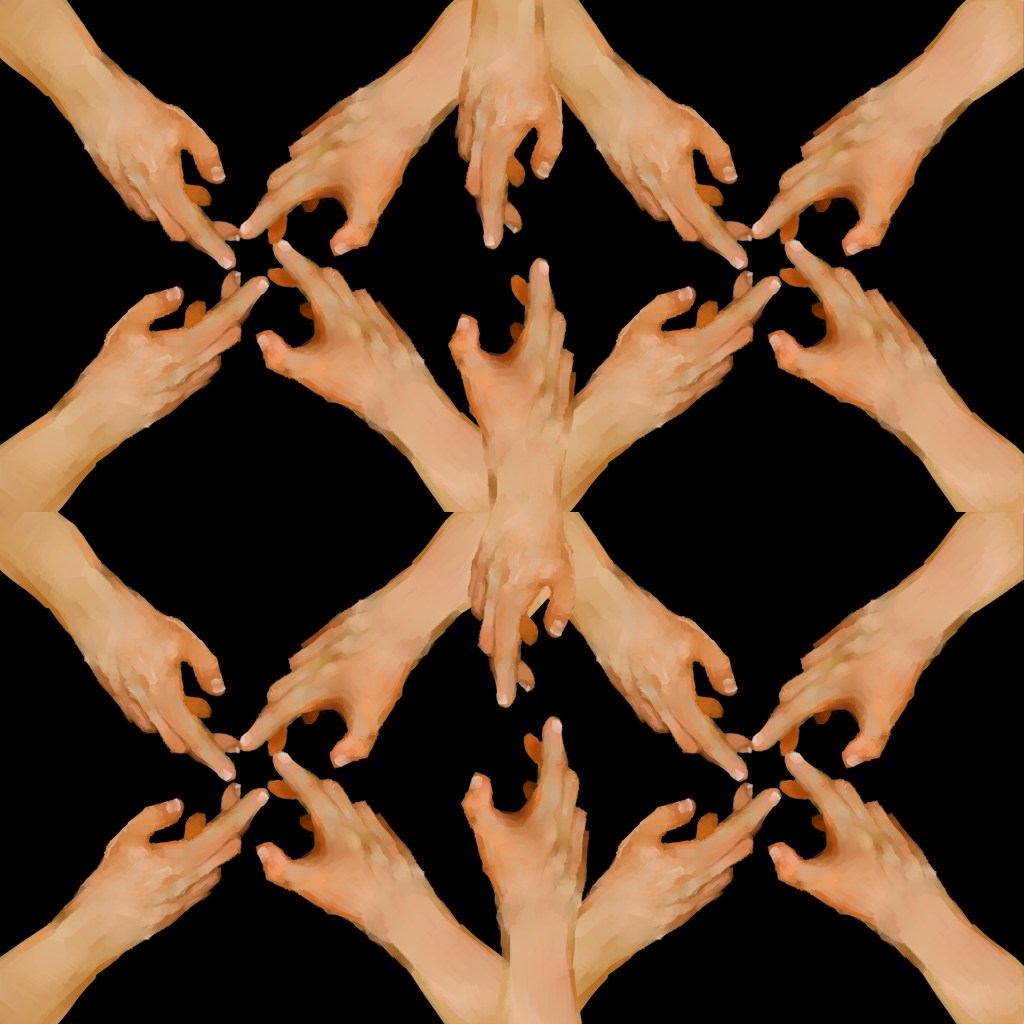


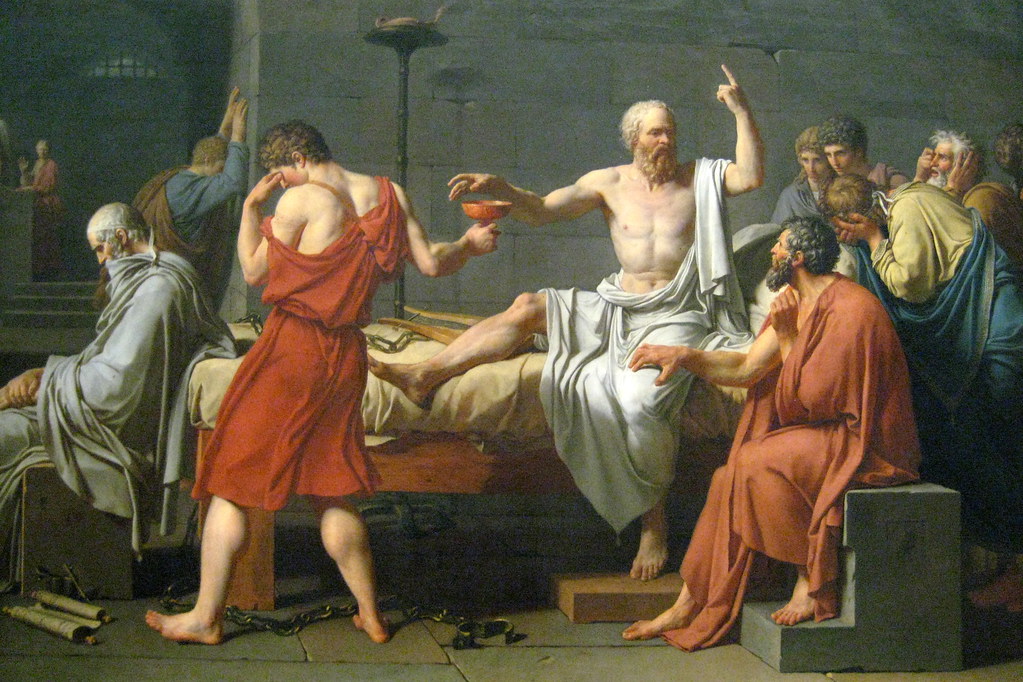


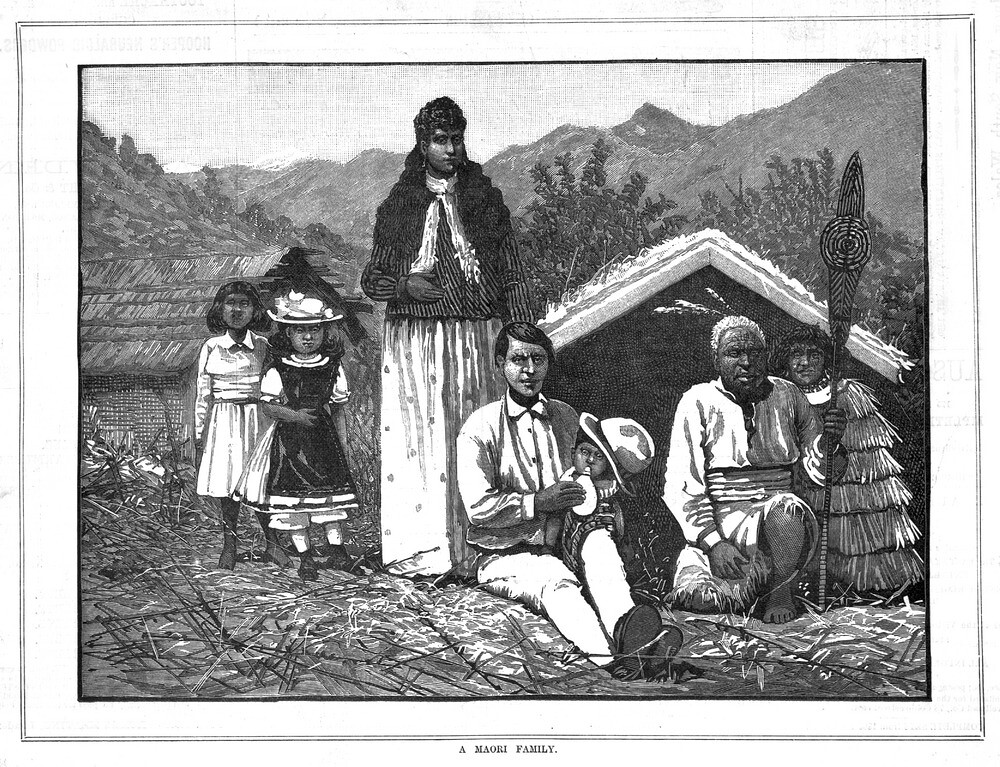
 Borderless