Categories
Author Page

Suzanne Kamata

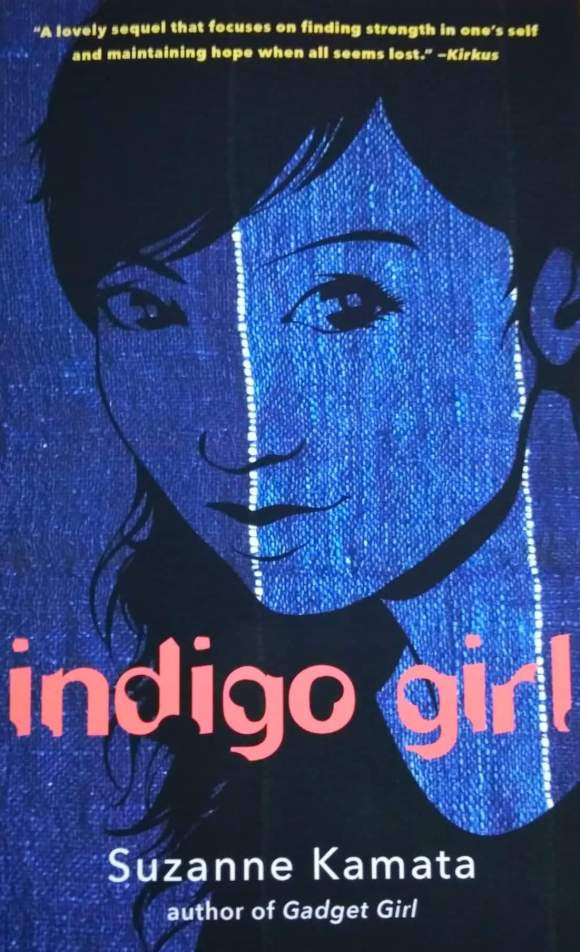
Recipient of a number of prestigious awards, Suzanne Kamata represents the best in the mingling of the East and the West. Her writing flows well and is compelling — exploring areas that are often left untouched by more conventional writers. Kamata has lived in Tokushima Prefecture, Japan, for more than half of her life. She is the author or editor of 14 published books including, most recently, The Spy (Gemma Open Door, 2020), a novella for emerging readers; the middle grade novel Pop Flies, Robo-pets and Other Disasters (One Elm Books, 2020) which won an American Fiction Award and was recently released as an audiobook; and Indigo Girl (GemmaMedia, 2019), winner of an SCBWI Crystal Kite Award and named a Freeman Book Awards Honor Book, as well as one of the Best Children’s Books of 2019 by Bank Street College. Suzanne has a poetry book called Waiting forthcoming in January 2022 from Kelsay Books.

Interview

In Conversation with Suzanne Kamata

Click here to read.

Poetry

Commemorating Hiroshima: Poetry by Suzanne Kamata

Click here to read.

Book reviews

Suzanne Kamata reviews Iain Maloney’s Life is Elsewhere/ Burn Your Flags. Click here to read.

Gracy Samjetsabam reviews Suzanne Kamata’s The Baseball Widow. Click here to read.

Gracy Samjetsabam reviews Suzanne Kamata’s Indigo Girl . Click here to read.

Book Excerpt

Suzanne Kamata’s The Baseball Widow. Click here to read.

Suzanne Kamata’s Waiting. Click here to read.

Notes from Japan

Suzanne Kamata’s column on Japanese culture and life. Click here to read.

Categories
Excerpt

The Baseball Widow

Title: The Baseball Widow

Author: Suzanne Kamata

Publisher: Wyatt-MacKenzie Publishing (2021)

Christine loved Trina’s oak table. She loved this kitchen with its American-sized refrigerator decorated with animal magnets and children’s art, its scent of baked bread, and the cross-stitch samplers on the wall. She loved Trina’s dishes, painted with blue Chinese landscapes, like the ones that she ate from at her grandmother’s house when she was a child. She remembered that once her oyster casserole or Thanksgiving sweet potatoes were cleared away, she’d wondered about the pagoda on her plate, wondered what it would be like to visit such a place. And then finally she had. She’d been to China, Thailand, Singapore, Malaysia, and of course, Japan, where she now lived. Ironically, although Christine had fled America in search of the exotic and adventurous, Trina’s Blue Willow patterned dishes, this room itself, now filled her with yearning for all that she had left behind.

“How was the send-off?” Elizabeth asked from across the table, snapping Christine out of her daydream. Elizabeth looked great, as usual. Even though she’d given birth just a little over a month ago, she managed to keep her bottle-blonde hair touched up, and her poplin blouses ironed and unstained. Right now the baby slept nestled in her arms.

Christine smiled. “It was fine. Nobody cried. Not even me.” She’d thought that sending her son off on his first day of elementary school – on foot no less, since the children were required to walk to school in groups — would have been more wrenching, but what she’d felt was mostly relief. For the first four years of her life, her daughter Emma had been in and out of hospitals, and then there was that one terrifying week when both kids were in the ICU at the same time with pneumonia. But now they were healthy and sturdy and ready to be out in the world. Plus, it was nice to finally have some time for herself.

Trina gently tapped a spoon against her “Support Our Troops” mug. “I hereby call this meeting of the American Wives’ Club to order,” she said.

Christine raised her coffee cup to Trina in a toast. “The American Wives’ Club” — AWC for short — wasn’t an official organization. There was no club secretary, no president. They got enough of protocol with the Japanese P.T.A. and Kodomo Kai and other Japanese mothers’ groups. In reality, the AWC was composed of the three of them – Christine, Elizabeth, and Trina, wife of a Japanese professor, whose two chestnut-haired children, not yet school-aged, were now under the table clawing at knees. Elizabeth’s eldest child, a daughter, was in the second grade at a private academy with an English immersion program.

Although coffee was enough of an excuse for a gathering, on this morning they’d gotten together to give Elizabeth a baby shower. According to Miss Manners, a baby shower was supposed to be held in the eighth month of pregnancy, but etiquette be damned; the members of the AWC put enough time and energy into keeping track of and adhering to Japanese customs (exactly how much to spend on a summer gift for one’s boss, where to stand in an elevator, which days were inauspicious for hospital visits, etc.). Sometimes a little anarchy was just the right thing. The belated celebration was also out of deference to Christine, whose daughter had been fourteen weeks ahead of schedule, during Christine’s seventh month of pregnancy. For days, weeks, months, Emma had struggled in an incubator at the university hospital, and they had all learned not to take a baby’s easy delivery and good health for granted.

The doorbell rang then, and Trina jumped up. “Oh, I forgot to tell you all. I met a woman at the library the other day. I thought she might like to join us. She’s Canadian, but I think we can make an exception. We can be the North American Wives.”

“Yes, of course,” Elizabeth said. “The more, the merrier.”

Trina went to open the door, and the others moved their chairs to make room for another guest. Their heads turned when a slender, pale woman with strawberry blonde hair stepped into the room. She held a little boy of about three by the hand. Christine could tell by his eyes and brownish hair that he was biracial (“hafu” as the Japanese said) just as all of their children were.

“Hi, I’m Sophia Lang,” she said. She extended her hand to Christine, and then to Elizabeth.

“Sophia has just signed on as an adjunct at Tokushima University,” Trina said. “Her husband is a scientist at Otsuka.” Christine nodded. They were all familiar with the pharmaceutical company, one of the area’s largest employers, and maker of that ubiquitous, ridiculously named sports drink, Pocari Sweat. Elizabeth’s husband worked there, too. “They just moved here from – where was it?”

“Maryland,” Sophia said. “My husband is originally from Tokushima. We thought it’d be nice for Kai, here, to get to know his father’s family better. And also, work on his Japanese language skills. My husband asked for a transfer, and here we are!”

She had that fresh-off-the-plane look about her. Christine had read somewhere about the stages of culture shock – she’d experienced them herself. First, was the euphoric falling-in-love stage, where everything was new and exciting. Pretty soon the shine would wear off, and irritation would set in. She’d get sick of having little kids point at her hair, and of people asking if she could use chopsticks. She’d discover that the bank machines closed early, at nine p.m., and that if she didn’t have her laundry out by eight in the morning (so late!), the neighbours would chat about her.

“Have a seat,” Trina said, ushering Sophia into a chair. “And Kai, maybe you’d like to go play with Misa and Kenta. Kids! Out from under the table! Show this nice little boy your toys!”

Trina’s two and three-year olds emerged, giggling and ran out of the room. Kai looked up at his mother for confirmation, before scrambling after them.

“Ah, peace at last,” Trina said, pouring coffee for Sophia into a University of Virginia mug.

They went around the table and introduced themselves.

“I’m Elizabeth Tanigawa, from Kentucky. I’m doing some research about expatriates in Tokushima,” she drawled. “I’m planning on writing a book or an essay or something.” She was always immersed in some project. For awhile, it had been indigo dyeing, and before that pottery, and even longer ago, she’d been obsessed with local folklore. During the latter phase, she’d compiled dozens of stories about trickster raccoon dogs, but she’d never tried to publish them. It was just something to keep her busy.

“Well, that sounds interesting,” Sophia said politely. “I didn’t know there were enough expats here for a book.”

It’s true that there were hardly any foreigners in Tokushima Prefecture. Christine had gone days without seeing another non-Japanese in the capital city, weeks, even. Although bridges now linked the island of Shikoku via sparsely populated Awaji Island with Honshu, there were no high speed bullet trains zipping across the island. There were few jobs for foreign women outside of teaching English or pouring drinks in hostess bars, and tourists from abroad rarely added the island to their agenda.

“Oh, but there have been lots,” Elizabeth said, and here, she nodded at Christine, “missionaries from South Carolina, an entire camp of German Prisoners of War, and there was also a Portuguese sailor who settled here and married the little Japanese girl that was his housemaid. Kinda like Madame Butterfly. There’s a museum about his life up on top of Mount Bizan.”

“A girl?”

“She was quite a bit younger,” Christine put in. “But she was an adult. I’m sure she knew what she was doing.” In truth, Christine thought the sailor, who appeared in photos with a long white beard, was way too old for his bride, but she suddenly felt perversely defensive of all things Tokushima. It was her home now, after all.

When it was her turn, she said, “I’m originally from Michigan, most recently from South Carolina. I’ve been living here for ten years. My husband is a high school baseball coach.”

“We call him the ‘imaginary husband,’” Trina said, “because no one has ever seen them together.”

Christine forced herself to join in the laughter, even though she was the one who’d first come up with the moniker. 

“She’s a baseball widow,” Elizabeth explained to the bemused Sophia, who hadn’t been in Japan long enough to understand how demanding high school sports could be. There was no such thing as a baseball season. Once students joined the club, they were busy practicing and playing all year round. The only days off were during the ten days of winter vacation. The rest of the time, even during the “off-season,” from the end of October till about the beginning of February, they had training sessions every day after school and on weekends. Hideki was almost never home.

“I saw your husband on television,” Elizabeth said. “Just a couple of weeks ago. His team made it to the quarter-finals, didn’t it?”

Christine nodded. “Yeah, I was there. Up in the bleachers.” Before the kids had come along, she’d gone to all of his games, but they were too young to enjoy baseball. The one time she’d brought Emma to the stadium, she was dismayed to find that there was no wheelchair access, even though the arena was relatively new. She’d had to ask a couple of high school boys to help carry Emma and her wheels up the concrete steps, into the stands. And then of course, after glimpsing Daddy at the sidelines and waving furiously with no response, both Emma and Koji had grown quickly bored. Now Christine mostly watched the games on TV. Once the number of teams was whittled down to eight, the games were broadcast on the local NHK station, or at least public access TV. It was hard to concentrate, though, when Koji and Emma were grabbing at the remote control, pushing for cartoons. The other day, Christine had asked her mother-in-law to babysit so that she could watch Hideki’s team live. Even though they’d lost, she’d felt emotionally involved in the game. Being there made her feel closer to Hideki, almost as if they were in it together.

“Do you have any children?” Sophia asked, bringing her cup to her lips. Christine saw that her fingernails had been manicured. A diamond glinted off her ring finger. In a couple of months, she won’t be wearing that, Christine thought. She’d figure out that it was way too gaudy for rural Japan.

“Yes, two. A boy and a girl.”

“Do they go to school?” Sophia asked.

“Koji’s at Aizumi West. He just started first grade today.”

“And your daughter? You said you have a little girl?”

Christine nodded. “Her name is Emma, after Queen Emma of Hawaii.” Christine and Hideki had gotten married at a plantation on Oahu. Afterwards, they’d done some sightseeing around the islands, and Christine had become captivated by the biography of Queen Emma, who was both Anglo and Hawaiian – a multicultural woman who did good deeds, a mixed race royal. The perfect role model and namesake, Christine thought. “My daughter goes to the kindergarten at the School for the Deaf.”

“Oh!” Surprise and pity flashed across Sophia’s face. By now, Christine was used to apologies and embarrassment at the revelation of her daughter’s disabilities. She forced a smile to show that it was no big deal, that there was no need to feel sorry for them. Everything was fine!

“Have you thought about taking her to the States?” Sophia asked. “My husband and I had a little scare after an ultrasound, and we decided that if our child had any handicap, we would stay in the U.S. Japan is a couple decades behind in that area, isn’t it?”

Christine felt the blood rush to her face. “We’re keeping our options open,” she murmured, though that wasn’t exactly true. Hideki was passionate about his job and she would never ask him to quit. He had become something of a local celebrity. People respected him, just as they seemed to respect her for being married to him. Whenever she dropped by the baseball field, say, to bring Hideki his forgotten cell phone, or drop off Koji to “help out” with Saturday afternoon practice sessions, the players doffed their caps and bowed to her, the coach’s wife. It made her feel like a First Lady. More importantly, as a public school teacher, Hideki was assured lifetime employment, and he also had good health insurance. With a kid like Emma, you had to have ample coverage. Christine suspected that with all of her pre-existing conditions, Emma was uninsurable in the States. And last, but not least, as the only and eldest son of his widowed mother, Hideki was expected to look after her and act, when necessary, as head of the family, representing the Yamada clan at weddings and funerals that his mother didn’t want to attend. He had responsibilities.

Not every family had the resources – or desire – to up and move across the world every time circumstances changed. And yet, Christine had often wondered if Japan was the best place for their daughter. Or for their son, for that matter. At times, she thought they’d be better off in Sweden, where parents were required by law to teach their deaf children sign language. (Here in Japan, Hideki was too busy to study anything but baseball stats, and Christine often had to interpret between father and daughter.) Other times she fantasized about moving to Hawaii, where multicultural was the norm.

 “Well, then, ladies,” Trina said, clapping her hands together. “I think it’s time for some games.”

About the book:

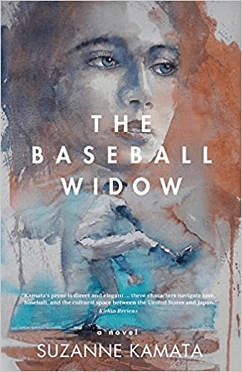
When Christine, an idealistic young American teacher, meets and marries Hideki Yamada, an aspiring Japanese high school baseball coach, she believes that their love with be enough to sustain them as they deal with cultural differences. However, Hideki’s duties, and the team of fit, obedient boys whom he begins to think of as a surrogate family, take up more and more of his time, just as Christine is struggling to manage the needs of their multiply-disabled daughter and their sensitive son. Things come to a head when their son is the victim of bullies. Christine begins to think that she and her children would be safer – and happier – in her native country. On a trip back to the States, she reconnects with a dangerously attractive friend from high school who, after serving and becoming wounded in Afghanistan, seems to understand her like no one else.

Meanwhile, Daisuke Uchida, a slugger with pro potential who has returned to Japan after living abroad, may be able to help propel Hideki’s team to the national baseball tournament at Koshien. Not only would this be a dream come true for Hideki, but also it would secure the futures of his players, some of whom come from precarious homes. While Daisuke looks to Hideki for guidance, he is also distracted by Nana, a talented but troubled girl, whom he is trying to rescue from a life as a bar hostess (or worse). Hideki must ultimately choose between his team and his family.

The Baseball Widow explores issues of duty, disability, discrimination, violence, and forgiveness through a cross-cultural lens. Although flawed, these characters strive to advocate for fairness, goodness, and safety, while considering how their decisions have been shaped by their backgrounds.

About the author:

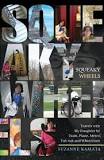
American Suzanne Kamata has lived in Japan for over thirty years. She first arrived in Tokushima Prefecture as an Assistant Language Teacher in public schools. In her second year in Japan, she met her husband, a Japanese high school teacher (and later, high school baseball coach). While raising twins, she wrote and published Losing Kei (Leapfrog Press, 2008), her first novel for adults. Since then, she has published several more award-winning books including the novel Gadget Girl: The Art of Being Invisible (GemmaMedia, 2013) which was awarded an Asian Pacific American Librarians Association  Honor Award for Young Adult Fiction; Indigo Girl (GemmaMedia, 2019), winner of a Gold Nautilus Award and an SCBWI Crystal Kite Award; and Squeaky Wheels: Travels with My Daughter by Train, Plane, Metro, Tuk-tuk and Wheelchair (Wyatt-Mackenzie Publishing, 2019) winner of a CIBA Hearten Award and a Next Generation Book Award.  She is an associate professor at Naruto University of Education.

.

PLEASE NOTE: ARTICLES CAN ONLY BE REPRODUCED IN OTHER SITES WITH DUE ACKNOWLEDGEMENT TO BORDERLESS JOURNAL

Categories
Contents

Borderless, November, 2021

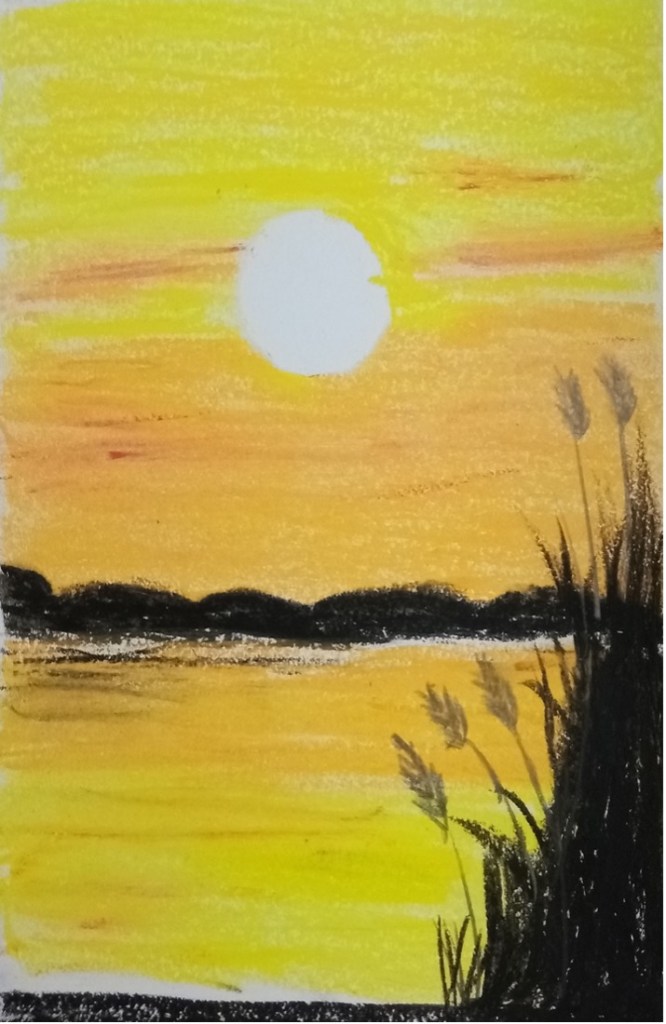
Autumn: Painting in Acrylic by Sybil Pretious

Editorial

Colours of the Sky…Click here to read.

Interviews

In Conversation with Akbar Barakzai, a Balochi poet in exile who rejected an award from Pakistan Academy of Letters for his principles. Click here to read.

In Conversation with Somdatta Mandal, a translator, scholar and writer who has much to say on the state of Santiniketan, Tagore, women’s writing on travel and more. Click here to read.

Translations

Rebel or ‘Bidrohi’

Nazrul’s signature poem,Bidrohi, translated by Professor Fakrul Alam. Click here to read.

Motorcar

Jibonananda Das‘s poetry translated from Bengali by Rakibul Hasan Khan. Click here to read.

The Beloved City

Poetry of Munir Momin, translated from Balochi by Fazal Baloch. Click here to read.

Rebranding

A poem in Korean, written & translated by Ihlwha Choi. Click here to read.

Perhaps the Last Kiss

A short story by Bhupeen giving a vignette of life in Nepal, translated from Nepali by Ishwor Kandel. Click here to read.

Morichika or Mirage by Tagore

Tagore’s poetry translated by Mitali Chakravarty. Click here to read.

Poetry

Click on the names to read

Rhys Hughes, Sutputra Radheye, Luis Cuauhtémoc Berriozábal, Sheshu Babu, Michael Lee Johnson, Prithvijeet Sinha, George Freek, Sujash Purna,  Ashok Manikoth, Jay Nicholls, Pramod Rastogi, Ryan Quinn Flanagan, Vijayalakshmi Harish, Mike Smith, Neetu Ralhan, Michael R Burch

Poets, Poetry & Rhys Hughes

A story poem about The Clock Tower of Sir Ticktock Bongg. Click here to read.

Nature’s Musings

Penny Wilkes takes us for a stroll into the avian lives with photographs and poetry in Of Moonshine & Birds. Click here to read.

Stories

Waking Up

Christina Yin takes us on a strange journey in Sarawak, Malaysia. Click here to read.

Rains

A pensive journey mingling rain and childhood memories by Garima Mishra. Click here to read.

Khatme Yunus

Jackie Kabir brings us a strange story from Bangladesh. Click here to read.

First International Conference on Conflict Continuation

Steve Davidson explores an imaginary conference. Click here to read.

The Literary Fictionist

In Fragments of a Strange Journey, Sunil Sharma sets out with Odysseus on a tour of the modern day world. Click here to read.

Musings/Slices from Life

Yesterday Once More?

Ratnottama Sengupta recalls her experiences of the Egyptian unrest while covering the 35th Cairo International Film Festival in 2012. Click here to read.

Embroidering Hunger

An account of life of dochgirs (embroiderers) in Balochistan by Tilyan Aslam. Click here to read.

To Daddy — with Love

Gita Viswanath takes us into her father’s world of art and wonder. Click here to read.

Simon Says

Ishita Shukla, a young girl, explores patriarchal mindset. Click here to read.

Welcoming in the dark half of the year

Candice Louisa Daquin takes a relook at the evolution of Halloween historically. Click here to read.

Musings of the Copywriter

In Crematoriums for the Rich, Devraj Singh Kalsi regales his readers with a dark twist of the macabre. Click here to read.

Essays

Renewal

Jayat Joshi, a student of development studies, takes a dig at unplanned urban development. Click here to read.

Once Upon A Time in Burma: Leaving on a Jet Plane

John Herlihy’s last episode in his travels through Burma. Click here to read.

A Legacy of Prejudice, Persecution and Plight

Suvrat Arora muses on the impact of a classic that has been coloured with biases. Click here to read.

The Observant Migrant

In Is Sensitivity a Strength or a Weakness?, Candice Louisa Daquin explores our value systems. Click here to read.

Book Excerpts

Arundhathi Subramaniam’s Women Who Wear Only Themselves. Click here to read.

CJ Fentiman’s award winning book, The Cat with Three Passports. Click here to read.

Book Reviews

Himadri Lahiri reviews Somdatta Mandal’s ‘Kobi’ and ‘Rani’: Memoirs and Correspondences of Nirmalkumari Mahalanobis and Rabindranath Tagore. Click here to read.

Suzanne Kamata reviews Iain Maloney’s Life is Elsewhere/ Burn Your Flags. Click here to read.

Bhaskar Parichha reviews Anita Agnihotri’s Mahanadi –The Tale of a River, translated from Bengali by Nivedita Sen. Click here to read.

Meenakshi Malhotra reviews Turmeric Nation: A Passage Through India’s Tastes, authored by Shylashri Shankar. Click here to read.

Categories
Editorial

Colours of the Sky

A riot of colours starts the day
with happiness, vibrancy and hope,
dispelling the winter of discontent
with whispers of new lores…
Courtesy: Sohana Manzoor

Devi (The Goddess) is a 1960 Satyajit Ray film, based on a story by a writer called Prabhat Kumar Mukhopadhyay, that showcases nineteenth century India, where the silence of a young girl who is deified, wreaks havoc in her home, village and life. In an interview, Satyajit Ray contended that the film was to make people rethink ‘messiahdom’. The exact words he used to state this was that the film was against ‘religious dogmatism’ as the film and story literally dealt with the deification of a young bride. Tagore had similarly questioned blind deification in a number of his poems and plays. These (as Ray spelt out in his interview) did not address religion per se but malpractices, among them, the tendency to worship an idol to a point where flaws are justified, accepted and emulated. Satyajit Ray and Tagore were both Brahmos — which can be seen as a reform movement. These two were not criticising religion but talking of rising above gawky hero worship to think logically and arrive at logical conclusions. When we talk of characters from the Ramayana, the Mahabharata, other mythologies or substitute the adulated with stars, writers, politicians and businessmen who run huge concerns, we tend to idolise them. But these were and are all characters with flaws, whether fictitious or real. We can well learn from their mistakes, rather than deify and worship them to justify bad behaviour by quoting instances from lives of past legends or prominent persons in the current world.

Akbar Barakzai, a poet exiled from Balochistan, talks in a similar vein in his interview. You can see it in his poetry too — some of which can be found translated by Fazal Baloch in our pages. Barakzai talks of transcending barriers we draw for ourselves in the real world, of writing with honesty and sincerity. He has shared vignettes of his life as he changed countries to continue his work. Baloch has also brought to us another excellent poet in translation, Munir Momin. A major poem by Nazrul (the ‘bidrohi kobi’), ‘Bidrohi or Rebel’ has wound its way to our pages translated by Professor Fakrul Alam. We are honoured and grateful that Prof Alam chose to share this excellent translation with us. We have more translations: Jibonananda’s ‘Motorcar’(1934) by Rakibul Hasan Khan, a Korean translation by Ihlwha Choi, another short story from Nepal and Tagore’s powerful poem,Morichika or Mirage’, which is a wake-up call for the inert affluent who hold themselves aloof from common masses. We have also interviewed a major prose translator of Tagore, Professor Somdatta Mandal. With much to share on Santiniketan, Nabanita Deb Sen and many interesting anecdotes, Mandal talks of her extensive work with her translations spanning many more writers from the past.

We have a colourful ensemble this time almost as vibrant as the autumnal colours that have invaded nature in some parts of the Northern Hemisphere. Michael R Burch has given us beautiful poems on autumn, including the autumn of life. We have a poem in a similar vein by George Freek whose work continues influenced by Liu Yong (1719-1805), an influential minister and calligrapher in the Qing Dynasty. Ryan Quinn Flanagan touches on Leonardo Da Vinci’s Mona Lisa in his poetry. Rhys Hughes has given us humour in both his poetry and his column. Our other humorist, Devraj Singh Kalsi has given us darker, more caustic black humour in his narrative. We have lovely photographs from Penny Wilkes with her verses in Nature’s Musings. It is amazing the way she photographs birds in flight. Stories from Malaysia, Bangladesh, India and America add to the richness of our oeuvre. Sunil Sharma has given us an avant-garde telling of Odysseus’s voyage in the modern world, transcending the borders of time and ethnicity.

A well-known senior journalist, Ratnottama Sengupta, has also travelled through time to give us a recall of her experience at the 35th Cairo Film Festival one November, nine years ago. Her narrative about the time that the Shariat law was adopted by Egypt reminds me of the way things moved in Afghanistan few months ago and what is even more stunning is the way in which organisations dubbed extremists earlier are allowed to run countries now. Is it really not yet time to get rid of messiahs and look for one world?

We conclude our travels in Burma with John Herlihy and his friend, Peter, this month. And start a column with Candice Louisa Daquin, The Observant Immigrant. Her essays always draw much discussion. An experienced psychotherapist, she has looked into our value systems. We have books excerpts from Arundhathi Subramaniam’s Women Who Wear Only Themselves and CJ Fentiman’s award winning book, The Cat with Three Passports. Himadri Lahiri has done an in-depth review of Somdatta Mandal’s ‘Kobi’ and ‘Rani’: Memoirs and Correspondences of Nirmalkumari Mahalanobis and Rabindranath Tagore. It is amazing how much we can learn about a person from their letters. Suzanne Kamata has shared her review of Iain Maloney’s Life is Elsewhere/ Burn Your Flags. Reviewed by Meenakshi Malhotra, Shylashri Shankar’s Turmeric Nation: A Passage Through India’s Tastes, sounds like an erudite read that spans thousands of years of history. Anita Agnihotri’s Mahanadi –The Tale of a River, translated from Bengali by Nivedita Sen, has been reviewed by Bhaskar Parichha. The narrative sounds like a powerful voice weaving together the lores around the river.

Do pause by and find many more authors who dot our November edition. As usual, naming each one will keep you away from our delectable reads for longer. We thank all our readers for their continued patronage, and I would like to thank my fabulous team who are now even providing visuals to brighten our pages. A huge thanks to Sohana Manzoor and Sybil Pretious, who write as well as they paint. Thanks to all our wonderful contributors for making Borderless a reality.

Wish you all sunshine and laughter!

Best,

Mitali Chakravarty
Borderless Journal

Categories
Review

Life is Elsewhere/Burn Your Flags

Book Review by Suzanne Kamata

Title: Life is Elsewhere/Burn Your Flags

Author:  Iain Maloney

Publisher: Liminal Ink

Considering the amount time that it takes to mull over an idea, digest it, and then write a work of fiction, and the glacial pace of publishing, it seems incredible that novels set during the current COVID-19 pandemic are already in print. Then again, orders to stay home and widespread cancellation of events have given many authors unprecedented time for reflection and writing of short stories, novellas, and even novels. One such novella is the intriguing Life is Elsewhere/Burn Your Flags by long-term Japan resident Iain Maloney.

The story takes place on Christmas Day in 2020, several months into the pandemic, and a few months after the ban on re-entry of foreign residents was lifted. Cormac, a forty-year-old Irish bar owner, has just returned from a visit to his sister in Dublin. His wife, Eri, is worried about judgmental neighbors. She tells him not to tell anyone where he’s been. This deliberate withholding of information hints at one of the themes of the book: Cormac and his wife suffer from a lack of communication. Finding themselves in close proximity for days on end, they can’t seem to get along. They may well be on the cusp of a COVID divorce.

The novella is divided into two sections. The first is told from Cormac’s point-of-view, as he goes on a hike alone while awaiting the results of a medical test. Present concerns mingle with memories of a friend lost to a drug addiction in a country that considers it a crime (“Japan doesn’t do rehab, it just does jail”), riffs on Yukio Mishima’s Confessions of a Mask and veiled women in Muslim countries, along with composed-on-the-spot haiku. In the second half, Eri, who is now the seemingly conventional owner of a language school, thinks back on her days as a fifteen-year-old high school dropout living with the punk rock band ‘Burn Your Flags’, and filming their exploits. As an act of rebellion, the band members wore their shoes inside their apartment. Earlier, Cormac tries to jolly Eri out of her midlife crisis, saying, ‘Yoko Ono is eighty-five and is still punk. You’re still punk.” But it’s not enough to dispel her malaise.

The publisher’s name is Liminal Ink Press, which seems particularly apt; Maloney’s novella perfectly captures this liminal space we’ve all been in. These characters are in-between, and the outcome of their stories is indefinite. Will Cormac get a clean bill of health? Will the couple stay together? Will the pandemic ever end? We don’t know. When the future is so uncertain, there is nothing to do but return to the past.

.

Suzanne Kamata was born and raised in Grand Haven, Michigan. She now lives in Japan with her husband and two children. Her short stories, essays, articles and book reviews have appeared in over 100 publications. Her work has been nominated for the Pushcart Prize five times, and received a Special Mention in 2006. She is also a two-time winner of the All Nippon Airways/Wingspan Fiction Contest, winner of the Paris Book Festival, and winner of a SCBWI Magazine Merit Award.

.

PLEASE NOTE: ARTICLES CAN ONLY BE REPRODUCED IN OTHER SITES WITH DUE ACKNOWLEDGEMENT TO BORDERLESS JOURNAL

Categories
Contents

Borderless, October 2021

An Ode to Autumn: Painting by Sohana Manzoor.

Editorial

Making a Grecian Urn… Click here to read.

Interviews

Unveiling Afghanistan: In Conversation with Nazes Afroz, former editor of BBC and translator of a book on Afghanistan which reflects on the present day crisis. Click here to read.

The Traveller in Time: An interview with Sybil Pretious who has lived through history in six countries and travelled to forty — she has participated in the first democratic elections in an apartheid-worn South Africa and is from a time when Rhodesia was the name for Zimbabwe. Click here to read.

Translations

Travels & Holidays: Humour from Rabindranath

Translated from the original Bengali by Somdatta Mandal, these are Tagore’s essays and letters laced with humour. Click here to read.

The Quest for Home

Nazrul’s Kon Kule Aaj Bhirlo Tori translated from Bengali by Professor Fakrul Alam. Click here to read.

Mysteries of the Universe

Akbar Barakzai’s poetry in Balochi, translated by Fazal Baloch. Click here to read.

Gandhi & Robot

A poem reflecting the state of Gandhi’s ideology written in Manipuri by Thangjam Ibopishak and translated from the Manipuri by Robin S Ngangom. Click here to read.

Sorrows Left Alone

A poem in Korean, written & translated by Ihlwha Choi. Click here to read.

The Song of Advent by Tagore

Written by Tagore in 1908, Amaar Nayano Bhulano Ele describes early autumn when the festival of Durga Puja is celebrated. It has been translated from Bengali by Mitali Chakravarty. Click here to read.

Poetry

Click on the names to read

Michael R Burch, A Jessie Michael, John Grey, Rupali Gupta Mukherjee, Mike Smith, Saranyan BV, Tony Brewer, Baisali Chatterjee Dutt, Jay Nicholls, Beni S Yanthan, Luis Cuauhtémoc Berriozábal, Pramod Rastogi, Jason Ryberg, Michael Lee Johnson, Oormila Vijayakrishnan Prahlad, Rhys Hughes

Animal Limericks by Michael R Burch. Click here to read.

Nature’s Musings

In The Lords of Lights, with photographs and a story, Penny Wilkes makes an interesting new legend. Click here to read.

Poets, Poetry & Rhys Hughes

In Pessoa and Cavafy: What’s in a Name?, Rhys Hughes comically plays with the identity of these two poets. Click here to read.

Musings/ Slices From Life

At the Doctor’s

In this lighthearted narration, Farouk Gulsara uses humour to comment on darker themes. Click here to read.

Taking an unexpected turn

Nitya Pandey talks of a virtual friendship that bloomed across borders of countries during the pandemic. Click here to read.

Travel in the Time of Pandemics: Select Diary Entries of an Urban Nomad

Sunil Sharma gives us a slice from his travels with vibrant photographs, changing continents and homes during the pandemic. Click here to read.

Musings of a Copywriter

In Surviving to Tell a Pony-taleDevraj Singh Kalsi journeys up a hill on a pony and gives a sedately hilarious account. Click here to read.

Essays

A Season of Magical Mellow Wistfulness

Meenakshi Malhotra through folk songs that are associated with Durga Puja explores the theme of homecoming. Click here to read.

What Gandhi Teaches Me

Candice Louisa Daquin applies Gandhiism to her own lived experiences. Click here to read.

How Women’s Education Flourished in Aligarh Muslim University

Sameer Arshad Khatlani dwells on the tradition of education among Muslim women from early twentieth century, naming notables like Ismat Chughtai and Rashid Jahan. Click here to read.

Once Upon a Time in Burma: Of Friendships & Farewells

John Herlihy takes us through more of Myanmar with his companion, Peter, in the third part of his travelogue through this land of mystic pagodas. Click here to read.

When Needles Became Canons…

Ratnottama Sengupta, who has edited an encyclopaedia on culture and is a renowned arts journalist, gives us the role ‘kanthas’ (hand-embroidered mats, made of old rags) played in India’s freedom struggle. Click here to read.

Stories

Lunch with Baba Rinpoche in Kathmandu

Steve Davidson takes us for a fictitious interview with a Tibetan guru in Nepal. Click here to read.

The Tree of Life

An unusual flash fiction by Parnil Yodha about a Tibetan monk. Click here to read.

Odysseus & Me: A Quest for Home

A short fiction from Bangladesh by Marzia Rahman on immigrants. Click here to read.

Dawn in Calicut

Krishna Sruthi Srivalsan writes of a past that created the present. Click here to read.

I am a Coward with Priorities

Tejaswinee Roychowdhury tells a story from a soldier’s perspective. Click here to read.

The Literary Fictionist

In Bapu, Denied, Sunil Sharma explores the fate of Gandhiism in a world where his values have been forgotten. Click here to read.

Book Excerpts

An excerpt of In a Land Far From Home: A Bengali in Afghanistan by Syed Mujtaba Ali, translated by Nazes Afroz. Click here to read.

An excerpt from letters written by Tagore from Kobi & Rani, translated by Somdatta Mandal. Click here to read.

Book Reviews

Aruna Chakravarti reviews Golden Bangladesh at 50: Contemporary Stories & Poems edited by Shazia Omar. Click here to read.

Somdatta Mandal reviews Wooden Cow by T. Janakiraman, translated from Tamil by Lakshmi Kannan. Click here to read.

Gracy Samjetsabam reviews Suzanne Kamata’s The Baseball Widow. Click here to read.

Bhaskar Parichha reviews Mohona Kanjilal’s A Taste of Time: A Food History of Calcutta. Click here to read.


Categories
Editorial

Making a Grecian Urn

“Beauty is truth, truth beauty — that is all
                Ye know on earth, and all ye need to know.”  
  
John Keats (1795-1821), Ode to a Grecian Urn
‘Beauty is Truth’ : The Potato Eaters(1885) by Vincent van Gogh (1853-1890). Courtesy: Creative Commons

What makes for great literature? To me, great literature states the truth — the truth that touches your heart with its poignancy, preciseness, sadness, gentleness, vibrancy, or humour.  If Khayyam, Rumi, Keats, Tagore, Frost or Whitman had no truths to state, their poetry would have failed to mesmerise time and woo readers across ages. Their truths – which can be seen as eternal ones — touch all human hearts with empathetic beauty. Lalon Fakir rose from an uneducated illiterate mendicant to a poet because he had the courage to sing the truth about mankind — to put social norms and barriers aside and versify his truth, which was ours and still is. This can be applied to all genres. Short stories by Saki, O’ Henry or plays and essays by Bernard Shaw — what typifies them? The truth they speak with perhaps a sprinkle of humour. Alan Paton spoke the truth about violence and its arbitrariness while writing of South Africa — made the characters so empathetic that Cry, My Beloved Country (1948) is to me one of the best fictions describing divides in the world, and the same divides persist today. The truth is eternal as in George Orwell’s 1984 (1949) or Suskind’s Perfume (1985). We love laughter from Gerald Durrell or PG Wodehouse too because they reflect larger truths that touch mankind as does the sentimentality of Dickens or the poignancy of Hardy or the societal questioning of the Bronte sisters, George Eliot, and Jane Austen. The list of greats in this tradition would be a very long one.

 Our focus this time is on a fearless essayist in a similar tradition, one who unveiled truths rising above the mundane, lacing them with humour to make them easily digestible for laymen – a writer and a polyglot who knew fourteen languages by the name of Syed Mujtaba Ali (1904-1974). He was Tagore’s student, a Humboldt scholar who lived across six countries, including Afghanistan and spoke of the things he saw around him. Cherished as a celebrated writer among Bengali readers, he wrote for journals and published more than two dozen books that remained untranslated because his witticisms were so entrenched by cultural traditions that no translator dared pick up their pen. Many decades down the line, while in Afghanistan, a BBC editor for South and Central Asia, Nazes Afroz, translated bits of Mujtaba Ali’s non-fiction for his curious friends till he had completed the whole of the travelogue.

The translation named In a Land Far from Home: A Bengali in Afghanistan was published and nominated for the Crossword Awards. This month, we not only run an excerpt from the translated essays but also have an interview with the former BBC journalist, Afroz, who tells us not only about the book but also of the current situation in ravaged Afghanistan based on his own first-hand experiences. Nazes himself has travelled to forty countries, much like our other interviewee, Sybil Pretious, who has travelled to forty and lived in six. She had been writing for us till she left to complete her memoirs — which would cover much of history from currently non-existent country Rhodesia to apartheid and the first democratic election in South Africa. These would be valuable records shared with the world from a personal account of a pacifist who loves humanity.

We have more on travel — an essay by Tagore describing with wry humour vacations in company of his niece and nephew and letters written by the maestro during his trips, some laced with hilarity and the more serious ones excerpted from Kobi and Rani, all translated by Somdatta Mandal. We have also indulged our taste for Tagore’s poetry by translating a song heralding the start of the Durga Puja season. Durga Puja is an autumnal festival celebrated in India. An essay by Meenakshi Malhotra explains the songs of homecoming during this festival. It is interesting that the songs express the mother’s views as highlighted by Malhotra, but one notices, never that of the Goddess, who, mythology has it, gave up her life when the husband of her own choosing, Shiva, was perceived by her family as ‘uncouth’ and was insulted in her parent’s home.

In spirit of this festival highlighting women power and on the other hand her role in society, we have a review by Somdatta of T. Janakiraman’s Wooden Cow, translated from Tamil by Lakshmi Kannan, where the protagonist upends all traditional values ascribed to women. Another book which is flavourful with food and would be a real fit on every festive occasion is Mohana Kanjilal’s A Taste of Time: A Food History of Calcutta. Bhaskar Parichha tells us in his review, “In the thriving universe of Indian food books, this clearly stands out.”

Aruna Chakravarti’s review of Shazia Omar’s Golden Bangladesh at Fifty also stands out embracing the colours of Bengal. It traces the title back to history and their national anthem — a Tagore song called ‘Amaar Sonar Bangla – My Golden Bengal’. Gracy Samjetsabam’s review of Suzanne Kamata’s The Baseball Widow, a cross cultural novel with an unusual ending that shuttles between America and Japan, winds up our review section this time.

As Kamata’s book travels across two continents in a pre-covid world, Sunil Sharma in reality moved home from one continent to another crossing multiple national borders during the pandemic. He has written an eye-opening account of his move along with his amazing short story on Gandhi. Another unusual story creating a new legend with wonderful photographs and the narrative woven around them can be relished in Nature’s Musings by Penny Wilkes. This time we have fiction from India, Malaysia, Bangladesh and America. Steve Davidson has given a story based partly on Tibetan lore and has said much in a light-hearted fashion, especially as the Llama resumes his travels at the end of the story. Keeping in step with light humour and travel is Devraj Singh Kalsi’s account of a pony ride up a hill, except it made me laugh more.

The tone of Rhys Hughes cogitations about the identity of two poets across borders in ‘Pessoa and Cavafy: What’s in a Name?’ reminds me of Puck  or Narada! Of course, he has given humour in verses with a funny story poem which again — I am not quite sure — has a Welsh king who resisted Roman invasion or is it someone else? Michael Burch has limericks on animals, along with his moving poem on Martin Luther King Junior. We have much poetry crossing borders, including a translation of Akbar Barakzai’s fabulous Balochi poetry by Fazal Baloch and Sahitya Akademi winning Manipuri poet, Thangjam Ibopishak, translated by Robin S Ngangom. A Nazrul song which quests for a spiritual home has been translated from Bengali by no less than Professor Fakrul Alam, a winner of both the SAARC award and Bangla Academy Literary Award.

Former Arts Editor of Times of India, Ratnottama Sengupta, has shared an essay on how kantha (hand embroidered rug) became a tool to pass on information during the struggle against colonial occupation. The piece reminded me of the narrative of passing messages through mooncakes among Chinese. During the fourteenth century, the filling was of messages to organise a rebellion which replaced the Yuan dynasty (1271-1368) with the Ming (1368-1644). Now the filling is delicious lotus paste, chocolates or other edible delicacies. Women were heavily involved in all these movements. Sameer Arshad Khatlani has highlighted how women writers of the early twentieth century writing in Urdu, like Ismat Chughtai, created revolutionary literature and inspired even legendary writers, like Simone de Beauvoir. There is much more in our content — not all of which has been discussed here for again this time we have spilled over to near fifty pieces.

We have another delightful surprise for our readers – a cover photo of a painting by Sohana Manzoor depicting the season titled ‘Ode to Autumn’. Do pause by and take a look at this month’s issue. We thank our writers and readers for their continued support. And I would personally like to give a huge thanks to the team which makes it possible for me to put these delectable offerings before the world. Thank you all.

Wish you a wonderful month full of festivities!

Mitali Chakravarty,

Borderless Journal

Categories
Review

Crossing Borders with The Baseball Widow

Book review by Gracy Samjetsabam

Title: The Baseball Widow

Author: Suzanne Kamata

Publisher: Wyatt-MacKenzie Publishing (2021)

Suzanne Kamata is an American writer, academic, and a fiction editor, who resides in the Tokushima Prefecture, Japan. She has authored or edited 14 books including, memoirs and award-winning books. Her anthology The Broken Bridge: Fiction from Expatriates in Literary Japan (1997) was nominated for the Kiriyama Prize. She is a winner in the best novel category of the Half the World Global Literati Award. The Baseball Widow (2021) is her latest book.  

The Baseball Widow (2021) is the tale of the life and aspirations of a passionate young American teacher Christine as she juggles through encounters in a multi-cultural setting and with having a child with special needs. Christine falls in love and marries Hideki Yamada, an aspiring Japanese high school baseball coach despite the complicacies that may arise due to cultural differences. She settles down with Hideki in Japan with dreams of teaching English and travelling to lower income Asian and African countries to help the underprivileged with English language skills.

Their daughter Emma has cerebral palsy. She is wheelchair bound and communicates through sign language. Emma is named with love after Queen Emma of Hawaii (1836-1885), who promoted a multicultural outlook. Their younger son Koji is sensitive and undergoes bullying in school because of having a specially abled sister. Stereotypes and societal judgments over their cross-cultural marriage, having a child that needs frequent hospital visits and extra care, and the other child getting harassed in school are a constant sources of anxiety for Christine and Hideki. Moreover, Hideki’s wholehearted dedication as a coach, who considers his baseball team as his first “family” and as someone who takes the demands of his job seriously, heightens Christine’s responsibility as a wife and a mother in the family.            

The story has a lot to offer for cross-cultural enthusiasts. Through a host of characters, one gets to look closely into some aspects of life in Japan and into a mish mash of cultures. Interestingly, Kamata also manages to juxtapose the perspectives of Japanese and Americans on baseball as a sport, schooling, varying rituals of birthday celebrations, ways of coping with old age, accent issues, food culture, mannerism, a father-daughter relationship that Kamata calls “skinship” and so on. The story takes a larger overtone as it gives a glimpse of experiences on the notion of the term “Hafu”, which means a Japanese biracial. Half-Japanese or half-American, both in Japan or in America, such persons seem to face more societal hurdles than advantages. Additionally, the main plot along with the other sub-plots has a lot more to speak about relatable experiences of cross-cultural encounters in terms of love, education, health, travel, companionship, and the expectations and realities of life and relationships in general.

Kamata gives a unique take on disabilities and disparities of life experiences through Christine and her family’s experience with their own family and society. As parents, Christine and Hideki tried to cater to the needs of both the children and stay strong. Even though, their family was often subjected to gossip and rumours born of Emma’s condition, they reconciled to her disability. As Koji was victimised, they struggled to change him to a private school. They struggled to make life better for their children and family.

The story runs in two parts. In the first part, Kamata takes the reader back and forth from present day to a flashback as she introduces us to the story and the myriad themes of the novel. The story starts with Christine and her views on Japan and her life in Japan. She sets off to Thailand on a mission to help Cambodian refugees. She walks through her dream of helping needy and disenfranchised kids exploring the bigger questions of dreams and reality, love and longing, and the purpose of life. Experiencing a sort of “compassion fatigue” and looking at the brighter side of life, she returns to Hideki and Japan with hopes for a better future. Hideki coaching the baseball team at the Tokushima Kita High School dreams big and works hard to secure a place for his team to the prestigious national baseball tournament at Koshien. Kamata beautifully portrays how life is complicated with love, dreams and responsibilities through the shorter stories within the framework of the main narrative.

Part two of the novel takes a new turn as Christine comes to her mother’s place in South Carolina for a vacation and she meets her old school friend Andrew, an American Iraq War vet, whom she got to reconnect through the Internet. A fatal attraction and an affair ensued to bring out the raw side of reality. Hideki speculates saying, “… there was no such thing as pure joy, that even the greatest happiness was tarnished somehow, temporary, but worth striving for all the same”. Christine motionlessly undergoes strong emotions as she sees Hideki in the hospital. He too reminisces over lost time with Christine that he over dedicated to his career and reaches out to Christine to start all over again saying, “… Please come home”.     

The Baseball Widow is a gripping novel that powerfully explores issues of responsibility, disability, discrimination, violence, dreams, love, longing, health, career, parenting, youth and old age through a cross-cultural spectacle. Hope and forgiveness overrule the human flaws in the story. Christine positively declares “everything is fine!” about Emma’s disabilities to rise about the surprise, pity, apologies and embarrassment of daily encounters. Beautifully embellished with an exquisite watercolour artwork cover by Giorgio Gosti, dark yet shaded in harmony, humour and positivity, The Baseball Widow will touch lives across ages, genders and cultures.  

.

Gracy Samjetsabam is a research scholar at the Manipal Institute of Communication (MIC), MAHE, Manipal. She is also a freelance writer and copy editor. Her interest is in Indian English Writings, Comparative Literature, Gender Studies, Culture Studies, and World Literature. 

.

PLEASE NOTE: ARTICLES CAN ONLY BE REPRODUCED IN OTHER SITES WITH DUE ACKNOWLEDGEMENT TO BORDERLESS JOURNAL

Categories
A Special Tribute

Peace in the footsteps of Hiroshima & Nagasaki

The mother of a soldier once told me she did not agree that winning a war was a solution to peaceful living. She said, “If our army kill the enemy, some other mothers lose their sons; some other wives are widowed; some other children lose their fathers…”

Her summation of the war seems like an accurate description of the current day scenario. While politically the bombs that killed 140,000 in Hiroshima and 74000 in Nagasaki on 6th and 9th August respectively(1945), destroyed two cities, ended the Second World War (1939-1945) which claimed a total of 70-85 million lives over six years and led to the celebration of VE Day (Victory Europe Day), can we afford such horrors of violence and annihilation again? This is a question that remains in the grey zone as nuclear non-proliferation looks like agreeing to peace because the terror of war frightens. Will we ever have a world where peace is loved for the sake of what it brings and not for the fear of annihilation?

Writers in this special commemorate the horrors of the atom bomb and write their plea for peace. While American-Japanese writer, Suzanne Kamata, and Manjul Miteri of Nepal explore victimhood, Michael Burch talks of the Enola Gay, the legendary bomber that dropped “Little Boy” and annihilated a whole city. He reflects on the testing that continued on Bikini Island and further to ‘maintain peace’. We also have the words of Kathleen Burkinshaw who continues impacted by this terror — though it was her mother who was the hibakusha or survivor of the bomb blast. We round up this section with Candice Louisa Daquin’s reflections on peace and the reality as it is.

Poetry

Commemorating Hiroshima: Poetry by Suzanne Kamata that brings to life August 6th and the impact of the bombing on the victims and the devastation around them. Click here to read.

Oh Orimen! A poem in Nepalese about a victim of the blast written by a sculptor, Manjul Miteri, who while working on the largest Asian statue of the Buddha in Japan visited the museum dedicated to the impact of the blast. The poem has been translated to English by Hem Bishwakarma. Click here to read.

Mushroom Clouds: Poetry by Michael Burch that reflects on Enola Gay and the Bikini atoll. Click here to read

Prose

Surviving Hiroshima

Kathleen Burkinshaw is the daughter of a woman who survived the Hiroshima blast. Burkinshaw suffers neural damage herself from the impact of the bomb that her parent faced. She has written a book called The Last Cherry Blossom recounting her mother’s first hand experiences. Her novel has been taken up by the United Nations as a part of its peacekeeping effort. She has been actively participating in efforts to ban nuclear weapons, including presenting with Nobel Laureates. Click here to read the interview.

Peace: Is it even Possible?

In the post second world war scenario, Candice Lousia Daquin explores war and peace through history. Is peace possible? Click here to read.

Categories
Editorial

Reach for the Stars

Courtesy: Creative Commons
“Nothing can be unconditional: consequently, nothing can be free.”


“Liberty means responsibility. That is why most men dread it.” 

-- George Bernard Shaw,  Maxims for Revolutionists, Man & Superman (1903) 

George Bernard Shaw (1856-1950), a great writer and playwright, used these epigrammatic lines to bring focus on what people thought was liberty or freedom from oppression, from regimes that were dictatorial. While discussing concepts of freedom, one does wonder if political freedom solves all humane issues, occasions we celebrate with great aplomb, like the birth of a nation.

This month started with the observance of July 4th, the date of the American Revolution in 1776 and the publication date of Whitman’s Leaves of Grass in 1855. In between these two years, in 1789, ten days down the line, on July 14th, another significant occurrence has been handed down by history to be celebrated as the Bastille Day— the day prisoners were freed from Bastille, a major event that led to the overthrow of the insensitive monarchy in France, a symbolic resurgence of the common, exploited man that has often been seen as an inspiration for later uprisings to reinforce the concept of democracy or liberté, égalité, fraternité.

As we move forward in time, towards August, one wonders if liberty attained by these means was good for all fellow humans? France was part of the Allied Forces that with America taking the lead dropped not one but two atom bombs on Hiroshima and Nagasaki on August 6th and 9th, 1945, to end the Second World War. Did the ends justify the means? Reflecting the cry and suffering of these victims, we have poetry from Suzanne Kamata, a well-known writer from Japan. Michael Burch on the other hand has shared poetry with us which shows how the nuclear programme continued unrepentant despite the devastation it caused. One must give kudos to the descendants of the victims of the nuclear blast that they have forgiven the perpetrators, admitted their own hand in the Second World War and moved ahead. In that spirit, we have an essay on peace by Candice Louisa Daquin, who joins the Borderless team as a writer-in-residence.

We have much happening in poetry this time with an interview of American poet Jared Carter, a recipient of number of awards and fellowships, including the Walt Whitman Award and the Guggenheim fellowship. He walks us through how he created the poem ‘Yeti’ (first published in the May edition of Borderless) and talks of the impact of artifacts from China and India on his own thought processes, the impact of Du Fu (712-770) and much more. We have a poem in Du Fu’s style this time by George Freek and an interesting poem with a Chinese title by Carter, a title that can have multiple connotations and yet each seems to fit the poem perfectly.

Rhys Hughes has brought humour into our pages with both his poetry and essay on William Mcgonagall, who bore the sobriquet of the worst writer in the world through his life and had things thrown at him when he read his poetry in Dundee. Yet, his work survived the beatings, and he lives on known as the ‘Scottish Homer’.

More poetry by Singaporean poet Marc Nair gives us a glimpse of the little island as viewed by someone who has grown up on it. Poetry is always multi-hued, and we have Lorraine Caputo transport us to a Garífuna village in Honduras. Penny Wilkes takes us ‘Down the Path of Nostalgia’ with a mix of old and new photography, prose and poetry on how almost a decade after the end of the Second World War, she started her love affair with photography and nature. It hovers between poetry and musings, and this time we have a rare musing by Jared Carter too. Devraj Singh Kalsi continues cogitating with wry humour while arranging bookshelves. We also have the backpacking granny visiting Indonesia. Post sharing this trip, our granny — Sybil Pretious — plans a little break from publishing to complete her memoirs.

A riveting flash fiction by Kaiyi Tan celebrates the spirit of conquest in these dark times, weaving into the pandemic lore the quest for personal freedom. Stories this time carry a real life one by Jean Kortum on adoption — her own struggle. But then, stories can be real or unreal – draw a bit from both to reflect bigger truths or create alternates that sink into the human mind as a perceived reality and leave an imprint deep inside the heart, like that of Niles Reddick. My conviction is that some lived experiences of writers seep into each story, whether it is from Bangladesh or India or by our literary fictionist, Sunil Sharma. His narrative continues infused by suspense.

We have a complete translated story of Tagore by Radha Chakravarty as our book excerpt this time. ‘The Parrot’s Tale’, ostensibly part of a children’s collection, reflects Tagore’s response to conventional schooling — a reason for him to start Shanti Niketan perhaps. She has also shared two of her translations of Rabindranath’s songs from Bhanusingher Padabali (1884, Bhanusingh’s verses). Chakravarty generously consented to an interview and has given us a glimpse of her journey as a translator and critic.  We also have translated a long poem by Tagore on our pages, a poem that inspires hope, though it was named Dushomoy (1897, Bad Times) finally. The original name had been Swarga Patthe (On the Path to Heaven) as can be seen from a page in his diary. We have been fortunate in finding a recording of his voice reciting the poem in Bengali and the print of a sample page of the manuscript bearing his signature.

We continue with Akbar Barakzai’s poetry translated by Fazal Baloch from Balochi – this time addressed to his daughter reminding for some reason of Nehru’s Letters from a Father to his Daughter — a book I read as a child.  In addition, we have translations from Korea and Bosnia & Herzegovina, from where the young poet, Maid Corbic, has taken up the concept of freedom of the self and of the nation, both together.

Keith Lyons from New Zealand in his very brief essay has quoted American novelist William Faulkner, “We must be free not because we claim freedom, but because we practice it.” And perhaps we need to remember this if for no other reason, then, just to maintain our own sanity in these strange, almost unreal times as we attempt to unite as humankind to free ourselves from an unknown and unfathomable virus.

In a more sombre note, last week, untroubled by the virus, a victim of cancer, Bollywood legend Dileep Kumar, aged 98, breathed his last. Ratnottama Sengupta adds an unusual colour to the Borderless Journal with her tribute to this hugely acclaimed actor. In the process, she unfolds for us a brief history of the Indian cinema, and a glimpse of a world that transcends all man made constructs in quest of perfection.

We have an interesting set of reviews this July. Rakhi Dalal has reviewed Anuradha Kumar’s riveting short story collection, A Sense of Time. A murder mystery for young readers, Murder at Daisy Apartments by Shabnam Minwalla, has been reviewed by Gracy Samjetsabam. The Third Eye of Governance–Rise of Populism, Decline in Social Research by Dr N Bhaskara Rao, reviewed by Bhaskar Parichha, seems to be a non-fiction that looks forward to bridging gaps between academia and the real world, a truly felt need. Parichha has also given us an essay on a man who inspired Ian Fleming, the creator of James Bond, to make him a part of his lore, a journalist who moved around all of Asia with equal aplomb and a sense of humour – a truly global citizen called Richard Hughes.

I want to thank all our wonderful contributors for making this edition a reality. And readers, we leave you to explore the unknown… like that place we call outer space. A huge thank you again to not only all our wonderful contributors, our faithful readers but also to the fabulous Borderless team scattered across the world.  

Before I wind up, a little bird trills a song of hope in my ear. Business tycoons have started stepping into the mysterious void of space to eventually – let us hope — create affordable travel for common man, though it has started off as an expensive proposition. Will this be an industry that will generate more jobs on and off Earth and find new places for man to inhabit? After all, when George Bernard Shaw wrote his plays and essays, we had yet to cross the frontiers beyond Earth, had never even thought of flying across the world in budget airlines or mining moons!

Will we have a new world, a new outlook and a new set of hopes and aspirations as we stretch the frontiers of our home planet?

Wish you all a wonderful month of reading and thinking.

Best wishes,

Mitali Chakravarty