Categories
Stories

Half-Sisters

By Sohana Manzoor

Nara

She was as beautiful as a fairy-child. Her face was angelic as was her nature. She did not know jealousy and during the days of my childhood in that large palatial house of my stepfather, she was my only friend. She shared all that she had with me. Or, rather, she tried to share. Her mother, actually I should say our mother, tried to keep her away from me. After all, I was only her half-sister. I was a creature of wildernesses. My skin was darker, and I climbed the trees like a monkey. In return for her niceties, I shared with her all the fruits of the trees I had rampaged. We were both very young then. She was five and I, ten. Our mother often caught us in the garden rolling in the mud, stained with the color of blackberries or devouring green mangoes. Of course, I was the one who always got punished. She was the darling of her father’s eyes. Who would dare to touch her?

I often wonder if I loved Priya back then. I do not know. Do children love one another? Looking back on those years, I believe I treated her as a doll that was denied to me. I wanted to please her so that she would come to me behind our mother’s back. I knew as early as then that mother didn’t love me. My own father was twenty years older than her, and I was born to her when she was barely eighteen. But he had died in an accident before I was born, and she caught the eye of an extremely rich man, and they were wedded in no time. I was born six months after my mother’s marriage to her second husband. And mother made it very clear that the man she had married was not mine to claim even if he was my father in papers.

I can still recall that particular day I was leaning out of the living room door to watch the family tableau of father-mother-daughter and wishing I was part of it too. Suddenly, mother turned back and saw me. She hissed, “Get inside. What are you doing here?”

Then Priya and her father turned too. Priya waved and laughed, “Come, Apu[1]. Can’t she come too, Abbu[2]?” Her upturned face was radiant with expectation as she looked at her father who also smiled back. “Yes, of course. Come along, Nara.”

Mother glowered, but at Priya’s insistence she agreed to let me join them all on the terrace. Of course, I did not sit with them at the tea-table, but I did hang around them. I watched them contentedly as I had received more than I ever expected.

That was, however, only the beginning.

Up till this moment I only wished that he was my father too. But ma always made sure that I remembered my place. I was always the other sister, the other daughter, the other girl in the family. From this moment onward, I walked behind Priya as her shadow, taking care of her needs, and she depended on me as if I was a second mother. I believe, she loved me too because she knew that nobody else loved her as I did.

I remember the wedding ceremony of Atushi. Atushi was Priya’s cousin, the only daughter of Farzand Fuppi[3]. Priya was of course, as lovely as a rose. She wore a pink coloured lehenga[4] embroidered with seed pearls. It was outrageously expensive as her parents made sure that she had the best of things. But she was still a young girl of thirteen and it was I, the eighteen-year-old Nara, who caused a stir that evening. I was dressed in a peacock blue lehenga that my stepfather almost bullied my mom into getting for me.

“I won’t have one daughter wearing the most expensive thing and another dressed like a pauper,” he had bellowed.

Mother protested, “Nara’s not your daughter.”

He roared, “She’s mine as much as Priya. Don’t you ever say she’s not my daughter.”

Mother cringed and went as pale as a waif. She tried to say something but could not form a single syllable.

Some young male cousins of Priya wowed at our entrance and a female relative sneered, “Goodness gracious! Look at Nara! She just sailed in! Fayaz Uncle will have a Draupadi in his hands in no time.” At some innermost corner of my heart, I reveled. As I turned to look at my mother and Priya, I saw contrasting emotions. Priya was beaming with pure blithe, my darling sweet sister. But in mother’s eyes, I saw panic. She appeared like a terrified deer and clung to Priya. I could not understand why she was so afraid of her very own daughter. But I was naïve, and I did not know the world as she did. Nor did I know the darkest secret she held in her heart.

Priya

They called me a princess. From my childhood I was pampered like one and my mother guarded over me with utmost jealousy. I was an only child and the doctors had said that my mother could not bear another. But then I also had Nara Apu even though everybody called her my half-sister. Technically, she was my half-sister as we had different fathers. Mother always made it clear that she did not care for her at all. And she disliked her even more because I loved her to distraction. In that palace-like prison, she was the only person who cared for me truly. Love shone in her eyes like a beacon, and I cannot help wondering how Nara Apu, who got so little love herself, could love me with such abundance.

She had dark complexion, but that made her all the more beautiful. Her eyes were like pools of black water, the only feature she had inherited from our mother. My eyes are of greenish hue, the eyes that came from my father’s side of the family. When we were children, father was kind of indifferent toward Nara Apu. But Apu had such an unselfish nature that it was difficult to remain unresponsive towards her. And even though my father was a busy man, he did not miss how much she cared for me. Slowly, his attitude toward her changed.

And there was that one time when she practically saved my life. I jumped into the lake after being goaded by some of my cousins even though I did not know how to swim. I realised how stupid the move was as I gulped water and I saw my two dumb cousins standing by the shore gaping at me in horror. I heard a piercing cry, and I sensed it was my mother and then there were several splashes. Then someone got me by the hand, “Don’t grab me,” it said. “Just hold on to my hands.” I flailed and splashed and cried. Then two stronger hands got hold of me.

As I was lying in bed later with mother crying beside me, I learnt that I had two saviours—Nara Apu and Shahnewaz Uncle. It was Nara Apu who had reached me first, and Shahnewaz Uncle reached a few seconds later and grabbed us both and brought me ashore. From that day, everybody knew that Nara and Priya belong together.

By the time she was fifteen, Abbu made sure that mother was not mistreating her daughter from her first marriage. I heard him once telling her, “Salma, do you consider me such a petty creature that I would be jealous of that slip of a girl? You don’t have to treat her so bad, you know, to prove that you love Priya more.”

Mother wept and I could see she was disturbed. But she never really loved her. It is one mystery I never understood until years later.

I also formed a close bonding with Shahnewaz Uncle. Of course, he lived in the same house, but he was always busy with painting. He was Abbu’s younger brother, but they did not have a very close relationship. But he did take notice of me and sometimes patted me on the head. After this particular incident, he started taking interest in both me and Nara. He brought for us licorice of different shapes and tastes and other delicacies. My favourite was orange, while Apu liked peppermint. He laughed at her, “What an old woman you are!” Nara Apu made faces at him and grinned impishly.

During these times, I also started to note that Mother was actually afraid of Nara Apu. It did not make sense to me at all. But whenever Apu was around either Abbu or Shahnewaz Uncle, she would fidget uncomfortably and say nasty things. Once I heard her grumbling to herself that Nara Apu was out to grab men. Poor Apu was only sixteen years old at that time. Then on her nineteenth birthday Mother suggested that she could be married off to Rabbi, a poor relation who worked in our country estate. When Abbu realised that she was serious, he suddenly went very still. Then he said in a very low voice, “If you ever utter such nonsense, or if I ever hear that you’ve initiated something like that, I will have you drowned. Daughters of my family don’t marry servants…. And, from today, she is mine. Forget that you ever gave birth to her, you wretched woman.”

I don’t know what come over her, but mother just fainted away.

Nara

Mother was always a troublemaker. In those days, I could never understand why she hated me so. Our father (I had started calling him Baba[5] at some point; I did not call him Abbu though) was away on a business-trip. And that is when I discovered a terrible secret. I never knew the whole story, but I can still recall the strange conversation that night when Priya was raving in fever and Baba was away. I had fallen asleep in the sofa in Priya’s room and the words streamed into my consciousness:

“All these years, I’ve waited. I’ve waited for him to die. Is there nothing you can do? Priya will always be known as someone else’s daughter.” I heard the sound of muffled weeping of a woman. She whimpered as she said, “And I have to remember all the time that the child that is legitimate is actually the result of rape. I… I … can never love Nara… I was young and I didn’t want her… I hated that man… why couldn’t she die at birth…Why didn’t you let her die?”

Even in my sleep I went numb with pain. Until that moment I had resented that my mother never loved me. There in that nightmarish darkness, in a half-conscious state I learnt the nature of the relationship that existed between my mother and father. I knew, of course, that he was way older than she was. But I never knew that she was married off to him because he had raped her.

Then I heard the voice of a man. The voice was sad but steady, “He’s the rightful son of my father, Salma. I cannot do anything. Even if he dies, I won’t inherit the family property. My mother was only my father’s mistress, you know. Fayaz bhaiya[6] has been generous enough to let me live here. If his mother was alive, he would never be able to do so. You already know that. And Priya has to be recognised as his daughter, otherwise she will get nothing either.”

I was so shocked that a sound escaped my mouth, and my mother was at my side within a moment. In that semi-darkened room, I saw her dark eyes glazed with sheer terror. And I knew that a woman in her predicament would not allow anything or anyone to get between herself and her object of desire. I pretended that I had had a bad dream about Priya. Then we both ran toward Priya’s bed.

A week later, before Priya had completely recovered, mother fell from the stairs and was killed. But a lot of things started to fall in place. Since she could not have any more children, she was protective about Priya and so possessive too. She had no choice but to pass her off as the daughter of her husband. She also wanted to remain the wife of the man who was as rich as a king. She had nowhere to go either. The man she loved, she could not have. And the other daughter, that is me, was a child she never wanted. My father, she never loved. Poor woman! What a life!

It was a strange house after that—two brothers grieving for the woman they both loved. Shahnewaz Uncle suddenly seemed to have grown old. He reminded me of Tithonus bereft of his Dawn. And our stepfather seemed distant and gloomy like a thunderstorm. Yes, that’s how I started thinking. He was Priya’s father only as much as mine. Somehow, the running of the household fell into my hands and Priya became my shadow. She grew to be afraid of the dark. She saw mother’s shadow in the darkness, and I started sleeping in her room. We grew closer than ever. That’s the time when I learnt to love her truly, like my very own sister, without the slightest trace of jealousy.

Priya

I saw the woman in shroud for the first time about two weeks after Mother died. She was sitting in the veranda in the evening. I called out without thinking and when she looked back, I shuddered because she had no face. Yet I knew she was a woman. I heard a piercing scream and when two arms gathered around me, I realised that it was Nara Apu and that I had screamed. I think I fainted and when I woke up, I was in my bed and Apu was sitting by my bed, her eyes clouded with worry.

“I saw her, Apu,” I whispered. “I think I saw Ma.”

Apu’s face paled, but she shushed, “You saw nothing, darling. It was just a shadow. And don’t worry, I’m here. I’ll take care of everything.”

But I saw the woman again a few days later. She was watering the plants on the rooftop at the wake of dawn. I saw her from my window, and I knew it was her. Why was she haunting me? And why did nobody else see her?

Nara Apu made sure after that I was always surrounded by people, esp. in the evening. At night, she slept in my room. Initially, she slept in a cot, but later at my insistence, she slept in the same bed with me. During those days, Nara Apu was strong. She walked with grim determination; she protected me like a warrior-princess. I felt safe when she was around. During daytime, things were normal, but as soon as the darkness crept in, a fearful feeling rose in my heart. I was afraid of shadows. I realised I had to bring Nara Apu in. But how to tell her? I could not give away my secrets; hence I told her only what I could.

That night when we were getting ready for bed, I caught her hand and whispered, “Apu, I have to tell you something. Have you seen Shahnewaz Uncle’s mother?”

Nara Apu gaped at me in incomprehension.

“I saw her picture in his closet. He said it was the picture of his mother.”

Very slowly Apu got up and sat again. And then she said even more slowly, “She… was… drowned… in a… pond, they say. I wonder…”

I stuttered, “Nara Apu, she… looks … exactly… like me.”

Nara Apu did not say anything, but just looked at me. And I realised with a jolt that she knew. When did she come to know that? And she still protected me like anything? When did she learn about it?

I burst into tears, and she held me close like she always did. “Shush, shush, my pretty. You’re safe with me. None can harm you when I’m here. Shush…” What if she knew the truth? Could she bear it? Could I bear if she did not?

Nara

I had to be strong and brave for the sake of Priya. I could not tell her what Baba had told me. Sometimes I wonder how was it that my own mother never loved me, but I got so much love from a complete stranger. No, I am not talking about Priya, I mean Baba. That rainy afternoon when he called me to his study, haunts me still.

He was standing by the window watching the rain. When I entered, he bade me sit. He did not turn to look at me but spoke:

“Sit, Nara. I have some things to tell you.”

I waited patiently.

“We’re in a strange situation here, are we not? Your mother has died, and you are stuck within the walls of a strange house with people whose ties to each other are stranger.” I shuffled uneasily. What was he saying? What was he referring to?

“This is a big house. Do you know that walls have ears?” he ploughed on. “There are many secrets this house holds and even I do not know them all.” Here he turned to look at me. He had smoky eyes, eyes he inherited from his mother. He was a very handsome man even though he was in his mid- fifties. He sighed and said, “I know who Priya is.”

I bolted from my chair, and I knew my face had lost its colour.

He shook his head. “I have known it for quite some time now. Priya looks a lot like Shahnewaz’s mother. I had not realised when she was younger, but as she is growing up, I’ve been detecting the resemblances.”

I sat trembling. Was he planning to punish us? Why was he telling me all these?

“Sit, Nara. I am not going to hurt you or Priya for something your mother did.”

A terrible suspicion started to creep in my mind. And I had thought… “Did… you… you did not kill her, right?” the words tumbled out of my mouth.

He looked at me sadly. “I did not kill her.” He paused and searched my face. “But why do you say that, Nara? Your mother died in an accident, did she not?”

I remained silent.

“Nara, I want you to know that I have drawn documents with my lawyers and have divided my property equally between you and Priya. Both of you are my daughters, mind you. I do not care who the natural fathers are, I recognise you as my children. And I want you to take care of Priya, no matter what.” He paused again and asked, “Do you understand?”

I nodded mutely. Then I asked, “But why? I mean, are you going somewhere?”

He seemed lost in thought. But then he raised himself out of his reverie and smiled, “I guess, you can say that.” He paused and then added, “You can trust Shahnewaz. Like me, he loves both of you. I believe that he loves you even more because you are not his child. He has no hold over you and yet he owes you for saving his daughter’s life.” At that moment I realised how much he loved us both. I felt a wrenching pain for this man who was more than a father to us, and yet he was not our father.

As I was walking out of the room he called me back, “You’re strong, Nara. Far stronger than any of us. You’ll survive.”

Nara and Priya

There was total chaos in the family after Fayaz Chowdhury’s disappearance. The bulk of the property was left to Nara and Priya with Shahnewaz Chowdhury as the legal guardian. Neither Nara, nor Priya could claim their share until their 25th birthday. If either of them died before that, their share would pass on to Shahnewaz. Fayaz Chowdhury’s sisters could not make head or tail of their brother’s wishes. Why did he leave half of his property to Nara? Even though adopted, she virtually was no blood relation to him. Naturally, not any of them could accept that she had suddenly been elevated to the status of a princess.

Priya’s problem at this point was she still saw the shadow of a woman periodically. But by now they both had accepted that Priya would keep on seeing her. She became more and more dependent on Nara.

On that particular afternoon, Nara was making tea on the veranda. Priya was sitting on the small sofa when she just could not take it any more. “Apu, do you know that you are the most beautiful girl that ever lived?” she asked with an unnatural fervency.

Nara raised her dark eyes and laughed. “What got into you, sweetie? If I’m the most beautiful one, what are you?”

Priya smiled in spite of herself. “Apu, will you go away when you get married?”

“I’ll never get married,” Nara suddenly went somber.

“Why not?”

“I don’t trust men,” came the simple reply. She paused and then proceeded to say, “Our poor mother! I just feel so sorry for her.”

“Why do you feel sorry for her? She was a selfish bitch!” There, it was out in the open, thought Priya. It still bothered her that the wretched woman never learnt to love her elder daughter.

Nara shook her head. “No, Priya, she was just a miserable woman. She could not have the man she loved and had to deal with two other men.”

Priya’s eyes stung as the words tumbled out, “You loved her?”

“She was my mother,” said Nara matter-of-factly. “What she did was done out of her own miserable state of mind. I cannot help loving her.”

Priya’s face went as white as chalk. “Apu, I killed her.” The whispering confession was as soft as the first snow. Nara went still. When she turned to look at her sister, she said with a sadness that only tremendous love for a child can produce, “I know. Baba knew too, I believe.”

Priya cried with an abundance that knew no limit. “She hated you. That wretched woman! She wanted to kill you when you were born. Did you know that? Shahnewaz Uncle did not let her. Those two men—they have had so much love in them for that wicked woman. And you love her too? How can you love her? … Sh she was… a witch… an evil witch… I can never… forgive her… never…. Do you know she planned on killing you again? She… she had come to … sus… suspect that you knew the secret of… my birth. I p-pushed her d-down the stairs. I would n-never let anyone harm you… never…” by this point Priya had become hysterical.

Priya was still screaming when they took her away. Her mind had gone completely berserk. She certainly was not a criminal. No wonder the pressure she had retained through the two years after her mother’s death overwhelmed her completely. Nara pulled through the time, and she dragged her Shahnewaz uncle through it too. When Fayaz Chowdhury finally returned home, it was once again a strange household—two fathers held together by a daughter who belonged to neither. And yet, she was the daughter of the woman they both had loved. It is strange that Nara’s mother never loved the child begotten through rape and abuse, and yet Nara had so much to give. That made all the difference.


[1] Elder sister

[2] Father

[3] Father’s sister

[4] Long full skirt

[5] Father

[6] Elder brother

Sohana Manzoor is Associate Professor, Department of English & Humanities at ULAB. Her short stories and translations have been published in many journals and anthologies in South and South-East Asia. Currently, she is also the Literary Editor of The Daily Star, Bangladesh. This story was first published in Six Seasons’ Review.

.

PLEASE NOTE: ARTICLES CAN ONLY BE REPRODUCED IN OTHER SITES WITH DUE ACKNOWLEDGEMENT TO BORDERLESS JOURNAL

Categories
Contents

Borderless, September 2022

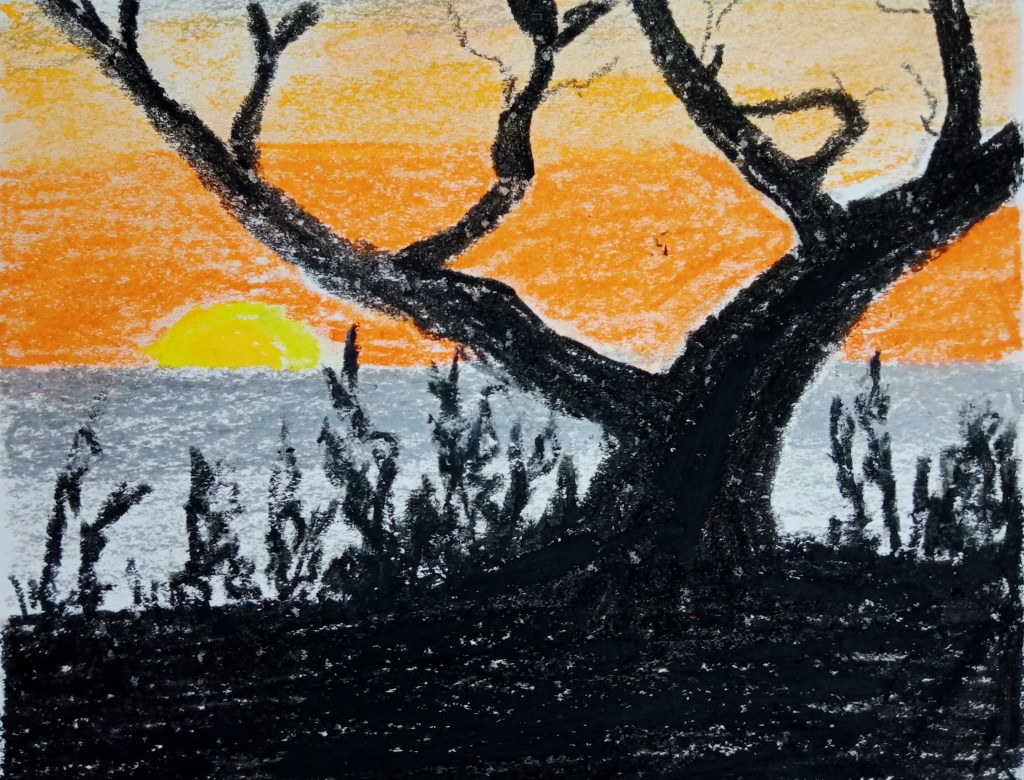
Art by Sohana Manzoor

Editorial

When Autumn Leaves Start to Fall Click here to read.

Conversations

Meet Barun Chanda, an actor who started his career as the lead protagonist of a Satyajit Ray film and now is a bi-lingual writer of fiction and more recently, a non-fiction published by Om Books International, Satyajit Ray: The Man Who Knew Too Much in conversation Click here to read.

Jim Goodman, an American traveler, author, ethnologist and photographer who has spent the last half-century in Asia, converses with Keith Lyons. Click here to read.

Translations

Professor Fakrul Alam has translated three Tagore songs around autumn from Bengali. Click here to read.

Nagmati by Prafulla Roy has been translated from Bengali as Snake Maiden by Aruna Chakravarti. Click here to read.

A Balochi Folksong that is rather flirtatious has been translated by Fazal Baloch. Click here to read.

A Letter Adrift in the Breeze by Haneef Sharif has been translated from Balochi by Mashreen Hameed. Click here to read.

Jajangmyeon Love, a poem has been written in Korean and translated by Ihlwha Choi. Click here to read.

Eshechhe Sarat (Autumn) by Tagore has been translated from Bengali by Mitali Chakravarty. Click here to read.

Poetry

Click on the names to read

Michael R Burch, Sunil Sharma, George Freek, Sutputra Radheye, Ryan Quinn Flanagan, Arshi Mortuza, Ron Pickett, Prasant Kumar B K, David Francis, Shivani Srivastav, Marianne Tefft, Saranyan BV, Jim Bellamy, Shareefa BeegamPP, Irma Kurti, Gayatri Majumdar, Rhys Hughes

Poets, Poetry & Rhys Hughes

In The Chopsy Moggy, Rhys Hughes gives us a feline adventure. Click here to read.

Musings/Slices from Life

A Tale of Two Flags in the South Pacific

Meredith Stephens visits an island that opted to adopt the ways of foreign settlers with her camera and narrates her experiences. Click here to read.

A Taste of Bibimbap & More…

G Venkatesh revisits his Korean experience in a pre-pandemic world. Click here to read.

September Nights

Mike Smith in a short poetic monologue evokes what the season means for him. Click here to read.

Musings of a Copywriter

In El Condor Pasa or I’d Rather be a Sparrow…, Devraj Singh Kalsi explores his interactions with birds with a splatter of humour. Click here to read.

Notes from Japan

In Rabbit Island, Suzanne Kamata visits the island of Okunoshima, where among innocence of rabbits lurk historic horrors. Click here to read.

Essays

A Turkish Adventure with Sait Faik

Paul Mirabile takes us on a journey to Burgaz with his late Turkish friend to explore the writings of Sait Faik Abasiyanik. Click here to read.

A Salute to Ashutosh Bodhe

Ravi Shankar pays a tribute to a fellow trekker and gives a recap of their trekking adventures together near Mt Everest base camp. Click here to read.

The Observant Immigrant

In Sometimes Less is More, Candice Louisa Daquin explores whether smaller communities can be assimilated into the mainstream. Click here to read.

Stories

Where Eagles Dare…

Munaj Gul Muhammad takes on the persona of a woman to voice about their rights in Balochistan. Click here to read.

My Eyes Don’t Speak

Chaturvedi Divi explores blindness and its outcome. Click here to read.

The Royal Retreat

Sangeetha G gives a brief view of intrigue at court. Click here to read.

Book Excerpts

Ruskin Bond, excerpted from Between Heaven and Earth: Writings on the Indian Hills, edited by Ruskin Bond and Bulbul Sharma. Click here to read.

Excerpts from Rhys Hughes’ Comfy Rascals: Short Fictions. Click here to read.

Book Reviews

Rakhi Dalal reviews Rhys Hughes’ Comfy Rascals: Short Fictions. Click here to read.

Hema Ravi reviews Mrutyunjay Sarangi’s A Train to Kolkata and Other Stories. Click here to read.

Bhaskar Parichha reviews Krishna Bose’s Netaji Subhash Chandra Bose’s Life, Struggle and Politics, translated and edited by Sumantra Bose. Click here to read.

Categories
Editorial

When Autumn Leaves Start to Fall…

                     “Where are the songs of Spring? Ay, where are they?
                      Think not of them, thou hast thy music too…”

                                 — John Keats (1795-1851), To Autumn
Art by Sybil Pretious

For long writers have associated autumn with “mellow wistfulness”. That loss of spring, or loss of youth is not bleak or regretful has been captured not just by Keats but also been borne out by historical facts. Anthropocene existence only get better as the human race evolves … If we view our world as moving towards an autumn, we perhaps, as Keats suggests, need to find the new “music” for it. A music that is ripe and matures with the passage of time to the point that it moves more towards perfection. Though sometimes lives fade away after autumn gives way to winter as did those of  Queen Elizabeth II (April 21st 1926 – September 8th 2022) after a reign of seventy historic years and Mikhail Gorbachev (2nd March 1931 – 30thAugust 2022) with his admirable efforts to bridge divides. Both of them have left footprints that could be eternalised if voices echo in harmony. Thoughts which create bonds never die – they live on in your hearts and mine.

Imagine… ten thousand years ago, were we better off? Recorded history shows that the first war had already been fought 13,000 years ago. And they have continued to rage – but, at least, unlike the indomitable Gauls in Asterix[1] comics – not all jumped into the fray. They did during the last World Wars — which also led to attempts towards institutionalising humanitarian concerns and non-alignment. Yes, we have not had a perfect world as yet but as we age, the earth matures and we will, hopefully, move towards better times as we evolve. Climate change had happened earlier too. At a point, Sahara was green. Continental shifts split Pangaea  into seven continents – that was even earlier. That might have driven the dinosaurs to extinction. But I am sure mankind will find a way out of the terror of climate change and wars over a period of time, as long as we believe in deciphering the sounds of autumn as did Keats in his poem.

Tagore had also sung of the joys of autumn which happens to be a time for festivities. Professor Fakrul Alam has translated three such songs, reflecting the  joie de vivre of the season, The translation of a small poem, Eshecche Sarat[2], brings the beauty of the season in Bengal to the fore. We have a celebration of youth and romance in a Balochi folksong, an anti-thesis to autumn and aging, translated for us by Fazal Baloch and also, poetic prose in quest of God and justice by Haneef Sharif, translated from Balochi by Mashreen Hameed. Lost romance recapitulated makes interesting poetry is borne out by Ihlwha Choi’s translation of his own poem from Korean. But the topping in our translation section is a story called ‘Nagmati[3]’ by eminent Bengali writer, Prafulla Roy, translated by no less than a Sahitya Akademi winning translator – Aruna Chakravarti. This story illustrates how terrifying youthful follies can lead to the end of many young lives, a powerful narrative about the snake worshipping community of Bedeynis that highlights destruction due to youthful lusts and an inability to accept diverse cultures.  

When this cultural acceptance becomes a part of our being, it creates bonds which transcend manmade borders as did the films of Satyajit Ray. His mingling was so effective that his work made it to the zenith of an international cinematic scenario so much so that Audrey Hepburn, while receiving the Oscar on his behalf, said: “Dear Satyajit Ray. I am proud and privileged to have been allowed to represent our industry in paying tribute to you as an artist and as a man. For everything you represent I send you my gratitude and love.”

This and more has been revealed to us in a book, Satyajit Ray: The Man Who Knew Too Much, authored by a protagonist from Ray’s film, Barun Chanda. This book brought out by Om Books International reflects not just Ray as a person but also how he knitted the world together with his films and took the Indian film industry to an international level. Barun Chanda has been interviewed with a focus on Satyajit Ray. Keith Lyons has also interviewed a man who has defied all norms and, in the autumn of his life, continues his journey while weaving together cultures across, China, India and Thailand by his ethnographic studies on tribes, Jim Goodman. Goodman says he left America when speaking for a war-free world became a cause for censorship. This makes one wonder if war is a game played for supporting a small minority of people who rule the roost?  Or are these ramblings of a Coleridge writing ‘Kubla Khan’ under the influence of narcotics?

Poetry also brings the season into our pages with an autumnal interpretation of life from Michael Burch. More poetry from Sunil Sharma, Ryan Quinn Flanagan, Gayatri Majumdar, George Freek, Ron Pickett, Sutputra Radheye, Marianne Tefft brings a wide range of concerns to our pages – from climate to the vagaries of human nature. Poetry by an Albanian writer, Irma Kurti, and photographs by her Italian spouse, Biagio Fortini, blend together the colours of humanity. Rhys Hughes as usual, makes it to the realm of absurd – perhaps voicing much in his poetry, especially about the environment and human nature, though he talks of woodpeckers on Noah’s ark (were there any?) and of cows, yetis, monkeys and cakes… He has also given us a hilarious cat narrative for his column. Can that be called magic realism too? Or are the edges too abstract?

A book excerpt from Hughes’ Comfy Rascals Short Fiction and a review of it by Rakhi Dalal makes us wonder with the reviewer if he is a fan of Kafka or Baudelaire and is his creation a tongue-in-cheek comment on conventions? A book review by Hema Ravi of Mrutyunjay Sarangi’s A Train to Kolkata and Other Stories and another by Bhaskar Parichha of Netaji Subhash Chandra Bose’s Life, Struggle and Politics, authored by Netaji’s nephew’s wife, Krishna Bose, translated and edited by her son, Sumantra Bose, unveils the narratives around his life and death.

A leader who quested for freedom and roamed the world after being passed over by the Congress in favour of Nehru, Netaji raised an army of women who were trained in Singapore – not a small feat in the first half of the twentieth century anywhere in the world. His death in an air crash remained an unsolved mystery — another one of those controversies which raged through the century like the Bhawal case. In his review, Parichha spells out: “Aiming to bring an end to the controversies and conspiracy theories surrounding the freedom fighter, the over 300-page book gives a detailed and evidence-based account of his death in one of its chapters.”

Our book excerpts in this edition both feature writers of humour with the other being the inimitable Ruskin Bond. We have an excerpt of Bond’s nostalgia from Between Heaven and Earth: Writings on the Indian Hillsedited by Ruskin Bond and Bulbul Sharma.

Our non-fiction also hosts humour from Devraj Singh Kalsi about his interactions with birds and, on the other hand, a very poignant poetic-prose by Mike Smith reflecting on the vagaries of autumn. From Japan, Suzanne Kamata takes us to the Rabbit Island – and murmurings of war and weapons. We have the strangest story about a set of people who are happy to be ruled by foreign settlers – we would term them colonials – from Meredith Stephens. G Venkatesh delights with a story of love and discovery in Korea, where he had gone in pre-pandemic times. Paul Mirabile travels to Turkey to rediscover a writer, Sait Faik Abasiyanik (1906-1954). And Ravi Shankar gives us an emotional story about his trek in the Himalayas in Nepal with a friend who has passed on. Candice Louisa Daquin has written of the possibilities towards integrating those who are seen as minorities and marginalised into the mainstream.

The edition this time is like Autumn – multi-coloured. Though I am not able to do justice to all our contributors by mentioning them here, my heartfelt thanks to each as every piece only enriches our journal. I urge you to take a look at the September edition.

I would like to give huge thanks to our readers and our team too, especially Sohana Manzoor and Sybil Pretious for their artwork. We could not have come this far without support from all of you.

Thank you.

Happy Reading!

Mitali Chakravarty

borderlessjournal.com


[1] The men in the indomitable Gaulish village (which the Romans failed to conquer) in times of Julius Caesar loved to jump into a fight for no reason…Asterix was the protagonist of the comics along with his fat friend Obelix

[2] Arrival of Autumn

[3] Snake Maiden

Categories
Tagore Translations

Rabindranath & Autumn

Eshechhe Sarat ( Autumn) by Rabindranath Tagore was published in 1937. The poem flows to describe the season of Sarat, or the early part of autumn, when Bengalis celebrated their major festival, Durga Puja

Autumn in Bengal by Sohana Manzoor
AUTUMN 

A cool breeze awakens
Autumn anew.
At dawn, the grass rim
Is lined with dew.

The amloki groves shiver.
Their hearts pound like drums,
As they know the time to shed
Leaves has clearly come.

The shiuli branches are laden with buds.
The togor blossoms hold sway.
The bees visit sprays of the
Malatilata twice a day.

As the rains have ended, 
The clouds roam the skies free. 
They drift with the breeze, 
At leisure and full of glee. 

The ponds ripple with water.
Their banks bloom with flowers.
The young rice plants fill the fields
The wind swings the paddy bowers. 

Wherever I look, a golden light 
Suffuses a vision of holidays,
The festive sun rises in the woods
Of puja* blossoms drenched in gold rays. 


------------------------------------------
Amloki is Indian gooseberry
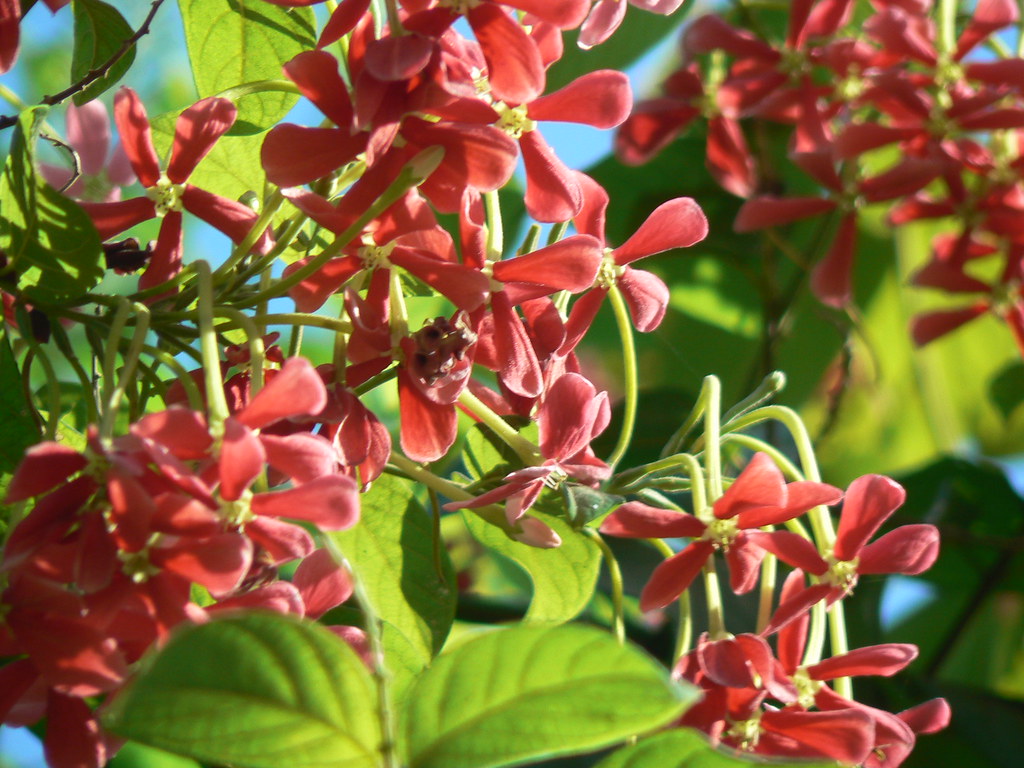
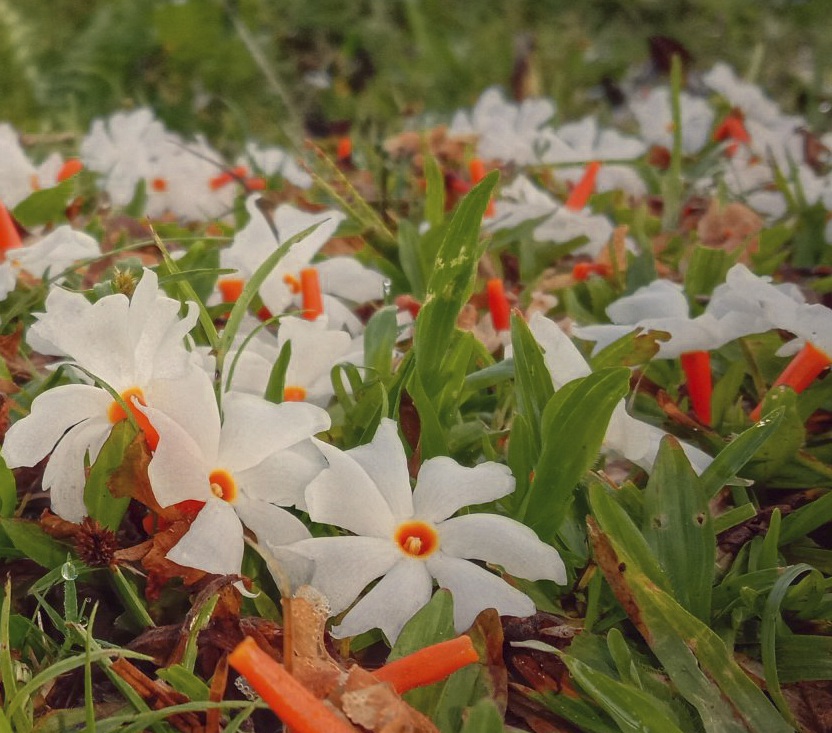
Togor (genera: milkwood), shiuli (jasmine)and Malatilata (Rangoon creeper) are flowers that bloom around autumn
*Durga Puja

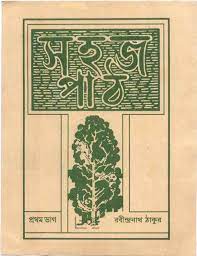
This poem was a part of Sahaj Path, a set of books created by Tagore to teach the Bengali language. The four books that constitute the set were illustrated by the famed artist Nandalal Bose (1882-1966), who was also a major part of Santiniketan.

Sahaj Path, Tagore’s Bengali primer, of which this poem was a part. Courtesy: Creative Commons

(This poem has been translated by Mitali Chakravarty with editorial backing from Anasuya Bhar and Sohana Manzoor)

.

PLEASE NOTE: ARTICLES CAN ONLY BE REPRODUCED IN OTHER SITES WITH DUE ACKNOWLEDGEMENT TO BORDERLESS JOURNAL

Categories
Tagore Translations

Autumnal Songs Translated by Fakrul Alam

These are songs of Tagore centred around autumn, a season that is split into two parts in Bengal. Early autumn is called Sarat and late autumn Hemonto. The first two songs are descriptive of Sarat and the last one of Hemonto.

Autumn: Art by Sohana Manzoor
SAY WHAT YOU WILL (Tomra Ja Bolo tai bolo, written in 1921)

Say what you all will, I don’t mind
My time flies, and hours pass, aimlessly
The wild wind stirs me to a song
And spreads its tune across this deep-blue sky.
That song has stuck in my mind.
What nectar do I seek in the humming of bees?
Whose sky-pervading gaze seeks me out
And settles on my sight thus this day?
Shiuli flower that bloom in autumns in Bengal. Courtesy: Creative Commons
THE HEART WAS AWAKE (Hridoye Chheele Jege, written in 1921)

You were wide awake in my heart 
But I see you in autumnal clouds this day!
How was it you stole so quietly away at dawn,
Letting only your dress’s borders caress the dew?
            What song is it that I should sing?
            I simply can’t find words for it now!
They lie scattered with shiuli flowers under forest canopies
They’ve flown away with the gusting winds in sudden showers.
                        ***
Shiuli-Jasmine
Flowering Kash grass. Courtesy: Creative Commons
AUTUMNAL NIGHTS (Himer Raate, 1927)

On such cool autumnal nights
Hemonto hides heaven’s lamps with its cloak.
To every house it gives this call,
“Light festive lamps, make bright the night,
Shine your own lights, illuminate the world.”
Gardens are flowerless now; cuckoos sing no more;
Kash reed flowers keep falling by riverbanks,
But let go of darkness, despair and misery; light festive lamps-- 
Shine your own lights and proclaim the triumph of light
The gods look on — sons and daughters of earth, arise,
Illuminating the night,
Darkness may descend and day end but light festive lamps,
Shine your own light and triumph over this dark night
                         ***
Hemonto-Late autumn
Kash-Long grass

Below is a Youtube upload of Autumnal night or Himer Raate sung by the legendary singer Debabrata Biswas (1911-1980)

Fakrul Alam is an academic, translator and writer from Bangladesh. He has translated works of Jibonananda Das and Rabindranath Tagore into English and is the recipient of Bangla Academy Literary Award (2012) for translation and SAARC Literary Award (2012).

.

PLEASE NOTE: ARTICLES CAN ONLY BE REPRODUCED IN OTHER SITES WITH DUE ACKNOWLEDGEMENT TO BORDERLESS JOURNAL
Categories
Contents

Borderless, August 2022

Art by Sohana Manzoor

Editorial

The Stars were Shining There for You & Me, for Liberty… Click here to read.

Conversation

The Making of Historical Fiction: A Conversation with Aruna Chakravarti unfolds the creation of her latest novel, The Mendicant Prince, based on the prince of Bhawal controversy in the first part of the last century. Click here to read.

Translations

Tagore’s humorous skit, The Treatment of an Ailment, has been translated by Somdatta Mandal. Click here to read.

Arise, Arise O Patriot! and Helmsman Attention! by Kazi Nazrul Islam have been translated from Bengali by Professor Fakrul Alam. Click here to read.

Pus Ki Raat or A Frigid Winter Night by Munshi Premchand has been translated from Hindi by C Christine Fair. Click here to read.

Tagore’s Song of Hope or ‘Hobe Joye‘ has been translated from Bengali by Mitali Chakravarty. Click here to read.

Poetry

Click on the names to read

Rhys Hughes, Ratnottama Sengupta, Mike Smith, Rituparna Mukherjee, Tony Brewer, Ahmed Rayees, Ron Pickett, Ramesh Dohan, Sister Lou Ella Hickman, Sambhu Nath Banerjee, Candice Louisa Daquin, Oindri Sengupta, Gigi Baldovino Gosnell, Ryan Quinn Flanagan, Tanvi Jeph, George Freek, Michael R Burch

Poets, Poetry & Rhys Hughes

In Mini-Sagas: A Dozen Examples, Rhys Hughes talks of a new genre with dollops of humour. Click here to read.

Musings/Slices from Life

Istanbul

G Venkatesh has a stopover in the airport to make a discovery. Click here to read.

The Loyal Dog in Loyalty Island

Meredith Stephens makes friends with a dog in the township of Wé on the Lifou island, an ‘overseas territory’ of France. Click here to read.

The ‘New Kid on the Block’ Celebrates…

Dr Kirpal Singh ruminates over what led to the making of an island state, Singapore. Click here to read.

Remnants of Time Once Spent Together

Sayali Korgaonkar ruminates over loss and grieving. Click here to read.

Moonland

Rupali Gupta Mukherjee journeys through the moonlike landscape housing a monastery with her camera and a narrative. Click here to read.

King Lear & Kathakali?

PG Thomas revisits a performance that mesmerised him in a pre-covid world. Click here to read.

Musings of a Copywriter

In A Bone in My Platter, Devraj Singh Kalsi shares a taste of running a restaurant. Click here to read.

Notes from Japan

Suzanne Kamata writes a light slice from life in The Boy & The Cats: A Love Story. Click here to read.

Stories

Does this Make Me a Psychic?

Erwin Coombs tells a suspenseful, funny, poignant and sad story, based on his real life experiences. Click here to read.

Hard Choices

Santosh Kalwar gives a glimpse of hope for an abandoned girl-child in Nepal. Click here to read.

No Rain on the Parade

Tan Kaiyi goes on a hunt for the National Day Killer. Click here to read.

Until We Meet Again

Shivani Shrivastav transports us to Manali for a misty union. Click here to read.

The Hatchet Man

Paul Mirabile tells a story of murder and horror. Click here to read.

I am Not the End

Aysha Baqir takes on the persona of a computer to unleash a poignant and chilling story. Click here to read.

Essays

How Many Ways To Love a Book

Sindhu Shivprasad describes passion for books. Click here to read.

Hiking in the Himalayas with Nabinji

Ravi Shankar explores more of Himalayas in Nepal. Click here to read.

Freedom is another word for… Zohra Sehgal

Ratnottama Sengupta gives a glimpse of the life of Zohra Sehgal, based on the book Zohra: A Biography in Four Acts by Ritu Menon, and her own personal interactions with the aging Zohra Sehgal. Click here to read.

The Observant Immigrant

In Can We Create a Better World by Just Wishing for it, Candice Louisa Daquin dwells on the question to locate answers. Click here to read.

Book Excerpts

An excerpt from The Dreams of a Mappila Girl: A Memoir by B. M. Zuhara translated by Fehmida Zakeer. Click here to read.

An excerpt from Michael R Burch’s poetry book, O, Terrible Angel. Click here to read.

Book Reviews

Meenakshi Malhotra reviews Tagore’s Four Chapters translated and introduced by Radha Chakravarty. Click here to read.

Gracy Samjatsabam visits Mamang Dai’s Escaping the Land. Click here to read.

Aditi Yadav reviews Pallavi Aiyar’s Orienting : An Indian in Japan. Click here to read.

Rakhi Dalal visits Neelum Saran Gour’s Requiem in Raga Janki. Click here to read.

Bhaskar Parichha reviews Rakesh Batabyal’s Building a Free India. Click here to read.

Categories
Editorial

The Stars were Shining There for You & Me, for Liberty…

Painting by Sohana Manzoor

“It just so happens that their[1] universes were different from ours: because why would their imaginations be constrained by a nation-state that would not exist for another thousand years?”

Anirudh Kansetti, the print.in

These lines from a recent article on conquests carried out by the Indian subcontinent in ancient times brings to focus that earlier countries or nation-states as we know of them today did not exist till the industrial revolution set the concept in motion. In the month many countries in Asia celebrate their independent existence or rather the drawing of borders based on colonial mapmakers’ whims, we should perhaps relook at the way the world stands divided.

Is this what we want as humans? Where are we headed? While conquerors write the history, we tend to gloss over what is left unsaid. The millions who died crossing borders, in race riots and of hunger, starvation and disease in refugee camps is overlooked, or worse, used to justify the divisions that still hurt the residents of the sub-continent and try to destroy any sense of oneness among the human species. We tend not to forget the atrocities of the colonials but we overlook the violence of the mobs that incensed with hatred instilled by politics annihilated and murdered. Their story is reduced to “us” and “them”. In our mood of jubilation, the recent bombings in the Middle East and the Ukraine-Russia war have already been delegated to the newsreels. But these are all people who are killed and displaced without any justification for the need to do so. One of the things that George Orwell had depicted in 1984 was an acceptance of a constant state of war. Are we stepping into that frame of mind with our cold acceptance of the situation worldwide?

In the last century, many united against the atrocities of the empire builders. They wanted to rise above the divides. At least greats like Nazrul vociferously objected to the basis of divides that were used to draw the borders. Translations brought to us by Professor Fakrul Alam showcase such poetry as does much of Tagore’s own writing and actions. Tagore organised a protest march against the colonial proposal of Partition of Bengal in 1905 by taking a procession in which he encouraged Hindu and Muslim women to tie rakhis[2] on men from the other community and make them their brothers. Tagore put the welfare of humanity above nationalism as can be seen in his writings and speeches. Reflecting on humanity, we have Munshi Premchand’s powerful story, Pus Ki Raat or A Frigid Winter’s Night, translated from Hindi by C Christine Fair, dwelling on the sad state of peasantry under the Raj. In a bid to rouse people like the protagonist of Premchand’s story, Tagore wrote inspirational songs, one of which, Hobe Joye (Victory will be Ours) has been translated on our pages. We also continue sharing Rabindranath’s humour with a skit translated by Somdatta Mandal from Bengali.

Humour is also stirred into Borderless by Rhys Hughes with a series of mini sagas in his column and a trip around the world in eighty couplets. These couplets actually are more in number — I tried counting them — and are guaranteed to make you laugh. We have travel stories in plenty too. Ravi Shankar again treks to the Himalayas and brings us wonderful photographs of his journey and G Venkatesh stops over at Istanbul airport to find a friend from across the border. Meredith Stephens travels to a French colony called Lifou Island — sounds unbelievable as in the month we celebrate the independence of so many countries across Asia, there is still a country in the Pacific that owes allegiance to a democratic European power! But other than writing about the beaches, Stephens talks of a temporary pet dog while Suzanne Kamata gives us cat talk in her notes from Japan in a lighter vein — a very pleasant glimpse of life. Devraj Singh Kalsi brings a grin when he talks of his stint at trying to run a restaurant.

Interesting non-fictions from a book lover, Sindhu Shivprasad, and from PG Thomas who talks of King Lear performed a la classical Indian dance mode, Kathakali, by an international caste add to narratives that focus on bringing the pleasanter side of life to our readers. Such stories are a welcome relief in dark times when people find themselves caught between price hikes due to the pandemic and wars. An essay by Candice Louisa Daquin looks for a way out of the stresses of these times. Erwin Coombs gives us a funny, poignant and tragic classroom encounter which reminds me of the 1967 Sidney Poiter movie, To Sir, with Love. We have darker tones brought into our journal also with Aysha Baqir’s story on child exploitation, a sad but hopeful narrative from Nepal by Santosh Kalwar about the rejection of a girl-child by her mother and a horrific murder brought to us by Paul Mirabile.

Our poetry section this time flows over with poems from Michael R Burch, Ryan Quinn Flanagan, George Freek, Mike Smith, Gigi Baldvino Gosnell and even Ratnottama Sengupta, who has also given us a powerful essay on an acclaimed dancer called Zohra Sehgal whose life was changed by the Partition of the Indian subcontinent in 1947, basing her essay on Ritu Menon’s Zohra: A Biography in Four Acts and her own personal encounters with the irrepressible artiste. Michael Burch has also shared an excerpt of his book dedicated to his wife, O, Terrible Angel.

An excerpt from B. M. Zuhara’s The Dreams of a Mappila Girl: A Memoir, translated from Malayalam by Fehmida Zakeer, brings us close to a community we know very less about in the Southern part of India. Meenakshi Malhotra has reviewed Tagore’s Four Chapters translated from Bengali and introduced by Radha Chakravarty, a book that is a powerful voice against violence in the name of nationalism touching on the independence of women, a theme that is reiterated in another book that has been visited by Rakhi Dalal. While exploring Neelum Saran Gour’s Requiem in Raga Janki, Dalal contends that the book familiarises us with a singer “who carved her own destiny and lived life on her own terms, in times when women were generally subjugated and confined to roles given by society”. Gracy Samjetsabam has visited Mamang Dai’s Escaping the Land, a novel that tries to weave issues faced in the Northeast of India and integrate it with the mainstream by stirring human emotions.  Bhaskar Parichha has reviewed Rakesh Batabyal’s Building a Free India, a collection of powerful speeches from the past.

Within the confines of the Raj, there was a long court case where a prince who had been declared dead resurfaced as a Naga sadhu[3], a claimant to the throne, this time not to abuse his power as of past but to be a sympathiser of the people in their tryst to fight the Raj. Aruna Chakravarti has woven a historical fiction around this controversy centring around the prince of Bhawal. In an exclusive interview, she tells us the story behind the making of The Mendicant Prince — her novel that was published just last month. Her responses could well teach us how to write a historical novel.

We have much more than the fare that has been mentioned here. Pause by on our contents page to take a look. My heartfelt thanks to the whole team at Borderless for helping with this issue, which we managed to get out in a shorter time than usual and Sohana Manzoor for her wonderful artwork. I am grateful to all our contributors as well as our readers. We could not have made it this far without all of you.

In the spirit of uniting under a borderless sky, let us look forward to cooler climes and happier times.

Cheers!

Mitali Chakravarty

borderlessjournal.com


[1] Guptas (4-6 century CE), Cholas (300 BCE -1279 CE) and other ancient rulers in the Indian sub-continent

[2] A festival held in August where sisters of all ages tie a talisman or amulet called the rakhi around the wrists of their brothers, who promise to protect them.

[3] Mendicant

Categories
Tagore Translations

Rabindranath’s Song of Hope

First published in 1915 in Sabuj Patra, ‘Hobe Joye (Victory will be ours)’, has been translated as ‘Song of Hope’

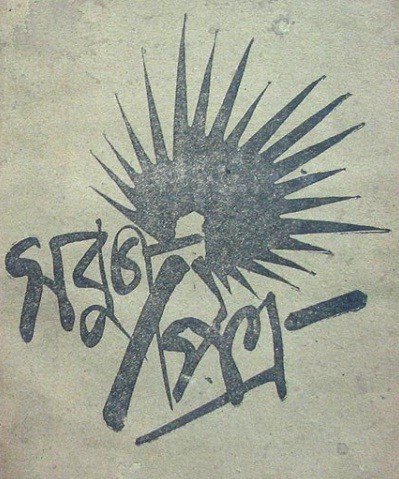
Sabuj Patra was a magazine in which Tagore published often. This is the logo designed by the eminent artist Nandalal Bose who was a close associate of Tagore. The lettering in Bengali gives the name of the journal, which translated means, Green Leaves.
SONG OF HOPE

Victory will be ours, victory will be ours, victory will be ours, 
O valiant, O fearless! 
Life will conquer — eternal life, the song of joy will triumph.
Love will win over anger. The enlightened will prevail. 
This dusk too shall pass, shall fritter away. 
O valiant, O fearless! 
Awake, open your eyes, may your weariness fade away. 
Let the light of hope illuminate a fresh dawn. 

The song in the original Bengali had been rendered by the legendary Pankaj Mullick(1905-1978), who was impacted by Tagore and even gave the music for Diner Sheshe, Ghumer Deshe (translated as ‘The Last Boat’).

This has been translated by Mitali Chakravarty with editorial backing from Sohana Manzoor and Anasuya Bhar.

.

PLEASE NOTE: ARTICLES CAN ONLY BE REPRODUCED IN OTHER SITES WITH DUE ACKNOWLEDGEMENT TO BORDERLESS JOURNAL
Categories
Seasonal Outpourings

Dancing in the Rain…

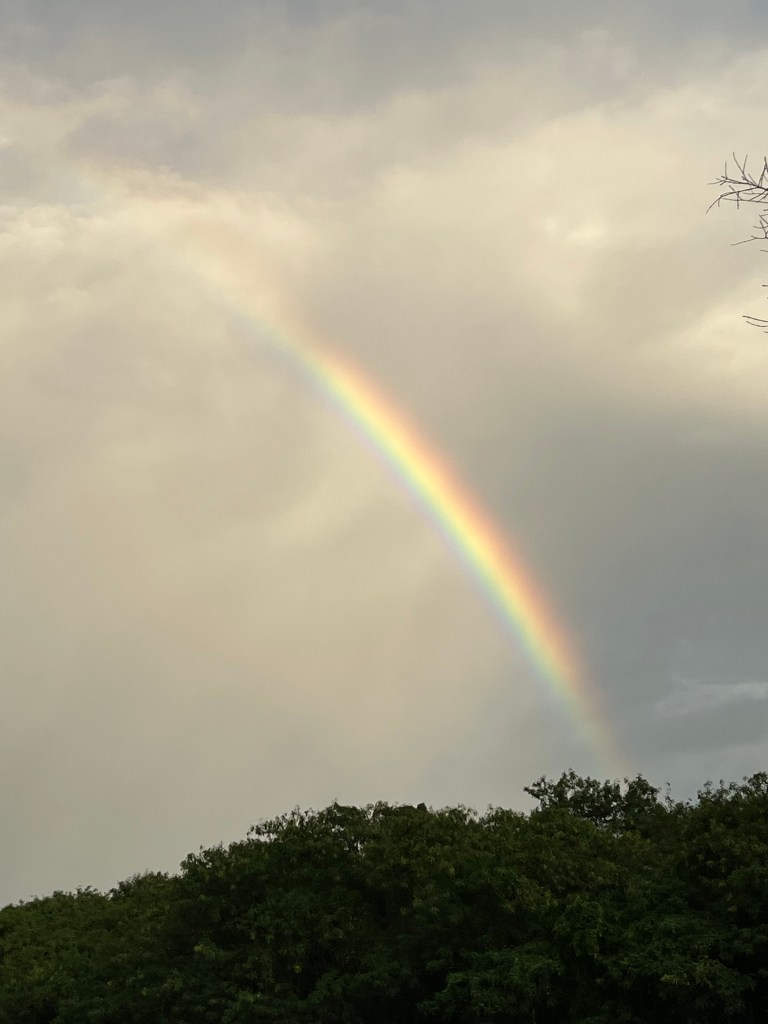
Sometimes, after a downpour, there is a rainbow. Though finding a real leprechaun with a pot of gold at the end of the shimmering diaphanous arch seems unlikely, rains  inspire another type  of treasure — a trove of poetry written around clouds, showers, thunder from across continents. We would like to share with you some of our gatherings from the Borderless treasury, starting with translations of Tagore to modern day poetry — all conversing around seasonal outpourings from the sky in their own way…

Tagore Translations

Monomor Megher Songi (My Friends, The Clouds), a song translated by Professor Fakrul Alam.

My mind keeps company with clouds
And soars with them in all directions.
To the pitter patter pitter patter of sravan showers,
My mind swerves towards infinite space....

Click here to read the full poem.

Noboborsha or New Rains. Poetry,, translated by Mitali Chakravarty. Click here to read the full poem.

Who has covered her bosom
In blue, who has come
Back to play with slivers of lightning?
Oh, who has untied her hair in abandon on the palace's roof?

Click here to read the full poem.

Contemporary Poetry

Cicadas in the Rain by Jared Carter.

Only when it began to rain could I hear it,
in late summer, after they had all risen high
in the saucer magnolia tree – a soft, slow rain
at first, while the light still held in the west.

Click here to read the full poem.

Passing Clouds by Devangshu Dutta

Cloud after cloud
     day after day, burdened with feelings.
                    regrets
                            and hope...

Click here to read the full poem.

Black Clouds Drifted by Sybil Pretious

Black clouds claimed the light
Drifting, secretly drifting.
Wind grasped my hair,
tugged it across my eyes..

Click here to read the full poem.

The Rain-meditation by Sunil Sharma

 The clouds grey and pregnant
 With condensed water,
 Bend down and
 Kiss the parched earth...

Click here to read the full poem.

Rainfall by Luis Cuauhtémoc Berriozábal 

I take refuge in the falling rain.
It falls only for me.
The raindrops fall on my head.
I find comfort in rainfall.

Click here to read the full poem.

Art by Sohana Manzoor
Categories
Contents

Borderless, July 2022

Art by Sohana Manzoor

Editorial

Whispers of Stones… Click here to read.

Translations

Tagore’s Mono Mor Megher Shongi (‘The Clouds, My Friends‘)has been translated by Professor Fakrul Alam. Click here to read.

The Welcome, a skit by Tagore, has been translated by Somdatta Mandal. Click here to read.

The Bus Conductor, a short story by Dalip Kaur Tiwana has been translated from Punjabi by C. Christine Fair. Click here to read.

Hasan Sol: A Balochi Folktale from Geedi Kessah-4(Folktales Vol: 4) compiled and retold by Gulzar Khan Mari, has been translated by Fazal Baloch from Balochi. Click here to read.

Cry of the Sunflower written in Korean and translated to English by Ihlwha Choi, a poem for Ukraine. Click here to read.

Tagore’s Nobobarsha (or ‘New Rains’) has been translated by Mitali Chakravarty. Click here to read.

Pandies’ Corner

This narrative is written by a youngster from the Nithari village who transcended childhood trauma and deprivation. Lockdown had been written in Hindustani by Jishan and translated to English by Grace M Sukanya. Click here to read.

Poetry

Click on the names to read

Michael R Burch, Supatra Sen, Jenny Middleton, Pramod Rastogi, Ron Pickett, George Freek, Devangshu Dutta, Candice Louisa Daquin, David Francis, Raja Chakraborty, Michael Lee Johnson, Ashok Suri, Ryan Quinn Flanagan, Sutputra Radheye, Maid Corbic, Rhys Hughes

Poets, Poetry & Rhys Hughes

In The Anthology in my Mind, Rhys Hughes talks of a make believe anthology. Click here to read and find out what he imagines.

Conversations

Eminent film journalist, Ratnottama Sengupta, converses with legendary actress, Deepti Naval, on her literary aspirations at the Simla Literary festival, Unmesh, in June 2022. Click here to read.

Keith Lyons interviews Steve Carr, a writer who has written 500 short stories and has founded the Sweetycat Press. Click here to read.

Stories

A Cat Story

Sohana Manzoor leaves one wondering if the story is about felines or… Click here to read.

My Christmas Eve “Alone”

Erwin Coomb has a strange encounter at night. Is it real? Click here to read.

Bus Stop

The story by Rinu Antony focusses on chance encounter at a bus stop. Click here to read.

Murder at the ‘Pozzo di San Patriza’

Paul Mirabile travels to 1970s Italy to experience a crime inside a sixteenth century well. Click here to read.

Musings/ Slices from Life

Grune Point and an Inkling of Eternity

A poetic account by Mike Smith as he explores the area that hovers between England and Scotland. Click here to read.

Olympic Game Farm: Meeting and Greeting Animals from Disney Movies

Hema Ravi visits a farm that houses animals that had a past in Disney. Click here to read.

Notes from Japan

In A Visit to the Isamu Noguchi Garden Museum, Suzanne Kamata visits a Museum dedicated to an American Japanese artist. Click here to read.

Musings of a Copywriter

In Shopping for my Funeral, Devraj Singh Kalsi goes on a bizarre spree. Click here to read.

Mission Earth

In On a Bamboo Bicycle from Thailand to Indonesia, Kenny Peavy revisits his trip across Asia exploring the biodiversity and conservation efforts. Click here to read.

Essays

Discovering Books and Places: The Voyage from Eden

Meredith Stephens sails the Australian coastline, recording her experiences with words and her camera. Click here to read.

Trekking to Tilicho Lake

Ravi Shankar treks up to Tilicho Tal at 4940 m. Click here to read his trekking adventures.

A Modern-day Animal Fable with Twists

Dan Meloche visits a contemporary Canadian novel written as an animal fable to draw an unexpected inference. Click here to read.

The Observant Immigrant

Is it okay to be ordinary? by Candice Louisa Daquin explores the responses of people to being accepted as ordinary. Click here to read.

Book Excerpts

An excerpt from The Mendicant Prince (based on the Bhawal sannyasi case) by Aruna Chakravarty. Click here to read.

An excerpt from Nabendu Ghosh’s Dadamoni: The Life and Times of Ashok Kumar. Click here to read.

Book Reviews

Meenakshi Malhotra reviews Tagore’s Gleanings of the Road translated by Somdatta Mandal. Click here to read.

Rakhi Dalal reviews Geetanjali Shree’s Mai, Silently Mother, a Sahitya Akademi winning translation of the Hindi novel by Nita Kumar. Click here to read.

Indrashish Banerjee reviews Nabendu Ghosh’s Dadamoni: The Life and Times of Ashok Kumar. Click here to read.

Bhaskar Parichha reviews Prosanta Chakrabarty’s Explaining Life Through Evolution. Click here to read.