Categories
Stories

The Archiver of Shadows

By Hema R

She restores textiles at the museum in Central Chennai. Her fingers work over ancient threads as if decoding messages from the dead. This is a job that requires patience, belief in the value of preservation and a certain kind of loneliness.

Every day she lets the early morning sunlight into her apartment, 308, which has walls the colour of abandoned hope.

Her grandmother named her Yazhini. “It originates from the name of a stringed instrument in Tamil,” she had explained to the young girl. A stringed instrument, a hollow vessel, designed to resonate with whatever touches it. To amplify what might otherwise go unheard. Yazhini has spent thirty-two years resisting resonance. She has built her life in measures: the precise fold of conservation tissue; the exact temperature of her morning filter coffee; the calculated distance she maintains from her neighbours and from herself.

She first noticed her shadow move on a Wednesday. It lingered on the wall after she had stepped away, like an afterthought or a question. Yazhini noticed and catalogued the anomaly in her mind under “phenomena: unexplained” and continued washing dishes.

But the shadows continue to persist in their small rebellions. They stretch toward one another when she isn’t looking directly at them. They pulse slightly, as if breathing. Waiting.

She watches her grandmother’s lacquered trunk, brought from their ancestral house after the funeral. For three years it has served as an oversized paperweight, holding down memories she has no interest in excavating. The trunk is red-black, the colour of dried blood, with brass fittings gone green at the edges. Sometimes, in the thin light between sleeping and waking, Yazhini imagines it breathes in time with the shadows.

On the night of the new moon, Yazhini returns home damp with rain. The power is out. She lights a candle, and in its uncertain illumination, the shadow cast by her hand seems to drift away from her fingertips.

Without thinking she reaches toward the disloyal shadow and brushes against it. Immediately it feels cool like silk underwater, substantial as regret. Her shadow peels away, a layer of herself she didn’t know could be removed.

She holds it cupped in her palms. It doesn’t weigh anything, but it carries something. Memory, perhaps.

The trunk seems the logical place for it. When she lifts the heavy lid, the interior smells of camphor, cloves, and memories. Her shadow slides from her hands to the bottom of the trunk, spreading and settling as if it has found its home.

This doesn’t frighten her. Instead, she feels the first vibration of a string, long silent inside her. An unheard note being played.

The trunk closes with a sound like satisfaction.

In the days that follow, Yazhini discovers what it is to be a collector of absences. Other shadows reach for her now. The barista’s shadow stretches across the counter, elongating itself unnaturally. The museum director’s shadow pools at her feet during budget meetings.

The shadows know. They have been waiting for someone hollow like her who’s sensitive enough to hold them.

She learns that permission matters. A shadow freely given slides easily into her hands, cool and weightless. A shadow taken leaves a residue like ash on her fingertips.

Mr. Renganathan from apartment 110, a man, eighty-seven years old, who feeds pigeons on the rooftop with the devotion of the religious, is the first to offer his shadow directly to Yazhini. “Take it,” he says, not looking at her but at the sky beyond the building’s edge. “It’s tired of following me.” His shadow has worn thin in places, gossamer with age, and the edges fraying like old silk. When it detaches from his feet, there is a sound like a sigh of relief.

That night, with Mr. Renganathan’s shadow nestled among the others in the trunk, Yazhini dreams of the flood. Not the sanitized version from newspaper archives, but the visceral experience of it: the roar of rising waters, the weight of sodden belongings hastily gathered, the sight of familiar streets transformed into rushing rivers. She wakes tasting salt, uncertain if the tears are hers or that of the memories’ from the shadow. The trunk is open a crack. A thin seam of darkness spills onto her bedroom floor.

Inside, the shadows are not still. They dance, or perhaps they struggle. Yazhini watches until dawn.

In the morning, she examines herself in the mirror. There is no visible difference. Her body casts a shadow. Weaker, perhaps, diluted like the tea she makes some evenings; steeped too briefly, but present nonetheless.

She has not become a vampire or a ghost, those staples of stories where the self is compromised. Yet something has changed. The stringed instrument of her name now plays notes she cannot control. She feels the absence of her original shadow like an amputee might sense a phantom limb, present in its nonexistence.

At the museum, she works on a fragment of brocade retrieved from a shipwreck. Three hundred years underwater, and still some threads hold their colour. Preservation is an act of defiance against time. Or perhaps an accommodation with it or a negotiation. As she works, she becomes aware of the shadows cast by ancient fabrics, the negative spaces between threads that have outlived their creators. These shadows too seem to recognize her. They lean toward her hands as she passes over them with her tools. She learns that history casts its own kind of shadow. She wonders what these textile shadows would feel like if she were to collect them. What medieval fingers might have left behind, what Renaissance whispers might still cling to the weave? She restrains herself. There are boundaries, even in the unprecedented.

That evening, she visits Mr. Renganathan on the rooftop. He sits with the pigeons arranged around him like attendants. His frail body is wrapped in a cardigan despite the Chennai heat. Without his shadow, he seems more substantial. Unburdened.

“You saw?” he asks, not specifying what. Yazhini nods.

“Madurai, 1993,” he continues. “When the floods came. I was 55 then, with my clockmaker’s shop well-established for over two decades. The waters rose so quickly.” His voice softens. “I carried my mother on my back through waist-deep water. My wife Lakshmi held our daughter’s hand, clutching our family documents in a waterproof pouch around her neck. We lost the shop, all my precision tools, everything we’d built. But we survived.” He tells her about rebuilding the clockmaker’s shop where he worked for the next fifteen years, the precision of gears and springs, the satisfaction of fixing what is broken; his wife Lakshmi, who died remembering the garden of her childhood home that she never saw again. As he speaks, Yazhini notices that a new shadow has begun to form beneath him, faint as a watermark. Shadows regenerate, apparently. The body forgives.

The shadows in her trunk multiply. Each night, they perform for her, or perhaps for themselves. Shadow theatre without the puppeteer. They blend and separate, forming patterns that remind her of the textiles she restores: mandalas, paisleys, intricate borders that tell stories in a language she almost understands. Sometimes she sees faces in the patterns, sometimes entire scenes: a child running through monsoon puddles; lovers meeting beneath a banyan tree; an old woman teaching a girl to play the Yazh, an instrument that resembles the harp. Their fingers move in unison across phantom strings. Yazhini begins to understand that she is not collecting shadows but stories, not capturing darkness but light impressed upon it. Memory, it turns out, has texture and weight, density and dimension. It can be archived like fabric, preserved against the ravages of forgetfulness.

As weeks pass, Yazhini decides to take only what is freely offered, and even then, she is selective. Some burdens are not hers to carry.

Mr. Renganathan’s health deteriorates. His visits to the rooftop become less frequent, then cease altogether. Yazhini visits him in apartment 110. His new shadow, still forming, has a different quality than the one she keeps. Cleaner somehow. Unburdened by memories, his body has learned to grow only what it can bear.

“I have a daughter,” he tells her on a Thursday morning when his breath catches between words.

“In Toronto. We haven’t spoken in eleven years.” He doesn’t explain why.

That evening, Yazhini brings a portion of his original shadow to him, the part that holds his daughter at age seven, spinning in a light blue dress. He cups it in papery hands, and for a moment his eyes focus on something beyond the walls of apartment 110.

She helps him record messages. Not the formal apologies of deathbed reconciliations, but everyday words: descriptions of pigeons on the rooftop, complaints about the building manager’s music, recipe of his wife’s biryani. The shadows know what needs to be said when words alone are insufficient.

One morning, “Twilight Towers” absorbs another absence, the way buildings do.

After the funeral, Yazhini finds Mudra, the daughter from Toronto, standing in the hallway outside apartment 110. She wears her grief awkwardly, like borrowed clothing.

“He left me a key,” she says, “and instructions to meet someone named Yazhini.” The resemblance to her father is not in her features but in the quality of her shadow, which stretches toward Yazhini of its own accord.

Back in apartment 308, the trunk waits. When Yazhini opens it, the shadows perform not their usual abstract patterns but a specific scene: a man teaching a little girl to repair a clock. Precise and tender movements. Mudra watches without speaking, her hand at her throat where a locket might hang if she were the type of woman who wore her memories visibly.

“What is this?” she finally asks.

“A type of conservation,” Yazhini answers.

That night, after Mudra returns to her hotel with a promise to visit again tomorrow, Yazhini sits with the open trunk. The shadows have settled into a new configuration. Among them, she notices something unexpected: a small patch of darkness the size of a thumbprint, containing no memory but rather the impression of potential. Not a shadow of what was, but of what might be. A beginning rather than an archive.

The seasons shift. Mudra extends her stay. She finds an apartment in Chennai city, ostensibly to settle her father’s affairs but really to settle something within herself. She visits Yazhini often. They drink coffee. They feed pigeons. Occasionally, they examine shadows together.

The trunk accommodates its growing collection, expanding inward in defiance of spatial logic. The shadows develop rhythms, preferences. Some cling to each other, forming composite memories that never existed but feel true nonetheless. Others maintain their integrity, reluctant to blend. All of them, Yazhini notices, seem to pulse in time with her heartbeat.

One morning Yazhini arrives at the museum to find her supervisor agitated. A rare textile has arrived. A fragment of silk believed to belong to an unnamed Tamil musician from the colonial era. “It needs your touch,” he says, which is as close to praise. The fabric, when Yazhini, unwraps it, carries a pattern she recognises instantly. It had the same configuration the shadows formed in her trunk the previous night.

She works with careful precision. As she does, she becomes aware of her own shadow on the workbench. She wonders how it has changed in these months of keeping others’ darkness. It carries subtle patterns now, impressions from all the shadows she’s collected. The outlines of her fingers contain multitudes: Mr. Renganathan’s clockmaker precision, the barista’s musical rhythm, the museum director’s careful assessment, and countless others.

In her apartment that evening, Yazhini sits before her grandmother’s trunk. “Is this what you meant me to find?” she asks the empty room. No answer comes, but she doesn’t expect one. The dead cast no shadows. They become them.

She opens the trunk and watches the shadows dance. In certain slants of light, she can see them extending beyond the trunk’s confines, threading invisibly throughout the building and beyond, connecting residents who may never speak to one another directly. Mr. Renganathan’s clockmaker hands. Mudra’s cautious smile. The barista’s fluid movements. The child who skips instead of walking.

Yazhini remembers her grandmother’s words about her name. That it meant not just any stringed instrument, but specifically one that requires both hands to play: one to create the note, one to shape it. One to preserve, one to transform. One to hold the past, one to invite the future.

She has become a keeper of shadows, yes, but more importantly, a keeper of the light that made them possible.

Hema R is a novelist, children’s author, and poet. Her short story is featured in Ruskin Bond’s “Writing for Love” anthology. 

.

PLEASE NOTE: ARTICLES CAN ONLY BE REPRODUCED IN OTHER SITES WITH DUE ACKNOWLEDGEMENT TO BORDERLESS JOURNAL

Click here to access the Borderless anthology, Monalisa No Longer Smiles

Click here to access Monalisa No Longer Smiles on Amazon International
Categories
Contents

Borderless, October 2024

Art by Sohana Manzoor

Editorial

Where Are Those Happy Days? … Click here to read.

Conversations

In conversation with Malashri Lal with focus on her poetry book, Mandalas of Time. Click here to read.

Keith Lyons speaks to novelist Lya Badgley about her life, books and travels. Click here to read.

Translations

Tagore’s poem on Africa has been translated from Bengali by Debali Mookerjea-Leonard. Click here to read.

Nazrul’s Shukno Patar Nupur Paye (With Ankle Bells of dried leaves) has been translated from Bengali by Professor Fakrul Alam. Click here to read.

Veena Verma’s story, Galat Aurat or The Wrong Woman, has been translated from Punjabi by C Christine Fair. Click here to read.

Sharaf Shad’s story, The Melting Snow, has been translated from Balochi by Fazal Baloch. Click here to read.

Tagore’s Andhokaarer Utso Hote (From the Fount of Darkness) has been translated from Bengali by Mitali Chakravarty. Click here to read.

Poetry

Click on the names to read the poems

Rhys Hughes, Afsar Mohammad, Fhen M, Luis Cuauhtémoc Berriozábal, Shamik Banerjee, George Freek, Shahin Hossain, Stuart MacFarlane, Matthew James Friday, Udita Banerjee, Jenny Middleton, Alpa Arora, Stephen Philip Druce, Malashri Lal, Michael Burch

Poets, Poetry & Rhys Hughes

In Two Pizza Fantasies, Rhys Hughes recounts myths around the pizza in prose, fiction and poetry, Click here to read.

Musings/Slices from Life

An Alien on the Altar!

Snigdha Agrawal writes of how a dog and lizard add zest to festivities with a dollop of humour. Click here to read.

To Be or Not to Be…

Farouk Gulsara ponders over the nature of humanity. Click here to read.

Memories of my Grandfather

Alpana writes of her interactions with her late grandfather. Click here to read.

From Diana to ‘Dayaan’

Rajorshi Patronobis talks of Wiccan lore. Click here to read.

Musings of a Copywriter

In Libraries and Me, Devraj Singh Kalsi recalls his experiences in school and University in a lighter vein. Click here to read.

Notes from Japan

In Among Ghosts in the Land of a Thousand Hills, Suzanne Kamata travels with a Japanese colleague and students to Rwanda. Click here to read.

Essays

Memories of Durga Puja

Fakrul Alam recalls the festivities of Durga Puja in Dhaka during his childhood. Click here to read.

A Doctor’s Diary: Syncretic Festivities

Ravi Shankar writes of his early life in Kerala where festivals were largely a syncretic event. Click here to read.

Stories

The Return

Paul Mirabile unravels the homecoming of a British monk. Click here to read.

The Mango Thief

Naramsetti Umamaheswara Rao writes a story about peer pressure among children. Click here to read.

Sunset Memories

Saeed Ibrahim writes from near the Arabian Sea. Click here to read.

A Whiff of the Past…

Tanika Rajeswari V gives a haunting story set in Kerala. Click here to read.

Book Excerpts

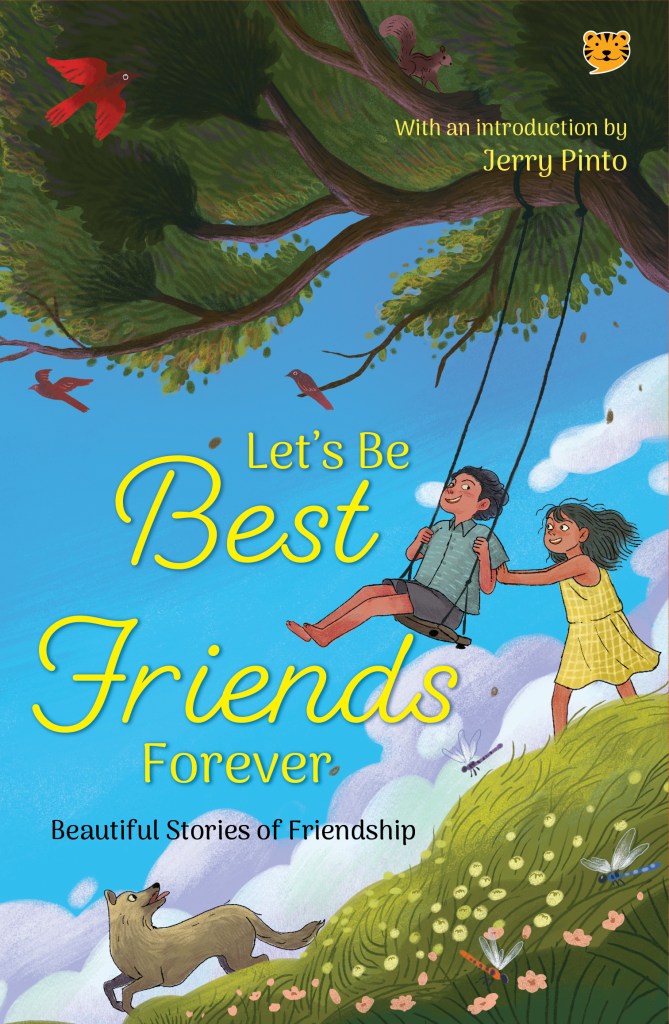
An excerpt by Ruskin Bond from Let’s Be Best Friends Forever: Beautiful Stories of Friendship. Click here to read.

An excerpt from Lara Gelya’s Camel from Kyzylkum. Click here to read.

Book Reviews

Meenakshi Malhotra reviews Anjum Katyal’s Safdar Hashmi: Towards Theatre for a Democracy. Click here to read.

Somdatta Mandal reviews Ammar Kalia’s A Person Is a Prayer. Click here to read.

Bhaskar Parichha reviews Selected Works of Vyasa Kavi Fakir Mohan Senapati, edited by Monica Das. Click here to read.

.

Click here to access the Borderless anthology, Monalisa No Longer Smiles

Click here to access Monalisa No Longer Smiles on Amazon International
Categories
Editorial

Where Are Those Happy Days?

Festivals are like friends.

They bring hope, solace and love to those who believe in them. But, when the structures holding the fiestas in place start to crumble, what do we do then?

Our lives have moved out of wilderness to cities over centuries. Now, we have covered our world with the gloss of technology which our ancestors living in caves would have probably viewed as magic. And yet we violate the dignity of our own kind, war and kill, destroy what we built in the past. The ideological structures seem ineffective in instilling love, peace, compassion or hope in the hearts of the majority. Suddenly, we seem to be caving in to violence that destroys humanity, our own kind, and not meting out justice to those who mutilate, violate or kill. Will there be an end to this bleak phase? Perhaps, as Tagore says in his lyrics[1], “From the fount of darkness emerges light”. Nazrul has gone a step further and stated clearly[2], “Hair dishevelled and dressed carelessly/ Destruction makes its way gleefully. / Confident it can destroy and then build again …Why fear since destruction and creation are part of the same game?”

And yet, destruction hurts humans. It kills. Maims. Reduces to rubble. Can we get back the people whose lives are lost while destruction holds sway? We have lost lives this year in various wars and conflicts. As a tribute to all the young lives lost in Bangladesh this July, we have a poem by Shahin Hossain. Afsar Mohammad has brought in the theme of festivals into poetry tying it to the current events around the world. In keeping with the times, Michael Burch has a sense of mirthlessness in his poems. Colours of emotions and life have been woven into this section by Malashri Lal, Luis Cuauhtémoc Berriozábal, Fhen M, Shamik Banerjee, George Freek, Matthew James Friday, Jenny Middleton and many more. This section in our journal always homes a variety of flavours. Stuart MacFarlane has poems for Wordsworth… and some of it is funny, like Rhys Hughes’ poem based on photographs of amusing signposts. But then life has both sorrows and laughter, and poetry is but a slice of that as are other genres. We do have non-fiction in a lighter vein with Hughes’ story and poem about pizzas. Devraj Singh Kalsi has given a tongue in cheek narrative about his library experiences.

Suzanne Kamata has written for us about her visit to Rwanda. Farouk Gulsara has pondered over humanity’s natural proclivitiesWiccan lore has been discussed by Rajorshi Patranabis. And Snigdha Agrawal has tuned into humour with her rendition of animal antics that overran festivities. Ravi Shankar, on the other hand, has written about the syncretic nature of festivals in Kerala. Professor Fakrul Alam has given a nostalgic recap of Durga Puja during his childhood, a festival recognised as an “Intangible Cultural Heritage of Humanity” by UNESCO, and known for its syncretic traditions where people from all backgrounds, religions and cultures celebrate together.

Festivals have also been taken up in fiction by Tanika Rajeswari V with a ghostly presence hovering over the arrangements. Paul Mirabile has taken us around the world with his story while Saeed Ibrahim writes from his armchair by the Arabian sea. Sahitya Akademi winner for his children’s stories, Naramsetti Umamaheswara Rao, has showcased peer pressure among youngsters in his narrative.  

Two stories have also featured in our translations. Christine C Fair has rendered Veena Verma’s Punjabi story about an illegal immigrant into English. Hinting at climate concerns, Sharaf Shad’s fiction, has been translated from Balochi by Fazal Baloch. Tagore’s powerful poem on Africa has been brought to Anglophone readers by Debali Mookerjea-Leonard as well as his inspiring lyrics, Andhokaarer Utso Hote (From the Fount of Darkness), by our team. Nazrul’s vibrant lyrics, Shukno Patar Nupur Paye (With Ankle Bells of Dried Leaves), has been rendered into English from Bengali by Professor Alam.

Our reviews explore immigrant stories in fiction with Somdatta Mandal reviewing Ammar Kalia’s A Person Is a Prayer. Bhaskar Pariccha has written about Selected Works of Vyasa Kavi Fakir Mohan Senapati, edited by Monica Das. Fakir Mohan is a legendary writer from Odisha. Meenakshi Malhotra has discussed a book on another legend, Safdar Hashmi, one of the greatest names in street theatre in India. The book is by Anjum Katyal and called, Safdar Hashmi: Towards Theatre for a Democracy.

Our book excerpts usher good cheer with a narrative by Ruskin Bond from Let’s Be Best Friends Forever: Beautiful Stories of Friendship. And also hope with a refugee’s story from Ukraine, which travels through deserts, Italy and beyond to US and has a seemingly happier outcome than most, Lara Gelya’s Camel from Kyzylkum. This issue’s conversations take us around the world with Keith Lyons interviewing Lya Badgley, who has crossed continents to live and write. Malashri Lal, the other interviewee, is an academic and writer with sixteen books under her belt. She travels through the world with her poetry in Mandalas of Time.

Huge thanks to the Borderless team for putting this issue together – the last-minute ties – and the art from Sohana Manzoor. Without all this, the edition would look different. Heartfelt thanks to our contributors without whose timely submissions, we would not have a journal. And most of all we thank our readers – we are because you are – thank you for reading our journal.  As all our content, despite being indispensable, could not be mentioned here, do pause by our content’s page for this issue.

We wish you a wonderful month!

Cheers,

Mitali Chakravarty

borderlessjournal.com

[1] Tagore’s Andhokaarer Utso Hote (From the Fount of Darkness)

[2] Nazrul’s Proloyullash translated by Professor Alam as The Frenzy of Destruction

Click here to access the content’s page for the October 2024 Issue.

.

READ THE LATEST UPDATES ON THE FIRST BORDERLESS ANTHOLOGY, MONALISA NO LONGER SMILES, BY CLICKING ON THIS LINK.

Categories
Excerpt

Let’s Be Best Friends Forever

Title: Let’s Be Best Friends Forever: Beautiful Stories of Friendship

Publisher: Talking Cub, Speaking Tiger Books

From ‘The Tunnel of Friendship’ by Ruskin Bond

I had already started writing my first book. It was called Nine Months, but had nothing to do with a pregnancy; it referred merely to the length of the school term, the beginning of March to the end of November, and it detailed my friendships and escapades at school and lampooned a few of our teachers. I had filled three slim exercise books with this premature literary project, and I allowed Azhar to go through them. He was my first reader and critic. ‘They’re very interesting. But you’ll get into trouble if someone finds them,’ was his verdict.

We returned to Shimla, having won our matches against Sanawar, and were school heroes for a couple of days. And then my housemaster discovered my literary opus and took it away and read it. I was given six of the best with a Malacca cane, and my manuscript was torn up. Azhar knew better than to say ‘I told you so’ when I showed him the purple welts on my bottom. Instead, he repeated the more outrageous bits he remembered from the notebooks and laughed, till I began to laugh too.

‘Will you go away when the British leave India?’ Azhar asked me one day.

‘I don’t think so,’ I said. ‘My stepfather is Indian. My mother’s family have lived here for generations.’

‘Everyone is saying they’re going to divide the country. I think I’ll have to go away.’

‘Oh, it won’t happen,’ I said glibly. ‘How can they cut up such a big country?’

‘Gandhi will stop them,’ he said.

But even as we dismissed the possibility, Jinnah, Nehru and Mountbatten and all those who mattered were preparing their instruments for major surgery.

Before their decision had any effect on our life, we found a little freedom of our own—in an underground tunnel that we discovered in a corner of the school grounds. It was really part of an old, disused drainage system, and when Azhar and I began exploring it, we had no idea just how far it extended. After crawling along on our bellies for some twenty feet, we found ourselves in complete darkness. It was a bit frightening, but moving backwards would have been quite impossible, so we continued writhing forward, until we saw a glimmer of light at the end of the tunnel. Dusty, a little bruised and very scruffy, we emerged at last on to a grassy knoll, a little way outside the school boundary. We’d found a way to escape school!

The tunnel became our beautiful secret. We would sit and chat in it, or crawl through it just for the thrill of stealing out of the school to walk in the wilderness. Or to lie on the grass, our heads touching, reading comics or watching the kites and eagles wheeling in the sky. In those quiet moments, I became aware of the beauty and solace of nature more keenly than I had been till then: the scent of pine needles, the soothing calls of the Himalayan bulbuls, the feel of grass on bare feet, and the low music of the cicadas.

World War II had just come to an end, the United Nations held out the promise of a world living in peace and harmony, and India, an equal partner with Britain, would be among the great nations…

But soon we learnt that Bengal and Punjab provinces, with their large Muslim populations, were to be bisected. Everyone was in a hurry: Jinnah and company were in a hurry to get a country of their own; Nehru, Patel and others were in a hurry to run a free, if truncated, India; and Britain was in a hurry to get out. Riots flared up across northern India.

At school, the common room radio and the occasional newspaper kept us abreast of events. But in our tunnel Azhar and I felt immune from all that was happening, worlds away from all the pillage, murder and revenge. Outside the tunnel, there was fresh untrodden grass, sprinkled with clover and daisies, the only sounds the hammering of a woodpecker, and the distant insistent call of the Himalayan barbet. Who could touch us there?

‘And when all wars are done,’ I said, ‘a butterfly will still be beautiful.’

‘Did you read that somewhere?’ Azhar asked.

‘No, it just came into my head.’

‘It’s good. Already you’re a writer.’

Though it felt good to hear him say that, I made light of it. ‘No, I want to play hockey for India or football for Arsenal. Only winning teams!’

‘You’ll lose sometimes, you know, even if you get into those teams,’ said wise old Azhar. ‘You can’t win forever. Better to be a writer.’

One morning after chapel, the headmaster announced that the Muslim boys—those who had their homes in what was now Pakistan—would have to be evacuated. They would be sent to their homes across the border with an armed convoy.

It was time for Azhar to leave, along with some fifty other boys from Lahore, Rawalpindi and Peshawar. The rest of us—Hindus, Christians, Buddhists, Sikhs and Parsis—helped them load their luggage into the waiting British Army trucks that would take them to Lahore. A couple of boys broke down and wept, including our departing school captain, a Pathan who had been known for his unemotional demeanour. Azhar waved to me and I waved back. We had vowed to meet again some day. We both kept our composure.

The headmaster announced a couple of days later that all the boys had reached Pakistan and were safe. On the morning of 15 August 1947, we were marched up to town to witness the Indian flag being raised for the first time. Shimla was still the summer capital of India, so it was quite an event. It was raining that morning. We were in our raincoats and gumboots, while a sea of umbrellas covered the Mall.

(Extracted from Let’s Be Best Friends Forever: Beautiful Stories of Friendship, with an introduction by Jerry Pinto. Published by Talking Cub, the children’s imprint of Speaking Tiger Books.)

ABOUT THE BOOK

 An Afghan trader and a young Bengali girl form a touching connection that transcends cultural barriers in Rabindranath Tagore’s classic story ‘The Kabuliwala’. Jo March and Laurie from Little Women meet at a dull party and become companions for life. L. Frank Baum’s timeless characters Dorothy and Toto adventure around Oz forging magical bonds of friendship.

The brave queen of Jhansi and her ally Jhalkaribai come together to fight for freedom and dignity; Jesse Owens narrates an inspiring tale of sportsmanship and solidarity from his Olympic days; and twelve-year-old Kamala and her friends, Edward, Amir and Amma, endure the Partition riots together in Bulbul Sharma’s heart-warming story.

In these pages you will also meet Nimmi and her best pal, Kabir, whose school misadventures include spirited debates; Sunny, whose love for books leads to a new friendship on a trip to Darjeeling; Cyril and Neil, who face life’s challenges with inventive word games, and Siya, who discovers that true friends can come in the most unexpected forms—even as a cherished doll.

Animal lovers will delight in the escapades of Gillu, the charming squirrel, Harold, the handsome hornbill, Rikki-tikki-tavi, the loyal mongoose, Hira and Moti, the powerful oxen, and Bagheera, the brave panther who looks after the young boy Mowgli.

With stories from beloved and popular authors—Ruskin Bond, Rudyard Kipling, Mahadevi Varma, Jerry Pinto, Shabnam Minwalla, and many more—Let’s Be Best Friends Forever is an enchanting collection that celebrates the universal power and beauty of friendship.

.

PLEASE NOTE: ARTICLES CAN ONLY BE REPRODUCED IN OTHER SITES WITH DUE ACKNOWLEDGEMENT TO BORDERLESS JOURNAL

Categories
Celebration

Happy Ninetieth Ruskin Bond 

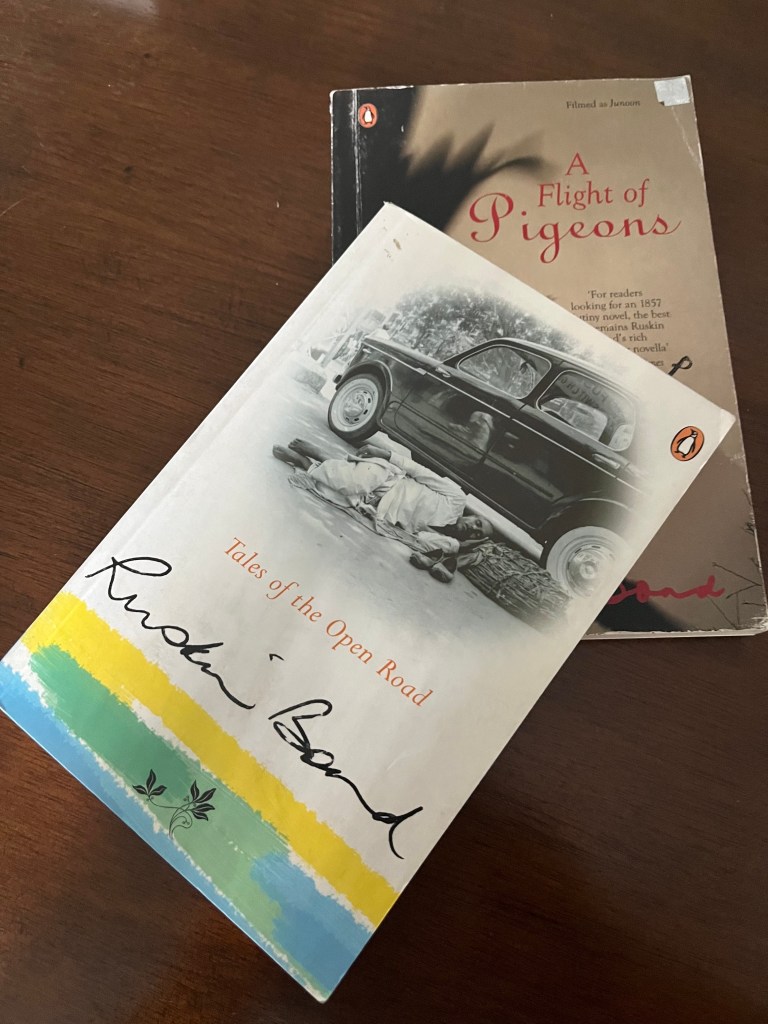
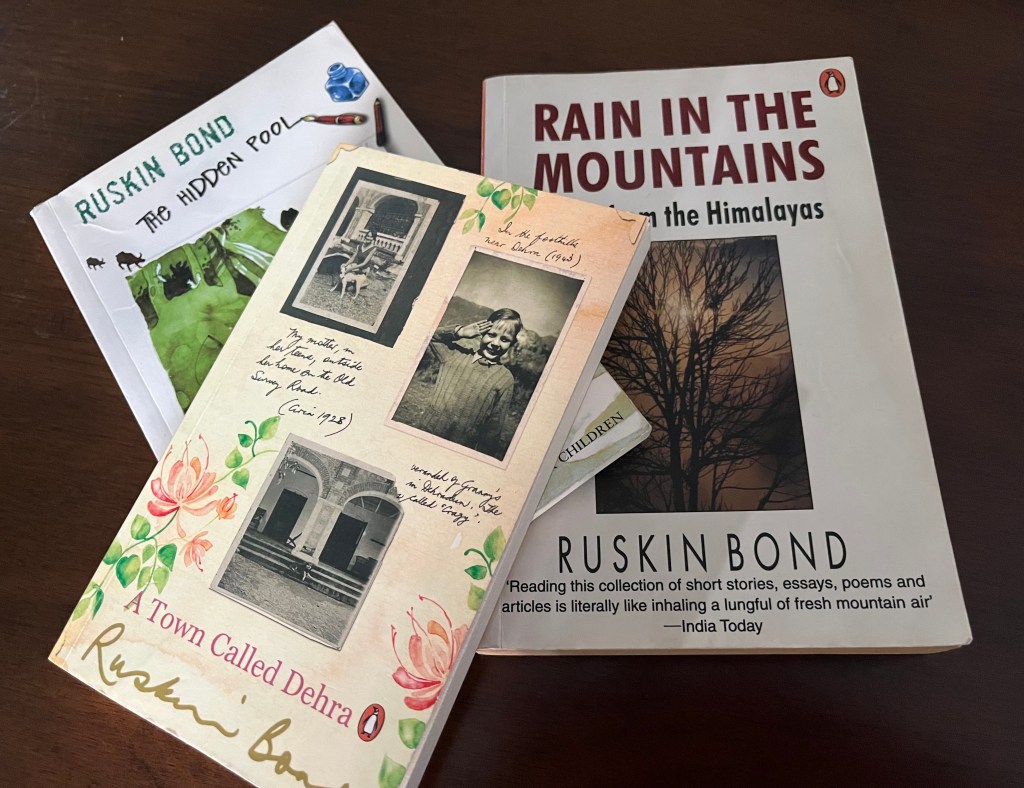
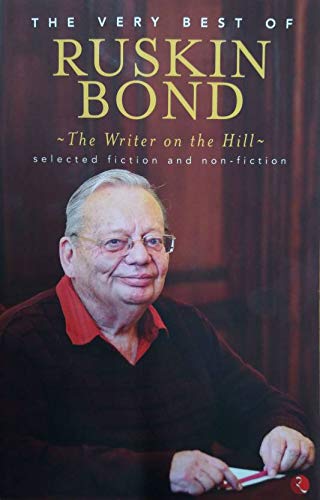
Ruskin Bond turns ninety today — a grand storyteller, one of the grandest of the twentieth century. His stories make one laugh and cry. They touch our hearts with compassion and amusement. He writes of people who he encounters in the hills where he stays — common people, people who you meet everyday on the road. He relates tales of making omelettes without eggs and makes us laugh at him and with him. It is rare to find this quality in a writer, or even in a common human. His fabulous stories around Mr Olivier and his parrot, his essays, poems, novels … one made into a film (A Flight of Pigeons) — though I dare say I enjoyed the book more than the film — all give a respite from the mundaneness and stresses of daily existence. They have the same effect as a holiday resort, except you do not need to spend as much. His writing transcends all time and boundaries of all kinds with his love for humanity seeping out of books. 

We celebrate him with a poetic tribute from a fan and two pieces of his writing that we found in our treasury! Happy Birthday Ruskin Bond! 

The Room on the Roof: Kisholoy Roy pays a tribute to Ruskin Bond’s writing. Click here to read. 

Ruskin Bond, excerpted from Between Heaven and Earth: Writings on the Indian Hillsedited by Ruskin Bond and Bulbul Sharma. Click hereto read.

An excerpt from Friends in Wild Places: Birds, Beasts and Other Companions by Ruskin Bond. Click here to read.

Categories
Editorial

Though I Sang in my Chains like the Sea…

      Time held me green and dying
Though I sang in my chains like the sea.

Fern Hill by Dylan Thomas (1914-1953)

Perhaps when Dylan Thomas wrote these lines, he did not know how relevant they would sound in context of the world as it is with so many young dying in wars, more than seven decades after he passed on. No poet does. Neither did he. As the world observes Dylan Thomas Day today — the day his play, Under the Milkwood, was read on stage in New York a few months before he died in 1953 — we have a part humorous poem as tribute to the poet and his play by Stuart McFarlane and a tribute from our own Welsh poet, Rhys Hughes, describing a fey incident around Thomas in prose leading up to a poem.

May seems to be a month when we celebrate birthdays of many writers, Tagore, Nazrul and Ruskin Bond. Tagore’s birthday was in the early part of May in 1861 and we celebrated with a special edition on him. Bond, who turns a grand ninety this year, continues to dazzle his readers with fantastic writings from the hills, narratives which reflect the joie de vivre of existence, of compassion and of love for humanity and most importantly his own world view. His books have the rare quality of being infused with an incredible sense of humour and his unique ability to make fun of himself and laugh with all of us. 

Nazrul, on the other hand, dreamt, hoped and wrote for an ideal world in the last century. The commonality among all these writers, seemingly so diverse in their outlooks and styles, is the affection they express for humanity. Celebrating the writings of Nazrul, we have one of his fiery speeches translated from Bengali by Radha Chakravarty and a review of her Selected Essays: Kazi Nazrul Islam by Somdatta Mandal. An essay from Niaz Zaman dwells on the feminist side of Nazrul while bringing in Begum Roquiah. Zaman has also shared translations of his poetry. Professor Fakrul Alam, who had earlier translated Nazrul’s iconic ‘Bidrohi or Rebel‘, has given us a beautiful rendition of his song ‘Projapoti or Butterfly’ in English.  Also in translation, is a poem by Tagore on the process of writing poetry. Balochi poetry by Manzur Bismil on human nature has been rendered into English by Fazal Baloch and yet another poem from Korean to English by Ilwha Choi.

Reflecting on the concept of a paradise is poetry from Michael Burch. Issues like climate, women, humanity, mourning, aging and more have been addressed in poetry by Shamik Banerjee, Ryan Quinn Flanagan, Milan Mondal, Kirpal Singh, Craig Kirchner, George Freek, Michael Lee Johnson and many more. Hughes brings in a dollop of humour with his response to a signpost in verse. Irony is woven into our non-fiction section by Devraj Singh Kalsi’s musing on writers and assailants. Ravi Shankar explores his passion for computers in a light vein. Snigdha Agrawal gives us a poignant story about a young child from the less privileged classes in India. Suzanne Kamata writes to tell us about the environment friendly Green Day in Japan.

Ratnottama Sengupta this month converses with a dancer who tries to build bridges with the tinkling of her bells, Sohini Roychowdhury. Gita Viswanthan travels to Khiva in Uzbekistan, historically located on the Silk Route, with words and camera.  An essay on Akbar Barakzai by Hazran Rahim Dad and another looking into literature around maladies by Satyarth Pandita add zest to our non-fiction section. Though these seem to be a heterogeneous collection of themes, they are all tied together with the underlying idea of creating links to build towards a better future.

Our stories travel from Malaysia to France and India. Farouk Gulsara sets his in futuristic Malaysia, again exploring the theme of utopia as did his earlier musing. Paul Mirabile creates a story where a child tries to create his own idyllic paradise while Kalsi writes of fiction centring around a property tussle. The book reviews feature a couple of non-fiction. Other than Kazi Nazrul Islam’s essays, Bhaskar Parichha reviews Will Cockrell’s Everest, Inc. The Renegades and Rogues Who Built an Industry at the Top of the World. Ajanta Paul discusses Bitan Chakraborty’s The Blight and Seven Short Stories, translated from Bengali by Malati Mukherjee. Malashri Lal has written on Lakshmi Kannan’s Nadistuti: Poems, poems dedicated to Jayanta Mahapatra who the poet reflects lives on with his verses. And that is so true, considering this issue is full of poets who continue in our lives eternally because of their words. That is why perhaps, we recreate their lives as has Aruna Chakravarti in Jorasanko.

In focus this time is a writer whose prose is almost akin to poetry, Rajat Chaudhuri. A proponent of solarpunk, his novel, Spellcasters, takes us to fictitious cities modelled on Delhi and Kolkata. In his interview, Chaudhuri tells us: “The path to utopia is not necessarily through dystopia. We can start hoping and acting today before things get really bad. Which is the locus of the whole solarpunk movement with which I am closely associated as an editor and creator…”

On that note, I would like to end with a couple of lines from Nazrul, who reiterates how the old gives way to new in Proloyullash (The Frenzy of Destruction, translated by Alam): “Why fear destruction? / It’s the gateway to creation!” Will destruction be the turning point for creation of a new world? And should the destruction be of human constructs that hurt humanity (like wars and weapons) or of humanity and the planet Earth? As the solarpunk movement emphasises, we need to act to move towards a better world. And how would one act? Perhaps, by getting in touch with the best in themselves and using it to act for the betterment of humankind? These are all points to ponder… if you have any ideas that need a forum on such themes, do share with us.

We have more content which has not been woven into this piece for the sheer variety of themes they encompass. Do pause by our content’s page and browse on all our pieces.

With warm thanks to our wonderful team at Borderless — especially Sohana Manzoor for her fabulous art — I would like to express gratitude to all our contributors, without who we could not create this journal. We would also like to thank our readers for making it worth our while to write — for all of our words look to be read, savoured and mulled, and maybe, some will evolve into treasured wines.

Thank you all.

Mitali Chakravarty

borderlessjournal.com

Click here to access the content’s page for the May, 2024 Issue

.

READ THE LATEST UPDATES ON THE FIRST BORDERLESS ANTHOLOGY, MONALISA NO LONGER SMILES, BY CLICKING ON THIS LINK.

Categories
Poetry

The Writer on the Hill

Kisholoy Roy writes of his encounter with Ruskin Bond

One evening at a city mall,
I met an elderly gentleman
at a café stall.
He seemed jovial and accessible.
His demeanour was 
pleasing and lovable. 
I was killing time 
with nothing to do.
Chatting with someone interesting –
I always love to do.
The gentleman’s persona was magnetic
“You would love conversing with him,”
said my gut feeling and my whim.
Why not introduce myself?
Thought I.
After all there was no harm
in saying Hi!
My introduction was short and formal.
The gentleman seemed impressed, 
and his reaction – cordial. 
“Why don’t you sit?
Then we can have a chat.
You seem interesting, 
and I, hopefully, will not be boring.”
I loved the offer and heartily accepted.
‘A lovely conversation’ – was the least I expected.
The gentleman introduced himself –
“I am Mr Bond – no not James but 
Ruskin…Ruskin Bond.
I am a writer from the hill.
You know Pari Tibba?
That’s where I often chill.”
As we conversed more,
I learnt more and more.
About the hills, about Dehra,
about Landour -- its flora and fauna.
About Mr Bond’s books,
the characters in them
and their looks, 
some incredible encounters,
some well learnt lessons,
some indelible moments,
some wise comments.
An hour passed and then
he got up.
As his driver arrived
for the pickup. 
We wished each other and bade goodbye.
“Take care my friend” said he, 
“until we meet next time.”
Humbled and quenched
That’s how I summarise
Meeting Mr Bond that evening
was surely a pleasant surprise. 

Dr Kisholoy Roy is a PhD in Management with several years of teaching experience at the PG level. He is a published author of several books on management and has also authored fictions and books on cricket and cricketers listed on Amazon and other online bookstores. He has two published poetry collections titled, Thoughts of a Novice Poet and Perspectives.

.

PLEASE NOTE: ARTICLES CAN ONLY BE REPRODUCED IN OTHER SITES WITH DUE ACKNOWLEDGEMENT TO BORDERLESS JOURNAL

Click here to access the Borderless anthology, Monalisa No Longer Smiles

Click here to access Monalisa No Longer Smiles on Kindle Amazon International

Categories
Review

The Greatest Indian Stories Ever Told 

Book Review by Bhaskar Parichha

Title: The Greatest Indian Stories Ever Told: Fifty Masterpieces from the Nineteenth Century to the Present 

Editor: Arunava Sinha

 Publisher: Aleph Book Company

The Indian subcontinent has had a long tradition of storytelling that is referred to as ‘contes’ or tales, by the French. ‘Kathasaritsagar‘ by Somdev in Sanskrit compiled in the 11th century CE is a great example of this. Flavourful folk tales can also be found in renditions after the 11th Century CE — like the Singhasan Battisi’[1].

Various Indian languages soon adopted this genre, gaining popularity throughout the country. Over the past 150 years, hundreds of memorable and popular stories have been written in more than 20 different languages. There are many ways in which they have become cultural cornerstones. Even those who do not read books often quote from a Premchand story or refer to a Tagore character in conversation. There are more people who know about our recent history as a result of Manto’s stories than any other history book published.

The Greatest Indian Stories Ever Told: Fifty Masterpieces from the Nineteenth Century to the Present  edited by Arunava Sinha, is a welcome addition to the genre. As an English translator, Sinha specialises in translating Bengali fiction and non-fiction from Bangladesh and India into English, including classic, contemporary, and modern works. More than seventy of his translations have been published so far in India, UK, and USA. He has twice won India’s top translation prize, the Crossword Award for translated books. He teaches at Ashoka University, where he is also the co-director of the Ashoka Centre for Translation.

This anthology contains stories that draw inspiration from a wide range of Indian regional dialects, languages, literature, and cultures, and includes early masters of the form, contemporary stars, and brilliant writers who came of age during the twenty-first century.

Among these authors are some of the most revered in Indian literature and have, between them, won almost every major literary award, including the Nobel Prize for Literature, the Jnanpith Award, the Sahitya Akademi Award as well as numerous other honours at the state, national, and international level. 

There is a plethora of literary delights in this collection, from Tagore’s evocative prose to Amrita Pritam’s emotional depth, from Ruskin Bond’s enchanting stories to Mahasweta Devi’s thought-provoking stories. It is a treasure trove of narratives translated to or written in English. If all these weaving the colours of the diversities in India are to be savoured across all the Indian states with diverse languages, they need to be in English. Collections of some of the best literary short fiction written by Indian writers began to emerge in the country at the end of the nineteenth century. And now in the twenty first century, the trend has been retained by this collection.

A must-have for any Indian literature enthusiast, The Greatest Indian Stories Ever Told provides a literary journey that explores space and time, which makes it a precious collector’s item that will become a valuable over time. Anyone who is interested in India’s rich cultural heritage as well as the rich tapestry of Indian storytelling should definitely read this anthology in order to gain some insight into the country’s rich cultural heritage. It promises to be an exciting and enticing literary feast, leaving readers awe-struck and enriched by the depth and beauty of Indian storytelling whether you are familiar with these eminent authors or are new to them, regardless of whether you know their work or not.

.

[1] Collection of ancient Indian folk tales; Literally, 32 tales of the throne, compiled after the 11th century CE

.

PLEASE NOTE: ARTICLES CAN ONLY BE REPRODUCED IN OTHER SITES WITH DUE ACKNOWLEDGEMENT TO BORDERLESS JOURNAL

Click here to access the Borderless anthology, Monalisa No Longer Smiles

Click here to access Monalisa No Longer Smiles on Kindle Amazon International

Categories
Greetings from Borderless

Happy New Year

Art by Sohana Manzoor

As the old year winds up, we wait for the new year in anticipation… We wait to see how the new born blossoms as each year takes a unique form. This year, while we strengthened the population with vaccines, other kind of politics set in, which finally found fruition in a war that has perhaps been one of the saddest events of human history — people made homeless, towns erased, lives lost, nature polluted with gunpowder and shreds of machinery along with the ultimate threat of nuclear weapons erupting every now and then. What could possibly give hope amidst the darkness of the receding year with price hikes, the threat of looming hunger, joblessness, more conflicts and fear?

The fact that we have survived for more than 200,000 years in our current form is heartening. That we have lived through wars, plagues and disasters without being erased out of existence only highlights the resilience of our species to adapt to all kinds of contingencies. Perhaps, with the current crises, we will move towards new world orders…perhaps, we will find hope in creating and evolving new ways of living in consonance with nature and more by our need than greed.

With that hope in heart, we wish you a wonderful start to the New Year with a few interesting pieces from our journal, including a highly entertaining piece by Suzanne Kamata on how the Japanese traditionally, literally make a clean start each New Year and Michael Burch’s fun poems and a translation of Tagore’s adaptation of the traditional year-end Auld Lang Syne. We have sprinkled more humour in poetry by Rhys Hughes and Santosh Bakaya and, in prose, by Tagore, translated by Somdatta Mandal, Ruskin Bond and Devraj Singh Kalsi. Laughter at the this juncture will hopefully give us a year with more shades of happiness.

Poetry 

Tagore’s Purano Sei Diner Kotha or ‘Can old days ever be forgot?’ based on Robert Burn’s Auld Lang Syne, translated from Bengali by Mitali Chakravarty. Click here to read.

Fun Poems for the New Year by Michael R Burch… Click here to read.

Kissing Frogs by Rhys Hughes… Click here to read.

The Recliner by Santosh Bakaya… Click here to read.

Prose

Travels & Holidays: Humour from Rabindranath: Translated from the original Bengali by Somdatta Mandal, these are Tagore’s essays and letters laced with humour. Click here to read.

A short tale from Friends in Wild Places: Birds, Beasts and Other Companions by Ruskin Bond. Click here to read.

In A Clean Start, Suzanne Kamata tells us how the Japanese usher in a new year. Click here to read.

In The New Year’s Boon, Devraj Singh gives a glimpse into the projection of a new normal created by God. Click here to read.

Art by Sohana Manzoor

Click here to access the Borderless anthology, Monalisa No Longer Smiles

Book Talks

Categories
Contents

Borderless, September 2022

Art by Sohana Manzoor

Editorial

When Autumn Leaves Start to Fall Click here to read.

Conversations

Meet Barun Chanda, an actor who started his career as the lead protagonist of a Satyajit Ray film and now is a bi-lingual writer of fiction and more recently, a non-fiction published by Om Books International, Satyajit Ray: The Man Who Knew Too Much in conversation Click here to read.

Jim Goodman, an American traveler, author, ethnologist and photographer who has spent the last half-century in Asia, converses with Keith Lyons. Click here to read.

Translations

Professor Fakrul Alam has translated three Tagore songs around autumn from Bengali. Click here to read.

Nagmati by Prafulla Roy has been translated from Bengali as Snake Maiden by Aruna Chakravarti. Click here to read.

A Balochi Folksong that is rather flirtatious has been translated by Fazal Baloch. Click here to read.

A Letter Adrift in the Breeze by Haneef Sharif has been translated from Balochi by Mashreen Hameed. Click here to read.

Jajangmyeon Love, a poem has been written in Korean and translated by Ihlwha Choi. Click here to read.

Eshechhe Sarat (Autumn) by Tagore has been translated from Bengali by Mitali Chakravarty. Click here to read.

Poetry

Click on the names to read

Michael R Burch, Sunil Sharma, George Freek, Sutputra Radheye, Ryan Quinn Flanagan, Arshi Mortuza, Ron Pickett, Prasant Kumar B K, David Francis, Shivani Srivastav, Marianne Tefft, Saranyan BV, Jim Bellamy, Shareefa BeegamPP, Irma Kurti, Gayatri Majumdar, Rhys Hughes

Poets, Poetry & Rhys Hughes

In The Chopsy Moggy, Rhys Hughes gives us a feline adventure. Click here to read.

Musings/Slices from Life

A Tale of Two Flags in the South Pacific

Meredith Stephens visits an island that opted to adopt the ways of foreign settlers with her camera and narrates her experiences. Click here to read.

A Taste of Bibimbap & More…

G Venkatesh revisits his Korean experience in a pre-pandemic world. Click here to read.

September Nights

Mike Smith in a short poetic monologue evokes what the season means for him. Click here to read.

Musings of a Copywriter

In El Condor Pasa or I’d Rather be a Sparrow…, Devraj Singh Kalsi explores his interactions with birds with a splatter of humour. Click here to read.

Notes from Japan

In Rabbit Island, Suzanne Kamata visits the island of Okunoshima, where among innocence of rabbits lurk historic horrors. Click here to read.

Essays

A Turkish Adventure with Sait Faik

Paul Mirabile takes us on a journey to Burgaz with his late Turkish friend to explore the writings of Sait Faik Abasiyanik. Click here to read.

A Salute to Ashutosh Bodhe

Ravi Shankar pays a tribute to a fellow trekker and gives a recap of their trekking adventures together near Mt Everest base camp. Click here to read.

The Observant Immigrant

In Sometimes Less is More, Candice Louisa Daquin explores whether smaller communities can be assimilated into the mainstream. Click here to read.

Stories

Where Eagles Dare…

Munaj Gul Muhammad takes on the persona of a woman to voice about their rights in Balochistan. Click here to read.

My Eyes Don’t Speak

Chaturvedi Divi explores blindness and its outcome. Click here to read.

The Royal Retreat

Sangeetha G gives a brief view of intrigue at court. Click here to read.

Book Excerpts

Ruskin Bond, excerpted from Between Heaven and Earth: Writings on the Indian Hills, edited by Ruskin Bond and Bulbul Sharma. Click here to read.

Excerpts from Rhys Hughes’ Comfy Rascals: Short Fictions. Click here to read.

Book Reviews

Rakhi Dalal reviews Rhys Hughes’ Comfy Rascals: Short Fictions. Click here to read.

Hema Ravi reviews Mrutyunjay Sarangi’s A Train to Kolkata and Other Stories. Click here to read.

Bhaskar Parichha reviews Krishna Bose’s Netaji Subhash Chandra Bose’s Life, Struggle and Politics, translated and edited by Sumantra Bose. Click here to read.