In Did He Ever?,Rhys Hughes gives fun-filled verses on Lafcadio Hearn, a bridge between the East and West from more than a hundred years ago. Clickhere to read.
Dolly Narang muses on Satyajit Ray’s world beyond films and shares a note by the maestro and an essay on his art by the eminent artist, Paritosh Sen. Clickhere to read.
Poetry, prose — all art forms — gather our emotions into concentrates that distil perhaps the finest in human emotions. They touch hearts across borders and gather us all with the commonality of feelings. We no longer care for borders drawn by divisive human constructs but find ourselves connecting despite distances. Strangers or enemies can feel the same emotions. Enemies are mostly created to guard walls made by those who want to keep us in boxes, making it easier to manage the masses. It is from these mass of civilians that soldiers are drawn, and from the same crowds, we can find the victims who die in bomb blasts. And yet, we — the masses — fight. For whom, for what and why? A hundred or more years ago, we had poets writing against wars and violence…they still do. Have we learnt nothing from the past, nothing from history — except to repeat ourselves in cycles? By now, war should have become redundant and deadly weapons out of date artefacts instead of threats that are still used to annihilate cities, humans, homes and ravage the Earth. Our major concerns should have evolved to working on social equity, peace, human welfare and climate change.
One of the people who had expressed deep concern for social equity and peace through his films and writings was Satyajit Ray. This issue has an essay that reflects how he used art to concretise his ideas by Dolly Narang, a gallery owner who brought Ray’s handiworks to limelight. The essay includes the maestro’s note in which he admits he considered himself a filmmaker and a writer but never an artist. But Ray had even invented typefaces! Artist Paritosh Sen’s introduction to Ray’s art has been included to add to the impact of Narang’s essay. Another person who consolidates photography and films to do pathbreaking work and tell stories on compelling issues like climate change and helping the differently-abled is Vijay S Jodha. Ratnottama Sengupta has interviewed this upcoming artiste.
Reflecting the themes of welfare and conflict, Prithvijeet Sinha’s essay takes us to a monument in Lucknow that had been built for love but fell victim to war. Some conflicts are personal like the ones of Odbayar Dorj who finds acceptance not in her hometown in Mongolia but in the city, she calls home now. Jun A. Alindogan from Manila explores social media in action whereas Eshana Sarah Singh takes us to her home in Jakarta to celebrate the Chinese New Year! Farouk Gulsara looks into the likely impact of genetic engineering in a world already ripped by violence and Devraj Singh Kalsi muses on his source of inspiration, his writing desk. Meredith Stephens tells the touching story of a mother’s concern for her child in Australia and Suzanne Kamata exhibits the same concern as she travels to Happy Village in Japan to meet her differently-abled daughter and her friends.
As these real-life narratives weave commonalities of human emotions, so do fictive stories. Some reflect the need for change. Fiona Sinclair writes a layered story set in London on how lived experiences define differences in human perspectives while Parnika Shirwaikar explores the need to learn to accept changes set in her part of the universe. Spandan Upadhyay explores the spirit of the city of Kolkata as a migrant with a focus on social equity. Both Paul Mirabile and Naramsetti Umamaheswararao write stories around childhood, one set in Europe and the other in Asia.
Do pause by our contents page for this issue and enjoy the reads. We are ever grateful to our ever-growing evergreen readership some of whom have started sharing their fabulous narratives with us. Thanks to all our readers and contributors. Huge thanks to our wonderful team without whose efforts we could not have curated such valuable content and thanks specially to Sohana Manzoor for her art. Thank you all for making a whiff of an idea a reality!
Vasiliki and Nico boarded the passenger steamer for Burgaz Island at Sirkeçi pier at Istanbul. As the steamer moved out slowly from the crowded port, Nico gazed at the dreamy silhouette of this storiedcity where for four days they had woven in and out of lanes and alleys, gardens and markets, prayed in the Greek churches.
They had left Hydra six days ago by boat and bus, arriving in Istanbul after a night spent in Thessaloniki. Now they were off to Vasiliki’s island of birth. He had never been back since his departure at the age of twelve, and the thought of returning excited him. “Look grandpa at the setting sun over Topkapı Palace,” shouted an elated Nico. And indeed Nico’s elation was not feigned.
The cypress trees and domes of the mosques and minarets were outlined against a sky alive with streaks of reddish flames whose reflections could be discerned in the unruffled waters of the Marmara Sea. The crenelated walls of Topkapı Palace undulated eerily in the ruddy, pastel twilight as did the silhouettes of the many domed mosques that embossed the mighty palace with a pinkish tinge. Nico stood hypnotized at the stern imagining himself as part of one of the yarns of A Thousand and One Nights. A sensation of estrangement, of magical transport had arrested his movements. Suddenly a flock of seagulls descended screaming into the wake of the steamer, snatched as many fish as possible and flew off towards Galata Tower, which they circled and circled until vanishing in the evening shadows beyond the hilly banks of the Bosphorus Strait, the yalıs[1], Dolmabahçe[2] and Berlerbeyi Palace.
“A fairytale city, Nico.” Vasiliki said, interrupting his grandson’s spellbound state.
“Yes, grandpa. It looks like one of the coloured pages of my A Thousand and One Nights.”
Vasiliki chuckled. “Perhaps it is, my boy.” And they both contemplated that marvellous city until it, too, disappeared under the orb of the sea …
They disembarked two hours later …
“Burgaz ,” sighed Vasiliki, stepping foot on to the soil of his birth. He took Nico’s hand and hurried him from the throngs of the port into the quiet of the main plaza where the statue of Saït Faïk greeted them. “There he is, Nico, one of the finest poets and short-story writers of the Turkish language.” Nico moved closer :
“He looks very thoughtful, grandpa. What do you think he’s thinking about?”
“That’s a good question. But for now we have to get a horse-drawn carriage to Zorba’s home before nightfall.”
For some unknown reason Nico’s thoughts roamed back to his Nefteli. “Do you think the Nefteli lay anchor at this island on her voyage to China, grandpa?” Vasiliki knitted his brows.
“I’m not so sure. She would have taken a more westerly route.” Nico nodded, unable, however, to imagine his beautiful Nefteli never having moored at this beautiful island with such a famous poet standing so thoughtful in the middle of the plaza. Whilst the boy ruminated these thoughts, Vasiliki hailed a horse-drawn carriage, and in broken Turkish directed the driver to take them to Soknar Sokak [3]located on the western side of the island.
“You speak good Turkish, grandpa,” Nico commented.
“My parents spoke it at home, but when we left Burgaz to settle in Greece, they chose to speak more Greek than Turkish. The Greeks never took a liking to us Greeks who lived in Turkey.”
“Why?”
“Oh, that’s a long and sad story. I’m too happy to be here on Burgaz to tell you now.” So Nico was left unsatisfied. “My brother’s friend’s name is Zorba,” Vasiliki continued. “He’s in the textile business in Istanbul. He comes to Greece often. His wife died two years ago and now lives alone in a big villa on a hillside overlooking the sea. He’s very wealthy and in his spare time writes poetry.”
“Like Saït Faïk?” Vasiliki puckered his lips.
“No one can write poetry like someone else, Nico. If that happens, it’s like imitating a poet’s poems and you shouldn’t do that. Anyway, you’ll soon meet him. And you’ll also meet my father’s friend Abi Din Bey, a Turkish Alevite who lives down on the beach. He knew Saït very well. He writes poetry, too. I remember one of his verses: ‘I wished to smell a rose./It feigned reluctance./No, it said, bring my scent …’ Oh, I forgot the rest.”
“But why did the rose not want to be smelt?” asked Nico curiously.
“I have no idea, my boy. It’s only poetry. Besides, I’m a fisherman, I haven’t had much instruction on those things.” And on that unscented note, Nico espied a flock of seagulls chasing the early evening cloudlets galloping far off towards the East.
They arrived. Vasiliki paid the driver and up they climbed a long flight of wooden stairs through a well-kept garden of intoxicating scents. Above them loomed a massive sun-bleached white, wooden pillared portico, above which rose three-balconed stories, surmounted by two towering turrets in the middle of which spiralled even higher a fretted gable. Nico stood awestruck as if he had come upon one of Zeus’s palaces. A minute later a huge, flabby-faced, moustachioed man burst through the front portico door to greet them in broken Greek.
“Welcome! Welcome! Come into my humble home, please,” Zorba gesticulated theatrically, dragging both guests into his home, which in the eyes of his two guests was far from humble …
Dragged I say through the lofty portico whose colonnade must have counted over twenty Doric-like pillars, then into a vestibule at the end of which a floating double staircase wound breezily above a bubbling marble fountain then on to a cambered, U-shaped landing bedecked with azaleas, wisteria and dwarfish palm plants. Hanging on the walls of the vestibule and the cambered landing were landscape paintings and several stately portraits. Zorba immediately escorted them into a brightly lit drawing-room whose frescoed ceiling teemed with Greek heroes and from which a shone a gigantic chandelier. Deep velvet-red draperies afforded a nineteenth century posh atmosphere, an atmosphere of opulent repose. They were seated on a plush, baize-covered ottoman. Refreshments were hurried into the room by a maid, set delicately on a superb pearl-inlaid coffee-table.
“Welcome to Burgaz, Vasiliki and Nico,” Zorba beamed, delicately seeping a large glass of mango juice. “Where will be your first visit if I may ask?” Vasiliki set his mango juice down, licking his lips.
“To Abi Din Bey’s beach home,” replied Vasiliki.
Zorba frowned. “Rather a shabby place his cabin on the beach,” he retorted gruffly.
“Perhaps, but I must see him. You know, he was a very good friend to my father.”
“Yes … yes, of course,” grumbled Zorba, ostensibly displeased at the mention of the beach comber. “Whatever ! You are my guests here and may stay as long as you please.” He looked at Nico affectionately: “What a wonderful adventure for your grandson. To relive his grandfather’s and father’s past …”
“And who knows, Zorba … perhaps his future …”
Zorba, a bit puzzled by that remark, smiled a gold-toothed smile, nevertheless. The smile seemed to set his well-fed, pasty face aquiver.
“Excellent, Vasiliki. But now we must dine.” Zorba ushered his guests into the tapestry-hung adjoining dining room where a long table had been set with all the delicacies that Burgaz Island could offer : sumptuous mezes[4]: stuffed vine leaves, eggplant caviar, marinated red peppers, homus[5], followed by lentil soup, fish and köfte[6]. This gargantuan meal terminated with strawberry sorbet and künefe[7].Two hours laterVasiliki and Nico sat back in their red upholstered chairs utterly exhausted.
Refusing any liquor, Zorba showed his guests their enormous room on the first floor whose bay-window overlooked a dark stretch of forest which gradually merged with the slow-moving lights of the steamers and cargoes on the Marmara Sea. Vasiliki and Nico, after unpacking, fell asleep as soon as their heads touched the pillows.
They awoke at nine o’clock, washed and rushed down the elegant, floating staircase for a quick breakfast. They ate alone, Zorba having breakfasted very early in order to meet customers in Istanbul, so said the maid. They set out for Abi Din Bey’s beach home, a half-hour’s walk down a winding path through the wooded hillside.
The sound and smell of the sea below, the laughing seagulls above thrilled Nico with an unequivocal joy. He felt drawn into an adventure. Once on the beach, they veered to the right and in two or three minutes stood at the Alevite’s welcoming gate, open to all and sundry. Charging out of the front door of a flat-roofed, one-storey little house, a handsome, stalwart, balding man greeted them with so many handshakes and kisses on the cheeks. He led them inside his three-room home, built under an arching rock shelf, overhung with a thick network of running vines and bougainvillaea which dangled over the front walls of the house.
Nico was astonished at all the books strewn on the rug-covered floor or lying open on the arms of a worn-out sofa. A low, wooden table, where a tea-pot and glasses had been set, comprised the rest of Abi Din’s ‘drawing-room’ furniture. The walls lay bare of pictures and the two front pane less windows bore no curtains. One naked lightbulb hung limply from a rafter. Nico, seated on the sofa, stared at the bareness of Abi Din’s abode. He could not decide whether the poet lived in poverty or simplicity.
As if reading his thoughts, Abi Din Bey, who had since served them black tea, said in his deep, authoritative voice: “Simplicity remains the poet’s true companion. All he needs is the whistling of the wind, the lapping of the waves, the rustling of the leaves. The true poet touches reality with his or her ears more than the eyes before voicing that reality, poetically. But I will acknowledge that the poet opens his or her senses to the moon at night and to the horizon-filled fishermen tossing their nets at the edge of the briny sea in the day.”
“You have been afflicted with Saït Faïk’s poetic madness,” laughed Vasiliki, translating his friend’s words for Nico.
“Anyone who came into contact with Saït became a poet … good or bad I am not to judge ! Who else listened to the talking seaweed or the weeping mussels?” Vasiliki agreed with a nod then translated for his grandson.
“Grandpa, how can seaweed talk and mussels weep?”
“Well, poets can hear things that we cannot, Nico.”
After tea, Abi Din Bey led them out to his front garden where the fragrances of oleander and honeysuckle muddled Nico’s imagination, already running amok due to all this talk of weeping mussels and talking seaweed. Out beyond the wooden fence the glint of Marmara glowed turquoise.
Vasiliki and Abi Din Bey spoke of Vasiliki’s father and grandfather, of a time when Burgaz bathed in a mellow light of unruffled peace and perfumed tranquillity. “And now look — Istanbul’s ‘hippies’ camp on weekends in the forests and on the beaches littering, smoking and drinking. Tourists swarm the island as if it were la Côte d’Azure. If Saïk or your father were alive … “ Abi Din Bey would repeat … but would never finish …
Towards late afternoon after a pleasant nap in their host’s hammocks, Vasiliki and Nico left Abi Din Bey to his domestic chores to stroll along the beach, avoiding the vast wracks of seaweed. “Let’s walk up to the Monastery of the Transfiguration on Bayrak Tepe,” Vasiliki suggested. “It’s the highest spot on the island. The monastery was built in the XIXth century and has never changed, so my father told me. We can talk to the Pope and his wife, they’re Greek … well, Turkish Greek.”
“You said there’s a difference, grandpa.”
“You see, the Greeks who came from Turkey to settle in Greece were never really liked by the Greeks because of their way of speaking Greek and their Turkish customs.”
“Why?” the boy insisted. But at that moment they halted in their tracks. A shirtless and shoeless man was busy erecting little pyramidal piles of stones here and there on the beach. Before Nico could enquire about this curious occupation the man turned towards the sea, opened his muscular arms wide, and in an eerie, sing-song voice chanted:
“Women light the lamps of spirit with a blue light as they warm up coffee.
During the nights, in the darkness, on the peak of a mountain
a miller, his eyes closed,
sleeps, face down.
Villagers would come
To sell their copperware at the market,
To sell yogurt.
A naked child, begging in the street, was knee-deep in snow.
The man turned his back to the sea and resumed his Sisyphean labour …
“What did the man chant, grandpa?”
“A poem by Saït, I think. A sad poem. You know, the life of a fisherman is not easy, but the life of a poet is not to be romanticised. Outwardly life may seem merry and bright. But deep inside, Nico, a poet’s lot is not to be envied. Saït’s short stories and poetry are filled with solemnity. Zorba thinks he understands this solemnity. Abi Din Bey is less pretentious; he leads a simple, lonely life and reads Saït for comfort. This solemnity has offered him a gratifying livelihood. He liked Saït so much and sought his companionship. But Saïk chose alcohol for a companion. Abi Din is a religious man, he doesn’t drink alcohol. Alcohol should never be a poet’s companion.”
Nico said nothing as they trudged up Bayrak Tepe to the Greek monastery, where after tea and honey cakes with the pope and his wife, they hurriedly trekked down the opposite side of the island, keeping the sea to the right. Two hours later they reached Zorba’s hillside home before nightfall. The sky blazed a crimson red as the sun set under the waveless Marmara.
Dinner having finished, Zorba and Vasiliki were served wine in the drawing-room and Nico a glass of lemonade. Zorba, exceptionally cheerful after a fruitful day in Istanbul, stood, poured himself another glass of wine and recited a few verses of his poetry :
“Honey is certainly a special nourishment;
Is truly medicinal.
He who eats honey thinks soundly;
He who does not, thinks ignorantly.”
Zorba sat down absorbed in the silence of his guests. “How I try to imitate Saïk,” he sighed at length.
Zorba placed a pudgy hand to his heart: “Poets live to write and not write to live.”
Vasiliki agreed, heard the grandfather clock strike midnight, yawned and sleepily suggested that they be off to bed. Zorba acquiesced, promising a few more strophes the following night. A weary Vasiliki smiled perfunctorily …
Waking up with the larks, Vasiliki and Nico were served breakfast. Zorba had again left for Istanbul very early. The two tourists walked to the centre of town to visit Saint John the Baptist’s[9] church, then Saïk Faïk’s house-musuem and gardens. Saït’s former two-storey, balconeyed home rose into the blue island sky, the gable rising even higher than the palm trees that served as sentinels. The gardens were similar to Zorba’s — exceptionally well-kept. Inside, Nico was taken aback by the refined taste of the poet’s family: the exquisite, velvet cushioned chairs and sofas, the poet’s private library where many bookshelves contained poetry magazines, dictionaries and novels in Turkish, French and Greek. Nico surmised that the poet was a studious man.
“A very well-educated man,” whispered Vasiliki. “He translated too. His knowledge of languages inspired his short story and poetry writing.”
“Do you speak French, grandpa?”
“I’m afraid I don’t, my boy. You know, I’ve had little instruction. But you, Nico, look at those leather-bound volumes ; you may become a boat-building poet someday if you work hard at school.”
Nico’s little round eyes glowed a brilliant glow. How he loved to read, to touch the crispy pages of a book, to smell the print and paper. Spellbound by all this literature, he suddenly heard a fey voice :
The mysterious voice trailed off. Nico searched the room frantically for his grandfather. There he stood in front of a hanging portrait of Saït Faïk.
“Grandpa.”
“Yes, my boy.”
“I would like to be a poet.,” Nico asserted.
“A boat-building poet?”
“Yes, write poems and short stories like that man hanging on the wall. He has such a handsome face … a kind, smiling face. He must have been a gentleman.”
Vasiliki nodded. “I’ve no doubt he was. Those eyes speak the tremors of his soul, a soul filled with the love of life, all life : mineral, animal, vegetable, human.”
Nico screwed up his eyes which met those of Saït’s, a deep blue like the sea. Laughing eyes, like the seagulls’ … Five minutes later they stepped into the blazing Burgaz sun, white white …
The rest of the morning and afternoon was spent in Abi Din’s front garden, drinking tea, chatting about Burgaz fishermen. They ate grilled-cheese sandwiches and sardines for lunch.
The loquacious Abe Din turned to Nico: “A poet’s life has its highs and lows. It’s best to keep to the middle, no jealous rivals to spread scandal, no avaricious publishers to milk you like a cow. Thieves, all of them ! Just write poems, Nico. Don’t waste your energy on market reception, critic’s reviews or what publishers expect from you. Your poems speak for themselves. And do you know why ?”
Nico did not know why for two reasons: he couldn’t understand Turkish and he never wrote a poem. The animated man continued, nevertheless: “Because you organise the movement of the poem with your own voice, a poem is an activity not a product. Poems make poetry; poetry does not make poems. A poet has no regards for schools of poetry, for modes of poetry, for signs-of-the-time poetry. Writers of poetry express the signs of their times; writers of poems suggest images of untimely inspiration. Writers of poetry idolize poetic forms ; writers of poems organise their poems subjectively, free from poetic occult pedantry and cryptic complexity. Listen ! Listen to those outer and inner inspirations.”
Vasiliki translated his friend’s fiery tirade as best he could and when Nico had understood the ‘Listen! Listen!’ The obedient boy listened even harder. Abi Din Bey’s voice rose higher: “A poem is first heard in the heart then expressed by word of mouth or on paper. Open your ears wide, Nico, open them wide!” When those last words of wisdom were translated, Nico attempted to open his ears as wide as he could. It was not an easy task, much harder than opening his eyes wide …
When the sun began to set Vasiliki and Nico bid farewell to the poet, promising to return the following year. Little did they know that the solitary poet would pass from this world in the near future …
They spent four more nights as Zorba’s guests eating like kings, listening to their host’s business conquests and after-dinner poetry over a glass of wine or lemonade. They left Zorba on the long flight of steps, he waving good-bye with a pudgy hand as the horse-drawn carriage bounced his guests up and down towards Burgaz pier.
“Grandpa, I’m going to work hard at school and read Saït Faïk’s short-stories and poems.”
“We’ll find translations of them, Nico. I told you that Burgaz Island plays strange things on people who come here. Her soil inspires us. Her energy rises from the core of the earth into our hearts and spirits. Burgaz possesses a mystery that no one has ever solved.”
“Not even Saït Faïk, grandpa?” Vasiliki scratched his white beard.
“I have no answer to that one, my boy. Maybe he did solve it. Poems and stories were his livelihood, like my fishing, a daily labour of love and effort. Perhaps someday you’ll solve the mystery of Burgaz.”
“By boat-building and writing poems?” Vasiliki gazed up at the circling seagulls.
Nico was not sure. Meanwhile, ahead lay the pier and the steamer now steaming into port, smoke bellowing from her stack. Ropes had been thrown down to moor her as passengers straggled off and on. Grandfather and grandson rushed into the vortex of that rolling movement and disappeared within the bustling throngs …
[1] Wooden mansions or villas along the Bosphoros Strait.
[7] A sweet dessert made of angel hair, (kadaif), cheese, butter and topped off with honey sirop and crushed pistachios.
[8] Losely translated from ‘Bir Zamanlar’ ‘One Time’.
[9] Iohannas Prodromos in Greek. It was built in 1899.
[10] From Sait Faik’s poem ‘Masa’ ‘Table’, partially translated.
Paul Mirabile is a retired professor of philology now living in France. He has published mostly academic works centred on philology, history, pedagogy and religion. He has also published stories of his travels throughout Asia, where he spent thirty years.
.
PLEASE NOTE: ARTICLES CAN ONLY BE REPRODUCED IN OTHER SITES WITH DUE ACKNOWLEDGEMENT TO BORDERLESS JOURNAL
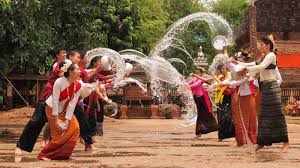
Offerings during Qing Ming Jie, a festival honouring ancestorsSongkran(Thai New Year) CelebrationsFestivals in April: From Public Domain
April is a month full of celebrations around the world. Asia hosts a spray of New Year festivities. Then there are festivals like Qing Ming Jie, Good Friday and Easter. All these are in a way reminders of our past. And yet, we critique things as old fashioned! So, where does tradition end and ‘outdated’ or ‘outmoded’ start? Meanwhile we continue to celebrate these festivals with joy but what happens to those who have lost their home, family and their living due to war or climate disasters? Can they too join in with the joie de vivre? Can we take our celebrations to them to give solace in some way?
In our April issue, we have stories from climate and conflict-ridden parts of the world. From Bangkok, Amy Sawitta Lefevre gives an eyewitness account of the March 28th Earthquake that originated in Myanmar. While in her city, the disaster was managed, she writes: “I’m also thinking of all the children in Myanmar who are sleeping in the open, who lost loved ones, who are feeling scared and alone, with no one to reassure them.” As news reels tell us, in Myanmar there have been thousands of casualties from the earthquake as well as shootings by the army.
From another troubled region, Pakistan, Zeeshan Nasir gives a heartrending narrative about climate change, which also dwells on the human suffering, including increase in underage marriages.
Human suffering can be generated by rituals and customs too. For instance, if festivals dwell on exclusivity, they can hurt those who are left out of the celebrations. Odbayar Dorje muses along those lines on Mongolian traditions and calls for inclusivity and the need to change norms. On the other hand, Devraj Singh Kalsi hums with humour as he reflects on social norms and niceties and hints at the need for change in a light-hearted manner. Farouk Gulsara makes us laugh with the antics of his spoilt pet cat. And Suzanne Kamata dwells on her animal sightings in Kruger National Park with her words and camera while Meredith Stephens takes us sailing on stormy seas… that too at night.
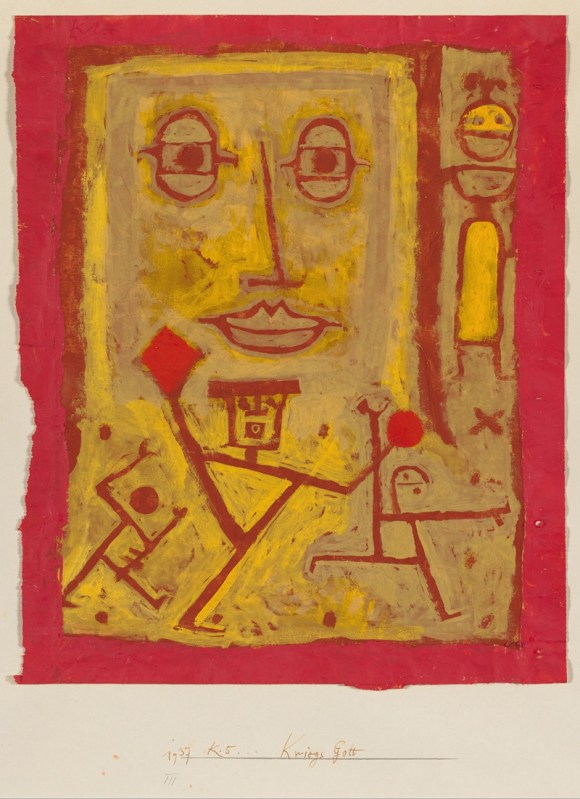
Art is brought into focus by Ratnottama Sengupta who introduces artist Haren Thakur with his adaptation of tribal styles that has been compared to that of Paul Klee (1879-1940). She also converses with filmmaker Leslie Carvalho, known for his film The Outhouse, and his new novel, Smoke on the Backwaters. Both of these have a focus on the Anglo-Indian community in India. Also writing on Indian film trends of the 1970s is Tamara Raza. Bhaskar Parichha pays tribute to the late Ramakanta Rath (1934-2025), whose powerful and touching poetry, translated from Odia by the poet himself, can be found in our translations section.
We have an excerpt from Professor Fakrul Alam’s unpublished translation of Tagore’sRed Oleanders. It’s a long play and truly relevant for our times. Somdatta Mandal shares with us her translation of Tagore’s essay called ‘The Classification in Society’, an essay where the writer dwells on the need for change in mindsets of individuals that make up a community to move forward. A transcreation of a poem by Tagore for his birthday in 1935 reflects the darkness he overcame in his own life. Two poems expressive of longings by Jibananada Das have been translated from Bengali by Professor Alam aswell. From Balochistan, we have an excerpt from the first Balochi novel, Nazuk, written by the late Syad Zahoor Shah Hashmi and rendered into English by Fazal Baloch. Among contemporaries, we have a short story by Bitan Chakraborty translated from Bengali by Kiriti Sengupta, a poignant story that reflects on gaps in our society. And a Korean poem by Ihlwha Choi rendered to English by the poet himself.
This issue has been made possible because of support from all of you. Huge thanks to the team, all our contributors and readers. Thanks to Sohana Manzoor for her fabulous artwork. Do pause by our contents page as all the content could not be covered here.
Perhaps, world events leave a sense of pensiveness in all of us and an aura of insecurity. But, as Scarlett O’ Hara of Gone with the Wind[2] fame says, “After all, tomorrow is another day.”
Looking forward to a new day with hope, let’s dream of happier times filled with sunshine and change.
Paul Mirabile is a retired professor of philology now living in France. He has published mostly academic works centred on philology, history, pedagogy and religion. He has also published stories of his travels throughout Asia, where he spent thirty years.
.
PLEASE NOTE: ARTICLES CAN ONLY BE REPRODUCED IN OTHER SITES WITH DUE ACKNOWLEDGEMENT TO BORDERLESS JOURNAL
Jibanananda Das’ poems on war and for the common masses have been translated from Bengali by Professor Fakrul Alam. Click here to read.
A Scene with an Aged Queen, a poem by Ihlwha Choi has been translated from Korean by the poet himself. Clickhere to read.
Tagore’sEsho Bosonto, Esho Aj Tumi(Come Spring, Come Today) has been translated from Bengali by Mitali Chakravarty. Click here to read.
Pandies’ Corner
For Sanjay Kumar: To Sir — with Love has been written for the founder of pandies’ theatre by Tanvir, a youngster from the Nithari village where pandies’ worked with traumatised victims. Over time, these kids have transcended the trauma to lead fulfilling lives. The late Sanjay Kumar passed on this January. This is a tribute to him by one of his students. It has been translated from the Hindustani original by Lourdes M Surpiya. Click here to read.
Drops of water gather to make a wave. The waves make oceans that reshape land masses over time…
Five years ago, on March 14th, in the middle of the pandemic, five or six of us got together to start an online forum called Borderless Journal. The idea was to have a space that revelled with the commonality of felt emotions. Borderless was an attempt to override divisive human constructs and bring together writers and ideators from all over the Earth to have a forum open to all people — a forum which would be inclusive, tolerant, would see every individual as a part of the fauna of this beautiful planet. We would be up in the clouds — afloat in an unbordered stratosphere— to meet and greet with thoughts that are common to all humans, to dream of a world we can have if we choose to explore our home planet with imagination, kindness and love. It has grown to encompass contributors from more than forty countries, and readers from all over the world — people who have the same need to reach out to others with felt emotions and common concerns.
Borderless not only celebrates the human spirit but also hopes to create over time a vibrant section with writings on the environment and climate change. We launch the new section today on our fifth anniversary.
Devraj Singh Kalsi with a soupçon of ironic amusement muses on humans’ attitude to the fauna around him and Farouk Gulsara lays on a coating of sarcasm while addressing societal norms. Meredith Stephens brings us concerns for a green Earth when she beachcombs in a remote Australian island. Prithvijeet Sinha continues to familiarise us with his city, Lucknow. Suzanne Kamata, on the other hand travels to Rwanda to teach youngsters how to write a haiku!
Professor Fakrul Alam takes us to libraries in Dhaka with the hope that more will start writing about the waning of such paradises for book lovers. Other than being the month that hosts World Environment Day, March also homes, International Women’s Day. Commemorating the occasion, we have essays from Meenakshi Malhotra on the past poetry of women and from Ratnottama Sengupta on women in Bengali Cinema. Sengupta has also interviewed Poulami Bose Chatterjee, the daughter of the iconic actor Soumitra Chatterjee to share with us less-known vignettes from the actor’s life. Keith Lyons has interviewed Malaysian writer-editor Daphne Lee to bring to us writerly advice and local lores on ghosts and hauntings.
We also have a translation by Lourdes M Supriya from Hindustani of a student’s heartrending cry to heal from grief for a teacher who faced an untimely end — a small dirge from Tanvir, a youngster with his roots in Nithari violence who transcended his trauma to teach like his idol and tutor, the late Sanjay Kumar. With this, we hope to continue with the pandies corner, with support from Lourdes and Anuradha Marwah, Kumar’s partner.
Borderless has grown in readership by leaps and bounds. There have been requests for books with writings from our site. On our fifth anniversary, we plan to start bringing out the creative writing housed in Borderless Journal in different volumes. We had brought out an anthology in 2022. It was well received with many reviews. But we have many gems, and each writer is valued here. Therefore, Rhys Hughes, one of our editorial board members, has kindly consented to create a new imprint to bring out books from the Borderless Journal. We are very grateful to him.
We are grateful to the whole team, our contributors and readers for being with us through our journey. We would not have made it this far without each one of you. Special thanks to Sohana Manzoor for her artwork too, something that has almost become synonymous with the cover page of our journal. Thank you all from the bottom of my heart.
Wish you all happy reading! Do pause by our content’s page and take a look at all the wonderful writers.
The three youngsters: Rachel, fourteen, her fifteen year old brother, Victor, both born in Edinburgh but raised in Moffat, Scotland, and Kenneth, sixteen, born in Moffat, were inseparable. After school or on week-ends they would explore all the surrounding forests and burr-filled heathers around their town. Victor, good at maps, chartered every trail twisting through, over and around the wooded hollows and hillsides of rowan, hazel, holly and hawthorn sloping up or down the cloven banks of the Annan River. Kenneth and Rachel, excellent artists, sketched all the cawing rooks, starlings and wild owls they espied perched in trees; all the weird insects they avoided crushing during their jaunts. Victor, also a fine artist, drew stags, wild boar, snakes and turtles which he observed at the foot of leafless trees or upon snow-packed hill-tops. They were quite an adventurous trio to say the least, unafraid of steep gorges or the trackless stretches of marshy woodlands.
Our tale opens on a warm spring day; a tale of artistic ardour, ingenious artifice, and especially childhood passions …
The entrance of the cave lay hidden behind a tangle of thorny bramble, thistle and snapdragons. Rachel was the first to discover it when from its mouth a swarm of swallows suddenly darted out, frightened no doubt by her approaching footsteps. Rachel advanced slowly, pushing aside thorny, arching thickets. She halted wide-eyed, staring at a narrow passage that slipped gently downwards deep into darkness.
“Kenneth … Victor, quick I’ve fund[1] a cave!” the excited girl cried, craning forward at its threshold. The boys, sleepy-eyed because they had been up with the larks, trudged towards the resounding shouts of their fellow explorer. They broke through the bramble and bush, joining Rachel at the mouth of the cave.
“Don’t go in,” warned Kenneth. “We have no torches and it may be a bear’s den.” Rachel, who had stepped into the passage, shuddered.
“Stop scaring her,” Victor snapped. “Da[2] said that a bear hasn’t been seen in this area since the 1920s.”
Kenneth raised his chin haughtily: “Perhaps … still, we need light to explore it.”
“Listen, tomorrow we’ll come back with torches, pokes[3], bits[4] and paper to make a map of it,” Rachel suggested sagely.
“A map of what?” asked her brother, poking his head into the cavernous umbers.
“Of our cave, laddie, what do you think? It may be full of treasure?”
“Gold … diamonds … rubies …?” asked Kenneth with sarcasm, giggling under his breath.
“Aye! Aladdin’s cavern,” echoed Victor quite seriously. “Let’s get back and make all the preparations.” The three jubilant explorers did exactly that after having zig-zagged through the patches of fabled forest and heather fields that girted their town.
They spent that evening readying their equipment: sandwiches stuffed into knapsacks, boots, torches, pocket-knives, pencils, paper and rope, if needed. Nothing was to be said about the cave to their parents. It was their secret, and their secret alone …
It was in the wee hours of a Saturday morning after a speedy breakfast that they penetrated the mouth of the cave, heedful of anything alive, wary of anything dead. Not once did they have to stoop. Training their torches on the walls, the youngsters at first walked down a long, narrow gallery whose walls glistened smooth like obsidian, yet brittle to the touch. Then the gallery suddenly widened into a huge chamber.
“It’s like a kirk[5],” whispered Kennth, almost with reverence.
“How do you mean?” whispered Victor in turn.
“Well … look, we’re standing in the nave, and there, further back is the apse.”
Victor stared in awe. The chamber indeed bulged out in colossal dimensions; it did have a church-like configuration.
“Here … Here!” Rachel gesticulated in a hushed voice as if not to disturb anything … or anyone ! “It’s a well.” She stepped back. Victor and Kennth rushed over, stopping at the edge of a huge opening in the rocky floor. Kenneth picked up a pebble and tossed it down. Down and down and down it floated: soundlessly …
The children stared at one another somewhat put off. They walked cautiously back into the ‘kirk’ chamber.
Rachel stopped, scanning the walls: “I have an idea, laddies.” She paused to create a suspenseful sensation, a whimsical smile highlighting her bright, round eyes. “Why don’t we decorate the walls of the cave with animals … or hunters just like the cavemen artists did in their caves ? I’m first in my class in art and so is Kenneth. Victor, too, paints marvellously well.” The two boys eyed her curiously.
“But why would we want to do that?” Kenneth enquired superciliously, although intrigued by Rachel’s idea, for indeed Kenneth had proven himself the best artist at their school.
Rachel trained her torch on the walls then argued: “First, to practice our painting, right ? Then … then … to play a joke on everyone in town about their origins.” Rachel’s eyes glowed with mischievousness.
“What do you mean play a joke on everyone in town?” It was now Victor who sized up his sister suspiciously.
“We could tell everyone that we ‘fund‘ cave paintings and have our pictures in the dailies.” Rachel was absolutely radiate with rapture.
Kenneth laughed. Victor appeared to warm to the idea, albeit prudently. He paced the cavern floor, scanning the smooth, dry walls. He spun on his heels and faced an adamant Kenneth, who scrutinized both with a cool aloofness: “Aye! What a bloody good idea! It’ll be our project, a real artistic project; and who gives a damn if people are fooled or not. Don’t you see Kenneth, it’ll be a brilliant chance to paint what we want to paint.”
Kenneth passed his hand carefully along the cave walls, his finger-tips tracing imaginary designs. He chuckled: “Brilliant idea, Rachel,” he admitted. “Aye, a stroke of inspiration! We can ground and sift our own pigments with the forest and riverside plants and minerals just like the cavemen did. The rock isn’t granite, look, it just chips away when you scratch it. First we’ll engrave the pictures then paint them. It’ll fill the cave with a magical lustre, a true primitive or prehistoric aura.”
“We could steam vegetables and use the juice to paint,” added Victor, growing more inflamed.
“We could even mix the paintings with hot wax for a more aged effect,” Rachel suggested.
“Nae! That’s how the Greeks painted. That technique is called encaustic. We want a caveman’s artistic technique and touch,” Kenneth checked her.
“But won’t we be going against the law?” Victor asked in a subdued tone.
“Don’t be a dafty, of course not!” Rachel reprimanded him. “It’s our cave. We fund it, didn’t we ? We’re only decorating it.”
“Aye. But to play a trick on adults,” he continued lamely.
“A little trick won’t have us tossed into gaol, laddie,” reminded Kenneth. “It’s a swell idea, and we can really explore our painting techniques and colour schemes.”
And so in the depths of that cave, unknown to the rest of the world, the youngsters’ project, or should I say, scheme, had been sealed.
Hence, the cave became their point of reference, their realm of eternal childhood, more intimate than either school or home, their retreat of borderless imagination. Day after day on those barren walls within the dry darkness of their grotto-world, their imagination, so fertile because bubbling over with youthful turbulence, brought to life animal figures, first hewn with small chisels then painted with fingers (especially thumbs), or with sticks, brushed over with clumps of grass. No paint-brush was ever used. Their painting techniques remained those of prehistoric cave-artists.
Kenneth, well versed in rock painting from his school art classes and own research, chose the designs and advised Victor and Rachel how to apply the pigments. Each chose a section of the cavern to exercise his or her talents: Victor began to draw several cattle heads in the kirk with umbers that he ground and sifted from clay, boiled acorns, with their cups, and boiled mushrooms. It conferred to his cattle grey, tawny tones; tones that seemed to afford a glow of warmth to the cold walls.
Kenneth took charge of the western nave of the kirk, animating its walls with a big black cow, two galloping horses and two bison, all in charcoal black with a fringe of madder pigment. The plant had been gathered at the Annan riverside, then ground and sifted into a deep, crimson red.
As to Rachel, she applied her talent on the eastern nave wall with a two-metre long frieze of deer heads. Rachel also took charge of making a small fire to boil the plants and vegetables, whose steamed-juice transformed the plants or vegetables into liquid pigments. She poured the liquid into small glass containers and let them sit for one night before application.
“We’re like the cavemen who discovered fire,” Rachel said cheerfully as she steamed the plants and vegetables she had gleaned either from the forest or ‘borrowed’ from her mother’s kitchen.
“Not so, lassie. It was light that discovered fire, the cavemen merely rendered it physical,” corrected Kenneth smugly. Rachel shrugged her shoulders …
With his customary pedantry, Kenneth advised: “Don’t forget mates, painting doesn’t reproduce what is visible, but restores or renders what no one has ever seen.”
Rachel and Victor ignored him, chuckling to themselves.
They worked diligently in rhythm with the stillness of the cave, their imaginations soaring to the height and breadth of their lithic horizon. For they were careful not to surpass those limits, not to crowd the walls with too many figures. The roaming animals needed space to breathe and the young artists provided them with that vital space: horses trot … cows graze … deer gambol. Kenneth, after having examined a hunter armed with a bow in a book of cave paintings, added this figure to his zoological repertoire. The hunter had let fly an arrow and followed its flight towards something unknown. Kenneth had his arrow fly towards one of his elks. The posture of the hunter having released his arrow from a taunt bow was crudely traced then coloured in rusty ochre. It would be the only human representation of the grotto paintings.
All the paintings had been previously drawn on a flat surface of paper by Victor. Rachel arranged the positions of their depictions and the boys made mental notes of them before undertaking the actual wall representation. Kenneth had reminded Rachel and Victor that the intention of the artist was not to copy what they see but to express it, and that their undertaking should not seek a tawdry or fantastic effect, but a simple one, for simplicity is essential to true art. If they really hoped to convince the townsfolk of the millennial authenticity of their pictures, then this artistic canon had to be respected scrupulously.
Gradually the cave walls burst out into a magical menagerie: Victor’s two-horned aurochs, painted in umber came to life and Rachel’s deer-head frieze boldly gambolled out of the rock in striking shades of madder red. Rachel, applying a prehistoric technique, blew the madder pigment on to the wall through a straw, then smeared it roughly with her thumb or a feather.
The volume of their art thickened with vegetal and mineral glints as the volume of the walls, too, thickened with a phantasmagoria creatures depicted in a style they thought of as from stone ages.
Sometimes, the youngsters would dance and sing round the fire, recite poetry, or even compose a few verses of their own in joyful wantonness. “Our cave is the setting of an unfolding story, laddies,” Rachel giggled.
This pictural setting was indeed the fruit of their childhood imagination … and talent.
The day finally arrived when the cave-artists put the final touches to their masterpiece, an œuvre of considerable talent, even genius, given the lack of adult counsel and absence of light in the cave. For they had laboured as the prehistoric artist had laboured: by torch light (theirs, of course, electric!), and from the flames of their little fire’s chiaroscuro dancing upon the walls.
This being said, to divulge the discovery of the cave and its pictural contents would be a bit dodgy. They chose to wait several weeks to reflect on how they would announce their discovery. Kenneth, meanwhile, every now and then tossed dust on the pictures to harden and ‘age’ them. They lost their glint but the umbers seemed to strike the eye more prominently. They left nothing in the cave that would jeopardise their scheme. The ashes of their fire were swept into the well or used to tinge some of the figures in a rough, taupe grey.
Finally, on a clammy late Saturday morning, Rachel and Victor stormed into their parents’ home out of breath :
“Maw! Da! Come quick,” exclaimed Rachel red in the face. “We fund a cave.”
“Aye, a real deep cave full of animal pictures,” seconded Victor, sweating from the brow, either from exhaustion or fear. “You have to come to see for yourselves,” he insisted. “The cave’s not far off, near the riverside.”
Their mother and father, not very eager to tear themselves away from their armchair reading, nevertheless let their panting children drag them to the mouth of the cave. Once there, they all entered, the parents a bit warily. Victor, at the head of the expedition, led them down into the cave, scanning the walls with his torchlight which exposed several paintings. His father, unversed in cave-paintings, had, however, studied art at university in Edinburgh. The paintings intrigued him. His wife stood dumbfounded before such a vast array of art work.
“What striking pictures!” she exclaimed, staring wide-eyed in admiration as her husband illumined one section of the wall after another. Bedazzled by such parental compliments, Rachel felt an ardent urge to thank them. She checked herself. Victor remained quiet.
“Aye!” uttered their father reflectively. “This is certainly not a chambered cairn tomb. I’ll contact specialists immediately. Meanwhile, you two (indicating his children) get the school authorities to photograph the cave and the paintings. Even if they’re not authentic, they do make for a good story in the local papers until the police find the culprits who contrived this whole thing.”
“What do you mean not authentic?” asked Victor timorously.
“Well, you know, there have been art counterfeiters over the ages, but it takes time before the experts uncover their ingenious device.”
“What happens to them?” Rachel dared ask, eyeing Victor sullenly.
“They’re tossed into gaol where they rightly belong!” concluded their father, puckering his lips. Rachel winced at the word gaol …
When their parents had returned home, Rachel and Victor made a bee-line for Kenneth’s house, where they informed him of their parents’ reaction, especially the tossing into gaol.
Kenneth chuckled out of the corner of his mouth: “Keech[6] ! Minors aren’t thrown into gaol, goonies[7]. Nae, you know what they say: ‘Fools look to tomorrow. Wise men use tonight.’” Neither Rachel nor her brother really understood that point, but it did have a pleasant ring to their ears.
The following weeks were hectic ones for the youngsters both at home and at school. Pupils bombarded them with questions whilst at home the telephone never stopped ringing. All the thorny bramble, thistle and snapdragons had been cut away from the mouth of the cave allowing photographers to take pictures and journalists to examine the figures for themselves. Soon travellers from afar reached the cave to feast their eyes on these wonderful works of prehistoric art. During that feverish time no one dreamed that they had been drawn by our three adventurers …
Secretly the adventurers were delighted. And for good reason: they had their pictures taken in front of the cave by professional photographers, and had been interviewed not only by local reporters, but reporters sent from Edinburgh, Glasglow and even London. Experts had been contacted, seven to be exact, two of whom from London.
Kenneth brooded over the outcome. He sensed that the arrival of the experts bode ill-tidings. He knew they wouldn’t go to gaol, but, would they query of the age of the pigments however primitive their mixtures, their application and original whereabouts? Would they suspect foul play simply because, besides carved stone balls, prehistoric art work had never been discovered in Scotland? These men had very technical means to detect the precise date of pigments and their wall application …
All seven arrived together. Together they entered the cave brandishing large, powerful torches and miners’ helmets. Huge crowds had gathered for the occasion: photographers, journalists and even local writers swarmed throughout the surrounding hilly forests. Kenneth sat on a rock, his chin cupped in his hands. He felt miserable. Victor, wringing his hands frantically, paced back and forth near the riverside until his footfalls had traced a path. Rachel bit the ends of her hair nervously, casting furtive glances towards the thickening crowd. Dozens of people had been congratulating them on their find all morning.
“Would they congratulate us as much if they learned we were the artists?” snickered Victor sarcastically.
“Aye, I wonder,” Rachel responded drily.
“Bloody hell, why make things worse!” Kenneth snorted stiffly, staring at the backs of the crowd in front of the cave. “The whole thing was zany[8] to begin with. Those professors will be on to us, I’m sure.” All the three bowed their heads resigned to their fate in silent expectation.
The seven filed out of the cave with wry smiles difficult to decipher. A strange composition indeed: severe or cryptic … sharp or ironic … gruff or awe-inspired! No one appeared to be able to interpret those ambivalent smiles, especially our three young artists, who had by then stomped up the humpy hillside towards the murmuring crowd. Everyone present eyed the children in nervous anticipation as if they held the key to unlock those facial mysteries. Alas none had …
The experts pushed through the crowd and reached the standing children. One of them with a pointy beard and a sweet smile asked them very politely to lead them to the home of their parents where they would like to speak to them in private. Kenneth’s father ran up and immediately agreed to offer his home for their conference. Besides, it was the closest. He led the way through the fabled forest and over the heather fields. Arriving at the door, the pointy bearded expert informed Kenneth’s father that their conference was be held without parental intrusion. Had the father any choice ? Apparently not, for the front door of his humble home was shut quietly in his astonished face …
Now whatever took place behind the shut door of that humble home the ever-present narrator is, alas, at a loss to relate. For hours and hours and hours seemed to pass, and having reached the number of words permitted in this tale, it behoves him to abandon his readers to imagine the outcome … or the verdict themselves …
Paul Mirabile is a retired professor of philology now living in France. He has published mostly academic works centred on philology, history, pedagogy and religion. He has also published stories of his travels throughout Asia, where he spent thirty years.
.
PLEASE NOTE: ARTICLES CAN ONLY BE REPRODUCED IN OTHER SITES WITH DUE ACKNOWLEDGEMENT TO BORDERLESS JOURNAL
Tumi Kon Kanoner Phulby Tagore andAnjali Loho Morby Nazrul, love songs by the two greats, have been translated from Bengali by Professor Fakrul Alam. Click hereto read.
One Life, One Love, 300 Children : Keith Lyons writes of Tendol Gyalzur, a COVID 19 victim, a refugee and an orphan who found new lives for many other orphans with love and an ability to connect. Click here to read.
When West Meets East & Greatness Blooms: Debraj Mookerjee reflects on how syncretism impacts greats like Tagore,Tolstoy, Emerson, Martin Luther King Jr, Gandhi and many more. Click here to read.
Dilip Kumar: Kohinoor-e-Hind: In a tribute to Bollywood legend Dileep Kumar, Ratnottama Sengupta, one of India’s most iconic arts journalists, recollects the days the great actor sprinted about on the sets of Bombay’s studios …spiced up with fragments from the autobiography of Sengupta’s father, Nabendu Ghosh. Click here to read.
Are Some of Us More Human than Others ?: Meenakshi Malhotra ponders at the exclusivity that reinforces divisions, margins and borders that continue to plague humankind, against the backdrop of the Women’s Month, March. Click here to read.
Reminiscences from a Gallery: MF Husain: Dolly Narang recounts how she started a gallery more than four decades ago and talks of her encounter with world renowned artist, MF Husain. Click hereto read.
Baraf Pora (Snowfall) by Rabindranath Tagore,gives a glimpse of his first experience of snowfall in Brighton and published in the Tagore family journal, Balak (Children), has been translated from Bengali by Somdatta Mandal. Clickhere to read.
Cherry Blossom Forecast: Suzanne Kamata brings the Japanese ritual of cherry blossom viewing to our pages with her camera and words. Clickhere to read.
Two Pizza Fantasies, Rhys Hughes recounts myths around the pizza in prose, fiction and poetry, Click here to read.
An Alien on the Altar!: Snigdha Agrawal writes of how a dog and lizard add zest to festivities with a dollop of humour. Click here to read.
Where it all Began: Sybil Pretious recounts her first adventure, an ascent on Mt Kilimanjaro at the age of sixty. Clickhere to read.
Conversations
Rabindranath Tagore: A Universal Bard.: This conversation between Aruna Chakravarti and Sunil Gangopadhyay that took place at a Tagore Conference organised by the Sahitya Akademi in Kochy in 2011. Click here to read.
Sriniketan: Tagore’s “Life Work”: In Conversation with Professor Uma Das Gupta, Tagore scholar, author of A History of Sriniketan, where can be glimpsed what Tagore considered his ‘life’s work’ as an NGO smoothening divides between villagers and the educated. Click here to read. (Review & Interview).
In conversation with the late Akbar Barakzai, a Balochi poet in exile who rejected an award from Pakistan Academy of Letters for his principles. Click here to read.
Jim Goodman, an American traveler, author, ethnologist and photographer who has spent the last half-century in Asia, converses with Keith Lyons. Click here to read.
InBridge over Troubled Waters, the late Sanjay Kumar tells us about Pandies, an activist theatre group founded by him that educates, bridging gaps between the divides of university educated and the less fortunate who people slums or terror zones. Click here to read.
In Lessons Old and New from a Stray Japanese Cat, Keith Lyons talks with the author of The Cat with Three Passports, CJ Fentiman who likes the anonymity loaned by resettling in new places & enjoys creating a space for herself away from her birthplace. Click hereto read.
Fiction
Aparichitaby Tagore: This short story has been translated as The Stranger by Aruna Chakravarti. Click hereto read.
Hena by Nazrul has been translated from Bengali by Sohana Manzoor. Click here to read.
Playlets byRabindranath Tagore: Two skits that reveal the lighter side of the poet. They have been translated from Bengali by Somdatta Mandal. Click here to read.
Abhagi’s Heaven, a poignant story by Saratchandra Chattopadhyay translated by Aruna Chakravarti. Click here to read.
An Eternal Void, a Balochi story by Munir Ahmed Badini translated by Fazal Baloch. Click hereto read.
The Witch, a short story by renowned Bengali writer Tarasankar Bandopadhyay (1898 to 1971), translated by Aruna Chakravarti. Clickhere to read.
I Grew into a Flute: Balochi Folktale involving magic retold by Fazal Baloch. Click here to read.
Give Me A Rag, Please:A short story by Nabendu Ghosh, translated by Ratnottama Sengupta, set in the 1943 Bengal Famine, which reflects on man’s basic needs. Click here to read
Rakhamaninov’s Sonata: A short story by Sherzod Artikov, translated from Uzbeki by Nigora Mukhammad. Click hereto read.
The Magic Staff , a poignant short story about a Rohingya child by Shaheen Akhtar, translated from Bengali by Arifa Ghani Rahman. Click here to read.
Khaira, the Blind, a story by Nadir Ali, has been translated from Punjabi by Amna Ali. Click here to read.
The Browless Dolls by S.Ramakrishnan, has been translated from Tamil by B Chandramouli. Click hereto read.
No Man’s Land: Sohana Manzoor gives us surrealistic story reflecting on after-life. Click hereto read.
The Protests Outside: Steve Ogah talks of trauma faced by riot victims in Nigeria. Click here to read.
Flash Fiction: Turret: Niles M Reddick relates a haunting tale of ghosts and more. Click here to read.
Henrik’s Journey: Farah Ghuznavi follows a conglomerate of people on board a flight to address issues ranging from Rohingyas to race bias. Click hereto read.
Does this Make Me a Psychic?; Erwin Coombs tells a suspenseful, funny, poignant and sad story, based on his real life experiences. Click here to read.
Phôs and Ombra: Paul Mirabile weaves a dark tale about two people lost in a void. Click here to read.
A Queen is Crowned: Farhanaz Rabbani traces the awakening of self worth. Click here to read.
Aparna Vats shares a narrative around female infanticide centring her story around a BBC interview and an interview with the journalist who unfolded the narrtive. Click here to read.
Dolly Narang recounts how she started a gallery more than four decades ago and talks of her encounter with world renowned artist, MF Husain. Click hereto read.


 Borderless