A translation from Nabendu Ghosh’s autobiography, Eka Naukar Jatri(Journey of a Lonesome Boat), translated by Dipankar Ghosh, from Bengali post scripted by Ratnottama Sengupta. Clickhereto read.
Ueharaby Kamaleswar Barua has been translated from Assamese and introduced by Bikash K. Bhattacharya. Clickhere to read.
Kurigram by Masud Khan has been translated by Professor Fakrul Alam from Bangla. Clickhere to read.
Bonfire by Ihlwha Choi has been translated from Korean by the poet himself. Clickhere to read.
In Indian Pale Ale, Rhys Hughes experiments with words and brews. Click here to read.
Conversation
Being fascinated with the human condition and being vulnerable on the page are the two key elements in the writing of fiction, author and poet Heidi Northtells Keith Lyons in a candid conversation. Clickhere to read.
In Multicultural Curry, Suzanne Kamata reflects on mingling of various cultures in her home in Japan and the acceptance it finds in young hearts. Clickhere to read.
Ratnottama Sengupta explores the poetry in lyrics of Bollywood songs, discussing the Sahityotsav (Literary Festival) hosted by the Sahitya Akademi. Clickhere to read.
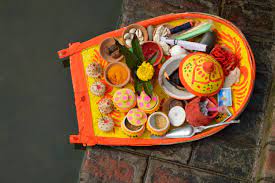
Borondala(Basket of offerings) was written by Tagore in 1928 and published in a collection called Mahua in 1929.
Mahua(1929), named after Madhuca Longifolia, a tropical treeBorondala or basket offerings. Courtesy: Creative Commons
BASKET OF OFFERINGS

Today, in this quiet bower,
Within my being
My offering has grown
Into a garland of light.
In this spring, with climbers
Of leaves and flowers,
My verses waft in the dawn
Of the golden rays.
My whole being dances
Swinging with rhythm.
If this song doesn’t find form
I will die of shame.
Oh beloved, my body reverberates
To the beat.
I have not got you an
external offering,
My prayer flows from my own
Being like a stream.
My heart leaps
Free of my being
Impatiently pleading
A meeting with you.
Just as the stars glimmer
With light in the dark night,
A spark awakens within
My body.
This luminosity illuminates
All my work.
This poem has been translated by Mitali Chakravarty with editorial input from Sohana Manzoor & Anasuya Bhar
PLEASE NOTE: ARTICLES CAN ONLY BE REPRODUCED IN OTHER SITES WITH DUE ACKNOWLEDGEMENT TO BORDERLESS JOURNAL
Figments caught straying in whispers of a dream,
Weave together till they form a visible stream,
Filling a void with voices that sing,
With freedom and impunity ring,
Giving credence to a distant, imagined realm.

— Introduction, Monalisa No Longer Smiles: An Anthology of Writings from across the World
As we complete three years of our virtual existence in clouds, connecting, collecting and curating words of ideators, we step into our fourth year with the pleasurable experience of being in bookshops in hardcopy too. Monalisa No Longer Smiles: An Anthology of Writings from across the World, our first hardcopy anthology, takes us into the realm of real books which have evolved over eons in history. This anthology connects us to those who hesitate to step into the virtual world created by technology. And there are many such people – as ingrained in the human heritage is a love for rustling paper and the smell of books. We have had some excellent reviews, praising not just the content but also the production of the book – the cover, the print and the feel. The collection bonds traditional greats with upcoming modern voices. We are grateful to our publisher, Om Books International, Shantanu Ray Chaudhuri, Jyotsna Mehta and their team for giving our book a chance. We do look forward to more anthologies hopefully in the future.
The writings we have collected over the last three years are reflective of diverse voices— some in concurrence with our thought processes and some in discussion or even in divergence. We have a variety of forms — poetry, conversations, fiction and non-fiction. Some are humorous and some serious. We try to move towards creating new trends as reflected in our anthology and our journal. For instance, Monalisa No Longer Smiles starts with an experiment — a limerick was adapted to express the intent of our book and journal; whereas normally this form is used to express light, or even bawdy sentiments. Perhaps, as the limerick says, we will find credence towards a new world, a new thought, a restructuring of jaded systems that cry out for a change.
Borderless Journaldid not exist before 2020. Within three years of its existence, our published pieces have found voices in this anthology, in other books, journals and even have been translated to a number of languages. Our own translation section grows stronger by the day supported by translators like Aruna Chakravarti, Fakrul Alam, Radha Chakravarty and Somdatta Mandal. Our interviews and conversations probe to find similarities and divergences in viewpoints. Our stories tell a good tale rather than indulge in stylistic interplay and our poetry is meant to touch hearts, creating a bond between the writers and anglophone readers. What we hope to do is to expose our readers to writing that they can understand. Writers get lost at times with the joy of creating something new or unique and construct an abstraction that can be intimidating for readers. We hope to host writing that is comprehensible, lucid and clear to the lay person.
What we look forward to homing in the coming months is a mingling of different art forms to birth new ideas that will help our species move progressively towards a world in harmony, filled with peace and love, giving credence to voices like that of Tagore, Nazrul or Lennon. “Imagine there’s no heaven…Imagine there’s no countries…no religion, too…Imagine all the people/ Livin’ life in peace…Imagine all the people/ Sharing all the world…” The need to redefine has been felt and as Lennon says in his last paragraph: “You may say I’m a dreamer/ But I’m not the only one/ I hope someday you’ll join us/ And the world will live as one.” With this hope, we continue our journey into another year – a new adventure that will take us to a universe where heaven can be found on Earth, grounded and real, within the human reach and can be shared without war, greed, hatred and anger.
Here, we share with you a few iconic pieces that have found their way to our pages within the last three years.
Professor Anvita Abbi, a Padma Shri, discusses her experience among the indigenous Andamanese and her new book on them, Voices from the Lost Horizon. Click here to read.
In Conversation with Akbar Barakzai, a ‘Part-time Poet’ in Exile: The last interview of Akbar Barakzai where he says, ‘The East and the West are slowly but steadily inching towards each other. Despite enormous odds “the twain” are destined to “meet” and be united to get rid of the geographical lines…’ Click hereto read more.
Half-Sisters: Sohana Manzoor explores the darker regions of human thought with a haunting psychological narrative about familial structures. Click hereto read.
Rituals in the Garden: Marcelo Medone discusses motherhood, aging and loss in this poignant flash fiction from Argentina. Click here to read.
Navigational Error: Luke P.G. Draper explores the impact of pollution with a short compelling narrative. Click here to read.
Pandies’ Corner: These narratives highlight the ongoing struggle against debilitating rigid boundaries drawn by societal norms, with the support from organisations like Shaktishalini and Pandies. Click here to read.
Dilip Kumar: Kohinoor-e-Hind: Ratnottama Sengupta recollects the days the great actor sprinted about on the sets of Bombay’s studios …spiced up with fragments from the autobiography of Sengupta’s father, Nabendu Ghosh. Click here to read.
Farewell Keri Hulme: A tribute by Keith Lyons to the first New Zealand Booker Prize winner, Keri Hulme, recalling his non-literary encounters with the sequestered author. Click here to read.
Tagore Translations, including translations by Aruna Chakravarti, Fakrul Alam, Somdatta Mandal and Radha Chakravarty. Click here to read.
Nazrul Translations, including Professor Fakrul Alam and Sohana Manzoor. Click here to read.
Gandhi & Robot by Thangjam Ibopishak, translated from the Manipuri by Robin S Ngangom. Click here to read.
Songs of Freedom by Akbar Barakzai, poems translated from Balochi by Fazal Baloch. Clickhere to read.
Give Me A Rag, Please:A short story by Nabendu Ghosh, translated by Ratnottama Sengupta, set in the 1943 Bengal Famine, which reflects on man’s basic needs. Click here to read.
Thanks to our team, contributors and readers for being a part of our journey. Let’s sail onwards…
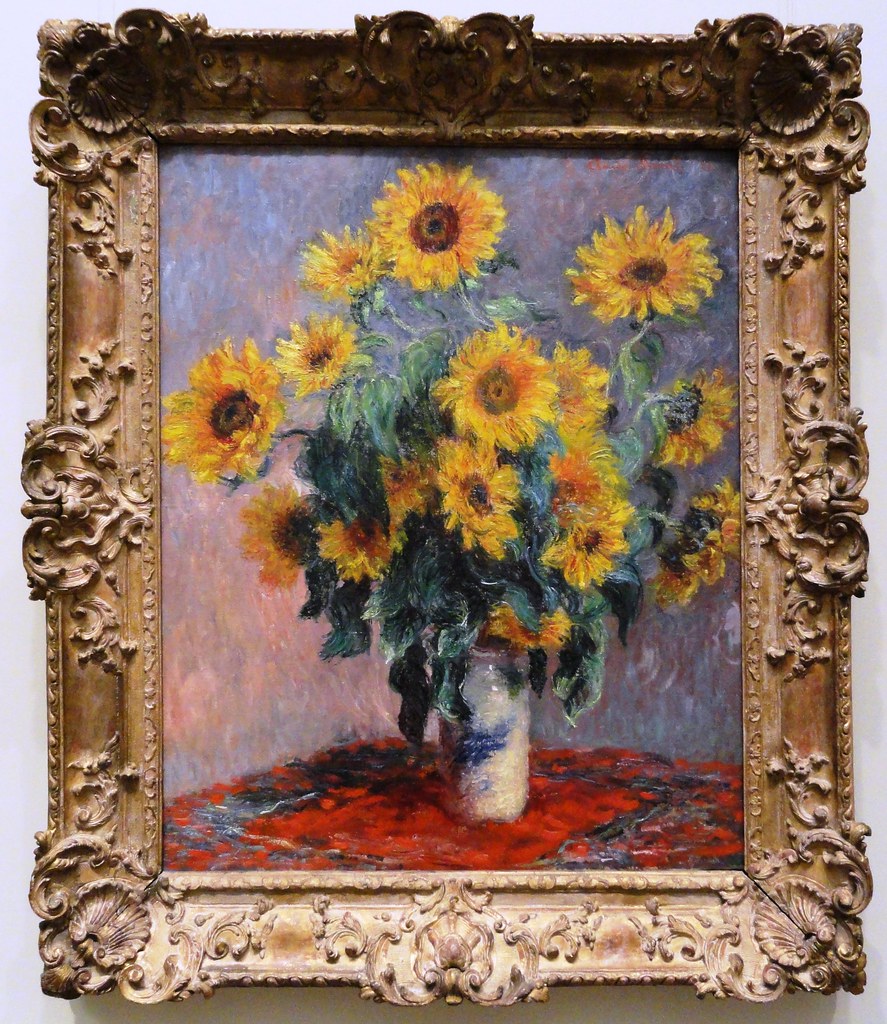
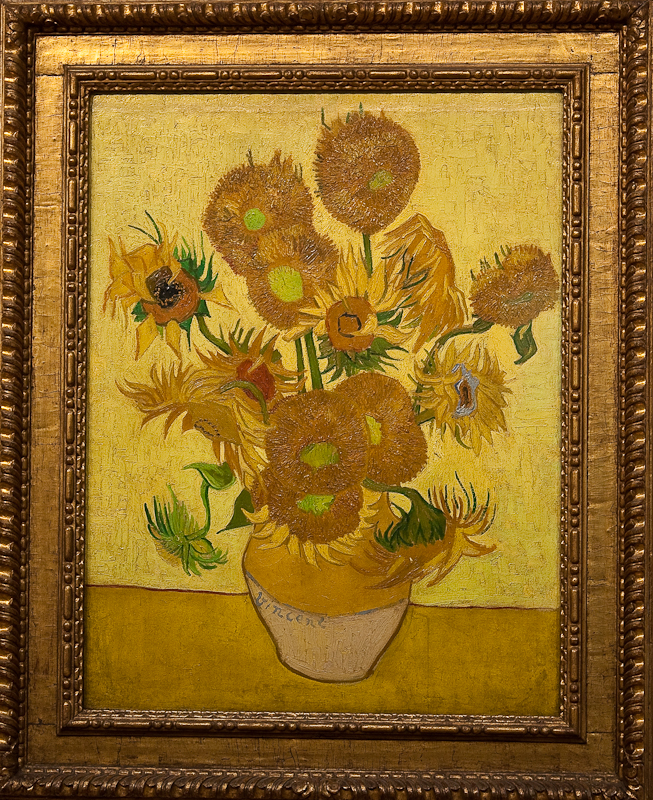
Sunflowers by Calude MonetSunflowers by Vincent VangoghCourtesy: Creative Commons
With resilience, they have withstood what could have become an international disaster for all humankind — an outbreak of a Third World War. The spirit that has resisted the ongoing invasion of Ukraine is admirable. They have stayed strong without bowing, crumbling or annihilating themselves in the wake of an onslaught that hurts humanity across all borders in different degrees and creates a huge population of refugees. We gave voice to one such refugee, Lesya Bakun — not just in our site but also in our first anthology — Monalisa No Longer Smiles: An Anthology of Writings from across the World.
This year, we quest for hope towards peace, a better, more accepting world with poetry on Ukraine. One of the poems here is accompanied by art from Ukrainian artist, Maria Kirichenko. We feature some of the poems gathered on Ukraine over the year.
“How Many Times Must the Cannonballs Fly…?” Featuring poetry by Lesya Bakun, Rhys Hughes, Ron Pickett, Michael R Burch, Kirpal Singh, Suzanne Kamata, Mini Babu, Malachi Edwin Vethamani, Sybil Pretious and Mitali Chakravarty. Click here to read.
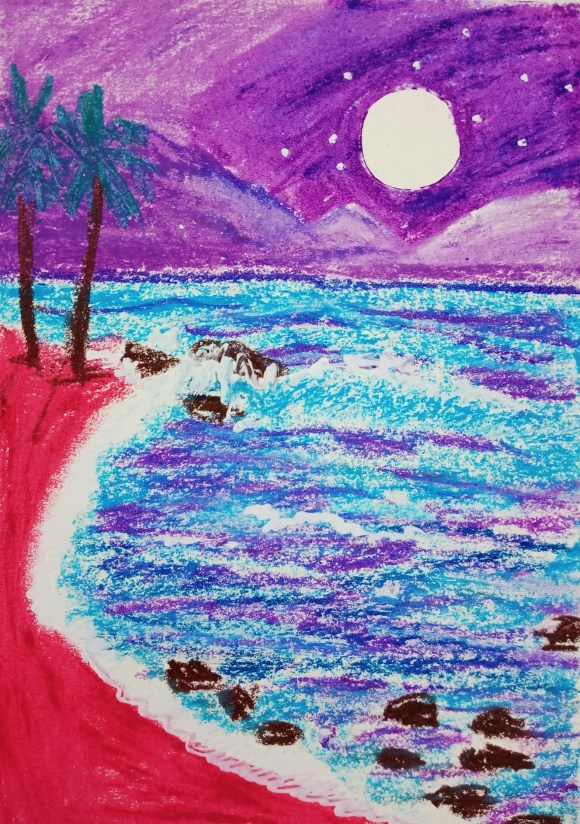
Why is the vast ocean restless?
What bonds does it want to sunder?
It howls like a child in distress.
With incomprehensible words, it blusters.
Over eons, it rises, it soars,
It swells with an exhilarated gait —
Turbulent and huge, it roars.
The calm sky silently hears it reverberate.
Crushing its heart, it flays, it beats,
Against the rocky seaside. At high tide, its waves
Rise to smash, heralding apocalyptic feats.
Yet as the tide ebbs, the ocean gently laves
The dark core of nature, bordered by mud.
The ocean of tears continues to sway.
Each moment, desires staunched at the bud
Want to cry and drench the world away.
I yearn to be the scribe who translates
The ocean’s upheaves for humankind,
Calm the eternal unrest that agitates
The sea breeze to swish, shush and pine.
I yearn that my song rings day and night
Harmonising tunes with the Earth’s infinite…
This poem has been translated by Mitali Chakravarty with editorial input from Sohana Manzoor and Anasuya Bhar & Art by Sohana Manzoor
PLEASE NOTE: ARTICLES CAN ONLY BE REPRODUCED IN OTHER SITES WITH DUE ACKNOWLEDGEMENT TO BORDERLESS JOURNAL
August in Kabul:America’s Last Days in Afghanistan and the Return of the Taliban is a real-life account of a journalist who returned to Kabul from Dubai to be with his “friends”, to let them know that their well-wishers had not abandoned them, even while the American forces withdrew and the Taliban took over. Most, including President Ghani, were flying out of Kabul while acclaimed photojournalist who had spent eight years there, Andrew Quilty, flew back from Dubai on 14th August, 2021.
His account traces the history of the takeover, the inception of the Taliban, the reactions of the people to their earlier regime dating from 1996 to 2001: “The Taliban were initially welcomed there, and many young, uneducated male residents, enamoured by the group’s piety, joined their ranks. But to Soviet-era communist officials, senior Hezb-i Islami figures and those with tertiary educations or financial means, the Taliban’s devoutness foretold merciless intolerance, and they left the country, travelling to the West through costly smuggling networks or to neighbouring Pakistan or Iran, joining the millions who had moved there during the Soviet war, as refugees.”
He is vocal about the Doha Agreement made by the Trump regime and executed by Biden, where the handing over left gaps which caused suffering not only among foreigners but also the local population of Afghanistan. Citizens died trying to find safety for themselves and their loved ones. Chaos prevailed and both Taliban forces and American soldiers killed innocents. With more than hundred interviews, Quilty brings the plight of these people to light. What touches the heart in this narrative is the human suffering caused by political games and beliefs. This has been captured well in the account.
That the current acknowledged rulers of Afghanistan, the Talibans, have reverted in certain senses to their past stance, especially pertaining to a major issue, the freedom of women has been acknowledged. But is this an issue that is related essentially to Taliban only or does it run deeper within the culture? Through the narrative of a young girl, Nadia, the author relates the equation for Afghani women: “Preserving the safety of women is a common sleight of hand used by Afghan men to keep those within their family under control. Neglecting such a duty and allowing a young woman the freedom to walk when they wish in the streets, to socialise with unrelated men, and to develop their understanding of the world outside the home and their ideas about their place therein, is deduced by many outside the immediate family to imply the woman is what Nadia refers to euphemistically as a ‘bad girl’. Boiled down, a ‘bad girl’ is one who cavorts and sleeps with men out of wedlock—a prostitute in Afghan terms, a great stain on a family’s honour. To avert such a possibility, rather than confront those who deliberately misinterpret the young woman’s ways and use it to undermine her family, instead, her brothers, father and male members of the extended family more often elect to restrain her behaviour.”
Women are not the only victims of a society that balks at liberal or out of the box thinking. The book is an eye-opener and reveals how the events of that August unfolded in 2021. It was an amazing coincidence that the takeover was completed on a date that coincided with the Independence Day celebrations of its neighbours, India (15th August) and Pakistan (14th August).
This account varies from an earlier account of Afghanistan written almost a century ago in its tone – that was humorous essays, a memoir by Syed Mujtaba Ali translated by Nazes Afroz from Bengali, called In a Land Far from Home: A Bengali in Afghanistan. This is a journalistic account. But one thing that runs through both the narratives is the bonding both these writers experienced with the locals, perhaps a bond born of friendship with people who have lived in oppressed communities and the need to get the world to hear their voices. The social norms still sound the same with wild gun shots marking celebrations. But what was not mentioned in the earlier were the scars left by Soviets and American weapons – because Mujtaba Ali’s account ended at the start of the civil war (1928-29), long before the superpowers intervened in a major way, even though the then-ruler Amanullah Khan (1892-1960) had abdicated and escaped to British India.
Andrew Quilty in Kabul. Photo provided by Quilty
Andrew Quilty who gives a splendid coverage of the current scenario, had been in Afghanistan since 2013. He is the recipient of nine Walkley Awards, including the Gold Walkley, for his work on Afghanistan. He has also received the George Polk Award, the World Press Photo Award and the Overseas Press Club of America award for his investigation into massacres committed by a CIA-backed Afghan militia. In this conversation, Quilty tells us more about the writing of the book and his own responses to the change in regime and the takeover, and most of all what made him return to a conflict zone.
What made you return to Kabul, when others were fleeing from a Taliban takeover?
There were two things: as a journalist and photographer, the days ahead of when I decided to return to Afghanistan were going to be the country’s most pivotal since the US invasion in 2001. Having covered the country for eight years at that point, despite the risk, I really wanted to be present to cover the period that was to follow. But more than that, at the time I really just wanted to be with my friends, both foreign and Afghan, with whom I had experienced so much with in the country over the years leading up to August 2021. While many of my Afghan friends felt the international community was abandoning them, I didn’t want them to feel their friends had as well.
In your ‘Epilogue’, you tell us that the book turned out to be different from what you had thought it would be at the start. What was it that you had wanted to start with and how has it departed from the way you had visualised it earlier?
I had envisaged writing a book about the way international military special forces had, through their tactics of night raids and air strikes, turned much of the rural Afghan population against the central government and the US-led military coalition.
You are a well-known photo-journalist and yet your book is written only in words. Why did you opt to use words instead of photographs this time?
I am currently working on a photo book that will cover the entire time I spent in Afghanistan (2013 – 2022). But my photos of the events of 2021 alone wouldn’t have been sufficient to tell the story of what happened in the detail the way words can.
In the twentieth century, a book had been written by Syed Mujtaba Ali in Bengali and translated by a journalist who was in Afghanistan, Nazes Afroz, talks of the dislodging of Amanullah by Bacha-ye-Saqao (Habibullah Kalakani) during the civil war. Can Bachai-ye-Saquao be seen as some kind of a precursor to the making of Taliban? Please elaborate.
Not really. He was of Tajik descent and so didn’t have the support of the majority Pashtuns. Also, his rule didn’t even last a year. The Taliban that took control of Afghanistan in 1996 are a closer replica of the Taliban that took control of the country in 2021 than Kalakani.
Afghanistan seems to be a country torn by the politics induced by Cold War, which of course is said to have concluded now. How would you compare the Soviet intrusion from 1979 to 1989 with the recent American intrusion which concluded with the Taliban takeover? You have mentioned how bio warfare by Soviets ruined the countryside. Please elaborate.
There are a lot of comparisons that could be made. Both the Soviets and the US-led coalition had superior technology, equipment and training. The Mujahedin and the Taliban (whose fighters call themselves Mujahedin) had poor quality weapons, funding and training, but they had a motive to fight that invading nations could never match. The nature of the style of warfare they used also made them very hard to defeat — ie. an insurgency that lives among the population, whose fighters are very difficult to distinguish from the local non-combatants.
Reading some of the case stories that you have taken up in your non-fiction, the oppression of women seems to be an accepted social norm in Afghanistan and persisted before the current invasion of the Taliban. Can you please comment on this?
While there were improvements for women in Afghanistan after the Taliban were ousted in 2001 — education was once again permitted, they were allowed to work in all sectors of the workforce and allowed to own property etc. — across much of the country, especially in rural areas, many women’s lives were still highly restricted by conservative cultural norms. Despite the constitution giving women many more rights than they had previously, culture often overrode the law. That said, the Taliban have now enshrined the most conservative interpretation of cultural norms in law, and so for those families who had permitted women to live under the more permissive post-2001 laws, the choice is no longer theirs to make.
One of the major issues one gathers from various narratives as well as yours in Afghanistan is not only the lack of freedom to women but also extends to freethinkers. Is this a cultural issue, religious issue or Taliban induced?
I think this is more about stamping out dissent as well as ideas that don’t conform to the Taliban’s worldview, like communism or democracy for example. So, it’s both religious as well as a means for the Taliban to enforce those under their control to follow their very strict worldview.
The Taliban destroyed the Bamiyan Buddha. Have they changed since then to become more accepting of diverse thought?
I had hope that they might be. Most Afghans cautioned my optimism, and they seem to have been proven vindicated. While the Taliban haven’t yet destroyed any cultural heritage like the Buddhas, it took them five years in control to do that in 2001. The way they have rolled back rights in the 18 months they have been in control, it doesn’t bode well for what the next few years will bring. So far, however, they don’t seem to have been targeting ethnic minorities specifically or systematically.
The Taliban had taken control once earlier to be driven out by Americans in 2001. Can you tell us a bit about the origin of Talibans? Are they the same as Mujahedins?
The Taliban emerged from several groups that, combined, were known internationally as the Mujahedin. Once the Soviets left Afghanistan in 1989, the seven Mujahedin factions fought for control of the country. The Taliban, whose fighters were mostly drawn from religious madrasas, and known to be better-disciplined than the other lawless factions, promised to bring order to the country. Initially they were welcomed.
Photo provided by Andrew Quilty
You had moved to Afghanistan in 2013. Would you think of returning there now? Why?
I hadn’t planned to live in Afghanistan. Initially I went for two weeks to photograph the Afghan cricket team for an Australian magazine. I only planned to stay two weeks but quickly fell in love with the country and my work there and stayed nearly a decade. I have no plans to return as yet, but it will always be close to my heart, and I would love to return one day when it feels right.
Are you planning more books in the future? On Afghanistan?
Yes. As I mentioned, I will publish a photo book on Afghanistan later this year with Melbourne University Press. After that, let’s see.
Thank you for your time.
(This review and the online interview conducted through emails are by Mitali Chakravarty)
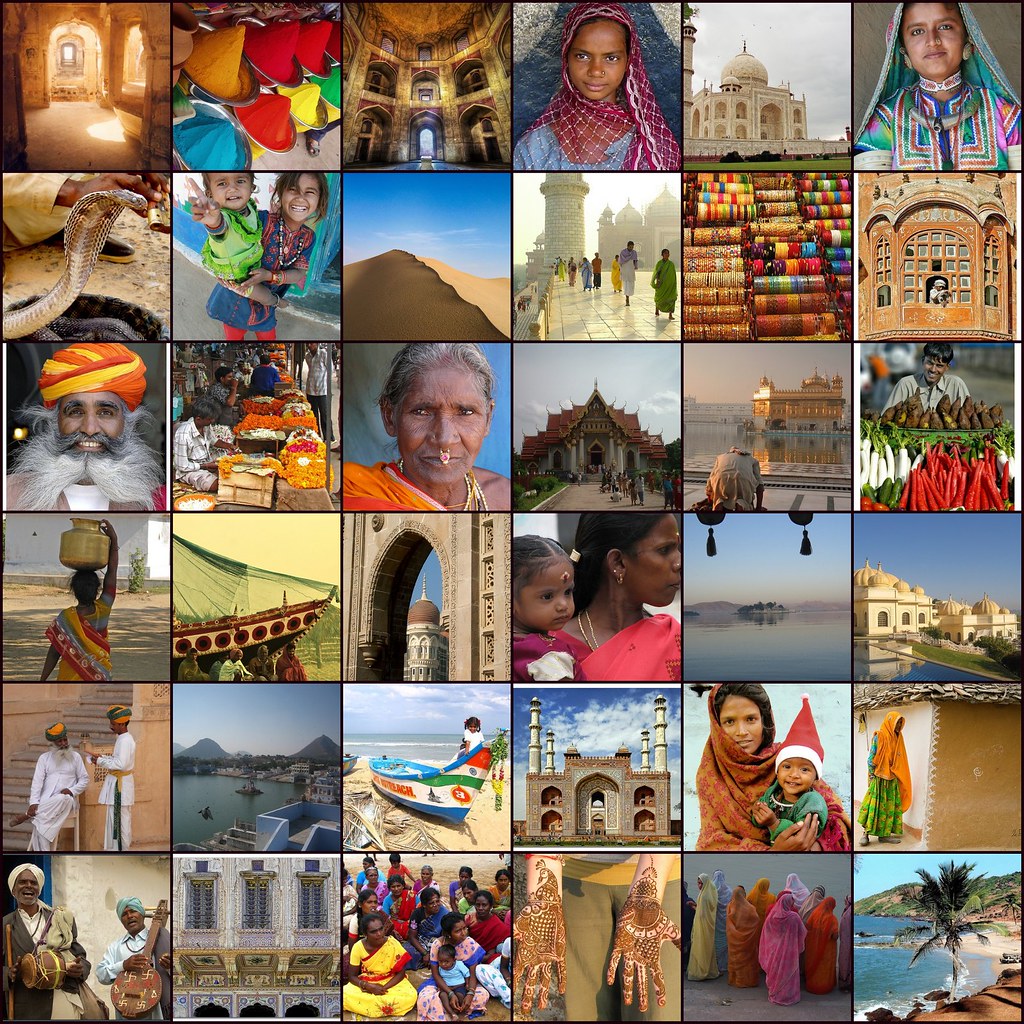
On 26 th January, 1950, India was declared a republic, an independent entity with the complete withdrawal of colonial support of any kind. The country adopted an independent constitution. The Republic Day celebrations conclude on 29th January with ‘Beating the Retreat’,where more than seven decades ago the British withdrew all armed support from India.
In this edition, we will explore how the idea of an independent India has evolved over the decades. We have poetry by Asad Latif that celebrates the Indianess across borders. On the other hand, Beni S Yanthan from Nagaland explores the republic in the shadow of displacement, which makes one wonder if cultural hegemony can help make a country? Ukraine is faced with a war over it.
Tagore’s poem builds empathy around human suffering as does Premchand’s story, translated by C Christine Fair — these are texts written at the start of the turn of the last century. Have we come out of that suffering? Perhaps, the answer can be found in Bhaskar Parichha’s review about a book that spans almost the whole of twentieth century in India. He tells us the author, “MA Sreenivasan (1897-1998) lived through almost the entire 20th century and was among the very few people who witnessed at close quarters the enormous changes that took place in India during this period.” This has been recorded in his book and its review. Rhys Hughes’ humour winds up this edition where he recounts the differences in the cultural ethos of India and a region of the country that despite losing an empire where the sun never set, still retains its sense of humour!
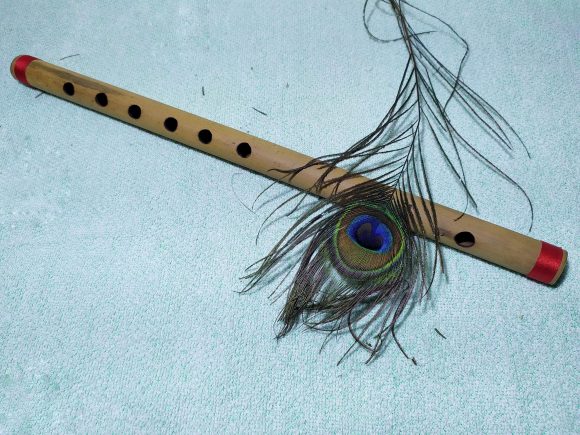
FLUTE

Your flute —
For a short while,
Pretend it's mine.
The sarat* morning flowed by.
The day grew tired nigh.
If you are weary
Of playing your flute,
Then please let,
For a short while,
Your flute be mine.

I will not do much with it.
I will only play
For part of the day.
Raising it high,
I will hold it to my lips
I will express my happiness
By playing many snatches —
In this way losing myself
I will only play
For part of the day.

Then as dusk descends,
I will get flowers in a basket
to make a necklace.
Adorning a garland of juthi*,
Filled with its heady perfume
I will pray with an
Offering of lamps.
That is why in the gloaming,
Fill a basket of flowers
To make a garland of juthi.

A half-moon will rise
Amidst the stars
To gaze at your path.
Then I will come to you
To return your flute.
And you will play a tune
Expressive of the depth of night —
A half- moon will rise
Amidst the stars
To gaze at your path.


*Sarat is early autumn.
*Juthi is a kind of Jasmine
This poem has been translated by Mitali Chakravarty with editorial input from Sohana Manzoor & Anasuya Bhar
PLEASE NOTE: ARTICLES CAN ONLY BE REPRODUCED IN OTHER SITES WITH DUE ACKNOWLEDGEMENT TO BORDERLESS JOURNAL
Prothom Diner Shurjo or (the sun on the first day) from Tagore’s last collection of poems, called Shesh Lekha (The Last Writings), was written in 1941.
THE SUN ON THE FIRST DAY

The sun that rose
On the first day asked
Newly-fledged consciousness —
Who are you?
There was no answer.

Many eons passed.

The setting sun in the
Silence of the dusk, asked
The Western shore the last question —
Who are you?
There was no answer.
Art by Sohana Manzoor
This poem has been translated by Mitali Chakravarty with editorial input from Sohana Manzoor & Anasuya Bhar
PLEASE NOTE: ARTICLES CAN ONLY BE REPRODUCED IN OTHER SITES WITH DUE ACKNOWLEDGEMENT TO BORDERLESS JOURNAL
We did it! … Announcing our first anthology … Monalisa No Longer Smiles… Click here to read.
Conversations
Suchen Christine Lim, an iconic writer from Singapore in conversation about her latest book, Dearest Intimate. Click here to read.
Blazing trails, as well as retracing the footsteps of great explorers, Christopher Winnan, a travel writer, delves into the past, and gazes into the future while conversing with Keith Lyons. Click hereto read.
Saturday Afternoon is a poem by Ihlwha Choi, translated from Korean by the poet himself. Click here to read.
Tagore’s poem, Tomar Shonkho Dhulay Porey (your conch lies in the dust), has been translated from Bengali by Mitali Chakravarty as The Conch Calls. Click here to read.
Basudhara Roy has reviewed Afsar Mohammad’s Evening with a Sufi: Selected Poems, translated from Telugu by Afsar Mohammad and Shamala Gallagher. Click hereto read.






 Borderless