Categories
Tribute

Celebrating Freedom

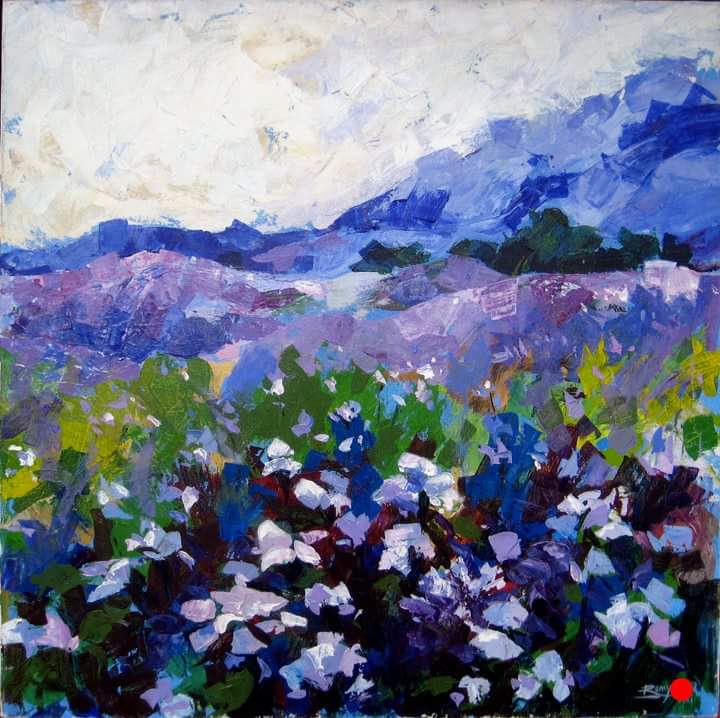
Painting by Sohana Manzoor

The right to exist with freedom to choose is threatened when dictatorial regimes try to erase a culture or linguistic group as we can see in the current conflict that rages between Russia and Ukraine. In 1971, Bangladesh came into existence over a similar issue. The colonials had divided the Indian subcontinent on the basis of religion — not culture. Before this division, Bengal was a whole. In 1905, Tagore had marched against the British directive to divide Bengal and Lord Curzon, the Viceroy of India. In 1911, Bengal was reunited to be slashed again in 1947 and made a part of Pakistan with Urdu as its national language. Bangladesh fought a war to find the right to exist as an entity outside of Pakistan — adopting their favoured language Bangla. Throwing off the yoke of Urdu, Bangladesh came to its own. On 16th December, the battle against cultural hegemony was won with warplanes drawing to a halt.

Celebrating freedom from oppression, we have an article by Fakrul Alam giving the historical background of the struggle. A musing from across the border about the 1971 refugee exodus into India has been written by Ratnottama Sengupta. Asad Latif muses on the need to identify with a culture. We have translations of poetry by Nazrul to add a dash of seasoning.

Poetry

Translations of Nazrul Islam, the rebel poet of Bangladesh… Click here to read.

Prose

The Birth of Bangladesh & the University of Dhaka: Professor Fakrul Alam takes us through the Partitions of Bengal which ultimately led to the creation of Bangladesh, with focus on the role of Dhaka University. Click here to read.

Joy Bangla: Memories of 1971: Ratnottama Sengupta recaptures a time when as a teenager she witnessed a war that was fought to retain a culture. Click here to read.

Epaar Bangla, Opaar Bangla:  Bengals of the Mind: Asad Latif explores the need of a person to exist as belonging to a particular cultural group, in this case Bengal. Click here to read. 

Categories
Editorial

Its Only Hope…

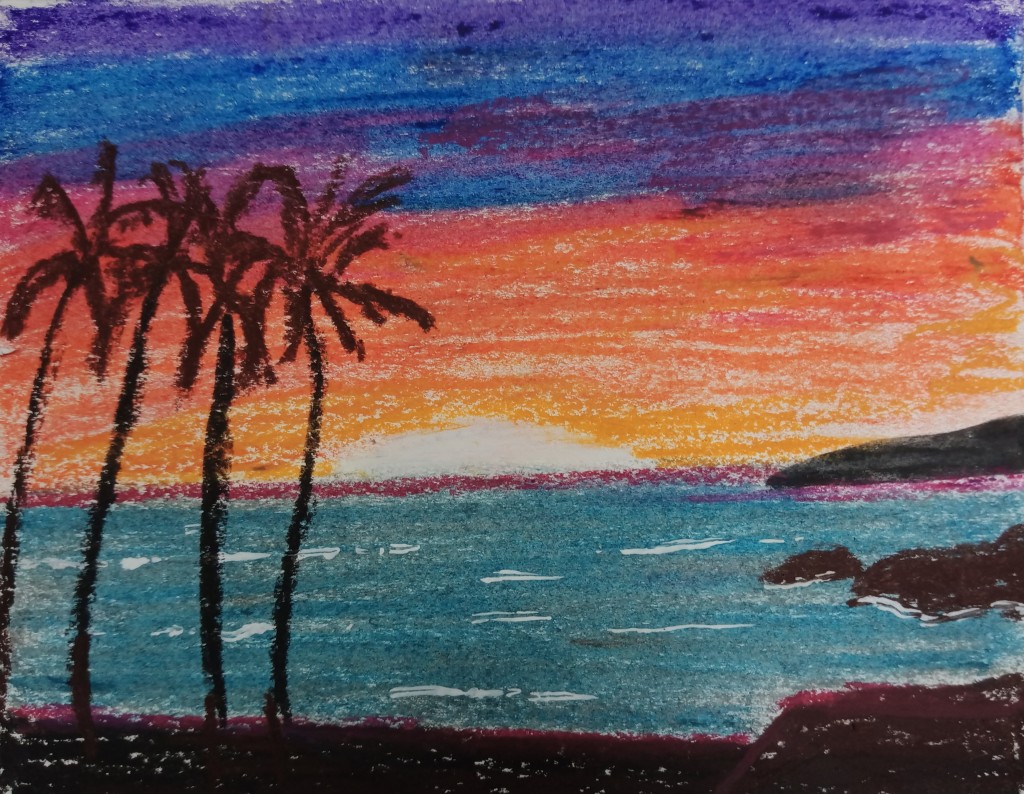
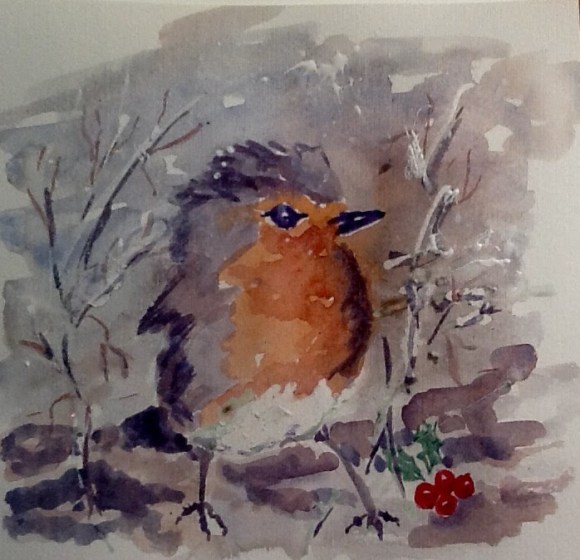
Painting by Sybil Pretious

New year, like a newborn, starts with hope.

The next year will do the same – we will all celebrate with Auld Lang Syne and look forward to a resolution of conflicts that reared a frightening face in 2022 and 2021. Perhaps, this time, if we have learnt from history, there will not be any annihilation but only a movement towards resolution. We have more or less tackled the pandemic and are regaining health despite the setbacks and disputes. There could be more outbreaks but unlike in the past, this time we are geared for it. That a third World War did not break out despite provocation and varied opinions, makes me feel we have really learnt from history.

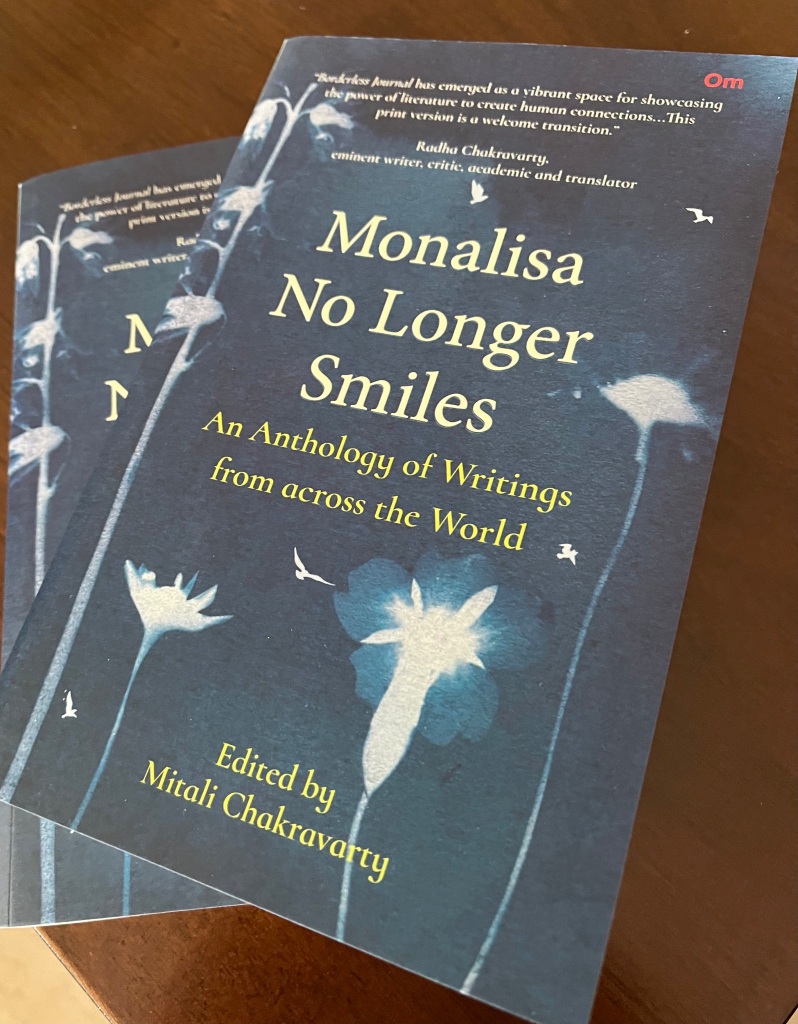
That sounds almost like the voice of hope. This year was a landmark for Borderless Journal. As an online journal, we found a footing in the hardcopy world with our own anthology, Monalisa No Longer Smiles: Writings from Across the World, which had a wonderful e-launch hosted by our very well-established and supportive publisher, Om Books International. And now, it is in Om Book Shops across all of India. It will soon be on Amazon International. We also look forward to more anthologies that will create a dialogue on our values through different themes and maybe, just maybe, some more will agree with the need for a world that unites in clouds of ideas to take us forward to a future filled with love, hope and tolerance.

One of the themes of our journal has been reaching out for voices that speak for people. The eminent film critic and editor, Shantanu Ray Chaudhuri , has shared a conversation with such a person, the famed Gajra Kottary, a well-known writer of Indian TV series, novels and stories. The other conversation is with Nirmal Kanti Bhattajarchee, the translator of Samaresh Bose’s In Search of a Pitcher of Nectar, a book describing the Kumbh-mela, that in 2017 was declared to be an Intangible Cultural Heritage of Humanity by UNESCO. Bhattacharjee tells us how the festival has grown and improved in organisation from the time the author described a stampede that concluded the festivities. Life only gets better moving forward in time, despite events that terrorise with darkness. Facing fear and overcoming it does give a great sense of achievement.

Perhaps, that is what Freny Manecksha felt when she came up with a non-fiction called Flaming Forest, Wounded Valley: Stories from Bastar and Kashmir, which has been reviewed by Rakhi Dalal. Basudhara Roy has also tuned in with a voice that struggled to be heard as she discusses Manoranjan Byapari’s How I Became a Writer: An Autobiography of a Dalit. Somdatta Mandal has reviewed The Shaping of Modern Calcutta: The Lottery Committee Years, 1817 – 1830 by Ranabir Ray Chaudhury, a book that explores how a lottery was used by the colonials to develop the city. Bhaskar Parichha has poured a healing balm on dissensions with his exploration of Rana Safvi’s In Search of the Divine: Living Histories of Sufism in India as he concludes: “Weaving together facts and popular legends, ancient histories and living traditions, this unique treatise running into more than four hundred pages examines core Sufi beliefs and uncovers why they might offer hope for the future.”

In keeping with the festive season is our book excerpt from Rhys Hughes’ funny stories in his Christmas collection, Yule Do Nicely. Radha Chakravarty who brings many greats from Bengal to Anglophone readers shared an excerpt – a discussion on love — from her translation of Tagore’s novel, Farewell Song.

Love for words becomes the subject of Paul Mirabile’s essay on James Joyce’s Stephen Dedalus, where he touches on both A Portrait of the Artist as a young Man and  Ulysees, a novel that completed a century this year. Love for animals, especially orangutans, colours Christina Yin’s essay on conservation efforts in Borneo while Keith Lyons finds peace and an overwhelming sense of well-being during a hike in New Zealand. Ravi Shankar takes us to the historical town of Taiping in Malaysia as Meredith Stephens shares more sailing adventures in the Southern hemisphere, where it is summer. Saeed Ibrahim instils the seasonal goodwill with native Indian lores from Canada and Suzanne Kamata tells us how the Japanese usher in the New Year with a semi-humorous undertone.

Humour in non-fiction is brought in by Devraj Singh Kalsi’s ‘Of Mice and Men’ and in poetry by Santosh Bakaya. Laughter is stretched further by the inimitable Rhys Hughes in his poetry and column, where he reflects on his experiences in India and Wales. We have exquisite poetry by Jared Carter, Sukrita Paul Kumar, Asad Latif, Luis Cuauhtémoc Berriozábal, Michael R Burch, Sutputra Radheye, George Freek, Jonathan Chan and many more. Short stories by Lakshmi Kannan, Devraj Singh Kalsi, Tulip Chowdhury and Sushma R Doshi lace narratives with love, humour and a wry look at life as it is. The most amazing story comes from Kajal who pours out the story of her own battle in ‘Vikalangta or Disability‘ in Pandies’ Corner, translated from Hindustani by Janees.

Also touching and yet almost embracing the school of Absurd is PF Mathew’s story, ‘Mercy‘, translated from Malayalam by Ram Anantharaman. Fazal Baloch has brought us a Balochi folktale and Ihlwha Choi has translated his own poem from Korean to English. One of Tagore’s last poems, Prothom Diner Shurjo, translated as ‘The Sun on the First Day’ is short but philosophical and gives us a glimpse into his inner world. Professor Fakrul Alam shares with us the lyrics of a Nazrul song which is deeply spiritual by translating it into English from Bengali.

A huge thanks to all our contributors and readers, to the fabulous Borderless team without who the journal would be lost. Sohana Manzoor’s wonderful artwork continues to capture the mood of the season. Thanks to Sybil Pretious for her lovely painting. Please pause by our contents’ page to find what has not been covered in this note.

We wish you all a wonderful festive season.

Season’s Greetings from all of us at Borderless Journal.

Cheers!

Mitali Chakravarty

borderlessjournal.com

.

Click here to access the Borderless anthology, Monalisa No Longer Smiles

Categories
Poets, Poetry & Rhys Hughes

Some Differences Between Wales and India

I am from Wales but now I live in India. I am therefore in a very good position to note any differences between life in the two different countries. The first of these differences concerns food. Indian food is the main kind of food in public eating places in both locations. But the food itself isn’t quite the same. Indian food in India is Indian by default. In Wales no one knows whose fault it is. I fell into a curry in Wales once. I slipped on discarded laddoo peel (we peel laddoos over there because we think they grow on trees) and into the pot I went. It was a good curry and might be considered authentic. After I fell into it, ‘in authentic’ was the correct term for it. I wiped myself clean with a large naan bread. Later I wore the naan bread as a cloak. Waste not, want not.

So much for food. I am writing this short essay at the end of November. India is especially different from Wales at this time of year. Here I am playing badminton in shorts and a t-shirt. Back in Wales it is so cold that the sunbeams have frozen solid and I would be hanging my washing on one of the horizontal rays. In the afternoon, here in India, I will probably read a book of poetry under a banyan tree while drinking mosambi juice and listening to sitar music. But in Wales, I would be snapping off that frozen sunbeam and using it as a long lance while riding my yeti[1] over the misty mountains.

Traffic is another difference. In India the roads are choked with cars, autos, tuk-tuks (yes, I know that autos and tuk-tuks are the same thing but I need more wordage in this essay), trucks, buses, bicycles, wheelbarrows and cows. Wales doesn’t really have roads and the only traffic consists of crows. A crow perched on the back of a cow would make a perfect official emblem for a Welsh-Indian Friendship Association. If there are no roads in Wales, how do we get about? It is a pertinent question. We jump, is the answer. This not only enables us to reach our destinations but keeps us warm in winter.

In India there are monsoons but in Wales they are never soon, they are here already. The only time it stops raining in Wales is when the clouds go on strike for more pay. Lightning also goes on strike. There are puddles everywhere, even on the surfaces of lakes and ponds. Because we jump everywhere, there is a lot of splashing in Wales. This splashing puts most of the moisture back into the air where it forms clouds and perpetuates the cycle. I once perpetuated a cycle. It was a bicycle originally but I sent it away to get an education and it came back as a unicycle. I connected it to a motor powered by a rainfall gauge. Off it went on an endless journey around Wales. I would never attempt something like that in India. So there’s another big difference.

India is actually a very advanced country in terms of technology. Based in Bangalore, I am able to order anything I like with an app on my mobile phone. If I want food or drink or a bicycle, I just have to tap a few keys and a delivery guy will turn up with the ordered stuff. I once ordered a delivery guy using one of these apps and a different delivery guy turned up carrying the first delivery guy over his shoulder. But then I decided I didn’t really need a delivery guy so I sent him back and obtained a full refund.

It’s not like that in Wales. We only acquired mobile phones very recently in history and they are of a decidedly primitive sort. We started with parrots that one keeps in a pocket and speaks the messages to before releasing them to land on the shoulders of the recipients, where they recite the messages. This meant the pockets of our trousers had to be enlarged but we felt it was worth the cost. The parrots didn’t like flying through the endless rain and the messages usually went astray. So we progressed to a more advanced model, which consisted of riders on bicycles holding tin cans connected by string. You can’t order food on our mobile phones or even new trousers.

Wales is behind the times in other ways too, in fact in all ways. Wales is so belated in every respect that when the end of the world finally takes place, the country will continue for a few more years as if nothing has happened. I suspect that very slow processes, such as continental drift, evolved in Wales. I suppose that even evolution evolved in Wales, considering how slow it is and how long it takes a dinosaur to change into a chicken. I can change into a chicken with a great deal more efficiency, but I prefer pretending to be a gorilla or a chimp. It’s a very relaxing thing to do. Why not try?

Also in India you have holy men, but in Wales we only have holy socks. A holy man can open himself to the secrets of the universe. A holy sock is open to the weather, which is generally wet, and not much else. Holy men can levitate if they are sufficiently pure in spirit, or so I have been told. I once saw a flying sock, but it had been lobbed at me by a neighbour and wasn’t pure at all. That’s not the only thing I have seen rushing through the atmosphere in Wales. Parrots with sad expressions, of course, but also gloves. Why this should be so was a mystery for ages but recently the enigma was solved by an enigma machine and the answer is that “glove is in the air, everywhere I look around”. Or perhaps it is just the wind. Yes, I think it’s the wind.

The Enigma machine was used in the early- to mid-20th century, especially in WWII, for commercial, diplomatic, and military communications. Courtesy: Creative Commons

An enigma machine, incidentally, is a device invented in Wales that looks like an abacus, but it has small onions on wires instead of beads. Crows perch on the wires and peck the onions and move them into different positions, which gives the answer to any question. But the answer is cryptic and must be studied by a druid, who will interpret it. Druids are common in Wales. They aren’t holy men, strictly speaking, but are highly respected because they wear intact socks. They also wear cloaks made from naan breads but if you ask them, they insist they are made from wool and cobwebs.

You are probably beginning to ask yourself, is this a serious essay? And at this point you might be harbouring doubts that it is. There are many harbours in Wales, which has a convoluted coastline, but not many in the interior of India. That’s another difference. I have already mentioned laddoos and the fact that we peel them (and I mentioned it in brackets) but we also peel bells. I don’t think bells are ever peeled in India. They are rung instead. The peel of Welsh bells is used to make the tall hats that old women wear, conventionally on their heads, that you might have seen in vintage photographs. Bell peel is more enduring than satin or any other kind of fabric. It means that every old woman always knows what the time is when their hat bongs.

India is full of palaces. Not long ago, I visited Mysore Palace and found it truly impressive. In Wales we have nothing quite like that, but I often mention Mysore Feet after all the jumping I have to do to get anywhere. And now one final difference before I go. In India, the essays that writers write are generally detailed, comprehensive and lengthy. In Wales they often end abruptly in the middle with three dots, as if the writer was eaten by a yeti unexpectedly… but not this one. No yeti. Not yet anyway.


[1] The Welsh yeti, Abominablis Boyo, is only distantly related to the Himalayan species.

.

Rhys Hughes has lived in many countries. He graduated as an engineer but currently works as a tutor of mathematics. Since his first book was published in 1995 he has had fifty other books published and his work has been translated into ten languages.

.

PLEASE NOTE: ARTICLES CAN ONLY BE REPRODUCED IN OTHER SITES WITH DUE ACKNOWLEDGEMENT TO BORDERLESS JOURNAL
Click here to access the Borderless anthology, Monalisa No Longer Smiles

Categories
Poetry

Two Sonnets by Asad Latif

Courtesy: Creative Commons
AN INDIA LIKE YOU
For Alma

Footprints in the dust on a Delhi street,
Or Singapore or Washington DC,
The siren world stays faithful at your feet,
But you find her wherever you might be.
And India, too. Tightly, she holds you:
"Never leave me, child. I've nowhere to go."
"I've left?" Alma says. "Indias are too few
to be born in, to see the world, and know.
I'm as Indian as you, India.
It is you, my Bhuvanamohini,
O land of immortals who lie too near
for unlit lamps to show the way to me.
Get a life of your own, female country. 
You've been Bharat always. Now, Bharati."


A TOY FOR YOU
For Ahaan

I've brought a toy for you Master Ahaan.
It's so large I can't get it through the door.
Come out and take a look, my sweet insaan
And it will remain just yours evermore.
"This map is blank," you say. "Nothing to see."
Fill it up with the colours of your mind,
With a river that runs through drought, a tree
Still standing, a spot where the sun can find
A freezing child, a school for girls to grow,
Indias made of laughter and of joy,
Harvests for outstretched hands to overflow
For all time to come. This map is your toy.
Al-Hind is your Āsthā, Bharat's Imân:
Do bigha zameen. Ek mutthi asmaan.


Glossary:
Bhuvanamohini: Charmer of the world
insaan: human being
Āsthā is the Sanskrit, and Imân the Arabic,  for faith
Do bigha zameen. Ek mutthi asmaan: Two acres of land. A fistful of sky

Asad Latif is a Singapore-based journalist. He can be contacted at badiarghat@gmail.com.

PLEASE NOTE: ARTICLES CAN ONLY BE REPRODUCED IN OTHER SITES WITH DUE ACKNOWLEDGEMENT TO BORDERLESS JOURNAL
Click here to access the Borderless anthology, Monalisa No Longer Smiles

Categories
Editorial

We Did It!

That good things happen despite darkness, despite prognostications of doom, that light glimmers hope if you strive to focus on your strength in hard times is borne true both in fiction and in life. Perhaps, we cannot get back the old ways (but is that what we want?) but new paths emerge. Old gives way to new. And while trying to gather pearls of human excellence — borne not of awards or degrees but of bringing out the best, the kindest, the most loving in human hearts — we managed to create with a team an outstanding anthology. Woven with the writings of old and new — we created a tapestry together that the editor in chief of our publishing house said was “classy, literary, engaging and international”. That one of the oldest and most reputed publishing houses in India with bookshops countrywide took it on was also an unusual event! We are truly grateful to Om Books International, Shantanu Ray Chaudhuri and Jyotsna Mehta along with all our writers and readers who made our anthology a reality, and to Radha Chakravarty and Fakrul Alam for the kind words they bestowed on our effort.

Click here to access the Borderless anthology, Monalisa No Longer Smiles

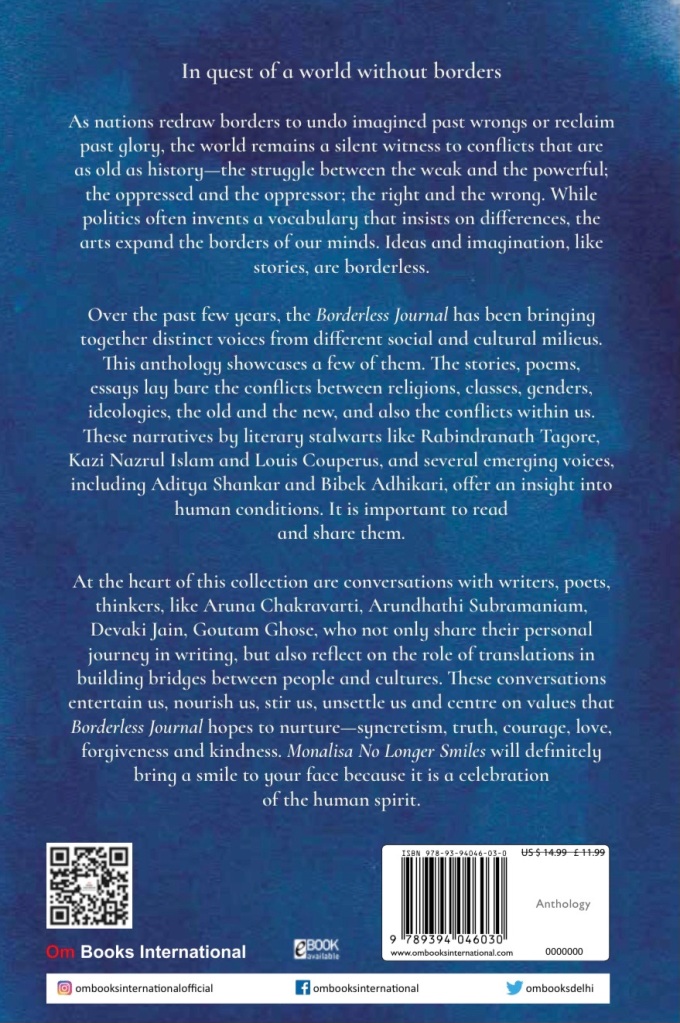
Please greet our first anthology, Monalisa No Longer Smiles, with love and friendship. It could be the perfect Christmas gift in the spirit of the season! And as the blurb says, “it will definitely bring a smile to your face because it is a celebration of the human spirit.”

The anthology is different from our journal in as much as it has a sample of an eclectic collection that has been honed with further editing and has some new features. Most of the writing is from our first year and showcases our ethos, except for Lesya’s poetry and interview. Lesya Bakun from Ukraine is still on the run, looking for a refuge — she cannot return home like you or I can. Her family is scattered across number of countries. Her cousin, who was guarding the factory at Azovstal, was taken prisoner. We included her story in the anthology hoping to create global empathy for refugees as the numbers will increase not only due to war but also due to climate change.

The reason we felt a hardcopy anthology was a good idea was because nothing beats the joy of having a bunch of interesting reads in the warmth of your hands (especially where internet cannot reach or is unavailable). In any case, books with the feel of paper, the rustling whispers which carry voices of leaves can never be replaced as Goutam Ghose had also said in his interview which is now part of our anthology.

And that is why we celebrate more books… this time we feature Singaporean prima donna of literature, Suchen Christine Lim, with her new book Dearest Intimate, a novel that spans more than hundred years including the harrowing Japanese invasion during World War II. She shared sound advice with writers: “Suffering is good for the writer. It will deepen lived experience and expand the heart’s empathy.” And perhaps that is what is echoed through the experiences of the other writer interviewed on our pages by Keith Lyons. This is a writer who not only brought out his own books but was a regular contributor of travel pieces for Frommer’s and National Geographic traveling to unexplored destinations — Christopher Winnan. Another writer Lyon had interviewed recently, Steve Carr, has passed on. We would like to convey our heartfelt condolences to his family and friends.

We have a number of books that have been reviewed. Reba Som reviewed Aruna Chakravarti’s Through the Looking Glass: Stories that span eras spread across time. Somdatta Mandal has reviewed Shehan Karunatilaka’s The Birth Lottery and Other Surprises and Bhaskar Parichha, Rahul Ramagundam’s The Life and Times of George Fernandes. Basudhara Roy has written of Afsar Mohammad’s Evening with a Sufi: Selected Poems, translated from Telugu by the poet and Shamala Gallagher, verses that again transcend borders and divides. We have an excerpt from the same book and another from Manoranjan Byapari’s How I Became a Writer: An Autobiography of a Dalit, translated from Bengali by Anurima Chanda.

More translations from Bengali, Balochi and Korean enrich our November edition. Fazal Baloch has translated a story by Haneef Shareef and Rituparna Mukherjee by Shankhadeep Bhattacharya. We have the translation of an inspirational Tagore poem helping us find courage (Shonkho Dhulaye Pore or ‘the conch lies in the dust’). Another such poem by Nazrul has been rendered in English from Bengali by Professor Fakrul Alam. He has also shared an autobiographical musing on how he started translating Tagore’s Gitabitan, which also happens to be his favourite book. More discussion on the literary persona of TS Eliot and the relevance of his hundred year old poem — ‘The Waste Land’ by Dan Meloche adds variety to our essay section.

Evoking the genius of another outstanding artiste, Kishore Kumar, who happened to pen thought provoking dialogues in some films, is Shantanu Ray Chaudhuri’s essay, review of a recent book on the legendary actor-singer and an interview with the authors. Infringing the boundaries of literary with popular culture and art and integrating all forms into a wholistic bundle has been part of our ethos. In that spirit we have a musing by Prithvijeet Sinha on Edvard Munch’s famous painting called Scream. We have non-fiction from Australia spanning Meredith Stephens’s recent brush with Covid, Mike Smith visits a Scottish beach in the footsteps of a novelist, Ravi Shankar has given us a poignant piece for a late friend and Candice Lousia Daquin talks of the existence of bi-racial biases. In contrast, Suzanne Kamata sent a narrative that bridges divides showcasing a German wife of a Japanese scientist that draws us to conclude that biases erode over time to create an acceptance of bi-racial people. Devraj Singh Kalsi brings in humour with his funny narrative about a guitarist. Rhys Hughes writes in a lighter vein on Indian cuisine in his column and spouts more funny poetry bordering on the absurd.

Jared Carter has shared beautiful poetry on murmuration in birds and we have touching verses from Asad Latif for a little girl he met on a train — reminiscent of Tagore’s poem Hide and Seek (Lukochuri). Michael R Burch has given us poems setting sombre but beautiful notes for the season. We host more poetry by Luis Cuauhtémoc Berriozábal, Quratulain Qureshi, Jim Bellamy, Gayatri Majumdar, Ryan Quinn Flanagan, Alpana, Jonathan Chan, Saranyan BV, George Freek and many more. We have stories from around the world: India, France and Bangladesh.

Gathering all of your thoughts in strings of words from all corners of the world, we present to you the bumper November issue of Borderless Journal . Thank you all for sharing your thoughts with us. Thanks to Sohana Manzoor for her fantastic painting and more thanks to the whole Borderless team for seeing this issue through. We would not have been able to do the anthology or these issues without each one of you — writers and readers.

Thank you all from the bottom of my heart.

There is always hope for a new tomorrow!

Mitali Chakravarty

borderlessjournal.com

Click here to access the Borderless anthology, Monalisa No Longer Smiles

Categories
Stories

A Letter I Can Never Post

By Monisha Raman

My most precious Gran,

I have a confession to make; I opened the suitcase you asked me not to. Well, it was a good two weeks after you were buried. While sorting a million things in your room with aunt and mom, I found it, a small, grey one stacked under the pile of boxes in the corner.

For as long as I remember, it had been there in the east corner of your wooden floored room and was out of bounds for adults and children alike. When I pulled it out, there were a few moments of silence in the room. I held the forbidden grey box and the three of us looked helplessly at each other, caught in between the right and wrong as Rumi would say.

When the burden of silence grew unendurable, we opened the suitcase. You may feel betrayed for the three women you trusted the most had the audacity to intrude your private space. 

That night, while in bed, my body turned heavy as I sunk deep into the darkness and chaos of guilt. I gasped for air and the mountain wind heavy with moisture, did little to help. I ran helter-skelter through the chasm of my memory. Your ringing laughter guided my way and your stories echoed like strange noises that reverberate while you walk into a deep cave. The familiar name you had often uttered resounded as I traversed the dark channels. When did I first hear it? I don’t remember.

I do remember some instances of you mentioning the name. It was a random conversation of good-looking men in our vicinity and you did say, a certain someone’s son. On one evening while we were discussing the achievements of men and women in our neighbourhood, you mentioned that name again — a man in your neighbourhood, a certain someone’s son. You told us he was your playmate.

One summer evening, when the winds of the hills touched our skins gently as they basked in the last traces of light from the setting sun, you mentioned that name again. You said that my friend, seated next to me, dressed in a white shirt and beige trousers, reminded you of that man. “Majestic demeanour,” you looked into my friend’s eyes and said, “Yet spirit as gentle as the wind outside.” You smiled as you held his hands. Then, as you uttered the familiar name for the last time in my presence, your eyes turned moist — “You remind me of a certain someone’s son.”

Still wriggling in bed, as images and voices from the past haunted me, I thought of your prized possession, the suitcase. Aunt and mom watched that evening as I flipped opened the case. My hands failed to steady themselves. The three of us gasped as your precious box lay bare, revealing what it had steadfastly concealed all these years — a bunch of safety pins, bundles of ribbon, a crocheted purse with a tie-up opening, some old coins that carry no value, a few pebbles, a bizarrely shaped quartz stone with what looked like columns and faces on it and another crocheted purse with tie-up strings concealed underneath all this.

The quartz that has paled from its years in hiding fit perfectly in my palms. Amid the chaos of sharp edges on it was a central pillar, standing tall.  There were odd figurines on either side.  I left it on the table facing the window.

Finally, aunt laid her hands on the last item– a crocheted purse in a medley of colours. The pouch had the hues of the rainbow, held together intricately with a string in white. Aunt gave it to me to untie the white knot atop the small bag. We all knew that if there was one person who would be forgiven for trespassing, that would be me.

As I put my hands into the pouch, a palm-sized photograph in black and white print emerged. I held it between my fingers. A man dressed formally in a suit and tie with curls spilling over his forehead looked straight into my eyes. He was seated on a stool. The years between us melted as I gazed at his big, bold eyes, which were probably coffee brown, just like yours.

In an instant, I was transported into the room where the photograph was being taken. I asked him about the young girl I did not know– the girl who saw certain magic in him and carried it concealed deep within her even when her octogenarian memory failed her at times. He spoke of your smile and your innocence.

He told me stories about the blue Kurinji that blooms once every twelve years in the mountains and the anticipatory excitement that lingered in the air when the buds appeared, and then gradually how the stretches of the mountains turned an enchanting blue as the flower bloomed — a vision that no combination of words can do justice to.  To him, the memory of appeasing blue was visceral and he elaborated how it pacified him during the dark moments when his strength had nothing to grasp.  The Kurinji may blossom and spread its vigour just once in a decade, but he saw its unfurled radiance all the time; behind his closed eyelids, and that was his elixir, a perpetual force his life depended on. He believed that the bewitching plant was your totem, and your spirit lived in it.

Behind the photograph was a name written in blue fountain pen, the name from my distant memory that you had mentioned on a few occasions and beneath it, ‘son of  ………………….’

As I left the room, a strange shadow reflected from the quartz stone on the table. A boy and a girl (with flowing hair) held each other’s hands from around the pillar. They could not see each other but both of them felt the other, all the time.

                                                                                                                       Love,

Your Doll

Kurinji blooms that flower in the Neelgiri hills of India. Courtesy: Creative Commons

Monisha Raman’s essays and short stories have been published by various magazines in Asia and internationally. Her first collection of short stories is being represented by Zuna Literary Agency, India. Her work can be found at https://linktr.ee/Monisharaman.

.

PLEASE NOTE: ARTICLES CAN ONLY BE REPRODUCED IN OTHER SITES WITH DUE ACKNOWLEDGEMENT TO BORDERLESS JOURNAL

Categories
Poetry

Lines Written at Nalanda

By Sourav Sengupta

LINES WRITTEN AT NALANDA 

The fanatics of every day and age
Are known to fear the inquisitive mind. 
One such was Bakhtiyar who came to wage
A campaign of a very savage kind.
Here, witnessed by these time-encrusted walls,
A thousand helpless monks he set ablaze; 
While o'er these hills a cloud of smoke so tall
Engulfed the skies that darkness reigned for days.
The knowledge of eight hundred years contained
In countless parchment scrolls, in flames was tossed;
And when the fires died all that remained
Was human ash and ash of wisdom lost.
     Today, a tale survives in these relics:
     Of mankind’s folly told in blackened bricks.

Sourav Sengupta is an architect by training and a human resource manager by profession. His poetry has been published in literary journals like Revue {R}évolution, Society of Classical Poets and Better Than Starbucks. He lives and works in Kolkata, India.

.

PLEASE NOTE: ARTICLES CAN ONLY BE REPRODUCED IN OTHER SITES WITH DUE ACKNOWLEDGEMENT TO BORDERLESS JOURNAL

Categories
Editorial

When Autumn Leaves Start to Fall…

                     “Where are the songs of Spring? Ay, where are they?
                      Think not of them, thou hast thy music too…”

                                 — John Keats (1795-1851), To Autumn
Art by Sybil Pretious

For long writers have associated autumn with “mellow wistfulness”. That loss of spring, or loss of youth is not bleak or regretful has been captured not just by Keats but also been borne out by historical facts. Anthropocene existence only get better as the human race evolves … If we view our world as moving towards an autumn, we perhaps, as Keats suggests, need to find the new “music” for it. A music that is ripe and matures with the passage of time to the point that it moves more towards perfection. Though sometimes lives fade away after autumn gives way to winter as did those of  Queen Elizabeth II (April 21st 1926 – September 8th 2022) after a reign of seventy historic years and Mikhail Gorbachev (2nd March 1931 – 30thAugust 2022) with his admirable efforts to bridge divides. Both of them have left footprints that could be eternalised if voices echo in harmony. Thoughts which create bonds never die – they live on in your hearts and mine.

Imagine… ten thousand years ago, were we better off? Recorded history shows that the first war had already been fought 13,000 years ago. And they have continued to rage – but, at least, unlike the indomitable Gauls in Asterix[1] comics – not all jumped into the fray. They did during the last World Wars — which also led to attempts towards institutionalising humanitarian concerns and non-alignment. Yes, we have not had a perfect world as yet but as we age, the earth matures and we will, hopefully, move towards better times as we evolve. Climate change had happened earlier too. At a point, Sahara was green. Continental shifts split Pangaea  into seven continents – that was even earlier. That might have driven the dinosaurs to extinction. But I am sure mankind will find a way out of the terror of climate change and wars over a period of time, as long as we believe in deciphering the sounds of autumn as did Keats in his poem.

Tagore had also sung of the joys of autumn which happens to be a time for festivities. Professor Fakrul Alam has translated three such songs, reflecting the  joie de vivre of the season, The translation of a small poem, Eshecche Sarat[2], brings the beauty of the season in Bengal to the fore. We have a celebration of youth and romance in a Balochi folksong, an anti-thesis to autumn and aging, translated for us by Fazal Baloch and also, poetic prose in quest of God and justice by Haneef Sharif, translated from Balochi by Mashreen Hameed. Lost romance recapitulated makes interesting poetry is borne out by Ihlwha Choi’s translation of his own poem from Korean. But the topping in our translation section is a story called ‘Nagmati[3]’ by eminent Bengali writer, Prafulla Roy, translated by no less than a Sahitya Akademi winning translator – Aruna Chakravarti. This story illustrates how terrifying youthful follies can lead to the end of many young lives, a powerful narrative about the snake worshipping community of Bedeynis that highlights destruction due to youthful lusts and an inability to accept diverse cultures.  

When this cultural acceptance becomes a part of our being, it creates bonds which transcend manmade borders as did the films of Satyajit Ray. His mingling was so effective that his work made it to the zenith of an international cinematic scenario so much so that Audrey Hepburn, while receiving the Oscar on his behalf, said: “Dear Satyajit Ray. I am proud and privileged to have been allowed to represent our industry in paying tribute to you as an artist and as a man. For everything you represent I send you my gratitude and love.”

This and more has been revealed to us in a book, Satyajit Ray: The Man Who Knew Too Much, authored by a protagonist from Ray’s film, Barun Chanda. This book brought out by Om Books International reflects not just Ray as a person but also how he knitted the world together with his films and took the Indian film industry to an international level. Barun Chanda has been interviewed with a focus on Satyajit Ray. Keith Lyons has also interviewed a man who has defied all norms and, in the autumn of his life, continues his journey while weaving together cultures across, China, India and Thailand by his ethnographic studies on tribes, Jim Goodman. Goodman says he left America when speaking for a war-free world became a cause for censorship. This makes one wonder if war is a game played for supporting a small minority of people who rule the roost?  Or are these ramblings of a Coleridge writing ‘Kubla Khan’ under the influence of narcotics?

Poetry also brings the season into our pages with an autumnal interpretation of life from Michael Burch. More poetry from Sunil Sharma, Ryan Quinn Flanagan, Gayatri Majumdar, George Freek, Ron Pickett, Sutputra Radheye, Marianne Tefft brings a wide range of concerns to our pages – from climate to the vagaries of human nature. Poetry by an Albanian writer, Irma Kurti, and photographs by her Italian spouse, Biagio Fortini, blend together the colours of humanity. Rhys Hughes as usual, makes it to the realm of absurd – perhaps voicing much in his poetry, especially about the environment and human nature, though he talks of woodpeckers on Noah’s ark (were there any?) and of cows, yetis, monkeys and cakes… He has also given us a hilarious cat narrative for his column. Can that be called magic realism too? Or are the edges too abstract?

A book excerpt from Hughes’ Comfy Rascals Short Fiction and a review of it by Rakhi Dalal makes us wonder with the reviewer if he is a fan of Kafka or Baudelaire and is his creation a tongue-in-cheek comment on conventions? A book review by Hema Ravi of Mrutyunjay Sarangi’s A Train to Kolkata and Other Stories and another by Bhaskar Parichha of Netaji Subhash Chandra Bose’s Life, Struggle and Politics, authored by Netaji’s nephew’s wife, Krishna Bose, translated and edited by her son, Sumantra Bose, unveils the narratives around his life and death.

A leader who quested for freedom and roamed the world after being passed over by the Congress in favour of Nehru, Netaji raised an army of women who were trained in Singapore – not a small feat in the first half of the twentieth century anywhere in the world. His death in an air crash remained an unsolved mystery — another one of those controversies which raged through the century like the Bhawal case. In his review, Parichha spells out: “Aiming to bring an end to the controversies and conspiracy theories surrounding the freedom fighter, the over 300-page book gives a detailed and evidence-based account of his death in one of its chapters.”

Our book excerpts in this edition both feature writers of humour with the other being the inimitable Ruskin Bond. We have an excerpt of Bond’s nostalgia from Between Heaven and Earth: Writings on the Indian Hillsedited by Ruskin Bond and Bulbul Sharma.

Our non-fiction also hosts humour from Devraj Singh Kalsi about his interactions with birds and, on the other hand, a very poignant poetic-prose by Mike Smith reflecting on the vagaries of autumn. From Japan, Suzanne Kamata takes us to the Rabbit Island – and murmurings of war and weapons. We have the strangest story about a set of people who are happy to be ruled by foreign settlers – we would term them colonials – from Meredith Stephens. G Venkatesh delights with a story of love and discovery in Korea, where he had gone in pre-pandemic times. Paul Mirabile travels to Turkey to rediscover a writer, Sait Faik Abasiyanik (1906-1954). And Ravi Shankar gives us an emotional story about his trek in the Himalayas in Nepal with a friend who has passed on. Candice Louisa Daquin has written of the possibilities towards integrating those who are seen as minorities and marginalised into the mainstream.

The edition this time is like Autumn – multi-coloured. Though I am not able to do justice to all our contributors by mentioning them here, my heartfelt thanks to each as every piece only enriches our journal. I urge you to take a look at the September edition.

I would like to give huge thanks to our readers and our team too, especially Sohana Manzoor and Sybil Pretious for their artwork. We could not have come this far without support from all of you.

Thank you.

Happy Reading!

Mitali Chakravarty

borderlessjournal.com


[1] The men in the indomitable Gaulish village (which the Romans failed to conquer) in times of Julius Caesar loved to jump into a fight for no reason…Asterix was the protagonist of the comics along with his fat friend Obelix

[2] Arrival of Autumn

[3] Snake Maiden

Categories
Poets, Poetry & Rhys Hughes

The Chopsy Moggy*

Courtesy: Creative Commons

I sat down to write a new story and as I did so, I thought aloud: “I want it to be about a talking cat,” and much to my surprise my own cat, who happened to be crouching on my desk, shook her head.

Then she said, “I don’t think that’s a good idea.”

“Why not?” I wanted to know.

“It’s corny and a cliché. It has been done too many times before. It’s twee and awfully sentimental. Childish too.”

“I feel rather discouraged now,” I admitted.

“Oh, don’t take it so badly. You can write my story, if you like. Just don’t say I’m a talking cat when you do.”

“And what is your story? I knew you when you were a kitten. You haven’t done much since then, to be honest.”

“You are wrong. My life has been dramatic.”

“I don’t call sleeping most of the day and sitting in boxes very exciting. In fact, your ability to talk is by far the most interesting thing about you. If I can’t mention that, why should I bother?”

“You don’t know what I get up to at night. But I will tell you. Pick up your pen and get ready to make notes.”

I did as I was bid and my cat began…

You are generally fast asleep (she said) when I go off on my adventures. There’s a rug in the lounge that is a magic carpet. You don’t know this because you have never tried to activate it. Scratching it in a certain way, pulling out threads here and there, makes it fly. I discovered all this by accident, of course. It was a night last spring and you had left the window open for a cool breeze. The rug rose in the air and carried me out into the garden.

Then it climbed higher and higher and soon the town was tiny beneath me. I didn’t know how to control the thing and I padded it with my paws in various places. Eventually I learned how to steer it by moving my weight from one side to the other. I used my tail as a rudder to make steering even more precise. And when I wanted to go faster, I just opened my mouth wide and mewled. I flew off and enjoyed exploring distant countries.

Where did you get the rug from? Magic carpets are far more common than people think. You assumed it was just an ordinary floor covering when you went into a shop to buy it. The threads woven into it might originally have come from India or Persia. I wondered how fast it could fly and so I decided to find out. I mewled and mewled as loud as I could and the rug accelerated until the ground beneath me became a blur. That was fun!

The wind stroked my fur and it was a pleasant sensation but it occurred to me that I might crash into a mountain if I couldn’t see where I was going. I shut my mouth and immediately started to slow down. It was night and the stars were big and bright above me and then I saw stars below me too, and I was baffled by this, because the lower stars seemed cleaner, as if they had been washed. Maybe some giant cosmic cat had licked them?

It took me a long time to understand that the lower stars were reflections in the sea and not real stars at all. I was over an ocean. I can’t say I was pleased by this, because water has always seemed a suspicious substance to me, something not to be trusted, avoided even, though I concede that it’s often necessary to life, which is why I sometimes stoop to drinking it. But all this is irrelevant. No land was in sight in any direction. I had flown halfway round the world and was now cruising above the Pacific. How risky!

My calculations were instinctive rather than mathematical, but cats have an aptitude for sensing where they are and as a navigator I’m reliable, but my exact latitude and longitude was impossible to specify. I was still travelling forward at a reduced velocity and I noticed other objects flying to my left and right, smaller than aeroplanes and soundless, and after a while it became clear they were much nearer to me than before, converging at an unseen point ahead, some destination beyond the horizon, and I was intrigued.

Soon enough, I was able to discern the details of these mysterious craft and I saw they were rugs of many different colours, magic carpets just like mine, an armada of levitating floor coverings, a flotilla if you prefer, all piloted by sundry animals: dogs, rabbits, snakes, squirrels, wombats. And the rug on my starboard side was so close that its occupant, a monkey of some kind, was able to shout at me and be understood. He yelled:

“You are the cat representative, I take it?”

“I don’t know,” I said.

“You must be. You are a cat sitting on a magic carpet and you are flying to the assigned rendezvous. Therefore–”

“But what is waiting at that rendezvous?”

“An urgent meeting.”

“But a meeting with whom?”

“With us!” he cried, astonished at my ignorance. “One talking animal from every species on the planet.”

“The point of this meeting is what?”

“The conferring of special powers on attendees, as promised in the oracles of ancient days. Surely you haven’t forgotten the words of the oracles? They are unambiguous about this event.”

He continued to talk, despite the shaking of my head. He said, “We talk but that’s the only way we exceed our limitations. After the meeting we will be able to do everything that humans can.”

“Already we may do more than men.”

“True, but we can also do less. It depends on the task, and they are superior when it comes to power. After the meeting, this imbalance will change. We will be better than them in every way.”

“I never received an invitation,” I protested.

“Yes, you did, or you wouldn’t be here now, on a magic carpet, heading in the right direction. Do you expect me to believe that you are here by accident, a rogue feline who flies to the island thanks to coincidence alone? Do you wish to imply that the genuine cat representative is elsewhere, perhaps having overslept in a basket, as your kind often do?”

“I can’t say,” I said.

“The oracles have given us the sacred date. The day that humans call May Day and shortly those tyrants will be calling ‘mayday’ when we dislodge them from their undeserved thrones.”

“May Day,” I repeated, still puzzled.

“Yes,” he said, pleased.

“I never know the names of days.”

“The island is not far now. Soon it will be visible. I know your ignorance is a pretence. Now let us focus on flying. We are converging from every direction and the sky will be thick with magic carpets. Accidents will happen if we aren’t very careful with our steering.”

I nodded, for I knew not what else to do.

And then I saw it.

A mountain rising out of the sea.

It was an enormous peak, shaped like a pyramid, with smooth sides and a truncated summit, so that instead of a sharp apex it had a flat space at the top, an area the size of a square dinner table. But that flat space was utterly black and I realised it wasn’t solid. It was an entrance into the hollow mountain. This was a place where animals could meet secretly in considerable safety. The only danger was the chance of midair collisions as all the magic carpets tried to dive down into that small opening. I grew nervous.

I decided to drop behind a little, to give the others a chance to enter before me and clear the airways for my own approach and descent. I still wasn’t sure I was supposed to be going to the meeting or not. Maybe I had been invited ages ago and had forgotten. It was possible. I thought that if I went I would find out for sure, and I doubted I would be deeply in trouble if it turned out I wasn’t the official delegate. I applied the air brake.

In other words, I raised my tail and increased the drag coefficient. Soon my speed was only half of the other flying carpets and they flew ahead. One by one they reached the mountain and zoomed through the narrow entrance and to my astonishment there were no accidents. The sky cleared and at last it was my turn and I felt more confident about a safe landing. The mountain was just ahead of me now and so I began a smooth descent.

But I am a cat and my essential feline nature took over. How could I settle down to rest on an island without circling it first? I was filled with an irresistible urge to fly around that island a few times before dipping into the opening on the top of the mountain. And that’s what I did. Clockwise around the island flew my rug as I gracefully steered it. I circled the mountain four and a half times and the number seemed right to me. Then I dropped into the hole and landed on a basalt platform far below in a very dim light.

I thought that the interior of the mountain would be crowded with the other animals that had preceded me, but it was empty. No creatures and no carpets. At first I supposed they had gone off into an adjacent chamber for their meeting but it soon became obvious that the chamber I was in was the only room down here. Just this immense space inside a hollow mountain and nothing else. It was the greatest mystery I had encountered in my life. The animals had vanished! What could be the reason for this? And how?

I pondered the matter for a long time, an hour or more, and then the answer occurred to me. The island was located in the Pacific and so is the International Date Line. I surmised that the line itself passed right through the middle of this peculiar mountain. I circled the island four and a half times, which means that I entered the hollow mass of rock from the opposite side to the one from which I had approached it. In other words, I had crossed the Date Lane and was one day early for the meeting. Instead of it being May Day it was the day before. What a curious situation to be in! So I waited.

I sat patiently on my rug for an entire day and when midnight passed and it was tomorrow again, I was ready to receive the other animals, who were due to arrive on May Day. But none of them showed up. Then I examined what I knew about geography and I realised my terrible mistake. I had crossed the Date Line in a westerly direction, ending up in the eastern hemisphere, which meant that I had arrived a day late rather than a day early. May Day had been and gone. The meeting was over and I had missed it.

This made me feel despondent and I scratched my rug to cause it to ascend through the hole and hover above the mountain. I now saw I wasn’t the only one to have made a mistake. The dog delegate was still circling the island, having an even stronger desire to go round and round before settling down than I did. We called out to each other and I told him the meeting was over. At first he doubted my words and thought I was just a cat trying to trick him, as cats often do, but I eventually convinced him of the facts.

With his tail between his legs, he zoomed away, howling forlornly, his ears flapping in the breeze as he accelerated. I also turned my carpet in the direction of home. I wondered if the real cat delegate had turned up or not. I asked myself if all other species of animal would now have special powers with the exception of cats and dogs. It was sobering. Dogs would definitely miss out, but cats still had a chance. It depended, as I have said, on the official cat guest. Even to this day I don’t know if he or she successfully attended the meeting. I don’t feel an increase in my powers, but who knows?

I returned home and glided in through the open window while you were in the garage tinkering with something or other. You came into the house and were delighted to see me. I had been missing for a full day and more and you thought I might have become lost or stuck up a tree. You hadn’t noticed that the rug was gone too. You aren’t very observant really. But that works to my advantage, so I don’t mind. You made a fuss of me and that was the right thing for you to do. It is my longest journey on the magic carpet to date, but I might go even further in the future. It all depends on how I feel.

“And that’s your story?” I cried.

“Yes,” said my cat.

“And you want me to write it down?”

“You can, if you like.”

“But without mentioning the fact you can talk?”

She nodded. “Indeed.”

I was exasperated and shouted, “How can I leave out that detail? The entire point of your story hinges on the fact you can talk. It is about speaking animals. If I’m not allowed to mention your vocal abilities, I might as well not bother to write the story at all. You have set me an impossible task. To omit the one thing that makes the tale worth telling!”

She shrugged. “You are the human, not I.”

“What do you mean?”

“Humans are the ones who think they are so clever and capable. They give the impression that they can achieve anything, that we are just dumb beasts and they are the supreme intellectuals.”

I was unable to find an appropriate reply.

She continued, “So if you can’t think of a way to square the circle and tell my story without telling it, that’s not my concern. But I strongly advise you not to tell any other story about a talking cat, because it’s a theme that is worn out. It should be my story or nothing.”

She curled up and purred and closed her eyes.

My desk was no longer a desk.

I laid down my pen.

Courtesy: Creative Commons

*British slang for “The Talkative Cat”

Rhys Hughes has lived in many countries. He graduated as an engineer but currently works as a tutor of mathematics. Since his first book was published in 1995 he has had fifty other books published and his work has been translated into ten languages.

.

PLEASE NOTE: ARTICLES CAN ONLY BE REPRODUCED IN OTHER SITES WITH DUE ACKNOWLEDGEMENT TO BORDERLESS JOURNAL
Categories
Poetry

The Invisible Man

By Sutputra Radheye

Courtesy: Creative Commons
THE MAN

he stands like shield as the bullets hit
his body, he jumps inside the house
to save the children stuck in the fire
he climbs the pole to fix the wires
for the bulbs to glow at night
he cleans the drains for the cities
to prevent flooding, he carries the bricks
and builds the house, he farms the land
and commits suicide when he can’t repay
the loan, he drives your motors around
the world, he who is not a millionaire
or a minister, he who struggles everyday
to feed his family, to provide
he is the man no one talks about.


16 AUGUST, 2022

on the request of the government
indians bought flags 
to celebrate seventy-five years
of independence

they put it on their gates
bikes, cars, buses and trucks
some wore tricolour pagris*
while some badges

the next day was different
as those flags were being dumped
on the streets, on the banks
and beaches, polluting the india
they worshiped a day before

*Turbans in Hindi

Sutputra Radheye is a young poet from India. He has published two poetry collections — Worshipping Bodies(Notion Press) and Inqalaab on the Walls (Delhi Poetry Slam)His works are reflective of the society he lives in and tries to capture the marginalised side of the story.

.

PLEASE NOTE: ARTICLES CAN ONLY BE REPRODUCED IN OTHER SITES WITH DUE ACKNOWLEDGEMENT TO BORDERLESS JOURNAL.