Lyrics by Tagore, translation from Bengali by Ratnottama Sengupta
‘Bhumika or Introduction’ is the first song of Tagore’s collection called Mahua, published in 1929.
The lyrics written in Bengali by Tagore
Ask me not, which song
I have gifted to whom, when...
It's lying on the wayside
For the one who can
Own it with love.

Have you heard my words?
Have you pressed them to your heart?
I know not your name…
I offer you these
Musings of mine.
Painting by Tagore
Rabindranath Tagore (1861-1941) was a brilliant poet, writer, musician, artist, educator – a polymath. He was the first Nobel Laureate from Asia. His writing spanned across genres, across global issues and across the world. His works remains relevant to this day.
Ratnottama Sengupta, formerly Arts Editor of The Times of India, teaches mass communication and film appreciation, curates film festivals and art exhibitions, and translates and write books. She has been a member of CBFC (Certified Board of Film Certification), served on the National Film Awards jury and has herself won a National Award.
.
PLEASE NOTE: ARTICLES CAN ONLY BE REPRODUCED IN OTHER SITES WITH DUE ACKNOWLEDGEMENT TO BORDERLESS JOURNAL
Ratnottama Sengupta in conversation about Kitareba, a contemporary dance performance on immigrants, with Sudarshan Chakravorty, a choreographer, and founder of the Sapphire Dance Company.
Photo provided by Ratnottama Sengupta
“Ankita! Rohan! Dipak! Mamta! Manish!”
A stentorian voice was calling out the names, just as they do during roll calls in jails. And in answer to every name a hand went up in the air — on stage, or in the auditorium. This was from a cast of dancers who had lived the lives of immigrants. “And me?” suddenly Sudarshan Chakravorty broke out in an anguished cry, “What about me? I am nobody!”
That’s when the tragedy of these uprooted souls hits you. And you ask yourself, “What is their identity? Before August 1947 they were Indians. Before March 1971 they were Pakistanis. Today they are Bangladeshis. Likewise so many passports and so many borders have changed. So many have left Punjab or gone from Kerala, so many have left Spain or sailed from Syria, so many trudged from Mexico or flown from China…”
But is the number of immigrants rising? And in the age of internet, what is eroding our identity? I decided to discuss the issue with Sudarshan Chakravorty as I walked out, deep in thought, after a performance of Kitareba by the contemporary dance group, Sapphire Creations Dance Company.
Ratnottama Sengupta (RS):Why did you think of doing Kitareba, a contemporary dance production on immigrants? Are you inspired by a movie? Or any news item? Or perhaps some incident in your own life? Or did all all three combine to spur you on?
Sudarshan Chakravorty (SC): Various personal events and conversations in recent years have triggered me to use the word ‘kitareba’, a Sylheti greeting. My father could speak no language other than Sylheti — and he would unapologetically speak the tongue with one and all, even those who couldn’t understand. I saw a pride in my father about his language, his culture and Sylheti roots.
I was at times embarrassed when, in local grocery stores, he would ask for a brand like ‘Maagi’ – which loosely translated means wench. Or ‘Keo Karpin’ – the hair oil in complete Sylheti accent. But gradually I realised that it was part of his being. My cousins in Shillong would always complain of how tiresome it was when they had to speak with me only in ‘Calcuttian’ — read, pure deshaj Bangla. For them, it was a ‘foreign’ tongue. That was the seed of thoughts about shared language, culture, ritual and more. I wondered how the districts of Meghalaya and Assam, particularly Cachar, speak the same language, sport the same lifestyle, eat the same food, practice the same rituals, and have the same attitude. I became aware of this ‘oneness’ much later, in 2018, when I got to make a road trip to Sylhet via Guwahati, Shillong and Dawki. Migrants had perhaps trudged the same route in 1947 and then in 1971! Speaking this language that was a binding factor regardless of the differences in their religion or caste.
I was born in Shillong and had innumerable relatives there. And if I heard their dialect, even if I was standing in the Circuit House in the middle of Sylhet, I felt a strong kinship that made me emotional. This is what prompted me to ask, what is it that makes a new set of people — or a place — so familiar or ‘known’.
This production stems from my core interest to share this story which I carry in my DNA. I am not directly impacted by the Partition or any war, but the stories shared by my parents have influenced me – as have the movies I have seen over the years. These include films from both sides of the border – Ashani Sanket, (Children of War) , Ora Egarojon (Those Eleven People, Bangladesh) – as well as Schindlers List. I have also stored up conversations and anecdotes overheard in crowded bus or public spaces, both in India and abroad. There, when you are alone and isolated, the unexpected murmur of a known language comforts you. A sudden hug by a stranger saying ‘kitareba’ changes everything and transforms that space into ‘home’.
The Nazi atrocities as seen in films built around the holocaust acquired more vivid contours when I visited Poland and the Silesian museum to see for myself how the galleries use photos and installations to depict the concentration camps in Poland. It firmed my determination to recount my story since it is no longer about me or my country alone. Now it is a global narrative.
.
RS:What are the other productions of Sapphire Creations that focus on social issues? What were the issues – Environment? Gender equality? Gender fluidity? Apartheid? Any other?
SC: It has always been important for Sapphire Creations, which turns 32 this year, to use messaging as the spine of our dance. This form of creative expression, I strongly believe, can be a potent vehicle of raising social consciousness. So we have designed several productions on taboo subjects. This has defined our position, not only as a Dance Company – we as dancers too have come to understand the true power of the arts.
Sample these. The Alien Flower (1996) explored the theme of same sex love nearly 20 years before India decriminalised homosexuality. Indian Erotica : Vedas To Millennium (2000) spoke about changing the power equation that existed between men and women, from the Vedic period to the times of AIDS. Positive Lives (2004) built on people living with HIV. Ekonama (2016) contextualised global warming and climate change using Purulia Chhau dancers. Ekaharya (Losing Oneself, 2018) explored gender fluidity using the technique in classical dance where the same body, without changing anything, portrays different characters and even changing gender. Now we bring you Kitareba about the loss of identity of uprooted lives.
RS: How developed is Indian contemporary dance to deal with such serious content?
SC: Indian dance in particular builds on gender fluidity and role reversal adapting mythical stories of Gods. These stories are part of our traditional texts, used even by established gurus. However, eyebrows are raised by puritans when we apply the same inferences to daily life and talk about the real life of common people.
In 1996, I was cornered by my city’s dance fraternity after a production on same gender love. I was accused of importing Western influences into our cultural scene. It made me retaliate with Indian Erotica — sexuality discourses in Indian history, literature, architecture, and religion through my lens.
Times have changed, yes, but it is still taboo to depict many topics openly. Fortunately media and audience supported us immensely, for they understood that only such discourses can make the arts truly ‘educational’ and it need not remain mere ‘entertainment’. That, indeed, was the basic premise of the arts in India, as defined by the Natyashastra.
And now discourses on health, sex, and gender are becoming compulsory and applicable in schools and universities too, for the physical and mental wellbeing of the students.
I realise that we take lot of time to realise the immensity of any reality. In the process we lose lives! It was only when HIV became a reality in Delhi’s Tihar Jail — where only men were kept — that the authorities woke up to the reality of homosexuality and started distributing condoms!
For me it is important to voice my opinion through actual performances and not just discuss the issues in conferences and seminars. So I continue to do this through Sapphire, despite resistances!
RS:Form or content – what is more important in Contemporary Dance? And what is your foremost concern?
SC: I have been doing Contemporary Dance since 1990. Our generation was self-made. We were desperate to find a voice, our own personal vocabulary. In 1992-93, I started describing my form as ‘Electric Dance’ as I didn’t find a suitable nomenclature to define my form: the existing ones defined the traditional dances while the Western Modern or Contemporary was not what I was deriving from. I was inspired by people like Manjushree Chaki Sarkar (1934-1999), Narendra Sharma (1924-2008) and Astad Deboo (1947-2020), to imbibe a lexicon that is rooted in my DNA and craft my identity as an Indian dancer.
There was no internet then, so all our influences emanated from the immediate experiences of watching these Gurus – in their studios, homes, or on stage. These resonated with my urge to take Sapphire down a path that was not a derivation but my own destination.
Although we opened several windows of the West, through collaborations, to update our radar. But more than the form, these collaborations stressed a deep understanding of what is in our roots. For only our sensibilities and identities will give a ‘face‘ to Indian contemporary dance without stamping it a homogenous global form!
So, in my view, content and form must be equally balanced. One must not confuse them as two are independent identities. Sometimes the challenge is to find ‘newness’ in form to convey an ‘old’ content. At other times one must find a ‘form’ that is accessible for all to understand a new content.
It remains a challenge for me after all these years…
RS:Tell me about your journey in dance. What led you to dance – which was even in 1980s considered a feminine art expression?
SC: My father was an engineer working in Nagaland of the 70s. He was posted in Kohima, Mokukchung, Tuensang, Dimpaur… During the Durga Pujas my mother would gather the neighbourhood children and put up a dance programme. I would quietly watch the rehearsals as a four-year-old but one day, I cried in desperation because I wanted to be on the stage. This was during a Durga puja in Tuensang — I got up on the stage and never came down!
I was quite a ’star’ kid as the only male dancer performing in schools and colleges. My tryst as a director too started in grade 3, at the age of nine. Visiting my father during the annual summer vacation, I made all my friends, children of our neighbours and of father’s staff, to toil for a month and put up a variety show in our quarters. This community show built up my confidence as director, a team leader. And we put up dance, skits, Boney M. songs. That seeded my desire to lead my own dance team one day.
In Kolkata, Ma would always take my sister for dance and music lessons, never me. But I ended up getting major roles in the para[1] programmes as I accompanied my sister for drop and pick up and never shied from demonstrating my skill – to the utter surprise of the organisers. So my sister remained a ‘sakhi[2]’ dancing at the back while her male brother assumed the lead role and became a ‘star’ attraction in the shows.
Soon I started getting offers to perform for clubs, and local newspapers carried my interviews. Meanwhile I was noticed by my dance teacher, Bandana Dasgupta in school — Julien Day in Ganganagar. Later Principal Sheila Broughton encouraged me to pursue dance. Ms Dasgupta started teaching me Bharatanatyam which remains in my muscle memory, making it an ardently core pedagogy of my own style in Sapphire productions.
After university, I started to take lessons in Kathakali from Govindan Kutty. This, most notably, influenced my dance vocabulary. But I was always restless to find new combinations and to see how I can change it a little and personalise it.
I showed the same zest in my studies as I combined material/content to make my ‘answers’ completely different from others!
This attempt to be ‘me’ and not blend with others made me the centre of attention. On the other hand my not so deep voice, my femininity, was drawing flak. But I countered them all…
During a sports day in school there were separate lines for boys and girls. It was naturally assumed that all the boys will play sports. I was left with no option but to join the girls since I was in the cultural/dance group. The sport teachers repeatedly cautioned me that I was in the wrong line. I smiled and said, “No sir, I am in the correct line…”
And I chose to stay in that line forever!
RS: Did you learn from a traditional guru? Who? What is the merit of being rooted in a classical dance form/ tradition?
I started Sapphire with my own understanding of cultural dances and the Tagore dance dramas. Then I wanted to break barriers. I deviated from tradition to find my personal path away from the influences of my ‘old’ learning. I told my students, too, to erase what they have learnt before in order to find their own language.
However now, in my early 50s, I realise that I was saved from the deadly impact of ‘globalisation’ which makes everything the ‘same’, because culture code cannot be same everywhere. And it is this uniqueness that makes your craft, your skill, your form — your own and contextual.
The dancers and choreographers who emerged in the 70s, 80s and 90s came from tradition. I was the only one amongst them who found my own way. Not just in my senses or intellect, physically too, I could keep my dance grounded. It helped me to recognise what I have received as body aesthetics in mandala, tribhanga and charis.
My exposure to various dance forms — from Uday Shankar style to traditional forms including poetries and songs of Bankimchandra, Rabindranath Tagore and Kazi Nazrul — gave me the lens to look at my ‘modernity’ and the ‘global’ perspective of my art without being bereft of my roots. Without disowning the cultural context of being a dancer from Bengal, from India.
That, now more than ever before, I hold like a litmus! So today, the growing trend in the independent dance scenario to ape the West — that is completely uprooted from its soil — makes me nervous. I feel they can’t sustain this journey without knowing from where it all began. Most are not aware of the roots. And we need to help them look at those pages.
RS:So why had you felt the need to break away from tradition – the trodden on Indian forms — and go international?
SC: I think it had started with the feel of isolation.
In mid-90s, when we did Alien Flower and dancers and critics started saying we are an aberration, we wanted to counter that. We brought in dancers, choreographers and dance companies to find solidarity. We started INTERFACE, Eastern India’s First International Dance Biennial, in 2002 to share the work of fellow contemporary dancers in India and abroad. We shared the context with the audience and critics who loved my dance. And they started to accept our point of view. We built upon the gains with INCRES – International Choreographers Residency.
INTERFACE and INCRES were started to cue not just us but also the media and audience about the changing trends of contemporary dance worldwide. This found a community which, I am proud to say, we have sustained to date.
RS:Tell me how these collaborations with dancers, choreographers and musicians — from Israel, Poland, Malaysia, Croatia — have enriched you? And have they helped Indian Contemporary Dance?
The most important achievement of Sapphire was to keep these collaborations and relationships alive over 20 years. Many choreographers came as strangers but became friends for life!
It all started when our leading dancers and a couple of ‘new’ Contemporary dancers started to find faults in our technique and process of fusing improvisation as a tool. The first regiment of International choreographers who came for INCRES in 2006, patted us saying they had not seen such freedom in other dance companies in India. There, everything was driven by technique, in order to forge a homogeneous ‘global dance’ form. Some of these choreographers like Michel Casanovas from France, Christopher Lechner from Germany came back again and again. Marc Rossier from Switzerland collaborated with us in our production Parivahitam (2010) with live music that travelled to eleven cities in India. Such collaborations immensely impacted us, artistically, emotionally and spiritually. Their humility and surrender was difficult to find in Indian collaborators. Selcuk Goldere, a Turkish choreographer from Ankara, helped with us mount Ekonama.
Recently we celebrated 20 years of our association with Jacek Luminski. With this Polish choreographer, we have mounted several projects like Roots Of Dance. And this year we have co-produced What I Have Not Seen Before for the Kolkata Literary Meet 2024.
We also have a strong connection with Joseph Gonzales from Ask Dance Company of Malaysia. Ever since we met during our first ever international tour in 1999, we have remained associates!
These associations have forced us to view contemporary dance through several lens. We have examined threadbare the context of practicing contemporary dance. Most of them encouraged us to build upon our roots. They showed this by using theirs. For instance, Jacek uses Polish folk dances as his take off point while Ask Dance Company integrates traditions in their lexicon.
But none of them believe in a ‘copy-paste’ approach. They sniff the core aesthetics of tradition and use that to enliven their dance idiom.
It can be inter cultural, or inter interdisciplinary. It might use songs, like we have in Kitareba, and musical instrument. These impart a viewpoint to me and my dancers and broaden our perspective.
RS:Who would you identify as the progenitor of Contemporary Dance in India? Has Uday Shankar been given his due as the father of this distinct dance style?
SC: Many a leader has carved out a new path and given new direction to Contemporary dance in India. In 2020, we could have celebrated 100 years of contemporary dance In India. This might sound childish when compared to our traditional dance streams which have a 3000 year old history! However, this is a reason why contemporary dance was not taken seriously. Both, the form and its practitioners were a ‘minority’, and they were side-lined by the mainstream dance fraternity. This included critics, festival organisers, policy makers as well as Government cultural agencies.
The problem started with the very nomenclature and it continues till date.
So if Uday Shankar was the Father of Indian Modern dance, it was practitioners like Astad Deboo, Daksha Seth, Jaychandran, Navtej Johar and Padmini Chettur who gave post-colonial meanders to the stream. It was only in 1990s, when the cultural wing of German Embassy in India started the East West Encounter as a conference, that a discourse was set in motion to define the intersections and destination of contemporary or experimental dance form as an ‘offshoot’ or an ‘independent’ form.
It is also to be seen that, since most contemporary dance practitioners originally came from tradition, they had a ‘hangover’. They were reluctant to come out of its clout and demand acknowledgement for their own form. That weakened our journey for many decades. So Uday Shankar was lost at a Pan India level where the very basis of his hybridity was questioned by puritans. The irony of it is that here, now, contemporary dance discourse is all about being intercultural, mixed media and interdisciplinary!
The confusion remained and expanded. We find it difficult to decide ‘What is the contemporary dance practice?’ Be it in terms of form or idiom, philosophy or vision, now everything is ‘contemporary’. And it is ‘fashionable’ to practice across India.
RS:Does Sangeet Natak Akademi (SNA) — the national body for performing arts in India — recognise it? Did you have to struggle to get grants from the Ministry of Culture? Is your art being taught in any Indian university?
SC: SNA started recognising it as ballet, and from 2000 as experimental dance. It was apportioned slots in Young Dancers Festival and Nritya Sanrachna, where Sapphire performed several times.
As far as I know, to date, no university in India offers contemporary dance in its course. Worse: it does not figure even in ‘gradation’ for television or for government scholarships and fellowships. This further disqualifies the form, making it difficult for the young generations to keep faith and pursue it at an academic level.
RS:You have choreographed dance for Bollywood movies as well as for Bengali films. Are choreographers being given as much recognition as a traditional dance guru? Or, are Bollywood choreographers given greater recognition than a dancer?
A difficult question!
On one hand, if a serious dancer is associated with films, he loses all his ‘points’. He may draw flak for diluting his form, for commercial gains. Funny, isn’t it, this accusation? We enjoy little patronage and less support. So where will these practitioners go? And if they find acceptance in the small window of such work, that shows their vitality, adaptability and skill set. Shouldn’t this be lauded?
Contrast this with the life of legendary Gurus like Birju Maharaj — they found both money and fame in choreographing for films!
The irony of it is that songs and dances abound in Indian movies, in every region. More so in Bollywood, which is now an internationally recognised nomenclature. But not a single academy or university teaches film-choreography. So we are all self-taught and that makes it all the more difficult.
Bollywood dancers and choreographers have an edge since they have had four to five generations of film choreographers. Many have worked under them as assistants and that has enhanced their skill set to handle film choreography. This has made them a more desirable choice than us, self-taught choreographers.
RS:Why do Indian films (read, Bollywood) — which thrive on ‘Bollywood dance’ — today have no dancing star of the stature of Vyjayantimala, Waheeda Rehman or Kamal Haasan? This, even though we now have reality shows on TV channels; we have films like Yeh Ballet[3], and documentaries on the dancers who featured in that film. We have documentaries on choreographers like Saroj Khan, and biographies on dancers like Zohra Segal and Madame Menaka.
SC: There are many reasons for this. These generations were much more invested in learning (taalim) and pratice (riyaaz). They did not connect the two with monetisation. Now the stars start learning a craft or skill just to portray a certain character. Surely this need based approach to learning and up-skilling can’t be compared to those who lived these arts. Theirs was a discipline, a ritual, a part of daily regime irrespective of what they got or lost.
Today the idea of perusing arts have changed — more so in cinema. So we have no Vyjayanthimala, Waheeda Rehman, or Jaya Pradha. These stars were tutored from a young age by traditional gurus not for film roles but to become artistes.
Now the very definition of ‘artiste’ is jeopardised. I ask my students as a rhetoric, “Why do you learn dance?” So the stories of Saroj Khan and Madame Menaka will be archived while ours might get lost!
Art needs patience, perseverance, devotion, dedication, discipline and determination… And yes…. Surrender to the Supreme!
Ratnottama Sengupta, formerly Arts Editor of The Times of India, teaches mass communication and film appreciation, curates film festivals and art exhibitions, and translates and write books. She has been a member of CBFC, served on the National Film Awards jury and has herself won a National Award.
.
PLEASE NOTE: ARTICLES CAN ONLY BE REPRODUCED IN OTHER SITES WITH DUE ACKNOWLEDGEMENT TO BORDERLESS JOURNAL
Ratnottama Sengupta talks to Ruchira Gupta, activist for global fight against human trafficking, about her work and introduces her novel, I Kick and I Fly. Click here to read.
The White Lady by Atta Shad has been translated from Balochi by Fazal Baloch. Click here to read.
Sparrows by Ihlwha Choi has been translated from Korean by the poet himself. Click here to read.
Tagore’s Dhoola Mandiror Temple of Dust has been translated from Bengali by Mitali Chakravarty. Click here to read.
Pandies Corner
Songs of Freedom: What are the Options? is an autobiographical narrative by Jyoti Kaur, translated from Hindustani by Lourdes M Supriya. These narrations highlight the ongoing struggle against debilitating rigid boundaries drawn by societal norms, with the support from organisations like Shaktishalini and pandies’. Click here to read.
Ratnottama Sengupta travels back to her childhood wonderland where she witnessed what we regard as Indian film history being created. Click here to read.
Aditi Yadav explores the universal appeal of the translation of a 1937 Japanese novel that recently came to limelight as it’s rendition on the screen won the Golden Globe Best Animated Feature Film award (2024). Click here to read.
Love is a many splendoured thing and takes many forms — that stretches beyond bodily chemistry to a need to love all humankind. There is the love for one’s parents, family, practices one believes in and most of all nurtured among those who write, a love for words. For some, like Tagore, words became akin to breathing. He wrote from a young age. Eventually, an urge to bridge social gaps led him to write poetry that bleeds from the heart for the wellbeing of all humanity. Tagore told a group of writers, musicians, and artists, who were visiting Sriniketan in 1936: “The picture of the helpless village which I saw each day as I sailed past on the river has remained with me and so I have come to make the great initiation here. It is not the work for one, it must involve all. I have invited you today not to discuss my literature nor listen to my poetry. I want you to see for yourself where our society’s real work lies. That is the reason why I am pointing to it over and over again. My reward will be if you can feel for yourself the value of this work.”
And it was perhaps to express this great love of humanity that he had written earlier in his life a poem called Dhoola Mandirthat urges us to rise beyond our differences of faith and find love in serving humankind. In this month, which celebrates love with Valentine’s Day, we have a translation of this poem that is born of his love for all people, Dhoola Mandir. Another poet who writes of his love for humanity and questions religion is Nazrul, two of whose poems have been translated by Niaz Zaman. Exploring love between a parent and children is poetry by Masood Khan translated from Bengali by Fakrul Alam. From the distant frontiers of Balochistan, we have a poem by Atta Shad, translated from Balochi by Fazal Baloch, for a fair lady — this time it is admiration. Ihlwha Choi translates poetry from Korean to express his love for a borderless world through the flight of sparrows.
Suzanne Kamata writes a light-hearted yet meaningful column on the recent Taylor Swift concert in Tokyo. Aditi Yadav takes up the Japanese book on which was based a movie that won the 2024 Golden Globe Best Animated Feature Film Award. Sohana Manzoor journeys to London as Devraj Singh Kalsi with tongue in cheek humour comments on extracurriculars that have so become a necessity for youngsters to get to the right schools. Snigdha Agrawal gives us a slice of nostalgia while recounting the story of a Santhali lady and Keith Lyons expresses his love for peace as he writes in memory of a man who cycled for peace.
In reviews, Somdatta Mandal has explored Tahira Naqvi’s The History Teacher of Lahore: A Novel. Srijato’s AHouse of Rain and Snow, translated from Bengali by Maharghya Chakraborty, has been discussed by Basudhara Roy and Bhaskar Parichha has reviewed Toby Walsh’s Faking It: Artificial Intelligence in a Human World. News and Documentary Emmy Award winner (1996) Ruchira Gupta’s daring novel born of her work among human traffickers, I Kick and I Fly, has been brought to our notice by Sengupta and she converses about the book and beyond with this socially conscious activist, filmmaker and writer. Another humanist, a doctor who served by bridging gaps between patients from underprivileged backgrounds, Dr Ratna Magotra, also conversed about her autobiography,Whispers of the Heart — Not Just a Surgeon: An Autobiography, where she charts her journey which led her to find solutions to take cardiac care to those who did not have the money to afford it,
We have fiction this time from Neeman Sobhan reflecting on how far people will go for the love of their mother tongue to highlight the movement that started on 21st February in 1952 and created Bangladesh in 1971. Our stories are from around the world — Paul Mirabile from France, Ravi Shankar from Malaysia, Sobhan from Bangladesh and Ravi Prakash and Apurba Biswas from India — weaving local flavours and immigrant narratives. Most poignant of all the stories is a real-life narrative under the ‘Songs of Freedom’ series by a young girl, Jyoti Kaur, translated from Hindustani by Lourdes M Supriya. These stories are brought to us in coordination with pandies’ and Shaktishalini, a women’s organisation to enable the abused. Sanjay Kumar, the founder of pandies’ and the author of a most poignant book about healing suffering of children through theatre, Performing, Teaching and Writing Theatre: Exploring Play, writes, “‘Songs of Freedom’ bring stories from women — certainly not victims, not even survivors but fighters against the patriarchal status quo with support from the organisation Shaktishalini.”
While looking forward in hope of finding a world coloured with love and kindness under the blue dome, I would like to thank our fabulous team who always support Borderless Journal with their wonderful work. A huge thanks to all of you from the bottom of my heart. I thank all the writers who make our issues come alive with their creations and readers who savour it to make it worth our while to bring out more issues. I would urge our readers to visit our contents’ page as we have more than mentioned here.
Ratnottama Sengupta has known Ruchira Gupta for more than 40 years. But reading I Kick and I Fly has made her see in a new light the young journalist who has become a force of change in the global fight against human trafficking.
Ruchira Gupta
Kiddy. Ruchi. Journalist. Documentary filmmaker. Emmy Award winner. Founder President, Apne Aap[1]Women Worldwide. Social activist. Agent of changes to international laws. Sera Bangali[2]. Ekta[3]Award winner. Professor, NYU. Cancer survivor. Essayist. Exhibited artist. Published novelist…
“What next?” I could have asked Ruchira Gupta. And without waiting for her to reply I could add, “Member of Rajya Sabha? The first step to even higher offices on the world stage.” Because? This kid born to Rajni and Vidya Sagar Gupta has dedicated her life-breath to ensure that not a single child is either sold or bought for sexual gratification in exchange of a few rupees.
Hardly surprising that when she picked up her pen while recovering from Covid in her family home in Forbesganj, she penned a novel like I Kick and I Fly. “A book that is a MUST READ for one and all who are interested in fighting, tackling, and – not or – ending sex trafficking,” as Anjani Kumar Singh, Director, Bihar Museum said at the launch in Patna. Because? It is a story of optimism as Heera the protagonist, overcomes unimaginable obstacles to emerge a path breaker in the Nat community who believed it was the fate of its girls to sell their body at puberty, or even earlier, for the welfare of their family.
Inspirational. And in the most absorbing way. Read this excerpt from the novel to understand how a message becomes engrossing read.
"My name is Heera. I am from a town named Forbesganj, in a state called Bihar, in northern India, very close to Nepal,” I begin. My voice is shaking along with the rest of me. But I go on. “My brother and I are the first people in our family to ever go to school, and I have grown up believing that being sold for prostitution is my Destiny. That there are few doors open to me as a child of an oppressed-caste family. Our people used to be wrestlers and performers. But overnight we were told we could not do those things anymore, that our entire way of life was illegal.”

My voice is shaking less now and I manage to look at people in front of me. “How do people survive when they are not allowed to do the work they know and love? For my family of nomads, it meant asking people for a place to live, and then doing just about any job they told us we could do. One of these jobs was having sex with people for money.

“These children and women had no choice but to sell their bodies in exchange for a place to live. For food to eat. And for their husbands to be given work. And though people say that times have changed, they must not have changed everywhere, because I have been told since I was a little girl that selling my body was what I had to do to support myself and my family. And I believed it. Many in my family believed it too.

“Finally early this year it was my turn to be put up for sale. My family was in a tight spot, in debt to the wrong man. I grew up in a red-light area, so I knew what it involved. There are no secrets kept from kids where I come from. So, I said No, and we tried to get around it.

“My mother paid back our loan, but the traffickers came for me anyhow. The first time I got away. The second time they got me, but I was rescued by my brother and teacher.

“When I was stuck in a tiny room with my traffickers outside the door, I asked myself why had they kept coming for me even when they had no claim, no right? And that’s when I fully realized that they believed my body belonged to them, and I knew for certain it did not. It was kung fu that helped me understand this. Because it is through kung fu that I learnt, my body would do what I told it to. That my body listened to me – and only me.”

I take a breath. “There is power in my body. My body connects me to my cousin, my aunt, my grandmother who were all sold for prostitution. But kung fu also connects my body to my ancestors, who were champion wrestlers. If both these things lived within me, could I choose which course I wanted to take?”

I look up now, realizing that I have memorized the final words on the page. “For most of my life, the answer to that was NO. But suddenly I felt that maybe there was another possibility. I didn't do it on my own: I needed my family to stand with me, and most importantly, a cheerleader who made me believe that safety could be mine. Rini Di taught me kung fu and opened the doors of the world to me. And that is how I have come to stand before you now.”
Heera stands before her teachers and her friends, other survivors of trafficking as an example who not only fights, successfully, the might of traffickers but who actually saves another trafficked girl. Who, even more importantly, instils faith, and courage, and dream… In her brother, her mother, and her father. Her brother Salman who always stood by her even as he studied for a better future. Her Mai who broke stones for a livelihood and gathered enough courage to take a loan to put in place a roof over their head. Her Baba who stands as a loser but accepts change and even starts to nurse a dream — for his daughter as much as for his son.
And so, when the Martial Arts Foundation awards Heera and her co-fighter friend, Connie, a scholarship to train for one full year in New York, along with admission to a local school, Heera too starts dreaming. Of a future, perhaps only twelve months down, when her family would be dwelling in a pink-bricked three roomed house. When Salman would study in a residential school in Siliguri. When Mai would have a betel shop. When Baba would be a porter at the railway platform. When her cousin Mira Di would be a seamstress with a tailoring shop of her own in the very backroom where she was forced to service men. When the corrupt policeman, Suraj Sharma, and the trafficker, Ravi Lala, would be in jail, no longer on the prowl in Girls Bazaar.
“It’s not a dream,” says Ruchira , reiterating the clinching line of I Kick and I Fly. “I have seen this transformation actually take place in Forbesganj. “There were 72 home-based brothels in the lane when Apne Aap started. Today there are two. Girls no longer sit outside waiting for customers. The two sisters who were locked up in the hut have finished school. One is a chef, the other is a teacher. The girl who was kidnapped is a karate trainer. Someone like Mai really has a betel paan leaf shop and someone like Mira Di is a seamstress. The cattle fair is no longer allowed to bring dance or orchestra groups.”
This was the perfect time to strike a conversation with Ruchira Gupta, I reckoned. And so I decided to shoot…
Me:How – rather, why – did you start writing I Kick and I Fly?
Ruchi: I started writing this story when a fourteen-year-old girl just like Heera won a gold medal in a karate championship in Forbesganj. She was being groomed for prostitution with other girls in her lane. A lane just like Girls Bazaar.
Her journey was not easy, it was heroic. I saw how she and her friends overcame hunger, fought off their fear and stood up to traffickers with grace and gusto. An annual cattle fair used to claim girls from that lane every year. When my NGO, Apne Aap, opened a community centre and a hostel there, we were constantly attacked by men like Gainul and Ravi Lala. They would stalk the mothers, the daughters, and me. They hurled abuses, threw stones, stole from our office and even kidnapped girls. We built higher walls around the hostel to prevent traffickers from jumping over. I posted guards outside my home, hired lawyers, filed police complaints and cases in court. Just like Mai, some mothers in the lane disobeyed their husbands even though they were beaten up. Their daughters were the first batch of girls in our hostel.
Me:Are all the characters real? Is the hope real? Do people in real life change the way Baba does?
Ruchi: Most of the events in the book are inspired by real people, places, events. To give you one example: A trafficking survivor from Indonesia told me how she was locked up and how she escaped from a brothel in Queens, New York, by disguising herself in a burqa. She is now a global leader in the struggle against trafficking. In my novel, Heera uses the same device to rescue Rosy.
Baba, Heera’s father, is also based on real-life fathers in the Nat community of Forbesganj. They would actually auction off their daughters to the highest bidder when the mela came to town! But as I began working in the red-light area I saw that they were not black and white criminals but human beings desensitised through decades and generations of oppression. Of course, there was no excuse that they did not try to fight back. I did see some fathers change when they saw their daughters succeed. Until then the possibility of a different future had not even occurred to them.
When hope unfurls in a downtrodden human being, it is like a tendril. I saw it in the eyes and actions of some fathers in the red-light area of Forbesganj when their daughters won gold medals in karate.
Me:You have not learnt kung fu. Why did you project Rini Di – clearly your alter ego – as a kung fu teacher? It is a physical art of self-defence. How precisely does that connect with, or help, girls who are in the river of flesh?
Ruchi: I still remember, it was early morning when a boy came to my home with his mother to seek help. His sister and cousin were locked up by traffickers to stop them from coming to the hostel. We had to mobilise the police to get them out. I noticed then that the girls were badly bruised while the traffickers were unscathed. I wished that the girls were able to fight back.
Our Apne Aap women’s group met that afternoon at the centre. Everyone was afraid that we would be beaten in retaliation for the police raid. That’s when I suggested martial arts classes. The women loved the idea. I used to see a couple teach karate teacher near the rice fields to boys in a private school. We hired them and the classes began. Soon the bullying in schools stopped.
As the girls started to win competitions, something changed. The very townspeople who had agitated to urge the principal to expel our red light children began to respect them. And the fathers in the community began to see value in their daughters. The biggest change was in the girls themselves. They began to own their bodies and value themselves. As they gained self-esteem, they began to do better in class. Soon more mothers began to stand up to the traffickers and even to their husbands in the lane, saying they would send their daughters to school.
Me: How did Apne Aap help change the picture at the ground level?
Ruchi: Today Apne Aap has educated more than 3,000 girls from red-light areas through school and college and is still continuing to do so. They are in jobs as animation artists, teachers, doctors, lawyers, chefs, managers of pizza parlours and of gas stations too.
Our NGO’s community has become a safe space to hold meetings, share stories, get food, do homework, and plot against traffickers. Women, very much like Mai and Mira Di, meet regularly in the centre to solve their problems. They fill out forms with the help of Apne Aap workers to access government entitlements like low cost housing, ration and loans. They go collectively to talk to the authorities when there are delays.
The Apne Aap legal team helps victims to file police complaints, testify in court and get traffickers convicted. The real Gainul and the real Ravi Lala are in jail. In 2013, Apne Aap survivor leaders and I testified in Parliament for the passage of section 370 IPC, a law that punishes traffickers and allocates budgets for services to the prostituted and the vulnerable.
Before these could happen, I had shown my documentary and testified to the UN and to the US senate for laws that would decriminalise the victims; increase choices for vulnerable and trafficked girls and women; and punish the traffickers and sex buyers. I can proudly say that my testimony and inputs contributed in the passage of the UN Protocol to end Trafficking in Persons and the UN Trafficking Fund for survivors as well as the passage of US Trafficking Victim Protection Act.
Me: Ruchi you come from an established, politically aware, well connected and much respected family. You grew up in the metros and now live an international life, mostly abroad. You won a coveted award for The Selling of Innocents. You helped in the making of Love, Sonia. Why did you not continue to make films? In short, what compelled you to start Apne Aap Women Worldwide?
Ruchi: As you know, I started as a journalist right after graduation. I learnt to ask questions, and I listened. The question that changed my life was: Where are the girls?
I was researching a story in the hills of Nepal when I came across rows of villages with missing girls. I had asked this to the men playing cards in the villages in Nepal. I followed the trail and found that a smooth supply chain existed from these remote hamlets to the brothels of India. Little girls, perhaps only twelve, were locked up in cages in Kolkata, Delhi and Mumbai for years and sold for a few cents night after night.
All the girls were from poor farming families. Many, like Heera, were from nomadic indigenous communities or marginalised castes. Like her, they were either not sent to school, or bullied until they dropped out, or pulled out by their fathers and sold into prostitution.
I was sad, then angry, and finally determined to do something about it. That’s how I ended up exposing the horror in my documentary. When I was on the stage in Broadway receiving the Emmy in 2013, all I could see beyond the glittering lights were the eyes of the mothers who had broken their silence to save their daughters. I decided in that instant to use my Emmy not to build a career in journalism but to make a difference.
I did two things. I dubbed it in six languages and I travelled across the world with it. I screened it in villages to show parents what the brothels were like. I showed it to the UN and the US Senate when I testified against the crime that is human trafficking. It contributed to a global push by activists that led to a new UN protocol to end trafficking and the first US anti-trafficking law, the Trafficking Victims Protection Act (TVPA).
Me: What was your magic wand?
Ruchi: I had no magic wand. I didn’t even have experience to stop the kidnapping of girls, or knowledge about how to put traffickers in jail. I was an English literature student from Kolkata’s Loreto College who joined The Telegraph while pursuing my honours degree graduation. But as a journalist, I saw the reality and invented ways to move forward.
Something had happened while I was filming the documentary. A pimp had stuck a knife to my throat. I was in a small room. There was nowhere to run. Suddenly, I was encircled by the 22 women I was interviewing. They told the pimp that he would have to kill them first. He knew it would be too much trouble to kill so many women, so he slunk away. I was saved. That moment changed my life.
The Emmy award money helped me start Apne Aap Women Worldwide with the women who had bravely spoken up in my film. I listened to the women who said they had four dreams: Education for their children; a room of their own; an office job; and punishment for those who bought and sold them. That became my NGO’s business plan.
I learnt that the best solutions came from those who experience the problem. The idea of the hostel, the idea of food in the community centre, and even the idea of karate came when we sat in a circle in the mud hut that is our community centre. It evolved into a grassroots approach which we call asset-based community development – ABCD or the 10 Asset model. Every woman or girl who becomes an Apne Aap member gains ten assets – both tangible and intangible. These are: a safe space, education, self-confidence, the ability to speak to authorities, government IDs and documents, low-cost food and housing, savings and loans, livelihood linkages, legal knowledge and support, and a circle of at least nine friends.
Each of these assets is a building block in an unfolding story of personal and community change. I wrote this novel to share with you that change is possible.
Me:Ruchi you had come up with the art-documentation, The Place Where I Live is Called Red Light Area. You got the girls to make a series of videos about different aspects of their life. You supported a documentary on the scheduled tribes. What inspired you to shun Art For Art’s Sake and pursue Art as Activism?
Ruchi: I learned in a very practical way the power of women’s collective action and the importance of sticking by one another. I promised myself I would never give up on those women’s dream. As a result, today thousands of girls have exited the prostitution systems from brothels across the country. There is more awareness about sex trafficking globally. And there are better laws and services for victims like Mira Di in over 160 countries.
Me:But we still have miles to go before we sleep…?
Ruchi: Yes, because the truth is that there isn’t one but many, many more Heeras. Girls Bazaar still exists in many parts of the world, including the USA. The brothel in Queens is real. The International Labour Organisation estimates there are more than 40 million victims of human trafficking globally with hundreds of thousands of victims in the US alone. Human trafficking is the second largest organised crime in the world, involving billions of dollars, according to the United Nations Office for Drugs and Crime (UNODC).
Me:So, what more actions would you suggest to tackle the issue? Through IKAIF, an upbeat tale of an underdog’s rise to victory, you have shown that ‘lost girls’ earmarked for ‘the oldest profession’ can erase their ‘destiny’ through education, and reliance on their own inner strength. What other positive actions would you suggest?
Ruchi: Heera’s is a story of hope in spite of great odds. It’s about our bodies — who they belong to, the command they can give us. It is about friends who make changes you want in your life. It is about a community that resolves to make change contagious, and succeeds.
You too can ‘Join The Movement’ to create a world in which no child is bought or sold. You can do that in so many ways. You can 1) Sign the freedom pledge on my website Ruchiragupta.com.
2) Learn more about the issue by reading I Kick and I Fly, and by watching The Selling of Innocents on my website.
3) Create further awareness by sharing the book, the movie and the pledge on your social media handles.
4) Volunteer and intern with Apne Aap or a local NGO in your town.
And you can Sponsor a girl like Heera on apneaap.org!
[2] The Best Bengali – An award given by the Ananda Bazaar Patrika group
[3] Unity: The Ekta Award is a National Award from India
Ratnottama Sengupta, formerly Arts Editor of The Times of India, teaches mass communication and film appreciation, curates film festivals and art exhibitions, and translates and write books. She has been a member of CBFC, served on the National Film Awards jury and has herself won a National Award.
.
PLEASE NOTE: ARTICLES CAN ONLY BE REPRODUCED IN OTHER SITES WITH DUE ACKNOWLEDGEMENT TO BORDERLESS JOURNAL
My aunt Ranjita and uncle Praphulla Ghosh were tenants of a barsati[2] at 4A Motilal Nehru Road. Next door lived Padma Khastagir, who would become the first woman chief justice of West Bengal. And if you walked through the gate separating the two houses, you would walk into the house owned by Purabi Chakladar — Khokondi to us.
One day, while we were visiting from Bombay, Baba abruptly stopped in his track. “Mrinal Babu!!” he called out. The gentleman in white kurta and Aligarhi churidar spun around, and responded at the same pitch, “Nabendu da[3]!!”
I was taken aback. I did not know Mrinal Sen then. Instead, I knew his lanky young lad, Kunal, though only by sight. I knew him because, as my friend Haabu — ‘good name’ Tapan — told me, he used to call his dad ‘bandhu[4]‘. In return, his father too calls him bandhu, Haabu had added, to my amusement and intrigue. Leapfrogging through time, I am now reading with a smile on my lips that Bandhu is the title of the biography of Mrinal Sen penned by his worthy son Kunal…
I also knew that Kunal’s mama[5], Anup Kumar, lived with them in that house. So was the actor famous as ‘the’ Palatak[6] really his maternal uncle? Naah! But I wasn’t intrigued. After all, Dulal mama and Amal kaku[7] and Sudhir mama too lived with us, in our tiny house in Bombay…
Soon I got to know Mrinal Sen. The director. Because I got to watch Bhuvan Shome[8]in a private screening at Indrapuri Studios. I had tagged along with baba[9] for the screening where the only other viewers were the Hrishi kaku — the famous Hrishikesh Mukherjee — and the lights wizard, Tapas Sen, and the man who had played the eponymous role of Bhuvan Shome. Yes, Utpal Dutt. And let me excerpt from my piece in Sillhouette and my piece in Blue Pencil’s Tribute to Mrinal Sen and provide a glimpse of that evening.
*
It was the summer of 1968. Hrishikesh Mukherjee, Nabendu Ghosh, Utpal Dutt, Tapas Sen and Mrinal Sen had gathered in Indrapuri Studios. A special preview had been organised for a film Mrinal — an associate of the other four from those IPTA [Indian People’s Theatre Association] days at Paradise Cafe — had just completed for Film Finance Corporation [FFC]. A 12-year-old – me – had tagged on. They watched in complete silence as the strict bureaucrat [Bhuvan Shome] from a metropolis took a break from his Rail Board office in the Kutch Backwaters, went on a wild duck shoot, was charmed by an innocent village belle and pardoned her husband, a corrupt ticket collector. The viewers were engrossed in the pristine landscape, the unspoilt villager, the incorrigible bribe-seeker. And they laughed when the quirky disciplinarian stood before a mirror, stripped, made faces, yelled and danced in joy, feeling liberated from the harness of doing the ‘right’ thing.
The scene was straight out of Mrinal’s own life: he’d enacted it in 1951, when he quit as a medical rep in Jhansi. All through the evening at Indrapuri, Mrinal was tense, wondering how the viewers would respond to the Bonophul story he’d wanted to make since 1959. The seasoned group of writers, directors, actors and theatre persons were a barometer the director trusted completely. Although he had eight films behind him, Mrinal was starting from a ‘zero point’. It was a radical departure for even him — and Indian viewers had certainly not seen such idyllic outdoors, such visual poetry, such disregard for romantic conventions. No sets, no stars, no songs, no happy endings, the dark comedy thumbed its nose at morality. FFC had agreed to fund it only because the amount was so low. But after the failure of the Oriya Matira Manisha (1966), Mrinal was sitting idle, with no Bengali producer willing to back him. He simply had to prove himself with this Hindi film.
Little did the man with salt-n-pepper hair, silver sideburns, rumpled kurta and Aligarhi churidar know that the evening’s youngest viewer — who had been completely ignored by the grey heads — could indicate the popular response to Bhuvan Shome. Here was a movie that had thrown traditional narrative to the winds and replaced it with a sweeping vision! It would sweep off its feet an entire generation of filmgoers who had no affection for mainstream affectation, social tragicomedies, or action drama. Unwittingly, Mrinal had ushered the New Wave in Indian cinema.
*
Wind the clock and set it forward by a few years. Mrinal da‘s biography was being launched at Kolkata’s Park Hotel. Baba arrived at the venue accompanied by me. Mrinal da got off the stage and headed straight for him. On his own he signed a book and placed it in Baba’s hand.
On the 90th birthday of Nabendu Ghosh, 27 March 2007, Mrinal Sen wrote:
“As a writer and a creative individual, Nabendu Ghosh has never believed evil is man’s natural state. Along with his characters, he has been confronting, fighting, and surviving on tension and hope.”
That same year, on 15 December 2007, Baba passed away. The minute he got the news, Mrinal da called me up. “Where are you people going (to take him)? Keoratala? I will be there.”
Without waiting for anybody — from the family or the press — he rushed to the cremation ground.
When we reached there, that presence was a balm for us in our bereavement.
[1] These musings are occasioned by the ongoing Birth Centenary of Mrinal Sen, which has seen the publication of two books on the cine maestro this month. These are Blue Pencil’s ‘Tribute to Mrinal Sen’ in English, and Bally Cine Guild’s Prasanga Mrinal Sen in Bengali. It is a matter of great joy for me that my writing is part of both the books.
Of equal joy to cineastes is that three films have been made in the Centenary year – by contemporary masters. Palan is Kaushik Ganguly’s sequel to Sen’s Kharij (1982). Padatik is Srijit Mukherjee’s biopic of the master featuring Chanchal Chowdhury of Bangladesh. And Chalchitra Ekhon traces Anjan Dutta’s journey with his mentor that started with Chalchitra/ The Kaleidoscope (1981).
But let me circle back to the very beginning – the story of Mrinal Sen and Nabendu Ghosh…Clickhere to read an excerpt from Nabendu Ghosh’s autobiographywhere he describes his interactions with Mrinal Sen.
[2] Rooftop housing, literal translation, a shelter from rain
[3] A respectful honorific for someone older – elder brother.
[6] Translates to Runaway, 1963 Bengali movie is the title of a Bengali movie by Jatrik, remade by Tarun Majumdar in Hindi as Raahgir/ The Traveler (1969)
[9] The late screenwriter and director, Nabendu Ghosh, is Ratnottama Sengupta’s father
Ratnottama Sengupta, formerly Arts Editor of The Times of India, teaches mass communication and film appreciation, curates film festivals and art exhibitions, and translates and write books. She has been a member of CBFC, served on the National Film Awards jury and has herself won a National Award.
.
PLEASE NOTE: ARTICLES CAN ONLY BE REPRODUCED IN OTHER SITES WITH DUE ACKNOWLEDGEMENT TO BORDERLESS JOURNAL
Jahar sang out, “Bimal Roy, the Director of Udayer Pathey! He was all praises for one of your writings. So I offered to escort you — and introduce you if he so wished. He said, ‘He is a creative talent, I’d surely likely to meet him.’ Forthwith I set out on this venture.”
I was stunned. Overwhelmed. My experience of the craze in Rajsahi – when the police had to lathi charge on the crowds that thronged the theatre where Udayer Pathey had released — flashed through my mind. I recalled my deep seated desire to work with him.
At this point Kanaklata stepped into the room. Jahar sprung forward and despite her vehement protest he bowed to the ground and touched her feet. “Boudi,” he spoke to her, “renowned director Bimal Roy has expressed his wish to meet Nabenduda. I’m here to escort him.”
“Sure, after you’ve tasted some sweetmeat and had a drink of water. The fish curry rice can wait for you to come back for lunch.”
“Thy wished is my command Boudi!” Jahar bowed again.
*
Bimal Roy lived on Sardar Shankar Road in South Calcutta. Tall, fair complexioned, attractive looking with a commanding presence, Bimal Roy was a heavy smoker.
After a while of polite conversation he said, “I’ve read your Daak Diye Jaai[3]and Phears Lane. As an admirer of your writing I can say that it has all the essentials of a screenplay.”
This observation brought me alive to a latent aspect of my writing. I kind of rediscovered myself. Gratefully I thanked him.
“Why don’t you narrate a story that can be made into a film?” he said. “Something new, different, and arresting,” he added.
So I narrated the storyline of my new novel, Ajab Nagarer Kahini (Tales of a Curious Land). It was an allegorical story about contemporary civilisation, about the state, and about love too. His face lit up as he listened to the story. He sat still for a couple of minutes. When I stopped, I waited eagerly for his response. Tense.
“I liked the story very much,” Bimal Roy pronounced. “It’s a peerless but relatable and captivating emblematic story. But there’s a slight problem. Mr B N Sircar, the proprietor of New Theatres must hear the story. I firmly believe he will also like it. But right now he is not in Calcutta. Just a few days ago he left for Europe. He will be back after two months. So you will have to wait this while.”
“I will wait,” I replied, earnestly.
*
Two months went by.
One day Mrinal Sen came over.
“Welcome Mrinal Babu, do come in.” Soon as he sat down Mrinal excitedly said, “I’ve got a producer. I’ll direct a film – so I need a good story.”
I narrated two stories, of which Mrinal liked one. Then, after some random conversation I spilled out that “Bimal Roy of Udayer Pathe fame has selected a story of mine.” Mrinal was naturally curious and I had to narrate the storyline to him as well.
The minute I stopped the narration Mrinal clasped my hand, “Give this story to me.”
“But Bimal Roy…” I started out but before I could finish the sentence Mrinal said,“Ritwik [Ghatak] and Hrishikesh [Mukherjee] will both be working with me.”
“Who’s Hrishikesh?”
“He is a well-known assistant in the Editing department of New Theatres. Very intelligent.”
“I cannot give you the story without having a word with Bimal Roy,” I told Mrinal. Mr Sircar will be back in a matter of days.”
Mrinal left for the day.
*
I met Bimal Roy the very next day. He informed me that Mr Sircar’s return had been delayed, it will be some more weeks before he returns.
But more than a fortnight went by and I did not hear from Bimal Roy. Besides, I was facing financial hardship. I needed money to keep the kitchen fire going.
Suddenly Mrinal showed up again. “I must have that story Nabendu Babu,” he said and shoved 500/- rupees in my hand.
I ended up saying ‘Yes’ to Mrinal Sen.
Two days later we signed an agreement.
On the third day a postcard landed in my flat. Bimal Roy was writing to say that, “Mr Sircar is back from Europe. He has also liked the story idea of Ajab NagarerKahini. Come over right away, we must meet Mr Sircar to sign the contract with him.”
The next morning I went to his house and told Bimal Roy about Mrinal Sen. The solemn gentleman turned grave.
I sat still with bowed head.
The Shubh Mahurat, two months later spelt the ‘auspicious commencement’ of the film. The lead character of Arindam was to be played by Sambhu Mitra, the famous theatre personality who is still revered as an actor, director, playwright, and reciter. In Technicians Studio, the clapstick was sounded on a shot of him by the eminent actor of Bengali theatre and screen ‘Maharshi’, whose name was Monoranjan Bhattacharya. But why was he called ‘Maharshi’? Because the very first role he essayed was of Maharshi Balmiki in Sita produced and acted by Sisir Kumar Bhaduri[4]. His Ramchandra was an amazing portrayal of Lord Rama. So long back he had portrayed the author of Ramayan, yet that remained his calling card in popular imagination, for decades. Why? Because he was a stalwart as far as his wisdom and character was concerned too.
Mahurat, yes, but that initial instalment of Rs 501 was not followed up by another. So what if an agreement was drawn up and signed!
“Oh sir!” I complained to Mrinal Sen, “I need…”
“Yes, he will give,” Mrinal assured me, “in a few days you will get the second instalment. I have spoken with him.”
Six months later Mrinal himself told me, “This producer does not have any fund. You better send him a notice.”
So I sent him a notice – to the effect that unless you clear all my dues within 15 days, then the agreement will stand cancelled. Null and void. The producer did not bother to grace me with a reply. So legally the rights to the story was now mine again.
*
Forthwith I visited Bimal Roy again.
“Come, come Nabendu Babu…”
His gracious welcome was encouraging. I said, “It’s been a while since I was here. So, what’s keeping you busy?”
Bimal Roy smiled, “Your story was not available, so I am currently shooting a film about Netaji’s INA.”
“Who is the author?”
” Nazir Hussain, a gentleman who was formerly with INA.”
“Excellent,” I said. Then I murmured in a low voice, “Necessity obfuscates clarity of thought. That’s what happened with me Mr Roy. But my story is back with me now. Those who had acquired the right did not have the wherewithal to film it.”
“Let me complete this film,” Bimal Roy said, “I will speak with Mr Sircar after that. I’ll be happy if we can film your story.”
I drank up the tea, greeted him with folded hands and came away.
*
Then I went through a difficult phase. To put it bluntly, I was in dire need of money. Here’s why.
Literature was my main occupation. However, writing the scripts for Putul Nacher Itikatha and SwarnaSita[5]had spelt a certain prosperity and made life easier. But both literature and cinema was dealt a blow by the political development of 1947.
I think of the Partition as a national curse. I still think so. The direct impact of that was I was alienated from my birthplace, Dhaka, which had become East Pakistan. I still had a link – Bengali Literature and Bengali Cinema. But Pakistan was Pakistan, be it East or West. So the Pak mind thinks differently – rather, quite the opposite. Iconic dramatist Dwijendralal Roy’s classic play Shahjahan had a scene revolving around Danishmand, a celebrated figure from Persia who came to India and was the court jester during Aurangzeb’s rule. Then, he went by the name of Dildar. In the aforementioned scene he discussed the Hindus and Muslims and commented that “These two communities will remain opposites. One prays facing East, the other faces West; one writes from left to right, the other from right to left. One wears a pleated dhoti, the other wears the unpleated lungi. One has a pig tail at the back of his head; the other nurses nur, a tuft of hair on his chin.”
I recalled the scene in the fading days of 1948 when the government of East Pakistan dealt a blow to Bengali language and films by declaring Urdu as the national language of Pakistan at the cost of Bengali, the language of the people’s heart.
In fact, those deciding the fate of the people from distant Islamabad mandated that Bengali too should be written in the Arabic script. What is more, to destroy every emotive link between Bengalis on either side of the divide, Bengali books and Bengali movies were banned in East Pakistan. As a result, once again the middle class and upper class Hindus started deserting their home and hearth and crossing the borders even to live as refugees in West Bengal.
This dealt a massive blow to the commerce of publishing and cinema.
I had just completed a short novel; I started doing the rounds of publishers to try my luck with it. My household was crying out for money to keep the kitchen fire alive.
I went over to Bengal Publishers. Manoj Da said, “I will definitely publish this Nabendu but after two-three months. The market is stymied right now.”
Sachin Babu of Baak Sahitya also said the same thing in polite words.
I walked over to Cornwallis Street and into the office of D M Library. Gopal Das Majumdar warmly welcomed me and treated me to tea and sandesh[6]. Then he said, “You leave the manuscript with me. I will most certainly publish it but not right away. The market is reeling under this attack by Pakistan. Just wait for a couple of months. Meanwhile here’s an advance for you.”
That’s what I did eventually. That novel was titled Nahe Phoolhaar[7].
Meanwhile, since Gana Natya Sangha, the radical theatre group or People’s Theatre Association that attempted to bring social and political theatre to rural villages in the 1930s and 1940s, was banned by the West Bengal government. Bijon Bhattacharya, the famed dramatist of the classic Nabanna (1944), and other major members founded another organisation named Natyachakra. On its very first night of performance Neel Darpan[8], written by Dinabandhu Mitra in 1858-1859 and pivotal to the Indigo Revolt of 1859, raised a storm amongst the theatre lovers. We the members of Natyachakra were inspired by that.
*
Almost a year had passed by. One day I was visiting my friend Santosh Kumar Ghosh in Bhowanipore. One of the majors in the editorial department of the newspaper, Ananda Bazar Patrika, who was acclaimed as the author of Kinu Gowalar Gali, this friend of mine lived on the first floor of a house opposite Bijoli Cinema. On this visit I noticed that Bijoli was showing Pahela Aadmi[9].
I glanced at my wrist watch — 5.30 pm. “I feel like watching a movie,” I told Santosh Babu. “Care to join me?”
“Which film?”
“That one playing in Bijoli – Bimal Roy’s latest creation. The evening show starts at 6 pm.”
“I’m game for it,” Santosh Kumar said in English. “Let’s go.”
Right away the two of us friends made our way to the balcony of Bijoli Cinema.
Some of the scenes of Azad Hind Fauj[10] excited us and made us feel proud. The structuring of the story and direction made me salute Bimal Roy once more. “Jai Hind[11],” I said to myself in his honour. Santosh Ghosh also highly praised the film. ‘’This gentleman Bimal Roy is a rare talent – and this film once again proves that. Well done.”
As soon as I reached home I told Kanaklata about Pahela Aadmi. She was happy and unhappy, “Such a nice film but I didn’t get to see it.”
“I will take you to watch the film – it is worth a second viewing.”
Next morning at 9 am, I told Kanaklata, “I need to buy some writing paper, I’ll just be back from the market.” But I did not go to the market. I headed straight for Sardar Sankar Road, to Bimal Roy’s residence.
“Come Nabendu Babu, step inside.” Bimal Roy was, as before, holding a cigarette between his fore fingers.
“I watched Pahela Admi yesterday,” I started the conversation.
“In which theatre?” he asked, smiling. “Bijoli. And with me was Santosh Kumar Ghosh of Ananda Bazaar Patrika.”
“Yes Sir. Both of us liked the film very much. It’s very courageous. To make a film concerning INA[13] calls for a lot of courage. We congratulate both New Theatres and you Sir.”
“Thank you,” he replied with a smile. Then he called out, directing his voice inward, “Two cups of tea here, please.”
“Yes, I will send…” a lady’s voice replied. Then he puffed his cigarette in silence. After a few seconds I mumbled what I had actually come for, “Now that Pahela Aadmi has released, will you consider my story?”
“No,” Bimal Roy looked straight at me and shook his head. “And I am sorry to say this. Because I am leaving New Theatres to go to Bombay. There, no one will value your story the way Bengali cinema would. Besides, I am going to Bombay to make a Hindi film for Bombay Talkies.”
He fell silent. And I felt darkness descend around me.
Bimal Roy had not finished. He took a puff off his cigarette and then spoke again, “Himangshu Rai’s wife Devika Rani has sold all the rights over Bombay Talkies and left. At present thespian Ashok Kumar is the owner of the Bombay Talkies. He has invited me to make a film.”
“Waah!” I was overwhelmed on hearing the name, Ashok Kumar.
Bimal Roy went on speaking, “Bombay is at the other end of India. The demands of the Hindi film world are quite different, so there is a risk involved in this. Besides, the financial condition of Bombay Talkies is not robust at the moment. If I cannot make a film that is both good and successful, then…” his voice trailed off.
Silently I started pondering over what options I had before me.
A maid brought tea and biscuits for us. “Have the tea,” Bimal Roy’s voice cut into my thoughts. I kept thinking even as I downed the tea, “What now? Pakistan has as good as killed the markets for both, books and films. Everything was uncertain at the moment. I had no option but to send off Kanaklata and our four year old son to live with her parents in Malda.”
“Nabendu Babu,” Bimal Roy’s voice floated into my ears. I looked at him. He smiled a bit as he said, “My chief assistant Asit Sen is going with me and so is Hrishikesh Mukherjee as the editor in my team. Can you join us as our screenplay writer?”
‘Ayn!’ Surprised, I looked at him with renewed attention. “Are you asking me to go to Bombay with you?” I sought to clarify my own thoughts perhaps. “Yes. Screenplay writing is a very serious part of filmmaking. Not everybody can become a screenplay writer. Along with the ability to wield the pen the person must also possess a sound sense of drama. You have that.”
Am I dreaming! Was I dreaming?! After watching Udayer Pathe in Rajsahi I had secretly desired to work with that film’s director. God seemed to have heard me then and was all set to fulfil that desire.
“I will be happy to do so, Mr Roy,” I replied, gratitude overflowing in my voice.
“Our future is uncertain, let me caution you Nabendu Babu. You will have to treat it as an adventure. And, another thing: Asit, Hrishi, all these guys will go alone for now, leaving their families here.”
“So will I Mr Roy,” I stressed. “I will go with you to Bombay — ”
About the Book: Published in 2008, this is the autobiography of the legendary screenplay writer and Bengali litterateur, Nabendu Ghosh. Spanning through Pre-Partition India to the modern times, it is both a political and an artistic commentary of his times.
About the author: Nabendu Ghosh was born 27 March 1917 in Dhaka (now in Bangladesh). At the age of 12 he became a popular actor on stage. As an acclaimed dancer in Uday Shankar style, he won several medals between 1939 and 1945. Ghosh lost a government job in 1944 for writing Dak Diye Jaai, set against the Quit India Movement launched by Indian National Congress. The novel catapulted him to fame and he moved to Calcutta in 1945. He soon ranked among the most progressive young writers in Bengali literature.
Nabendu Ghosh has written on all historical upheavals of 1940s – famine, riots, partition – as well as love. His oeuvre bears the distinct stamp of his outlook towards life. His literary efforts are ‘pointing fingers.’ There is a multi-coloured variety, a deep empathy for human emotions, mysterious layers of meaning, subtle symbolism, description of unbearable life. Love for humanity is also reflected in his writings. He has to his credit 26 novels and 14 collections of short story. He directed the film Trishagni (1988), based on Saradindu Bandopadhyay‘s historical short story Maru O Sangha.
He died on 15 December 2007.
About the Translator: Ratnottama Sengupta, formerly Arts Editor of The Times of India, teaches mass communication and film appreciation, curates film festivals and art exhibitions, and translates and write books. She has been a member of CBFC, served on the National Film Awards jury and has herself won a National Award.
.
PLEASE NOTE: ARTICLES CAN ONLY BE REPRODUCED IN OTHER SITES WITH DUE ACKNOWLEDGEMENT TO BORDERLESS JOURNAL
Interviewing Bulbul: Remembering Mrinal Sen… Ratnottama Sengupta introduces Bulbul Sharma to converse with her on Mrinal Sen, the legendary filmmaker, reflecting on Bulbul Sharma’s experience as an actress in his film, Interview. Click here to read.
In conversation with Gajra Kottary, eminent screenplay writer, and a brief introduction to her recent book of short stories, Autumn Blossoms. Click hereto read.
Translations
Nazrul’s poem, Samya or Equality, has been translated from Bengali by Niaz Zaman. Click here to read.
Masud Khan’s Fire Engine has been translated from Bengali by Fakrul Alam. Click here to read.
Let’s look forward to things getting better this New Year with wars tapering off to peace— a peace where weapons and violence are only to be found in history. Can that ever happen…?
Perhaps, all of us need to imagine it together. Feeling the need for peace, if we could dwell on the idea and come up with solutions, we could move towards making it a reality. To start with, every single human being has to believe firmly in the need for such a society instead of blaming wars on natural instincts. Human nature too needs to evolve. Right now, this kind of a world view may seem utopian. But from being hunter-gatherers, we did move towards complex civilisations that in times of peace, built structures and created art, things that would have seemed magical to a cave dweller in the Palaeolithic times. Will we destroy all that we built by warring – desecrating, decimating our own constructs and life to go on witch-hunts that lead to the destruction of our own species? Will human nature not evolve out of the darkness and chaos that leads to such large-scale annihilation?
Sometimes, darkness seems to rise in a crescendo only to be drowned by light emanating from an unknown source. This New Year — which started with an earthquake followed the next day by a deadly plane collision — was a test of human resilience from which we emerged as survivors, showing humanity can overcome hurdles if we do not decimate each other in wars. Bringing this to focus and wringing with the pain of loss, Suzanne Kamata, in her column tells us: “Earthquakes and other natural disasters are unavoidable, but I admire the effort that the Japanese people put into mitigating their effects. My hope is that more and more people here will begin to understand that it is okay to cry, to mourn, to grieve, and to talk about our suffering. My wish for the Japanese people in the new year is happiness and the achievement of dreams.”
And may this ring true for all humanity.
Often it is our creative urges that help bring to focus darker aspects of our nature. Laughter could help heal this darkness within us. Making light of our foibles, critiquing our own tendencies with a sense of humour could help us identify, creating a cathartic outcome which will ultimately lead to healing. An expert at doing that was a man who was as much a master of nonsense verses in Bengal as Edward Lear was in the West. Ratnottama Sengupta has brought into focus one such book by the legendary Sukumar Ray, Abol Tabol (or mumbo jumbo), a book that remains read, loved and relevant even hundred years later. We have more non-fiction from Keith Lyons who reflects on humanity as he loses himself in China. Antara Mukherjee talks of evolving and accepting a past woven with rituals that might seem effete nowadays and yet, these festivities did evoke a sense of joie de vivre and built bridges that stretch beyond the hectic pace of the current world. Devraj Singh Kalsi weaves in humour and variety with his funny take on stocks and shares. Rhys Hughes does much the same with his fun-filled recount on the differences between Sri Lanka and India, with crispy dosas leaning in favour of the latter.
Our stories take us around the world with Paul Mirabile from France, Ravi Shankar from Malaysia, Srinivasan R from India and Rebecca Klassen from England, weaving in the flavours of their own cultures yet touching hearts with the commonality of emotions.
In conversations, Ratnottama Sengupta introduces us to the multifaceted Bulbul Sharma and discusses with her the celebrated filmmaker Mrinal Sen, in one of whose films Sharma ( known for her art and writing) had acted. We also have a discussion with eminent screenplay writer Gajra Kottary on her latest book, Autumn Blossoms and an introduction to it.
Somdatta Mandal has reviewed Sudha Murty’s Common Yet Uncommon: 14 Memorable Stories from Daily Life, which she says, “speaks a universal language of what it means to be human”. Bhaskar Parichha takes us to Scott Ezell’s Journey to the End of the Empire: In China Along the Edge of Tibet. Parichha opines: “The book evokes the majesty of Tibetan landscapes, the unique dignity of the Tibetan people, and the sensory extremity of navigating nearly pre-industrial communities at the edge of the map, while also encompassing the erosion of cultures and ecosystems. Journey to the End of the Empire is both a love song and a protest against environmental destruction, centralised national narratives and marginalised minorities.” Meenakshi Malhotra provides a respite from the serious and emotional by giving us a lively review of Rhys Hughes’ The Coffee Rubaiyat, putting it in context of literature on coffee, weaving in poetry by Alexander Pope and TS Eliot. Rakhi Dalal has reviewed a translation from Punjabi by Ajeet Cour and Minoo Minocha of Cour’s Life Was Here Somewhere. Our book excerpts from Anuradha Kumar’s The Kidnapping of Mark Twain: A Bombay Mysteryintroduces a lighter note as opposed to the intense prose of Srijato’s AHouse of Rain and Snow, translated from Bengali by Maharghya Chakraborty.
Translations this time take us to the realm of poetry again with Fazal Baloch introducing us to a classical poet from Balochistan, the late Mulla Fazul. Ihlwha Choi has self-translated his poetry from Korean. Niaz Zaman brings us Nazrul’s Samya or Equality – a visionary poem for the chaotic times we live in — and Fakrul Alam transcribes Masud Khan’s Bengali verses for Anglophone readers. Our translations are wound up with Tagore’s Prarthonaor Prayer, a poem in which the poet talks of keeping his integrity and concludes saying ‘May the wellbeing of others fill my heart/ With contentment”.
May we all like Tagore find contentment in others’ wellbeing and move towards a world impacted by love and peace! The grand polymath always has had the last say…
I would like to thank our contributors, the Borderless team for this vibrant beginning of the year issue, Sohana Manzoor for her fabulous art, and all our readers for continuing to patronise us.
With hope of moving towards a utopian future, I invite you to savour our fare, some of which is not covered by this note. Do pause by our contents page to check out all our fare.
Ratnottama Sengupta relives the fascination of Sukumar Ray’s legendary Abol Tabol, which has just completed its centenary
Sukumar Ray (1887-1923)Abol Tabol
Sukumar Ray, the creator of Abol Tabol[1], came into my life long before Upendra Kishore Roy Chowdhury, the author of Goopy Gyne Bagha Byne. Pather Panchali, the timeless novel, cast its spell when I outgrew the ghost stories penned by the father for kishore-kishoris, the young adults of Bengal. And Satyajit Ray, Sukumar’s son, became an icon only after I got my primary lessons in film viewing.
But, to go back to the beginning: I was a pravasi toddler growing up in Bombay when I would lisp, Baburam Sapure, kotha jaas bapu re/ Where are you off to, snake-charmer Baburam! And I’d recite, Ramgarurer chhana, haanste taader maana[2]! No no no no, we shall not laugh, I’d say, trying to choke my own laughter at the thought of forbidding laughter. For, by now, I would also fondly spout, Maasi go maasi, pachhe haansi – Neem gaache tey hocche seem… Aunt dear Aunt, I’m rolling in laughter that broad beans are growing on the neem tree! The mushroom wants to be an umbrella for the elephant, and a crow’s hatching the egg of a stork! Yes, I would laugh too as I recited these lines. For I had learnt that contradictions are funny.
RamgarurHunko Mukho HyanglaIllustration made by Sukumar Ray in Abol Tabol
There were other poems that I learnt by rote without knowing they were limericks, not mere rhymes. Some, I later realised, told stories; some were satires aimed at Sukumar’s own Banga samaj – the Bengali society – and some were oblique critiques of the Imperialists then Lording over his land. Hunko mukho hyangla, bari taar Bangla, do you know his dour-faced compatriot? And have you encountered the three pigs maathay jaader neiko tupi? The three pigs wearing no hat!
But most of all, his critique of his compatriots comes through in Sat Patra, A Suitable Boy. I won prizes for reciting it, long before I understood the critique of a Bengali father’s keenness to marry off his daughter to a ‘suitable boy’ – even if the proposed groom is dark or deaf, drunkard or devil…
It took years of growing up, in the literary family of Nabendu and Kanak Ghosh, to realise that some of the lines I heard every day were not abol tabol katha, mumbo jumbo words spewed out perfunctorily. So, my mother never took ‘No’ for an answer: “Utsahey ki na hoy, ki na hoy chestaay?” She’d quote Haaturey to say, “what can not be achieved by enthusiasm and effort?” And if I screamed to protest, she’d simply smile and ‘admire’ like the he-owl, “Khasa tor chechani, how sensationally you scream!” While Baba, come winter, would keep repeating, “Kintu sabar chaitey bhalo, powruti aar jhola gur[3]!” Who would have thought of clubbing the daily bread of the rulers with the winter delicacy of the ruled rustics!
When I visited Kolkata, I often heard the phrases “Narad! Narad! (let the fight begin)”, “Gechho Dada (here now, off again now)”, and “Nyara beltala jaay ka baar (how often does a bald-pated man walk under the wood-apple tree).” And I wondered, did Sukumar Ray weave poems around the phrases, or did they become part of our colloquialism, thanks to Abol Tabol?
It was Baba who brought me alive to the literary merits of the verses sans sense. And even as I studied Edward Lear as a student of literature, I recognised that Sukumar Ray pulled off the harnessing of contradictions with as much ease as he surprised us with his endings. Ei dekho notebook, pencil e haatey,/ Ei dekho bhara sab Kil bil lekhatey[4]. Yes, Ray’s Kheror Khaata – handmade rough red cotton cloth wrapped scroll book — was overflowing with thoughts, words and illustrations. If he was talking of the lack of coherence in God’s own country, Shib thakurer aapan deshe, he was also making fun of Ekushey Aiin, The Law of 21, whereby Karur jodi gof gajaay, a man would have to pay a hefty tax for even the natural occurrence of whiskers! And Abaak Kando! How strange that he ate with his hand, se naaki roj haat diye bhaat maakhey!
Like Satyajit Ray’s reading of his granddad’s Goopy Gyne Bagha Byne,Larai Khyapa has nuggets hidden in the lines to protest the war mongering of nations. So, Saat German, Jagai eka, tabuo Jagai larey! And Paanch byata ke khatam karey Jagai Dada molo! Jagai, a homegrown brawny, alone takes on seven strapping Germans! And breathes his last only when the last of them is dead!
To conclude, I will quote Bujhiye Bola [5]and say, Ki bolchhili, esab sudhu abol tabol bakuni? Bujhtey holey magaj laagey, bolechhilam takhuni![6]
Didn’t I tell you, you need to read and re-read Sukumar Ray, to understand the truth lining his nonsense poems?
*
Khuror KolGonf ChuriDrawings of Sukumar Ray from Abol tabol
“Sukumar Ray’s drawings are a unique part of our art tradition. And Swapan Maity has dared to give sculptural forms to those two-dimensional line drawings.” It is tough to put in words the significance of these miniatures in terracotta, of those humour-induced fun-filled drawings of the quirky protagonists of Abol Tabol, said Partha Pratim Deb. The former Dean, Faculty of Visual Art at Rabindra Bharati University, Kolkata was speaking at the inauguration of ‘Ajab Kumar’, a weeklong exhibition of reliefs and miniatures in terracotta along with portraits of Sukumar, his father Upendra Kishore, his son Satyajit Ray, and grandson Sandip – each of them a legend in their own right. What made the portraits so special was that they were all done in a single stroke of one unbroken line.
Sukumar Ray – born October 30, 1887; died September 10, 1923 — is easily identified as a pioneer in Bengal’s literary art. His father was not only a writer, he played the violin, he painted, he dabbled in composing music, he was an amateur astronomer, and he was an entrepreneur in printing technology. Upendra Kishore Ray studied block-making, conducted experiments and set up a business in making blocks. His sister, Mrinalini, was married to Hemen Bose, elder brother of pioneer scientist Jagadish Bose, who was an entrepreneur of renown.
Sukumar too grew up to be an expert in Printing Technology. To master that, he travelled to London on a scholarship to train in Photography and Printing Technology at the School of Photo Engraving and Lithography. On his return, he worked to further the family firm, M/s U Ray and Sons, where he was involved with his brothers, Subinay and Subimal. And his sisters, Sukhalata Rao and Punyalata, too were involved in the magazine published by Upendra Kishore Ray, Sandesh[7], which carved a distinct place in the realm of children’s literature in Bengali.
Sandesh covers. The Journal was started in 1913
Born at the peak of the renaissance in Bengal when literature to art, religion to fashion, were all experiencing a regeneration after coming in contact with European lifestyle and industrial revolution, Sukumar had among his friends the literary genius Rabindranath Tagore, the scientists Jagadish Chandra Bose and Prafulla Chandra Ray, composer Atul Prasad Sen. Multitalented like his father, Sukumar was adept at photography and had joined the Royal Photographic Society. And apart from limericks, he wrote the stories of Pagla Dashu[8], technical essays on the new methods he had developed in halftone block-making in journals like the Penrose Annual, plays like Abaak Jalpan (The Curious Thirst), a wealth of literature for young readers in Khai Khai[9]. And within days of his passing was published Abol Tabol – mumbo jumbo that etched his name in the mind and heart of every child born to the language spoken by Tagore and Bankim, Nazrul and Sarat Chandra.
Pagla DashuKhai Khai
*
The year was 1993. Swapan Maity, thirty years ago, was a student in the Visual Art Department of Rabindra Bharati University on the campus housed in the ancestral residence of the Tagores at Jorasanko. When his other batchmates spent time singing, playing, painting or simply leg pulling their friends, Maity would tirelessly bury himself in crafting figurines in clay. Some of these figures had naturally different tint – pink or red earth – determined by their source, Ganga in Kolkata or the clay of Rangamati near his hometown Midnapore.
Once satisfied with the finish, the learner would lay them out in the long corridors of the heritage architecture to let them dry in the sun. Even his friends who teased him over his ceaseless devotion to sculpture were left speechless when they recognised the life-like recreation in lifeless mud of the snake charmer, Baburam Sapure; of Uncle’s Contraption, Khuror Kal; of Kumro Potash, the Pumpkin Prince; of the Theft of the Whiskers in Gonf Churi.
Kumro PotashBaburam SapureArt of Sukumar Ray in Abol Tabol
The expressive miniatures have added volume to the body of illustrations imaged by the genius of Sukumar Ray. The miniatures, unique then, are still a marvel. Reviewed in the popular magazine Desh[10]of April 9, 1994, they were exhibited in the closing month of 2023 – at Kolkata’s celebrated Academy of Fine Arts – to mark the completion of a hundred years of their creation in a Bengal – nay, an India that was ruled by the imperialist government in the name of King George V of Britain.
Along with the miniatures Maity – whose statue of Don Bosco is a landmark of Kolkata’s busy Park Circus area – had added a few relief sculptures to encapsulate the entire range of the satire robed in rhymes that amazingly continue to be repeated decade after decade by generation after generation, and still are so pertinent.
The Expressive miniatures of Sukumar Ray’s world by Swapan Maity in ‘Ajab Kumar’, a weeklong exhibition of reliefs and miniatures in terracotta. Photos provided by Ratnottama Sengupta
[1] Literal translation from Bengali: Mumbo Jumbo. First published on 19th September 1923
[2] Literal translation from Bengali: Ramgarur’s children, they are not allowed to laugh
[3] Bengali literal translation: But the most supreme food is bread with liquid molasses…
[4] Bengali literal translation: See the notebook, pencil in hand,/ See it filled with all squiggly writing
Ratnottama Sengupta, formerly Arts Editor of The Times of India, teaches mass communication and film appreciation, curates film festivals and art exhibitions, and translates and write books. She has been a member of CBFC, served on the National Film Awards jury and has herself won a National Award.
.
PLEASE NOTE: ARTICLES CAN ONLY BE REPRODUCED IN OTHER SITES WITH DUE ACKNOWLEDGEMENT TO BORDERLESS JOURNAL
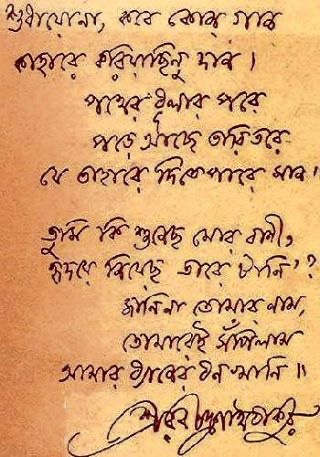





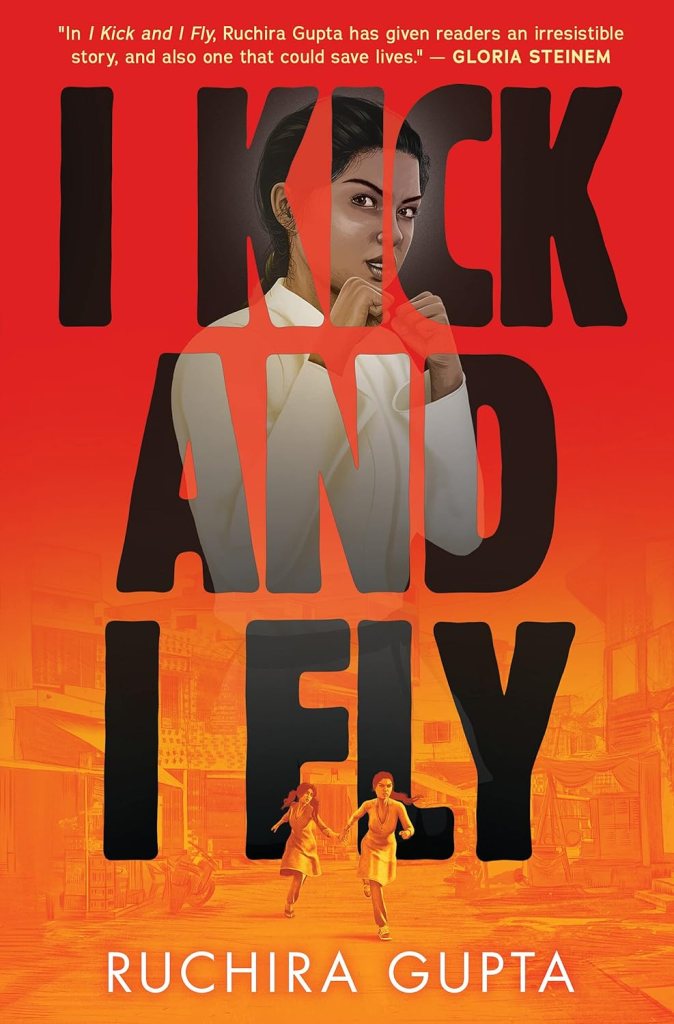


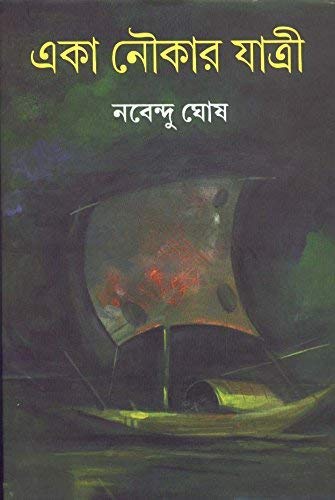


 Borderless