ProfessorFakrul Alam brings to us Tagore songs in translation and in discussion on the season that follows the scorching heat of summer months. Clickhereto read.
“May is pretty, May is mild,
Dances like a happy child…”

Annette Wynne (Early twentieth century)
Each month is expressed in a different form by nature in various parts of the world. In the tropics, May is sweltering and hot — peak summer. In the Southern hemisphere, it is cold. However, with climate change setting in, the patterns are changing, and the temperatures are swinging to extremes. Sometimes, one wonders if this is a reflection of human minds, which seem to swing like pendulums to create dissensions and conflicts in the current world. Nothing seems constant and the winds of change have taken on a menacing appearance. If we go by Nazrul’s outlook, destruction is a part of creating a new way of life as he contends in his poem, ‘Ring Bells of Victory’ — “Why fear destruction? It’s the gateway to creation!” Is this how we will move towards ‘dancing like a happy child’?
Mitra Phukan addresses this need for change in her novel, What Will People Say — not with intensity of Nazrul nor in poetry but with a light feathery wand, more in the tradition of Jane Austen. Her narrative reflects on change at various levels to explore the destruction of old customs giving way to new that are more accepting and kinder to inclusivity, addressing issues like widow remarriage in conservative Hindu frameworks, female fellowship and ageing as Phukan tells us in her interview. Upcoming voice, Prerna Gill, lauded by names like Arundhathi Subramaniam and Chitra Divakaruni, has also been in conversation with Shantanu Ray Choudhuri on her book of verses, Meanwhile. She has refreshing perspectives on life and literature.
Devraj Singh Kalsi has written a nostalgic piece that hovers between irony and perhaps, a reformatory urge… I am not quite sure, but it is as enjoyable and compelling as Meredith Stephen’s narrative on her conservation efforts in Kangaroo Island in the Southern hemisphere and fantastic animals she meets, livened further by her photography. Ravi Shankar talks of his night hikes in the Northern hemisphere, more accurately, in the Himalayas. While trekking at night seems a risky task, trying to recreate dishes from the past is no less daunting, as Suzanne Kamata tells us in her Notes from Japan.
May hosts the birthday of a number of greats, including Tagore and Satyajit Ray. Ratnottama Sengupta’s piece on Ray’s birth anniversary celebrations with actress Jaya Bachchan recounting her experience while working for Ray in Mahanagar(Big City), a film that has been restored and was part of celebrations for the filmmaker’s 102nd Birth anniversary captures the nostalgia of a famous actress on the greatest filmmakers of our times. She has also given us an essay on Tagore and cinema in memory of the great soul, who was just sixty years older to Ray and impacted the filmmaker too. Ray had a year-long sojourn in Santiniketan during his youth.
Eulogising Rabindrasangeet and its lyrics is an essay by Professor Fakrul Alam on Tagore. Professor Alam has translated number of his songs for the essay as he has, a powerful poem from Bengali by Masud Khan. A transcreation of Tagore’s first birthday poem , a wonderful translation of Balochi poetry by Fazal Baloch of Munir Momin’s verses, another one from Korean by Ihlwha Choi rounds up the translated poetry in this edition. Stories that reach out with their poignant telling include Nadir Ali’s narrative, translated from Punjabi by his daughter, Amna Ali, and Aruna Chakravarti’s translation of a short story by Tagore. We have more stories from around the world with Julian Gallo exploring addiction, Abdullah Rayhan with a poignant narrative from Bangladesh, Sreelekha Chatterjee with a short funny tale and Paul Mirabile exploring the supernatural and horror, a sequel to ‘The Book Hunter‘, published in the April issue.
All the genres we host seem to be topped with a sprinkling of pieces on Tagore as this is his birth month. A book excerpt from Chakravarti’s Daughters of Jorasankonarrates her well-researched version of Tagore’s last birthday celebration and carries her translation of the last birthday song by the giant of Bengali literature. The other book excerpt is from Bhubaneswar@75 – Perspectives, edited by Bhaskar Parichha/ Charudutta Panigrahi. Parichha has also reviewed Journey After Midnight – A Punjabi Life: From India to Canadaby Ujjal Dosanjh, a book that starts in pre-independent India and travels with the writer to Canada via UK. Again to commemorate the maestro’s birth anniversary, Meenakshi Malhotra has revisited Radha Chakravarty’s translation of Tagore’s Farewell Song. Somdatta Mandal has critiqued KR Meera’sJezebel, translated from Malayalam by Abhirami Girija Sriram and K. S. Bijukuma. Lakshmi Kannan has introduced to us Jaydeep Sarangi’s collection of poems, letters in lower case.
There are pieces that still reach out to be mentioned. Do visit our content page for May. I would like to thank Sohana Manzoor for her fantastic artwork and continued editorial support for the Tagore translations and the whole team for helping me put together this issue. Thank you. A huge thanks to our loyal readers and contributors who continue to bring in vibrant content, photography and artwork. Without you all, we would not be where we are today.
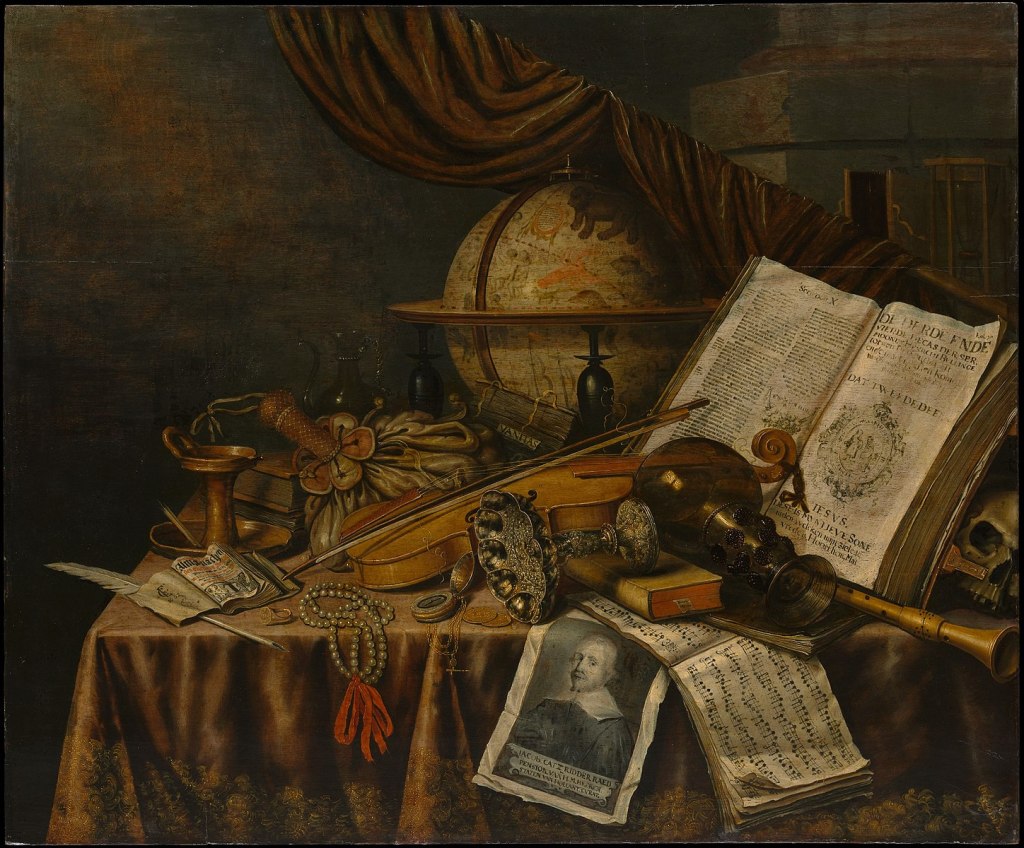
Vanitas Still Life, painting by Evert Collier(1640 –1708). Courtesy: Creative Commons
Back home in Madrid, having abandoned Adamov Plut to his posthumous fate, I was a bit surprised that neither the New York Times nor the Washington Post reported anything about the murder, not even a paragraph, or as the French so imagitively put it, an entre-filet ! I soon realised, due to this journalistic silence, that the time had come for me to give a full account of my relation to Mr Plut ; that the time had come for me to expose, publicly, by way of this revelation, his ‘mysterious murder’.
My information is of the surest sources for the simple reason that it was I who had Mr Plut murdered ! Yes, I ! And for reasons that shall be shortly disclosed. A mysterious man he might have been; however, his methods of acquiring priceless books and other inestimable valuables can hardly be called mysterious: Mr Plut was a vulgar thief, a scoundrel, an ingenious trickster whose singular flair caused much grief to many individuals, enraged those whose trust had been flouted.
It was in Istanbul, where I was invited to sojourn with an Armenian merchant, that I witnessed Mr Plut’s dupery. And if my naive friend fell for his crooked smile, I certainly didn’t swallow his high tale of returning to pay him for the two illuminated manuscripts my friend had graciously offered the blighter on condition that he be held accountable for them. His thick, coarse lips translated a smile that held contempt and disdain towards those who trusted him. So infuriated and insulted did I feel on behalf of my friend that that I reacted on a lightning urge and decided to follow him. I said nothing of this to my disbelieving companion, but left immediately in pursuit of my game — and game it was — for I, to tell the truth, had nothing more substantial to do at the moment and felt disposed for a good hunt.
I said that Mr Plut was a genius. Yes, in his own way. However, genius has its limitations. His arrogance and haughtiness knew no bounds, although he knew that his foul doings had attracted the attention of police and Interpol. Some may surmise that a certain paranoia drove him to invent individuals tracking him down like a wild boar or moose. No, no one was tracking him down except me, and that as subtlety as possible. In Uzbekistan, I actually chatted with him over a cup of coffee on two occasions disguised as a professor of Slavic philology, dressed in a quilted chapan robe and silk embroidered tubeteyka cap. There we sat in Samarkand, sipping our thick beverages in the vaulted bazaar at one of the storied cafés that dot the town. He was all smiles, obsequious and gold-toothed. I had the impression that I was dealing with a child or a mentally-dwarfed man whose sense of reality lacked all discernment or sagacity. I concluded that he had come into quite a bit of money, and never having had to work for a livelihood, traipsed about the world at his leisure, buying or stealing books, cheating people out of their invaluable collections. So self-indulgent and confident was he that he never saw through my masquerade as we conversed in broken Russian.
It was at that café where I learned about his fabulous treasure, as he called his book hoard. Only an idiot would have divulged this information to a perfect stranger, but as I said, Mr Plut’s contemptible demeanour caused him to fall into the most infantile traps. Traps that I began laying out for him, and that would lead to his downfall. For I had begun to design my own plan to relieve the rogue of his fabulous possessions, all the more so since he also let slip that his parents had passed away, and he had inherited the house. How I would make his treasure mine and ‘disinherit’ the owner still remained vague in my mind.
We departed as ‘friends’, as two strangers seeking an answer to the mystery of their existence. Or so I made him believe. Mr Plut appeared to me a dying species, a worldly aesthete, in spite of his extreme vulgarity and ponderous gait, whose debonair demeanour masked a loathing for his victims, a bent for the lowest duplicity, a gratification in spinning the most treacherous stratagems in order to allay his desire to prevail.
Mr Plut slipped out of Uzbekistan without my knowing it. He probably used his Russian passport, one of the four of five in his possession. I felt a twinge of misgiving. Had the fat fellow got on to me? After many enquiries, I finally discovered that he had crossed into China at the Xinjiang border, and was hastening towards the Yunnan. Why ? I hadn’t the faintest idea …
His brief sojourn in the town of Lijiang enabled me to catch up with him. My Chinese was fluent enough not only to query his whereabouts in that lovely town, but more important still, to learn of his new ‘purchases’, once I had questioned the director of the Dongba Museum of Culture. Mr Plut had planned to gone there to acquire several Naxi pictographic sacred books, which he did from a rather corrupt priest with whom he had been corresponding for some time, using a special code so as not to be unmasked by the Chinese authorities of the Centre. The director only learned of this a week after the unlawful negotiations had occurred, and three or four very valuable Dongba liturgical books had been stolen. It goes without saying that the rapacious priest was severely punished.
I immediately left Lijiang much to my displeasure for it was indeed a quiet, pleasant place, and set out in hot pursuit of the marauder. I followed his all too familiar scent through Nepal into North-western India to the Zanskar region where he put up for a while at the Phuktal Gompa[1], a strange spot to make a halt. But a perfect hideout to gain time in order for planning his next move, whilst at the same time inveigling in the most repulsive manner his generous hosts.
The monastery is nestled in the most remotest of valleys, ensconced within a cliff of tuft of fairy chimneys, crags and honey-combed spires which bulge black and red against the background of sandy, dazzling ash and cinerous tones of hemp. I had trekked there from Lamayuru in twenty days, and as I was to learn, Mr Plut had arrived there three days ahead of me, but by way of Padum. To gain the main entrance of the gompa, the pilgrim had to climb a steep path, keeping his or her right shoulder to the seventeen chortens[2] that mark the steep climb towards the vaulted entrance. I had shaved my head, grown a long beard and donned a woollen chuba tightened around my waist with a long colourful sash. It kept me warm, for in spite of it being Summer, the nights were very cold, and my cell had only a small wood-burning stove to keep me warm.
I spent three weeks at the monastery, sleeping on a ratten matting, eating skieu, tsampa and chappatti, drinking steaming salt-buttered tea off a chopsey — a low, small table — reading or gazing out of the little window that offered me a full view of the dusty, treeless courtyard below, where monks would mutter their mantras, and beyond into soundless nights whose stars were generally veiled.
Without Mr Plut’s slightest suspicions, I assisted at all the ceremonies, mornings and evenings, even vigils, while in the afternoon, I would venture out into the monastic complex, twisting and turning in the warren of lanes, under the low archways and high ladders, at times pursuing my promenades upon the rather precipitous mountain paths. As to Mr Plut, he hardly left his cell, and when we did cross paths, he most probably took me for a Buddhist pilgrim. Once or twice I sat near him in the prayer hall in the meditation grotto, but he never attempted to communicate with me, albeit he did not seem very deep in prayer or contemplation. He was probably scheming his next miserable move. His face had become terribly pale and flabby. His darting, black eyes seemed to have sunk deeper into their sockets. Unable to sit cross-legged on the low benches at the back of the prayer hall, he sat ‘western style’, staring off into the clusters of chanting monks, tilting his huge, bobbing head every so often to the banging drums, blowing ox-horns and tinkling triangles. Observing him from afar, I sought to sound his soul, to wring out his innermost thoughts, to extract from his evident lassitude and apathy his flight from both his victims and himself. But Mr Plut was a sphinx. Would he rise out of his own ashes when his hour came ?
I left the good monks three days after his departure, a hasty one indeed. And they were furious! The scoundrel had stolen several pustuks[3] and thangkas, and failed to pay for the prayer masks that he ‘purchased’. They implored me to find the culprit, inform the police and recover their stolen property. It was perhaps the beseeching words of the infuriated monks, after having received such incomparable hospitality from them, that my plans to have the thief killed began to germinate ! The theft was not only gratuitous, it exposed the very ugliness of the man’s heart, blackened by greed, cynicism and remorselessness. It would only be a matter of time before he tasted a soupçon of his own medicine.
Meanwhile the cat would play with the mouse, a rather fat mouse at that ! I boarded the cargo ship that took the fugitive from Karachi to Oakland via Japan. On the long, monotonous voyage across the Pacific, my ominous shadow crossed his at the most unsuspecting moments. Attired as a Pashtun merchant, bearded, long-haired and turbaned, Mr Plut sensed an onerous presence whenever he laboriously carried his huge body across the decks. How many times had my eyes penetrated his anguish, his torment, his pangs, not of compunction, but of incomprehension. He scented a sleepless menace pressing him. Fear inflamed his dark, beady, mirthless eyes like the burning incision of the trenchant knife.
Oakland … Sacramento … Reno … Tombstone … Boulder … Santa Fe … Saint Louis … Chicago … New Orleans … Birmingham … Miami … Atlanta and finally New York. Yes, New York, where the curtains would finally fall on this tragic fat figure. Where upon the stage of 8 million walk-ons, and against the backdrop of the grottiest of hotels, the last act of Mr Plut’s abominable performance would be played out.
His infatuation with Louis Wolfson amused me, as well as his grandiose project to write twelve stories in twelve different languages signed by twelve different authors. I found all this quite pompous and pathetic. A real exercise in self-indulgence to say the least. All this information I culled when I ‘accidentally’ met him in the ill-lit corridor of that hotel on Water street in downtown Manhattan. In New York, I played the role of a French researcher in mediaeval literature, a field that he completely ignored, in spite of possessing several manuscripts of Anglo-Norman stamp, apparently purchased (so he said ?) from a London book-seller. I pretended to be interested, taking the opportunity to study him closely. Besides, he was such an inveterate liar how could one believe anything he said ? He lied to curry favour and win confidence, only to swindle and steal from the naive and simple-hearted. Better to observe his eyes, his gestures, his bouncing from one tongue to another. These were all genuine signs of his distorted psychological make-up. To play my part well, I sported an immaculate white suit, orange tie, a pair of silver-rimmed glasses and spanking new alligator shoes. I had shaved my beard and moustache and had my hair cut very short, leaving a few gossamer wisps which touched the tips of my ears and fell bouncily on my forehead.
Every day I followed his Humpty Dumpty gait as he waddled to and from the public library, in and out of Central Park. And it was there, in Central Park, that I noted two blond-haired rough fellows slouching on a bench, eating the remains of fried chips or chicken sandwiches, cursing and making gross signs at the passers-by, drinking beer and spitting. They were seated at the same bench daily — the bench that Mr Plut walked by every day. They seemed to know him because they would hoot at him, call him names and ask for money. Fatso passed by without even a glance at them.
One Saturday, I decided to approach the two ruffians. They sized me up with obvious contempt, and made it perfectly clear that I was intruding on their ‘territory’. I sat down none the less, and exposed my scheme to be rid of Mr Plut once and for all, explaining how the culprit had cheated and robbed so many people. The two burly blokes, former marines in the Green Beret (or so they vaunted!) listened attentively as I unfolded my plan: Three thousand dollars for each if they would simply walk up to his room in the early morning hours, the night porter always being asleep, knock at his door and kill him, however, without any blood shed or theft of his belongings. It must be a murder without reason, without any sign of bestial violence. One of them suggested strangulation. Yes, excellent idea. It would thus be a ‘clean’ murder.
And so it was, very professional at that I must say. They were paid off, as agreed. And I left New York two days later, as planned, a very satisfied man indeed …
This all happened five years ago. Now … well, here is where my account ends and my confession begins. For you see, Mr Plut was never really murdered ! Those two ‘ruffians’ were in fact F.B.I. agents who had been trailing me since disembarking in California. To tell the truth, Interpol and local police had been following me since the Istanbul affair. How and why they began doing so I cannot say. During my trial neither the judge nor the prosecuting attorney afforded any information as how the F.B.I. learnt of my scheme, nor why they had decided, at one point in time, to cooperate with Plut. What was I convicted of ? What was my indictment ? As to my appointed lawyer, a young short-sighted clerk more than a seasoned lawyer, who could be easily cajoled by the ‘evidence’ against me, pliantly manipulated by the prosecutor, after he had taken the floor and had made an absolute fool of himself. He let out a sigh of relief when the judge pronounced a sentence of fifteen years instead of twenty-five! The wigged judge, a grotesque figure studded with huge warts, yawned throughout my lawyer’s deplorable speech for the defense, as well as during my feeble plea. There was no jury either to lament or to applaud his verdict. It was a trial held at ‘huis clos’[4], military style. I buried my face in my hands. As expected, my lawyer made no effort to appeal.
Had Plut sensed my innermost aversion towards him ? Or seen through my many disguises ? He was a clever man, and probably had hired detectives to learn why I was following him. The hotel room murder was staged. Plut lay recumbent on the floor, waiting for me to steal his papers so that I would be indicted for premeditated murder (although there was no murder!), of paying off hoodlums to commit this murder (although they were F.B.I. agents!) and the theft, which indeed it was (but fifteen years for that?) of his household papers, keys, and other official documents concerning his inheritance … and that vile short story of his.
So here I sit in my rancid smelling cell in Madrid, having been arrested at the aeroport on my arrival some five years ago, writing out this confession. I do not to repent mind you, I have no intention of atoning for my doings, nor avowing my sins. These words wrenched from my pen seek to vent the animosity and hatred I harbour towards that fat impostor who had the cheek to write me a letter from the Seychelles revealing how he had got on to me since Uzbekistan, and how our little cat and mouse game had amused him greatly : “You thought me a fool, deary, but I sawthrough your pusillanimous scheme in Samarkand ; that was some outfit, but you forgot the galoshes ! Not to mention your pilgrim weeds at Phuktal which truly charmed me, and your blazing orange tie in New York. Come, come, what French professor would ever sport an orange tie with a badly tailored, cheap white suit ?” The vicious irony underlining these sentences, along with a soupçon of cynicism caused me to gag. The blighter added in a post-script that he had sold all his books for a fabulous sum of money, and had retired from the world’s wearisome fair. In the envelope I found a photo of him sipping coconut juice, lying on the golden sands of a crescent-shaped beach under groves of swaying palm trees and an indigo blue sky. I laughed bitterly, and yet, in spite of my nettled nerves, pinned up the blasted photo in my lonely cell, a sort of souvenir of our enshrouded relationship …
One day at the prison library, browsing idly through a dull, detective story, I thought of Plut’s or Hilarius Eremita’s story The Enchanted Garden, which I had taken and read to amuse myself on the aeroplane to Buenos Aires. Had anyone ever published such ridiculous trash? To my horror, the answer came three days later whilst I rummaged through a new batch of literary magazines, some of which contained short stories in English, French and German. And there it was — The Enchanted Garden, by Hilarius Eremita, Plut’s pen name. I couldn’t believe my eyes — someone had published that rubbish ! Plut indeed had the last laugh, adding insult to injury, salt to my festering wounds.
I savagely tore out the pages of his story from the magazine, went to the toilet, ripped them into tiny pieces and flushed the filth down the bowl. So much for hiss ‘first of the twelve’ ! I shan’t be punished for it, no inmate in this prison reads any language besides Spanish, and that with a dictionary … I’m sure it was Plut who sent me that magazine to drive the knife deeper into my wounded pride. The miserable rat !
So here I sit at my iron table, staring at Plut’s photo as he sips his coconut drink under the blue skies and swaying palm trees whilst I sip my wretched thin noodle soup with strips of hard, nervy beef under a cracked, peeling, dirty grey prison ceiling …
[2] The Tibetan word for stûpa, a Buddist shrine which initially housed the relics of the Buddha.
[3] Books used for Buddhist ceremonies written in Tibetan.
[4] Behind closed door without any public participation or observers. It is a French legal term.
Paul Mirabile is a retired professor of philology now living in France. He has published mostly academic works centred on philology, history, pedagogy and religion. He has also published stories of his travels throughout Asia, where he spent thirty years.
.
PLEASE NOTE: ARTICLES CAN ONLY BE REPRODUCED IN OTHER SITES WITH DUE ACKNOWLEDGEMENT TO BORDERLESS JOURNAL
Keith Lyons interviews Asian Australian poet Adam Aitken about cross-cultural identity, and the challenges of travel, writing, and belonging. Click here to read.
Translations
Gandhiji, a short story by Nabendu Ghosh, has been translated from Bengali by Ratnottama Sengupta. Click here to read.
Khaira, the Blind, a story by Nadir Ali, has been translated from Punjabi by Amna Ali. Click here to read.
Clothes of Spirits, a folktale, has been translated from Balochi by Fazal Baloch. Click here to read.
Many Splendored Love, four poems by Masud Khan, have been translated from Bengali by Fakrul Alam. Click hereto read.
Birds are Alive, has been written and translated from Korean by Ihlwha Choi. Clickhere to read.
Nobo Borshe or on New Year, Tagore’s poem on the Bengali New Year, has been translated from Bengali by Mitali Chakravarty for the occasion this April. Click here to read.
Ratnottama Sengupta shows the impact of Gandhi and his call for non-violence on Nabendu Ghosh as she continues to emote over his message of Ahimsa and call for peace amidst rioting. Click here to read.
The night has nearly come to an end.
The old year is almost past.
Under this dust, it will lay down
Its worn-out life at last.
Whether friend or foe,      wherever you go,
Old wrongs cast
Away. On this auspicious day,
Old grievances shed as the old year parts.

— Nobo Borshe or on New Year by Tagore
Art by Sohana Manzoor
Mid-April, Thailand celebrates Songkran and Cambodia, Thingyan — water festivals like Holi. These coincide with the celebration of multiple New Years across Asia. Sikhs celebrate Baisakhi. Kerala celebrates Bishu and Tamil Nadu, Puthandu. Nepal celebrates Nava Varsha and Bengal Nobo Borsho or Poila Boisakh. A translation of Tagore’s poem on the Bengali New Year in spirit asks us to dispense with our past angst and open our hearts to the new day — perhaps an attitude that might bring in changes that are so needed in a world torn with conflicts, hatred and anger. The poet goes on to say, “I want to tie all lives with love” but do we do that in our lives? Can we? Masud Khan’s poems on love translated by Professor Fakrul Alam explore this from a modern context. From Korea, Ihlwha Choi tells us in his translation, “Loving birds is like loving stars”. But the translation that really dwells on love bringing in changes is Nabendu Ghosh’s ‘Gandhiji’, translated by Ratnottama Sengupta, his daughter. The short story by Ghosh highlights the transformation of a murderous villain to a defender of a victim of communal violence, towering above divides drawn by politics of religion.
Another daughter who has been translating her father’s works is Amna Ali, daughter of award-winning Punjabi writer, Nadir Ali. In ‘Khaira, the Blind‘, the father-daughter duo have brought to Anglophone readers a lighter narrative highlighting the erasure of divides and inclusivity. A folktale from Balochistan, translated by Fazal Baloch, echoes in the footsteps of ‘Emperor’s New Clothes’ — a story that can found in the Andersen’s Fairy Tales published in the nineteenth century. I wonder which narrative had come first? And how did it cross cultures retaining the original ideas and yet giving it a local colour? Was it with traders or immigrants?
That such narratives or thoughts are a global phenomenon is brought to the fore by a conversation between Keith Lyons and Asian Australian poet Adam Aitken. Aitken has discussed his cross-cultural identity, the challenges of travel, writing, and belonging. Belonging is perhaps also associated with acceptance. How much do we accept a person, a writer or his works? How much do we empathise with it — is that what makes for popularity?
Cross cultural interactions are always interesting as Rhys Hughes tells us in his essay titled ‘My Love for RK Narayan’. He writes: “Narayan is able to do two contradictory things simultaneously, namely (1) show that we are all the same throughout the world, and (2) show how cultures and people around the world differ from each other.” The underlying emotions that tie us together in a bond of empathy and commonality are compassion and love, something that many great writers have found it necessary to emphasise.
Mitra Phukan’sWhat Will People say?: A Novel is built around such feelings of love, compassion and patience that can gently change narrow norms which draw terrifying borders of hate and unacceptance. We carry an excerpt this time from her ‘Prologue’. Somdatta Mandal has reviewed Chitra Banerjee Divakurni’s latest , Independence. Starting from around the time of the Indian Independence too is Song of the Golden Sparrow – A Novel History of Free India by Nilanjan P. Choudhary, which has been discussed by Rakhi Dalal. The Partition seems to colour narratives often as does the Holocaust. Sometimes, one wonders if humanity will ever get over the negative emotions set into play in the last century.
Closer to our times, when mingling of diverse cultures is becoming more acceptable in arts, Basudhara Roy introduces us to Bina Sarkar Ellias’s Ukiyo-e Days…Haiku Moments, a book that links poetry to a Japanese art-form. While a non-fiction that highlights the suffering of workers by enforcing unacceptable work ethics, Japanese Management, Indian Resistance: The Struggles of the Maruti Suzuki Workersby Anjali Deshpande and Nandita Haksar has been reviewed by Bhaskar Parichha. The narrative, he writes, “tells the story of the biggest car manufacturer in India through the voices of the workers, interviewed over three years. They give us an understanding that the Maruti Suzuki revolution wasn’t the unmitigated success it was touted to be when they tell us about their resistance to being turned into robots by uncompromising management.” That lack of human touch creates distress in people’s hearts, even if we have an efficient system of management and mass production is well elucidated in the review.
These changes are reflected in our musings too. Sengupta has written on how change is wrought on a murderous villain by the charisma of Gandhi in her father’s fiction, as well as this world leader’s impact on Ghosh and her. Devraj Singh Kalsi addresses food fads with a pinch of sarcasm. From Japan, Suzanne Kamata has written of a little island with Greek influences, a result of cultural ties brought in by the emperor Hirohito. Ravi Shankar takes us to Pokhara, Nepal, and Meredith Stephen expresses surprise on meeting a shipload of people from Colorado in the far reaches of the Southern Hemisphere while on her sailing adventures with beautiful photographs. Stories by moderns reflect diverse nuances depicting change. While Brindley Hallam Dennis writes of the passing of an era, PG Thomas integrates the past into the present to reflect how they have a symbiotic structure in the scheme of creating or recreating natural movements through changes wrought over time in his story. Paul Mirabile explores the darker recesses of the human existence in his fiction. As if in continuation, the excerpt from Rhys Hughes’ The Wistful Wanderings of Perceval Pitthelmseems to step out of darker facets of humanity with a soupçon of wit at its best.
To create a world that endures, one looks for values that create inclusivity as reflected in these lines from Charles Chaplin’s My Autobiography, “Mother illuminated to me the kindliest light this world has ever known, which has endowed literature and the theatre with their greatest themes: love, pity and humanity.” This quote starts off a wonderful essay from film-buff Nirupama Kotru. Her narrative carries the tenor of Chaplin’s ‘themes’ to highlight not only her visit to the actor’s last home in Switzerland but also glances at his philosophy and his contributions to cinema across borders.
Our issue rotates around changes and the need for love and compassion to rise in a choral crescendo whirling with the voices of Tagore, Charles Chaplin as well as that of twenty-first century writers. Perhaps this new year, we can move towards a world – at least an imagined world — where love will wipe away weapons and war, where love will take us towards a future filled with the acceptance of myriad colours, where events like the Partition and the Holocaust will be history, just like dinosaurs.
Huge thanks to all our readers and contributors, some of whom may not have been mentioned here but are an integral and necessary part of the issue. Do pause by our April edition. I would also like to give my thanks to our indefatigable team whose efforts breathe life into our journal every month. Sohana Manzoor needs a special mention for her lovely artwork.
The view of the Himalayan ranges through the airplane window to the right was breath-taking. The February day was bright and sunny, and the Himalayan giants were clearly seen. I was flying on an ATR 72 aircraft from Kathmandu to Pokhara. The flight was short (around 20 minutes) and soon I could see the Pokhara valley and the town far below. The town is cut into deep gorges by rivers flowing down from the Himalayas. I could see the vast building of the Manipal Teaching Hospital at the base of a huge hill.
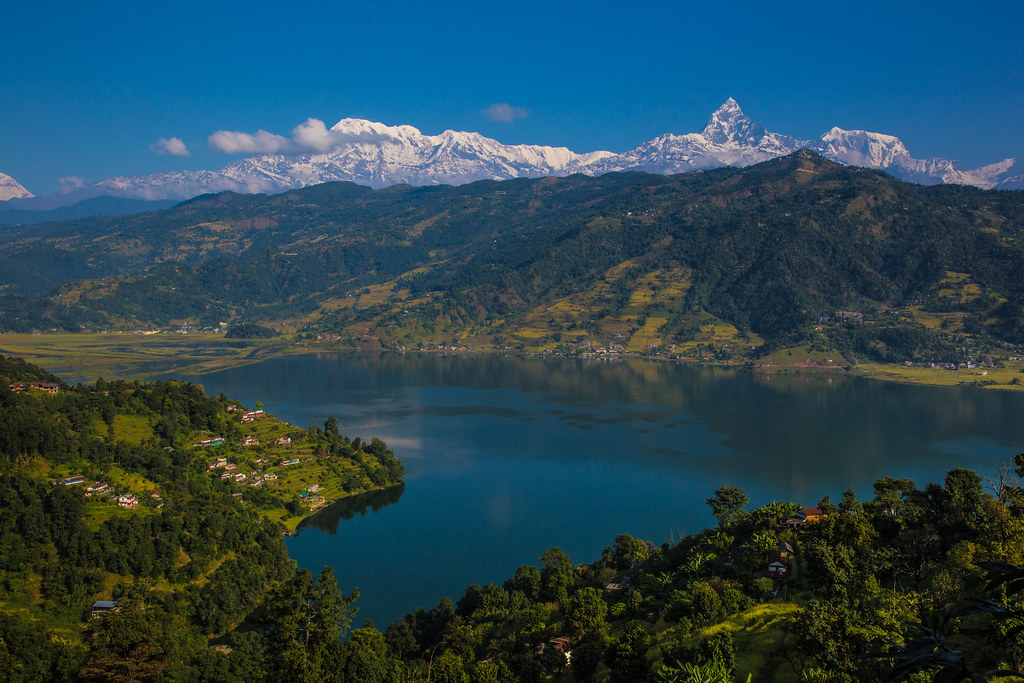
Pokhara is a magical city located in the western region of Nepal. Unfortunately, many confuse it with Pokhran, the site of India’s nuclear tests. I faced some difficulty explaining the location of these two places and their stark differences. The town is located about 250 km west of the capital, Kathmandu. The altitude is lower at around 900 m (Kathmandu is at 1300 m). Winters are less cold but there are violent hailstorms and thunderstorms during summer. The view of the Annapurna Himals (snow-covered mountains in Nepali) from Pokhara is spectacular. The Annapurnas have several peaks – Annapurna I, II, III, Hiunchuli, and Gangapurna. The fishtail mountain, Macchapucchare dominates the view from Pokhara. The fishtail aspect with twin peaks is only seen once you leave the Pokhara valley. The face of a tiger is said be discerned on the face of the peak. I spent a lot of time and effort trying to discern the tiger’s face. Then, one day, after a few years sustained effort suddenly my efforts paid off. I was able to see the tiger!
Dashain (called Dussehra in India) is Nepal’s most important festival and celebrations go on for over two weeks. During autumn and winter, the air is clear, the dust has settled and the mountain views are spectacular. In the morning the faculty gather for tea/coffee near the mess at the Deep campus of Manipal College of Medical Sciences and enjoy a spectacular view. Watching birds glide against the clear blue sky and the clouds slowly gathering on the Himals is a unique experience. You could spend hours sitting quietly drinking in the view in the warm winter sunshine.
There are several day hikes around Pokhara. You can walk down to Lakeside. This takes a good ninety minutes from Phulbari where the Manipal Teaching Hospital is located. You can continue walking past the lake passing through rapidly urbanising villages, tourist lodges and restaurants. Phewa Lake is the jewel of Pokhara though it may be becoming congested. A road has been constructed around the lake and the lakeside is full of tourist hotels. The Tal Bharahi temple situated in the middle of the lake can be accessed by boat. Dervla Murphy stayed in Pokhara during the 1960s and writes about the pristine Phewa lake without the tourist accoutrements in her book ‘The waiting land’.
Pokhara Thakali Kitchen located at Lakeside serves authentic Thakali food. Thakalis are an ethnic group from the Thak Khola valley north of Pokhara famous as innkeepers and restaurateurs. I enjoyed piping hot rice, green dhal (lentil curry), saag (green leafy vegetables), potatoes roasted in ghiu (clarified butter), tomato achar (pickle), and the wonderful chicken or mutton jhol (curry in Nepali). I am also partial to dhido — a paste made from either corn or buckwheat. Another favourite place was a restaurant located toward the end of the lake. The tables were placed in small, thatched huts and you could enjoy the view while food was being prepared. There were also a few cots to enjoy a siesta. Their daal-bhaat-tarkari (lentil curry, rice, vegetables) and chicken curry were exceptional. In Nepal, restaurants usually prepare orders fresh, and you can expect to wait up to an hour for your order to be prepared.
Sarangkot located at the height of around 1500 m offers spectacular views of the Dhaulagiri Himals to the west, the Annapurna range, and even the Manasulu peaks to the east. The area can get crowded during winter mornings and evenings as tourists and guides gather to watch the mountains turning golden, and different shades of red during spectacular sunrises and sunsets. The Annapurna Sherpa Resort is close by, and my friends and I had spent several New Years’ Eves there. From Sarangkot, you can descend to the lakeside. The trail is steep and passes through several villages. You can watch the hang gliders taking off, their colourful canopies staying suspended in the air and eventually landing at the far side of the lake.
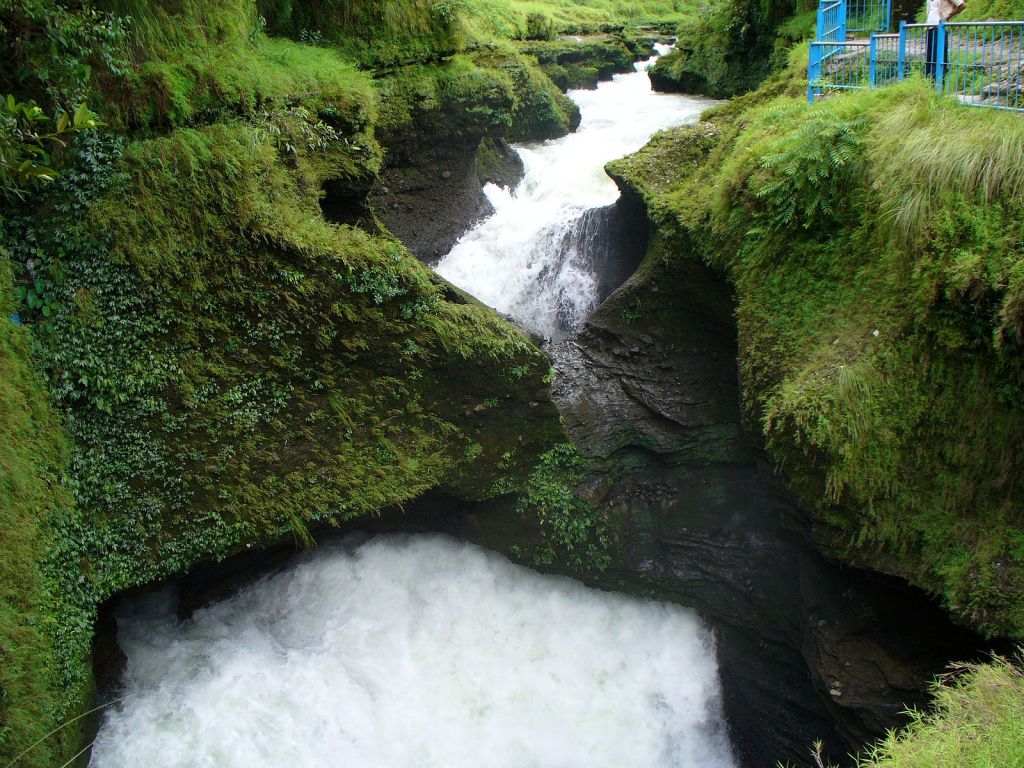
Kahundada is the mountain immediately behind the hospital. A road has now been cut to the top but two decades ago you had to climb up through stone staircases. There is a view tower at the top and you can enjoy the view of the Himals without the crowds. However, there are no hotels near the top so reaching the tower in time for sunrise is challenging. Devi’s fall is another attraction. In Pokhara, the ground in most areas is made of soft limestone and this can get dissolved in the acidic rainwater. In the Deep campus of Manipal, there were sudden cave-ins caused by limestone erosion. Devi’s fall is said to be named after a Swiss lady, Devine who went swimming in the fall but was swept away by a sudden gust of water. The Nepali name is Patale ko chango (underground waterfall).
The Gupteshwar Mahadev cave dedicated to Lord Shiva is nearby. This bat cave (chamere gufa in Nepali) is the habitat of the horseshoe bats. The exit requires some climbing and is narrower than the entrance. There is a belief that only those who have not sinned would be able to exit the cave. One of my favourite walks was to the village of Mauja. The trail climbs up through green forests and waterfalls. Mauja is a typical hill village and a good weekend hike. Another excellent hike is from Naudanda to the lakeside. You can take a bus to Naudanda and then walk down to the lake. You pass through several villages. Kaskikot was the old capital of the kings of Kaski. There is a fort on the hilltop with a good view over the valley. There is also a Kashyap hill where the rishi Kashyap is said to have meditated. A few high-end tourist hotels have now been established here. The view of the blue waters of Phewa lake get bigger as you slowly approach the lakeside.
Begnas and Rupa lakes are two other lakes in the valley. Begnas lake is less crowded and is famous for its fish stalls. A small, forested hill, Panchabhaiya Dada, separates the two lakes. The waters of Begnas look darker and deeper. The International Mountain Museum was opened in Pokhara in 2004. The location offers spectacular views of the Annapurnas. The museum has three main exhibition halls: the Hall of Great Himalayas, the Hall of Fame, and the Hall of World Mountains. The cultures of the mountain people are also depicted. Bindhyabashini temple, the oldest temple in Pokhara was established in the 1760s. There is an interesting legend about the temple. The King of Kaski dreamt about establishing the temple. He had his men go to Bindhyachal Parbat and bring back an idol of the Goddess. While returning the men camped for the night in the current temple location. The next morning, they found they could not move the idol, and the king when informed ordered the temple to be set up at the current location.
I enjoyed reading the fascinating book by Jagannath Adhikari and David Seddon, Pokhara: Biography of a Town. Pokhara is today one of the fastest-growing towns in Nepal. Ekai Kawaguchi, a Japanese monk was an early explorer of Tibet which he approached through Pokhara and the Thak khola. He was deeply impressed by the beauty of Pokhara. He mentioned in his writings that during all his travels he had never seen a place that rivalled the beauty of Pokhara. Magical Pokhara weaves its charm on visitors and residents alike!
Dr. P Ravi Shankar is a faculty member at the IMU Centre for Education (ICE), International Medical University, Kuala Lumpur, Malaysia. He enjoys traveling and is a creative writer and photographer.
.
PLEASE NOTE: ARTICLES CAN ONLY BE REPRODUCED IN OTHER SITES WITH DUE ACKNOWLEDGEMENT TO BORDERLESS JOURNAL
The plane was descending steadily. We were approaching an island. The sandy coastline and the hotels were now visible on the left. I was seated in the last row and luckily had the entire row to myself. The sand was white, and the waters of the Caribbean Sea were a deep turquoise blue. I was fascinated by the depth and translucence of the colours. A few boats and yachts were seen, cutting through the waters and we landed shortly.
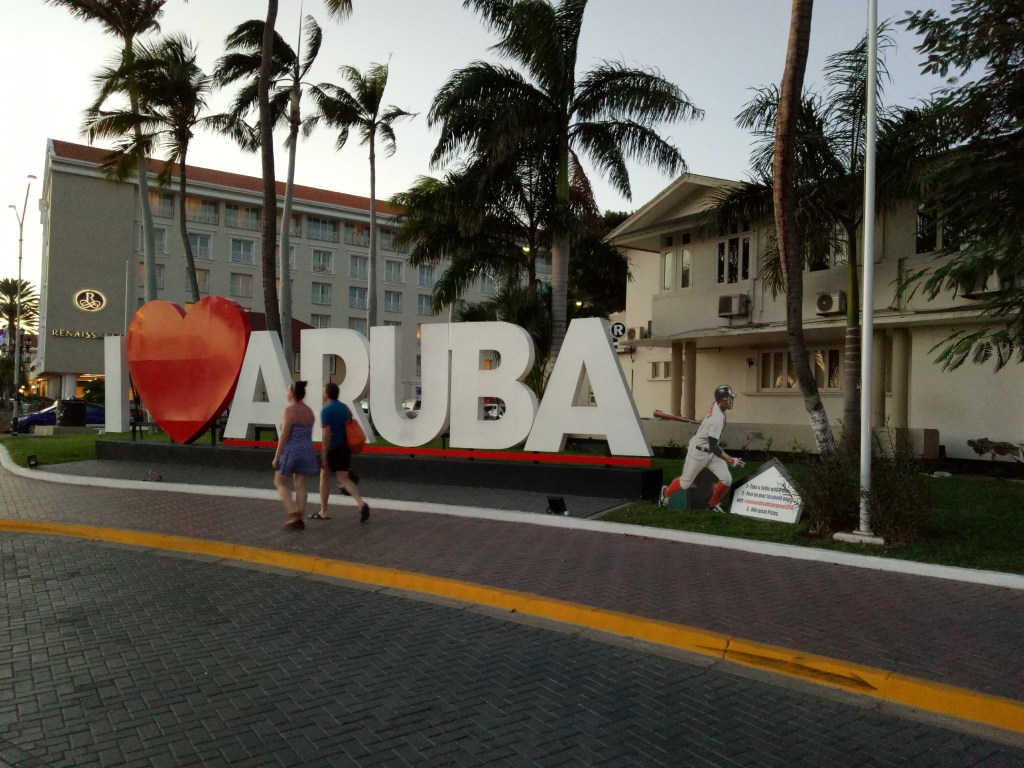
Aruba, a small island located just off the coast of Venezuela is a part of the Netherlands. The island is a major destination for sun worshippers from North America. During the cold winter months, they do their surya namaskars (saluting the Sun exercise) in Aruba and other sunny places. The island is small at around 32 kilometres by 10 kilometres. The soil is sandy and there are no rivers. The island was considered useless by the Spaniards who termed it islas inutiles[1]. The origin of the name Aruba is debated. The most accepted version is that the name may have been derived from Caquetio Indian, Oruba meaning well situated. The island is mostly flat and there are four main settlements. Oranjestad is the capital and the biggest city. San Nicholas is the entertainment hub, and Paradera and Santa Cruz are located more inland. Noord and Savaneta are the other settlements. The legal population is around 140, 000 though there may be several thousand undocumented immigrants.
Tourism has become a major source of revenue for the island like other islands and countries in the Caribbean. The island is well known in North America and the Netherlands and advertises itself as ‘One Happy Island’. During the pre-COVID days, the island used to receive nearly one million tourists yearly. Aruba is distant from South Asia; the most convenient connections are through Amsterdam and the United States (US). The island is well connected to the Eastern US and there is a US Immigration pre-clearance facility at the airport.
I was living in the capital, Oranjestad (orange city — named after the royal Dutch family, House of Orange),working at the Xavier University School of Medicine and my old friend from Nepal, Dr Dubey, was the Dean of Basic Sciences. I stayed near the school in a place called Paradijs.
Trade winds constantly blow across the island bringing down the temperature and keeping things tolerable. Walking in the housing colonies in Aruba can be a challenge. Most houses have aggressive dogs who seem to think their areas of influence extends right to the middle of the road. A house near mine had three dogs who always gave me a tough time.
Rains are not common in Aruba. Clouds gather but are blown away to the mainland of Latin America. Aruba is not built for rain. The streets flood and the college also used to get flooded after a downpour. I enjoyed walking along the seashore.
Once you leave the houses behind, the dogs are absent. A linear park runs from the airport to the cruise ship terminal. The path is paved with red stones and lined with divi-divi trees.
Divi treesSeaside
There is also exercise equipment installed at the surfside beach. The view of the sea is great and the sunsets on the island are spectacular. Divi-divi trees are common on the island and always point in a south-westerly direction due to the strong trade winds. Watching the planes land and take off at the airport is fascinating. KLM Royal Dutch Airlines flies the Airbus A330 which is the largest plane flying to the island.
The carnival is a major celebration in Aruba and started as a series of street celebrations in 1954. The month of February is full of different carnival events. I attended a night parade one year and the event was spectacular. The sun can be hot and this needs to be factored in while watching the parades in the daytime.
San Nicolas has an oil refinery and is the fun side of the island. It also has a more Caribbean feel, and the cost of living is lower than Oranjestad. The oil refinery was once the largest in the Western hemisphere and was the target of German U-boats during WW II. There is a beautiful beach (Baby Beach) near the refinery.
Aruba has a Jekyll and Hyde personality. The Caribbean side facing Latin America has spectacular beaches and calm, turquoise waters. The Atlantic side is a different matter. The coast is rocky and splintered and the waters of the Atlantic Ocean crash with brute force.
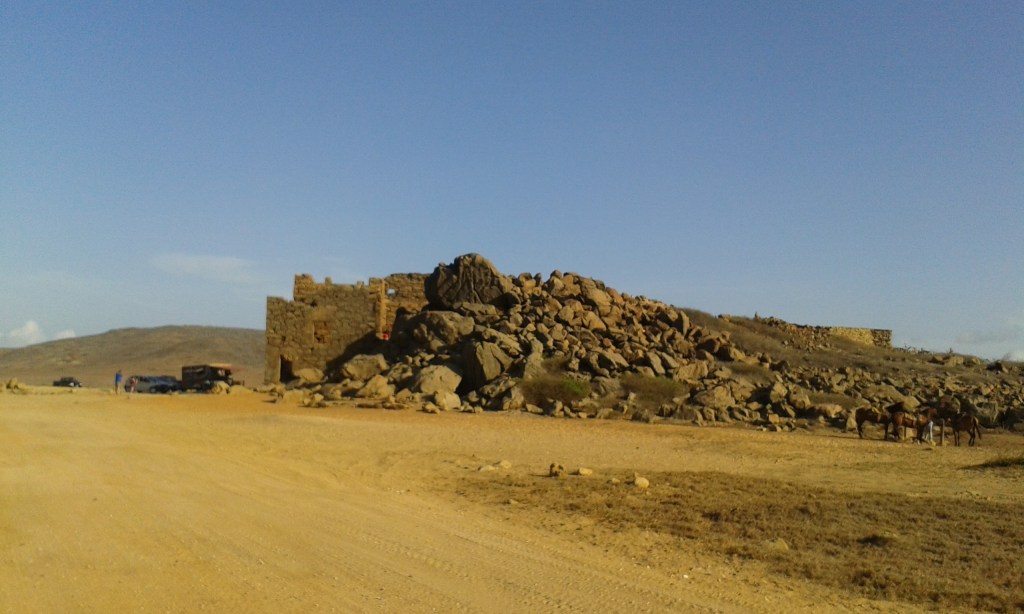
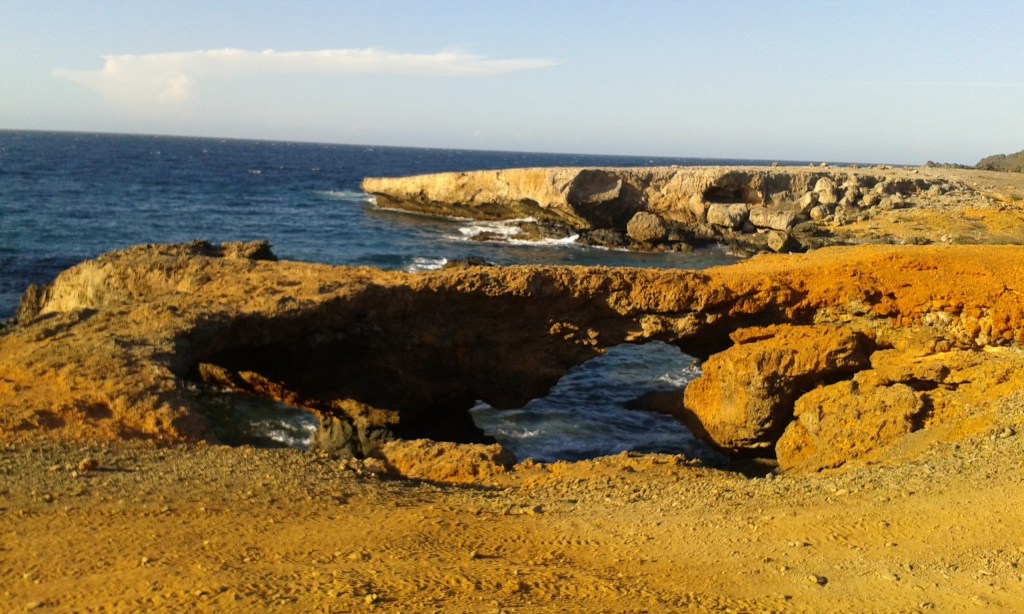
Bushirabana GoldminesNatural Bridges
There is a gold mine and a natural bridge on the north and a large windmill farm. Semi-domestic goats graze in the arid landscape. I liked going to the wild side and watching the brute force of nature. The Arikok National Park occupies nearly a third of the island and has the highest peak, Yamanota (about 250 m), and spectacular cacti. It also has a cunucu, a traditional Aruban house. A Cunucu has thick walls that are whitewashed with small windows to stay cool in the heat.
Rainwater is collected for daily use. Today the water needs are met by desalinating sea water. The plant is located near Savaneta on the highway to San Nicolas. Water and electricity supply is stable, and disruptions are rare.
Most people have cars while the blue Arubuses provide public transportation. The bus frequency is low. Hooiberg is a mountain that rises steeply from the surrounding plains and climbing to the top provides excellent views of Oranjestad, the harbour, and the surrounding countryside.
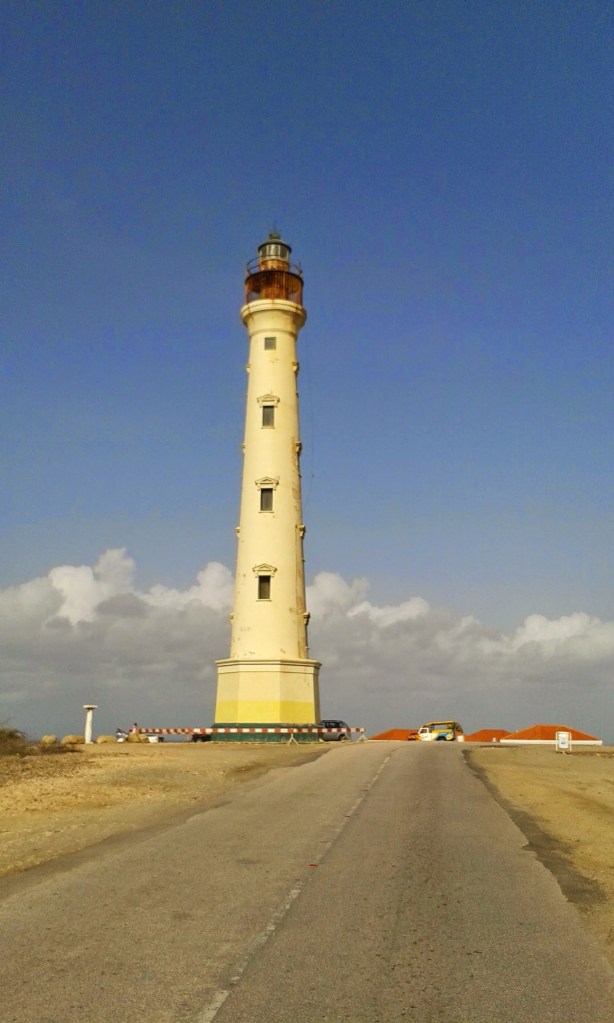
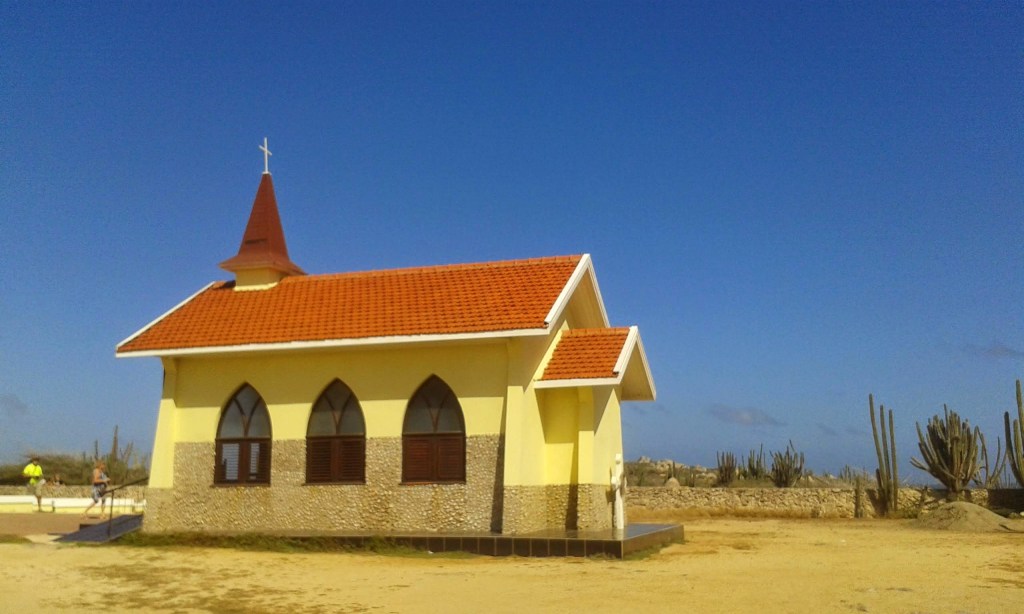
The area around Noord is the tourist heartland and the lemon-yellow California lighthouse is located here. The lighthouse is named after the steamship, California, which sank near these waters in 1891. The downtown area of Oranjestad has Wilhelmina Park, Fort Zoutman, and the Willem III tower. The fort was built in 1798 by African slaves. There is also a historical museum nearby providing an excellent overview of the island’s history and geology. The Alto Vista chapel has a spectacular view of the surroundings and was originally built in 1750 by the Spanish missionary, Domingo Antonio Silvestre.
California lighthouseAlto Vista Chapel
Aruba may be the most Latinised of the Caribbean islands. There is also a strong Dutch influence. Dutch and Papiamento are widely spoken. Papiamento is a Portuguese-based creole language. English and Spanish are also widely understood.
A lagoon
Aruba grows high-quality aloe vera and Aruba Aloe founded in 1890 is the world’s oldest aloe factory. Aruba has plenty of beaches, Druif beach, Eagle beach, Palm beach, Malmok beach, and others. The island has invested in equipment to maintain the beaches. Turtles lay their eggs in the white sand and hatchlings clumsily move back to the ocean. The natural pool or conchi is located on the north side. Butterfly farm, Philips’s animal garden, and the Donkey sanctuary provide shelter to the fauna. You can volunteer at the donkey sanctuary. In Aruba, many families camp out on the beach during Easter. My landlord and his family used to camp on the surfside beach near the airport.
Aruba has high human development indicators. Healthcare is provided by the government through a corporation financed by taxes. Alcohol is widely consumed but I did not see drunken fights or disorderliness during my time on the island. Drivers need to be careful on Friday nights when parties get going. This arrow-shaped island with a variety of cultures and influences is geographically sheltered from the worst hurricanes with the balmy weather, caressing winds caressing, and inviting waters. The people are friendly. The moniker ‘One Happy Island’ may be well deserved!
Dr. P Ravi Shankar is a faculty member at the IMU Centre for Education (ICE), International Medical University, Kuala Lumpur, Malaysia. He enjoys traveling and is a creative writer and photographer.
.
PLEASE NOTE: ARTICLES CAN ONLY BE REPRODUCED IN OTHER SITES WITH DUE ACKNOWLEDGEMENT TO BORDERLESS JOURNAL
Ravi Shankarrecommends walking as a panacea to multiple issues, health and climate change and takes us on a tour of walks around the world, including in the Everest region and the island of Aruba in the Caribbean
Walks in Kuala Lumpur where the author is located currently.
The Government Medical College, Thrissur, Kerala, India has a sprawling and densely wooded campus. The old TB sanatorium at Mulangunathukavu (quite a mouthful even for Malayalis) had been taken over and modified to establish a medical college. There were villages on the outskirts of the vast campus. My undergraduate medical education days at the sylvan campus introduced me to the joys of walking. There were several quiet spots, and you could easily get among nature. The campus was rocky in places and may not have been prime agricultural land. The place could reach 40 degrees Celsius during the peak of summer in April and May.
We occasionally walked to the tea stalls located in the villages and the walk along unpaved roads among blooming nature was interesting. The campus was much less crowded than it is today, and we enjoyed a relatively sheltered experience. Many of us eventually took to jogging in the early morning. Hitting the tarmac early before the activities of the day begin is a cleansing experience.
The Postgraduate Institute of Medical Education and Research (PGIMER), a premier health science institution in the city of Chandigarh, north India, hosts a number of attractive sites for walking. Chandigarh was the first planned city in the country and sector 12 where the institute is located is congested but just across the road, the vast expanses, and the green lawns of Punjab University were inviting. The city is spread out and expansive and offers good opportunities for walking. The rose garden and the rock garden are vast. The heat during summer can be a challenge but even at the peak of summer, Chandigarh is a bit cooler compared to the cities on the plains and lovely to explore on foot.
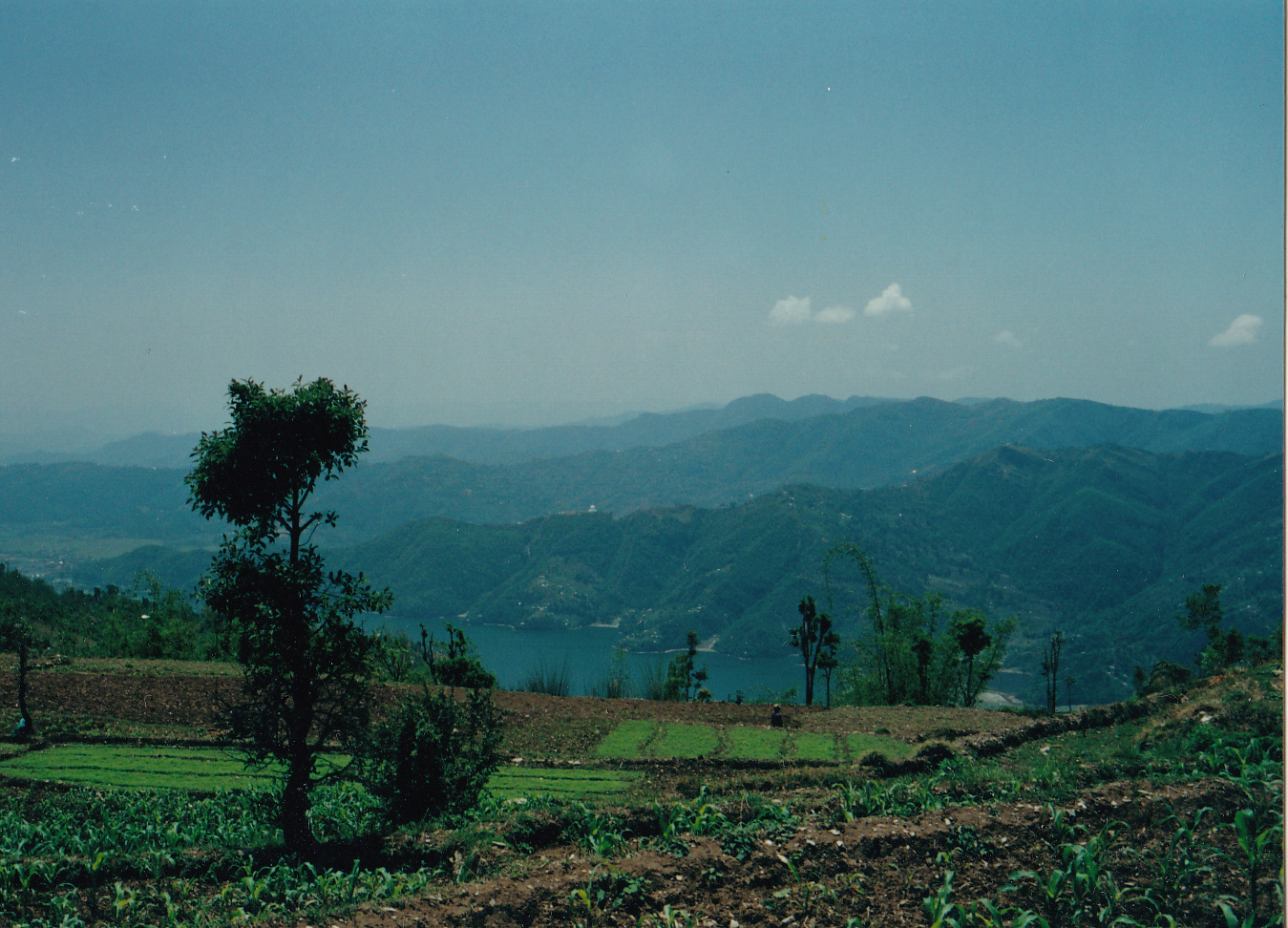
The lakeside city of Pokhara is situated in the middle of the Himalayan country of Nepal. The city and the surrounding hills offer plenty of opportunities for walking and hiking. I occasionally walked between the two campuses of the Manipal College of Medical Sciences (MCOMS). We had to walk through the Prithvi Narayan (PN) campus and cross a suspension bridge across the milky Seti River. Rivers cut spectacular gorges through the soft limestone rocks in the valley. Later PN campus blocked access to outsiders and we had to take a longer way. There are also magnificent walks to Damside and Lakeside. The walk to the village of Batulechaur from the Deep Heights campus of MCOMS is also spectacular. The city is full of magnificent walks and hikes. Winter is the best time, and the views of the snow-covered Himalayas are spectacular.
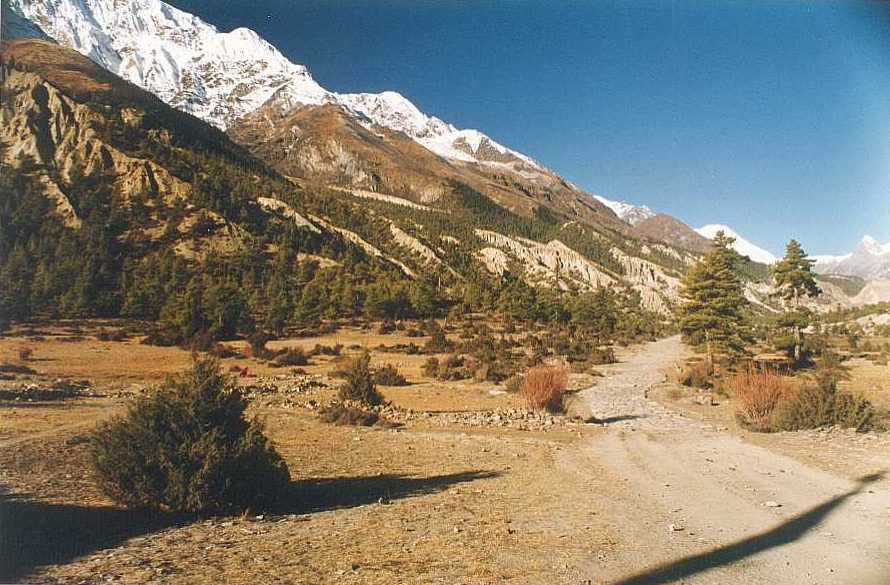
Walks along the Himalayas
Hiking in the hills of Nepal is a unique experience. Change is coming slowly to the hills. For city-born and bred folks stepping into the hills may mean stepping out of one’s comfort zone. It can often be a journey back in time to a simpler existence. The ascents and descents are long and steep. The trail can deteriorate very quickly, and landslides are common. New trails have been created and some have eventually become rough jeep friendly roads. The trail to Manang north of Pokhara is now blasted through solid rock. The trail passes very close to Annapurna II and in bad weather, the trail can seem threatening. Walking through the magical Manang valley provides you with a view of the back side of the Annapurnas. The flat trail is mostly easy but can get very dusty. The trail climbs steadily uphill and after Manang village climbs through barren hillsides.
View from Pokhara
Weather changes quickly in the mountains and can transform from bright and sunny to cloudy and snowy within an hour. Sunny weather elevates the mood while cloudy and snowy weather seems threatening. A trail with a risk of avalanches is the one to the Machapucchare base camp (MBC). The classical pyramidal fishtail (Machapucchare) seen from Pokhara is seen as two separate peaks from MBC. I had hiked to the base camp in March and saw avalanches coming down on the other side of the river.
The Everest region Nepal
In the Everest region, the hike to Everest Base Camp (EBC) from Gorak Shep is a rocky one along the moraine of the Khumbu glacier. I had done this hike while I was staying at Lobuche for a high-altitude research project. The weather was cloudy and low-lying clouds soon closed in. It started snowing steadily and fresh powdery snow soon covered the rocky trails making walking slippery and difficult. The psychological effect of bad weather and the threatening silhouettes of the highest mountains on earth made me deeply uneasy.
Dusk at Wilhemina Park. Photo Courtesy: Ravi Shankar
The island nation of Aruba like most other parts of the world is becoming increasingly obese and overweight. Aruba created a network of walking paths to encourage physical activity. Aruba advertises itself as ‘One happy island’. I used to walk along the Caribbean coast from Wilhelmina Park to the airport. Rains are rare in Aruba and the paved trail is well maintained.
Walking Paths, Aruba
The Sun can be hot though the trade winds keep the temperature bearable. The plan is to extend the linear park from palm beach in the tourist area to the airport. Aruba has beautiful sandy beaches, and a lot of effort is expended on their maintenance and care. The Atlantic coast is less settled, and the waves crash against the rocky shoreline. There are excellent walks among the barren hills and along the old gold mine.
The city of Kuala Lumpur in Malaysia also has good walking paths. The Bukit Komanwel (Commonwealth hill) near my apartment has inviting walks. Due to the constant rains, the trail can be slippery in places, and caution is needed.
Dusk at Bukit KomanwelLake Garden trail in KL
The city is green and the Perdana Botanical Garden in the heart of the city is well-maintained and has several walking trails. The pavements are usually maintained though due to the constant heavy rains they may be wet and covered with moss.
One of the most difficult cities for a walker in my opinion would be the city of Mumbai, India. It is crowded, the traffic is chaotic, and the pavements are blocked by hawkers, stalls, and parked vehicles, and most shop owners keep their goods on the pavements. The concept of the pavement as a protected area for pedestrians seems to be lacking. The pavements are often dug up and the perpetually ongoing metro railway projects ensure more than half of the road may be unusable. Most open areas and woodlands have long been converted into housing projects and/or slums. The situation has steadily deteriorated during the last four decades.
The modern age has several conveniences and labour-saving devices. With increasing prosperity most people now own cars. Families have multiple cars. Cars can be a double-edged sword in reference to health. I think cars are addictive and the convenience makes you take them everywhere. You end up waking less and less unless you properly plan and stick to your exercise routine. Studies now indicate that all steps taken by a person are useful and can add up over the course of a day. In Malaysia recently there have been several virtual races motivating people to accumulate steps over the course of a day and month. The university where I work has a corporate wellness program and several virtual races are held over the course of a year.
We are facing one of our biggest challenges in the form of climate change. A steady increase in carbon dioxide emissions since the start of the industrial revolution has caused global temperatures to rise. Sea level rise, super hurricanes, extremely heavy and concentrated rainfall, forest fires, and scorching summers are all being experienced. We seem set for at least a two-degree celsius rise in global temperature and we are still learning the catastrophic changes this can bring. Walking results in insignificant carbon dioxide emissions and helps us do our bit to save the planet. We are only taking care of planet Earth for future generations as, currently, humanity does not have a planet B.
Though I am a teetotaller a good quote promoting walking may be the one provided by Johnnie Walker, the whisky distillery. After the shutdown due to the pandemic, they launched a new campaign to get the world moving again. Keep walking!
.
*All the photographs have been provided by Ravi Shankar.
Dr. P Ravi Shankar is a faculty member at the IMU Centre for Education (ICE), International Medical University, Kuala Lumpur, Malaysia. He enjoys traveling and is a creative writer and photographer.
.
PLEASE NOTE: ARTICLES CAN ONLY BE REPRODUCED IN OTHER SITES WITH DUE ACKNOWLEDGEMENT TO BORDERLESS JOURNAL
A tribute from Ravi Shankar to a fellow trekker& a recap of their adventures in the Himalayas
Ama Dulam and Lohtse peaks on the way to Everest. Photo courtesy: Ravi Shankar
A very fit and energetic person strode into my office. My good friend, Varun, accompanied and introduced him as a newly joined faculty member in the Physiology department at the Manipal College of Medical Sciences (MCOMS), Pokhara. My friend always called himself Ashutosh though he quickly became famous at MCOMS by his surname Bodhe.
Bodhe was always in perpetual motion. During our five years of close interactions, I rarely saw him sitting quietly in one place. He was a member of the college mess but rarely ate from there. I sometimes saw him around 2 or 3 pm having noodles and eggs from the private food stall located within the mess. He was fond of repairing things. He could put back together nearly everything — except maybe, broken hearts. His tool kit consisted of a soldering iron, screwdriver, screws, insulation tape, clamps, and a multimeter; rather strange appurtenances for a doctor.
During my conversations with him, I came to know that he had always wanted to be an engineer and had secured admission into a premier engineering college in Mumbai, India. He also later qualified for admission to the medical course and his family insisted that he switch over to medicine. He would walk around the city of Pokhara, Nepal at strange times of the day and night. He would walk from the lakeside to the college campus after 10 pm. This seemed strange in a city that usually goes to sleep by nine.
The hill overlooking the Fewa Lake. Photo Courtesy: Ravi Shankar
Bodhe, on occasions, also joined us on day hikes in the Pokhara valley. Pokhara is a trekker’s paradise. The walk up to the Shanti Stupa on the hill slopes overlooking the Fewa lake can be a good Saturday morning activity. Rowboats are available on the shore of Fewa Lake and are mainly used to visit the Tal Barahi temple located on an island in the middle of the lake. The stupa was built by a Japanese monk with the help of locals in the early 1970s. The stupa stands on Anadu hill in the onomatopoeic village of Pumdi Bhumdi and is a good hour’s climb. After the visit, you can climb down to Damside, continue to Lakeside, and return after a delicious lunch.
Boats on the shore of the Fewa Lake. Photo Courtesy: Ravi Shankar
Occasionally, Bodhe would join us on our Saturday walks to Lakeside. The walk would take about 90 minutes. We continued along the lake to a ‘Korean[1]’ restaurant. The restaurant constituted of small huts by the side of the lake with tables and chairs. It was a magnificent location for a feast! We used to have Nepali daal bhaat tarkari maasu (lentil curry, rice, vegetables and meat, usually chicken). In many Nepalese restaurants, food is usually prepared fresh after you order. The food takes around an hour to be prepared. This leaves plenty of time for conversation. The food by the lake was always fresh and piping hot. The country chicken was beautifully spiced, and the green leafy vegetables were perfect.
Our other go-to place for lunch on Saturdays (the weekly off in Nepal) was the Pokhara Thakali Kitchen. Thakalis are originally from the Thak Khola (the upper Kali Gandaki River) around the Nigiri Himals to the north of Pokhara. They are successful businessmen and run some of the best hotels and restaurants in the country. I simply loved their rich, thick green daal and their potatoes fried in ghiu (clarified butter). The other specialty was dhido (a thick paste) made from either corn or buckwheat flour.
Bodhe, me, and a group of students hiked to the Everest Base Camp and Kala Pathar. We flew to Lukla (from Kathmandu) and the Tenzing Hillary airport at around 2800 m. This is one of the most dangerous airports in the world and accidents were not uncommon. The runway was only around 600 m and then it is a steep drop to the river below. We had lunch at a lodge in Lukla while we waited for our porters. Most hikers spent the first night on the trail at the settlement of Phakding. The first thing we noticed was that the Everest region was much colder than the Annapurna trekking region just north of Pokhara. A large portion of the hike is at heights of over 3000 m.
The peak autumn trekking season was underway and there were large groups of hikers on the trail. We were racing against each other to find a place for the night. Those were the days before online booking and land telephone and internet access were still not available in Khumbu.
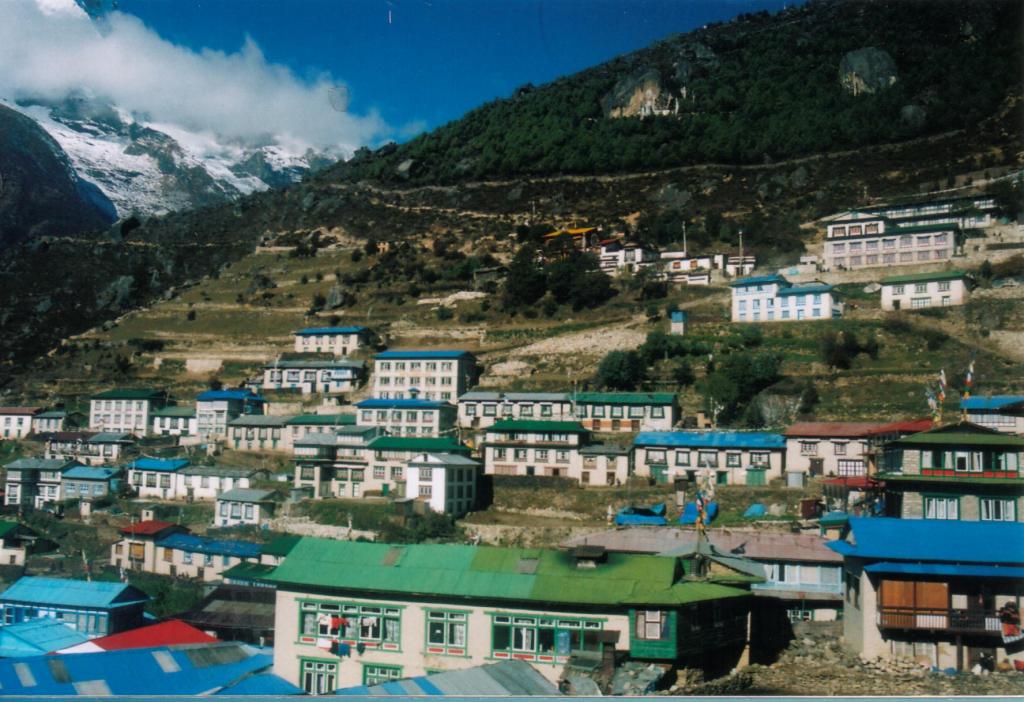
Namche BazaarView of the Himals from Namche BazaarPhoto Courtesy: Ravi Shankar
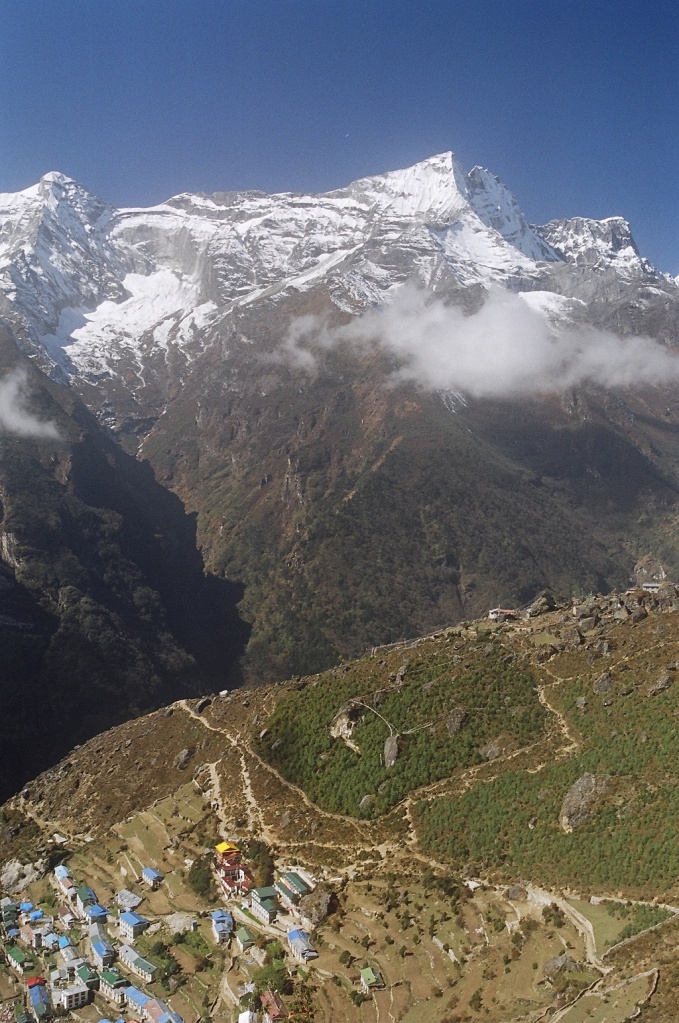
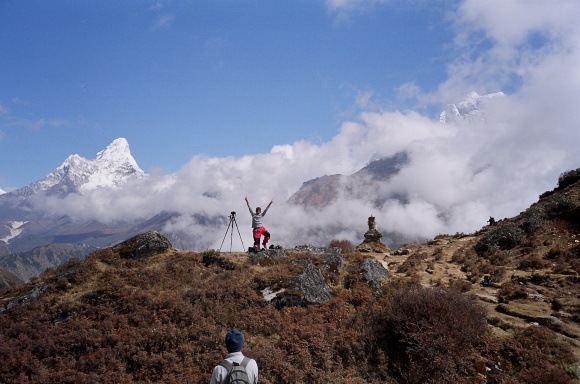
Namche Bazaar, the ‘Sherpa Capital’[2] was packed with tourists, and we were lucky to find rooms at a small lodge. The next morning dawned clear and frosty and the views of the Himals were spectacular. Bodhe, while chewing tobacco, was busy clicking photos and we were dancing vigorously to various songs. He really liked the song Kaanta laga[3]. He would reminisce about the wild morning and mention the ruckus we had created, chewing his usual wad of tobacco for he seemed addicted to the stuff.
Bodhe was a man with tremendous energy and a useful person to have on a long trek. He was impulsive and a practical joker but a kind soul with the energy to get going when the going becomes tough. He sprinted uphill on hikes and then climbed a tree or went off sprinting into the bushes. He did not reach a lodge or a settlement early as he was easily diverted by wayside attractions. He was fascinated by the term boche which stands for a flat land seen from a hilltop. In a very rugged and mountainous landscape, flat land is a coveted commodity. There are many boches in the Everest region – Pangboche, Deboche, Dingboche, Pheriche Tengboche among others.
We eventually reached the settlement of Gorak Shep at 5300 m. The weather was cloudy and freezing. The temperature was well below zero. We were shivering under our quilts in the lodge. It was the eve of Kojagiri Purnima[4], and the moon was beginning to rise. Bodhe motivated a group of students to carry and pitch a tent on the slopes of Kala Pathar (Black Stone) in the freezing cold. They donned all the winter clothing they had and spent the night on the rock photographing the world’s highest mountains in moonlight. The cold chilled their marrows and sleep was out of the question. They arrived around eight the next morning with wild stories of their hair-raising night.
We eventually returned to Lukla and reconfirmed our flight tickets for the following morning. Our flight was scheduled for eleven am and the last night at the lodge was a wild one. Bodhe was in full form and we were all relieved that the trek was over, and we were flying back to Pokhara. It was raining heavily the next morning and our flight was repeatedly delayed. Flights to and from Lukla are notoriously fickle. We were the last flight to take off as rainy weather closed in.
It was a long drive in the rain from Kathmandu to Pokhara. Clouds and mist draped the hills. Soon after reaching the hostel, one of the students who had joined us on the trek mentioned that the next day was a holiday as the roof of the Manipal Teaching Hospital had collapsed. We chided him for his fertile imagination but slowly realised that he was telling the truth. The hospital roof had collapsed that afternoon killing a few patients in the waiting area and seriously injuring a few others.
We hiked with Bodhe, some other faculty, and a few postgraduate students to the village of Ghandruk. Ghandruk (also called Ghandrung) is the second largest Gurung[5] village in Nepal. The hike was along a rocky riverbank and then through stone staircases. The sun was up full force and our trek to the village was hot. Mule trains raised dust clouds as they move up and down the trail. The village is the headquarters of the Annapurna Conservation Area Project (ACAP). There are several excellent lodges in the village and the Annapurna South and Hiunchuli Himals can be viewed from there. One of the finest lodges in the village was the Himalaya lodge, a Kerr and Downey resort located at the top of the village. The lodge was an additional twenty-minute hike, but it is well worth the effort. The views are stupendous and the rooms beautiful. They provide down jackets and slippers for the comfort of their guests. There was a good porch and a magnificent lawn in front. Bodhe absolutely loved this place.
Sadly, Bodhe never stayed in touch after he left Pokhara. There were rumours of him working in the Caribbean, in Mauritius, and in different places in India. In a circuitous fashion, I came to know about his death last year. We do not know the details yet. Looking back on his life, I am reminded of so many unfulfilled promises. The man had a first-rate intellect and boundless energy. He could have achieved much only if he had been able to focus and channel his God-given gifts. But, he lived his life in his own terms. Dear friend, I sincerely hope you are finally at peace. Ashutosh Bodhe – tujhe salaam[6]!
Bodhe
[1] The restaurant mainly catered to Korean tourists and used to serve primarily Korean food but also cooked Nepalese dal bhaat
Dr. P Ravi Shankar is a faculty member at the IMU Centre for Education (ICE), International Medical University, Kuala Lumpur, Malaysia. He enjoys traveling and is a creative writer and photographer.
.
PLEASE NOTE: ARTICLES CAN ONLY BE REPRODUCED IN OTHER SITES WITH DUE ACKNOWLEDGEMENT TO BORDERLESS JOURNAL
Yesterday, it was cloudy.
Today, it's my cup of tea.
It's died in me.
You can see
It turned into the desire of the sea.
The desire of the sea just splashed through me.
I sensed the loss without the key.
But, why am I anticipating the next cup of tea?
As if I am not fulfilled. No idea. No key.
I wish this could be my last cup of tea
with no desire to go cloudy.
Prasanta Kumar B.K. is a Ph.D. candidate in International Relations at Sichuan University, China. He holds master’s degrees in both English literature and international relations and diplomacy from Tribhuvan University, Nepal. He has been working for Nepal Airlines as a senior officer.
.
PLEASE NOTE: ARTICLES CAN ONLY BE REPRODUCED IN OTHER SITES WITH DUE ACKNOWLEDGEMENT TO BORDERLESS JOURNAL












 Borderless