Gower Bhat discusses the advent of coaching schools in Kashmir for competitive exams for University exams, which seem to be replacing real schools. Clickhere to read.
In winters, birds migrate. They face no barriers. The sun also shines across fences without any hindrance. Long ago, the late Nirendranath Chakraborty (1924-2018) wrote about a boy, Amalkanti, who wanted to be sunshine. The real world held him back and he became a worker in a dark printing press. Dreams sometimes can come to nought for humanity has enough walls to keep out those who they feel do not ‘belong’ to their way of life or thought. Some even war, kill and violate to secure an exclusive existence. Despite the perpetuation of these fences, people are now forced to emigrate not only to find shelter from the violences of wars but also to find a refuge from climate disasters. These people — the refuge seekers— are referred to as refugees[1]. And yet, there are a few who find it in themselves to waft to new worlds, create with their ideas and redefine norms… for no reason except that they feel a sense of belonging to a culture to which they were not born. These people are often referred to as migrants.
At the close of this year, Keith Lyons brings us one such persona who has found a firm footing in New Zealand. Setting new trends and inspiring others is a writer called Harry Ricketts[2]. He has even shared a poem from his latest collection, Bonfires on the Ice. Ricketts’ poem moves from the personal to the universal as does the poetry of another migrant, Luis Cuauhtémoc Berriozábal, aspiring to a new, more accepting world. While Tulip Chowdhury — who also moved across oceans — prays for peace in a war torn, weather-worn world:
I plant new seeds of dreams for a peaceful world of tomorrow.
Fiction in this issue reverberates across the world with Marc Rosenberg bringing us a poignant telling centred around childhood, innocence and abuse. Sayan Sarkar gives a witty, captivating, climate-friendly narrative centred around trees. Naramsetti Umamaheswararao weaves a fable set in Southern India.
A story by Nasir Rahim Sohrabi from the dusty landscapes of Balochistan has found its way into our translations too with Fazal Baloch rendering it into English from Balochi. Isa Kamari translates his own Malay poems which echo themes of his powerful novels, A Song of the Wind (2007) and Tweet(2017), both centred around the making of Singapore. Snehaprava Das introduces Odia poems by Satrughna Pandab in English. While Professor Fakrul Alam renders one of Nazrul’s best-loved songs from Bengali to English, Tagore’s translated poem Jatri (Passenger) welcomes prospectives onboard a boat —almost an anti-thesis of his earlier poem ‘Sonar Tori’ (The Golden Boat) where the ferry woman rows off robbing her client.
We have plenty of non-fiction this time starting with a tribute to Jane Austen (1775-1817) by Meenakshi Malhotra. Austen turns 250 this year and continues relevant with remakes in not only films but also reimagined with books around her novels — especially Pride and Prejudice (which has even a zombie version). Bhaskar Parichha pays a tribute to writer Bibhuti Patnaik. Ravi Varmman K Kanniappan explores ancient Sangam Literature from Tamil Nadu and Ratnottama Sengupta revisits an art exhibition that draws bridges across time… an exploration she herself curated.
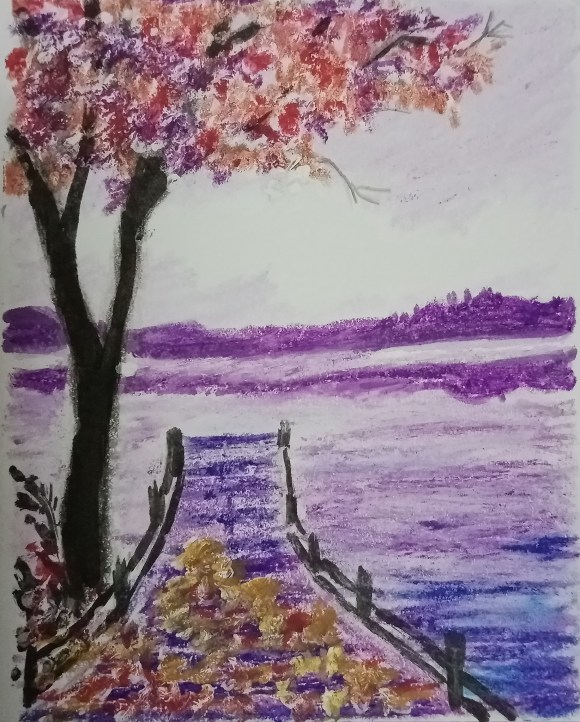
We have a spray of colours from across almost all the continents in our pages this time. A bumper issue again — for which all of the contributors have our heartfelt thanks. Huge thanks to our fabulous team who pitch in to make a vibrant issue for all of us. A special thanks to Sohana Manzoor for the fabulous artwork. And as our readers continue to grow in numbers by leap and bounds, I would want to thank you all for visiting our content! Introduce your friends too if you like what you find and do remember to pause by this issue’s contents page.
Wish all of you happy reading through the holiday season!
The world changes. Yet, the memories captured and frozen in time, moments that one never thought would come to pass, remain. In my child’s eyes I still see and recall a world that has gone by, the space and the people and all in it that I still love. Brickfields was no remote Indian enclave even in the 1960s. It was about 5 miles from Kuala Lumpur, the capital town. The outside world would soon collide with my small space called Thambapillai Kampung[1] in Brickfields amidst 13th May 1969 race riots and my childhood world would become the past.
We were a small community, a kampung of about 100 households. We were all tenants to a lawyer landlord who charged a small rent to occupy a small portion of his land. It was home to many Indians who were barely scaping for a living above the poverty line. What we lacked in the material world, was made up with a sense of community. It was not perfect, but we co-existed amicably and often looked out for each other.
Thambapillai Kampung composed a good mix of Hindu and Christian families, mostly of Tamil ethnicity, both Indian and Sri Lankan. Mine was a Christian childhood here. The Methodist Tamil Church was a ten-minute walk away from our home. The Hindu temple, Sri Kandaswamy Kovil, at the end of Scott Road was even closer. The kampung is now replaced by condominiums none of us could have afforded, except the lawyer who sold his land for the gentrification of this place. The church and temple still remain.
The Days Before Christmas
Christmas Palagaram-Making
Our house was often the hive of Christmas palagaram making activities. My mother and her group of women friends, Hindu and Christian, all housewives, would plan a schedule on making traditional Indian palagaram[2] like muruku, achimuruku, chippi, neiyi orrundai, monturikottu and sometimes even kalu oorundai (almost as hard as cricket balls). They would take great care to get all the ingredients and make the palagaram from scratch.
Kalu oorundaiAchimurukuFrom Public Domain
Below is an excerpt from my poem ‘A Brickfields Christmas’ that narrates my childhood experience of witnessing this activity over several years:
December descends on us. Womenfolk, friends of Amma, Sithi and Paati, all aunties to us arrive. Palagaram-making begins. Muruku, achimuruku, chippi and neiyee oorundai – South Indian festive fare. We wait at the side lines like cats for scraps.
My elder sisters put their culinary skills to work. The fragrance of freshly baked cookies and cakes waft through the house, giving a sweetness over the usual aroma of curries in our home. A festive air spreads and seeps through the house.
Annual House Spring Cleaning
The days before Christmas fell during the school holidays and we the children were homebound. It was also the time for our big-time annual spring cleaning of our house as part of the preparation for Christmas and new year. All the children were involved in various tasks to clean and repaint the whole house. This is re-counted in the extracts from my poem ‘A Brickfields Christmas’:
It’s November and school’s out. We are all home-bound. There’s an excitement despite the work at hand. Paint brushes appear and paint pails sit next to Appa’s bicycle. The yearly routine is set to begin in our house. …
The house waits like a patient giant its coat slowly scraped away and its nakedness to be clothed by an eight-sibling work team.
Chores allocated according to seniority and skills. I am happy to scrape last year’s peeling paint.
Limestone white for personal living spaces ICI blue paint just for the hall. The worn-down white planks over the months are slowly lapped up by paint-laden brushes.
Large black spiders once secure in crevices now scuttle about. Plank by plank whiteness emerges. A new brightness which in time will wear off once more. The house smells fresh and a lightness caresses us.
Annual Christmas Shopping
Mutabak. From Public Domain
Our family practice was that all the children would get clothes for the festive season. Three set of clothes one for Christmas eve, Christmas day and New Year’s Day. Amma was the prime mover in all our activities. We would set out to Batu Road (now Jalan Tuanku Abdul Rahman) to Globe Silk Store and Kishu’s Departmental Stall, for their affordable prices, to buy our shirts. Along the way, we would stop at Central Shoe Shop or Bata to buy our shoes. Taking a break from shopping, we would be treated to murtabak at the famous Kassim Restaurant which was also situated among these shops.
It was also the time of year for buying gifts. For this, my eldest brother, Annan, would accompany us and we would go to Deen’s to buy our board games, toys for building and construction sets and even musical instruments. All these would be gift wrapped and placed under our Christmas tree. Besides our choice of gifts, there would some surprise gifts too.
Appa[3] was busy with his work and left this work to Amma[4]. Being a newsvendor, he had no holidays. He worked every day if newspapers were printed and needed to be delivered to his customers. Yet, he still found time to take the boys to the tailor near our house in Scott Road to get our short pants sewn.
Christmas Decorations for Our Home
The last few weeks, the postman would have brought tens of Christmas cards for the family and individuals who were of card-sending/receiving age. We used to look out for who would get the most greeting cards besides our parents. In the last few Christmases in Brickfields, I was among those assigned to write the greetings and addresses on the Christmas cards before they were sent off to the nearby Brickfields post office. I can remember the many times I wrote: To, Mr & Mrs xxx and fly … Best wishes from Mr & Mrs N Vethamani & fly (short form for family).
A few days before Christmas we would begin putting up the decorations. The cards we received would be strung and hanged on the living room walls using a string to hold them. Balloons were blown and hung in the corners and sides of the living room walls. Finally, the Christmas tree that had been stored away after last year’s celebration would be brought and decorated:
Last year’s Christmas tree is uncovered from its yearlong dust. My younger brother and I hang the glittering trinkets fearing a drop could shatter the fragile bells and baubles. Our friend Ahmad is cutting out crepe paper and making streamers.
A golden star crowns our tree. Annan places the lights A final touch, Akka sprays the snow. For the first time that night the lights come on again. The multi-coloured twinkling bulbs complete the advent of Christmas into our kampung home.
Christmas Eve
Christmas eve marked the height of the festivities for us children. It was a day of giving and sharing. Christmas cheer through palagaram, Christmas goodies. Around five in evening, as the day grew slightly cooler, we would begin the palagaram-giving to our neighbours, both Hindu and Christian. Amma, Paati[5]and my elder sisters would arrange our homemade palagaram on trays. They would be covered with a tray lace.
It was a joyous occasion, carrying trays of goodwill to our neighbours’ homes. We were warmly greeted. Often, the mothers in the neighbours’ houses would receive our gift. They would then take our gift and often leave a small gift, one Ringgit or five Ringgit note even. These cash gifts often thrilled us to no end as it meant more spending money during Christmas. Seeing my elder siblings, even as a child, I knew that I best enjoy what I had as with each passing year the younger ones would take my place. What I didn’t know was how quickly this world would come to an end.
The Christmas tree would be lit in the evening, and our presents lay on the floor below the branches. Annan[6] would be playing Christmas carols on the gramophone. The day would end with playing with crackers and fireworks with my cousins who lived a few doors away. We would wait anxiously for the evening to pass and soon it would be Christmas. We seldom stayed awake till midnight. The excitement through the day wore us out and we were soon in our beds.
Some Christmas eves, our Sittappa[7] would butcher a young goat in his garden. We, children, we were not allowed to see the actual killing of the goat but once it was done, we would watch Sittappa cut and clean the carcass. On Christmas day and the next few days, we would have mutton curry along with mutton tripe, mutton dalcha and other mutton delicacies.
Christmas Day
On Christmas morning, the air was filled with everything fresh and new, the house with its freshly coated paint and all of us in our new clothes. Morning would have started early for Amma, Paati and my elder sisters. They would have started to cook the food for us and our guests who would arrive for our Christmas lunch. Amma was a good cook and all of us and our guests looked forward to her biryani and dishes. Often, we had turkey kurma curry for Christmas lunch. For breakfast we had fruitcake, jam tarts and other palagaram.
Turkey Kurma Curry. From Public Domain
Soon it was time to get ready for church. My poem ‘One Christmas Morning’ captures how the day began on a Christmas morning while we lived in Brickfields:
One Christmas Morning
The smell of curries and familiar kitchen sounds of Paati, Amma and my sisters have awakened me.
My younger brother already about caught up with his presents opened at midnight by the Christmas tree has no time for me.
Annan has switched on the gramophone and Pat Boone sings carols that he’d be home for Christmas though not my sister, away in a distant land.
The smells of curries and ghee rice waft through the house guests will arrive, but not yet.
Appa’s come back, his bicycle still laden with the day’s newspapers offices closed for the holiday deliveries can wait another day.
A brother’s in the bathroom, another awaits his turn, soon we’d all have bathed and dressed in our Christmas best.
Ready for church, a quick walk away.
Now dressed in our Christmas best, we make our way to Church which is a few minutes’ walk. Amma, Paati and my elder sisters in their new sarees, Appa in his new vesti and shirt and we the sons in our new shirts, shorts and shoes. The church would be decorated in festive Christmas colours and among the congregation there was a general sense of joy celebrating Jesus’ birth.
Once the Church service is over and we are back home, the busy hours in our home begins. Our family friends begin to make their way to our home for lunch. We would have gone to their homes for Deepavali and other occasions. We, the children, would have invited some of our friends too and we get to play hosts to them. Annan’s and Akka[8]’s friends and work colleagues and our classmates come calling.
Going to friends’ homes during festive occasions is very much a thing of a past. Malaysians used to invite friends from different races and religions to their homes. Unfortunately, the practice of ‘open house’ slowly declined and has mostly faded. There are no more closely knit communities as when we were in Thambapillai Kampung, Brickfields. Most people seem quite happy to celebrate in neutral places like restaurants where there is no fear of offending religious sensibilities. Muslims want halal food and Hindus should not be served beef. Then there are the vegetarians and the vegans. The spirit of coming together is lost by that which divide us and not celebrate our diversity.
All my Christmases have changed over the decades. Now many years on since the Brickfields Christmases, with our parents having passed away there is no family home Christmases. My siblings have their own families and my sons all grown up and with their own families do not celebrate Christmas either. So, I’m left with the happy memories of my childhood Christmases. Still, it is a happy occasion.
Merry Christmas, everyone!
Family photo for Christmas in our Brickfields home. Circa 1967Tharumaraj Annan (eldest brother) standing in front of our attap-roof kampung house. Circa 1968.Photos provided by Malachi Edwin Vethamani
Malachi Edwin Vethamani is a Malaysian Indian poet, writer, editor, critic, bibliographer and academic. He is Emeritus Professor with University of Nottingham. More details at : www.malachiedwinvethamani.com
.
PLEASE NOTE: ARTICLES CAN ONLY BE REPRODUCED IN OTHER SITES WITH DUE ACKNOWLEDGEMENT TO BORDERLESS JOURNAL
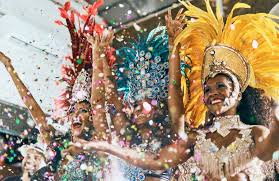
Festivals are affirmations of joy and love that bind humanity with their sense of hope even in a world torn by violence and climate change. As the end of the year approaches, we invite you to savour flavours of festivals past and, a few, yet to come, before the cycle starts again in the new year. The colours of celebrations are vibrant and varied as shades of nature or the skies.
We have new years spread out over the year, starting with January, moving on to the Chinese New Year around February, the Bengali new year in April to festivals of environment, light, darkness as in Wiccan beliefs, Tagore’s birth, more conventional ones like Deepavali, Eid, Durga Puja and Christmas. People celebrate in different ways and for different reasons. What we have also gathered is not only the joie de vivre but also the sadness people feel when celebrations are muted whether due to the pandemic, wars or for social reasons. In some cases, we indulge in excesses with funny results! And there are of course festivals of humanity … as celebrated by the bauls — the singing mendicants of Bengal — who only recognise the religion of love, compassion and kindness.
Ramakanta Rath’sSri Radha celebrating the love of Radha and Krishna have been translated from Odiya by the late poet himself, have been excerpted from his full length translation. Click here to read.
Bijoya Doushumi, a poem on the last day of Durga Puja, by the famous poet, Michael Madhusudan Dutt, has been translated from Bengali by Ratnottama Sengupta. Click here to read.
A Clean Start: Suzanne Kamata tells us how the Japanese usher in a new year. Click here to read.
Shanghai in Jakarta: Eshana Sarah Singh takes us to Chinese New Year celebrations in Djakarta. Click here to read.
Cherry Blossom Forecast: Suzanne Kamata brings the Japanese ritual of cherry blossom viewing to our pages with her camera and words. Clickhere to read.
Pohela Boisakh: A Cultural Fiesta: Sohana Manzoor shares the Bengali New Year celebrations in Bangladesh with interesting history and traditions that mingle beyond the borders. Clickhere to read.
The New Year’s Boon: Devraj Singh gives a glimpse into the projection of a new normal created by God. Click here to read.
A Musical Soiree: Snigdha Agrawal recalls how their family celebrated Tagore’s birth anniversary. Click here to read.
An Alien on the Altar! Snigdha Agrawal writes of how a dog and lizard add zest to Janmashtami (Krishna’s birthday) festivities with a dollop of humour. Click here to read
Memories of Durga Puja : Fakrul Alam recalls the festivities of Durga Puja in Dhaka during his childhood. Click hereto read.
KL Twin Towers near Kolkata?: Devraj Singh Kalsi visits the colours of a marquee hosting the Durga Puja season with its spirit of inclusivity. Click here to read.
Hold the roast turkey please Santa: Celebrating the festive season off-season with Keith Lyons from New Zealand, where summer solstice and Christmas fall around the same time. Click here to read.
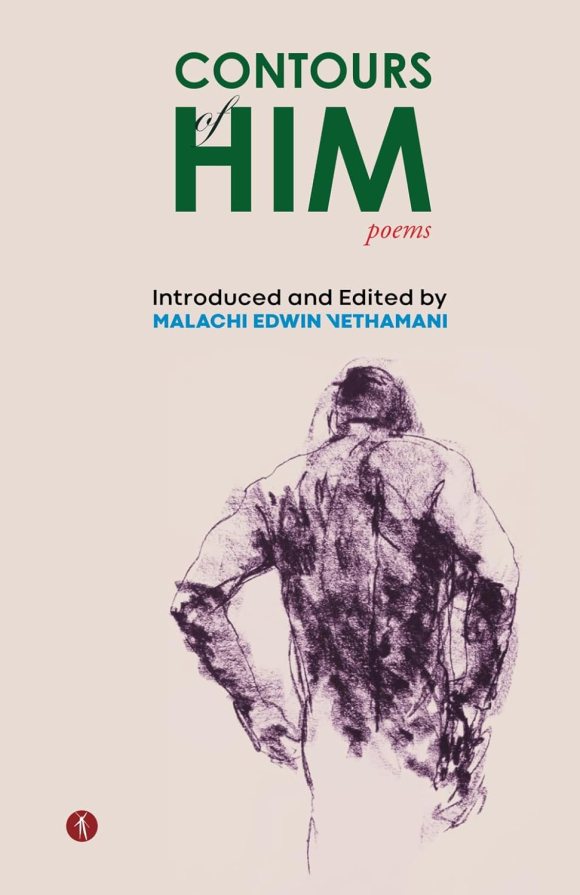
Contours of Him: Poems has been edited and introduced by Malachi Edwin Vethamani, a Malyasian academic of repute. The book has a rich assemblage of poetical voices — from both men and women — representing the contours and nuances of the many aspects and shades of masculinity. The poems explore the male body as a symbol of identity, art, and humanity, delving into themes of masculinity, strength, vulnerability, and beauty. It also examines the male body and psyche as the site of hurt and wounding. The book features poems that scrutinise the male form revealing or concealing it to explore these themes.
The focus on corporeality or the somatic coexists with the psychological in many poems in the anthology. Childhood innocence and curiosity coexist and yield to what could be viewed as growing pains or the challenges of maturation and understanding. There are several poems on the father-son theme, with poems that express homage to the father. Christina Yin’s prose poem ‘To My Father’ and Gopal Lahiri’s ‘My Ideal Man’ are cases in point. Sudeep Sen in the poem, ‘Baba/Father’, captures the enormous vacuum left by the loss of the father as Sen completes the elaborate death rituals as the eldest son of his dead father, performed as per brahminical prescriptions. In a gnomic and nuanced vein, Vethamani , the editor of the anthology, gives his take on father-son intimacies.
This book examines the contours of the male body and psyche at different stages of life and could be viewed as a psycho-somatic exploration of masculinity across diverse cultures. It also explores the strength and fragility of the male physique, occasionally dipping into cultural repertoires of male archetypes, human and divine. At the same time, it acknowledges societal expectations from men and their concomitant cultural insecurities, particularly regarding their identity and the search for acceptance.
A common motif in many of the poems is about the unwitting and unwillingly borne burden and baggage of masculinity. The protagonists/personae of many of these poems seem to be conscious that masculinity is but a performance, involving the display of muscles and embodying a certain swag. Yet this definition of and expectation from men within patriarchies, can be a cage and straitjacket which binds, restricts and confines the human being. If patriarchies bind women, men are not exempt from it either. It is this theme that resonates(among others) in Angshuman Kar’s poem called ‘Tears’: “When mountains cry, rivers are born/From a woman’s tears, pearls have always been born/And when mothers cry, dormant volcanoes awaken…No one in the world knows/why a strong man cries/or why, when he does/he looks so sacred and beautiful.”
The predominant focus, however, is on corporeality that has led to the exploration of its many aspects of the body in the poems. The many facets locates the male body along a spectrum of materiality, vulnerability, relationality and the transcendental possibilities of the body. In recent years, there have been a plethora of poems by women discussing corporeality in multiple registers, exploring female subjectivity, desire and sexuality. Focus on the psychosomatic aspects of the gendered body has led to numerous explorations and analyses of femininity, on being/becoming women, on trans-identities. Many poems have been written on the human-divine aspect of the female body. Kamala Das and others (including Pakistani women poets) have written evocatively about the transgressive desires and the many hungers of the female body .
Voices from the global south recording the voices of men was perhaps the need of the moment. The anthology includes a few poems on masculinity as a construct, especially focusing on the male body through various lenses — vulnerability, performance, shame, violence, and transformation. These poems offer a critical lens rather than idealising masculinity, exposing its social constructions and internal contradictions. They also highlight the relational nature of masculinity which are often traditionally embedded within family structures in South Asia. There are glimpses of guilt in Arthur Neong’s poem, “At this juncture of age, I feel like a teenager again,” where the persona/speaker seems keen to shed and slough off the burdens of masculinity and be in an escapist mode. He writes “At times I go to my wife for a little reprieve/Yet eyes open, think of ways to cheat”. Some of the poems read like love poems, like David C.E. Tneh’s poem, ‘Crossings’, that memorialises his dead friend. Tneh writes: “between the shared spaces and/ private moments come a synergy of collective memories/that I have of you.”
A writer writing on the female body once referred to it as a story discussed by men. Similarly, the anthology at hand discusses the contours of male corporeality and affect. The anxieties of masculinity, of literally not measuring up, pepper these poems and forms one of the vital themes of this anthology. Occasionally, a kind of narcissism creeps in, often giving way to musing or self-introspection. After voicing the common masculine concerns(and anxieties) of corporeal self-consciousness, the poet Kiriti Sengupta declares:
“I don’t look at veiled people anymore. It is either my age or my hormones. I now look beyond the flesh, bone and keratin.”
In the last revelatory line, there is a movement towards transcendence: “I have been told /the finer body dwells undressed.”
In a different context but similar vein, Sandeep Kumar Mishra in ‘The Canvas of Form’ writes, “The naked body, stripped of all pretence,/Breathes honesty, raw beauty, fragile strength.” The profundity of the closing lines is inescapable: “The body, bared, is neither shame nor pride/But speaks of histories, of fears ,of love. It tells of burdens carried, joys embraced/And in its stillness, whispers human truth.”
Much canonical poetry, including that of the famed icon of modernist poetry, T.S.Eliot, writing a century ago, display a preoccupation with masculine anxieties in his iconic ‘The Love Song of Alfred J Prufrock’. The effete personae/protagonist , immortalised in the eponymous poem, Felix Cheong writes of ‘Middling Age’ that it’s “So unbecoming to have become so old? You’d sooner wear the ends of your frailty rolled”, lines echoing T.S.Eliot’s The Love Song of Alfred J Prufock, “I will wear the bottoms of my trousers rolled.”
From Justin Baldoni’s Man Enough to Shyam Selvadurai’s Funny Boy, there are many coming of age stories in our cultural landscape-on book lists and bestseller lists. While the sociology of sex and gender has long been a part of sociology and social psychology, the growth and development of a field of knowledge –gender studies– in the last four decades or so, has thrown into relief the fact that if femininity is a construct, so is masculinity.
Meenakshi Malhotra is Professor of English Literature at Hansraj College, University of Delhi, and has been involved in teaching and curriculum development in several universities. She has edited two books on Women and Lifewriting, Representing the Self and Claiming the I, in addition to numerous published articles on gender, literature and feminist theory. Her most recent publication is The Gendered Body: Negotiation, Resistance, Struggle.
.
PLEASE NOTE: ARTICLES CAN ONLY BE REPRODUCED IN OTHER SITES WITH DUE ACKNOWLEDGEMENT TO BORDERLESS JOURNAL
Celebrating poetry around the world, our focus this year is on refugees, immigrants or poetry by migrants… In a way, we are all migrants on this Earth and yet immigration for both climate and war has created dissatisfaction in the hearts of many. Can mankind unify under the single blue dome which covers all our home?
“The Journey” by Alwy Fadhel, an asylum seeker to Australia. The piece is included in the Exile collection of the Refugee Art Project. Art from Public Domain.
We start by welcoming migrants from Jupiter but how do we react to human migrants within Earth… ?
All the Way from Jupiter
By Rhys Hughes
All the way from Jupiter came the refugees, their heads made of hydrogen, and helium, their knees. No one cried: depravity! for we were pleased to help them relocate to Earth: we offered them homes inside plastic domes uncrowded but full of swirling clouds blown by the music of fierce trombones to mimic the crushing gravity.
All the way from one of our homegrown war zones came refugees on their knees and we said: no, no, no, and no again! Go back home right now, be killed, assaulted, it’s all your own fault for being born here on Earth. The newcomers from Jupiter are tubular like cucumbers, but men, women and children like yourselves aren’t welcome.
And what do refugees from war-torn zones on Earth have to add?These are poems by those who had to escape to safety or move homes for the sake of conflict.
I am Ukraine brought to us by Lesya Bakun, while she was on the run from her home to a place of refuge outside her homeland. Click here to read.
Immigrant’s dream brought to us by Ahmad Al-Khatat, who migrated from Iraq to the West to find sustenance. Click here to read.
In some cases, the wounds lingered and the progeny of those who escaped earlier conflicts give voice to past injuries as well as some immigrants who wandered to find a better life share their experiences.
In 1947, Masha Hassan writes of her grandmother’s plight during the Partition of the Indian Subcontinent. Click here to read.
Birth of an Ally reflects Tamoha Siddiqui’s wonder with new flavours she experiences away from her original homeland. Click here to read.
Two Languages by Luis Cuauhtémoc Berriozabal explores linguistic diversity in immigrants. Click here to read.
These could be listed as turns of history that made people relocate.
Red Shirt Hung from a Pine Treeby Ryan Quinn Flanagan takes two issues into account — violence against humanity and colonial displacement of indigenous people — is that migration? Click here to read.
Products of War by Mini Babu talks of the displacement of humanity for war. Click here to read.
Some empathise with those who had to move and write of the trauma faced by refugees.
Migrant Poems by Malachi Edwin Vethamani reflect on migrants and how accepted they feel. Click here to read.
Birds in Flight by A Jessie Michael empathises with the plight of refugees. Click here to read.
The Ceramicist by Jee Leong Koh records the story of a migrant. Click here to read.
And some wonder about the spiritual quest for a homeland… Is it a universal need to be associated with a homeland or can we find a home anywhere on Earth? If we stretch the definition of homeland to all the planet, do we remain refugees or migrants?
Anywhere Particular by Wendy Jean MacLean reflects on the universality of homes — perhaps to an extent on nomadism. Click here to read.
Where is Home? by Shivani Shrivastav meditates on the concept of home. Click here to read.
Sparrows, a poem translated from Korean by the poet — Ihlwha Choi — questions the borders drawn by human laws. Click here to read.
Journey of Hope by Tagore has been translated from Bengali by Mitali Chakravarty. It explores the spiritual quest for a home. Click here to read the poem in English and listen to Tagore’s voice recite his poem in Bengali.
Some look forward to a future — perhaps in another galaxy — post apocalypse.
In Another Galaxy by Masud Khan translated from Bengali by Fakrul Alam wonders at the future of mankind. Click here to read.
And yet others believe in the future of humankind.
We are all Human by Akabar Barakzai, translated from Balochi by Fazal Baloch, is a paean to humanity. Click here to read.
We are all Human
By Akbar Barakzai...
Russia, China and India, Arabs and the New World*, Africa and Europe, The land of the Baloch and Kurds -- Indeed, the whole world is ours. We are all human. We are all human...
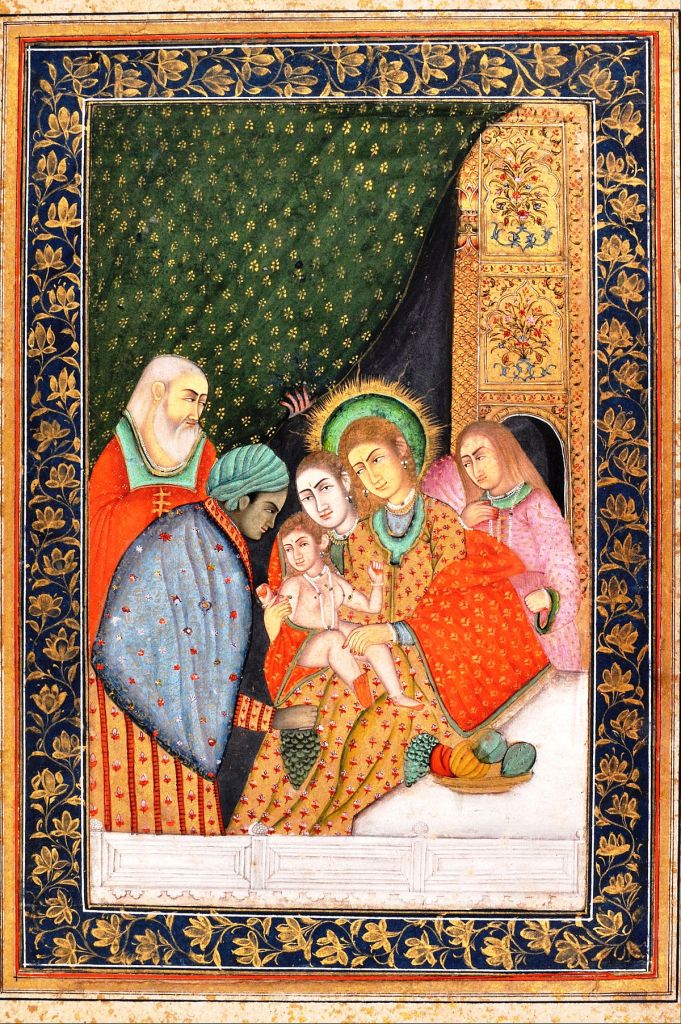
Nativity of Christ, painted in the Mughal empire, around 1800 AD
“The central celebration is the birth of a child. There is no culture that does not celebrate this event, because all of us who belong to the human race can see our collective future in the pudgy little face. We marvel at this conjuring act, the miniature miracle, at its tiny fingernails and budlike nose.” — Jerry Pinto, Indian Christmas: Essays, Memoirs, Hymns, an anthology edited by Jerry Pinto and Madhulika Liddle
Christmas centres around the birth of a child who impacted a large part of the world and urged us to love others despite differences, to be kind, to embrace those who suffered… and that is the spirit that continues to unite humankind to move towards a future where people thrive in harmony, with love in their hearts. Despite all the darkness that broods over the world, Christmas has come around. The sun still moves forward in time and at some point, the darkness will give way to light. Perhaps, Christmas will remind people of the values they need to uphold to live in a world that is not filled with fear, greed or the lust for power and they will stop killing ruthlessly and without any sense of coherence. With that in mind, we have tried to evoke the spirit of Christmas cheer by presenting writings that talk of celebrations.
This is a season that should be filled with hope, goodwill, peace and love. The celebrations — depicting variety, a departure from conventional norms — by writers who reach across borders and time, rekindle our belief in the wonder created by these values, which is what Christmas is all about. We start with Tagore, a Brahmo by religion but his poem in English dwells on the wonder he feels at the idea of this unique birth of Christ. Our other writers from across the world pitch in with what Christmas means to all of them, whether it creates a sense of goodwill, nostalgia, invokes curiosity or just evokes plain laughter. Hopefully, we can all join together to ring the bells of kindness, love, humanitarian help and peace this year!
Poetry
An excerpt from Rabindranath Tagore’s ‘The Child‘ a poem originally written in English by the poet to celebrate Christmas. Click here to read.
In I Went to Kerala, Rhys Hughes treads a humorous path while exploring Christmas in Kerala. Click here to read.
In Hold the Roast Turkey Please Santa , Keith Lyons writes from New Zealand, where summer solstice and Christmas fall around the same time. Click hereto read.
In My Christmas Eve “Alone”, Erwin Coomb has a strange encounter on Christmas eve… Is it real? Clickhere to read.
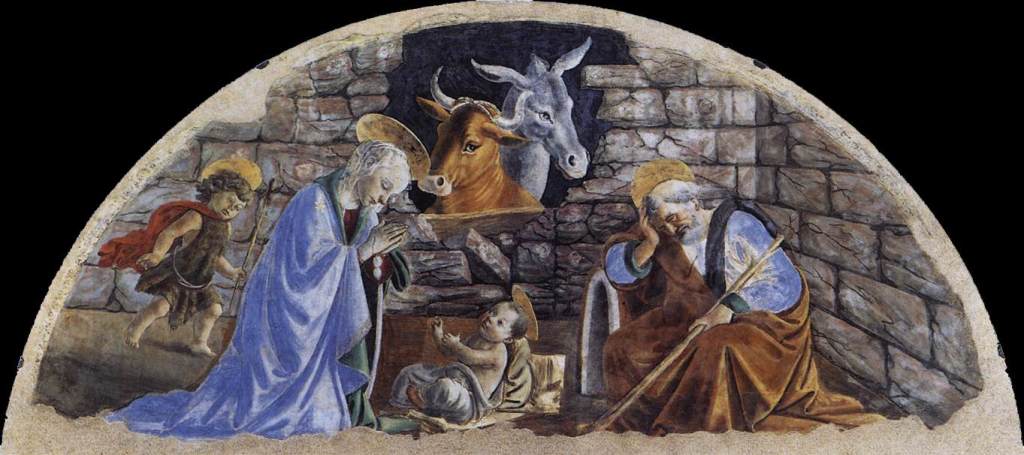
Nativity, a fresco by Italian artist Boticelli, created around 1467
Our population crossed the 8 billion mark in November, 2022. As we move towards trying to hunt for alternative domiciles for our ever-expanding population, even in outer space, we still have to take into account the increased movement of people across the Earth in search of alternative homes driven by external circumstances or by personal needs.
Some have lost their homes and lands to war, some to climate emergencies and some moved out out of choice. Here we have collected narratives of past and present migrations, emphasising the fluidity of borders, despite the lines drawn artificially by manmade constructs. In an earlier interview, Anthony Sattin talks of nomadic migrations and the concept of asabiyya, or brotherhood, which tied humans to ideas and ideals instead of a piece of land mooted in Arabia by Ibn Khaldun in the fourteenth century. Has the time come to revive this concept with conflicts and the climate crises becoming real? As weapons, fire and water affect our habitats, one wonders if reverting to the concept of nomadic existence is not becoming a necessity… This small collection of writings will hopefully highlight the concerns.
In Belacan, Farouk Gulsara shares a narrative based on the life of a migrant in 1950s Malaysia. Clickhereto read.
Ujjal Dosanjh, former Minister from Canada and former Premier of British Columbia, talks of his own journey and learning as he migrated out of India to Canada. Click hereto read.
In Mister, They’re Coming Anyway, Timothy Jay Smith writes on the refugee crisis in Lesbos Island, Greece, in 2016 with photographs by Michael Honegger. Click here to read.
An excerpt from Ramy Al-Asheq’sEver Since I Did Not Die, translated from Arabic by Isis Nusair, edited by Levi Thompson. The author was born in a refugee camp. Click hereto read.
Ujjal Dosanjh, former Minister from Canada and former Premier of British Columbia, discusses his autobiography, Journey After Midnight – A Punjabi Life: From India to Canada, and the need for a world with less borders. Click hereto read.
Professor Fakrul Alam discusses his new book of Tagore translations, Gitabitan: Selected Song-Lyrics of Rabindranath Tagore. Click here to read.
Translations
Tagore’sMusalmanir Galpa(A Muslim Woman’s Story) has been translated from Bengali by Aruna Chakravarti. Clickhere to read.
Masud Khan’s poem,In Another Galaxy, has been translated from Bengali by Professor Fakrul Alam. Click hereto read.
Wakeful Stays the Door, a poem by Munir Momin, has been translated from Balochi by Fazal Baloch. Click here to read.
Songs of Freedom: An Ordinary Taleis a narrative by Nandani based on her own experiences, translated from Hindustani by Janees. These narrations highlight the ongoing struggle against debilitating rigid boundaries drawn by societal norms, with the support from organisations like Shaktishalini and Pandies. Click hereto read.