Title:One More Story About Climbing a Hill: Stories from Assam
Author: Devabrata Das (translated from Assamese by multiple translators)
Publisher: Speaking Tiger Books
1. A Night with Arpita
(‘Arpitar Erati’ translated by Meenaxi Barkotoki)
The side berth was created by lowering the back rests of the two single seats along the aisle of the compartment. Crouching in one corner of that berth, chin in her hands, eyes looking out of the window, could the expression on her face be called disinterest, or was it heartache? On the other hand, she had not the slightest curiosity about what was going on inside the compartment. Drawing the free end of her sari tightly around the upper half of her body, she had withdrawn even her feet into the cavity created by her sari. Her presence in the compartment seemed more like an absence. She seemed completely oblivious and unaware of her surroundings; her look betrayed a sense of resignation. Or perhaps of surrender.
Having positioned myself in the compartment, the sense of resignation that was evident in her demeanour attracted me to her the very first time that I looked at her attentively. I told myself that if I wrote a story someday on the girl, I would name her Arpita (the one who offers herself). Arpita what? Ganguly or Acharya, Roy or Majumdar? Because on hearing the Hindi strewn with Bengali words spoken by the girl’s father, (who had complained animatedly to the waiter about the stale fish served for the meal) I was certain that the girl was not an Assamese disguised in a sari, she was actually Bengali. Regardless of whether she was Assamese or Bengali, she was just a girl, a more or less pretty girl, and she was presently in another world, completely oblivious to her surroundings. Her entire being was concentrated on a point in the darkness of the world outside the compartment, a point that could easily be defined as infinity. Her absentminded beauty aroused my curiosity. Puffing at my Charminar cigarette I kept staring at her from my middle berth in the three-tiered compartment. Just then Kiran returned from the bathroom and broke my reverie. ‘What is this? Why are you already in bed? You don’t mean to go to bed so early, do you?’
This story is actually the story of Arpita and me. I am the protagonist, Arpita the heroine. Apart from the two of us, there is no need for anyone else in this story. The problem, however, is that in order to be able to describe the chain of events, the inclusion of some redundant characters becomes necessary; their presence in the story is not essential but without them it is difficult to narrate what happened. Among those extras, unnecessary characters actually, one is my friend Kiran Debnath. We work in the same office and it is on official work that both of us are travelling by train to another city. We had to travel at very short notice, so we had no reserved train seats; hence the second unnecessary character, Krishna, became necessary. Krishna lives in our neighbourhood. A young man barely out of his teens, he had recently joined the NF Railway as Travelling Ticket Inspector, in short TTI. The moment I saw him at the train station, I was relieved; we wouldn’t have to travel in the crowded, unreserved compartment after all. Since Krishna was there, with his help we would get at least two sitting seats for ourselves. But luckily there was not a huge rush that day and after doing the rounds, Krishna arranged two sleeping berths in a three-tier compartment for us. The sleeper charges for a night are five rupees fifty paise each, so eleven rupees in all. I gave him three five-rupee notes. He forgot to return the change. A little while after the train started, another uniformed ticket checker came and wrote out our reservation slips. The fourth unnecessary character in this story is Arpita’s father, who, after finishing the long and animated argument with the waiter about the stale fish served for dinner, turned his attention to his daughter. She was still staring out of the window. He told her to lie down and go to sleep, and gave her other sundry bits of advice, all of which were met with monosyllabic answers. He then climbed onto the upper berth, above his daughter. In a little while, his snoring proved that he was fast asleep. This is the last time I will mention these unnecessary characters, except for Kiran.
I told Kiran that we had a lot to do the next day. We would have to go through all the documents and records of our branch office in the town we were travelling to. It was not clear whether we would have any free time at all. So instead of sitting up chatting till late in the night, since we had secured two sleeping berths, it might be wiser to go to sleep. Like a good boy, Kiran agreed immediately and went to sleep in the berth below me. To tell the truth, I was not at all sleepy. If I had wanted to or if we were somewhere else, I would have easily chatted with Kiran for an hour or two. But at that moment, in that situation, the single-minded desire to enjoy the distracted attractiveness of a beautiful girl made me give up the wish to chat with Kiran.
Arpita sat immersed in herself on the rattling train, on that otherwise still night, ignoring the silent presence of the many other passengers sleeping in the compartment. No exam results had been declared recently. Then why was Arpita so unwaveringly distracted and sad? Was her pain intensely personal? For instance, had some sly lover cheated her and gone away, after having made a thousand promises of many-hued rainbows and eternal love? Or was there some complication in her recent wedding proposal? Had the partner that her parents chose for her, seen and approved of her but demanded a huge dowry, which made it completely impossible for her to leave her parents’ home? What could it be? What was her real story?
(Extracted from One More Story About Climbing a Hill: Stories from Assam by Devabrata Das, Published by Speaking Tiger Books, 2025.)
About the Book:
In ‘A Night with Arpita’, a beautiful young girl in a train compartment captures the imagination of the writer—but he is unable to fathom the reason for her melancholy until it is too late. In ‘Ananta with His Seema’, three apparently disconnected incidents take place on a railway platform. Descriptions of the incidents are interspersed with passages from a letter written by Ananta’s friend, that lays bare his helplessness in the face of injustice and the loss of his youthful ideals.
In the eponymous story, life imitates art with a disastrous twist. A young couple treks up a hillside to recreate for themselves the experience of two characters in a love story set in idyllic Shillong. But the beauty of the pine shrouded hills is marred by extremist violence and their climb to the top of the hill has an unforeseen, macabre end.
Each of the eighteen stories, translated by multiple translators, in this collection provides an insight into life in an area of conflict, told with irony and ingenuity. Regarded as a torchbearer of post-modernism in Assamese literature, Das is often a character in his stories, blurring the distinction between writer and narrator and, often, between fiction and reality, leaving readers to construct their own endings. This first English translation of his work is a valuable addition to the pantheon of India’s regional literature.
About the Author
Devabrata Das is considered to be a torchbearer of post-modernism in Assamese literature, following in the footsteps of other great Assamese writers such as Saurav Kumar Chaliha and Bhabendra Nath Saikia. With more than twenty-five bestselling books to his credit in a career spanning more than four decades, his repertoire ranges from fiction to non-fiction, and from screenplays to reviews and critical essays. He received the Sahityarathi Lakshminath Bezbarua Award in 2018, the Sahitya Sanskriti Award of the literary organization Eka Ebong Koekjan in 2010, and the Tagore Literature Award of the Sahitya Akademi in 2011.
About the Translator
Meenaxi Barkotoki is a mathematician turned anthropologist by profession. An avid translator from Assamese into English, her most recent work includes a couple of novels, notably a children’s novel by Arupa Patangia Kalita titled Taniya (Puffin Classics, 2022). Her translations have appeared in newspapers and periodicals as well as in prestigious compilations like The Oxford Anthology of Writings from North-East India (OUP, 2011) and in Asomiya Handpicked Fictions (Katha, 2003). She also writes short stories, travel pieces and current interest articles, and her work has been published in newspapers, journals and magazines. She is a Founding Member of the North East Writers’ Forum.
.
PLEASE NOTE: ARTICLES CAN ONLY BE REPRODUCED IN OTHER SITES WITH DUE ACKNOWLEDGEMENT TO BORDERLESS JOURNAL.
Offerings during Qing Ming Jie, a festival honouring ancestorsSongkran(Thai New Year) CelebrationsFestivals in April: From Public Domain
April is a month full of celebrations around the world. Asia hosts a spray of New Year festivities. Then there are festivals like Qing Ming Jie, Good Friday and Easter. All these are in a way reminders of our past. And yet, we critique things as old fashioned! So, where does tradition end and ‘outdated’ or ‘outmoded’ start? Meanwhile we continue to celebrate these festivals with joy but what happens to those who have lost their home, family and their living due to war or climate disasters? Can they too join in with the joie de vivre? Can we take our celebrations to them to give solace in some way?
In our April issue, we have stories from climate and conflict-ridden parts of the world. From Bangkok, Amy Sawitta Lefevre gives an eyewitness account of the March 28th Earthquake that originated in Myanmar. While in her city, the disaster was managed, she writes: “I’m also thinking of all the children in Myanmar who are sleeping in the open, who lost loved ones, who are feeling scared and alone, with no one to reassure them.” As news reels tell us, in Myanmar there have been thousands of casualties from the earthquake as well as shootings by the army.
From another troubled region, Pakistan, Zeeshan Nasir gives a heartrending narrative about climate change, which also dwells on the human suffering, including increase in underage marriages.
Human suffering can be generated by rituals and customs too. For instance, if festivals dwell on exclusivity, they can hurt those who are left out of the celebrations. Odbayar Dorje muses along those lines on Mongolian traditions and calls for inclusivity and the need to change norms. On the other hand, Devraj Singh Kalsi hums with humour as he reflects on social norms and niceties and hints at the need for change in a light-hearted manner. Farouk Gulsara makes us laugh with the antics of his spoilt pet cat. And Suzanne Kamata dwells on her animal sightings in Kruger National Park with her words and camera while Meredith Stephens takes us sailing on stormy seas… that too at night.
Art is brought into focus by Ratnottama Sengupta who introduces artist Haren Thakur with his adaptation of tribal styles that has been compared to that of Paul Klee (1879-1940). She also converses with filmmaker Leslie Carvalho, known for his film The Outhouse, and his new novel, Smoke on the Backwaters. Both of these have a focus on the Anglo-Indian community in India. Also writing on Indian film trends of the 1970s is Tamara Raza. Bhaskar Parichha pays tribute to the late Ramakanta Rath (1934-2025), whose powerful and touching poetry, translated from Odia by the poet himself, can be found in our translations section.
We have an excerpt from Professor Fakrul Alam’s unpublished translation of Tagore’sRed Oleanders. It’s a long play and truly relevant for our times. Somdatta Mandal shares with us her translation of Tagore’s essay called ‘The Classification in Society’, an essay where the writer dwells on the need for change in mindsets of individuals that make up a community to move forward. A transcreation of a poem by Tagore for his birthday in 1935 reflects the darkness he overcame in his own life. Two poems expressive of longings by Jibananada Das have been translated from Bengali by Professor Alam aswell. From Balochistan, we have an excerpt from the first Balochi novel, Nazuk, written by the late Syad Zahoor Shah Hashmi and rendered into English by Fazal Baloch. Among contemporaries, we have a short story by Bitan Chakraborty translated from Bengali by Kiriti Sengupta, a poignant story that reflects on gaps in our society. And a Korean poem by Ihlwha Choi rendered to English by the poet himself.
This issue has been made possible because of support from all of you. Huge thanks to the team, all our contributors and readers. Thanks to Sohana Manzoor for her fabulous artwork. Do pause by our contents page as all the content could not be covered here.
Perhaps, world events leave a sense of pensiveness in all of us and an aura of insecurity. But, as Scarlett O’ Hara of Gone with the Wind[2] fame says, “After all, tomorrow is another day.”
Looking forward to a new day with hope, let’s dream of happier times filled with sunshine and change.
Story by Bitan Chakraborty, translated from Bengali by Kiriti Sengupta
Bitan Chakraborty. Photo Courtesy: Kiriti Sengupta
The black smoke rises in a straight line. It will fade into the air as it reaches a certain altitude in the sky. The wind feels still today, causing a grey layer to form. Not long ago, Lali experienced recurrent bouts of excruciating pain, but now it refuses to subside. She tries to relax, her spine loosely resting against the wall of the leather factory. Lali shrinks again as her little baby stretches its limbs inside her womb. In the distance, her husband, Fatik, is tending to their domestic belongings in the dilapidated house. He is vigilant, working hard to safeguard their utility items. He won’t let anyone take away their hard-earned household goods. Fatik does not know what will be put into the fire. A few government-appointed people collect the crushed bamboo walls from the ghetto and add them to the flames. The more they burn, the more smoke rises. At a safe distance, a curious crowd observes the unfolding events.
Fatik packs goods in small quantities and takes them to Lali, who is resting under the shade. He quips, “I could have packed up sooner if I had someone to help. You’re in pain, huh? Hold on for a bit; we will board the train shortly.”
“Hey scoundrels, that’s mine. Keep it there, I’m telling you! Otherwise, I’ll put y’all in that fire.” Fatik rushes to their ruined house. It’s not a house anymore! An empty stretch reveals the impressions of bricks laid down for years. Fatik’s shanty looks the same — a square piece of land with torn plastic sheets and scattered, fragmented earthen roof tiles.
Lali continues to endure pain. Fatik appears exhausted; he is busy organising goods. There’s no point in disturbing him further with another complaint of discomfort. Lali remains silent and attempts to sketch the new place they will inhabit for the next few months or possibly years. No one will be a stranger there; they cannot afford the luxury of exploring exotic living. Fatik once told her, “Shashthida has affirmed that we can come back here once the air cools down.”
It’s easy to earn a living in the city, but finding a job is difficult in the countryside, where opportunities are scarce. Once the flyover is built, Fatik plans to return and set up a small eatery for the evenings. In a tone filled with love and care, Fatik tells Lali, “No one can resist the mutton curry you cook. All visitors will become regular customers at our shop.” Lali adds a touch of sass to her response, “I won’t. I’d rather teach you the recipe. You can then cook and feed them.” Gazing at the ceiling with wide eyes, Fatik remains lying in bed.
Lali does not believe in Fatik’s words that they will be able to come back here again. A few minutes ago, Hema came to see her, “My bad luck; I won’t get a chance to see your child. But you never know if I will meet you again somewhere else.”
“Won’t you come back here?” Lali asks.
“They will not allow us here again,” Hema replies. “The officials informed us that they were planning to build a marketplace below the flyover after its construction.”
Mum’s the word when Lali relays the news to Fatik. He murmurs, “But then Shashthida[1] has assured…”
“You can pursue a small shop in the proposed market,” Lali advises.
“I can’t say; they might ask for a cash lump sum as advance payment.” Fatik appears worried.
The pain shoots once again. Lali flings her legs aimlessly. The dusty floor reflects her movements. She remains silent. On the other side, Fatik gets into trouble with Dulu and his family. Dulu’s mother seems to have taken Lali’s rice pot. Lali raises her voice, “The pot is mine!” Unfortunately, her words go unheard.
2
Fatik knocks Lali with his bag, “Come on, the Hasnabad local is at platform eight. Walk along the straight direction.”
Lali has heard of the Sealdah railway station, but she has never been there. It is a large station with several platforms, numerous trains, and huge crowds. Passengers jostle against one another. With great caution, Fatik quickly walks across the platform to board the train and get into a compartment by any means necessary. There are likely a few travelling ticket examiners around, but during this time, they usually don’t enter the coach. Lali is unable to keep pace with Fatik and remains far behind him, but she compensates for the distance by tightly gripping one side of the gamcha[2] draped around his neck. Fatik collides with the commuters approaching from the other end, and a few passengers express their annoyance with a word or two of irritation. Fatik does not respond at all. Lali pulls her saree to cover her breast. She has no control over the saree girded around her head, which has now slipped onto her back.
The train will start in ten minutes. All coaches are full; not a single seat is vacant. Fatik quickly decides on a favourable compartment and boards the train with his wife. Lali cannot stand any longer, so she sits on the floor beside the door, her hands resting on her belly. Fatik arranges their bags around Lali. An elderly gentleman asks, “Where will you get off?”
“Barasat,” Fatik answers.
“What the hell are you doing here? Get inside the coach. Have you lost your mind or what? How can a sensible man board the train in such conditions?”
Fatik turns to his wife and whispers, “There aren’t any vacant seats. Do you still want to go inside?”
Lali refuses to move. The spasm has taken over her body and mind. She cannot stand up. She wants to stretch her legs to give her baby more space. However, the situation does not allow for that privilege. With each passing minute, more passengers crowd the coach, and the draft is cut off. In a dry voice, Lali calls out to her husband, “I cannot breathe. I need some air.”
“Wait a moment. The crowd should thin out after we pass two stations,” Fatik says.
As soon as the train departs, more than a handful of late passengers hurriedly board the coach. They will travel a long distance and want to get inside. The bags and goods piled around Lali create an obstacle to their movement. One of them raises his voice, “Is this a place to sit?” Another man from the crowd yells at Lali, “Stand up, I said!” Someone empathetically informs, “Try to understand; she is carrying.”
“Oh! This is horrible. Hey brother, you aren’t pregnant, are you? Better you stand up. More passengers will enter the coach at Bidhan Nagar and Dum Dum. They will smash you to death.”
Fatik gets anxious and follows the instructions. Lali shrinks in fear, feeling breathless. In her womb, she carries their only child, who waits to see the world — as if the baby complains, “I cannot stay in this small dark space anymore, Ma!” The passengers become frightened as Lali lets out a low moan of pain.
“Are you okay?”
Fatik bends toward Lali as much as possible to ask, “I’m sure it’s terrible to bear any longer.”
“No air; it’s suffocating!” Lali sounds fragile.
“It won’t be long; I’ll take you to the hospital as soon as we reach there. Shashthida has shared the address.”
Lali’s facial muscles contort in extreme agony. Fatik isn’t sure whether she has heard him. Intoxicated, Fatik had seen her suffer from pain before; during those times, he did not feel her distress. Lali wept profusely. Fatik never intended to hurt her but lost control as he downed liquor. The very next day, Fatik committed to his wife, saying, “I won’t trouble you anymore. All I want is a son!”
With a hint of dejection in her eyes, Lali poked, “Right! So, he can run a liquor shop you longed for.”
“Shut up! I’ll make him a real gentleman,” Fatik readily addressed her concern.
3
Several travellers board the train as soon as it stops at the next stations. Lali, who somehow remains seated on the floor, gets pressed painfully against the legs. She feels worse than ever. Fatik seems restless and cautiously peeks out from behind the crowd to read the station names. At times, he turns to look at the goods around him. A few passengers become irritated, saying, “What’s wrong with you? Why don’t you stand still?”
“Be careful, dada! Take care of your pocket. You never know…Dasbabu lost three hundred bucks yesterday only.” Someone from the crowd airs the words of caution.
Fatik understands the meaning of such lines. He does not utter a word, for he knows if he begins an argument, they will forcibly push him out of the coach at the next station and beat him like hell. He requests the passenger beside him, “Dada, please let me know as we reach Barasat.”
“We are currently at Cantonment. Please be patient; it will take another thirty minutes or so to reach Barasat.”
4
Lali wants to scream. She feels thirsty. Amid the numerous legs visible to her, she cannot identify Fatik’s. Even when Lali looks up to see the faces, she is unable to locate her husband. The child in her womb revolts; it will not tolerate the torture to which the mother is subjected. The baby twirls, rapidly changing positions. Lali realises that her child is responding to the world — specifically, the passengers in the coach. The tiny tot wishes to emerge from confinement to greet them. Lali is afraid — will they treat the child as lovingly as their family?
Fatik bends down and says, “We will get off at the next station. Several others will disembark. I’ll first grab the bags, and then I’ll help you off the coach. Be careful.”
Lali gathers her courage and prepares for the exit. She moves her palm over her belly, saying, “A little more waiting, Baba[3]!”
The train halts at Barasat. Passengers disembark from the train like a vigorous flow of water. Fatik feels puzzled as the bags scatter. A few passengers are still getting off. Meanwhile, many commuters waiting to board the train begin to enter. Ignoring the chaos, Lali tries to stand but fails. Fatik quickly gathers their bags and helps them to ensure a swift exit. The passengers ready to disembark push him out of the coach. Fatik cannot withstand the force and is shoved away from the train. The coach has room for more passengers and fills up quickly. Lali crouches toward the gate and cries, “Help! I’ll get off; stop the train.” People leaning out of the coach warn her.
No one can hear Lali. Fatik rushes to the coach to grip the gate’s rod, but he fails every time he stretches his hand to grasp it. A guy leaning out of the coach holds it in such a way that Fatik cannot access the rod. He refuses to give up and keeps running alongside the train. The thick crowd challenges his swift movement. Amid several passengers inside the coach, Fatik sees his wife’s hands and the two pairs of bangles she wears. He reaches the far end of the platform.
Fatik breathes rapidly. He is exhausted and sweating profusely. He shivers while keeping his head lowered. A drop of sweat rolls down his forehead and falls onto the tip of his nose. Fatik can see the passengers hanging out of the coach, trying their best to get inside. Amid their relentless efforts, Lali’s hands disappear.
[1] Dada/Da: In Bengali, the elder/older brother is calledDada(Dain short).Dada or Daissuffixed to the first or last name when addressing an acquaintance, relative, or stranger during a conversation. Bengalis also suffix Babu to a name (first or last) to show respect.
[2] A traditional, thin cotton cloth (generally, a handloom product) of varyinglengths used in Bengali households to dry the body after bathing or wiping sweat. It is also used in several Hindu rituals.
[3] Baba is father. But parents often use this word affectionately to address their sons.
(Translated from the original Bengali by Kiriti Sengupta. First published in the EKL Review in December 2021)
Bitan Chakraborty is essentially a storyteller. He has authored seven books of fiction and prose, translated two collections of poems, and edited a volume of essays. Bitan has received much critical acclaim in India and overseas. Bougainvillea and Other Stories, The Mark, Redundant and The Blight and Seven Short Stories are four full-length collections of his fiction that have been translated into English. He is considered one of the flag-bearers of Indian poetry in English, being the founder of Hawakal Publishers. When Bitan isn’t writing or editing, he is photographing around Rishikesh, Varanasi, Santiniketan, among other places. He has successfully participated in the 3-day-long Master Class on Photography led by the legendary Raghu Rai. Chakraborty lives in New Delhi with Jahan, a pet Beagle. More at www.bitanchakraborty.com.
Kiriti Sengupta has had his poetry featured in various publications, including The Common, The Florida Review Online, Headway Quarterly, The Lake, Amethyst Review, Dreich, Otoliths, Outlook, and Madras Courier. He has authored fourteen books of poetry and prose, published two translation volumes, and edited nine anthologies. Sengupta serves as the chief editor of Ethos Literary Journal and leads the English division at Hawakal Publishers Private Limited, one of the top independent presses established by Bitan Chakraborty. He resides in New Delhi. Further information is available at www.kiritisengupta.com.
.
PLEASE NOTE: ARTICLES CAN ONLY BE REPRODUCED IN OTHER SITES WITH DUE ACKNOWLEDGEMENT TO BORDERLESS JOURNAL
Title: Needle at the Bottom of the Sea: Classic Bengali Tales from the Sundarbans
Translator: Tony K. Stewart
Publisher: Speaking Tiger Books
What comes to mind when we think of the Sundarbans? Verdant mangroves, elusive Bengal tigers, and the mystique of the Bay of Bengal. But the late Tony K. Stewart’s Needle at the Bottom of the Sea reminds us of another legacy—its rich cultural heritage. Stewart, a Gertrude Conway Vanderbilt Chair who did pioneering work in Bengali narratives, passed on in October 2024. This vivid collection of five timeless kathas (stories), one co-translated with Ayesha A. Irani, a scholar from University of Massachusetts, starts with a compelling introduction to the diverse syncretic traditions of the region.
The anthology has five stories that are translated lyrically in the form of story poems filled with suspense and surprises. The opening verse from the first translated katha “The Auspicious Tale of the Lord of the Southern Regions — the Rāy Maṅgal of Kṛṣṇarām Dās” poetically sets the mood of the genre and gracefully takes the reader to familiar and unfamiliar grounds and it goes as follows —
With palms pressed together in respect,
I praise the lotus feet and magnificent girth of
the Lord Dakṣiṇ Rāy, Master of the Southern Regions, …
Against Baḍa Khān Gāji, the Great Sufi Warrior,
You waged war throughout the territory’s canals and channels,
but in the end you became close, fast friends.
The narrative depicts the incredible sophistication of the diversity in India with relatable characters and compelling themes, evoking emotions that we feel at different junctures of life, between life and death irrespective of religion, caste, culture or creed. Stewart uses vivid imagery and figurative enhanced with rhyme and rhythm to bring just enough for the reader in English without diluting the beauty of the language or history and culture of the original work. The beauty and quality of the literature is translation set in the beginning is maintained throughout the five sections. The rich mystical and spiritual spirit of the region is evoked in the coming together of the cultural elements in Hinduism and Sufism. As the introduction is named, the book is truly a unique flavour that brings “Bengali Tales from the Land of Eighteen Tides”
In these tales, the mythic meets the moral. Demigod Daksin Ray and Sufi warrior Bada Khan Gaji clash on the battlefield, commanding armies of tigers, until God intervenes as Satya Pir to mediate peace. They cross paths again when Gaji battles for his beloved Princess Campavati, and once more during Ray’s confrontation with Bonbibi, the forest’s matron-protector—each time with Gaji or Satya Pir stepping in to guide or save. Other stories follow Madansundar’s search for his lost brothers with Satya Pir’s help, while Khwaja Khizr aids Gaji in retrieving a needle from the sea, affirming his identity as a living saint, or “jinda pir”.
Stewart’s translation is a triumph of linguistic artistry. He brings alive a world of talking tigers, floating rocks, flying trees, giants, miracle-working saints, and more. These fantastical elements coexist with deeply human struggles, as the characters strive for honor and morality in a corrupt and chaotic world. The stories, drawn from 16th- and 17th-century oral traditions, are richly interwoven with both Hindu and Muslim worldviews, offering a textured portrayal of a pluralistic Bengali society.
The tales are full of romance and adventure—unlikely heroes and heroines, ocean-faring merchants, whimsical gods, revered prophets, and powerful zamindars. They reflect familiar events and cultural motifs of the Bangla-speaking world, infused with imaginative solutions and heroic feats. Stewart captures the emotional and linguistic nuance of the original Bangla, carefully preserving idioms and explaining cultural references to ensure resonance with an English-speaking audience.
The result is not just a literary collection, but a vital cultural document. It offers anglophone readers insight into the everyday lives, beliefs, and spiritual practices of the Sundarbans’ inhabitants, where Islam and Hinduism blend in creative harmony. These tales situate the Sundarbans within the broader currents of South Asian and Indian Ocean history, illustrating how Islamic narratives became integral to the Bengali literary imagination.
Needle at the Bottom of the Sea is a scholarly feat and a literary delight. Stewart’s careful and rich translations open a portal to a fantastical world grounded in real human values. These stories resonate across boundaries, blending chaos with compassion, conflict with harmony, and myth with morality. A remarkable contribution to Bengali literary studies and interreligious history, this book is essential reading for anyone interested in Translation Studies, South Asian literature, folklore, or cultural syncretism.
.
Gracy Samjetsabam is a freelance writer and copy editor. Her interest is in Indian English Writings, Comparative Literature, Gender Studies, Culture Studies, and World Literature.
.
PLEASE NOTE: ARTICLES CAN ONLY BE REPRODUCED IN OTHER SITES WITH DUE ACKNOWLEDGEMENT TO BORDERLESS JOURNAL
Ratnottama Sengupta tracks the journey of Leslie Carvalho over a quarter century
Leslie CarvalhoPhotos provided by Ratnottama Sengupta
It seems like only the other day. The International Film Festival of India, IFFI, 1998 was on. Along with a colleague, I was seated on the steps outside Siri Fort I auditorium connected to a long corridor going to Siri 2. Someone introduced Leslie Carvalho. “Aha! The young filmmaker from Mangalore?” I responded. “There’s a write up on you in The Times of India today. It says there’s a lot of expectation from The Outhouse.”
The “delightfully sweet” film had lived up to the expectation of the critics. It was bestowed the Aravindan Puraskaram, presented by the Kerala Chalachitra Film Society to commemorate the iconic Malayalam director, and the first Gollapudi Srinivas award, another national level award to recognise filmmakers marking their debut in Indian cinema. So I was not surprised to meet him next as a co-member of the jury for the National Film Awards 2000.
The Tennis coach who is also a German language teacher with a passion for painting has now published his first novel, Smoke on the Backwaters. It centres on Rosa, a twenty-year-old from Mangalore, who is forced to flee overnight because of the storm of gossip, fear and shame unleashed by a single incident in her life. Her unexpected journey across continents becomes a path of healing. Seven years later, armed with education and maturity, she returns home, determined to pursue her purpose in life. But how much had the town she left altered from its old ways?
RS: Leslie, before we talk Backwaters, can we briefly revisit The Outhouse? From where did you derive its content? And what was your compulsion for choosing that subject?
Provided by Ratnottama Sengupta
LC: The Outhouse was a simple, linear narrative about moving on in life despite the odds. A young mother’s need to gain economic independence to supplement the family income; the help she received from her financially independent sister; a kind hearted Bengali landlady’s generosity which causes stress and violence in the Anglo-Indian couple’s day to day life, and how it affects the two children growing up.
RS: Why did you choose this subject as your debut vehicle? If you were to travel in a time machine, would you choose a ‘mainstream’ subject?
LC: I chose this subject as my debut vehicle as I had seen quite a bit of violence in the Anglo- Indian community in the Lingarajapuram area of Bangalore I grew up in.
I was itching to make a movie after my six-month course at the New York Film Academy. As I was working on a very tight budget, I just stuck to what was taught — to keep it simple, straightforward and just tell a story using the various tools of cinema — in short, to make it cinematic.
If I were to go back in time, I don’t think I would have chosen a ‘mainstream subject’. I derived immense satisfaction along with the cast and crew as we felt we were working on something we were passionate about. We all felt drawn towards the characters, the story and the theme of the film.
RS: How did you get interested in cinema? And what were the problems you faced while filming The Outhouse – in terms of funding, casting, shooting location, distribution?
LC: I grew up watching Tamil, Kannada, Hindi, a couple of Konkani and lots of Hollywood films. My mother tailored clothes at home, and she taught a whole lot of women stitching. They were fans of Tamil cinema, especially of Sivaji Ganesan, MGR, and the heroes of Kannada cinema, Dr. Rajkumar and Vishnuvardhan. She also enjoyed the Hindi films of Rajesh Khanna, Dharmendra, Hema Malini, Amitabh Bachchan, Sanjeev Kumar, Jaya Bhaduri and Rekha — that is the popular cinema.
And my father, being an Army person, took us to see English films, like The Ten Commandments, The Bible, Hatari, To Sir, With Love[1]. Also, St. Germain’s School where I studied, screened English films every Friday afternoon in the Hall, from spools off a projector that made a jarring sound. It was an amazing experience — black and white Charlie Chaplin, Laurel & Hardy films and also Patton with all the bad words. Later, when in college, we would bunk classes to watch most of the popular Hindi and English movies.
At the New York Film Academy, I was exposed to an entire range of the world’s best in cinema. Satyajit Ray, Akira Kurosawa, Ingmar Bergman, Antonioni, John Ford, William Wyler, Fellini, Jean Renoir… And I watched a whole lot of films on the American Movie Chain (AMC). There I discovered all of Spencer Tracy’s films and fell in love with his sense of timing and under playing. It was also a time when I discovered Guru Dutt and marveled at his brand of filmmaking from Pyaasa, Kaagaz Ke Phool, Chaudhvin Ka Chand, Sahib Biwi Aur Ghulam to Aar Paar and Mr & Mrs 55[2].
It is hard to believe I began the shoot for The Outhouse on September 18, 1996, and completed it in 14 days – on October 1. After we went through the rushes, we required two more shots to link the gaps. Since I was on a shoestring budget of a few lakh rupees, I had rehearsals with the cast for close to three months. I doff my hat to them in gratitude as 90% of the film was canned on first takes. I could not afford retakes, and I worked with a brilliant cameraman, S Ramachandra, who was very supportive and encouraging. He shot most of B V Karanth, Girish Karnad, and Girish Kasaravalli films as well as the popular tele-serial Malgudi Days[3]. A number of first-time directors like myself, had benefitted immensely by his generosity and patience.
Since it was an independent film, whatever little finance I had, I sunk into the film. And then it took me a year to complete post-production for lack of finance.
I was particular about the casting. I wanted the Anglo-Indian look, feel, mannerisms, costume, interiors to be authentic. I met each cast member and spoke to them at length about the vision I had for my film. Almost all of them were from the Bangalore English Theatre, and all of them were cooperative. Moreover, Cooke Town is a quaint little place with many English bungalows and outhouses. After some struggle, I found one on Milton Street which suited my story perfectly.
After The Outhouse was selected for the Indian Panorama in IFFI ’98 and received the two national awards, I just walked into Plaza Theatre on MG Road in Bangalore and met the owner, Mr Ananthanarayan. He had heard about the film and asked me to meet the distributor, Nitin Shah of Hansa Pictures in Gandhi Nagar, the biggest distributor of English films. He put it on for a noon show for three weeks while Fire was on for the matinee and evening shows. The distributor then put it in Mangalore and Udupi for a week. And when I received the Gollapudi Srinivas National Award in Chennai, Aparna Sen was one of the honoured guests. She saw a small portion of the film and said that she would speak to Mr Ansu Sur to screen it at Nandan in Kolkata — founded by Satyajit Ray to help screen small independent films. A theatre owner in Kolkata recommended a person who took the film to the North East. It was also screened in parts of Kerala.
Coincidentally, this April 30th, The Outhouse will be screened in the leafy neighbourhood of Cooke Town next to the outhouse where the film was shot.
Still from The Outhouse, provided by Ratnottama Sengupta
RS: In the last 50 years we have seen films by directors like Aparna Sen, Ajay Kar, Anjan Dutt. Even before these, Ray had touched upon Anglo Indians in Mahanagar. These are all films made in Kolkata. Is it because this is the erstwhile capital of the Raj?
LC: Many of the films on Anglo-Indians were based in Calcutta. It was the influence of the British Raj and its culture that was so much a part of their long history of ruling there. Of course their influence was in other parts of the country as well like Madras, Hyderabad, Bangalore, Whitefield and Kolar Gold Fields, the railway colonies all over the country, the hill stations, and many other cities which has pockets of Anglo-Indians.
RS: I remember one Hindi film, Julie that had an Anglo-Indian protagonist. How has the community been projected in popular culture? Was it lopsided or biased?
LC: Throughout our film history Anglo-Indians have played bit roles here and there. Some significant roles came their way in Bhowani Junction, the teleserial Queenie, 36 Chowrighee Lane, Bow Barracks Forever, Bada Din, Cotton Mary, The Outhouse, Saptapadi, Mahanagar, Julie, and Calcutta I’m Sorry[4].
Some of the characterisations have been quite biased; some not well fleshed out; some in passing fleeting moments of drunkenness, prostitution. The song and dance sequences have not helped the community, sadly.
RS:What led you to writing? The screenplay for The Outhouse?
LC: I wrote the screenplay of The Outhouse on plain A4 sheets of paper, on both sides. This is not done but I did it to save on cost. I gave the screenplay to my cinematographer S. Ramachandra, and in his generosity he understood my purpose. I went by what was taught at the New York Film Academy. Of course, I had to combine all the elements to make it whole. The idea of the screenplay came to me while I was at the film school in 1995.
RS: What was the trigger for writing Smoke in the Backwaters?
LC: As an artist, filmmaker, and writer, I have tried to combine all the elements of story-telling – fact and fiction — keeping in mind the flow of ideas, pace and momentum to engage and interest my audience and readers.
I remember beginning to write the novel two decades ago when my mother — who studied in Kannada medium — said, “I hope you will write it in simple English so I can read it too.”
And I wanted it to be reader friendly with regard to the font size, the brightness of the paper, the spacing, the clarity and the size of the book. I was lucky my publisher ‘Anglo-Ink’ was supportive and combined well to find that centre.
Provided by Ratnottama Sengupta
RS: How are you marketing the book? Through Litfests? Bookstore readings? Airport bookstalls? A H Wheelers?
LC: Since Anglo-Ink is a small-time publisher, we’ve had a dream launch in my hometown Bangalore at the Catholic Club. My book seller is Bookworm on Church Street in the heart of Bangalore and for people in Cooke Town it is in The Lightroom’ library.
We are looking at launches in various cities as well, through book readings, LitFests, Airport book stalls, AH Wheelers, readings at schools and colleges.
Since a major portion of the novel is set in Germany, we are looking at translating it into German. I hope to get it translated in a few Indian languages as well.
RS:Since the sunset decade of 1900s, Anglo Indians have been migrating to Australia and Canada. What triggered this migration? Economics or politics?
LC: The migration of Anglo-Indians was inevitable. It was bound to happen for reasons more than one, be it political, economic or social. First under the ‘Whites Only’ policy, many fair skinned Anglo-Indians migrated — the brown and dark skinned were left behind. Slowly they opened up and even they left. Some felt they would adapt better to a western culture, and have adopted their new country as their homeland.
RS:You were a big support for me when my son joined NLSUI in 2000. Again, when I curated Anadi, the exhibition of paintings by Contemporary and indigenous artists from MP and Chhattisgarh. Bangalore has since become an international megalopolis. How has life changed for the locals?
LC: Bangalore has changed dramatically and drastically. The change was bound to happen because of its growing prominence of an International City. The IT industry brought jobs, slowly other industries, started picking up from real estate, fashion, digital technology and social media platforms, start-ups, academics, sports, games, recreational and tourism.
The moderate climate was a huge bonus that attracted people from all over. Bangalore has always been cordial, encouraging and accommodative of people from all over through their mild manners, hospitality and gentleness.
Today Bangalore is unrecognisable. Still, some pockets retain that old world charm of neat, clean and green Bengaluru from the old Pensioners Paradise of Bangalore.
.
[1]The Ten Commandments (1956), The Bible (1966), Hatari (1962), To Sir, with Love (1967)
[2]Pyaasa (Thirsty, 1957), Kaagaz Ke Phool (Paper flowers, 1959), Chaudhvin Ka Chand (The Full Moon, 1960), Sahib Biwi Aur Ghulam (The Master, the Wife and the Slave, 1962), Aar Paar (This shore or that, 1954), Mr &Mrs 55 (1955).
[4]Bhowani Junction (1956), TV miniseries Queenie (1987), 36 Chowrighee Lane (1981), Bow Barracks Forever (2004), Bada Din (1998), Cotton Mary (1999), Saptapadi (Seven Steps, 1981), Mahanagar (The Big City, 1963), Julie (1975), and Calcutta I’m Sorry (2019)
Ratnottama Sengupta, formerly Arts Editor of The Times of India, teaches mass communication and film appreciation, curates film festivals and art exhibitions, and translates and write books. She has been a member of CBFC, served on the National Film Awards jury and has herself won a National Award.
.
PLEASE NOTE: ARTICLES CAN ONLY BE REPRODUCED IN OTHER SITES WITH DUE ACKNOWLEDGEMENT TO BORDERLESS JOURNAL
Jibanananda Das’ poems on war and for the common masses have been translated from Bengali by Professor Fakrul Alam. Click here to read.
A Scene with an Aged Queen, a poem by Ihlwha Choi has been translated from Korean by the poet himself. Clickhere to read.
Tagore’sEsho Bosonto, Esho Aj Tumi(Come Spring, Come Today) has been translated from Bengali by Mitali Chakravarty. Click here to read.
Pandies’ Corner
For Sanjay Kumar: To Sir — with Love has been written for the founder of pandies’ theatre by Tanvir, a youngster from the Nithari village where pandies’ worked with traumatised victims. Over time, these kids have transcended the trauma to lead fulfilling lives. The late Sanjay Kumar passed on this January. This is a tribute to him by one of his students. It has been translated from the Hindustani original by Lourdes M Surpiya. Click here to read.
Drops of water gather to make a wave. The waves make oceans that reshape land masses over time…
Five years ago, on March 14th, in the middle of the pandemic, five or six of us got together to start an online forum called Borderless Journal. The idea was to have a space that revelled with the commonality of felt emotions. Borderless was an attempt to override divisive human constructs and bring together writers and ideators from all over the Earth to have a forum open to all people — a forum which would be inclusive, tolerant, would see every individual as a part of the fauna of this beautiful planet. We would be up in the clouds — afloat in an unbordered stratosphere— to meet and greet with thoughts that are common to all humans, to dream of a world we can have if we choose to explore our home planet with imagination, kindness and love. It has grown to encompass contributors from more than forty countries, and readers from all over the world — people who have the same need to reach out to others with felt emotions and common concerns.
Borderless not only celebrates the human spirit but also hopes to create over time a vibrant section with writings on the environment and climate change. We launch the new section today on our fifth anniversary.
Devraj Singh Kalsi with a soupçon of ironic amusement muses on humans’ attitude to the fauna around him and Farouk Gulsara lays on a coating of sarcasm while addressing societal norms. Meredith Stephens brings us concerns for a green Earth when she beachcombs in a remote Australian island. Prithvijeet Sinha continues to familiarise us with his city, Lucknow. Suzanne Kamata, on the other hand travels to Rwanda to teach youngsters how to write a haiku!
Professor Fakrul Alam takes us to libraries in Dhaka with the hope that more will start writing about the waning of such paradises for book lovers. Other than being the month that hosts World Environment Day, March also homes, International Women’s Day. Commemorating the occasion, we have essays from Meenakshi Malhotra on the past poetry of women and from Ratnottama Sengupta on women in Bengali Cinema. Sengupta has also interviewed Poulami Bose Chatterjee, the daughter of the iconic actor Soumitra Chatterjee to share with us less-known vignettes from the actor’s life. Keith Lyons has interviewed Malaysian writer-editor Daphne Lee to bring to us writerly advice and local lores on ghosts and hauntings.
We also have a translation by Lourdes M Supriya from Hindustani of a student’s heartrending cry to heal from grief for a teacher who faced an untimely end — a small dirge from Tanvir, a youngster with his roots in Nithari violence who transcended his trauma to teach like his idol and tutor, the late Sanjay Kumar. With this, we hope to continue with the pandies corner, with support from Lourdes and Anuradha Marwah, Kumar’s partner.
Borderless has grown in readership by leaps and bounds. There have been requests for books with writings from our site. On our fifth anniversary, we plan to start bringing out the creative writing housed in Borderless Journal in different volumes. We had brought out an anthology in 2022. It was well received with many reviews. But we have many gems, and each writer is valued here. Therefore, Rhys Hughes, one of our editorial board members, has kindly consented to create a new imprint to bring out books from the Borderless Journal. We are very grateful to him.
We are grateful to the whole team, our contributors and readers for being with us through our journey. We would not have made it this far without each one of you. Special thanks to Sohana Manzoor for her artwork too, something that has almost become synonymous with the cover page of our journal. Thank you all from the bottom of my heart.
Wish you all happy reading! Do pause by our content’s page and take a look at all the wonderful writers.
Esho Bosonto, Esho Aj Tumi (Come Spring, Come Today) was part of Tagore’s collection called Smaran (Remembrances) in 1903. Here is a translation of the poem.
Art by Sohana Manzoor
O Spring, come today,
Welcome to my world steeped
In untidy darkness and emptiness.
The flowers remain unplucked.
Mock at the poverty
And disarray if you must.
Still O Spring, today,
Do visit my home.
Today, all my windows—
all of them — are open.
The day stretches without hindrances.
There is no hope, no work.
The heart swings as
All the windows stay open
In the empty house.
For many days, laughter and tears
Have not been heard here.
Let them find freedom in your skies.
Let them breathe your breeze.
Let them be reborn with
Blooms of bokul and champa.
The past is over —
all its tears and laughter.
Revel with your festivities
Amidst the wounds in my heart.
Play your flute.
Blossom in abundance.
Let all the returning birds
Sing in chorus.
Celebrate your vernal festivals
Tuning in with my pain.
I will heal with the joy
Of your celebrations.
The heaven and Earth will
Come together as you celebrate.
They will laugh at death’s door
Repeatedly. Such festivities
Will heal, touch deep within
My being to find closure.
Champa FlowersBokul Blooms From Public Domain
This poem has been translated from Bengali by Mitali Chakravartywith editorial input from Sohana Manzoor
.
PLEASE NOTE: ARTICLES CAN ONLY BE REPRODUCED IN OTHER SITES WITH DUE ACKNOWLEDGEMENT TO BORDERLESS JOURNAL
A translation of three Bengali poems of Jibananda Das by Professor Fakrul Alam
Painting by Sohana Manzoor
THE GREAT WAR IS OVER

The Great War is over
And yet there is left its vast gloom
Our skies, light and society’s soul have been overcast
One has to intuit whatever light there is every day
The sky is dark; society vacuous; Existence
Disgraced; love dead; blood flowing fountain-like;
Knowledge becoming the bearer of an immense load of corpses
And of its own self as well!


 GAFUR

“Gafur” I called out to him silently, and yet—
What sticks to my ears—wordless outbursts
Aren’t really artificial—incongruous—frosty –
“Where have your oxen wandered ?”
“They died a long time ago!”
It’s as if someone had lost a twin brother,
Or as if Hanifa was no more—didn’t seem to be
Anything anywhere anymore.
 Gafur’s mouth returned to its normal shape silently,
As if a vast expanse of land had been walled off!


A NOBODY WALKS…

A nobody wanted to walk down the path as always.
How then could those closest to him get lost forever,
And disappear in some underground World?
Jibananada Das (1899-1954) was a Bengali writer, who now is named as one of the greats. In his lifetime, he wrote beautiful poetry, novels, essays and more. He believed: “Poetry and life are two different outpouring of the same thing; life as we usually conceive it contains what we normally accept as reality, but the spectacle of this incoherent and disorderly life can satisfy neither the poet’s talent nor the reader’s imagination … poetry does not contain a complete reconstruction of what we call reality; we have entered a new world.”
A stock taking of women in Bengali cinema – as protagonists, actors and directors – by Ratnottama Sengupta
Actress Rituparna SenguptaLate actress Kanan Devi (1916-1992)From Public Domain
“Mother, allow me to go and get a slave for you,” this conventional line may have been uttered by the husband essayed by Anil Chatterjee in Mahanagar (The Big City, 1963), as he set out to marry Aarati alias Madhabi Mukherjee. Women of those years had no problem accepting such husbands as their Lord and Master. But the lead actress of Ray’s film evinced determination of a different order. That’s why even today, 52 years after its release, Mahanagar remains so contemporary.
Time was when women in Indian — rather than just Bengali — films were typecast as mother, sister or beloved of a male character. The mother would sacrifice her creature comforts, her career, her every happiness for her son — but if she cared for her brother, she would be rebuked (Mejdidi, Second Sister, 1950; 2003). If she offered shelter to her orphaned sister, she would have to ‘repay’ her in-laws for the favour by making her work overtime (Streer Patra, The Wife’s Letter, 1972). It was ‘her’ responsibility to stay ‘pure’. If she were ‘tainted’, she had no option but to embrace death. The long-suffering Indian woman has left way behind her ‘helpless’ (abala) definition: No Nirbhaya needs to die of shame if she’s the victim of rape. The silver screen is reflecting this transformation. She’s no goddess (devi) nor a slave (dasi) — she’s proud to be what she is: a woman (nari).
But a woman is always more vulnerable, more fragile compared to a man. Reason? Could be biological, economic, social structure, or her lack of confidence born of mental malnutrition. Perhaps that is why women have provided material for intense human drama. At times she is Lady Macbeth or Lady Chatterley, at other times she is Mrinal (of Streer Patra), or Ashapurna Devi’s Subarnalata (1981). Besides, Bengal worships Goddess Durga — in this state, women are simultaneously Saraswati, the goddess of learning; Lakshmi, the deity of prosperity; and Kali, the icon of destruction. That may be why, from the beginning of Bengali cinema, lead personalities have enjoyed multidimensional projection. Sometimes a mere ‘actress’ becomes a mouthpiece for a socially sensitive and relevant issue, sometimes she is the face of psychological conflict, sometimes she is a philosopher, preacher.
Un-Covered
There are many different ways to approach the projection of women in Bengali films. Literature has always been the first to convey their self-sufficiency — be it on this soil or elsewhere. Gems mined from Bengali literature provided the raw material for pioneers like Naresh Mitra (1888-1968), Pramathesh Barua (1903-1951), Debaki Kumar Bose (1898-1971), Nitin Bose (1897-1986), Bimal Roy (1909-1966) — giving us landmarks such as Jogajog (Connections, 1943; 2015), Durgesh Nandini (Queen of the Fortress, 1956), Bishabriksha (The Poison Tree, 1922; 1983), Debi Chaudhurani (1974; upcoming 2025), Biraj Bou (Biraj, the Wife, 1972), Pather Dabi (The Right of Way, 1977), Udayer Pathey (Towards the Dawn, 1943). However, the minute we utter the two words — ‘women’ and ‘literature’ — in one breath, we think Pratham Pratishruti (The Early Promise, 1971) and Subarnalata (1981). Together they are a flawless portrayal of social transformation and women’s emancipation.
Dinen Gupta had filmed Pratham Pratishruti even before Ashapurna Devi had won the Jnanpith Award. Its protagonist Satyawati kept at it but did not succeed in altering the social dynamics of Women’s Education. Her daughter Subarnalata is married off in her childhood, into an urban family with rustic mindset. Alone, unsupported she fights the male chauvinists (and this includes the women too!) who were unfamiliar with the word ‘self-identity’; whose only understanding of women’s honour, sanman, comprised of ghomta-sindoor, the veil and the vermilion. Despite her efforts, how often do we hear of a Bakul (Subarnalata’s daughter) who rides a bike to drop off her elder brother to his college?
Streer Patra devolves around ‘Mejo Bou’ Mrinal (Madhabi Mukherjee). She has the freedom to offer shelter to her sister-in-law’s sibling but not to love, educate, and honour her. When the sister, pushed into marriage with a mentally deranged person, commits suicide, Mrinal leaves home in protest. But her protest is not a sentimental reaction, so she does not end her life in the ocean. Nor does she sign off her letter as ‘Mejo Bou’ — the Second Bride of the joint family – which was till then her only identity. She is now ‘Charantalashray Chinna Mrinal’, one who has lost the protection of her husband’s feet.
*
Long before Purnendu Pattrea, Bimal Roy had set an example in ‘deconstructing’ the well-entrenched structure of male domination even in wealthy families. When it came in 1943, Udayer Pathey had broken several norms: Jyotirmoy Roy was an unknown writer, Binata Roy was not a conventional beauty. As the daughter of an industrialist — read, a 20th century princess — she takes up the fight for labourer’s rights and leaves the shelter of her father and brother to make a home with a ‘hired’ writer. She was emboldened by her predecessors like Kanan Devi who became a star in Mukti (Liberation,1937).
Rebellion need not necessarily be a battle — won or lost — as Sujata (1974) showed. Litterateur Subodh Ghosh, who created the character, imagined her as a sweet, caring persona, who is alert to every little need of her foster family. But, despite all her care and love, she doesn’t become ‘a daughter’ to the parents she dotes on. Her fault? She is born of ‘untouchable’ genes. An even bigger fault? She is loved by the man whom the foster parents want to see as the husband of their biological daughter. Film director and writer, Pinaki Mukherjee, fired away with this double-barrel gun although he knew it was impossible to overshadow Nutan’s performance in Bimal Roy’s Sujata (1959).
Director is Special
Follow the director and you land at the door of Satyajit Ray. If his filmography opens with Pather Panchali (Song of the Road, 1955), his depiction of the mother, Sarbajaya, opens the pantheon to women who are found in any middle-class home. Women who are not dressed like the shiny stars of saas-bahu shows but cringe nevertheless when it comes to feeding their aged mother-in-law. Women who have no big dreams for their children but to protect them from any hint of slander by the neighbours.
Half a century later Mahanagar remains a head-turner. Its protagonist Aarati is a working woman whose pay-cheque keeps the kitchen fire going. But this does not place a halo around her head. Instead, society crinkles its brow at her. Still, she does not shy from protesting a wrong done to her colleague. Still, she does not think twice before turning in her resignation. She is not scared of the dark days ahead — because she has light within. She has confidence in her own entity.
Prior to that Ray had etched with care the homemaker Charulata (1964). She too is a housewife but from another world, in terms of both time and social status. The educated wife of a wealthy intellectual — an editor who has no time to chat with his wife or hear her out — she sews, she writes, she is published in journals… If the devotion of such a woman finds an anchor in her brother-in-law, what would the world say of the ‘homebreaker’?
Charu’s husband Bhupati must shoulder the blame for wrecking the marriage, but Nikhilesh (Victor Banerjee) of Ghare Baire (The Home and the World, 1984)? The zamindar stood by his wife when Bimala (Swatilekha Sengupta) stepped out of the inner courtyard and wedded herself to the nationalist fervour of Sandip (Soumitra Chatterjee). Perhaps that is why, when she realises that Sandip loves himself far more than his motherland, the disillusioned wife returns to her original ‘guru’ — her husband. There is no shame nor despondency of defeat in this, for this is not regressive, it is merely a ‘course correction’.
*
Ritwik Ghatak, a contemporary of Ray, envisaged women as the Lakshmi-Saraswati-Kali of a partitioned Bengal.
Nita (actress Supriya Devi) in Meghe Dhaaka Tara (The Cloud Capped Star, 1960) earns to feed her parents, marry off her sister, build her brother as a vocalist… But who cared for her love? Her dreams? Her sheer desire to live? At the other end of the spectrum is Sita (Madhabi Mukherjee in Subarnarekha, 1965). She had held her fatherly elder brother’s hand when the child had to seek refuge across the barbed wires. She sacrificed that secure shelter (of her brother) to her love. When that love proved ephemeral, she sought survival in the world’s oldest profession. When that profession placed her face to face with a fallen angel — her brother — she turned into Kali, the destroyer.
Mrinal Sen’s Baishe Shravan (The 22nd of Shravan, 1960) was an essay in marital discord in the disjointed times of war. But times change, and with that going out to work becomes routine for women in Bengal. No one looks askance — so long as she returns home by nightfall. For, that is one routine that hasn’t changed: even today, exceptions to it are meant only for men. Even today, if a Nirbhaya is gang-raped, many react by asking, “Why was she out so late?!” So, when the breadwinner daughter in Ekdin Pratidin (And Quiet Rolls the Dawn, 1979) does not return home, she is branded a siren even before she is given a hearing.
Tapan Sinha has repeatedly pointed to women’s vulnerability. His Nirjan Saikate (The Desolate Beach, 1963) depicts the barren lives of single women, be they widows or spinsters. Jatugriha (The Inflammable Home, 1964) paints the pangs of legal separation and divorce. Adalat O Ekti Meye (The Law and a Lady, 1981) highlights the legal ‘molestation’ of a rape victim. Aapanjon (Dear Ones, 1968) bestowed a new kind of dignity on the uncared for senior widows. Wheel Chair (1994) became the symbol of struggle when a chairbound woman fights the injustice of a rape that leaves her incapacitated for life. Antardhan (Missing,1992) opened our eyes to the base trade in human flesh. And the Daughters of This Century (Satabdir Kanya, 2001)? Better not talk of them, Sinha might say, for like Kadambini of Jibito O Mrito (Alive and Dead), they have to die in order to prove they were living!
Aparna Sen, as a popular actress, did characterise some women of substance. She charmed us in Ekhane Pinjar (Caged Here,1971)as she slaved to provide her family a life of some worth. Much seen? Yes, it was a much seen reality in our midst. Shwet Patharer Thala (The Marble Plate, 1992), Prabhat Roy’s adaptation of Suchitra Bhattacharya, showed that despite the changed times, a widow’s is still a solitary struggle. A single shot in Paramitar Ekdin (House of Memories, 2000), under her own direction, makes her unforgettable. As the mother-in-law who loves fish, she’s chewing on a fishbone with deep satisfaction when she learns her husband is dead. “Over,” says the blank expression on her face, in her eyes, in her entire being, “no more fish.” That single look bespeaks sadness, disappointment, vacuum in the life of a Bengali widow. Why is it that a man does not stop having fish when his wife dies?
As a director Aparna uses the same fish, to establish a progressive mindset. When her daughter-in-law, Paromita (actress Rituparna), takes her to a restaurant and treats her to a fish fry, we viewers are delighted. She herself has suffered, so the daughter-in-law understands the mom-in-law’s suffering. Not for her the ‘revenge’ story of family dramas.
At the very outset Aparna Sen had given a fair indication of the road ahead. Elderly and lonely, Ms Stoneham in 36 Chowringhee Lane (1981) is poised against her ebullient, self-centred, even ruthless student Debasri Roy. The two worlds of seniors and youth clash again in Goynar Baksho.(The Aunt Who Wouldn’t Die, 2013). But this child widow, Pishima (the aunt), extracts every inch out of life. Even after death she demands her pound of flesh: she smokes, she bikes, she zealously guards her dowry, streedhan. She even encourages extramarital love! But, perhaps, Aparna Sen’s boldest statement is Paroma (The Ultimate Woman, 1985). Should a woman bury her sexuality simply because marriage has turned her into someone’s aunt or a sister-in-law? “No” — comes the unflinching reply.
*
Women are deprived, exploited. They protest, they rebel. They stride ahead alone and draft a path for others to follow. Their confidence gets a boost, they enlighten hide-bound males, transform mindsets. This is how we see women in Rituparno Ghosh’s oeuvre. He drew our attention towards several issues, but the empathy in his tenor led us beyond the immediate pre-occupation and endowed his scripts with such universality that free-thinking men, too, had no issues with them.
In Unishe April (Nineteenth April, 1994), the national honour of a Padmashri for Sarojini angers her daughter. Because? She chose to be a danseuse rather than a homemaker, and sent her daughter to a hostel so that she could dance on. Dahan (Crossfire,1997)sees Ramita molested by strangers on the street, but the man in her bedroom? What about him? Surely you won’t construe a ‘husband’s conjugal right’ as ‘marital rape’?! On the other hand, Jhinuk has to pay a price as the witness. She is put in the dock by the law of the land, and dropped by her boyfriend. Banalata in the Bariwali (The Landlady, 2000) has aged but not married. Her dreams of a family are somewhat fulfilled when a film unit comes to shoot in her ancestral mansion. She drapes a red-bordered sari and dons sindoor in her hair too, for a single shot. But that’s mere acting! The director’s praise and love for her too was acting! Kiron Kher as Banalata realises this when she sits in the darkened theatre, and finds the scene has been clipped out of the film. How many times will you be shortchanged, lady, emotionally too?
In Antarmahal (The Inner Chamber, 2005), Zamindar Jackie Shroff authorises a sacrificial yagna to ensure the continuity of his line with the birth of a son. And what is that sacrifice? In the presence of his first wife (Rupa Ganguly), he will copulate with his child bride (Soha Ali Khan). Night after night. Isn’t this mental as well as physical torture? So what! Isn’t he a zamindar and the husband too!
Dosar (Companion, 2006) sees the husband (Prosenjit Chatterjee), a corporate bigwig, returning with his secretary from a weekend retreat in his love nest. A massive accident leaves the woman dead, the husband bedridden, and the wife in a fix. Should she leave the helpless man, or restore life in the faithless marriage?
Even when All his Characters are Fictitious (Sab Charitra Kalponik, 2009), Rituparno Ghosh speaks an Eternal (Abahoman, 2009) truth: Women’s efforts to create an identity for themselves have been wrecked by men. Women have had to confront layer after layer of inhibition, prejudice, agony. But it is much worse to be a woman trapped in a male body, Rituparno showed in his last film, Chitrangada (The Crowning Wish,2012).
*
Bengali cinema was meant to be thus: modern, lively, brilliant. Viewers have said this time and again. After the release of Anuranan (Resonance,2006) Antaheen (The Endless Wait, 2009), Aparajita Tumi (You Undefeated, 2012) this was said for Aniruddha Roy Chowdhury. He has continuously shown that women ‘culture, nurture, explore’ life. Viewers had applauded when Bappaditya Bandopadhyay (1970-2019) handed over the right to ‘give away the daughter’ in marriage to the mother in Sampradan (The Offering, 2000). The director of films like Kaal (An Era, 2005) on human trafficking and Kantataar (Barbed Wire, 2005) on illegal migration, Bappaditya was ecstatic that in the present century, women are being recognised as ‘Researcher in Child Development and Interpersonal Relationships’. Women are morally superior, declares Srijit Mukherjee in Autograph (2010), when the jean-clad Srinanda (Nandana Sen) leaves her live-in partner (Indraneil Sengupta), for encashing the accidentally recorded confession of the star Arun Chatterji (Prosenjit) in an inebriated moment of weakness. Somnath Gupta projects a mofussil girl in Aadu (2011) who does not hesitate to write to the President of America to find out the whereabouts of her immigrant husband who went missing in Iraq after the outbreak of Gulf War 1. With Shunyo E Buke (Empty Canvas 2005), Kaushik Ganguly raises a question that still seeks an answer: Is a big-hearted woman less attractive than a big-chested one?
We have watched films that break stereotypes in startling ways. The protagonist of Atanu Ghosh’s Rupkatha Noy (Not a Fairy Tale, 2013) is a bride who flees home; an IT professional who admits to taking a life, and a gritty though little educated delivery girl at a petrol pump. Judhajit Sircar’s Khasi Katha (Saga of a Goat, 2013), centres around Salma, the motherless daughter raised in a convention bound Muslim family who works in a leather factory to feed her unemployed father and brother but fights to become a professional boxer!
The Actor is the Star
Irony, thy name is cinema. For, here, the deception of ‘acting’ must turn imagination into ‘real’. The personas are imagined, but they are rooted in our soil. Naturally, some characterisations remain with us forever. Thus, some actresses become the voice of women’s fight for emancipation. Suchitra, Supriya, Madhabi, Arundhuti, Aparna, Rituparna, Paoli –any of these actors in the central role promises a powerful document in the fight for women’s rights.
* It started even before Suchitra Sen (1931-2014), when Kanan Devi (1916-1002), Bharati Devi (1922-2011), Chhaya Devi (1914-2001) and Sabitri Chatterjee (1937) were playing at New Theatres, Chhayabani, Radha Films. We will return to Kanan Devi but meanwhile, let’s revisit Suchitra Sen. A married woman, mother of one, Mrs Sen became — and still remains — an icon, not only in the two Bengals but pan India. No gossiping with unit members, the detailing of her character, its costume, its co-actors kept her busy as long as she was in the studio. Understandably, her fame ignited jealousy and she was tarnished as temperamental, aloof, selfish…
Yes, unwilling to compromise in matters pertaining to her role, Mrs Sen would not spare even haloed producers like R D Bansal or Haridas Bhattacharya. But her glamorous dignity ensured a so-far unknown respect for actresses in Bengali filmdom, especially when her name was printed above Uttam Kumar’s, in posters pasted all over the town. Nylon sari, sunshades, short hair, sleeveless blouse — every expression of ‘modernity’ became Mrs Sen. She came to personify the middle-class Bengali woman who — married or not — could be a professional: journalist, nurse, doctor, singer, lawyer… On the other hand, the single-minded determination that characterised courtesan Pannabai and her hostel-educated daughter Suparna (Uttar Falguni, In Her Autumn, 1963), Rina Brown (Saptapadi/ Seven Steps, 1961), Archana (Saat Paake Bandha, Knotted by the Vows, 1961), and Radha (Deep Jwele Jai, To Light a Lamp, 1959) only reflected Mrs Sen’s own firmness of intent.
One Meghe Dhaka Tara alone was enough for Supriya Devi to shine through the annals of Bengali cinema. Add to that the appeal of Komal Gandhar (Soft Note on Sharp Scale, 1961). In many a film she is the beloved of matinee icon Uttam Kumar. What firmed her position was her boldness in accepting roles with negative shades. Be it Lal Pathar (The Red Stone,1964), Sanyasi Raja (The Monk Who Was a Monarch, 1975) or Mon Niye (All About Her Heart, 1969) — her presence gave a shine to both, the persona and the film.
* Sharmila Tagore went away to Bombay and Bollywood gobbled her, but she remains evergreen as Aparna of Apur Sansar (The World of Apu, 1959), the newly wedded bride in Devi (Goddess, 1960), the journalist in Nayak (The Hero, 1966), the questioning eyes in Seemabaddha (Company Ltd, 1971) and the irrepressible, dark-complexioned tomboyish Ghetu of Chhaya Surja (Overshadowed, 1963). If Ray films cast her as the silent conscience speaking mainly through her eyes, Partha Pratim made her unforgettable in casting her in an opposite role.
* For a while, Tanuja ruled the Bengali heart from the theatre chain of Minar-Bijoli-Chhabighar. The frothy actress from Bombay became a hit with the superhit musical romance, Deya Neya (Give-n-Take, 1963). Uttam Kumar’s Antony Firingee (1967) immortalised her as Saudamini. And Nandini of Teen Bhubaner Pare (Beyond Three Worlds, 1969) broke new grounds in a society where it was customary for men to marry illiterate women, but unthinkable for an academic woman to marry an unlettered, alcoholic blue-collar worker. Husbands, after all, had to be superior, right? That’s why the highly educated princess of Ujjain during the Gupta period (3-4 CE) was ‘taught a lesson’ by being fooled into marriage with the worthless Kalidas, who eventually rose to be the peerless poet of Sanskrit classics like Abhijnana Shakuntalam and Meghdoot!
* In recent decades, Debasree Roy bagged the Golden Lotus through significant films like 36 Chowringhee Lane (1981),Unishe April (19the April, 1994), Asukh (Ailing, 1999), Ek Je Achhe Kanya (There’s This Girl, 2001), Dekha (Vision, 2001), and Nati Binodini (The Actress, 1994). Her contemporary, Rupa Ganguly scored nationally as Draupadi in the television serial Mahabharat (1988). The riveting beauty of the epic had ruled the five Pandava brothers who took on the male order of the Kauravas — the clan that de-robed her — even as their patriarchal head remained a silent spectator. Rupa endowed the persona with a rare dignity that came to the fore again in Antarmahal (The Inner Chamber, 2004) saving it from becoming voyeuristic. Instead, she evoked pathos and a certain sadness in us when her husband proceeded to copulate with a younger wife in front of her eyes. Again she won our applause and institutionalised laurels in Abosheshey, (Finally, 2011) as the mother whose separated son, raised in America, comes to know her heartbreaking love for her child after her death. And in Sekhar Das’s Nayanchampar Din Ratri (The Tale of Nayanchampa, 2019) she breathes life into the marginalised character who epitomises the multitudes that travel from the suburbs to serve as maids in urban homes.
Rituparna Sengupta, the first of the divas from Bengal today, wears the mantle of Kanan Devi. Like the icon, she excelled in acting, bagged the Golden Lotus for her performances, and then started a production house, Bhavna Aaj O Kaal. This has enabled her to get a veteran like Tarun Majumdar to direct her in Aalo, (Light, 2003) and a young Ranjan Ghosh to explore her creativity in Aaha Re! (Wow! 2019).
Form and Content Too: Actor Turns Director
Roopey tomay bholabo naa – I will not entice you by looks alone, women directors have been saying for long. Thus, Manju Dey (1926-1989) not only starred in Jighansa (Blood Lust 1951), Neel Akasher Neechey (Under the Blue Sky, 1959), ’42 (1942, 1951),her Abhishapta Chambal (The Blighted Ravine, 1967) based on Tarunkumar Bhaduri’s accounts. recounted the life of legendary dacoits of Chambal who paved the way for Phoolan Devi.
Arundhati Devi, (1924-1990) the unforgettable Bhagini Nivedita (1962) who lives on through Tapan Sinha’s Kshudhita Pashan (Hungry Stones,1960), Jatugriha (1964), Harmonium (1976), turned director with Megh O Roudra (Clouds and Sunshine, 1969) to highlight a young widow’s quest for education. Apart from making Chhuti (Vacation, 1967) and Padipishir Bormi Baksho (The Burmese Casket, 1972), she also composed music for Shiulibari (The House of Jasmines, 1962) and produced Bicharak (The Judge, 1959). In her personal life the independent minded actress-director had divorced writer-director Prabhat Mukherjee to marry Tapan Sinha — later highly decorated — in the-then convention-bound Tollygunge. Prior to her only Kanan Devi, the singing star of New Theatres classics who was celebrated across India, had taken upon herself the onus of producing films, by setting up Srimati Films.
Coming after them, Madhabi Mukherjee did not produce films. But the “beautiful, deep, wonderful … (lady who) surpasses all ordinary standards of judgment” justified the praises heaped on her Charulata by not merely acting in Baishey Shraban (22nd Srabon— July-August, 2011) Mahanagar, Subarnarekha, Kapurush (The Weakling, 1965), Dibaratrir Kabya (The Poetry of Everyday Lives, 1970), Streer Patra, Biraj Bou, Utsab (The Festival, 2000). She also took on the then chief minister Buddhadeb Bhattacharya in an election.
* Aparna Sen has been an inspiration to an entire generation of women directors. Satarupa Sanyal has garnered praise in the multiple roles of an actor, producer, director and editor. Her Anu (1998) exemplifies an idealist who is raped by the political opponents of her incarcerated fiancee. It is a crime they perpetrate, but a greater crime is perpetrated when her fiancée, Sugato, refuses to marry her because she has been raped!
* With financial help from NFDC, Urmi Chakravarty made Hemanter Pakhi (Autumn Bird, 2003). It offered another new experience. A housewife shoots into the limelight by authoring a book, but her middle-class husband and sons are not thrilled. They would rather she remained the demure housewife, cooking and caring only for them.
* Aditi Roy won Rupa Ganguly a Lotus through her Abosheshey. Meanwhile Anumita Dasgupta won awards with Jumeli (2012) that tells the story of a tribal woman whose husband turns her pain of losing her child into a business commodity. How? The only balm for her pain lies in breastfeeding newborns. So? Get her pregnant, repeatedly, and get her to abort, again and again! The impact on her health? Her morale? Her childbearing ability? Who cares!
* Now we have Nandita Roy and Sudeshna Roy. Both are creating a buzz with their co-directors Shiboprasad Mukherjee and Abhijit Guha respectively. Nandita-Shiboprasad have come out with Icche (Desire, 2011), Muktodhara ( The River of Freedom, 2012), Accident (2012), Alik Sukh ( Unreal Happiness, 2013), Ramdhanu ( Rainbow, 2014) — all of which including their latest Amar Boss (My Boss, 2024) focus on various walks of our social life, be it education, accident, medical ethics, or jail reforms.
* Sudeshna-Abhijit started with focusing on the sexually free relationship of gen-next, or the unrestricted use of abuses by urban youth, and graduated to Jodi Love Diley Na Prane (If There’s No Love, 2014), which shows that even undying love, once behind us, should be left behind. They used Chaplinesque spoof to tell the story of Hercules (2014), the power within us, which alone can give us the strength to fight bullies. Their latest Aapish (Office, 2024) recounts the plight of working women, whether they belong to the upper class or come from the suburbs.
Post Script
To conclude: Be it men or women, as director or actor, or even a writer like Suchitra Bhattacharya — they have all made it clear — that women in Bengali films are not mere sex objects. Yes, many films still use ‘item-numbers’ to titillate the male fantasy. But then, with Takhan Teish (When He Was 23, 2010), Atanu Ghosh records the attitudinal change in our men — through a woman protagonist who is a professional porn star. Rightly, then, we may say that Bengali films carry on the tradition of Kanan Bala who outclassed her humble origins to become the revered Kanan Devi.
.
Ratnottama Sengupta, formerly Arts Editor of The Times of India, teaches mass communication and film appreciation, curates film festivals and art exhibitions, and translates and writes books. She has been a member of CBFC, served on the National Film Awards jury and has herself won a National Award.
.
PLEASE NOTE: ARTICLES CAN ONLY BE REPRODUCED IN OTHER SITES WITH DUE ACKNOWLEDGEMENT TO BORDERLESS JOURNAL






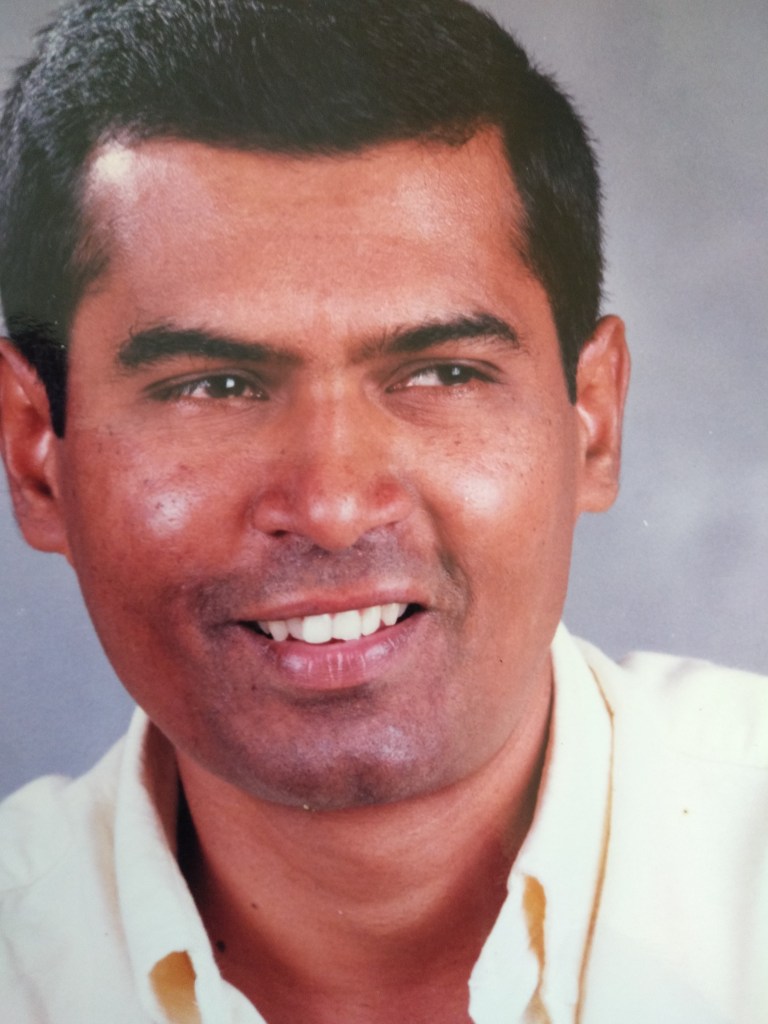
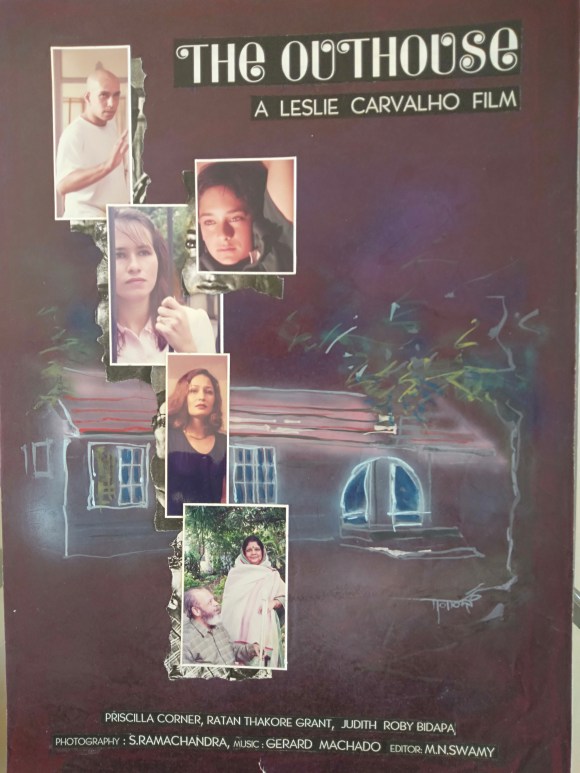
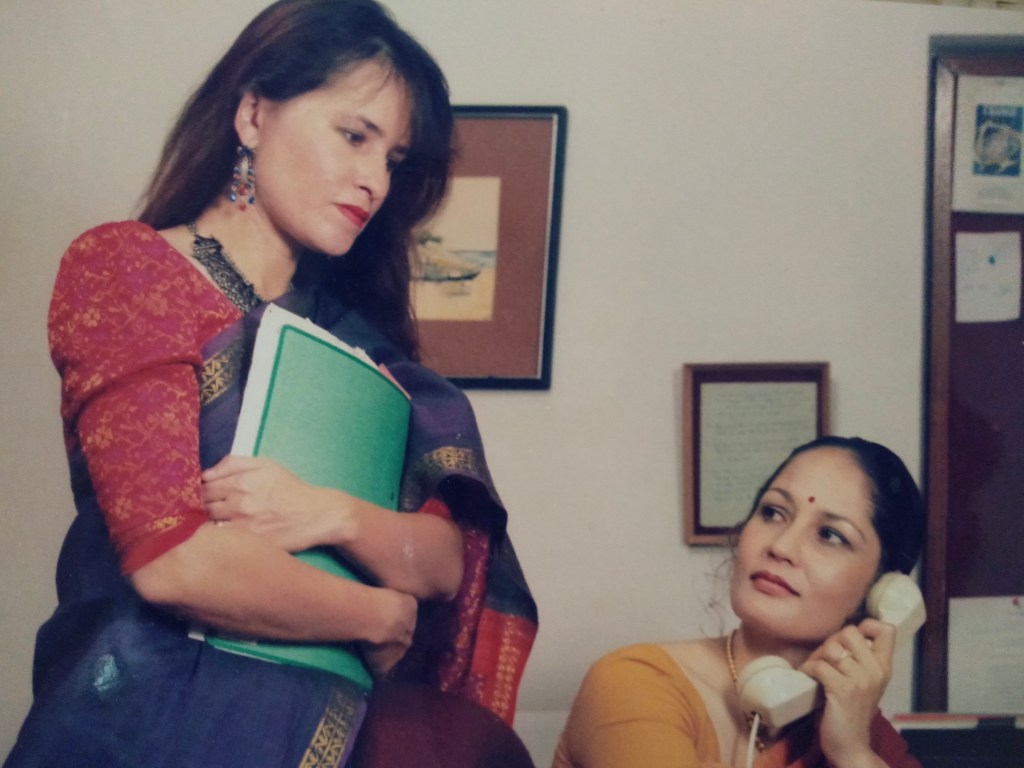
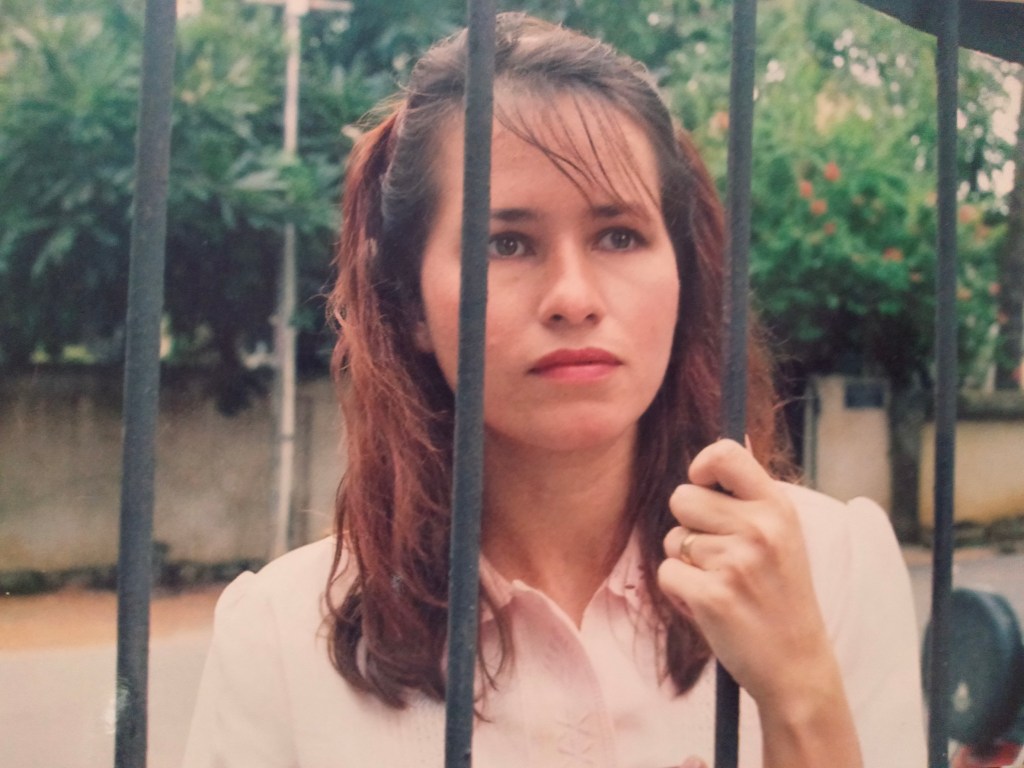








 Borderless