Categories
Editorial

Clinging to Hope

I will cling fast to hope.

— Suzanne Kamata, ‘Educating for Peace in Rwanda

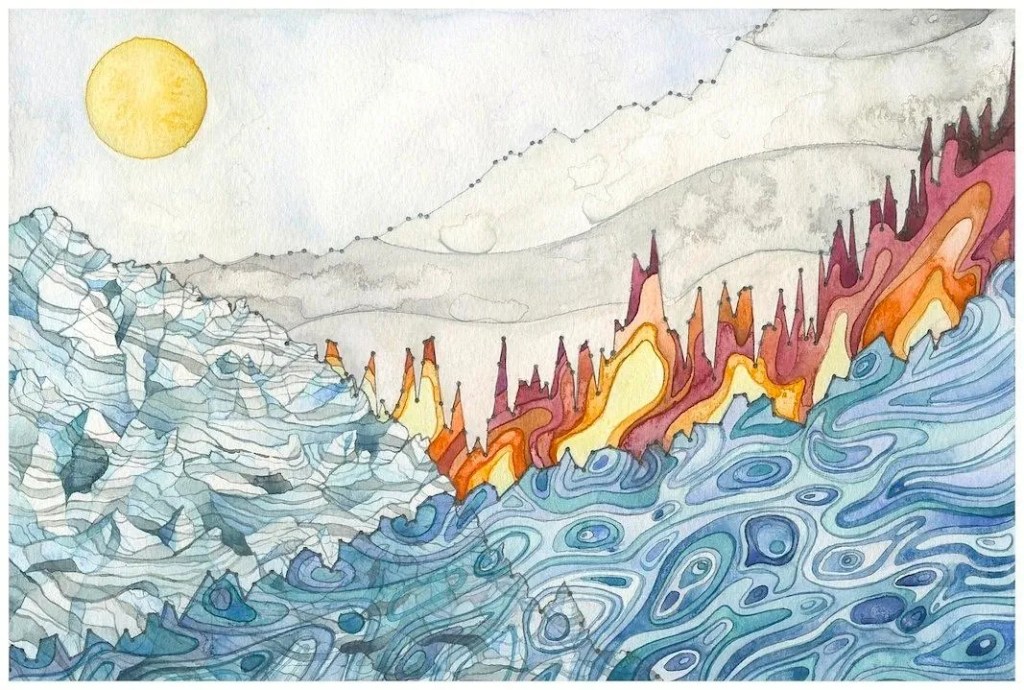
Landscape of Change by Jill Pelto, Smithsonian. From Public Domain

Hope is the mantra for all human existence. We hope for a better future, for love, for peace, for good weather, for abundance. When that abundance is an abundance of harsh weather or violence wrought by wars, we hope for calm and peace.

This is the season for cyclones — Dana, Trami, Yixing, Hurricanes Milton and Helene — to name a few that left their imprint with the destruction of both property and human lives as did the floods in Spain while wars continue to annihilate more lives and constructs. That we need peace to work out how to adapt to climate change is an issue that warmongers seem to have overlooked. We have to figure out how we can work around losing landmasses and lives to intermittent floods caused by tidal waves, landslides like the one in Wayanad and rising temperatures due to the loss of ice cover. The loss of the white cover of ice leads to more absorption of heat as the melting water is deeper in colour. Such phenomena could affect the availability of potable water and food, impacted by the changes in flora and fauna as a result of altered temperatures and weather patterns. An influx of climate refugees too is likely in places that continue habitable. Do we need to find ways of accommodating these people? Do we need to redefine our constructs to face the crises?

Echoing concerns for action to adapt to climate change and hoping for peace, our current issue shimmers with vibrancy of shades while weaving in personal narratives of life, living and the process of changing to adapt.

An essay on Bhaskar Parichha’s recent book on climate change highlights the action that is needed in the area where Dana made landfall recently. In terms of preparedness things have improved, as Bijoy K Mishra contends in his essay. But more action is needed. Denying climate change or thinking of going back to pre-climate change era is not an option for humanity anymore. While politics often ignores the need to acknowledge this crises and divides destroying with wars, riots and angst, a narrative for peace is woven by some countries like Japan and Rwanda.

Suzanne Kamata recently visited Rwanda. She writes about how she found by educating people about the genocide of 1994, the locals have found a way to live in peace with people who they addressed as their enemies before… as have the future generations of Japan by remembering the atomic holocausts of 1945.

Writing about an event which wrought danger into the lives of common people in South Asia is Professor Fakrul Alam’s essay on the 1971 conflict between the countries that were carved out of the 1947 Partition of the Indian subcontinent. As if an antithesis to this narrative of divides that destroyed lives, Luke Rimmo Minkeng Lego muses about peace and calm in Shillong which leaves a lingering fragrance of heartfelt friendships. Farouk Gulsara muses on nostalgic friendships and twists of fate that compel one to face mortality. Abdullah Rayhan ponders about happiness and Shobha Sriram, with a pinch of humour, adapts to changes. Devraj Singh Kalsi writes satirically of current norms aiming for a change in outlook.

Humour is brought into poetry by Rhys Hughes who writes about a photograph of a sign that can be interpreted in ways more than one. Michael Burch travels down the path of nostalgia as Ryan Quinn Flanagan shares a poem inspired by Pablo Neruda’s bird poems. Luis Cuauhtémoc Berriozábal writes heart wrenching verses about the harshness of winter for the homeless without shelter. We have more colours in poetry woven by Jahanara Tariq, Stuart MacFarlane, Saranyan BV, George Freek, G Javaid Rasool, Heath Brougher and more.

In translations, we have poetry from varied countries. Ihlwha Choi has self-translated his poem from Korean. Ivan Pozzoni has done the same from Italian. One of Tagore’s lesser-known verses, perhaps influenced by the findings of sensitivity in plants by his contemporary, Jagadish Chandra Bose (1858-1937) to who he dedicated the collection which homed this poem, Phool Photano (making flowers bloom), has been translated from Bengali. Professor Alam has translated Nazrul’s popular song, Tumi Shundor Tai Cheye Thaki (Because you are so beautiful, I keep gazing at you).

In reviews, Somdatta Mandal has discussed The Collected Short Stories of Kazi Nazrul Islam, translated by multiple translators from Bengali and edited by Syed Manzoorul Islam and Kaustav Chakraborty. Rakhi Dalal has written about The Long Strider in Jehangir’s Hindustan: In the Footsteps of the Englishman Who Walked From England to India in the Year 1613 by Dom Moraes and Sarayu Srivatsa, a book that looks and compares the past with the present. Bhaskar Parichha has written of a memoir which showcases not just the personal but gives a political and economic commentary on tumultuous events that shaped the history of Israel, Palestine, and the modern Middle East prior to the more than a year-old conflict. The book by the late Mohammad Tarbush (1948-2022) is called My Palestine: An Impossible Exile.

Stories travel around the world with Paul Mirabile’s narrative giving a flavour of bohemian Paris in 1974. Anna Moon’s fiction set in Philippines gives a darker perspective of life. Lakshmi Kannan’s narrative hovers around the 2008 bombing in Mumbai, an event that evoked much anger, violence and created hatred in hearts. In contrast, Naramsetti Umamaheswararao brings a sense of warmth into our lives with a story about a child and his love for a dog. Sreelekha Chatterjee weaves a tale of change, showcasing adapting to climate crisis from a penguin’s perspective.

Hoping to change mindsets with education, Mineke Schipper has a collection of essays called Widows: A Global History, which has been introduced along with a discussion with the author on how we can hope for a more equitable world. The other conversation by Ratnottama Sengupta with Veena Raman, wife of the late Vijay Raman, a police officer who authored, Did I Really Do All This: Memoirs of a Gentleman Cop Who Dared to be Different, showcases a life given to serving justice. Raman was an officer who caught dacoits like Paan Singh Tomar and the Indian legendary dacoit queen, Phoolan Devi. An excerpt from his memoir accompanies the conversation. The other book excerpt is from an extremely out of the box book, Rhys Hughes’ Growl at the Moon, a Weird Western.

Trying something new, being out of the box is what helped humans move out from caves, invent wheels and create civilisations. Hopefully, this is what will help us move into the next phase of human development where wars and weapons will become redundant, and we will be able to adapt to changing climes and move towards a kinder, more compassionate existence.

Thank you all for pitching in with your fabulous pieces. There are ones that have not been covered here. Do pause by our content’s page to see all our content. Huge thanks to the fantastic Borderless team and to Sohana Manzoor, for her art too.

Hope you enjoy our fare!

Mitali Chakravarty

borderlessjournal.com

Click here to access the  content’s page for the November 2024 Issue

.

READ THE LATEST UPDATES ON THE FIRST BORDERLESS ANTHOLOGY, MONALISA NO LONGER SMILES, BY CLICKING ON THIS LINK.

Categories
Humour & Horror

Spooky, Chooky, Gooky

Art by Sohana Manzoor

It’s again that time of the year when we have fun spooking each other with stories of ghosts and haunting. While festivals of light1 and darkness vie with each other for a spot on the same date, observances to pay our respects to our forefathers follow at their heels, some before and some after.

In this selection, we bring to you narratives that could be dark, strange or funny or all of these … a selection of poetry, fiction and non-fiction from around the world. Enjoy the reads!

Poetry

Of Singing Mice, Biscuit Tins & Gym Bikes… by Rhys Hughes. Click here to read.

Human by Manzur Bismil has been translated from Balochi by Fazal Baloch. Click here to read.

In Another Galaxy by Masud Khan has been translated from Bengali by Professor Fakrul Alam. Click here to read.

The Waiting by Stuart MacFarlane. Click here to read.

Walking Gretchums by Saptarshi Bhattacharya. Click here to read.

Bonfire by Ihlwha Choi has been translated from Korean by the poet himself. Click here to read.

Exaltation in D. Minor (I’ll Be Around) by Ryan Quinn Flangan. Click here to read.

It’s Halloween! by Michael Burch. Click here to read.

Prose

From Diana to ‘Dayaan’ : Rajorshi Patronobis talks of Wiccan lore. Click here to read.

The Ghosts of Hogshead: Paul Mirabile wanders into the realm of the supernatural dating back to the Potato Famine of Ireland in the 1800s. Click here to read.

My Christmas Eve “Alone”: Erwin Coomb has a strange encounter at night. Is it real? Click here to read. 

Orang Minyak or The Ghost: A Jessie Michael explores ‘ghosts’ in a Malay village. Click here to read.

The Browless DollsS.Ramakrishnan‘s spooky story, has been translated from Tamil by B Chandramouli. Click hereto read.

 Witches and Crafts: A Spook’s TaleDevraj Singh Kalsi finds a ghostly witch in his library. Click here to read.

In The Chopsy Moggy: Rhys Hughes gives us a strange feline adventure. Click here to read. 

Ghosts, Witches and My New Homeland: Tulip Chowdhury muses on ghosts and spooks in Bangladesh and US. Click here to read.

Nagmati: Prafulla Roy’s long story based on strange folk beliefs has been translated from Bengali as Snake Maiden by Aruna Chakravarti. Click here to read.

From Public Domain

.

  1. Deepavali or festival of lights is on October 31st this year along with Kali Puja and Halloween. October 30th is Bhooth Chaturdashi, or Indian Festival of Ghosts while All Saints’ Day and all Souls’ Day are observed at the start of November. Early October hosted Pitri Paksha, observances for apeasing forefathers in India. ↩︎

Categories
Contents

Borderless, October 2024

Art by Sohana Manzoor

Editorial

Where Are Those Happy Days? … Click here to read.

Conversations

In conversation with Malashri Lal with focus on her poetry book, Mandalas of Time. Click here to read.

Keith Lyons speaks to novelist Lya Badgley about her life, books and travels. Click here to read.

Translations

Tagore’s poem on Africa has been translated from Bengali by Debali Mookerjea-Leonard. Click here to read.

Nazrul’s Shukno Patar Nupur Paye (With Ankle Bells of dried leaves) has been translated from Bengali by Professor Fakrul Alam. Click here to read.

Veena Verma’s story, Galat Aurat or The Wrong Woman, has been translated from Punjabi by C Christine Fair. Click here to read.

Sharaf Shad’s story, The Melting Snow, has been translated from Balochi by Fazal Baloch. Click here to read.

Tagore’s Andhokaarer Utso Hote (From the Fount of Darkness) has been translated from Bengali by Mitali Chakravarty. Click here to read.

Poetry

Click on the names to read the poems

Rhys Hughes, Afsar Mohammad, Fhen M, Luis Cuauhtémoc Berriozábal, Shamik Banerjee, George Freek, Shahin Hossain, Stuart MacFarlane, Matthew James Friday, Udita Banerjee, Jenny Middleton, Alpa Arora, Stephen Philip Druce, Malashri Lal, Michael Burch

Poets, Poetry & Rhys Hughes

In Two Pizza Fantasies, Rhys Hughes recounts myths around the pizza in prose, fiction and poetry, Click here to read.

Musings/Slices from Life

An Alien on the Altar!

Snigdha Agrawal writes of how a dog and lizard add zest to festivities with a dollop of humour. Click here to read.

To Be or Not to Be…

Farouk Gulsara ponders over the nature of humanity. Click here to read.

Memories of my Grandfather

Alpana writes of her interactions with her late grandfather. Click here to read.

From Diana to ‘Dayaan’

Rajorshi Patronobis talks of Wiccan lore. Click here to read.

Musings of a Copywriter

In Libraries and Me, Devraj Singh Kalsi recalls his experiences in school and University in a lighter vein. Click here to read.

Notes from Japan

In Among Ghosts in the Land of a Thousand Hills, Suzanne Kamata travels with a Japanese colleague and students to Rwanda. Click here to read.

Essays

Memories of Durga Puja

Fakrul Alam recalls the festivities of Durga Puja in Dhaka during his childhood. Click here to read.

A Doctor’s Diary: Syncretic Festivities

Ravi Shankar writes of his early life in Kerala where festivals were largely a syncretic event. Click here to read.

Stories

The Return

Paul Mirabile unravels the homecoming of a British monk. Click here to read.

The Mango Thief

Naramsetti Umamaheswara Rao writes a story about peer pressure among children. Click here to read.

Sunset Memories

Saeed Ibrahim writes from near the Arabian Sea. Click here to read.

A Whiff of the Past…

Tanika Rajeswari V gives a haunting story set in Kerala. Click here to read.

Book Excerpts

An excerpt by Ruskin Bond from Let’s Be Best Friends Forever: Beautiful Stories of Friendship. Click here to read.

An excerpt from Lara Gelya’s Camel from Kyzylkum. Click here to read.

Book Reviews

Meenakshi Malhotra reviews Anjum Katyal’s Safdar Hashmi: Towards Theatre for a Democracy. Click here to read.

Somdatta Mandal reviews Ammar Kalia’s A Person Is a Prayer. Click here to read.

Bhaskar Parichha reviews Selected Works of Vyasa Kavi Fakir Mohan Senapati, edited by Monica Das. Click here to read.

.

Click here to access the Borderless anthology, Monalisa No Longer Smiles

Click here to access Monalisa No Longer Smiles on Amazon International

Categories
Editorial

Where Are Those Happy Days?

Festivals are like friends.

They bring hope, solace and love to those who believe in them. But, when the structures holding the fiestas in place start to crumble, what do we do then?

Our lives have moved out of wilderness to cities over centuries. Now, we have covered our world with the gloss of technology which our ancestors living in caves would have probably viewed as magic. And yet we violate the dignity of our own kind, war and kill, destroy what we built in the past. The ideological structures seem ineffective in instilling love, peace, compassion or hope in the hearts of the majority. Suddenly, we seem to be caving in to violence that destroys humanity, our own kind, and not meting out justice to those who mutilate, violate or kill. Will there be an end to this bleak phase? Perhaps, as Tagore says in his lyrics[1], “From the fount of darkness emerges light”. Nazrul has gone a step further and stated clearly[2], “Hair dishevelled and dressed carelessly/ Destruction makes its way gleefully. / Confident it can destroy and then build again …Why fear since destruction and creation are part of the same game?”

And yet, destruction hurts humans. It kills. Maims. Reduces to rubble. Can we get back the people whose lives are lost while destruction holds sway? We have lost lives this year in various wars and conflicts. As a tribute to all the young lives lost in Bangladesh this July, we have a poem by Shahin Hossain. Afsar Mohammad has brought in the theme of festivals into poetry tying it to the current events around the world. In keeping with the times, Michael Burch has a sense of mirthlessness in his poems. Colours of emotions and life have been woven into this section by Malashri Lal, Luis Cuauhtémoc Berriozábal, Fhen M, Shamik Banerjee, George Freek, Matthew James Friday, Jenny Middleton and many more. This section in our journal always homes a variety of flavours. Stuart MacFarlane has poems for Wordsworth… and some of it is funny, like Rhys Hughes’ poem based on photographs of amusing signposts. But then life has both sorrows and laughter, and poetry is but a slice of that as are other genres. We do have non-fiction in a lighter vein with Hughes’ story and poem about pizzas. Devraj Singh Kalsi has given a tongue in cheek narrative about his library experiences.

Suzanne Kamata has written for us about her visit to Rwanda. Farouk Gulsara has pondered over humanity’s natural proclivitiesWiccan lore has been discussed by Rajorshi Patranabis. And Snigdha Agrawal has tuned into humour with her rendition of animal antics that overran festivities. Ravi Shankar, on the other hand, has written about the syncretic nature of festivals in Kerala. Professor Fakrul Alam has given a nostalgic recap of Durga Puja during his childhood, a festival recognised as an “Intangible Cultural Heritage of Humanity” by UNESCO, and known for its syncretic traditions where people from all backgrounds, religions and cultures celebrate together.

Festivals have also been taken up in fiction by Tanika Rajeswari V with a ghostly presence hovering over the arrangements. Paul Mirabile has taken us around the world with his story while Saeed Ibrahim writes from his armchair by the Arabian sea. Sahitya Akademi winner for his children’s stories, Naramsetti Umamaheswara Rao, has showcased peer pressure among youngsters in his narrative.  

Two stories have also featured in our translations. Christine C Fair has rendered Veena Verma’s Punjabi story about an illegal immigrant into English. Hinting at climate concerns, Sharaf Shad’s fiction, has been translated from Balochi by Fazal Baloch. Tagore’s powerful poem on Africa has been brought to Anglophone readers by Debali Mookerjea-Leonard as well as his inspiring lyrics, Andhokaarer Utso Hote (From the Fount of Darkness), by our team. Nazrul’s vibrant lyrics, Shukno Patar Nupur Paye (With Ankle Bells of Dried Leaves), has been rendered into English from Bengali by Professor Alam.

Our reviews explore immigrant stories in fiction with Somdatta Mandal reviewing Ammar Kalia’s A Person Is a Prayer. Bhaskar Pariccha has written about Selected Works of Vyasa Kavi Fakir Mohan Senapati, edited by Monica Das. Fakir Mohan is a legendary writer from Odisha. Meenakshi Malhotra has discussed a book on another legend, Safdar Hashmi, one of the greatest names in street theatre in India. The book is by Anjum Katyal and called, Safdar Hashmi: Towards Theatre for a Democracy.

Our book excerpts usher good cheer with a narrative by Ruskin Bond from Let’s Be Best Friends Forever: Beautiful Stories of Friendship. And also hope with a refugee’s story from Ukraine, which travels through deserts, Italy and beyond to US and has a seemingly happier outcome than most, Lara Gelya’s Camel from Kyzylkum. This issue’s conversations take us around the world with Keith Lyons interviewing Lya Badgley, who has crossed continents to live and write. Malashri Lal, the other interviewee, is an academic and writer with sixteen books under her belt. She travels through the world with her poetry in Mandalas of Time.

Huge thanks to the Borderless team for putting this issue together – the last-minute ties – and the art from Sohana Manzoor. Without all this, the edition would look different. Heartfelt thanks to our contributors without whose timely submissions, we would not have a journal. And most of all we thank our readers – we are because you are – thank you for reading our journal.  As all our content, despite being indispensable, could not be mentioned here, do pause by our content’s page for this issue.

We wish you a wonderful month!

Cheers,

Mitali Chakravarty

borderlessjournal.com

[1] Tagore’s Andhokaarer Utso Hote (From the Fount of Darkness)

[2] Nazrul’s Proloyullash translated by Professor Alam as The Frenzy of Destruction

Click here to access the content’s page for the October 2024 Issue.

.

READ THE LATEST UPDATES ON THE FIRST BORDERLESS ANTHOLOGY, MONALISA NO LONGER SMILES, BY CLICKING ON THIS LINK.

Categories
Contents

Borderless, September 2024

Art by Sohana Manzoor

Editorial

And Wilderness is Paradise Enow… Click here to read.

Translations

Raja O Praja or The King and His Subjects, an essay by Tagore, has been translated from Bengali by Himadri Lahiri. Click here to read.

Nazrul’s Roomu Jhoomu Roomu Jhoomu has been transcreated from Bengali by Professor Fakrul Alam. Click here to read.

The Mirror by Mubarak Qazi has been translated from Balochi by Fazal Baloch. Click here to read.

The Source by Ihlwha Choi has been translated from Korean by the poet himself. Click here to read.

Suprobhat or Good Morning by Tagore has been translated from Bengali by Mitali Chakravarty. Click here to read.

Poetry

Click on the names to read the poems

Rhys Hughes, Cal Freeman, Jackie Kabir, Jennifer McCormack, Pramod Rastogi, Miriam Bassuk, K B Ryan Joshua Mahindapala, Paul Mirabile, Shamik Banerjee, Craig Kirchner, Thomas Emate, Stuart MacFarlane, Supriya Javalgekar, George Freek, Ryan Quinn Flanagan, Luis Cuauhtémoc Berriozábal, Michael Burch

Musings/Slices from Life

Finding the Fulcrum

Farouk Gulsara gives a poignant account of looking after an aged parent. Click here to read.

Watery World

Keith Lyons finds the whole world within a swimming pool. Click here to read.

Days that don’t Smell of Cakes and Candy

Priyanka Panwar muses on days which not much happens… Click here to read.

Rayban-dhan

Uday Deshwal revisits his life with his companion sunglass. Click here to read.

In Favour of a Genre…

Saeed Ibrahim argues in favour of short stories as a genre. Click here to read.

Musings of a Copywriter

In Shades of Grey – Hair and There, Devraj Singh Kalsi writes of adventures with premature greying. Click here to read.

Notes from Japan

In Sneaky Sneakers, Suzanne Kamata grins at life in Japan. Click here to read.

Essays

Ah Nana Bari!

Fakrul Alam writes nostalgically of his visits to Feni in Noakhali, a small town which now suffers from severe flooding due to climate change. Click here to read.

A Manmade Disaster or Climate Change?

Salma A Shafi writes of floods in Bangladesh from ground level. Click here to read.

A Doctor’s Diary: Life in the High Ranges

Ravi Shankar writes of his life in the last century among the less developed highlands of Kerala. Click here to read.

Stories

The Useless Idler

Paul Mirabile writes of a strange encounter with someone who calls himself an ‘idler’. Click here to read.

Imitation

Naramsetti Umamaheswararao explores parenting. Click here to read.

Final Hours

Mahila Iqbal gives a poignant story about aging. Click here to read.

Friends

G Venkatesh writes a story stirring environmental concerns. Click here to read.

Conversation

Ratnottama Sengupta converses with Reba Som, who recently brought out, Hop, Skip and Jump; Peregrinations of a Diplomat’s Wife. Click here to read.

Book Excerpts

An excerpt from Mineke Schipper’s Widows: A Global History. Click here to read.

An excerpt from Anuradha Marwah’s Aunties of Vasant Kunj. Click here to read.

Book Reviews

Somdatta Mandal reviews Karan Mujoo’s This Our Paradise: A Novel. Click here to read.

Rakhi Dalal reviews Swadesh Deepak’s A Bouquet of Dead Flowers translated from Hindi by Jerry Pinto, Pratik Kanjilal, Nirupama Dutt, Sukant Deepak. Click here to read.

Meenakshi Malhotra reviews Anuradha Marwah’s Aunties of Vasant Kunj. Click here to read.

Bhaskar Parichha reviews Ayurveda, Nation and Society: United Provinces, c. 1890–1950 by Saurav Kumar Rai. Click here to read.

.

Click here to access the Borderless anthology, Monalisa No Longer Smiles

Click here to access Monalisa No Longer Smiles on Amazon International

Categories
Editorial

And Wilderness is Paradise Enow…

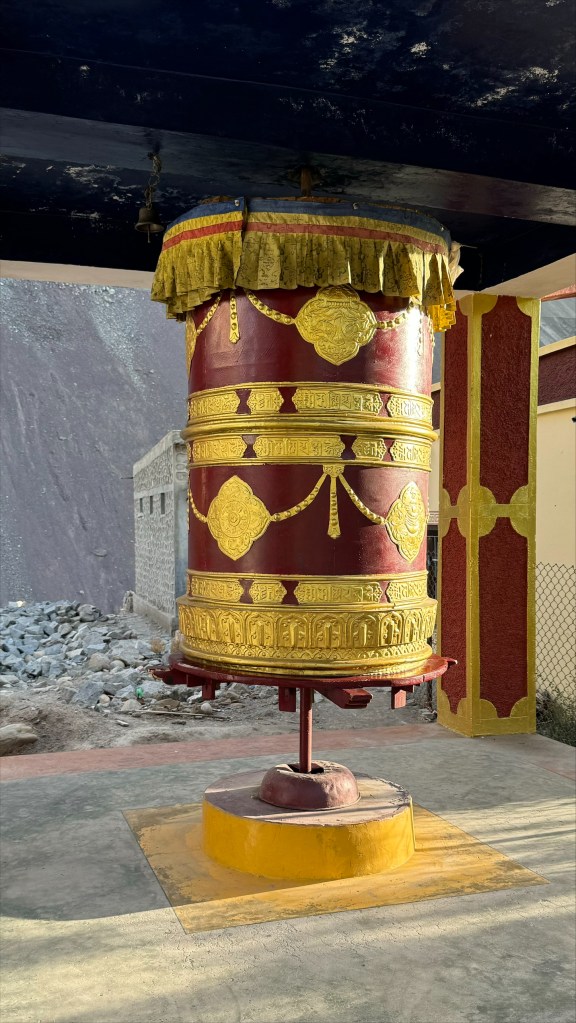
Prayer Wheel at Nurulia, Ladakh. Photo Courtesy: Farouk Gulsara
We lock eyes, find glimmers
of smiles, trust our leaders.
We break bread with strangers
because there aren’t any.

--Imagine by Miriam Bassuk

Imagine the world envisioned by John Lennon. Imagine the world envisioned and partly materialised by Tagore in his pet twin projects of Santiniketan and Sriniketan, training institutes made with the intent of moving towards creating a work force that would dedicate their lives to human weal, to closing social gaps borne of human constructs and to uplifting the less privileged by educating them and giving them the means to earn a livelihood. You might well call these people visionaries and utopian dreamers, but were they? Tagore had hoped to inspire with his model institutions.  In 1939, he wrote in a letter: “My path, as you know, lies in the domain of quiet integral action and thought, my units must be few and small, and I can but face human problems in relation to some basic village or cultural area. So, in the midst of worldwide anguish, and with the problems of over three hundred millions staring us in the face, I stick to my work in Santiniketan and Sriniketan hoping that my efforts will touch the heart of our village neighbours and help them in reasserting themselves in a new social order. If we can give a start to a few villages, they would perhaps be an inspiration to some others—and my life work will have been done.”  But did we really have a new social order or try to emulate him?

If we had acted out of compassion and kindness towards redefining with a new social order, as Miriam Bassuk points out in her poem based on Lennon’s lyrics of Imagine, there would be no strangers. We’d all be friends living in harmony and creating a world with compassion, kindness, love and tolerance. We would not have wars or regional geopolitical tensions which act against human weal. Perhaps, we would not have had the issues of war of climate change take on the proportions that are wrecking our own constructs.

Natural disasters, floods, fires, landslides have affected many of our lives. Bringing us close to such a disaster is an essay by Salma A Shafi at ground level in Noakhali. More than 4.5 million were affected and 71 died in this disaster. Another 23 died in the same spate of floods in Tripura with 65,000 affected. We are looking at a single region here, but such disasters seem to be becoming more frequent. And yet. there had been a time when Noakhali was an idyllic vacation spot as reflected in Professor Fakrul Alam’s nostalgic essay, filled with memories of love, green outdoors and kindnesses. Such emotions reverberate in Ravi Shankar’s account of his medical adventures in the highlands of Kerala, a state that suffered a stupendous landslide last month. While Shafi shows how extreme rainfall can cause disasters, Keith Lyons writes of water, whose waves in oceanic form lap landmasses like bridges. He finds a microcosm of the whole world in a swimming pool as migrants find their way to New Zealand too. Farouk Gulsara muses on kindness and caregiving while Priyanka Panwar ponders about ordinary days. Saeed Ibrahim gives a literary twist to our musings.   Tongue in cheek humour is woven into our nonfiction section by Suzanne Kamata’s notes from Japan, Devraj Singh Kalsi’s piece on premature greying and Uday Deshwal’s paean to his sunglasses!

Humour is wrought into poetry by Rhys Hughes. Supriya Javelkar and Shamik Banerjee have cheeky poems that make you smile. We have poetry on love by Michael Burch and poetry for Dylan Thomas by Ryan Quinn Flanagan. Miriam Bassuk has described a Utopian world… but very much in the spirit of our journal. Variety is brought into our journal with poetry from Jackie Kabir, Jennifer McCormack, Craig Kirchner, Stuart MacFarlane, George Freek, Luis Cuauhtémoc Berriozábal and many more.

In translations, we have Nazrul lyrics transcreated from Bengali by Professor Alam and poetry from Korean by Ihlwha Choi. We pay our respects to an eminent Balochi poet who passed on exactly a year ago, Mubarak Qazi, by carrying a translation by Fazal Baloch. Tagore’s Suprobhat (Good morning) has been rendered in English from Bengali. His descriptions of the morning are layered and amazing — with a hint of the need to reconstruct our world, very relevant even today.  A powerful essay by Tagore called Raja O Praja (The King and His Subjects), has been translated by Himadri Lahiri.

Our fiction hosts two narratives that centre around childhood, one by Naramsetti Umamaheswararao and another by G Venkatesh, though with very different approaches. Mahila Iqbal relates a poignant tale about aging, mental health and neglect, the very antithesis of Gulsara’s musing. Paul Mirabile has given a strange story about a ‘useless idler’.

A short story collection has been reviewed by Rakhi Dalal, Swadesh Deepak’s A Bouquet of Dead Flowers, translated from Hindi by Jerry Pinto, Pratik Kanjilal, Nirupama Dutt, Sukant Deepak. Somdatta Mandal has written about a book by a Kashmiri immigrant which is part based on lived experiences and part fictive, Karan Mujoo’s This Our Paradise: A Novel. Bhaskar Parichha has reviewed Ayurveda, Nation and Society: United Provinces, c. 1890–1950 by Saurav Kumar Rai, a book which shows how healthcare was even a hundred years ago, politicised. Meenakshi Malhotra has reviewed Anuradha Marwah’s novel, Aunties of Vasant Kunj, of which we also have an excerpt. The other excerpt is from Mineke Schipper’s Widows: A Global History. Ratnottama Sengupta converses with Reba Som, author of Hop, Skip and Jump; Peregrinations of a Diplomat’s Wife.

We have more content that adds to the vibrancy of the issue. Do pause by this issue and take a look. This issue would not have been possible without all your writings. Thank you for that. Huge thanks to our readers and our team, without whose support we could not have come this far. I would especially like to thank Sohana Manzoor for her continued supply of her fabulous and distinctive artwork and Gulsara for his fabulous photographs.

Let us look forward to a festive season which awakens each autumn and stretches to winter. May we in this season find love, compassion and kindness in our hearts towards our whole human family.

Have a wonderful month!

Mitali Chakravarty

borderlessjournal.com

Click here to access the content’s page for the September 2024 Issue.

.

READ THE LATEST UPDATES ON THE FIRST BORDERLESS ANTHOLOGY, MONALISA NO LONGER SMILES, BY CLICKING ON THIS LINK.

Categories
Poetry

 On a Misty Morning

By Stuart MacFarlane

              I
What is this strange apparition
shining in the morning mist?
Glimpsed through a thin line of trees
it appears like a magical palace;
yet with its spiral towers, its great walls,
like battlements, it seems more than that;
like a castle outpost, stranded
somewhere on the Russian Steppes.
The mist hangs a few feet above
the ground, and, through the mist,
shafts of sunlight pierce the grass,
where a layer of frost sparkles;
as if a thousand diamonds
are scattered lie.
And, in my mind's eye, now I see
a black horse emerge from the trees
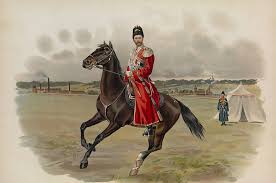
on which a Cossack, robed in red,
sits proudly on the saddle.
The rider pulls hard on the reins.
A plume of smoke rises
from the horse's nostrils;
it warmly mingles with the cold of mist.
The horse is restless; hooves stamping
off the frosty ground.
 
            II
 
And, from across the field, another horse appears.
This one white; on which is mounted
a second Cossack, his blood red tunic,
splendid in the sun.
He, too, restrains his powerful steed;
tugging hard on the reins,
suppressing the animal's spirit.
There, the field gapes between them;
two hundred yards of open ground.
A sudden scrape of metal; and their keen sabres
flash menacingly in the morning light.
Gloved hands loosen on leather reins;
metal stirrups dig into the flanks
of the great horses.
They charge; each one briefly caught
in a sudden sunbeam.
Faster -- then faster still.
Pounding of hearts, surge of blood;
eye of horses and men, alike, intent on
a terrible imminence.
Sabres raised higher now, cold blades
cutting at the fleeing air.
A final glint of light.
A devilish cry rends the heart of the morning
and the clash of sabres jangles
in the mist.

Stuart MacFarlane is now semi-retired. He taught English for many years to asylum seekers in London. He has had poems published in a few online journals.                                                                                                                    

.

PLEASE NOTE: ARTICLES CAN ONLY BE REPRODUCED IN OTHER SITES WITH DUE ACKNOWLEDGEMENT TO BORDERLESS JOURNAL

Click here to access the Borderless anthology, Monalisa No Longer Smiles

Click here to access Monalisa No Longer Smiles on Kindle Amazon International

Categories
Contents

Borderless, August 2024

Art by Sohana Manzoor

Editorial

A Sprinkling of Happiness?… Click here to read.

Conversation

A review of and discussion with Rhys Hughes about his ‘Weird Western’, The Sunset Suite. Click here to read.

Translations

Two Songs of Parting by Nazrul have been translated by Professor Fakrul Alam. Click here to read.

The Snakecharmer, Shapuray by Nazrul, has been translated from Bengali by Sohana Manzoor. Click here to read.

Leaving for Barren, Distant Lands by Allah Bashk Buzdar has been translated from Balochi by Fazal Baloch. Click here to read.

Loneliness has been translated from Korean by the poet, Ihlwha Choi. Click here to read.

Tagore’s Olosh Shomoy Dhara Beye (Time Flows at an Indolent Pace) has been translated from Bengali by Mitali Chakravarty. Click here to read.

Poetry

Click on the names to read the poems

Michael Burch, Arshi Mortuza, Jason Ryberg, Saranyan BV, Koiko Tsuuda, Jane Hammons, Noopur Vedajna Das, Adeline Lyons, George Freek, Naisha Chawla, John Grey, Lakshmi Chithra, Craig Kirchner, Nia Joseph, Stuart MacFarlane, Sanjay C Kuttan, Nilsa Mariano, G Javaid Rasool, Ryan Quinn Flanagan, Rhys Hughes

Musings/ Slices from Life

Breaking Bread

Snigdha Agrawal has a bovine encounter in a restaurant. Click here to read.

That Box of Colour Pencils

G Venkatesh writes of a happy encounter with two young children. Click here to read.

The Chameleon’s Dance

Chinmayi Goyal muses on the duality of her cultural heritage. Click here to read.

Musings of a Copywriter

In Godman Ventures Pvt. Ltd., Devraj Singh Kalsi looks into a new business venture with a satirical glance. Click here to read.

Notes from Japan

In In Praise of Parasols, Suzanne Kamata takes a light look at this perennial favourite of women in Japan. Click here to read.

Essays

The Comet’s Trail: Remembering Kazi Nazrul Islam

Radha Chakravarty pays tribute to the rebel poet of Bengal. Click here to read.

From Srinagar to Ladakh: A Cyclist’s Diary

Farouk Gulsara travels from Malaysia for a cycling adventure in Kashmir. Click here to read.

Bottled Memories, Inherited Stories

Ranu Bhattacharyya takes us back to Dhaka of the 1930s… and a world where the two Bengals interacted as one with her migration story. Click here to read.

Landslide In Wayanad Is Only The Beginning

Binu Mathew discusses the recent climate disaster in Kerala and contextualises it. Click here to read.

Stories

The Orange Blimp

Joseph Pfister shares a vignette set in the Midwest. Click here to read.

A Queen is Crowned

Farhanaz Rabbani traces the awakening of self worth. Click here to read.

Roberto Mendoza’s Memoirs of Admiral Don Christopher Columbus

Paul Mirabile explores myths around Christopher Columbus in a fictitive setting. Click here to read.

Book Excerpts

An excerpt from Syed Mujtaba Ali’s Shabnam, translated from Bengali by Nazes Afroz. Click here to read.

An excerpt from Maaria Sayed’s From Pashas to Pokemon. Click here to read.

Book Reviews

Somdatta Mandal reviews Upamanyu Chatterjee’s Lorenzo Searches for the Meaning of Life. Click here to read.

Meenakshi Malhotra reviews Shuchi Kapila’s Learning to Remember: Postmemory and the Partition of India. Click here to read.

Rakhi Dalal reviews Namita Gokhale’s Never Never Land. Click here to read.

Bhaskar Parichha reviews Malvika Rajkotia’s Unpartitioned Time: A Daughter’s Story. Click here to read.

.

Click here to access the Borderless anthology, Monalisa No Longer Smiles

Click here to access Monalisa No Longer Smiles on Amazon International

Categories
Editorial

A Sprinkling of Happiness?

A Pop of Happiness by Jeanie Douglas. From Public Domain

Happiness is a many splendored word. For some it is the first ray of sunshine; for another, it could be a clean bill of health; and yet for another, it would be being with one’s loved ones… there is no clear-cut answer to what makes everyone happy. In Harry Potter and the Half Blood Prince (JK Rowling, 2005), a sunshine yellow elixir induces euphoria with the side effects of excessive singing and nose tweaking. This is of course fantasy but translate it to the real world and you will find that happiness does induce a lightness of being, a luminosity within us that makes it easier to tackle harder situations. Playing around with Rowling’s belief systems, even without the potion, an anticipation of happiness or just plain optimism does generate a sense of hope for better times.  Harry tackles his fears and dangers with goodwill, friends and innate optimism. When times are dark with raging wars or climate events that wreck our existence, can one look for a torch to light a sense of hope with the flame of inborn resilience borne of an inner calm, peace or happiness — call it what you will…?

It is hard to gauge the extreme circumstances with which many of us are faced in our current realities, especially when the events spin out of control. In this issue, along with the darker hues that ravage our lives, we have sprinklings of laughter to try to lighten our spirits. In the same vein, externalising our emotions to the point of absurdity that brings a smile to our lips is Rhys Hughes’ The Sunset Suite, a book that survives on tall tales generated by mugs of coffee. In one of the narratives, there is a man who is thrown into a bubbling hot spring, but he survives singing happily because his attacker has also thrown in packs of tea leaves. This man loves tea so much that he does not scald, drown or die but keeps swimming merrily singing a song. While Hughes’ stories are dark, like our times, there is an innate cheer that rings through the whole book… Dare we call it happiness or resilience? Hughes reveals much as he converses about this book, squonks and stranger facts that stretch beyond realism to a fantastical world that has full bearing on our very existence.

Poetry brings in a sprinkling of good cheer not only with a photo poem by Hughes, but also with more in a lighter vein from Ryan Quinn Flanagan, Michael R Burch, Arshi Mortuza, Jason Ryberg and others. Sanjay C Kuttan has given a poem dipped in nostalgic happiness with colourful games that evolved in Malaysia. Koiko Tsuuda, an Estonian, rethinks happiness. George Freek, Stuart MacFarlane and Saranyan BV address mortality. Nilsa Mariano and G Javaid Rasool have given us powerful migrant poetry while John Grey, Craig Kirchner, Jane Hammons, Nia Joseph, Noopur Vedajna Das and Adeline Lyons refer to climate or changes wrought by climate disasters in their verses.

A powerful essay by Binu Mathew on the climate disaster at Wayanad, a place that earlier had been written of as an idyllic getaway, tells us how the land in that region has become more prone to landslides. The one on July 30th this year washed away a whole village! Farouk Gulsara has given a narrative about his cycling adventure through the state of Kashmir with his Malaysian friends and finding support in the hearts of locals, people who would be the first to be hit by any disaster even if they have had no hand in creating the catastrophes that could wreck their lives, the flora and the fauna around them. In the wake of such destructions or in anticipation of such calamities, many migrate to other areas — like Ranu Bhattacharya’s ancestors did a bit before the 1947 Partition violence set in. A younger migrant, Chinmayi Goyal, muses under peaceful circumstances as she explores her own need to adapt to her surroundings. G Venkatesh from Sweden writes of his happy encounter with local children in the playground. And Snigdha Agrawal has written of partaking lunch with a bovine companion – it can be intimidating having a cow munching at the next table, I guess! Devraj Singh Kalsi has given a tongue-in-cheek musing on how he might find footing as a godman. Suzanne Kamata has given a lovely summery piece on parasols, which never went out of fashion in Japan!

Radha Chakravarty, known for her fabulous translations, has written about the writer she translated recently, Nazrul. Her essay includes a poem by Tagore for Nazrul. Professor Fakrul Alam has translated two of Nazrul’s songs of parting and Sohana Manzoor has rendered his stunning story Shapuray (Snake Charmer) into English. Fazal Baloch has brought to us poetry in English from the Sulaimani dialect of Balochi by Allah Bashk Buzdar, and a Korean poem has been self-translated by the poet, Ihlwha Choi. The translations wind up with a poem by Tagore, Olosh Shomoy Dhara Beye (Time Flows at an Indolent Pace), showcasing how the common man’s daily life is more rooted in permanence than evanescent regimes and empires.

Fiction brings us into the realm of the common man and uncommon situations, or funny ones. A tongue-in-cheek story set in the Midwest by Joseph Pfister makes us laugh. Farhanaz Rabbani has given us a beautiful narrative about a girl’s awakening. Paul Mirabile delves into the past using the epistolary technique highlighting darker vignettes from Christopher Columbus’s life. We have book excerpts from Maaria Sayed’s From Pashas to Pokemon and Nazes Afroz’s translation of Syed Mujtaba Ali’s Shabnam with both the extracts and Rabbani’s narratives reflecting the spunk of women, albeit in different timescapes…

Our book reviews feature Meenakshi Malhotra’s perspectives on Shuchi Kapila’s Learning to Remember: Postmemory and the Partition of India and Bhaskar Parichha’s thought provoking piece on Malvika Rajkotia’s autobiographical Unpartitioned Time: A Daughter’s Story. While both these look into narratives around the 1947 Partition of the Indian subcontinent, Rakhi Dalal’s review captures the whimsical and yet thoughtful nuances of Namita Gokhale’s Never Never Land. Somdatta Mandal has written about Upamanyu Chatterjee’s latest novel, Lorenzo Searches for the Meaning of Life, which is in a way a story about a migrant too.

When migrations are out of choice, with multiple options to explore, they take on happier hues. But when it is out of a compulsion created by manmade disasters — both wars and climate change are that — will the affected people remain unscarred, or like Potter, bear the scar only on their forehead and, with Adlerian calm, find happiness and carpe diem?

Do pause by our current issue which has more content than mentioned here as some of it falls outside the ambit of our discussion. This issue would not have been possible without an all-out effort by each of you… even readers. I would like to thank each and every contributor and our loyal readers. The wonderful team at Borderless deserve much appreciation and gratitude, especially Manzoor for her wonderful artwork. I invite you all to savour this August issue with a drizzle of not monsoon or April showers but laughter.

May we all find our paths towards building a resilient world with a bright future.

Good luck and best wishes!

Mitali Chakravarty

borderlessjournal.com

Click here to access the content’s page for the August 2024 Issue.

.

READ THE LATEST UPDATES ON THE FIRST BORDERLESS ANTHOLOGY, MONALISA NO LONGER SMILES, BY CLICKING ON THIS LINK.

Categories
Poetry

Watching by Stuart MacFarlane

                WATCHING

I

The nurse says quietly, efficiently.
'I'm sorry but you can't disturb the chairs.'
So we push them back,
a tentative scraping;
now, regimented at the bedside,
we form a silent circle around
a patient centre.
We talk a little, laugh when we can.
The air is hot and stuffy;
and always the pungent tang of disinfectant.
In the adjacent bed lies an older man,
tubes snaking from his body to a 'Life trace' machine.
At his side his wife holds his hand;
and, as he tries to speak,
she says softly, again and again,
'I know. I know.'
His hand, in hers, struggles to squeeze
out a response.
On the screen a white line
scales small mountain peaks.
Up, down. Up and down.
Random numbers flash erratically.

II

We hear a rasping cough.
See the old man's arm swing through the air,
describing a careless arc.
His hand thumps off the bedside table,
upsetting a vase of flowers.
Slowly, very slowly, the vase tips
over the edge, sudden water
leaping at the brim.
One by one, the flowers,
daffodils, I think,
spill out.

III

Now the glass vase turns through the air,
scooping up the sunlight,
bright water gasping at the neck.
Someone moves, as if to catch it.
But no-one does.
It smashes on the hard, scrubbed floor,
scattering into a hundred pieces.
Fingers of sunlight seem to pick
at the pieces;
nimble beams on
gleaming glass.
The flowers' flaccid stems lie,
forlorn there, on the floor;
and, helpless, we can merely look on;
just watching the water spread.

From Public Domain

Stuart MacFarlane is now semi-retired. He taught English for many years to asylum seekers in London. He has had poems published in a few online journals.                                                                                                                    

.

PLEASE NOTE: ARTICLES CAN ONLY BE REPRODUCED IN OTHER SITES WITH DUE ACKNOWLEDGEMENT TO BORDERLESS JOURNAL

Click here to access the Borderless anthology, Monalisa No Longer Smiles

Click here to access Monalisa No Longer Smiles on Kindle Amazon International