Categories
Editorial

A Sprinkling of Happiness?

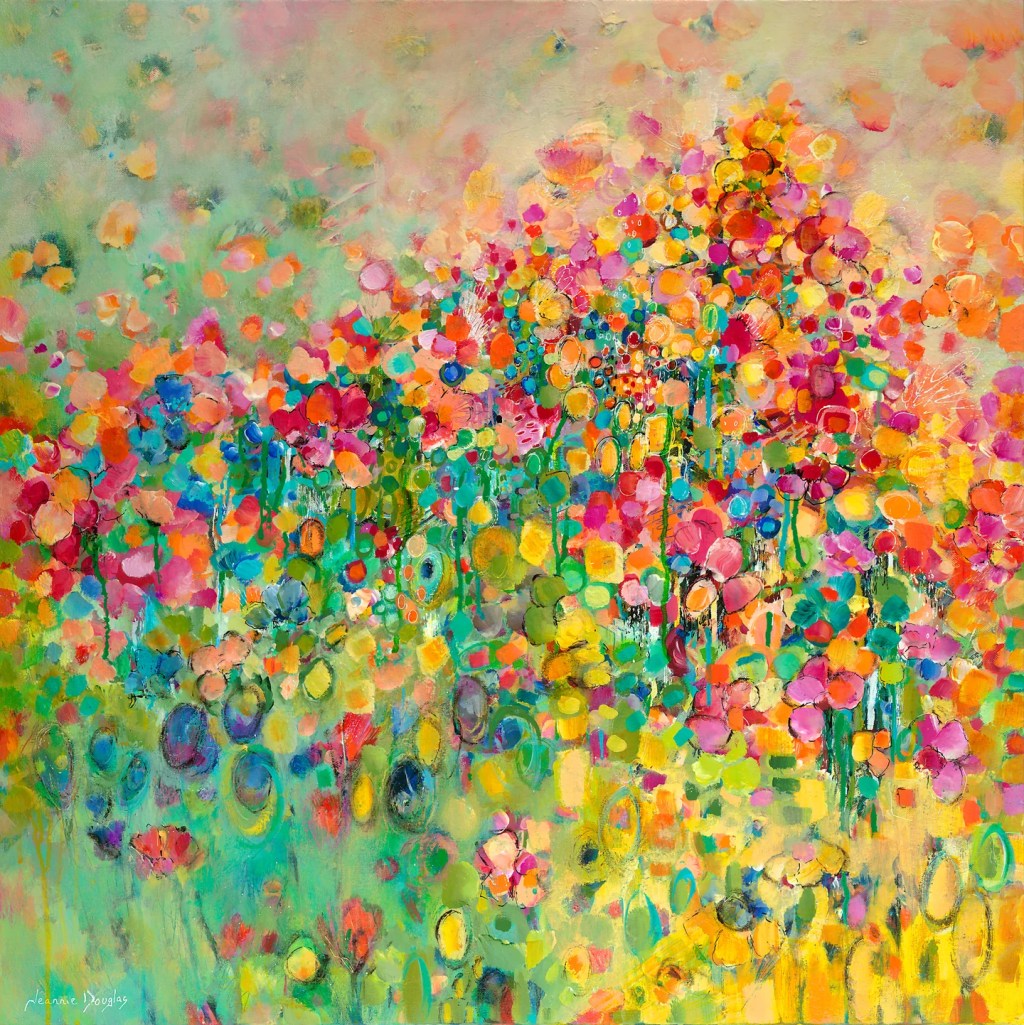
A Pop of Happiness by Jeanie Douglas. From Public Domain

Happiness is a many splendored word. For some it is the first ray of sunshine; for another, it could be a clean bill of health; and yet for another, it would be being with one’s loved ones… there is no clear-cut answer to what makes everyone happy. In Harry Potter and the Half Blood Prince (JK Rowling, 2005), a sunshine yellow elixir induces euphoria with the side effects of excessive singing and nose tweaking. This is of course fantasy but translate it to the real world and you will find that happiness does induce a lightness of being, a luminosity within us that makes it easier to tackle harder situations. Playing around with Rowling’s belief systems, even without the potion, an anticipation of happiness or just plain optimism does generate a sense of hope for better times.  Harry tackles his fears and dangers with goodwill, friends and innate optimism. When times are dark with raging wars or climate events that wreck our existence, can one look for a torch to light a sense of hope with the flame of inborn resilience borne of an inner calm, peace or happiness — call it what you will…?

It is hard to gauge the extreme circumstances with which many of us are faced in our current realities, especially when the events spin out of control. In this issue, along with the darker hues that ravage our lives, we have sprinklings of laughter to try to lighten our spirits. In the same vein, externalising our emotions to the point of absurdity that brings a smile to our lips is Rhys Hughes’ The Sunset Suite, a book that survives on tall tales generated by mugs of coffee. In one of the narratives, there is a man who is thrown into a bubbling hot spring, but he survives singing happily because his attacker has also thrown in packs of tea leaves. This man loves tea so much that he does not scald, drown or die but keeps swimming merrily singing a song. While Hughes’ stories are dark, like our times, there is an innate cheer that rings through the whole book… Dare we call it happiness or resilience? Hughes reveals much as he converses about this book, squonks and stranger facts that stretch beyond realism to a fantastical world that has full bearing on our very existence.

Poetry brings in a sprinkling of good cheer not only with a photo poem by Hughes, but also with more in a lighter vein from Ryan Quinn Flanagan, Michael R Burch, Arshi Mortuza, Jason Ryberg and others. Sanjay C Kuttan has given a poem dipped in nostalgic happiness with colourful games that evolved in Malaysia. Koiko Tsuuda, an Estonian, rethinks happiness. George Freek, Stuart MacFarlane and Saranyan BV address mortality. Nilsa Mariano and G Javaid Rasool have given us powerful migrant poetry while John Grey, Craig Kirchner, Jane Hammons, Nia Joseph, Noopur Vedajna Das and Adeline Lyons refer to climate or changes wrought by climate disasters in their verses.

A powerful essay by Binu Mathew on the climate disaster at Wayanad, a place that earlier had been written of as an idyllic getaway, tells us how the land in that region has become more prone to landslides. The one on July 30th this year washed away a whole village! Farouk Gulsara has given a narrative about his cycling adventure through the state of Kashmir with his Malaysian friends and finding support in the hearts of locals, people who would be the first to be hit by any disaster even if they have had no hand in creating the catastrophes that could wreck their lives, the flora and the fauna around them. In the wake of such destructions or in anticipation of such calamities, many migrate to other areas — like Ranu Bhattacharya’s ancestors did a bit before the 1947 Partition violence set in. A younger migrant, Chinmayi Goyal, muses under peaceful circumstances as she explores her own need to adapt to her surroundings. G Venkatesh from Sweden writes of his happy encounter with local children in the playground. And Snigdha Agrawal has written of partaking lunch with a bovine companion – it can be intimidating having a cow munching at the next table, I guess! Devraj Singh Kalsi has given a tongue-in-cheek musing on how he might find footing as a godman. Suzanne Kamata has given a lovely summery piece on parasols, which never went out of fashion in Japan!

Radha Chakravarty, known for her fabulous translations, has written about the writer she translated recently, Nazrul. Her essay includes a poem by Tagore for Nazrul. Professor Fakrul Alam has translated two of Nazrul’s songs of parting and Sohana Manzoor has rendered his stunning story Shapuray (Snake Charmer) into English. Fazal Baloch has brought to us poetry in English from the Sulaimani dialect of Balochi by Allah Bashk Buzdar, and a Korean poem has been self-translated by the poet, Ihlwha Choi. The translations wind up with a poem by Tagore, Olosh Shomoy Dhara Beye (Time Flows at an Indolent Pace), showcasing how the common man’s daily life is more rooted in permanence than evanescent regimes and empires.

Fiction brings us into the realm of the common man and uncommon situations, or funny ones. A tongue-in-cheek story set in the Midwest by Joseph Pfister makes us laugh. Farhanaz Rabbani has given us a beautiful narrative about a girl’s awakening. Paul Mirabile delves into the past using the epistolary technique highlighting darker vignettes from Christopher Columbus’s life. We have book excerpts from Maaria Sayed’s From Pashas to Pokemon and Nazes Afroz’s translation of Syed Mujtaba Ali’s Shabnam with both the extracts and Rabbani’s narratives reflecting the spunk of women, albeit in different timescapes…

Our book reviews feature Meenakshi Malhotra’s perspectives on Shuchi Kapila’s Learning to Remember: Postmemory and the Partition of India and Bhaskar Parichha’s thought provoking piece on Malvika Rajkotia’s autobiographical Unpartitioned Time: A Daughter’s Story. While both these look into narratives around the 1947 Partition of the Indian subcontinent, Rakhi Dalal’s review captures the whimsical and yet thoughtful nuances of Namita Gokhale’s Never Never Land. Somdatta Mandal has written about Upamanyu Chatterjee’s latest novel, Lorenzo Searches for the Meaning of Life, which is in a way a story about a migrant too.

When migrations are out of choice, with multiple options to explore, they take on happier hues. But when it is out of a compulsion created by manmade disasters — both wars and climate change are that — will the affected people remain unscarred, or like Potter, bear the scar only on their forehead and, with Adlerian calm, find happiness and carpe diem?

Do pause by our current issue which has more content than mentioned here as some of it falls outside the ambit of our discussion. This issue would not have been possible without an all-out effort by each of you… even readers. I would like to thank each and every contributor and our loyal readers. The wonderful team at Borderless deserve much appreciation and gratitude, especially Manzoor for her wonderful artwork. I invite you all to savour this August issue with a drizzle of not monsoon or April showers but laughter.

May we all find our paths towards building a resilient world with a bright future.

Good luck and best wishes!

Mitali Chakravarty

borderlessjournal.com

Click here to access the content’s page for the August 2024 Issue.

.

READ THE LATEST UPDATES ON THE FIRST BORDERLESS ANTHOLOGY, MONALISA NO LONGER SMILES, BY CLICKING ON THIS LINK.

Categories
Poetry

Watching by Stuart MacFarlane

                WATCHING

I

The nurse says quietly, efficiently.
'I'm sorry but you can't disturb the chairs.'
So we push them back,
a tentative scraping;
now, regimented at the bedside,
we form a silent circle around
a patient centre.
We talk a little, laugh when we can.
The air is hot and stuffy;
and always the pungent tang of disinfectant.
In the adjacent bed lies an older man,
tubes snaking from his body to a 'Life trace' machine.
At his side his wife holds his hand;
and, as he tries to speak,
she says softly, again and again,
'I know. I know.'
His hand, in hers, struggles to squeeze
out a response.
On the screen a white line
scales small mountain peaks.
Up, down. Up and down.
Random numbers flash erratically.

II

We hear a rasping cough.
See the old man's arm swing through the air,
describing a careless arc.
His hand thumps off the bedside table,
upsetting a vase of flowers.
Slowly, very slowly, the vase tips
over the edge, sudden water
leaping at the brim.
One by one, the flowers,
daffodils, I think,
spill out.

III

Now the glass vase turns through the air,
scooping up the sunlight,
bright water gasping at the neck.
Someone moves, as if to catch it.
But no-one does.
It smashes on the hard, scrubbed floor,
scattering into a hundred pieces.
Fingers of sunlight seem to pick
at the pieces;
nimble beams on
gleaming glass.
The flowers' flaccid stems lie,
forlorn there, on the floor;
and, helpless, we can merely look on;
just watching the water spread.

From Public Domain

Stuart MacFarlane is now semi-retired. He taught English for many years to asylum seekers in London. He has had poems published in a few online journals.                                                                                                                    

.

PLEASE NOTE: ARTICLES CAN ONLY BE REPRODUCED IN OTHER SITES WITH DUE ACKNOWLEDGEMENT TO BORDERLESS JOURNAL

Click here to access the Borderless anthology, Monalisa No Longer Smiles

Click here to access Monalisa No Longer Smiles on Kindle Amazon International

Categories
War & Peace

Looking for Peace

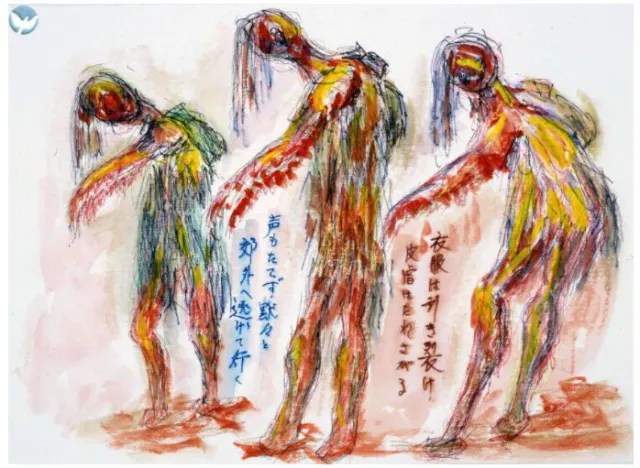
This painting/drawing is from artist Kichisuke Yoshimura, who said of it, “Their clothes ripped to shreds, their skin hanging down. On the riverbank I saw figures that seemed to be from another world. Ghost-like, their hair falling over their faces, their clothes ripped to shreds, their skin hanging. A cluster of these injured persons was moving wordlessly toward the outskirts.” Courtesy: Public domain

Almost eight decades after the Atomic Holocaust in Hiroshima and in Nagasaki, we still are looking for peace. These blasts destroyed humanity and the tenor of human lives. While nuclear treatise are still holding up, many parts of the world are warring over different issues… for borders we ourselves have drawn, for ideologies and pedagogies we ourselves have created. It has become difficult now to keep track of the terrors and horrors unleashed on unsuspecting citizens and innocents. There was a point of time, where kings settles their conflicts by fighting outside the cities with rules of war. But despite all the treatise and the deals, children are still dying in bomb blasts. Innocents are still being killed by missiles. One would have thought, humanity would have learnt from the past… But have we?

Showcasing the need for peace, we bring to you, recent poetry about the ensuing conflicts and some poems on the blast that killed innocents and maimed generations to come. We have an essay on an age-long conflict which does not seem to get resolved and the interview of a second generation Hibakusha who still suffers from the impact of the blast that had destroyed her mother’s world and left its imprints on the later generations. 

Poetry

At the Turn of the Century by Stuart MacFarlane. Click here to read. 

A Child in Gaza by David Mellor. Click here to read.

I am Ukraine by Lesya Bakun. Click here to read. 

Flowers Bloom Everywhere by Ihlwha Choi. Click here to read. 

Commemorating Hiroshima: Poetry by Suzanne Kamata. Click here to read. 

Prose

When will we ever learn? Oh, will we ever learn? 

Ratnottama Sengupta, comments on the current situation in Ukraine while dwelling on her memorable meeting with folk legend Pete Seeger, a pacifist, who wrote ‘Where have all the Flowers gone’, based on a folk song from Ukraine. Click here to read.

How the Impact of the Hiroshima Blast Lingers

An interview with second generation hibakusha, Kathleen Burkinshaw. Click here to read.

Categories
Contents

Borderless, July 2024

Art by Sohana Manzoor

Editorial

Seasons out of TimeClick here to read.

Conversation

A brief introduction to Suzanne Kamata’s Cinnamon Beach and a conversation with the author about her latest novel. Click here to read.

Translations

Tagore’s Achhe Dukhu, Achhe Mrityu, (Sorrow Exists, Death Exists) has been translated from Bengali by Fakrul Alam. Click here to read.

Nazrul’s Ghumaite Dao Shranto Robi Re (Let Robi Sleep in Peace) has been translated from Bengali by Professor Fakrul Alam. Click here to read.

Amalkanti by Nirendranath Chakraborty has been translated from Bengali by Debali Mookerjea-Leonard. Click here to read.

Speech Matters, a story by Naramsetti Umamaheswararao, has been translated from Telugu by Johnny Takkedasila. Click here to read.

Every Day by Hafeez Rauf has been translated from Balochi by Fazal Baloch. Click here to read.

The Long Journey by Ihlwha Choi has been translated from Korean by the poet himself. Click here to read.

Mrityu or Death by Tagore has been translated from Bengali by Mitali Chakravarty. Click here to read.

Poetry

Click on the names to read the poems

Jared Carter, Michael Burch, Kirpal Singh, Rakhi Dalal, Stuart MacFarlane, Averi Saha, John Grey, Surbhi Sharma, David Francis, Pramod Rastogi, David Mellor, Saranyan BV, Jim Bellamy, Tasneem Hossain, Thompson Emate, George Freek, Mitra Samal, Lizzie Packer, Shamik Banerjee, Ryan Quinn Flanagan, Rhys Hughes

Musings/ Slices from Life

Stop, Look, Think!

Farouk Gulsara muses with a slice irony at a traffic junction. Click here to read.

Norman Rockwell: Out of the Closet

Wayne F. Burke gives a vignette of the life of the legendary illustrator. Click here to read.

Unveiling the Magic of Mystical Mangroves

Sai Abhinay Penna travels to the second largest mangrove forest in the world. Click here to read.

Glimpses of an Indian Summer

Madhuri Bhattacharya nostalgically captures the nuances of a hot summer. Click here to read.

The Pearl of the Indian Ocean

Ravi Shankar travels to Colombo. Click here to read.

Essays

The Myriad Hues of Tagore by Aruna Chakravarti

Aruna Chakravarti writes on times and the various facets of Tagore. Click here to read.

Picked Clean

Snigdha Agrawal writes of the impact from the loss of green cover in Bangalore. Click here to read.

Fast Food for a Month

Keith Lyons gives an in memoriam about the late documentarian, Morgan Spurlock. Click here to read.

Stories

In the Shadows…

Paul Mirabile gives us a story steeped in art and mental health. Click here to read.

The Last Hyderabadi

Mohul Bhowmick talks of the passage of an era. Click here to read.

Alvin and the Curious Case of Spoilt Milk

Anagha Narasimha gives a light hearted piece about the impact of demonetisation. Click here to read.

Book Excerpts

An excerpt from The Poisoner of Bengal/The Prince and the Poisoner by Dan Morrison. Click here to read.

An excerpt from The Sunset Suite by Rhys Hughes. Click here to read.

Book Reviews

Somdatta Mandal reviews Knife:  Meditations After an Attempted Murder by Salman Rushdie. Click here to read.

Basudhara Roy reviews Wild Women: Seekers, Protagonists and Goddesses in Sacred Indian Poetry by Arundhathi Subramaniam. Click here to read.

Navleen Multani reviews Mapping the Mind, Minding the Map, edited by Basudhara Roy and Jaydeep Sarangi. Click here to read.

Bhaskar Parichha reviews Derek Waller’s The Pundits: British Exploration of Tibet and Central Asia. Click here to read.

.

Click here to access the Borderless anthology, Monalisa No Longer Smiles

Click here to access Monalisa No Longer Smiles on Amazon International

Categories
Poetry

At the turn of the Century

By Stuart MacFarlane

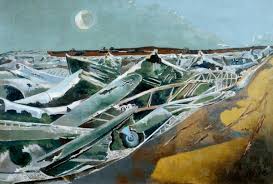
Art by Paul Gnash (1889-1946)
                  I

I wonder what people felt
at the turn of the century,
with Waterloo behind them now;
and the Crimea and the hundred wars
fought by men to prove
I'm not sure what.
I wonder what they felt
as the thick black smoke of industry
cleared now on the skyline;
and there, for the first time, they saw
the blue sky, the sunlight shining through.
I wonder what they felt
when they saw their century slip away,
like a fine ship pushed out to sea.
And there, before them, the great unknown;
mile on mile of endless ocean.
Did they feel hope or fear, I wonder?
Or maybe both?
And, seeing the gravestones in the rain,
perhaps a sense of sadness, too,
for those who had not made it.
For many had lived, but many more had died.


II

We survived the shock of the millennium,
with Passchendaele behind us now;
and Auschwitz, Hiroshima, Korea, Vietnam.
And, I wonder, as the years subside,
what we will feel
at the turn of our century...
With Iraq behind us now,
and Gaza and Ukraine and the hundred wars
yet to be fought by men to prove
I'm not sure what.
I wonder what we'll feel as
the thick clouds of radioactive gas
clear slowly on the skyline.
And there, for the first time, we see
the blue sky, the sunlight shining through.
I wonder what we'll feel
as our century slips away,
like part of a rocket jettisoned
silently in outer space.
And there, before us, the great unknown;
a thousand light years, bright with stars;
yet so very, very far away.
Will we feel hope or fear, I wonder?
Or maybe both?
And, seeing the gravestones in the rain,
perhaps a sense of sadness, too,
for those who did not make it.
For many will live, but many more will die.

Stuart MacFarlane is now semi-retired. He taught English for many years to asylum seekers in London. He has had poems published in a few online journals.                                                                                                                    

.

PLEASE NOTE: ARTICLES CAN ONLY BE REPRODUCED IN OTHER SITES WITH DUE ACKNOWLEDGEMENT TO BORDERLESS JOURNAL

Click here to access the Borderless anthology, Monalisa No Longer Smiles

Click here to access Monalisa No Longer Smiles on Kindle Amazon International